CBE’s 100 bps rate hike ends a two-year easing cycle

1

WHAT WE’RE TRACKING TODAY

The country’s first locally assembled EV rolls off the line at El Nasr

Good morning, friends. The interest rate hike is three days old by now, and you’ve probably read a version of it. What you haven’t read is why: That’s our Big Story today — a deeper read than Thursday’s headlines.

This is the first rate hike since 2024, and the decision takes the deposit rate to 20%, reversing a cycle that had cut 825 bps since April last year. We read the statement more than once, because the case it makes isn’t the one the annual numbers suggest; the worry is monthly prices, and a currency the statement never names.

The call caught most of the market off guard. Just one of the analysts we polled saw it coming, and it lands on a budget where interest payments already eat about 60% of central government revenue. Two things we are watching from here: whether the EGP holds around 56 and whether December’s print cools.

Over on the Giza Plateau, ADD Properties, the hospitality arm of Sami Saad Holding, has lined up a USD 265 mn syndicated loan for its Grand Hyatt overlooking GEM and the Pyramids. The EBRD is arranging it and taking the largest ticket at USD 127.5 mn, with the IFC, Emirates NBD and NBE alongside, and EFG Hermes pricing the deal.

And a story you will read here first: Tactful AI, the Cairo- and Cambridge-based customer-experience company, is looking to raise USD 5-10 mn in early 2027, after closing around USD 1 mn in pre-Series A, CEO Mohamed Elmasry tells us. The founders sold the company to Belgium’s Dstny in 2022 and bought it back last year, and Elmasry says they came out ahead on both deals, with a better product to show for it.

***

It’s mail time! Who writes EnterpriseAM’s subject lines? Why are our podcasts audio only? How do we preserve the craft of writing while integrating AI policies across the newsroom?

These are some of the questions readers and listeners have sent us over the years, so on an upcoming episode of Making It, Patrick and the team will answer them along with anything else you’re curious about: whether it’s about the business, our coverage, how the newsroom is run, or why we do things the way we do.

Have a question for us? Record it as a voice memo (30-45 seconds), tell us your name at the top, and send it to [email protected] by Saturday, 7 November. We’ll also take written questions, but since we’re an audio show, we’d love to play yours in your own voice.

***

Nasr in gear

The first electric car to come off an Egyptian assembly line did so yesterday, when El Nasr Automotive began producing the MAGE EV — the electric version of China’s Dongfeng Mage — at its Helwan plant with local content put at 45%, per a Cabinet statement.

The car is built by SN Automotive, the joint venture between state-owned El Nasr and Al Safy Group, which is Dongfeng’s local agent, formed in 2024 with USD 40 mn in initial investment. Industry Minister Khaled Hashem said the next stage is to raise the local share and expand manufacture of production inputs, naming EV components, batteries and motors. At the 45% local content announced at the launch, more than half the car is still imported.

MEANWHILE- The government is studying exempting electric-car factories from customs on their production inputs, Asharq Business reported, citing unnamed government officials. Batteries currently carry 5% duty and electric motors 2%, according to Asharq, while fully imported EVs enter at 0% customs and pay only 14% VAT. The exemption would be limited to factories and exclude service centres that import spare parts to resell as they are. It is the same distortion we flagged in August.

WHAT’S NEXT- The measure is expected to go for approval in the customs-law amendment package the House discusses in November, per the official.

With room to SPAC

**Hassan Allam’s blank-check vehicle opens an EGP 90 mn private placement today, 15 months after its temporary EGX listing and about a year after the three-month window the listing rules give a Special Purpose Acquisition Company (SPAC) to raise that money ran out. Grova SPAC is selling 90 mn new shares at EGP 1 par to qualified investors and financial institutions through Thursday, 5 November, taking its issued capital from EGP 10 mn to EGP 100 mn, with Al Ahly Pharos receiving the orders, according to a release from the Financial Regulatory Authority filed with the EGX (pdf).

Both figures match the rules: The FRA Decree 148 of 2024 (pdf) requires a temporarily listed SPAC to hold at least EGP 10 mn of issued and paid-up capital and to raise it in cash to EGP 100 mn within three months of listing, and to keep the proceeds at an Egyptian bank for acquisitions only.

Why it matters: Grova intends to buy real estate developers that are subsidiaries of, or related to, its main shareholder and that shareholder’s group, using the three methods the rules allow: share swaps, credit balances it would later capitalize at par, or cash. A later cash increase, reserved at par for new qualified strategic investors, would repay the acquired companies’ debts and settle the balances owed to the shareholder group, and no target has been named yet.

Buyers get an exit: Anyone who subscribes in the placement, or buys in the market up to the vote on the first acquisition, can hand the shares back at par if they object to that transaction, and the rules give objecting shareholders 30 days from the vote to leave. Hassan Allam Construction Group B.V., the vehicle’s Dutch shareholder, holds all but 40 of the 10 mn shares in issue, or 99.9%, and lands at about 10% once the placement fills, with the new investors taking about 90%.

The rules set the clock — six months from listing to put the acquisition decision to shareholders, and two years to close. Grova has been listed temporarily since 30 July 2025, which by our reading puts that six-month deadline at 30 January 2026. The FRA extended (pdf) the temporary registration by two months to 30 December after the first period lapsed on 30 October — the second extension at least, by our reading of the record.

Another SPAC’s clock is also running: OG Capital For Investments, a blank-check company whose backers haven’t been disclosed, has until around 19 November to put an acquisition target to a shareholder vote. It listed temporarily in May and hasn’t named a target yet. The EGX already has three SPACs on its books: Catalyst Partners Middle East, Grova, and OG Capital. A fourth, Spark for Acquisition, applied to list earlier this month.

Happening today

The Petroleum Ministry is launching a one-month pilot today for a digital system to monitor fuel distribution in Port Said, according to a statement. The system, developed with the Interior and Communications and IT ministries, reads fuel-purchase data through the electronic sticker issued by the Interior Ministry’s traffic units, tracking petroleum products along the supply chain to the final consumer. Vehicle owners without the sticker can install it during the trial month, and the ministry will use the month to bring the rest of the governorate’s fuel stations onto the system. The ministry says the system has no bearing on pricing or the quantities dispensed, adding that it’s meant to curb leakage and smuggling by helping spot abnormal consumption patterns and supporting inspections.

Happening tomorrow

Banque du Caire starts trading on the EGX tomorrow, after the bourse executed the 45% IPO on Thursday. Banque Misr, the selling shareholder, receives EGP 36.4 bn (c. USD 680 mn at the offering circular’s EGP 53.46 rate), having sold some 6.86 bn existing shares at the EGP 5.30 final price. Institutions took 6.52 bn shares, or 42.75% of the bank, and retail investors 343.1 mn shares, good for a 2.25% stake in the state-backed lender.

Retail investors had ordered some 9.29 bn shares for the public tranche, so they got about 3.7% of what they asked for, by our math. Orders stood at 2.29 bn shares at Tuesday’s close, so some 7 bn shares (about EGP 37 bn) came in on the final day alone, by our math; the book shut at 2:30 pm on Wednesday. Subscribers had to have 25% of their order value in place before the close, per the offering circular, and brokers began settling allotments and returning the balance on Thursday.


PSA-

WEATHER- Cairo is warming back up today, with a high of 30°C and a low of 22°C, according to our favorite weather app.

It’s just as warm on the coast in Alexandria too, with a high of 30°C and a low of 21°C.

The big story abroad

Binance covers hack losses: Crypto exchange Binance said it has replaced 90% of the amount stolen following a record USD 6.3 bn hack of its platform, using company money to buy new tokens. The outstanding 10% consists of less liquid tokens, which may take longer to recover. Binance said that it, not its users, will “absorb the financial impact of these stolen funds.” The FBI has blamed the attack on North Korea.

Europe protests continue: The wave of protests across European cities continued over the weekend, driven by the rising costs of living and poor public services, with police still bracing for potential violence after recent looting and riots. Demonstrations swept through Germany, France, Spain, Italy and other countries on Halloween day, following youth-led marches across the continent.

Anthropic may not clinch investment-grade rating: Blackstone told investors in a USD 63 bn chip financing deal that Anthropic is expected to receive a “high” junk credit rating rather than an investment-grade score following its upcoming initial public offering, reversing prior guidance. This shift in credit expectations would complicate the AI startup’s ability to fund its ambitious spending plans, which outline over USD 800 bn for computing infrastructure through 2045.

Somabay is heading to WTM London!

We look forward to connecting with global travel partners, strengthening relationships, and exploring new opportunities for our Red Sea destination.

Let’s connect in London and shape what’s next for Somabay.

2

The Big Story Today

CBE hikes for the first time since March 2024, raising rates 100 bps and moving its inflation target to 4Q 2027

The Central Bank of Egypt’s (CBE) Monetary Policy Committee (MPC) raised key policy rates by 100 bps on Thursday, the first increase since March 2024 and the first reversal of an easing cycle that had cut 825 bps in six moves from April 2025. The overnight deposit rate goes to 20.0% from 19.0%, the overnight lending rate to 21.0% from 20.0%, and the main operation and discount rates to 20.5% from 19.5%, according to the CBE’s statement (pdf).

Why didn’t easing inflation buy another hold? The CBE cited monthly inflation, rather than annual. Although annual headline inflation eased to 13.9% and core to 14.1%, headline prices rose 1.3% m-o-m in September after 0.1% in August, and core prices 0.8% after 0.3%, the CBE said, driven mostly by core food and seasonal effects.

The MPC called the move “preemptive,” aimed at anchoring expectations and containing imported price pressures before they reach domestic prices. It also dated the payoff further out: convergence on its 7% (±2 percentage points) target is now “on average, in [4Q] 2027,” against “during 2H 2027” in the September meeting, a narrower promise than the one it was making while holding.

What the statement changed

The bigger change is how much risk the CBE will tolerate, which is evident in the wording. In September, it left rates alone because the current degree of restrictiveness “serves as a buffer” against the risks it had listed; on Thursday, it said those risks had become “more pronounced relative to the previous MPC meeting” and that preserving the disinflation path warranted “a more restrictive stance” than the one it had previously described as adequate. And language it had retired came back: September dropped the reference to returning inflation to target “in the near term” and stopped framing policy around a positive real-rate margin; on Thursday, “in the near term” was restored.

The argument about demand hasn’t changed. The CBE still says output is below potential and that demand-driven pressures “should remain limited in the short term,” the same reasoning it used in September to justify standing still. Read together, the two statements say the economy does not need tighter money, while the exchange rate and expectations do.

The EGP is absent from the statement. The MPC cites “risk-off sentiment,” tighter global financial conditions, and imported inflation, but not the exchange rate, so the link between the currency and this decision is ours to draw.

And the market has already drawn it. The EGP crossed 55 to the USD for the first time on Thursday, 22 October, above the previous record low of 54.73 set on 7 April. Then it hit 55.89 at the CBE last Sunday and broke 56 by Tuesday. The CBE’s selling rate closed Thursday at 56.12, but this reading was taken before the MPC’s afternoon announcement, so it shows the pressure the committee was reacting to. Stocks steadied on the day of the hike, with the EGX30 closing 0.64% higher at almost 49.6k and recovering part of the 3.56% it lost last Sunday, 25 October.

Foreign investors have kept selling, most of it concentrated in a single week. On the EGX’s weekly reports, they net sold EGP 115.1 bn of treasury bills and bonds in the week of 18-22 October (pdf) (about USD 2.05 bn at the EGP’s current rate, by our math). That followed EGP 14.7 bn in net buying in the week of 11-15 October (pdf) and selling worth EGP 15.8 bn in the week of 4-8 October (pdf). That leaves October-to-date net foreign selling at about EGP 116.2 bn, or roughly USD 2.07 bn across the three published weeks. The exchange hasn’t posted the week of 25-29 October, which covers the rate decision and the day the House voted to authorize the president to take “whatever measures are needed” to support Saudi Arabia in its current military conflict.

Still, the T-bill market had plenty of buyers on the day of the hike. At the 29 October auction, the 364-day line was sized at EGP 80 bn and drew EGP 152.5 bn in bids, of which EGP 56.3 bn was accepted, while the 182-day line drew EGP 65.4 bn against an EGP 30 bn size, with EGP 22.5 bn accepted, the CBE’s results show. Bids covered both sales about twice over, so the state left most of that demand untaken; by our read, the constraint was price rather than appetite, and the clearing yields were 25.46% on 182 days and 26.08% on 364 days, 5.5-6.1 pp above the 20.0% deposit rate the MPC had just set.

What the ins. costs

The real rate has widened to a level the budget feels. At 20.0%, the deposit rate now sits 6.1 pp above September’s headline inflation, up from 5.1 points before the meeting, by our math, and the 21.0% lending rate is 7.1 points above it. Those rates already exceed nominal GDP growth, and interest payments absorb about 60% of central government revenue even with a primary surplus, Al Ahly Pharos’s Hany Genena told us ahead of the decision.

DATA POINT- Interest payments reached EGP 512.2 bn in July and August, up from EGP 478.8 bn in the same two months a year earlier, the Finance Ministry’s October monthly report (pdf) shows. That’s before this week’s increase reaches the debt stock.

A hike buys the wrong kind of money, Genena argued last week. Compensating foreign investors for currency risk is “expensive to execute,” he said, and even if higher rates drew money in, banks would likely hold it abroad as net foreign assets rather than convert it, leaving the current account no better off. And the cost would fall hardest on mid-size and small developers that depend on project finance and are already selling slowly.

Two others in our poll made a similar case from the inflation side. A hike does little against prices pushed up by global costs, economist Iten El Marghoushy argued, and the buffer only holds while foreign currency keeps coming in. Banking expert Sahar El Damaty traced the problem to supply: foreign currency is running well below demand, with Red Sea shipping and ins. costs hurting exports, tourism, and Suez revenue, and higher US rates pulling portfolio money away.

Who saw it coming

Only one of the analysts we polled expected this. Maged Fahmy, the former Industrial Development Bank chairman, argued for a hike on the grounds that it would slow hot-money outflows and keep local debt attractive against competing markets, with a stronger USD raising Egypt’s foreign-currency needs on top of its import bill. The decision went his way, though the statement gave imported inflation and expectations as its reasons.

The hold camp had a coherent case too. EFG Hermes’s Mohamed Abu Basha expected the freeze on fuel prices “will keep inflation contained,” and judged the weaker EGP a risk, “but it’s too early amidst the ongoing volatility and the geopolitical risks.” CI Capital’s Monsef Morsy pointed to the last two monthly inflation prints and the indexation committee’s decision to hold oil product prices until December, the same reason Abu Basha gave.

The arithmetic case for standing still came from HC Securities’ Heba Monir — a 364-day T-bill yielding 25.91% returns about 10.5% in real terms after the 15% tax on European and US investors, measured against her 11.5% inflation forecast for 2027. On her numbers, the fuel freeze cut her average inflation call for 4Q 2026 to about 13% from 14.5%, while she raised 2027 to 11.5% from 10.9%. By our read, that’s a slower descent than the CBE’s new 4Q 2027 target implies.

Deutsche Bank, which also expected a hold at 19%, named the currency as the one thing that could change its mind, and had already raised its end-2026 inflation forecast to 15.7% from 14.7%. It sees easing resuming in 1Q-2Q 2027 rather than sooner, a timetable the hike makes more plausible than it was on Monday.

Abroad, conditions are moving against the EGP as well. The US Federal Reserve raised 25 bps in September to 3.75-4.00% and held on 28 October, with two members of the Fed’s Open Market Committee dissenting in favor of a further increase. BMI sees Brent trading above USD 100 a barrel into 2027 against the USD 75 the government assumed in its budget. Each of those makes the EGP harder to hold without paying more for it.

What’s next: The MPC meets again on 17 December, and an IMF mission is in Cairo for the eighth and final review of the USD 8 bn Extended Fund Facility and the last review under the Resilience and Sustainability Facility, worth about USD 2.3 bn between them. The aim is to reach a staff-level agreement and bring both reviews to the Fund’s executive board before the EFF expires on 15 December, with a final disbursement of about USD 2.33 bn, the Fund’s communications director said on Thursday.

What the Fund wants is on the record, and it overlaps with what the CBE just did. The reviews will focus on “maintaining a tight monetary policy” and the fiscal consolidation plan, with stronger revenue mobilization to reduce debt vulnerabilities. They will also assess progress on structural reforms, including accelerating the divestment program, implementing the state ownership policy, leveling the playing field, and strengthening governance at state-owned companies.

The test in December is narrow — whether monthly inflation cools and the EGP holds around 56. Reserves give the CBE room to wait (net international reserves reached USD 57.35 bn at end-September), but that cushion, like the rate one, depends on inflows continuing. The EGP closed the week at 56.12, and the first full session since the decision is today’s, so nothing yet says the hike is working.

This publication is proudly sponsored by

3

DEBT WATCH

ADD Properties secures USD 265 mn syndicated loan led by the EBRD for its Giza hotel

Sami Saad Holding’s ADD Properties has lined up a USD 265 mn syndicated loan to grow its Egyptian hospitality business, according to statements from ADD Properties and the European Bank for Reconstruction and Development (EBRD) (here, pdf and here). The centerpiece is a new Grand Hyatt hotel on the Giza Plateau overlooking the Grand Egyptian Museum (GEM) and the pyramids. The EBRD is arranging the deal as the initial mandated lead arranger and bookrunner and is taking the largest single facility, at USD 127.5 mn.

The remaining debt comes from three lenders — the International Finance Corporation (IFC) at USD 60 mn, Emirates NBD Egypt at USD 40 mn, and the National Bank of Egypt (NBE) at USD 37.5 mn. The money strengthens ADD Properties’ capital structure, refinances the existing debt of its subsidiary AlDau Development, and funds land, refurbishment, and further capex, according to the EBRD’s project summary. The EBRD also funds technical assistance for LEED Silver certification across the portfolio, governance work, and hospitality training in Cairo and Hurghada.

IN CONTEXT- The numbers have shifted since the agreement first became public. ADD Properties put its Hyatt-backed plan at above USD 200 mn in June 2025, when the EBRD’s project summary set its own ticket inside a package of up to USD 265 mn, and the IFC opened at up to USD 100 mn. The IFC’s board approved its share at USD 66.3 mn on 26 June 2026, and since those early figures were ceilings, this week’s arrangement is what puts the final numbers on the loan.

As for who’s borrowing, ADD Properties is the hospitality developer of Sami Saad Holding, a family group that runs 30 companies across engineering and contracting, automotive, food and beverage, and hospitality, per its own group profile, with Samcrete as its contracting name. ADD Properties traded as AlDau Development before a rebrand, and it brought Hyatt back to Egypt with the Hyatt Regency Cairo West, which opened in 2022.

The Grand Hyatt will have plenty of company, as West Cairo continues to fill up with tourism plans around the same plateau. Singapore-based Hotel101 Global has entered Africa for the first time with an EGP 5.5 bn, 750-room project near GEM and the Giza Pyramids, due for completion by 2029. State-backed Nevera Egypt is also preparing an integrated media city that envisions 18 hotels alongside extensive commercial and logistics hubs near the Pyramids Plateau. Orascom Pyramids Entertainment is slated to inject EGP 500 mn next year to upgrade infrastructure, services, and cultural events across the plateau.

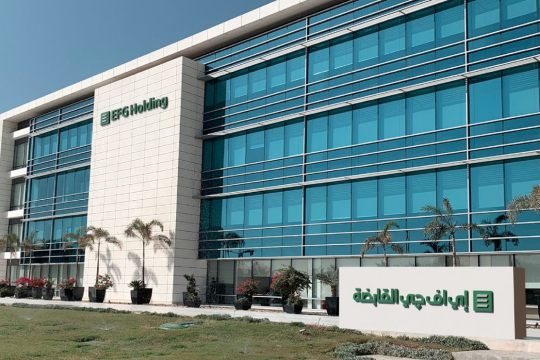
ADVISORS- EFG Holding’s EFG Hermes is the sole financial advisor, pricing the loan and placing it across the four lenders for the developer.

4

Startup watch

Tactful AI targets USD 5-10 mn Series A after USD 1 mn pre-Series A

Tactful AI is looking to raise USD 5-10 mn in a Series A round in early 2027, co-founder and CEO Mohamed Elmasry (LinkedIn) tells EnterpriseAM. Investor talks are still in an early stage, with the company receiving inbound interest but not yet actively pursuing a raise as it focuses on operations, Elmasry says. But he says he is ready for any potential delays — “the more I achieve with my clients, the easier the Series A would be anyway.”

About Tactful: Founded in 2016 by Elmasry, Mohamed Hassan (LinkedIn), and Sherif Khairallah (LinkedIn), Tactful AI is a Cambridge- and Cairo-based CX company that uses AI to help businesses manage customer interactions across social media, customer service, and sales channels.

The company is moving beyond traditional chatbots into agentic AI, which can handle customer requests from start to finish, including tasks like tracking orders and updating CRM systems. Its clients include Elaraby Group, Raneen, 2B, Erada Finance, and Simplex. Tactful says (pdf) its annual recurring revenue has grown 11.7x since January 2025.

IN CONTEXT- Its pre-Series A, including an extension that brought in former Etisalat CEO Hatem Dowidar earlier this month, totals around USD 1 mn, Elmasry says, without disclosing individual ticket sizes. The pre-Series A was co-led by Foras AI and M Empire, and Elmasry and Hassan also put money in, according to the release (pdf). The company did not need the funding, he adds; it wanted credible strategic investors on board ahead of its Series A.

Credibility test: Investors usually want to know whether Tactful’s AI is native or just a wrapper around existing models, Elmasry says. “Everyone can say, ‘I’m doing something with AI.’ So what do we really do with AI? Is it native? Is it true? Or are we just a shell product of some AI models?” His answer is to point to Tactful’s clients, founders of client companies who put their own savings into the round. He says some investors came in through client referrals. “You see the level of commitment and the level of trust.”

The years under Dstny left Tactful with a product backed by mns in R&D investment, according to Elmasry. The Belgium-based business communications group acquired Tactful in 2022 and injected mns into the product's R&D between 2023 and 2024, according to Elmasry. Rising interest rates later pushed Dstny’s private equity backers to cut costs, he explains, and the founders bought the company back last year. “It was a case of bad timing, [but] we actually became profitable because of the two transactions. We didn’t pay as much as we got when we sold it, and we got a much better and more ready product,” he says. The buyback was announced in July 2025, although neither transaction’s value was disclosed. The founders came out of it with full ownership of the IP and no restrictions on where they can sell, he says.

The focus now is on getting existing clients to spend more. Tactful's net revenue retention is close to 120% over the past 12 months, with the company targeting 200% by year-end, Elmasry says. Some clients are already paying 2.5x what they initially signed up for, and one will be at 6x its initial contract by early next year.

Tactful also plans to take its product to customers in the UK and the rest of Europe in 2027, with ambitions to capture 10% within five years of the roughly USD 1 bn in annual EMEA sales that Elmasry attributes to a global competitor he did not name. The company sees the likes of Genesys, Salesforce, Cisco, Zendesk, Freshdesk, and Intercom as its main competition for contracts, rather than regional AI startups.

Tactful acts “as an advisor before a vendor,” Elmasry says. “We don’t give them a bag of tech and [say] you guys figure out what to do with it. We give them the outcome, and we give them the quality.”

5

A MESSAGE FROM VISA

Agentic commerce is on the agenda, even as familiarity lags

Agentic commerce is getting boardroom attention faster than the term itself is becoming familiar. In practice, it moves AI from recommending to acting: placing orders, completing transactions, managing inventory, and personalizing customer experiences within guardrails set by people. Visa commissioned Agentic Commerce: Market Insights and Outlook for Egypt, conducted by Fast Company Middle East and powered by Probity, to see how Egyptian businesses are approaching that shift.

Most of the senior decision-makers surveyed are still getting acquainted with the concept. Of those surveyed, 55.7% say they are not very familiar with agentic commerce, while another 16.8% have heard of it but find the term unclear. Just 27.2% consider themselves quite or very familiar.

Familiarity has not dampened expectations. More than eight in 10 respondents (83.8%) expect moderate to high disruption to their industry within two years, while 12.9% expect incremental change. No respondent expects zero impact.

Those expectations are beginning to turn into activity. While 16.1% of surveyed organizations were preparing pilots for launch within six months, another 16.1% have defined mid-term rollout plans, while 2.4% reported having implemented autonomous purchasing. Most of that exploration is being pushed from the top, with 32.5% citing executive leadership as the main force behind it. The discussion is moving toward practical decisions businesses will have to make: where agents can create value, what actions they can execute, and how those actions will be supervised.

Read Visa’s full report for its recommendations on making those decisions.

6

Also on our Radar

Qalaa shareholders approve EGP 3.87 bn raise for 27.1% ERC stake

Qalaa Holdings shareholders cleared the EGP 3.87 bn capital increase that pays for the company’s move to 27.1% of the Egyptian Refining Company (ERC), up from 13%, according to an EGX filing (pdf). An extraordinary general assembly yesterday approved the raise along with the use-of-proceeds study the Financial Regulatory Authority had asked for.

Shareholders also adopted a mechanism to settle shareholder current accounts arising from a restructuring approved in July 2023, but the filing gives no detail beyond that. The current accounts trace back to Qalaa’s multi-year effort to clear shareholder debt off its balance sheet, which has repeatedly run through capital increases.

ICYMI- Qalaa isn’t buying ERC shares directly. It’s taking 55.4% of New Age Refining, a holding vehicle that is itself acquiring QPI Egypt at par value. QPI is QatarEnergy’s local holdco, which carries a 25.4% effective stake in the Mostorod refinery. Run the math through both layers and Qalaa picks up 14.1 percentage points of indirect exposure, and its Qatari partner exits.

The EGP 3.87 bn raise also covers paying down Arab International Bank and other local creditors, and exercising the first tranche of Qalaa’s right to buy back Taqa Arabia stock, an option it kept when it sold 20% of Taqa to the military’s National Service Projects Organization for EGP 1.6 bn. Existing shareholders will be offered 773.5 mn new shares at EGP 5 apiece, split 588.7 mn ordinary and 184.9 mn preferred, taking paid-up capital to EGP 25 bn from EGP 21.13 bn. Management wants both the raise and the ERC close done before mid-December.

More time to bid

Arab Energy Fund gets more time to bid for Maridive: The Financial Regulatory Authority has given the Riyadh-based multilateral Arab Energy Fund (formerly known as Apicorp) an additional 30 business days to submit its tender offer for EGX-listed Maridive & Oil Services, according to an FRA letter (pdf) filed with the bourse. The extension runs from the business day after the original 25 October deadline, pushing the cutoff into early December. The letter doesn’t say why the fund asked for more time. The Capital Market Law’s executive regulations allow the FRA to grant up to 60 days if it finds the bidder’s reasons serious.

REFRESHER- The fund said in July it planned a non-binding offer for 20% of Maridive at a preliminary USD 0.65-0.72 a share, a 32.3-46.5% premium to the stock’s three-month average close at the time. Maridive opened its books to the fund in early August, starting a due diligence window of up to 60 business days. Final price and terms hinge on the outcome of the due diligence.

Lorcan-6 adds a splash

Petronefertiti has struck crude and gas in the Eastern Desert, yielding 1.5k bbl / d of oil and 8 mmcf / d of associated gas during production testing at its Lorcan-6 exploratory well in North Zeit Bay, according to an Oil Ministry statement. Petronefertiti, an operating venture under state-owned Ganope backed by the UK’s Dana Petroleum and South Korea’s KNOC, will connect the well to production once testing and technical work wrap up.

Test flows are an early indicator rather than output. By our math, the well’s 1.5k bbl / d test rate is equivalent to about 0.3% of the roughly 527k bbl / d of crude and condensate the country currently produces. It is one of the 101 exploration wells the ministry planned for 2026 under a USD 1.3 bn program, with five earmarked for the Eastern Desert. The broader upstream push is aimed at lifting national crude and condensate toward 750k bbl / d by 2030, Oil Minister Karim Badawi said at the Egypt Forum.

7

PLANET FINANCE

Gulf sovereign funds could start paying tax on UK property from 2029

The UK will start taxing sovereign wealth funds on their British property from 1 January 2029, ending a long-standing exemption that Gulf investors have used to build large real estate portfolios in London, the Financial Times reports. Sovereign investors will pay tax on rental income from UK property they hold directly and on gains when they sell it, similar to other non-resident investors, according to the government’s consultation paper (pdf). London expects the change to raise about GBP 690 mn a year by FY 2029/30.

Most of what sovereigns earn in the UK beyond property stays taxfree, including interest on UK bonds and deposits, dividends from UK shares, and the earnings of the London offices many Gulf funds use to manage their global portfolios. State-run pension funds also get an extra break and won’t pay tax on gains when they sell UK property.

Why it matters for the Gulf: Sovereign funds such as the Qatar Investment Authority (QIA) have significant investments in London, and UAE sovereign money has poured into build-to-rent housing. The QIA owns Harrods and Chelsea Barracks, has stakes in the Savoy Hotel, the Shard, the Olympic Village, and the HSBC tower, and it took over Canary Wharf Group with Brookfield in a GBP 2.6 bn transaction in 2015. The Abu Dhabi Investment Authority has a GBP 2.2 bn partnership with Greystar to build rental housing in London and nearby commuter towns. And Saudi Arabia’s Public Investment Fund bought a stake in Selfridges, including its property portfolio. Not all of these holdings will be caught, though. The tax targets property sovereigns hold directly, and assets held through UK companies already pay corporation tax.

London is offering ways to soften the blow: Sovereigns will be able to move their buildings into real estate investment trusts (REITs), which pay no tax themselves and pass rental income to owners. A sovereign that owns a REIT through a dedicated UK company will pay a flat 15% on that income, less than the full corporation tax it would owe on property held directly. A stamp duty exemption running from 2028 until at least the end of 2030 will let sovereigns move property into the new structures without a tax bill. Property they already own will also be revalued as of 1 January 2029, so they’ll only pay tax on gains made after that date.

The timing is awkward: Officials are already worried that relations with the UAE could suffer over the penalty Manchester City may face for breaking Premier League financial rules. The previous Conservative government dropped a similar plan in 2023 for fear of putting off foreign investors. The UK’s independent budget watchdog has called the revenue forecast highly uncertain, partly because it’s unclear how sovereigns will restructure to reduce the bill.

What’s next: The consultation closes on 20 January 2027. Draft legislation will follow, with final rules due in the 2027/28 Finance Bill.

EGX30

49,596

+0.6% (YTD: +18.6%)

USD (CBE)

Buy 55.99

Sell 56.12

USD (CIB)

Buy 55.97

Sell 56.07

Interest rates (CBE)

20.00% deposit

21.00% lending

Tadawul

9,921

-1.0% (YTD: -5.4%)

ADX

9,466

-0.1% (YTD: -5.3%)

DFM

5,771

-0.8% (YTD: -4.6%)

S&P 500

7,580

-1.8% (YTD: +10.7%)

FTSE 100

10,730

+0.1% (YTD: +8.0%)

Euro Stoxx 50

6,131

-1.2% (YTD: +5.8%)

Brent crude

USD 113.43

+2.4%

Natural gas (Nymex)

USD 2.90

-1.8%

Gold

USD 3,899

-3.3%

BTC

USD 77,506

+0.2% (YTD: -11.5%)

S&P Egypt Sovereign Bond Index

1,142

+0.1% (YTD: +15.0%)

S&P MENA Bond & Sukuk

148.90

+1.0% (YTD: -2.0%)

VIX (Volatility Index)

19.42

+12.9% (YTD: +29.9%)

THE CLOSING BELL-

The EGX30 rose 0.6% at Thursday’s close on turnover of EGP 7.5 bn (32.8% below the 90-day average). Local investors were the sole net sellers. The index is up 18.6% YTD.

In the green: Beltone Holding (+5.8%), AMOC (+4.9%), and Orascom Development (+3.7%).

In the red: Abu Qir Fertilizers (-3.5%), Mopco (-2.5%), and Telecom Egypt (-1.7%).


NOVEMBER

2 November (Monday): Banque du Caire shares to begin trading on the EGX.

5-7 November (Thursday-Saturday): ICA Annual Conference 2026, Cairo.

6-8 November (Friday-Sunday): Global Entrepreneurship Festival, JW Marriott Hotel, New Cairo.

7-10 November (Sunday-Wednesday): Cairo ICT Forum, Egypt International Exhibition Center, New Cairo.

10 November (Tuesday): Cityscape Egypt Forum, Cairo.

14 November (Saturday): Rolling mills’ Administrative Court challenge.

16-17 November (Monday-Tuesday): World Economic Forum’s (WEF) first dedicated business meeting in Egypt + MENA, New Capital.

DECEMBER

7-10 December (Monday-Thursday): Food Africa, Egypt International Exhibition Center, Cairo.

11-12 December (Friday-Saturday): ISER International Conference, Cairo.

17 December (Thursday): Monetary Policy Committee’s eighth meeting of 2026.

17-20 December (Thursday-Sunday): MacTech Egypt, Egypt International Exhibition Center, Cairo.

EVENTS WITH NO SET DATE

2H 2026: Operations at Deli Glass Co’s new USD 70 mn glassware factory kick off.

2026: The Egyptian-American Economic Forum.

2027

20 January-7 February: Egypt to host the African Games.

1-3 February (Monday-Wednesday): Agri Expo, Cairo International Convention Center.

April 2027: Tenth of Ramadan dry port and logistics hub to begin operations.

29 September - 2 October (Wednesday-Saturday): Cityscape Egypt Exhibition, Cairo.

EVENTS WITH NO SET DATE

2027: Egypt to host EBRD’s annual meetings.

2027: Egypt-EU Summit 2027.

End of 2027: Trial operations at the Dabaa nuclear power plant expected to take place.

September 2028: First unit of the Dabaa nuclear power plant begins operations.

Now Playing
Now Playing
00:00
00:00