Egypt Edition
 MENA+ Edition
 UAE Edition
 Saudi Edition
 AI + Innovation (MENA)
 Infrastructure


 Share Issue





Good morning, folks. We’re covering a broad spectrum today, with stories in energy, fintech, and autos — each of which highlights an important data point in the country’s broader investment story.
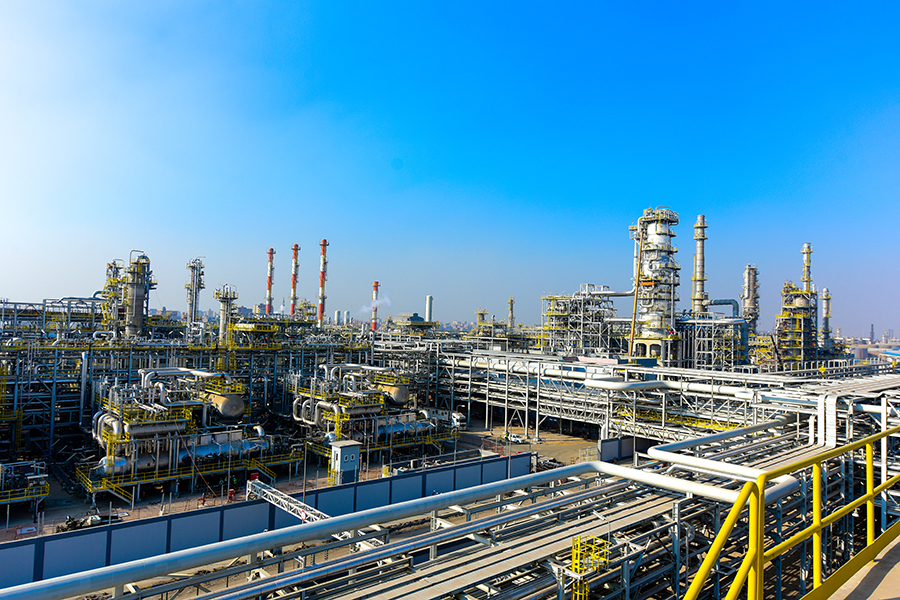
We’re seeing better terms, and a bigger contribution, with Energean. The London-listed oil producer has agreed on principal terms with the EGPC to merge three Mediterranean concessions into one — better fiscal terms, higher gas pricing, and a USD 150 mn investment program. The four-year investment plan could add up to 50 mn boe in aggregate and double production over the next 10 years, along with opening up new exploration acreage that may hold more than 4 tcf of gas.
And in startups, Zeal has closed a USD 10 mn round — bringing its total funding to USD 14 mn — to roll out its merchant loyalty platform across more than 4 mn card machines over the next two years.
Auto sales clicked up a gear as well. July sales rose 15.6% y-o-y to 18k units, with buses and trucks doing more of the heavy lifting than passenger cars. But EVs went from growth to decline, posting a 60% monthly drop amid a live policy debate over a proposed 5% tariff on EV imports.
***
ARE YOU MORE OF A LISTENER? Morning Drive is a 10-minute summary of today’s issue crafted for you to enjoy with your morning coffee, while getting the kids ready for school, or driving through the morning rush. And if you like it, tell your friends to tell their friends. They can find us on Apple, Spotify, or wherever they get their podcasts.
***
Lending pool nears the deep end
The plumbing for short-selling is in the final testing phase: Misr for Central Clearing, Depository, and Registry (MCDR) has entered final testing for its centralized securities lending and borrowing (SLB) system, with a limited pilot launch scheduled for November alongside the EGX, the FRA, and select brokerages, Mohamed Selim, R&D general manager at the EGX, tells EnterpriseAM. Its implementation could remove a major hurdle for short selling by simplifying how traders locate and borrow securities before executing a sale.
Centrality is, well, central: A centralized platform that matches securities supply with borrowing demand boosts market transparency, reduces operational complexity, and gives both lenders and borrowers greater visibility, Selim says. The phased rollout is equally critical given the project’s operational demands. “A functioning SLB market requires more than a regulatory framework: brokers, custodians, the exchange, and the central depository must be able to communicate seamlessly, while collateral, settlement, and risk-management processes need to operate reliably,” Selim says.
Liquidity, liquidity, liquidity: To minimize market risk during the early stages, eligibility criteria will mirror the framework used since short selling was introduced in 2019, restricting lending and borrowing to liquid EGX30 stocks so traders can enter and exit positions with minimal market impact. “The decision to start with highly liquid securities is consistent with the need to limit operational and market risks during the early stages of development,” Selim says. Parallel efforts are also underway to update market-making rules on the EGX, with the broader goal of boosting liquidity and overall trading volumes.
REFRESHER- EGX Chairman Omar Radwan told us in early August that the final system test was happening “as we speak” and that short-selling was closer to live than the official before-end-August timeline suggested. The FRA then issued its short-selling rulebook on 20 August, giving already-approved brokerages a month from the effective date to get their tech ready, which pointed to a late-September rollout, by our math.
It’s fine, apparently
The bourse fined almost three dozen companies on Tuesday for not filing their financials on time. The listing committee imposed penalties on 35 issuers that missed the deadline for disclosing their 1H 2026 earnings, according to a batch of bourse disclosures seen by EnterpriseAM. The fines run from EGP 5k to EGP 40k per company and come to some EGP 915k in total, by our math. Every penalized company got a further 15 days, on top of the extension the committee had already granted late last month.
Repeat offenders drew the ceiling: Orascom Investment Holding, Eastern Tobacco, Speed Medical, Arab Developers Holding, Qalaa, Ascom, and El Ahli Investment and Development each missed both 1Q and 2Q 2026 — while Remco for Touristic Villages, which hasn’t filed a full set since 1Q 2025, five quarters and an annual report ago, was fined the same EGP 40k. So were Premium Healthcare Group and El Badr Investment and Development, each three quarters and an FY 2025 behind.
The stocks barely moved: Orascom Investment closed up 2.4% at EGP 2.13, and Arab Developers Holding edged up 0.4% to EGP 0.25, with Eastern Tobacco gaining 0.14% to EGP 35.4, while both Qalaa and Ascom slipped 1.1%. Remco fell 1%, and Speed Medical shed 1.3%. El Ahli Investment and Development was down 0.4%, and Premium Healthcare (-2.2%) took the biggest hit.
ICYMI- The committee fined roughly 50 companies a combined EGP 1.04 mn last month, having penalized many of the same names session after session without any of them producing their numbers. “The late fee is not, in itself, a material burden for large companies,” Kamel Saleh, managing partner and CEO of Saleh, Barsoum, and Abdel Aziz — Grant Thornton, told us last month. The discipline, in his telling, is reputational, arising from the uncertainty a company creates around its own results when it goes quiet.
FRA bars Premium Healthcare votes
The Financial Regulatory Authority (FRA) has stripped Premium Healthcare Group’s biggest shareholders of their votes days before a meeting that could replace the company’s board. Eight shareholders holding a combined 31.92% of the clinical labs group are barred from voting at an ordinary general meeting on Saturday, per an FRA statement (pdf) and a letter (pdf) from the General Authority for Investment and Freezones (GAFI) sent to the EGX yesterday. The GAFI-convened meeting is being asked to rule on an inspection into the conduct of the board and the company’s auditors and to elect a new one. The FRA is citing conflict-of-interest rules that restrict insiders, executives, and major shareholders from voting on matters tied directly or indirectly to their interests, including when they are under investigation for alleged crimes involving company funds. The statement names only Mahmoud Ahmed Lashin, who holds 5.01%, and unnamed related parties. The annex to GAFI’s letter is more specific: it puts Hala Samir Mostafa Lotfy Ahmed, the register’s largest holder at 18.37%, on the barred list alongside six other shareholders.
A fund for the factory floor
The Sovereign Fund of Egypt (SFE) has set up a dedicated sub-fund for industrial investment with EGP 10 bn in authorized capital and EGP 1 bn in issued capital — of which EGP 500 mn is paid in now, with the rest due within five years — according to the fund’s founding decree in the Official Gazette and an Investment Ministry statement. The fund will target export-oriented manufacturers — automotive components and feeder industries, electronics and electrical appliances, food and beverages, textiles and ready-made garments, and pharma — to bring in more FX, deepen local content, and localize technology, Investment Minister Mohamed Farid said in the statement. Its term runs for 99 years.
How it works: The fund’s own investment committee signs off on each allocation after a feasibility study, aiming to boost production and competitiveness and bring in global industrial partners for new or expansion projects. It can invest directly in companies or indirectly — by partnering with investment banks to launch other industrial funds — and can buy, lease, and develop industrial land, buildings, and assets. The decree also lets it borrow, draw on credit facilities, and issue bonds and financing sukuk, giving it room to leverage well beyond its paid-in capital.
IN CONTEXT- This is the SFE’s first manufacturing-specific vehicle. It joins four sector funds (tourism, real estate, antiquities; healthcare, pharma; infrastructure, utilities; financial services, fintech) plus the pre-IPO sub-fund. Farid flagged it back in June, saying an industrial sub-fund targeting EGP 5 bn is expected between August and September, a target which appears to have grown.
PSA-
WEATHER- It’s going to be slightly cooler, but still hot, in Cairo today, with a high of 34°C and a low of 24°C, according to our favorite weather app.
It’s breezier up north in Alexandria, with a high of 31°C and a low of 24°C.
And over the weekend, expect to see the same hot and humid conditions in the capital (a high of 34°C) and a bit cooler weather for our friends on the Mediterranean (a high of 29°C).
The big story abroad
In the absence of a major story dominating the front pages today, we’re diving into three of the most notable developments in the business press.
Washington steps up debt housekeeping: The US Treasury Department announced it will buy back up to USD 6 bn of government debt to keep bond markets functioning, resulting in yields rising to their highest level in almost three years. This move—part of an operation to halt rising borrowing costs—marks an increase from the Treasury’s previous pledge to “at least” double its long-term bond acquisitions to USD 4 bn.
Meet the new iPhone: In a launch event yesterday, Apple announced the iPhone Duo — its first foldable smartphone — among a spate of new products, including the iPhone 18 Pro, Airpods 5, and Apple Watch Series 12. Its latest lineup sees a USD 100 price increase for the iPhone 18 Pro and Max, while the foldable Duo starts at USD 2k.
From the world of AI: Google will invest USD 15 bn in AI infrastructure in Finland over the next two years to develop three data centers, along with a 22-year agreement to purchase up to half the power generated by one of the country’s two nuclear plants. This marks the search-engine operator’s first nuclear energy agreement outside the US and its biggest European investment.