Energean-EGPC deal could unlock USD 150 mn in investments, 4 tcf of gas

1

WHAT WE’RE TRACKING TODAY

Centralized securities lending and borrowing system in testing ahead of November pilot launch,

Good morning, folks. We’re covering a broad spectrum today, with stories in energy, fintech, and autos — each of which highlights an important data point in the country’s broader investment story.

We’re seeing better terms, and a bigger contribution, with Energean. The London-listed oil producer has agreed on principal terms with the EGPC to merge three Mediterranean concessions into one — better fiscal terms, higher gas pricing, and a USD 150 mn investment program. The four-year investment plan could add up to 50 mn boe in aggregate and double production over the next 10 years, along with opening up new exploration acreage that may hold more than 4 tcf of gas.

And in startups, Zeal has closed a USD 10 mn round — bringing its total funding to USD 14 mn — to roll out its merchant loyalty platform across more than 4 mn card machines over the next two years.

Auto sales clicked up a gear as well. July sales rose 15.6% y-o-y to 18k units, with buses and trucks doing more of the heavy lifting than passenger cars. But EVs went from growth to decline, posting a 60% monthly drop amid a live policy debate over a proposed 5% tariff on EV imports.

***

ARE YOU MORE OF A LISTENER? Morning Drive is a 10-minute summary of today’s issue crafted for you to enjoy with your morning coffee, while getting the kids ready for school, or driving through the morning rush. And if you like it, tell your friends to tell their friends. They can find us on Apple, Spotify, or wherever they get their podcasts.

***

Lending pool nears the deep end

The plumbing for short-selling is in the final testing phase: Misr for Central Clearing, Depository, and Registry (MCDR) has entered final testing for its centralized securities lending and borrowing (SLB) system, with a limited pilot launch scheduled for November alongside the EGX, the FRA, and select brokerages, Mohamed Selim, R&D general manager at the EGX, tells EnterpriseAM. Its implementation could remove a major hurdle for short selling by simplifying how traders locate and borrow securities before executing a sale.

Centrality is, well, central: A centralized platform that matches securities supply with borrowing demand boosts market transparency, reduces operational complexity, and gives both lenders and borrowers greater visibility, Selim says. The phased rollout is equally critical given the project’s operational demands. “A functioning SLB market requires more than a regulatory framework: brokers, custodians, the exchange, and the central depository must be able to communicate seamlessly, while collateral, settlement, and risk-management processes need to operate reliably,” Selim says.

Liquidity, liquidity, liquidity: To minimize market risk during the early stages, eligibility criteria will mirror the framework used since short selling was introduced in 2019, restricting lending and borrowing to liquid EGX30 stocks so traders can enter and exit positions with minimal market impact. “The decision to start with highly liquid securities is consistent with the need to limit operational and market risks during the early stages of development,” Selim says. Parallel efforts are also underway to update market-making rules on the EGX, with the broader goal of boosting liquidity and overall trading volumes.

REFRESHER- EGX Chairman Omar Radwan told us in early August that the final system test was happening “as we speak” and that short-selling was closer to live than the official before-end-August timeline suggested. The FRA then issued its short-selling rulebook on 20 August, giving already-approved brokerages a month from the effective date to get their tech ready, which pointed to a late-September rollout, by our math.

It’s fine, apparently

The bourse fined almost three dozen companies on Tuesday for not filing their financials on time. The listing committee imposed penalties on 35 issuers that missed the deadline for disclosing their 1H 2026 earnings, according to a batch of bourse disclosures seen by EnterpriseAM. The fines run from EGP 5k to EGP 40k per company and come to some EGP 915k in total, by our math. Every penalized company got a further 15 days, on top of the extension the committee had already granted late last month.

Repeat offenders drew the ceiling: Orascom Investment Holding, Eastern Tobacco, Speed Medical, Arab Developers Holding, Qalaa, Ascom, and El Ahli Investment and Development each missed both 1Q and 2Q 2026 — while Remco for Touristic Villages, which hasn’t filed a full set since 1Q 2025, five quarters and an annual report ago, was fined the same EGP 40k. So were Premium Healthcare Group and El Badr Investment and Development, each three quarters and an FY 2025 behind.

The stocks barely moved: Orascom Investment closed up 2.4% at EGP 2.13, and Arab Developers Holding edged up 0.4% to EGP 0.25, with Eastern Tobacco gaining 0.14% to EGP 35.4, while both Qalaa and Ascom slipped 1.1%. Remco fell 1%, and Speed Medical shed 1.3%. El Ahli Investment and Development was down 0.4%, and Premium Healthcare (-2.2%) took the biggest hit.

ICYMI- The committee fined roughly 50 companies a combined EGP 1.04 mn last month, having penalized many of the same names session after session without any of them producing their numbers. “The late fee is not, in itself, a material burden for large companies,” Kamel Saleh, managing partner and CEO of Saleh, Barsoum, and Abdel Aziz — Grant Thornton, told us last month. The discipline, in his telling, is reputational, arising from the uncertainty a company creates around its own results when it goes quiet.

FRA bars Premium Healthcare votes

The Financial Regulatory Authority (FRA) has stripped Premium Healthcare Group’s biggest shareholders of their votes days before a meeting that could replace the company’s board. Eight shareholders holding a combined 31.92% of the clinical labs group are barred from voting at an ordinary general meeting on Saturday, per an FRA statement (pdf) and a letter (pdf) from the General Authority for Investment and Freezones (GAFI) sent to the EGX yesterday. The GAFI-convened meeting is being asked to rule on an inspection into the conduct of the board and the company’s auditors and to elect a new one. The FRA is citing conflict-of-interest rules that restrict insiders, executives, and major shareholders from voting on matters tied directly or indirectly to their interests, including when they are under investigation for alleged crimes involving company funds. The statement names only Mahmoud Ahmed Lashin, who holds 5.01%, and unnamed related parties. The annex to GAFI’s letter is more specific: it puts Hala Samir Mostafa Lotfy Ahmed, the register’s largest holder at 18.37%, on the barred list alongside six other shareholders.

A fund for the factory floor

The Sovereign Fund of Egypt (SFE) has set up a dedicated sub-fund for industrial investment with EGP 10 bn in authorized capital and EGP 1 bn in issued capital — of which EGP 500 mn is paid in now, with the rest due within five years — according to the fund’s founding decree in the Official Gazette and an Investment Ministry statement. The fund will target export-oriented manufacturers — automotive components and feeder industries, electronics and electrical appliances, food and beverages, textiles and ready-made garments, and pharma — to bring in more FX, deepen local content, and localize technology, Investment Minister Mohamed Farid said in the statement. Its term runs for 99 years.

How it works: The fund’s own investment committee signs off on each allocation after a feasibility study, aiming to boost production and competitiveness and bring in global industrial partners for new or expansion projects. It can invest directly in companies or indirectly — by partnering with investment banks to launch other industrial funds — and can buy, lease, and develop industrial land, buildings, and assets. The decree also lets it borrow, draw on credit facilities, and issue bonds and financing sukuk, giving it room to leverage well beyond its paid-in capital.

IN CONTEXT- This is the SFE’s first manufacturing-specific vehicle. It joins four sector funds (tourism, real estate, antiquities; healthcare, pharma; infrastructure, utilities; financial services, fintech) plus the pre-IPO sub-fund. Farid flagged it back in June, saying an industrial sub-fund targeting EGP 5 bn is expected between August and September, a target which appears to have grown.


PSA-

WEATHER- It’s going to be slightly cooler, but still hot, in Cairo today, with a high of 34°C and a low of 24°C, according to our favorite weather app.

It’s breezier up north in Alexandria, with a high of 31°C and a low of 24°C.

And over the weekend, expect to see the same hot and humid conditions in the capital (a high of 34°C) and a bit cooler weather for our friends on the Mediterranean (a high of 29°C).

The big story abroad

In the absence of a major story dominating the front pages today, we’re diving into three of the most notable developments in the business press.

Washington steps up debt housekeeping: The US Treasury Department announced it will buy back up to USD 6 bn of government debt to keep bond markets functioning, resulting in yields rising to their highest level in almost three years. This move—part of an operation to halt rising borrowing costs—marks an increase from the Treasury’s previous pledge to “at least” double its long-term bond acquisitions to USD 4 bn.

Meet the new iPhone: In a launch event yesterday, Apple announced the iPhone Duo — its first foldable smartphone — among a spate of new products, including the iPhone 18 Pro, Airpods 5, and Apple Watch Series 12. Its latest lineup sees a USD 100 price increase for the iPhone 18 Pro and Max, while the foldable Duo starts at USD 2k.

From the world of AI: Google will invest USD 15 bn in AI infrastructure in Finland over the next two years to develop three data centers, along with a 22-year agreement to purchase up to half the power generated by one of the country’s two nuclear plants. This marks the search-engine operator’s first nuclear energy agreement outside the US and its biggest European investment.

A strategic partnership shaping the next chapter of the Red Sea

Somabay and MARAKEZ come together in a landmark partnership, marking MARAKEZ’s first entry into Egypt’s Red Sea market and a significant step forward in the continued evolution of Somabay.

2

Energy

Energean considers USD 150 mn to double Egypt production over the decade, unlock 4 tcf of potential gas acreage

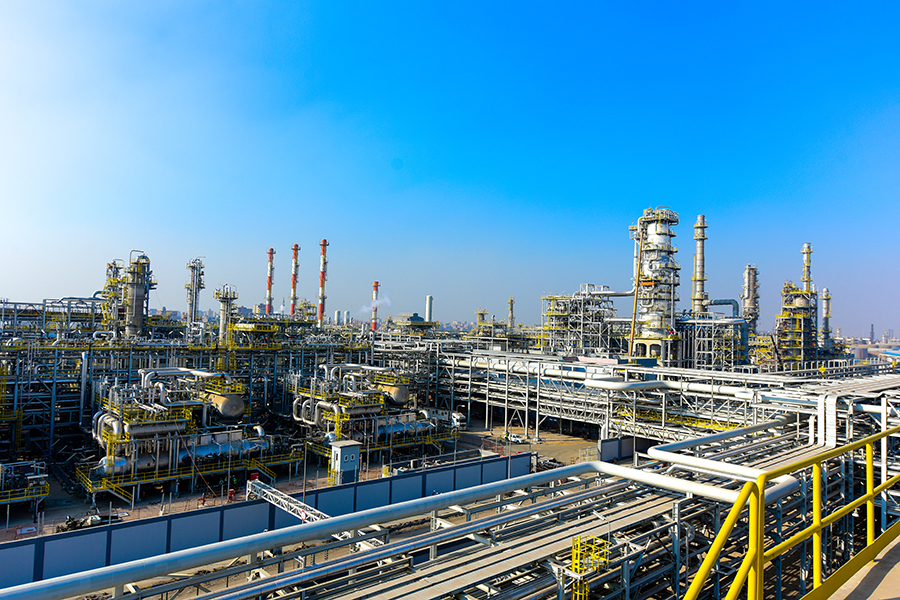
The Mediterranean-focused oil producer Energean is nearing an agreement to merge three concessions that could pave the way for it to double production in the country, the London-listed company said in its 1H results (pdf). The firm has agreed to principal terms with the Egyptian General Petroleum Corporation (EGPC) to combine Abu Qir, North El Amriya, and North Idku into a single concession with improved fiscal terms and higher gas pricing.

The better terms come with a resource upgrade: Under the agreement, the company is planning a USD 150 mn investment program over four years, which could add up to 50 mn barrels of oil equivalent in aggregate and double production over the following decade. It could also open up new exploration acreage estimated to hold more than 4 tcf of gas, according to the company.

BACKGROUND- Energean was one of the four runners aiming to acquire BP’s offshore West Nile Delta gas assets in late August on a roughly USD 1 bn indicative offer. BP’s output there has been sliding as production fell to 518 mmcf/d last year, down about 40% from 2024 and nearly 60% from 2023. The assets sit next to Energean’s own Abu Qir, North El Amriya, and North Idku concessions; combined, the two positions would give Energean a ~99k boe/d Egypt base. Energean’s prior sale of these same assets to Carlyle, worth up to USD 945 mn, collapsed in March 2025 after Italian and Egyptian regulatory approvals fell through.

What’s next: Energean has until roughly late September to convert its BP offer into a firm bid. On the concession side, the new EGPC terms still need Egyptian parliamentary ratification before their targeted 1 January 2027 start date.

This publication is proudly sponsored by

3

Startup watch

Egyptian-UK fintech Zeal raises USD 10 mn to back expansion plans

Egyptian-UK fintech player Zeal has raised some USD 10 mn in a funding round, bringing its total funding to USD 14 mn, according to a company statement. The fresh capital will fund a rollout across more than 4 mn card machines over the next two years, backed by signed contracts with global payment acquirers. The company did not disclose who participated in the round.

How Zeal works: Zeal offers loyalty services for merchants. They can set up stamps or points, collect phone numbers, or connect an existing loyalty program through their acquirer’s system. For acquirers and payment providers, there’s Merchant Health, a feature that flags changes in sales, terminal activity, and failed payments so teams can spot potential account issues before they escalate.

REMEMBER- We first covered Zeal back in 2022, when founder and CEO Omar Ebeid described how a London juice-bar cashier asking for a loyalty card — one he’d inevitably lose — led him to build a digital alternative and later bring the concept to Egyptian retail. In January 2024, Zeal raised USD 4 mn in a round led by Raed Ventures and Cur8 Capital, earmarked for AI integration and expansion into Cyprus, Greece, Saudi Arabia, and the UAE.

What’s next: Zeal says more large-enterprise partnership announcements are coming as it expands its acquirer relationships. Worth watching which acquirers and terminal manufacturers it names once the signed contracts start going live.

4

Automotive

July auto sales jump 15.6% y-o-y, as buses, trucks outpace passenger cars

Egypt’s auto market grew 15.6% y-o-y in July to 18k units (+3.3% m-o-m), with buses and trucks once again outpacing passenger cars, according to AMIC’s July 2026 report (pdf). Passenger cars — still the largest slice at 71% of volume — rose 4.1% m-o-m to 12.9k units, while buses jumped 62% to 1.8k units and trucks climbed 37.3% to 3.3k units. That’s a reversal from June, when passenger cars posted a rare 2.3% y-o-y decline — a dip Auto Traders Association President Osama Abu El Magd told us wasn’t a red flag, given the market’s small base and AMIC’s incomplete brand coverage, which excludes several major players, including all German marques.

Buses still did more of the heavy lifting than the headline suggests. Transport Micro buses — the workhorse category — rose 58.2% y-o-y to 1.3k units and still made up 71% of the segment. Transport Micro Micro, a category that barely registered a year ago (five units), jumped to 92. Tourism Micro grew 71.4% y-o-y to 247 units. The pattern echoes June, when tourism sub-segments also outperformed — Tourism Micro alone had jumped 147% m-o-m that month — suggesting the summer travel season is still pulling bus demand along.

Trucks rose roughly 9% m-o-m to 3.3k units. While heavy trucks more than doubled y-o-y (+113.5%, to 111 units), they pulled back 47.6% m-o-m from June’s 212 units — a swing that Cars by Maged’s Maged El Tawil told us in June is typical for the category, since a single real-estate developer or infrastructure fleet order can distort the line m-o-m. Meanwhile, pickups – the segment’s dominant category at 65% of truck volume — grew a steady 11% m-o-m to 2.2k.

EVs went from growth story to sharp stall, at least by the report’s numbers. July’s 140 EV units dropped 60.1% m-o-m from June’s 351. While AMIC figures likely undercount EVs due to non-member importers, the drop lands directly ahead of a live policy debate over a proposed 5% tariff on imported EVs meant to protect local assembly — an idea industry leaders argue will raise consumer costs without helping domestic manufacturing.

The CBU-CKD gap in passenger cars widened, yet again. July PC sales broke down to roughly 5.4k locally assembled (CKD) units against about 7.5k fully built imports (CBU), widening the gap to nearly 2.1k units in CBU’s favor. Commercial vehicles stayed far more localized: July figures put trucks at 83.5% CKD and buses at 74.3% CKD.

OUR TAKE- This CKD-CBU contrast highlights how differently incentive structures play out across the two segments. While commercial fleet operators prioritize domestic assembly for local parts availability and bottom-line cost efficiency, PC buyers are still heavily drawn to CBU imports for brand prestige, higher-end specs, and perceived build quality. Looking ahead, Al Mansour Automotive’s USD 150 mn MG plant in 6th of October City — targeting 50k units in initial capacity — could start lifting passenger car CKD shares as production ramps up.

5

A MESSAGE FROM AUC ONSI SAWIRIS SCHOOL OF BUSINESS EXECUTIVE EDUCATION

Seven courses, one path to senior leadership

Moving up in your organization means taking on more responsibilities, and functions to manage. The Senior Executive Diploma trains experienced managers across seven core courses, from reading financial statements and crafting competitive strategy to leading digital transformation and leading people. Mapped to the Chartered Management Institute’s (CMI) Senior Executive Leadership Programme, the diploma allows participants to earn Chartered Manager status and 12 months of CMI membership. Over nine months, the blended program runs live online and on campus, with the next cohort beginning 11 October 2026.

Applications close on 20 September 2026. Apply here.

6

LAST NIGHT’S TALK SHOWS

Education minister honors school principals amid inspection tour controversy

Another year, another controversy: The academic year rarely starts without controversy over the inspection tours governors conduct to verify that public schools are ready to receive students. An incident this week involving the principal of Banha’s Martyr Ahmed Samir School in Kafr Al-Gazzar dominated last night’s talk show discussions.

What happened? During a filmed inspection tour of the school, Qalyubia Governor Hossam Abdel Fattah criticized the conditions on-site, only to discover that the principal — Salha Abdel Fadel — and her colleagues had spent their own money to cover school maintenance and facility repairs. This out-of-pocket funding came after delays from the relevant authorities, with official correspondence substantiating the principal’s account.

More controversy: In another incident that gained widespread attention on social media, Governor Abdel Fattah reportedly dismissed the principal of Barqata Prep School in Kafr Shukr over what he said was the principal’s failure to request support in addressing issues at the school.

An official response: Following these incidents, the ministry presented honors to the two principals in recognition of their dedication, with Minister Mohamed Abdel Latif declaring that “Egypt’s teachers and school principals are a red line,” and assuring that the ministry is committed to upholding their dignity and respect.

Last night’s talk shows chimed in. TV host Ramy Radwan hosted the Martyr Ahmed Samir School principal on last night’s episode of From Maspero, where she expressed her joy over the Ministry's recognition (watch, runtime: 4:09). Sherif Amer hosted the principal of Barqata School in a phone interview on Yahduth Fi Misr, during which he confirmed that he had not been dismissed, adding that he received promises from the minister that the school’s structural issues would be addressed (watch, runtime: 3:04).

ALSO- Al Hayah Al Youm’s Mohamed Sherdy criticized the trend of governors filming their inspection tours and expressed his gratitude to the education minister for standing by Egyptian teachers and restoring the dignity of the two Qalyubia school principals (watch, runtime: 3:33).

7

Also on our Radar

HSBC boosts Swvl’s working capital facility by 110% to USD 1.4 mn

HSBC has raised Swvl’s working capital facility by 110% to USD 1.4 mn, according to a press release. The Egypt-founded, Nasdaq-listed mass transit app is also rolling out HSBC’s global payment solutions in Egypt to handle high-volume, time-sensitive payments across its network of operators, suppliers, and business partners. The facility, established in November 2024 and anchored in Egypt, will cover the working capital needs of Swvl’s new and renewing enterprise contracts across Egypt, the GCC, the UK, and the US.

ICYMI- Swvl Holdings entered into a definitive agreement in late August for a USD 13 mn private placement priced at the market under Nasdaq rules — a round since upsized to c. USD 14.5 mn. Coefficient LP, a Houston-based investment firm backed by the Sawiris family, is leading the round with USD 10 mn and will become Swvl’s largest institutional shareholder once the transaction closes, with an existing shareholder contributing the remaining USD 3 mn. The additional USD 1.5 mn came from Sofico Holdings Limited, a Cairo-based family investment company.

BACKGROUND- Swvl received a Nasdaq delisting notice in November 2025 after its market cap sat well below the exchange’s USD 35 mn minimum, but it stayed compliant by meeting the alternative net income and shareholders’ equity standards. The company returned to profitability with net income of USD 1.3 mn in 2025, reversing the prior year’s loss as its 2023-2024 restructuring toward B2B and B2G contracts began to pay off. Egypt remains its biggest market by revenue share, with revenues growing 20% y-o-y to USD 16.2 mn.

Agreements on Ras El Hekma’s dunes

ADQ-backed developer Modon Holding has awarded a third large-scale development contract at Ras El Hekma’s Wadi Yemm, this time to a REDCON Construction-Innovo Group consortium for roughly EGP 12 bn, Asharq Business reports, citing two sources familiar with the matter. The scope covers infrastructure and residential works within the first district of Ras El Hekma, to be delivered within 18 months of signing, according to one source.

IN CONTEXT- Modon has now handed out three large-scale development packages at Wadi Yemm, plus a hospitality-specific contract: Orascom Construction got an EGP 15 bn development contract for residential units, offices, and a 70-room hotel, alongside infrastructure; the Rowad Modern Engineering-Consolidated Contractors Company (CCC) consortium landed an EGP 10 bn roads and utilities package; and Hassan Allam Construction is building the Montage Hotel and Branded Residences there.

About the project: Wadi Yemm — the first district breaking ground within the USD 35 bn megaproject — will house residential units, hotels, two golf courses, a country club, and a 10k-seat open-air theater, per the project’s website. ADQ named Modon the master developer for Ras El Hekma in October 2024, tasking it with the first 50 mn sqm. The remaining 120 mn sqm will go to other local, Emirati, and international partners.

Space ties

Egypt and Saudi Arabia are working through the roadmap for designing and building their first jointly developed satellite. A Saudi Space Agency delegation met Egyptian Space Agency CEO Maged Ismail on the sidelines of the El Alamein International Airshow to discuss the implementation plan, according to a LinkedIn post. The project pitch is to use space technology for sustainable development and meet priorities shared by the two countries. The statement gave no budget, launch timeline, or technical specifications.

REMEMBER- Egypt is being considered as a candidate for the Makkah defense pact, amid a widening slate of Egypt-Saudi cooperation across real estate, energy, and education. Recent developments include a partnership between PIF and Talaat Moustafa Group to expand the developer’s presence in the Kingdom, alongside a 3 GW electricity interconnection project the two countries are advancing.

EgyptAir down under

EgyptAir wants to fly to Australia from 2027, with plans to launch a link between Cairo and Sydney via Singapore, subject to regulatory approval, according to a press release. Egypt is Sydney Airport’s largest unserved market in Africa, per the release, and the route would serve Australian travelers and Egypt’s 43k-plus-strong diaspora in Australia. Details on timelines, aircraft, and ticket pricing have yet to be disclosed.

It wouldn’t be the first time: EgyptAir suspended a twice-weekly Cairo-Singapore-Sydney service in July 2002 and then shelved plans to reroute it through Kuala Lumpur, Aviation Week reported at the time.

IN CONTEXT- The route is part of a broader network buildout tied to fleet modernization. EgyptAir launched direct Cairo-Los Angeles and Cairo-Chicago routes on its new Airbus A350-900s earlier this year and added two weekly Cairo-Zanzibar flights on its 737-8 Max fleet this month. The move also aligns with Egypt’s goal of welcoming 30 mn annual visitors by FY 2029/30.

No East Africa, yet

EGX-listed Telecom Egypt (TE) pushed back on reports that it is planning an expansion into an East African market, saying in a bourse disclosure (pdf) that no investment decision or plan has been approved at this stage. Details circulating about a specific country, how much it would spend, or what it would build on the ground aren’t approved decisions, TE said. However, it noted that looking at offshore growth opportunities is something it does routinely, and that any material move will be disclosed once it gets the green light.

REFRESHER- TE pulled the plug on its planned sale of a majority stake in its Regional Data Center Hub (RDH) to UK-based, Africa-focused private equity firm Helios Investment Partners. Helios had preliminary board approval back in September 2025 to buy 75-80% of a subsidiary that would own RDH, on a binding offer valuing the hub at USD 230-260 mn. TE cited unmet conditions in the term sheet — some tied to third parties — and said it would keep RDH in a wholly owned subsidiary instead.

Two disposals in one sitting

Cairo Poultry is putting its stake in security services firm Aman on the block, it said in an EGX disclosure (pdf) yesterday, without providing any additional information. The same board meeting also signed off on liquidating Cairo Leasing, the group’s leasing subsidiary.

REMEMBER- The decisions come weeks after the company completed a merger absorbing five poultry subsidiaries at book value, with the Financial Regulatory Authority clearing the disclosure report for trading in the post-merger shares earlier this month.

More under our radar:

  • India’s tablet-coating manufacturer Enrobage plans to set up a local manufacturing unit in Egypt within two years, taking advantage of Egypt’s position as a logistical gateway to Africa. (Al Borsa)
8

PLANET FINANCE

Egypt and India propped up the region’s rising share of global FDI in 1H 2026

It’s been a good FDI year so far for Egypt and India, but not so much for the UAE, Saudi Arabia, and Turkey. The five markets together, however, saw greenfield investment remain broadly flat in 1H 2026, even as global activity fell 38% to USD 538.2 bn, lifting their share of global FDI to 10.5% from 6.5% a year earlier, according to Emirates NBD Research (pdf).

Fewer projects, bigger cheques: Average project value across the five economies rose to USD 56 mn from USD 33 mn, driven by AI infrastructure in India and Chinese and Gulf megaprojects in Egypt.

India was one of the clearest winners: Greenfield FDI rose 23% y-o-y to USD 32.8 bn, doubling its share of global flows to 6.1%. Data centers did much of the lifting, with AWS alone accounting for around 40% of recorded inflows after announcing a USD 8.3 bn investment in Maharashtra.

Egypt had the fastest growth: Egypt’s investment plans surged 77% to USD 12.4 bn even as project announcements moderated. China became the country’s largest source of greenfield FDI at USD 4.9 bn, while UAE commitments rose almost tenfold to USD 4.3 bn, helped by Majid Al Futtaim’s USD 3.1 bn Cairo development. The China number is only going up from here, it seems — during Xi’s Cairo visit earlier this month, we saw agreements for a third-phase expansion of the Teda industrial zone and a widening cluster of Chinese tire manufacturers in Sokhna.

Not everyone bucked the slowdown: UAE inflows fell 46% y-o-y to USD 5.3 bn, with activity dipping in March before picking up through the second quarter to nearly triple its March level. The country counted the highest number of project inflows after India, at 360, with Dubai accounting for around seven in 10 projects. Saudi inflows also dropped 59% to USD 3.8 bn, with investments shifting towards industrial supply chains and away from service projects. Meanwhile, Turkey recorded a 39% slowdown in inward investment to USD 2.1 bn.

BACKGROUND- The UAE drop is a sharp reversal from the record USD 48.24 bn the country pulled in for all of 2025 — and it’s close to what UNCTAD warned about back in July, when it flagged energy and infrastructure investment — the same categories driving the UAE’s prior boom — as the most exposed if the war dragged into 2026. Saudi Arabia’s own Gastat data also showed net FDI cooling through 1Q.

There is a disclaimer, though: “First-half 2026 figures probably understate total cross-border deals: data aggregators append deals over time, and comparable figures from the first half of last year were later revised up by around a quarter,” the report explains. That means that the full-year data might still come in higher.

The Gulf story is increasingly outbound: UAE companies poured an estimated USD 11 bn of greenfield investment abroad, roughly double the USD 5.3 bn flowing into the country, led by renewables and real estate — though it’s still “far below” its outbound FDI in 1H 2025 of USD 92 bn, suggesting UAE companies pulled back on overseas investment as hard as foreign investors pulled back on the UAE, if not harder. Saudi Arabia was the only market tracked where outbound investment increased, rising 90% to USD 3.3 bn as renewables developers pushed into Spain and Italy.

MARKETS THIS MORNING-

Asian stocks fell in early trading, with South Korea's Kospi down 1.4% and Japan's Nikkei down 1%. The losses track Wall Street performance, as surging oil prices stoked inflation concerns and as Treasury yields rose.

EGX30

56,501

+0.6% (YTD: +35.1%)

USD (CBE)

Buy 51.14

Sell 51.28

USD (CIB)

Buy 51.14

Sell 51.24

Interest rates (CBE)

19.00% deposit

20.00% lending

Tadawul

11,016

-0.2% (YTD: +5.0%)

ADX

10,107

+0.9% (YTD: +1.1%)

DFM

5,927

-0.3% (YTD: -2.0%)

S&P 500

7,636

-0.5% (YTD: +11.6%)

FTSE 100

10,670

-1.3% (YTD: +7.4%)

Euro Stoxx 50

6,312

-1.6% (YTD: +8.9%)

Brent crude

USD 101.21

+3.4%

Natural gas (Nymex)

USD 2.81

-0.6%

Gold

USD 4,449

+0.1%

BTC

USD 77,965

-0.9% (YTD: -11.2%)

S&P Egypt Sovereign Bond Index

1,114

+0.0% (YTD: +12.2%)

S&P MENA Bond & Sukuk

150.68

-0.0% (YTD: -0.8%)

VIX (Volatility Index)

16.46

+4.7%(YTD: +13.4%)

THE CLOSING BELL-

The EGX30 rose 0.6% at yesterday’s close on turnover of EGP 12.5 bn (7.6% above the 90-day average). International investors were the sole net sellers. The index is up 35.1% YTD.

In the green: Telecom Egypt (+4.9%), Abu Qir Fertilizers (+2.7%), and Edita (+2.3%).

In the red: Cleopatra Hospital Company (-3.0%), Sidpec (-2.0%), and Rameda (-1.9%).

9

My Morning Routine

My Morning Routine: Hesham Radwan, general manager of Danone Egypt

Hesham Radwan, general manager of Danone Egypt: Each week, My Morning Routine looks at how a successful member of the community starts their day — and then throws in a couple of random business questions just for fun. Speaking to us this week is Hesham Radwan (LinkedIn), general manager of Danone Egypt.

Edited excerpts from our conversation:

I’ve spent more than 25 years in business, 18 of them at Danone. Following my graduation from the American University in Cairo in 2001, I took on marketing, sales, and consulting roles at companies including Procter & Gamble, Nestle, and the Boston Consulting Group (BCG) before joining Danone. I’ve watched the company grow in Egypt almost from its founding stage, an experience that’s made Danone part of my personal and professional identity.

As general manager, my main job is to ensure our team has a motivating environment to grow in, one that gives them a sense they’re contributing something useful to society. I’m also the link between our parent company’s global strategy and our local execution, translating that strategy into projects on the ground. That means guiding the team, providing training, and having the courage to try new things in our challenging market.

Danone meets a basic need: healthy food. What sets our story apart in the Egyptian market is our focus on a “dual project” that ties economic performance to community development. We don’t just sell yogurt; we offer solutions to local health problems like anemia and iron deficiency in children, and we support digestive health and hydration. We’re also proud of community initiatives like the Omda Project, which has enabled small distributors in villages and given them sustainable work prospects.

Prioritizing healthspan over lifespan is the most interesting shift in the market today. Consumers are seeking real nutritional value for their money and increasingly favoring products that fit an on-the-go lifestyle. We’re steering our innovation toward that demand, including higher-protein products. If we don’t keep pace with this shift, our impact on the market will decline.

I wake up very early, usually between 6:30 and 7am. I keep my morning pace slow and reserved for myself before the rest of the family wakes up. I start with meditation and a moment of gratitude, then play a light phone game called Kingshot. After that, I spend 15-20 minutes catching up on news on X, have breakfast with my wife, and go over the daily schedule before heading to work. During my commute, I listen to music and check in with the team.

I read EnterpriseAM to keep up with the regional business and finance market. It gives me a clear view of what’s happening, but what really draws me in is the human side. Features like this one let me see CEOs and business leaders as regular people with their own interests and routines, which keeps me connected to the business community in a more grounded way.

A typical workday starts when I get to the office, but I don’t head straight into meetings. I like to sit on the terrace first, have Turkish coffee, and chat with the team. My day is a mix of scheduled and unscheduled meetings, but I always leave 10-15 minutes between them to recharge and protect my creative capacity.

To stay organized, I rely on scheduling my main tasks and meetings weeks ahead on my calendar. I avoid heavy meals during work hours, sticking to light snacks to keep my energy up, and constant back-and-forth with colleagues in the office also helps me stay on track.

The one constant in my day is an Activia yogurt and a multivitamin. This habit matters to me for digestive health, which I consider the body’s second brain, and I treat it as a daily investment I won’t skip.

On a professional level, I’m always looking to take on greater responsibility, and I wouldn’t mind seeing Egypt become a regional hub for the Danone group serving other markets, should the chance arise.

Personally, I’m a father to Hassan, 10, and Alia, two and a half, and I hope they grow up to make a real difference in the world around them. I’m also a loyal Zamalek fan, and nothing makes me happier than watching a match or cheering Hassan on at his junior league football games.

Work-life balance isn’t a phrase I like. I don’t see them as opposites that need balancing. Work, family, health, and mental wellbeing are all just components of the same life. My routine stays flexible and open to emergencies; a family situation might interrupt my work, and an exceptional work circumstance might interrupt my family time. What matters most is being aware of the tradeoffs we make and accepting that no one gets it 100% right.

I switch off from work the moment I get home. I set aside 15-30 minutes of quiet time to shed the day’s stress and recharge, no phone, no conversation, just clearing my head and going over my day. It leaves me with peace of mind and positive energy before I join my family. Lately, I’ve picked up the drums and I’m learning alongside my son.

I’d recommend reading “The Forty Rules of Love” by Elif Shafak. It got me thinking about spirituality and the importance of intuition. In business, we can’t rely on numbers alone; we need instinct and a clear conscience to make good decisions. I don’t really follow TV series on my own, only whatever my wife is watching, but I love historical documentaries like Age of Samurai for broadening my perspective.

“Life is a school we never graduate from until we die.” I read that line decades ago in Rose El Youssef magazine, and it still reminds me that no matter how much experience I gain, there’s always something new to learn. It keeps me open to other people’s differences, whether in culture, class, or background, and helps me see mistakes as opportunities to grow rather than setbacks.


SEPTEMBER

8-10 September (Tuesday-Thursday) El Alamein International Airshow, El Alamein International Airport.

10-12 September (Thursday-Saturday): Egyptian Entrepreneurship Sector Diagnostics Report Summit, El Gouna.

15 September (Tuesday): IMF to hold its eighth review of Egypt’s USD 8 bn EFF arrangement.

24 September (Thursday): Monetary Policy Committee’s sixth meeting of 2026.

27-29 September (Sunday-Tuesday): Global Conference on Population, Health, and Human Development.

28-29 September (Monday-Tuesday): Egypt Mining Forum, St. Regis Hotel New Capital.

OCTOBER

5 October (Monday): The EnterpriseAM Egypt Forum, St. Regis Hotel Cairo.

6 October (Tuesday): Armed Forces Day.

10-11 October (Saturday-Sunday): Egypt Women’s Health Summit (EWHS), Cairo Marriott Hotel.

26-28 October (Monday-Wednesday): IEX Egypt, Egypt International Exhibition Center, Cairo.

29 October (Thursday): Monetary Policy Committee’s seventh meeting of 2026.

NOVEMBER

6-8 November (Friday-Sunday) : Global Entrepreneurship Festival, JW Marriott Hotel, New Cairo.

8-11 November (Sunday-Wednesday): Cairo ICT Forum.

16 November (Monday): Cityscape Egypt Forum, Cairo.

DECEMBER

7-10 December (Monday-Thursday): Food Africa, Egypt International Exhibition Center, Cairo.

17 December (Thursday): Monetary Policy Committee’s eighth meeting of 2026.

EVENTS WITH NO SET DATE

2H 2026: Operations at Deli Glass Co’s new USD 70 mn glassware factory kick off.

2026: The Egyptian-American Economic Forum.

4Q 2026: Banque du Caire IPO.

2027

20 January-7 February: Egypt to host the African Games.

1-3 February (Monday-Wednesday): Agri Expo, Cairo International Convention Center.

April 2027: Tenth of Ramadan dry port and logistics hub to begin operations.

EVENTS WITH NO SET DATE

2027: Egypt to host EBRD’s annual meetings.

2027: Egypt-EU Summit 2027.

End of 2027: Trial operations at the Dabaa nuclear power plant expected to take place.

September 2028: First unit of the Dabaa nuclear power plant begins operations.

Now Playing
Now Playing
00:00
00:00