Urban inflation slowed to 14.5% in August against expectations

1

WHAT WE’RE TRACKING TODAY

BdC’s updated valuation study has been approved by a cabinet committee, marking a step closer to IPO

Good morning, folks. We’ve got three stories to kickstart the week, one about a macro surprise, another on our friends at Beltone Venture Capital closing three agreements, and a third on a regulatory fix for non-banking lenders.

The inflation number is the lead. Urban inflation came in at 14.5% in August — below the forecast from analysts and the CBE’s own guidance that 3Q would bring a temporary pickup. Food fell for the third straight month, offsetting the electricity tariff increase, while core inflation edged up slightly. The next CBE meeting is set for 24 September, and the August data hands the committee a dovish data point it wasn’t expecting.

Beltone VC is closing three agreements — fintech, proptech, and consumer finance — and plans to launch an EGP-denominated startup fund by 1Q 2027. Exits are paying for the moves, including one from a local portfolio company that is at final signing. Another exit is in the works — a Moroccan holding is under a potential acquisition that would return 3x the original investment in under 18 months.

And on credit reporting: Non-bank lenders must now report financing events to I-Score as they happen, closing a gap where a borrower’s credit file could lag reality by weeks. The move was already in the works before the Global Paradigm unauthorized-financing case, but the timing suggests the case sharpened the urgency to address the problem.


Morning Drive just turned one! And we’re celebrating with new artwork and a few guest appearances. Listen to today’s episode on Apple Podcasts, Spotify, or Anghami.

Morning Drive is your daily download of the essential headlines shaping Egypt. A condensed version of the newsletter in audio form. Hosted by ‘Synthetic Salma’ — an AI-powered version of our own Executive Editor Salma El-Saeed.


Another gate swings open

Banque du Caire (BdC) has cleared another checkpoint on the way to the EGX. A cabinet committee set up under the 2025 state-ownership law to vet pre-offering valuations has unanimously approved the methodology behind BdC’s updated fair-value study, according to a cabinet statement. The refreshed study runs off the bank’s 30 June 2026 financials — which showed consolidated net income up some 22% y-o-y to EGP 8.94 bn and deposits above EGP 443 bn — updating an earlier version based on end-2025 numbers that the committee discussed in March. It cleared review of its evaluation methodologies, financial assumptions, growth, and discount rates, with the Financial Regulatory Authority signing off and independent advisor Baker Tilly presenting the work.

Adopting the valuation opens the way to roadshow rounds once the private placement among investors, banks, and international institutions is secured, a government official tells EnterpriseAM. The state is now eyeing a sale of around 40%, though Banque Misr will set the final size once the roadshow lands, the official says. The offer date is still under discussion, pointing to a November-December window; the reported fresh price tag came in at EGP 80-80.5 bn, up from around EGP 78 bn in the 2025 financials.

REFRESHER- BdC first hit the auction block in 2007, and has been through multiple attempted IPOs since 2019, with the state signaling a year-end offering for months. The European Bank for Reconstruction and Development and the International Finance Corporation are circling a combined 10% stake in the state-owned lender’s upcoming float.

Switching on a desert grid

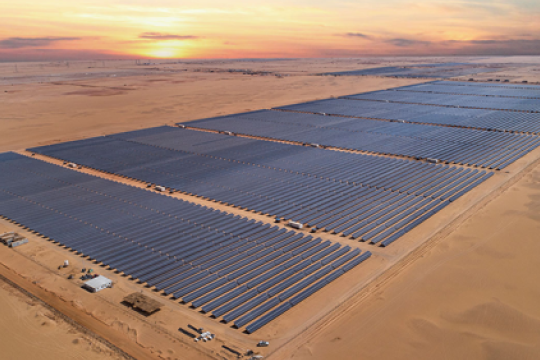
Karm Holding will start up an independent solar network in Dakhla, New Valley, before year-end, CEO Ahmed Zahran tells EnterpriseAM. The initial investment is USD 19 mn for the solar plant, battery storage, and grid infrastructure — enough to power 200k feddans of farmland.

Meanwhile, Zahran met with governor Hanan Magdy to discuss a broader New Valley plan covering Kharga, Dakhla, and Farafra that could reach USD 700 mn, at no cost to the governorate, Zahran says. He adds that the USD 700 mn isn’t a fixed commitment: “There is no set total figure for the volume of future investments, because the scale of the expansion will depend on how large the area grows and how much power it needs going forward.”

Why it matters: The early build gives KarmSolar a head start on the electricity-wheeling program. The Egyptian Electric Utility and Consumer Protection Regulatory Agency (EgyptERA) has already qualified the company to participate — generating power in the desert and selling it across the national grid to B2B customers outside the New Valley, Zahran tells us. The program launches in 2027; the Electricity Ministry and the Egyptian Electricity Transmission Company started laying the groundwork in 2024.

REMEMBER- This is the same playbook Zahran told us about in July at South Sinai’s Abu Zenima, where Karm is building an off-grid solar microgrid to unlock a stalled industrial zone, with plans to connect to the grid and wheel solar in once demand clears EgyptERA’s 30 MVA threshold.

What’s next: Beyond energy, the plan includes Karm Holding’s global HQ in the New Valley, an eco-resort, and a solar-focused applied-technology school, plus converting industrial secondary schools in Kharga and Farafra into dual technical-education schools, per Zahran.

Ten steelmakers, eight licenses

The Industrial Development Authority closed applications last week for eight licenses that would add 2.8 mn tons a year of local billet capacity — four at 500k tons each, four at 200k — with 10 companies in the running, two government officials tell EnterpriseAM. Ashry Steel applied for two licenses — a 200k-ton and a 500k-ton license, Chairman Ayman El Ashry tells us.

IN CONTEXT- The tender follows through on plans the government first outlined in February and announced in August. Before that, the government had frozen the licensing process to conduct a trade-remedy review, which ended with a 13% anti-dumping duty on imported hot- and cold-rolled steel. The whole push has been over two years in the making, meant to produce more raw materials locally instead of burning through foreign currency with imports, Metallurgical Industries Chamber Director Mohamed Hanafi told us last February.

The pull is a local billet shortage. Demand for the licenses reflects a market starved of domestic supply after the Investment Ministry imposed anti-dumping duties on imported billet, idling rolling mills and delaying deliveries, a Metallurgical Industries Chamber source tells us. Local billet prices rose after import duties restricted access to the foreign alternative, and duties reached 16.2% of cost, ins., and freight value — no less than EGP 4.6k per ton. Billet imports jumped 10x over five years to 1.7 mn tons, costing the state USD 1 bn annually in foreign currency.

The 200k-ton tier is oversubscribed — with ElMarakby Steel, Watania Steel, and Ashry Steel among the bidders — so the authority will have to choose, the chamber source says, adding that the 500k-ton tier drew exactly four applicants. Market leader Ezz Steel isn’t among them, according to the source. Ezz Steel told us in April there is no shortage, but that Egypt suffers from a supply glut, arguing the country’s 13.3 mn-ton capacity is enough to absorb roughly 9 mn tons of domestic demand annually.

What’s next: The authority will now vet the bids and pick winners under the tender terms. New capacity is likely two years out, the chamber source says — landing roughly when the anti-dumping duties are due to expire. The government has been weighing extending those duties for up to three more years amid pushback from downstream manufacturers.

Developer debt under microscope

The Central Bank of Egypt (CBE) ordered banks last week to compile data on all loans and credit lines given to real estate projects, including identifying which ones are behind on payments and how much of each loan has actually been used. The CBE wants to know each project’s facility value, how much of that has been drawn, and whether the money went where it was supposed to, a credit chief at a private bank said. Another banker said the CBE asked for a closer look at the 15 largest developers, their loan amounts, and project completion rates.

Banks have already begun complying, a government bank’s corporate lending head confirmed. The news from the central bank comes after the Egyptian president’s August directive for a government committee to inspect real estate projects nationwide following complaints from buyers about delayed handovers and contract terms.

Why this matters: The CBE wants to know how much bank credit is tied up in a sector where the headline numbers hide real strain. The country’s top 10 developers posted EGP 670 bn in gross contracted sales in 1H 2026, but unit sales fell 3% to around 39k. The three biggest listed developers — Talaat Moustafa, Sodic, and Palm Hills — saw their contractual sales drop 6.4% to EGP 338.6 bn in 1H 2026. Talaat Moustafa Group alone held EGP 180.4 bn in deferred checks for undelivered units in 1Q 2026.


The EnterpriseAM Egypt Forum is back — and we’re devoting the full day to the singular set of questions on everyone’s mind: What does AI actually mean for your company, your people, your economy, your own job — and your kids’ future?

Every session on stage answers one question: “So, what do I actually do about it?”

Join us on 5 October in Cairo. Seats are limited and attendance is by invitation only.

Request your invitation here.


PSA-

WEATHER- It’s another warm and humid day in Cairo, with a high of 35°C and a low of 23°C, according to our favorite weather app.

It’s a little bit cooler in Alexandria, with a high of 31°C and a low of 23°C.

The big story abroad

Several AI-related stories get top billing today, chief among them is that OpenAI’s IPO — which could potentially be valued in USD tns — will not take place this year. CEO Sam Altman has cited safety-related concerns around the technology. Altman also hinted that OpenAI and other top firms may soon announce a joint pact to slow AI development and address rising safety risks.

Fellow chiefs agree: Altman and Elon Musk echoed AI safety concerns following a blog post by Anthropic CEO Dario Amodei, who warned that current risks are too high to sustain rapid development — a sentiment triggered days after an employee cited a greater than 10% chance AI could destroy civilization.

In other AI news: JPMorgan Chase terminated its lending relationship with hedge fund Situational Awareness after its AI wagers led to the largest loss in the sector’s history. Led by wunderkind investor Leopold Aschenbrenner, the firm avoided total collapse this summer by offloading most of its public-market positions to multinational hedge fund Citadel.

Another high-stakes AI position: Oracle co-founder Larry Ellison axed plans to sell up to USD 7.5 bn worth of shares in the database giant in a U-turn by the world’s seventh-richest man. Ellison’s company is facing rising market pressure over its massive wager on AI. To alleviate balance-sheet pressure tied to investments in companies like OpenAI, the cloud tech firm cut thousands of jobs, racking up USD 2.8 bn in costs related to layoffs.

A strategic partnership shaping the next chapter of the Red Sea

Somabay and MARAKEZ come together in a landmark partnership, marking MARAKEZ’s first entry into Egypt’s Red Sea market and a significant step forward in the continued evolution of Somabay.

2

The Big Story Today

Urban inflation unexpectedly slowed to 14.5% in August

Urban inflation slowed to 14.5% in August, defying forecasts of a pickup and undershooting the central bank’s own near-term call. Annual urban inflation eased from 14.9% in July, according to Capmas data (pdf). A Reuters poll of 17 analysts had predicted 15.5% — with the softest forecast, 14.6%, still above the actual reading. Prices rose just 0.1% m-o-m, according to the data.

Core inflation went the other way. Annual core inflation — which strips out volatile items like food and government-set prices — edged up to 14.9% in August from 14.7% in July, with monthly core inflation at 0.3%, according to a Central Bank of Egypt (CBE) statement.

The slowdown went against the central bank’s own guidance. When the CBE held rates for a fourth straight meeting in August — keeping the overnight deposit rate at 19.0% and lending at 20.0% — it said it expected inflation to pick up temporarily in 3Q 2026 on unfavorable base effects before resuming its descent.

Food offset the electricity hike: The roughly 12% household electricity increase from late July did show up: housing, water, electricity, gas, and fuel rose 1.8% on the month, the biggest monthly gainer, and were up 42.8% y-o-y — the steepest of any category. But food and non-alcoholic beverages fell 1.1% — a third straight monthly drop — led by cheaper vegetables (-6.9%), meat and poultry (-1.3%), and fruit (-1.2%), leaving annual food and beverage inflation at just 6.3%. On the year, transport rose 24.4%, education 18.7%, and furnishings 16.9%.

The August outturn came in “significantly below” EFG Hermes’ 15.8% projection, largely because food fell for a third month against an expected 0.5% rise, the bank’s head of macroeconomic analysis Mohamed Abu Basha tells EnterpriseAM; he sees a further slowdown in September as favorable base effects kick in, but no move from the CBE, with “rising global oil prices keeping some upside risk” and policy rates likely stable through year-end.

External risks still argue for caution. Geopolitical escalation, higher oil prices, exchange-rate and capital-flow uncertainty, and the potential fallout from the US Federal Reserve’s next move on global financial conditions all point to the CBE staying put in its 24 September meeting, Nagwa Samak, dean of administrative sciences at Galala University, tells us. She expects the bank to “resume its monetary easing cycle gradually over the subsequent meetings, with rate cuts implemented in stages rather than through a large one-off reduction,” once external tensions ease and domestic pressures stay contained.

Where the CBE sees it heading: Headline inflation averaged 14.6% in 2Q, slightly below the bank’s prior 15.0% forecast. Under its baseline, the CBE expects inflation to average 16.6% in FY 2026/27, then slow to 8.1% in FY 2027/28 and align with its 7% target range (±2 percentage points) in 2H 2027.

Why it matters: The softer results come ahead of the 24 September MPC meeting — one of three left this year, with 29 October and 17 December to follow — and hand the committee a dovish data point, tempered by firmer core inflation. The bank has room to wait: the economy grew 5.1% in FY 2025/26, beating the IMF’s 4.6% forecast; the S&P Global PMI climbed to a seven-month high of 49.6 in August; and net reserves hit USD 57.2 bn at the end of August, while the EGP held firm through USD 9.5 bn of portfolio outflows. February’s 100 bps cut remains the only move this year so far, and urban inflation is still near its 2025 average of 14.2%, far below the 38% peak of September 2023.

This publication is proudly sponsored by

3

Startup watch

Beltone Venture Capital is closing three deals and readying an EGP-denominated startup fund for early 2027

Beltone Holding’s Beltone Venture Capital is closing three new investments worth around USD 1 mn in the next two to three months, CEO and Managing Partner Ali Mokhtar tells EnterpriseAM. The three local targets span fintech, proptech, and consumer finance — two at pre-seed and one at a more advanced operating stage, he says.

Exits are paying for it. Beltone VC has closed five exits since it started and is redeploying proceeds into new startups — with some potentially steered toward larger direct-investment plays, Mokhtar tells us. Locally, the company is at final signing on what he calls a “big exit” from a portfolio company. Regionally, it exited Morocco’s Cathedis at a 100% IRR, and a second Moroccan holding is subject to a potential 100% acquisition that would return 3x its original investment in under 18 months, Mokhtar adds.

A fund in EGP, coming soon: Beltone VC plans to launch a new fund dedicated to backing startups in local currency and expects it to go live by 1Q 2027 at the latest, Mokhtar says. The fund was previously announced at EGP 250 mn, but the actual figure may exceed that target as new investors look to commit capital to it, he adds.

Beltone hasn’t fully exited delivery firm Bosta, Mokhtar tells us, adding that the previously reported exit covered other investors’ stakes, while Beltone has kept a direct holding of around 5%.

What’s next: Beltone is weighing sector-specific sub-funds — an early-stage idea pairing Beltone Asset Management with Beltone VC to build, manage, and co-invest alongside others, Mokhtar says. “The firm’s focus through 2027 stays on Egypt,” he adds.

REMEMBER- Over the past year, Beltone VC expanded across Egypt and Morocco — backing Moroccan D2C eyewear startup LNKO, joining a USD 1.1 mn seed round for Egyptian health-ins.-admin startup Sehatech, and a USD 15.7 mn seed round for Egyptian used-car platform Sylndr. Beltone partially exited Egyptian proptech platform BirdNest last month at an 80% IRR, generating a 3.5x return. It also launched a private equity platform in February to provide growth-stage capital from pre-seed to pre-IPO, led by Mokhtar.

4

REGULATION WATCH

FRA mandates event-by-event credit reporting for non-bank lenders

Consumer-finance and MSME/microfinance providers must now report key financing events to the Egyptian Credit Bureau (I-Score) as they happen, in accordance with two new decisions from the Financial Regulatory Authority (FRA). The live feed triggers at financing approval and covers disbursement, each partial or full repayment, termination of the facility, the start of legal proceedings, and any subsequent change in status. Consumer-finance companies must also keep sending their aggregate data to I-Score within five days of each month’s end.

What actually changed: I-Score reporting itself has been mandatory for years, but it worked on a periodic cycle. Until September 2025, companies reported financing data in monthly batches — meaning a lender could check a customer’s credit file and miss recently approved facilities at other firms. The FRA closed the first gap by requiring immediate reporting of approved credit limits to I-Score. The new decisions go further: they expand real-time reporting from the limit-approved stage to every major event across the financing lifecycle. A borrower’s credit file is now meant to update as their position changes, not just when a new limit is opened.

REMEMBER- The timing is difficult to separate from the recent EGP 319 mn unauthorized-financing scandal at Global Paradigm School, where a consumer-finance company allegedly extended loans across 619 clients and 839 contracts using parents’ data without their knowledge. However, the move toward faster data-sharing was already on the FRA’s agenda before the case broke — the regulator was already working with the Consumer Finance Federation in May on stronger anti-fraud infrastructure, greater data integration, and real-time verification. The school scandal may have sharpened the urgency and put a spotlight on a complementary problem — identity verification — which the FRA addressed through a separate regulatory track.

The two controls are not the same thing. The live I-Score feed is a credit-data tool. It tells lenders what financing a customer holds, but not whether the person named on the contract actually requested it. That identity-verification layer comes from a different regulatory line: FRA Decision 186/2024 and its amendments, most recently Decision 133/2026 (pdf) (July 2026), which require lenders to verify national ID data and mobile-line ownership and send a one-time password at signing and again when the financing is used. The FRA reiterated those rules on 25 August, the day after it took enforcement action against the company involved in the Global Paradigm case.

Why they matter: The two frameworks — real-time credit reporting and identity verification — run in parallel and tighten different parts of the lending chain. One builds a faster picture of what a borrower owes; the other makes it harder for a third party to obtain financing in their name. For the former, the expansion from a single approval-time snapshot to full lifecycle reporting closes a gap. Under the September 2025 rule, a lender could see that a customer had an approved limit at another firm, but couldn’t track whether it was drawn, being repaid, or in trouble. The new feed adds those downstream events. The CBE’s April circular had already made I-Score reporting a condition for NBFIs to access bank credit, citing incomplete reporting by some institutions — the faster, denser data helps both regulators and lenders spot deterioration earlier. The FRA has also been tightening the consumer-finance regulatory floor more broadly, with greater emphasis on creditworthiness checks and risk controls as the sector expands.

What the decisions do not address is the technical plumbing — no maximum reporting latency, no required format or validation rules, no clarity on how outages or failed transmissions will be handled, and still no specification for how an approved-but-undrawn facility appears in a customer’s credit file or how lenders should factor it into repayment capacity.

What’s next: Covered lenders will have three months from the decisions taking effect — following their publication in the Official Gazette and on the FRA website — to complete their electronic integration with I-Score.

5

A MESSAGE FROM AUC ONSI SAWIRIS SCHOOL OF BUSINESS EXECUTIVE EDUCATION

Ten sessions for the people side of management

Management capabilities get tested in day-to-day work. The Management Acceleration Program equips managers to set clear objectives, delegate responsibilities, and assess employee performance. Participants apply their leadership skills in real time through a Patient Zero simulation and receive a one-on-one coaching session based on their GCR Index Profile. Built as a 10-session blended program, it runs live online and on campus, with the next cohort beginning 11 October 2026.

Applications close on 20 September 2026. Apply here.

6

LAST NIGHT’S TALK SHOWS

Real estate market dominates talk shows as ‘Aqar Exit’ sparks debate

Egypt’s real estate market dominated talk shows over the weekend. Speaking to El Hekaya’s Amr Adib, industry mogul Hesham Talaat Moustafa dismissed claims that a real estate bubble is coming for the local market. Adib also hosted Mahmoud Ammar, founder of Aqar Exit — a platform that allows buyers to transfer installment contracts without markups to relieve distressed owners and offer below-market deals. Ammar warned that the market faces a problem bigger than a bubble, saying that 6k listed units drew 32k purchase offers in just 30 days (watch, runtime: 10:40). The surge demonstrates that while end-user demand remains strong, buyer affordability is squeezed, prompting distressed owners to offload contracts to buyers hungry for below-market prices.

That may not be a problem, either: Talaat Moustafa responded by downplaying the 6k figure, pointing out that Egypt’s top 10 developers have 500k units under development worth EGP 800 bn and maintain a 99.6% collection rate, which he says disproves default claims. He attributed the resale surplus to speculative buying during the 2023-2024 inflationary surge and currency devaluation, noting it represents a fraction of the market (watch, runtime: 25:38).

Real estate isn’t slowing down: Talaat Moustafa also denied that a sales slowdown is afflicting the real estate sector, citing corporate financial results as proof. He explained that 2023 and 2024 saw a speculative sales boom following currency devaluation, meaning 2025’s return to normal is a market recalibration, not a slump. "Is it right to take an exceptional year like 2024 as the benchmark for everything?" he asked.

What about delayed delivery? El Sora’s Lamees El Hadidi highlighted the crisis of delayed unit deliveries, urging the government to publish an official real estate database tracking market size, active developers, total inventory, and distressed units. She argued that a single platform's listings cannot serve as a metric for the entire market.

An official response: Commenting on developer delivery delays, former Deputy Housing Minister Ahmed Adel Darwish said that while the real estate market is not on the verge of collapsing, it suffers from structural problems that require urgent government intervention to prevent ongoing uncertainty from harming committed developers (watch, runtime: 7:56).

7

Also on our Radar

EAEF continues Fawry exit as its congressional mandate nears its end

The Egyptian-American Enterprise Fund (EAEF) dipped just below the 3% threshold in Fawry, selling some 224.8k shares for EGP 4.31 mn, according to a bourse disclosure (pdf) filed last Wednesday. Our friends at EFG Hermes International Securities Brokerage handled the sale at an average of EGP 19.197 per share. The fund seems to be in harvesting mode, monetizing holdings to maximize returns before its congressional mandate ends almost two years from now.

The Fawry timeline: EAEF invested around USD 26.4 mn into the company in 2015 as part of a consortium that bought a USD 100 mn stake, according to the fund’s 2024-2025 annual report (pdf). The fund’s initial share was reportedly around 20%. After Fawry’s 2019 IPO, EAEF sold a partial stake. Its holdings stood at 9.7% by mid-2021, then were trimmed to 8.74% that August in a USD 80 mn secondary offering that returned around USD 17 mn. In January, EAEF Chairman James Harmon wrote to Congress (pdf) that the fund halved its remaining position (meaning to around 4.43%) and cleared over USD 46 mn in proceeds. In total, EAEF has extracted USD 93.2 mn in realized proceeds from Fawry against its original USD 26.4 mn outlay.

The rest of EAEF’s portfolio leans into healthcare (Al-Tayseer Healthcare Group, Dawi Clinics, and SMART Medical Services), with Hassan Allam Utilities, Misr Hytech, and Nermien Ismail Schools rounding out the direct holdings. The fund also has LP positions in Algebra Ventures, Lorax Capital Partners, Ezdehar Management, Flat6Labs Cairo, Foundation Ventures, Tanmiya Capital Ventures, and East Lane Partners.

CI Capital’s industrial fund

The government is planning to launch an industrial investment fund with CI Capital within two weeks, with an initial value of up to EGP 1 bn, Asharq Business reports, citing Industry Minister Khaled Hashem. The vehicle will provide financing to factories, while the Sovereign Fund of Egypt’s (SFE) industrial sub-fund will participate in new private-sector investment vehicles aimed at supporting industry.

CI Capital and Cairo Capital will be the first two managers out of the gate, with another four industrial investment funds currently being prepared, Hashem said. He did not disclose the size or launch timeline of the Cairo Capital vehicle or give details on the other four funds.

REMEMBER- We first got details on the CI Capital and Cairo Capital vehicles in June, when they were targeting a combined EGP 5 bn and the SFE was expected to take a 10-20% stake in each. Today’s EGP 1 bn figure is an initial value for the CI Capital fund alone, so it is not directly comparable with that earlier combined target. The vehicles form part of a broader push to bring private capital into industrial financing alongside traditional bank lending.

Capital, cargo, and carbon

EgyptAir’s ground services and medical services subsidiaries just got a lot more capital to work with. The Civil Aviation Ministry raised the authorized capital for EgyptAir Ground Services to EGP 1.5 bn from EGP 400 mn, with paid-in capital rising to EGP 655.4 mn from EGP 381.4 mn. EgyptAir Medical Services, meanwhile, saw its authorized capital rise to EGP 300 mn from EGP 200 mn, with paid-in capital up to EGP 182.4 mn from EGP 123.4 mn, Al Borsa reports.

More on our local carriers from El Alamein International Airshow:

  • EgyptAir has formalized plans to launch direct Cairo-Birmingham flights from 25 October, with four weekly trips. Birmingham Airport first announced the service in June.
  • EgyptAir Holding signed a CO2 Connect agreement with the International Air Transport Association (IATA) to measure and disclose per-flight carbon emissions on passenger tickets, linking the data to its Amadeus booking system.
  • EgyptAir Ground Services signed handling agreements with Rafale Aviation Handling to target scheduled and private carriers from the Far East, Europe, and Russia, and with AuriJet Aviation Services to target cargo, charter, and private flights from the Middle East, Turkey, and the CIS.
  • Air Cairo completed its first-ever direct purchase from Airbus — an order for 15 A320neos — as part of a plan to more than triple its fleet from around 45 aircraft today to over 130 by 2034.
  • Air Cairo has selected CFM International’s LEAP-1A engines for its new Airbus A320neo fleet. The agreement covers 30 A320neos plus eight spare engines — a package that could push Air Cairo’s LEAP-1A count past 120 once combined with the engines already in the fleet.

Riding the rails to 2027

The Transport Ministry is eyeing a 2027 international tender to select a contractor for electromechanical works, rail systems, and train supply for Phase 2 of Cairo Metro’s Line 4 — a USD 4.5 bn segment covering 26.9 km and 21 stations from Fustat to New Cairo, Asharq Business reports, citing three people familiar with the matter. The same five Egyptian firms building Phase 1 (Arab Contractors, Orascom Construction, Petrojet, Hassan Allam, and Concord) are also handling Phase 2. A Mitsubishi-Orascom Construction consortium is supplying Phase 1’s 23 trains and electromechanical systems. Together, the two metro segments are projected to carry up to 2 mn riders daily. The timeline for building Phase 2 is roughly eight years.

Nordic soil, Egyptian roots

Berry producer AgriVenture is partnering with Finnish company Kekkilä-BVB to build a growing-media factory in the Suez Canal Economic Zone, according to an Industry Ministry statement. The plant would produce the substrates used in precision farming — for crops like blueberries and mushrooms — locally, cutting into an import bill that currently makes up roughly 30% of precision agriculture’s costs. The output would also serve land-reclamation projects that need to treat desert soil for farming.

More on our radar:

  • Egypt and Sudan are advancing preparations for the 300 MW second phase of their Toshka 2-Wadi Halfa electricity interconnection project, with both sides moving to install the required equipment and train Sudanese teams to carry out the remaining work. (Statement)
  • Ten consortia applied to manage, operate, and develop Hurghada International Airport, and seven have made the cut. The next step is to put forward request-for-proposal documents to those on the shortlist. (Statement)
8

PLANET FINANCE

Brics leaders facing their widest divisions yet in New Delhi this week, as UAE and Iran back peace call

All eyes turned to New Delhi this weekend for a read on whether Brics can turn its size into real global sway or whether a widening bloc just means less agreement. Leaders are meeting for the annual summit on 12-13 September with members split on key issues, though signs of diplomatic progress emerged yesterday when Iran and the UAE signed a joint BRICS statement calling for “maximum restraint” in the regional war. The statement omitted specific mention of US and Israeli strikes on Iran and Tehran’s retaliatory attacks across the Arabian Gulf.

Other issues on the table: Broad consensus remained elusive on key points like the war in Ukraine and Trump’s tariffs, except for the joint statement's stance against “unilateral coercive measures that are contrary to international law.” Even so, India — this year's chair — is pushing Brics central banks to link up their digital currencies, Reuters reports, citing sources familiar with the matter. This is the second time India has floated the idea, and Brazil has separately pushed for a unified currency to challenge USD dominance.

Why it matters for the Gulf: Brics accounts for roughly a quarter of global nominal GDP — nearer 40% on a purchasing-power basis — and about half the world's population, spread across 10 full members after last year's addition of Indonesia and 2024's intake of Iran, the UAE, Ethiopia, and Egypt. Saudi Arabia, still listed as a member on Brics' own website, has never formally confirmed it joined.

Brics’s biggest advantage might lie in the energy sector. The group simultaneously hosts some of the largest global producers. In total, they wield considerable strength, accounting for 46% of total global oil exports. Energy cooperation via coordination between firms inside member nations, rather than in a joint energy policy, would be significant, S&P Global Energy’s Gauri Jauhar told First Post.

The bloc had already coordinated on a USD 100 bn emergency reserve fund back in 2015 to help member nations avoid liquidity pressures and act as a financial safety net. Similarly, it set up the New Development Bank, tasked with financing infrastructure and development in developing nations. As of May, it had deployed USD 42.9 bn in financing and provided backing to 139 projects.

But consensus keeps breaking down: Egypt and Indonesia backed a UN resolution calling on Russia to withdraw from Ukraine, which other members abstained or voted against. Brics also condemned the US' 2025 airstrikes on Iran as a violation of international law but has issued no unified statement on the US-Israel war against Iran. Now, the UAE has severed all trade and financial ties with Iran following an escalation that had seen drones hit the UAE’s territorial waters, as well as Iranian attacks on UAE oil tankers.

Trump's tariffs split the bloc further: China responded with retaliatory levies, while others pledged fresh investment in the US to stay in Washington's good graces. Trump himself has dismissed Brics as fading fast and threatened extra tariffs on any country that leans into de-dollarization.

EGX30

56,280

-0.4% (YTD: 34.6%)

USD (CBE)

Buy 51.27

Sell 51.41

USD (CIB)

Buy 51.27

Sell 51.37

Interest rates (CBE)

19.00% deposit

20.00% lending

Tadawul

11,007

-0.1% (YTD: +4.9%)

ADX

10,113

+0.0% (YTD: +1.2%)

DFM

5,941

+0.6% (YTD: -1.8%)

S&P 500

7,657

+0.9% (YTD: +11.9%)

FTSE 100

10,650

+0.4% (YTD: +7.0%)

Euro Stoxx 50

6,325

+0.9% (YTD: +9.1%)

Brent crude

USD 104.61

-2.8%

Natural gas (Nymex)

USD 2.83

-0.1%

Gold

USD 4,409

+0.0%

BTC

USD 77,240

+0.2% (YTD: -11.8%)

S&P Egypt Sovereign Bond Index

1,113

+0.1% (YTD: +12.2%)

S&P MENA bond & sukuk

149.33

-0.2% (YTD: -1.7%)

VIX (Volatility Index)

15.84

-11.2% (YTD: +9.2%)

THE CLOSING BELL-

The EGX30 fell 0.4% at Thursday’s close on turnover of EGP 12.1 bn (4% above the 90-day average). Local investors were the sole net buyers. The index is up 34.6% YTD.

In the green: Orascom Development (+3.5%), Emaar Misr (+2.1%), and Egypt Aluminum (+2.0%).

In the red: AMOC (-5.5%), Edita (-5.5%), and Misr Cement (-2.3%).


SEPTEMBER

15 September (Tuesday): IMF to hold its eighth review of Egypt’s USD 8 bn EFF arrangement.

24 September (Thursday): Monetary Policy Committee’s sixth meeting of 2026.

27-29 September (Sunday-Tuesday): Global Conference on Population, Health, and Human Development.

28-29 September (Monday-Tuesday): Egypt Mining Forum, St. Regis Hotel New Capital.

30 September - October 3 (Wednesday-Saturday): Cityscape, Egypt International Exhibition Center, Cairo.

OCTOBER

5 October (Monday): The EnterpriseAM Egypt Forum.

6 October (Tuesday): Armed Forces Day.

10-11 October (Saturday-Sunday): Egypt Women’s Health Summit (EWHS), Cairo Marriott Hotel.

26-28 October (Monday-Wednesday): IEX Egypt, Egypt International Exhibition Center, Cairo.

29 October (Thursday): Monetary Policy Committee’s seventh meeting of 2026.

NOVEMBER

6-8 November (Friday-Sunday) : Global Entrepreneurship Festival, JW Marriott Hotel, New Cairo.

8-11 November (Sunday-Wednesday): Cairo ICT Forum.

DECEMBER

7-10 December (Monday-Thursday): Food Africa, Egypt International Exhibition Center, Cairo.

17 December (Thursday): Monetary Policy Committee’s eighth meeting of 2026.

EVENTS WITH NO SET DATE

2H 2026: Operations at Deli Glass Co’s new USD 70 mn glassware factory kick off.

2026: The Egyptian-American Economic Forum.

4Q 2026: Banque du Caire IPO.

2027

20 January-7 February: Egypt to host the African Games.

1-3 February (Monday-Wednesday): Agri Expo, Cairo International Convention Center.

April 2027: Tenth of Ramadan dry port and logistics hub to begin operations.

EVENTS WITH NO SET DATE

2027: Egypt to host EBRD’s annual meetings.

2027: Egypt-EU Summit 2027.

End of 2027: Trial operations at the Dabaa nuclear power plant expected to take place.

September 2028: First unit of the Dabaa nuclear power plant begins operations.

Now Playing
Now Playing
00:00
00:00