Averroes Ventures plans to put a third of its USD 50 mn fund into agriculture

1

OPENING NOTE

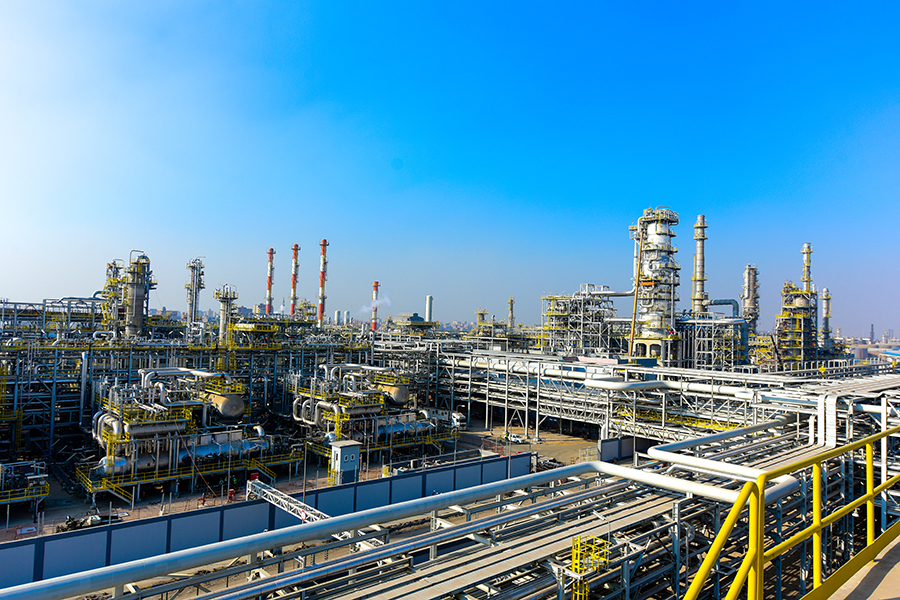
Egypt has a generational opportunity to sell green compute and energy, but policymakers need to act fast

Good morning, wonderful people. We’re in the final days of November — and counting the weeks, not until year’s end, but until the once-resident 19-year-old returns from uni. I hope all of you have something similarly wonderful to which you’re looking forward as we speed toward the end of the year.

A regional AI industry is quietly (but fairly quickly) taking shape in MENA, and Egypt has been assigned a role by external actors: “Stay over there in the corner, guys, and just ship us (the Gulf and, to a lesser extent, Europe) lots of well-trained people. You know, like you’ve been doing with doctors and engineers and finance professionals for generations now. They can do the real work over here, building models, building data centers, inventing tomorrow’s applications.”

The Madbouly government’s plan to graduate tens of thousands of “AI professionals” of one form or another is smart, but not because we should be encouraging Brain Drain 4.0. No, we should be graduating them because we need people here at home who know how to build and run one of the industries of the future.

Those people will stay home if there’s an industry worth working for, and data centers are at its core. But bring up the issue of our becoming a significant regional player in data centers, and there’s a very good chance you’re going to be told, “Egypt has a power problem — there’s no way you guys could be home to a meaningful data center industry. You don’t have the energy infrastructure to support it.”

That’s BS, and much smarter people than me — from the Allams to the Sewedys — have already figured it out.

The same morning last week that we reported on the collapse of our green hydrogen dream, Electricity Minister Mahmoud Esmat reminded everyone that private renewable power in Egypt is booming.

The hydrogen numbers are brutal: At least 20 developers have walked away, stalled, or let their agreements lapse, wiping out seven of the nine COP27 framework deals (once thought to be worth as much as USD 83 bn) and every single agreement from another USD 41 bn round of announcements in early 2024.

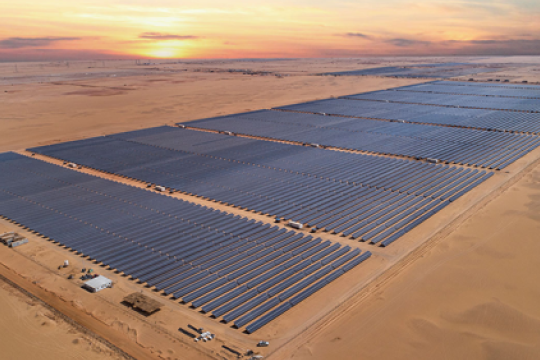
But private solar and wind builders are booming. Esmat told a BEBA panel that private players are actively building some 30 GW of solar, wind, and battery storage worth nearly USD 30 bn. That puts us on track to move our 45% renewable generation target forward to 2028.

The funeral for green hydrogen, then, is good news. For four years, the biggest export hope we had for renewable energy was that a European market would somehow, by itself, spring to life. It never did.

But the market for green products and green compute? It absolutely exists — it’s here today and it’s only going to grow. After the pour-one-out for green hydrogen, policymakers must shift their focus to making it easier for the private sector to sell gigawatts worth of green power to markets where there’s very real commercial demand: powering export-focused factories at home and selling clean power and AI compute to capacity-starved Europe.

Esmat’s remarks last week confirm what CEOs in the know have been telling me for two years now: Smart business leaders and backing from development finance agencies, including EBRD, have left us in a position where we have a capable, rapidly growing green energy industry that capitalizes on all of our natural competitive advantages. And we have a contracting industry that knows how to build it out.

Look at the roster taking shape: The Sheta family’s Income Group (with Dubai’s Sustainable Infra Capital) is pitching Project Atlas, a USD 2.15 bn solar-backed campus near Alexandria that aims to export AI compute to Europe over our 15 Mediterranean subsea fiber cables. Hassan Allam Utilities and A15 committed USD 400 mn in June to the first phase of a new data center platform, while Elsewedy is pushing on two fronts — a USD 2.1 bn plan for up to 192 MW with Gulf Data Hub, and a c. USD 1 bn modular AI data center venture alongside Cassava Technologies and Vodafone Egypt.

AND- Compute is only one way to sell green electrons. Greece’s Copelouzos Group is advancing the 3 GW Gregy subsea cable to pipe 100% renewable power straight from Egypt to the Greek mainland, alongside separate bids to run high-voltage subsea links to Italy and via Cyprus under the EuroAfrica project.

Green hydrogen died because a European market never took shape — that’s not something over which we ever had control. But when it comes to getting green electrons to Europe — whether down a subsea power cable or converted into AI compute — two of the three big barriers are 100% in the hands of policymakers here in Omm El Donia.

#1- EETC needs to open up the grid. Private developers have had zero trouble raising DFI, Japanese, and Chinese money to build wind and solar here — just look at this month’s closes from Ras Shokeir to Benban. The catch is that state grid operator EETC keeps a tight grip on transmission — and charges steep wheeling fees to carry privately generated power to private buyers. Letting renewable plants sell and wheel green electricity directly to data centers and export factories on predictable, bankable terms doesn’t require a single signature in Brussels.

(Yeah, there will be accounting red tape on emissions, but that’s a story for another day.)

#2- We need to change data protection and data sovereignty laws. People who work closely with global AI tenants have told us plainly what the banking industry has been saying for a couple of years now: our 2020 data protection law, the need for case-by-case permits to move data across borders, telecom-style revenue-share levies instead of flat license fees, Central Bank of Egypt limits on cloud workloads, and questions about who has access to foreign data resident in Egypt are all barriers.

The Cabinet’s national data center strategy is due before the end of the year, last we checked, and every single item above is the type of thing we fix — if we have the political will.

We would do well to clear the obstacles now — God knows there are enough external challenges. Look no further than spiking global gas prices (even as we become greener, we need LNG — and Europe outbid us for three cargoes just last week). Washington controls who gets top-shelf Nvidia chips, and going for Chinese GPUs like those Huawei wants to sell us will do no good for our relationship with Washington. And we’re waiting on European financing to come into multi-bn-EUR subsea interconnectors like Gregy.

We can’t dictate global LNG prices, US chip rules, or Brussels’ checkbook. And we can’t change US-China politics. What we can decide here at home is to open the grid to private players and give global compute buyers ironclad legal rules for parking workloads on our soil — all while allowing domestic financial services players to start running their own jobs in the cloud, not on-prem.

Green hydrogen died waiting on Europe to build a market. For green power and compute, European buyers are already there, and two of the three switches are within our reach. –Patrick

2

WHAT WE’RE TRACKING TODAY

Misr Life prices IPO at EGP 12.80, valuing the insurer at EGP 64 bn

IN TODAY’S ISSUE: Misr Life priced its IPO at EGP 12.80 a share, the midpoint of its range and 7.4% below the independent adviser’s fair value. Institutions bid for a bit more than 3.4x of the shares on offer, while the retail offering is 1.33x oversubscribed and closes tomorrow.

Leading our news well: Averroes Ventures is putting a third of its USD 50 mn fund into businesses that sell to growers or turn farm waste into products. Founder Ahmed Al Sharif explains both strategies — what he’s investing in and where he’s raising funds.

Next comes Beko, which brings the Whirlpool brand to the country in January: four brands from the same 10th of Ramadan plant, one of which has shipped 700k appliances to 43 countries and now buys about half its inputs here.

In energy: Ecosolis & Beyond has spun its renewable energy certificate business into a new broker, ecoVera, chaired by the man who ran the electricity regulator until this year.

Right down the middle

Misr Life Ins. (MLI) has priced its IPO at EGP 12.80 a share, the midpoint of its EGP 12.00-13.60 range, according to a statement (pdf). The final offer price values the state-owned company at EGP 64.0 bn. That’s about 7.4% below fair value.

Institutional demand was solid: By the time bids closed on Friday, institutions had put in orders worth c. EGP 31.2 bn for the 712.5 mn shares in the private placement, covering it c. 3.42x, according to the statement. Even with that demand, the price was set at the midpoint, and the sale was kept at 15%, though selling shareholder Misr Insurance Holding (MIHC) kept the option to raise it to 20%.

Retail investors are catching up: The public tranche was 1.33x covered by the end of Thursday’s session, with orders for c. 50 mn shares against the 37.5 mn on offer, Al Borsa reports, citing data from the EGX’s OPR. That’s up from 0.19x on day one and 0.64x on day two. Retail investors have until Monday, 30 November, to put in orders at EGP 13.60 a share, with the difference from the final price refunded before trading begins on or around Thursday, 3 December.

ICYMI- MIHC, which is wholly owned by the Sovereign Fund of Egypt, is floating 750 mn existing shares, a 15% stake in MLI, as part of the government’s asset sales under its IMF commitments. MIHC stands to collect EGP 9.6 bn in gross proceeds at the final price. And since this is a fully secondary offering, none of the proceeds will go to MLI itself.

Advisors: Our friends at EFG Hermes are the sole global coordinator and bookrunner. The folks at Helmy, Hamza and Partners (Baker McKenzie) and White & Case are counsel to MLI, while Zulficar and Partners and Milbank are advising the bankers. BDO did the fair value work.

Rebuilding South

Sudan courts our contractors for its rebuild: Sudanese Prime Minister Kamil Idris met with Egyptian contractors in Cairo on Wednesday to discuss implementing reconstruction projects in Sudan, according to several reports by Sudan News Agency. Hassan Allam offered to build and rehabilitate roads, railways, airports, and seaports; Arab Contractors discussed linking Sudanese ports to ours and repairing war-damaged hospitals; Elsewedy and Wadi El Nil discussed solar projects, as well as an industrial city by Elsewedy and a study for a medical city in Khartoum by Wadi El Nil; Orascom’s Naguib Sawiris put forward mining, a Red Sea tourism project, and repairs to war-damaged hotels. The meetings followed Tuesday’s talks with President Abdel Fattah El Sisi on reconstruction, according to a statement by the presidency.

MEANWHILE- CBE Governor Hassan Abdalla and his Sudanese counterpart, Amna Mirghani, signed an MoU on Thursday to frame banking cooperation between the two countries, according to a statement from Sudan’s embassy in Cairo. It covers the presence of banks in each other’s markets, financial inclusion, anti-money laundering rules, supervision, and training. Abdalla said the deal should open the door to private-sector partnerships and push commercial banks to increase trade as Sudan rebuilds.

PSA-

#1- Startups and IT teams with an AI tool for public finance have three weeks to put it in front of the Finance and Communications ministries, according to a statement from the Finance Ministry. The Impact Hackathon opened this week with cash prizes and the prospect of a government contract. The four briefs: an application that helps taxpayers and investors use the tax facilitation packages, property valuation from real estate and geospatial data, economic and financial analysis for policymakers, and social media engagement under the Media 360 project. No prize sizes or contract values were disclosed; submissions go through ITIDA’s competition platform.

#2- WEATHER- Cairo is clawing back the degree it lost on Thursday, with a high of 24°C and a low of 14°C, though the night slips a touch colder than it was, according to our favorite weather app.

It’s a degree milder in Alexandria, with a high of 24°C and a low of 16°C.

The big story abroad

OpenAI is accusing Apple of stealing trade secrets and pressuring suppliers and engineers not to jump ship to the AI company, Bloomberg reports. In counterclaims filed in a federal court on Friday, OpenAI says Apple pressured suppliers to avoid OpenAI products and used employment restrictions to keep skilled engineers out of its reach. Apple says the counterclaims are an attempt to distract from its July lawsuit, which accuses OpenAI of running a campaign to steal its trade secrets through job candidates and hires from Apple.

Everyone wants to be an AI company: Chery, which has led China’s car export boom, is moving into robots and AI. The shift comes as Chery’s car business faces cut-throat competition and slowing sales at home, increasing trade barriers abroad, and a late switch to electric cars.

Chery faces stiff competition: Analysts question its chances, since many Chinese carmakers are also trying to reinvent themselves as AI-driven tech companies, the Financial Times reports.

SpaceX, struggling to advance its own AI models, is selling more compute: Google is interested in renting more computing power from SpaceX, CEO Elon Musk said in a post on X without giving details. SpaceX already has compute deals with Google and Anthropic that are worth more than USD 70 bn combined; it’s on track to spend more than USD 74 bn on new supercomputer sites in Texas and Arizona, Reuters reports.

Somabay welcomes elite riders and horses for the Egypt International Equestrian Cup on 3-6 December. Showcasing international show jumping excellence against the backdrop of the Red Sea, the event reinforces Somabay’s growing presence on the international sporting calendar.

3

THE LEDE

Averroes Ventures earmarks a third of its targeted USD 50 mn fund for agritech and farm waste startups

Averroes Ventures plans to put roughly a third of its targeted USD 50 mn fund into agriculture, backing companies that sell to farms or turn their waste into products. Founder Ahmed Al Sharif (LinkedIn) is after businesses that raise productivity and cut reliance on imported inputs, alongside those that make money from agricultural waste, he tells EnterpriseAM. Averroes has soft commitments for a first close by year-end and plans to start investing in 1Q 2027, with half the fund going to Egypt and the rest to North Africa and the wider continent.

Averroes plans to back 20-30 companies with tickets of USD 500k to 2 mn, half of them in Egypt and the rest in Morocco and Tunisia. Over a standard 10-year fund life, it will write first checks in the first two years and follow-ons in years three and four, aiming for exits within three to five years and an average IRR of at least 20%, Al Sharif says. That’s a high bar by his own measure: with risk-free returns at 7-8%, he considers anything at 12-15% in USD to be “highly lucrative.”

Startups first go through CircuLabs, the firm’s equity-free accelerator, before getting equity in two tranches, with the second unlocked only after they hit agreed-upon operational milestones, he says. Once they need machinery or facilities, Averroes introduces them to the banks among its LPs for debt.

There’s plenty of waste to work with — we generate 40-45 mn tons of agricultural and animal waste a year. Investors are increasingly backing businesses beyond primary cultivation, Al Sharif says, with private equity, impact funds, and venture capital now starting to treat that waste as a business. “Historically, big tickets went to state food-security megaprojects or established holding companies,” he says.

Al Sharif and his partner, former World Bank operations officer and angel investor Eman Wahby (LinkedIn), settled on the circular economy in 2023-2024, a sector he calls “low-hanging fruit.” Their fund will split its money roughly equally between agriculture, industry, and energy, with Al Sharif most interested in where the three overlap. “Agriculture, industry, and energy are deeply interconnected, because agricultural waste becomes industrial raw material or clean energy feedstock, while local manufacturing and off-grid power bring down farm input costs,” he says.

Why agriculture, and why now

Fresh and processed agricultural exports hit a record USD 11.5 bn last year, or 24% of everything we sold abroad. Climate change could send more of that trade our way, Al Sharif says, since crops like blueberries, olives, and citrus are becoming more viable here as southern Europe heats up.

He would still rather sell to growers than be one. Service providers carry less exposure to water, commodity, and geopolitical swings than farms do, he tells us. Exporters also come with a built-in currency hedge: Averroes invests USD alongside international LPs, so companies earning hard currency protect its returns from EGP devaluation. In his view, that makes export-driven agriculture “among the most attractive” plays in the market. “We can have more productivity per acre, and we can have even cheaper inputs when we produce everything, or most of the inputs, locally,” he says. Averroes backs asset-light startups and what he calls “innovative SMEs.”

What it wants to buy

Averroes is already looking at three to five local companies, including producers of biochar and activated carbon made from farm waste, Al Sharif says. “They convert agricultural waste into biochar and activated carbon, and part of that goes back into the land to improve soil nutrition, creating a win-win across the agricultural cycle,” he explains. Biofertilizers are next on his list, since fertilizer is farms’ biggest and costliest input, he says.

The most lucrative idea may be sustainable aviation fuel. Al Sharif wants to turn crop residues and other unused waste into SAF feedstock, calling it a “very, very lucrative” subsector that is “on our table.” There’s already a precedent: Wahby invested in a used cooking oil collector whose oil ended up as SAF before an Italian company bought it, he says. He is also interested in off-grid power and water for remote farms, from small solar, wind, and desalination units to IoT fertigation, which farmers can pay off in installments like a utility bill.

How the money comes together

Raising the fund has its own complications. “Egypt is somewhere between developmental money and commercial money,” Al Sharif says, explaining that development finance institutions (DFIs) tend to favor sub-Saharan Africa, while local commercial banks remain cautious on early-stage venture risk. So Averroes is raising through two vehicles. Local banks are meant to make up 30-40% of the fund through a local vehicle anchored by one of the country’s biggest banks, with a local fund of funds also in early talks, he says. DFIs will come in through a separate international vehicle, alongside a small allocation for strategic high-net-worth investors.

Now or never: Having backed Breadfast and Trella before online grocery and trucking took off, Al Sharif expects the same consolidation in farm inputs and waste conversion, so he wants investors in before the market gets crowded. “Combining knowledge and innovation with traditional real economy sectors is where the value sits,” he says. “It’s taking shape now, so it is now or never.”

4

Manufacturing

Beko bringing Whirlpool to Egypt as its fourth brand starting 2027

Turkish appliance maker Beko is bringing Whirlpool appliances to the country in January, Beko Egypt’s general manager Ümit Günel (LinkedIn) announced at Beko partner night, which was held on Thursday at the Grand Egyptian Museum and was attended by EnterpriseAM. The announcement came two years after the group opened its USD 100 mn plant in the 10th of Ramadan, which it said at the time would build the group’s acquired brands, alongside those of Beko itself. This puts four labels on Beko’s Egyptian shelf: Beko, Ariston, Indesit, and Whirlpool, which is part of the Middle East and North Africa business that Arçelik, Beko’s parent, bought in April 2024.

Two years in, the plant is the record the company argues from. Beko’s chief commercial officer for Turkey, the Middle East, and North Africa, Cem Kural (LinkedIn), puts exports at more than 700k appliances to 43 countries, with investments surpassing USD 100 mn since the plant opened. Beko wants more than 60% of its output to go abroad.

In the shops: Günel told EnterpriseAM that the group’s share of the six main large-appliance categories has roughly doubled in value, that its share of cooling appliances sales has more than doubled in volume, and that one in every two dishwashers sold in Egypt comes off its lines, with up to 70% Egyptian content in dishwashers. Sales value grew 75% y-o-y in USD in 2026, he adds.

The lines are running at about a quarter. April was the peak month at nearly 32.7k units, against a stated capacity of 1.5 mn a year, or 125k a month.

Price is where the fight is: Kural said competition has intensified, particularly from Chinese brands, and that Egyptian shoppers have grown more careful, comparing products and waiting for promotions. Europe, where the group holds 17.4% of the market and ranks first, is softer too. His answer is keener pricing and installment terms, offering three different brands (Beko, Ariston, and Indesit) for different consumer segments, plus AI built into the machines.

“The TRY went through more swings than most, so we know how to handle the EGP,” Günel says when asked how they face currency swings. “We did not come to Egypt to compete on price,” he argues, highlighting that machines are built to run for more than 10 years with a 25-year guarantee on their operability.

What matters for Egypt is what the plant buys here. About half its inputs came from local suppliers when it opened, by the company’s own count, and the exports earn foreign currency. Egypt is one of the group’s best markets by results, Kural said, with strong gains in the premium tier, and he expects growth above 50% in the Egyptian business in 2027 even as purchasing power keeps shoppers cautious.

IN CONTEXT- The Turkish queue behind Beko is long, with 1.87k Turkish companies registered in Egypt, 873 of them industrial, with USD 921.5 mn in cumulative inflows and about 43.9k jobs, the cabinet said in November. Trade between the two countries reached USD 6.8 bn in 2025, against a USD 15 bn goal Erdoğan set out in February.

One product the plant does not build is air conditioners. Algeria’s Condor, which makes Beko and Hisense AC units for the Algerian market, is putting USD 25 mn into a plant in Sixth of October. On the potential collaboration, Günel said, “It is possible to manufacture air conditioners outside our current industrial complex.”

Why Egypt? Money is harder to raise in Turkey, a source at the Egyptian-Turkish Business Council told us last year. Egypt also reaches Europe under a partnership agreement, and some sectors still allow access with less capital. Günel outlined the company’s version in his first interview with EnterpriseAM, when he said incentives for localizing and exporting, plus a wide network of free trade agreements, put Egypt in a position to produce for Europe, the Middle East, and Africa at the same time.

This publication is proudly sponsored by

5

Energy

Ecosolis moves its I-REC into new unit ecoVera, chaired by ex-regulator Mohamed Moussa Omran

Sustainability advisory firm Ecosolis & Beyond has spun its renewable energy certificate (I-REC) brokerage into a new subsidiary, ecoVera, with former electricity regulator Mohamed Moussa Omran (LinkedIn) serving as chairman, according to a statement. The unit takes over an “existing service portfolio” of 15 renewable energy plants, Chief Development Officer Soraya Hassan tells EnterpriseAM. Trading continues under Ecosolis while the business moves over, with no separate launch date, she says.

Wait, what’s an I-REC? It’s a digital receipt proving that 1 MWh of renewable electricity was fed into the grid at a registered plant, issued in Egypt by the Green Certificate Company. Unlike onsite solar or a private power purchase agreement, it doesn’t deliver power to the buyer. Instead, it lets companies “procure and document the renewable electricity attributes associated with eligible renewable generation,” Hassan says. The buyer gets the sole right to claim that megawatt-hour, which lowers its market-based Scope 2 (electricity) emissions and helps it meet net-zero targets, or satisfy European clients and parent companies. Exporters in textiles, food, and chemicals are buying, alongside telecoms, data centers, banks, real estate firms, and multinationals’ local units, Hassan says. The certificates have limits: they “should not be viewed as a substitute for product-level embedded emissions accounting or as a standalone CBAM compliance instrument,” she adds.

How ecoVera makes money: Plant owners can choose a “revenue-sharing model,” where ecoVera handles registration, issuance, and marketing and covers agreed costs in exchange for “a share of certificate sales revenues,” Hassan says. That option suits smaller plants that don’t want to pay upfront. Owners can also pay “agreed service fees” and keep the proceeds. On the buy side, smaller exporters and mid-sized factories can take part, including through pooled purchases, she adds. For now, deals go through Ecosolis’s participant account with the Evident registry while ecoVera works on opening its own, CEO Yasmin Shokri says. ecoVera trades certificates. It doesn’t issue them or run the registry.

Omran brings over 35 years of sector experience to the board, having led EgyptERA until earlier this year and previously chaired the New and Renewable Energy Authority. He joins “as a shareholder and strategic partner,” Shokri says, describing Omran’s contribution as “strategic rather than the exercise of any regulatory function,” leaving day-to-day management to the executive team.

What’s next: The firm’s “measurable portfolio target is to increase the number of plants served from 15 to 20 during 2027,” Shokri says. It is also weighing strategic or investment partners to support “its technological development, commercial expansion, and the broader development of the Egyptian I-REC market.” Egypt comes first, but regional deals have already started through Ecosolis, giving it a “foundation for potential expansion across the Middle East and Africa,” Omran says.

The bigger picture: Demand for local certificates is growing as export-focused manufacturers and multinationals’ Egyptian subsidiaries face tighter Scope 2 reporting, RE100 renewable electricity targets, and closer scrutiny from foreign supply chains. Hassan says exporters in international supply chains face “increasing expectations around emissions transparency and renewable electricity sourcing.” Trading in environmental instruments is taking shape here too. The Egyptian Climate Exchange already handles carbon credits, and Prime Ministerial Decree No. 1539 of 2025 (pdf) made EgyptERA’s own energy source certificates financial instruments tradable on Egyptian exchanges.

6

Also on our Radar

Suez Canal Authority targets 50 tug exports as Italian orders grow

The Suez Canal Authority (SCA) is now a tugboat exporter, in addition to having its own fleet. It launched REZK 4 and REZK 5, the first high-seas fishing vessels built in Egypt to international class rules, and began trials on the seventh and eighth of 10 Azm tugs at Safaga last week, the SCA said in a statement. The SCA-backed Suez Canal Company for Modern Boats is due to deliver two Azm tugs to Italy’s Neri Group and expects to sign for four more shortly, after a two-tug order in May. Chairman Ossama Rabiee is targeting 50 tugs for export and two marine units a month, double present capacity, from yards that are also building a 12-vessel REZK class for Egypt’s own fishing fleet.

REMEMBER- Our farmed finfish, finfish products, and crustaceans are cleared for entry into the EU under a Commission implementing regulation adopted in October, opening the bloc’s market to our aquaculture just as the country builds out its fishing and processing capacity.

7

PLANET FINANCE

Private capital investment in the Middle East is down 88% this year, even as Asia, Latin America, and Africa grow

Private capital investment across Asia, Latin America, Africa, CEE, and the Middle East rose 19% y-o-y to USD 143.2 bn in 9M 2026, outpacing the same period of every year since 2023, according to the Global Private Capital Association’s (GPCA) 3Q data.

The Middle East went the other way: Investment here fell 88%, making the region the only major market alongside India (-10%) to record a decline. China grew 181% on a wave of AI and deep tech deals, while Africa saw a 78% increase.

What happened? Dealmaking in the region has become far more selective since the start of the Iran war, GPCA says. Only USD 2.4 bn has been invested so far this year, against USD 20.1 bn in the same period last year, while the number of deals fell 35% to 113. The headline drop is exaggerated by an outsized oil and gas deal in 3Q 2025, which accounted for USD 11 bn of investment in that quarter alone. Strip it out, and investment is still down c. 74%.

The UAE still leads, but Saudi overtook it in 3Q: The UAE drew USD 1.5 bn across 58 deals in 9M 2026, about two-thirds of the regional total, against USD 783 mn across 47 deals in Saudi Arabia. But UAE investment fell every quarter this year, from USD 806 mn in 1Q to just USD 146 mn across 15 deals in 3Q, its lowest quarterly total since at least 2024. Saudi Arabia attracted USD 510 mn across 22 deals in 3Q.

International heavyweights are still showing signs of conviction in the region. Canadian asset manager Brookfield raised around USD 2 bn in July for the first close of Brookfield Middle East Partners, its first private equity fund dedicated to the region. Saudi Arabia’s Public Investment Fund anchored the fund, which is targeting 50% of its investments in the Kingdom. That single close accounted for all of the region’s 3Q fundraising and nearly three-quarters of the USD 2.75 bn raised by Middle East-focused funds this year. Kuwait also inked a USD 16 bn agreement with Blackstone, Brookfield, and KKR to monetize future cash flows from its crude oil pipelines.

What’s left is mostly venture capital: VC accounted for 99 of the region’s 113 investments and USD 1.3 bn of investment so far this year. In 3Q alone, it made up USD 658 mn of the USD 670 mn invested, with no private equity deals recorded in the quarter. Financial services and IT continue to dominate: Tabby’s late-stage USD 233 mn round, which pushed it to a USD 6.5 bn valuation and drew Hong Kong’s Blue Pool Capital and HongShan, made up most of the USD 313 mn raised across three late-stage deals in 3Q. Venture debt brought in another USD 143.5 mn across four deals.

Infrastructure is the gap: The region hasn’t recorded a single infrastructure agreement this year, even as infrastructure funds raised USD 20.2 bn of the USD 66.4 bn committed to private capital funds targeting Asia, Latin America, Africa, CEE, and the Middle East, about 30% of the total.

EGX30

50,312

-0.5% (YTD: +20.3%)

USD (CBE)

Buy 54.77

Sell 54.91

USD (CIB)

Buy 54.77

Sell 54.87

Interest rates (CBE)

20.00% deposit

21.00% lending

Tadawul

9,924

+0.1% (YTD: -5.4%)

ADX

9,935

+0.4% (YTD: -0.6%)

DFM

6,575

+1.4% (YTD: +8.7%)

S&P 500

7,297

+1.6% (YTD: +6.6%)

FTSE 100

10,699

+0.8% (YTD: +7.7%)

Euro Stoxx 50

6,089

+1.2% (YTD: +5.1%)

Brent crude

USD 90.84

-0.9%

Natural gas (Nymex)

USD 3.49

-4.6%

Gold

USD 3,669

+2.9%

BTC

USD 59,361

-0.9% (YTD: -32.2%)

S&P Egypt Sovereign Bond Index

1,162.49

+0.1% (YTD: +17.1%)

S&P MENA Bond & Sukuk

148.93

+0.2% (YTD: -2.0%)

VIX (Volatility Index)

23.81

-11.2% (YTD: +59.3%)

THE CLOSING BELL-

The EGX30 fell 0.5% at Thursday’s close on turnover of EGP 6.4 bn (40.9% below the 90-day average). International investors were the sole net buyers. The index is up 20.3% YTD.

In the green: Raya Holding (+5.2%), Orascom Construction (+3.5%), and Edita (+2.9%).

In the red: Telecom Egypt (-2.4%), Qalaa Holdings (-1.8%), and E-finance (-1.6%).


NOVEMBER

26-29 November (Thursday-Sunday): Cairo WoodShow, Cairo International Conference Center, Cairo.

26-29 November (Thursday-Sunday): IFAC CAIRO, Cairo International Convention Centre

28-30 November (Saturday-Monday): Egypt-Africa engineering industries and innovation forum (EGITEC), Egypt International Exhibition Center, Cairo.

29 November (Sunday): Global Building Materials Summit (CONVERGE 2026), Sharm El Sheikh.

29-30 November (Sunday-Monday): Building the Future Summit, Grand Egyptian Museum, Giza

30 November (Monday): Subscription closes for the public tranche of Misr Life Ins.’s IPO.

DECEMBER

3 December (Thursday): Misr Life Ins. expected to begin trading on the EGX on or around this date.

4-6 December (Friday-Sunday): Cairo Inter Leather Expo, Cairo International Convention Center, Cairo.

7-10 December (Monday-Thursday): Food Africa, Egypt International Exhibition Center, Cairo.

7-10 December (Monday-Thursday): Fresh Africa, Egypt International Exhibition Center, Cairo.

7-10 December (Monday-Thursday): Interpack MEA, Egypt International Exhibition Center, Cairo.

11-12 December (Friday-Saturday): ISER International Conference, Cairo.

13-14 December (Sunday-Monday): SHARE International Forum for Architecture and Urbanism, Grand Egyptian Museum

15 December (Tuesday): Egypt’s 48-month IMF extended fund facility expires.

17 December (Thursday): Monetary Policy Committee’s eighth meeting of 2026.

17-19 December (Thursday-Saturday): EVs Electrify Egypt, Egypt International Exhibition Center, Cairo.

17-20 December (Thursday-Sunday): MacTech Egypt, Egypt International Exhibition Center, Cairo.

17-20 December (Thursday-Sunday): Airtech Cairo, Egypt International Exhibition Center, Cairo.

17-20 December (Thursday-Sunday): Handling Expo, Egypt International Exhibition Center, Cairo.

2026 EVENTS WITH NO SET DATE

Mid-November: Egypt-Saudi Arabia’s 3 GW electricity interconnection officially launches.

November: The IMF’s eighth and final review of Egypt’s EFF programme is expected, unlocking around USD 2.3 bn.

December 2026: Armenian investment delegation plans to visit Egypt.

2H 2026: Operations at Deli Glass Co’s new USD 70 mn glassware factory kick off.

2026: The Egyptian-American Economic Forum.

End-December: Government due to finalize its national economic transformation program.

End-2026: Halan Consumer Finance targets the first issuance under its planned EGP 30 bn securitization program, subject to FRA approval.

JANUARY 2027

1 January (Friday): Private-sector minimum wage rises to EGP 8.5k.

1 January (Friday): New EU limits on 3-MCPD and glycidyl esters in baby food and infant cereals apply.

9-12 January (Saturday-Tuesday): Afro Plast, Egypt International Exhibition Center, Cairo.

13-14 January (Wednesday-Thursday): Denimsandjeans Egypt, InterContinental Citystars, Cairo.

18-22 January (Monday-Friday): World Economic Forum Annual Meeting, Davos.

20 January-7 February: Egypt to host the African Games.

29 January (Friday): New EU pesticide residue limits for benomyl, carbendazim and thiophanate-methyl apply.

FEBRUARY

1-3 February (Monday-Wednesday): Agri Expo, Cairo International Convention Center.

MARCH

30 March-1 April (Tuesday-Thursday): EGYPES — Egypt Energy Show, Egypt International Exhibition Center, Cairo.

APRIL

12-18 April (Monday-Sunday): IMF and World Bank Spring Meetings, Washington, DC.

April 2027: Tenth of Ramadan dry port and logistics hub to begin operations.

MAY

5 May (Wednesday): Revised EU difenoconazole residue limits apply.

6-8 May (Thursday-Saturday): Glass + Aluminum and WinDoorEx Middle East, Egypt International Exhibition Center, Cairo.

JUNE

8-9 June (Tuesday-Wednesday): AI Everything MEA Egypt, Egypt International Exhibition Center, Cairo.

10-12 June (Thursday-Saturday): The Design Show Egypt, Cairo International Conference Center, Cairo.

14-16 June (Monday-Wednesday): Big 5 Construct Egypt, Egypt International Exhibition Center, Cairo.

SEPTEMBER

29 September - 2 October (Wednesday-Saturday): Cityscape Egypt Exhibition, Cairo.

DECEMBER

14 December (Tuesday): EU Forced Labour Regulation’s ban on products made with forced labour starts applying.

2027 EVENTS WITH NO SET DATE

1Q 2027: Saipem scheduled to begin drilling three offshore wells for Burullus Gas.

2027: Egypt to host EBRD’s annual meetings.

2027: Egypt-EU Summit 2027.

May-June 2027: BME’s CATL-backed battery plant due to start production

End of 2027: Trial operations at the Dabaa nuclear power plant expected to take place.

January 2028: First 300 MW of the Shokeir wind farm enters commissioning.

September 2028: First unit of the Dabaa nuclear power plant begins operations.

Now Playing
Now Playing
00:00
00:00