ECA puts companies on notice before its new powers arrive

1

OPENING NOTE

On the dark art of managing an IPO in a down market

Pricing an IPO is a dark art. You need to fill your order book before the start of trading, of course, and generate sufficient excess demand to leave would-be investors with just the right amount of FOMO. You need to price the offering just right, too, leaving enough upside on the table to make your IPO investors happy — to get that “first-day pop” — without leaving the selling shareholders feeling they’ve been given a raw deal.

And that first-day pop? It cuts both ways, especially when you look at trading dynamics on day two and beyond. No pop? Your listing was a dud, some will say.

But too big a day-one leap is a bad thing, too, because the next big wave of retail investors winds up buying at the top. Day traders who didn’t get an allocation sit there on their Thndr and EFG Hermes One screens looking at green from the start of trading and promptly chase the spike in the secondary market.

Who’s selling to them? The flippers who are cashing out. That works nicely in a bull market, because a rising tide bails out the latecomers. But in a volatile market like the one we’re in right now? Those retail guys risk getting trapped underwater. (So, how big should that pop be? Pundits hope for something in the 10-15% range, I’m told.)

Living on the edge: Those dynamics have been made more complicated, two bankers told me yesterday, by a new (large) generation of retail investors in the middle of their first market downturn.

Sure, the EGX remains the best-performing major market in the Arab world right now, up nearly 22% for the year, but the money isn’t as easy as it once was: The benchmark EGX30 was up 40% in 2025. Today, the more than 1 mn retail investors who have opened brokerage accounts since 2024 (more than half of them in the last 12 months) are living through their first market correction — the index is down 10.2% from its 6 September peak.

Their edginess shows in how financial services companies are doing on the EGX right now. MNT-Halan’s Egyptian unit is trading below its late-October offer price. It’s not the only one lagging: Valu is down 12.7% since MNT went public, Contact is off 5.2%, and Fawry eased 2.0%, all since 20 October, by my math.

Meanwhile, Banque du Caire closed yesterday just 2% or so above its offer price — on par with bellwether CIB, which was up about 1.1% in the same period. Of the financial services stalwarts, only EFG Holding has outperformed, rising 6.9% in the past month. (I’m setting aside smaller, less-liquid issuers in the sector that institutional investors typically look past.)

It hardly seems fair: MNT-Halan and Banque du Caire are exceptional businesses. MNT CEO and founder Mounir Nakhla and BdC boss Hussein Abaza are generationally good CEOs who have strong teams and whose companies have excellent fundamentals.

So, what does that mean for Misr Life’s IPO? It’s unquestionable that the order book will be covered. Even at the top of the range on which bankers are guiding, it’s going to be priced below fair value. We’re still getting to know the company, but from what we can see so far, it’s a solid, well-led outfit with good plans to grow the market rather than fight over market share.

Look, this is NOT financial advice, okay? But as Baron Rothschild said, the time to buy is when blood is in the streets. Particularly when what is on offer are the very companies that are writing a pretty damn exciting new chapter in our nation’s business history — companies we look forward to covering quarter after quarter, year after year for a long time to come.

Want to go deeper on Misr Life? CEO Moustafa Elkamash is my guest tomorrow on Making It, our weekly podcast.

Looking for something to listen to on the way to work this morning? May I suggest my interviews with Mounir and Hussein? And staying with the capital markets theme, check out my talk with Thndr CEO Ahmad Hammouda. –Patrick

Tags:
2

WHAT WE’RE TRACKING TODAY

Retail investors ordered a fifth of Misr Life Insurance’s retail tranche, while the institutional book stays dark

IN TODAY’S ISSUE: The Egyptian Competition Authority has sent three cartel cases to prosecutors since September and turned down a rare settlement request, all before an amended law hands it tougher powers. The lawyers we spoke to say the authority is enforcing the law as it always has, just more publicly, and read the publicity as a signal to companies to take its procedures seriously.

Our green hydrogen pipeline has thinned to a handful of projects after 20 companies withdrew, stalled, or let their agreements lapse. The list includes seven of the nine framework agreements signed at COP27. What the survivors share is a way around the grid: they make their own power or start small.

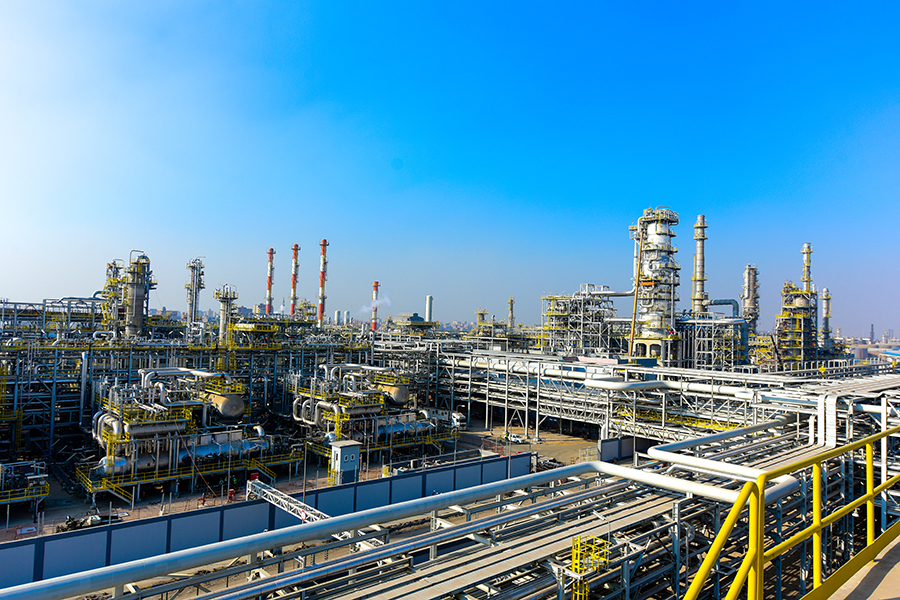
MEANWHILE- Qalaa closed on QatarEnergy’s refinery stake a month early, lifting its effective holding in ERC to 27.1% from 13% and part-financing it with a EGP 3.87 bn capital hike. ERC carried EGP 60.7 bn of Qalaa’s record EGP 65.9 bn in 3Q revenue, so the extra slice matters more than the transaction size suggests.

First orders in

The public tranche of Misr Life Insurance (MLI) IPO was 0.19x covered on the first day of subscription, according to figures cited by the domestic press (here and here). Retail investors put in orders for c. 7.09 mn shares against the 37.5 mn on offer, worth c. EGP 96 mn at the top of the price range, where retail orders are placed pending final pricing, by our math. No figures have been released for the institutional book, which makes up 95% of the offering.

Like we’ve seen with Banque du Caire and MNT-Halan’s IPOs, orders typically pick up in the final days of subscription, which for MLI closes on Friday, 27 November for institutional investors and Monday, 30 November for retail investors. The final offer price is expected to be announced on Saturday, 28 November, with trading set to begin on or around Thursday, 3 December.

REFRESHER- Parent company Misr Insurance Holding (MIH) — itself a wholly-owned subsidiary of the Sovereign Fund of Egypt — is floating 750 mn existing shares, good for 15% of MLI on the EGX, as part of the government’s asset sales under IMF commitments. It’s hoping to fetch some EGP 9-10.2 bn in gross proceeds. EFG Hermes is quarterbacking the transaction.

Stabilized, sealed, delivered

MNT-Halan’s price stabilization account bought all 20.56 mn shares that retail investors offered to sell back from the IPO, paying the EGP 24.50 offer price for c. EGP 503.8 mn in Monday’s session, according to an EGX disclosure (pdf). That’s roughly 43% of the c. 48 mn public-tranche shares and about 1% of the company’s issued share capital. Investors who sold back got the full offer price for shares that closed at EGP 21.70 on 18 November, the day the 30-day window closed.

The remaining 27.4 mn or so shares of MNT-Halan that were sold to retail investors remain in the market. MNT Investments took its Egyptian unit public in late October in an EGP 7.84 bn IPO that re-opened the market’s IPO window, allowing Banque du Caire to follow suit. Misr Life is next in the pipeline, and is set to start trading early next month.

Office space, by the slice

Halan AZ Real Estate Fund will open subscriptions on 29 November for Akary, a tranche that buys into office buildings with tickets starting at EGP 5k, after securing the Financial Regulatory Authority’s approval, according to a statement (pdf) from co-sponsors MNT-Halan and Azimut Egypt. The tranche is targeting between EGP 200 mn and EGP 2 bn and will stay open until fully subscribed, the statement says. It will only buy completed offices that already generate rent in business centers in New Cairo and 6th of October City. Investors are expected to earn rental income plus potential growth in property values, reflected in the value of their investment certificates, according to the statement.

Akary is the fund’s second tranche, following an inaugural hospitality tranche it closed with Brassbell Hospitality Group earlier this year. More tranches covering hospitality, commercial, and industrial property will follow, Azimut Egypt Chief Investment Strategist Hussein El Sawalhy said. Investors can subscribe through the Halan app, Azimut’s azinvest, and other licensed platforms. MNT-Halan and Azimut co-founded the fund with Hassan Allam and Amr Allam.

PSA-

WEATHER- Cairo is sliding into that mild, dry November groove today, with a high of 24°C and a low of 14°C, according to our favorite weather app.

It’s a degree down at both ends in Alexandria too, with a high of 23°C and a low of 15°C.

The big story abroad

Fresh worries over AI and US tariff plans dragged tech shares down hard yesterday. Semiconductor took it on the chin, with Nvidia retreating a day after soaring on Jensen Huang’s comeback, Bloomberg reports. Early excitement over the Nvidia CEO’s return cooled as the company’s board continues investigating whether he was the target of foreign espionage.

Questions about the cost of AI and its valuations came back into focus, and Sandisk, Marvell, and CoreWeave also fell, as did Anthropic, which slipped below its listing price.

MEANWHILE- Washington is reportedly preparing a new round of tariffs to take the place of those the Supreme Court overturned. Washington is probing China, the EU, Japan, and South Korea over corporate subsidies it considers unfair. The investigation comes as President Donald Trump prepares to unveil more tariffs on major trading partners this week. The findings are expected shortly, Bloomberg reports.

Why it matters: The findings would give the Trump administration a new legal basis for tariffs, separate from the one behind the levies the US Supreme Court struck down this year, the Financial Times notes.


*** It’s Hardhat day — your weekly briefing of all things infrastructure in Egypt: EnterpriseAM’s industry vertical focuses each Wednesday on infrastructure, covering everything from energy, water, transportation, and urban development, as well as social infrastructure such as health and education.

In today’s issue: We look at where private companies are gaining ground in Egypt’s electricity sector, and where the state is holding on to the grid.

Somabay welcomes elite riders and horses for the Egypt International Equestrian Cup on 3-6 December. Showcasing international show jumping excellence against the backdrop of the Red Sea, the event reinforces Somabay’s growing presence on the international sporting calendar.

3

THE LEDE

Is ECA telling companies to get ready before new powers arrive?

The Egyptian Competition Authority (ECA) is enforcing the same law it always has, but it has started doing so out loud. The lawyers we spoke to read its latest cartel referrals and a rare refusal to settle as a signal to the market to take its procedures seriously before the stronger powers in its amended law take effect. Those powers are still waiting on presidential ratification.

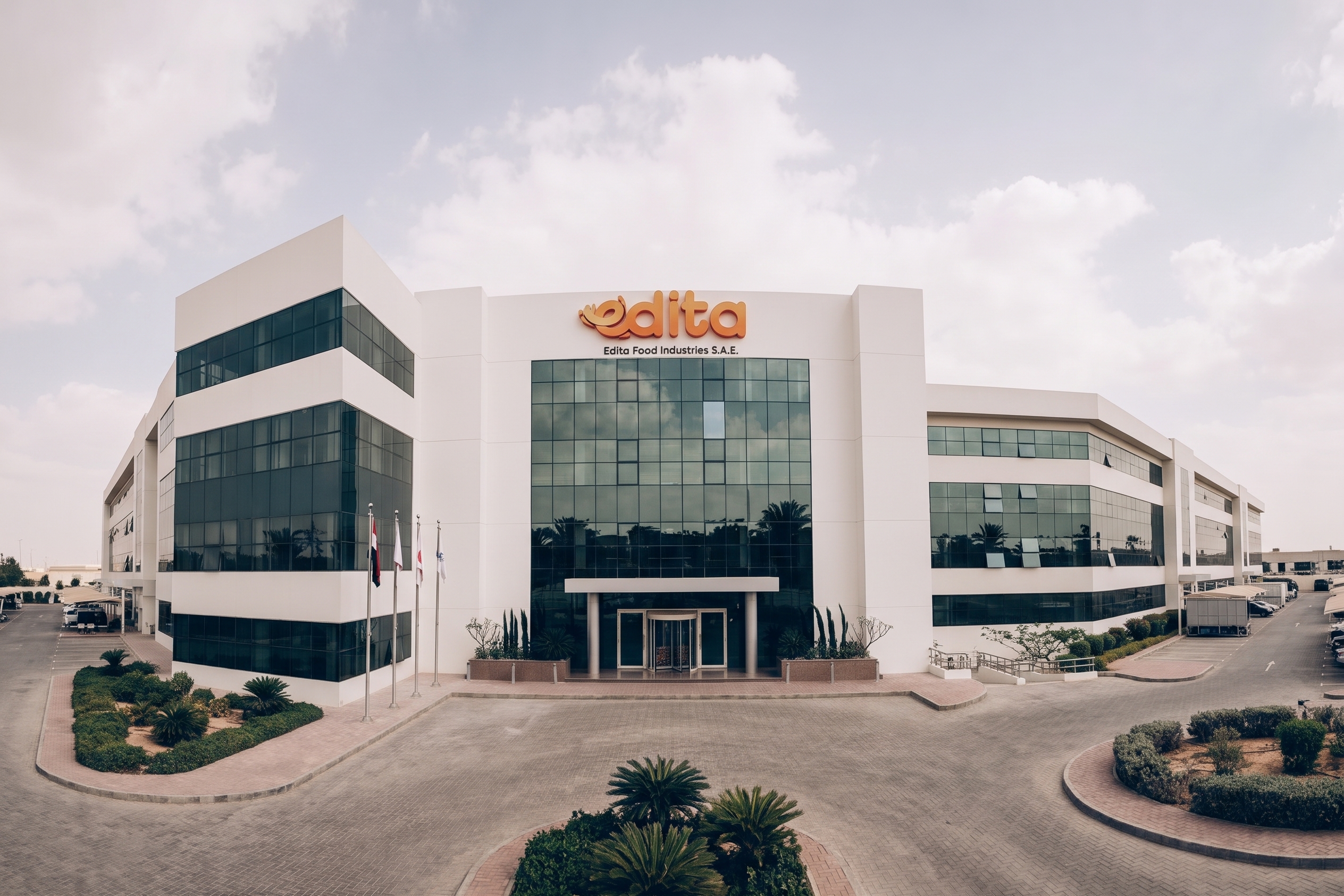
Since September, the ECA has referred five suppliers of electronic marking devices and answer sheets to the Public Prosecution over alleged bid coordination across five Alexandria University tenders. It has also referred two contracting companies over allegedly dividing work locations in National Media Authority tenders and 11 board members of a shipping and cargo-handling cooperative over alleged coordination to fix road freight rates at Suez and Red Sea ports. Separately, the authority rejected a food company’s settlement request after a court fined it for repeatedly ignoring the authority’s requests for information.

Baker McKenzie’s Cairo antitrust team, which flagged the run in a recent note, points out that the ECA went to prosecutors in “all three cartel cases covered by our alert, reinforcing the indication that the ECA is adopting a firmer enforcement posture,” the team tells EnterpriseAM.

None of the lawyers we spoke to sees a new policy in any of this. “I see it mostly as continuity,” says Heba Raslan, partner and head of the antitrust and competition practice at KMPE Khodeir & Partners, who dates the firmer stance back two to three years. “What has changed is the frequency and visibility of the announcements, not the substance of enforcement,” Ragy Soliman, founder and managing partner of Adsero, says.

Why go public now

Cartel investigations take many months, so these probes were opened long before the new board sat, Raslan says. The board was reconstituted in August under Chairman Mahmoud Momtaz, and in her view, it “closed cases that were already mature and decided to publicize them.”

Behind the message are bigger powers on the way. The amendments the House approved on 22 April would let the ECA’s board impose administrative fines directly, alongside the route through the Public Prosecution that is the only path to a penalty today. Cartel fines would be capped at 15% of revenues from the products involved, up from 2-12% now, or at EGP 700 mn where those revenues can’t be pinned down. The authority would also move under Article 215 of the constitution, which gives it full technical, administrative, and financial independence and puts it in the same group of regulators as the Central Bank of Egypt and the Financial Regulatory Authority.

With those powers coming, the ECA “appears to signal to the market to take its procedures seriously before those powers arrive,” Raslan says.

The ECA spent its early years teaching the market the rules, says Amr Abbas, head of arbitration and competition and partner at Matouk Bassiouny & Hennawy. Businesses, lawyers, and even government bodies all had to learn the law from scratch. “It’s not something that you just plug in and it works,” he says. In recent years, the authority has published guidelines (here, here, and here) and kept naming cartels and collusion involving public money and essential goods as its priorities. As far as the ECA is concerned, Abbas says, the excuses have run out: “We have spread the knowledge. You don’t have an excuse now to say you don’t understand the law.”

The food company’s offense was purely procedural, Raslan notes, “and the ECA chose to announce it, which I take as a message about information requests.” The authority’s position on data requests isn’t new either, she says. “The ECA has held this position on data requests for some time and is now saying so publicly.” Soliman reads the refusal as a possible “attempt to send a message to the market that non-cooperation will not be tolerated.” Settlement remains at the board’s discretion, he notes, and “with the Board reconstituted back in August, the market will naturally watch how that discretion is exercised going forward.”

What companies should do

Bidders should be able to show their work. Raslan advises companies to price bids independently and “keep a record of how they arrived at the price,” with no contact with other bidders. Businesses should be able to demonstrate “not only that their bids were prepared independently, but also that they have effective procedures for preventing and addressing potentially anticompetitive conduct,” the Baker team says.

Trade associations need guardrails too. Companies should “review agendas beforehand and brief the people who attend” and “leave the meeting if prices or tariffs are raised,” Raslan says. Abbas has watched that message spread. “You cannot just sit with your competitor and talk and agree freely,” he says of what firms now tell clients, something that “was not the case maybe 15, 20 years ago.” Soliman’s firm is seeing the same shift, with “increased demand from our clients for competition law compliance training.”

In the second part of this two-part feature, we look at why some companies struggle to answer an ECA data request and explore what companies can do when one arrives

This publication is proudly sponsored by

4

Energy

Green hydrogen pipeline narrows to a handful of projects as 20 companies step back

Our green hydrogen pipeline has thinned to a handful of projects after 20 companies stepped back from their agreements with the government. In a written reply to MP Yasser El Hudaibi, published by Attaqa last week, the Electricity Ministry listed the companies that have withdrawn, stalled, or let their agreements lapse. The ministry blamed slowing European demand, a shortage of long-term offtake contracts, and high production and financing costs. The cost of carrying renewable power to the hydrogen cluster at Sokhna weighed on many developers too, Hydrogen Intelligence founder Osama Fawzy tells EnterpriseAM.

The list reads like a roll call of the companies behind our headline figures from 2022 and 2024. By our count, seven of the nine framework agreements signed at COP27, worth up to USD 83 bn, are on it. So are all seven companies from the USD 41 bn MoU round in February 2024.

The exits range from formal withdrawals to lapsed MoUs, according to the ministry’s reply. Fortescue and Globeleq asked to end their framework agreements, while Maersk formally apologized for not continuing. The Total-Enara consortium missed the deadline for its pre-feasibility study. Alfanar, China Energy, Amea Power, ReNew Power, the Taqa-Voltalia consortium, Germany’s DAI, and the Masdar-Infinity-Hassan Allam Utilities-BP consortium have not completed implementation. Neither has Scatec, though it remains part of the Egypt Green project. The other eight let their MoUs expire without submitting the required studies, all but one of them from the February 2024 round.

Developers have also delayed or withdrawn from projects in Oman, Europe, and Southeast Asia over geopolitical uncertainty, Fawzy says. “We shouldn’t present Egypt as the only country developers have withdrawn from,” he adds.

Costly lines, cautious buyers

Getting renewable power to Sokhna came with a bill that sent some developers home. State grid operator EETC set a high wheeling tariff, the fee for carrying privately generated electricity over the national grid, on deliveries to the hydrogen cluster northwest of Sokhna port, Fawzy says. From Benban, that’s an 800-900 km trip. The state then gave developers the option of building their own lines, at their own cost, from wind and solar sites at Ras Gharib, Ras Shokeir, and Zafarana, 80-200 km away. For some of those with wind and solar assets, selling power to EETC offered better returns than a USD 4-5 bn hydrogen project, he says.

On the other side of the table, buyers are holding off. The EU added only 308 MW of electrolyzers in 2024, about 7.7% of its 6 GW annual target, while new global offtake agreements fell to 1.7 mn tons a year in 2024 from 2.4 mn tons in 2023, the ministry said. Unsubsidized green hydrogen still costs EUR 4-7 a kg in most of Europe, against EUR 1.5-2.5 for grey hydrogen made from natural gas, according to its reply. Buyers expect the cost of green hydrogen to keep falling and are reluctant to commit now, Fawzy says. Offtakers also want projects to hit development milestones before they sign, Hussein Rihan, Ocior Energy Holdings’ business head in Egypt, tells EnterpriseAM. Without offtake for most of its capacity, no project can reach a final investment decision (FID), he says.

A handful of projects are still moving

Egypt Green is the furthest along. The Sovereign Fund of Egypt signed the project agreement for the 100 MW plant with Scatec, Fertiglobe, and Orascom Construction in July 2024, with Fertiglobe committed to buying its entire green ammonia output for 20 years. The project’s first phase is running and has begun exporting to European and US markets, the ministry told the House, with FID on full capacity expected in 2027 or 2028. Fawzy gives a more cautious timeline: the pilot inaugurated at COP27 has run at 5-10 MW of its 15 MW, and production from 100 MW of electrolyzers, the units that split water into hydrogen, should start around the turn of the year, with another 100 MW in 2028, he says. Fertiglobe also holds a EUR 397 mn contract to supply green ammonia to the EU through Germany’s H2Global import scheme, we reported.

EDF-Zero Waste plans to make its own power, and Fawzy expects Acwa to follow. EDF and Zero Waste will produce hydrogen and ammonia right beside their wind and solar plants at Ras Shokeir, with 10-15 km of lines and their own Red Sea jetty, Fawzy says. The consortium has reached final feasibility studies and is due to announce financial close in mid-2027, he adds. At its latest meeting, the National Green Hydrogen Council gave Acwa’s East Nile project, which would produce 66k tons of green hydrogen and 500k tons of green ammonia, a one-year extension to its land MoU, the Cabinet said. Fawzy expects Acwa to build out its wind and solar projects first and dedicate part of the output to hydrogen.

Ocior has secured land approval for a solar plant and will build its own line to Sokhna. The council also approved a request by India’s Ocior to designate 12 sq km in West Zafarana for a 600 MW solar plant, which will feed the 100k ton-a-year pilot phase of a green ammonia project with a total annual capacity of 1 mn tons, built in phases, the Cabinet said. Ocior will run its own line from the plant to its ammonia facility at Ain Sokhna and will settle the final solar and battery mix once the land coordinates are defined, Rihan says.

Strings attached?

MP Marwa Borais wants future extensions tied to firm commitments. “The Electricity Ministry’s response confirms what we raised in the briefing request about the gap between announced investments and actual implementation, but it did not clarify the volume of investments realized or the economic returns compared with targets,” Borais tells EnterpriseAM. She wants any extension tied to a binding timeline, completed feasibility studies, long-term offtake agreements, and proof of financing. “MoUs should not become a way to hold onto national land and resources without actual investment,” she says.

Fawzy proposes similar milestones and a smaller starting point. Developers would first deliver a techno-economic feasibility study, agreements with electrolyzer suppliers, funding, and front-end engineering design. After that would come a final agreement with the state giving developers 36-45 months to build. He also proposes small modular plants of 20-50k tons a year as a proof of concept, with the state as a local buyer.

Who is paying for the Gulf’s AI buildout, and what are they getting for it? EnterpriseAM AI + Innovation, our newest publication, follows the capital and tracks the MENA companies putting AI to work.

Sign up here for sharp, skeptical coverage every Tuesday and Thursday.

5

M&A WATCH

Qalaa wraps the refinery deal ahead of schedule and takes 27.1% of ERC

Qalaa Holdings wrapped up its acquisition of QatarEnergy’s stake in the Egyptian Refining Company (ERC) ahead of schedule, according to an EGX disclosure (pdf). The close takes Qalaa’s effective stake in the refinery to 27.1% from 13%. Qalaa had said as recently as last week that it expected the acquisition to close in December. The move was part-financed by an EGP 3.87 bn capital hike, sold at EGP 5 a share, the stock’s nominal value.

Why it matters: ERC is by far Qalaa’s biggest revenue driver. The refinery accounted for EGP 60.7 bn of the group’s record EGP 65.9 bn in consolidated revenues in 3Q, and its net income jumped more than 22-fold y-o-y to EGP 20.8 bn. Its refining margin expanded for a fourth consecutive quarter. Qalaa now stands to benefit from a much larger share of those earnings.

The transaction was made through New Age Refining (NAR) — in which Qalaa holds a 55.4% stake. NAR now owns all of QPI Egypt, QatarEnergy’s local holding company. QPI’s effective indirect stake in ERC is 25.4%, and Qalaa bought it at par value. ERC also repaid in 3Q the USD 104 mn shareholder loan QatarEnergy had extended to it.

REFRESHER- Part of the proceeds will settle obligations to Arab International Bank and other local creditors and buy back around 5% of TAQA Arabia, a step Qalaa had targeted for December. The company also plans to buy a further 11.45% stake and holds an option on the 20% held by the military-affiliated National Service Projects Organization, exercisable in June 2027. Add the full 17.68% it can buy back from a bank consortium and Qalaa’s TAQA stake would top 55%, up from 6.2% today.

Why would a storied engineering firm go after a Scottish energy giant? On this episode of Making It, Nader Aboushadi, group chief treasurer of Sidara (formerly Dar Al-Handasah), unpacks “one of the most consequential take-privates of a British firm in a long time.”

Listen to the episode on: Apple Podcasts | Spotify | Anghami | YouTube

Sign up here to get Making It in your inbox.

6

Logistics

DP World hands EDECS the civil works behind its USD 90 mn Luanda expansion

Angola’s main port is being refitted to load containers with rail-mounted cranes, and the civil works went to an Egyptian contractor. Dubai’s DP World awarded EDECS Group the design-and-build contract for the full 610-meter quay wall at its Luanda container terminal, work that lets the terminal retire mobile harbor cranes in favor of ship-to-shore (STS) gantry cranes, the two said in a statement. Neither side disclosed the contract value or a completion date.

Why it matters: The quay is the groundwork for the USD 90 mn expansion DP World announced in October, when it was granted a 10-year extension at Luanda through 2051 and ordered three STS cranes and 12 semi-automated rubber-tired gantry cranes. Together they lift the terminal’s design capacity to 1.2 mn TEUs from 500k and let it work two Post-Panamax vessels at once, in a port that moves 76% of Angola’s container and general cargo and gives the DRC and Zambia an Atlantic outlet.

IN CONTEXT- EDECS is already a DP World regular. The Cairo-based contractor built the roads and infrastructure for phase three of Jeddah South’s container terminal, dredged and widened Basin 3 at Ain Sokhna, and is redeveloping seven cargo yards at Dar es Salaam’s Terminal 1.

7

Also on our Radar

AfDB lines up USD 770 mn of new Egypt financing for a December board decision

The African Development Bank (AfDB) plans to take three new Egypt operations worth about USD 770 mn to its board before the end of 2026, Al Mal reports, citing country manager Abdourahmane Diaw. One is a governance-sector project of roughly USD 500 mn, the other two are energy projects totalling USD 270 mn. The bank has approved USD 666 mn for Egypt this year, USD 620 mn of it a partial credit guarantee for the government’s Samurai bond and USD 46 mn the bank’s own slice of the USD 66 mn Dandara solar package, but no money has moved: drawdowns wait on the loan agreements entering into force.

WHAT’S NEXT- The bank is targeting USD 950 mn of financing for Egypt in 2027, including budget support and private-sector projects in finance, energy, and transport, Diaw told Al Borsa in October. AfDB’s Egypt portfolio rose to USD 2.52 bn in August from USD 2.04 bn in January, and it carries USD 450 mn of commitments to private renewable projects at various stages, some already in commercial operation.

African stamp at home

Exporters can now get their goods certified for the whole continent at home, after the African Organization for Standardization (Arso) admitted the conformity unit of state trade regulator General Organization for Export and Import Control (GOEIC) to the scheme that issues its Arso Quality Mark (AQM), according to an Investment Ministry statement. Arso designed the mark so that a product tested once in Africa is trusted across its member states. Africa took just under USD 8 bn of our exports last year, roughly 15% of the total, and the ministry expects the upgrade to help Egyptian goods capture more of that trade under the African Continental Freetrade Area (AfCFTA).

8

PLANET FINANCE

The region’s small firms face the world’s widest credit gap, because its banks finance the state first

No region’s small firms are as short of credit as this one’s, and no region’s banks hold as much of their government’s debt. The World Bank’s Finance and Prosperity 2026 report (pdf) puts the shortfall in financing for micro, small, and medium enterprises (MSMEs) across the Middle East, North Africa, Afghanistan, and Pakistan (MENAAP) at about USD 235 bn — 81% of what those firms could productively borrow, more than in any other region it tracks. The same report shows the median bank here holding close to 25% of its assets in government debt, up from around 15% in 2012.

The gap is not a shortage of demand. MSMEs are 90% of businesses and employ 75% of workers in emerging markets, and the Bank’s companion MSME Finance Gap report (pdf) puts their unmet financing at USD 4 tn, 72% of potential demand. Four in 10 MSMEs here are credit-constrained; exclude the firms that never applied because they guessed the answer, and 78% are. Sub-Saharan Africa is the only region worse on both counts.

SOUND SMART- A government bond costs a bank almost nothing to hold, and a small business costs it plenty. Under the Basel rules that set capital charges, a bank’s exposure to its own sovereign can carry a zero risk weight, so USD 100 mn of treasury bills ties up none of the capital that USD 100 mn of loans to a workshop would. It needs no credit officer, no collateral, and no provisioning until it defaults.

Read the 81% as missed borrowing, not refused applications. It compares the credit the region’s MSMEs hold with the credit they could absorb if they could get it, so it counts the firms that never walked into a branch. It is also why the regional average leans on Egypt, Tunisia, and Pakistan: MENAAP bundles the Middle East with Afghanistan and Pakistan, and its sample is dominated by non-oil economies. Gulf banks are largely absent from the comparison.

BUT- The holdings that starve small firms are a solvency question for the banks themselves. Nearly 27% of MENAAP banks would fall below their capital minimum if the value of their government bond portfolios dropped 10%, against 11.3% of banks across emerging markets. Non-resident investors have cut their holdings of local-currency government bonds from 22% to 16% in five years, so domestic banks now own what foreigners sold — and they already carry impaired loans equal to 6.9% of their book.

REMEMBER- We have been reporting this ledger country by country. Saudi banks’ exposure to the state complex — SAR 671 bn of government and quasi-government bonds plus SAR 273.7 bn of public-sector credit — reached about 18% of the sector’s assets in July. Tunisia is covering a TND 14.6 bn deficit next year with TND 19.8 bn of domestic borrowing.

WHAT’S NEXT- Watch the spread, not the lending targets. Every cut in domestic rates narrows the gap that makes government paper the easy asset, and that is the one lever that moves bank balance sheets without a new law. The Bank’s own answer, from its October MSME strategy, is to make firms “visible, connected, enabled, and funded” — digital transaction records, movable-collateral registries, risk-sharing with lenders. None of it competes with the state for a bank’s balance sheet until sovereign exposure carries a cost.

MARKETS THIS MORNING-

Asian markets opened lower this morning. Japan’s Nikkei was down 2.3% and South Korea’s Kospi dropped around 4.7% following a fresh pullback in US tech shares as skepticism over the longevity of the AI boom resurfaced. The MSCI Asia Pacific Index dipped 0.6%, retreating from yesterday’s session, which marked its steepest advance since July.

EGX30

50,885

+0.3% (YTD: +21.7%)

USD (CBE)

Buy 54.17

Sell 54.31

USD (CIB)

Buy 54.17

Sell 54.27

Interest rates (CBE)

20.00% deposit

21.00% lending

Tadawul

9,977

+0.4% (YTD: -4.9%)

ADX

9,872

+1.0% (YTD: -1.2%)

DFM

6,360

+0.8% (YTD: +5.2%)

S&P 500

7,201

-0.5% (YTD: +5.2%)

FTSE 100

10,467

-0.1% (YTD: +5.4%)

Euro Stoxx 50

6,004

-1.2% (YTD: +3.6%)

Brent crude

USD 90.97

-0.5%

Natural gas (Nymex)

USD 3.33

+0.1%

Gold

USD 3,579

-0.3%

BTC

USD 59,975

-2.1% (YTD: -31.5%)

S&P Egypt Sovereign Bond Index

1,160

+0.2% (YTD: +16.8%)

S&P MENA Bond & Sukuk

148.47

+0.3% (YTD: -2.3%)

VIX (Volatility Index)

26.36

-1.0% (YTD: +76.3%)

THE CLOSING BELL-

The EGX30 rose 0.3% at yesterday’s close on turnover of EGP 8.8 bn (20.2% below the 90-day average). International investors were the sole net sellers. The index is up 21.7% YTD.

In the green: Sidpec (+5.4%), Orascom Development (+4.6%), and Raya Holding (+3.4%).

In the red: AMOC (-2.1%), Qalaa Holdings (-2.1%), and Ibnsina Pharma (-1.9%).

9

HARDHAT

Private sector is building our renewables, but the state keeps the grid

Private companies now carry out almost all our renewable energy projects and run more than half of power distribution, Electricity and Renewable Energy Minister Mahmoud Esmat said at the British Egyptian Business Association (BEBA) panel on 19 November, which EnterpriseAM attended. The state, however, is keeping the grid and the final say on prices.

What the private sector is building

The private pipeline is large. Some 30 GW of solar and wind projects, plus storage, are underway, with the private sector carrying nearly USD 30 bn in expected investment, Esmat said. Those projects are moving ahead “even with the government currently stepping back,” he told the panel, pointing to Alcazar Energy’s USD 420 mn agreement for the Gabal El Zeit wind farm as an example.

The government also wants that capacity sooner. It now aims to generate 45% of our power from renewables by 2028, up from a previous target of 42% by 2030, with 10.5 GW of renewable capacity already on the grid, according to a ministry statement.

Thermal plants will carry most of the load for some time yet. They still supply around 75% of generation, Esmat said, after electricity demand grew 7% this summer and peak load topped 40 GW. Keeping up could take around 15 GW of new thermal capacity alongside renewables, he said. For those plants, the government is open to 20-year build-operate-transfer contracts.

What the state is keeping

Private distribution already runs in compounds and new cities. The state installs a single high-voltage meter at each site, leaving the developer to distribute power from there, Esmat said. Three or four projects are ready to generate power off-grid or run networks in areas they could take over, he added, without naming them.

The ministry is wary of going much further. It remains cautious about extending distribution license terms, Esmat said, and he has reservations about a model of many small licenses, which could number around 2k. He would rather see larger operators covering a whole governorate or several. A single company could serve around 150k subscribers in Port Said or Ismailia, he said.

The grid itself stays public. “The grid operator will not change, and there is no intention to change it,” Esmat said. Private companies can build substations to the state’s specifications, but the state will operate and maintain them.

So do prices. The government has chosen to keep subsidizing electricity, giving priority to industries that bring in new technology or capabilities, Esmat said. Power plants pay around USD 4 per mmBtu for gas whose actual cost can reach USD 25-26, with the petroleum sector covering the difference, he added. Private distribution complicates that picture. If end-user prices rise while the high-voltage tariff that distributors pay the state stays fixed, the entire gain could go to the distributors, which calls for “a delicate balance,” he said.

The state is also footing most of the bill for the build-out. Esmat’s presentation puts EGP 4.964 tn toward current and future power projects under targets running to 2028 and 2040. Generation takes the largest share at EGP 2.583 tn across renewables and thermal, followed by EGP 1.625 tn for the El Dabaa nuclear plant, EGP 646 bn for transmission, and EGP 110 bn for distribution. The Egyptian Electricity Transmission Company has spent around EGP 160 bn on the development projects so far, Esmat said.

Solar’s next phase

Local manufacturing has started: Egypt now has two or three solar panel factories, and a battery factory and a wind turbine factory are on the way, Esmat said. Amea Power signed contracts this month for one such factory, a USD 200 mn plant with China’s Mingyang Smart Energy. For solar, turning quartz into silicon ingots and wafers still happens abroad, our August reporting found.

Rooftop owners can sell surplus power to the grid again. The ministry suspended the net-metering system for three or four months last year and reinstated it in February, Esmat said in reply to panel moderator and Orascom Construction’s Vice President of Business Development Tamer Shafik. Solar firms pushed back hard while it was suspended. The only obstacle left is “a purely technical matter,” covering harmonics, transformer loads, and inverter types, he said.

The terms come from the electricity regulator’s February circular (pdf). It targets 1 GW of net-metered solar by 2030, including capacity installed before the circular, and requires local content of at least 25% in each plant’s components.

Factories have their own program on top of that. The government’s 1 GW Shams El Sinaa initiative targets around 7k facilities, roughly 10% of our licensed industrial base, at an average of 150 kW each, with Central Bank of Egypt financing at an interest rate of 6-7% or less, Esmat said. Industry had pushed for a bigger program. In May, the Sustainable Energy Development Association and the Cairo Chamber of Commerce’s sustainable energy division called for a 5 GW target and for each factory’s capacity to reflect its own needs rather than a 150 kW standard, according to a statement (pdf). The terms the Cabinet approved on 28 October sort projects by size, with a fast track for plants of up to 499 kW and a second track for larger ones.


NOVEMBER

26-29 November (Thursday-Sunday): Cairo WoodShow, Cairo International Conference Center, Cairo.

28-30 November (Saturday-Monday): Egypt-Africa engineering industries and innovation forum (EGITEC), Egypt International Exhibition Center, Cairo.

29 November (Sunday): Global Building Materials Summit (CONVERGE 2026), Sharm El Sheikh.

30 November (Monday): Subscription closes for the public tranche of Misr Life Ins.’s IPO.

DECEMBER

3 December (Thursday): Misr Life Ins. expected to begin trading on the EGX on or around this date.

4-6 December (Friday-Sunday): Cairo Inter Leather Expo, Cairo International Convention Center, Cairo.

7-10 December (Monday-Thursday): Food Africa, Egypt International Exhibition Center, Cairo.

7-10 December (Monday-Thursday): Fresh Africa, Egypt International Exhibition Center, Cairo.

7-10 December (Monday-Thursday): Interpack MEA, Egypt International Exhibition Center, Cairo.

11-12 December (Friday-Saturday): ISER International Conference, Cairo.

15 December (Tuesday): Egypt’s 48-month IMF extended fund facility expires.

17 December (Thursday): Monetary Policy Committee’s eighth meeting of 2026.

17-19 December (Thursday-Saturday): EVs Electrify Egypt, Egypt International Exhibition Center, Cairo.

17-20 December (Thursday-Sunday): MacTech Egypt, Egypt International Exhibition Center, Cairo.

17-20 December (Thursday-Sunday): Airtech Cairo, Egypt International Exhibition Center, Cairo.

17-20 December (Thursday-Sunday): Handling Expo, Egypt International Exhibition Center, Cairo.

2026 EVENTS WITH NO SET DATE

Mid-November: Egypt-Saudi Arabia’s 3 GW electricity interconnection officially launches.

November: The IMF’s eighth and final review of Egypt’s EFF programme is expected, unlocking around USD 2.3 bn.

2H 2026: Operations at Deli Glass Co’s new USD 70 mn glassware factory kick off.

2026: The Egyptian-American Economic Forum.

End-December: Government due to finalize its national economic transformation program.

JANUARY 2027

1 January (Friday): Private-sector minimum wage rises to EGP 8.5k.

1 January (Friday): New EU limits on 3-MCPD and glycidyl esters in baby food and infant cereals apply.

9-12 January (Saturday-Tuesday): Afro Plast, Egypt International Exhibition Center, Cairo.

13-14 January (Wednesday-Thursday): Denimsandjeans Egypt, InterContinental Citystars, Cairo.

18-22 January (Monday-Friday): World Economic Forum Annual Meeting, Davos.

20 January-7 February: Egypt to host the African Games.

29 January (Friday): New EU pesticide residue limits for benomyl, carbendazim and thiophanate-methyl apply.

FEBRUARY

1-3 February (Monday-Wednesday): Agri Expo, Cairo International Convention Center.

MARCH

30 March-1 April (Tuesday-Thursday): EGYPES — Egypt Energy Show, Egypt International Exhibition Center, Cairo.

APRIL

12-18 April (Monday-Sunday): IMF and World Bank Spring Meetings, Washington, DC.

April 2027: Tenth of Ramadan dry port and logistics hub to begin operations.

MAY

5 May (Wednesday): Revised EU difenoconazole residue limits apply.

6-8 May (Thursday-Saturday): Glass + Aluminum and WinDoorEx Middle East, Egypt International Exhibition Center, Cairo.

JUNE

8-9 June (Tuesday-Wednesday): AI Everything MEA Egypt, Egypt International Exhibition Center, Cairo.

10-12 June (Thursday-Saturday): The Design Show Egypt, Cairo International Conference Center, Cairo.

14-16 June (Monday-Wednesday): Big 5 Construct Egypt, Egypt International Exhibition Center, Cairo.

SEPTEMBER

29 September - 2 October (Wednesday-Saturday): Cityscape Egypt Exhibition, Cairo.

DECEMBER

14 December (Tuesday): EU Forced Labour Regulation’s ban on products made with forced labour starts applying.

2027 EVENTS WITH NO SET DATE

2027: Egypt to host EBRD’s annual meetings.

2027: Egypt-EU Summit 2027.

May-June 2027: BME’s CATL-backed battery plant due to start production

End of 2027: Trial operations at the Dabaa nuclear power plant expected to take place.

January 2028: First 300 MW of the Shokeir wind farm enters commissioning.

September 2028: First unit of the Dabaa nuclear power plant begins operations.

Now Playing
Now Playing
00:00
00:00