The IMF’s last review of our program is agreed at staff level

1

OPENING NOTE

The glint at the end of the Ring Road

Good morning, nice people. Working from home has always been a big part of EnterpriseAM’s culture, but we went remote-first back in April. For us, that means the default way of working is from home, though staff are welcome to come in any day they want — and have to come in if asked to by their manager. It’s the first (almost) fully work-from-home job I’ve ever had.

We talk all day long in Slack, Notion, and Google Workspace and have weeks every quarter where different combinations of teams work together at our offices in the People’s Democratic Republic of Maadi. And for a week every year, the entire company — folks based in Egypt, the UAE, Saudi Arabia, India, and Europe — comes in to build connections, brainstorm, and plan the year ahead.

As I write this, we’ve just wrapped our first in-office week, which got me thinking about how my relationship with work has changed lately.

I remember how the work-from-home vs. in-office debate ate up a big chunk of our lives up until about two years ago — endless social media posts, books, op-eds, conferences, research papers. Then the conversation moved on to AI with the same intensity, before anyone reached a satisfying answer on the benefits and consequences of remote work.

You only really notice what the daily rhythm of an office does for you when it’s gone — and it only really hits you when it comes back. So what got me through the torture of the Ring Road? What was waiting on the other side?

The magic of the living moment. I’m a theater lover. When it comes to working in a team, nothing fascinates me more than watching people who love what they do while they’re in the thick of it. It started at university, with a professor I was a little in awe of: He had a captivating stage presence. His eyes lit up as he explained something fiendishly complex for the thousandth time in his life.

I’ve looked for that feeling ever since — in an actor disappearing into a character, an athlete pouring everything into the moment, craftspeople at work, or restaurant staff on a busy night.

In journalism, that moment comes when you watch a story take shape, or when you’re in the conversation with the reporter as it does. You see the same glint in their eyes. It starts with a question that came from noticing something, turns into a hunt for an explanation, and ends with a sense of revelation. For me, that’s the best part of this job. Luckily, we get to feel it often because our team is full of people who ask smart questions and who really give a damn.

Theater works because it happens here and now; the voice, the gestures, even the charged silences carry meaning. A remote newsroom works more like cinema. Things reach you already framed: a talking head on a video call, a Slack message, a voice note. The words are planned and arrive intact. What gets lost is the pause before a reporter says, “Wait, that’s weird…,” the half-formed thought floating across the desk that turns into a story, and the tangible energy that builds when a few of us realize we’re onto something.

No screen can replace a live performance. Working in the office every so often brings people back into one room where a piece of work takes shape as a shared experience. That’s what made my commute worth it every day this week.

As we bring the curtain down on a super productive week in the newsroom, I feel energized and satisfied. Until we meet again, Egypt desk. –Abdelhamid

Tags:
2

WHAT WE’RE TRACKING TODAY

MNT-Halan retail investors offered to sell some 43% of their IPO shares back before the stabilization window closed

IN TODAY’S ISSUE: Our IMF program is heading into its last payout. IMF staff and the government have reached agreement on the final review, which could bring in up to USD 2.3 bn once the Fund’s board signs off. The program expires on 15 December, and our Lede has what the IMF still wants from the government.

The turbines on our next wind farms could soon be made at home. Amea Power has signed USD 850 mn in contracts with Chinese partners for a wind farm in Ras Shukeir and a factory in the SCZone that should turn out 3 GW of turbines a year by end-2029, with some headed for export to Africa.

Over in tourism, a USD 55 mn hotel is coming to the Grand Egyptian Museum’s front door. Brassbell Hospitality Group and Misr Abu Dhabi have signed an MoU to develop the 200-key hotel, aiming to open in early 2029.

The EBRD has also backed two private companies with EGP loans. Logistics firm Mesco is borrowing straight from the bank, while packager Tube’s loan comes from Emirates NBD Egypt, with the EBRD covering half of the risk.

But first: would you like to have lunch with us in Dubai on Thursday, 10 December? We’re setting a table in DIFC for a small and exclusive group of readers and business leaders in the UAE. If you’d like to be there, just hit reply to this email, tell us who you are and what you do, and we’ll take it from there.

Wait, lunch? In Dubai? Yes, lunch. Two hours, one table, no panel, no slides, just an open conversation among peers. We want to hear how the people running businesses in the UAE see the next twelve months: what’s working, what’s getting harder, and where the money is actually going now that the region is open for business again. Expect good food, good company, and the kind of conversation nobody has on stage.

Seats will be strictly limited and the lunch is invitation-only, but we’re planning on doing this more often.

Everything that will be said at the table stays at the table under Chatham House rules. We’ll be in touch with the people we’re inviting over the next two weeks or so with the details.

Some opted out

Retail investors who bought into MNT-Halan’s IPO offered to sell some 43% of their shares back at the EGP 24.50 offer price before the 30-day stabilization window closed yesterday, by our math based on an EGX notice. Sell orders came in for 20.65 mn shares worth c. EGP 506 mn, while holders of the remaining 27.35 mn shares didn’t sell into the fund. The stock closed yesterday at EGP 21.70, or about 11.4% below the offer price.

A buyback usually doesn’t cost the selling shareholder anything out of pocket. “I’m returning the money that I got from the subscribers,” Monsef Morsy, managing director and head of research at CI Capital, told EnterpriseAM this week, speaking about stabilization funds in general.

For reference, the 20.65 mn shares come to around 1.2% of MNT-Halan’s total shares and 6.5% of the 320 mn it sold in the IPO. If all the sell orders are executed, the parent’s stake would rise to roughly 81.6% from 80.47%, by our math.

First name on the developer line

Nevera Egypt, the West Giza media-integrated city we’ve been following, now has our friends at Hassan Allam Holding as a master developer. The group signed a strategic partnership yesterday to develop the 36 mn sqm destination on Giza’s Middle Ring Road in phases, according to a Cabinet statement. Grova Developments, Hassan Allam’s real estate arm, will develop the group’s real estate, hospitality and investment projects there.

The plan now calls for 6k hotel rooms rated from three to seven stars, up from the roughly 5k keys we reported in August — which the Cabinet bills as about 40% of the rooms the government is targeting around the pyramids and the Grand Egyptian Museum. Zoom out and the pitch is enormous: some 15k tourist rooms and 8-10 mn visitors a year on Nevera’s own count. We still don’t know the investment ticket, timeline for each phase, or who will operate the hotels. The folks at ALC Alieldean Weshahi are legal advisors to Nevera.

Canal-powered quarter

Our economy grew 4.9% y-o-y in 1Q FY 2026/27, picking up from 4.7% in the previous quarter — but still short of the 5.3% it posted a year earlier — Planning Minister Ahmed Rostom told the Cabinet yesterday, according to a statement. The Suez Canal led the way, with activity jumping 47.5% y-o-y as more ships and cargo moved through. Petroleum refining bounced back to 19.6% growth after contracting a year earlier, while non-oil manufacturing grew a steadier 3.9%. The unemployment rate also rose to 6.0% during the same period from a record low of 5.8% in the previous quarter, Capmas said in its labor force release (pdf).


PSA-

WEATHER- Cairo is sitting on the same afternoon it’s had all week, with a high of 26°C and a low of 17°C, according to our favorite weather app.

It’s a carbon copy in Alexandria too, with a high of 26°C and a low of 16°C.

And over the weekend, expect to see a touch more warmth in the capital (a high of 28°C on Friday, easing to 27°C on Saturday) and as low as 16°C for our friends on the Mediterranean

The big story abroad

Anthropic is on track for the biggest first-time share sale on record. The AI company priced its IPO at USD 83 a share, above the marketed range of USD 70-78, and increased the size of the offering, Bloomberg reports, citing people it says are familiar with the matter. At that price, the IPO will raise at least USD 68 bn while notching a valuation of USD 1.51 tn. Adding a USD 26 bn private placement at the IPO price will bring the total to more than USD 94 bn, ahead of the USD 86.2 bn SpaceX raised in June, including its over-allotment option.

Nvidia is reportedly bringing pay raises forward to calm staff after Jensen Huang’s exit.

Interim CEO Colette Kress told employees their raises and new equity awards would come in December rather than with the usual spring reviews, the Financial Times reports, citing people it says are familiar with the matter. Her comments came the morning after Kress led her first quarterly earnings call as CEO, where she presented positive results and raised Nvidia’s sales forecast.

Beijing is talking tough on trade ahead of a summit with Washington and Moscow. Chinese President Xi Jinping pledged yesterday to stand up against trade protectionism, Reuters reports. His remarks followed new US restrictions on China’s access to advanced AI chips from companies such as Nvidia. Beijing has vowed to retaliate, risking further damage to the fragile US-Chinese trade truce. The talks with US President Donald Trump and Russian President Vladimir Putin will potentially cover Russia’s war in Ukraine and the US war in Iran, along with trade, AI, and nuclear weapons.

Somabay welcomes Golf & Gourmet 2026 from 21-29 November, bringing together golf enthusiasts from Germany, Austria, and Switzerland for nine days of championship golf and exceptional culinary experiences, featuring renowned chef Otto Koch and his team.

A celebration of golf, hospitality and the Red Sea.

3

THE LEDE

IMF staff and the government reached agreement on the final review, putting up to USD 2.3 bn on the table before the program expires

Our IMF program is heading into its last payout. The Fund and the government have reached a staff-level agreement on the eighth and final review of our 48-month Extended Fund Facility (EFF) and the third review of the Resilience and Sustainability Facility (RSF), the IMF said in a statement yesterday. If the IMF’s Executive Board signs off, we’ll receive about USD 1.5 bn under the EFF and up to about USD 0.8 bn under the RSF, bringing total disbursements under the two arrangements to about USD 9.6 bn.

Still, downside risks remain significant, said Amine Mati, who led the IMF mission. However, inflation outcomes, while still elevated, have been more favorable than expected. An escalation of regional conflicts could disrupt trade and investment and, alongside tighter global financial conditions, trigger capital outflows and raise borrowing costs, he said. Mati welcomed the Central Bank of Egypt’s 100-basis-point policy rate increase in October and added that “exchange-rate flexibility should remain the first line of defense against external shocks, with interventions limited to containing excessive volatility.”

The state’s asset sales are part of the plan. “Staff welcomes the successful completion of the Banque du Caire IPO and the authorities’ plans to accelerate divestment of state-owned assets,” Mati said. The government aims to reduce gross financing needs by 5% of GDP in FY 2026/27 through maturity extensions, voluntary liability-management operations, and divestment proceeds, according to the statement.

The government is closing in on the divestment target. It had booked USD 526.3 mn of the proceeds by July, and Banque du Caire’s USD 658 mn sale this month took the total to about USD 1.2 bn by our math, against the roughly USD 1.5 bn the Fund wants before the program ends. Misr Life Ins.’s 15% float next month is the next chance to close the gap.

Mati also lays out what the IMF still wants from the government as the program wraps up. Sustained implementation of the Egyptian General Petroleum Corporation’s financial viability plan “will also be critical to contain fiscal risks,” he says, including by reducing the corporation’s high leverage, strengthening collection of large public-sector receivables, and “ensuring timely fuel price adjustments to ensure cost recovery.” The authorities are also “committed to pursue their efforts to ensure that state-owned entities, including the Future of Egypt, operate consistently with” the competitive neutrality, oversight, and transparency principles of the State Ownership Policy, he adds.

WHAT’S NEXT- The Executive Board still has to sign off on both reviews before the facility expires on 15 December. Mohamed Maait, the IMF executive director representing the Arab group, said last month he expects both to pass because the program has met its targets. Don’t count on a successor program, either. The government doesn’t appear keen on another arrangement for now and plans to lean on the Fund’s technical assistance instead, officials told us last month. Its reforms will run through the National Economic Transformation Program, which the IMF says “provides a roadmap to accelerate reforms.”

This publication is proudly sponsored by

4

RENEWABLES

Amea Power inks deals for USD 650 mn Ras Shukeir wind farm and USD 200 mn turbine factory with Chinese partners

Emirati renewables developer Amea Power signed three contracts worth USD 850 mn with PowerChina and Mingyang Smart Energy for a 500 MW wind farm on the Red Sea and a wind turbine factory in the Suez Canal Economic Zone (SCZone), according to a Cabinet statement.

Most of that money goes to Amunet 2, a USD 650 mn wind farm in Ras Shukeir that Amea will own and operate as an independent power producer. PowerChina will build the farm, and Mingyang will supply its 45 turbines, each rated at 11 MW. Once running, the farm should generate more than 2.3 bn kWh a year, enough to power over 500k households, according to a PowerChina press release. That makes four wind contracts in Egypt for PowerChina, which says it’s now the country’s largest wind contractor, with 2.3 GW of signed capacity.

The factory takes the other USD 200 mn, and Amea is building it with Mingyang. The plant will turn out 3 GW of turbines a year once both phases are running, the first in 2H 2028 and the second by end-2029, Amea Chairman Hussain Al Nowais said at the signing. The turbines will go to local projects and to export markets in Africa.

REMEMBER- The contracts build on an August 2025 framework between the Electricity Ministry and Amea for Amunet 2, which also included 300 MWh of battery storage. It marks the second Chinese-backed wind turbine factory in the SCZone after Sany Group signed an MoU in June for a 2 GW-a-year plant — part of a broader four-way MENA race with Saudi Arabia, Oman, and Morocco to localize wind supply chains.

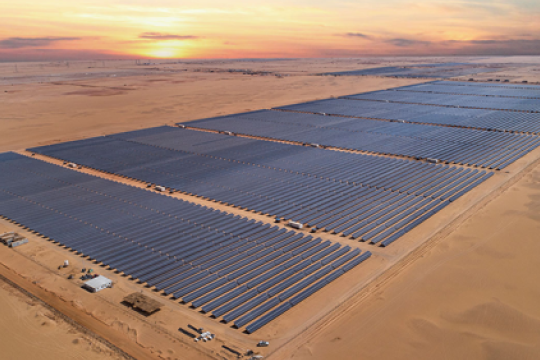
The contracts grow Amea Power’s local portfolio, which already includes its 500 MW Abydos solar plant, the 500 MW Amunet 1 wind farm, the 1 GW Abydos 2 solar plant with 600 MWh of battery storage, and standalone battery projects.

5

HOSPITALITY

Brassbell, Misr Abu Dhabi sign MoU for USD 55 mn hotel facing GEM

Brassbell Hospitality Group (BHG) and Misr Abu Dhabi for Real Estate Investment (MAD) signed an MoU to develop a USD 55 mn, 200-key hotel directly opposite the Grand Egyptian Museum’s (GEM) main entrance in Giza, according to a press release (pdf). The hotel is targeting a 1Q 2029 opening, and should bring in USD 13-15 mn a year in revenue once it matures, BHG Chairman and CEO Ahmed Ibrahim tells EnterpriseAM.

BHG is “picking up at least 25% of the ticket,” Ibrahim tells us, while MAD is putting in the land. The plot counts toward the USD 55 mn, though Ibrahim wouldn’t put a value on it. The group will shape the hotel’s concept, manage its development, and run it once it opens, according to the release, which says the group was selected through a request-for-proposals process overseen by hospitality advisor HVS.

That still leaves the rest of the capital to raise. BHG is targeting Gulf, institutional, and local investors, Ibrahim says, with its financial advisor DO Capital structuring and promoting the raise. He didn’t say whether any investors have been approached yet.

BHG has more projects lined up in Downtown Cairo, Hurghada, and the North Coast, Ibrahim says. It already has a foothold Downtown: In April, the Halan AZ Real Estate Investment Fund (backed by MNT-Halan and Azimut Egypt) closed its inaugural investment tranche in partnership with BHG, with a portfolio that includes heritage buildings Downtown being turned into managed hospitality assets.

REMEMBER- BHG has also expanded abroad. It launched the Fanaya Hotel in Jeddah with a SAR 120 mn investment last year and was in advanced talks on two more Fanaya properties in Riyadh, Vice President of Expansion and Growth Adham Elbedewy told us at the time.

6

DEBT WATCH

EBRD lends Mesco EGP 585 mn and takes half the risk on EGP 500 mn Tube loan

The European Bank for Reconstruction and Development (EBRD) backed two private Egyptian companies with EGP loans on the same morning, and in both, the instrument is the interesting part. The first is a direct loan of up to EGP 585 mn (c. EUR 10.6 mn) to Mesco, a family logistics firm, for flatbed trucks, yard works at Alexandria, Port Said, Damietta, and Sokhna, electric equipment, and a study of which routes could take electric trucks, the bank said in a statement.

The second is not the EBRD’s money. Emirates NBD Egypt is lending Tube, an aluminium-tube packager for pharma and cosmetics, up to EGP 500 mn (c. EUR 8.74 mn), and the EBRD is taking 50% of the risk behind a grant that pays only if the company meets environmental and governance targets, the bank said in a separate statement.

Banks have been using this kind of structure for a couple of years: Emirates NBD signed a USD 25 mn risk-sharing facility with the bank in June 2025, and Tube is the first loan drawn on it, 17 months later. The tool has been in Egypt since 2024, when QNB took a EUR 35 mn facility under an EU guarantee and CIB took a EUR 25 mn facility against EUR 50 mn of its SME lending. The EBRD covers up to half of each loan, which is how it can afford to care about a EGP 500 mn ticket.

IN CONTEXT- These are small tickets in a big book. The EBRD has put almost EUR 17 bn into 245 Egyptian projects since 2012, including a record EUR 1.3 bn across 26 projects last year, with an average of EUR 50 mn per project. The last two loans total about EUR 19.3 mn, or 1.5% of last year’s. The bigger Egypt news these last couple of weeks was elsewhere: the EBRD financing USD 100 mn to the National Bank of Egypt on Tuesday, around USD 145 mn for two wind farms, and USD 63.5 mn for batteries at Benban.

About the companies: Mesco was founded in 1983 as a family shipping and forwarding business and now runs transport, warehousing, and port services. Tube, founded in 1982, makes aluminium and laminate tubes in five plants and exports. Neither is listed, and there are strings attached: a governance program for the former, measured ESG targets for the latter.

7

EARNINGS WATCH

EFG Holdings and Orascom Construction report their 3Q earnings

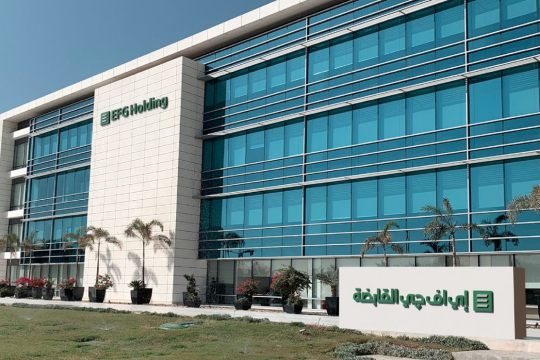
Our friends at EFG Holding saw their group revenue rise 5% y-o-y to EGP 6.7 bn in 3Q 2026, according to their latest earnings release (pdf). Net income after tax and minority interest fell 15% y-o-y to EGP 720 mn during the quarter. Both comparisons rest on one-offs: 3Q 2025 carried income from the sale of non-core assets at Bank NXT, and 3Q 2026 carried a non-recurring employee expense. Excluding both, the company says net income would have risen 96% to EGP 805 mn; excluding just the asset-sale gain, revenue would have risen 27%.

Their investment bank swung back into the black on treasury gains: EFG Hermes’ revenue rose 36% y-o-y to EGP 2.9 bn during the quarter as holding and treasury activities booked EGP 598 mn against a EGP 220 mn loss a year earlier, thanks to FX and unrealized seed capital gains. EFG Hermes’ net income came in at EGP 342 mn after a EGP 170 mn loss a year earlier. Brokerage grew 11% y-o-y to EGP 1.7 bn, while investment banking revenue was just EGP 40 mn as GCC capital markets stayed subdued.

As for the other two verticals, EFG Finance’s revenue rose 26% y-o-y to EGP 1.9 bn on Valu’s 62% jump to EGP 1.2 bn, while its net income fell 43% to EGP 150 mn on higher tax and minority charges at Valu and continued pressure at Tanmeyah. Bank NXT’s revenue fell 31% y-o-y to EGP 1.8 bn on the inflated 2025 base, even as net interest income rose 19% to EGP 1.5 bn and fees and commissions increased 28% to EGP 231 mn; the bank contributed EGP 228 mn of the group’s EGP 720 mn net income.

Orascom Construction

Orascom Construction’s net income attributable to shareholders rose 103% y-o-y to USD 102.7 mn in 3Q 2026, while its revenue climbed 22.5% to USD 1.8 bn, according to the company’s latest earnings release (pdf). Meanwhile, EBITDA increased 56.1% y-o-y to USD 132.1 mn, widening the EBITDA margin to 7.3% from 5.7%.

Growth came from the US, where revenue jumped 62.6% y-o-y to USD 974.2 mn, 54% of the group total, while MEA revenue slipped 4.9% to USD 830 mn. Consolidated backlog excluding BESIX, the Belgian contractor it owns half of, hit a record USD 11.6 bn at end-September, up 34.3% y-o-y, with the US at USD 4.84 bn (41.7% of the total) against Egypt’s 38.8%. New awards rose to USD 2.25 bn in the quarter from USD 314.6 mn, led by US data centers and power and water work in MEA.

9M earnings also grew: Revenue rose 39.5% to USD 4.78 bn in the first nine months of the year, EBITDA climbed 64.9% to USD 333.1 mn, and net income attributable to shareholders jumped 95.9% to USD 218 mn, against a 9M 2025 comparative stripped of a USD 22 mn non-operational gain from arbitration cases in Qatar and Saudi Arabia.

8

Also on our Radar

Misr Ins. closes EGP 2.21 bn equity fund after FRA nod

Misr Ins. closed subscription for its new equity fund after raising its full EGP 2.21 bn target, following the FRA’s sign-off on 16 November, fund manager CI Capital Asset Management said in a statement (pdf). The fund is meant to help the Misr Ins. Holding (MIHC) group meet Financial Regulatory Authority rules issued in February 2025, which require ins’ers to put at least 5% of their unallocated funds into open-ended funds that buy EGX-listed stocks. CI Capital plans to open it to outside investors once it secures the needed approvals and aims to double its size by end-2027, market conditions permitting. MIHC, which is wholly owned by the Sovereign Fund of Egypt, is also taking sister company Misr Life to the EGX, with a 15% float of 750 mn existing shares expected in December.

USD 25 mn for clean industry

VC firm Averroes Ventures plans to allocate USD 25 mn of its USD 50 mn fund to industrial, agricultural, and energy startups, with renewable energy first in line, co-founder and CEO Ahmed Alsharif told Al Borsa. It’s targeting a first close in 1Q 2027 and a second by the end of that year, backing 20-30 companies with checks of USD 500k-2 mn, half in Egypt and the other half in Morocco and Tunisia. Stakes run 25-35% and are held three to five years before exit. The original close target slipped: in May, the firm was aiming for 3Q 2026. The capital is two-legged: local investors and banks on one side, development finance institutions on the other, and the international leg is not signed. Its track record is about USD 10 mn of founder and friendly money since 2017: Breadfast, Trella, Illa, Nawah, and Khazenly, with exits from the first two.

A dozen TPA licenses

The Financial Regulatory Authority (FRA) licensed third-party administrator Unimed Egypt to run healthcare programs on a provisional basis, joining 11 other holders of the license under the Unified Ins. Law, according to a statement from the regulator. In the same round, the FRA allowed our friends at Beltone Asset Management to promote and underwrite offerings for investment fund units, while Emtelaak secured licenses to promote and underwrite securities and manage real estate funds.

Building Big

SIAC Construction aims to carry out EGP 20 bn worth of contracting work in Egypt next year, Al Borsa reports. The work will span real estate, infrastructure, industrial, and energy projects. Vice Chairman Ahmed Azmy told the outlet. SIAC plans to reach EGP 14 bn in business from government and private clients by the end of this year, up from EGP 12 bn so far. The company is also studying new residential, commercial, and educational projects in Egypt and abroad worth more than EGP 50 bn, and it already works in Yemen, Libya, Qatar, and Djibouti. Its New Administrative Capital projects include branches for Faisal Islamic Bank, QNB, and the National Bank of Egypt, as well as the central train station with the National Authority for Tunnels.

9

PLANET FINANCE

Nvidia stops shipping its US-approved Hopper chips to China, promises to guarantee customers only where “necessary”

Nvidia has stopped sending China the AI chip Washington lets it sell there, Bloomberg reports. The company sold USD 2.4 bn of licensed Hopper data center chips to Chinese customers in its third fiscal quarter (ending 25 October), interim CEO Colette Kress told analysts during an earnings call on Tuesday. When asked why shipments were ending, Kress didn’t elaborate. It’s a reversal for a company that spent years lobbying for that license, and it comes days after the US Treasury asked the board whether those very sales had inflated its numbers.

Nvidia’s quarter’s earnings suggest it can do without the China business: Revenue came in at USD 115.8 bn, up 103% on the year, and data center sales rose 110% to USD 107.6 bn. The China shipments that just stopped were only 2.1% of revenue. Nvidia guided the quarter to late January (which carries an extra week) to USD 130 bn and raised its forecast for the year to January 2028 to roughly 75% growth, up from 70%.

Why it matters: Three unconditional things became conditional in the same quarter. The license to sell into China, the company’s willingness to back its customers’ borrowing, and the pricing power that produced a 75% gross margin all tightened at once, while revenue accelerated. The guarantee matters most, because Nvidia co-signs the debt that lets buyers afford the chips it sells: it committed USD 105 bn in August behind a single OpenAI data center and is expected to take a USD 10 bn stake in Anthropic’s upcoming listing, CNN reported. Neil Wilson of Saxo calls it “the backer of last resort across the AI ecosystem.” Kress used Tuesday’s call to say the company would be “selective” and “disciplined” moving forward, guaranteeing only what is appropriate.

If Nvidia lends less, its customers (the data center companies) will borrow at a higher rate or not at all, and the order book will follow. Goldman’s James Schneider expects new multi-party investments to get harder to negotiate at the same scale, CNBC reports.

IN CONTEXT- Hedge funds cut AI risk at the fastest pace in a decade this month even as the index rose, and JPMorgan expects tech and media to sell nearly 30% of US high-grade bonds in 2027. Nvidia’s own outlook now names the constraint out loud: Kress said the forecast weighs “our customers’ access to capital.”

The growth is being paid for in margin: Non-GAAP gross margin was 74.9% and is guided to 71-72% for the quarter, even with revenue guided to USD 130 bn, above the USD 125 bn analysts expected. Nvidia says the cost is launching Rubin, its newest chip platform, because building it at volume for the first time is what dents margin. Kress calls this the bottom before 72-73% in fiscal 2028.

The reversal lands under federal scrutiny: The Securities and Exchange Commission has opened a civil probe into whether Nvidia’s disclosures misled investors, The Wall Street Journal reported on Tuesday, days after Treasury Secretary Scott Bessent gave the board 10 days to explain whether the China sales had been pushed to lift earnings. The board’s answer was a standing committee on national security and export controls and a warning from its new chair, Harvey Jones, that the next chief executive will have to “navigate those waters very carefully.”

MARKETS THIS MORNING-

Asian stocks rose yesterday after Nvidia posted strong quarterly results. South Korea’s Kospi rebounded 2.0%, led by Samsung Electronics and SK Hynix, while Japan’s Nikkei edged up 0.3%.

EGX30

51,545

-0.3% (YTD: +23.2%)

USD (CBE)

Buy 53.75

Sell 53.89

USD (CIB)

Buy 53.77

Sell 53.87

Interest rates (CBE)

20.00% deposit

21.00% lending

Tadawul

10,200

-0.5% (YTD: -2.8%)

ADX

9,798

+0.3% (YTD: -2.0%)

DFM

6,236

-0.2% (YTD: +3.1%)

S&P 500

7,324

-0.2% (YTD: +7.0%)

FTSE 100

10,551

-1.3% (YTD: +6.2%)

Euro Stoxx 50

6,154

-0.9% (YTD: +6.2%)

Brent crude

USD 91.95

-1.3%

Natural gas (Nymex)

USD 3.39

+0.5%

Gold

USD 3,740

-0.1%

BTC

USD 62,895

-2.9% (YTD: -28.2%)

S&P Egypt Sovereign Bond Index

1,154

+0.1% (YTD: +16.2%)

S&P MENA Bond & Sukuk

147.88

-0.2% (YTD: -2.6%)

VIX (Volatility Index)

24.56

-3.5% (YTD: +64.3%)

THE CLOSING BELL-

The EGX30 fell 0.3% at yesterday’s close on turnover of EGP 6.7 bn (40.3% below the 90-day average). Regional investors were the sole net buyers. The index is up 23.2% YTD.

In the green: EFG Holding (+5.0%), Orascom Construction (+0.9%), and Orascom Development (+0.6%).

In the red: Raya Holding (-3.1%), Qalaa Holdings (-3.0%), and Beltone Holding (-3.0%).

10

My Morning Routine

My Morning Routine: Mostafa Salah, CEO & board member at One of One

Mostafa Salah, CEO and board member at One of One: Each week, My Morning Routine looks at how a successful member of the community starts their day — and then throws in a couple of random business questions just for fun. Speaking to us this week is Mostafa Salah (LinkedIn), CEO and board member at One of One.

Edited excerpts from our conversation:

My career has been split between two sectors. I graduated from Ain Shams University’s Faculty of Commerce in 1999, earned an MBA in marketing from AASTMT, and spent 11 years in the automotive industry. I worked my way up across luxury brands like Jaguar, Bentley, Ferrari, and Maserati, eventually becoming general manager of sports cars at MTI Group. I then moved to real estate, where I spent 17 years at SODIC, Qatari Diar, Emkan Misr, and Sky AD. Developments before joining One of One.

I lead by empowering people and handing over authority, because success is built by the team. I see no point in hiring exceptional people — some of whom may be better at the job than I am — and then interfering in every detail of their work. My job is to give them room to make decisions and keep everyone working in sync toward the company’s goals.

Real estate is a far easier business than luxury cars. Both sectors target the same A+ buyer, but that buyer makes decisions in completely different ways. They might swap a luxury car every six months or a year, even as it loses value. Yet they’ll buy property two or three times in their life at most and may stay in one home for good. At One of One, we don’t focus on that segment alone. We speak to a much wider base of mid-market buyers too.

One of One was built with a clear vision from the start: deliver real value, not flashy sales numbers or a massive portfolio of plots. We don’t overpromise to close a sale, because the property experience goes beyond location and design. It extends to build quality, responsiveness, and, above all, operations and after-sales services like security, cleaning, and maintenance. That approach, backed by a transparent team, helped us launch two projects in our first year.

Serviced apartments and hospitality are the most interesting trends in real estate right now. Egypt has a clear supply gap and very strong demand, which is why we’ve made the segment our major focus. We’ll soon launch our first hotel within our Bridges project in Sheikh Zayed City, west of Cairo, and we’re in talks with international brands to manage it.

I’m very much a morning person who is up at 4:30am, because starting the day early feels in tune with human nature. I spend the first two hours sitting quietly to clear my head and sort my thoughts. Then I exercise, which is a core part of my day that I never give up.

I’m at the office by 8:30am, an hour and a half before the workday officially starts, and I split that quiet time into three half-hour blocks for reading, listening to leadership or business concepts, and planning the day’s tasks and meetings. That routine is the one fixed point in my day, and being methodical by nature keeps me focused. The rest of the day runs at full speed with back-to-back meetings, so my office manager keeps my calendar on track.

Working 12-15 hours a day isn’t something I buy into, because work-life balance is both a right and a necessity. I spend an hour with my kids every morning before I leave, and my evenings and weekends belong to my family. I don’t go out much and would rather spend my downtime at home.

I’m reading Forty by Ahmad Al Shugairi in my morning slot, and it’s a book close to my heart. I also recommend The Price, an upcoming book by Ahmed Rashad, host of the “Business Bel Araby” (Business in Arabic) podcast. It distills lessons from around 300 interviews with CEOs and entrepreneurs and will save readers years of learning the hard way.

I live by the proverb, “Do your best work with God in mind, and leave the results to Him.” The biggest mistake is expecting results instantly. They may come in a month or a year, or from somewhere you never saw coming. If you stay true to that in your work and in how you treat people, your effort won’t go to waste.


NOVEMBER

9-20 November (Monday-Friday): COP31 — UN climate conference, Antalya, Türkiye.

26-29 November (Thursday-Sunday): Cairo WoodShow, Cairo International Conference Center, Cairo.

28-30 November (Saturday-Monday): Egypt-Africa engineering industries and innovation forum (EGITEC), Egypt International Exhibition Center, Cairo.

DECEMBER

7-10 December (Monday-Thursday): Food Africa, Egypt International Exhibition Center, Cairo.

7-10 December (Monday-Thursday): interpack MEA, Egypt International Exhibition Center, Cairo.

11-12 December (Friday-Saturday): ISER International Conference, Cairo.

15 December (Tuesday): Egypt’s 48-month IMF extended fund facility expires.

17 December (Thursday): Monetary Policy Committee’s eighth meeting of 2026.

17-19 December (Thursday-Saturday): EVs Electrify Egypt, Egypt International Exhibition Center, Cairo.

17-20 December (Thursday-Sunday): MacTech Egypt, Egypt International Exhibition Center, Cairo.

17-20 December (Thursday-Sunday): Airtech Cairo, Egypt International Exhibition Center, Cairo.

17-20 December (Thursday-Sunday): Handling Expo, Egypt International Exhibition Center, Cairo.

2026 EVENTS WITH NO SET DATE

Mid-November: Egypt-Saudi Arabia’s 3 GW electricity interconnection officially launches.

November: The IMF’s eighth and final review of Egypt’s EFF programme is expected, unlocking around USD 2.3 bn.

2H 2026: Operations at Deli Glass Co’s new USD 70 mn glassware factory kick off.

2026: The Egyptian-American Economic Forum.

JANUARY 2027

1 January (Friday): Private-sector minimum wage rises to EGP 8.5k.

9-12 January (Saturday-Tuesday): Afro Plast, Egypt International Exhibition Center, Cairo.

13-14 January (Wednesday-Thursday): Denimsandjeans Egypt, InterContinental Citystars, Cairo.

18-22 January (Monday-Friday): World Economic Forum Annual Meeting, Davos.

20 January-7 February: Egypt to host the African Games.

FEBRUARY

1-3 February (Monday-Wednesday): Agri Expo, Cairo International Convention Center.

MARCH

30 March-1 April (Tuesday-Thursday): EGYPES — Egypt Energy Show, Egypt International Exhibition Center, Cairo.

APRIL

12-18 April (Monday-Sunday): IMF and World Bank Spring Meetings, Washington, DC.

April 2027: Tenth of Ramadan dry port and logistics hub to begin operations.

MAY

6-8 May (Thursday-Saturday): Glass + Aluminum and WinDoorEx Middle East, Egypt International Exhibition Center, Cairo.

JUNE

8-9 June (Tuesday-Wednesday): AI Everything MEA Egypt, Egypt International Exhibition Center, Cairo.

10-12 June (Thursday-Saturday): The Design Show Egypt, Cairo International Conference Center, Cairo.

14-16 June (Monday-Wednesday): Big 5 Construct Egypt, Egypt International Exhibition Center, Cairo.

SEPTEMBER

29 September - 2 October (Wednesday-Saturday): Cityscape Egypt Exhibition, Cairo.

2027 EVENTS WITH NO SET DATE

2027: Egypt to host EBRD’s annual meetings.

2027: Egypt-EU Summit 2027.

End of 2027: Trial operations at the Dabaa nuclear power plant expected to take place.

January 2028: First 300 MW of the Shokeir wind farm enters commissioning.

September 2028: First unit of the Dabaa nuclear power plant begins operations.

Now Playing
Now Playing
00:00
00:00