Fertilizer gas prices rise 50% as LNG costs outrun urea prices

1

OPENING NOTE

The hedge anxiety

Good morning, friends. Between this week’s repricing of gas for fertilizer plants and Deutsche Bank’s 48-60 range for the EGP, I find myself thinking about how we’ve been living in a prolonged stretch of what pundits might call “calculated escalation,” where one wrong move could flip the switch back to war. The uncertainty in which we’re all living now has manufacturers spending much of their days bracing for an impact that may never come.

Two friends of mine are living that in real time. One owns a plastics factory that supplies some of the largest plants in the country, and the other is a senior exec at a multinational FMCG company with a big footprint here. I expected two very different answers, but each described the same thing: two businesses focused on protecting what they have, using every tool available.

The downside: Future planning, innovating, and expansion are being pushed aside.

The upside: They’re learning lessons in months that a company in calmer times could take a generation to absorb.

“It takes up my whole day,” the plastics factory owner told me. “Pretty much the whole time I’m awake.” Two years ago, he was planning to lift output by a third to 400 tons per month. Today, he produces 150-200 tons monthly with about 80 people, down from a peak of 100-120. Instead of growing sales 30%, he has watched them shrink by roughly the same amount, while his margin has slipped to 5-7% from c. 15%.

Ask him why, and he starts with raw materials. A ton of his main input cost EGP 130k a week ago and EGP 99k today, against EGP 60-80k before the crisis. “I sold cheap, then bought high just before the price dropped. I got hit on the way down and on the way up,” he says. Then there’s the EGP: with around 40% of his capital tied up in credit, a 10% slide in the EGP wipes out roughly 4% of his capital, which he estimates takes two months of profit to rebuild.

I know my friend as an aggressive decision-maker who usually backs his own calls with conviction, so what struck me most was how the current climate has changed him. “Right now I can’t make those aggressive decisions, so I take the middle ground,” he says.

At the multinational, it’s not just one stressed exec. Entire departments are now oriented around coping with uncertainty. The procurement team is locking in raw-material prices for six months instead of a quarter, measuring contracts against a forecast and booking the difference as “cost avoidance.”

“Sometimes it hits and sometimes it misses, and it has missed many times,” my other friend told me. During one of the FX fluctuations, as prices for one main input climbed every week from EGP 24k a ton, his team locked a six-month contract at EGP 27k. Two months later, the crunch eased and the market price fell back to EGP 24k, leaving them paying EGP 3k a ton over the market for the rest of the contract. “It was a disaster,” he says.

I asked both the same last question: What would you do if the US reached a deal with Iran and all of this ended tomorrow? The factory owner didn’t hesitate. “It’s like I’m driving at 20 km/h today, and I’d go to 150 to catch up,” he says, listing the hires, the new equipment, the new product, and the expansion he has been putting off. The guy at the multinational was more muted, but pointed the same way: a plan that holds for a full year would allow his teams to look for cheaper sourcing, renegotiate with suppliers, and finally work on efficiency.

In an odd way, it may be that the biggest line on a company’s hedging bill is the investment that never happened. The losses on a bad contract show up on your P&L, but a plant that stayed at 200 tons and the 40 people it never hired? There’s no line item for that. –Abdelhamid

Tags:
2

WHAT WE’RE TRACKING TODAY

Majid Al Futtaim taps DP World to move Egyptian fresh produce onto UAE shelves

WATCH THIS SPACE: Misr Life Ins. is on deck to announce its intention to IPO on the Egyptian Exchange as early as today, with bankers and lawyers putting the final touches on the company’s offering circular.

It’s excellent news for the EGX, where institutional and retail investors alike will welcome fresh paper. Despite recent volatility, the EGX is up nearly 25% year-to-date, while the Tadawul and ADX are both down single digits.

It’s also a massive boost, signaling the state’s long-delayed privatization program has decisively turned the corner. After sputtering for years, it roared to life earlier this month with the IPO of Banque du Caire. Misr Life Ins. going to market in short order is the clearest signal possible that the Madbouly government is serious about ceding leadership of the economy to the private sector.

In today’s issue

#1- Seven fertilizer producers have agreed to pay USD 175 mn upfront for gas under a 45-day deal that started yesterday, at a price 50% higher at USD 12.75 per mmBtu. In return, they can export everything they make until early January, but the 20-40% supply cuts stay. Rationing could run through part of the winter, MEES East Med Editor Peter Stevenson tells us. More on that below.

#2- Helios and the Egyptian-American Enterprise Fund are selling seed producer Misr Hytech to Advanta, the seeds arm of India’s UPL, for c. USD 110 mn, and the Competition Authority has signed off with conditions.

#3- If you’d rather exit on the EGX, Thndr wants to take you there. The app that’s topped the brokerage league table since April is building an investment bank, CEO Ahmad Hammouda tells us on our Making It podcast.

A cold chain to the Gulf

Majid Al Futtaim and DP World signed an MoU to move more Egyptian farm produce onto supermarket shelves in the UAE, starting with fresh fruit and vegetables, according to a press release (pdf). DP World will run the whole cold chain: produce from the retailer’s Egyptian suppliers gets consolidated at its temperature-controlled facilities at Sokhna, shipped to the UAE on its feeder services, and moved under refrigeration to Jebel Ali for distribution across Majid Al Futtaim’s stores. The two say the arrangement could eventually take in more product categories and markets, but they haven’t put numbers on any of it yet: no investment value, volume target, or timeline.

DP World already has much of the Egyptian end of that route in place, having opened the USD 85 mn Sokhna Logistics Park in October 2025, while developing a USD 29 mn cold-storage facility in 6th of October City with Elsewedy Industrial Development. Majid Al Futtaim already exports Egyptian products, from fresh produce and dairy to household goods and textiles, to seven markets across the GCC and Africa, according to the release. Its export strategy aims to cover all 12 countries where the group operates, Majid Al Futtaim Egypt Country Manager Mohamed Khafaga told us last year.

Back through Suez

Maersk and Hapag-Lloyd will reroute three more of their Gemini services, AE1, AE2, and AE3, through the Suez Canal instead of around the Cape of Good Hope, according to a Maersk statement. All three link Asia and Europe, and the first sailings on the new routing leave Asia on 4 December (AE2), 20 December (AE3), and 14 January (AE1).

REMEMBER- The pair have been bringing Gemini back to Suez in stages since July, when they returned AE15 after a first attempt in January ended with a switch back to the Cape in March. AE19 followed in August, then four more services in September and India-Europe ME1 earlier this month, which takes Gemini’s Suez services to nine with this latest move, by our count. Traffic through the canal has recovered alongside, with revenues up 94% y-o-y to USD 724 mn in October and transits up 32% to 1,490 vessels, Suez Canal Authority Chairman Osama Rabie said earlier this month.

Lagos calling

Egypt is among six countries Nigeria expects to sign a digital-services accord with this month, a pact meant to make it easier for digital-service companies to expand across each other’s markets, Nigeria’s Industry, Trade, and Investment Minister Jumoke Oduwole told Reuters. Ghana, Rwanda, Kenya, and South Africa round out the group, with signing expected at the next African Continental Freetrade Area Council of Ministers meeting in Zimbabwe. Nigeria picked the five other markets after mapping where its digitally enabled businesses most wanted to expand, Oduwole said.


When does a startup make it to the big leagues? On this episode of Making It, Thndr co-founder and CEO Ahmad Hammouda joins Patrick to break down the vision behind Thndr’s rise to become the financial heavyweight it is today.

Listen to the episode on: Apple Podcasts | Spotify | Anghami | YouTube

Sign up here to get Making It in your inbox.

PSA-

WEATHER- Cairo is giving back a couple of degrees today, with a high of 25°C and a low of 16°C, according to our favorite weather app. Also expect a dense mist over the capital and the Delta from 3 to 9am.

It’s a carbon copy of yesterday in Alexandria too, with a high of 25°C and a low of 16°C.

The big story abroad

The Trump administration is putting in place new rules to prevent Chinese companies from accessing advanced AI chips, The New York Times reports. Chinese companies are banned from buying top-end chips from makers like Nvidia, but can still legally rent them from data centers in Southeast Asia and elsewhere. Under the new rule, chip sellers will need a license to supply overseas data centers that provide “significant volumes of computing power” to firms based in countries such as China, Russia, and Iran.

Nvidia’s board is not considering bringing back Jensen Huang as CEO, Reuters reports, citing three people in the know. The board’s position stands despite growing calls for Huang’s return after affairs involving female employees and an alleged Chinese spy pushed him out of the job. An online petition called Stand with Jensen is calling for Huang’s return and has collected over 180k signatures.

Tech problems keep hitting US businesses. Following Microsoft’s recent software outage and US flight disruptions, JPMorgan Chase said transactions are slower than usual because of a “technical issue.” Thousands of customers are reporting problems at other financial firms and services, including Bank of America, Wells Fargo, and Zelle, a payments system owned by banks and run by Early Warning Services, Bloomberg reports.


*** It’s Going Green day — your weekly briefing of all things green in Egypt: EnterpriseAM’s green economy vertical focuses each Tuesday on the business of renewable energy and sustainable practices in Egypt, everything from solar and wind energy through to water, waste management, sustainable building practices and how you can make your business greener, whatever the sector.

In today’s issue: We ask what it would actually take for Egyptian households to sort their waste and buy efficient appliances, and why a working collection service and upfront financing beat another awareness campaign.

Somabay welcomes Golf & Gourmet 2026 from 21-29 November, bringing together golf enthusiasts from Germany, Austria, and Switzerland for nine days of championship golf and exceptional culinary experiences, featuring renowned chef Otto Koch and his team.

A celebration of golf, hospitality and the Red Sea.

3

THE LEDE

Why fertilizer exports cost the state more in gas than they earn

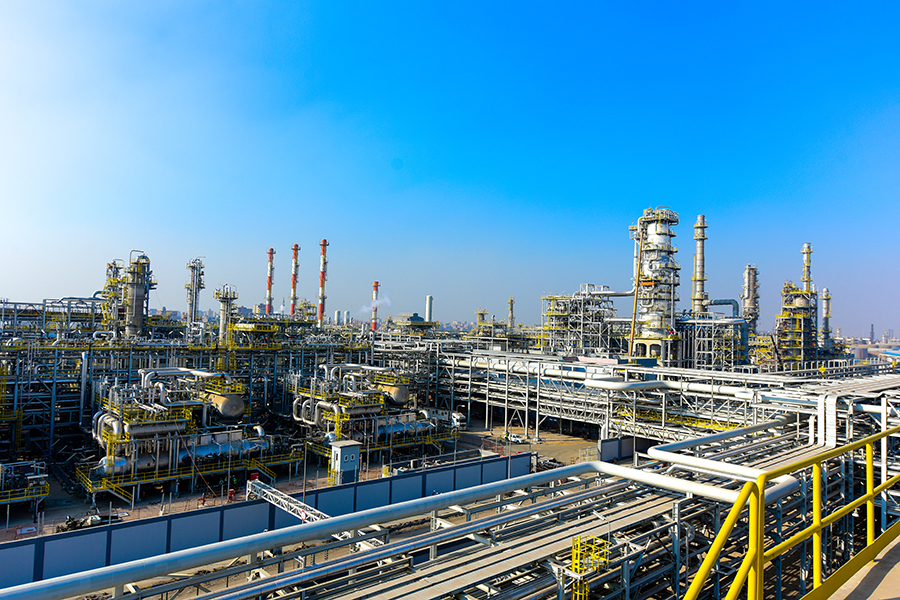
Every ton of urea made with imported LNG uses around USD 672-728 worth of gas before any other production costs, by our math, against the roughly USD 535 a ton FOB that Egyptian granular urea fetched for November contracts. Producing a ton takes around 24-26 mmBtu of gas, MEES East Med Editor Peter Stevenson tells EnterpriseAM, while the state pays roughly USD 28 per mmBtu for LNG, according to a government official quoted by Asharq Business.

Producers are now picking up more of that bill. Seven fertilizer companies agreed to pay a combined USD 175 mn upfront for gas (USD 25 mn each) under a 45-day arrangement starting yesterday, 16 November, that raises their gas price by 50% to USD 12.75 per mmBtu from USD 8.5, Asharq Business reports, citing government and company sources. In return, they can export all of their current output until early January and are temporarily exempt from supplying subsidized fertilizer to the Agriculture Ministry, but gas cuts of 20-40% remain in place.

BACKGROUND- The government cut gas to fertilizer and methanol plants by 20% at the start of the month before raising the cut to around 33% for Abu Qir Fertilizers, Mopco, and Egyptian Fertilizers Co. from 8 November, with Abu Qir shutting one of its three plants. It has also cut November LNG imports twice, first from 15 cargoes to nine and now to six.

The state is facing a difficult decision: “either import LNG at this high cost and pass it on to the industrial sector, or reduce imports and cut supplies to factories while calculating the least damage,” Hassan El Marakby, chairman and CEO of El Marakby Steel and vice-chairman of the Federation of Egyptian Industries’ metallurgical industries chamber, told us earlier this month.

Two different gas bills

Part of what makes the math messier than it looks is that factories and the state face different gas bills. The government draws on domestic production, Israeli pipeline imports, and LNG, each bought under different pricing arrangements, while producers pay contractual prices linked to international urea prices, with terms that differ from company to company, Stevenson says. If you price the gas at the JKM benchmark (which topped USD 34 per mmBtu at the end of October, as {we cited earlier this month), then the gas in a ton of urea would cost USD 816-884, by our math.

The gap isn’t a direct subsidy. “I wouldn’t necessarily characterize all fertilizer production as loss-making, or equate the difference between LNG prices and industrial tariffs with a direct subsidy of the same magnitude,” Stevenson tells us.

At lower gas prices, efficient plants could still earn Egypt more in export revenue than their gas costs, Blue Water Strategy Senior Advisor Cyril Widdershoven tells us. Whether those exports make economic sense also depends on each plant’s efficiency and the other production and loading costs that export revenues must cover.

On the other side of the ledger, cutting supply to heavy industry by around 350 mmcf / d saves the government about USD 321 mn a month in gas it would otherwise have to buy, a government official told Asharq. The net FX benefit depends on which LNG cargoes Egypt skips and how much fertilizer production it gives up, Widdershoven says. And since deferring cargoes postpones payments, the eventual saving depends on what Egypt pays when those shipments arrive, he adds.

Who gets cut first

Fertilizer plants are among the largest industrial gas consumers, and electricity supplies take priority, Stevenson says. They used 207.7 bn standard cubic feet (bscf) in FY 2024/25, about 39% of the gas Egyptian industry consumed, against 82.4 bscf, or roughly 15%, for iron and steel, according to Egyptian Natural Gas Holding Company data (pdf).

Beyond the grid, Widdershoven would allocate gas by foreign-currency return. Protecting electricity supplies makes sense if blackouts are the alternative, he says, but once the grid is secure, allocations should favor the plants that bring in the most net foreign currency per unit of gas. Prolonged blanket cuts risk sacrificing export earnings, with any resulting shortage of fertilizer at home potentially creating another import bill, he adds.

Producers could also stretch the gas they have, says Raed Al Soub, an independent adviser to the fertilizer and chemicals industries and former secretary-general of the Arab Fertilizer Association. He proposes temporarily shifting some orders from gas-hungry plants to more efficient factories or units with spare capacity, with the curtailed company paying an agreed fee and keeping its customers. Al Soub estimates each order would use around 16.7% less gas. The approach “ensures companies don’t shut down and deliver an economic benefit by sharing financial savings rather than sharing losses,” he tells us.

WHAT’S NEXT- Stevenson wouldn’t rule out cuts continuing through part of the winter, since restoring industrial supplies depends on LNG prices, continued Israeli pipeline supplies, and any improvement in domestic production. “Unless there is a meaningful improvement in those fundamentals, I think industrial gas rationing will remain part of the government’s toolkit,” he says.

This publication is proudly sponsored by

4

IPO WATCH

Thndr’s Ahmad Hammouda on why the app wants to make the listings it trades

Thndr, the app that has topped the EGX brokerage league table since April, is building an investment bank to take Egyptian companies public. Co-founder and CEO Ahmad Hammouda said on our Making It podcast that the plan is to sign companies years before they’re ready to float, help get their boards and governance in order, and hold the mandate until they are “IPO-able,” rather than being hired to execute a deal someone else prepared.

The other half of an IPO business, distribution, is the one Thndr already has. The company brought in four out of every five first-time investors over the past two years. Hammouda wants his own firm to be the proof of concept, and his “dream is to IPO Thndr on the EGX,” potentially through a dual listing with Saudi Arabia’s Tadawul.

Reaping the rewards

“It’s multiple years of us building together until you are IPO-able,” he says, and the same logic explains the company’s move into asset management last year. Relying on products and transactions that others originate leaves Thndr dependent on whatever comes to market, and Hammouda compares the shift to Netflix producing its own films after years of distributing other studios’ content. Thndr now holds licenses for asset management, portfolio management, and promotion and underwriting on top of brokerage. “Now, we have to build investment professionals,” he says.

Why a float beats a buyout, in Hammouda’s view: Building a company to sell it leaves founders dependent on finding a buyer, which he calls “gambling,” while preparing for an IPO forces a business to stand on its own and gives early investors a way out. Going public is “joining the Pro League,” he says, and he thinks more Egyptian companies should be working toward it, particularly family businesses looking to separate ownership from management as they pass from one generation to the next. “90% of family-owned companies break at the third generation,” he argues.

The money is already there

As for paying for the build, “We’re not only profitable, we’re cashflow positive,” Hammouda says. The company has raised USD 37 mn to date and still has more than half of its latest round of funding in the bank. “We’ve always raised money to finance growth, but not to finance survival,” he says. Assets under custody have grown from EGP 7 bn to EGP 50 bn, with an EGP 500 bn target for 2030. Traders and longer-term investors each hold roughly half of assets under custody, but traders bring in 60% of revenue, even though both groups cost about the same to serve.

The gap comes down to pricing: active traders pay a subscription and commissions once they pass 50 trades a month, a structure Hammouda says is meant to discourage excessive trading: “I want you to be more conscious about your trading activity.” Longer-term investors generate marketplace and management fees, and unsubscribed users pay 0.1% on EGX trades.

On the fund side, Thndr offers products investors can’t get elsewhere. Hammouda puts the test bluntly: if the asset management arm ended the year running the same assets under the same themes as everyone else, “it’s a failure.” Gold was its first move in that direction, with real estate next on the list. He’s particularly interested in income-generating properties with clear yields rather than off-plan developments: “Grade A investment is investment in income-generating assets with clear yields.”

With scale comes bigger questions

Hammouda sees commercial banks, rather than other brokers, as Thndr’s main competition and calls certificates of deposit “a very outdated product.” Locking savings away for three years makes little sense, he argues, when money market funds offer comparable returns, next-day liquidity, and government risk in place of bank risk. That puts him across the table from CIB CEO Hisham Ezz Al Arab, who warned earlier this year about risks in the non-bank financial sector. Hammouda says the two met afterward and that he has a lot of respect for Ezz Al Arab. “We’re competing for a share of your wallet, me and Hisham,” he says.

What happens if Thndr goes down? With the company executing 17.4% of brokerage turnover on the EGX in October, enough to top the monthly league table, an outage is now the exchange’s problem as much as Thndr’s. Hammouda says Thndr builds its systems to handle 3x current capacity, has dedicated servers at the EGX, and has a direct line to the exchange’s technology team. It has also spent more than USD 8 mn upgrading its back office over the past two to three years. “Outages happen everywhere,” he says, but Thndr commits to disclosing them and compensating customers for demonstrable lost opportunities where the company is at fault.

WHAT’S NEXT- Hammouda expects Thndr’s first real estate fund to launch at the end of this year. Saudi Arabia, where Thndr has in-principle approval to operate, is a separate build he described as a new startup rather than a product line, and he wants to be in seven Arab markets by 2030. It’s already live outside Egypt, having joined the ADX as its first remote retail trading member in August last year, on an Abu Dhabi Global Market (ADGM) license.

5

M&A WATCH

Helios, EAEF exit Misr Hytech in USD 110 mn sale to India’s Advanta

Helios Investment Partners and the Egyptian-American Enterprise Fund (EAEF) are selling seed producer Misr Hytech to Advanta Holdings, the seeds arm of Indian agrichemicals group UPL, for c. USD 110 mn, closing out a seven-year investment. The transaction covers their stake in Hytech Egypt USA, Misr Hytech’s holding company, according to a press release (pdf) from the sellers, and has secured conditional approval from the Egyptian Competition Authority (ECA), the antitrust regulator said earlier this week. The parties signed in August and expect to close by 31 January 2027, subject to customary conditions.

Advanta is paying around USD 110 mn incash, subject to closing adjustments, and will own 99.98% of Misr Hytech’s Egyptian operating company once the sale completes, according to UPL’s August filing (pdf) to the Bombay and National stock exchanges. Only UPL, which is listed in Mumbai and effectively owns 78.21% of Advanta’s parent Advanta Enterprises, has disclosed the price, which the sellers left out of their statement.

That works out to roughly 4.3x Misr Hytech’s latest annual sales, by our math. Neither side disclosed what Helios and EAEF paid in 2019, so the return on investment stays private. Revenue fell nearly a third to around USD 25.7 mn in FY 2025 from USD 37.6 mn a year earlier, according to the filing, which gives no reason for the decline. Turnover was also below the USD 34.9 mn recorded in FY 2023 (the company’s financial year runs from September to August).

For that price, Advanta gets the leader in Egypt’s white corn and sorghum seed markets and a major supplier of yellow corn seeds, reaching some 450k farmers through more than 400 contract growers, according to the sellers. Advanta brings more than 900 hybrid seed varieties across 40 crops and sells in over 70 countries.

The ECA approved the transaction with conditions after flagging competition concerns about the overlap between Advanta’s products and Misr Hytech’s corn seeds, prompting a set of commitments submitted earlier this month. Advanta can’t bundle its products with Misr Hytech’s seeds or make the purchase of one conditional on the other, including through exclusive price reductions, for as long as Misr Hytech holds a dominant position in Egypt.

Misr Hytech must also report its sales and any tying arrangements to the ECA every year for seven years. COMESA’s Competition and Consumer Commission, the second of the two antitrust approvals UPL listed as conditions for closing, cleared the sale without conditions. Its review also covered Hytech Seed Kenya, which the sellers’ statement doesn’t mention.

REMEMBER- Helios and EAEF acquired 96.7% of Misr Hytech in 2019 through investment manager Lorax Capital Partners. EAEF, a US government-backed fund whose congressional mandate ends in about two years, has been selling down its portfolio, exiting ophthalmic drugmaker Orchidia in July and cutting its Fawry stake below 3% in September. By our count, Misr Hytech was one of six direct holdings it hadn’t partly or fully exited.

How did a stretch of desert coast become one of Egypt’s most sought-after places to live and invest?

Destination Red Sea, our new four-part series, explores the businesses, infrastructure and policy shaping the coast. Issue one maps who is building there, how it is financed, and who is buying.

Coming straight to your inbox tomorrow, 18 November.

6

EARNINGS WATCH

GB Corp’s income rises 9.9% in 3Q, Fawry’s climbs 37.5%

EGX-listed GB Corp’s net income rose 9.9% y-o-y to EGP 824.5 mn in 3Q 2026, while its revenue increased 23.7% to EGP 26.8 bn, according to the company’s financial statements (pdf). For 9M, net income fell 13.9% y-o-y to EGP 2.09 bn, even as revenue rose 30.9% to EGP 75.3 bn. Income has barely moved for two quarters (EGP 826.3 mn in 2Q), and revenue went nowhere either.

Financing and tax took the difference: Net finance cost rose 34.7% in 9M to EGP 3.64 bn, and the tax charge grew 45.5% to EGP 1.04 bn. Meanwhile, GB Capital, the group’s non-bank lending arm, saw its net income fall 50.9% to EGP 220 mn in 3Q and revenue jump 34.8% to EGP 5.3 bn, as investment gains from associates dropped to EGP 206 mn from EGP 394 mn a year earlier and provisions more than doubled. Management now says the securitization market is “gradually reopening” as banks work through the central bank’s new rules, the constraint it flagged in 2Q.

And over at GB Auto: Net income was 99.4% higher y-o-y at EGP 601.7 mn in 3Q, up from a low base of EGP 301.8 mn, while revenue climbed 21.3% to EGP 21.8 bn, a year earlier. The nine months still show income 9.2% lower at EGP 1.21 bn, despite revenue up 27.1% to EGP 61.8 bn. Pricing carried the quarter, not volume: passenger car revenue rose 14.3% to EGP 16.9 bn on 4.5% fewer units (15.3k).

Fawry

EGX-listed fintech Fawry reported a 37.5% y-o-y rise in net income to EGP 1.07 bn in 3Q 2026, with a 36.4% y-o-y rise in revenue to EGP 3.13 bn, the company said in its latest earnings release (pdf). Banking services remain the primary growth engine, rising 40.3% y-o-y, followed by financial services, which grew 51% y-o-y and supplied 38.7% of the increase, helped by its expansion into neobanking. Alternative digital payments, the oldest segment, grew 8.9%.

For the 9M, net income rose 32.2% to EGP 2.69 bn on 37.8% higher revenues of EGP 8.35 bn. Banking services grew 42.1% to EGP 3.36 bn, led by Agent Banking, which went up 62.1%. Financial services came in second, rising 59.7% to EGP 2.65 bn. Throughput value rose 51.6% to EGP 968.6 bn, even as the PoS estate shrank 4.5% to 368k terminals in what Fawry calls a deliberate cull of underused machines.

7

A MESSAGE FROM AUC ONSI SAWIRIS SCHOOL OF BUSINESS EXECUTIVE EDUCATION

African trade needs more than buyers

Africa’s exporters often have buyers. What they lack is financing for their shipments. The continent’s trade finance gap stood at about USD 74 bn in 2025, the Cairo-based African Export-Import Bank (Afreximbank) says in its 2026 African Trade Report. The bank bridges the shortfall amid foreign currency shortages and global banks cutting ties with African lenders. This position requires Afreximbank to bring in its structured trade finance expertise.

That is why AUC Onsi Sawiris School of Business Executive Education and Afreximbank have been working together. Their partnership has grown from one certificate into two programs, combining AUC’s executive education framework with Afreximbank’s perspective as a bank financing trade across the continent and the Caribbean.

It started with trade finance. In June 2022, the partners launched the Certificate of Trade Finance in Africa (COTFIA), a hybrid program covering the tools that keep goods moving, from factoring and invoice discounting to asset-based lending. Factors Chain International, a global factoring network, delivers the course on commercial finance and practical applications. COTFIA has since trained more than 155 senior executives from 35 African countries. In 2025, the program received a Silver recognition in the Professional Development category at the EFMD Excellence in Practice Awards, allAfrica reported.

Graduates point to concrete results. “As a direct result of studying this certificate, the trade finance revenue grew by 40% in my institution,” says Mulai Saikou Kanagie, head of corporate banking at Vista Bank Gambia.

Then in September 2024, the partnership grew to include a program on navigating the continent’s new trade framework. The partners launched “AfCFTA: Its Genesis, Dimensions and Prospects, a program focused on trading on the continent in the era of the African Continental Free Trade Area (AfCFTA). Since then, three cohorts in Cairo and Abuja have trained more than 100 participants from 16 African countries. The program covers ways to identify new markets, market access and potential investments, cross-border compliance, and financing intra-African trade.

The latter program targets individuals involved in cross-border trade activities. This includes export and import managers, bank executives, business development leads, chambers of commerce staff, and trade ministry officials.

The USD 74 bn financing gap is continental. Closing it happens transaction by transaction.

For more information on AUC Onsi Sawiris School of Business Executive Education’s programs, click here.

8

Moves

Allianz Life Assurance names former minister Sahar Nasr independent chair

Allianz Life Assurance Company Egypt appointed former investment and international cooperation minister Sahar Nasr (LinkedIn) as its independent chair, the company said in a statement (pdf). The board made the appointment on 10 November following the Financial Regulatory Authority’s approval. Nasr, a board member since 2021 and an economics professor at the American University in Cairo, succeeds William Robertson Dommisse (bio), who stays on the board as SanlamAllianz’s representative.

The appointment comes as ins. players bring their boards in line with the FRA’s governance rules in Decree 200 of 2025 (pdf). The decree requires a non-executive majority with at least two independent members, along with a non-executive chairman who cannot also serve as managing director or CEO, with the rules applying from each company’s next board election.

9

Also on our Radar

Egypt and India target USD 12 bn in trade by 2030, and agree to explore a free trade agreement

Egypt and India are targeting USD 12 bn in bilateral trade by 2030, up from USD 6.5 bn in FY 2025/26. The two sides set the goal after their trade ministers chaired the first ministerial-level session of the India-Egypt Joint Trade Committee in the New Administrative Capital, according to Egypt’s Investment Ministry and India’s Commerce Ministry. They agreed to explore the terms of a free trade agreement and to ramp up work on India’s first dedicated industrial zone in the Suez Canal Economic Zone (SCZone).

The zone leans on the areas where India is strongest: renewables, green hydrogen, storage, pharma, and data centers. The General Authority for Investment and Freezones and Invest India are building a joint investment-information platform, and India’s commerce minister floated UPI links and wider local-currency trade.

The groundwork came days earlier: a permanent joint startup forum, a delegation of more than 150 Indian companies including payments network NPCI, and a pitch built on India’s 240k startups and about USD 5 bn invested across 55 factories.

Mopco plans to expand

State-owned Misr Fertilizers Production Company (Mopco) has lined up a c. USD 265 mn financing package to upgrade its plants, according to a company statement (pdf). The company will borrow USD 165 mn (c. 62% of the total) from a syndicate of banks and cover the other USD 100 mn from its own resources and shareholder equity. The money is earmarked for expanding capacity and breaking into new markets. Mopco said in November 2025 it planned to invest USD 200-250 mn in FY 2026/27 to lift output 10% to 2.2 mn tons a year and sell into South Africa and Latin America, cutting its reliance on Europe, which takes 89% of its exports.

10

PLANET FINANCE

Inflation breaking safe-haven trade as gold and Treasuries fall with stocks

Gold and Treasuries, the two assets investors usually turn to when stocks sell off, aren’t offering much shelter this month, Reuters reports. Gold touched USD 3.83k an ounce yesterday, its lowest since October 2025, while Treasuries had their worst week since the April 2025 tariff shock even as tech stocks kept falling, according to a separate Reuters report.

The reason, strategists say, comes down to inflation. Bonds and gold can still cushion a growth scare, but they offer far less protection when rising prices and the prospect of Fed tightening are behind the selloff. That’s already played out this year: gold fell to a one-year low alongside equities in late October, and Treasuries have declined alongside stocks twice in the past 18 months.

Treasuries show the pattern most clearly: When tariff fears rattled equities in April 2025, long-dated Treasuries fell alongside stocks and 10-year yields spiked. The US-Israeli war on Iran that began on 28 February triggered a similar reaction, with oil prices and bond yields climbing together.

And then November showed how quickly the relationship can flip. Treasuries rallied when the Democrats’ midterm sweep sparked a tech selloff on 5 November, sending yields down as much as 12 bps, according to Bloomberg. But hotter inflation data the following week had traders pricing in a larger December rate hike, and Treasuries posted their sharpest weekly selloff since that shock even as tech stocks kept falling, Reuters reports. The 10-year yield ended Friday at 5.15%, up from 4.86% a week earlier, according to Treasury data.

Gold isn’t much of a crash hedge either. Its reputation as a store of value holds up better over centuries than over quarters, Duke finance professor Campbell Harvey told Reuters, and with annual volatility above 15%, it swings roughly in line with the S&P 500. It also tends to go early: Standard Chartered’s Suki Cooper says investors increasingly treat gold as a liquid reserve, which makes it one of the first assets sold when equity losses trigger margin calls. Commerzbank analysts pointed to exactly that during the tech-driven selloff on 30 October, Reuters reported at the time. Still, Cooper sees longer-term support for gold, citing central bank buying since 2022 and concerns over debt and de-dollarization.

Spot gold was USD 3.87k an ounce by mid-morning after touching USD 3.83k, its lowest since October 2025, as the USD held near its strongest level since April 2025 and traders priced a 91% chance of a December hike, Reuters reports.

Nor do currencies offer an easy way out. Standard Chartered’s Steve Englander sees drawbacks across the board: the CHF is expensive, the EUR faces political and economic uncertainty, and the JPY tends to weaken when oil is driving market volatility, given Japan’s reliance on energy imports. That leaves the USD as the default, helped by the yield investors can earn on Treasuries. “You’re running out of safe-haven fingers to count on,” he says.

That said, the old havens haven’t stopped working altogether. FHN Financial’s Will Compernolle points out that Treasuries held up during France’s recent fiscal turmoil, and last year’s much-discussed “Sell USA” trade barely registered in cross-border flows. Harvey isn’t giving up on bonds or gold either, though he’d pair them with inflation-linked Treasuries, real assets, and trend-following strategies instead of relying on any single asset for protection.

OUR TAKE- November showed how much the source of a selloff matters: Treasuries rallied when growth concerns hit tech stocks, then fell alongside equities when inflation revived expectations of Fed tightening. That’s a problem for the traditional 60/40 portfolio, since bonds offer less diversification when inflation is driving both markets. With the Fed facing renewed price pressures, our read is that shorter-dated Treasuries may offer more protection against rising rates than long bonds, while investors relying on the usual stock-bond mix could be carrying more interest-rate risk than they realize.

MARKETS THIS MORNING-

Asian stocks fell earlier today. South Korea’s Kospi closed down 3.6% on Monday as foreign investors sold tech shares amid concerns over the AI boom following the Nvidia crisis. Japan’s Nikkei also fell 2.4%.

EGX30

52,200

0.0% (YTD: +24.8%)

USD (CBE)

Buy 53.62

Sell 53.75

USD (CIB)

Buy 53.63

Sell 53.73

Interest rates (CBE)

20.00% deposit

21.00% lending

Tadawul

10,264

+0.1% (YTD: -2.2%)

ADX

9,683

+0.2% (YTD: -3.1%)

DFM

6,212

+0.2% (YTD: +4.4%)

S&P 500

7,417

-1.9% (YTD: +8.3%)

FTSE 100

10,882

-0.2% (YTD: +9.6%)

Euro Stoxx 50

6,348

-0.6% (YTD: +9.5%)

Brent crude

USD 92.44

-3.6%

Natural gas (Nymex)

USD 3.13

+0.2%

Gold

USD 3,867

+0.4%

BTC

USD 64,686

-0.4% (YTD: -26.2%)

S&P Egypt Sovereign Bond Index

1,151

+0.1% (YTD: +15.9%)

S&P MENA Bond & Sukuk

148.34

-0.4% (YTD: -2.3%)

VIX (Volatility Index)

22.91

+18.7% (YTD: +53.2%)

THE CLOSING BELL-

The EGX30 rose marginally at yesterday’s close on turnover of EGP 11.2 bn (0.1% below the 90-day average). Regional investors were the sole net sellers. The index is up 24.8% YTD.

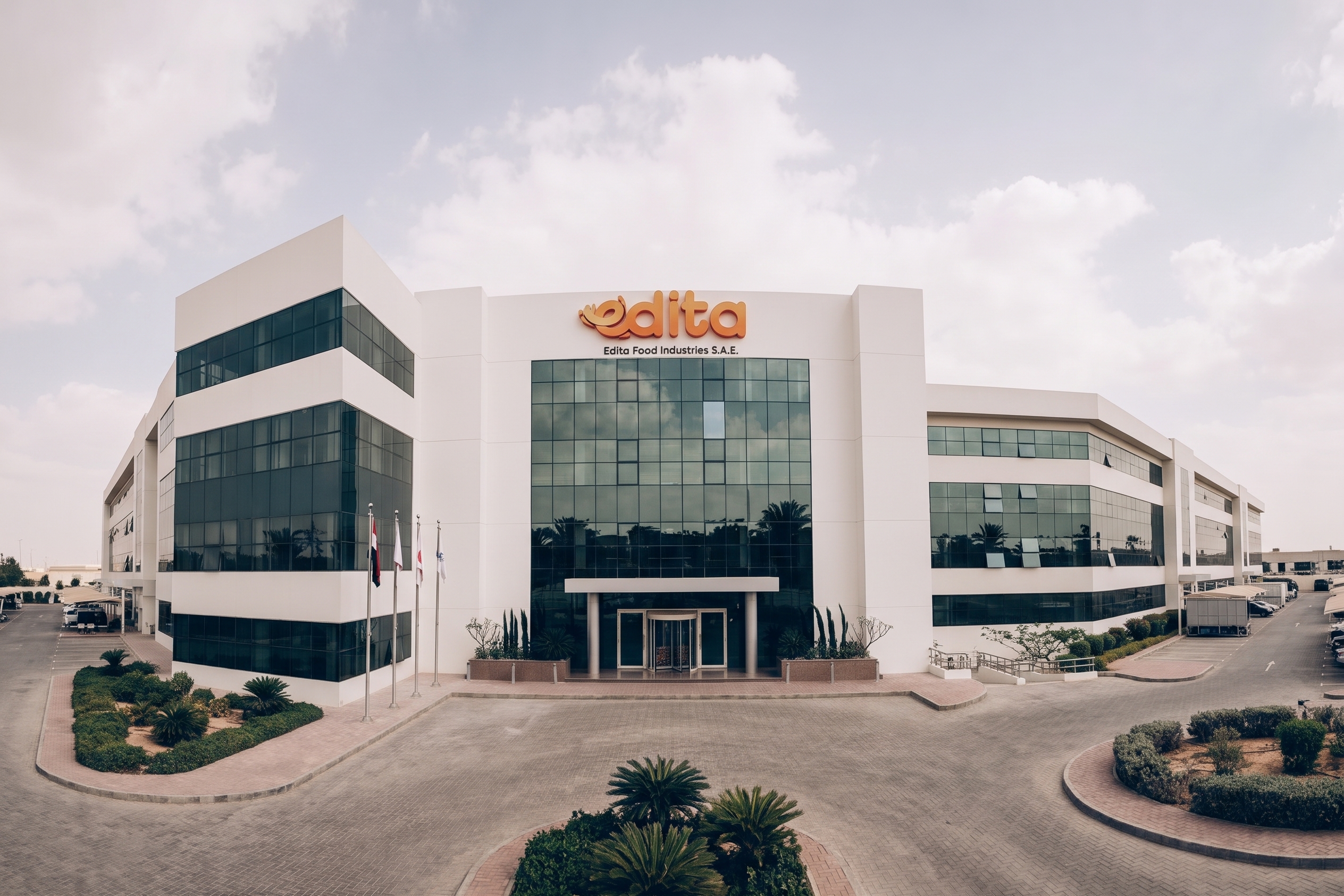
In the green: Edita (+7.4%), Telecom Egypt (+5.2%), and Eastern Company (+2.9%).

In the red: Misr Cement (-4.2%), Mopco (-4.1%), and Rameda (-4.1%).

11

Going Green

Egyptian households will go green when collection is reliable and upfront costs are covered, advisors say

Savings only get households to go green if they can actually get their hands on them. In our final issue of Power Trip, we argued that Egypt’s green transition needs to offer households a tangible return, and the climate finance and ESG advisors we spoke to say that return still falls short on two fronts: dependable collection that buys sorted recyclables and financing to cover the upfront cost of efficient appliances. Then there’s keeping households engaged once the first waves sign up, which they treat as a separate test.

Collect first, then finance

On collection, Egypt’s Zabbaleen (garbage collectors) and “roba bekya” (scrap buyers) already show that sorting and reuse work when they are practical and pay off, iESG Advisory founder and CEO Ahmed Rushdy tells EnterpriseAM. He argues that what holds households back is how the services around them are organized. “If sorting waste requires extra time or space, and there’s no separate collection, it’s unrealistic to expect it to become a lasting habit,” he says. “An awareness campaign can explain why recycling matters; it can’t collect the bottles piling up in someone’s kitchen.”

Financing is the second barrier, since an efficient appliance pays for itself over years while its price is due on day one. “Households facing budget constraints can’t always select the option with the lowest lifetime cost,” International Climate Finance Center CEO Noha Shaker tells us. Egypt’s transition should address upfront affordability as well as future savings, she says, with suitable financing, targeted support, and accessible alternatives likely to do more than another explanation of why efficiency matters.

That’s why each barrier needs its own incentive. A refundable deposit or recycling credit rewards a repeated action, while an installment plan or rebate helps people make an upfront investment, Shaker explains, adding that neither works well if the underlying service is inconvenient or unreliable. She counts saved time, greater comfort, and a cleaner neighborhood as rewards too, which Rushdy agrees with. “Not every habit needs to be paid for,” he says. “Convenience, sensible defaults, and visible results can drive participation as effectively as money.”

Keeping households on board

Signing up the first households is the easy part, Bekya Pay’s co-founders told us in April. Early adopters join quickly, especially in urban and higher-income areas, but “after the early growth, interest often plateaus,” and the remaining households need stronger incentives or easier access, they said. The platform had over 30k registered users at the time and collected about 40 tons of recyclables a month.

What keeps households on board is reliability: collectors who show up as promised, operators paying rewards on time, and sorted materials that stay separate, Rushdy says. “A small reward won’t build trust if people feel their effort is wasted; unreliable or delayed rewards can reinforce skepticism,” he adds. Shaker flags one way that trust could break down: a household sorts its waste, then watches the collectors mix it back together.

Which brings us back to the informal networks, who already know how to recover value from waste, Shaker says. The next step is connecting that experience to more dependable collection and better-coordinated services, while improving working conditions and protecting livelihoods, she adds.

Shaker recommends judging programs by what happens after launch, tracking repeat participation, operating costs, and whether households keep taking part once temporary rewards end. She proposes starting with a few observable actions, such as returning containers or separating valuable recyclables, and putting collection schedules, return points, and processing capacity in place before promoting participation. Testing improved services and incentives against awareness campaigns alone would show what actually changes routines in Egypt, she says.

For Rushdy, the aim is to make green the default. “The long-term objective should be to make sustainable choices the normal and convenient option, rather than relying on people to make an extra effort every day,” he says.


NOVEMBER

9-20 November (Monday-Friday): COP31 — UN climate conference, Antalya, Türkiye.

16-17 November (Monday-Tuesday): World Economic Forum’s (WEF) first dedicated business meeting in Egypt + MENA, New Capital.

26-29 November (Thursday-Sunday): Cairo WoodShow, Cairo International Conference Center, Cairo.

28-30 November (Saturday-Monday): Egypt-Africa engineering industries and innovation forum (EGITEC), Egypt International Exhibition Center, Cairo.

DECEMBER

7-10 December (Monday-Thursday): Food Africa, Egypt International Exhibition Center, Cairo.

7-10 December (Monday-Thursday): interpack MEA, Egypt International Exhibition Center, Cairo.

11-12 December (Friday-Saturday): ISER International Conference, Cairo.

15 December (Tuesday): Egypt’s 48-month IMF extended fund facility expires.

17 December (Thursday): Monetary Policy Committee’s eighth meeting of 2026.

17-19 December (Thursday-Saturday): EVs Electrify Egypt, Egypt International Exhibition Center, Cairo.

17-20 December (Thursday-Sunday): MacTech Egypt, Egypt International Exhibition Center, Cairo.

17-20 December (Thursday-Sunday): Airtech Cairo, Egypt International Exhibition Center, Cairo.

17-20 December (Thursday-Sunday): Handling Expo, Egypt International Exhibition Center, Cairo.

2026 EVENTS WITH NO SET DATE

Mid-November: Egypt–Saudi Arabia’s 3 GW electricity interconnection officially launches.

November: The IMF’s eighth and final review of Egypt’s EFF programme is expected, unlocking around USD 2.3 bn.

2H 2026: Operations at Deli Glass Co’s new USD 70 mn glassware factory kick off.

2026: The Egyptian-American Economic Forum.

JANUARY 2027

1 January (Friday): Private-sector minimum wage rises to EGP 8.5k.

9-12 January (Saturday-Tuesday): Afro Plast, Egypt International Exhibition Center, Cairo.

13-14 January (Wednesday-Thursday): Denimsandjeans Egypt, InterContinental Citystars, Cairo.

18-22 January (Monday-Friday): World Economic Forum Annual Meeting, Davos.

20 January-7 February: Egypt to host the African Games.

FEBRUARY

1-3 February (Monday-Wednesday): Agri Expo, Cairo International Convention Center.

MARCH

30 March-1 April (Tuesday-Thursday): EGYPES — Egypt Energy Show, Egypt International Exhibition Center, Cairo.

APRIL

12-18 April (Monday-Sunday): IMF and World Bank Spring Meetings, Washington, DC.

April 2027: Tenth of Ramadan dry port and logistics hub to begin operations.

MAY

6-8 May (Thursday-Saturday): Glass + Aluminum and WinDoorEx Middle East, Egypt International Exhibition Center, Cairo.

JUNE

8-9 June (Tuesday-Wednesday): AI Everything MEA Egypt, Egypt International Exhibition Center, Cairo.

10-12 June (Thursday-Saturday): The Design Show Egypt, Cairo International Conference Center, Cairo.

14-16 June (Monday-Wednesday): Big 5 Construct Egypt, Egypt International Exhibition Center, Cairo.

SEPTEMBER

29 September - 2 October (Wednesday-Saturday): Cityscape Egypt Exhibition, Cairo.

2027 EVENTS WITH NO SET DATE

2027: Egypt to host EBRD’s annual meetings.

2027: Egypt-EU Summit 2027.

End of 2027: Trial operations at the Dabaa nuclear power plant expected to take place.

January 2028: First 300 MW of the Shokeir wind farm enters commissioning.

September 2028: First unit of the Dabaa nuclear power plant begins operations.

Now Playing
Now Playing
00:00
00:00