Banque du Caire lists, treasury takes up to half of proceeds

1

WHAT WE’RE TRACKING TODAY

Petrojet will build the USD 170 mn pipeline carrying Cypriot gas to Damietta for export

Good morning, lovely people. The biggest IPO the EGX has seen in at least a decade is now trading, and it opened quietly, up 0.19% on a price set right at fair value. Still early days, and we will be watching.

We also know where a good chunk of the EGP 36.37 bn IPO proceeds is headed: the Finance Ministry will take up to half of it to ease public debt pressures, a senior government official tells us, and the cabinet has approved the same split for state offerings more broadly. Below you will read about the trading, the valuation, and what one fund manager thinks the state should do differently next time.

The Finance Ministry is reaching into a different pocket this time: our tax bill. The country’s first tax-backed sukuk launches this month as a pilot issuance, Mae Adel, the finance minister’s deputy for public debt management, tells us. Taxpayers will subscribe at a bank branch — up to 20-25% of last year’s tax bill — and collect a taxfree return floating around 19%. No bourse trading will be offered until the second half of next year, since the ministry wants the ownership-transfer system tested first.

Over in industry, the government is back in talks with Brussels over the EU’s carbon border levy, asking for a phased timetable for Egyptian exports, two senior government officials tell us. The route that keeps part of the bill in Egypt runs through a domestic carbon price the state hasn’t written yet, and officials say the capacity to verify emissions isn’t there either.

***

It’s mail time! Who writes EnterpriseAM’s subject lines? Why are our podcasts audio only? How do we preserve the craft of writing while integrating AI policies across the newsroom?

These are some of the questions readers and listeners have sent us over the years, so on an upcoming episode of Making It, Patrick and the team will answer them along with anything else you’re curious about: whether it’s about the business, our coverage, how the newsroom is run, or why we do things the way we do.

Have a question for us? Record it as a voice memo (30-45 seconds), tell us your name at the top, and send it to [email protected] by Saturday, 7 November. We’ll also take written questions, but since we’re an audio show, we’d love to play yours in your own voice.

***


Power Trip’s final issue turns to the people paying the bill. We look at the cost of a backup generator or going solar, how your electricity bill is really calculated and whether the price is right, whether an EV pays off against a petrol car today, and why green energy keeps skipping the consumer.

Coming to your inbox tomorrow, 4 November.

Next stop, Damietta

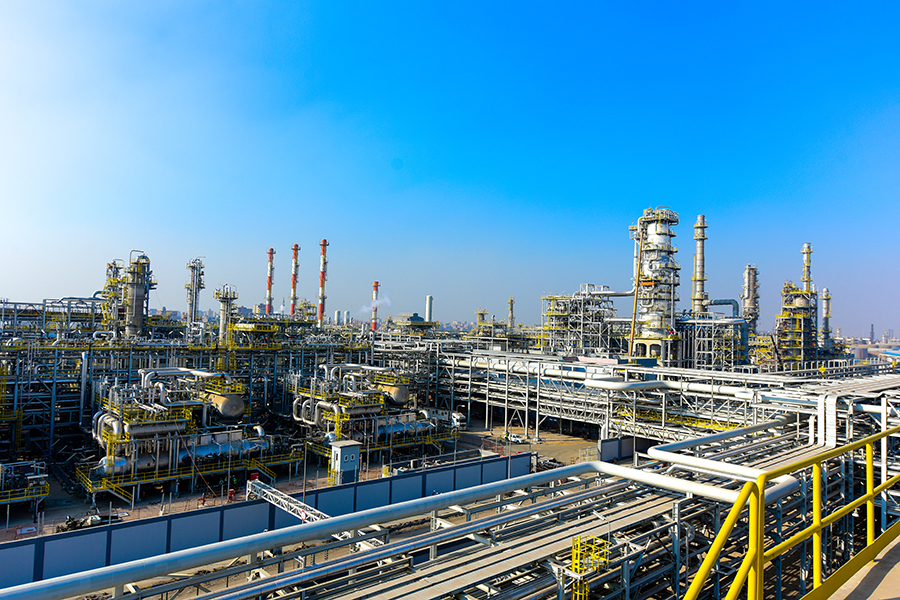
Petrojet will build the pipeline carrying Cypriot gas to Damietta: State-owned contractor Petrojet was awarded a USD 170 mn contract for an onshore gas pipeline connecting to the Damietta LNG export terminal, Meed reports, citing industry sources. The line is part of the export route for Cyprus’ offshore Cronos field, which Eni — the project operator — says will restart the Damietta LNG plant and restore structural LNG exports from Egypt.

The plan leans on infrastructure Egypt already has: Eni and TotalEnergies plan to process Cronos gas in Egypt and liquefy it in Damietta, mostly for shipment to Europe, using what Eni calls a “fast-track approach based on regional integration and the use of existing infrastructure.”

Why this matters: For Egypt, the commercial window is in handling another country’s gas. It earns from providing part of the route and from its state companies’ equity in the plant, as we explained last month, and it puts spare infrastructure back to work.

The fees could reach 92 cents per mn BTU: 30 cents for moving and processing the volumes through the Zohr facilities near Port Said, and 62 cents for liquefying them at Damietta, a total of about USD 165 mn a year once flows reach 500 mmcf / d. That take comes on top of fees up and down the chain (transport, processing, liquefaction) under the tariff agreement Cairo initiated with the Cronos partners in October 2025 (the levels weren’t disclosed). Cairo is also asking for roughly 25% of the volumes, about 125 mmcf / d, for the domestic market.

Work on the Egyptian leg starts early next year: The roughly 40 km pipeline will run from the Zohr processing facilities in Port Said to Damietta, and the build should take about 12 months.

Cronos is now in execution, with first gas due in 1H 2028: Eni signed the project’s main engineering, procurement, construction, and drilling contracts last week, following a final investment decision in July. Baker Hughes, TechnipFMC, Dalmine, and McDermott are among the contractors, according to Meed. Eni operates the field with a 50% stake alongside TotalEnergies, and output is expected to plateau at 500 mmcf / d.

Pricier by the pound

JPMorgan raised its Egypt year-end inflation forecast to 14.3% from 13.4%, according to a research note cited by Asharq Business, as the EGP slide starts feeding through to prices. The local currency has shed roughly 7.3% against the greenback since the start of October, driven largely by hot-money outflows. The bank also lifted its forward 12-month inflation forecast by 0.7 percentage points. That pickup won’t show in October’s print yet, which JPMorgan now expects at 13.8% (up from its prior 13%), thanks to a high base from October 2025’s price jump. With September at 13.9%, the climb to 14.3% should show up in the November and December prints.

A different inflation story from March: Back then foreign investors pulled USD 13-14 bn out of Egyptian treasury bills in a single month, per Deutsche Bank, and the EGP fell from about EGP 48 to EGP 53.5 against the USD between the end of February and the end of March, with fuel prices raised on 10 March.

JPMorgan reads the CBE’s rate hike as an attempt to buy time: The Central Bank of Egypt’s (CBE) 100 bps hike caught most analysts off guard, lifting the overnight deposit rate to 20% in its first increase since March 2024 and reversing the September stance that existing tightening was buffer enough. The bank sees the move as pre-emptive, aimed at anchoring inflation expectations, and says widening Egypt’s real interest rate buffer to over 6 percentage points gives the CBE enough room to absorb the weaker EGP without hiking again at its December meeting. While policy rates have peaked for this mini-cycle, the bank sees monetary easing remaining locked away until 2H 2027, keeping short-term working capital debt expensive.

What other analysts expect: Deutsche Bank had already pushed its end-2026 inflation call to 15.7% from 14.7%, and expects inflation to stay elevated through the first half of 2027 before easing to 12% by December, against 10.9% previously.

Back through Suez

Shipping giants Maersk and Hapag-Lloyd are moving their joint ME1 India–Europe service from the Cape of Good Hope back through the Suez Canal, with the first sailings leaving on 4 and 13 November, according to a company statement. ME1 follows AE5, AE11, AE12, and ME2, which switched in September. The carriers said they are monitoring the security situation closely and that further changes depend on continued stability in the Red Sea.

IN CONTEXT- The canal is climbing back with the shift: container-ship net tonnage through Suez reached 72.1 mn tons in January-August, up 54.2% on the same stretch of 2025, and Maersk-affiliated transits hit 276 in January-September against 146 a year earlier. Hapag-Lloyd CEO Rolf Habben Jansen told Suez Canal Authority Chairman Osama Rabie on 30 October that Suez “remains the attractive route.”


How do you help build a brand as successful as Gourmet without really knowing much about food? Dalia Sultan, chief innovation officer at Gourmet Egypt and the force behind “Handcrafted by Gourmet,” traces her path from marketing to product to steering the company’s leap into manufacturing.

Listen to the episode on: Apple Podcasts | Spotify | Anghami | YouTube

Sign up here to get Making It in your inbox.

PSA-

WEATHER- Cairo is basking in another sun-soaked autumn day, with a high of 30°C and a low of 20°C, down two degrees on yesterday’s high while the overnight floor holds

It’s cooler on the coast in Alexandria too, with a high of 28°C and a low of 20°C.

The big story abroad

US voters are heading to the polls today in midterm elections that will determine whether President Donald Trump’s Republicans hold on to their majorities in Congress. Voters are focused on rising prices, which many attribute to Trump’s tariffs and the Iran war. The White House has reportedly been preparing for months for a Democratic victory, identifying ways Trump could keep pushing his agenda on immigration, tariffs, housing, and federal spending without Congress, while getting ready for potential investigations into his administration. Trump said that if Republicans lose, he could issue vetoes for “a month or two” before reaching common ground with Democrats.

Anthropic plans to spend more than USD 895 bn in the next few years, mostly on computing power and infrastructure. The Claude chatbot maker expects about USD 448 bn of that to come due by the end of 2030, including roughly USD 70 bn it must pay in the 12 months to September 2027. The company reported nearly USD 17 bn in revenue for the third quarter, up from USD 1.4 bn a year earlier, as it pitches investors ahead of an IPO that could break records.

Germany has warned that spyware may have compromised the iPhones of government officials and lawmakers. The Federal Office for Information Security issued an urgent notice over the weekend telling anyone who had recently received a security alert from Apple to treat their phone as no longer safe. The attack used a “zero-click” flaw, so the hackers needed only a target’s phone number and the owner didn’t have to click a link or open a file. German Chancellor Friedrich Merz’s spokesman, Stefan Kornelius, said the government was taking the incident very seriously and that authorities were working “flat out” to investigate it and help those affected. He declined to say whether Merz himself was among the targets.

*** It’s Going Green day — your weekly briefing of all things green in Egypt: EnterpriseAM’s green economy vertical focuses each Tuesday on the business of renewable energy and sustainable practices in Egypt, everything from solar and wind energy through to water, waste management, sustainable building practices and how you can make your business greener, whatever the sector.

In today’s issue: We look into how development loans and Chinese partners power Egypt’s 13.85 GWh battery storage push.

Somabay is heading to WTM London!

We look forward to connecting with global travel partners, strengthening relationships, and exploring new opportunities for our Red Sea destination.

Let’s connect in London and shape what’s next for Somabay.

2

The Big Story Today

Banque du Caire lands on EGX, the treasury to take up to half the proceeds

The treasury will take up to half of the EGP 36.37 bn (c. USD 658 mn) raised in Banque du Caire’s (BdC) IPO and put it toward easing public debt pressures, a senior government official tells EnterpriseAM. That’s as much as c. EGP 18.2 bn (c. USD 329 mn). The proceeds from the offering will first go to Banque Misr, the owner of BdC, and then the Ministry of Finance will handle the settlement, according to the official. The state-backed lender closed up 0.19% on debut yesterday, following a blockbuster IPO that drew strong demand from foreign institutional and retail investors despite an ongoing regional war and a weeks-long EGX selloff.

The 50% share isn’t limited to BdC: The Cabinet has approved giving the Finance Ministry half the proceeds from the state’s offerings more broadly, the government official tells us. The ministry sees the program as a way to bring down the budget sector’s debt ratios without taking on more interest costs while relying less on traditional borrowing to close its financing gap.

REFRESHER- Banque Misr sold 6.86 bn shares, or 45% of BdC, for EGP 36.37 bn (c. USD 658 mn), in what was the largest IPO the EGX has seen in at least a decade and the state’s first privatization by IPO in two years. Four foreign funds committed USD 256 mn before the books opened, and the European Bank for Reconstruction and Development (EBRD) and the International Finance Corporation (IFC) came in later. Institutional orders reached c. EGP 205.8 bn, covering the private placement 5.95x, or 19.79x excluding cornerstone investors. The retail tranche was 27x covered.

The offering is the second-largest privatization by IPO in Egypt’s history, joint global coordinator EFG Hermes said in a statement (pdf) yesterday. Co-Head of Investment Banking Maged El Ayouti called it a sign of “the resurgence of foreign institutional appetite for tier-one Egyptian assets.” EFG says it has more IPOs lined up for before year-end and early 2027.

IN CONTEXT- The government is heading into the final review before the IMF program expires on 15 December, as we noted in yesterday’s special issue. State asset sales are among the program’s requirements, and the government said in March it planned to list or sell stakes in at least 20 state-owned companies, targeting USD 3-4 bn in proceeds before year-end.

A busy debut, a flat close

The lender gave up an early rally to close up just 0.19% at EGP 5.31 a share, according to the EGX’s daily report (pdf). The stock reached EGP 5.68 in the opening minutes and dipped as low as EGP 5.25, below the EGP 5.30 offer price, before the close. The close values the bank at EGP 80.98 bn (c. USD 1.5 bn), against EGP 80.83 bn at the offer price. That makes BdC about 2.1% of the EGX’s total market cap, Financial Regulatory Authority (FRA) Chairman Islam Azzam told reporters on the sidelines of the opening.

BdC’s first day of trading trailed this year’s other EGX debuts. MNT-Halan’s Egypt arm closed up 6.9% at EGP 26.20 on its 20 October debut. Gourmet hit the 40% first-day limit in February, and Korra Energi closed up 19.5% in June.

BdC was the EGX’s most-traded stock, with some 373.1 mn shares worth EGP 2.02 bn changing hands across 30.1k trades, or 21.2% of main-market turnover. That’s 4.1x the c. EGP 488 mn worth of CIB shares that traded on an average day over the past six months, as we noted in yesterday’s special issue, and 1.6x the EGP 1.26 bn MNT-Halan saw on its debut. Debut sessions usually draw heavy trading, so the question for funds is whether BdC keeps enough volume in the weeks ahead for them to buy and sell meaningful positions without moving the price. IN CONTEXT- The IPO debuted into a tough market, with the EGX30 closing down 0.70% yesterday to 48.4k points after dipping to 47.79k intraday, while the broader EGX70 and EGX100 each lost more than 2.2%, EGX data shows. The benchmark shed some 8.4% over the three sessions to 26 October (while BdC’s institutional book was open), including a 3.56% drop on Sunday, 25 October, as fund managers sold holdings to unlock liquidity for BdC and the offerings behind it. Yesterday’s close leaves the index up c. 15.7% YTD, down from 18.6% at Thursday’s close.

Priced for little upside

Pricing at full fair value left little room for a first-day pop, Okaz Asset Management Managing Director Randa Hamed tells EnterpriseAM. Banque Misr sold at the top of its range, which was capped at the fair value set by independent advisor Baker Tilly. “There was no discount to give investors a reason to buy more after listing,” she says. “Trading around the offer price is the natural result.”

At around 5x earnings, BdC is priced almost in line with CIB and the rest of the sector, Hamed says. On book value it’s cheaper, at about 1.2x against a sector average of about 1.4x, a valuation gap she says is justified by its lower profitability. “Investors will need earnings growth to make money from here,” she says.

Liquidity calls the shots

Short-term traders may have cashed out early, Hamed argues. With the market volatile and geopolitical tensions high, “traders are in control right now, and many will take even a 5% gain in a single day and exit,” she says. Retail investors hold just 2.25% of the bank, so the selling was “more about sentiment than volume.” Across the market, foreigners were net sellers of EGP 138.2 mn of listed stocks excluding deals, while regional and local investors were net buyers, EGX data shows.

Investors may be trimming other banks to make room for BdC. CIB closed up 2.88% yesterday, while Abu Dhabi Islamic Bank Egypt fell 3.44% and Crédit Agricole Egypt 2.96%. Hamed says the split was surprising, since banks should benefit to some extent from last week’s rate hike. It suggests investors are concentrating on CIB, the most liquid name, and possibly rotating out of other banks to make space for BdC, she says. “Valuation alone isn’t driving prices right now. Liquidity and positioning are.”

The rate hike makes the case for equities harder. “Investors have little incentive to take equity risk when T-bills yield over 20%,” Hamed says. Sustained foreign buying would need rate cuts, she says. Before then, what could support the price is quarterly results that start closing BdC’s profitability gap with its peers, and inclusion in the EGX30, which would bring in index-tracking demand.

The price floor matters in the meantime: Retail allottees can sell their shares back to CI Capital at EGP 5.30 until 1 December, as we noted. The stock closed a piaster above that level after trading below it during the session. “The real test comes after the stabilization window closes,” Hamed says.

A lesson for the next IPO

Hamed suggests future state asset sales require a valuation haircut. “Pricing at full fair value leaves nothing for aftermarket performance,” she explains. For the next stakes, “a meaningful [markdown] to fair value would buy stronger trading and a better reputation for the whole state program.” She also wants offerings spaced out given the uncertainty in global markets.

The state still holds 55% of BdC to sell, and CEO Hussein Abaza has described the IPO as the first step in a CIB-style sell-down. “The market will establish how good or bad the bank is,” he told us on our Making It podcast.

IN THE PIPELINE- Misr Life Ins. is due to start trading in late November or early December, and El Nasr Glass and Spring & Transport Needs Manufacturing (Yayat) in December, Hashem El Sayed, head of the Cabinet’s state-owned companies unit, said last week.

The anchors are in for the long run: The EBRD and IFC’s USD 100 mn tickets each buy them roughly 7% of BdC, the two said in separate statements (here and here) yesterday. The EBRD will also give BdC technical help on digital transformation, cybersecurity, and environmental and social risk management. The IFC said its investment should help BdC more than double the number of customers it finances to 1.9 mn by 2030 from about 899k and lift its lending to USD 8.9 bn from around USD 5 bn.

ADVISORS- CI Capital is lead global coordinator and joint bookrunner. EFG Hermes is joint global coordinator and joint bookrunner. Enterprise Advisory is investor relations advisor to Banque du Caire.

This publication is proudly sponsored by

3

Tax

Tax sukuk pilot runs through banks this month as the bourse waits for 2027

The Finance Ministry will launch Egypt’s first tax-backed sukuk this month as a pilot issuance. Subscriptions will be submitted through commercial banks, and trading on the EGX is expected in the second half of 2027, Mae Adel, the finance minister’s deputy for public debt management, tells EnterpriseAM. The ministry settled on a trial issue to “gauge investor appetite” rather than a full launch.

How it works: Taxpayers subscribe at bank branches, then the banks subscribe on their behalf, and the ministry issues to and redeems directly with the banks, with the central bank and the EGX involved, as we reported yesterday. Every subscriber gets an international securities identification number (ISIN) from the start, and the sukuk will not be tradable on the bourse at launch.

Why the bourse is waiting: Adel says the phases were split so the operating system could be tested before the certificates pass between investors. She expects secondary-market trading on the exchange in the second half of next year, once the fintech system that handles transfers of ownership has been tested and shown to move them safely.

The short tenor is about the budget: The pilot runs for six months, Adel says, and short maturities were chosen to align with the April filing season. The tenor will be reviewed once the first issue succeeds. Keeping both the maturity and the return inside the same fiscal year is meant to avoid loading later years’ tax receipts with financing costs and to protect the budget’s primary surplus target. Maturities track the filing calendar, with the individual tranche maturing in March and the corporate issue in April.

As for what you earn: The return is taxfree and floating, set at the central bank’s average deposit rate over the holding period minus one percentage point (about 19% against October’s 20% deposit rate) and paid at maturity. Taxpayers can redeem early, in full or in part, and keep the taxfree return for the period they actually held the instrument. The sukuk’s value and its accrued returns settle the taxes due.

Who qualifies: Access is limited to taxpayers who have filed income tax returns, payroll forms, and withholding filings in each of the last three fiscal years and are enrolled in the digital tax systems (e-invoicing, e-receipts, the unified payroll tax base, and the core tax system). They must also have a clean record with no tax-evasion convictions, no dealings with shell companies, and no unpaid income tax or arrears. Subscriptions are capped at 20-25% of the previous year’s tax bill.

REMEMBER- The first issue was meant to be far larger. We reported in August a target of EGP 50-100 bn and in late September that subscriptions were expected to open in November at around EGP 50 bn, capped at EGP 100 bn on a one-year tenor. Adel says the pilot’s target sits well below that, without giving a figure. The instrument itself rests on Article 115 of the income tax law, unused since 2005, which lets the minister issue tax sukuk carrying a tax-exempt return they set, with the force of discharge in settling the taxes due. It was built for a treasury that funds most of FY 2026/27 at home and wants tax receipts spread across the year.

4

Industry

Egypt asks Brussels for preferential treatment as EU’s carbon border levy nears

The government is negotiating with Brussels again over “preferential treatment that gives Egyptian exports a longer chance” under the EU’s carbon border levy as the mechanism nears full application, a senior government official tells EnterpriseAM. It’s also reviewing how countries in Asia and Latin America handled the mechanism to work out its options.

“What we are seeking now is a phased timetable aligned with a number of Egyptian environmental measures so that Egyptian goods in the designated sectors keep reaching the European Union more easily,” another government official tells us, adding, “usually the European Union does not agree to grant exemptions.”

One scenario under study has Egyptian exporters carrying part of the cost in the markets that apply the mechanism, rather than rushing a domestic system into place, they say. That option is hard to execute because it needs the technical and institutional capacity to measure and verify emissions, plus a domestic carbon-pricing system, they say.

REMEMBER- Government officials told us in December that a formal request for a temporary exemption had gone in and in January that the EU had tacitly approved it. Nothing papered that approval. Anything that keeps part of the carbon bill inside Egypt runs through a different rule: EU importers may deduct a carbon price already paid in the country of production, provided it can be documented. So the work is domestic — a carbon price of Egypt’s own and plant-level emissions data verified to European standards, the capacity the second official says is not there yet. There is a carbon-governance bill drafted by an MP, published in September, but it’s not a Cabinet bill.

Failing to comply or failing to win preferential treatment would cost local manufacturers about USD 317 mn a year in added carbon pricing, according to Environment Ministry studies we reported last year, with steel carrying 74% of the hit at roughly USD 236 mn a year, followed by aluminum at about USD 43 mn.

The World Bank says the country’s real income could shrink by around 0.6% without adapting to CBAM, with some carbon-intensive exports falling as much as 8.3%. The charge lands first on steel, cement, aluminum, and fertilizer exporters, and the list is still widening. Polymers and organic chemicals are due to join in 2027, with fabricated steel and aluminum products such as nails and fasteners following in 2028, as experts told us last year.

Why it matters: Any cost Cairo imposes to meet the levy cannot be confined to export volumes, the second official says, so part of it would pass through to the home market at a moment when inflation is rising again. And the first tranche of UN carbon certificates, whose purchase window the Environment Ministry has just closed, cannot offset the levy, they say, adding that compliance needs a real cut in the emissions behind the exported goods.

What’s next: The government doesn’t want to rush new measures before studying their effects, the second official says, and it wants a mechanism that meets the levy’s rules without hurting investment. The issue is still under study across ministries, and the Cabinet leads it, they add. The second official wouldn’t give a date for a decision but expects the picture to clear soon, with obligations on importers of Egyptian goods coming due.

5

A MESSAGE FROM VISA

When AI agents can transact, who sets the limits?

The commercial upside becomes easier to picture when an AI agent can act on someone’s behalf. For a company, that could mean reordering inventory, paying an invoice, managing suppliers, or booking business travel within preset rules. Each of those tasks also hands a degree of authority to software.

Egyptian businesses are already thinking about what has to be in place before they give an agent more authority. In *Agentic Commerce: Market Insights and Outlook for Egypt*, research we commissioned from Fast Company Middle East, powered by Probity, data privacy and security are the leading adoption concern among respondents at 19.3%, followed by unclear returns at 17.2% and regulatory compliance at 15%.

For decades, commerce has run on trust among consumers, merchants, issuers and acquirers, and at Visa we have helped build it. The AI agent is a new participant in that system.

Trust now has another dimension: intent. Digital commerce has long relied on identity, authentication, and authorization. With an AI agent in the transaction, businesses also need confidence that it is acting within the permissions, limits, and preferences the user actually set.

That makes governance part of the transaction itself. Businesses need to decide who is accountable for an agent’s actions, what spending or decision limits apply, which transactions require human approval, and what happens when an agent moves outside its mandate. The report itself points to human-in-the-loop thresholds, escalation paths, and compliance guardrails as priorities before businesses scale.

For banks and issuers, that creates a defined role. Delegated spending controls, authentication, risk monitoring, and trusted credentials can set the boundaries for what an agent can do and flag activity outside them.

We are building the infrastructure behind that trust. Through Visa Intelligent Commerce, the Trusted Agent Protocol, tokenization and fraud intelligence, along with biometric authentication and developer-ready APIs, we are working toward authenticated agents, protected transactions, and consumer control. Our network spans more than 200 countries and territories and supports more than 175 mn merchant locations.

At Visa, our standard is: to authenticate the agent, define its authority and make sure the transaction reflects the user’s intent.

Malak El Baba, country manager, Egypt, Libya and Sudan, Visa

6

Also on our Radar

Iraq, Egypt, and Jordan discuss new Red Sea, Med outlets for Iraqi crude

Iraq, Egypt, and Jordan are back at the table on export routes outside the Gulf: Officials from Iraq, Egypt, and Jordan met on Sunday to discuss new outlets for Iraqi crude and petroleum products on the Red Sea and the Mediterranean, as well as joint storage, refining, and petrochemical projects, according to an Iraqi Oil Ministry statement.

The timing makes sense, with Iraq selling Gulf crude at steep price reductions. It recently sold around 10 mn barrels from its southern ports at markdowns of USD 25-28 a barrel, mostly to Indian refiners, giving up about USD 250-280 mn in total, by our math. The price reductions cover freight and ins. for buyers lifting from Iraq’s terminals, according to the Oil Ministry.

First on the table is the Basra-Haditha pipeline. The three sides reviewed the planned line’s diameter, capacity, target volumes, and possible branches, according to the statement. The Iraqi Cabinet authorized the ministry in April to invite bids for the USD 4.6 bn pipeline, which is designed to carry around 2.3 mn bbl / d north to help feed Turkey’s Silopi-Ceyhan link.

Don’t expect terminals or a timetable just yet, as the statement didn’t name either, and Ali Warid Hammoud, director general of the Oil Projects Company, who chaired the meeting, said technical talks will continue so the projects can move toward implementation.

REMEMBER- Iraq’s ambassador to Egypt outlined proposals in 2017 to extend oil and gas pipelines from Basra to Jordan, through Aqaba, and on to Egypt. Iraq is also pursuing routes through Syria and Turkey.

Titan doubles up on solar

Titan Egypt is nearly doubling the planned solar capacity at its Beni Suef cement plant to 21.45 MW, four months after signing the first phase, adding 10 MW with SolarizEgypt, according to a press release (pdf). The addition builds on the June agreement for an 11.45 MW plant, under which SolarizEgypt develops, finances, owns, and operates the plant, and Titan’s Beni Suef Cement subsidiary buys the power under a 25-year power purchase agreement. The expanded project is expected to generate about 43.2 GWh a year once operational, covering part of the plant’s electricity needs. Financial terms and a start date haven’t been disclosed.

REMEMBER- Third-party solar isn’t new to Egyptian cement: Arabian Cement said its 20.6 MW plant, built with Amarenco SolarizEgypt, could cover about 10% of its total energy needs once its second phase was complete. CEO Amr Reda has said Titan plans to invest EGP 3 bn in its green transition, including ending clinker exports.

Powering down debt

EGX-listed Electro Cable Egypt (ECE) is seeking to raise EGP 650 mn in a rights issue to pay down part of its EGP 3.39 bn in bank debt (as of 30 June), according to a feasibility study (pdf) submitted to the EGX after it was cleared by the FRA. Shareholders will vote on the plan at an extraordinary general meeting on 16 November, according to a disclosure (pdf). The board unanimously approved the rights issue in August, alongside a hike in the company’s authorized capital ceiling to EGP 3 bn from EGP 850 mn, according to a separate disclosure (pdf). The issue would lift ECE’s issued capital to about EGP 1.31 bn from EGP 662.7 mn.

Why it matters: The study projects cumulative financing-cost savings of EGP 1.36 bn over 2027-2031, with annual interest savings rising from EGP 113.1 mn in 2027 to EGP 395.5 mn in 2031. Without the raise, it projects a cumulative net loss of EGP 635 mn over 2026-2031, against a net income of EGP 552 mn with it. Revenue is identical in both scenarios, so the gap is entirely financing costs.

Taking the reins

Al Baraka Capital is bringing its first fund in-house: Al Baraka Capital, the investment arm of EGX-listed Al Baraka Bank Egypt, will take over as investment manager of Manasek — the shariah-compliant, daily-accrual fixed income fund it set up in 1Q 2026 — after meeting the Financial Regulatory Authority’s requirements, according to a company statement cited by Al Borsa. To get there, it has built out the unit’s digital infrastructure, hired capital markets staff, and signed distribution contracts with fintech players to widen access. CEO Amir Sharif says new portfolios and funds spanning money market, fixed income, equities, precious metals, and sector funds are next.

7

PLANET FINANCE

Alphabet’s EUR bond drew EUR 17 bn in orders despite the stock rout

Nasdaq-listed tech conglomerate and Google’s parent company Alphabet raised EUR 6 bn (USD 6.7 bn) in a bond sale yesterday, drawing orders of about EUR 17 bn, just days after the stock market gave it the worst session in its history, Reuters reports, citing a memo from one of the managers. Shareholders had taken a very different view the Thursday before: the stock fell more than 12% after results showed AI spending eating into liquidity, and tech names went on to shed more than USD 1 tn in value on Friday, according to NBC News.

The order book held up: Yesterday’s transaction was covered roughly 2.8 times, by our math. That matches May, when Alphabet sold EUR 9 bn, according to Reuters, after bids passed EUR 25.2 bn, Bloomberg reported at the time. However, it fell well short of February, when a USD 20 bn sale closed on a USD 94.5 bn book, nearly five times covered, according to IFR. Alphabet came back for a roughly USD 25 bn, 10-tranche USD offering in August, the same publication noted.

The spending behind it hasn’t slowed. Alphabet guides capex of up to USD 205 bn this year. It also has USD 130.5 bn in signed data center leases that haven’t started and sit off its balance sheet, according to an SEC filing cited by Reuters.

SOUND SMART- Shareholders and bondholders are asking different questions. Equity investors want proof that USD 205 bn a year earns a return. Bondholders need the coupons paid, and S&P rates Alphabet AA+ with adjusted leverage of 0x. That’s why the book fills while the stock slides. The risk the bond price doesn’t reflect is the leases: USD 130.5 bn in commitments that will behave like debt once they start, without showing up in the leverage numbers creditors are underwriting.

The pattern goes beyond Alphabet: OpenAI cut its funding target to as much as USD 20 bn at a lower USD 1.25 tn valuation, and investors from the UAE are leading the round alongside Coatue, CNBC reported. The company had secured only about USD 11 bn by its deadline, according to The Wall Street Journal. As US equity investors retreat, the AI buildout is being funded more by creditors and by Gulf capital. Closer to home: Saudi Arabia’s Humain is taking a different approach to funding its AI buildout. The company plans to secure customers before borrowing against their contracts, CEO Tareq Amin told EnterpriseAM last month. That gives lenders contracts to lend against rather than demand that has yet to show up: “when you have bankable off-take [transactions], raising capital for me is not an issue,” Amin told us. The same week, Alphabet’s free cash flow went to negative USD 9.07 bn and search growth slowed to 12%, which is what actually sent the shares down 12.6% on Thursday.

MARKETS THIS MORNING

South Korea’s Kospi recovered from early losses to close 2.2% higher on Monday, driven by institutional buying, even though US chip stocks slumped on Friday. The bad news was reportedly already priced in, and strong October chip exports and signs of easing Middle East tensions lifted sentiment. In Japan, markets are closed on Tuesday for Culture Day, a national holiday, so the Nikkei 225, which fell 0.3% on Monday, will not trade.

EGX30

48,403

-0.7% (YTD: +15.7%)

USD (CBE)

Buy 55.37

Sell 55.51

USD (CIB)

Buy 55.35

Sell 55.45

Interest rates (CBE)

20.00% deposit

21.00% lending

Tadawul

9,883

+0.5% (YTD: -5.8%)

ADX

9,491

+0.3% (YTD: -5.0%)

DFM

5,808

+0.6% (YTD: -4.2%)

S&P 500

7,541

-0.5% (YTD: +10.2%)

FTSE 100

10,761

+0.3% (YTD: +8.4%)

Euro Stoxx 50

6,176

+0.7% (YTD: +6.6%)

Brent crude

USD 104.77

-7.6%

Natural gas (Nymex)

USD 2.86

+0.3%

Gold

USD 3,957

-0.3%

BTC

USD 77,944

-1.8% (YTD: -12.4%)

S&P Egypt Sovereign Bond Index

1,142

+0.1% (YTD: 15.0%)

S&P MENA Bond & Sukuk

148.90

+0.1% (YTD: -2.0%)

VIX (Volatility Index)

21.15

+8.9% (YTD: +41.5%)

THE CLOSING BELL-

The EGX30 fell 0.7% at yesterday’s close on turnover of EGP 10 bn (9.3% below the 90-day average). International investors were the sole net sellers. The index is up 15.7% YTD.

In the green: Telecom Egypt (+3.1%), CIB (+2.9%), and Juhayna (+1.1%).

In the red: Mopco (-6.1%), Eastern Company (-5.8%), and Abu Qir Fertilizers (-4.7%).

8

Going Green

​​Egypt’s battery push leans on development lenders and Chinese factories

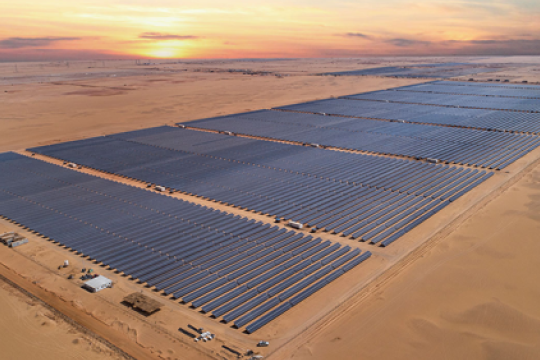
Egypt plans to raise its battery storage from c. 500 MWh currently to 13.85 GWh by 2030 and is targeting USD 3 bn of investment to get there, a senior government official tells us. Storage matters because the grid can’t yet absorb new capacity, the official says, but a developer and an analyst we spoke to see less of a grid constraint. And on investment, every storage project we tracked with a disclosed debt package has a development lender in it, and Chinese partners are behind most of the battery factories announced so far.

Storage is the next challenge for a plan that would add 20.8 GW of renewables by 2030, the official says, adding that operating renewable capacity stands at some 9.6 GW. The government has also moved its renewables target forward to 45% by 2028 from 42% by 2030. The grid can’t yet absorb new capacity, the official says, but it is expanding, and batteries store surplus power and return it when needed.

Diala Hawila, head of programs at energy think tank Carboun, sees storage as one tool among several. Drawing on off-grid markets such as those in Lebanon, she tells us “grid capacity does not create the main bottleneck” and says storage has to come alongside demand-side management and efficiency.

Scatec says curtailment, or wasted renewable output, hasn’t been an issue so far in Egypt, Vice President of Business Development in Egypt Mahmoud Shata tells us. He doesn’t expect that to change soon, because renewable power saves the government imported liquefied natural gas.

A target gives suppliers and financiers confidence, but “a target on its own doesn’t do anything” without policies and procurement mechanisms behind it, Hawila says. The right amount of storage depends on curtailment analysis, energy and economic modeling, demand, and demand-side measures, she adds. The storage buildout will follow renewables, Shata says, adding that as long as the government keeps adding renewable capacity, it will add batteries to back it. The ministry has yet to publish a 2028 demand forecast, capacity factors, or expected curtailment, as we reported in August.

The government is targeting USD 3 bn of investment in storage, the official says. The government now requires investors behind every new renewables project to study adding storage, the official adds. The requirement follows the independent power producer model, in which a private developer finances, builds, and operates a plant, then sells its power under a long-term contract.

Development lenders in every stack: Nefer Minya pairs about 1 GW of solar with 600 MWh of storage and has up to USD 566 mn in debt, about three-quarters of its USD 764 mn cost, we reported in October. The European Bank for Reconstruction and Development (EBRD) leads with a USD 160 mn loan and up to USD 30 mn in concessional Clean Technology Fund money, and Bank of Jordan adds USD 75 mn, the bank said. Germany’s DEG, the Dutch FMO, and France’s Proparco provide the rest, we reported.

All of Dandara’s phase-one project debt comes from development banks. The 569 MW solar plant with 100 MWh of storage has USD 217 mn in loans from the EBRD, the African Development Bank (AfDB), and the European Investment Bank, c. 80% of its USD 271 mn capex, Scatec said in October.

Obelisk, now fully running, was financed the same way. The EBRD, the AfDB, and British International Investment were set to provide USD 479.1 mn, c. 80% of the USD 590 mn cost of the 1.1 GW solar plant with 200 MWh of storage, the EBRD said in 2025. Amea’s Abydos II (600 MWh) carries c. USD 570 mn in debt led by the International Finance Corporation, Amea said in December 2025.

The EBRD is also becoming a shareholder. It agreed to take a 40% stake in a Scatec platform holding stakes in Obelisk, Dandara, and Energy Valley, among others, committing up to USD 221 mn, we reported in October. Scatec says Energy Valley, with 3.9 GWh of storage, has mandate letters with development lenders and should reach financial close by the end of 2026. One plan names no lender: the Electricity Ministry said in August that a separate 4 GWh standalone storage plan will run on EGP financing.

On equipment, the official expects more Chinese investment, saying the global energy crisis may bring more Chinese firms to move manufacturing out of China. Among the plants we’ve reported on, Sungrow is building a 10 GWh-a-year plant in Sokhna. Emirati developer Amea is planning a 3 GWh-a-year plant with Gotion, and local firm Kemet is planning a 5 GWh-a-year cell factory with Cornex. Carmaker-backed BME’s plant will use cells from China’s CATL. Russia’s Rosatom, which plans to assemble up to 500 MWh a year with local firm Teletech, is the only one without a Chinese partner.

Scatec tenders its batteries project by project. Scatec runs a tender for each project among suppliers “whether these battery suppliers are in Egypt or in China,” as long as they bring technology and experience from reputable global manufacturers, Shata says. Lenders look at a supplier’s track record, technical specifications, and warranties, he explains. They also want the supplier to pass supply-chain due diligence, including on how the batteries are made, he adds.

Easiest to cut: Relying on partners for either finance or technology is “the most dangerous thing,” Hawila says, and “financing being cut is the easiest thing that can happen.” Foreign-currency borrowing also gets more expensive for Egypt over time as the EGP depreciates, she adds. Obelisk’s 25-year power contract is USD-denominated and carries sovereign backing, the EBRD said. Dandara’s power contract has the same state backing, Scatec said.

Egyptian power contracts usually pay developers mostly in USD, Shata says. A smaller EGP share covers local costs such as contractors and purchases. A contract fully in EGP is “doable,” he says, adding that “it’s just a matter of pricing the risk.” But it would need EGP loans, which he calls “quite expensive” after the central bank’s latest rate hike, and could cost the government more than a USD contract. Matching a contract’s currency to its financing avoids a huge currency risk that neither developers nor lenders want, he adds.


NOVEMBER

5-7 November (Thursday-Saturday): ICA Annual Conference 2026, Cairo.

6-8 November (Friday-Sunday): Global Entrepreneurship Festival, JW Marriott Hotel, New Cairo.

7-10 November (Sunday-Wednesday): Cairo ICT Forum, Egypt International Exhibition Center, New Cairo.

10 November (Tuesday): Cityscape Egypt Forum, Cairo.

14 November (Saturday): Rolling mills’ Administrative Court challenge.

16-17 November (Monday-Tuesday): World Economic Forum’s (WEF) first dedicated business meeting in Egypt + MENA, New Capital.

DECEMBER

7-10 December (Monday-Thursday): Food Africa, Egypt International Exhibition Center, Cairo.

11-12 December (Friday-Saturday): ISER International Conference, Cairo.

17 December (Thursday): Monetary Policy Committee’s eighth meeting of 2026.

17-20 December (Thursday-Sunday): MacTech Egypt, Egypt International Exhibition Center, Cairo.

EVENTS WITH NO SET DATE

2H 2026: Operations at Deli Glass Co’s new USD 70 mn glassware factory kick off.

2026: The Egyptian-American Economic Forum.

2027

20 January-7 February: Egypt to host the African Games.

1-3 February (Monday-Wednesday): Agri Expo, Cairo International Convention Center.

April 2027: Tenth of Ramadan dry port and logistics hub to begin operations.

29 September - 2 October (Wednesday-Saturday): Cityscape Egypt Exhibition, Cairo.

EVENTS WITH NO SET DATE

2027: Egypt to host EBRD’s annual meetings.

2027: Egypt-EU Summit 2027.

End of 2027: Trial operations at the Dabaa nuclear power plant expected to take place.

September 2028: First unit of the Dabaa nuclear power plant begins operations.

Now Playing
Now Playing
00:00
00:00