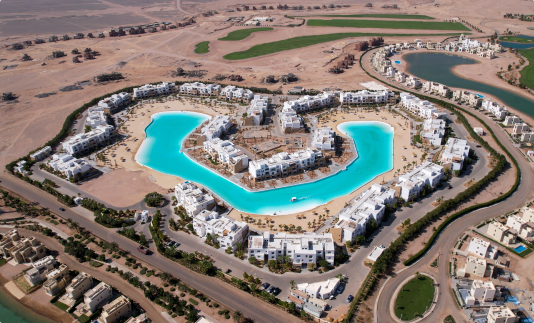
DIP sweetens IPO further with lower price — books filled within minutes

1

WHAT WE’RE TRACKING TODAY

THIS MORNING: Sharjah doubles its gas production + Indonesia turns to the UAE for fuel supplies amid disruption at home

Good morning, everyone. The UAE’s IPO drought has ended at a lower price than first hoped, but the demand is still very much there. Dubai Investments’ lowered offer range for DIP Holding valued the unit at AED 9.5-10 bn. That’s as much as 13% below management’s earlier AED 10.8-11 bn valuation, but it helped order books fill up with minutes of opening. We’ll be keeping an eye on how it performs when trading starts around 11 November.

It’s a busy day on the energy front, with news that Abu Dhabi’s Private Department of Sheikh Mohammed bin Khalid Al Nahyan is raising USD 1.2 bn for a new LNG fund focusing on investment in the UAE and other regional markets. Sharjah’s gas production has doubled after Snoc completed the first phase of its Hedebah gas-condensate field, and Indonesia is turning to the UAE for fuel supplies amid disruptions at home.

PLUS- We sit down with Swiss quant house Finreon’s head of Middle East Nada Hassan to find out why the region is “more attractive than ever” despite the geopolitical instability.

No more loan-hopping from 2027?

Loan-hopping between UAE banks may soon come with a waiting period. From January 2027, new rules would require borrowers to pay a minimum number of installments to their original lender before transferring an outstanding loan to another bank, Emarat Al Youm reports, citing an unnamed source. “The proposed measures are expected to reduce practices involving the repeated closure and refinancing of loans over short periods, along with the associated administrative procedures and financing costs,” the source said.

What we don’t know: No details were given on the length of the waiting period, the minimum number of installments, whether there are any exemptions, and whether the rules cover only personal loans or other debt too. The source also didn’t clarify whether the rules would come from the Central Bank of the UAE.

Double the gas output for Sharjah

Snoc doubles up: Sharjah National Oil Corporation (Snoc) has more than doubled the emirate’s gas production by completing the first phase of its Hedebah gas-condensate field, the state-owned energy firm said in a statement. The phase covered appraisal drilling, gas-gathering infrastructure, pipelines, and commissioning. The field was discovered in May 2024, Sharjah’s second major gas discovery since 2020 after the Eni-backed Mahani field. A second well confirmed additional gas-bearing zones in November 2025.

Why it matters: Sharjah meets its gas demand with a mix of domestic production, contracted imports, and underground storage. Hedebah tilts that mix toward domestic supply, though Snoc hasn’t said whether the extra gas will cut imports. Storage absorbs the swings: the second phase of Snoc’s Moveyeid storage project, completed in November 2024, lets it store gas when demand is low and draw it down at peak.

What’s next: Snoc is fast-tracking the second phase to lift output again in 2027, with production reaching a plateau in 2028. It hasn’t disclosed current production, peak output, what the first phase cost, or whether the Sajaa processing complex and the pipeline network will need upgrades as the field ramps up.

Part of the return may be in the liquids: Snoc CEO Khamis Al Mazrouei said last year that Hedebah was expected to contain significant liquids alongside its gas, which could increase recoverable condensate and other saleable products. The infrastructure to ship them is already in place: Snoc’s network includes condensate and LPG export facilities at Hamriyah Port.

Hedebah’s gas depends on Sajaa, a 700 mmcf / d processing complex, and the 500 km of pipelines behind it. The field feeds into the complex, according to Snoc’s Sustainability Report 2026 (pdf), and the wider system includes underground storage at Moveyeid and condensate and LPG export infrastructure at Hamriyah Port.

An Emirati-Canadian CEPA

The UAE’s trade agreement drive has reached Canada. The two countries signed a Comprehensive Economic Partnership Agreement (CEPA) yesterday, following talks that wrapped up in record time earlier this year and a recent trip to Canada by Abu Dhabi Crown Prince Sheikh Khaled bin Mohamed Al Nahyan.

What’s in it for the UAE? This CEPA promises better market access for Emirati exporters and opens the door for UAE investment in high-growth Canadian sectors such as logistics, communications, advanced technology, and manufacturing, according to Foreign Trade Minister Thani Al Zeyoudi. It also targets non-tariff barriers and “aims to create a more predictable environment” for trade and investment. On the other side, tariffs on more than 99% of current Canadian exports to the UAE will be cut or removed once the agreement is fully in place. The CEPA is expected to take effect in 2027.

IN CONTEXT- Bilateral trade has been on the up between the two, rising 21% y-o-y to reach USD 4.2 bn last year. On the ports front, DP World was reported earlier this week to be signing on to Canada’s plan to turn the Arctic Port of Church into an export gateway.

Silkhaus could be checking out of the UAE rental market

Dubai-based short-term rental startup Silkhaus is reportedly preparing to wind down its UAE operations on 11 November, FWDstart reports, citing employee statements and accounts from property owners who say they’ve received termination notices. The publication also found that bookings at Silkhaus properties in Dubai and Abu Dhabi couldn’t extend beyond that date. One purported owner notice blamed the regional conflict’s impact on tourism and offered a transfer to First Class Property Management, although FWDstart couldn’t independently verify the notice.

Quite the turnaround: Founded in 2021, Silkhaus manages furnished apartments for short stays, handling bookings, maintenance, and guest services for property owners. The startup raised more than USD 10 mn in equity and debt before securing another seven-figure funding round in January 2025 to expand into Saudi Arabia. That push also appears to have stalled, with Riyadh no longer listed among its destinations, although Silkhaus hasn’t confirmed a withdrawal.

The short-stay market hasn’t made things easy: As we reported in September, Dubai’s holiday-home occupancy fell to 47.7% in 2Q as the war hit leisure bookings, while operators catering to longer stays fared better. First Class, the operator named in the reported notices, recorded 87.1% occupancy on the back of monthly-stay demand.

Dubai’s Shangri-La is checking out of the hotel business

UAE-based developer AHS Properties is turning Dubai’s Shangri-La Hotel on Sheikh Zayed Road into a USD 1.3 bn Grade A office development, according to a company statement (pdf). The 50-story AHS Twin Towers will span around 1 mn sq ft, including more than 30k sq ft of wellness and fitness facilities and 12k sq ft of restaurants, with completion targeted for mid-2028, founder and CEO Abbas Sajwani told Bloomberg.

And the asking price? Floors will be sold off-plan starting at more than AED 4k per sq ft, with buyers able to acquire freehold ownership, while AHS plans to retain around 20% of the development for rental income, Sajwani told Bloomberg. The developer bought the hotel for AED 1.1 bn (USD 300 mn) earlier this year and is planning a renovation costing upward of USD 100 mn. Its first commercial development, AHS Tower, sold out during construction for more than USD 700 mn, according to the company.

But a lot is riding on office demand: Sajwani is banking on interest from law firms and financial businesses, with CBRE reporting 94% occupancy and a 13% y-o-y rise in Dubai office rents in 2Q, according to Bloomberg. The momentum isn’t uniform, though: As we’ve previously reported, Savills found that average rents stopped rising q-o-q in 2Q as businesses delayed leasing decisions. And there’s more premium space on the way, including H&H Development’s Water Gardens in the Dubai International Financial Centre. The question is whether demand will keep pace with the growing supply of high-end offices.

Barrels on call

Indonesia is turning to the UAE as fuel supply disruptions spread at home: The UAE will supply Indonesia with up to 30 mn barrels of oil, Djoko Siswanto, head of the upstream oil and gas regulator SKK Migas, said after meeting UAE Ambassador Abdulla Salem Al Dhaheri in Jakarta, Reuters reports. Jakarta can draw on the supply anytime, Djoko said, though he declined to give a delivery timeline. Earlier this month, Indonesia’s Ombudsman reported fuel supply disruptions in several provinces, including Bali and West Papua, with queues of around 1 km in some places.

Jakarta has opened a faster route for government-to-government supply: With no way to predict how long the Middle East tensions will last, a recent regulation lets a public agency import crude, fuel, and LPG under agreements between the Indonesian government and foreign countries or suppliers, Indonesia’s Energy Minister Bahlil Lahadalia said. Imports will go through the state agency Lemigas to state energy firm Pertamina, bypassing lengthy tenders.

The UAE has been keeping Asian buyers supplied: Adnoc sold at least 14 mn barrels of crude to refiners in China, Japan, South Korea, and India through a spot tender, traders said, we reported in June. It also offered collection from Fujairah storage and ship-to-ship transfers between Fujairah and Sohar, letting some buyers load without sending tankers through Hormuz.

Adnoc also stores crude inside Asian markets. It agreed in May to raise its crude storage presence in India to as much as 30 mn barrels. Japan secured a commitment from the UAE to increase joint crude stockpiles held there by Emirati companies. In South Korea, Korea National Oil Corp lets Adnoc store crude in the country’s strategic reserves, with South Korea getting priority access.

PSA

WEATHER- Both Abu Dhabi and will see highs of 35°C today before temperatures cool to 26°C overnight, according to our favorite weather app.

The big story abroad

The US is discussing business incentives with Russia and Ukraine to help bring the war to an end. Russia could see US energy companies return through an offshore project near Sakhalin and the resumption of Russian oil exports to Europe via the Druzhba pipeline. Other proposals include reopening Russian airspace to US airlines and joint work on titanium, a key element in aviation. Ukraine would get a plan to attract long-term investments. The US aims to advance these ideas, together with postwar security guarantees for both countries, at tripartite talks in Abu Dhabi next month, the first since February. US officials stress that none of the deals will go ahead while the war continues.

The leaders of Finland, Norway, and Russia held a rare call yesterday, exposing divisions in Europe over who should talk to the Kremlin. The call ran 90 minutes instead of the planned 20. They used it to pass messages to Russia about future peace talks, as Europe seeks a role in the peace process. But Danish Prime Minister Mette Frederiksen said the move was “not coordinated with the rest of us,” and Swedish Prime Minister Ulf Kristersson warned that going solo risks splitting Europe’s united voice.

France is offering students concessions to end weeks of unrest. The government has promised to replace the Parcoursup university admissions platform by 2028, with an overhaul coming first. It also promised up to EUR 4 bn in loans for school renovations, 15k extra higher education places, smaller classes, 500 new teaching jobs, and increased grants. Protesters have planned further demonstrations, and much of the plan will fall to President Emmanuel Macron’s successor after next year’s election.

***

You’re reading EnterpriseAM UAE, your essential daily roundup of business, economics, and must-read news about the UAE, delivered straight to your inbox. We’re out Monday through Friday by 7am UAE time.

EnterpriseAM UAE is available without charge thanks to the generous support of our friends at Mashreq and Hassan Allam Properties.

Were you forwarded this email? Tap or click here to get your own copy of EnterpriseAM UAE.

Want to send us a story idea, request coverage, ask for a correction, or otherwise get in touch? Reach out to us on [email protected].

DID YOU KNOW that we also cover Egypt, Saudi Arabia, and the MENA logistics industry?

***

Check out our full calendar on the web for a comprehensive listing of upcoming news events, national holidays and news triggers.
This publication is proudly sponsored by

Rise every day
From OUR FAMILY to YOURS
2

THE BIG STORY TODAY

DIP sets lower price range for IPO — and books were covered within minutes

Dubai Investments set the offer range for its 20% float of the Dubai Investments Park landlord at AED 1.10-1.15 per share, valuing DIP Holding at AED 9.5-10 bn at listing, according to the price range announcement (pdf). That is some 7-13% below the AED 10.8-11 bn management had previously valued the unit at, by our math. It is also below the bottom of the AED 11-14 bn range banks were pitching last week.

Investors were haggling over the price: Potential investors were asking Dubai Investments to lower its valuation expectations and sweeten the offering further, even after it committed to some AED 2.2 bn in dividends over three years. They asked for a yield closer to that of Emaar’s 9%, as opposed to the 5% yield offered with a valuation of around AED 14 bn. It landed nearer to Emaar, with an implied dividend yield of 7.27-7.60%.

Early demand suggests it’s working: Orders covered the full offering within minutes of books opening, Bloomberg reports.

Why it matters: The markdown shrinks the raise to AED 1.9-2.0 bn (USD 520-543 mn), down from the c. AED 2.2 bn the management valuation implied, putting it below Dubai Residential REIT’s USD 584 mn float last May. Still, the IPO matters for other reasons: DIP is the first UAE listing since the war froze the pipeline. Dubai Holding, Emirates Global Aluminium, and Al Habtoor have all paused or shelved listings this year, and the issuers queued behind DIP are watching whether buyers will turn up.

A safety net for day one: Dubai Investments has appointed xCube as stabilization manager. It will hold 10% of the offering, some 173.5 mn shares, to buy stock in the market if the price falls below the final offer price in the first 30 days of trading.

What’s next: Subscriptions close on 3 November, the final price comes on 4 November, and trading is expected to start on or around 11 November. We’ll be keeping an eye on how trading looks on the DFM — renewed Houthi attacks on Saudi Arabia have been dragging UAE stocks lower as the conflict’s risk premium rises again.

ADVISORS- Citi, Emirates NBD Capital, and HSBC are joint global coordinators, while Abu Dhabi Commercial Bank, Arqaam Capital, Dubai Islamic Bank, and our friends at EFG Hermes UAE are bookrunners. Emirates NBD is serving as lead receiving bank, alongside ADCB, ADIB, Dubai Islamic Bank, Emirates Islamic, FAB, and Wio. Al Mal Capital is financial advisor, and Emirates NBD Capital is also listing advisor.

3

COFFEE WITH…

The war made the Gulf more attractive to Swiss quant house Finreon

Swiss quant house Finreon opened its representative office in the Dubai International Financial Centre (DIFC) in April, at the height of the regional conflict. Like the many fund managers that kept pouring into the UAE, Finreon wasn’t deterred — if anything, its head of Middle East Nada Hassan (LinkedIn) says the region is “more attractive than ever before.”

Hassan, who grew up in Dubai and spent 15 years as a managing director at Credit Suisse and UBS before joining Finreon in September 2025, says the war overhauled what clients need: daily liquidity instead of just long-dated fixed income, EUR and CHF exposure alongside the USD, and products to hedge risk.

“There were different client needs from just two months before the conflict,” Hassan says. “What we learned we would have to relearn,” she adds. Three shifts stand out: clients began looking for products offering daily liquidity, as opposed to traditionally popular but more illiquid asset classes like real estate; more exposure to currencies other than the USD given the AED peg to the USD; and safe havens like gold became even more popular.

Finreon found its match: “Finreon is a risk manager at heart,” Hassan says. The St. Gallen University spin-off, which manages c. USD 7 bn, offers several products that have already piqued Gulf clients’ interest. Volatility Income uses options to earn income from volatility in global equity prices; Golden Income does the same with gold futures. The pitch to Gulf families is income on an asset they rarely sell. “We usually want to keep [gold] for our great, great, great grandchildren,” Hassan says. “But then we miss the [upside] of harvesting income from that gold.”

Another product garnering interest: Tail Risk Control, Finreon’s longest-running strategy, uses the firm’s patented signals to forecast market crashes and holds USD 2.4 bn of European money. Regional investors are asking whether it could be made shariah-compliant, Hassan tells us. The strategy has brought investors returns of some 13.2% YTD as of August, according to Finreon’s factsheet (pdf).

Besides the new attractions for a risk manager, Dubai’s “finance hub” status makes it more compelling. In Switzerland, Germany, Italy, and Austria, its clients are locals. In Dubai, they are Russian, French, Emirati, and everything in between — and each wants something different, Hassan tells us. “A Russian client in the UAE is not going to ask us for the same investment product a French or an Emirati is going to ask us for,” Hassan says. The office is also meant to be the firm’s gateway to the Gulf, as well as other countries in the region like Egypt, Jordan, and Syria.

SOUND SMART- All of this runs through an office that can’t manage money. A DFSA-licensed representative office can market its parent’s products in the DIFC, but can’t carry out financial services itself. The Dubai licence lets Hassan market Finreon’s funds; investment decisions and advice stay at head office in St. Gallen. Clients buy through their own banks using the fund’s ISIN, so the money never leaves their portfolio. The rep office is still reshaping what head office builds: Finreon is working on adapting one of its strategies to make it shariah-compliant — that would be a strategy designed around demand from the Gulf rather than from Europe.

The shariah-compliant strategy is still early. The firm is now lining up a shariah supervisory board, chosen on the recommendation of the clients asking for the fund. New Finreon funds need at least USD 5 mn in seed capital to get off the ground. Hassan says the fund could be ready by December, but that depends on approvals from the DFSA and the shariah board.

It’s for the Gulf, but it could travel. “We think this is the flagship product for the region,” Hassan says, while noting that she sees a market closer to head office, in Muslim residents of Geneva and Germany who aren’t offered shariah-compliant products today.

Looking ahead: An Abu Dhabi office and a bigger team are on the long-term list, but Hassan won’t put dates on them while “the region is actually changing as we speak.” Her own two-to-three-year test is whether Gulf investors start telling each other: “We have that need, why don't we ask Finreon?” And she expects the push to diversify to outlast the conflict. “The fundamentals will stay, but people will look for diversification.”

4

INVESTMENT WATCH

Abu Dhabi’s Private Department launches a USD 1.2 bn LNG fund for UAE and region

Abu Dhabi’s Private Department of Sheikh Mohammed bin Khalid Al Nahyan is raising USD 1.2 bn for a new LNG fund that will back energy and infrastructure in the UAE and selected regional markets, Wam reports. The Pvt Dpt – LNG Fund (CEIC) IC was set up with the Department’s affiliate KSH Investments and will be managed by ADGM-regulated Reem Partners. The state news agency didn’t say whether the fund will invest in projects directly or through a platform.

BACKGROUND- The fund builds on the Department’s existing partnership with EIG and MidOcean Energy, through which it committed USD 1.13 bn to MidOcean. MidOcean has since reported more than USD 4 bn in closed and pending equity commitments over the 12 months to October, double its original target, according to a press release. The money goes toward producing LNG assets and projects still in development across a portfolio that spans Canada, Australia, Peru, and the US. Neither announcement says whether the new fund’s USD 1.2 bn is fresh capital or overlaps with earlier commitments.

Why it matters: LNG loadings from Qatar and the UAE fell by 35 bcm between March and June as the conflict disrupted exports through Hormuz. Higher output elsewhere made up about 27 bn cbm. Asian spot LNG reached USD 29.3 / mmBtu in the week to 16 October, nearly three times its pre-war level, Reuters reports.

The UAE can pipe its crude to the east coast, but not its gas: Adnoc’s Habshan-Fujairah crude pipeline carries up to 1.8 mn bbl / d} to Fujairah, outside Hormuz. Das Island’s 6 mtpa LNG plant and the 9.6 mtpa Ruwais LNG project, due to start operations in 2028, both sit inside the strait. Adnoc Gas is studying an east-coast LNG export facility but hasn’t taken a final investment decision.

5

EARNINGS WATCH

9M earnings: Aldar, NMDC Energy, Etisalat, ADIB, Adnoc Drilling

Aldar’s profits keep climbing, even as sales drop

Aldar Properties’ net income attributable to shareholders rose 25.1% y-o-y in 3Q 2026 to AED 1.9 bn on revenue and rental income rising 16.4% y-o-y to AED 9.3 bn, according to the company’s financial statements (pdf). On a 9M basis, Aldar’s bottom line was up 19.2% y-o-y to AED 6.1 bn, with revenue and rental income rising 11.2% to AED 26.2 bn. EBITDA was up 20% y-o-y to AED 9.4 bn, Aldar said in its earnings presentation (pdf).

Aldar Development’s property development and sales remained the group’s largest 9M revenue contributor, rising 19% to AED 15.4 bn. Group sales dropped 34% y-o-y to AED 18.9 bn, with group backlog hitting AED 71.6 bn at the end of September, and the UAE accounting for the lion’s share (AED 59.3 bn) on the back of 12 launches, seven of which were in 3Q alone. Overseas subsidiaries contributed to total sales, with SODIC adding AED 3.0 bn and London Square bringing in AED 1.4 bn.

Outlook: The company is on track to deliver on its revised guidance for the year, expecting Aldar Development to end the year with AED 30-34 bn in sales, with EBITDA expected at AED 8.9-9.3 bn. Aldar Properties is expected to close the year with adjusted EBITDA at AED 12.3-12.7 bn.

Margin call

Cost overruns tied to the regional situation weighed on NMDC Energy’s 3Q earnings. Net income fell 54.1% y-o-y to AED 168.8 mn, while its revenues slipped 2.3% y-o-y to AED 4.7 bn, according to the company’s financial release (pdf). For 9M, net income dropped 55.8% y-o-y to AED 418 mn, while revenue rose 9.3% y-o-y to AED 14.2 bn.

Projects are costing more to deliver. NMDC Energy blamed “cost overruns related to logistics, ins., and fuel prices amid the ongoing regional situation,” which it says started in March. Direct costs rose 2.2% y-o-y to AED 4.5 bn in 3Q. That cut gross income by 42.6% to AED 280.9 mn and the gross margin to 5.9% from 10.1%, according to the company’s interim financial statements (pdf). The EBITDA margin narrowed to 6.2% from 9.7%. Over 9M, direct costs climbed 14.6%, outpacing revenue.

The orderbook jumped in October. Backlog reached AED 33 bn including awards through 25 October, up from AED 29.8 bn at the end of September. Most of that jump likely reflects the three offshore EPC contracts worth USD 763.3 mn (c. AED 2.8 bn) it signed with Aramco this month. Over 9M, it secured AED 2.6 bn in new awards, AED 2.3 bn of it from a single offshore EPC contract with an undisclosed UAE client. UAE work made up 72% of 9M revenue. Capex reached AED 314 mn, mostly for building its KSA yard and upgrading its UAE yards. It runs four yards, three in the UAE and one in KSA, according to the company’s press release (pdf).

Adnoc Drilling raises its payout as income growth stalls

Oilfield services earnings offset a weaker onshore performance to keep Adnoc Drilling’s 9M 2026 bottom line growing. Net income rose 1% y-o-y to USD 1.1 bn, while revenue rose 2% to USD 3.7 bn, according to the company’s interim financial statements (pdf). Net income for 3Q alone was flat y-o-y at USD 366 mn. The company kept its FY 2026 guidance of about USD 5 bn in revenue and USD 1.45 bn in net income, according to its earnings release.

The board still approved a USD 175 mn discretionary dividend on top of its base payouts, lifting its expected 2026 dividend to USD 1.225 bn, 22.5% above 2025.

Oilfield services is doing more of the heavy lifting. The segment’s EBITDA jumped 28% even as its revenue fell 3%, while onshore EBITDA fell 5%. Onshore revenue rose 5% y-o-y as regional operations were consolidated, partly offset by the planned phasing of unconventional activity and the repurposing of some onshore rigs. Offshore revenue rose 4% on added capacity, including an AI-enabled island rig deployed in June, which more than offset the planned repurposing of two jack-up rigs in 3Q.

Customers are carrying much of the higher transport bill: Many of Adnoc Drilling’s contracts are cost-plus, letting it pass on higher transportation costs linked to regional disruption to customers, CFO Youssef Salem told Asharq Business. Those customers are also gaining from higher oil prices, which lets the company hold its margins, he said.

More drilling work is in the pipeline: Adnoc Drilling is set to carry out a 14-well, AED 1.3 bn drilling program as part of Adnoc’s USD 6.2 bn Umm Shaif gas-cap development, which reached a final investment decision in July.

What’s next: Adnoc Drilling plans to expand its fleet from 172 rigs to around 180 by end-2027, alongside acquisitions and entry into new markets, he added. It has also submitted the best offers in tenders for two offshore rigs in Kuwait, with awards expected before year-end. Adnoc expects earnings growth in 4Q as additional rigs enter service, followed by higher revenue in 2027, Salem adds.

Lower impairment provisions give ADIB a boost

Abu Dhabi Islamic Bank’s (ADIB) net income inched up 2% y-o-y to AED 1.9 bn in 3Q, as provision for impairment fell 27% to AED 150 mn, the lender said in its management discussion and analysis (pdf). Total operating income held largely steady at AED 3.2 bn, as a 5% y-o-y gain in revenue from funds to AED 2 bn was weighed down by a lower contribution from non-funded income at AED 1.2 bn, down 7% y-o-y.

On a 9M basis, operating income rose 6% y-o-y to AED 9.7 bn on the back of an 11% y-o-y increase in revenue from funds to AED 6.1 bn, thanks to strong contributions from the retail and wholesale segments. Net income reached AED 5.6 bn, up 6% y-o-y, with the lender crediting a diversified revenue base and customer financing growth as driving results.

Total assets reached AED 318 bn at the end of 9M, marking an 18% y-o-y increase due to core business expansion. Customer financing expanded 25% y-o-y, while deposits were up 17% y-o-y to AED 259 bn.

Next up: More core business expansion is on the agenda, with an upcoming AED 1.75 bn rights issue set to help fund growth plans.

Expansion (and a sale) help etisalat’s earnings

Etisalat’s expanding international footprint complemented consistent results from the domestic markets, with its top line rising 6.9% y-o-y in 3Q to AED 19.5 bn, according to the telco’s earnings release (pdf). Subscribers increased by 29.4% y-o-y to close out the quarter at 254.8 mn. The sale of etisalat’s stake in Vodafone for USD 5.95 bn in July meant that its bottom line jumped 276.2% y-o-y, but excluding that, it still recorded 7% y-o-y growth to AED 3.2 bn.

For 9M, etisalat’s revenue grew 10% y-o-y to AED 57.6 bn, while its net income reached AED 17.2 bn, up 45.9% and also reflecting part of the gain from the Vodafone sale. The biggest portion of 9M revenues came from its UAE segment, up 3.1% y-o-y to AED 28.5 bn, while the international segment saw the most growth with 18.5% to AED 28 bn. Within that, PTCL Group, etisalat’s subsidiary in Pakistan, saw revenues grow by 63.6% y-o-y, but its Moroccan operations were the strongest overseas performer, with AED 10.2 bn in revenue.

6

MOVES

Unikai Foods’ chairman, vice chairman, and two directors resign + DHR Global hires former PIF recruiter to lead its Middle East push

Four of Unikai Foods’ board members resigned, including Chairman Mana Al Mulla and Vice Chairman Mish’al AlRaisi. Board members Ahmed Saif Abdulrahman AlAshram and Adil Saleh Mohamed Abdulla Al Ali also stepped down. The resignations took effect on 26 October, the Dubai-listed dairy, juice, and ice cream maker said in a DFM disclosure (pdf), without providing a reason. It said it will fill the vacant seats and that CEO Neeraj Vohra’s management team will keep running the business.

The board exit follows a shake-up at the top of the register: In June, Mohamed & Obaid Al Mulla sold its entire c. 29% stake to Ali Humaid Ali Abdalla Al Owais, according to a company disclosure (pdf) at the time.

Executive search and leadership consulting firm DHR Global hired Michael Patrick Okumu-Ringa (LinkedIn) as managing partner for the Middle East and Africa, based out of Dubai, according to a statement (pdf). Okumu-Ringa, who previously ran senior leadership hiring at Saudi Arabia’s Public Investment Fund and led MENA financial services and technology practices at Odgers, will build out the firm’s regional team.

Okumu-Ringa will focus on board and senior leadership hires for sovereign-backed entities, financial institutions, investment firms, and tech companies, working with DHR’s London office to place global talent in the region.

Tags:
7

ALSO ON OUR RADAR

Binghatti Capital delivers returns, Edge makes another Europe move, ECI expands credit for Trafigura

Binghatti Capital delivers 194% return on property fund

Binghatti Capital says its Pinnacle Development Fund delivered a 194% net internal rate of return (IRR) and a 2.3x net equity multiple, according to a company statement (pdf). The Dubai Financial Services Authority-regulated investment manager raised around USD 29 mn from external investors for a single 178-unit mixed-use development with a gross development value of approximately USD 115 mn. More than 90% of the units were sold before completion, generating over USD 90 mn in contracted sales.

What does that mean for investors? The 2.3x multiple means investors received USD 2.30 for every USD 1 invested, after fees and expenses. The much higher 194% IRR is an annualized measure that also reflects how quickly their money was returned, rather than a 194% gain on their original investment. Binghatti Capital says it has completed distributions, with the fund now undergoing formal liquidation.

REMEMBER- Binghatti launched its asset management arm last year, targeting up to USD 1 bn in real estate and private credit investments as it looked to expand beyond property development. Pinnacle gives the firm a completed investment with realised returns to show prospective investors, although the results apply to one project rather than its broader portfolio.

An Edge-Germany partnership

State defense firm Edge is partnering with Germany’s SFC Energy to develop, test, and market tactical fuel-cell power systems, according to a press release. The agreement, executed through Edge subsidiary Al Fahad Electrical Systems, will adapt SFC’s portable fuel cells, EFOY hybrid systems, and LAPS-R supply platforms for defense outposts and energy-hungry directed-energy laser systems.

In the works: The partnership will begin with proof-of-concept projects before moving to local integration, maintenance, and potentially manufacturing in the UAE. Both sides are also exploring exports to markets across the region.

REMEMBER- Edge’s Europe portfolio has caught wings. Just yesterday, it brought advanced propulsion into its supply chain after wrapping up the takeover of a controlling stake in Italian propulsion systems manufacturer CMD.

ECI expands USD 150 mn Trafigura trade facility

Etihad Credit Ins. (ECI) renewed its partnership with commodity titan Trafigura, with a USD 150 mn revolving credit facility backed by up to USD 100 mn in sovereign risk cover, according to state news agency Wam. The two-year facility builds on ECI’s support between 2024 and 2026, which covered Trafigura’s purchases of UAE-origin aluminium. The renewed pact expands eligibility to other non-oil UAE-origin commodities, widening the pool of goods that can be financed for international markets.

Export ins. meets global trade: The structure is designed to help Trafigura purchase UAE-origin goods while giving lenders additional credit-risk protection through ECI.

Also involved: First Abu Dhabi Bank and Natixis CIB return to the syndicate, joined by newcomer HSBC, with the three acting as mandated lead arrangers. Natixis CIB also serves as coordinator, underwriter, and export credit agent bank.

8

PLANET FINANCE

MENA debt market narrows to bigger, higher-quality issuances as volume drops

Regional conflict has weighed on MENA debt markets, with bond issuance down 10% y-o-y to USD 129.7 bn in 9M 2026, LSEG said in a report seen by EnterpriseAM. But even as the ongoing geopolitical situation has roiled markets, it’s not the only factor at play: “The decline owes more to the second-order effects it set in motion across investor sentiment, interest rates, and credit spreads,” Andreas Anthes, head of multi-asset and absolute-return strategies at Mashreq Capital, is quoted as saying in the report.

Saudi Arabia led the pack, accounting for 42% of regional bond proceeds, with the government topping the region’s issuer ranking after raising more than USD 11.5 bn through a four-tranche international bond sale. The UAE followed with 26% and Qatar 13%.

Sukuk saw the sharpest drop: Regional sukuk issuance fell 39% y-o-y to USD 34.8 bn, accounting for 27% of total debt proceeds — its lowest share in five years. Market volatility has narrowed issuance windows, while sukuk can involve more complex structuring and execution than conventional bonds.

The market narrowed to bigger, high-quality transactions: GCC bond and sukuk issuance in 3Q 2026 totaled USD 34.8 bn, down 13.5% y-o-y, with dealcount falling to 45 from 136 — but average transaction size rose to USD 773 mn from c.USD 296 mn. Higher oil prices lifted inflation expectations and yields, pushing up financing costs. The US 10-year Treasury yield climbed from 4.58% at the start of 2025 to 5.31% early this month, while GCC credit spreads widened by around 60 basis points from pre-war levels. “The market has not closed. It has become more selective, favoring credit quality and penalizing weaker balance sheets,” Anthes says.

Financial institutions accounted for 47% of regional debt proceeds, followed by governments and agencies at 29%. Standard Chartered topped the bond league tables, managing USD 15.5 bn in issuance for a 12% market share. It also led regional sukuk issuance, while JP Morgan ranked second with USD 14.4 bn and an 11% share.

Renewed regional escalation remains a key downside risk. Around USD 13 bn in GCC banks’ USD-denominated debt is due in 4Q, while lower-rated issuers may have to offer higher premiums or postpone funding until 2027, Anthes explains.

MARKETS THIS MORNING-

Asian stocks traded higher today. South Korea’s KOSPI gained 3.1%, lifted by chipmakers Samsung Electronics, up 4.2%, and SK Hynix, up 5.2%. In Japan, Nikkei 225 added 1.7%.

ADX

9,746

+1.1% (YTD: -2.5%)

DFM

5,864

+2.0% (YTD: -3.0%)

Nasdaq Dubai UAE20

4,841

+2.6% (YTD: -1.0%)

USD : AED CBUAE

Buy 3.67

Sell 3.67

EIBOR

3.6% o/n

4.6% 1 yr

TASI

9,986

+2.3% (YTD: -4.8%)

EGX30

50,105

+3.5% (YTD: +19.8%)

S&P 500

7,723

+0.6% (YTD: +12.8%)

FTSE 100

10,687

-0.8% (YTD: +7.6%)

Euro Stoxx 50

6,165

+0.8% (YTD: +6.4%)

Brent crude

USD 113.88

-1.7%

Natural gas (Nymex)

USD 2.72

+0.7%

Gold

USD 4,076

0.0%

BTC

USD 80,860

+1.0% (YTD: -7.7%)

Lunate JP Morgan UAE Bond UCITS ETF

AED 3.52

0.0%(YTD: -6.1%)

S&P MENA Bond & Sukuk

148.22

+0.1% (YTD: -2.4%)

VIX (Volatility Index)

17.52

-4.7% (YTD: +17.2%)

THE CLOSING BELL-

The DFM rose 2% yesterday on turnover of AED 1.1 bn. The index is down 3% YTD.

In the green: Dubai Islamic Ins. and Reinsurance Co. (+14.9%), Ekttitab Holding Company (+9.7%), and Ithmaar Holding (+6.6%).

In the red: Mashreqbank (-3.0%), Agility The Public Warehousing Company (-2.8%), and Emirates REIT (-1.7%).

Over on the ADX, the index rose 1.1% on turnover of AED 1.4 bn. Meanwhile, Nasdaq Dubai was up 2.6%.


OCTOBER

27 October-3 November (Tuesday-Tuesday): DIP Holding IPO subscription period.

27-28 October (Tuesday-Wednesday): Arab Competition Forum, Dubai.

27-28 October (Tuesday-Wednesday): Federal Open Market Committee (FOMC) meeting.

30 October (Friday): Large businesses achieving annual revenues equal to or above AED 50 mn must appoint an accredited service provider for e-invoicing implementation.

NOVEMBER

2-5 November (Monday-Thursday): Adipec, Adnec Center, Abu Dhabi.

2-6 November (Monday-Friday): Dubai Future Finance Week, Dubai.

4 November (Wednesday): DIP Holding final offer price announcement.

4 November (Wednesday): Digital Transformation Summit, Sofitel, Abu Dhabi.

4-16 November (Wednesday-Monday): ADIB rights trading period.

9-10 November (Monday-Tuesday): Annual government meetings, Abu Dhabi.

9-12 November (Monday-Thursday): EMEA Council on Hotel, Restaurant and Institutional Education Conference, Dubai College of Tourism, Dubai.

9-13 November (Monday-Friday): World Congress of Military Med, Adnec Center, Abu Dhabi.

10-12 November (Tuesday-Thursday): Dubai International Electric Vehicle Exhibition & Conference, Dubai World Trade Center.

10-24 November (Tuesday-Tuesday): ADIB rights issue subscription period.

11 November (Wednesday): DIP Holding expected to begin trading on the DFM.

16-18 November (Monday-Wednesday): World Police Summit, Dubai World Trade Center, Dubai.

18-19 November (Wednesday-Thursday): Touchdown Middle East 2026, Conrad Abu Dhabi Etihad Towers, Abu Dhabi.

25-26 November (Saturday-Sunday): Doers Summit, Dubai Silicon Oasis, Dubai.

DECEMBER

2-4 December (Wednesday-Friday): UN Water Conference, UAE.

4-6 December (Friday-Sunday): Formula 1 Abu Dhabi Grand Prix, Abu Dhabi.

8-9 December (Tuesday-Wednesday): Capital Market Summit, Madinat Jumeirah, Dubai.

8-9 December (Tuesday-Wednesday): Federal Open Market Committee (FOMC) meeting.

7-10 December (Monday-Thursday): Abu Dhabi Finance Week, Al Maryah Island, Abu Dhabi.

8-10 December (Tuesday-Thursday): Abu Dhabi Water & Power Week, Adnec Center, Abu Dhabi.

8-10 December (Tuesday-Thursday): Middle East & North Africa Business Aviation Association Show, DWC, Dubai Airshow Site.

Signposted to happen sometime in 2027:

  • 1 January: Deadline for large businesses to implement e-invoicing;
  • 14-17 January (Thursday-Sunday): MOC27 Motor, Outdoor & Camping Festival, Dubai Sevens Stadium, Dubai.
  • 1Q 2027: Completion of the first phase of Hassyan seawater desalination project;
  • 1-3 February (Monday-Wednesday): World Governments Summit;
  • 31 March: Small businesses with annual revenues of less than AED 50 mn are obliged to contract with an accredited service provider for e-invoicing implementation;
  • 31 March: Government entities are required to appoint an accredited service provider for e-invoicing implementation;
  • 21-22 April (Wednesday-Thursday): Token2049, Dubai;
  • 11-13 May (Tuesday-Thursday): Middle East Energy, Expo City, Dubai.
  • 31 May-2 June (Monday-Wednesday): RailX Dubai, Dubai World Trade Center, Dubai.
  • 1 July: Deadline for small businesses to implement e-invoicing;
  • 1 October: Deadline for governments to implement e-invoicing;
  • November: HR Tech, Abu Dhabi.
  • Abu Dhabi’s solar and battery energy facility, combining 5.2 GW of solar capacity and 19 GWh of battery storage, is set for commissioning.

Signposted to happen sometime in 2028:

Signposted to happen sometime in 2029:

  • Sibos 2029 organized by the Society for Worldwide Interbank Financial Telecommunication (SWIFT), Dubai;
  • Annual Meetings of the World Bank Group and the International Monetary Fund, Abu Dhabi;
  • The commissioning of the seventh phase of Mohammed bin Rashid Al Maktoum Solar Park.
Now Playing
Now Playing
00:00
00:00