TMG signs EGP 11 tn in partnership deals with the state

1

WHAT WE’RE TRACKING TODAY

The Oil Ministry and Chevron initial the fiscal agreement for developing Cyprus’ Aphrodite gas field

Good morning, ladies and gents. Egypt’s biggest listed developer just signed its most ambitious agreement with the state yet, and the details that matter most are yet to come.

Talaat Moustafa Group signed four mixed-use projects with the government in Madinaty, Alexandria, Abu Qir, and the North Coast, valued at a combined EGP 11 tn. The filing doesn’t say what the state gets in return, and those terms will decide what the agreements are worth to both sides. Our big story has the breakdown.

Over in capital markets, a dozen companies have now graduated from the EGX’s SME board, and how they raise the capital to qualify says a lot about their growth prospects, analysts tell us. A rights issue brings in fresh money, while a bonus issue just shifts retained earnings into paid-in capital. More on that below.

In energy, the Oil Ministry is targeting 14 Mediterranean exploration wells with up to 12 tcf of potential gas this fiscal year, two government officials tell us, as a new seismic survey gets underway off Port Said.

***

ARE YOU MORE OF A LISTENER? Morning Drive is a 10-minute summary of today’s issue crafted for you to enjoy with your morning coffee, while getting the kids ready for school, or driving through the morning rush. And if you like it, tell your friends to tell their friends. They can find us on Apple, Spotify, or wherever they get their podcasts.

***

Aphrodite’s price tag

Cypriot gas is a step closer to reaching our grid: The Oil Ministry and Chevron initialed a fiscal agreement for developing Cyprus’ Aphrodite gas field and connecting it to Egyptian infrastructure, according to a ministry statement. Oil Minister Karim Badawi and Cypriot Energy Minister Michael Damianos witnessed the signing at the sidelines of the MOC 2026 conference in Alexandria. The plan is for Egypt to receive, process, and liquefy the gas, then send it to local and global markets depending on demand and the project’s economics, the ministry said, without disclosing terms.

The price of moving the gas is still up for debate, and Egypt has a stake on both sides. Chevron and its partners have proposed a transport charge of around USD 3/mmBtu for the Egyptian section of the export pipeline, about three times the roughly USD 1/mmBtu previously envisaged, Mees reports. Nicosia considers the charge excessive and has asked the partners to come back with a more competitive offer. The disagreement is complicating talks over a binding gas sales agreement with Egas.

Why Egypt sees both sides: The Egyptian section of the pipeline will belong to Aphrodite Midstream, which is jointly owned by the field partners and an entity appointed by the Egyptian government. A higher tariff would lift that company’s earnings, but it would also raise the cost of the gas Egas buys, according to Mees. At planned plateau sales of 700 mmcf / d, the proposed tariff would add about USD 500 mn a year in transport charges. Cyprus has no direct stake in the pipeline company and earns from the field through a production-sharing arrangement, so a higher tariff would eat into its revenues as well, though by less than that amount, Mees says.

The timeline has slipped too: The ministry was aiming for a final investment decision by September, with gas reaching Egypt by 2030. Field partner NewMed’s website now lists the investment decision in 2028 and first gas in 2031, Mees reports, and the partners’ contractual deadline for the decision is June 2027. The tariff, the sales agreement, and a cross-border dispute with Israel over part of the reservoir all remain open.

REMEMBER- Egas has already agreed to buy all of Aphrodite’s gas. It signed a term sheet with the field partners in April for the field’s entire output over 15 years, with up to 700 mmcf / d landing at Port Said for the first six years and pricing linked to Brent. Shell has since agreed to sell its 35% stake to Hungary’s MOL for up to USD 720 mn, a price that values the project at more than USD 2 bn. The transaction is due to close early next year.

WHAT’S NEXT- The fiscal agreement still needs the House’s approval. The April term sheet gave the House six months to sign off on the project’s fiscal framework.

A full house already

Two days in, and Banque du Caire’s (BdC) retail tranche is fully covered. EGX order screens show retail investors have put in orders for 241.3 mn shares by the close of yesterday’s session, covering the 228.75 mn-share public tranche 1.05x, Al Borsa reports. That’s up from 42% (97 mn shares) on day one. At the EGP 4.82-5.30 price range, the orders are worth about EGP 1.2-1.3 bn, by our math.

And there’s plenty of time for that to climb. The retail book has six sessions to go, including today’s, before it closes on 28 October, and retail orders tend to pile in at the end. Look at MNT-Halan, whose retail tranche went from about 13.5x covered the day before it closed to 43.6x last week. BdC’s retail buyers also have a safety net: a stabilization fund will keep a buy order at the offer price for the first 30 days of trading.

REFRESHER- Banque Misr is selling 4.575 bn existing shares in BdC, a 30% stake, in a fully secondary offering worth EGP 22.05-24.25 bn before any upsize, with all proceeds going to Banque Misr rather than BdC. That makes it the EGX’s biggest IPO in USD terms in at least five years. It’s also the state’s first IPO since United Bank in late 2024, and it comes as the government races to meet its USD 1.5 bn divestment target before its IMF program expires on 15 December, with close to USD 1 bn still to raise.

The institutional book filled on day one: The private placement, which accounts for 95% of the offering, was covered within hours of opening on Monday, with subscriptions closing Friday. Four international cornerstone investors, Helikon, Sustainable Capital, Redwheel, and Waha Investments, have committed to take just under two-thirds of it, depending on the final price.

Banque Misr can also take the offering up to 45% if demand warrants it, adding shares to the public tranche, the private tranche, or both, according to the prospectus. Any upsize has to be announced at least three days before retail subscriptions close, which puts the deadline at Sunday, 25 October.

A bigger AI bill

MNT-Halan’s spending on AI could overshoot the roughly USD 10 mn the fintech unicorn had initially estimated for 2027, co-founder and CTO Ahmed Mohsen told Al Borsa yesterday. The higher estimate reflects the company’s expanding use of AI across its operations, Mohsen said. The bulk of that spending will go toward leasing graphics processing units (rather than buying them) to supply the computing power the company’s AI tools run on, Mohsen said. He argued that wider AI use lets the company take on more business without a matching rise in its operational burden and that it speeds up decision-making. ICYMI- MNT-Halan’s shares closed up 6.9% at EGP 26.20 on their EGX debut yesterday, valuing the fintech’s Egyptian arm at some EGP 41.9 bn. That’s short of the 10-20% first-day gain Randa Hamed, managing director at Okaz for Portfolio Management, had forecast, though the stock briefly touched EGP 28.80 intraday. Parent MNT Investments BV sold a 20% stake at EGP 24.50 apiece in a fully secondary IPO that raised EGP 7.84 bn. It now plans to inject up to EGP 4 bn into the Egyptian arm through a closed capital increase at the offer price. Founder and CEO Mounir Nakhla told us yesterday that the money will strengthen the balance sheet and fund growth.


PSA-

WEATHER- Cairo is in a comfortable holding pattern today, with a high of 27°C, and a low of 17°C, a notch cooler overnight, according to our favorite weather app.

It’s a touch milder on the coast in Alexandria too, with a high of 26°C and a low of 18°C.

The big story abroad

SpaceX and Tesla have set up special committees to explore a merger, Elon Musk, chief executive of both companies, said during a SpaceX earnings webcast. A deal is expected to be the largest corporate merger ever. Musk said he will not take part in the discussions because of a conflict of interest, and added that the negotiators have yet to reach an agreement.

More blockbuster moves: Blackstone and Warburg Pincus are weighing a sale of deposit network operator IntraFi in a deal that could put its worth above USD 10 bn. IntraFi runs what it calls the biggest reciprocal deposit network in the US, enabling banks to distribute client funds across multiple banks to extend federal deposit insurance to balances over USD 250k. The sale is in early stages, with Morgan Stanley and Guggenheim Securities advising IntraFi.

Netflix and chilled expectations? Netflix reported its slowest revenue jump since 2023 and forecast further slowing in 4Q, amplifying doubts about the streaming giant’s performance. Sales grew 12% y-o-y to USD 12.9 bn in 3Q, matching Wall Street expectations, while net income increased 44% to USD 3.7 bn.

*** It’s Hardhat day — your weekly briefing of all things infrastructure in Egypt: EnterpriseAM’s industry vertical focuses each Wednesday on infrastructure, covering everything from energy, water, transportation, and urban development, as well as social infrastructure such as health and education.

In today’s issue: We look into how megaprojects from Ras El Hekma to Alam El Roum are using Gafi’s investment zones to fast-track their permits, and where the tax breaks actually come from.

Who said summer is over? It’s SOMATIME!

At Somabay, summer is more than a season. It’s a lifestyle shaped by endless sunshine, the beauty of the Red Sea, and experiences that bring people together. And there’s always more to enjoy.

Discover a summer that lasts a little longer.

#ItsSOMATIME #Somabay

2

The Big Story Today

TMG signs four state partnership deals worth some EGP 11 tn across Madinaty, Alexandria, Abu Qir, and North Coast

Talaat Moustafa Group (TMG) signed multiple agreements with the government, with the combined investments reaching about EGP 11 tn (c. USD 206 bn). The agreements are for developing four mixed-use projects in Madinaty, Alexandria, Abu Qir, and the North Coast, the EGX-listed developer said in an EGX disclosure (pdf) yesterday. President Abdel Fattah El Sisi witnessed the announcement at the Egypt 2026 Forum in the New Capital.

To put it in perspective, the four projects’ combined investments are nearly six times the USD 35 bn ADQ paid for Ras El Hekma and nearly seven times Qatari Diar’s USD 29.7 bn Alam El Roum. They’re also about four and a half times TMG’s own SouthMED and The Spine combined (EGP 2.4 tn), by our math. The company puts the four sites at more than 37 mn sqm, though the areas it lists for each add up to about 33 mn sqm.

What’s on the table: Abu Qir alone accounts for nearly half the money.

  • Abu Qir (EGP 5 tn, 6.65 mn sqm): An industrial, real estate, logistics, and tourism hub next to the new Abu Qir port. It’s designed to tie together the port, a freezone, industrial complexes, and commercial and residential uses.
  • North and West Madinaty (EGP 3.2 tn, 5 mn sqm): A commercial, administrative, and residential extension of Madinaty on the strip between it and the Suez Road. It would plug into the city’s existing infrastructure and residents.
  • Central Alexandria (EGP 1.7 tn, 11.3 mn sqm): The first project of its kind in Egypt’s second-largest city, TMG says, modeled on its existing integrated communities. TMG’s only other big Alexandria asset is the San Stefano complex, home to the Four Seasons.
  • North Coast, km 147-151 (EGP 970 bn, 10.4 mn sqm): A SouthMED-style destination with homes, chalets, villas, hotels, and retail.

What the state gets in return hasn’t been disclosed: The filing gives no partnership terms, no timelines, and no name for the state entity on the other side of the contracts. It frames the agreements only as part of the state-private partnership program, aimed at widening TMG’s land bank and spreading its sales across the country. The terms matter, because the state’s take varies widely by transaction. It gets 35% of Ras El Hekma’s revenues once the project starts operating and 15% of Alam El Roum’s only after the project recovers its costs.

The state wants something extra too: El Sisi asked the government to work with TMG on building 200k rental housing units, the presidency said. The four TMG projects would generate some EGP 2.4 tn in direct and indirect taxes and create about 6 mn jobs, according to local press reports, citing figures presented at the forum.

That’s a lot to build on top of what’s already in TMG’s pipeline. The company booked EGP 219.1 bn in contracted sales in 1H 2026, helped by SouthMED and The Spine, and its net income rose 23% to EGP 9.9 bn on revenue of EGP 30.2 bn.

REMEMBER- TMG has made a habit of supersized launches. SouthMED covers 23 mn sqm and drew EGP 200 bn in reservations in its first six working days in 2024. The EGP 1.4 tn The Spine in Madinaty secured cabinet approval for an investment zone in July, and its license “will come through within days,” Gafi CEO Mohamed Awad told us.

This publication is proudly sponsored by

3

Capital markets

A dozen companies have moved up from the SME board, and analysts say investors should look at how capital is being raised

Egypt’s SME market is sending more graduates up to the main board. Tawasoa Factoring and Future Care for Medical Industries both made the jump this year, bringing the total to a dozen companies, by our math, and the EGX is working to widen the funnel behind them. That makes this a good moment to ask what moving up should signal to investors, because for now the main test is a capital figure.

Moving up starts with paid-in capital. Once it crosses EGP 100 mn, a company can apply to transfer, with the exchange reviewing the application before signing off. Once a company goes above EGP 200 mn, the move becomes mandatory, according to the FRA’s listing and delisting rules (pdf). “The main board is a capital trigger. It’s not a decision,” says Mohamed Hazem, chairman of Tawasoa Factoring.

Graduating to the main board brings companies a much bigger pool of buyers, including institutional investors whose mandates exclude SME stocks, and a place in the universe the EGX’s indices draw from. The listing bar is higher too. A main-market listing requires at least 300 shareholders after the offering against 100 on the SME board, at least 5 mn issued shares against 100k, and pre-tax income in the last financial year of at least 5% of required paid-up capital, which the SME market doesn’t ask for, according to the listing rules.

Tawasoa shows how smooth the move can be for a company that prepares. As a non-bank lender already regulated by the FRA, it was producing quarterly audited income statements with full disclosures and running the board structure and committees that a listed company needs before it ever listed, Hazem tells us. “We were already doing the work,” he says, and the only addition at listing was an investor relations hire. The company moved up in June, seven months after listing, from around EGP 87 mn in paid-in capital against the EGP 100 mn floor, and Hazem says the capital increase would have happened regardless: “I would have done it anyway.”

ICYMI- Future Care followed in August, doubling its capital to EGP 115.2 mn after 14 years on the SME board. Ferchem Misr for Fertilizers and Chemicals and Premium Healthcare Group made the jump within a day of each other in 2025, after five companies transferred in 2024, more than in any year before it. Ten companies had moved up as of September 2025, then-EGX Chairman Islam Azzam said at Ferchem’s bell-ringing.

What changes and what doesn’t

Some rules stay the same on both boards. Quarterly financials with a limited-review report are required on either, and so is the quarterly report on shareholder and board structure, Hazem says. The minimum freefloat is identical too: 10% of a company’s listed shares, with a 5% floor. The one governance requirement that kicks in at EGP 100 mn is the audit committee (at least three non-executive directors, most of them independent, and one with financial and accounting experience), which SME-listed companies below the threshold don’t need. That makes Egypt’s junior board stricter than most in the region, by our read, since SME markets elsewhere typically ask less. Listing on Saudi Arabia’s Nomu, for instance, is materially lighter than listing on Tadawul.

That’s why the move works best as a stamp on what a company has already built. “Graduation certifies past performance; it does not create future performance,” Wael Abdallah, associate professor of finance at the American University in Cairo, tells us. Studies of companies moving from London’s AIM to the main market and from Japan’s junior board to the Tokyo exchange’s First Section find that share prices react well to the announcement and liquidity improves modestly, mostly through index eligibility. Long-run performance doesn’t reliably improve, he says, since firms tend to switch after a strong run in the first place.

How a company raises its capital tells investors even more. A rights issue puts in fresh money that should fund expansion, Monsef Morsy, managing director and head of research at CI Capital, tells us. A bonus issue, by contrast, is “a sort of accounting treatment”: it moves income the company has built up over the years from retained earnings into paid-in capital. The company can still grow without new capital, he says, but “you wouldn’t have the same expectations regarding potential growth.” Most migrations happen through rights issues, he adds, and the same pattern holds between Nomu and the Saudi main market.

Institutions apply the same two filters wherever a stock trades: how much of it trades freely and how fast it turns over, Sameh Gharib, a capital markets expert at Tycoon Securities, tells us. A graduate with a thin float and a thin order book reads to a fund like any main-market name that has been listed for years on limited float and volume.

Making graduation mean more

The SME market was always meant to be a stepping stone. Then-EGX chairman Ahmed El Sheikh described it in 2024 as a business incubator where companies spend three to five years raising the capital they need to expand before moving up, and current Chairman Omar Radwan has pointed to Future Care’s move as proof that the market can prepare promising companies for the main board.

Hazem would rather the market be judged on how well it prepares companies than on how many leave. “I don’t want the SME to be treated as a launchpad; I want it to be treated as an incubator,” he tells us, describing the years on the junior board as “a prepping period in terms of governance, board structure, and shareholder education.” He points to Nomu as a market where companies can stay and grow without the expectation that they’ll eventually move up.

IN CONTEXT- The EGX has been trying to widen the funnel. In August, Radwan signed an executive decision waiving administrative service fees for the first 20 companies that completed an initial SME-market listing by 30 September, covering the charges for reviewing listing and securities-addition applications and for publishing financial statements. Companies had to be nominated by MSMEDA under a cooperation protocol between the two, and they had to file three-year plans approved by a sponsor or an FRA-accredited adviser, with the EGX’s disclosure sector tracking delivery against them. The exemption can run past September depending on how it performs.

What would help most now is building up the investor side, Abdallah argues. Junior markets that work share a committed investor base — often helped by investor-side tax breaks — and credible gatekeepers with their reputations on the line, like AIM’s nominated advisers, he tells us. They also require a steady pipeline of growth companies, liquidity providers, and a well-trodden path to the main board, he notes, citing AIM, TSX Venture, and KOSDAQ as examples. Egypt already has the sponsor model, he says, but still needs the investor base that would give sponsorship its full weight.

OUR TAKE- Graduation goes most smoothly for companies that build the groundwork before they move, as Tawasoa shows. Paid-in capital gets a company through the door, but freefloat, shareholder spread, and trading history show how ready it is for the main board, and those are the measures to track as the next wave of SME listings comes through.

4

Energy

Oil Ministry targets 14 Mediterranean exploration wells with up to 12 tcf of potential gas reserves

The Oil Ministry is targeting 14 new exploration wells in the Mediterranean by the end of the fiscal year with potential reserves of up to 12 tcf of gas, two government officials tell EnterpriseAM. The wells are part of a wider 101-well campaign with international companies, and they’re timed to line up with the first phase of a new offshore seismic survey, which starts in November.

Where the rigs are going: The Western Desert gets the bulk of the drilling with 67 of the 101 wells. Next come 14 offshore in the Mediterranean, nine in the Gulf of Suez, six in the Nile Delta, and five in the Eastern Desert. The program is part of a USD 5.7 bn plan to drill 480 exploration wells over five years, which the ministry has since expanded to 580 wells through 2030. The goal is to reach self-sufficiency in petroleum products by 2029 and stop importing them altogether by 2030, under the plan agreed with the government, one of the government officials tells EnterpriseAM. The Western Desert accounts for about 18% of Egypt’s crude output and still holds promising undiscovered reserves, the source says.

Who’s drilling what: Arcius Energy, BP’s joint venture with Adnoc’s XRG, plans to drill the North 6 and Atoll wells, the latter in the North Damietta concession it fully owns. Shell is preparing a well in its Merneith concession, the officials say. ExxonMobil plans to start drilling in its Cairo concession in 1Q 2027, they add. The company had been eyeing a 1Q 2026 start as of early last year.

The survey should help pick the next round of drilling targets. It will cover some 18k sq km in its first phase, the ministry said in a statement. It uses ocean bottom node (OBN) technology, which places sensors directly on the seafloor for clearer images of the rock below. State gas company Egas is running the program with a consortium of SLB and Viridien, which secured the tender last year to survey up to 95k sq km of Egyptian waters in three phases over seven years. The first phase carries a USD 117 mn price tag. Once processed, the data will be turned into investment prospects to pitch to international companies, Petroleum Minister Karim Badawi said.

The ships are already arriving. The Commander survey vessel has docked at Port Said, and two more vessels will join it. Work starts in two areas, Denise off Port Said and Ras El Bar, and runs there through the end of 2026, while the consortium lines up the next round of work for 2027, according to the statement.

IN CONTEXT- The urgency is straightforward. Domestic gas output fell from nearly 59 bcm in 2023 to 42 bcm in 2025, down 29%, while crude output slipped about 10%. Gas imports cost USD 7.9 bn last year and USD 2.5 bn in 1Q 2026 alone, and the bill is set to rise 26% this fiscal year — the government wants to cut it by around USD 500 mn a month, the two officials say. Adding about 90 mn barrels to crude production could cut the crude import bill by USD 1.5-2.3 bn a year, one official says, though higher gas prices have pushed more reliance on mazut for power generation in the meantime.

And the clock is ticking on existing fields. They lose around 120 mmcf / d of output a month to natural decline, and the five wells due online in October should add only about 100 mmcf / d, as we reported in August.

Meleiha is already delivering: Eni, through its Agiba joint venture with EGPC, has started up Phase 2 of the Meleiha gas treatment plant in the Western Desert, according to a ministry statement. Phase 2 includes development wells, gathering networks, and a new gas export line, and it lets the plant process up to 100 mmscf / d. Total output from the area is expected to reach about 125 mmscf / d this fiscal year.

Successful exploration could add 1.5-2 bcf / d to domestic production over the next three years, bringing output back toward roughly 7 bcf / d, one of the officials says — with the Mediterranean alone expected to lift offshore output to about 2 bcf / d from 1.5 bcf / d.

5

A MESSAGE FROM AUC ONSI SAWIRIS SCHOOL OF BUSINESS EXECUTIVE EDUCATION

AI now sits inside the manager’s brief

AI becomes useful inside the operating details: who uses it, where it fits, and which decisions it supports. As AI and digital tools become part of daily operations, leaders increasingly need to connect teams, workflows, and decisions right across the organization. “The leaders who succeed will be those who prepare the next generation to think critically, learn continuously, and innovate fearlessly,” said Sherif El Sanadily, a digital leadership trainer.

Executive development has to prepare managers for the full operating picture. At AUC Onsi Sawiris School of Business Executive Education, leadership development focuses on systems thinking, digital fluency, and cross-functional awareness — capabilities that help work across organizational complexity.

The leadership question is judgment. Managers need to understand how AI affects governance, operations, and organizational culture, then decide where automation helps and where human judgment remains essential.

AUC Onsi Sawiris School of Business Executive Education’s portfolio speaks to that cross-disciplinary work. Across short programs, workshops, and certificates, it helps leaders build the capabilities to work across disciplines and adapt to new tools. The Digital Leadership: Driving Cultural and Organizational Change program looks at how leadership, culture, and organizational structure shape a company’s ability to execute and sustain digital transformation.

The Digital Leadership program covers four practical areas. Participants align AI with business outcomes, build frameworks for data privacy, transparency, and risk, upskill teams through change, and redesign workflows. They join a cohort of fellow executives facing similar scaling challenges, work through real-world case studies, and leave with a personalized roadmap for their organization.

Applications are open for the eight-session blended program, which runs live online and on campus, beginning 23 November 2026. Apply before 24 October here.

6

DEVELOPMENT WATCH

EBRD-led lenders close USD 566 mn debt for Egypt’s largest solar-plus-storage plant

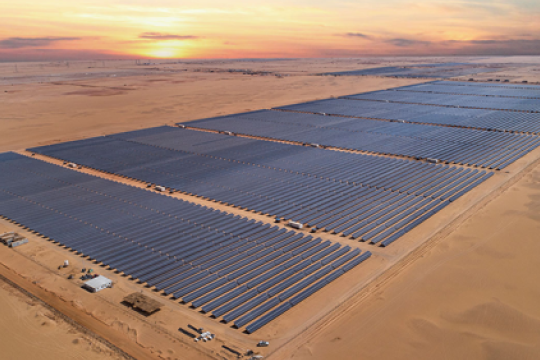
The European Bank for Reconstruction and Development (EBRD) and a group of development lenders have assembled up to USD 566 mn in debt for Nefer Minya, the 1.2 GWp solar plant with 600 MWh of battery storage in Minya that will be the largest in Egypt and Africa, according to a joint statement (pdf) from the project sponsors Hassan Allam Utilities Energy (HAU) and Infinity Power. The package covers about three-quarters of the project’s USD 764 mn cost, leaving the two sponsors to fund roughly USD 198 mn in equity, by our math.

The debt stack arranges up to USD 265 mn: a USD 160 mn A-loan from the EBRD’s own funds, a USD 75 mn B-loan from Bank of Jordan, and up to USD 30 mn in concessional financing from the CIF Clean Technology Fund, the EBRD said in a statement. German development finance institution DEG, the Dutch Entrepreneurial Development Bank (FMO), and France’s Proparco fill out the rest of the USD 566 mn package. The EBRD’s earlier project disclosure had penciled in a USD 170 mn senior loan, before the final syndication split. Back in July, HAU separately took a USD 30 mn corporate loan from the Emerging Africa & Asia Infrastructure Fund (EAAIF) that it says primarily supports the Minya project, which could cover part of its equity share.

Who’s it going to? Nefer Minya for Renewable Energy is 51% owned by Infinity Power, the Masdar and Infinity Energy joint venture, and 49% by HAU Energy, the platform Hassan Allam Utilities, Meridiam, and the EBRD set up in 2024. On a straight split, that is about USD 101 mn from Infinity Power and USD 97 mn from HAU, by our math. The EBRD also holds equity in both platforms, so its exposure runs beyond the loan.

What the money builds: A 1.2 GWp plant (about 1 GW in AC terms) paired with 600 MWh of batteries that store daytime solar for the evening peak. It will sell power to EETC under a 25-year PPA signed in November 2025, avoid over 1.5 mn tonnes of CO2 a year, and power more than 1.4 mn homes, according to the statement. Commercial operation is scheduled for 30 September 2027, after the Cabinet granted the project a golden license in August.

The sister plant: Minya is paired with Nefer Benban, a 200 MW, 120 MWh project near Aswan that was penciled in for 3Q 2026. There’s still no public confirmation that it reached commercial operations by its 30 September target. Together, the two make up 1.2 GW of AC capacity and 720 MWh of storage. The EBRD previously extended a USD 65 mn bridge loan to HAU’s Benban plant in April.

Why it matters: Minya is the clearest sign yet that Egypt’s IPP template has stopped treating batteries as a garnish. Obelisk, now fully operational at Nagaa Hammadi, mates 1.1 GW of solar to a 100 MW/200 MWh battery, which is enough to trim the evening ramp, not cover it. Minya pairs 1.2 GWp with 600 MWh, roughly three times the storage per MW of panel, turning a daytime generator into an evening supply source for EETC. Both sell into 25-year, USD-denominated PPAs, the structure Egypt needs if it is to hit 42% renewables by 2030 while still adding solar to a grid that peaks after sunset.

7

Also on our Radar

Egypt, Russia discuss starting work on Russian Industrial Zone at Ain Sokhna

Egypt and Russia have moved the Russian Industrial Zone from paperwork to the practical stage. The two sides met on Monday to discuss steps to begin work in the Suez Canal Economic Zone, according to a Foreign Ministry statement. Foreign Minister Badr Abdelatty received Maxim Oreshkin, deputy chief of staff of the Russian presidential executive office and the special representative for Brics financial and economic cooperation, on his first visit to Egypt, and President Abdel Fattah El Sisi received him the same day. The agenda was activating the zone after July’s naming of an industrial developer and speeding up implementation, plus a wider cooperation list: heavy industry, vehicles, digital transformation and AI. No launch date was announced.

IN CONTEXT- The zone has existed on paper since the 2018 intergovernmental agreement: 5.25 mn sqm in East Port Said, a USD 7 bn ticket, and a 50-year framework. What is being activated now is a 50-hectare plot (c. 500k sqm) next to Ain Sokhna port, under a long-term usufruct settled in May 2025, with tax and customs terms fixed for 49 years and the Crystal Fund as the single-window development institution. Design and construction are slated for 2026-2029, with operations targeted for 2030. We reported in October 2025 that the ticket had come down to USD 5 bn with completion seen by 2028 and a first-phase company list due before end-2025 — that list never surfaced, and the developer was only named in July 2026.

Going off-market

Egypt Intercontinental for Granite and Marble (Egy Stone) is moving to delist its shares from the EGX after its board approved an independent fair value of EGP 9.06 per share and agreed to put the proposed voluntary delisting to an extraordinary general assembly, according to board minutes (pdf). Objecting shareholders and anyone who doesn’t want to stay in get bought out at that price, funded by shareholder Hassan Salama Ali Mohamed, with the shares transferring directly to him. Egy Stone has been listed on the SMEs market since 2010.

The price is the story: EGP 9.06 is 64% above the last screen price of EGP 5.51 and 13% above the EGP 8 indicative price Salama floated in June, when he notified the company of his intention to tender for up to 100% of a business he and his related group already own some 89.99% of. That leaves a float of roughly 10%.

There hasn’t been a market to speak of: The EGX suspended trading in Egy Stone — alongside Speed Medical — in coordination with the FRA in September 2025, pending a statement from the regulator, and the stock had barely traded for months before that: the last session with meaningful volume was January 2025.

A bridge to fresh capital

Contact Financial Holding is turning to its major shareholders for up to EGP 700 mn in zero-interest funding, after its board approved a proposal to take out a subordinated loan from the company’s main shareholders, according to an EGX disclosure (pdf). The proposal still needs shareholder approval at an ordinary general assembly.

The loan is meant to tide Contact over until it can raise fresh equity. The board is looking to raise EGP 1.6-1.8 bn through capital increases at par value, open to all shareholders. But with regulatory approvals expected to take time, Contact wants the money sooner. The shareholder loan would be converted into equity once the capital increases go through, with the funds going toward bolstering the capital of its subsidiaries. Much of the money is going toward meeting regulatory requirements rather than expansion. The board says some subsidiaries need additional capital to meet the regulatory minimums set by the FRA and bring them into compliance. It didn’t specify which subsidiaries or how much each would need.

Systems upgrade

Pakistani IT services firm Systems Limited plans to raise its Egypt investment by more than 50% in 2027, with growth possibly exceeding that in 2028, on top of the USD 10 mn already committed, Daily News Egypt reports, citing country manager Ahmed Kandil. The company is also setting up digital banking centers of excellence in Egypt for two major UAE banks. The company already works with Orange, Vodafone, and e& and serves nine of Egypt’s largest banks.

IN CONTEXT- The expansion rides a sector the government is pushing hard. Outsourcing exports reached USD 5.2 bn in FY 2025/26, about 70% of Egypt’s USD 7.4 bn in digital exports, and the sector employs roughly 195k people across 252 companies, ITIDA chief Ahmed El Zaher told us last month. The Communications Ministry targets USD 6 bn in outsourcing exports this fiscal year and USD 8 bn in digital exports by June 2027.

A western gateway

The Cabinet approved a 30-year usufruct agreement for 652 feddans next to the Salloum land port in Matrouh, clearing the General Authority for Land and Dry Ports (GALDP) to contract an industrial development company to build, develop, and operate an integrated logistics zone, according to a Cabinet statement. The statement didn’t name the company, the construction timeline, or the planned facilities.

REFRESHER- The zone is the commercial anchor of the Gargoub-Salloum corridor, a 223-km rail line from Gargoub port on the Mediterranean to Salloum, Egypt’s largest land port, and one of the state’s integrated international logistics corridors. It revives a thread that has stalled twice: the transport ministry signed an MoU with a consortium of Egypt-Europe for Industrial Development (EEID), Mirad Developments, and Lenza Egypt for a 700-feddan zone in February 2023, and GALDP was expected to hand EEID a 15-year concession over the existing 28-acre Salloum zone in August of the same year. The new approval is both larger and longer-tenured than anything previously floated.

Pending green light

RMBV has signed definitive agreements to invest growth capital in ATCO Pharma, according to a joint press release (pdf) distributed by Zilla Capital, ATCO Pharma’s financial advisor. RMBV, a North Africa-focused investment firm, and ATCO Pharma, an Egyptian pharmaceutical group, will “enter into a joint control arrangement” through a mix of primary and secondary shares. RMBV, through its North Africa Fund III (RNAFIII), will reportedly invest USD 50 mn to acquire a stake of up to 50% in ATCO Pharma. The partners aim to expand ATCO Pharma’s portfolio of human and veterinary medicines, speed up product launches and scale regionally. The deal still needs approvals, including a green light from the Egyptian Competition Authority (ECA).

8

PLANET FINANCE

GCC debt issuance fell in 3Q as the market narrowed to fewer, bigger deals from its strongest borrowers

The GCC’s primary debt market raised less last quarter than a year earlier, and did it through far fewer, far larger issuances. Gulf issuers sold USD 34.8 bn of bonds and sukuk in 3Q, down 13.5% from a year earlier, while the number of transactions fell much harder, to 45 from 136, a 66.9% drop, according to Markaz’s GCC Fixed Income report (pdf). The average transaction, however, more than doubled, to USD 773 mn from about USD 296 mn over the same period.

Markaz reads it as a more selective funding market, one where established borrowers could still land large benchmark deals despite the regional geopolitical climate, while smaller and more frequent issuance thinned out.

Underneath the totals, the market shifted from companies to governments. Sovereign issuance rose 39.7% y-o-y to USD 18.15 bn and took 52.2% of the market, up from 32.3% in 3Q 2025, while corporate supply fell 38.8% y-o-y to USD 16.64 bn. Financial institutions — usually the backbone of corporate supply — cut issuance by 49%, though they stayed the largest non-government source at USD 10.84 bn. Between them, governments and financials accounted for 83.4% of the quarter’s value and 38 of its 45 issuances.

The pricing backdrop turned against borrowers: Secondary-market prices fell through the quarter, with the Bloomberg GCC Aggregate index down 4.01% and the S&P MENA Bond & Sukuk index down 4.22%, and five-year sovereign CDS spreads widened across every GCC market except Dubai, by as much as 39.6% for Qatar and 31.2% for Bahrain over the three months. Rising risk premiums make new issuance costlier and more selective, which is why the transactions that got done clustered among sovereigns, big banks, and investment-grade names, and why smaller or lower-rated borrowers largely stayed out. Saudi Arabia was the one sovereign whose CDS ended the period tighter than it began the year.

Saudi Arabia and Kuwait together made up 70.3% of issuance. Saudi stayed the largest market at USD 15.73 bn and 45.2% of the total, even as its own volume fell 21.5% — a drop of roughly USD 4.3 bn that was the biggest single-country drag, according to a press release. Kuwait was the counterweight, more than doubling to USD 8.73 bn, up 106%, to take second place at 25.1%; its surge owed much to the single largest deal of the quarter, a USD 3 bn Kuwaiti government bond.

Other markets mostly pulled back: The UAE held about flat at USD 5.56 bn, down 2.0%, across 11 issuances, the most of any market after Saudi. Qatar fell 52.9% to USD 3.18 bn through just 3 issuances, Bahrain dropped 47.9% to USD 1.33 bn, and Oman raised a single USD 260 mn issue. The quarter’s biggest corporate trade came out of Saudi Arabia, a USD 2.7 bn perpetual sukuk from Riyad Bank, while the Saudi government priced the largest sukuk at USD 2.8 bn.

Issuers avoided the dated long end: Paper maturing in under 5 years and in 5 to 10 years came in almost even, at USD 13.92 bn (40.0%) and USD 13.26 bn (38.1%), so about 78% of the value matured inside a decade. The 10-to-30-year bucket drew just USD 1.08 bn across two transactions (3.1%), and nothing priced beyond 30 years. The exception to the short bias was perpetual paper, which raised USD 6.53 bn across 12 deals, close to 19% of the quarter, and the largest of those came from banks — Riyad Bank, Arab National Bank, Alinma Bank, and Commercial Bank of Dubai among them — using perpetual structures as regulatory capital they can call and refinance later.

Two more features stood out: Sukuk again edged conventional bonds, at 52.9% of value, and the USD stayed the dominant funding currency at 63.4%, ahead of the SAR at 21.8%. Credit quality was more mixed: investment-grade paper accounted for 57.8% of total issuance and the rated universe was almost entirely investment grade at 97.6%, but the share of issuance carrying no rating at all rose to 40.7% from 34.5% a year earlier, much of it government sukuk and bank perpetuals.

MARKETS THIS MORNING-

Asian markets were in the green earlier today. Japan’s Nikkei was up roughly 1.5% and South Korea’s Kospi was up roughly 3.0%. US equities were broadly in the green at closing.

EGX30

52,089

+1.9% (YTD: +24.5%)

USD (CBE)

Buy 54.45

Sell 54.59

USD (CIB)

Buy 54.45

Sell 54.55

Interest rates (CBE)

19.00% deposit

20.00% lending

Tadawul

9,952

-1.7% (YTD: -5.1%)

ADX

9,829

+0.5% (YTD: -1.7%)

DFM

5835

-0.3% (YTD: -2.6%)

S&P 500

7,713

+0.3% (YTD: +12.7%)

FTSE 100

10,733

-0.3% (YTD: +8.1%)

Euro Stoxx 50

6,122

-0.4% (YTD: +5.6%)

Brent crude

USD 109.54

+0.7%

Natural gas (Nymex)

USD 2.97

+0.2%

Gold

USD 4,134

-0.2%

BTC

USD 82,847

+1.0% (YTD: -5.4%)

S&P Egypt Sovereign Bond Index

1,133

+0.2% (YTD: +14.1%)

S&P MENA Bond & Sukuk

147.94

-0.4% (YTD: -2.6%)

VIX (Volatility Index)

17.31

-6.1% (YTD: +15.8%)

THE CLOSING BELL-

The EGX30 rose 1.9% at yesterday’s close on turnover of EGP 9.1 bn (19.4% below the 90-day average). Regional investors were the sole net sellers. The index is up 24.5% YTD.

In the green: Abu Qir Fertilizers (+6.2%), Misr Cement (+6.2%), and Mopco (+5.5%).

In the red: GB Corp (-6.1%), Beltone Holding (-0.4%), and Eastern Company (-0.4%).

9

HARDHAT

Mega developers take the investment zone route

Three megaprojects now interact with the state through a single body, and two more are on the way. Ras El Hekma and Arkan Palm’s 205 already hold investment zone licenses, Qatari Diar’s 4.9k-feddan Alam El Roum launched its zone on 18 October, and Capital Group Properties’ Al Burouj and Talaat Moustafa Group’s The Spine are next. A zone gives developers faster paperwork and tax breaks. Inside each one, the General Authority for Investment and Freezones (Gafi) handles their dealings with every government body, while the tax breaks come from the 2017 Investment Law (pdf), each with its own conditions.

It starts with a single request: Once a company registers in the zone, Gafi acts as “its agent with every government body, handling the communications and paperwork the company would otherwise manage itself,” Gafi CEO Mohamed Awad tells us, and the process moves much faster that way.

Each zone also gets its own board of directors and executive board, and every approval runs through them, Investment Minister Mohamed Farid said at the Alam El Roum launch. He described the zone as a complement to the golden license, a single cabinet decree that lets one strategic project set up, operate, and secure its land and building permits in one go. “The time saved on permits shows up in cost and returns,” Arkan Palm CEO Amr Badr El Din tells us, though he gave no specific figures.

Fast doesn’t mean instant, however: Securing Alam El Roum’s license took a full year of planning and negotiation, said Taleb Al Athba, Qatari Diar’s chief of project delivery and development for Asia and Africa. Drafting the contracts alone took three months of intense talks, Housing Minister Randa El Menshawy added. The two sides signed in November 2025, the master plan cleared in June 2026, and the cabinet approved the zone in September.

The tax breaks are where the conditions come in: Gafi acts for investors, but the incentives come from the law, Awad says. The general package covers a five-year exemption from stamp tax and notarization fees on incorporation papers, credit contracts and land registration, plus a flat 2% customs duty on machinery imported for setting up. The special incentive lets newly established companies deduct 50% of their investment costs from taxable income in the areas most in need of development. Elsewhere, the rate drops to 30% and covers only listed activities, among them tourism and national strategic projects named by the Supreme Council of Investment, and real estate development isn’t on that list. The deduction tops out at 80% of paid-in capital and lasts up to seven years. Any additional incentives come only once operations start, with Gafi’s sign-off.

Size alone doesn’t decide who qualifies, either: The law sets no minimum, and Gafi’s zone directory runs from City Center Almaza at 29 feddans to Ras El Hekma at 36.7k. What each zone does matters too, across tourism, commercial, medical, and mixed-use projects, with homes as part of the mix at places like Ras El Hekma. “Gafi weighs size alongside each project’s nature and services,” Awad tells us, but the authority doesn’t publish how much each factor counts.

The state takes its own cut, and the terms vary by transaction. At Alam El Roum, the New Urban Communities Authority gets 15% of revenues once the project recovers its full investment costs, plus a share of the residential units. The government will take 35% of Ras El Hekma’s revenues once it starts operating. A preliminary agreement with an unnamed Emirati investor for the 642-feddan Jefaira plot gives it a 20-30% annual share of future revenues.

“The investment zone fits Alam El Roum better than a freezone would,” Awad tells us, because the project mixes tourism, logistics, industry, and services into one year-round city. The USD 29.7 bn project lies about 50 km west of Ras El Hekma, with EGP 220 bn going into its first phase.

Foreign money into property is rising, but the data can’t show how much of it the zones brought in. Non-residents’ property purchases, which count toward FDI, brought in a net USD 2.8 bn in FY2025/26, up from USD 1.9 bn a year earlier, according to Central Bank of Egypt figures (pdf). Net FDI reached USD 18 bn, including USD 3.5 bn from the Alam El Roum agreement.

More megaprojects are lining up: The cabinet approved a zone covering six service and commercial plots inside Al Burouj in Shorouk on 22 July at an estimated EGP 7.6 bn. On 30 July, it approved The Spine, a 506-feddan zone in Madinaty worth EGP 1.4 tn. Of the 21 zones decreed so far, 12 are operating, including the Mit Ghamr and Benha industrial zones, and nine are still under construction. The Spine’s license “will come through within days,” Awad tells us.


OCTOBER

19-22 October (Monday-Thursday): UfM Economic Forum, Cairo.

19-24 October (Monday-Saturday): Egypt 2026 Forum, The St. Regis New Capital.

26-28 October (Monday-Wednesday): IEX Egypt, Egypt International Exhibition Center, Cairo.

29 October (Thursday): Monetary Policy Committee’s seventh meeting of 2026.

NOVEMBER

5-7 November (Thursday-Saturday): ICA Annual Conference 2026, Cairo.

6-8 November (Friday-Sunday): Global Entrepreneurship Festival, JW Marriott Hotel, New Cairo.

7-10 November (Sunday-Wednesday): Cairo ICT Forum, Egypt International Exhibition Center, New Cairo.

10 November (Tuesday): Cityscape Egypt Forum, Cairo.

DECEMBER

7-10 December (Monday-Thursday): Food Africa, Egypt International Exhibition Center, Cairo.

11-12 December (Friday-Saturday): ISER International Conference, Cairo.

17 December (Thursday): Monetary Policy Committee’s eighth meeting of 2026.

17-20 December (Thursday-Sunday): MacTech Egypt, Egypt International Exhibition Center, Cairo.

EVENTS WITH NO SET DATE

2H 2026: Operations at Deli Glass Co’s new USD 70 mn glassware factory kick off.

2026: The Egyptian-American Economic Forum.

4Q 2026: Banque du Caire IPO.

2027

20 January-7 February: Egypt to host the African Games.

1-3 February (Monday-Wednesday): Agri Expo, Cairo International Convention Center.

April 2027: Tenth of Ramadan dry port and logistics hub to begin operations.

29 September - 2 October (Wednesday-Saturday): Cityscape Egypt Exhibition, Cairo.

EVENTS WITH NO SET DATE

2027: Egypt to host EBRD’s annual meetings.

2027: Egypt-EU Summit 2027.

End of 2027: Trial operations at the Dabaa nuclear power plant expected to take place.

September 2028: First unit of the Dabaa nuclear power plant begins operations.

Now Playing
Now Playing
00:00
00:00