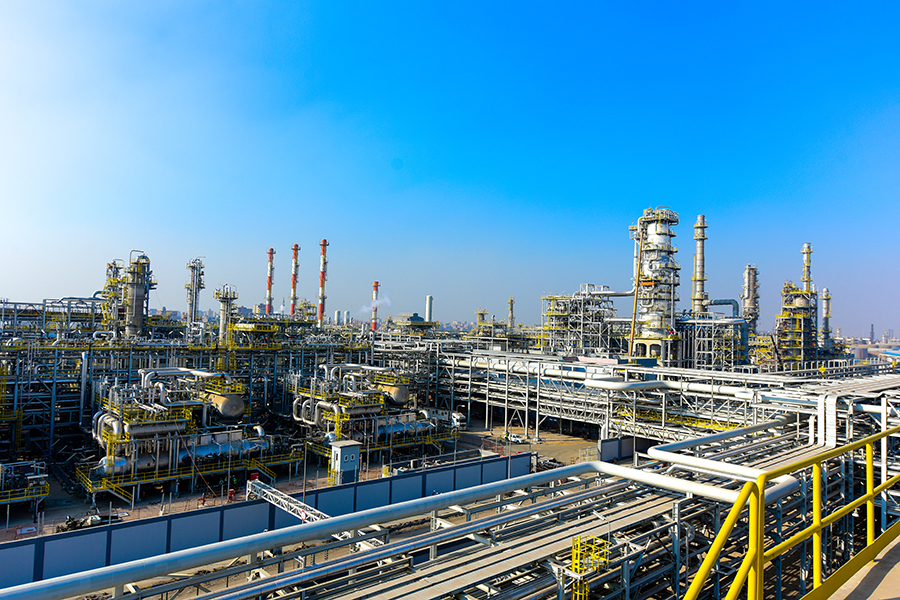
Overland freight is on the way to digitization

1

WHAT WE’RE TRACKING TODAY

Qalaa Holdings will more than double its stake in subsidiary Egyptian Refining Company

Good morning, everyone. Digitizing, standardizing, and localizing are all on deck in today’s issue.

Overland freight is moving toward digitization. The government has begun surveying road-freight companies dealing with land ports, which is the first step toward linking them electronically to the national single window for foreign trade, Nafeza. The long-term goal? Kill the paper and cut release times down to 48 hours. We talked to officials, trucking firms, and freight platforms about whether Nafeza can cut release times without leaving smaller operators behind.

The Financial Regulatory Authority is updating its real estate valuation rulebook for the first time in 11 years, adding chapters on data and inputs, documentation, and valuation models, along with explicitly referencing ESG pricing and adding a guidance model for valuation reports. However, we will have to wait a few days to get our hands on the actual rulebook.

And on batteries: BME — the JV of local automakers MCV and Auto D — has signed a deal with Chinese battery giant CATL for an EGP 2 bn-plus battery systems plant. The first phase will produce 1 GWh of capacity for heavy commercial vehicles, and the second phase will expand to 5 GWh to include passenger-car batteries and storage systems for solar and wind power.


Morning Drive just turned one! And we’re celebrating with new artwork and a few guest appearances. Listen to today’s episode on Apple Podcasts, Spotify, or Anghami.

Morning Drive is your daily download of the essential headlines shaping Egypt. A condensed version of the newsletter in audio form. Hosted by ‘Synthetic Salma’ — an AI-powered version of our own Executive Editor Salma El-Saeed.


The mechanics of retail with Baraka’s Ahmed Ragab: After almost 50 years of competition, why would two companies choose to merge? Is it as simple as the big entity buying the smaller one, or is there more to the story?

On this episode of Making It, Ahmed Ragab, CEO and Partner at Baraka Retail Group, joins Patrick to share how things actually played out for him.

Listen to the episode on: Apple Podcasts | Spotify | Anghami | YouTube

Sign up to our newsletter to get Making It in your inbox.


Crude consolidation

Qalaa Holdings is more than doubling its stake in subsidiary Egyptian Refining Company (ERC) to 27.1% from 13% in a transaction that will see QatarEnergy exit the refinery, according to a bourse filing (pdf). Closing is penciled in for December, and shareholders are helping foot the bill through a capital hike. ERC is Qalaa’s single largest asset, producing 4.2 mn tons of liquid petroleum products a year, plus 600k tons of pet coke and sulfur, according to the filing. It has contributed 88% of Qalaa’s total EGP 38.3 bn revenue in 3Q 2025.

Transaction mechanics: Qalaa is buying 55.4% of New Age Refining, which is acquiring QatarEnergy’s local holding company QPI Egypt, and its 25.4% effective indirect stake in ERC, at par value. That works out to 14.1 percentage points of added exposure for Qalaa, by our math.

How it will fund the buyout: The EGX-listed investment firm plans to raise EGP 3.87 bn in fresh equity, taking its paid-up capital to EGP 25 bn, up from EGP 21.13 bn. Existing shareholders will be offered 773.5 mn new shares at EGP 5 apiece — c. 21% below yesterday’s close — split between 588.7 mn ordinary and 184.9 mn preferred shares.

ERC isn’t getting the whole check. Some of the proceeds will go toward the acquisition, with the rest earmarked for paying down Arab International Bank and other Egyptian lenders and creditors, and exercising the first tranche of Qalaa’s right to buy back c. 5% of Taqa Arabia. Management wants the capital increase wrapped before mid-December.

MARKET REAX- The stock topped EGX turnover in the morning trade, with EGP 820.5 mn changing hands across 128.9 mn shares and was up 2.4% at EGP 6.36 even as the benchmark slipped 0.69%, according to data compiled by Mubasher. It closed up 1.45% at EGP 6.3.

What now: Baker Tilly is preparing the fair-value study on the acquired shares, while Graviton Financial Advisory is assessing Qalaa’s equity, with the latter report due at least five working days before subscriptions open.

Madkour powers up in Libya

Engineering group Madkour signed a EUR 100 mn (c. EGP 6 bn) contract with Libya’s General Electricity Company (GECOL) to build three power plants with a total capacity of 660 MW, Asharq Business reports, citing two unnamed sources. Each plant will generate around 220 MW, and completion is expected about 18 months from the signing date. Bahrain’s Bank ABC is expected to finance part of the investment, either through direct lending or by issuing guarantees for the projects, one of the sources said.

IN CONTEXT- Libya’s power grid has been under severe strain. A sudden grid collapse knocked around 1.35 GW of capacity offline in July after generation units and major transmission lines tripped, prompting Egypt to begin feeding power into its western neighbor to help restart the system. The government subsequently raised available export capacity to Libya by 43% to 100 MW, although actual exports depend on the surplus available in Egypt’s grid and fuel availability. Meanwhile, a much bigger cross-border fix is being studied: Egypt and Libya have been working to scale their electricity interconnection to 2 GW from its historical c. 150 MW capacity.

On the southern front, Sudan has raised the capacity of its electricity interconnection with Egypt to 75 MW, the Sudanese Energy Ministry said in a statement. The two countries agreed to accelerate the second phase of the Egypt-Sudan interconnection to 300 MW, with a longer-term target of 1k MW, and to cooperate in rehabilitating war-damaged generation and transmission infrastructure. The interconnection work is expected to be complete within five months, and Egypt is implementing two large solar energy projects in Sudan, Sudan’s energy minister said in a televised interview.

LNKO is Beltone’s Moroccan exit

Eyewear retailer LNKO is the Moroccan startup Beltone VC is looking to exit: Beltone Venture Capital is weighing a sale of its entire stake in Casablanca-based eyewear retailer LNKO at a return of roughly 3x its initial investments, CEO and Managing Partner Ali Mokhtar tells EnterpriseAM. We reported yesterday that Beltone was fielding a potential 100% buyout of one of its Moroccan portfolio companies in under 18 months, without naming it. Beltone VC first invested in LNKO in February 2025, taking an undisclosed stake for an undisclosed sum.

Another six to seven investments are penciled in for 2027, subject to market conditions and dealflow, Mokhtar tells us. He also told us that the company is closing in on three new investments in Egyptian startups across consumer, tech, and proptech, with around USD 1 mn set to go to work over the next two to three months.


PSA-

WEATHER- Same heat, same humidity in Cairo today, with a high of 35°C and a low of 23°C, according to our favorite weather app.

It’ll be a little cooler in Alexandria, with a high of 32°C and a low of 23°C.

The big story abroad

US President Donald Trump has downplayed AI safety fears after tech CEOs voiced concern about the risk of rapid AI development. Trump emphasized the need to maintain Washington’s technological edge over Beijing. Last week, Anthropic researcher Jacob Coxon resigned from his position and warned that top developers believe AI poses a near-term existential threat.

Claude-maker to stay in the black: Anthropic reportedly told investors that it will sustain its profitability this quarter, addressing worries about the heavy spending of frontier AI firms prior to its major IPO. The company — which chose Nasdaq for its anticipated listing — has reportedly achieved gross profit margins exceeding 80% before accounting for distribution partner revenue shares and model training expenses.

A stalemate in Stockholm: Early results show Sweden’s election is in a deadlock between left-wing opposition and the right-wing governing coalition. Public broadcasting reports the opposition holds a lead of just 20k votes. The margin sets the stage for weeks of political uncertainty and intense coalition talks in the Nordic region’s largest economy.

*** It’s Blackboard day: We have our weekly look at the business of education in Egypt, from pre-K through the highest reaches of higher ed.

In today’s issue: TrèFLE, a French teaching program at public schools, is getting another EUR 2 mn from France, but the same accountability gaps from its first phase are still wide open.

A strategic partnership shaping the next chapter of the Red Sea

Somabay and MARAKEZ come together in a landmark partnership, marking MARAKEZ’s first entry into Egypt’s Red Sea market and a significant step forward in the continued evolution of Somabay.

2

The Big Story Today

The government is bringing overland freight into Nafeza for the first time, the hardest lane it has left to digitize

Egypt’s most analog freight lane is about to lose its paper. The Finance Ministry is surveying the road-freight companies that operate at land ports — a step toward registering them, regularizing their status, and linking them to Nafeza, the national single window for foreign trade, three government officials tell EnterpriseAM. The aim is to fold truck-borne cargo into the same electronic system that governs sea and air freight, letting customs track shipments and vet the data on them before they reach the border, the sources say.

What changes at the port: The plan brings in consolidated bills of lading for land freight and requires trucking companies to file a detailed declaration of what each truck is carrying. This is to allow customs to know the nature of goods in advance and prepare for inspection, the sources say.

The goal is to kill the paper. “The Finance Ministry’s aim in linking land-freight companies to Nafeza is to move gradually from paper procedures and in-person dealings to a digitized documentary cycle,” the sources tell us. The aim is to have shipment data as “part of an electronic database that can be reviewed, tracked, and tied to inspection and release.”

Where it lands first, and why: The changes will first target Red Sea ports including Nuweiba and Safaga, the sources say. Gulf tensions have driven more trucking traffic onto alternative export routes, including the land-sea trade route between Nuweiba and Jordan’s Aqaba, which continues into Saudi Arabia, the UAE, and Kuwait. Safaga is being expanded to absorb traffic growth and prevent backlogs, with digitized procedures and a Nafeza link expected to cut how long trucks wait for inspection and paperwork, the sources add.

IN CONTEXT- Egypt’s Red Sea ports are carrying a bigger share of the country’s Gulf trade as shippers increasingly use land-sea routes to move cargo into Saudi Arabia and beyond. Freight demand on the Safaga-Duba corridor had surged 25%-30% back in March above normal levels as shippers sought alternatives around Hormuz and Bab Al Mandab. Traffic on the Nuweiba-Aqaba route had climbed back in March too — up from the usual 60-70 trucks to as many as 100 refrigerated containers on busier days.

DATA POINT- Roads carried 90.7% of land freight in 2026, the Cabinet’s Information and Decision Support Center said in July, projecting road-freight volumes to grow 1.8% to reach 97.1 mn tons by 2030.

The move extends Egypt’s advance cargo information (ACI) system — pre-registration of shipment data before goods arrive — which became mandatory on sea freight in October 2021 and on air freight in January 2026.

The weakest link

The rules are built for structured operators — and most of the market isn’t structured. Around 90% of Egypt’s trucking fleet is individually owned, which “creates constraints in efficiency, compliance, and economies of scale,” Reliance Operations and Maintenance Services Managing Director Omar Ragheb tells EnterpriseAM. The structured firms are ready: “We have our FMS [fleet management system]. I think we can easily integrate,” Ragheb says. “If this is implemented, structured companies will certainly be more responsive and find it easier to enter the system. But at the end of the day, any new system faces resistance to change.”

The risk shows up at the gate. “Given that most trucks on the road are individually owned, that could create a massive backlog and congestion at the ports — that’s a real risk,” Ragheb says. That could produce the opposite of what the ministry might expect: rather than consolidating volume toward bigger, compliant players, it risks a chunk of the fleet falling out of step with the new system.

The deeper design problem is that the truck doesn’t hold the data. “A mandate that lands on the truck asks the weakest link to submit information it doesn’t have,” Trella co-founder and COO Ali El Atrash tells us. The importer and the clearance broker hold the cargo data, while the carrier “is the last party to see” it, he says. In Trella’s own ports business, “the single biggest source of delay isn’t driving, it’s documentation arriving late or wrong.”

Whether it speeds anything up hinges on one condition — the system has to answer back. “If pre-arrival submission tells the carrier what’s been accepted, what’s outstanding, and who has to act, it changes the dispatch decision,” El Atrash says. “If it doesn’t, it’s just earlier waiting.”

Starting at the Red Sea is the easy part. Sokhna and Safaga — and possibly Nuweiba, though it sees less traffic — are “highly organized ports managed by DP World or Abu Dhabi Ports, [so] deploying the system there will be much easier and faster,” Ragheb says, adding that this is a more structured environment than higher-traffic Alexandria and Port Said.

Data won’t shorten a lab test

The release-time gains are real. Average release at Alexandria fell from 16.1 days in 2021 to 8.6 in 2024 — a 46% drop — per the Customs Authority’s own time-release study. Investment Minister Mohamed Farid also said last month it was around 5.8 days nationally against a two-day target. Faster clearance saves USD mns paid to customs-yard and warehouse operators, lowers import costs and spending on demurrage and port fines, eases trade, and lifts collection efficiency, Customs Authority head Ahmad Amawi told us last year.

But the same study shows 74% of consignments were physically inspected, down from 93%. “Three in four containers still get opened,” El Atrash says. That is where advance data could make the next difference: rather than simply making every shipment’s paperwork arrive earlier, the information could be used to send inspectors toward higher-risk cargo and allow lower-risk loads to move through more quickly, he adds.

Some bottlenecks sit outside the data: Laboratory testing, inspection capacity, the number of agencies that can hold a shipment, and import inspections stopping at 6pm when trucks move at night can all keep cargo waiting even when its documents are already in the system, El Atrash says. For trucking, predictability matters more than the average: “A five-day clearance we can plan around is worth more to us than a three-day one we can't,” he tells us.

Even a cleared shipment still hits paper at the end. The sticking point for exporters comes after clearance, says Senior Export Operations Specialist at Martico Egypt Ahmed Elshuqairi. “The main thing that can still cause delays is the manual submission of the customs-clearance documents to the shipping line’s agency,” he says. “Sometimes the shipment is already cleared, but we still need to physically submit the documents to the agency,” which is hard when the port is congested or the agency only takes papers at set hours. “If this step could be done electronically, it would make things much easier and faster.”

The survey of trucking firms is the first step. Linking them to Nafeza will put the bills’ data into an electronic cycle customs can refer back to, with wider use of consolidated bills for the shipments they carry, the sources say. “The step won’t stop at digitizing a paper or a document — it aims to build an integrated data chain for the overland shipment, from the moment the bill of lading is drawn up until it enters the land port, is inspected, and released,” they say.

Read more on this story in our EnterpriseAM Logistics edition, out at 9am CLT.

This publication is proudly sponsored by

3

REGULATION WATCH

Property valuers get an updated rulebook adding data quality, ESG, and model valuation chapters

The Financial Regulatory Authority (FRA) issued the second edition of Egypt’s real estate valuation standards — the first update in more than 11 years, the regulator said in a statement on Saturday. The new rules replace Decision 39 of 2015 (pdf), the only national framework since Egypt’s first-ever valuation rulebook came out. They take effect the day after publication in the Official Gazette — still pending.

The full text is not available yet. The FRA says the decision comes with a 140-page companion manual covering nine chapters plus annexes. Neither the decision pdf nor the manual has been uploaded to the FRA website. The authority says it will publish both “in the coming days.”

What the 2015 rules already covered: The old framework contained three core standards — Standard 1 on market value, Standard 2 on values other than market value (fair value, investment value, liquidation value, etc.), and Standard 3 on how to write a valuation report. It also had a detailed code of professional ethics covering fraud, conflict of interest, confidentiality, neutrality, and competence; the three standard valuation approaches (comparative sales, income capitalization, and cost method); four practical application annexes (valuation methodology, financial statements, financing cases, and properties under construction); and a mandatory five-year records retention period.

What the 2026 edition adds: The FRA says the update includes new chapters. For data and inputs, valuers must now base valuations on verifiable facts — field measurements and published market rates — and assess each input for accuracy, completeness, and timeliness, in addition to disclosing how they weighed trade-offs. On documentation, reports must include a mandatory set of core elements covering the methodologies, inputs, data sources, and risk management applied. On valuation models, the FRA lists it as a standalone chapter but gives no detail on what it requires, noting only that the overall framework aligns with IVS 2025.

ESG and templates are now explicit. Valuers must price environmental, social, and governance factors into the value itself. The 2015 standards did not mention ESG. The 2026 edition also includes a guidance model for valuation reports. The 2015 framework specified what reports must contain but did not supply a template.

Why it matters: Valuation is what determines net asset value — the price at which retail investors buy into real estate funds. Real estate funds’ NAV reached EGP 8.98 bn at the end of 1Q 2026, up from EGP 923.7 mn at the end of 2025. By the close of 2Q, six REIFs held around EGP 12.6 bn between them, with average yields climbing to 3.5% from 2.9%, an FRA official told us last month. More than 40 applications for new funds are sitting with the regulator. Every one of those NAVs, unit prices, and yield calculations is a valuation output.

IN CONTEXT- The rewrite lands as the FRA broadens the range of regulated real estate investment activity. The regulator has been writing clearer rules for fractional property investment and mortgage-backed structures. MNT-Halan and Azimut launched what they billed as the country’s first digital real estate investment fund, giving retail investors fractional access to properties through an app. The FRA also eased conversion rules for developers turning their companies into REIFs, replacing a 40%-of-total-assets formula with a flat EGP 500 mn net equity test. FRA Chairman Islam Azzam said more reliable valuations should make these activities more attractive to local and foreign investors.

What’s next: Publication in the Official Gazette is expected within days, per the statement. The 140-page manual will be uploaded to the FRA website at the same time. The authority has not yet said whether valuations already underway must follow the new rules or can finish under the old framework.

In other regulation news:

Professional ins. firms now have a wider auditor pool: Ins. and reins. brokers, ins. consultants, and risk assessment and loss adjustment firms may now appoint an auditor registered in section I or either subsection of section II of the FRA’s auditor register, according to a statement from the regulator. The change drops the previous requirement that their auditor be registered in the stricter section I — the tier reserved for auditors qualified to audit listed companies, banks, and insurers, with higher staffing and experience requirements. Section II auditors meet a lower entry bar and are a larger, more accessible pool. The decision takes effect the day after publication in the Official Gazette.

Why it matters: FRA Chairman Islam Azzam said the relaxation responds to practical conditions facing these firms and reduces compliance costs. The companies covered by the change — ins. brokers, reins. brokers, ins. consultants, and risk surveyors — are intermediaries and service providers, not insurers themselves, meaning the previous requirement for the highest auditor tier was unnecessarily expensive and limiting.

IN CONTEXT- The new easing follows the FRA’s July decision raising the cap on funds a single auditor can cover from three to five and carved out an auditor-rotation exception for companies going public.

4

Investment Watch

BME signs contract with China’s CATL for EGP 2 bn battery systems plant

Battery manufacturing company BME signed a contract with Chinese battery giant CATL to set up a EGP 2 bn-plus battery systems plant, according to a cabinet statement. The company — established by local auto makers MCV and Auto D — plans a first phase of 1 GWh annual production capacity focused on batteries for heavy commercial vehicles. The second phase would lift capacity to 5 GWh and expand into passenger car batteries and storage systems for solar and wind power.

What’s manufactured here vs what’s imported: The project targets 40% local content, covering assembly, battery management system integration, thermal management, and final system integration in Egypt, while the battery cells themselves are supplied by CATL from China. The project plans to serve both domestic and global markets.

What we don’t know: No timeline for construction or completion has been disclosed. The factory location has also not been announced.

IN CONTEXT- MCV was already a CATL customer before this JV — it uses CATL’s batteries for its C127 EV bus. MCV operates a USD 62 mn Volvo e-bus production line in New Salheya, with capacity for 1.2k electric buses per year for export to Europe. Industry Minister Kamel El Wazir said at the Volvo line inauguration in September 2025 that the country’s bus manufacturing capacity stood at 2k-2.5k buses annually.

Egypt’s battery-manufacturing pipeline is getting crowded: During Chinese President Xi Jinping’s visit to Egypt earlier this month, Mansour Group signed an exploratory MoU with China’s Tianneng Battery Group to study Egyptian production of lead-acid automotive batteries and lithium cells for new-energy vehicles and storage applications. The government has also outlined plans for Huawei-backed energy storage manufacturing and standalone storage stations with a combined capacity of 4 GWh. China’s Sungrow broke ground last month on a USD 50 mn battery-storage plant in the Teda zone in Ain Sokhna.

Why it matters: This is a pack assembly plant, not a cell manufacturing facility. Egypt captures roughly 30-40% of the battery value chain (assembly, battery management system integration, and testing) while the cells — representing 60-70% of the value — are imported from CATL in China. Still, the agreement secures local pack supply for a rapidly expanding domestic EV ecosystem. EnterpriseAM has tracked at least eight passenger EV assembly projects in the pipeline, including Rox ESI, Al Mansour/MG, Al Amal Group/Dongfeng, Guide Automotive, BAIC/Alkan Auto, GV Auto/FAW, Jinbei/Ezz Elsewedy and Raya Auto — all needing locally made battery systems. Egypt’s battery market is projected to grow from USD 950 mn in 2026 to USD 4.34 bn by 2035, per consulting firm Next MSC.

5

A MESSAGE FROM AUC ONSI SAWIRIS SCHOOL OF BUSINESS EXECUTIVE EDUCATION

Management for excellence in healthcare delivery

Running a hospital brings several management disciplines into the same room. The Hospital Management and Operational Excellence Diploma brings together hospital operations, finance, digital transformation, and supply chain for professionals looking to strengthen their capabilities across these areas. Through hospital visits and case studies, participants build the knowledge to improve organizational performance and deliver greater value to patients. The one-year program runs live online, with the next cohort beginning 11 October 2026.

Applications close on 20 September 2026. [Apply here.]

6

Moves

Tatweer Misr CEO Ahmed Shalaby to chair newly formed General Committee for Real Estate Development

Tatweer Misr CEO Ahmed Shalaby (LinkedIn) will chair the Federation of Egyptian Chambers of Commerce’s newly formed General Committee for Real Estate Development, according to a federation statement. Shalaby will lead the committee until elections are held, with a mandate to represent developers and their counterparties and coordinate with state agencies on sector policies and challenges.

A real estate and urban planning veteran with more than 30 years of experience, Shalaby co-founded Tatweer Misr and has served as its president and CEO since 2014. He also chairs the House of Representatives Housing Committee and is a professor of architecture and urban development at Cairo University, having previously taught city planning at Cornell University in New York.

7

Also on our Radar

Madinet Masr is launching its first North Coast project in partnership with Reedy Development

Madinet Masr is launching its first project on the North Coast, partnering with Reedy Development on a 101-feddan project at KM 183, according to a press release (pdf). Reedy will develop and manage the project as master developer, while Doors Real Estate — a Madinet Masr subsidiary — will handle sales and marketing. Further details on the project, including its ticket size and construction timeline, are yet to be announced.

REMEMBER- CEO Abdallah Sallam flagged last year that a North Coast expansion was in the cards, adding that the coast has become a destination for fully integrated cities operating year-round.

Egypt-Syria business bridge

The Egypt-Syria Business Council formation is now complete after the investment and external trade minister issued a decree last week appointing the members representing the Egyptian side. The appointments include Chairman of the Port Said Chamber of Commerce Mohamed Saada as co-chair and Chairman of Taqa Arabia Khaled Abubakr, alongside several other private sector executives spanning sectors like construction, real estate, steel, pharma, and food processing.

This comes almost four months after Syria finalized its own side of the council, with Syrian businessman and CEO of Karim Metal and Mechanical Industries Ghassan Karim tapped as co-chair at the time.

REMEMBER- Egyptian capital is yet to make any major commitment in Syria, but the domestic private sector has been eyeing reconstruction prospects in sectors like iron and steel, alongside infrastructure projects, amid diplomatic warming at the government level, as we’ve previously reported.

Making the temporary permanent

CID has shareholder sign-off to move ahead with its EGX offering: State-owned drugmaker Chemical Industries Development’s (CID) general assembly approved taking the company through the listing and offering process and gave the board the green light to bring in the advisers needed to get it done, according to a bourse filing (pdf). Shareholders also approved tripling authorized capital to EGP 1.5 bn from EGP 500 mn, while issued and paid-in capital stays at EGP 400 mn. The state’s Holding Company for Pharmaceuticals, Chemicals and Medical Supplies (HoldiPharma) currently owns all 40 mn shares.

And the clock is ticking: CID has been temporarily listed under the healthcare and pharma sector since 20 May 2026, giving it six months to register with the Financial Regulatory Authority and apply to execute the offering. That window closes in November, and there’s still no fair value, prospectus, or stake size on the table.

More on our radar

  • Breadfast is moving into restaurant delivery, launching Breadfast Food alongside its existing groceries, bakery, coffee, and pharma offerings. The company is also planning to expand the service to more governorates. (Press release, pdf)
  • EG Bank’s youth and startup incubator MINT partnered with Saudi venture studio Value Makers Studio (VMS) to help Egyptian startups expand into Saudi Arabia. (Al Mal)
  • The International Finance Corporation is targeting a local investment portfolio exceeding USD 1.6 bn for FY 2026/27 across infrastructure, renewable energy, manufacturing, tourism, agriculture, food processing, banking, and capital markets. (Hapi)
  • Kuwait’s Emeel Abdalla Investment Group is targeting a September launch for its Tameh real estate investment fund, with EGP 1 bn in planned offerings. (Hapi)
  • The Financial Regulatory Authority is reviewing around 25 applications to launch new real estate investment funds, putting a firmer number on the more-than-20 pipeline we reported last month. (Asharq Business)
8

PLANET FINANCE

MENA PE stays near record pace in 1H — but exits are heading for their weakest year since 2017

MENA private capital is still doing transactions — getting out is the harder part. Private equity (PE) transaction value reached USD 8.6 bn across 102 transactions in 1H 2026, only marginally behind last year’s record pace despite the Iran war. If that run rate holds, 2026 would still be the region’s second-strongest PE year of the past decade, according to PitchBook (pdf).

The war has rattled confidence without freezing deployment: PitchBook says disruption through Hormuz has weighed on transaction confidence, exit timing, and allocator appetite, but it is still too early to say that long-term PE flows have materially weakened.

A caveat on the headline: Global Private Capital Association (GPCA) data we covered earlier this month showed Middle East private capital investment falling 73% y-o-y to a record-low USD 1.7 bn in 1H. The datasets are not directly comparable — PitchBook covers the broader MENA region and puts PE activity alone at USD 8.6 bn — but both show capital becoming more concentrated in larger transactions.

Cross-border money is still doing most of the work. USD 6.4 bn was invested across 61 cross-border PE transactions, accounting for 74.3% of total PE value. That included a USD 250 mn investment by Blackstone and partners to establish the UAE gaming platform ADGT, one of Blackstone’s first UAE investments since the war began.

Turkey took the PE crown — with some Saudi help: Scopely’s USD 1 bn acquisition of Loom Games helped put Turkey on top by PE value. Scopely is owned by PIF-backed Savvy Games Group, while PIF remains MENA’s most active PE investor since 2020, with 51 regional transactions, ahead of ADQ’s 30 and Mubadala’s 29.

Venture capital (VC) is following the same “fewer, but bigger” script: Just 287 rounds closed in 1H versus 824 during all of 2025, but investment value still reached USD 2 bn. MAGNiTT data we covered in July showed the 10 largest rounds absorbing 58% of MENA funding, while two transactions alone accounted for roughly 36%.

The UAE has pulled decisively ahead in venture: UAE startups raised USD 1.3 bn in 1H — already more than in all of 2025 and equivalent to roughly two-thirds of MENA VC value. The three largest rounds went to UAE-based Cadena, CargoX AI, and Mal, while the UAE logged 106 transactions, nearly double Saudi Arabia’s 55.

But the exit door is barely open: PE and VC exits generated just USD 2.7 bn across 27 transactions in 1H, putting 2026 on course for the lowest exit value since 2017. That is largely what we were watching for in March, when GPCA said new investments were slowing rather than stopping. PitchBook now points to geopolitics, valuation gaps, AI disruption, and public-market fears as the main drags.

IPOs have gone from exit engine to rounding error: Public listings accounted for just 8.9% of PE exit value in 1H, down from 60.8% in 2025. Last year’s number was boosted by the flynas IPO at a USD 3.3 bn valuation; its market cap had fallen to around USD 2.2 bn by late August, which PitchBook says could weigh on appetite for future listings.

Fundraising is also concentrated: MENA private-market funds raised USD 5.4 bn in 1H, putting the region on track to exceed 2025’s USD 9.6 bn — but through just 53 closes versus 174 last year. PE accounted for USD 4.6 bn, or 85.6% of the total, while VC funds raised only USD 190.1 mn. BlueFive Capital’s USD 3 bn Onyx Fund I alone made up more than half of all capital raised.

MARKETS THIS MORNING-

Early trading across Asian markets saw declines, with South Korea’s Kospi dropping 3.3% and Japan’s Nikkei slipping 1.8%. The drop coincides with supply worries over crude oil alongside investor anticipation of potential interest rate increases in both Japan and the US this week.

EGX30

55,665

-1.1% (YTD: +33.1%)

USD (CBE)

Buy 51.31

Sell 51.44

USD (CIB)

Buy 51.32

Sell 51.42

Interest rates (CBE)

19.00% deposit

20.00% lending

Tadawul

10,865

-1.3% (YTD: +3.6%)

ADX

10,113

+0.0% (YTD: +1.2%)

DFM

5,941

+0.6% (YTD: -1.8%)

S&P 500

7,657

+0.9% (YTD: +11.9%)

FTSE 100

10,650

+0.4% (YTD: +7.2%)

Euro Stoxx 50

6,325

+0.9% (YTD: +9.1%)

Brent crude

USD 107.71

+3.0%

Natural gas (Nymex)

USD 2.87

+1.3%

Gold

USD 4,375

-0.8%

BTC

USD 77,387

+0.1% (YTD: -11.7%)

S&P Egypt Sovereign Bond Index

1,114

+0.1% (YTD: +12.2%)

S&P MENA Bond & Sukuk

149.33

-0.2% (YTD: -1.7%)

VIX (Volatility Index)

15.84

-11.2% (YTD: +9.2%)

THE CLOSING BELL-

The EGX30 fell 1.1% at yesterday’s close on turnover of EGP 11.0 bn (5.4% below the 90-day average). Regional investors were the sole net sellers. The index is up 33.1% YTD.

In the green: Telecom Egypt (+1.6%), Qalaa Holdings (+1.5%), and GB Corp (+0.5%).

In the red: Alexandria Containers and Goods (-4.5%), Misr Cement (-4.0%), and Abu Qir Fertilizers (-3.5%).

9

BLACKBOARD

France is funding EUR 2 mn for phase two of Egypt’s French program, but neither AFD nor the Ministry can verify phase one’s success

Egypt is getting another EUR 2 mn from France to deepen French teaching in its public schools — a second phase of a teacher-training partnership that has already put thousands of teachers through certification and delivered a new national French curriculum. This phase adds a strengthened monitoring framework designed to track what the training means in the classroom.

Egypt and the Agence Française de Développement (AFD) signed the grant on 24 June 2026 to launch TrèFLE 2, aiming to reach 8k teachers and 1 mn+ students by 2028, according to a statement from AFD — part of a wider EUR 300 mn package marking 20 years of AFD-Egypt partnership.

BACKGROUND — TrèFLE launched in 2021, financed by an AFD grant and implemented by a consortium of French institutions — France Éducation International (FEI), the Institut français d’Égypte and Réseau Canopé — working with the Education Ministry under the “Education 2.0” reform agenda, according to FEI’s own account of the project.

It’s a capacity-building partnership rather than a school-funding scheme: the grant supports teacher training, trainer certification and the development of French curriculum and classroom materials for the Ministry, rather than disbursing money to individual schools.

AFD and FEI both say the ambition at launch was to train 13k teachers and reach an estimated 3 mn students at the preparatory and secondary levels — targets built on Ministry enrollment statistics from the 2018-2019 school year. AFD Deputy Director Jérôme Taurand tells EnterpriseAM that “EUR 2 mn was disbursed” in the first phase.

Phase one trained more than 4k teachers and reached roughly 1 mn students at the preparatory level. The figures came in below the launch ambition — but AFD says the targets themselves moved. At the Ministry’s request, the program “progressively refocused its activities on the preparatory level,” Taurand says, after a reform reshaped where a second foreign language is taught in Egyptian public schools.

The shift followed an August 2024 decision by Education Minister Mohamed Abdel Latif to restructure the first preparatory year, reshaping where a second foreign language sits in the system. French kept its place rather than being cut, maintaining its place as a second foreign language in a set of public-school networks at a preparatory level — the Official Language Schools, Distinguished Language Schools, Egyptian-Japanese Schools and National Institutes — which is where TrèFLE now concentrates, AFD tells us. At the secondary level, AFD says a second foreign language is mandatory for all first-year students, with French among the options, and remains available in the second year for those in the Arts and Literature stream.

The clearest results are in teacher training. Roughly 500 French trainers went through the program, including 50 who received mobility placements in France; 99% of that cohort passed the DELF A2 certification and 91% passed DELF B1. The program also produced a new three-year French textbook series, "Ensemble, apprenons le français," rolled out at the preparatory level from September 2025; the education ministry's French-language adviser has said it will be extended to private schools.

What phase one didn’t publish is classroom-level outcome data — student proficiency gains, exam results or teacher retention — the kind of evidence phase two’s monitoring framework is built to generate. Asked about retention specifically, Taurand says it “is not a specific objective of the TrèFLE project and therefore does not fall within the project’s mandate to develop a dedicated retention strategy”; AFD points instead to sustainability mechanisms — a standing pool of certified trainers meant to keep developing teachers beyond the project, and support for the Ministry’s own institutional capacity.

Individual directorates offer glimpses of the program on the ground: the Minya Directorate of Education honored a French teacher at Reda Ashour Secondary School for Girls in Maghagha for reaching the advanced B2 level under TrèFLE.

What phase two adds

Both phases are structured as grants rather than loans, Taurand confirms; the second phase’s EUR 2 mn mirrors the first’s funding model.

Phase two strengthens the monitoring framework. AFD says the first phase had monitoring and evaluation in place throughout — attendance and training records, field supervision and regular reporting — and was externally evaluated, as the second will be. What's new in phase two is an annual Monitoring and Evaluation Committee that includes Egyptian academics specializing in pedagogy and language, alongside start-and-end language-positioning tests for teachers and tracking of French enrollment trends and student participation in national competitions and certification exams. AFD hasn't published the phase-one evaluation, but the strengthened framework is designed to make phase two's results more visible.

AFD frames the wider payoff in terms of employability. Taurand describes French as “a lever to enhance employability,” pointing to French service companies — Atos, Teleperformance, Orange — expanding in Egypt and needing multilingual staff, and noting the Francophone world accounts for roughly 16% of global GDP.

The labor-market logic has support, if not yet hard local data. “Those with knowledge of foreign languages can earn multiples of the salaries earned by those with only Arabic in call centers, customer support and technical support jobs,” University of Minnesota Humphrey School of Public Affairs Professor Ragui Assaad tells EnterpriseAM — though he notes the specific evidence tying French to wages in Egypt is thin, and frames the case as sitting closer to long-term employability than to a measured short-term return.

The program’s success will ride on the wider school system, where the government is working through long-standing pressures on pay, class sizes and staffing. “The successful implementation of the program in public schools will of course depend on the availability of qualified teachers, which is not a given,” Assaad says. “There are no silver bullets.”

On pay, the government added a monthly teaching incentive of EGP 1k on top of the new EGP 8k public-sector minimum wage in the FY2026/27 budget, Finance Minister Ahmed Kouchouk says — putting an entry-level teacher’s floor at EGP 9k/month, with a further EGP 2k “excellence incentive” for top-performing school administrations. It’s a floor that leaves little room once essentials are covered, with education costs up 18.7% y-o-y in July, per CAPMAS.

On staffing, the government’s National Narrative for Comprehensive Development targets a 20:1 student-teacher ratio by 2030, down from 29:1, and 30 students per class, down from 40 — leaning on 167k new contract-teacher hires and a per-lesson rate rise from EGP 20 to EGP 50 to help close a gap left by 127k teachers Egypt lost between 2018 and 2023, as we reported in March.

AFD now puts the program’s potential reach at roughly 9k French teachers and 1.8 mn students across the preparatory and secondary levels — a figure it says was revised upward on the Ministry’s 2025-26 enrollment statistics, and larger than the 8k teachers and 1 mn+ students in phase two’s public announcement.

OUR TAKE — The foundation is built: thousands of teachers trained, trainers certified and a new curriculum in place. Phase two’s real test is measurement — the new monitoring committee, the external evaluation and the positioning tests are the tools to show what the training means for students, and publishing that data is what will let the partnership prove its return. That’s the number worth watching over the next two years.


SEPTEMBER

15 September (Tuesday): IMF to hold its eighth review of Egypt’s USD 8 bn EFF arrangement.

24 September (Thursday): Monetary Policy Committee’s sixth meeting of 2026.

27-29 September (Sunday-Tuesday): Global Conference on Population, Health, and Human Development.

28-29 September (Monday-Tuesday): Egypt Mining Forum, St. Regis Hotel New Capital.

30 September - October 3 (Wednesday-Saturday): Cityscape, Egypt International Exhibition Center, Cairo.

OCTOBER

5 October (Monday): The EnterpriseAM Egypt Forum.

6 October (Tuesday): Armed Forces Day.

10-11 October (Saturday-Sunday): Egypt Women’s Health Summit (EWHS), Cairo Marriott Hotel.

26-28 October (Monday-Wednesday): IEX Egypt, Egypt International Exhibition Center, Cairo.

29 October (Thursday): Monetary Policy Committee’s seventh meeting of 2026.

NOVEMBER

6-8 November (Friday-Sunday) : Global Entrepreneurship Festival, JW Marriott Hotel, New Cairo.

8-11 November (Sunday-Wednesday): Cairo ICT Forum.

DECEMBER

7-10 December (Monday-Thursday): Food Africa, Egypt International Exhibition Center, Cairo.

17 December (Thursday): Monetary Policy Committee’s eighth meeting of 2026.

EVENTS WITH NO SET DATE

2H 2026: Operations at Deli Glass Co’s new USD 70 mn glassware factory kick off.

2026: The Egyptian-American Economic Forum.

4Q 2026: Banque du Caire IPO.

2027

20 January-7 February: Egypt to host the African Games.

1-3 February (Monday-Wednesday): Agri Expo, Cairo International Convention Center.

April 2027: Tenth of Ramadan dry port and logistics hub to begin operations.

EVENTS WITH NO SET DATE

2027: Egypt to host EBRD’s annual meetings.

2027: Egypt-EU Summit 2027.

End of 2027: Trial operations at the Dabaa nuclear power plant expected to take place.

September 2028: First unit of the Dabaa nuclear power plant begins operations.

Now Playing
Now Playing
00:00
00:00