Importers are finding USD easily, but a weaker EGP makes buying harder

1

WHAT WE’RE TRACKING TODAY

MNT-Halan’s parent completes its EGP 4 bn injection into the Egyptian arm

Good morning, lovely people. The theme in today’s issue is money that isn’t where it needs to be: containers are stuck at the ports and tanks are built but not filled.

Our big story today: Importers can get USD from their banks again, but with the greenback past EGP 56, bringing goods in is costing them more, importers and traders tell us. Some banks charge sourcing commissions of up to 0.25%, and port storage averages about USD 150 per container daily. Factories say they are holding their prices, yet shoppers are paying more for cheese and some other food staples, and we tell you why that is below.

AND- The USD distribution questions continue, as the state is choosing where to put its own greenbacks. Egypt has built storage for 33 mn barrels of oil, but it doesn’t have the USD 2.5 bn to fill it, President Abdel Fattah El Sisi said at Egypt Forum. Much of that money has gone to keeping foreign oil partners paid and covering about USD 3 bn a month in fuel purchases, and we spoke to a source who explains why that’s the right call.

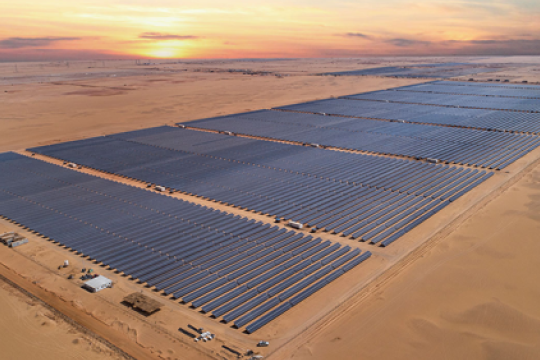
MEANWHILE- Cairo-based solar and water startup NoorNation closed a USD 1.05 mn seed round, and Linah Farms, one of its biggest clients, signed on as a shareholder after nine months of due diligence. Linah will also help fund NoorNation’s pay-per-use solar irrigation for farmers on Egypt’s old farmland, where most still pump with diesel, founder Ragy Ramadan says.

Over in private equity, Tanmiya Capital Ventures has about USD 80 mn to put into local mid-caps over the next two to three years, Managing Partner Mohamed Mahgoub tells us, after closing its second fund at USD 130 mn. Development finance institutions put up all of it, and Mahgoub has argued that the market won’t mature until local pension funds and insurers start writing checks too.

***

ARE YOU MORE OF A LISTENER? Morning Drive is a 10-minute summary of today’s issue crafted for you to enjoy with your morning coffee, while getting the kids ready for school, or driving through the morning rush. And if you like it, tell your friends to tell their friends. They can find us on Apple, Spotify, or wherever they get their podcasts.

***

A round trip

MNT-Halan’s EGP 4 bn post-IPO capital increase is fully paid, and it puts half of the IPO proceeds back inside the listed company. Parent MNT Investments BV subscribed to 163.27 mn new shares in MNT Tech Holding for Financial Investments at the EGP 24.50 offer price, lifting issued capital to EGP 176.3 mn from EGP 160 mn and the share count to 1.76 bn from 1.6 bn, according to the board minutes (pdf) of Monday’s meeting. The increase now goes to the Financial Regulatory Authority, the EGX, and Misr for Central Clearing, Depository and Registry.

That’s 51% of what the offering raised, by our math, and it matters because the IPO was fully secondary: all EGP 7.84 bn went to the seller, not the company, so the increase is how fresh capital reaches the Egyptian business. Subscription was reserved for the parent, a structure shareholders approved at an extraordinary general meeting on 16 September, before the IPO and while the parent was still the only shareholder. It sold 320 mn shares in the offering and 24.3 mn more to senior management, leaving it at 78.5%; the new shares take it to 80.47% of the enlarged company.

The rest of the proceeds go abroad. Half or more of what the parent raised was always earmarked for the listed company, founder and CEO Mounir Nakhla said at the EnterpriseAM Forum before the book opened; the remainder funds the group’s Turkish business and an acquisition in an Arabic-speaking market he wouldn’t name. We don’t know yet what the company will do with the EGP 4 bn.

REFRESHER- The IPO sold 320 mn shares, or a 20% stake, at EGP 24.50 apiece for a total of EGP 7.84 bn. The offering was 16x covered, with the institutional tranche subscribed 11.2x and the retail tranche 43.6x. CIB anchored up to EGP 2 bn and Redwheel about USD 20 mn, together more than a third of the base transaction. The stock debuted on 20 October and closed 6.6% up at EGP 26.12, after touching EGP 28.80 intraday.

Venturing abroad

Raya Holding’s newly launched venture arm made its first investment, taking a stake in Pidima, a UK enterprise AI company founded in 2024. The EGX-listed group disclosed no size, stake, or terms in the bourse filing (pdf) announcing the transaction.

Raya Ventures is Raya Holding’s wholly owned venture capital arm. The vehicle was set up last year to back early-stage AI and fintech startups here at home and across Africa and the Middle East from pre-seed through Series A. Its mandate also allows it to invest in international startups looking to scale across the region.

Meet its first target: Pidima develops AI software that helps companies automate day-to-day operations and manage product development, with built-in oversight and audit trails. It mainly serves clients in heavily regulated industries across Europe and the Middle East.

REFRESHER- Pidima is the latest piece of a wider AI push at Raya. The board approved a fintech JV with DisrupTech Ventures and an enterprise AI company with EGP 250 mn in issued capital in May, then launched the latter in September as Raya Nexus. Nexus sells credit decisioning, customer management, and collections tools to banks and fintechs, and it went to Money20/20 Middle East in Riyadh. The push follows Group CEO Ahmed Khalil telling us in July 2025 that if Raya entered a new sector, it would likely be AI and machine learning.

Happening today

Retail investors have until the end of today’s session to get in on Banque du Caire’s (BdC) IPO, with the public tranche already 6.8x covered, Al Borsa reports, citing preliminary data from the EGX’s OPR screens. Investors had placed orders for about 2.3 bn shares as of yesterday’s close, against about 343 mn shares on offer in the upsized retail tranche. The final offer price was EGP 5.30 per share; that’s roughly EGP 12.2 bn (USD 228 mn) in retail orders chasing just EGP 1.8 bn (USD 34 mn) worth of shares, according to our math based on the offering circular’s EGP 53.46 exchange rate.

The usual last-minute scramble: Most of that demand came in over the past three sessions. The retail tranche was just 1.98x covered as of Thursday, with orders for some 454 mn shares, a senior government official told us. That puts the order book at roughly five times what it had drawn just three trading sessions ago.

WHAT’S NEXT- Execution is set for tomorrow, 29 October, with BdC shares expected to start trading on Monday, 2 November, subject to regulatory approvals.

PSA

WEATHER- Cairo is looking at another warm, bright autumn day, with a high of 29°C and a low of 19°C, according to our favorite weather app.

It’s a shade milder in Alexandria, with a high of 28°C and a low of 18°C.

Did you know we just launched a new publication? EnterpriseAM AI + Innovation follows the Gulf’s AI money trail: where the billions are going, who controls the capital, and what it’s buying.

We also track MENA companies putting AI to work.

Sign up here for sharp, skeptical, hype-resistant coverage every Tuesday and Thursday.

The big story abroad

The US is discussing business incentives with Russia and Ukraine to help bring the war to an end. Russia could see US energy companies return through an offshore project near Sakhalin and the resumption of Russian oil exports to Europe via the Druzhba pipeline. Other proposals include reopening Russian airspace to US airlines and joint work on titanium, a key element in aviation. Ukraine would get a plan to attract long-term investments. The US aims to advance these ideas, together with postwar security guarantees for both countries, at tripartite talks in Abu Dhabi next month, the first since February. US officials stress that none of the deals will go ahead while the war continues.

The leaders of Finland, Norway, and Russia held a rare call yesterday, exposing divisions in Europe over who should talk to the Kremlin. The call ran 90 minutes instead of the planned 20. They used it to pass messages to Russia about future peace talks, as Europe seeks a role in the peace process. But Danish Prime Minister Mette Frederiksen said the move was “not coordinated with the rest of us,” and Swedish Prime Minister Ulf Kristersson warned that going solo risks splitting Europe’s united voice.

France is offering students concessions to end weeks of unrest. The government has promised to replace the Parcoursup university admissions platform by 2028, with an overhaul coming first. It also promised up to EUR 4 bn in loans for school renovations, 15k extra higher education places, smaller classes, 500 new teaching jobs, and increased grants. Protesters have planned further demonstrations, and much of the plan will fall to President Emmanuel Macron’s successor after next year’s election.

*** It’s Hardhat day — your weekly briefing of all things infrastructure in Egypt: EnterpriseAM’s industry vertical focuses each Wednesday on infrastructure, covering everything from energy, water, transportation, and urban development, as well as social infrastructure such as health and education.

In today’s issue: We look into what Egypt’s new mining compact with the World Bank still lacks: details on the money and the maps.

The Red Sea Is Calling. Dive Into the Challenge.

Aquaman returns to Somabay with six open-water races for seasoned swimmers and first-time competitors alike. With distances from 500 m to 10 km, there’s a challenge for every swimmer.

Swimmers from more than 60 countries. One extraordinary stretch of the Red Sea.

2

The Big Story Today

Importers say FX is flowing, but a weaker EGP, bank fees, and port charges are lifting costs

Importers can get USD from their banks, but bringing goods in is costing them more, with the greenback past EGP 56 and port storage charges piling up, importers and traders tell EnterpriseAM. There’s no shortage in the system, a banking source tells us, and the Central Bank of Egypt (CBE) has told banks to put the FX needs of productive sectors first while keeping importers of strategic goods supplied at the same pace as other sectors.

Getting the FX still comes at a price, says Ahmed El Malwani, head of the Foreign Trade Committee at the Federation of Egyptian Chambers of Commerce’s General Division of Importers. Several commercial banks charge a sourcing commission of 0.1-0.25%, he says, with the rate varying by line of business. Charges like these are nothing new: banks have long charged importers to open and cover letters of credit, though some raised those commissions and cashcover requirements earlier this year.

How much importers pay also depends on where they bank: Sourcing policies and commissions differ between state-owned banks and the rest, says Mohamed El Arjawy, who heads the customs committee at the same division. Even so, he sees FX availability as the biggest gain for trade right now, though a weaker EGP inevitably pushes up the price of finished goods.

Then there’s the exchange rate itself, which has moved fast: The USD crossed EGP 55 for the first time last week as foreign and regional investors net sold USD 1.13 bn of local debt over three sessions, before moving past EGP 56 this week. Importers haven’t yet started hedge pricing — building a cushion into their selling prices to cover where the rate might go over the next three months — because they hope the Hormuz crisis ends soon, El Malwani says. For now, they’re pricing imported goods at the exchange rate on the day a shipment enters the country, he adds.

The port bill

Delays at the ports add a hard-currency cost of their own. Storage and demurrage average about USD 150 per container a day, varying with container size, port, and storage location, El Arjawy says. To bring that down, he calls for temporary emergency measures, starting with letting most containers leave the port straight for importers’ warehouses under provisional release. Customs would then carry out its checks through post-clearance review, he says.

Transit cargo faces its own hurdle in Advance Cargo Information (ACI) pre-registration. Customs suspended ACI for Gulf transit in March, after the Strait of Hormuz closure cut the Gulf’s main trade route. El Arjawy proposes scrapping ACI for all transit cargo instead of limiting the exemption to Gulf transit.

Preferential trade agreements are another source of delay: Importers wait several days while Customs verifies whether their shipments qualify for exemptions, running up storage charges in the meantime, El Arjawy says. He proposes applying the exemptions as soon as goods arrive, with Customs collecting any duties later if a shipment turns out not to qualify. Most goods are getting through: goods worth more than USD 65 bn have cleared Egyptian ports since January, with less than USD 5 bn still waiting, Al Borsa reports, citing government sources.

Holding prices at the factory gate

Food manufacturers are getting what they need too, says Ashraf El Gazayerli, chairman of the Chamber of Food Industries at the Federation of Egyptian Industries, with FX sourcing running normally under CBE directives and inputs clearing ports without obstacles. That gives factories little reason to raise prices, which he calls “the last option” for any manufacturer while consumers’ purchasing power is still recovering.

Competition is another brake: With more than 30k establishments registered with the chamber and recession fears in the air, producers have to compete on price to hold on to market share, El Gazayerli says. Food makers earn their money on volume by moving inventory faster, and running closer to capacity, he adds.

Shoppers are paying more anyway, because of what happens after goods leave the factory. Some traders are selling above the price they pay manufacturers as consumers stock up on fears of shortages, says Hazem El Menoufy, a member of the food trade chamber at the Federation of Egyptian Chambers of Commerce. That has pushed up consumer prices for cheese and some edible oils, he says. The federation is tracking these markups with a price radar that flags distributors raising prices when the manufacturer hasn’t, he adds.

The government is running its own low-cost retail network alongside the market. Supply Minister Sherif Farouk told the Senate yesterday that the price reduction initiative covers 30 basic commodities at reductions of up to about 25%, through 284 outlets spanning 190 markaz — and that the ministry is expanding its own price radar, the unified complaints system, and the inspector card to track price movements and violations.

WHAT’S NEXT- The CBE’s Monetary Policy Committee meets on Thursday, and most analysts we surveyed expect a hold even as the EGP weakens. Annual urban inflation eased to 13.9% in September, but monthly prices rose 1.3%, up from 0.1% in August. A hike would do little against inflation driven by global costs and would add to the state’s interest bill, the hold camp argues. A minority sees a hike back in play, pointing to the weaker EGP and foreign selling of local debt, which a higher rate could help slow.

Wheat imports pick back up

Egypt’s state wheat buyers are importing again, with shipments already unloading at Egyptian ports this month, a senior government source tells EnterpriseAM. The state hadn’t bought a cargo since May, but the pause was seasonal, the source says, with silos full after a largely successful local harvest. Total wheat imports still rose 1.9% y-o-y to some 9.03 mn tons in January-September, since private importers kept buying throughout, according to the source.

Talk of a slump in wheat imports doesn’t hold up over the full year, says Mohamed El Mansy, head of Agricultural Quarantine. “Wheat shipments haven’t stopped completely. A drop in imports in some months doesn’t necessarily mean lower total volumes over the year,” El Mansy tells EnterpriseAM. Any decline is likely limited to government purchases after the state took in large volumes of local wheat, he says, while the private sector has kept importing to cover its needs.

The supplier mix is shifting, however: Russia and Ukraine supplied some 84% of Egypt’s wheat imports in January-August, before Russian attacks on Ukraine’s ports halted its grain shipments. Russian contracts have also been affected to some extent, the source says, so the state has booked cargoes from France, the US, Poland, and others, using spot purchases to keep supply regular. Pakistan and Mexico have recently joined the approved list, which now covers 22 origins, with state buyer Mostakbal Misr awarding contracts on price, the source adds.

Imports should rise again in November and December as Egypt fills the gap until next year’s harvest, according to the source. The source sees more storage as the key to buying more from local farmers: limited capacity let the state take in only about 5 mn tons this season, roughly half of an estimated 10.3 mn-ton crop.

The capacity gap is quantified: The Supply Ministry puts silo storage at 4.4 mn tons across 85 silos, up from 1.2 mn tons in 39 silos in 2014, and is targeting 6 mn tons by 2030, Farouk said.

This publication is proudly sponsored by

3

Investment Watch

EIB check takes TCV’s second fund to a USD 130 mn close

Tanmiya Capital Ventures (TCV) has around USD 80 mn to put into local mid-caps over the coming two to three years, Managing Partner Mohamed Mahgoub LinkedIn tells EnterpriseAM, after the firm closed its second fund above target in June. Fund II closed at USD 130 mn, USD 10 mn past its USD 120 mn goal, building on a USD 97 mn first close in December 2024, Mahgoub says. The European Investment Bank (EIB) wrote the closing check, approving up to USD 37.5 mn for the vehicle, a quarter of its USD 150 mn hard cap, and has invested USD 32.5 mn of it, Mahgoub tells us.

The EIB is hoping for some European business in return. It pitches the investment as part of the bloc’s Global Gateway package and the new Agenda for the Mediterranean. Portfolio companies may end up sourcing equipment, technology, and services from European suppliers or building partnerships with European businesses, the EIB says.

The cap table is entirely development finance. Alongside the EIB’s USD 37.5 mn, Fund II’s backers are the Egyptian-American Enterprise Fund (USD 50 mn), the European Bank for Reconstruction and Development (USD 20 mn), the International Finance Corporation (up to USD 20 mn), and the state’s Micro, Small and Medium Enterprise Development Agency (USD 2.5 mn).

The EIB expects the fund to end up with six to eight companies across healthcare, training, fintech, consumer goods, and logistics and transport, with at least 30% of portfolio companies meeting one or more of the EIB’s gender-finance criteria. The fund has backed pharma manufacturer Copad and El Abd Patisserie so far, Mahgoub says.

TCV is looking for the door on both of its Fund II assets. Mahgoub told us in March that plans to list portfolio company Copad Pharma were on track for a 4Q IPO, with EFG Hermes quarterbacking the transaction and timing hanging on markets showing a clear recovery or investors “getting used to the war” with Iran. Copad CEO Ahmed Hosny has since said the listing could slip to 1Q 2027 and that the offering would be largely secondary, with a 20-30% float, giving TCV, which holds 21%, its exit. As for El Abd, Mahgoub said at a forum in February that the confectionery player could look to the EGX as an exit route as soon as next year.

GO DEEPER- Development finance already takes up too much of the money going into local private equity, Mahgoub warned in a February Spotlight interview. “IFI investment should be a catalyst [...] it cannot be the vast majority,” he said, arguing Egypt’s private equity market won’t mature until local pension funds and insurers start committing to domestic funds.

4

Startup watch

Linah Farms invests in solar startup NoorNation as it closes USD 1.05 mn seed round

Cairo-based solar and water startup NoorNation closed a USD 1.05 mn seed round backed by agribusiness group Linah Farms, Africa-focused climate tech investor Catalyst Fund, and Saudi VC firm KBW Ventures, founder and CEO Ragy Ramadan (LinkedIn) announced at an event attended by EnterpriseAM on Monday. Linah signed on at the event after nine months of due diligence, turning one of NoorNation’s biggest clients into a shareholder, Ramadan said.

The round transitions Linah Farms from a commercial off-taker into a strategic investor and co-development partner, formalizing a contract for NoorNation to build five solar stations totaling 1.1 MW at Linah’s farms in the Bahariya Oasis and Minya.

Linah has been looking for a solar partner for years: The group expanded from hospitality into agriculture in 2010 and went a decade without making a firm move into solar, even after measuring its carbon footprint, because it was searching for a partner with the technical capacity to deploy solar at scale across its operations, Linah Group Founder and Managing Partner Mohanad Khedr said.

Three pilots brought Linah around: Linah Group’s CEO Mohamed Wahdan said all 30 wells on Linah’s 3k-feddan Medjool date farm in the Bahariya Oasis ran on diesel when the group measured its carbon footprint in 2021-2022. NoorNation’s first job there was a hybrid solar-diesel system on a 1k-meter-deep well, tracked through a real-time dashboard that compares the two power sources, Wahdan adds. NoorNation followed with a solar-and-battery system at the farm’s school for palm cultivation and a 400 kW system at Linah’s 520-room Sultan Gardens Resort in Sharm El Sheikh. The Bahariya well has saved more than EGP 3 mn in diesel, while Sultan Gardens has cut more than EGP 2.2 mn off its grid electricity bill, Ramadan said.

Scaling Solar Irrigation as a Service (SIaaS): Linah will also help fund NoorNation’s pay-per-use irrigation model for smallholders as a stakeholder, along with partners including the World Food Program (WFP), Ramadan said. Farmers pay nothing upfront: NoorNation installs a solar LifeBox unit, switches the farm from flood to drip irrigation, and charges for water by the hour, with top-ups through the myFawry app, says co-founder and CTO Mohamed Khaled (LinkedIn).

NoorNation contracts through Community Development Associations to cut payment risk, with ownership passing to farmers after five to seven years, Ramadan said. Three pilots are already running and bringing in revenue, including the first in Aswan with the WFP and the Adaptation Fund, Khaled says.

Why it matters: Agriculture accounts for about 13.7% of GDP and 19% of employment, and about 94% of Egypt’s water needs rely on the Nile, yet much of it still runs on diesel. About “95% of old-land farmers still irrigate with diesel pumps,” Ramadan said, a burden on both farmers and the state, since diesel is one of the biggest items on Egypt’s import bill. Most of them also use flood irrigation, which wastes “roughly 70% of Nile water,” Khaled says. Buying a solar pumping station outright is out of reach for most, with a 20-hp station costing roughly EGP 1 mn, Ramadan said, a bottleneck its pay-per-use model aims to avoid.

The startup behind the round: NoorNation, which officially launched in March 2022, develops and assembles its systems at a factory in Abu Rawash. They range from LifeBox units, which run pumps and desalination on solar power without batteries, to grid-tied systems for hotels and factories. It has installed around 66 projects totaling 7 MW across 13 governorates, serving more than 5.2k feddans, Ramadan said. Beyond Egypt, it has carried out projects in the UAE and supplied two LifeBox desalination units to hospitals in Tajikistan with Unicef. By the end of December, NoorNation will also roll out a new platform version with automated irrigation and remote sensing for soil and water.

5

Infrastructure

Egypt’s emergency oil storage faces USD 2.5 bn funding gap

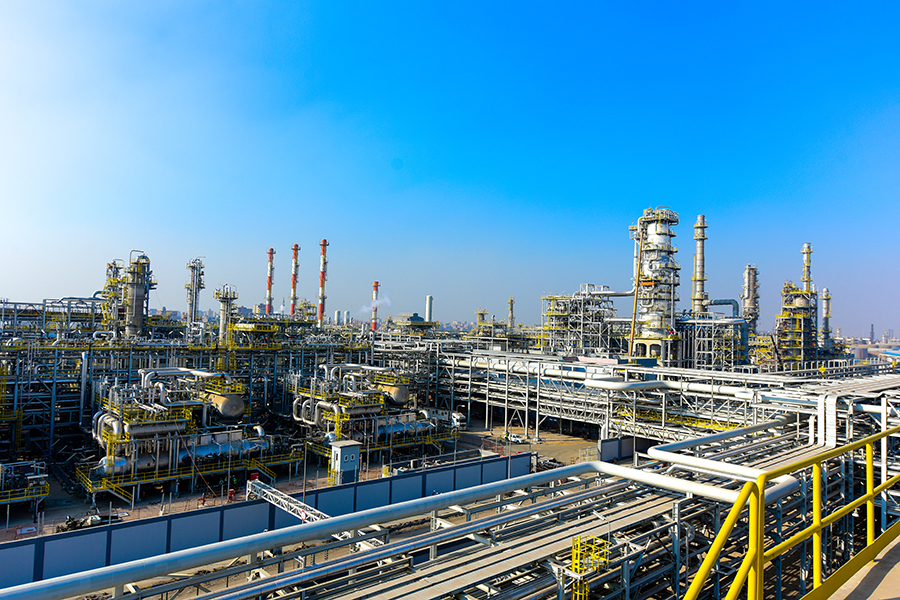
Egypt has built storage for 33 mn barrels of oil but doesn’t have the USD 2.5 bn needed to fill it, President Abdel Fattah El Sisi said at Egypt Forum 2026 last week (watch, runtime: 04:05). Once full, the facilities, built under former petroleum minister Tarek El Molla, could cover six to eight months of the country’s needs, El Sisi said, describing the tanks as empty. The government hasn’t disclosed how much oil is stored or when the tanks might be filled.

The oil bill

Much of the money that could have gone into storage capacity was instead used to pay foreign producers. The government cleared USD 6.1 bn in arrears to international oil companies in June, removing a major obstacle to investment in domestic production, and has since set up a system to pay foreign oil partners nearly USD 240 mn a month. The state found some USD 7 bn for foreign partners over two years, on top of the roughly USD 3 bn a month it needs for petroleum purchases, El Sisi said at the forum. That leaves the state choosing where its FX goes first: keeping foreign partners paid so they keep producing, covering the country’s monthly fuel needs, or building reserves against a supply disruption, he added.

Keeping production going takes priority: “Prioritizing payments to foreign producers was the right decision,” says Peter Stevenson, East Med editor at Middle East Economic Survey (MEES). Keeping investment flowing into domestic oil and gas is critical to reversing declining output and limiting Egypt’s growing reliance on imports, he tells EnterpriseAM.

Then there’s the cost of filling even part of the space: Egypt is targeting a 16 mn-barrel strategic crude reserve by year-end, with 10 mn barrels from Libya and 6 mn from Iraq on top of regular monthly supplies, at a reported cost of USD 1.36 bn. That figure assumes contracted prices of around USD 85 a barrel and excludes shipping, ins, and storage. The reserve is meant to keep refineries supplied when shipments are delayed.

That’s why Stevenson favors a slower build: “Finding another USD 2.5 bn to fill storage facilities is difficult given the pressure on foreign currency. A more realistic approach would be to build inventories gradually, potentially through supplier credit, deferred payment arrangements with Gulf producers, or inventory-backed financing,” Stevenson says.

In the meantime, the empty space could earn money: Egypt had around 29 mn barrels of spare storage across its main ports as of April, with 10 facilities on the Red Sea offered for lease and talks underway with AD Ports. Leasing spare capacity would put idle tanks to work, but barrels owned by third-party customers aren’t automatically available for Egypt’s emergency needs.

Egypt’s location and growing role as an alternative oil transit route could help attract foreign customers and bring in much-needed FX, Stevenson says. Leasing revenue is unlikely to cover the full cost of strategic inventories, he adds, with any commercial agreements needing to keep enough capacity vacant for domestic emergencies.

Closing the refining gap

The six-to-eight-month figure needs explaining: Egypt’s oil demand rose to around 1.02 mn bbl / d in 2025 from 971k bbl / d in 2024, Attaqa reports, citing Opec data. At that rate, 33 mn barrels would cover about 32 days of total demand if full, by our math. “El Sisi may have been referring to specific import requirements rather than total consumption. The more useful measure would be how many days of demand Egypt can cover for individual products, particularly diesel, gasoline, and LPG, based on actual inventories rather than theoretical storage capacity,” Stevenson notes.

Refined fuel remains a weak spot: Egypt’s reliance on imported diesel and LPG is among its biggest supply vulnerabilities, Stevenson tells us. Refinery throughput has risen considerably, but domestic output still falls short of demand for key products, he says. Strategic reserves can cushion short-term shortages from regional shipping disruptions, he adds, but they can’t protect against prolonged disruptions or sustained jumps in international prices.

The infrastructure in between

Storage is only one link in a much larger network: Crude held in reserve has to reach a compatible refinery before it becomes gasoline or diesel, with those fuels then moving through depots and distribution networks. Egypt’s Petroleum Pipelines Company operates some 6.3k km of pipelines and 155 depots, while the government is also pursuing a USD 128 mn, six-pipeline expansion spanning 317 km, which it expects to complete by early 2027. These lines widen the country’s ability to move oil and fuels, but their link to the emergency depots isn’t clear.

The bottlenecks extend beyond storage: Egypt’s refining capacity and its ability to produce enough higher-value fuels remain key bottlenecks, even as refinery utilization rates improve, Stevenson says. Moving finished products from coastal storage to inland consumption centers is another potential obstacle, he adds. “Ultimately, the effectiveness of strategic reserves depends as much on the products being stored and the distribution infrastructure as on the headline storage capacity,” Stevenson says.

Al Hamra shows what a connected system could look like. The Mediterranean terminal is undergoing a USD 457 mn expansion that aims to raise crude storage capacity to 5.3 mn barrels from 2.5 mn by December. A new pipeline from the Midor refinery to Al Hamra is designed to carry refined products to the port, complementing the existing line that takes crude to the refinery. The setup links storage, refining, and transport, but its commercial storage and export role shouldn’t be confused with ensured access to emergency reserves.

6

Also on our Radar

Cabinet greenlights a state company to build Sadat City’s dry port

The Cabinet approved a state-owned project company to build and run a dry port and a logistics zone in Sadat City under the Holding Company for Maritime and Land Transport, according to a Cabinet statement. The special purpose vehicle (SPV) will develop, operate, and manage the terminal on land allocated by the General Authority for Land and Dry Ports in Menoufia, and its mandate allows it to bring in private logistics operators to run parts of the site. No investment figure, capacity, or timeline was disclosed.

IN CONTEXT- Sadat City has been on the Transport Ministry’s radar since it began pitching dry ports to investors, and the network it belongs to now runs to 33 ports and logistics zones along seven corridors. Only two are operating: Sixth of October and El Amreya, which opened this month. Private builds are moving too: Sky Ports is developing Borg El Arab, and Medlog’s USD 130 mn Tenth of Ramadan hub is due in 2027.

Rigging up

Italian contractor Saipem and state-owned Modern Drilling Company (MDC) signed a non-exclusive MoU to look for offshore drilling prospects, starting in Egypt, with a joint committee picking the structure project by project (joint venture, consortium, or a project-specific agreement), according to a statement. No value, tender, or timeline was attached, and any extension beyond Egypt is left to both sides to agree.

IN CONTEXT- The state owns most of the driller. Egas holds 83% of MDC and Tharwa 17%, and MDC’s offshore muscle is thin next to a 70-rig fleet that is almost entirely onshore: three jack-ups, Bahari 1, and the two El Qaher rigs. But it proved it can drill deep anyway. El Qaher 2 drilled the Denise W-1 well off Port Said, which the ministry reported as a discovery of about 2 tcf of gas and 130 mn barrels of condensate. The acreage that will need that equipment is already on the table. The 2026 bid round closes 11 November for six EGPC blocks in the Gulf of Suez, Sinai, and the Western Desert and 14 December for eight Egas blocks in the Mediterranean, the Nile Delta, and North Sinai, part of a push for 160 new wells this fiscal year.

Water on the table

Egypt and the UK inked an MoU establishing a bilateral Green Growth partnership, following discussions at the Cairo Water Week, according to a statement from the Water Resources Ministry. The framework covers clean energy transition, industrial decarbonization, carbon market stimulation, water and food security, and mobilizing private green finance. The talks also covered trilateral cooperation between Egypt, the UK, and Nile Basin states, combining Egyptian experience in African water projects with British expertise and financing.

IN CONTEXT- UK support for Egypt’s green transition stands at more than USD 240 mn in grants, investments, and technical assistance, and Egypt holds British International Investment’s (BII) largest investment portfolio in Africa and its largest climate portfolio globally, according to the British Embassy statement (pdf). Over half of BII’s Egypt book in the previous strategy period went to climate finance, including over USD 300 mn committed in 2025 to the 1.1 GW Gulf of Suez wind farm and Scatec’s 1.1 GW Obelisk solar plant with 200 MWh of storage. BII is also one of 10 development finance institutions interested in the USD 520 mn Infrastructure Financing Guarantee Facility.

More on our radar

  • QNB Egypt opened the branch we flagged on El Amreya’s opening day, offering trade finance, letters of credit, and guarantees to the importers, logistics firms, and customs brokers operating inside Alexandria’s first dry port. (Statement, pdf)
7

PLANET FINANCE

MENA debt market narrows to bigger, higher-quality issuances as volume drops

Regional conflict has weighed on MENA debt markets, with bond issuance down 10% y-o-y to USD 129.7 bn in 9M 2026, LSEG said in a report seen by EnterpriseAM. But even as the ongoing geopolitical situation has roiled markets, it’s not the only factor at play: “The decline owes more to the second-order effects it set in motion across investor sentiment, interest rates, and credit spreads,” Andreas Anthes, head of multi-asset and absolute-return strategies at Mashreq Capital, is quoted as saying in the report.

Saudi Arabia led the pack, accounting for 42% of regional bond proceeds, with the government topping the region’s issuer ranking after raising more than USD 11.5 bn through a four-tranche international bond sale. The UAE followed with 26% and Qatar 13%.

Sukuk saw the sharpest drop: Regional sukuk issuance fell 39% y-o-y to USD 34.8 bn, accounting for 27% of total debt proceeds — its lowest share in five years. Market volatility has narrowed issuance windows, while sukuk can involve more complex structuring and execution than conventional bonds.

The market narrowed to bigger, high-quality transactions: GCC bond and sukuk issuance in 3Q 2026 totaled USD 34.8 bn, down 13.5% y-o-y, with dealcount falling to 45 from 136 — but average transaction size rose to USD 773 mn from c.USD 296 mn. Higher oil prices lifted inflation expectations and yields, pushing up financing costs. The US 10-year Treasury yield climbed from 4.58% at the start of 2025 to 5.31% early this month, while GCC credit spreads widened by around 60 basis points from pre-war levels. “The market has not closed. It has become more selective, favoring credit quality and penalizing weaker balance sheets,” Anthes says.

Financial institutions accounted for 47% of regional debt proceeds, followed by governments and agencies at 29%. Standard Chartered topped the bond league tables, managing USD 15.5 bn in issuance for a 12% market share. It also led regional sukuk issuance, while JP Morgan ranked second with USD 14.4 bn and an 11% share.

Renewed regional escalation remains a key downside risk. Around USD 13 bn in GCC banks’ USD-denominated debt is due in 4Q, while lower-rated issuers may have to offer higher premiums or postpone funding until 2027, Anthes explains.

MARKETS THIS MORNING-

Asian stocks traded higher today. South Korea’s KOSPI gained 3.1%, lifted by chipmakers Samsung Electronics, up 4.2%, and SK Hynix, up 5.2%. In Japan, Nikkei 225 added 1.7%.

EGX30

50,105

+3.5% (YTD: +19.8%)

USD (CBE)

Buy 56.06

Sell 56.20

USD (CIB)

Buy 56.07

Sell 56.17

Interest rates (CBE)

19.00% deposit

20.00% lending

Tadawul

9,986

+2.3% (YTD: -4.8%)

ADX

9,746

+1.1% (YTD: -2.5%)

DFM

5,864

+2.0% (YTD: -2.9%)

S&P 500

7,723

+0.6% (YTD: +12.8%)

FTSE 100

10,687

-0.8% (YTD: +7.6%)

Euro Stoxx 50

6,165

+0.8% (YTD: +6.4%)

Brent crude

USD 113.88

-1.7%

Natural gas (Nymex)

USD 2.72

+0.7%

Gold

USD 4,076

0.0%

BTC

USD 80,860

+1.0% (YTD: -7.7%)

S&P Egypt Sovereign Bond Index

1,143

+0.2% (YTD: +15.1%)

S&P MENA Bond & Sukuk

148.22

+0.1% (YTD: -2.4%)

VIX (Volatility Index)

17.52

-4.7% (YTD: +17.2%)

THE CLOSING BELL-

The EGX30 rose 3.5% at yesterday’s close on turnover of EGP 8.2 bn (27.1% below the 90-day average). International investors were the sole net sellers. The index is up 19.8% YTD.

In the green: Misr Cement (+11.5%), Telecom Egypt (+8.0%), and Cleopatra Hospital Company (+8.0%).

8

HARDHAT

Egypt’s mining compact still waiting on money and maps

Egypt’s new compact with the World Bank aims to raise mining’s share of GDP to 6% by 2030, up from under 1% currently. The national compact launched on Sunday also aims for USD 9.8 bn in mineral exports by 2040, according to the World Bank, through regulatory and fiscal reforms, better geological data, and processing hubs. What we don’t know yet is how much the bank will put in.

A global pot: The World Bank is raising its support for metals and mining fivefold to USD 19 bn over 2026-2030, a global pot that counts private capital the bank hopes to mobilize, the Petroleum Ministry said. But how much reaches Egypt isn’t set. “There’s no specific amount,” Yasser Ramadan, chairman of the Mineral Resources and Mining Industries Authority (MRMIA), tells EnterpriseAM. The bank is studying the projects that need its financing and support, he says, “and based on that, they’ll see how much they back them.”

The survey meant to tell investors where to dig was still waiting to start as of last month’s Egypt Mining Forum. Spain’s Xcalibur Smart Mapping “is still waiting on final permits for its USD 60 mn nationwide program,” CEO Andrés Blanco tells us. Its results aren’t due until end-2027, roughly three years before the 2030 deadline. As for the survey, the World Bank’s money is aimed at “technical support and infrastructure itself,” Ramadan tells us. Without solid geological data, governments tend to hand out ground on a first-come, first-served basis, which favors speculative juniors, the Organization for Economic Co-operation and Development (OECD) says in its latest paper on Africa’s critical minerals (pdf). With good data, they can run competitive tenders and secure better terms.

Then there’s the price of the data: Investors at last month’s forum were divided over who should carry that cost. In2Metals Chairman Naguib Sawiris wants the state to cover it and hand explorers the results at close to no cost. But Aton Resources CEO Tonno Vahk wants the bill shared, arguing that Egypt lacks the public money Saudi Arabia spends on its own data.

The lenders, at least, agree on what the money should do: About a week before Egypt’s announcement, the heads of the multilateral development banks met in Manila and adopted a joint critical minerals framework to “increase local value addition, accelerate private sector investments, and create jobs,” according to their joint statement (pdf). The OECD paper lists building blocks similar to Egypt’s compact: better geological information systems, updated regulatory and fiscal frameworks, and stronger links to the wider economy.

Local value addition is also where Egypt’s own numbers point. The country still imports more than USD 200 mn of silicomanganese a year at about USD 900 a ton, or at least 220k tons, by our math, despite sitting on its own manganese ore. Deputy Industry Minister for Strategic Industries Mohamed Zada said at the forum that expanded plants, drilling, and transport should replace those imports in as little as two years. Phosphate shows how much more the processed product is worth: raw phosphate sells for USD 70-140 a ton depending on grade, while phosphate fertilizer fetches USD 700-1k. Egypt holds some 3.1 bn tons of phosphate, the world’s third-largest reserves, according to the Petroleum Ministry.

The OECD backs that ambition, with a caveat. It recommends tying mining plans to local processing but warns that many midstream and downstream projects “remain economically unviable in the current global market,” and that it is “far from clear” whether governments should spend limited public funds subsidizing them.

Private explorers aren’t waiting for the lenders: Ankh Resources had spent more than EGP 500 mn in Egypt by September and plans to put in over EGP 1 bn during 2027 and 2028, CEO Mostafa Talaat told us, which would take its total past EGP 1.5 bn by the end of 2028, by our math. Second-phase drilling is now underway, “though it’s too early to announce results,” Director of Exploration Abdelhaleem Assran tells us. To fund it, the company is looking abroad, with a possible Toronto listing in 2H 2027.

The next markers are lined up: Results of the open-block tender, which were due at the forum, should come “within weeks,” Ramadan tells us. Red Sea Resources, a Canadian explorer focused on Egypt, said in September it was aiming for its own Toronto listing in January. Xcalibur can start flying within 30-45 days of getting its permits, and the compact’s 6% target falls due in 2030. Vahk’s estimate runs longer: it will take “10 years before we see the actual benefits,” he said at the forum.


OCTOBER

26-28 October (Monday-Wednesday): IEX Egypt, Egypt International Exhibition Center, Cairo.

29 October (Thursday): Monetary Policy Committee’s seventh meeting of 2026.

29 October (Thursday): Customs goes fully paperless on Nafeza registration; advance-ruling service opens.

NOVEMBER

5-7 November (Thursday-Saturday): ICA Annual Conference 2026, Cairo.

6-8 November (Friday-Sunday): Global Entrepreneurship Festival, JW Marriott Hotel, New Cairo.

7-10 November (Sunday-Wednesday): Cairo ICT Forum, Egypt International Exhibition Center, New Cairo.

10 November (Tuesday): Cityscape Egypt Forum, Cairo.

14 November (Saturday): Rolling mills’ Administrative Court challenge.

16-17 November (Monday-Tuesday): World Economic Forum’s (WEF) first dedicated business meeting in Egypt + MENA, New Capital.

DECEMBER

7-10 December (Monday-Thursday): Food Africa, Egypt International Exhibition Center, Cairo.

11-12 December (Friday-Saturday): ISER International Conference, Cairo.

17 December (Thursday): Monetary Policy Committee’s eighth meeting of 2026.

17-20 December (Thursday-Sunday): MacTech Egypt, Egypt International Exhibition Center, Cairo.

EVENTS WITH NO SET DATE

2H 2026: Operations at Deli Glass Co’s new USD 70 mn glassware factory kick off.

2026: The Egyptian-American Economic Forum.

Early November 2026: Banque du Caire shares expected to begin trading on the EGX.

2027

20 January-7 February: Egypt to host the African Games.

1-3 February (Monday-Wednesday): Agri Expo, Cairo International Convention Center.

April 2027: Tenth of Ramadan dry port and logistics hub to begin operations.

29 September - 2 October (Wednesday-Saturday): Cityscape Egypt Exhibition, Cairo.

EVENTS WITH NO SET DATE

2027: Egypt to host EBRD’s annual meetings.

2027: Egypt-EU Summit 2027.

End of 2027: Trial operations at the Dabaa nuclear power plant expected to take place.

September 2028: First unit of the Dabaa nuclear power plant begins operations.

Now Playing
Now Playing
00:00
00:00