FRA opens new FX channels for leasing and factoring houses

1

WHAT WE’RE TRACKING TODAY

Cabinet locks in FY 2026/27 industrial land rules while keeping prices under wraps

Good morning, wonderful people. We may be approaching peak Sahel season, but tell that to the Gods of News, both Old and New — there’s been no respite from what has been an unusually busy summer. This morning’s issue is macro-heavy as we dive deep into how the government is reworking its plumbing in a bid to ensure it more efficiently captures, retains, and funnels capital.

BUT FIRST- A programming note before we get underway: We’re delighted to announce this morning a three-year, multi-platform partnership with our friends at Marakez, one of the region’s leading mixed-use developers.

Our partnership is a platform for Marakez to feature current and future destinations in Egypt and beyond, telling the stories of the communities it builds and carrying that work to decision-makers across the Arab world. Marakez, a unit of Saudi Arabia’s Fawaz Alhokair Group, was a main sponsor of our inaugural EnterpriseAM Sahel Signature Series in 2025 and returned for the 2026 edition. Our new agreement expands that seasonal collaboration into a sustained, multi-format platform for Marakez’s portfolio in Egypt and beyond.

Our business relationship with Marakez may be new, but we’ve known the team leading the company for longer than is polite to say — going on 20 years now, in some cases. Dasha (a day-one reader and one of our earliest supporters) and Basil have been part of our lives since before there was a product named Enterprise. We’ve worked with Ashraf and Masa for years. We’ve coached each other’s kids and done business together; covered Marakez’s execs and had them on stage at our EnterpriseAM Egypt Forum; interviewed them on our podcast… we could go on and on, but you get the point.

Marakez and EnterpriseAM have the same goal: To build communities — including the founders, business owners and leaders, and residents shaping communities at District 5, Ramla, AEON, and destinations still to come.

Marakez sees our region the way we do: The best business stories here rarely stop at one border, with capital and talent moving steadily between Cairo and Riyadh — and Abu Dhabi, Doha, and beyond. We also share the same values and the same ambition — rooted in Egypt, but with a vision to expand across the region.

We hope you’ll join us this morning in welcoming Marakez to our family — the support of our pillar sponsors has ensured for nearly 12 years that EnterpriseAM is available to you without charge. You can read more about our partnership with Marakez here (pdf).

***

ARE YOU MORE OF A LISTENER? Morning Drive is a 10-minute summary of today’s issue crafted for you to enjoy with your morning coffee, while getting the kids ready for school, or driving through the morning rush. And if you like it, tell your friends to tell their friends. They can find us on Apple, Spotify, or wherever they get their podcasts.

***

The EnterpriseAM Egypt Forum is back — and we’re devoting the full day to the singular set of questions on everyone’s mind: What does AI actually mean for your company, your people, your economy, your own job — and your kids’ future?

Every session on stage answers one question: “So, what do I actually do about it?”

Join us on 5 October in Cairo. Seats are limited and attendance is by invitation only.

Request your invitation here.


A new land rulebook

The government has locked in its industrial land pricing and allocation roadmap through June 2027, extending a policy framework that ties state asset facilitation to operational timelines, according to a cabinet statement. The new governorate-specific tariff schedule applies to all industrial contracts signed between 1 July 2026 and 30 June 2027, though the government has yet to publish the price schedule.

The lower industrial developer rate will only apply to continuous, single plots larger than 500k sqm. If a developer subsequently splits the land into smaller sub-parcels, those plots immediately default to the higher standard pricing set for individual industrial projects, blocking developers from extracting rent on retail manufacturing land.

A three-year clock: Under the unified rules, buyers still have to complete factory construction, secure an operating license, and finalize their industrial registry within three years of receiving the plot. To ease cashflow pressures, legacy investors who have already cleared 25% of their land value can now apply to transition into the newly approved eased payment system.

REMEMBER- Last year’s industrial land pricing overhaul raised prices by as much as 250% in some locations, drawing pushback from manufacturers. We still need the new FY 2026/27 price table to see how the latest rates compare.

IN CONTEXT- The government has been pairing greater flexibility on industrial land with tighter deadlines to get factories operating. It rolled out a lease-to-own system last week to lower upfront land costs, before giving delayed industrial projects up to 18 additional months to complete construction — while giving repeat defaulters one final three-month window before their allocations are reclaimed.

Keeping refineries fed

The government has contracted for 11.5 mn barrels of crude oil for August and September, up 15% from the same period last year, Al Arabiya reports, citing an unnamed government official. The two-month procurement program carries an estimated price tag of USD 920 mn, with the state-owned Egyptian General Petroleum Corporation (EGPC) settling the bill with foreign suppliers via short-to-medium-term credit facilities to ease immediate balance-of-payments pressures. Around 6 mn barrels are scheduled to land this month during the peak summer demand window, with the remaining 5.5 mn barrels arriving in September.

Why it matters: The extra crude will help keep local refineries running through peak summer demand, allowing the country to produce more fuel locally rather than rely as heavily on higher-cost finished-product imports. Domestic production currently covers around 60-65% of petroleum-product demand, according to the official. Egypt’s refineries are already running at around 80% capacity, up from 60%, as the government leans on domestic refining to reduce reliance on imported finished fuel.

Spinalex offer undervalued

Spinalex’s board says the EGP 15-a-share offer from New Construction Chemical (NCC) and Escom for Real Estate Investment undervalues the company, after independent advisor FACT pegged fair value at EGP 17.51 a share, according to the company’s EGX disclosure (pdf). That puts the offer around 14.3% below fair value, although the board noted that the bid remains above the stock’s three- and six-month average trading prices. Shareholders will ultimately decide individually whether to tender their shares.

The gap comes down largely to Spinalex’s real estate assets. FACT’s discounted cashflow (DCF) valuation (pdf) put the stock at EGP 14.09 a share, while an adjusted net asset valuation came in at EGP 18.97. The advisor gave the latter a 70% weighting — versus 30% for the DCF — because most of Spinalex’s economic value is tied to its land and other real estate assets rather than its operating business.

REMEMBER- The NCC-Escom consortium is bidding for 13.42% of Spinalex, which would raise its ownership to exactly 33% if the offer is fully subscribed. That stops just short of the 33.33% threshold that would trigger a mandatory offer for the remaining shares.

Data point

5.8% — that’s where Egypt’s unemployment rate stood in 2Q 2026, down from 6.0% in the previous quarter, as the number of employed people rose to 33.56 mn from 33.28 mn, according to the latest Capmas data. Male unemployment eased to 3.4% from 3.6% in 1Q 2026, while female unemployment edged up to 14.4% from 14.3%.


Destination Sahel Issue III drops this week, and we’re diving into how the North Coast is adapting to a changing market.

Developers are recalibrating as buyer behavior shifts, luxury retail is carving out a bigger piece of Sahel’s economy, and the wellness and sports scene has become a summer destination on its own.

In this issue, we get into what’s actually changing on the ground, from how developers are adjusting their pitch to where to shop and how to stay active this season.

Coming straight to your inbox on Wednesday, 12 August.


PSA-

WEATHER- Just like yesterday, it’s hot in Cairo today, with a high of 36°C and a low of 25°C, according to our favorite weather app.

It’s nicer in Alexandria, with a high of 32°C and a low of 23°C.

The big story abroad

Updates from the regional war made the rounds over the weekend. Iran and Oman are “very close” to agreeing on a new shipping route through the Strait of Hormuz, but reopening it hinges on several conditions, Iranian Foreign Minister Abbas Araqchi reportedly said. An agreement requires Washington ending its naval blockade and sanctions, withdrawing regional troops, paying war reparations, and unfreezing Iranian assets, according to Mohammad Bagher Zolghadr, secretary of Iran’s Supreme National Security Council.

More strikes in the strait: The UAE claimed that Tehran attacked a carrier affiliated with its state oil company Adnoc while transiting the Strait of Hormuz. No injuries were reported.

Berkshire Hathaway starts spending: Ending Warren Buffett’s three-year selling streak, Berkshire Hathaway’s new CEO Greg Abel invested a net USD 19.8 bn in the stock market during 2Q. Abel is putting the Omaha-based company’s hefty reserves to work, highlighted by a USD 10 bn stake in Alphabet and USD 4.5 bn in stock buybacks.

Switch Inc files for IPO: Las Vegas-based data center developer and operator Switch Inc confidentially filed for a US IPO, penciling in a listing as early as November, capitalizing on demand for AI computing power. The news comes roughly one month after the firm sought to raise USD 2 bn in a private funding round led by VC fund Andreessen Horowitz.

Speaking of IPOs in the AI world: Chinese AI startup Moonshot has restructured its business and onboarded major state-backed investors to secure Beijing’s go-ahead for a Hong Kong IPO, which sources suggest is likely to take place next year. A potential listing may require unwinding the firm’s offshore structure, which had been established to raise funding in USD.

A new chapter begins at Sheraton Soma Bay.

Discover 326 beautifully redesigned rooms and suites, upgraded Beach Suites with private pools, refreshed dining options, and unforgettable wellness, family, and Red Sea experiences.

Thoughtfully reimagined by award-winning GG&Grace International, every detail is designed to inspire your next luxury escape.

2

REGULATION WATCH

FRA loosens FX financing rules for NBFIs + tightens private bond offerings

The Financial Regulatory Authority (FRA) has loosened the foreign-currency financing rules it introduced last year, widening the scope of transactions that leasing and SME-finance companies can fund in foreign currency, the authority said in a statement. The amendments revisit the framework set under Decision 318/2025 to resolve several operational bottlenecks that cropped up during its first months of implementation.

Sale-leaseback gets an FX route: Leasing and SME-finance companies can now extend foreign-currency financing through sale-and-leaseback transactions. Under the new rules, this mechanism can be utilized if the proceeds are channeled directly to funding imports, purchasing assets, or settling existing foreign-currency obligations linked to the client’s business. This adds a second route alongside the existing allowance for import financing. Both require documented proof of the underlying transaction, though freezone clients remain exempt from the documentation requirement.

Cross-border factoring upgrade: International factoring transactions will no longer necessarily depend on finding a correspondent factor. For non-recourse transactions where a correspondent factor is unavailable in the destination country, factoring firms can instead rely on banks, ins. companies, venture capital firms, or foreign financiers to safeguard transaction rights. If the factor retains recourse against the seller, FX financing can proceed even without these alternative intermediaries. Meanwhile, factoring clients operating in freezones will also be treated as external parties under the framework.

More places to raise FX: Leasing, factoring, and SME-finance companies can now source foreign-currency funding from shareholders and subsidiaries or sister companies, as well as other sources approved by the FRA. Those channels join the sector’s existing funding options, which include their own resources, commercial banks, licensed local FX dealers, and approved foreign financiers. The expansion of funding sources is designed to allow NBFIs to mobilize private-to-private foreign currency liquidity to back their local credit portfolios.

IN CONTEXT- The easing lands as regulators reshape how non-bank financial institutions (NBFIs) fund their growth. In May, the CBE barred banks from extending or renewing credit facilities to non-bank lenders unless they meet its coding and credit-reporting requirements. Early last month, it also tightened banks’ exposure to corporate and securitization bonds, part of a wider push to keep bank exposure to the fast-growing NBFI sector in check.

Also from the FRA

Private bond issuers now face a firm 30-working-day subscription deadline under a Financial Regulatory Authority (FRA) decision (pdf) published late last week. Decision 136/2026 — which modifies the baseline Decision 145/2021 (pdf) — strips issuers of the power to unilaterally extend subscription windows for stalled offerings. Instead, any extension requires direct approval from the FRA, which will only grant more time if the issuer can prove the delay will not harm its credit rating.

Vouching for collateral: Advisors on securitized offerings must now certify the quality of the underlying collateral before a transaction can close. Under the updated framework, advisors are required to sign a portfolio-quality attestation verifying that the pool of assets backing the securitization is legitimate, unpledged, and clear of competing claims that could jeopardize bondholder interests. This elevates the statutory standard of care for advisors, who were previously only required under the 2021 rules to prepare the offering’s information memorandum.

Narrowing the retail carve-out: While the FRA still requires at least 10% of any private bond offering to be allocated to investors outside the primary subscriber tranche — exempt from the typical minimum ticket sizes — this carve-out is now restricted to bonds listed on the Egyptian Exchange (EGX).

IN CONTEXT- Over the past seven months, the FRA and the EGX have rolled out a series of structural reforms in our capital markets. In January, the regulator licensed the EGX to run a futures exchange, rolled out FRA-licensing requirements for index-tracking fund managers in June, launched a new system for enforcing court and arbitration rulings on unlisted securities held at Misr for Central Clearing, Depository, and Registry (MCDR), formed a joint committee with the EGX and the Tax Authority to sort out capital-market tax treatment, and carved out an auditor-rotation exception to smooth companies’ path to listing.

(** Tap or click the headline above to read this story with all of the links to our background as well as external sources.)

This publication is proudly sponsored by

3

Capital markets

Local institutions prop up EGX in 1H as foreign selloff tests market depth

Foreign investors have net sold Egyptian equities in five of the first six months of 2026, and local institutions have absorbed nearly every part of it, keeping the EGX30 green in four of those six months, according to EnterpriseAM’s tracking of market data. Over 1H, foreign and regional investors combined offloaded roughly EGP 19.7 bn in EGX-listed stocks, with local institutions and individuals posting net purchases of EGP 19.7 bn, by our math.

July broke the streak: While July marked a reversal of the trend, with foreign investors buying some EGP 1.4 bn’s worth of Egyptian equities, pundits are penciling in a longer period of volatility. “We’re still not out of the woods,” Monsef Morsy, managing director and head of research at CI Capital, told us last week.

DATA POINT- Foreign institutions net bought EGP 3.6 bn in January, then net sold EGP 293.2 mn in February, EGP 7.4 bn in March, before net buying EGP 100 mn in April and net selling EGP 2.8 bn in May and EGP 2.1 bn in June. Foreign retail kept buying until April, recording net purchases of EGP 1.7 mn in January, EGP 19.5 mn in February, and EGP 26.7 mn in March, before flipping to a net sale of EGP 318 mn in April, then net buying EGP 25.1 mn in May and net selling EGP 5.4 mn in June.

Why foreign investors headed for the exit

Higher-for-longer USD interest rates and regional geopolitical tensions made emerging-market equities and the region’s risk profile less attractive, Thndr’s Chief Equity Strategist Amr El Alfy tells EnterpriseAM.

“The [Iran war] alone is not the explanatory variable,” Wael Abdallah, associate professor of finance at AUC’s Onsi Sawiris School of Business tells us. “The data suggests a compound trigger: the Iran escalation in March coincided with aggressive Fed pivot expectations and emerging EM-specific headwinds — Chinese growth concerns and rate anxiety. Foreign investors retreated across frontier markets simultaneously.”

Splitting the blame three ways: Abdallah attributes 50% of foreign investor exits to cyclical factors, including the interest-rate environment and regional risk; 35% to structural issues such as dealer depth, settlement times, custody friction, and research coverage; and the remaining 15% to the reputational drag from previous EGP crises. The cyclical piece is beyond Egypt’s control, he says, but the structural issues are “actionable” and largely unaddressed.

The year started with promising appetite for EGX stocks

“The strong start for the year is a self-sustaining phenomenon,” El Alfy says, pointing to cheap valuations and fresh liquidity flowing into local mutual funds.

The sentiment behind earlier momentum was on full display at a February investor gathering, where 65 global allocators managing a collective USD 5 tn met with 40 local listed companies, and the read from the room was bullish. The founder of a German family office had previously told us that Egypt offered “some of the most serious value for money on the planet,” while a regional bank’s head of equities called the market “one of the most attractive in the MENA,” noting his fund’s Egypt allocation had climbed from zero to 25% in two years.

The concerns even then were structural, not sentiment-driven — sovereign debt levels, and whether the EGP float would hold “when things are tough,” as one South African analyst put it.

Captive demand can look a lot like conviction

“The EGX’s resilience reflects price performance in a thin market, not institutional conviction,” Abdallah argues. “Without robust sell-side research coverage or deep order books, a small inflow moves prices up; that is not resilience, it is illiquidity masquerading as strength.”

“Local institutions absorbed flows because they are mandated buyers with domestic liability bases, not because they chose equities on conviction,” Abdallah says. “If foreign selling forced local players to step in mechanically, that is a sign of shallow dealer inventories and limited price discovery.” In a deeper market, foreign selling would be met by contrarian local buying on value, not absorption by default, he argues.

Is the carry trade thesis dead?

The bull case: El Alfy calls the carry trade opportunistic rather than dead. “With Egypt’s CDS at a multi-year low and EGP interest rates still firming higher and a tamed inflation profile, the carry trade makes sense today, but the potential rise in USD interest rates may have put a lid on demand for carry trade,” he says.

Abdallah argues the carry trade attracted “wrong capital: short-term, rate-sensitive, zero conviction on Egypt fundamentals,” adding that “carry traders are forced sellers in a risk-off; they do not stabilize markets.” Current EGX pricing, he adds, “no longer reflects carry-trade logic.” Valuations have re-based around inelastic local institutional demand, which he says isn’t an upgrade so much as a disconnect from global capital allocation.

What moves the needle, and what doesn’t

“Foreign capital will not return until the no-risk rate cycle stabilizes, not just because Egyptian fundamentals improved,” Abdallah notes.

Egypt’s improving CDS spread since the ceasefire matters for bondholders, not equity investors, Abdallah argues. “CDS spreads are a coincident indicator of foreign appetite, not a driver,” he says. Bondholders price default risk directly, while equity investors care about earnings growth, capital allocation, and FX pressure. “Egypt’s equity market has decoupled from its own credit spreads. That’s a data point, not a catalyst.”

Some of the more actionable levers, in his ranking — dealer market-making infrastructure (which Abdallah calls “mechanical and immediate”) custody and settlement modernization, cutting settlement from T+2 to T+1 or T+0 (which “removes friction but doesn’t drive flows”) and macro policy, which he calls a “decade-long” project. The EGX’s live derivatives market and pending short-selling and market-maker mechanisms are “necessary but not sufficient,” he says: “They solve for trader participation, not allocator participation.”

The S&P DJI question looming over all of this

“A demotion codifies what prices already suggested — the EGX is too small and foreign-hostile to justify EM weighting,” Abdallah argues. S&P Dow Jones Indices’ consultation on demoting Egypt from Emerging to Frontier market status closed last month, with a decision expected within months.

ICYMI- The exchange’s reply to S&P DJI leaned on the macro turnaround, namely easing repatriation delays, net foreign assets, reserves at highs, and a record EGP 15.6 bn day of trading volume, as evidence the market is headed for an upgrade, not a downgrade, EGX Chairman Omar Radwan told us last week.

4

Investment Watch

Gov’t prepares investment fund targeting USD 100 mn for Egyptians abroad

The government is preparing to launch a USD-denominated investment fund for Egyptians abroad next year, looking to channel record-breaking remittance inflows into a wider menu of investable assets, according to a ministry statement. The fund was announced during the seventh Egyptians Abroad Conference, where the government rolled out a wider package of financial, digital, consular, healthcare, and payment services for the diaspora.

The details: The vehicle is slated to launch as the Memphis Fund, targeting up to USD 100 mn within a year of its rollout, and will be managed by NI Capital Asset Management, a subsidiary of state-owned National Investment Bank, according to Asset Management Sector CEO at NI Capital Mohamed El Sherbini. The fund will invest exclusively in Egyptian sovereign debt instruments, with both subscriptions and redemptions strictly restricted to capital transferred from outside Egypt.

IN CONTEXT- The Finance Ministry said last year that it was preparing fixed-income and liquidity funds targeting Egyptians abroad. The new portfolio-debt vehicle is separate from the Egyptians Abroad Investment Company, a planned USD 1 bn direct-investment vehicle announced in early 2024. While the direct-investment company is designed to establish physical, real-economy projects in agriculture, trade, and manufacturing, the Memphis Fund offers a pure fixed-income option. This multi-track approach comes as remittances continue to serve as an important balance-of-payments anchor, hitting a record USD 43.1 bn in the first 11 months of FY 2025/26.

ALSO- The government is studying a new car initiative for Egyptians abroad that would offer locally manufactured vehicles at competitive prices, a government official tells EnterpriseAM. The proposed scheme is being designed under the state’s auto-localization strategy and aims to make locally-made cars attractive to Egyptians abroad compared with similar vehicles overseas, the official says.

That would mark a shift from the expat car import scheme from 2022, which allowed Egyptians abroad to import vehicles tax- and customs-free in exchange for a refundable FX deposit. The government reopened the program after the first round underperformed. The new proposal would instead try to redirect expat demand toward locally produced vehicles to support the local auto industry. No timeline, eligibility criteria, participating automakers, or pricing mechanism have been disclosed.

(** Tap or click the headline above to read this story with all of the links to our background as well as external sources.)

5

Fintech

How Balad connects global remittances to home

Egypt’s remittance boom is creating a much bigger window for the companies building the infrastructure behind it. With inflows at record highs and more money moving through formal channels, Fintech infrastructure company Balad is looking to scale the rails connecting international remittance providers with recipients here at home, while CEO and co-founder Adham Azzam sees room for the market to evolve well beyond simply sending money home.

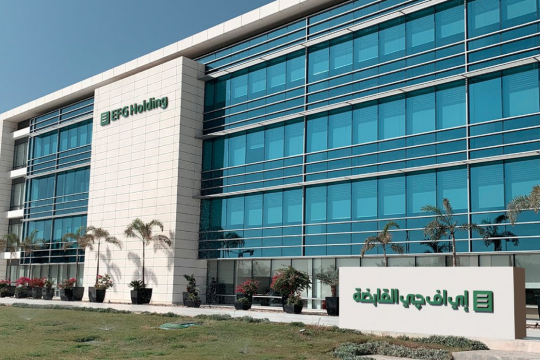
And Balad now has a heavyweight financial services player behind it: Following EFG Finance’s recent acquisition of a controlling stake in the company, EnterpriseAM sat down with Azzam to discuss how Balad fits into Egypt’s remittance infrastructure, where it plans to expand next, and how the country could build a deeper financial relationship with mns of Egyptians living abroad.

What Balad does: The Cairo-based fintech provides the infrastructure connecting international remittance companies with Egypt’s payment system, allowing regulated fintechs, exchange houses, and financial institutions abroad to send money to local bank accounts and mobile wallets or make it available for direct pickup. Balad received the Central Bank of Egypt’s (CBE) approval to operate as a remittance aggregator in 2025 under the sponsor-bank framework.

DATA POINT- Egypt received USD 43.1 bn in remittances during the first 11 months of FY 2025/26, from July 2025 to May 2026, while calendar-year inflows hit a record USD 41.5 bn in 2025. “It’s actually larger than many of our other income sources, like tourism, for example, or the Suez Canal or even our exports,” Azzam says, referring to merchandise exports.

Top of Africa: The country accounts for roughly a third of the USD 100-110 bn in remittances flowing into the continent annually, he notes. That becomes even more striking when set against the size of Egypt’s diaspora. “We have 10 to 15 mn, and they sent a record USD 41.5 bn home in 2025,” Azzam says.

Azzam puts that down partly to Egyptians’ ties to home. Many continue to view their time overseas through the lens of an eventual return, he argues. “An Egyptian who goes abroad, he has the view that he will come back. Even if he’s not coming back, he still has this in sight,” Azzam said.

Balad is trying to make moving those smaller amounts cheaper and easier. Traditional international banking infrastructure makes little economic sense for workers sending USD 100-300 home when fees can represent a significant share of the transfer. “We are an alternative to SWIFT for the small-ticket remittances to arrive in Egypt and be paid out to the beneficiaries, to the families,” Azzam said.

Balad sits between remittance companies abroad and Egypt’s financial system. Rather than operating another consumer-facing remittance app, it connects regulated financial institutions and fintechs overseas to local bank accounts, mobile wallets and money payout networks. Balad facilitates 24/7 real-time payouts into Egyptian bank accounts and mobile wallets, as well as money payouts, with Banque du Caire, Fawry, and Aman among its current payout partners.

Why it matters: Balad is trying to simplify the pipes connecting global remittance providers with Egypt. Under the previous regulatory model, overseas providers generally needed to secure approval through a local sponsor bank — a process Azzam says could take months or even years. Balad’s aggregator model gives international providers a route to connect through its infrastructure, subject to the necessary reviews and approvals.

The company is now scaling that model. Balad has signed more than 20 international partners and is applying for a direct Payment Service Provider (PSP) license under the CBE’s new licensing regime. Around 75% of Egypt’s incoming remittances originate in the GCC, with Saudi Arabia and the UAE among the largest source markets, while other major markets include the US, Italy, France, and Canada.

EFG Finance gives Balad a larger financial services ecosystem to build alongside. The company recently acquired a controlling stake in Balad, while Azzam and several existing investors remain shareholders, including First Circle Capital, Acasia Ventures and Sunny Side Venture Partners.

But Azzam sees much bigger room for Egypt’s remittance market over the longer term. Today, the financial journey typically ends when an Egyptian abroad sends money home and their family spends it. He believes the market can eventually give Egyptians abroad more ways to retain control over part of those funds and direct them toward savings and investments.

India offers a glimpse of how much further that relationship could go. Azzam points to the country as an example of a diaspora whose financial relationship with home extends beyond remittances into deposits and investments. Egypt has yet to develop a comparable relationship, leaving room to bring more diaspora savings into the domestic financial system.

That could mean building a ladder from remittances into investment. Azzam sees the potential to move from conventional transfers into emergency savings, savings accounts, EGP- and USD-denominated T-bills, precious metals funds, EGX investments, ins. and ultimately retirement products. “You have to give him a possibility to do something also with USD 50 and with USD 100, with USD 1k,” he says. The government apparently shares Azzam’s vision — as we just saw in the previous story.

But Egypt still has to compete for that money. Egyptians abroad already have access to investment products where they live, meaning Egypt needs competitive products and, crucially, easier access to them. “All these require access. They need to be able to have plumbing available for them to be able to send that money not just for payout, but also for investment,” Azzam said.

What’s next: Balad is preparing to open another major remittance corridor. The new market sits outside its existing Gulf, European, and North American corridors and will be disclosed once the relevant approvals are secured and the corridor is live. “We are working on a major corridor for Egyptians that remains under-served by formal digital remittance infrastructure,” Azzam says.

More partnerships are coming: Balad is close to signing a framework agreement with a large mobile operator for co-marketing activities aimed at bringing more remittance flows into official channels.

For Azzam, growing the formal market is the bigger reward. “Everyone who’s working in this ecosystem is interested much more in growing the pie than competing against each other. If we just put everything in the official channels, we don’t need to compete with anyone. This is already big enough,” he says.

6

LAST NIGHT’S TALK SHOWS

Last Night’s Talk Shows on mobile phone line fraud

Talk shows explored a mobile phone crisis that emerged last week, zeroing in on the high-profile “Target Case,” in which a student was implicated in a drug trafficking scheme linked to a phone line registered in his name without his knowledge. Shortly after, several citizens revealed that they had found unauthorized lines registered in their names.

Further coverage highlighted the outage of the National Telecom Regulatory Authority’s My NTRA app, which lets users check all lines registered under their name. TV host Ramy Radwan expressed his surprise at the outage on Thursday’s episode of From Maspero, expressing hope that the service would return online soon. (watch, runtime: 2:31).

A solution is coming soon: Once the National Telecom Regulatory Authority rolls out facial recognition for anyone buying a new line starting a month from now, the issue of phone lines registered under citizens’ names without their knowledge will be eliminated, House Communications Committee Chairman Ahmed Badawi told Ahmed Mousa on Ala Masouleety (watch, runtime: 4:51). He added that the regulator instructed telecom companies to update user data to ensure the problem is fully resolved.

(** Tap or click the headline above to read this story with all of the links to our background as well as external sources.)

7

Also on our Radar

SCZone’s Qantara West lands EGP 2.4 bn ready-built factory investment from Capital

Capital for Factory Management and Development will invest EGP 2.4 bn to develop a 150k sqm complex of ready-built factories and storage units for lease in Qantara West, according to a Suez Canal Economic Zone (SCZone) statement. The project is designed to give investors ready-to-use industrial and warehousing space without having to build their own facilities from scratch.

Capital will become Qantara West’s second industrial developer offering ready-built space. SCZone’s Main Development Company is already investing EGP 1 bn in a 200k sqm ready-built factory program in the zone, aimed at giving manufacturers a faster route to operation.

IN CONTEXT- Qantara West now hosts 54 projects from nine nationalities worth around USD 1.54 bn, up from 53 projects worth USD 1.5 bn when we last checked in June. Textiles and ready-made garments account for 43 of the projects.

New cities get moving

Modon Misr for Asset and Facility Management and Mwasalat Misr are setting up Mwasalat Modon Misr to operate smart urban transport across Egypt’s new cities, starting with a fleet of 200 new vehicles, according to a cabinet statement. The new company will manage transport services through central and local control rooms, with digital systems across vehicles, stations, and garages and an electronic payment system developed with the National Bank of Egypt (NBE).

The model is designed to expand gradually across more new urban communities. It will also include vehicle and passenger ins. and training programs for drivers and technical and administrative staff. The government did not disclose which cities will come first or when operations will begin.

REMEMBER- The company secured a 15-year NUCA contract in 2021 to operate around 110 buses across six new cities, with some EGP 1.5 bn expected to go into running the network and expanding its fleet. NBE took a 20% stake in Mwasalat Misr later that year.

Price pullback

Misr Aluminum has lowered its domestic selling price for August by USD 297 (EGP 15k) per ton at the factory gate, bringing it to USD 3,765 (c. EGP 190k) per ton before VAT. It’s the company’s first price cut since the start of the year, Al Aribiya reports, citing an unnamed source at the company. The move tracks a pullback in global prices, which have slipped below USD 3,200 per ton from over USD 3,730 in April, according to Trading Economics.

REMEMBER- Misr Aluminum is also known as EgyptAlum, the Nag Hammadi-based producer that landed AfDB financing last week for a solar plant to green its operations and defend its EU export share against the EU’s Carbon Border Adjustment Mechanism.

Why it matters: Prices had been frozen at an all-time company high since May after jumping some 24% in April on the back of Iranian strikes that knocked out Gulf producers Emirates Global Aluminium and Alba, pushing global prices to around USD 3,500 per ton in March. EGA resumed production on 10 July.

(** Tap or click the headline above to read this story with all of the links to our background as well as external sources.)

8

PLANET FINANCE

Hong Kong and Turkey are both making a play for the wealthy expats London and the Gulf are losing

Two financial centers that spent the last decade playing catch-up are now making a coordinated pitch — and for the same reason. Turkey rolled out a package of tax incentives for wealthy expats and investors, and Hong Kong proposed a bill that would effectively eliminate tax on performance-related income for some fund managers. Neither move happened in a vacuum: established hubs — London, Dubai, Abu Dhabi, and Singapore — have all gotten less certain over the past year, and both Turkey and Hong Kong smell an opening.

Turkey’s package — minimal inheritance tax, up to 20 years of taxfree overseas income, and an amnesty for undeclared offshore assets.

The tax terms are only half the pitch: Turkey is also selling geography and lifestyle as hard as its tax code — a bridge between Europe and Asia, shorter flights home than from the Gulf, milder summers, and a cost of living well below Dubai or London. The pitch is aimed first at wealthy members of the Turkish diaspora in the UK and Germany.

Yes, but: The Istanbul Financial Center opened in 2023 with ambitions to rival the Gulf, and still lags on global indices. Two decades of Erdogan-era currency devaluation and inflation have taught Turkey’s own wealthy to move assets out, not in — and the state’s use of corporate seizures, which has turned the state asset-management fund TMSF into a de facto conglomerate controlling more than 1k companies, is the kind of thing that gives institutional money pause.

Hong Kong’s package is narrower but more targeted at capital allocators specifically. The proposed bill would exempt performance-related income — the carried interest that private equity and hedge fund managers earn on top of management fees — from tax. That’s a direct shot at Singapore, which is now in talks to cut its own taxes to keep funds from decamping to Hong Kong. The move lands alongside an IPO revival, with Hong Kong’s headline listing this year, Zhongji Innolight’s USD 6.8 bn raise, being the market’s biggest first-time share sale in seven years.

This all comes as Dubai and Abu Dhabi’s safe-haven status gets tested by the US-Iran conflict and as London feels the squeeze of losing its non-dom regime. Yet neither challenger can match the scale of what it’s competing with: Turkey lacks the institutional density for a real relocation, while Hong Kong’s rebound leans heavily on mainland Chinese capital and a shrinking pool of non-Mandarin-speaking roles. The pitch is limited, but timing is the leverage they’re betting on.

(** Tap or click the headline above to read this story with all of the links to our background as well as external sources.)

EGX30

54,677

+0.0% (YTD: +30.7%)

USD (CBE)

Buy 49.72

Sell 49.86

USD (CIB)

Buy 49.70

Sell 49.80

Interest rates (CBE)

19.00% deposit

20.00% lending

Tadawul

10,812

-0.7% (YTD: +3.1%)

ADX

10,095

-0.3% (YTD: +1.0%)

DFM

5,945

+0.5% (YTD: -1.7%)

S&P 500

7,758

+0.6% (YTD: +13.3%)

FTSE 100

10,901

+0.3% (YTD: +9.8%)

Euro Stoxx 50

6,524

+0.3% (YTD: +12.6%)

Brent crude

USD 83.55

+1.3%

Natural gas (Nymex)

USD 2.66

+0.8%

Gold

USD 4,400

+2.3%

BTC

USD 65,036

+0.2% (YTD: -25.8%)

S&P Egypt Sovereign Bond Index

1,092

+0.1% (YTD: +10.0%)

S&P MENA Bond & Sukuk

150.98

+0.0% (YTD: -0.6%)

VIX (Volatility Index)

14.90

-1.7% (YTD: -0.3%)

THE CLOSING BELL-

The EGX30 marginally rose at Thursday’s close on turnover of EGP 14.0 bn (42.3% above the 90-day average). Local investors were the sole net buyers. The index is up 30.7% YTD.

In the green: Rameda (+9.4%), Orascom Investment Holding (+4.4%), and Ibnsina Pharma (+3.8%).

In the red: GB Corp (-2.8%), Telecom Egypt (-1.8%), and Emaar Misr (-1.7%).


AUGUST

19 August (Wednesday): Connected Banking Summit, Fairmont Nile City Hotel Cairo.

20 August (Thursday): Monetary Policy Committee’s fifth meeting of 2026.

26 August (Wednesday): Prophet Muhammad’s birthday.

SEPTEMBER

8-10 September (Tuesday-Thursday) El Alamein International Airshow, El Alamein International Airport.

10-12 September (Thursday-Saturday): Egyptian Entrepreneurship Sector Diagnostics Report Summit, El Gouna.

15 September (Tuesday): IMF to hold its eighth review of Egypt’s USD 8 bn EFF arrangement.

24 September (Thursday): Monetary Policy Committee’s sixth meeting of 2026.

27-29 September (Sunday-Tuesday): Global Conference on Population, Health, and Human Development.

28-29 September (Monday-Tuesday): Egypt Mining Forum, St. Regis Hotel New Capital.

30 September - October 3 (Wednesday-Saturday): Cityscape, Egypt International Exhibition Center, Cairo.

OCTOBER

5 October (Monday): The EnterpriseAM Egypt Forum.

6 October (Tuesday): Armed Forces Day.

10-11 October (Saturday-Sunday): Egypt Women’s Health Summit (EWHS), Cairo Marriott Hotel.

26-28 October (Monday-Wednesday): IEX Egypt, Egypt International Exhibition Center, Cairo.

29 October (Thursday): Monetary Policy Committee’s seventh meeting of 2026.

NOVEMBER

6-8 November (Friday-Sunday) : Global Entrepreneurship Festival, JW Marriott Hotel, New Cairo.

8-11 November (Sunday-Wednesday): Cairo ICT Forum.

DECEMBER

7-10 December (Monday-Thursday): Food Africa, Egypt International Exhibition Center, Cairo.

17 December (Thursday): Monetary Policy Committee’s eighth meeting of 2026.

EVENTS WITH NO SET DATE

Mid-August: IMF Board expected to decide on the seventh review of the loan program.

2H 2026: Operations at Deli Glass Co’s new USD 70 mn glassware factory kick off.

2026: The Egyptian-American Economic Forum.

4Q 2026: Banque du Caire IPO.

2027

20 January-7 February: Egypt to host the African Games.

1-3 February (Monday-Wednesday): Agri Expo, Cairo International Convention Center.

April 2027: Tenth of Ramadan dry port and logistics hub to begin operations.

EVENTS WITH NO SET DATE

2027: Egypt to host EBRD’s annual meetings.

2027: Egypt-EU Summit 2027.

End of 2027: Trial operations at the Dabaa nuclear power plant expected to take place.

September 2028: First unit of the Dabaa nuclear power plant begins operations.

Now Playing
Now Playing
00:00
00:00