Good morning, wonderful people. Goldman Sachs makes the case in today’s news well that regional risks mean we should sign up for a new IMF program when our extended fund facility expires next month. We need the external financing, the bulge bracket stalwart suggests, and we probably need the seal of approval — outside reassurance that, yes, the Cabinet and the central bank know what they’re doing.
Respectfully, I’m not sure I agree. I’d like to think we can do the right thing without the IMF holding a gun to our collective head. The numbers bear it out, and policymakers have spent the nearly three years since the March 2025 float consistently doing the right thing. (And yeah, I get it, past performance is not a guarantee of future results.)
Let’s start with the math on the balance of payments. You go to the IMF for cash when you can’t clear your FX market, and Goldman sees no external financing gap through FY 2029/30 as long as the war in the Gulf doesn’t take a turn for the worse. Net international reserves sit at USD 57.5 bn right now, remittances hit a record USD 38.2 bn in the first nine months of this year (a miracle, given all that’s happening in the GCC), and Suez Canal revenues are improving (admittedly from a very, very low base). The USD 2.3 bn or so we’ll get when we clear the final review of the current program doesn’t really move the needle.
What investors really want isn’t the IMF’s money — it’s a chaperone. Foreign bondholders always want an external babysitter because it saves them from having to trust local institutions. Given our history, I get the reflex. (And, yes, I get it: The time to raise money is … when you don’t need money.)
BUT- The Madbouly government and the Central Bank of Egypt have consistently done the right thing since the war began. When hot money bolted in October — offshore holdings of local debt dropped by roughly a third, to c. USD 20 bn from around USD 30 bn — the CBE didn’t freeze the exchange rate or ration greenbacks. It let the EGP take the hit and hiked rates 100 bps.
And that’s not all: Previous cabinets would not have had the guts to let Banque du Caire continue to market — let alone to allow Misr Life to follow.
Our training wheels have to come off at some point. Wrapping up a four-year program is supposed to mean graduating, not signing up for permanent tutelage. If the only reason investors think we’re capable of doing the right thing is a quarterly review, then we’re not the poster child for IMF orthodoxy, we’re a ward of the Fund.
Should we want technical assistance from the Fund? Yes. Another funded program? No. And if policymakers think differently? It should be a hell of a lot smaller — a token amount that phases down to no new money the next time ‘round.
None of this means investors and the business community here at home shouldn’t keep the pressure on policymakers. IMF mission chief Amine Mati didn’t use his final statement last week to lecture the central bank on rates or the EGP — he pointed straight at the fiscal soft spots, including EGPC’s balance sheet, avoiding a buildup of ruinous energy subsidies, and bringing Mostaqbal Misr under the state-ownership policy.
Buyers and sellers of FX and government paper issue a ruling on the credibility of our economic policy every weekday morning when markets open. They’re the ultimate “mission chief” assessing whether we’re on track — or going over the cliff. –Patrick
IN TODAY’S ISSUE- We talk to Misr Life Insurance CEO Moustafa Elkamash about the company’s IPO roadshow, where he makes the case for running a 126-year-old company “with the mentality of a startup.” He tells us lower rates would make MLI’s policies easier to sell, since the policies it sells compete more with bank deposits than with each other.
Goldman Sachs doesn’t see the CBE cutting rates before late 1Q 2027. It then expects 700 bps of easing through 2028, but warns that foreign holdings of local debt, already down to around USD 20 bn from about USD 30 bn at end-September, are still large enough for further outflows to pressure the EGP.
EGPC has contracted Weatherford to bring about 100 shut-in oil wells back into production within 18 months, using AI to pick fixes that won’t need a drilling rig.
Brussels’ blacklist
The EU is considering barring foreign companies found to have benefited from distortive subsidies in one public tender from bidding in any other member state, the Financial Times reports, citing three officials. “When we catch someone, they should not be allowed to simply try elsewhere,” one of the officials says. The Commission has already caught one: earlier this year, it found that state-owned Chinese rail maker CRRC had received subsidies that gave it an unfair edge in a tender for a new Lisbon metro line. The change would widen the Foreign Subsidies Regulation, which has been in effect since July 2023 and requires bidders for contracts worth at least EUR 250 mn to disclose support from non-EU governments. It’s set to be part of a package due on 9 December to cut the bloc’s reliance on China and other non-EU suppliers.
Brussels’ other list
The Investment and Foreign Trade Ministry is urging the European Commission to add us to its first list of non-OECD countries allowed to receive EU ferrous and non-ferrous metal scrap, according to a statement. The ministry submitted a technical file on metal scrap on 15 October, a day before the Commission’s feedback window on the draft closed. Three days earlier, it had tightened import rules with Decree 501 of 2026, which limits scrap imports to licensed factories and requires an annual permit and testing for every shipment. It now says it’s ready for urgent talks before a final decision.
REFRESHER- The Commission’s September draft left us off the metal scrap list, along with India, Pakistan, Morocco, Bangladesh, and Saudi Arabia, though it found we meet EU requirements for six other waste streams, from paper to glass. Losing access would hit our electric-arc-furnace steelmakers: we’re the world’s third-largest importer of EU scrap, with the bloc supplying roughly half of our ferrous scrap, sources told us in September. Exports of EU waste to countries left off the list will be banned from 21 May 2027, but the Commission will consider later requests when it updates the list.
Piping water to Amman
Orascom Construction has broken ground on a project that should supply water to 40% of Jordan’s population, according to a press release (pdf). The USD 6.7 bn Aqaba-Amman Water Desalination and Conveyance Project, which Orascom landed in April, pairs an 851k cbm / d desalination plant on the Gulf of Aqaba with a 418 km pipeline to Amman. Orascom is building the plant in an EPC joint venture with France’s SUEZ and the pipeline through a second EPC joint venture with Arab Contractors, which the project director named alongside Orascom in April. Once construction wraps in four years, Orascom and SUEZ will operate both for 26 years under the 30-year concession held by SUEZ and French infrastructure investor Meridiam.
Halan taps the bond market
Halan Consumer Finance, a subsidiary of EGX-listed MNT-Halan, has applied to the Financial Regulatory Authority to launch an EGP 30 bn securitized bond program, according to a statement sent to EnterpriseAM. It plans to issue the first tranche before the end of the year, after its consumer finance loan book grew 42% y-o-y in 9M 2026, according to the statement. Once approved, the program will give the company extra funding to cover the growth it is targeting in 2027.
PSA-
WEATHER- Cairo is carrying on with that warm-afternoon, cold-start November rhythm today, with a high of 26°C and a low of 17°C, according to our favorite weather app.
It’s a touch softer on the coast in Alexandria, with a high of 25°C and a low of 17°C.
The big story abroad
Investors in the AI trade limped into the weekend after falling share prices in New York pulled both the S&P 500 and the Dow into correction territory. Nasdaq-listed Anthropic led the way: Its shares fell 8.5% for the day.
SOUND SMART- A correction is when stock prices fall 10% or more from their most recent high. A “bear market” is when stocks are down 20% from that same high-water mark.
Squint, and it’s the worst performance we’ve seen in US markets since Covid: The S&P 500 fell for the seventh consecutive day on Friday, its longest losing streak since February 2020. The tech-heavy Nasdaq’s drop last week was its steepest since March of the same year, Reuters notes.
It may not be the end of the world for Anthropic: Meta (then called Facebook) also slumped in the days after its IPO. (We have more on Anthropic’s day two performance in Planet Finance, below.)
BUT- Analysts are watching for signs of stress in the debt that has financed much of the AI boom. And we’re talking here about more than just the debt raised to build data centers and fill them with chips: fund and portfolio managers who loaded up on leverage will be forced by the correction to liquidate positions or put up more collateral, the Wall Street Journal notes — possibly adding to the selling wave.
AND- There are signs that worries about the circular finance that underlies much of the AI buildout could be in for scrutiny. The US Securities and Exchange Commission (SEC) is probing Nvidia’s accounting, Reuters reports. The US Justice Department is also reviewing Nvidia’s USD 12.9 bn Hugging Face acquisition. It is unclear when the SEC launched its inquiry or what accounting issues it is looking into.
CLOSER TO HOME- Oil shipments through the Strait of Hormuz are dropping again as Iran strikes vessels almost daily, the Financial Times reports, citing UK Maritime Trade Operations data. Some 263 ships crossed the waterway in the week to 18 November, a roughly 15% drop from the prior week and a 20% decrease compared to two weeks earlier. Oil tankers made up 37 of those crossings, down from 52 a week earlier but level with the week before that.
Somabay continues to position the Red Sea on the international sporting map. The Somabay Open 2026 returns as an ATP Challenger 50 event, welcoming players from 14 nations to S Tennis Academy. 29 November through 6 December 2026.
With no comparable EGX-listed company investors to benchmark it against, Misr Life Insurance (MLI) has spent much of its roadshow explaining how the business works in the first place, CEO Moustafa Elkamash (LinkedIn) tells EnterpriseAM ahead of the company’s planned EGX debut next month. He also argues that conventional return on equity doesn’t capture what MLI really earns, because a sizeable chunk of its investment gains is accounted for separately.
The transaction in brief: Ultimately owned by the Sovereign Fund of Egypt, Misr Life is offering a 15% stake on the EGX, with trading set to begin in early December. EFG Hermes is quarterbacking the transaction.
So why 15% and not 20%? Misr Insurance Holding, Misr Life’s direct parent, initially planned to sell up to 20%, the figure presented to investment banks when they were invited to pitch for the mandate. Early investor meetings and market conditions prompted the holding company to bring that down to 15%, Elkamash says. Misr Life itself doesn’t need fresh capital, given its liquidity and solvency position, he adds — 100% of the proceeds from the sale of existing shares will go to the state.
MLI has been revving up its competitive metabolism since 2018. What turned into the groundwork for the IPO began under his predecessor, with investments in technology and people, Elkamash tells us. “To be a listed company, first you have to walk like a listed company and talk like a listed company for a while.” His pitch now is a 126-year-old company run “with the mentality of a startup,” where decision-making is “swift, without sacrificing governance.”
Many of the questions on the road would be fairly basic to anyone in the industry, Elkamash says. “It was not about the difficulty of the question, it’s about the level of detail that you have to go through to explain” to investors how Misr Life makes money.
At the end of the day, it’s pretty simple: Customers buy policies to save for long-term goals, whether that’s a child’s education, marriage, or retirement. The company then invests their premiums in portfolios of stocks and government debt, aiming to earn more than the returns it has promised policyholders. MLI has been doing this for more than a century, with its portfolio reflecting an investment history that goes back to policies sold in the 1920s, he says.
The company also sits on a legacy real estate portfolio that includes historic buildings in major urban centers, including Downtown Cairo’s Groppi building, Elkamash notes.
That brings us to how MLI measures its returns. Two insurers can hold the same investment and report different net profits, Elkamash explains. Depending on how each classifies the investment, a gain in its value can show up in net income or separately, in what accountants call other comprehensive income, or OCI. Misr Life looks at both. In 2025, it reported EGP 5.8 bn in net income and another EGP 6 bn in after-tax investment gains through OCI, according to its intention to float. On net income alone, Misr Life earned 19.7% on average adjusted shareholders’ equity. Count those separately accounted gains, and the return more than doubles to 40.1%. In the first half of this year, it put the two returns at an annualized 24.3% and 46.1%, respectively.
In 2025, just over half of MLI’s comprehensive return came from OCI rather than net income, according to its intention to float. Equities make up some 75% of the OCI portfolio, which keeps their swings out of net income, Elkamash says. That leaves comprehensive ROE exposed to stock market swings, with falling share prices potentially weighing on returns just as much as rising prices boost them.
SOUND SMART- Net income, which is what the dividend is paid from, is shielded by design.
And that dividend looks set to be a rich one: MLI is targeting a 70% payout ratio starting FY 2026, and Elkamash says he’s “very confident” the company can keep the payout ratio in that ballpark going forward while also meeting its solvency requirements, setting aside regulatory reserves and funding growth. The 70% includes employees’ profit share, according to the intention to float, which means shareholders will receive less than 70% of net income.
Built for rate cuts?
Lower interest rates could work in MLI’s favor, at least when it comes to selling policies. Life insurers compete more with bank deposits than with each other, Elkamash argues. “The only thing that would [make] you walk away from me is that I’m offering you 15% and you see a 28% CD in the bank.” As rates come down, that gap narrows, which could help bring in more premiums. The trade-off is lower investment income, although Elkamash says MLI’s mix of fixed income, listed and private equity and FX-denominated assets means the hit wouldn’t land on the whole portfolio at once.
Where the premiums come from
Most of MLI’s business comes from outside the capital. Some 82% of its premiums originate outside Greater Cairo, according to the intention to float, a figure Elkamash says surprised him, too, when he first joined the company in fall 2022. The GCA is “not just where the wealth is, it’s where the need is,” he says. He puts that down to the products customers are buying: endowment and single-premium policies that offer guaranteed returns, even if relatively modest, which makes them more attractive to middle- and lower-income customers than investment-linked products.
Cairo is where MLI is pushing its investment-linked products. The company secured its unit-linked license in 2025 and began selling through its own agents before adding National Bank of Egypt branches, targeting customers who already know how investing works, Elkamash says. He still sees MLI’s direct sales network, some 4.5k tied agents across 161 branches, as an advantage competitors have yet to match.
Elkamash wants to see his competitors do more to grow the market, saying insurers chasing the same bank partners are competing for “a share of the same cake. It’s just going to shift your share, but it’s not going to grow the market.”
Digital distribution is next. MLI has secured its fintech license from the FRA and is awaiting approval to roll out digital products through its own channels and partners, including digital brokers and fintechs. Consumer finance companies are also “tapping markets traditional banks cannot tap into,” which grows demand for life cover to allow lenders to cover client repayment risk, Elkamash says, adding that MLI is “making a couple of deals and talking to consumer finance all the time.”
The market itself has plenty of room to grow. Total insurance premiums account for just 0.6% of GDP here in Egypt, against 3.8% in Morocco and 1.8% in Turkey, Elkamash says. He puts much of that gap down to insurers failing to explain their products properly, arguing that “you can sell a life insurance policy without even mentioning the word ‘death.’ It’s all about financial planning, investments, and savings.”
Goldman Sachs expects the Central Bank of Egypt (CBE) to hold its overnight deposit rate at 20% until late 1Q 2027 before it resumes cutting, according to a research note seen by EnterpriseAM. Once easing starts, the bank sees 500 bps of cuts over 2027 and a further 200 bps in 2028, taking the rate to 15% by end-2027 and 13% in 2028, a path that Goldman’s Farouk Soussa confirmed to EnterpriseAM. That’s a slower descent than the 14% end-2027 rate Goldman penciled in back in September, while the 13% rate matches its estimate of Egypt’s neutral rate (the level that neither stimulates nor restrains growth).
Behind that call is Goldman’s read of the CBE’s100 bps hike on 29 October, its first since March 2024, as a precaution to limit pressure on the EGP and shore up investor confidence, with no sustained tightening cycle to follow. The move ended an 825 bps easing cycle that began in April 2025, and the CBE, which called the hike preemptive, pushed back its 7% (±2 pp) inflation target to 4Q 2027. A separate Goldman markets report, also seen by EnterpriseAM, says policymakers chose to raise rates rather than intervene in the currency market as they move toward inflation targeting.
Room to ease
The inflation numbers give the CBE that room, with headline inflation fallingfrom 15.2% in Marchto12.7% in October, helped by favorable base effects in housing and subdued food prices, Goldman says. It expects a modest rebound to around 14% by year-end before a gradual decline in early 2027. The bank also forecasts inflation of 11.1% in FY 2026/27 (below the 12.5% consensus) and 9.3% in FY 2027/28. That path assumes the region stays calm: renewed escalation in the regional conflict or higher energy prices would likely push the CBE to tighten further and delay the cuts, the bank adds.
Tighter money comes at a cost, and Goldman sees growth slowing from 5.1% in FY 2025/26 to 4.5% in FY 2026/27 as monetary conditions and external headwinds weigh, before picking up to 6.5% in FY 2027/28 and settling at 6% from FY 2028/29 onward.
External risks remain the main constraint
Goldman sees no external financing gap through FY 2029/30 as long as the conflict doesn’t escalate further, with FX reserves and bank net foreign assets still growing, supported by rising tourism receipts and remittances and a continued recovery in Suez Canal revenues. However, it sees risks increasingly skewed to the downside through three channels: costlier LNG imports if Israeli gas supplies are disrupted, weaker tourism receipts if security concerns rise, and further portfolio outflows from the local debt market. In a more adverse scenario, these could widen the current account deficit and erode FX buffers.
Portfolio flows are the most immediate risk of the three: Goldman estimates foreign holdings of local-currency debt at around USD 20 bn, down from about USD 30 bn at end-September. The selloff has cleaned up positioning, but holdings remain large enough for further outflows to pressure the EGP, the bank says.
Value in the EGP
Even so, Goldman remains bullish on the EGP, which lost more than 5% against the USD in October to trade near 55. Its valuation model puts the currency more than 30% below fair value, making it one of the most undervalued in Goldman’s frontier-market coverage, though a sustained move toward fair value would need greater market confidence in de-escalation. The bank now expects USD/EGP at 53 in three months (up from 49 previously), 52 in six months (up from 48), and 50 in 12 months (up from 46), since it expects the EGP will stay closely tied to oil prices.
Which brings us to the IMF: The external risks strengthen the case for a successor IMF program after the current Extended Fund Facility expires on 15 December, Goldman says, both as a source of external financing and as an anchor for policy credibility.
Egyptian General Petroleum Corporation (EGPC) signed a framework agreement with US oilfield services companyWeatherfordto bring around 100 shut-in oil wells back into production within 18 months, the Oil Ministry said in a statement on Friday. The plan is to use AI to select an intervention for each well that needs no drilling rig. The program covers onshore and offshore fields nationwide and sits inside the ministry’s five-year plan to lift oil and gas output through FY 2029/30. The ministry attached no volume or value to the program.
At about 5.5 wells a month, the program runs well below the591 wellsEgypt brought onstream in the two years to June, by our math. It is also the second 18-month service-major agreement this month — Halliburton agreed on 12 November to design a 50-well fracking program in General Petroleum Company’s Western Desert fields, with studies first, drilling only if the numbers hold up.
In other energy news
Italian energy services giantSaipemwill drill three wells for Burullus Gas from 1Q 2027, part of two awards worth a combined USD 181 mn that also send the rig on to Suriname in South America, the company said in a statement. Saipem did not split the total between the two campaigns.
Connecting the dots: The three wells fit the Phase 12a development project that Shell and its partners approved on 24 August. That phase also calls for three deep-water wells tied to the West Delta Deep Marine (WDDM) concession’s existing subsea infrastructure, at a previously announced cost of USD 350 mn. First gas is expected in 2028, with a predicted 150 mmcf / d plus 2.7k bbl / d of condensate.
IN CONTEXT- The WDDM concession holds 17 gas fields that have been producing since 2003, and the newest volumes in the area came through the same infrastructure. Shell’s Mina West field started up on 15 November at an estimated 160 mmcf / d. EGPC holds 50% of the operating joint venture, BG Delta 25%, and Petronas’s PICL 25%, while the WDDM concession itself splits evenly between BG Delta and Petronas. The Oil Ministry is targeting 14 Mediterranean exploration wells by the end of the fiscal year, with potential reserves of up to 12 tcf.
Talk shows focused on the strong demand for gold in the local market as global prices fell sharply. An ounce dropped to its lowest level in nearly a year on Friday, at USD 3,515. El Sora’s Lamees El Hadidi said the price of the gold pound fell to EGP 43.7k, down from EGP 60k at the start of this year.
Yesterday was an exceptional day for gold buying in the local market, Lotfy Moneeb, vice president of the Gold and Jewelry Division at the Federation of Egyptian Chambers of Commerce, said in a phone-in on the show. He added that falling prices over the past 20 days helped many people decide to buy. “Anyone who planned to buy their shabka [engagement jewelry] next month bought it today. Anyone thinking of buying bullion or gold pounds to save saw today as a chance. People rushed to buy; it sped up their decision,” Moneeb said. (watch, runtime: 7:52)
Buyers got the wrong message: Gold prices fell every day last week, then held steady locally on Saturday because global markets were closed for the weekend. Many buyers took that as a sign that gold had hit bottom and decided to buy, Moneeb said. “Some people came to believe that prices had stabilized; not everyone knew the screen had closed.” People who bought at the start of the year, when gold hit USD 5,600 an ounce, face only paper losses unless they have to sell now, Moneeb said. He pointed out that historical data suggests gold eventually returns to its previous record highs.
Gold investors are hedging ahead of the Federal Reserve decision, Hany Milad, head of the Gold and Jewelry Division at the Federation of Egyptian Chambers of Commerce, told Ala Masouleety. Commenting on the drop in global gold prices, he said the Fed is now almost certain to raise interest rates by 25 basis points at its next meeting on 9 December, which would trigger an inverse reaction in gold prices. (watch, runtime: 4:20)
The factors pressuring gold are very unlikely to continue at this pace, Milad said. He added that Fed rate hikes will reach a level that does not allow further increases, which means rates will be cut again over time. “So what we expect is that as these factors change, they will shift the balance in the markets and start tipping it back toward gold,” he said. Milad stressed that gold remains a safe haven for savings despite lower prices. He added that this wave of declines is not the first in the history of gold. (watch, runtime: 2:00)
OG Capital has cleared the EGP 100 mn capital floor for SPACs about three months after its deadline. Its board approved an EGP 90 mn increase on 18 November, taking issued and paid-in capital to EGP 100 mn through 100 mn shares at EGP 1 apiece, according to an EGX disclosure. Our friends at EFG Hermes ran the private placement behind it as promoter and underwriter, with First Abu Dhabi Bank Egypt as receiving bank.
IN CONTEXT- OG Capital listed temporarily in May and had until around 19 November to put an acquisition to a shareholder vote, with no target yet named. Its Financial Regulatory Authority-approved information memo sets the ambition at up to USD 500 mn in hospitality, automotive manufacturing and distribution, building materials, and healthcare. Its peers are late too — Grova placed 15 months after listing, and only Catalyst Partners Middle East has closed anything, two acquisitions worth EGP 2.8 bn.
Aman, still waiting
Aman Holdingis eyeing an EGX listing of 20% of its shares in 4Q 2027, the fourth date Raya Holding has set for it. The non-bank lender is in talks with two of Egypt’s largest IPO managers but has named no advisors, and CEO Hazem Moghazi says the timing rests on the company’s readiness, the market’s capacity to absorb the offering, and investor appetite, Alborsa reports. Raya first floated a 2021 debut in 2020, pushed it to 2023 with a bank already hired, then said it would not happen before 2H 2024.
Aleppo of faith
EgyptAir will fly daily to Damascus from 4 December and four times a week to Aleppo starting 6 December, restoring direct flights suspended since 2011. The schedule follows a technical and operational protocol Egypt’s Civil Aviation Ministry signed with Syria’s General Authority of Civil Aviation last Wednesday, which activates their bilateral air transport agreement and lines up safety and operational procedures with international standards, according to a cabinet statement. Both routes will use Boeing 737-800s, EgyptAir said, as Egyptian contractors and exporters position for Syria’s reconstruction push.
Anthropic gave back more than half its first-day gain on Friday, closing 7.1% above its IPO price as the AI sell-off its listing was meant to break resumed. Shares of the Claude maker fell 8.5% to USD 88.91 after trading as low as USD 83.05, five cents above the offer, leaving it worth USD 1.2 tn on shares outstanding and about USD 1.6 tn fully diluted, Reuters reports. It had opened at USD 111.50 on the Nasdaq under the ticker ANT, a 34% premium, and closed its first session at USD 97.17, Reuters reported earlier.
The Nasdaq fell 5.28% on Friday, erasing its gains for the year, and the S&P 500 lost 3.7% for a seventh straight decline, with Nvidia down 14%, its worst day in almost two years, CNN reports. AMD was also down more than 13%, CNBC reports. Thursday had closed roughly 2% lower. That extends weeks of selling triggered by Jensen Huang’s ouster as Nvidia CEO earlier this month and a Democratic midterm sweep that could bring tighter rules on AI and data centers. Anthropic’s own news did not help: Apple is building an autonomous AI agent that would rival Claude, Bloomberg reported on Thursday.
Some of that selling was Anthropic’s doing. Retail investors sold across the AI complex to fund Anthropic purchases, led by AMD, while bids for Nvidia “dried up,” Vanda Research’s Viraj Patel told Bloomberg. Retail turnover hit USD 772 mn, the highest for any IPO in Vanda’s data going back to 2012 and above SpaceX’s USD 669 mn in June. Net retail buying came in at just USD 60 mn, though, half of SpaceX’s USD 118 mn. That means retail traders were flipping the stock rather than piling in. Employees were selling too: up to 10% of their vested shares, about 315 mn, were free to trade from day one rather than after the usual 180-day lockup.
Allocations were tight. More than half of the roughly 1.2k institutional bidders got no shares at all, Bloomberg reported, and retail took about 15% of the offering, the Wall Street Journal said. Retail and institutional investors alike have taken to X to trade theories over whether bankers mismanaged the IPO process.
Why it matters: As the first frontier AI lab to list, Anthropic is now the market’s daily read on whether AI revenue can outrun AI spending. Run-rate revenue hit USD 81 bn as of 31 October, up USD 10 bn in a month. Even so, the company posted a USD 567 mn operating loss in 3Q and carries nearly USD 900 bn in computing commitments. Goldman Sachs analysts don’t see positive annual freecashflow until 2030. CEO Dario Amodei told CNBC the company wants to become investment grade and may eventually tap debt markets. Index funds are next: FTSE Russell and Nasdaq changed their rules this year to speed up the inclusion of large new listings, so ANT could join the Russell 1000 and the Nasdaq 100 as soon as December.
BACKGROUND- The company was planning to price its shares at USD 70-78 apiece, but actually priced them at USD 83 on Wednesday, the Claude maker said. The IPO raised USD 93.5 bn after underwriters took all 147 mn extra shares, USD 91.6 bn of it to Anthropic, topping SpaceX’s USD 85.7 bn in June. A USD 26 bn private placement from seven compute suppliers (AMD, Broadcom, Google, Micron, Microsoft, Nvidia, and TSMC) took the total to USD 119.5 bn. Google and Amazon will together own about 28% of the company, according to TechCrunch.
EGX30
51,458
-0.2% (YTD: +23.0%)
USD (CBE)
Buy 53.74
Sell 53.88
USD (CIB)
Buy 53.77
Sell 53.87
Interest rates (CBE)
20.00% deposit
21.00% lending
Tadawul
10,159
-0.4% (YTD: -3.2%)
ADX
9,761
-0.4% (YTD: -2.3%)
DFM
6226
+0.1% (YTD: +3.0%)
S&P 500
6,910
-3.7% (YTD: +1.0%)
FTSE 100
10,346
-1.0% (YTD: +4.2%)
Euro Stoxx 50
5,942
-2.8% (YTD: +2.5%)
Brent crude
USD 92.57
+0.6%
Natural gas (Nymex)
USD 3.41
+4.4%
Gold
USD 3,515
-4.6%
BTC
USD 60,290
+2.3% (YTD: -31.2%)
S&P Egypt Sovereign Bond Index
1,158
+0.1% (YTD: 16.6%)
S&P MENA Bond & Sukuk
148.02
-0.1% (YTD: -2.6%)
VIX (Volatility Index)
35.89
+26.2% (YTD: +140.1%)
THE CLOSING BELL-
The EGX30 fell 0.2% at Thursday’s close on turnover of EGP 6.2 bn (43.9% below the 90-day average). International investors were the sole net sellers. The index is up 23.0% YTD.
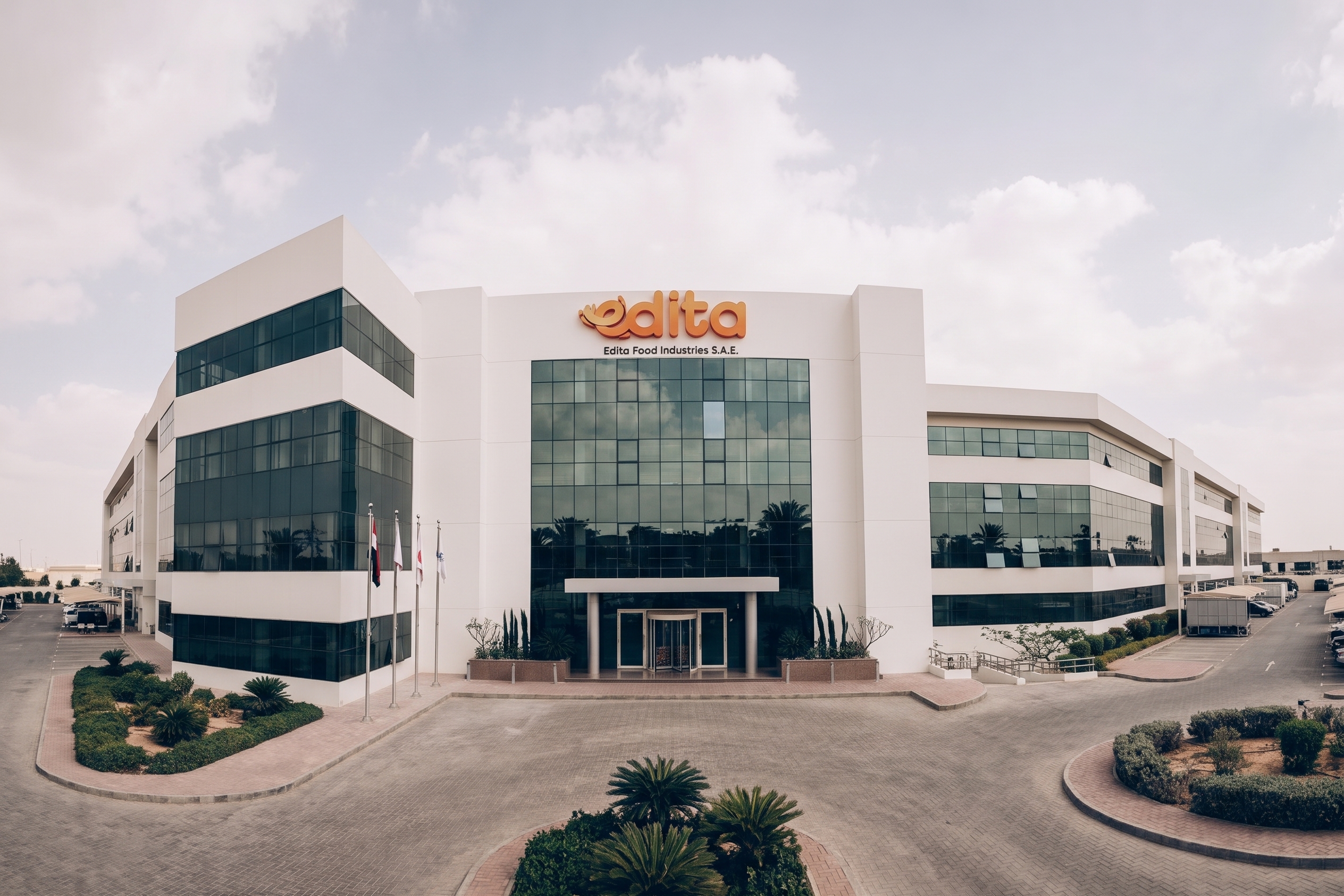
In the green: Raya Holding (+4.4%), Edita (+2.9%), and Emaar Misr (+2.3%).
In the red: Telecom Egypt (-3.5%), Qalaa Holdings (-2.2%), and Orascom Construction (-1.9%).


 Egypt Edition
 MENA+ Edition
 UAE Edition
 Saudi Edition
 AI + Innovation (MENA)
 Infrastructure


 Share Issue