CIB signs on to anchor MNT-Halan IPO

1

WHAT WE’RE TRACKING TODAY

That’s a wrap on EnterpriseAM Egypt Forum’s AI edition

Good morning, folks. Another year, and another EnterpriseAM Egypt Forum logged in the books. This year’s AI Edition asked the hard questions, and our panelists left us with plenty to think about: What does AI really cost us at work and at home? Who is accountable for it? And can Egypt build momentum in the sector? We want to thank every speaker and attendee who joined us this year and all you good people who start your day with us. It’s an honor to share our mornings with you.

Today’s issue brings you highlights from yesterday’s panels, kicking off with an update from our friends at MNT-Halan. The fintech giant’s IPO just landed its first anchor, and it’s a big one. CIB signed on for up to EGP 2 bn in shares, a stamp of approval that lands before the book has even been opened. Our friends at EFG Holding have three more IPOs lined up for the EGX this year, and Group CEO Karim Awad says one of them could be a “massive game changer.” On the telecoms front, Orange Egypt wants to be a lender. CEO Hesham Mahran told us the company is weighing its options on a foray into consumer finance.

More on all these stories and other headlines below.

***

ARE YOU MORE OF A LISTENER? Morning Drive is a 10-minute summary of today’s issue crafted for you to enjoy with your morning coffee, while getting the kids ready for school, or driving through the morning rush. And if you like it, tell your friends to tell their friends. They can find us on Apple, Spotify, or wherever they get their podcasts.

***


The Gulf’s sovereign funds and largest companies are committing bns to AI infrastructure at home and to AI companies in the US and beyond. EnterpriseAM AI + Innovation reports on where that capital goes, who controls it and what it is actually buying.

Every Tuesday and Thursday, we also cover the startups and established firms across MENA putting AI to work, and how it is changing jobs, education and the way business runs.

It’s sharp, analytical and skeptical journalism that ignores hype and is laser-focused on informing our readers, not pleasing our sources.

Sign up here to be among the first to get it straight to your inbox.

Hope for 48, budget for 54

Three CEOs, three views on the EnterpriseAM Forum stage: Egypt went into 2026 in “quite a sweet spot,” and the war hasn’t changed EFG Holding Group CEO Karim Awad’s view that the country can come out ahead. Orange Egypt’s Hesham Mahran says the war has made Egypt look like “the safest zone for investment,” and Marakez’s Dasha Badrawi says money is flowing back into Egypt through investments and remittances, with a big market enjoying “relative stability compared to previous years” as a strong pitch to global investors. The catch, Badrawi says, is high oil prices and what they do to the EGP. Egypt can still be a net gainer but only if it plays its cards right.

All three are budgeting for a weaker EGP in 2027 than the average rate of EGP 52 the market has been trading at recently. Orange Egypt is planning on EGP 53-54 to the USD, Mahran told the EnterpriseAM Egypt Forum yesterday. Badrawi puts his range wider at EGP 55-60.

Everything hinges on the war: EFG Holding’s macroeconomist sees the EGP at EGP 52-54 by end-2027 if the war drags on and at 49-50 if it ends, Awad told the audience. Mahran is hoping for 48-49 once there’s a resolution.

The same war logic shaped how far they’re willing to go on pay. Mahran said roughly 20% is a fair raise for Orange this year. Meanwhile, Badrawi expects Marakez’s shareholders to probably resist after three straight years of 20%+ raises at the company and will steer this year toward an inflation-linked raise instead, with something closer to the headline inflation currently at 14.5%. Awad said EFG is still finalizing its numbers, but it will be tiered: its lowest-paid staff members get the steepest percentage increase, in line with what Mahran and Badrawi are offering, while its highest-paid employees get no raise at all this year.

A reckoning for call centers

AI is starting to erode the advantage that built Egypt’s outsourcing industry — language, Capgemini Egypt CEO Hossam Seifeldin said at the EnterpriseAM Egypt Forum yesterday. Seifeldin predicts the call center business will face “lots of pressure” as AI systems take on multilingual work at scale. Capgemini entered Egypt three to four years ago specifically to tap that same talent pool.

Seifeldin laid out three stages of AI adoption. Most firms are in the first stage, where AI boosts productivity; the second (business process re-engineering) is just starting; and the third (new business models) is further off. At one client’s service desk, an AI tool Capgemini built already handles 56% of traffic with no human involvement. “Technology used to be an asset that depreciates with time,” he said. “AI is the first thing that is actually appreciating with time because of the knowledge that is being generated.” He argued that the bottleneck is not the technology itself; it’s inconsistent data and undocumented legacy code. Startups can build their AI foundation from scratch; incumbents are stuck modernizing first.

What’s at stake: Egypt’s outsourcing sector generated USD 5.2 bn last year, roughly 70% of the country’s digital exports, employing some 195k people across 252 companies. The government is targeting USD 12 bn in outsourcing exports and 630k jobs by 2029. Information Technology Industry Development Agency chief Ahmed El Zaher told us last month the industry “stopped being a call center business years ago” and that AI will open higher-value work in engineering R&D and data analytics. Seifeldin’s warning cuts the other way: the multilingual talent pipeline that drew global players (Capgemini included) is exactly what AI hits first.

He offered one sector where AI could be a net positive: education. Wider access to AI-delivered knowledge could ease the pressure on government budgets tied to building schools and hiring teachers while preserving the social function of physical schools, Seifeldin said.

Six blocks, one wager

Chevron will invest at least USD 88 mn to drill two exploration wells and reprocess 3D seismic data in the Lotus offshore block in the Mediterranean, under a concession agreement with state gas holding company Egas, according to a ministry statement. Lotus is about 200 km offshore in waters 2-2.8km meters deep — a stretch of the Mediterranean no one has drilled for deep exploration before. No drilling date has been announced.

Lotus is block number six in Chevron’s Mediterranean portfolio. The company is already in Narges — the 3.5 tcf gas field discovered in 2022 (Chevron 45%, Eni 45%, and Tharwa 10%) that started drilling its first production well earlier this year. It also holds North Dabaa (Chevron sold a 23% stake to QatarEnergy in 2024), North West Atoll and North Semyan (both secured by a Chevron-Shell consortium in 2025), and North Cleopatra in the West Med, where the Velox well recently showed oil indicators. Earlier this year, Chevron committed USD 114 mn to one well in the ministry’s USD 1 bn+, 14-well Mediterranean campaign. The Lotus agreement adds at least another USD 88 mn to that tab.

Why it matters: Egypt’s gas output hit an eight-year low in 2024. The country went from net exporter back to importer, and the LNG import bill keeps climbing. Lotus is a wager on a frontier zone that might help reverse that slide. Oil Minister Karim Badawi said the agreement was made possible by the state finally clearing its arrears to international partners — a move he has argued rebuilt confidence and unlocked new spending.

Data point

47.2 — that’s where the headline seasonally adjusted Purchasing Managers’ Index (PMI) landed in September, down from August’s seven-month high of 49.6 and below the survey’s long-run average of 48.2, according to S&P Global’s latest report (pdf). The reading — the ninth straight month below the 50.0 break-even mark — signals a faster contraction across output, new orders, and purchasing activity, with firms citing weaker market conditions, geopolitical disruptions, and elevated cost pressures.

The bright spot: Hiring rose for a second consecutive month — the first back-to-back employment increase in more than a year — as unfinished work accumulated for a fifth straight month and firms remained optimistic about the 12-month outlook, though confidence eased from August’s four-year high.

PSA-

WEATHER- Cairo is holding steady today, with a high of 29°C and a low of 19°C — same as yesterday as the autumn pattern settles in, according to our favorite weather app.

It’s a notch warmer on the coast in Alexandria too, with a high of 28°C and a low of 19°C.

The big story abroad

Anthropic’s lease of Google microchips has secured backing from major Wall Street banks. Bank of America, Citigroup, and Morgan Stanley have begun syndicating part of a USD 60 bn debt package — partially guaranteed by semiconductor maker Broadcom — in what stands as the largest chip-financing agreement to date. The move tests AI debt appetite as investors demand higher returns amid long-term profitability fears.

Singapore-based data center operator DayOne filed for a US IPO, marking the latest in a wave of public listing plans across the sector amid robust demand for AI infrastructure. The firm has secured more than 1.5 GW of bookings for capacity across Asia-Pacific and Europe since 2022, and closed a USD 4.5 bn Series C funding round in June.

McDonald’s is facing a proposed nationwide class-action lawsuit alleging that the company coordinates menu pricing between corporate locations and independent franchises using an AI system ​trained on nonpublic data.

*** It’s Going Green day — your weekly briefing of all things green in Egypt: EnterpriseAM’s green economy vertical focuses each Tuesday on the business of renewable energy and sustainable practices in Egypt, everything from solar and wind energy through to water, waste management, sustainable building practices and how you can make your business greener, whatever the sector.

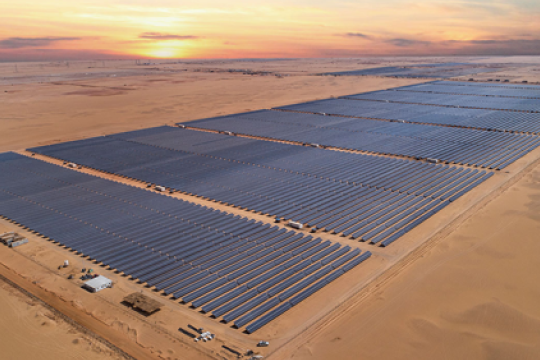
In today’s issue: We track where Egypt’s 2026 renewables plan stands. One solar plant is fully online, a second is feeding the grid in phases, and a third was scheduled for 3Q 2026.

Who said summer is over? It’s SOMATIME!

At Somabay, summer is more than a season. It’s a lifestyle shaped by endless sunshine, the beauty of the Red Sea, and experiences that bring people together. And there’s always more to enjoy.

Discover a summer that lasts a little longer.

#ItsSOMATIME #Somabay

2

The Big Story Today

CIB signs on as cornerstone investor for up to EGP 2 bn of MNT-Halan’s IPO

MNT has its first IPO anchor in CIB: Commercial International Bank (CIB) signed on as a cornerstone investor for up to EGP 2 bn worth of shares in MNT-Halan’s ongoing IPO, the EGX-listed lender said in a statement (pdf) yesterday. By our math, that’s roughly a fifth of the 20% stake on offer if the Egyptian arm prices near the USD 1 bn valuation bankers were pitching in June. The agreement is dated 24 September, about a week before MNT issued its intention to float.

A good chunk of the offering is now spoken for before the book even opens in a move that reads like an institutional stamp of approval. With Al Ahly Capital, the National Bank of Egypt’s (NBE) investment arm, having led MNT-Halan’s round in June, Egypt’s largest state-owned bank and its largest private-sector lender would both have equity exposure to the group if the IPO closes: NBE through the parent, and CIB directly in the listed Egyptian arm of MNT. Both banks are already funders of its loan book, having underwritten a EGP 4.7 bn SME securitization last year by MNT’s microfinance arm Tasaheel.

None of the IPO proceeds will end up in shareholders’ pockets, but not all of them will return to Egypt, Founder and CEO Mounir Nakhla said on stage at the EnterpriseAM Forum yesterday. Half or more of what selling shareholder MNT Investments B.V. raises will return to the listed company. The intention-to-float notice pegs the closed capital increase at up to EGP 4 bn. About a quarter goes to the group’s Turkish business, and the rest funds an acquisition in an Arabic-speaking market Nakhla wouldn’t name.

Expect some blanks to start filling today: MNT-Halan will “probably” launch the offering at a fixed valuation, Nakhla said. The offering documents are with the FRA awaiting a final stamp, according to founder and CEO Mounir Nakhla, who expects them to be public by today.

The pitch to foreign funds? Nakhla says roadshow demand has been strong, including from long-only investors with “decent-sized tickets” in the double digits. His case to funds that missed the bourse’s two-year run is that they can still get in cheap, because “an IPO by definition is priced at a discount.” Questions have also moved off the macro and onto MNT’s moat and barriers to entry, with investors “much more comfortable about the macro,” he said.

Private money marries, public money trades: Private investors are “like a marriage, and I want to say nearly a Coptic marriage,” with a huge amount of due diligence before they commit, Nakhla said. Meanwhile, public investors are making “a trade”; they want a pop and enough liquidity to exit.

Nakhla credits the market for the timing: Had MNT-Halan tried this in early 2024, it would have raised USD 30-40 mn, which “didn't make sense,” he said. By his count, the number of EGX investors has since tripled and daily trades have risen fivefold. The EGX30 is up 28% YTD as of yesterday’s close, according to market data, and has finished six of nine months in the green on trading volumes that hit a record in 3Q, driven largely by a retail investor base.

No bubble, just an underbanked market: Nakhla dismissed talk of a consumer finance bubble (as EFG Holding Group CEO Karim Awad did). Egypt has some 5-5.5 mn unique credit card holders after 35 years of bank issuance, he said, while MNT-Halan put 1.6 mn of its prepaid cards into circulation in two years. Turkey has around 40 mn. The limit now is who gets credit, not who wants it, “less demand side and it’s more supply side.”

Where the brakes are still on: MNT’s non-performing loans rose about 1-1.5% over the past 12 months, which Nakhla called “totally in check.” He says the company is keeping its brakes on the riskier products. Its most profitable line, small business loans, is the one lagging: that market “isn’t growing as much as we would like it to,” Nakhla said.

MNT is also bringing AI into credit risk. Apollo, an internal data tool built by co-founder Ahmed Mohsen, tells Nakhla each month-end which collections staff to call and about which accounts, and it’s due to roll out across “many departments” within three months. “Very soon, I think Apollo will replace me. That’s scaring me,” he said.

This publication is proudly sponsored by

3

IPO WATCH

EFG has three more IPOs lined up before year-end, including one hefty offering

Our friends at EFG Holding have three more EGX-bound IPOs up their sleeve this year, one of which Group CEO Karim Awad called “a massive game changer” for the bourse. In USD terms, the offering would probably rank among Egypt’s largest listings in the last 15-20 years, he said on stage at the EnterpriseAM Forum yesterday.

Tight-lipped but optimistic: Awad declined to name the issuer in question but said its freefloat would be “very sizable,” calling the IPO “a true test of large foreign investors coming back into the stock market.” If they make money on that listing, he expects foreign capital to start finding its way into other stocks here as well.

EFG sees a strong 4Q in the cards for the bourse, a run Awad said began with MNT-Halan’s plans to IPO its Egypt arm here at home. The holding company’s investment bank arm EFG Hermes is serving as joint global coordinator and bookrunner on the highly anticipated offering alongside Citi. The bank is also seeing “very good flow” into M&A, he said. “Entering 2026, we were very strong believers that this would be Egypt’s year,” he added, before the outbreak of the Iran war threw a spanner in the works.

REMEMBER- The EGX was home to two IPOs this year: premium grocer Gourmet’s blockbuster offering in February — which Awad credits with renewing the market’s momentum — and energy solutions firm Korra Energi, which listed in May. The pipeline also includes several state-owned enterprises, namely Banque du Caire, Misr Life Ins., and at least a handful of petroleum players.

Awad said keeping the exchange rate flexible through the war — “as painful as it is to everyone involved” — has helped keep foreign money coming in, adding that CBE Governor Hassan Abdalla “did the right thing.” For global investors, he argues, the message is that Egypt isn’t burning through reserves to defend the currency, and that’s helped keep money flowing into the EGX and FDI.

Where’s the money flowing from? FDI is arriving through greenfield and brownfield projects, rather than acquisitions, with Turkish, Chinese, and Indian investors leading the way and the Suez Canal Economic Zone booming on greenfields, Awad said.

On a regional level, Awad expects little IPO activity in the GCC for now. EFG completed a rare IPO in Kuwait with Trolley just before the war and accelerated OQ Base Industries’ book-build during the ceasefire. He still rates the UAE, Saudi, and Kuwait as well-followed markets with interesting companies and sees a much better year for them in 2027 if the war ends soon.

On the NBFIs front: If you suspect there’s a consumer finance bubble brewing, Awad doesn’t agree. There are “very low” default rates across the sector, he says, though he readily admits he’s biased given EFG’s investment in the space. If anything, microfinance is the segment that needs more support, he adds.

4

NBFI

Orange eyes consumer finance entry as it doubles down on IT exports

Orange Egypt is weighing whether to buy a consumer finance company, partner with one, or build its own, CEO Hesham Mahran said at the EnterpriseAM Egypt Forum yesterday, calling consumer finance one of his priorities for the coming years. “We have the customers, we have the data, so we have almost everything that allows us to be one of the big players in consumer finance,” he told the audience. He shared no timeline or specific targets.

Why it matters: Telcos entering consumer finance is a proven model globally; Orange already runs Orange Money across Africa and has an e-wallet (Orange Cash) in Egypt. What would be new here is owning the full lending chain rather than routing through partners, turning its customer base and billing data into a proprietary credit business. If Orange goes through with a buy or build, it would compete directly with Valu and Contact.

IN CONTEXT- The telco has already routed consumer financing through Contact Creditech since 2023, and it runs its own “Orange Taqseet” device installment program and works with CIB, Banque Misr, and Souhoola. It seems Orange wants to go beyond the partnerships it already runs: “Partnering with one of the players, acquiring one of the players, or doing it on our own — all options are there, and we are moving steadily on this front,” Mahran said. The choice “depends on the investments required, it depends on the payback of it, it depends on the value that this organization will add to us and vice versa.” He said rising cost pressure is pushing more consumers — including higher-income segments — toward financing rather than outright purchases.

Consumer finance runs alongside a parallel push into IT services, where revenue has climbed to “close to 50% or more” of enterprise revenue — up from a small base, when Orange started building the business in 2021. “We are not cheap, but we are a better value,” Mahran said, adding that Orange is open to partnering with the government on operations outside Egypt. Domestically, Orange helped deliver an AI interface for the Public Prosecution and powered “Ask Maryam,” the AI assistant at Cairo Airport.

On the investment front

The group is directing half of its Africa venture allocation to Egypt, with EUR 25 mn going to local startups out of a EUR 50 mn Africa envelope, targeting 200k young Egyptians for digital skills training, up from 10k previously. “Half of the Egyptians are youth, so this young talent can help not only the economy but also help Orange to do things better,” Mahran said. He also pointed to Egypt’s solar and wind energy as drawing hyperscalers to build AI data centers.

The push comes after a large Orange Group delegation visited last week and met with President Abdel Fattah El Sisi. The war showed the world “the importance of Egypt,” Mahran said, positioning Egypt as “the safest zone for investment” and a hub for the Middle East and Africa.

REMEMBER- Egypt wants to become a regional data center hub, but it has only 14 facilities — just 5.5% of the region’s total, according to Data Center Map.

5

Energy

ERC is piloting new AI agent to predict equipment failures

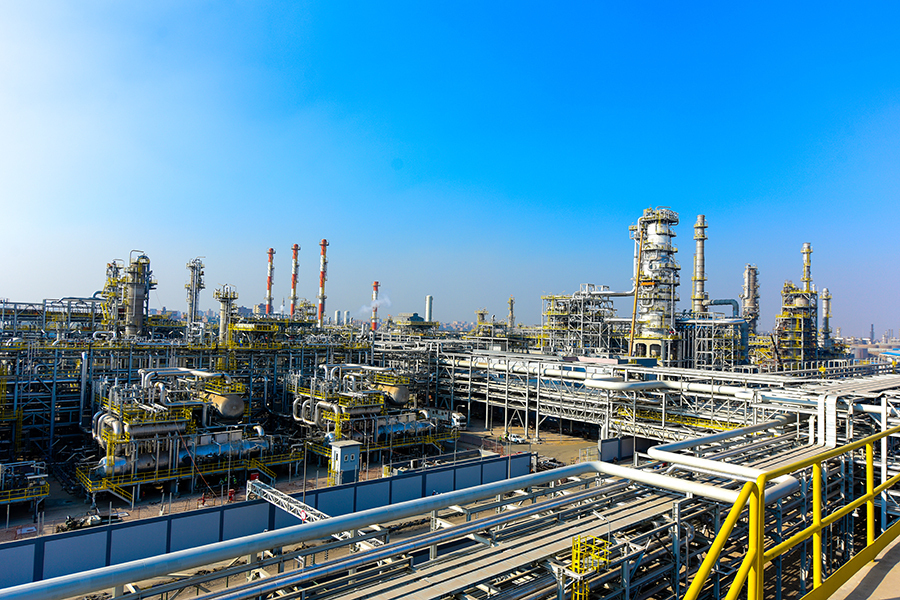
The Egyptian Refining Company (ERC) is piloting an AI agent that predicts equipment failures before they happen. The agent could help solve a big problem — every day its refinery is offline costs USD 5 mn in lost income, Qalaa Holdings founder and Chairman Ahmed Heikal said at the EnterpriseAM Egypt Forum yesterday. A restart takes seven days, so a single outage costs USD 35 mn. “We don’t have the luxury of doing it wrong,” he said.

How it works: The agent is trained to recognize “healthy and unhealthy signatures” of ERC’s machinery, head of digital transformation Ramy Harfoush told the audience. It monitors pressure, temperature, vibration, and flow data for patterns that preceded past failures and pulls together a maintenance case on its own, complete with past work orders, root-cause failure analysis reports, and even checks on whether spare parts are in stock and lead times if they aren’t. The package then goes to ERC’s maintenance and reliability engineers who validate it and schedule an outage before the equipment fails.

AI is also cutting energy use at cement plants: At ASEC Automation, a subsidiary of Qalaa’s ASEC Holding, CTO Ahmed Imam said an energy management system reads SCADA data from cement plants and recommends set points for the grinding area. Grinding consumes about 40% of a plant’s power and provides a key process for ensuring consistent fineness, protecting heavy machinery, and optimizing energy consumption.

Maintenance is also one of several areas where Qalaa is deploying AI. At Dina Farms, drones can read the color of crops to tell if they need more fertilizer or pesticide, lifting yields to 21-22 tons per feddan, up from 18 tons, Heikal said. Some of the agents Qalaa builds could eventually be commercialized, he added.

But it’s not all rosy when it comes to AI and tech: Cybersecurity is the risk that worries Heikal most. Three recent attacks saw oil and gas companies pay out “huge sums of money” to unlock their data, he told the audience, without providing further detail. He’s also wary of industries that robotics could pull back to developed markets, pointing to textiles in particular. Robots working 24 hours a day at a fraction of emerging-market unit labor costs could potentially, within a decade, reverse the flow of manufacturing investments in Egypt, he said.

6

A MESSAGE FROM AUC ONSI SAWIRIS SCHOOL OF BUSINESS EXECUTIVE EDUCATION

Culture is the hardest part of digital transformation

Technology can start the transformation; culture decides how far it goes in an organization. The Digital Leadership: Driving Cultural and Organizational Change program builds the leadership skills to assess an organization’s digital culture, design governance models for change, and lead a digital transformation roadmap. Participants work through five modules, covering foundations of digital leadership through a capstone project applying their roadmap to a real organization. The eight-session blended program runs live online and on campus , with the next cohort beginning 23 November 2026.

Applications close on 18 October 2026. Apply here

7

LAST NIGHT’S TALK SHOWS

Last Night’s Talk Shows on ACUD expected IPO

Nothing much to note on last night’s shows, but over the weekend the Administrative Capital for Urban Development’s (ACUD) IPO got some interesting airtime. ACUD expects an IPO price of around EGP 400 a share, up from an earlier estimate of about EGP 100, with an asset revaluation potentially pushing the company’s total value close to EGP 1 tn, Chairman Khaled Abbas said in an interview with El Sora’s Lamees El Hadidi (watch, runtime: 1:02:24) on Sunday. That prices ACUD at roughly 2.5 bn shares at the EGP 1 tn valuation by our math.

The price target sits on record financials: ACUD posted EGP 45 bn in net income in 2025 and generated EGP 133 bn in pre-tax income over its 10-year history, paying EGP 37 bn in taxes to the state. It has distributed close to EGP 100 bn to its three shareholders — the Defense (51%) and Housing ministries, the two main ones — and invested roughly EGP 220 bn in infrastructure and construction. All were self-funded, with no bank or state loans, Abbas said, though he noted the company could consider financing some projects if interest rates fall.

The appreciation is visible in the New Capital’s land pricing: The first residential launch sold at EGP 2.5k per sqm; residential rates now run EGP 10k-12k per sqm, while commercial space in the towers district exceeds EGP 70k per sqm. The company’s books are audited by a Big Four firm, Abbas said.

IPO path: Abbas said ACUD has resumed work on the IPO and hopes to complete the necessary arrangements during 2026, though the ultimate decision on timing and structure rests with the company’s owners. A senior government official told us in August that he expects a decision by end-2026 or 2027. Abbas said the company is weighing three options regarding the IPO structure: an IPO of the parent company, of one or more subsidiaries, or the creation of a dedicated Phase 2 company to list. Even a 5% stake could exceed the EGX’s capacity, opening the door to a dual or international listing. Abbas did not specify the offering percentage, which shrank from 5-10% to as low as 1% over the past two years.

8

Also on our Radar

CBE Governor proposed pointing 10% of African banking liquidity and 5% of international reserves into investments within the continent

CBE Governor Hassan Abdalla proposed directing 10% of African banking liquidity and 5% of international reserves toward investments within the continent, part of a broader push for structural reforms to unlock intra-African investment and retain domestic capital continent-wide, according to a statement from the central bank. The CBE has signed at least 15 MoUs with African central banks covering training and governance, the statement adds.

The rationale: African capital often leaves the continent for developed markets only to return as expensive foreign credit, Abdalla told attendees at the Alamein Africa Forum, emphasizing the need for expanded local-currency trade and an African credit rating agency to improve the continent’s access to financing on better terms.

IN CONTEXT- His calls were well-timed. The African Union-backed Africa Credit Rating Agency (AfCRA) launches tomorrow in Mauritius with a mandate to rate sovereigns, sub-sovereigns, and corporates. The thing to watch is its first ratings: whether AfCRA lowers borrowing costs will depend on securing credibility with international investors, German think tank SWP argues.

IN OTHER FORUM NEWS- The Foreign Ministry inked an MoU with Chad’s Health Ministry on pharma, biologics, and medical supplies to bolster pharma integration between Egypt and the broader African region, according to a ministry statement. The agreement is one of several the government signed during the forum this week, including with South Africa and Equatorial Guinea.

Platform for a platform

Founding members of the New Partnership for Africa’s Development (Nepad) aim to launch the Alamein Investment Platform by the African Union summit in February 2027, according to the Alamein Declaration adopted by five heads of state on 3 October. President Abdel Fattah El Sisi announced the declaration at the closing of the Nepad founding members’ summit in New Alamein, saying it put the African private sector front and center.

How it works: The platform collects private capital pledges made at the Alamein Africa Forum and tracks the total value of projects in one place, with updates every two years. The five founding states — Egypt, Algeria, Nigeria, Senegal, and South Africa — tasked the African Union Development Agency-Partnership for Africa’s Development (Auda-Nepad), the AU Commission, regional economic blocs, and African development banks with executing the initiative. It is one of four goals in the declaration. The others are a continent-wide SME fund by mid-2027, a list of investment-ready flagship projects, and an African-led risk-reduction tool within 18 months.

Why it matters: Member states have been cutting back on funding for Auda-Nepad, and the declaration flags “deep concern” over the agency’s budget squeeze. On top of that, development financing across Africa is tightening. The platform is an attempt to plug that gap using African private money instead of waiting for donors or outside funds. At the summit, El Sisi said: “True development does not come from outside; it is built through the will of the people of the continent.”

Hassan Allam investing in its people

Hassan Allam Holding partnered with Spain’s IE University to set up leadership and talent-development programs for the group’s high-performing employees, according to a press release seen by EnterpriseAM. The partnership introduces two programs, a high-potential career progression module for top performers within the group’s talent program, and an executive leadership framework designed to train current and emerging managers. The initiative aims to strengthen internal leadership capacity as the construction and engineering group expands its regional project pipeline.

9

PLANET FINANCE

> Why European central banks are relocating gold reserves out of North America

European central banks are rethinking where they store their gold. The Dutch central bank (DNB) moved 86 tonnes from North America to London, lifting London’s share of its reserves to 32.1% from 18.1% and putting it ahead of the 30.8% held domestically. The relocation leaves DNB “better prepared for severe crises,” with the gold “readily available for use in a crisis situation,” the bank said.

Wars and trade tensions are only part of it. Conflict does not “top the list” of motivations, World Gold Council Senior Market Strategist Joseph Cavatoni tells the BBC, with inflation, interest rates, and the ability to trade gold quickly also shaping reserve decisions. “I don’t get a sense that there’s an impending doom,” he said. Central banks are instead “being better educated around how to manage their reserve assets.”

The Netherlands isn’t alone. Banque de France sold 129 tonnes of gold held in New York and bought replacement gold that meets London Bullion Market Association standards in Europe, which it described as upgrading the quality of its reserves rather than changing their size.

Why London: The market offers deep liquidity and large quantities of bars meeting the London Good Delivery standard, according to the World Gold Council. The Bank of England’s vaults hold around 400k gold bars worth more than GBP 200 bn and give central banks access to that liquidity.

Looks a lot like home: Around 59 tonnes of the Dutch holdings in New York were sold and replaced with equivalent stocks in London, meaning the gold didn’t have to cross the Atlantic. About 27 tonnes were physically shipped from North America to the Netherlands, with a similar amount later moved from there to London. “With this relocation, we have improved the tradability of our gold reserves. We expect that we will never need to use them, but we do need to strengthen our resilience and preparedness,” said DNB Governor Olaf Sleijpen.

The volume is the pressure: Central banks bought an average of around 1k tonnes a year over the past four years, roughly twice the 500-tonne annual average of the preceding decade, according to the World Gold Council. Keeping it at home is expensive. “Domestic storage requires investment in physical security, audit infrastructure, and ins.; costs that can be disproportionate for smaller central banks,” Goldman Sachs research analysts tell the BBC.

REMEMBER- Gold passed USD 5k an ounce in January, setting a run of records before pulling back, and remains historically elevated. Goldman Sachs expects USD 4.9k per troy ounce by the end of this year.

Precedent, in the other direction: Germany moved 300 tonnes from New York to Frankfurt between 2013 and 2016, as part of a plan to hold half of its gold reserves domestically. Austria repatriated 90 tonnes in 2018 and now holds roughly half of its 280-tonne reserves domestically, with the rest distributed across the UK, France, and Switzerland to reduce concentration risk and maintain access to major gold markets.

MARKETS THIS MORNING-

Asian markets were mixed in early trading. Japan’s Nikkei was up around 0.2% and South Korea’s Kospi was down 0.2%. Meanwhile, US equities were broadly in the green, with the S&P 500 taking the lead.

EGX30

53,553

-0.7% (YTD: +28.0%)

USD (CBE)

Buy 52.36

Sell 52.50

USD (CIB)

Buy 52.38

Sell 52.48

Interest rates (CBE)

19.00% deposit

20.00% lending

Tadawul

10,479

-0.2% (YTD: -0.1%)

ADX

10,011

+0.4% (YTD: +0.2%)

DFM

5,908

+0.1% (YTD: +2.3%)

S&P 500

7,774

+0.7% (YTD: +13.6%)

FTSE 100

10,498

+0.3% (YTD: +5.7%)

Euro Stoxx 50

6,242

+0.1% (YTD: +7.7%)

Brent crude

USD 100.32

-1.9%

Natural gas (Nymex)

USD 3.08

+0.3%

Gold

USD 4,170

+0.3%

BTC

USD 85,971

-0.5% (YTD: -1.9%)

S&P Egypt Sovereign Bond Index

1,125

+0.1% (YTD: +13.3%)

S&P MENA Bond & Sukuk

146.49

+0.3% (YTD: -3.6%)

VIX (Volatility Index)

15.52

+1.4% (YTD: +3.8%)

THE CLOSING BELL-

The EGX30 fell 0.7% at yesterday’s close on turnover of EGP 9.5 bn (17.6% below the 90-day average). Local investors were the sole net buyers. The index is up 28.0% YTD.

In the green: Palm Hills Developments (+1.5%), E-finance (+1.0%), and Heliopolis Housing (+0.7%).

In the red: Misr Cement (-5.5%), Edita (-2.9%), and Cleopatra Hospital Company (-2.6%).

10

Going Green

Egypt’s year-end renewables plan rests on three solar plants, and one of them is fully online

With three months left in the year, Egypt’s 2026 renewables plan rests on three solar plants — one is confirmed as fully running. The 2026 goal is to reach 11.2 GW of total installed renewable energy capacity and 1.2 GWh of total battery storage capacity. As of July, installed renewable capacity stood at 9.5 GW, with 500 MWh of battery storage, Electricity Minister Mahmoud Esmat said in a Cabinet briefing. That leaves 1.7 GW of solar and 720 MWh of storage to be added by December.

Three projects were on the docket to connect this year. A June grid review chaired by Prime Minister Mostafa Madbouly listed the three as Scatec’s Obelisk phase two , Amea Power’s Abydos 2, and Infinity Power and Hassan Allam’s Nefer Benban. Combined, they should add 1.8 GW of solar and exactly 720 MWh of storage, slightly surpassing the year’s capacity target and matching the storage target.

The projects

Obelisk phase two was connected in August, completing one of the three projects. Phase one of Obelisk has been running since 23 February (with 561 MW of solar and 200 MWh of storage), while phase two reached commercial operations on 12 August, according to Scatec, adding 564 MW. Phase two completed the 1.1 GW plant and its 100 MW / 200 MWh battery.

Abydos 2 is the largest of the three: Amea had targeted beginning commercial operations in June for the 1 GW plant and its 600 MWh battery. By mid-June, the substation was energized and work to connect the plant to the national grid was underway, according to an Electricity Ministry statement. In a 13 July post, Amea announced the battery and 500 kV substation as commissioned, with phased power dispatch underway to the grid of the Egyptian Electricity Transmission Company (EETC). Trial operations began in early September, with commercial operations targeted for end-September; there have been no further announcements about that timeline since then. The plant sells to EETC at USD 0.028/kWh under a 25-year power purchase agreement.

Nefer Benban is the smallest. The 200 MW plant and its 120 MWh battery were due to start commercial operations in 3Q 2026, with a bridge loan from the European Bank for Reconstruction and Development in April set to fund construction. Its sister project, the 1 GW Nefer Minya with 600 MWh of storage due 30 September 2027, received a golden license from the Cabinet in August, according to a statement. At Benban, a mid-August update from Hassan Allam shows work still underway. There is no public confirmation yet that the plant reached commercial operations by the end of 3Q 2026 on 30 September.

Abydos 2 and Nefer Benban started out on earlier schedules. The Cabinet’s July 2024 approval of Amea’s additional projects, including the 1 GW plant, slated them for before summer 2025, according to a report from the Cabinet’s Information and Decision Support Center (IDSC) (pdf). In June 2025, the Cabinet moved Abydos 2’s commercial operation date to June 2026 and approved building it as a single phase. The Nefer agreements approved in November 2024 called for 300 MW at Benban and 900 MW at Wahat, both with trial operations in 2025. The final agreements a year later cut Benban to 200 MW for 3Q 2026 and moved the larger plant to Minya at 1 GW for 3Q 2027.

Standalone storage comes later. Amea signed construction contracts in June for the 1 GWh Nefertiti and 500 MWh Horus battery projects, both due on the grid by end-2027. The national storage target for 2028 is 14.3 GWh.

Energy plans

The long-term goal: The government is aiming to achieve 45% renewable energy generation by 2028, and 2026’s goal is the smallest increment. The capacity timeline we reported in August expects 5.6 GW to be added in 2027 and almost 11 GW to be added in 2028.

The goals for 2026 were adjusted throughout the year. In February, the plan was to add about 3 GW of new solar for 2026 and 600 MWh of storage ahead of the summer peak, according to a presidency statement. In early March, the presidency cut that to 2.5 GW of renewables over the same window. On 8 July, Esmat set this year’s grid additions at 2.2 GW of renewables and 1.3 GWh of storage. The three figures cover different goals and timelines; the February statement only referred to adding solar energy before the summer, while the March statement had the same timeline but referenced renewable energy (not just solar), and the June statement referred to renewable energy added over the entire year.

Energy research group Ember expects Egypt to add about 2 GW of solar this year, up 176% from 2025 and second in Africa only to South Africa, according to a summary from the IDSC. The forecast covers all of 2026 and includes rooftop and other distributed systems, which official data often misses, it reads. That gap shows up across the continent. Ember puts Africa’s 2025 additions at about 12 GW, against 6.2 GW from the International Energy Agency and 4.6 GW from the International Renewable Energy Agency.

OUR TAKE- On the ministry’s own numbers, Egypt needs all three plants online to hit 11.2 GW by December. Obelisk 2 and a fully running Abydos 2 get it to within about 136 MW. The rest falls to Nefer Benban, whose 3Q 2026 date has passed with no public word on commercial operations.


OCTOBER

6 October (Tuesday): Armed Forces Day.

10-11 October (Saturday-Sunday): Egypt Women’s Health Summit (EWHS), Cairo Marriott Hotel.

19-24 October (Monday-Saturday): Egypt 2026 Forum, The St. Regis New Capital.

26-28 October (Monday-Wednesday): IEX Egypt, Egypt International Exhibition Center, Cairo.

29 October (Thursday): Monetary Policy Committee’s seventh meeting of 2026.

NOVEMBER

6-8 November (Friday-Sunday) : Global Entrepreneurship Festival, JW Marriott Hotel, New Cairo.

8-11 November (Sunday-Wednesday): Cairo ICT Forum.

10 November (Tuesday): Cityscape Egypt Forum, Cairo.

DECEMBER

7-10 December (Monday-Thursday): Food Africa, Egypt International Exhibition Center, Cairo.

17 December (Thursday): Monetary Policy Committee’s eighth meeting of 2026.

EVENTS WITH NO SET DATE

2H 2026: Operations at Deli Glass Co’s new USD 70 mn glassware factory kick off.

2026: The Egyptian-American Economic Forum.

4Q 2026: Banque du Caire IPO.

2027

20 January-7 February: Egypt to host the African Games.

1-3 February (Monday-Wednesday): Agri Expo, Cairo International Convention Center.

April 2027: Tenth of Ramadan dry port and logistics hub to begin operations.

29 September - 2 October (Wednesday-Saturday): Cityscape Egypt Exhibition, Cairo.

EVENTS WITH NO SET DATE

2027: Egypt to host EBRD’s annual meetings.

2027: Egypt-EU Summit 2027.

End of 2027: Trial operations at the Dabaa nuclear power plant expected to take place.

September 2028: First unit of the Dabaa nuclear power plant begins operations.

Now Playing
Now Playing
00:00
00:00