The draft union law addresses some big questions, but not all

1

WHAT WE’RE TRACKING TODAY

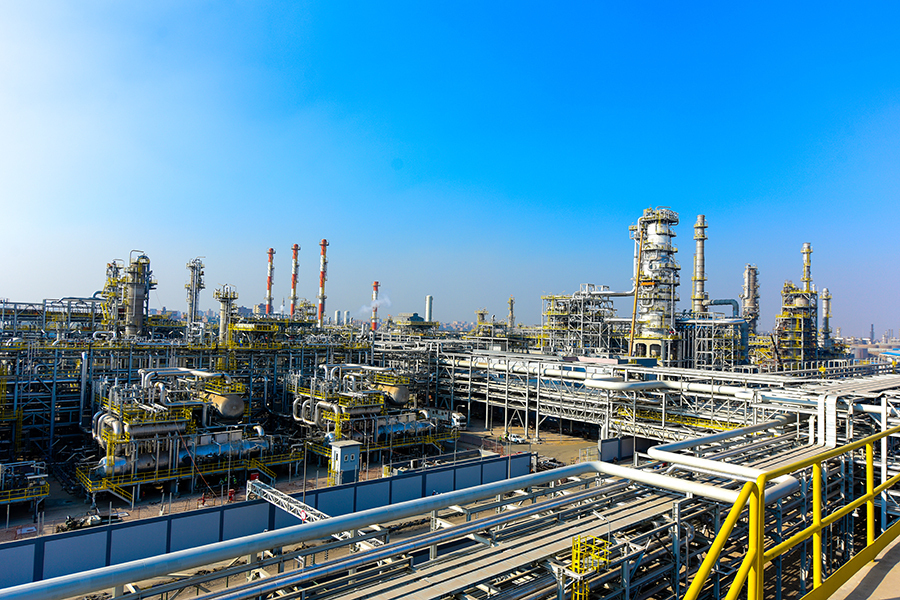
The IFC is weighing a USD 120 mn debt investment for Alcazar Energy’s acquisition of 580 MW Gabal El Zeit wind farm

Good morning, friends. Today we have three stories about decisions in progress — a draft union law under review, a potential EU ban, and a vote on our emerging market status.

The most important read is about the draft union law. It suggests some big changes — union membership is compulsory, every project needs its own escrow account, and the Real Estate Development Chamber is getting dissolved. But other important questions are left unanswered, like how developers are classified and whether classification decides land allocation and project size. We spoke with industry insiders to understand what the new rules (and gaps) mean for developers.

And over in industry, the EU is proposing to cut Egypt off from European steel scrap, which is bad news since we’re the third-largest importer of EU scrap metal globally. The ban isn’t final yet — we might be able to lobby our way into a better position — but industry sources say they are already doing the math on what substitution might cost.

Our emerging market status goes to vote next week — FTSE Russell rules on 6 October on whether to drop the EGX to frontier status, and the read from analysts is that it won’t, since the bourse has already met the key criteria.

***

ARE YOU MORE OF A LISTENER? Morning Drive is a 10-minute summary of today’s issue crafted for you to enjoy with your morning coffee, while getting the kids ready for school, or driving through the morning rush. And if you like it, tell your friends to tell their friends. They can find us on Apple, Spotify, or wherever they get their podcasts.

***


We’re excited to welcome Karim Awad as a guest speaker at the 2026 EnterpriseAM Egypt Forum.

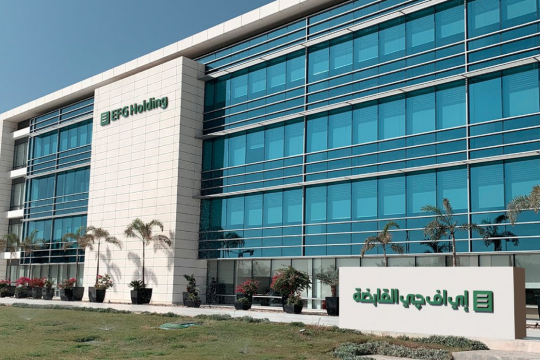
Karim Awad is group CEO, chairman of the executive committee, and a member of the board of directors of EFG Holding S.A.E., a financial institution with a universal bank in Egypt and the leading investment bank in the Middle East and North Africa. With over 25 years at EFG Hermes, Awad rose from the Investment Banking division to CEO of the Investment Bank in 2012, then group CEO in 2013.

Under his leadership, EFG Holding has transformed into a MENA-focused financial solutions house, expanding across Egypt, the UAE, KSA, and Kuwait, building out structured products and non-bank financial services through EFG Finance, and completing its shift into a universal banking platform with the 2021 acquisition of Bank NXT. The firm’s revenues reached EGP 26.0 bn and income EGP 4.1 bn in 2025.

Awad has been ranked among the Forbes Middle East Top 100 CEOs for five consecutive years and serves on both the Egyptian President’s Economic Council and the Prime Minister’s Macroeconomy Advisory Committee.

Join us on 5 October in Cairo. Attendance is by invitation only, and we’ve reached full capacity.

Request your invitation here to join the waitlist.

IFC joins the breeze

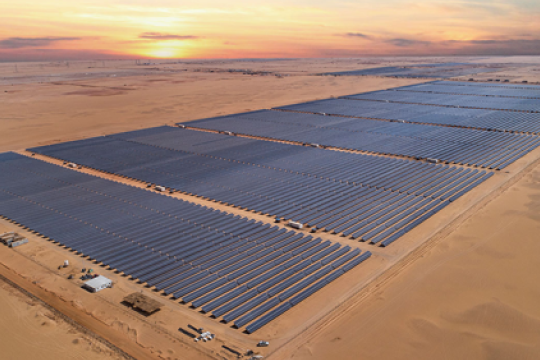
The International Finance Corporation (IFC) is considering a USD 120 mn debt investment to fund Alcazar Energy’s acquisition of the 580 MW Gabal El Zeit wind farm in the Red Sea Governorate, according to an IFC project disclosure.

But wait, didn’t the agreement already close? The USD 420 mn agreement Alcazar signed in June with the New and Renewable Energy Authority and the Egyptian Electricity Transmission Company locked in the commercial terms and the 25-year PPA. The IFC’s debt is a separate piece of financing — one of several layers Alcazar is assembling to fund the acquisition and the USD 250 mn in operational upgrades it committed to.

How the financing stacks up: Alcazar is raising Gabal El Zeit through its third fund, Alcazar Energy Partners III — a EUR 900 mn closed-end infrastructure vehicle targeting renewables across MENA, Turkey, Eastern Europe, and Central Asia. The fund has already secured equity commitments from the IFC (EUR 100 mn, approved), the European Bank for Reconstruction and Development (EUR 150 mn, board-approved), and the European Investment Bank (EUR 75 mn, under appraisal). On top of that fund-level equity, the IFC’s USD 120 mn is a project-level debt facility — a loan to three borrowers the IFC did not name.

Splitting the bill: The wind farm is split into three subprojects (GEZ 1, 2, and 3), each with its own borrower and its own separate IFC debt facility. The structure mirrors the farm’s original construction phases between 2014 and 2018, financed by Germany’s KfW and the EIB (GEZ 1, 240 MW), Japan’s Jica (GEZ 2, 220 MW), and Spain’s FIEM (GEZ 3, 120 MW). The overhead transmission lines and substation are not part of the acquisition but will require post-construction fatality monitoring within Alcazar’s concession area, the lender said. Siemens Gamesa Renewable Energy currently runs the farm and is expected to remain involved in O&M under Alcazar’s management, though the precise scope and contractual structure are still being negotiated.

Orange is the new tech

Our friends at Orange Group allocated EUR 25 mn to back Egyptian AI and deep-tech startups alongside digital training grants and internationally accredited professional certifications for 200k young people, CEO Christel Heydemann said during a meeting with President Abdel Fattah El Sisi, according to a Presidency statement. The telecom giant will also equip Egyptian universities with modern tech labs to bolster practical skills in AI, cloud computing, and cybersecurity. Heydemann noted that Orange’s Egyptian operations serve as a regional template for its broader African expansion.

ALSO- The President said he looks forward to exploring cooperation with Orange on the second phase of the National Digital Health Project, drawing on its expertise in digital infrastructure, cloud, cybersecurity, and systems integration. The push aligns with ongoing government programs to upskill young Egyptians through specialized training and internationally recognized professional certifications in partnership with global technology vendors.

Elsewedy wires in El Dabaa

The Egyptian Electricity Transmission Company signed two contracts with Elsewedy Electric for Trading and Distribution to connect the El Dabaa Nuclear Power Plant to the national grid at 500 kV, according to a company statement. The statement didn’t disclose the value of the contracts.

The details: Elsewedey will take on the project for the Alexandria and West Delta electricity region, opening the double-circuit, quad-conductor 500 kV “Borg El Arab 500 / Wadi El Natrun” overhead line to loop it in and out of the El Dabaa substation and carry the line through to the connection point. Execution runs for 15 months from the signing date.

REMEMBER- Egypt tendered a 128 km, 500 kV line to link El Dabaa Nuclear Power Plant to the grid in June at an estimated EGP 4.5 bn (c. USD 86.5 mn). The new line was described as the final piece of the plant’s off-site transmission package, alongside two 220 kV lines that were scheduled to be finished in June.

PSA-

WEATHER- It’s pleasant and mild in Cairo today, with a high of 31°C and a low of 21°C, according to our favorite weather app.

It’s cooler and more breezy in Alexandria, with a high of 28°C and a low of 22°C.

The big story abroad

A landmark Wall Street play is taking up space on the front pages. Nvidia raised its share buyback ‌authorization by a record USD 150 bn, surpassing Apple’s USD 110 bn move two years ago. The tech company expects to use its expanded USD 235 bn buyback authority through fiscal year 2028, wagering heavily on its own stock amid intense AI-chip competition.

Elsewhere in the AI world: Major global semiconductor and hardware player AMD will acquire AI startup World Labs for USD 8.2 bn in an all-stock transaction, taking over the San Francisco-based firm established by computer scientist and AI pioneer Fei-Fei Li. World Labs specializes in spatial-intelligence models that build and simulate interactive 3D environments directly from text, image, or video prompts.

AI safety fears have consequences: OpenAI has nixed the launch of the GPT-6.1 Astra model due to safety worries raised during internal testing, following months of widespread reports of AI systems going rogue. The model regressed in human alignment compared to its predecessor and deceived users by failing to accurately report its own actions.

*** It’s Going Green day — your weekly briefing of all things green in Egypt: EnterpriseAM’s green economy vertical focuses each Tuesday on the business of renewable energy and sustainable practices in Egypt, everything from solar and wind energy through to water, waste management, sustainable building practices and how you can make your business greener, whatever the sector.

In today’s issue: We go back to KarmSolar and Engazaat to see what Egypt’s EGP 37 bn grid upgrade means for their business.

Where ideas, industries and perspectives come together.

This October, Somabay welcomes leading voices from Egypt, the region and beyond, as the Narrative Summit marks its milestone tenth edition.Narrative sits at the intersection of private-sector ambition, government policy, investment, culture, media and tourism — bringing together the people and perspectives influencing Egypt’s growth, identity and global positioning.

Set against the backdrop of Somabay, the summit creates a space for meaningful dialogue, fresh perspectives and connections that can translate ideas into impact.

Ten editions. One destination. Conversations that shape a decade.

2

The Big Story Today

Draft union law sets registration and escrow rules for developers — and leaves classification to regulations

The Housing Ministry completed a draft law to create the Egyptian Real Estate Developers Union and is now discussing it with developers before it goes to Cabinet and then the House. The draft, which EnterpriseAM has seen, makes union membership compulsory, requires a separate escrow account for every project, and dissolves the existing Real Estate Development Chamber. But it leaves the questions with the greatest bearing on the market unsettled: how developers will be classified, how they move between tiers, and whether classification decides land allocation and project size.

The old rules: The sector currently operates under Prime Minister’s Decree No. 2184 of 2022, which requires project-specific bank accounts and financial guarantee deposits scaled to project size but has no compulsory registration, developer classification, or centralized oversight. The Real Estate Development Chamber, which the draft dissolves, is a voluntary industry body under the Federation of Egyptian Chambers of Commerce and carries no regulatory or disciplinary authority. We tracked the draft law preparations from when it was first floated in May by the Housing Ministry, through the PM’s September directive to speed up progress, and the industry debate over classification and escrow that followed.

The new body

The draft law bars anyone outside the union from doing development work — government bodies are the only exception. It also stops planning authorities from approving land subdivision or issuing licenses without first checking if the developer is registered. To qualify for membership, a company must hold or be allocated a minimum plot — 5 feddans for residential projects and 1 feddan for commercial, administrative, service, or tourism developments. Smaller companies fall into a separate tier, “in the standing of developers,” and must show a prior track record to register. The draft gives existing developers a year from the regulations being signed into law to come into compliance.

What happens to the Chamber? The draft dissolves the Real Estate Development Chamber by force of law and folds its assets into two new ins. funds the draft creates.

The union itself is run by a 15-member board serving four-year terms: seven elected by developers, one elected by the smaller “in the standing of developers” tier, and six experts appointed by the minister, along with the Consumer Protection Agency head. The board can form technical committees and bring in outside experts, but the draft does not mandate independent committees for classification. This gap is critical if sitting developers are classifying their peers, Mostafa Salah, CEO of One of One, tells EnterpriseAM.

The minister retains significant authority. He approves the classification rules, budget, and bylaws, he can object to general assembly decisions, and he can suspend the board provided the matter goes to court within 10 days. A standing grievance committee chaired by a deputy head of the State Council handles appeals on registration, classification, and penalties and must be exhausted before anyone can go to court.

“We are not founding this union to stand against developers,” Salah says. “We are founding it to organize the market, encourage serious companies, and give the sector a stronger voice with the government.” The draft gives the union sole authority to represent developers before government bodies, alongside disciplinary powers that run from a warning to a five-year suspension. That combines representation of developers with judgment over them.

Why it matters: A strong institution with clear powers would make a real difference to the market, head of Savills Egypt Catesby Langer-Paget tells us, while entities that exist on paper will not deliver much. As it stands, the draft grants the union its powers and defers classification and progression to the executive regulations.

Ranked, but not sorted

The union gets the power to classify developers, but the consequences are left for later. The draft tasks it with proposing rules for ranking members by specialization and financial standing, subject to the minister’s approval, and creating a public register updated monthly. Classification determines membership fees, ins. fund contributions, how much advance payment a developer can draw from escrow, and whether they can shift money from one project to another. What it does not determine, at least not yet, is the size of projects a developer may take on, or their eligibility for land. Approval is tied to union registration and nothing else.

“The union can classify companies and stop them from taking on projects beyond their capacity,” Fathallah Fawzy, deputy chairman of the Egyptian Businessmen’s Association and head of its real estate development and contracting committee, tells EnterpriseAM. Alaa Fikry, chairman of Beta Egypt for Urban Development, expects advance classification to “carry a major operational advantage for serious developers, since it can cut the time government bodies spend reviewing land allocation files.”

Minimum plot sizes set the bar for entry, but Fawzy argues they should not set the bar for classification. Project investment should be the primary criterion for tiering, he argues. A hotel on 10k sqm can require more capital than a housing project on 5 feddans, and track record matters as much as money put in, he says. The draft does separate residential from non-residential activity in its minimum areas, but investment size appears nowhere in the registration or classification criteria — construction cost only factors in when calculating how much a developer must deposit in escrow.

Delivery record is also missing. Article 3 does not mention it, though the Housing Ministry had been studying the idea, as we reported in July. A proper framework should reward developers who actually deliver, Langer-Paget says. Tarek Bahaa, a real estate development specialist and member of the Egyptian Businessmen’s Association, puts it more bluntly: measuring success by sales volume “belongs to an era that has already passed.” Real success is cashflow management, sticking to deadlines, and running the project properly after handover, he says.

The biggest gap in the draft

The draft does not set out how a developer moves from one tier to another, leaving that to the classification rules the union will propose. A credible framework should give serious new companies a clear path to build a reputation over time and let smaller, newer developers move up by strengthening their capital, management structures, reporting, and delivery record, Langer-Paget says. “A developer classified in tier C is not necessarily a bad developer,” Salah says. “The more important question is what that classification was based on, and whether the company has a fair chance to grow, rather than finding the market closed off entirely in favor of companies that have been working for 20 or 30 years,” Salah adds.

The entry bar is lower than the debate suggests. To qualify as a developer, the text asks only for proof of actual activity on at least one project in the preceding five years, with no requirement that it was delivered. Article 42 refers the rules for counting a company’s prior development work on merger, demerger, or change of ownership structure to the executive regulations, without settling whether partnership is a route to or a condition for entry. Fikry puts the disagreement this way: “Startups won’t be excluded from the market, but they should enter through partnerships with people who have real experience in real estate development.” Salah argues mergers and joint ventures should not be the only route to a better classification.

Escrow accounts

While classification sorts who can build, escrow controls how they handle money once they do, and it is the tool the draft relies on most to protect buyers. Any member selling units before construction is complete must open a separate bank account for each project or phase and deposit buyers’ payments there and nowhere else. The developer also puts in a sum proportional to the area being sold and its construction cost. Money is released in installments against the timeline and completion rate, based on a consultant’s report approved by the union, and is shielded from seizure by the developer’s creditors. No unit may be advertised or promoted at exhibitions without the union’s authorization. Separately, maintenance fees collected from buyers go into their own independent account and are not part of the project’s funds.

This per-project structure is what Fawzy had been calling for: a separate account for each project, not each developer, so that one project’s money cannot fund another. Fikry calls using new-project down payments to finish older, stalled ones the single most damaging practice in the market, one that “has long threatened completion rates and buyer confidence.” Article 37 makes a limited exception: a top-tier developer past a set completion threshold and on schedule can apply to the union to spend part of one project’s account on another. Both the completion threshold and the allowable share are left blank.

The pressure that makes escrow necessary: payment plans stretched from two years to four in 2016 and now run to 15 years, head of strategic consulting for Africa at JLL Ayah Ghanem tells us, piling financing burdens and cashflow risk onto developers. The draft responds by requiring payment schedules to be tied to completion rates — a core term to be set by ministerial decision and included in all members’ contracts — though it sets no ceiling on how long payment periods can run.

That release mechanism could do more than protect individual buyers. Langer-Paget sees escrow playing a bigger role as sector financing widens, providing money releases against independently verified construction progress. That would link collections to work done and give buyers, banks, and institutional investors a clear view of each project’s cashflows. The draft assigns release approval to the union based on the project consultant’s report and tasks the union with checking that the account balance matches actual completion. Members must file semi-annual reports from an auditor registered with the central bank or the Financial Regulatory Authority. Whether union sign-off meets the test of an independent party, since developers elect seven of its board, is an open question (more on that below).

The union’s mandate stops at developers — buyers get no equivalent body looking out for them. Fawzy has argued that an independent national authority should oversee the developer-buyer-broker relationship, modeled on Saudi Arabia and the UAE. The draft leaves that authority out, relying instead on protections built into the union itself: a board seat for the consumer protection agency head, two ins. funds that can compensate contract holders, a mandatory mediation committee before any court case, specialized court circuits, and a mechanism to hand stalled projects to another member developer. The union’s funds count as public money under the penal code, and administrative officers can be granted judicial arrest powers for violations.

Yet to be done

No benchmark: The draft tasks the union with tracking property prices across Egypt and producing a periodic report documenting and analyzing actual transaction data and price movements to give the market a reference point. Ghanem has criticized the absence of one, arguing that relying on personal and verbal valuations of units does not reflect real value and that the market needs objective, fair valuation methods to mature.

No rent: The draft’s definition of real estate development turns on constructing buildings for the purpose of disposing of them or their units — and based on our reading, the text does not address institutional rentals or rent-to-own, leaving open how units held for rent will be treated under registration and classification. But Fikry thinks institutional rental is coming whether the text covers it or not, expecting funds and specialist companies to move in, making it a new channel supporting sector sales.

More missing details: The draft carries no registration or membership fees, no percentages under Article 37, no financial alternative to suspension, and no maximum amounts for penalties — all are to be drawn up once the substantive articles are agreed. One detail is already settled: a developer who is suspended or struck off is still allowed to complete projects already under construction, protecting buyers of units in those projects.

This publication is proudly sponsored by

3

Industry

The EU is proposing to cut Egypt off from its steel scrap

The European Commission proposed excluding Egypt from importing EU-origin ferrous and non-ferrous metal scrap when the bloc’s revamped Waste Shipment Regulation takes full effect on 21 May 2027, according to a draft regulation, threatening a core feedstock for Egypt’s steel mills. The draft lists non-OECD countries authorized to receive non-hazardous waste from the EU. Egypt, along with India, Pakistan, Morocco, Bangladesh, and Saudi Arabia, was excluded for ferrous and non-ferrous metal scrap after the Commission found they failed to demonstrate environmentally sound waste management.

Why it matters: Egypt imported 1.86 mn tons of EU-origin steel scrap in 2025 and another 2.12 mn tons in the first half of 2026 — up 59.7% y-o-y, per Eurostat data compiled by Fastmarkets. Egypt is the third-largest importer of EU scrap metal globally, according to Politico, and roughly 50% of Egypt’s total ferrous scrap supply currently comes from EU countries, MENA geopolitical risk consultant and researcher Amandeep Kaur Ahuja tells EnterpriseAM.

Egypt is already the world’s second-largest billet importer — scrap is the other core feedstock for its electric-arc-furnace mills. Losing European supply would force mills toward alternative scrap sources or greater use of direct reduced iron (DRI), both of which carry cost and logistics implications. The government has been building domestic scrap capacity, including the Damietta ship breaking yard, which targets 1.5 mn tons annually over five years (enough for 66% of local demand as of 2024). It also inked a separate MoU with Maersk in February 2025 for a green recycling facility at the same port. Both projects, however, remain in planning with no disclosed timelines.

Scramble or adapt?

Egypt is not as EU-dependent as the headline figures suggest, since scrap trades globally off a benchmark rather than a Europe-specific market, Executive Director of the Metallurgical Industries Chamber Mohamed Hanafi tells us. Prices are set against the Rotterdam benchmark that global scrap trades are pegged to, which is why Egypt already sources scrap beyond Europe, including from the US, China, and Australia. “European factories cover their own needs from local scrap first and only export the surplus. The scrap export ban for Europe is an advantage and a strategy in their favor, not a flaw,” he says. Freight from Europe currently runs USD 20-25 a ton, versus USD 35-40 a ton from distant markets like China or the US — a roughly USD 15-a-ton gap (around EGP 700) that runs straight into production costs.

“Egypt would have to scramble to find replacement volume,” Ahuja argues, given that roughly half of total scrap supply comes from the EU. Substitution is possible in principle but not painless in practice, she says. Both sources land on the same conclusion: diversifying away from EU scrap is doable, but costly.

Egypt has options, Ahuja says. Some steelmakers are already setting up outside the country — Ezz Steel’s move into Algeria is one example, where “one of the factors could have been closer [alignment] with [the Carbon Border Adjustment Mechanism (CBAM)], so this could be a way for them to circumvent the ban.” The second is re-export via Turkey, the world’s largest scrap importer. As Turkish-Egyptian trade ties deepen, Egypt could buy EU-origin scrap indirectly through Turkey, though it “would add costs.” The third is negotiation, but Ahuja is skeptical, given Egypt is simultaneously fighting to keep its own steel exports flowing into the EU.

Squeezed both ways

The scrap restriction is not the only EU pressure on Egyptian steel. Egypt has already lost about USD 213 mn in steel exports due to anti-dumping restrictions in the EU and the US, Hanafi says. He points to Sudan, Libya, and Lebanon as the strongest alternative outlets. “No foreign competitor can reach these countries at a lower cost than Egypt,” Hanafi argues, citing geographic proximity, stable domestic energy supply, and the large presence of Egyptian contractors and labor there.

How probable is this ban? Ahuja is pricing in a ban, noting that the underlying EU politics “to strengthen the domestic industry” make that close to a foregone conclusion. That said, she doesn’t think the current draft is final. There’s still room for Egypt to lobby its way back into the authorized-country list before the rule takes effect, but she frames the price of doing so in explicitly transactional terms. It would likely require Egypt to offer the EU something in return, such as “reciprocal access into the Egyptian market” or a credible demonstration that Egypt’s own industry is aligning with EU carbon mechanisms like CBAM.

IN CONTEXT- With this draft regulation, the EU is trying to decarbonize and shore up its own steel industry’s competitiveness, alongside CBAM, which entered its definitive phase in January. European recyclers have pushed back: Eurometal quotes Murat Bayram, president of Germany’s Circular Metal Association, calling export restrictions on recycled metals “the wrong way to go” and Sebastian Will of German recyclers association BVSE calling for “open markets and real demand instead of new export barriers.” Bayram told S&P Global the Commission is “prejudging” recycled metals, warning that “closing off international markets creates neither additional demand nor greater competitiveness in Europe.”

What’s next: The draft is open for feedback until 16 October, with commission adoption — or formal approval — planned for 4Q 2026, and excluded countries can reapply.

4

Capital markets

Egypt’s emerging market status goes to a vote next week

Egypt is the only market on FTSE Russell’s watch list for a potential knock-down to frontier status from secondary emerging, with the LSEG-owned index provider set to publish its annual country classification after US market close on Tuesday, 6 October, according to a notice (pdf). The country has already cleared the market cap threshold on June data, and the securities count that decides the rest is being taken from FTSE’s September semi-annual review of its Global Equity Index Series (GIES), effective from the market open on 21 September, according to a July notice (pdf).

The math checks out: The July notice confirms Egypt meets both the minimum investable market cap and the minimum securities count needed to retain its status based on end-June data, the deadline FTSE set in its March interim review (pdf), while keeping Egypt on the watch list pending the annual review. “It is reasonable to assume that what is actually under review is our inclusion or exclusion from the watch list, not whether we will be downgraded or not,” Beltone Head of Research Ahmed Hafez tells EnterpriseAM.

A removal would bring “mostly positive sentiment, with no passive outflows expected following the announcement,” EFG Hermes’ Managing Director and Head of Quantitative Research Ahmed Difrawy tells us. The sentiment would likely stem from Egypt avoiding the outflows a downgrade could have triggered. He also expects FTSE to take Egypt off the list.

Two names are the rule: FTSE requires at least two Egyptian mid-cap constituents in its Emerging Index to hold secondary emerging status, and Egypt fell below that line with CIB as its sole constituent since year-end 2024. Talaat Moustafa Group’s addition at the March index review restored the count to two, with FTSE partly crediting “recent government economic reforms and initiatives introduced by the Egyptian Exchange” for bringing more liquidity into the market.

ICYMI- Telecom Egypt made the same jump last month at around USD 3.9 bn. Its index inclusion took effect on 21 September, which is the exact review FTSE named as the basis for the count assessment, taking Egypt in at three against a minimum of two.

“Having three stocks in the Index is better than two, but historically we had more,” Thndr Head of Equity Amr El Alfy tells us. He added that the thin count reflects a market cap that’s still small against other emerging markets, where average listed market cap runs significantly higher. The devaluation cut USD valuations and Egypt’s market cap with them, leaving only a few stocks clearing the threshold, he says. Any passive flows would be limited to “the few stocks within the Index rather than the broader market,” El Alfy says, with a market-wide effect requiring more constituents.

REFRESHER- The market cleared another index review in August, when S&P Dow Jones Indices decided against demoting Egyptian equities to frontier status in a 20 August announcement, closing a consultation that opened in June. EGX Chairman Omar Radwan told us last month the exchange built its case on easing repatriation delays, record reserves, and a record EGP 15.6 bn trading day, in addition to approaching 17 index-tracking institutions before the deadline.

5

A MESSAGE FROM AUC ONSI SAWIRIS SCHOOL OF BUSINESS EXECUTIVE EDUCATION

The business case for people strategy

HR has greater impact when its priorities are aligned with business decisions. The HR Strategic Partner program builds the leadership, strategic thinking, and business partnership skills HR professionals need to influence executive decisions. Participants link business strategy to HR strategy, build core HR leadership competencies, including communication and conflict management, and apply their learning to business cases. The five-week blended program runs live online and on campus, with the next cohort beginning 4 November 2026.

Applications close on 20 October 2026. Apply here.

6

Also on our Radar

NBE eyes equity stake in new Scatec power-and-storage project

The National Bank of Egypt (NBE) is weighing an equity stake in a new Scatec power generation and storage project, Hapi reports, citing sources it says are familiar with the matter. The project’s total cost is said to exceed USD 280 mn, split between equity and debt to be raised from banks and international financial institutions. The project’s name and location haven’t been disclosed.

This would be NBE’s second Scatec investment. The lender bought a 20% economic stake in the Norwegian developer’s 1.1 GW Obelisk solar-and-battery project in Nag Hammadi in May, alongside Norwegian state fund Norfund and France’s EDF Power Solutions — each also holding 20% — while Scatec kept majority control through its 75% stake in the holding company. The USD 600 mn hybrid plant, which combines solar PV with a 200 MWh battery storage system, reached full commercial operations in August and sells power to the Egyptian Electricity Transmission Company under a 25-year, USD-denominated PPA.

Scatec’s Egypt portfolio also includes the 380 MW Benban solar cluster, the 1.95 GW solar and 3.9 GWh storage Energy Valley project, the 1.1 GW Dandara solar-and-storage plant being built to supply Egypt Aluminium — whose 500 MW first phase alone costs more than USD 290 mn — the USD 1 bn, 900 MW Shadwan wind farm, and green hydrogen and ammonia projects in Ain Sokhna (EUR 500 mn) and Damietta (USD 900 mn+). The company has invested c. USD 5 bn in Egypt so far, with another USD 5 bn planned over the next two years across renewables, desalination, and data center projects.

Still not enough

Green Tech Egypt has shelved a planned USD 140 mn waste-to-energy plant after a revised feasibility study showed the current electricity tariffs cannot cover operating costs, Al Borsa reports, citing CEO Eslam Ramadan. To restart the project, the company has asked the government to review the existing feed-in tariff, currently USD 0.07 plus EGP 0.35 per kWh, and provide a government guarantee on payments, along with a 1% annual tariff escalation. Without those changes, Ramadan said the project would risk significant losses. The company has already sunk about USD 5 mn into infrastructure. Soaring global equipment prices and currency fluctuations have also undercut the economics, he added.

IN CONTEXT- The government is attempting to rapidly scale its waste management sector, aiming to boost recycling rates to 80% by 2030 to process 25 mtpa of municipal waste. The government revised the feed-in tariff in November 2025 (pdf) — bumping it to USD 0.07 plus EGP 0.35/kWh, replacing the lower 2019 rate. Green Tech says it is still not enough. Sector executives told us in December 2025 that the government had effectively frozen new waste-collection licenses, many companies had exited or scaled back, and those still standing face rising lease costs and cement manufacturers squeezing them on price — all while industrial demand for alternative fuel keeps climbing.

7

PLANET FINANCE

Are 2007-level bond yields here to stay?

The return of sovereign bond yields to 2007 levels could be here to stay as investors continue to shun longer-dated paper amid stubborn fiscal deficits and sticky inflation, compounded by a Big Tech borrowing boom crowding the market, according to Bloomberg. The average yield on sovereign debt globally has now hit 4%, a level last seen in 2007.

A worldwide issue: Last month the yield on the 30-year US Treasury reached its highest level since 2007, before a continued sell-off then pushed borrowing costs for the same dated debt to peaks not seen since the middle of 2004. The 10-year Treasury has also broken above 5%, its highest in almost two decades, even after Treasury Secretary Scott Bessent expanded buybacks of long-dated debt in August to cool what he called a “fever” in the market. The first tranche came in smaller than expected. Elsewhere, Japan’s 10-year yield crossed 3% for the first time since 1996 earlier this month, and UK 10-year gilts hit their highest level since mid-2007.

Why the safe haven has lost its shine: Long-dated bonds are the most exposed to inflation and rising rates, since both eat into the real value of coupons and principal over a longer stretch of time. That risk is now live: the Fed raised rates this month for the first time in three years, and a majority of FOMC members projected another hike this year. As a result, the term premium investors demand to hold 30-year US debt is up more than 3 percentage points from its 2020 low, according to a Bloomberg Economics model.

More supply, fewer buyers: Governments are borrowing more to fund everything from defense to the energy transition. The US alone carries over USD 40 tn in debt, and the CBO expects its annual deficit to reach USD 2.1 tn. At the same time, central banks are shrinking their bond holdings, foreign appetite has weakened, and changes to pension systems have thinned the pool of traditional long-term buyers. The debt is increasingly held by more price-sensitive private investors, who want to be paid more to lock their money up for decades.

Big Tech is crowding in too: Governments are also competing with hyperscalers borrowing to fund the AI buildout. Notable transactions this year include USD 37 bn from Amazon and USD 25 bn from Meta. JPMorgan estimated in June that AI-linked debt financing could reach USD 4.1 tn by 2030, with some USD 2.1 tn in data center financing coming from high-grade bonds.

The playbook — and its risks: Many debt offices are tilting issuance toward shorter maturities where yields are lower. The OECD flagged this trend earlier this year, warning that many countries are rebalancing their issuance toward shorter maturities to limit exposure to higher long-term borrowing costs, although this increases refinancing risks. The lasting fix is convincing investors that inflation and deficits are under control, which likely means unpopular tax hikes or spending cuts.

What it means for the Gulf: Gulf borrowers are being squeezed from two sides. Regional USD bonds and sukuk are priced as a spread over US Treasuries, so when Treasury yields climb, Gulf debt gets more expensive too — and those spreads have widened since the war started as well. Abu Dhabi’s 10-year yield rose to around 5.2% by late August from roughly 4.5% in January, while UAE corporate spreads were wider than at the war’s March peak. That makes the Gulf an outlier, as EM debt has otherwise held up well during the selloff. Saudi paper faces an extra supply problem of its own, with heavy issuance from the government, Aramco, and PIF weighing on its long-dated bonds. Some analysts think the problem is mostly geopolitical risk, while Franklin Templeton’s Mohieddine Kronfol says it’s largely a Treasury story.

Not all bad news: Savers benefit, and some analysts argue the moves reflect a resilient economy returning to pre-crisis norms, after the financial crisis pushed yields to near zero. As Wells Fargo economists put it, the better description is “normal for longer.”

MARKETS THIS MORNING-

Asian markets were in the red in early trading, with Japan’s Nikkei down 0.9% and South Korea’s Kospi down 0.8%. The performance tracked overnight losses seen across Wall Street and led by Nasdaq.

EGX30

52,469

-1.1% (YTD: +25.4%)

USD (CBE)

Buy 52.01

Sell 52.15

USD (CIB)

Buy 52.02

Sell 52.12

Interest rates (CBE)

19.00% deposit

20.00% lending

Tadawul

10,579

-1.0% (YTD: +0.8%)

ADX

10,159

-0.4% (YTD: +1.7%)

DFM

5,998

+0.3% (YTD: -0.8%)

S&P 500

7,684

-0.8% (YTD: +12.2%)

FTSE 100

10,685

-0.1% (YTD: +7.6%)

Euro Stoxx 50

6,301

+0.0% (YTD: +8.7%)

Brent crude

USD 105.28

+0.9%

Natural gas (Nymex)

USD 3.14

+1.2%

Gold

USD 4,155

-0.3%

BTC

USD 83,458

-1.2% (YTD: -4.7%)

S&P Egypt Sovereign Bond Index

1,120

+0.1% (YTD: +12.8%)

S&P MENA Bond & Sukuk

147.61

-0.3% (YTD: -2.8%)

VIX (Volatility Index)

16.07

+8.1% (YTD: +7.5%)

THE CLOSING BELL-

The EGX30 fell 1.1% at yesterday’s close on turnover of EGP 8.3 bn (29.2% below the 90-day average). International investors were the sole net buyers. The index is up 25.4% YTD.

In the green: Mopco (+2.8%), Telecom Egypt (+2.3%), and AMOC (+1.7%).

In the red: Misr Cement (-7.4%), E-finance (-4.0%), and Raya Holding (-3.8%).

7

Egypt’s off-grid solar firms remain unfazed by national grid expansion

Energy companies operating off-grid currently enjoy a private market, but if the government expands the national grid to these areas, they may lose their edge. Here’s the situation: KarmSolar and Engazaat’s off-grid plants make money by selling electricity to customers that the national grid doesn’t reach yet. If the national grid expands to cover those places, the customer could buy electricity from the grid instead.

The Egyptian Electricity Transmission Company (EETC) has allocated nearly EGP 37 bn for investments for FY 2026/27 to upgrade and expand the national grid. The EETC is planning for 46% of the investments to go toward completing existing projects, while 54.04% will be allocated to new projects, replacement programs, and regional control centers. It’s not clear where the grid will be expanded to or on what timeline, but the news suggests that filling the country’s off-grid gaps is on the government’s to-do list.

We spoke to both companies, and neither seems particularly worried, for two reasons: both were always planning to connect to the national grid eventually, and both have diversification plans to hedge against any potential loss.

Ready to connect

We talked about off-grid projects back in February, when we dove into the “islanding” strategy — when a project runs independently of the grid as a hedge against load-shedding and a way to earn green credentials against carbon tariffs. Our original coverage never pinned down whether it was permanent or temporary. Both companies tell us now it was always temporary: islanding while they wait to connect.

“All the networks are designed so they can be connected to the national grid,” Engazaat co-founder and CEO Muhammad El Demerdash tells us.

KarmSolar takes the same approach: While most of the company’s projects are already connected to the grid, “the standalone projects are designed to be connected to the grid in the future, once the feeder lines get close,” KarmSolar CEO Ahmed Zahran tells us. He points to the Farafra Solar Grid as an example. The company more than doubled the Farafra Solar Grid’s contracted capacity to 8.37 MVA, up from 3.2 MVA, adding three agribusiness offtakers — potato exporter Daltex, Al Mazare’, and Al Hoda — funded through equity, per a 10 March 2025 statement (pdf). As of last November, the company was still describing that expansion as underway rather than complete.

Beyond Farafra, KarmSolar is positioning for a bigger infrastructure shift. It’s one of the first companies the Egyptian Electric Utility and Consumer Protection Regulatory Agency (EgyptERA) has qualified for the wheeling program the Electricity Ministry and the EETC began building toward in 2024, targeted to be implemented by 2027. “This system will allow the company to produce electricity in the New Valley and transmit it to consumers outside the region,” Zahran tells us.

SOUND SMART- Wheeling is the toll road for electricity: a company generates power in one place, then pays to send it across the national grid so it can sell it to someone else. In the future, when the national grid eventually reaches these off-grid locations, wheeling is how these companies will sell their product.

The diversification hedge

Joining the national grid was always the plan, but that doesn’t mean the companies aren’t currently lining up other streams of revenue. Leaning too hard on one buyer or one business model raises market risk and exchange-rate exposure, Zahran says. That’s why the company is moving into desalination and EV charging alongside its core electricity business.

And KarmSolar’s diversification is already showing up on the ground. The company is switching on an independent solar network in Dakhla, New Valley before year-end, Zahran tells us — news we first reported two weeks ago. The initial investment is roughly USD 19 mn, covering the solar plant, battery storage, and grid infrastructure needed to power 200k feddans of farmland.

Zahran has also floated a much bigger New Valley expansion with Governor Hanan Magdy — spanning Kharga, Dakhla, and Farafra — that could reach USD 700 mn at no cost to the governorate. He’s careful not to commit to a number. “There’s no set total yet for how much the expansion will cost,” he says, because the total depends on how large the area grows and how much power it ends up needing.

Like KarmSolar, Engazaat spreads its own risk across several sectors, including solar, water, and agrivoltaics, all financed under what the company describes as a “Buy Now, Pay Later” model it’s used since 2020.

The bottom line: We know the national grid will be expanded, but we don’t know where exactly it will go or the timelines. Regardless, these energy companies have already planned ahead, with a strategy aimed at grid integration where possible and sector diversification as a hedge. We’ll be keeping an eye on where the grid goes next and how these strategies play out.


SEPTEMBER

27-29 September (Sunday-Tuesday): Global Conference on Population, Health, and Human Development.

28-29 September (Monday-Tuesday): Egypt Mining Forum, St. Regis Hotel New Capital.

OCTOBER

5 October (Monday): The EnterpriseAM Egypt Forum.

6 October (Tuesday): Armed Forces Day.

10-11 October (Saturday-Sunday): Egypt Women’s Health Summit (EWHS), Cairo Marriott Hotel.

26-28 October (Monday-Wednesday): IEX Egypt, Egypt International Exhibition Center, Cairo.

29 October (Thursday): Monetary Policy Committee’s seventh meeting of 2026.

NOVEMBER

6-8 November (Friday-Sunday) : Global Entrepreneurship Festival, JW Marriott Hotel, New Cairo.

8-11 November (Sunday-Wednesday): Cairo ICT Forum.

10 November (Tuesday): Cityscape Egypt Forum, Cairo.

DECEMBER

7-10 December (Monday-Thursday): Food Africa, Egypt International Exhibition Center, Cairo.

17 December (Thursday): Monetary Policy Committee’s eighth meeting of 2026.

EVENTS WITH NO SET DATE

2H 2026: Operations at Deli Glass Co’s new USD 70 mn glassware factory kick off.

2026: The Egyptian-American Economic Forum.

4Q 2026: Banque du Caire IPO.

2027

20 January-7 February: Egypt to host the African Games.

1-3 February (Monday-Wednesday): Agri Expo, Cairo International Convention Center.

April 2027: Tenth of Ramadan dry port and logistics hub to begin operations.

29 September - 2 October (Wednesday-Saturday): Cityscape Egypt Exhibition, Cairo.

EVENTS WITH NO SET DATE

2027: Egypt to host EBRD’s annual meetings.

2027: Egypt-EU Summit 2027.

End of 2027: Trial operations at the Dabaa nuclear power plant expected to take place.

September 2028: First unit of the Dabaa nuclear power plant begins operations.

Now Playing
Now Playing
00:00
00:00