Egypt’s circular economy is starting to gain traction

1

WHAT WE’RE TRACKING TODAY

JPMorgan’s new frontier index gives Egypt its biggest possible weighting

Good morning, friends. Two stories today about markets that aren’t what they look like — and they mislead in opposite directions. One is worth far more than it appears. The other, much less.

The money in Egypt’s waste was never really in question — it has moved for years on cash and trust, with nobody keeping the receipt. But now investors have found the treasure in another man’s trash — the records nobody has bothered to own.

Now onto the market that looks full, but is emptier than the numbers suggest. Billboard occupancy is sitting at a record high, which sounds like a sector with a supply problem. Look at what’s actually running on those boards and you find the opposite: the artwork isn’t changing, campaigns aren’t refreshing, and money isn’t moving. A market can be fully booked and quietly starving at the same time. “Occupied” and “earning” turned out to be two different things.

On the diplo front: Saudi Crown Prince Mohammed bin Salman left Cairo yesterday after a closed one-on-one meeting with President Abdel Fattah El Sisi and expanded talks afterward with both delegations. The delegation meetings covered Red Sea and Bab Al Mandab navigation security, the Yemen crisis, increasing trade and investment, and coordination on the conflicts in Palestine and Sudan. El Sisi is also set to meet today with Palestinian President Mahmoud Abbas, who is in Egypt for a two-day official visit.


Morning Drive just turned one! And we’re celebrating with new artwork and a few guest appearances. Listen to today’s episode on Apple Podcasts, Spotify, or Anghami.

Morning Drive is your daily download of the essential headlines shaping Egypt. A condensed version of the newsletter in audio form. Hosted by ‘Synthetic Salma’ — an AI-powered version of our own executive editor, Salma.


Back in the index game

JPMorgan is rolling out a new local-currency government bond benchmark for frontier markets — called GBI-EM Edge — by the end of the month, and Egypt is one of six countries carrying the maximum 8% weighting, alongside Vietnam, Morocco, Kazakhstan, Bangladesh, and Pakistan, Reuters reports, citing a JPMorgan note it has seen.

IN CONTEXT- Egypt was dropped from JPMorgan’s flagship GBI-EM indices in January 2024 over persistent FX shortages that prevented investors from repatriating returns. A Finance Ministry official told us shortly after that getting back in was part of the government’s push to lengthen debt maturities to 4-5 years and draw in passive money beyond short-dated T-bills.

This doesn’t reclassify Egypt as a frontier economy — the country remains an emerging market. It indicates that its local-currency bond market, ejected from JPMorgan’s flagship EM benchmark, currently sits below that index’s line, which is exactly the gap GBI-EM Edge is built to fill.

About GBI-EM Edge: The new index covers 26 countries and tracks c. USD 330 bn of eligible local-currency government debt — about a third of the c. USD 1 tn tradable local-currency EM debt. It caps any one country at 8% and admits only bonds of at least USD 250 mn with more than 2.5 years remaining to maturity at entry. African issuers make up nearly 45% of the index, which yields roughly 10.4% — around 440 bps above the mainstream EM benchmark.

The Sumed lifeline

Saudi crude stored in Egypt can buy Riyadh another week of loadings before Red Sea exports have to fall sharply, The Wall Street Journal reports, citing people it says are familiar with the matter. The Kingdom temporarily shut the East-West oil pipeline after it was targeted by several drones launched from Iraq on 10 September. Riyadh is trying for a partial restart within days, but full repairs could take six to eight weeks, the sources said.

Why it matters: Within its own borders, the Kingdom could run out of oil stocks for export within days if its East-West pipeline is not restarted, potentially removing up to 4% of global supply from the market. Yanbu’s stocks have fallen by more than 7 mn barrels over the past two months to around 9 mn barrels as of Monday, per Kpler data cited by the Journal, giving the Kingdom only a few days of export cover. Its other routes remain severed: tanker traffic through the Strait of Hormuz is still badly disrupted, and the Red Sea route out of Yanbu is exposed to Houthi advances around Bab Al Mandab.

This is where Egypt comes in: Saudi barrels cross Sumed, the 2.5 mn bbl / d pipeline moving Red Sea crude between Egypt’s Ain Sokhna and Sidi Kerir, steering clear of choked maritime routes. Ain Sokhna can hold around 18.4 mn barrels and Sidi Kerir around 20 mn barrels, though how much of that is Saudi crude isn’t disclosed. August saw crude exports from Sidi Kerir more than double to around 2.3 mn bbl / d from some 1 mn bbl / d in July, with Saudi barrels accounting for most of the increase.

MARKET REAX- Brent futures settled at USD 108.48 per barrel on Tuesday, up 2.65%.

Porto to the people

Amer Group Holding’s board approved a restructuring that puts its tourism arm on track for an EGX listing — without an IPO or bookbuild, according to board minutes (pdf). Shares in ANC for Touristic Development — formerly Amer for Touristic Development — will be distributed to Amer Group shareholders at book value, funded from retained earnings recorded in Amer Group’s 2025 consolidated financial statements. ANC will first go through a temporary listing, giving it six months — extendable under EGX rules — to complete the process and start trading.

No IPO or bookbuild: ANC lands on the EGX with its register already populated by Amer Group’s existing shareholder base, and price discovery happens in the market from a reference price rather than through an order book. Our friends at EFG Hermes are advising on the restructuring, listing, and distribution — the same house that arranged the EGP 4 bn securitization program under which Amer Group subsidiaries ANC and Tropi 2 for Touristic Development were issuing as recently as November 2025.

What we still don’t know is how much of ANC is being distributed, what exactly sits inside the company (beyond a 388-acre integrated tourism project in New Alamein), what that implies for its book value, or when it will start trading. There is also no word yet on whether a secondary sell-down could follow.

REFRESHER- EFG Holding took this route with Valu last year, handing its own shareholders around 20.5% of the fintech’s capital as an in-kind dividend. The debut was a spectacle: the stock closed its first session up the maximum 852.4% from a EGP 0.777 reference price. But the durable evidence came later: Valu built a shareholder base in the thousands, and EFG placed a 2.55% block with institutions through an accelerated bookbuild in April 2026, 10 months after trading began in June 2025.


The mechanics of retail with Baraka’s Ahmed Ragab: After almost 50 years of competition, why would two companies choose to merge? Is it as simple as the big entity buying the smaller one, or is there more to the story?

On this episode of Making It, Ahmed Ragab, CEO and Partner at Baraka Retail Group, joins Patrick to share how things actually played out for him.

Listen to the episode on: Apple Podcasts | Spotify | Anghami | YouTube

Sign up to our newsletter to get Making It in your inbox.


The EnterpriseAM Egypt Forum is less than a month away — and here’s some of what’s shaping up on the agenda:

  • Where AI fits on the list of topics keeping CEOs awake at night
  • What AI means for your company, your team, your job, and your family
  • What’s the AI opportunity for Egypt
  • Building the AI infrastructure

Join us on 5 October in Cairo. Attendance is by invitation only, and seats are filling up quickly.

Request your invitation here.


PSA-

WEATHER- It’s a warmer Wednesday ahead in Cairo today, with a high of 37°C and a low of 25°C, according to our favorite weather app.

It’ll be warmer in Alexandria too, with a high of 35°C and a low of 25°C.

The big story abroad

Global markets are bracing for an imminent Federal Reserve rate hike, as most economists surveyed by Reuters project a rate increase today, followed by at least one additional hike before April 2027. This will mark a sharp reversal from the earlier expectation of a rate pause, which crumbled once Friday's official figures revealed persistent inflation. We’ll be watching the impact of today's decision closely, given that policymakers in Egypt and the Gulf rely significantly on Federal Reserve action to guide their own monetary policy.

Prelude to a blockbuster IPO? OpenAI is courting top investors for a major capital raise that would boost the startup to a USD 1.2 tn valuation before its public debut, seeking to leverage the success of its newest AI model. These investor talks are preliminary, and the target valuation may evolve as negotiations progress over the coming months. CEO Sam Altman said last week that a listing is unlikely before next year.

On the regional war front, the US has run up a USD 38 bn bill in its six-month conflict with Iran, which is expected to balloon by USD 3 bn every month, according to data from the Congressional Budget Office. Rapidly depleted munitions drive most costs, with the budget office projecting five years to replenish stockpiles.

*** It’s Hardhat day — your weekly briefing of all things infrastructure in Egypt: EnterpriseAM’s industry vertical focuses each Wednesday on infrastructure, covering everything from energy, water, transportation, and urban development, as well as social infrastructure such as health and education.

In today’s issue: We look at how a Developers Union law aims to filter out weak developers, and who the squeeze is hitting.

A strategic partnership shaping the next chapter of the Red Sea

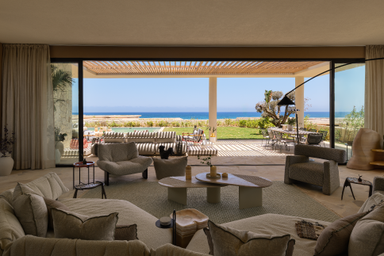
Somabay and MARAKEZ come together in a landmark partnership, marking MARAKEZ’s first entry into Egypt’s Red Sea market and a significant step forward in the continued evolution of Somabay.

2

Startup watch

Madica bets on Egypt’s circular economy, backing Bekia and Delta Oil

Pan-African pre-seed fund Madica is expanding deeper into Egypt’s circular economy, backing recycling platform Bekia and used cooking oil (UCO) aggregator Delta Oil with up to USD 200k each, according to a press release (pdf) and two separate interviews we did with the fund and Bekia. The two startups are part of a five-company cohort spanning four African markets. The batch also marks Madica’s first investments in Algeria (HR-tech platform Talenteo) and Cameroon (neobank PaySika), alongside Nigeria’s semiconductor startup ChipMango.

Both local companies are funding a change in direction. For Bekia — founded by Alaa Afifi (LinkedIn) to let households and businesses swap recyclable waste for cash, goods, or services — the capital bankrolls a move away from asset-heavy, fleet-based collection toward “Bekia Next,” a digital auction platform aimed at large industrial waste producers. Big corporate clients generating tens of thousands of tons of waste juggle up to a hundred separate aggregators by hand, Madica investment associate Francis Vesta tells EnterpriseAM, with the new layer folding households, small B2B, and industrial producers into one system. Bekia is “moving away from that asset-heavy model, which is what we’re [doubling down] on and are looking to underwrite,” Vesta says.

Bekia: from trucks to subscriptions

Bekia Next has been two years in the making, built on feedback from roughly 50 existing corporate clients — including Coca-Cola, Nestlé, Juhayna, and Tetra Pak — Afifi tells us. The platform, launching around the end of October, lets companies list waste for sale via auction to a network of around 9k Know Your Business (KYB)-verified traders — up from the 20-50 a company could reach manually. Auctions set the price, and verified buyers bid against each other on listed tonnage. “Previously, companies sold waste offline, losing money because they didn’t know the exact market value, and there was a lack of compliance and documentation,” Afifi says.

“Egypt’s recycling sector has always worked — it just worked invisibly, on cash and trust, with no record of any of it,” Afifi said in a statement, adding that “the material itself is a commodity, but the record of it isn’t, and nobody in our market owns that record yet.” Bekia Next turns that record into verified CO2-avoidance certificates for corporate clients — the first feature Bekia sells as a subscription rather than a per-service fee. The B2C side will keep scaling alongside Next, targeting 3x growth, but the primary focus is the B2B layer, Afifi tells us. The USD 200k from Madica is part of a USD 765k seed round that also includes pan-African climate investor Catalyst Fund and Dakar-based Jambaar Capital. Expansion into a second African market — possibly Kenya — is planned for next year.

Delta Oil: supply first

Delta Oil is spending on supply, not customers. “The demand is so huge that right now it’s not being met,” Vesta says. Delta Oil, co-founded by Serag Moussa (LinkedIn), was scouting expansion into Kuwait at the time of the investment and weighing rollouts in Nigeria, Kenya, and Oman — deciding between replicating its own model directly and franchising to scale faster.

The USD 200k is part of a larger round, and Vesta is blunt about what that sum buys: it “may not mean much” at this stage, he says. What Madica — the pre-seed fund affiliated with the USD 850 mn fintech VC Flourish Ventures — is selling is hands-on help to “figure out go-to-market” and pick between those expansion models. Household UCO collection is far more fragmented and harder to crack than standard B2B pickup: “there’s a lot more volume, but it’s very disintegrated,” he adds.

Why Egypt, and why these two?

“Egypt is a large market, but even within a large market, there are sectors that are still relatively underfunded,” Vesta says — and Egypt is “one market that we’re really excited about.” What tipped these two was the founders: both “really understood the problem,” he says, and were taking “vastly different approaches” to the same corner of the circular economy.

Madica typically invests in a founder’s first institutional round — “usually in the range of USD 1 mn or less” — and the check comes with an 18-month program it pitches as the bridge across the gap where founders stall between their pre-seed round and follow-on funding. “That’s where a lot of startups or founders fail — because they don’t have access to this [company] building support,” Vesta says. The program covers investment readiness, go-to-market, early-stage governance, and founder coaching, plus fully funded immersion trips.

IN CONTEXT- Delta Oil moves into a market with an incumbent. Homegrown UCO pioneer Tagaddod has built an international supply network across Europe, Asia, and Africa since 2013 and raised USD 26.3 mn last October to push regional expansion. “[With] the tech and the innovation [Delta Oil] was putting into focusing on serving the B2C market, it seemed differentiated from other players in the space,” Vesta says.

This is Madica’s second known Egyptian investment. The first was Motherbeing, the femtech company behind the Daleela app. Vesta flagged women’s health as the segment Madica is most eager to back locally — “still a very huge problem,” with room for new players — against local fintech and retail-tech, which he reads as already heavily capitalized across Africa’s “Big Four” (Egypt, Nigeria, Kenya, and South Africa).

WATCH THIS SPACE- Bananas into shirts: A third Egyptian circular-economy transaction is already in the pipeline. Madica is running early due diligence on an unnamed startup turning banana-crop waste into textile fiber for global apparel makers. No closing timeline has been disclosed.

This publication is proudly sponsored by

3

REGULATION WATCH

Billboard regulator tightens renewal rules as market nears saturation

The country’s roadside advertising market is caught between two forces. The first is regulatory. The National Authority for the Regulation of Advertising on Public Roads (Nrara) is tightening the rules: existing billboard licenses will only be renewed if boards meet new specifications on size, spacing, and location — benchmarked against road type and speed limits, Nrara head Iman Nabil tells EnterpriseAM. The goal is traffic safety and cutting visual clutter. The second is market-driven: billboard occupancy is running at nearly 87-88%, near saturation, according to outdoor ad aggregator AdMazad.

But both forces are meeting pushback. Nrara doesn’t have the authority to link license renewals to compliance — “it is neither the licensing authority nor the fee recipient,” Haitham Erfan, vice president of the Chamber of Advertising Industries at the Federation of Egyptian Industries, tells us. He argues that every existing board was erected under official licenses and field inspections from the relevant authority, with renewal fees paid annually, and the share of unlicensed billboards is close to zero. The rules also weren’t adapted to the local context: “The guidelines assume 6-8-meter sidewalks. In Egypt, 2-3 meters is standard.” Applied verbatim, the policy would wipe out c. 80% of existing billboards, he says.

What the rules say

The guidance manual behind the rework is a technical reference rather than a binding rulebook. It sets standards for siting and size by road type and speed, offers advisory (not mandatory) guidance for heritage areas, sites near places of worship, and distinctive buildings, and encourages efficient lighting and solar power. Nrara has circulated it to administrative bodies nationwide and is reviewing new advertising plans from the governorates and new city authorities against it.

The market hasn’t moved either way yet. Any current shift in inventory comes from supply and demand, not regulatory decisions, AdMazad founder and CEO Assem Memon tells us. Roadside ad spend jumped 60% y-o-y to EGP 12.7 bn in 2025 — growth that came from higher pricing, not inventory, as supply rose just 9%. Occupancy averaged 86% across the year and peaked at 95% on the Ring Road, pulling rental rates and licensing costs up behind it. Real estate alone accounted for 65% of the year’s spend.

Oversupplied

Occupancy hit c. 86% in August, with total outdoor ad spend for the month at about EGP 1.6 bn, according to AdMazad data — real estate accounted for roughly 78% of that, up from 58% a year earlier.

But high occupancy doesn’t mean a shortage. Memon argues the market is actually oversupplied, particularly in smaller formats like 3x6 portrait boards, which account for some 40% of the c. 12k faces (sized 3x6 and above) across Greater Cairo, Alexandria, and the Delta. The number of those boards has started falling recently in areas such as New Cairo and Shorouk — not from regulatory intervention, but because oversupply made some of them unprofitable for their owners, who now prefer to remove them rather than carry license fees against an inadequate return, according to Memon.

The real estate slump

The market has a concentration issue. “Outdoor advertising infrastructure grew to serve property developers, so any slowdown in real estate sales, or redirection of their marketing budgets, hits the whole sector fast,” Memon says. Other advertisers — from FMCG to financial services — apply stricter ROI math. Developers have historically been able to absorb higher advertising prices, but that cushion is thinning.

That risk surfaced in 4Q 2025 as growth slowed and developer spending pulled back in some areas, exposing what Memon calls the “sustainability gap”: a market where occupancy climbs but actual demand for new campaigns and fresh creative fails to keep pace. Erfan argues this has triggered a cascade: advertising firms are offering developers steep markdowns, while struggling developers are shifting to barter agreements, handing over real estate units in exchange for advertising invoices. This trade starves ad companies of the banknotes they need to pay licensing fees, and campaign volumes have visibly thinned out. “The advertising sector is considered the most affected by the real estate crisis,” he says.

Case in point: AdMazad’s new message rate — which tracks how often the artwork on a board is updated in a given period, typically measured monthly — has fallen to around 40%, the lowest in three years, despite record-high occupancy, according to Memon. That means a large share of inventory is contractually occupied, but the content itself isn’t changing fast enough — a direct sign that money isn’t flowing into new campaigns.

The renewable push is complicated

Nrara is weighing priority access for advertisers using renewable energy — primarily solar — for lit billboards in cases of competition for space, Nabil tells us. But Memon argues the advertiser doesn’t choose the power source — concession management companies do. Most large boards currently run on grid power, with solar trials confined to powering external floodlights, so a wholesale switch to solar won’t be an easy economic call while returns are this soft.

Erfan calls a full shift to solar power impractical on technical and security grounds. Billboard tops don’t have room for enough panels. Night-time illumination needs storage batteries — expensive at scale since panels generate power by day, but boards run at night — and street-level batteries are an easy, uninsured theft target. Companies have focused on efficiency instead, swapping fluorescent bulbs for LEDs (a roughly 60% cut in consumption) and moving to LED screens that skip the internal cooling older screens needed (an additional cut of about 70%), he tells us.

Some don’t think the boards should be lit at all. The question isn’t how to power billboards but whether lighting them is worth it, KarmSolar CEO Ahmed Zahran tells us, calling the electricity street advertising consumes a waste of resources better spent on productive sectors. “It’s shameful that we have factories and farms or new cities that add real value to the economy and need electricity and gas, while we channel these resources into street advertising that has plenty of digital marketing alternatives,” he says. “[Our] lives would not change at all if these ads were removed entirely.”

Where the market is headed

The market will likely correct itself, Memon argues. He expects some companies’ inability to cover license and concession fees through a quiet patch to end contracts, trigger withdrawn concessions, and pull unprofitable boards down — cutting supply automatically and helping rebalance prices against demand. Compliant boards in prime locations face the opposite pressure: stricter spacing rules and a ban on using pedestrian pavements will cut the number of viable sites, pointing to higher prices and more pressure on marketing budgets — developers’ most of all.

The demand map is also shifting this month. Memon expects around EGP 800 mn of seasonal ad spend to move from the coastal roads to Greater Cairo in September as North Coast season contracts expire, with budgets heading for prime sites like the Mehwar, Ring Road, and Suez Road.

What’s next: With the outdoor advertising market nearing saturation, the next fight won’t be over the number of billboards alone but over the quality of sites and their ability to generate real returns for advertisers. Nrara has said licenses only get renewed under the new rules from here on, so the next batch of renewal decisions is the first place to watch how the guidelines play out.

4

A MESSAGE FROM AUC ONSI SAWIRIS SCHOOL OF BUSINESS EXECUTIVE EDUCATION

The operating side of polyclinic growth

A growing polyclinic chain has to keep strategy, workflows, people, technology, and finances moving together. The Polyclinic Executive Edge program is built for leaders and managers of polyclinic chains, covering strategic planning, operational optimization, digital transformation, workforce management, and financial sustainability. Participants apply Lean and Kaizen methodologies to improve outpatient workflows and draw on case studies to identify strategies for outpatient excellence. The six-week program runs live online, with the next cohort beginning 15 November 2026.

Applications close on 18 October 2026. Apply here.

5

Also on our Radar

Mostakbal Misr heads to the coast with a Red Sea tourism and hotel push

The Future of Egypt for Sustainable Development Authority (Mostakbal Misr) is expanding into hotel investment and tourism development on the Red Sea, drawing on its own land bank alongside plots clawed back from stalled projects that had barely broken ground, a government official tells EnterpriseAM. The land will go to investors under a protocol the authority signed with the Tourism Development Authority (TDA) in early August, the official says, with hotel investment, marina development, and infrastructure upgrades in Marsa Alam and Hurghada among the prospects on offer.

The timing tracks demand. The government targets 500k hotel rooms nationally, up from around 280k, to meet an expected 20% jump in Red Sea winter traffic as regional tensions divert tourists toward Egypt. The Housing Ministry is already working on draft rules to allocate TDA’s 18.5 bn sqm of land to investors.

REMEMBER- Mostakbal Misr is fresh off a reorganization. The House passed a law in July moving the authority from the Defense Ministry to direct presidential oversight and setting up two funds: sovereign wealth vehicle Nile Pyramids and service fund Da’em. Lawmakers narrowed the government’s original draft along the way, capping the authority’s real estate reach to land it owns — which is why this tourism push leans on its own plots and parcels reclaimed from stalled projects.

Housekeeping before the big move

Heibco for Commercial Investments and Real Estate Development is tapping its shareholders for EGP 36 mn to raise its capital by 50% ahead of a planned move to the EGX’s main market and expansion into Saudi Arabia, the company said in a bourse filing (pdf). Heibco will issue 36 mn new shares at a par value of EGP 1 each plus EGP 0.025 in issuance costs, taking its total capital to EGP 108 mn. Proceeds from the capital hike will go toward settling EGP 20 mn in obligations and credit facilities with Banque du Caire and buying EGP 16 mn of piling equipment.

Korra Energi rights up

Korra Energi’s shareholders signed off on EGP 405 mn rights, lifting issued and paid-in capital to EGP 855 mn from EGP 450 mn, the company said in an EGX disclosure (pdf). This offers existing shareholders new shares at EGP 0.90 each plus EGP 0.005 in issuance costs against a par value of EGP 0.2. The shares will trade with rights detachable from the original share, taking Korra’s share count to 4.28 bn post increase. Shareholders also raised authorized capital to EGP 4.25 bn from EGP 2.25 bn.

Kuwaiti seller cuts Remas stake

A Kuwaiti shareholder may be heading for the exit at Ceramica Remas: Kuwait Real Estate Investment Group cut its stake in EGX-listed Ceramica Remas to 14.96%, selling some 65.5 mn shares in the company for EGP 97.5 mn at an average of roughly EGP 1.5 apiece, according to a bourse disclosure (pdf). The group sold an earlier 4.5 mn-share block last Thursday at EGP 1.7, according to a separate filing (pdf) — around 15% above Monday’s price, by our math. EFG Hermes’ brokerage arm executed both transactions.

IN CONTEXT- Remas booked a 1H 2026 net income of c. EGP 5.9 mn against EGP 15.3 mn a year earlier, even as net sales edged up to EGP 1.11 bn from EGP 1.07 bn, according to the company’s audit committee minutes (pdf).

Nearing the finish line

Digital investment platform Bokra Holding’s USD 8 mn funding round is almost fully covered and should close before the end of 3Q, with participation from Egyptian and international investors, Al Arabiya reports, citing CEO Ayman Elsawy (watch, runtime: 04:49). The round follows Bokra’s USD 4.6 mn pre-seed round, led by Egypt’s DisrupTech Ventures and joined by SS Capital, which closed in April 2024. The company has since grown to 18 regulatory licenses, 250k customers, and 50k active investors across its savings and sukuk products — the latter currently yielding 20-21%, Elsawy said. The new capital will fund local and African expansion, though the company is still studying which markets to enter, he added.

What’s next for Bokra: The company is working through c. EGP 12 bn in sukuk issuances — an EGP 5 bn tranche nearing final approval and a second EGP 7 bn issuance targeted before year-end — alongside an EGP 2-3 bn real estate fund targeting governorate assets outside Cairo and medical and logistics funds worth around USD 10 mn combined, built on VC and private equity licenses secured earlier this year, Elsawy said. The funds track the pipeline Elsawy flagged to us in April, which included Health Tech Care Fund, Aqar Fund for Underurbanized Areas, and Manufacturing Fund Egypt.

More muscle at Sokhna

Ain Sokhna Port’s new general cargo and dry-bulk terminal has started trial operations, according to a Transport Ministry statement. The terminal has a targeted annual capacity of about 10 mn tons. Its first phase spans around 397k sqm and includes two berths totaling 1.2 km with depths of up to 18 meters, which qualify them to handle large-capacity vessels. Trial operations will test the terminal’s berths, yards, equipment, workforce, and operating systems before the gradual move to full operations, with later phases set to add customs warehouses and value-added logistics services.

IN CONTEXT- Ain Sokhna’s role as a Gulf-facing transit gateway is getting bigger. Egypt eased Advanced Cargo Information requirements for Gulf transit cargo last March, covering shipments routed through Ain Sokhna, Nuweiba, and Safaga on their way to and from GCC markets. The port’s logistics footprint has also been expanding, with DP World launching an integrated distribution hub in July whose first customers are using it to serve Saudi Arabia and other GCC markets.

More on our radar:

  • Consumer finance companies will have to add behavioral scoring to their credit checks from 1 April 2027. Once I-Score’s system is ready, firms will be required to digitally verify applicants, pull an I-Score assessment based on alternative data, and factor the result into their decision on whether to extend financing. (FRA statement)
  • GB Corp’s board greenlit USD 2.33 mn in funding already advanced to its Tanzania unit as a loan carrying 7% fixed interest and maturing 31 December 2026. (EGX disclosure, pdf)
6

PLANET FINANCE

Gulf banks that built out IPO teams for the boom are now chasing fees in Egypt, Turkey, and India as listings at home dry up

Gulf-based banks that built out capital markets teams for the region’s IPO boom are putting them to work elsewhere this year. Gulf IPO volumes have slid to under USD 1.1 bn so far this year — falling below sub-Saharan Africa’s USD 1.37 bn for the first time and set to drop further once Dangote Petroleum Refinery prices its USD 1.6 bn Lagos listing, the continent’s largest-ever IPO, Bloomberg reports. The reversal is sending Gulf-based banks hunting for fees elsewhere — from Cairo to Istanbul to Mumbai.

Where they’re redeploying: HSBC — usually near the top of Gulf ECM league tables — has instead led Turkish secondary offerings this year, raising USD 552 mn across seven transactions, nearly double 2025’s volume. It still has more than 50 active mandates across the Middle East, North Africa, and Turkey but hasn’t closed a single Gulf IPO in 2026, according to regional capital markets co-head Mohammed Fannouch. EFG Hermes is leaning into Egypt instead — working with Citigroup on a Cairo listing for MNT-Halan’s local business, plus IPOs for Banque du Caire and Misr Life Ins. Emirates NBD has gone further afield still, taking a majority stake in India’s RBL Bank as it plans to expand its investment banking operations in the country and co-arranging Airtel Money’s London listing alongside First Abu Dhabi Bank.

Some state-backed lenders are taking a different route: leaning into government-to-government ties. Abu Dhabi Commercial Bank recently ran the books for the London-Tashkent dual listing of Uzbekistan’s National Investment Fund — work that traces back to a string of Abu Dhabi-Tashkent investment partnerships over the past year.

REMEMBER- We reported in early September that the UAE’s IPO pipeline has screeched to a halt so far this year, with Dubai Holding, Emirates Global Aluminium, and Binghatti all pausing or shelving listings. Meanwhile, in Saudi Arabia, owners aren’t willing to list at what the market will now pay, and after a year in which most new listings lost money, investors aren’t willing to pay more.

A recovery is expected later this year and in 2027, though in the UAE, any reopening will likely be led by follow-ons, not fresh IPOs, analysts have told us. Over in Saudi Arabia, EFG Hermes’ Christopher Laing says he’s inking “lots of new business” in the Kingdom but expects much of it to launch in 2027. In the pipeline: Humain is eyeing an IPO — though no timeline has been disclosed — while Tabreed and Richard Attias & Associates also planned 2026 listings earlier in the year.

MARKETS THIS MORNING-

Asian markets are mixed in early trading, with South Korea’s Kospi up around 0.5% and Japan’s Nikkei flat. Meanwhile, Wall Street extended Monday’s losses, as broad risk-off sentiment weighed on almost all sectors.

EGX30

54,909

+0.2% (YTD: +31.3%)

USD (CBE)

Buy 52.00

Sell 52.13

USD (CIB)

Buy 51.95

Sell 52.05

Interest rates (CBE)

19.00% deposit

20.00% lending

Tadawul

10,783

-0.9% (YTD: +2.8%)

ADX

10,136

+0.2% (YTD: +1.4%)

DFM

5,927

-0.8% (YTD: -2.0%)

S&P 500

7,586

-0.5% (YTD: +10.8%)

FTSE 100

10,658

-0.4% (YTD: +7.3%)

Euro Stoxx 50

6,237

-0.4% (YTD: +7.6%)

Brent crude

USD 108.75

+2.9%

Natural gas (Nymex)

USD 2.94

+0.9%

Gold

USD 4,327

-0.1%

BTC

USD 75,921

-2.9% (YTD: -13.4%)

S&P Egypt Sovereign Bond Index

1,116

+0.2% (YTD: +12.4%)

S&P MENA Bond & Sukuk

148.67

-0.4% (YTD: -2.1%)

VIX (Volatility Index)

17.20

+0.6% (YTD: +15.1%)

THE CLOSING BELL-

The EGX30 rose 0.2% at yesterday’s close on turnover of EGP 10.5 bn (9.5% below the 90-day average). International investors were the sole net sellers. The index is up 31.3% YTD.

In the green: GB Corp (+4.1%), Telecom Egypt (+3.9%), and E-finance (+3.9%).

In the red: Qalaa Holdings (-1.8%), Emaar Misr (-1.6%), and Palm Hills Developments (-1.4%).

7

HARDHAT

The government is tightening the rules on who gets to build, sell, and finance real estate

Egypt’s real estate market is getting an overhaul regarding who gets to build. The government is done handling stalled projects one at a time — it’s now imposing sector-wide rules on who can sell, build, and finance property, vetting weak developers before they enter the market instead of cleaning up after they fail. The centerpiece: a planned Developers Union, backed by escrow accounts, unified contracts, and faster dispute resolution. Also on the table: blocking developers from selling new project phases before they hit set completion thresholds.

This didn’t happen overnight: On 21 May, Housing Minister Randa El Menshawy modeled the proposed developers’ entity on the Federation of Construction and Building Contractors, pointing to strict contracts and internal rules already in place at the New Urban Communities Authority to handle developer violations. By 5 August, the Housing Ministry was reviewing the actual draft.

The paper trail

The paperwork phase is over: Following direct orders from President Abdel Fattah El Sisi, Prime Minister Mostafa Madbouly moved from drafting to enforcement on 2 September, directing officials to identify the problems behind stalled projects and pin down responsibility for each — developer negligence or circumstances beyond their control. El Menshawy said a full count of troubled projects, requested by regulators, is nearing completion along with a plan to address them.

Serious investors, who make up the bulk of the sector, operate on fixed timelines and regulatory requirements, she said. Madbouly said the stalled cases so far are limited next to the volume of work by serious developers — but that doesn’t let buyers in troubled projects off the hook. He directed officials to speed up the Union law and bring it to public discussion on its specific provisions before it goes to the cabinet.

A market under strain

None of this is happening in a vacuum: Developers have spent years absorbing sharp jumps in construction and financing costs. Nominal price gains of 10-20% over the past year mask a real contraction once currency depreciation and import-driven cost inflation are stripped out, as we’ve flagged before.

A wave of unit resales and installment-payment strain is exposing another side of the liquidity crisis, and it now reaches buyers directly. Some developers are turning to mergers and alliances as a way out of stalled projects, while assignment fees and rights-transfer clauses are raising regulatory and financing concerns of their own.

As the state tightens oversight, the central question is this: does the reorganization clean up the market and restore trust, or does it pile new pressure onto developers and buyers who are already stretched thin? Filtering out weak developers protects buyers over time, but it tightens liquidity for everyone else right now.

Is canceling the country’s biggest property expo a market signal? The crunch already showed up on the ground, with organizers confirming the cancelation of Cityscape Egypt’s commercial exhibition for 2026 and replacing it with a forum on 16 November. The full exhibition will return 29 September–2 October 2027. Ahmed El Attal, chairman of El Attal Holding, tells EnterpriseAM the market is “no longer an exhibition market.” Rental costs for booth space have soared, and digital marketing now delivers a better return — developers are shifting their budgets accordingly.

That’s not the only explanation on offer. Our sources in the sector say that fear of scrutiny is what really kept companies away. Organizers were requiring proof of execution rates for any project marketed at the expo, under government direction. Plenty of developers didn’t want that kind of exposure.

Who gets to build

The government is preparing to use the forthcoming Egyptian Union for Real Estate Developers law as a market filtering tool for defaulters. “Companies that prove to be in default, or fail to meet their contractual obligations or deliver units to citizens on the agreed timelines, won’t meet the criteria to join the union,” Housing Minister El Menshawy said in a statement.

Senate Housing Committee member Yasser Qoura tells EnterpriseAM the union needs a standardized contract locking developers into specific building codes and unit sizes to protect buyers as investors. Fathallah Fawzy, who chairs the real estate development committee at the Egyptian Businessmen’s Association (EBA), agrees. “The union also needs an escrow system that blocks developers from raiding one project’s funds to cover another, plus dedicated fast-track arbitration centers for disputes,” he tells us.

Hesham Talaat Moustafa, chairman of Talaat Moustafa Group, pushes a related idea from the top of the market. Speaking to Amr Adib on El Hekaya (watch, runtime: 11:00–17:00), he calls for a developer classification framework to regulate who can enter the market and confirm they have the solvency to deliver. That’s three separate voices — a government committee member, a business association chair, an industry chamber director, and the country’s largest listed developer — converging on the same fix from three different vantage points.

Stalled, defaulted, or delayed

Not every stalled project is a failed one, and the government wants that distinction on paper. Karim Malash, chairman and CEO of M Squared, tells EnterpriseAM, “The newly formed committees check land status, financial solvency, and actual completion rates — developers now need 70% of first-phase concrete work finished before they can license a second phase. That’s how we sort serious developers from the rest, and it’s why consolidation makes sense as the fix for companies that are genuinely stuck.”

“The government’s count is meant to establish the real, geography-specific scope of the problem, instead of relying on guesswork,” Tarek Shoukry, chairman of the Real Estate Development Industry Chamber, tells EnterpriseAM. Shoukry explains that companies must justify their delays — if tied to force majeure, like supply chains or the war in Ukraine, that’s acceptable. “A three-year delay caused by mismanagement isn’t,” he says.

Sorting the two apart matters for how the fix gets applied: Tarek Bahaa, a member of the EBA’s development committee, tells us, “The crisis needs a three-way classification — delayed, defaulted, and halted. With the exchange rate jumping from EGP 15 to EGP 50 per USD, the answer is finishing construction, not pulling land back or refunding buyers whose money has already lost its value.”

“So-called ‘quasi-developers’ entered the market on 5% land down payments with no track record,” Fawzy tells us. Raising the minimum down payment to 30%, paired with government oversight, should enforce what he calls “survival of the serious developer.”

What’s next: Developers who can’t keep pace with the new execution rules will merge or exit — there’s no third option once the Union law and escrow rules take hold. The state has shut off the easy money that let underqualified developers into the market in the first place. The ones who can actually deliver are about to inherit the sector — the ones who can’t will find that out very soon.

In next week’s column, we’ll cover the FRA’s new valuation rules, pressure on buyers, and the tricky legal questions that follow in part two of this story.


SEPTEMBER

15 September (Tuesday): IMF to hold its eighth review of Egypt’s USD 8 bn EFF arrangement.

24 September (Thursday): Monetary Policy Committee’s sixth meeting of 2026.

27-29 September (Sunday-Tuesday): Global Conference on Population, Health, and Human Development.

28-29 September (Monday-Tuesday): Egypt Mining Forum, St. Regis Hotel New Capital.

30 September - October 3 (Wednesday-Saturday): Cityscape, Egypt International Exhibition Center, Cairo.

OCTOBER

5 October (Monday): The EnterpriseAM Egypt Forum.

6 October (Tuesday): Armed Forces Day.

10-11 October (Saturday-Sunday): Egypt Women’s Health Summit (EWHS), Cairo Marriott Hotel.

26-28 October (Monday-Wednesday): IEX Egypt, Egypt International Exhibition Center, Cairo.

29 October (Thursday): Monetary Policy Committee’s seventh meeting of 2026.

NOVEMBER

6-8 November (Friday-Sunday) : Global Entrepreneurship Festival, JW Marriott Hotel, New Cairo.

8-11 November (Sunday-Wednesday): Cairo ICT Forum.

DECEMBER

7-10 December (Monday-Thursday): Food Africa, Egypt International Exhibition Center, Cairo.

17 December (Thursday): Monetary Policy Committee’s eighth meeting of 2026.

EVENTS WITH NO SET DATE

2H 2026: Operations at Deli Glass Co’s new USD 70 mn glassware factory kick off.

2026: The Egyptian-American Economic Forum.

4Q 2026: Banque du Caire IPO.

2027

20 January-7 February: Egypt to host the African Games.

1-3 February (Monday-Wednesday): Agri Expo, Cairo International Convention Center.

April 2027: Tenth of Ramadan dry port and logistics hub to begin operations.

EVENTS WITH NO SET DATE

2027: Egypt to host EBRD’s annual meetings.

2027: Egypt-EU Summit 2027.

End of 2027: Trial operations at the Dabaa nuclear power plant expected to take place.

September 2028: First unit of the Dabaa nuclear power plant begins operations.

Now Playing
Now Playing
00:00
00:00