NUCA overhauls allocation laws for new-city land

1

WHAT WE’RE TRACKING TODAY

Sisi and Xi set out an ambitious bilateral agenda in a pair of op-eds timed to the Chinese president’s arrival in Cairo

Good morning, everyone. Who’s building cities, and who’s buying stocks? We’ve got two stories on the docket today to dive into.

But first, we’ve got news from President Sisi and President Xi. The two leaders published op-eds (here and here) teasing what’s to come during Xi’s anticipated visit, spanning batteries, desalination, and AI.

Meanwhile, NUCA is overhauling its allocation rules. The government is rewriting land-allocation rules for new cities, moving to a competitive digital auction and putting large, proven developers at the front of the queue. The move filters the market by decree, but some think the planned Real Estate Developers Federation should put a filter into law as well.

And there’s more to the EGX story than its modest gains. The benchmark gained 2.66% with every sector in the green, but foreign institutions swung back to net selling after July’s brief reversal, offloading a net EGP 3.9 bn, mostly out of banks. The EGX70 outperformed sharply at 14.6%.

***

ARE YOU MORE OF A LISTENER? Morning Drive is a 10-minute summary of today’s issue crafted for you to enjoy with your morning coffee, while getting the kids ready for school, or driving through the morning rush. And if you like it, tell your friends to tell their friends. They can find us on Apple, Spotify, or wherever they get their podcasts.

***


The Chinese takeover with Ankush Arora: When Chinese cars first appeared in Egypt around a decade ago, they were met with backlash. Now, they’re everywhere. Why? And how?

On this episode of Making It, Ankush Arora, CEO of Al Mansour Automotive Group, joins Patrick to break down how this happened, and why the pace of adoption is accelerating.

Listen to the episode on: Apple Podcasts | Spotify | Anghami | YouTube

Sign up to our newsletter to get Making It in your inbox.


The EnterpriseAM Egypt Forum is back — and we’re devoting the full day to the singular set of questions on everyone’s mind: What does AI actually mean for your company, your people, your economy, your own job — and your kids’ future?

Every session on stage answers one question: “So, what do I actually do about it?”

Join us on 5 October in Cairo. Seats are limited and attendance is by invitation only.

Request your invitation here.


Ahlan w sahlan, Xi

We have a glimpse of what’s on the table as China’s Xi Jinping lands in Cairo: more Chinese factories, more technology, and a bigger role for Egypt in China’s supply chain. Presidents Abdel Fattah El Sisi and Xi laid out the broad agenda in their op-eds (here and here): Chinese investment in EVs, batteries, renewable-energy equipment, electronics, desalination components, and shipbuilding, alongside cooperation on telecoms, AI, and space. The Suez Canal Economic Zone is likely to be right at the heart of the conversation — Cairo wants to turn all that infrastructure spending into factories, exports, and a real industrial and logistics hub.

But there’s a bigger question: Can this partnership start delivering more than Chinese-built projects and Chinese imports? Xi sees Egypt as China’s gateway to Arab and African markets, while El Sisi wants Chinese industry to plug into Egypt’s localization drive and make better use of BRICS, the BRICS-led New Development Bank, the Asian Infrastructure Investment Bank, and Egypt’s dialogue-partner status in the Shanghai Cooperation Organization. Trade, investment, access for Egyptian exports, and Chinese AI technology are all likely to come up. What matters, though, is whether the visit brings commitments that put more production, know-how, and export capacity on the ground here, rather than widening the trade gap.

The wildcard is Huawei: The company is reportedly seeking to build local facilities stocked with chips for training AI models and running them, while Washington is said to be preparing a counteroffer for Cairo. Egypt could find itself weighing Chinese AI infrastructure against the prospect of closer access to US technology. The UAE faced the same choice before it received easier access to US chips and defense technology after distancing itself from Huawei and other Chinese tech providers. There may be more conventional agreements, too: Egyptian-Chinese Business Council Deputy Chairman Mostafa Ibrahim told us last week that he expects new agreements and MoUs, with Chinese investment potentially rising by USD 4 bn this year to USD 14 bn cumulatively.

Egypt’s Banque Misr spared “on purpose”

Washington deliberately stopped short of sanctioning Banque Misr’s parent bank in Egypt when it moved against the lender’s UAE branches last week, US Treasury Secretary Scott Bessent said on the sidelines of the G20 finance leaders’ meeting in Asheville, North Carolina. “We did not sanction them because we did not want to go back to the Egyptian parent.”

BACKGROUND- Bessent also cast last week’s proposed restrictions on Banque Misr UAE as the first in a potentially sustained series of actions — on a weekly basis — against financial institutions that Washington says facilitate Iranian money flows. The Treasury Department’s Financial Crimes Enforcement Network has proposed barring US financial institutions from opening or maintaining correspondent accounts for Banque Misr UAE over alleged transactions involving Iranian shadow-banking networks. The proposal has not yet been finalized.

Wind in the sails

Infinity Power and Hassan Allam Utilities Energy have signed a power-purchase agreement with the Egyptian Electricity Transmission Company for a planned 1-GW wind farm in Ras Shokeir on the Red Sea, according to a statement (pdf). Infinity Power — the renewables JV between Egypt’s Infinity and UAE clean-energy company Masdar — will develop the project with Hassan Allam’s energy arm on a 143 sq km site in the Gulf of Suez wind corridor. Once up and running, the companies say it will supply the national grid and generate enough electricity for more than 1.2 mn homes.

REMEMBER- This is the second major Ras Shokeir wind development to surface this year, after Aeolus, Engie, and Orascom Construction signed a PPA for a separate 900-MW wind farm. The two partners have previously teamed up with Masdar on 1.2 GW of solar projects in Benban and the Dakhla Oasis, including battery-storage capacity. For the whole country, the Electricity Ministry targets renewables to account for 45% of installed generating capacity by 2028.


PSA-

WEATHER- It’s a warm, humid late-summer day in Cairo today, with a high of 35°C and a low of 25°C, according to our favorite weather app.

Alexandria will be a few degrees cooler, with temperatures reaching 31°C during the day and falling to 23°C overnight.

The big story abroad

The regional war is once again coming to a head, with the US launching a barrage of airstrikes on Iran yesterday, attacking Islamic Revolutionary Guard Corps targets. The strikes — which focused on air defence and radar systems alongside minelaying and communications capabilities — were in retaliation for Tehran’s attempt to lay mines in the Strait of Hormuz, US President Donald Trump said.

Tehran’s response? Iranian parliament speaker Mohammad Bagher Ghalibaf warned that US attacks could lead to a blockade on all oil exports through the critical waterway. Meanwhile, Iran’s military threatened to inflict high costs on US forces in the region.

Bond crisis continues: Global bond markets extended their slide yesterday as worries over inflation and government debt threatened higher borrowing rates for consumers and enterprises. Global bond yields reached multi-decade highs in Japan, the UK, Germany, France, and the US, where the 10-year Treasury yield edged close to 4.8%, a level not seen since January 2025.

In the M&A space: Nestle is looking to sell its mainstream vitamins and supplements unit to US private equity outfit Yellow Wood Partners for USD 1 bn as CEO Philipp Navratil limits the Swiss foodmaker’s strategic scope. The transaction — featuring brands like Nature’s Bounty and Osteo Bi-Flex — continues a series of divestitures, following this year’s sale of half of the firm's water business.

*** It’s Hardhat day — your weekly briefing of all things infrastructure in Egypt: EnterpriseAM’s industry vertical focuses each Wednesday on infrastructure, covering everything from energy, water, transportation, and urban development, as well as social infrastructure such as health and education.

In today’s issue: A new alliance can keep up to 80% of the savings it books running new-city street lighting, but the government and the alliance can’t agree on how much will be saved.

A strategic partnership shaping the next chapter of the Red Sea

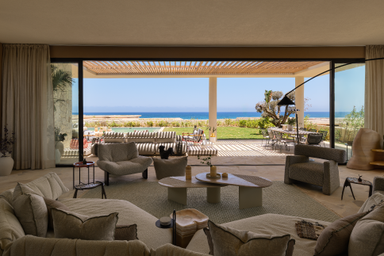
Somabay and MARAKEZ come together in a landmark partnership, marking MARAKEZ’s first entry into Egypt’s Red Sea market and a significant step forward in the continued evolution of Somabay.

2

REGULATION WATCH

New-city land will go to big, proven developers first under NUCA’s overhauled allocation rules

The government is rewriting who gets to build in new cities — and putting large, well-capitalized developers at the front of the queue. The New Urban Communities Authority (NUCA) is moving to a competitive, digital system for allocating investment land, gating access behind track-record and solvency tests. The change comes under a decree seen by EnterpriseAM that takes effect for plots offered starting yesterday, 1 September. NUCA’s board approved the overhaul, Decision 217, on 10 August.

The announced price is now a floor. Bids must come in at least 10% above NUCA’s listed per-meter price, with plots awarded to the highest offer and electronic re-bidding to break ties. Opportunities go up on the investor portal between the 1st and 15th of each month and are ranked online — no more in-person allocation sessions. It’s a shift from fixed-price handouts to an auction.

The “VIP” tier goes first, but the door is narrow. NUCA’s priority order runs: large developers and investors, then cash-and-in-kind buyers, then foreign-currency buyers, then EGP sales and usufruct, and, lastly, companies settling against dues NUCA owes them. To make the VIP tier under the sale system, an applicant must have a 10-year track record — whether its own, that of a subsidiary, or that of a qualifying shareholder that guarantees the applicant — alongside proof that it owns or has developed roughly half the area it seeks and holds EGP 5 bn or more in assets and projects. The tier targets plots of 20 feddans or more, or worth at least EGP 1 bn — cut to EGP 500 mn in certain cities.

The rules squeeze undercapitalized players who left projects half-built. Companies less than three years old can take only one plot; established firms are capped at three — across the company and its partners’ other firms — until they hit at least 35% completion. Down payments run 10-20% of land value, with the biggest plots (above EGP 1 bn) and social-infrastructure land paying the lowest 10%, and execution windows stretch to 8-10 years for the largest urban and education projects.

A separate USD track chases FX. Foreign companies and Egyptian firms that are at least 60% foreign-owned will apply through a foreign-investment portal, funded from a verified SWIFT wallet where each transfer is at least USD 200k and must originate abroad. “The new controls limit land allocation to serious companies and focus on building a new electronic system for handling foreign-investor transfers, which will help double land-sale revenues,” a government official tells EnterpriseAM, adding that more offerings will push NUCA’s land-allocation take this calendar year “past a targeted EGP 50 bn.”

The decree opens two more doors. A parallel track lets foreigners acquire land as a route to Egyptian citizenship, subject to national-security vetting and structured through a single-person Egyptian LLC that ends up holding the plot. Under the cash-and-in-kind system, bidders put down a 1% “seriousness” deposit against the listed price, plus an EGP 20k study fee, to enter.

Also in the decree:

  • Services-sector entities need 10 years in the business, two-plus branches, and EGP 1 bn+ turnover, on plots from EGP 300 mn.
  • USD-track applicants must show USD 150k+ in the bank and a year at 60%+ foreign ownership.
  • Installments run quarterly to annually, carrying Central Bank of Egypt (CBE) interest at the installment’s due date plus Finance Ministry rates plus 0.5% admin; early repayment is priced off the CBE corridor rate.
  • False documents trigger full down-payment forfeiture, legal action, and — on the EGP sale and usufruct route — a bar on the company and its founders from applying for future NUCA opportunities; winners who withdraw or miss paperwork deadlines lose 50% of their down payment.
  • NUCA can void any allocation on suspicion of collusion or bid-rigging, with no right of appeal for rivals.
  • Winners take the land within 30 days of approval and face a 30-day cure under Article 17 before cancellation.

Why it matters: The government is filtering the market by decree. It accomplishes through land allocation what the planned Real Estate Developers Federation has yet to do through law: screen developers by capital, track record, and delivery. A source at the Real Estate Development Chamber tells us the controls are overdue — the market has pushed for years to tie land allocation to a formal developer classification. His proposed model: sort developers into A, B, and C tiers, each with sub-bands, plus a fourth category covering brokerage-linked services — the kind of grading the decree now approximates through its asset and track-record floors.

REMEMBER- As we reported in July, the federation is expected to rank builders by financial strength and delivery record. The market is split over whether classification opens a path for serious newcomers or entrenches the incumbents.

What’s next: The Housing Ministry plans a parallel set of controls for tourism land held by the Tourism Development Authority, which it says manages some 18.5 bn sqm.

This publication is proudly sponsored by

3

A MESSAGE FROM VISA

Virtual cards, without the integration maze

This month, Afghanistan’s HesabPay plans to launch up to 1 mn Visa cards through Visa Pay — scaling a virtual-card program from inside its existing app, without stitching together multiple vendors for card management, processing, 3-D Secure, and other capabilities. Visa is now expanding the same SDK-led model to additional issuers across 11 markets in Africa and Central Asia, including Ghana, Tanzania, and Sudan.

For issuers, the SDK does the heavy lifting: it embeds into a bank, fintech, or mobile money operator’s existing mobile app, with issuer processing, tokenization, 3-D Secure, and Visa-certified compliance already inside. Banked and unbanked users can get virtual cards linked to their accounts or mobile wallets for e-commerce, remittances, person-to-person transfers, and humanitarian disbursements. Tap to Pay is next on the roadmap.

Early adopters include markets where digital access can carry a heavier load. In Sudan, banking leaders described digital payment solutions as critical to customer convenience, business continuity, and financial inclusion. They also highlighted the need for secure local and international e-commerce and peer-to-peer transactions via virtual Visa cards linked to customer accounts.

For institutions in infrastructure-constrained markets, Visa Pay brings the payment plumbing into the mobile app customers already trust.

4

Capital markets

EGX30 gains 2.66% in August as broader market rally gathers pace

The EGX30 eked out a modest 2.66% gain in August, closing the month at 54.9k points, with every sector finishing in the green, according to the bourse’s latest monthly report (pdf). Foreign investors swung back to net selling after July’s brief turn to net buying. The EGX70 and the EGX33 Shariah Index outperformed the benchmark gauge, climbing 14.6% and 8.9%, respectively.

Trading value eased to EGP 2.49 tn this month from EGP 2.55 tn, even as volumes rose to 79.45 bn securities from 69.27 bn and transactions jumped to 6.6 mn from 4.7 mn. Market cap climbed 8.9% to EGP 4.29 tn by month-end.

The investor mix flipped in August

Local institutions picked up a net EGP 3.06 bn in listed stocks (excluding block trades), with local retail adding another EGP 2.71 bn. Foreign institutions were the sellers, offloading a net EGP 3.9 bn, marking a full reversal of the EGP 1.4 bn they bought in July, while foreign retail posted net purchases of EGP 56.4 mn. Regional money exited across both sides of the ledger, with institutions down EGP 847.9 mn and individuals down EGP 1.08 bn.

Line it up by investor type, and it’s July running in reverse. Overall, institutions were net sellers of EGP 1.69 bn, and overall retail was the net buyer of precisely that. Retail also carried the volume, with buy-plus-sell activity at EGP 476.72 bn of the EGP 592.51 bn traded on both sides, or roughly 80% of the market.

Foreign money rotated out of bank names and into real estate stocks. Foreigners offloaded a net EGP 1.98 bn in the banking sector — the single largest net sale of the month — in a sector where foreigners accounted for 38.4% of gross turnover. Real estate was the exception, drawing a net EGP 585.9 mn of foreign buying.

A broad-based rally

Market gains stretched across every sector: Textiles and durables (+23.4%) and building materials (+22.7%) led, followed by healthcare and pharma (+19.4%), contracting and construction engineering (+18.6%), and industrial goods, services, and automobiles (+13.7%).

The laggards: Education services (+0.8%), real estate (+3.8%), and IT, media, and communication services and non-bank financial services (+5.1% each) saw the smallest gains, with no sector closing in the red.

The brokerages league table

In August: Thndr led the monthly brokerage ranking (pdf) in August with a 21.2% market share, followed by EFG Hermes’ combined brokerage arms at 9.7% and Mubasher at 5.9%. YTD: Thndr also topped the YTD brokerages league table (pdf) with a 15.9% market share, followed by EFG Hermes’ combined brokerage arms at 13.1% and Mubasher at 6.2%.

5

A MESSAGE FROM AUC ONSI SAWIRIS SCHOOL OF BUSINESS EXECUTIVE EDUCATION

AI as your next marketing skill

AUC’s AI for Marketers program teaches marketing professionals to apply AI across the full marketing lifecycle. The program includes analyzing customer data, automating marketing workflows, and developing AI-assisted content and advertising strategies, along with a module on the ethical limits of AI in marketing. The blended program starts 17 October and runs live-online and on-campus. Applications close on 20 September. Apply now.

6

Also on our Radar

Orascam Pyramids Entertainment is seeking arbitration against Supreme Council of Antiquities over alleged breach of contract

Orascom Pyramids Entertainment (OPE) will seek arbitration against the Supreme Council of Antiquities (SCA) over what it says is a breach of its exclusive contract to manage, operate, and develop services at the Giza Pyramids, Al Arabiya reports, citing Executive Chairman Amr Gazarin. OPE will also suspend new investments at the site until the dispute is resolved, including planned additions to its bus fleet and new construction.

What’s the dispute? The dispute stems from a tethered-balloon project being implemented by Tashereef for Tourist Marketing with France’s Aerophile, which OPE says falls within the geographic scope of its exclusive agreement and threatens its commercial rights and exclusive-sponsor agreements. However, an SCA official told Al Arabiya that the balloon project is outside OPE’s contractual coordinates and does not affect its legal rights.

IN CONTEXT- OPE operates visitor services at the Giza Plateau under a 15-year agreement signed with the SCA in 2018. The SCA retains authority over the archaeological site and all ticket revenue, while OPE earns from commercial leases, restaurants, VIP visits, sponsorships, and events; the state is also entitled to 50% of project revenue.

Venture debt’s pilot names

Aman Holding, Bokra, and Erada Finance have been selected to pilot venture debt solutions as part of the Scale It Forward program, co-developed by the German development agency GIZ and Enpact, according to a press release (pdf). The program aims to provide 30 Egyptian scaleups in high-demand sectors, including fintech, agriculture, and healthtech, with non-repayable EUR 5k de-risking support and capacity training.

More details: The Scale It Forward program was introduced in January this year and will run through December 2026. It aims to strengthen the Egyptian entrepreneurial ecosystem, expanding engagement to include financial institutions while introducing alternative growth-financing instruments such as venture debt, Enpact’s Country Manager Rawan Bassam told us back in April. Each selected financial institution will invest in six scaleups after they select the businesses that will participate in the venture debt pilot.

Looking forward: The program’s posted timeline plans for five financial institutions to be selected by August, so two are still outstanding. The program is targeting October to select the 30 scaleups, with funding to follow.

El Sayed sells more Odin

State-Owned Companies Unit CEO Hashem El Sayed sold 3 mn shares in EGX-listed Odin Investments at an average of EGP 3.26 apiece for EGP 9.79 mn, cutting his direct holding to 77.9% from 78.4%, according to an EGX filing (pdf). Counting related parties, the stake fell to 78.2% from 78.7%. Sigma Capital executed the trade.

El Sayed remains Odin’s principal shareholder. He resigned from the chairmanship in April of this year, handing the chair to Ibrahim Fawzy Abdel Wahed and the CEO seat to his son Karim Hashem El Sayed (who appears in the filing’s related-party schedule holding 0.104%), but kept the stake, which stood at 82% before the April sales. REFRESHER- El Sayed was appointed assistant to the prime minister and full-time CEO of the unit last October under a four-year mandate, but stayed on Odin’s board for another six months. He stepped down weeks after MP Hussein Haridy filed a request for information with Madbouly in March over a suspected conflict of interest, arguing that EGX disclosures showed the official’s name still across the boards and ownership structures of several listed companies and funds.

More on our radar:

  • Elsewedy Technical Academy and Mansour Automotive Group’s MAC have partnered to train young technicians in electrical and mechanical fields for potential employment with MAC, under a hands-on training-for-employment program tailored to the manufacturer’s operational needs. The tie-up comes as MAC prepares to start operations at its New 6th of October vehicle assembly plant in 1Q 2027, with an initial capacity of up to 50k vehicles a year. (Company statement)
7

PLANET FINANCE

GCC equity markets rebound even as outlook appears murky

GCC equity markets posted their strongest monthly performance in seven months in August, with the MSCI GCC index up 3.9% — breaking a three-month losing streak as regional geopolitical tensions eased, according to Kamco Invest’s monthly report (pdf). The rally tracked a broader global rebound: the MSCI World Index gained 2.6% on a healthy earnings season.

Saudi Arabia led regional gains with a 5.1% rise — its best month since January — followed by Oman (+4.5%) and Kuwait (+1.6%). Abu Dhabi added 0.9% and Dubai 0.7%, while Qatar (-1.1%) and Bahrain (-1.0%) were the only markets to close the month lower.

The rally was broad-based across sectors, led by hotels and leisure (+10%), materials (+8.2%), and ins. (+7.5%). Telecom rose 5.0% and banking 4.7% — the region’s most heavily weighted sectors. One outlier: energy stocks, despite elevated and volatile oil prices tied to the closure of the Strait of Hormuz, gained just 1.2% — the weakest of any sector.

YTD, the picture is more mixed — and it’s Oman, not Saudi Arabia, that leads the region. The MSX 30 is up 29.6% YTD, by far the GCC’s best performer, built on outsized gains of 7.9% in January and 16.8% in February. Saudi Arabia (+6.1%) and Abu Dhabi (+0.1%) are the only other markets in positive territory for the year, while Qatar (-8.9%), Bahrain (-6.3%), and Dubai (-3.5%) remain the laggards.

The outlook has since grown murkier. Kamco’s report notes that global bond yields already hit their highest level since 2008 by the end of August as Fed comments raised the odds of a September rate hike. That selloff has deepened further: Japan’s benchmark yield hit 3% for the first time since 1996, and Australia’s 10-year touched its highest since 2011, after renewed US-Israeli strikes on Iran pushed Brent crude above USD 91/bbl. JPMorgan’s Tai Hui says the risk for the region runs through energy prices directly — a prolonged regional stalemate, paired with depleted inventories and rising winter fuel demand, points to further upside pressure on global headline inflation.

MARKETS THIS MORNING-

Asian markets tumbled at the open today, as Japan’s Nikkei and South Korea’s Kospi each dropped roughly 2.4%. The slide mirrors Wall Street’s overnight decline, driven by escalating regional conflict and a worsening government bond crisis.

EGX30

55,431

+1.0% (YTD: +32.5%)

USD (CBE)

Buy 50.87

Sell 51.01

USD (CIB)

Buy 50.80

Sell 50.90

Interest rates (CBE)

19.00% deposit

20.00% lending

Tadawul

11,101

-0.2% (YTD: +5.8%)

ADX

9,974

-0.3% (YTD: -0.2%)

DFM

5,834

-0.0% (YTD: -3.5%)

S&P 500

7,631

-0.7% (YTD: +11.5%)

FTSE 100

10,789

-0.3% (YTD: +8.6%)

Euro Stoxx 50

6,369

-0.8% (YTD: +9.9%)

Brent crude

USD 94.65

+4.6%

Natural gas (Nymex)

USD 2.95

+1.6%

Gold

USD 4,375

-0.5%

BTC

USD 77,268

-2.1% (YTD: -11.8%)

S&P Egypt Sovereign Bond Index

1,110

+0.2% (YTD: +11.8%)

S&P MENA Bond & Sukuk

150.97

-0.2% (YTD: -0.6%)

VIX (Volatility Index)

16.34

+9.5% (YTD: +9.3%)

THE CLOSING BELL-

The EGX30 rose 1.0% at yesterday’s close on turnover of EGP 16.1 bn (43.8% above the 90-day average). Regional investors were the sole net sellers. The index is up 32.5% YTD.

In the green: Abu Qir Fertilizers (+8.8%), AMOC (+8.2%), and Emaar Misr (+5.4%).

In the red: Orascom Construction (-4.3%), ADIB (-2.5%), and GB Corp (-2.4%).

8

HARDHAT

Egypt signed a 15-year smart-lighting deal, but the ministry and the private partners can’t agree on a savings estimate

Egypt just signed a 15-year agreement it can’t yet audit. Housing and electricity ministries have handed a public-private alliance the job of running street lighting across the country’s new cities, letting it keep up to 80% of whatever savings it books before the assets revert to the state. But the two sides can’t agree on what those savings actually are.

The ministry’s own estimate tops 30%; its private partner is promising 55-57%, on average. Until the system is metered at scale, that gap is the only number that matters because it decides how much of the state’s money the alliance is entitled to keep.

The alliance behind the agreement is the National Company for Telecommunication Services (NCTS) and private tech firm EV Industries, and it’s shouldering the entire financing risk. The general budget won’t cover the system’s setup costs. Instead, the alliance has structured a special-purpose vehicle (SPV) that draws on foreign financing from overseas partners to cover capital costs, Tarek Abdelfattah, founder and CEO of EV Industries, tells EnterpriseAM. The system will run on some 500k control units.

In exchange, the alliance keeps 70-80% of whatever savings the system realizes over the course of the contract. Financing terms are pegged at 12-15 years, Abdelfattah says, and the underlying assets transfer to the state once the agreement ends.

It’s not just about money: New cities are required to meet international benchmarks across energy, waste management, safety, and urban governance under the National Strategy for Green and Sustainable Urbanization, launched in October 2025 — a roadmap the government has billed as positioning Egypt as a “global hub” for smart-city development.

The system replaces manual switching with real-time dimming. The alliance has already begun a proof of concept on high-mast poles along Al Waha Road and in three cities (Shorouk, New Cairo, and 6th of October), swapping 250-watt sodium lamps for 100-watt LEDs linked to smart driver units and Internet of Things sensors that dim lighting based on real-time traffic movement. Installations should wrap up soon, Abdelfattah says, with the system’s first actual megawatt registering on the grid in 1Q 2026 and savings targeted at 40-60%, averaging 55-57%.

Housing Minister Randa El Menshawy framed the system differently in a statement announcing the signing on 30 June. The approach dims LED lighting based on traffic flow rather than switching poles off entirely, she said, preserving safety standards while cutting consumption and feeding into an integrated system for monitoring and analyzing consumption data to support decision-makers.

Electricity and Renewable Energy Minister Mahmoud Esmat put a number on it in the same statement: Control systems for public lighting can save “over 30%” of consumption, depending on how they’re operated, alongside an immediate-savings LED swap-out and advanced control devices installed directly in feeder panels. He also tied the effort to the ministry’s broader push to raise renewables to 45% of the energy mix by 2028.

The precedent matters more than the payout. Other ministries will be watching how the dispute gets settled — a vendor’s own savings projection could end up setting the template for revenue-sharing terms across government, not just for this one contract.

Hardware stays local, data stays sovereign: Rather than importing equipment in foreign currency, “EV Industries will supply control units and drivers through its factory in the Suez Canal Economic Zone in Ain Sokhna, under a strategic partnership with global manufacturer Inventronics,” Abdelfattah says. NCTS will host and cyber-secure the resulting data domestically through its own infrastructure and the Tiba-1 satellite.

“Altogether, the system is projected to cut consumption bills by around 60% through real-time, movement-based dimming,” Abdelfattah tells us. The agreement was signed by NUCA Deputy Chairman for Utilities Ahmed Aly, NCTS Managing Director Sami Aly Shedid, and Abdelfattah.

Capacity is the bigger prize: The project targets 127 mn kWh in annual savings, translating to roughly 80k barrels of oil equivalent in avoided fuel consumption at power stations each year, worth about USD 10 mn annually in reduced import pressure on foreign currency, Abdelfattah says.

AI demand is why capacity matters now. AI-driven electricity consumption at data centers is projected to jump from 25% to 60% of total power draw within three to five years, according to a Capgemini survey (pdf) of more than 600 utility executives. Around 80% of those executives expect demand surges to grow more volatile and harder to forecast, and 67% report “phantom” data-center power requests that never convert into actual load, with roughly 19% going nowhere. Still, 60% see AI itself as a net positive for grid efficiency and outage reduction.

Developers are absorbing roughly 30% of infrastructure costs on their own projects, which is pushing them into the same kind of tech alliances. Saudi Egyptian Developers has partnered with Schneider Electric to manage systems at its Central project, while City Edge has teamed up with Telecom Egypt (WE) to deliver smart-city services in New Alamein — part of a pattern EnterpriseAM first mapped in June across TMG, Madinet Masr, Mountain View, and Orascom Development.

“Building automation now delivers a measurable financial return,” Tamer Sadek, COO of Entech, tells EnterpriseAM. Applied effectively, these systems save 15-30% of controllable energy use — HVAC and lighting — with payback in three to five years. Maintenance is what actually delivers the savings, though: an uncalibrated sensor or a broken actuator wastes energy regardless of how smart the system is, Sadek says.

The same logic extends to water: Managing water and wastewater facilities — a heavy energy consumer — through AI delivers substantial savings, Ahmed El Zayat, founder and CEO of EMS, tells EnterpriseAM.

“Applying the system across 22 water stations in New Cairo cut electricity consumption by 20-25%, bringing the cost of producing a cubic meter of water down to just EGP 0.40, with capital recovery in five to seven years,” El Zayat says. He points to a EUR 2 bn, zero-interest EU grant supporting carbon-footprint reduction projects as a sign that foreign financing is available to scale the approach.

Operational alliances are becoming the default model for urban development. Investment needs to flow through public-private partnerships that reflect real market needs, a recent World Bank report (pdf) finds, and the most successful global models transfer operational management to the private sector once assets mature. The Housing Ministry’s decision to hand its lighting and utilities system to a specialized tech alliance reads as a literal application of that model — a way to keep the digital backbone sustainable and shield it from obsolescence.

What’s next: If the ministry’s more conservative 30%+ holds, the alliance’s 70-80% cut buys it a smaller prize than its own marketing suggests. If Abdelfattah’s 55-57% average holds up at scale instead, the ministry may find itself renegotiating similar terms in the next new city before this one even finishes paying out.


SEPTEMBER

8-10 September (Tuesday-Thursday) El Alamein International Airshow, El Alamein International Airport.

10-12 September (Thursday-Saturday): Egyptian Entrepreneurship Sector Diagnostics Report Summit, El Gouna.

15 September (Tuesday): IMF to hold its eighth review of Egypt’s USD 8 bn EFF arrangement.

24 September (Thursday): Monetary Policy Committee’s sixth meeting of 2026.

27-29 September (Sunday-Tuesday): Global Conference on Population, Health, and Human Development.

28-29 September (Monday-Tuesday): Egypt Mining Forum, St. Regis Hotel New Capital.

30 September - October 3 (Wednesday-Saturday): Cityscape, Egypt International Exhibition Center, Cairo.

OCTOBER

5 October (Monday): The EnterpriseAM Egypt Forum.

6 October (Tuesday): Armed Forces Day.

10-11 October (Saturday-Sunday): Egypt Women’s Health Summit (EWHS), Cairo Marriott Hotel.

26-28 October (Monday-Wednesday): IEX Egypt, Egypt International Exhibition Center, Cairo.

29 October (Thursday): Monetary Policy Committee’s seventh meeting of 2026.

NOVEMBER

6-8 November (Friday-Sunday) : Global Entrepreneurship Festival, JW Marriott Hotel, New Cairo.

8-11 November (Sunday-Wednesday): Cairo ICT Forum.

DECEMBER

7-10 December (Monday-Thursday): Food Africa, Egypt International Exhibition Center, Cairo.

17 December (Thursday): Monetary Policy Committee’s eighth meeting of 2026.

EVENTS WITH NO SET DATE

2H 2026: Operations at Deli Glass Co’s new USD 70 mn glassware factory kick off.

2026: The Egyptian-American Economic Forum.

4Q 2026: Banque du Caire IPO.

2027

20 January-7 February: Egypt to host the African Games.

1-3 February (Monday-Wednesday): Agri Expo, Cairo International Convention Center.

April 2027: Tenth of Ramadan dry port and logistics hub to begin operations.

EVENTS WITH NO SET DATE

2027: Egypt to host EBRD’s annual meetings.

2027: Egypt-EU Summit 2027.

End of 2027: Trial operations at the Dabaa nuclear power plant expected to take place.

September 2028: First unit of the Dabaa nuclear power plant begins operations.

Now Playing
Now Playing
00:00
00:00