Egypt Edition
  MENA+ Edition
  UAE Edition
  Saudi Edition
  AI + Innovation (MENA)
  Logistics (MENA)


 Share Issue







Good morning, friends, and a happy MPC-meeting Thursday. We’ve got three stories today that all put specifics on the table that were previously missing — a macro read on monetary policy, a rulebook for shortselling, and a price list for industrial land.
The CBE’s monetary policy report is the anchor. Growth forecasts are up slightly, near-term inflation is coming in below earlier projections, and external buffers held better than expected. The MPC meets today to decide on rates, and the case for holding seems to be stronger than the case for cutting.
Shortselling finally gets a rulebook. The FRA issued the framework yesterday, five months after the rules were first laid out in March. Brokerages have one month from the effective date to get their systems prepped, which puts the earliest live trading in late September, by our math.
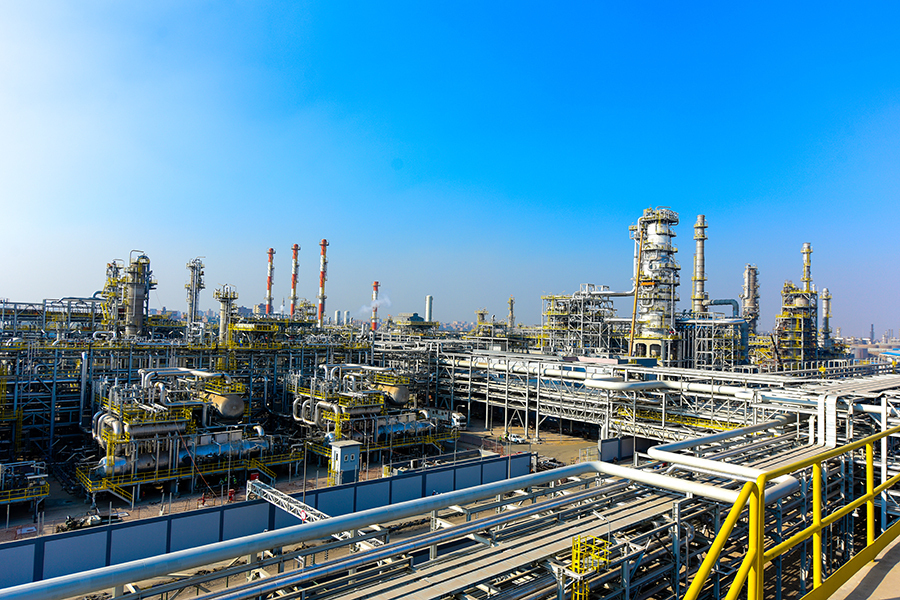
And the industrial land price list is out. The new tariff table fills the missing piece of the FY 2026/27 framework, with governorate-by-governorate and city-by-city prices, two payment tracks for ownership, and updated terms for usufruct and lease-to-own.
***
ARE YOU MORE OF A LISTENER? Morning Drive is a 10-minute summary of today’s issue crafted for you to enjoy with your morning coffee, while getting the kids ready for school, or driving through the morning rush. And if you like it, tell your friends to tell their friends. They can find us on Apple, Spotify, or wherever they get their podcasts.
***
Sovereign spreads find relief
Markets signaling greater confidence in Egypt’s macro outlook: The extra yield investors demand to hold our sovereign USD debt over US Treasuries fell to 322 bps at the end of last week, its lowest level since 2014, according to JPMorgan data cited by Bloomberg. The spread has narrowed by around 150 bps since March and by almost 12 percentage points from three years ago, when default concerns were running high.
Egyptian bonds have delivered more than 10% returns since the end of March, compared with 3.2% for emerging markets overall, while five-year sovereign credit default swaps have fallen 162 bps to 269 bps over the same period. Record FX reserves, IMF support, strong remittances, tourism revenues, and a more flexible EGP have helped rebuild investor confidence.
Markets increasingly think the improvement has legs: Investors cited by Bloomberg say Egypt is being viewed less as a sovereign facing acute external financing stress and more as a reform-oriented, high-yield credit, although high gross funding needs and slow progress on privatization remain key vulnerabilities. That shift echoes Morgan Stanley’s latest assessment (pdf) that our external position has proven more resilient to the regional energy shock than previously expected.
** We have more on Morgan Stanley’s outlook for our financing gap, inflation, interest rates, and the EGP next week.
More wells, less decline
The Oil Ministry is lining up about USD 850 mn to connect nine new gas wells by the end of 2026, targeting gross additions of around 370 mmcf / d, Al Arabiya reports, citing an unnamed government official. About 110 mmcf / d, roughly 30% of the planned volumes, would offset natural declines at existing fields, leaving a net 260 mmcf / d addition to the national grid. Three wells are slated for August and September, with six more expected in 4Q 2026.
Where they’re drilling: Five wells are in deepwater Mediterranean fields, while four are in the Gulf of Suez and Nile Delta. Eni, Shell, Apache, and Cheiron Petroleum are carrying out the projects.
The depletion problem isn’t going away: The new wells are part of the Oil Ministry’s wider push to add 1 bcf / d of gas production by end-2026. We reported last March that domestic output stood at 3.9 bcf / d, while existing fields are losing roughly 120 mmcf / d each month to natural decline. The nine-well plan is part of a broader drilling drive targeting 160 new oil and gas wells this FY, with at least USD 7.2 bn in planned investment from foreign partners.
6 GHz tested
The National Telecommunications Regulatory Authority (NTRA) completed what it calls Africa’s first trial of mobile services using the upper 6 GHz spectrum band in partnership with Telecom Egypt and Huawei, according to a statement (pdf). The technical trial involved operating a mobile base station on the band and completing a data call, achieving data-transfer speeds of about 1.7 Gbps per user. This is not a commercial rollout.
Why it matters: The band could support future high-capacity mobile networks and applications, including AI, internet-of-things services, cloud computing, and virtual and augmented reality, NTRA said.
The trial is separate from the government’s USD 3.5 bn spectrum agreement with the country’s four mobile operators. Announced in February, that agreement provides 410 MHz of additional spectrum in the 1.8 GHz, 2.6 GHz and 3.5 GHz bands, and NTRA’s spectrum roadmap (pdf) says the assignments will run until 2039.
Africa calls again
Foreign Minister Badr Abdelatty has renewed his call for a dedicated entity to coordinate Egyptian investments across African markets, according to a ministry statement. The proposed vehicle would bring state bodies, banks, and private-sector companies into a single investment-support framework, while a centralized database of prospects and priority projects could give local investors clearer visibility on where to deploy capital.
A renewed call: The proposal echoes a similar call Abdelatty made in an earlier meeting with Investment Minister Mohamed Farid. Neither public statement appears to provide a funding structure, regulatory form, or timetable, leaving investors with a policy signal rather than an investable vehicle for now.
ALSO- Egypt is expanding its commercial and logistics links across East Africa. Orascom Investment Holding is preparing its Egypt-Kenya trade platform Outrovato, with around 200 Egyptian factories onboarded and a USD 30-60 mn target for bilateral trade in food, building materials, furniture, fertilizers, and plastics. Egypt has signed a maritime cooperation pact with Eritrea, while state-owned and private firms have signed agreements to develop a multipurpose terminal, regional logistics hub, and solar plant in Djibouti. In Tanzania, Egypt is eyeing a Safaga-Dar es Salaam shipping line and support for Dar es Salaam port’s expansion, while seven Egyptian investors have signed MoUs for pharma, engineering, and food-production plants at Elsewedy Industrial City.
PSA-
#1- Banks are joining the long weekend: Banks will be closed on Thursday, 27 August, in observance of the Prophet Muhammad’s birthday, according to a statement from the Central Bank. Operations will resume on Sunday, 30 August. EnterpriseAM will also be taking a break from your inboxes on Thursday, and we’ll be back on Sunday as usual.
#2- WEATHER- Another tolerable summer day in Cairo today, with a high of 34°C and a low of 23°C, according to our favorite weather app.
It’s not much different in Alexandria, with a high of 32°C and a low of 23°C.
And over the weekend, expect to see heat tick up by two degrees in the capital, reaching a high of 36°C, and inch down for our friends on the Mediterranean, topping out at 30°C.
The big story abroad
The state of US debt has taken top billing on the front pages, after reaching a record USD 40 tn — rising by USD 3 tn over the past year, the fastest ever pace excluding the pandemic years. Rising spending on social programs and interest, compounded by tax cuts, is stoking investor fears of an impending US fiscal crisis. The US Treasury stepped in with measures for long-term bonds, offering some relief to global investor jitters over surging yields.
Over in Silicon Valley, semiconductor group Marvell will help Google develop in-demand custom chips, and has offered the tech giant the right to buy up to USD 12.2 bn in Marvell shares. Companies are turning to in-house chips like Google’s Tensor Processing Units for cheaper AI inference compared to costly Nvidia GPUs.
And in Asian markets: South Korean memory chipmaker SK Hynix announced plans to buy back KRW 40 tn in stock, a move to stabilize its stock price following a steep two-month decline of over 50%. Analysts view the measure as an effort to appease local retail investors upset after new share issuances for the company's US listing diluted their holdings.
In the defense space: JPMorgan Chase co-led a USD 1 bn funding round for missile-making startup Castelion, alongside Andreessen Horowitz and Carlyle. The fresh capital will fund the development of a larger hypersonic strike weapon and a mass-produced air missile defense, signaling blue-chip interest in the booming defense sector.
Meanwhile, in Hollywood: BlackRock’s HPS and Oaktree Capital Management have seized MBS Group, a firm specializing in lighting and rigging for Hollywood films, erasing as much as USD 900 mn in debt. The firms converted debt into around USD 100 mn in equity and agreed to invest USD 40 mn more in the global entertainment provider.