Dubai Investments ends the IPO drought with DIP listing

1

WHAT WE’RE TRACKING TODAY

THIS MORNING: Taqa taps debt markets for first time since going private + Adia goes back for more of Jio in USD 3.2 bn IPO

Good morning, everyone. The UAE’s first IPO of the year is finally here, marking the first real test as to whether investors still have appetite for a UAE listing since war froze the IPO pipeline. It’s Dubai Investments that’s bringing the listing, offering 20% of DIP Holdings on the DFM, in an IPO that has been on the table since early 2025.

Market reactions suggested initial optimism surrounding the ITF, however experts say investors will be looking for more details on the offer before making up their minds. There’s a lot riding on this one: A successful IPO would reinforce confidence in the market, while a flat debut might depress valuations and delay the pipeline further, experts told us.

It’s a capital markets-heavy issue in general: Adia has put in a bid to back Jio Platforms’ USD 3.2 bn IPO and Taqa is tapping debt markets for the first time since being bought out by L’imad subsidiary Abu Dhabi Power Corporation.

Plus: Some of the rules for the upcoming e-invoicing rollout are getting relaxed, with the Finance Ministry giving some firms a temporary exemption for certain transactions, as well as lifting local data storage rules and reporting deadlines for system failures.

Taqa is tapping debt markets

Taqa is tapping debt markets for the first time since going private: Abu Dhabi National Energy Company (Taqa) is marketing a two-part USD bond, comprising a long five-year green tranche at initial price thoughts of around 130 bps over US Treasuries and a 10-year tranche at around 140 bps, Zawya reports. Moody’s is expected to rate the notes Aa3, while Fitch is expected to assign an AA- rating, both in line with Taqa’s own ratings. The bonds settle on 26 October and mature in April 2032 and October 2036.

Taqa joins a roster of names that have returned to debt markets in recent weeks — mostly banks, including Emirates Islamic, FAB, and Mashreq.

Where the funds will go: The green bond’s proceeds will fund or refinance projects that qualify under Taqa’s green and blue finance framework, while the 10-year tranche’s proceeds will go toward general corporate purposes.

BACKGROUND- Taqa left the ADX on 1 September, after L’imad subsidiary Abu Dhabi Power Corporation bought out its remaining shareholders. The energy firm has a heavy capex plan: AED 75 bn by 2030, split between AED 40 bn for transmission and distribution and AED 35 bn for power generation and desalination.

ADVISORS- ADCB, Citi, Emirates NBD Capital, FAB, HSBC, ICBC, JPMorgan, Standard Chartered, and our friends at Mashreq are joint bookrunners and joint lead managers. Citi, HSBC, and Standard Chartered are structuring the green tranche.

Sharjah’s in for growth next year

Sharjah’s economy should grow 5% in 2027, assuming disruptions to shipping and travel ease gradually next year, according to a Moody’s report picked up by Al Bayan. Moody’s credits the emirate’s manufacturing base, which supplies the other emirates and regional markets, and a strong property market. It kept Sharjah’s rating at Ba1 with a stable outlook, one notch below investment grade, and expects the emirate to run a primary budget surplus in both 2026 and 2027.

The bigger picture: The World Bank sees the UAE contracting 1.6% this year, as we reported earlier this month, before growing 9.5% in 2027. The IMF’s numbers are similar: a 3.9% contraction this year and 7.7% growth in 2027, provided shipping routes normalize and Hormuz reopens.

Adia goes back for more Jio

The Abu Dhabi Investment Authority (Adia) bid for more of Jio Platforms in its USD 3.2 bn IPO, Reuters reports, citing two people it says are familiar with the matter. Adia already owns 1.16% of Reliance’s telecom and digital arm. Institutions including GIC, BlackRock, and Fidelity submitted about USD 25 bn in orders for the 30% institutional tranche, almost 30x what was on offer. Subscription opens to the public on Wednesday.

Why it matters: Reuters calls this India’s biggest-ever IPO, and it’s being treated as a test of how much global investors will pay for Jio’s 500 mn-plus subscribers and its push into cloud and AI. If it lists successfully, Jio would become one of India’s four most valuable listed companies. Up to INR 275 bn (c. USD 2.9 bn) of the proceeds will go to paying down debt at its telecom unit Reliance Jio Infocomm.

Adia has already been active in India’s IPO market this year, securing anchor stakes in the National Stock Exchange of India’s offering — previously the biggest IPO in India but looks set to be dethroned by Jio — and SBI Funds Management’s listing.

Data point

19% — that’s how much Abu Dhabi’s residential transaction volumes fell q-o-q in 3Q, according to a press release on Savills’ latest quarterly report. Volumes were also down 7% y-o-y at just under 6.1k transactions worth AED 21.5 bn.

But buyers are spending more per transaction: Total sales value was 32% higher than in 3Q 2025. Off-plan made up 81% of transactions, and the average off-plan transaction value rose 40% y-o-y to AED 5 mn, against AED 2.8 mn for ready homes. At the top end, 582 homes sold for more than AED 10 mn, more than double a year earlier and up 35% q-o-q. Almost all of those (95%) were off-plan.

Prices are still rising, but more slowly: Apartments averaged AED 22.7k per sqm, up 9% y-o-y, and villas and townhouses AED 18.2k per sqm, up 8%. Price growth has been cooling: capital values rose 2.1% q-o-q in 2Q, their slowest quarterly pace in two years, as the war weighed on off-plan sales and mortgage transactions.

Also: The war hasn’t scared off foreign money. Foreign buyers, both expat residents and overseas investors, accounted for 70% of sales value in 1H 2026, up from 64% in 1H 2024.

PSA

WEATHER- Temperatures are set to be slightly cooler today, with highs of 36°C in Abu Dhabi as Dubai sees a warmer 37°C, before it cools to 28°C overnight in both emirates.

Happening today

French President Emmanuel Macron is in the UAE today, and energy is at the top of his agenda. He arrived in Abu Dhabi from Kuwait last night on a three-day Gulf tour and is expected at a Franco-Emirati business summit focused on AI and energy, The National reports. He’s travelling with the CEOs of TotalEnergies and Engie and the president of Campus AI, the AI hub under construction near Paris with bns in funding from Abu Dhabi AI investor MGX.

An Élysée source told The National that Macron would discuss with Gulf leaders how to secure regional shipping routes and find alternative routes for oil and fuel that avoid the chokepoints. Crucially: Unlike Kuwait, Qatar, and Bahrain, which depend largely on Hormuz for their oil exports, the UAE has an alternative route through the port of Fujairah. The Élysée said Macron’s UAE talks would also cover defense, security, and new technologies including AI.

The trip comes as high fuel prices trigger a cost of living crisis in France, with hundreds of thousands taking to the streets across the country and some protests turning violent.

The big story abroad

AI cloud computing company Nscale is negotiating to sell computing power to Anthropic. This transaction could be worth approximately USD 45 bn for a second facility at Nscale’s Monarch data center campus in West Virginia, which would provide 460 MW of computing power via Nvidia’s Vera Rubin AI chips.

A big wager on law: Private equity group Charlesbank has invested in civil litigation defense company Wood Smith Henning & Berman, in one of the largest law firm deals in the US. The agreement, which reportedly values the firm at about USD 700 mn, could potentially lead to similar investments in US liability defence firms.

French unrest dies down: Protests largely subsided in France after authorities implemented stricter security measures, including curfews, following demonstrations that escalated into violence, vandalism, and looting. Following calls from Prime Minister Sébastien Lecornu, local authorities imposed an 11 pm curfew in several parts of Paris and introduced restrictions in other cities.

***

You’re reading EnterpriseAM UAE, your essential daily roundup of business, economics, and must-read news about the UAE, delivered straight to your inbox. We’re out Monday through Friday by 7am UAE time.

EnterpriseAM UAE is available without charge thanks to the generous support of our friends at Mashreq and Hassan Allam Properties.

Were you forwarded this email? Tap or click here to get your own copy of EnterpriseAM UAE.

Want to send us a story idea, request coverage, ask for a correction, or otherwise get in touch? Reach out to us on [email protected].

DID YOU KNOW that we also cover Egypt, Saudi Arabia, and the MENA logistics industry?

***
This publication is proudly sponsored by

Rise every day
From OUR FAMILY to YOURS
2

THE BIG STORY TODAY

Dubai Investments ends the UAE’s IPO drought with a 20% float of the landlord behind Dubai Investments Park

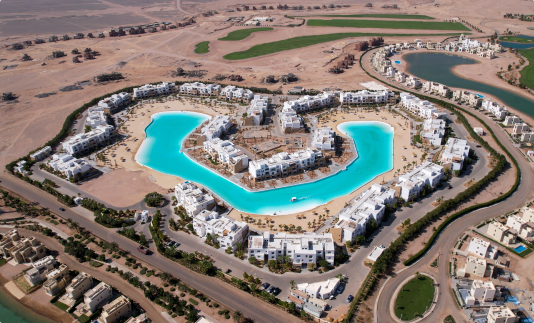
The UAE finally has an IPO on the books for 2026: Dubai Investments will sell 1.74 bn existing shares, or 20%, of DIP Holding on the DFM, according to its intention-to-float notice (pdf). DIP Holding is the company that runs Dubai Investments Park (DIP), a 23 mn sqm industrial and commercial hub that leases land under long-term agreements. The IPO would be the first test of a rocky 2026 IPO market here at home — and how it performs could have meaningful implications for the IPO pipeline ahead, analysts tell us.

A long road to the bell: The listing has been on the table since early 2025. In January 2025, Dubai Investments said it was looking to take four subsidiaries public, intending to list DIP before the end of 2025. By September 2025, the company was talking to banks about listing up to 25%. The timeline was later pushed to February, then delayed to the fall after the war triggered a market sell-off across the UAE and the wider region.

The timeline: Subscriptions run 27 October to 3 November, and trading should start on or around 11 November, pending regulatory approvals. The exact pricing range comes on 27 October, while the final price will be set on 4 November through a bookbuild. Bloomberg recently said that executives are meeting investors between 19 and 26 October.

The plan: Dubai Investments will keep all the proceeds, and it can’t sell more shares until May. Management previously valued the unit at AED 10.8-11 bn. At that price, the stake is worth some AED 2.2 bn (c. USD 590-600 mn), by our math. That’s in line with Dubai Residential REIT’s USD 584 mn float last May and about 1.5x Alec’s USD 381 mn IPO last October. Dubai Investments can’t sell more shares until May.

A small retail tranche and a sweetened offer: The qualified investor tranche takes 92% of the offer, with a AED 1 mn minimum. Retail gets 5%, with a AED 5k minimum application. Dubai Investments employees get 1%, and its individual shareholders get 2%. DIP Holding expects to pay AED 700 mn for 2026, AED 725 mn for 2027, and AED 750 mn for 2028 in semi-annual installments.

Market reax: Dubai Investments shares rose more than 5% yesterday following the ITF — an indication of “initial optimism around the IPO,” Century Financial’s Chief Investment Officer Vijay Valecha tells EnterpriseAM. “However, the stock closed flat with large volumes, suggesting that market participants would need more details on the offer before a clear view is established,” he adds as a caveat.

The demand picture

Dubai Investments had earlier said it plans to float a 25% stake, then later trimmed that to 24% — it has now landed at 20%. The move could be a “risk-mitigation” strategy, Kamco Invest’s Director of Investment Strategy and Research Junaid Ansari tells EnterpriseAM. “It could be done to manage execution risk in the current subdued IPO market in the region,” he said. “Trimming the float to 20% reduces overall size of the [offering], and that eases secondary market acceptance,” he adds.

The dividends make it more likely it will be well received by the market, Ansari says. He expects it to be well received and anchored primarily by local and regional institutional income funds, alongside strong local retail participation. “The dividend provides a yield floor for the expected investors and would grab the attention of income-focused institutional investors,” he explains. “That said, with the current trend in the market, there will be competition from existing companies that are paying competitive yields,” he adds.

Also working in its favor: The lack of alternatives. “The lack of IPOs in the region should benefit DIP, although the current geopolitical environment would surely have an impact, especially from international institutional investors,” Ansari says.

What would count as a success: Ansari and Valecha both agree that an oversubscription of 10x to 15x would mark a strong success, signaling what Valecha calls “disciplined institutional demand rather than the 20x+ speculative euphoria of prior cycles.” A 4-10% gain is the base case scenario, though, Valecha says.

Recurring cashflow + long-term leases make it a solid wager

DIP offers a solid pitch. “Its ground-lease business, with a 72% adjusted EBITDA margin and 97% cash conversion, provides the kind of recurring cashflow that can appeal to investors seeking stable income alongside potential capital appreciation,” Valecha says.

DIP Holding sells steady rent: The park sits on Sheikh Mohammed Bin Zayed Road near Al Maktoum International Airport and Jebel Ali Port and covers c.1.3k plots. It serves around 1k tenants, supports some 5.7k sub-leases, and houses more than 150k residents, with around 99% occupancy as of 30 June. Most leases run 30 years or more, with about 19 years left on average, and rents reset to market rates every five years. Tenants pay for and own their buildings and have invested more than AED 42 bn in them over the years.

Growth is faster than the headline numbers suggest. On a like-for-like basis, which strips out assets DIP sold in 2025 when it converted some leases, revenue rose 7% y-o-y to AED 492 mn in 1H 2026. Adjusted EBITDA rose 9% to AED 355 mn, a 72% margin, and net income climbed to AED 444 mn from AED 418 mn. Without that adjustment, revenue grew about 2%.

The market it’s walking into

This is the first real test of whether investors will buy a UAE listing since the war froze the pipeline. Dubai Holding paused plans to list its retail assets, Emirates Global Aluminium pushed its IPO to at least next year, and Al Habtoor shelved its DFM listing earlier this year. Gulf IPO volumes were under USD 1.1 bn YTD in mid-September, trailing sub-Saharan Africa for the first time. If management’s mark holds, DIP alone would be worth more than half of what the Gulf raised all year to mid-September.

Dubai stocks have nearly clawed back their war losses, and real estate in particular is doing well. The DFM General Index rose 2.1% in September, the best monthly gain in the GCC, as trading volume nearly doubled to 6.7 bn shares. Real estate gained 5.7% and communications 6.9%. UAE stocks were the only GCC markets to finish September higher, in a month when the MSCI GCC index fell 3.5%, its worst month since November 2025.

That’s a long way from March. The DFM lost 16.4% that month as the regional war broke out, and it has gained c. 9.7% since its end-March close. It’s still down 3.2% YTD. Abu Dhabi is also recovering. The ADX has risen four months in a row and is down 2.1% YTD, with its real estate index gaining 6.3% in September.

The market ahead

There’s a lot of pressure on DIP. “A successful listing would reinforce confidence in the UAE’s IPO market and help pave the way for other issuers to come to market,” Valecha says, while noting that a flat debut could result in market disappointment. If DIP trades below its offer price for the first few weeks, it tells [companies] that buyers still want a discount,” he adds.

Ansari agrees, telling us that “a weak debut certainly leads to lower valuations or timeline delays for subsequent issuers in the pipeline.” Valecha adds that companies might also lean on larger cornerstone investors, and that fundraising could shift to sales of new shares from listed companies — a trend we flagged last month.

Still, Valecha says it wouldn’t be the be-all-and-end-all. “History shows one weak debut rarely closes the market by itself,” he notes, pointing to Talabat’s solid IPO, which followed poor debut performance from Lulu in 2024. He admits it would make the next one harder to launch, though.

In any case, there’s a big chance DIP might be the sole IPO of the year. “It’s a well-protected, highly structured [offering] navigating a tough window,” Ansari says. “We expect activity to pick up in 2027 rather than this year,” and he points to regional stability as a prerequisite for that to happen.

ADVISORS- Citi, Emirates NBD Capital, and HSBC are joint global coordinators, while Abu Dhabi Commercial Bank, Arqaam Capital, Dubai Islamic Bank, and our friends at EFG Hermes UAE are bookrunners. Emirates NBD is serving as lead receiving bank, alongside ADCB, ADIB, Dubai Islamic Bank, Emirates Islamic, FAB, and Wio. Al Mal Capital is financial advisor, and Emirates NBD Capital is also listing advisor.

3

REGULATION WATCH

UAE eases e-invoicing rules ahead of 2027 rollout

The UAE is taking some of the sting out of its upcoming e-invoicing rollout: The Finance Ministry has relaxed several requirements, exempting transactions between members of the same tax group for 24 months from 1 January 2027, lifting local data storage restrictions, and scrapping a reporting deadline for system failures, state news agency Wam reports. The amendments took effect on 1 October.

What that means: Companies that live under the same group will be given the all-clear for invoice transactions between them for two years (until the end of December 2028). Plus: Businesses no longer need to store electronic invoices, credit notes, and related data physically in the UAE, provided they retain the records for the legally prescribed period and make them available to the FTA upon request.

And there’s one less deadline to worry about when systems go down: The ministry has removed the requirement to notify the FTA of an e-invoicing system failure within two business days, eliminating a specific reporting obligation when technical problems arise.

REMEMBER- E-invoicing is about to become mandatory: The UAE is moving from traditional invoices to structured digital invoices exchanged through accredited service providers (ASPs), with transaction data shared with the Federal Tax Authority (FTA) in near real time. As we’ve previously explained, businesses with annual revenues of AED 50 mn or more must adopt the system by 1 January 2027, followed by smaller firms on 1 July and government entities on 1 October. Large businesses also have until 30 October to appoint an ASP.

Why it matters

Businesses are still racing to get ready: A readiness survey we covered in June found that just 14.1% of respondents considered themselves fully prepared for e-invoicing, while 60.5% had yet to conduct an ERP gap analysis. The latest changes remove some compliance hurdles, but don't eliminate the work of getting invoicing systems ready for next year’s deadlines.

The biggest gainers are the largest companies. The tax group exemption helps holding companies and conglomerates that run dozens of related entities, where transactions between their own companies make up a large share of invoices. Dropping the local storage rule matters most to multinationals whose ERP and accounting systems are hosted on cloud servers abroad. They no longer have to move that data onshore or duplicate it. For smaller companies with a single corporate entity and locally hosted systems, the practical relief is limited to the system-failure change.

SMEs in particular will benefit from the eased deadlines and invoice data storage rules, as experts previously told us that micro or smaller enterprises may face challenges in adjusting to the new standards, especially if relying on older legacy solutions for invoicing.

4

INDUSTRY

Fertiglobe weighs a USD 1.5 bn-plus phosphate fertilizer complex in Ain Sokhna

Fertiglobe is assessing a project that could make it the latest big name in Egypt’s push to turn more of its phosphate into fertilizer. The Adnoc-controlled fertilizer maker is studying a complex worth more than USD 1.5 bn in Ain Sokhna to produce diammonium phosphate (DAP), the Oil Ministry said in a statement after Minister Karim Badawi met Fertiglobe CEO Ahmed El Hoshy.

The plant would make 1.3 mn tonnes a year of DAP, one of the world’s most widely used fertilizers, made by reacting phosphoric acid with ammonia. Commercial production is targeted for 2031, depending on feasibility studies that El Hoshy says are underway with consultants and on securing a long-term supply of local phosphate rock, which he called key to completing the assessment. Fertiglobe is also looking at producing its own phosphoric acid and turning it into finished fertilizer at the same site, drawing on Egypt’s ammonia supply and existing industrial base, according to the statement.

Sokhna is familiar ground for Fertiglobe, which already runs two plants there: EBIC, which produces ammonia (one of the three inputs a DAP plant needs), and EFC, which makes urea and diesel exhaust fluid (DEF), sold widely as AdBlue. Both units posted record-breaking performance in 1Q 2026, with EFC running at more than 105% of capacity.

Part of a bigger push

Fertiglobe would be joining a growing list. The government has been courting investors to process phosphate locally, sending it to “high-yield industries instead of exporting it as raw material,” as the Oil Ministry put it when contracts for the USD 658 mn Abu Tartour phosphoric acid complex were signed in 2025. Several big projects are already in motion,including the Abu Tartour phosphoric acid complex in New Valley, a greenfield phosphate fertilizer complex in the Suez Canal Economic Zone (SCZone), Sokhna 360, an integrated complex in the Golden Triangle Economic Zone on the Red Sea coast, and a complex in Upper Egypt.

At 1.3 mn tonnes a year, Fertiglobe’s plant would be bigger than any of the Sokhna projects announced so far, by our math. Rock shouldn’t be the problem: Egypt holds some 2.8 bn tonnes of phosphate reserves and mined about 5.5 mn tonnes last year, according to the US Geological Survey (pdf).

Making the numbers work

Getting the plant right comes down to balancing three inputs (phosphate, sulfur and ammonia), Raid Al Soub, former secretary-general of the Arab Fertilizers Association, tells EnterpriseAM. The grade of the rock and how easily it processes set the cost base, he says. Sulfur, which is burned to make the sulfuric acid that turns rock into phosphoric acid, is where the plant is most exposed to the market. A plant this size would need some 500k tonnes of it a year on the conventional route, which leaves it open to swings in sulfur prices, Al Soub says.

Ammonia is where Egypt has an edge, Al Soub says, and Fertiglobe already makes it nearby at EBIC. “But the challenge lies in the economics: will turning ammonia into DAP earn the company and the economy more than selling and exporting it directly,” he asks. Managing phosphogypsum (the main waste product of phosphate processing), water use and emissions will also shape both investment and running costs from day one, he adds.

Less exposed to gas cuts

There’s a strategic upside, too. Gas is the raw material for ammonia, and it makes up roughly 70% of the cost of producing nitrogen fertilizers like urea, which is why gas price hikes and supply cuts hit ammonia and urea makers so hard. A DAP line carries less of that risk: ammonia is its only gas-based input, and it accounts for a smaller share of the cost base, which leans more on phosphate rock and sulfur. That makes phosphate fertilizers comparatively cheaper to produce in Egypt even if gas prices climb or supplies tighten.

WHAT’S NEXT- Fertiglobe will work with the Mineral Resources Authority and mining bodies to identify rock sources and assess long-term supply. Both sides also agreed to speed up the exchange of technical, geological and commercial data and to prepare for ore supply agreements. Fertiglobe also pitched producing AdBlue from Egyptian urea, building on the DEF it already makes at EFC, and Badawi asked for a technical and economic evaluation before deciding next steps.

5

MOVES

HSBC taps Sami Abouzahr to run its Middle East wealth business

HSBC moved a senior wealth executive from Hong Kong to run its Gulf wealth business. Sami Abouzahr (LinkedIn) is now head of international wealth and premier banking for the UAE and the Middle East, effective immediately, the bank said in a statement. Abouzahr has spent more than 20 years at HSBC, most recently serving as head of investments and managed solutions in Hong Kong, a role he took in July 2025.

The hire continues HSBC’s push into Gulf wealth management. The bank opened the region’s first wealth center at its Jumeirah branch in Dubai in 2025, with a second planned for Abu Dhabi later this year, and has doubled the number of staff serving wealthier clients.

6

ALSO ON OUR RADAR

Funding for healthtech + AI film startups, Congo lists bonds on Nasdaq Dubai, Goanna joins ADGM, Edge backs High Lander

PVP leads Nabta’s funding round

Nabta reached the second close of its USD 3 mn pre-Series A round. The UAE-based preventive healthcare platform for women will use the funding to commercialize and scale up as it moves out of R&D and product development, according to a press release. ADGM-based Phoenix Venture Partners led the round, joined by other VCs, family offices, high-net-worth individuals, and institutional investors. Phoenix reached the third close of its MENA-focused fund in March. The fund targets early-stage startups in healthtech, fintech, and agrifood.

GO DEEPER- We spoke with founder and CEO Sophie Smith in January about building tailored health packages to help women in the region catch problems earlier. She told us then that Nabta was planning a Series A, with an eventual DFM listing in mind.

AI film production platform secures funds

Dubai-based Popcorn AI Studio raised USD 1 mn in pre-seed funding, led by Emirati tech entrepreneur and investor Mohammed Bin Bouta Alharsousi (LinkedIn), according to a press release. The startup will use the money to develop its platform and grow its user base in the UAE, Egypt, and Saudi Arabia.

The pitch: Popcorn wants to make filmmaking possible without a big budget or a large production team. Its single AI platform covers sets, characters, and scene generation, in multiple languages.

BACKGROUND- Abu Dhabi has been keen to attract more filmmaking to the UAE, with incentives like raising its rebate on TV and film productions and setting up a film financing firm. Despite still being relatively new, the UAE has signalled support for the AI film sector by rolling out a USD 1 mn award for AI-generated films. On the flip side, other firms like IPNation and CineNow are wagering that an influx of AI-generated content will make authentic entertainment IP more valuable.

Congo lists bonds on Nasdaq Dubai

Congo has become the first African sovereign to list bonds on Nasdaq Dubai. The Republic of the Congo has secondary-listed two USD bonds worth a combined USD 1.55 bn: USD 700 mn due February 2035 and USD 850 mn due May 2036, both with 9.5% coupons. The bonds already trade in London. The listing takes Nasdaq Dubai’s outstanding debt listings above USD 147.5 bn, with sovereigns making up 43%.

Goanna Capital joins the ADGM crowd

US investment firm Goanna Capital opened its first international office at ADGM, looking to tap Gulf investors for private technology investments, Arabian Business reports. The Palm Beach-based firm, which manages some USD 3.5 bn in assets, set up shop with support from the Abu Dhabi Investment Office. Middle East head Hussain Al Alawi (LinkedIn) will lead the office, with staff relocated from North America, Europe, and Asia.

Some familiar names on its books: Goanna invests directly in private tech companies and buys stakes from existing shareholders, with disclosed exposure to OpenAI, Anthropic, SpaceX, Databricks, and Canva, although the size of its holdings isn’t public. There’s already an appetite for those kinds of investments in Abu Dhabi: MGX has backed OpenAI and Anthropic, while IHC's Judan bought into Alpha Wave Global, an investment manager with exposure to OpenAI, Anthropic, and SpaceX.

And it’s joining a growing crowd: Goanna follows Eurazeo into ADGM this month. The financial center added 11 asset managers in 2Q, bringing its total to 190. Goanna is also hosting its inaugural Frontier Summit in Abu Dhabi on 19-20 October, with some 200 investors, founders, and government officials expected — giving it an early window to build the relationships it came for.

Edge backs High Lander

State defense firm Edge backed Israel-based autonomous aviation software firm High Lander’s USD 16 mn funding raise, according to a press release. The announcement didn’t disclose Edge’s exact investment in the round, which included Israeli VC firms Protego and Kinetica Venture Capital and brought High Lander’s total funding to USD 30 mn.

ICYMI- Edge already backed the firm’s USD 14 mn funding round in 2023, with the state defense player saying at the time that the investment laid the groundwork for ongoing agreements and prospects between the two.

What High Lander does: High Lander develops software for use in applications like drone activity, autonomous aviation, and drone fleet management, and its clients include Israeli national authorities. Funding will go toward international expansion, with a particular eye to the US, as well as platform development for homeland security, defense, and applications for both commercial and military use.

7

PLANET FINANCE

MSCI may cut Indonesia from its global indexes, and the market is already pricing the exit

MSCI’s threat to eject the stock market of a USD 1.5 tn economy from its global indexes has produced the worst equity rout in a generation, before the index provider has decided anything. On Friday, MSCI said it was weighing cutting Indonesia, Southeast Asia’s largest economy, straight to “standalone” status, a designation that would strip it out of the emerging- and frontier-market benchmarks that steer USD tns in global allocation. Jakarta’s main index fell almost 12% that day, its steepest since 1998, then another 3.6% on Monday, the deepest two-session drop on record and worse than anything in the Asian financial crisis, Bloomberg and Reuters report.

This is a sharp escalation from the warning MSCI issued in January, when it flagged a possible move from emerging to frontier status over opaque ownership and market integrity. Standalone is a further rung down and out. It sits outside MSCI’s developed, emerging and frontier tiers, reserved for markets it considers too inaccessible or dysfunctional to index at all. The move would make Indonesia the first standalone market in Asia, grouped with Argentina, Lebanon, and Palestine. Indonesia has carried emerging-market status since 1989, when MSCI launched the Emerging Markets Index. A final decision on the country’s designation is due by June 2027.

The selling has spread well beyond stocks. The index is now the world’s worst performer, down more than 40% this year and at a six-year low, according to Reuters. Meanwhile, foreign investors have pulled a net USD 5.1 bn from Indonesian equities in 2026, on their way to the largest annual outflow on record, according to Bloomberg. The IDR has slid toward 18.03k to the USD, within reach of June’s record low near 18.19k, and the 10-year government bond yield has already climbed to about 7.4%, from 7.17% on Friday.

“Foreign capital is staging a full-blown exit from Indonesia’s equity market, and now the bond market is feeling the heat,” said Eugenia Victorino, head of Asia strategy at SEB in Singapore. “A sliding IDR is eating real yields. Until the currency finds its footing, global money is content to watch this one safely from the sidelines.”

Why it matters: The damage runs through passive money. Funds that track MSCI’s benchmarks allocate by the index, so a reclassification forces many of them to sell regardless of what they think of the fundamentals, and the estimates vary with what they count. Goldman Sachs puts passive outflows from a full removal at about USD 5.6 bn, plus another USD 2.7 bn if FTSE Russell follows, and flags more than USD 8 bn of actively benchmarked money that could leave at managers’ discretion. Citigroup, which calls standalone status “unambiguously worse” than a frontier cut, sees mid-single-digit bns; Mirae Asset estimates around USD 3 bn. For scale, Goldman had reckoned even a downgrade only to frontier could drive up to USD 13 bn in an extreme case. However the numbers are sliced, the outcome is the same: Pressure on the IDR, higher borrowing costs, and a drag on bank lending, infrastructure, and growth.

At the root is how Indonesia’s market is built. Much of the freefloat is thin, with many listed companies tightly held by founders, families and conglomerates, which drains liquidity, widens price swings, and makes manipulation easier. Jakarta has moved this year, doubling the minimum free float to 15% from 7.5%, forcing fuller disclosure of large shareholders and tightening scrutiny of concentrated trading. MSCI’s verdict is that it is not enough: “Significant concerns remain around market dysfunction, including continued suspected coordinated trading behavior and lack of evidence of meaningful enforcement.”

Hours after Friday’s warning, regulators tried to show teeth. Indonesia’s Financial Services Authority announced about USD 117 mn in fines over manipulative trading and rigged IPO allocations at three companies: Coal miner Dian Swastatika Sentosa, part of Franky Widjaja’s Sinar Mas Group, fined IDR 1.5 tn (USD 83.2 mn); and Barito Renewables Energy and Petrindo Jaya Kreasi, both tied to b’naire Prajogo Pangestu, fined IDR 500 bn and IDR 100 bn. All three were among six stocks MSCI pulled from its Indonesia index in May, and the regulator says the cases predated MSCI’s threat. Companies linked to Prajogo have since lined up about IDR 2.5 tn (USD 138 mn) of buybacks, with a further IDR 1 tn planned at Dian Swastatika.

Officials say they were blindsided. Indonesia Stock Exchange CEO Jeffrey Hendrik said the market “reacted in panic” to an announcement no one expected, and authorities met MSCI online yesterday to demand an explanation. To slow the bleeding, the exchange halved the daily limit on individual stock declines to 7% from 15% through year-end, automatically rejecting sell orders below that floor, and said it would strip the most tightly held names out of the benchmark Jakarta index to give a truer read of the market. The FSA spent Sunday briefing analysts, economists and financial influencers, and President Prabowo Subianto met financial officials yesterday.

The downgrade threat hits an economy already under strain. Confidence had thinned over Prabowo’s fiscal plans — a free school-lunch program worth IDR 240 tn (USD 13 bn), tens of thousands of new village cooperatives and 3 mn subsidised homes — and over his government’s expanding role in the economy and questions about central-bank independence. Moody’s and Fitch have cut their sovereign outlooks to negative, and the Iran war has pushed up energy costs for a net oil importer.

One counterweight: FTSE Russell reaffirmed Indonesia’s emerging-market status in early October, citing the same reforms, so the two big index houses are not yet moving together.

What to watch for next: Bank Indonesia’s interest rate decision this week. The central bank is widely expected to hold rates, though some analysts see a hike to defend the bond market. DBS warns a deeper correction could push the 10-year yield toward 7.5% and force BI to raise rates by 50 to 100 bps. FTSE Russell is the domino to watch, since a matching move would add that USD 2.7 bn. S&P’s sovereign analyst Rain Lin expects more outflows but not on a scale that would materially lift financing costs; the bigger risk, she said, is to confidence, and whether it “weakens more broadly across government bond markets and foreign direct investment.” Watch the IDR and the enforcement record: until both steady, the selling carries its own momentum.

MARKETS THIS MORNING-

Asian markets were in the red earlier today. South Korea’s Kospi was down around 3.5% and Japan’s Nikkei was down roughly 1.5%. Meanwhile, Wall Street rebounded overnight, led by a 1% gain in the tech-heavy Nasdaq.

ADX

9,783

-0.3% (YTD: -2.1%)

DFM

5,851

-0.3% (YTD: -2.4%)

Nasdaq Dubai UAE20

4,829

-0.2% (YTD: -1.2%)

USD : AED CBUAE

Buy 3.67

Sell 3.67

EIBOR

3.7% o/n

4.9% 1 yr

TASI

10,124

-0.7% (YTD: -3.5%)

EGX30

51,099

+0.4% (YTD: +22.2%)

S&P 500

7,691

+0.4% (YTD: +12.4%)

FTSE 100

10,765

-1.1% (YTD: +8.4%)

Euro Stoxx 50

6,145

-1.0% (YTD: +6.0%)

Brent crude

USD 109.55

-0.3%

Natural gas (Nymex)

USD 3.03

-0.9%

Gold

USD 4,159

0.0%

BTC

USD 82,006

+1.3% (YTD: -6.4%)

Lunate JP Morgan UAE Bond UCITS ETF

AED 3.52

+0.3% (YTD: -6.0%)

S&P MENA Bond & Sukuk

148.50

+0.2% (YTD: -2.2%)

VIX (Volatility Index)

18.44

-7.8% (YTD: +23.3%)

THE CLOSING BELL-

The DFM fell 0.3% yesterday on turnover of AED 388.2 mn. The index is down 3.2% YTD.

In the green: Sukoon Takaful (+9.6%), National General Ins. Company (+2.9%), and Mashreq Bank (+2.6%).

In the red: Dubai Islamic Ins. and Reins. (-4.7%), Etihad Energy Holding (-3.8%), and National Central Cooling Co. (-2.9%).

Over on the ADX, the index fell 0.3% on turnover of AED 918.6 mn. Meanwhile, Nasdaq Dubai was down 0.2%.

CORPORATE ACTIONS

United Fidelity Ins. Company is raising another AED 30 mn from shareholders to shore up its solvency ratio and to fund its growth plans, according to a disclosure (pdf). The insurer is offering 30 mn new shares at AED 1 each in the second phase of its rights issue, which will take its capital to AED 220 mn from AED 190 mn. Shareholders get the right to buy roughly one new share for every six they hold. The rights trade on the ADX between 10-24 November, subscription runs 17 November to 1 December, and the new shares list on 21 December.

BACKGROUND- Shareholders approved a three-phase plan last October to raise United Fidelity’s capital by AED 107 mn to AED 267 mn. The first phase, completed in February, added 30 mn shares, taking capital to AED 190 mn from AED 160 mn. That leaves 47 mn shares for a third phase.

ADVISORS- Hadef & Partners are counsel for the transaction, with First Abu Dhabi Bank serving as lead receiving bank. Ernst & Young Middle East is serving as auditor and subscription auditor for the issuance.


OCTOBER

20-22 October (Tuesday-Thursday): Future Health Summit, Adnec Center Abu Dhabi.

21-22 October (Wednesday-Thursday): World Green Economy Summit, Dubai World Trade Center, Dubai.

27-28 October (Tuesday-Wednesday): Arab Competition Forum, Dubai.

27-28 October (Tuesday-Wednesday): Federal Open Market Committee (FOMC) meeting.

30 October (Friday): Large businesses achieving annual revenues equal to or above AED 50 mn must appoint an accredited service provider for e-invoicing implementation.

Signposted to happen sometime in October 2026:

  • Abu Dhabi Space Week, Abu Dhabi.

NOVEMBER

2-5 November (Monday-Thursday): Adipec, Adnec Center, Abu Dhabi.

2-6 November (Monday-Friday): Dubai Future Finance Week, Dubai.

4 November (Wednesday): Digital Transformation Summit, Sofitel, Abu Dhabi.

4-16 November (Wednesday-Monday): ADIB rights trading period.

9-10 November (Monday-Tuesday): Annual government meetings, Abu Dhabi.

9-12 November (Monday-Thursday): EMEA Council on Hotel, Restaurant and Institutional Education Conference, Dubai College of Tourism, Dubai.

9-13 November (Monday-Friday): World Congress of Military Med, Adnec Center, Abu Dhabi.

10-12 November (Tuesday-Thursday): Dubai International Electric Vehicle Exhibition & Conference, Dubai World Trade Center.

10-24 November (Tuesday-Tuesday): ADIB rights issue subscription period.

16-18 November (Monday-Wednesday): World Police Summit, Dubai World Trade Center, Dubai.

18-19 November (Wednesday-Thursday): Touchdown Middle East 2026, Conrad Abu Dhabi Etihad Towers, Abu Dhabi.

25-26 November (Saturday-Sunday): Doers Summit, Dubai Silicon Oasis, Dubai.

DECEMBER

2-4 December (Wednesday-Friday): UN Water Conference, UAE.

4-6 December (Friday-Sunday): Formula 1 Abu Dhabi Grand Prix, Abu Dhabi.

8-9 December (Tuesday-Wednesday): Capital Market Summit, Madinat Jumeirah, Dubai.

8-9 December (Tuesday-Wednesday): Federal Open Market Committee (FOMC) meeting.

7-10 December (Monday-Thursday): Abu Dhabi Finance Week, Al Maryah Island, Abu Dhabi.

8-10 December (Tuesday-Thursday): Abu Dhabi Water & Power Week, Adnec Center, Abu Dhabi.

8-10 December (Tuesday-Thursday): Middle East & North Africa Business Aviation Association Show, DWC, Dubai Airshow Site.

Signposted to happen sometime in 2027:

  • 1 January: Deadline for large businesses to implement e-invoicing;
  • 14-17 January (Thursday-Sunday): MOC27 Motor, Outdoor & Camping Festival, Dubai Sevens Stadium, Dubai.
  • 1Q 2027: Completion of the first phase of Hassyan seawater desalination project;
  • 1-3 February (Monday-Wednesday): World Governments Summit;
  • 31 March: Small businesses with annual revenues of less than AED 50 mn are obliged to contract with an accredited service provider for e-invoicing implementation;
  • 31 March: Government entities are required to appoint an accredited service provider for e-invoicing implementation;
  • 21-22 April (Wednesday-Thursday): Token2049, Dubai;
  • 11-13 May (Tuesday-Thursday): Middle East Energy, Expo City, Dubai.
  • 31 May-2 June (Monday-Wednesday): RailX Dubai, Dubai World Trade Center, Dubai.
  • 1 July: Deadline for small businesses to implement e-invoicing;
  • 1 October: Deadline for governments to implement e-invoicing;
  • November: HR Tech, Abu Dhabi.
  • Abu Dhabi’s solar and battery energy facility, combining 5.2 GW of solar capacity and 19 GWh of battery storage, is set for commissioning.

Signposted to happen sometime in 2028:

Signposted to happen sometime in 2029:

  • Sibos 2029 organized by the Society for Worldwide Interbank Financial Telecommunication (SWIFT), Dubai;
  • Annual Meetings of the World Bank Group and the International Monetary Fund, Abu Dhabi;
  • The commissioning of the seventh phase of Mohammed bin Rashid Al Maktoum Solar Park.
Now Playing
Now Playing
00:00
00:00