Logistics (MENA)
 MENA+ Edition
 Egypt Edition
 UAE Edition
 Saudi Edition
 AI + Innovation (MENA)


 Share Issue




Good morning, ladies and gents. We’ve got another full runway today. Our big story looks at how fuel, now set to make up 31.4% of airline operating costs this year, is pushing Gulf carriers to rethink how long to keep older jets flying. Qatar Airways is retiring its A330s, Emirates is spending on retrofits, and Saudia is bringing in newer aircraft.
Also in today’s issue: Egypt and Chevron have initialed the fiscal agreement for Cyprus’ Aphrodite gas field, but a fight over the pipeline fee is still open. Aramco and its Asian buyers are at odds over 2027 contracts ahead of the usual end-October deadline, and Asyad Group is selling up to 6.25% of Asyad Shipping. Egypt is also preparing four more strategic warehouses to offer to private investors.
Pipe dreams
Egypt and Chevron have initialed the fiscal agreement for Cyprus’ Aphrodite gas field. The agreement sets the fiscal regime for developing the field and connecting it to Egyptian infrastructure, according to an Oil Ministry statement. The plan is for Egypt to receive, process, and liquefy the gas, then send it to local and global markets depending on demand and the project’s economics, the ministry said, without disclosing terms.
A dispute over the pipeline fee is still open. Chevron and its partners have proposed a transport charge of around USD 3/mmBtu for the Egyptian section of the pipeline, against the roughly USD 1/mmBtu previously envisaged, Mees reports. Cyprus has asked the partners for a more competitive proposal, and the dispute is complicating talks on a binding gas sales agreement with Egas.
The fee fight is putting pressure on the investment timetable. The Egyptian section will be built and run by Aphrodite Midstream, which includes the field partners and an Egypt-appointed entity. A higher tariff would raise its earnings while increasing the cost of the gas to Egas, Mees says. At plateau sales of 700 mmcf/d, it would add about USD 500 mn a year in transport charges. Cyprus has no stake in the pipeline company, so its revenues from the field could fall, though by less than that amount. The partners face a contractual June 2027 deadline for a final investment decision, but NewMed now lists it in 2028, with first gas in 2031, Mees reports.
REMEMBER- Egypt has agreed to buy all of Aphrodite’s gas: EGAS signed a term sheet in April for the field’s entire output over 15 years, with up to 700 mmcf/d landing at Port Said for the first six years.
Spot check
Aramco and its Asian buyers are at odds over this year’s spot purchases, complicating their 2027 supply agreements, Bloomberg reports, citing traders familiar with the talks. The refiners’ annual contracts commit them to buy set volumes of Saudi crude. During the Hormuz disruptions, some of that crude was bought on the spot market instead, through one-off agreements. The two sides now disagree over whether those spot barrels count toward the refiners’ 2026 commitments — at least one refiner was reportedly asked to make up this year’s shortfall by committing to more crude in 2027.
Refiners are wary of bigger commitments amid shipping uncertainty. They are reluctant to accept larger volumes amid uncertainty over shipping, pricing, and future demand, according to the report. Adnoc has let some refiners count spot purchases toward their 2026 commitments, but hasn’t decided whether that will carry into 2027. Talks usually wrap up by the end of October, before buyers book January cargoes in November.
REMEMBER- Aramco has already been selling outside its usual channels: It sold about 20 mn barrels to Asian refiners in one week in September, to be transferred between tankers at sea in the Gulf of Oman, just outside Hormuz. It is also discussing 2027 terms that would load cargoes outside the strait and have Aramco ship them to Asian buyers itself.
Float on
Asyad Group is selling up to 6.25% of its MSX-listed subsidiary Asyad Shipping in a two-tranche follow-on offering, according to a disclosure (pdf) from the company. The secondary offering is split into a 5% institutional tranche and a retail tranche of up to 1.25%. Oman Investment Bank and Sohar International are acting as joint global coordinators and issue managers.
Pricing will be set once the institutional order book closes on 22 October, and will be announced with allocations on 26 October based on institutional demand. Retail investors will then buy at that same price when their tranche opens, but an exact date is yet to be determined.
A sweetener is involved: Asyad Shipping expects to declare a fixed USD 150 mn annual dividend for FY 2026 (c. OMR 58 mn), split 50-50 between September 2026 and March 2027. Guaranteed dividends have been a key incentive leveraged by the Oman Investment Authority to drum up demand for IPOs of their portfolio companies in the last two years, we reported before.
IN CONTEXT- The issuance will put Asyad’s free float above the Muscat Stock Exchange’s 25% minimum, a post-IPO compliance step that Asyad Group was required to wrap within two years of a 20% float on MSX that raised USD 332.8 mn in March 2025. The announcement also comes a day after Asyad Shipping posted a 107% y-o-y jump in 9M net income to OMR 67.7 mn, driven by a surge in crude and liner rates due to Hormuz disruption.
Diesel diplomacy
The UAE, Saudi Arabia, and Bahrain have pledged diesel to France. The UAE and Bahrain will each supply 100k tons — roughly 746k barrels — a month for an unspecified period, while Saudi Arabia has pledged 95k tons monthly for October and November, with the possibility of extension, Bloomberg reports, citing the French presidency. TotalEnergies will sign a supply agreement “dedicated to France” with national oil companies, CEO Patrick Pouyanne said, adding that the arrangement would ensure the country has enough diesel this winter.
IN CONTEXT- European diesel prices have more than doubled this year. It’s trading at almost USD 200 a barrel, up from around USD 80 at the start of the year, amid the Middle East conflict and Ukrainian attacks on Russian refineries. European refiners were already running near maximum capacity in late September, while Gulf diesel and gasoil exports averaged roughly a quarter of pre-war levels in August.
Market watch
Oil prices rose this morning on Middle East supply concerns, as traders weighed Red Sea shipping risks and threats to Saudi oil infrastructure, Reuters reports. Brent crude futures rose USD 0.85 to USD 109.64 / bbl by 00:22 GMT, after touching a five-month high of USD 111.99 yesterday. West Texas Intermediate (WTI) rose USD 0.76 to USD 98.58 / bbl.
The Baltic Index extends its rebound: The Baltic Exchange’s dry bulk index — which tracks rates for the capesize, panamax, and supramax vessel segments — rose 1.9% to 2,593 points on Tuesday. The capesize index climbed 4.7% to 3,522 points, while the panamax fell 1.7% to 2,247 points. The smaller supramax held flat at 1,868 points.
***
YOU’RE READING EnterpriseAM Logistics, the essential MENA publication for senior execs who care about the industry that connects producers and retailers to global markets. We’re out Monday through Thursday by 10:15am in Cairo and Riyadh, and 11:15am in the UAE.
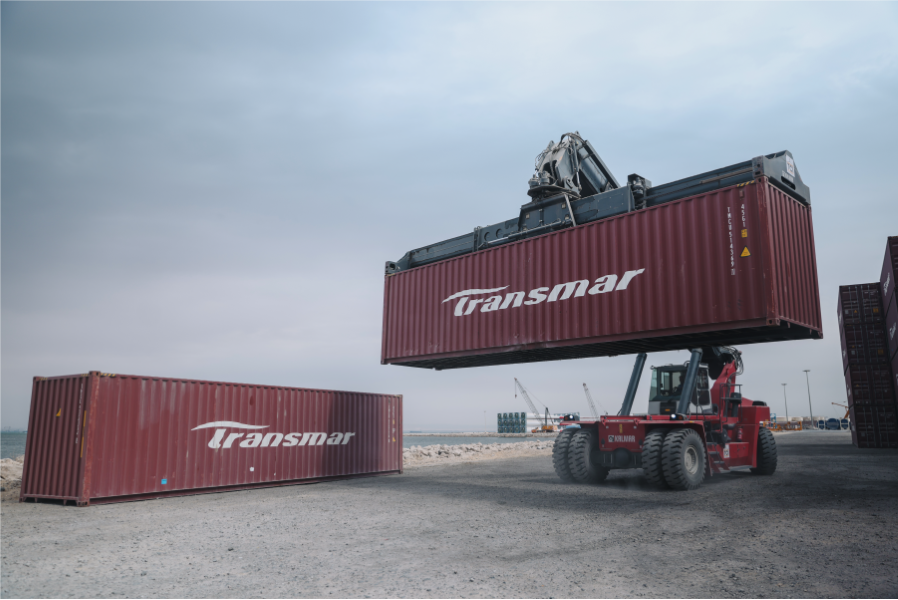
EnterpriseAM Logistics is available without charge thanks to the generous support of our friends at Hassan Allam Utilities and Transmar.
Were you forwarded this email? Tap or click here to get your own copy of EnterpriseAM Logistics.
Want to send us a story idea, request coverage, ask for a correction, or otherwise get in touch? Reach out to us on [email protected].
DID YOU KNOW that we also cover Egypt, Saudi Arabia, and the UAE? ***