The window China’s zero-tariffs opens for our exporters

1

WHAT WE’RE TRACKING TODAY

MNT-Halan mulls floating its Egyptian business

Good morning, everyone. We have two foreign investments landing here at home to unpack in today’s issue.

The China tariff policy story isn’t new, but the clock is ticking. Egypt has a two-year window to turn preferential access into real China-bound sales.

Also from China: Sany Group has signed an MoU to build Egypt’s first wind turbine factory — alongside a wind farm to go with it. We’ve been waiting for domestic manufacturing capacity in renewables for a long time, and this is a solid step in that direction.

And on the luxury end of the spectrum: Rolls-Royce has opened a temporary showroom in New Cairo, with a permanent space coming later this year. The more interesting detail is Cairo being pegged as a regional hub for underdeveloped ultra-luxury markets across North Africa.

***

WISH THIS MORNING’S ISSUE was a podcast? We’ve got you. Tap or click here to listen to Morning Drive, a 10-minute version of today’s issue crafted for you to enjoy with your morning coffee, while getting the kids ready for school, or while stomping around the house wondering where the [redacted] you left your [redacted] reading glasses.

***

Going public, Halan

MNT-Halan is weighing an IPO of its Egyptian business on the EGX as early as this year, Bloomberg reports, citing unnamed sources. The fintech unicorn has tapped Citigroup and our friends at EFG Hermes to manage the potential transaction, pitching investors an estimated valuation of up to USD 1 bn for its domestic operations. That sale would cover the Egyptian business only, keeping its growing footprint in the UAE, Turkey, and Pakistan fully private.

IN CONTEXT- The IPO push follows a valuation bump to USD 1.4 bn globally after a recentfunding round led by Al Ahly Capital Holding, the National Bank of Egypt’s investment arm. That strategic buy-in builds on the company’s 2023 unicorn milestone, driven by UAE-based Chimera’s USD 200 mn injection.

Why it matters: MNT-Halan has disbursed more than USD 15.5 bn in financing to the unbanked and underbanked since launch. The EGX has been a receptive venue for fintech listings: our benchmark index is up over 23.6% YTD, while homegrown fintech Valu saw its shares jump 852.4% on its first day of trading last year and recently cleared an accelerated bookbuild at EGP 11.21 pershare. If MNT-Halan pulls the trigger, it will test whether the local bourse has the depth to absorb another mega-listing.

Three down, seven to go

Enppi has filed for a temporary main market listing, according to an EGX filing, joining a growing crop of state-backed petroleum companies working toward an IPO. The engineering firm — 97% owned by the Egyptian General Petroleum Corporation — wants to float 2.86 bn shares at a nominal value of USD 0.125 each. Enppi broke into the Omani market last month with a USD 355 mn turnkey contract, adding to its existing presence in Saudi Arabia and the UAE.

This isn’t Enppi’s first crack at an IPO: The contractor has been sitting in the government’s IPO pipeline for nearly a decade. It tapped NI Capital in 2017 to evaluate the fair value of a 24% stake on the EGX, before handing the management mandate to a banking consortium of CI Capital, Jefferies, and Emirates NBD in 2018. The sale repeatedly stalled before falling off the agenda entirely — resurfacing now as the government pushes to bring 10 petroleum companies to market by end-June to stay on track with IMF recommendations.

IN CONTEXT- Three down, seven to go — and June is almost over: Petroleum Marine Services was the first in a batch of oil companies to file for a temporary listing earlier this month, followed by petrochemical player Egyptian Linear Alkyl Benzene Company. This clears the runway for Petrojet and Midor to follow in July.

REMEMBER- Not every temporarily listed company makes it onto the trading floor. Temporary listings are a technical staging step where an IPO-hopeful is registered and assigned a ticker but does not trade yet — a way for the government to build optionality before deciding which companies actually proceed.

Pensions go up next month

Pensions are set to increase by 15% effective 1 July per a presidential decree, Al Arabiya reports. We have been expecting the move, with sources previously telling us that the Madbouly government would introduce pension hikes with the new fiscal year.

PSA-

WEATHER- It’s another sunny day in Cairo, with the capital in for a high of 35°C and a low of 24°C, according to our favorite weather app.

It’s also warm in Alexandria, with a high of 31°C and a low of 21°C.

And over the weekend, expect to see similar conditions in the capital (with a high of 35°C) and a bit cooler (a high of 30°C) for our friends on the Mediterranean.

The big story abroad

Oil dips as ships leave Hormuz: An uneasy wind-down in US-Iran tensions coincided with tankers continuing to exit the Strait of Hormuz, dragging Brent crude futures down around 4.3% to USD 73.74 yesterday — its lowest level since the start of the war.

Speaking of the war: US President Donald Trump asked Congress for USD 88 bn to cover the costs of the four-month conflict. Both the Senate and House separately moved to end the war this month, displaying bipartisan (if largely symbolic) resistance to the campaign.

Micron earnings ease fears of chip-wreck: Extraordinary earnings by Micron — the largest US manufacturer of memory chips — have restored confidence in tech companies following a sharp selloff this week. It posted a 15-fold income jump to USD 28.2 bn in its financial quarter ending in May, surpassing Wall Street expectations by about USD 4 bn.

Another chip player is making moves: SK Hynix — South Korea’s premier chipmaker and most valuable company — is looking to raise USD 29 bn by issuing depositary receipts on the Nasdaq, as it capitalizes on soaring demand for AI.

BTC’s bad year gets worse: Crypto's biggest asset BTC saw its price drop below USD 60k yesterday, reaching its lowest level in 20 months, as an expected Fed rate hike forces investors to flee risky positions for safer assets.

A dry, hot European summer: A heatwave has raised temperatures across Western Europe by as much as 18 °C, resulting in dozens of deaths, disrupted power supplies, and school cancellations. The phenomenon is triggered by a weather pattern known as an Omega block, where heat is trapped for extended periods, keeping cooler temperatures from entering.

Tremor looms over Caracas: A magnitude 7.2 earthquake hit 160 km west of the Venezuelan capital city Caracas, which could lead to as many as 100k casualties, according to the US Geological Survey. The earthquake followed a magnitude 7.5 tremor.

2

Trade

Jumping China’s wall

Egypt’s exporters have a two-year window to turn China’s lower tariffs into hard sales. The zero-tariff policy for Egypt and 52 other African countries took effect on 1 May, expanding a regime Beijing had previously reserved for least-developed African countries. For Egypt, the challenge is now entirely practical — turning preferential access into real China-bound sales and a narrower trade deficit.

DATA POINT- The test starts from a low base. Egyptian exports to China rose 41.9% in 2025 to roughly USD 819 mn, while imports from China climbed to USD 19.97 bn, leaving us with a trade deficit of over USD 19.15 bn.

Egypt is the bottleneck, not China, Secretary-General of the Egypt-China Chamber of Commerce Diaa Helmy tells us. “China is extending its hand to Egypt — and to any country that can offer an acceptable product,” he said. “The political will to import from Egypt is there, but political will alone is not enough. You need to give it something.”

The challenge: Zero-tariff access can make Egyptian goods more competitive, but exporters still need to understand what Chinese consumers actually want. Customs duties are not usually the main barrier to market entry, industrial analyst Mohamed El Bahi tells EnterpriseAM, explaining that “the most important thing is to understand demand on the other side.” With Egypt’s preferential treatment set to run until April 2028, exporters have a two-year window to show whether the policy is a commercial opening or just another unused trade preference.

China has also recently extended its local-currency swap line with Egypt, raising it to CNY 30 bn (c. USD 4.43 bn) from CNY 18 bn — giving bilateral trade more room to settle outside the USD. El Bahi sees that as the more important lever, saying local-currency settlement cuts out the cost of converting into USD and then into CNY. But the imbalance remains: without more China-bound Egyptian exports, smoother settlement mostly helps an import-heavy trade relationship work more efficiently.

The relationship runs deeper than trade. Egypt received USD 10.2 bn in Chinese Belt and Road (BRI) investment in 2025, according to the BRI Investment Report 2025 (pdf). More than 160 Chinese firms already operate in the country, and recent plans for trade and industrial hubs point to a broader attempt to position Egypt as a supply-chain base between the Red Sea and the Mediterranean — supporting Cairo’s annual export target of USD 145 bn for 2030.

What China will buy

Chinese officials have already pointed to Egyptian fresh citrus as one of the African products entering China under the zero-tariff regime, framing the shipments as early proof that the policy is being put to work. Helmy thinks the market opening can extend beyond one crop, noting “strawberries, and mangoes — they would take them by the ton.”

But citrus also reveals why the story is not just about tariffs: Exporters still need to meet China’s phytosanitary rules, farm and packhouse registration requirements, packaging standards, cold-chain needs, and buyer-distribution demands. To export citrus, producers must maintain the fruit’s internal pulp temperature below 1.6°C during transit to eliminate fruit flies — pointing at the real barrier to entry: advanced cold-chain logistics and heavy capital expenditure, not customs duties.

Other candidates: The next prospects may lie in products where Egypt already has production capacity. Flax, beet pulp, and cotton are early candidates, according to Khaled Milad, head of the Egyptian Commercial Office in Beijing. Head of the Internal Trade Committee of the Importers Division of the Federation of Chambers of Commerce Matta Bishay points to food and beverage, fabrics, cotton products, and engineering goods, while Helmy sees room for higher-value goods such as furniture, leather, ceramics, and finished marble. El Bahi adds pharma and dietary supplements to the list, arguing that even a small foothold in China’s consumer market could lift Egyptian exports sharply.

Turning access into orders

Demand first, or not at all. El Bahi says exporters cannot “hold an internal monologue,” take products to China, and then be surprised they are not competitive. The work starts with demand, competing products, and buyer requirements. Milad provides a tangible example, noting that Egyptian date exports to China are struggling because Chinese consumers are shifting away from high-sugar products. Helmy applies the same logic to compliance in the Chinese market: “The requirements are clear. They are not difficult or impossible — but trying to work around them is a disaster,” noting that exporters risk rejection if they treat the tariff break as a shortcut.

That puts the responsibility on the country’s export machinery. Helmy says export councils, the Cairo Chamber, and the Federation of Egyptian Industries need to identify serious exporters, study what China actually needs, and match companies with the right buyers. A Chinese trade delegation recently met with the Cairo Chamber and the Federation of Chambers, Bishay says, pointing out that exporters still need to follow exhibitions, visit the market, and turn the tariff preference into direct commercial relationships.

“This is not something that happens overnight,” Bishay says, noting the tariff break and CNY settlement could help narrow the imbalance over time, but only once exporters build market knowledge, production capacity, shipping cycles, and buyer relationships. “When you are talking about money flows, containers, shipping, and manufacturing, the cycle is long and slow.” The next test is whether Egypt can use the two-year tariff window to move from scattered interest to repeat orders — and from a China relationship built around imports to one where Egyptian exporters have a clearer lane in, he adds.

This publication is proudly sponsored by

3

Automotive

Cairo’s new luxury

Rolls-Royce entered the Egyptian market with a temporary showroom and service facility in New Cairo, ahead of a permanent showroom and design atelier due later this year. Beyond just a sales point, the company is positioning Cairo as a base to serve underdeveloped luxury markets across North Africa.

Egypt as a regional hub: “We need to be able to, out of this operation here, take care of some of the North African markets where we see potential, but which are not developed or advanced enough yet to justify having a full-fledged partner,” Regional Director for the Middle East and Africa James Crichton tells EnterpriseAM.

The expansion shows how the ultra-luxury segment operates differently from the broader auto market, which has spent years grappling with foreign exchange shortages, import restrictions, and supply chain disruptions. Rolls-Royce says its build-to-order model lets it avoid many of the risks that hit conventional carmakers, while wealthy buyers increasingly treat bespoke luxury purchases as part of a wider portfolio of lifestyle and investment decisions.

“Rolls-Royce is not really operating in an automotive segment. We are a luxury brand, we are a house of luxury,” Crichton says. Buyers are often weighing a Rolls-Royce purchase against “a new boat, an amazing holiday in the Maldives, an apartment in New York or a fancy watch,” he says.

Expanding to personalize, not to scale: The company sees personalization, not technology alone, as the key driver of demand at the top of the market. It is nearly doubling the size of its production facility in Goodwood, England — not to lift output but to expand its bespoke capabilities as clients increasingly seek one-of-a-kind commissions. “We’re not doing it to build more cars. We’re doing it to do more bespoke,” Crichton says.

The production model also gives the company flexibility in downturns. “We are only building cars to customer orders, and if those orders aren’t there, we won’t build those cars,” Crichton says, adding that the British ultra-luxury marque remains confident in Egypt’s long-term potential despite economic volatility.

Rolls-Royce has studied Egypt for several years, encouraged by growing luxury demand, the large number of its vehicles already in the country, and broader economic development trends. “There is great potential for us and for the ultra-luxury market to work,” General Manager of Rolls-Royce Motor Cars Cairo Wael Amin tells EnterpriseAM.

4

Energy

Wind and batteries

Chinese renewables manufacturer Sany Group signed an MoU to build Egypt’s first wind turbine factory and a wind farm in the Gulf of Suez, according to a cabinet statement. The plant will have an annual production capacity of 2 GW — set to be built within two years of the final agreement — while the wind farm is expected to be connected to the national grid within 23 months.

The location and investment ticket of the factory have not been disclosed, but there are hints. We noted earlier this month that the Chinese manufacturer reportedly plans to invest over USD 300 mn to build the factory in the Suez Canal Economic Zone. The first phase of production will reportedly supply an undisclosed 1 GW wind project in the Gulf of Suez, while other key components will be imported until local lines are fully operational. The move follows initial talks in January between the Electricity Ministry and the Chinese manufacturer.

GO DEEPER- We took a deep dive into the country’s push into wind power localization earlier this year.

Getting more storage

The government is looking to invest around USD 3 bn to add 5 GWh of battery energy storage capacity to the national grid by 2027, the Arabic press reports, citing an unnamed government official. The planned additions would take operational storage capacity to around 6.2 GWh, up from about 1.2 GWh currently. Shifts in global economics have made grid-scale deployment financially viable, with the cost of utility-scale battery storage dropping 31% y-o-y to USD 117 per kWh in 2025.

Battery storage is now a pillar of our renewable energy strategy, with nearly 1 GW coming online this year. Most utility-scale solar projects under development are now being paired with battery storage systems to allow the grid to manage the intermittent nature of renewables. Egypt hit a record 9.1 GW of electricity capacity from clean energy this year. Battery storage is also a key fiscal hedge as the country currently has a EGP 500 bn annual deficit in the electricity sector because of its reliance on imported fossil fuels.

Securing the supply chain is just as important: Chinese manufacturers have established local solar manufacturing capacity in Egypt. Extending that model to battery storage (here and here) will help reduce reliance on imports and volatile supply chains.

5

DEBT WATCH

SAIB wants to tap the debt market

EGX-listed SAIB is looking to raise up to EGP 5 bn in its first debt issuance under a new EGP 20 bn, three-year bond program, the lender said in a bourse filing (pdf). The program is pending approvals from the Central Bank of Egypt (CBE) and the Financial Regulatory Authority, and “all or any of its issuances may be listed” on the EGX. The offering timeline has not been disclosed.

The breakdown: SAIB’s first issuance under the program will be split into three tranches: two one-year non-callable notes — one fixed off the 364-day T-bill and one floating off the CBE corridor rate — and a three-year callable note repaid in eight quarterly installments. The bonds will be pitched to institutional and qualified investors through a private placement, though the program itself is broad enough to accommodate public offerings down the line.

OUR TAKE- The move reads like a wholesale funding diversification play: The EGP 5 bn first issuance lands against a loan book of USD 1.44 bn as of 31 March 2026, according to SAIB’s 1Q results (pdf). The more telling number is the deposit base, which shrank to USD 2.69 bn in 1Q 2026, down from USD 2.95 bn by the end of 2025.

6

Also on our Radar

Gov’t to hedge 65% of fuel imports next FY

The government is considering a program to hedge 65% of the country’s fuel imports — including crude, petroleum products, and LNG — in FY 2026/27 to shield the budget from global price shocks, Al Arabiya reports, citing an unnamed government official. This marks a policy whiplash from January, when the Finance Ministry planned to scrap the costly hedge entirely, before the regional war forced a mid-April panic-hedge of 50% that explicitly excluded natural gas.

Why it matters: Driven by ongoing regional volatility, our fuel import bill jumped 14% y-o-y to USD 5.5 bn in 1Q 2026, up from USD 4.8 bn a year earlier. Officials are studying price estimates with international financial institutions to lock in contracts that will ease pressure on the petroleum balance of payments and give the government a clearer picture of its FX needs.

Smaller subsidy bill, bigger hedge: The move comes as Egypt cut budgeted petroleum subsidies for FY 2026/27 by 79% to EGP 15.8 bn. With the domestic market still relying on imported crude to cover more than 25% of its refining needs, expanding the hedge helps keep the state’s bill from blowing up all over again.

Bagging Pharos

Israel’s Ratio Petroleum is buying UK-listed Pharos Energy in a USD 164 mn allcash takeover, according to a disclosure. The transaction hands Ratio a 45% working interest in the El Fayum concession in the Western Desert and the North Beni Suef concession in the Nile Valley. The Israeli acquirer has stated it intends to explore farming out a portion of these Egyptian assets to a third-party partner post-acquisition. The transaction is expected to close in 1H 2027, pending regulatory approvals.

The transaction comes weeks after Pharos received USD 12.6 mn from the government — bringing outstanding receivables to zero — and launched a six-well drilling campaign backed by USD 11 mn in planned investments, according to a statement (pdf).

BACKGROUND- Pharos entered Egypt in 2019 by acquiring El Fayum and the exploration-stage North Beni Suef concession. In 2021, the company sold operatorship and a 55% stake in both assets to US-based IPR Energy, retaining a 45% interest, with IPR remaining the operator of the concessions.

EFG Hermes advises Premium’s 11th issuance

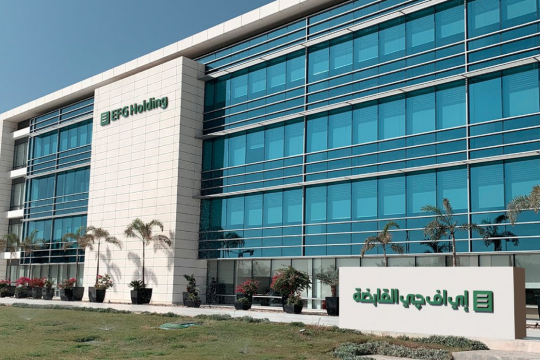
Premium International for Financial Services — often known by its sole product Premium Card — raised EGP 239 mn through its 11th securitized bond issuance. Our friends at EFG Hermes acted as the sole financial adviser and transaction manager, the investment bank said in a press release (pdf). The transaction, which is Premium’s 11th securitization issuance and the first under EFG Hermes’s 14th securitization program, is backed by a receivables portfolio assigned to the firm, which served as the special purpose vehicle for the transaction.

The 36-month bond is split into two fixed-rate tranches: a EGP 66.9 mn tranche with a 12-month tenor, rated P1, and a EGP 172.1 mn tranche running the full 36 months, rated A-.

ADVISORS- EFG Hermes was also the bookrunner, underwriter, and arranger. EG Bank served as underwriter and placement agent, AAIB as custodian, Dreny & Partners as counsel, and KPMG as auditor.

7

PLANET FINANCE

The battle for Chinese wealth

Chinese companies and investors moved a record USD 807 bn offshore last year, helping Hong Kong overtake Switzerland as the world’s largest offshore wealth hub, Bloomberg reports. Now, Beijing is tightening its grip on where that money goes to try to stem the USD bns in outflows.

Outflow control: Authorities have imposed roughly USD 330 mn in penalties on three brokerages commonly used for offshore investing, tightened bank controls, and increased scrutiny of overseas trust structures used by wealthy Chinese. The measures amount to China’s biggest cross-border financial clampdown in a decade, according to wealth managers and advisers cited by the business news service.

Why now? Beijing appears to be seeking greater oversight of offshore assets and capital flows after years of record outflows. Or, as Sterlington partner Paul Jebely put it: “Beijing isn’t closing the door — they are installing a doorframe.”

The move has implications for its next-door neighbor. Hong Kong’s family-office count jumped 25% to 3.4k last year as mainland wealth flowed into real estate, financial markets, and luxury spending. The city’s capital markets boom has also been fueled by Chinese money, with listings, placements, and block trades topping USD 76 bn last year — the highest level in four years.

Could the Gulf benefit? Dubai has spent much of the past decade positioning itself as a global wealth hub, attracting family offices, hedge funds, and wealthy migrants seeking political stability, favorable tax treatment, and global connectivity. The city is now home to around 81.2k m’naires, up 102% over the past decade, making it one of the world’s fastest-growing wealth hubs, according to Henley & Partners.

Wealthy Chinese looking to diversify their offshore footprint — rather than concentrate it in Hong Kong — need jurisdictions that offer political neutrality, robust legal frameworks, and distance from Beijing's regulatory reach. Dubai International Financial Centre’s common-law courts, zero personal income tax, and the UAE's studied neutrality on US-China tensions check those boxes in ways that Singapore — a second offshore hub that absorbs a lot of Chinese outflows — increasingly cannot.

There are limits to the window: Much of the money leaving China still flows through Hong Kong and Singapore because of their proximity, language advantages, and established banking infrastructure. But if Beijing’s latest measures encourage wealthy Chinese to diversify their offshore footprint rather than abandon it altogether, Dubai is among the small group of jurisdictions positioned to compete for a share of that capital.

MARKETS THIS MORNING-

Asia-Pacific markets are trading higher in early trading this morning, led by South Korea’s Kospi, which is up over 4.4%. Japan’s Nikkei is looking at more moderate gains. Over on Wall Street, equities are set to open higher, with index futures in the green ahead of key US inflation data due later today.

EGX30

51,711

-0.1% (YTD: +23.6%)

USD (CBE)

Buy 49.55

Sell 49.69

USD (CIB)

Buy 49.55

Sell 49.65

Interest rates (CBE)

19.00% deposit

20.00% lending

Tadawul

11,007

-0.3% (YTD: +4.9%)

ADX

9,993

-0.3% (YTD: 0.0%)

DFM

6,112

+0.1% (YTD: +1.1%)

S&P 500

7,358

-0.1% (YTD: +7.5%)

FTSE 100

10,462

+0.3% (YTD: +5.3%)

Euro Stoxx 50

6,215

-0.3% (YTD: +7.2%)

Brent crude

USD 73.74

-4.3%

Natural gas (Nymex)

USD 3.23

+0.2%

Gold

USD 4,015

+0.1%

BTC

USD 60,935

-2.8% (YTD: -30.5%)

S&P Egypt Sovereign Bond Index

1,067

+0.1% (YTD: +7.5%)

S&P MENA Bond & Sukuk

152.48

+0.3% (YTD: +0.4%)

VIX (Volatility Index)

18.63

-4.4% (YTD: +24.6%)

THE CLOSING BELL-

The EGX30 fell 0.1% at yesterday’s close on turnover of EGP 7.7 bn (12.3% below the 90-day average). International investors were the sole net sellers. The index is up 23.6% YTD.

In the green: Raya Holding (+4.2%), Heliopolis Housing (+2.5%), and Kima (+2.1%).

In the red: Egypt Aluminum (-1.6%), CIB (-1.1%), and Palm Hills Developments (-1.0%).

8

My Morning Routine

My Morning Routine: Stefano Mazzone, general manager of Roche Egypt

Stefano Mazzone, general manager of Roche Egypt: Each week, My Morning Routine looks at how a successful member of the community starts their day — and then throws in a couple of random business questions just for fun. Speaking to us this week is General Manager of Roche Egypt Stefano Mazzone (LinkedIn). Edited excerpts from our conversation:

My name is Stefano Mazzone, and I’m the general manager of Roche Egypt. Italian by origin and a scientist by training, I developed my pharma foundation and pursued post-degree education in healthcare management before spending the vast majority of my career with Roche across various parts of the globe. The company was founded in Basel, Switzerland in 1896, and today it spans more than 180 countries.

As general manager, my day revolves around a remarkable group of people. Together, we support the local healthcare ecosystem to ensure our innovations and treatments reach the patients who need them most.

Roche’s work is anchored in oncology, neuroscience, and rare diseases — including breast cancer, hepatocellular carcinoma, multiple sclerosis, Duchenne muscular dystrophy, and hemophilia. Our ultimate goal is to ensure sustainable, rapid access to medicine, so patients can achieve better health outcomes during the most difficult stages of their lives.

The challenge we address is twofold — advancing scientific solutions while ensuring local sustainability. One of our core corporate responsibilities is investing heavily in research and development to push breakthroughs for diseases that still have no cure. But we don’t operate as a transactional partner — showing up, selling drugs, and walking away. We invest in the local ecosystem itself, strengthening its processes, knowledge, and capabilities so that patients experience better outcomes end-to-end — from initial awareness and diagnosis through to treatment and follow-up.

I firmly believe life should be anchored by three pillars — family, self, and contribution to society — and they completely define how I structure my day.

I’m an early bird — my alarm goes off around 5:30am, and that first hour of the day belongs entirely to me. I step outside in complete peace and silence, take in the world and move straight into my morning workout. Wellbeing is a deep passion, and this is when I get mentally and physically primed for the day ahead. I genuinely believe in the Latin proverb mens sana in corpore sano — a healthy mind in a healthy body. Getting that physical foundation right changes how you engage with everything else.

By 6:30am, my family is up and my focus shifts entirely to them. I’m the proud father of an eight-year-old daughter who is central to my life. That hour — from 6:30 to 7:30am, breakfast, getting ready, and the drive to school — is time we fiercely protect and cherish.

Once the school run is done, it’s time to connect with the world — and that’s where EnterpriseAM comes in. I’m at the office by 8:30am — my morning read is non-negotiable: it keeps me across global trends and the macroeconomic and geopolitical forces shaping the world, helping me place Egypt’s fast-growing market in context and view local challenges through the lens of our stakeholders.

Once in, I prioritize spending quality time listening to our people — understanding their personal goals and figuring out how I can help them grow. Externally, I meet stakeholders locally or attend major industry conferences like the American Society of Clinical Oncology or the World Health Assembly to secure sustainable pathways for patient care.

I typically wrap up at the office around 5:30 or 6:00pm and head straight home. The evening block, 6:00 to 9:00pm, is sacred — I’m fully present, no exceptions. My daughter is deeply creative, and we love to color, design, and dive into small adventures together. It’s also when I reconnect with my wife, who has always been a mentor and sounding board for me.

When it’s time to switch off completely, I turn to the ocean or music. I’m a true ocean lover — diving, water sports, any chance I get. I’m also deeply curious about marine conservation and the realities of global warming. On weekdays, I unwind at the piano or guitar. You’ll rarely find me in front of a television — it’s simply not my thing.

The best advice I’ve ever received — always protect the balance between yourself, your family, and your contribution to society. Whatever you do, you will always be working with, through, or for people. Remaining humble, empathetic, and genuinely curious about others is the only way to stay at peace with yourself while achieving your goals.


JUNE

23-25 June (Tuesday-Thursday): The Big 5 Construct Egypt, Egypt International Exhibition Center, Cairo.

23-25 June (Tuesday-Thursday): Watrex Expo, Egypt International Exhibition Center, Cairo.

30 June (Tuesday): June 30 Revolution.

JULY

9 July (Thursday): Monetary Policy Committee’s fourth meeting of 2026.

23 July (Thursday): Revolution Day (TBC).

AUGUST

19 August (Wednesday): Connected Banking Summit, Fairmont Nile City Hotel

20 August (Thursday): Monetary Policy Committee’s fifth meeting of 2026.

26 August (Wednesday): Prophet Muhammad’s birthday.

SEPTEMBER

8-10 September (Tuesday-Thursday) El Alamein International Airshow, El Alamein International Airport

10-12 September (Thursday-Saturday): Egyptian Entrepreneurship Sector Diagnostics Report Summit, El Gouna.

15 September (Tuesday): IMF to hold its eighth review of Egypt’s USD 8 bn EFF arrangement.

24 September (Thursday): Monetary Policy Committee’s sixth meeting of 2026.

27-29 September (Sunday-Tuesday): Global Conference on Population, Health, and Human Development.

OCTOBER

6 October (Tuesday): Armed Forces Day.

10-11 October (Saturday-Sunday): Egypt Women's Health Summit (EWHS), Cairo Marriott Hotel

26-28 October (Monday-Wednesday): IEX Egypt, Egypt International Exhibition Center, Cairo.

29 October (Thursday): Monetary Policy Committee’s seventh meeting of 2026.

DECEMBER

7-10 December (Monday-Thursday): Food Africa, Egypt International Exhibition Center, Cairo.

17 December (Thursday): Monetary Policy Committee’s eighth meeting of 2026.

EVENTS WITH NO SET DATE

1Q 2026: Trial operations for the Ain Sokhna-Sixth of October section of Egypt’s first high-speed rail line scheduled to begin.

May 2026: End of extension for developers on 15% interest rates for land installment payments.

July 2026: British Prime Minister Keir Starmer set to visit Egypt.

2H 2026: Operations at Deli Glass Co’s new USD 70 mn glassware factory kick off.

2026: The Egyptian-American Economic Forum.

4Q 2026: Banque du Caire IPO

2027

16-18 January (Saturday-Monday): Agri Expo, Cairo International Convention Center.

20 January-7 February: Egypt to host the African Games.

April 2027: Tenth of Ramadan dry port and logistics hub to begin operations.

EVENTS WITH NO SET DATE

2027: Egypt to host EBRD’s annual meetings.

2027: Egypt-EU Summit 2027.

End of 2027: Trial operations at the Dabaa nuclear power plant expected to take place.

September 2028: First unit of the Dabaa nuclear power plant begins operations.

Now Playing
Now Playing
00:00
00:00