The rate hike has left Cairo’s property market stuck with developer-priced units

1

WHAT WE’RE TRACKING TODAY

Egypt’s Red Sea sukuk plot can now also be used to pay down public debt

Good morning, wonderful people. Selling property in Cairo right now means competing with developers who double as the market’s lenders. Resale owners are pricing their units off developers’ headline figures, which carry up to a decade of installments inside them. To a buyer who can earn 20% at the bank, those asking prices look steep, so most owners would rather hold than cut. Our top story today looks at why asking prices haven’t fallen, and how long the wait could run.

In earnings, Banque du Caire would have grown its 9M income about 19% without last year’s one-offs, with its cost of risk cut roughly in half. CIRA Education more than tripled its normalized net income as its campuses filled up.

On the energy front, Cheiron committed just over USD 42 mn to drill for gas off East Alexandria as the state pushes to lift output to 6.2 bcf / d by 2027.

***

We want to hear from you: Ever wondered how EnterpriseAM makes money, how the newsroom runs over the course of the day, from Egypt to Saudi to the UAE, or why, in the age of reels and zippy TikTok virals, we’re still betting on long-form journalism?

In an upcoming episode of Making It, Patrick and the team will answer some of these questions, along with anything else you’re curious about.

Record your question as a voice memo (30-45 seconds), tell us your name at the top, and send it to [email protected] by Thursday, 12 November. We’ll also take written questions, but since we’re an audio show, we’d love to play yours in your own voice.

***

Land for debt

The 2.7k-feddan Red Sea plot the state set aside for sovereign sukuk can now also be used to cut public debt under Decree 448 of 2026, which President Abdel Fattah El Sisi approved and the Official Gazette published. Law 222 of 2026, which was ratified in June, had earmarked the land for sukuk only.

REMEMBER- A senior government official told us in June that the new Zafarana allocation would expand the Finance Ministry’s asset pool for its local sukuk program. Investors get usufruct rights for the life of the sukuk, while any sale or transfer of the land is explicitly barred.

The change puts the plot on the same footing as the 174 sq km Ras Shukeir zone, which the government allocated last year for both debt reduction and sukuk. A Gulf sovereign wealth fund was then set to announce a project there as part of a push to replicate the Ras El Hekma agreement with ADQ. Using land this way lets the state exploit the asset without disposing of, selling, or depreciating it, since many sukuk securitize the revenues generated from the asset and don’t grant subscribers the right to own it.

There’s plenty of debt to cut: Budget-sector debt stood at EGP 17.85 tn, or 83.9% of GDP, at the end of March 2026 — EGP 13.68 tn domestic and EGP 4.17 tn (USD 76.6 bn) external, as we reported earlier this month. The ministry’s strategy for FY 2026/27–2028/29 aims to bring the ratio down to 71-73% by the end of FY 2028/29.

Life before listing

The state took its upcoming Misr Life Ins. IPO to Brookfield Asset Management’s top Middle East executives on the sidelines of the B20 USA 2026 summit in Washington, with Investment and Foreign Trade Minister Mohamed Farid presenting the insurer’s upgrades in governance, management, and digitization as selling points, according to a ministry statement. And Brookfield has capital to put to work here: the firm manages more than USD 20 bn in the region, recently launched a USD 2.1 bn regional private equity fund, and says it’s interested in Egyptian ins., pharma, renewables, and infrastructure sectors.

What’s next: The offering of Misr Life, owned by Sovereign Fund of Egypt subsidiary Misr Ins. Holding, is now expected in December and will see up to 20% of its share capital sold, with our friends at EFG Hermes tapped as sole global coordinators and bookrunners.

Priced and parceled

Vodafone Egypt will own about 30% of the joint venture building the country’s largest data center and its first sovereign AI data center with Elsewedy Electric and Cassava Technologies, Vodacom Group CEO Shameel Joosub told TechCentral. The roughly USD 1 bn price tag covers the whole project, which will go up in modules as demand materializes: “The number is big, but it won’t be USD 1 bn immediately.” The partners will finance through a mix of equity and debt, and Vodacom will probably handle “the lion’s share of the sales of the data center to customers,” Joosub told Bloomberg.

REMEMBER- The partners unveiled the projects in September, targeting 20 MW of capacity within three years and 192 MW at full build-out. That pledge joins a long list: we wrote in October about how far Egypt’s pipeline of announced data centers runs ahead of the capacity actually funded.

More pumps, new partners

Libya’s OLA Energy plans to invest EGP 2 bn (c. USD 37 mn) in 20 new integrated fuel stations in Egypt in FY 2027/28, Asharq Business reports, citing an unnamed source. The expansion would add to the company’s local network of about 120 stations and an oil-blending plant in Alexandria, which the source puts at some EGP 12 bn in total investment so far.

OLA is also eyeing stations that have gone dark. The source says it’s studying a partnership with state-owned Misr Petroleum and Cooperation Petroleum to launch a joint brand that would rehabilitate and run fuel stations that have shut down or are struggling by reusing existing assets, rather than building from scratch. It wouldn’t be the first private operator to take on state-linked stations: Taqa Arabia is set to manage 172 of NSPO-owned Wataneya’s stations.


PSA-

WEATHER- Cairo is warming a notch today, with a high of 25°C and a low of 15°C, a degree up on yesterday’s high and a full two degrees warmer overnight, according to our favorite weather app.

It’s a close match on the coast in Alexandria, with a high of 24°C and a low of 16°C.

And over the weekend, expect to see a touch more warmth in the capital (26°C on Friday, rising to 27°C on Saturday) and as low as 17°C for our friends on the Mediterranean.

The big story abroad

The PLA-linked Northwestern Polytechnical University bought Nvidia’s H200 AI chips last month despite a US blacklist, Reuters reports, citing procurement and corporate records. The report adds to investor jitters at Nvidia, which is investigating claims that Chinese intelligence targeted CEO Jensen Huang. Northwestern is one of the “Seven Sons of National Defense,” a group of US-sanctioned schools with a history of defense research for Beijing. The university bought the chips for its management school through Shaanxi Bosuan Network Technology rather than directly from Nvidia. The Trump administration began approving some H200 exports to China case by case in January, but separate restrictions on Entity List organizations such as Northwestern still apply.

Two days of Ukraine peace talks in Abu Dhabi ended without a breakthrough. The US side said it saw “some openings,” however, and Moscow and Kyiv both confirmed that a large-scale prisoner-of-war exchange could happen soon. US negotiators Steve Witkoff and Jared Kushner will fly to Moscow on Thursday to meet Russian President Vladimir Putin, followed by a visit to Dublin to meet Ukrainian President Volodymyr Zelensky. Kushner said getting Europe “added to the format” would be on his agenda with Putin. Territory remains the sticking point: Moscow continues to demand that Ukraine give up the parts of Donetsk it still controls, and Kremlin negotiator Vladimir Medinsky said “every inch” of land would be “returned to Russia one way or another.”

A shortfall of nearly 1 mn homes triggered Spain’s first general strike since 2012. The walkout involved 4 mn people braving stormy weather to set up picket lines over the housing crisis, less than three weeks before an early general election. Shops shut across major cities, including Madrid and Barcelona, global fashion brands included. Spain’s largest unions reported 90% turnout at ports and in the auto sector, as well as “total stoppages” at factories including Volkswagen’s in Navarre and Seat’s in Barcelona.

Decades of trust, a new chapter of growth.

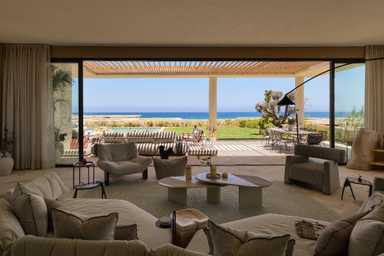
ROBINSON and Somabay extend their longstanding partnership, announcing a second club resort with approximately 250 rooms, planned to open in 2029, alongside a major refurbishment of the existing ROBINSON SOMA BAY.

2

The Big Story Today

Why Cairo’s resale property market struggles to compete with developers’ payment plans

Owners reselling property in Cairo are pricing them against developers’ headline prices, which carry years of built-in financing, leaving buyers who can pay up front little reason to meet them, JLL Egypt Country Head Ayman Sami and HC Securities Analyst Mariam Saadani tell EnterpriseAM.

The squeeze follows a buying spree in 2023, when property became a go-to hedge against devaluation and inflation, and the top 20 developers more than doubled their sales to over EGP 700 bn, The Board Consulting said at the time. “Over the past three to four years, residential prices have more than tripled in some areas,” Sami says. But that run is now flattening: sales prices rose just 2.8% q-o-q in 6th of October City and 2.4% in New Cairo in 2Q 2026, according to JLL Egypt’s 2Q 2026 Cairo Real Estate Market Overview (pdf), which says prices have “entered a saturation phase.”

Saturation hits resellers the hardest because developers are both their competition and the market’s lender. Developers keep headline prices intact by stretching payment plans while offering upfront price concessions to buyers who pay faster, JLL’s report notes. “The developers are basically playing the role of the mortgage provider,” Saadani says, in a market where mortgages make up less than 1% of GDP, according to the American Chamber of Commerce in Egypt (pdf). So every new launch competes head-on with resale units: “The secondary market is very illiquid, and as long as developers are offering more and more phases and new projects, the secondary market will struggle, because this is direct competition,” she says. That means a reseller is pricing against a financing package.

The sellers most exposed are investors and owners in older districts. “A large share of the buyers who acquired real estate in 2023 and 2024 were investors rather than end-users,” Sami says. Many of them were buying to flip. TMG’s Hesham Talaat Moustafa made the same point in September, putting the resale surplus down to speculative buying during those two years. Demand has also moved to the outskirts of East and West Cairo, Sami says, which hits older central units harder. Sellers there are often “not conscious” that high rates mean they’ll have to mark down their asking prices, he adds.

Benchmarking against a developer’s headline figure is a “mistake,” Sami says, since that price assumes decade-long terms with interest built in, which a realistic cash-value has to strip out. And developers can’t trim the headline to close the gap: “Developers cannot reduce nominal prices. They keep a headline price at EGP 15 mn, but stretch terms from seven to 10 years,” Saadani says.

Cash-buyers have a safer option: With the Central Bank of Egypt (CBE) having raised its overnight deposit rate to 20.0% and lending rate to 21.0% on 29 October, many would “prefer to keep that in the bank,” Sami says. For sellers who need the money, the markdown can be steep: “If someone is very desperate to sell, they might have to cut the price by up to half, which is cruel,” Saadani says.

If sellers are stuck, why haven’t asking prices fallen? Because most owners aren’t forced to sell, Sami says. Egypt’s property market runs on equity, so owners face none of the debt-driven pressure to dump units as in the 2008 crisis. “Most people refuse to accept that kind of [haircut], so they just keep holding on,” Saadani says. By our read, until rates come down, sellers can either mark down their prices toward a realistic cash-value or keep waiting — a wait the CBE’s October hike just made longer.

This publication is proudly sponsored by

3

EARNINGS WATCH

BdC’s 3Q net income falls 20% y-o-y, while 9M income rises 5%

Banque du Caire’s (BdC) consolidated net income fell 20% y-o-y to EGP 4.17 bn in 3Q 2026, by our math based on the state-owned lender’s first post-IPO earnings release (pdf). Net income was also down 13.1% q-o-q in the quarter, though it’s still up 4.7% y-o-y to EGP 13.11 bn over the first nine months of the year.

Higher provisions took the biggest bite out of quarterly earnings: Expected credit loss charges (money the bank sets aside for loans it expects may not be repaid) more than doubled q-o-q to EGP 1.09 bn from EGP 489 mn. That’s roughly half of the EGP 2.1 bn the bank provisioned over the entire nine-month period, by our math. BdC also booked EGP 231 mn in other expenses, compared with EGP 115 mn in other income in 2Q. Meanwhile, core revenue (net interest income plus fees and commissions) grew just 1.7% q-o-q to EGP 11.5 bn.

The 9M picture looks a bit better once you strip out last year’s one-offs: BdC says net income would have grown around 19% y-o-y without three items that lifted its 9M 2025 earnings: income from a zero-interest subordinated loan repaid last December, dividends from its since-sold stake in Afreximbank, and FX gains on that stake. That implies the three items added around EGP 1.5 bn to last year’s bottom line, by our math. Underlying performance also held up, with core revenue rising 10.8% y-o-y to EGP 33.7 bn and provisions falling 44%, bringing the cost of risk down by roughly half to 1.03%.

Costs are growing faster than revenues: Administrative expenses climbed 18% y-o-y to EGP 12.4 bn, which BdC attributes to upgrades to its core banking systems and investments in digital banking. That pushed the cost-to-income ratio to 36% from 33.7% a year earlier.

On the balance sheet, deposit growth is outpacing lending: Customer deposits rose 17% since the start of the year to EGP 473.5 bn, with 6.7% growth in 3Q alone, while gross loans grew 11.3% to EGP 287.4 bn, including just 2.5% in the quarter. That brought the loan-to-deposit ratio down to 60.7% from 63.8% at the end of 2025. Treasury investments jumped 46% to EGP 210.6 bn.

All of that has pulled returns down from last year’s highs: Annualized return on average equity (ROAE) fell to 26.3% from 33% in 9M 2025, while net interest margin held steady at 7.2%. Asset quality was broadly stable, with the NPL ratio unchanged at 3.70%, although provision coverage slipped to 173.1% from 182.9% at the end of 2025. The bank’s capital adequacy ratio stood at 22.15%.

REFRESHER- Banque Misr sold a 45% stake in BdC through a EGP 36.37 bn (c. USD 658 mn) IPO, the biggest the EGX has seen in at least a decade. The retail tranche drew more than 27x the shares on offer. After giving up an early rally, the stock ended its first trading day up just 0.19% at EGP 5.31, barely above its EGP 5.30 offer price. Banque Misr retains the remaining 55%.

4

EARNINGS WATCH

CIRA Education’s net income more than triples in FY 2025/26 as its universities fill up

Our friends at CIRA Education more than tripled their normalized net income to EGP 966.9 mn in FY 2025/26 as revenue rose 33% to EGP 5.1 bn, according to the EGX-listed schools and universities operator’s earnings release (pdf). Most of the growth came from higher education, where enrollment jumped 50% to 38.8k students and pushed available-seat utilization to 95% from 67%, while the K-12 network grew to 30 schools across nine governorates.

The drivers: Tuition, 91% of group revenue, rose 32% to EGP 4.6 bn. Higher-education revenue climbed 37% to EGP 3.6 bn, or 71% of the total, while K-12 revenue rose 23% to EGP 1.5 bn. Margins held up less evenly: normalized EBITDA grew 32% to EGP 2.4 bn on a broadly steady 47.1% margin, but gross margin narrowed to 58.9% from 60.1% as the newest campuses and schools ramp up.

Not all of the bottom-line jump will repeat. Operating income rose 38.5%, and net finance costs fell 15.4% as the group repaid debt — both should likely carry into next year. Normalized net income also carries a one-off EGP 132.3 mn bargain-purchase gain. Strip it out and growth is still about 188%, by our math. Cash tells the cleaner story: normalized cash earnings, which exclude the gain, rose 109% to EGP 1.16 bn, and net debt fell to EGP 5.02 bn from EGP 5.77 bn.

IN CONTEXT- Demand for private schooling has stayed defensive through the inflation cycle, and CIRA’s results are probably the clearest public read we have on the sector. A year ago, revenue stood at EGP 3.9 bn and normalized net income at EGP 290 mn, so the bottom line is now growing faster than the top line as newer campuses fill up.

What’s next: Enrollment for the academic year 2026/27 passed 84k students, beating CIRA’s 80k target and edging it toward the 100k-student milestone it flagged at its 2018 listing. The Damietta flagship — the Advanced Sci-Tech International Hub — remains on track for a September 2027 first phase, and Al Ahly Capital agreed to buy Elsewedy’s 40% of the Cairo Masr joint venture while CIRA keeps its 60%. CIRA also settled its Damietta land dues with the New Urban Communities Authority, which it says will trim future financing costs.

5

Energy

Cheiron commits at least USD 42 mn to East Alexandria offshore gas search

Egypt’s Cheiron signed an agreement with state gas holding company Egas to explore for natural gas in the East Alexandria offshore area, committing a minimum investment of just over USD 42 mn to drill three exploration wells and reprocess seismic data in the Mediterranean concession, according to an Oil Ministry statement. The agreement finalizes the block Cheiron picked up in Egas’ global bid round in June 2025, when it was one of six companies that were handed new blocks.

Stepping up exploration while speeding up development of discovered fields is central to the ministry’s plan to raise domestic output, Oil Minister Karim Badawi says. The ministry is targeting an extra 1 bcf / d of production by the end of this year, as part of a push to reach 6.2 bcf / d by 2027, up from an average of roughly 3.8 bcf / d in 1H 2026.

The pressure to find more gas at home has grown as LNG import costs climb. Asian spot prices went up some 36% m-o-m to more than USD 34 per mmBtu by the end of October, and the government has responded by deepening its gas cuts to industry. Mopco, Abu Qir Fertilizers, and Kima have all confirmed cuts of up to 33% in bourse filings (here, pdf, here, pdf, and here, pdf). Steelmakers are feeling it too, with Suez Steel, Beshay, and Ezz Rolling Mills facing gas cuts of about 30%.

6

Also on our Radar

FRA admits two fintechs to regulatory sandbox, bringing cohort to 11

The Financial Regulatory Authority (FRA) granted preliminary approvals to two fintechs to test their services within its regulatory sandbox, taking the roster to 11 since it launched over a year ago, according to an FRA statement. WeLend, working with Tamweely, will pilot an AI model that scores SME creditworthiness using financial and operational data, with human reviewers checking the output. The second approval was awarded to local brokerage Roa’ya Online to pilot a gamified securities trading simulator targeting retail users aged 15 to 35.

REMEMBER- AI credit scoring is gaining traction as the FRA has recently introduced a new rule easing the path for more machine decision-making in lending, starting from April 2027. We’ve seen growing use: Tanmeyah, EFG Finance’s microfinance arm, is rolling out its own credit-scoring model through I-Score’s Decision-as-a-Service platform, built on Synapse Analytics’ Konan engine and using bureau data to size up micro- and small-business borrowers. Raya Holdings also spun up Raya Nexus, an AI shop with EGP 250 mn in issued capital that sells credit decisioning, collections, and customer management tools to banks and fintechs.

Spinning toward India

Our cotton exports hit about 15.9k tons in the first 70 days of the 2026/27 season, up about 90% y-o-y, with India receiving 11.7k tons, Al Mal reports, citing an Alexandria Cotton Exporters Association report. Shipments went to nine countries between 1 September and 8 November, with China, Germany, and Pakistan ranking as the next-biggest buyers and Saudi Arabia appearing on the list for the first time.

7

PLANET FINANCE

MENA startup funding falls 96% in October to USD 40 mn as megadeals vanish

Startup funding across the MENA region plunged 96% m-o-m to around USD 40 mn in October, although September’s USD 1.1 bn made for an unusually high comparison base. Three Saudi fintech rounds — Barq, Tabby, and Lendo — accounted for USD 762.5 mn, or nearly 70% of September’s total. Lendo’s USD 200 mn is a debt program with Quantic Financial Solutions, not an equity round. The number of transactions also fell 56% to 32 from 73, according to a monthly report by Wamda and Digital Digest. And Wamda’s count for October 2025 was USD 784.9 mn, putting the y-o-y drop at 95% as well.

But the slowdown went beyond the absence of big-ticket plays. Not a single startup across the region secured funding beyond the early stage in October. Early-stage startups raised USD 33.7 mn across 24 transactions, while debt financing was limited to a single USD 550k transaction. There were also no late-stage or mega-round investments. Seven other startups raised USD 5.7 mn between them without disclosing a stage.

The month was narrow as well as small. B2B startups took USD 34.3 mn across 21 transactions, or 86% of the month’s total, and female-founded or mixed-gender teams raised USD 200k between them from two rounds — 0.5% of the month.

Saudi Arabia led the region, attracting USD 18.8 mn, or 47% of October’s funding, across nine transactions. Autobia’s USD 12 mn Series A accounted for nearly two-thirds of Saudi Arabia’s total and 30% of all funding raised across MENA. And the UAE followed with USD 12.9 mn across 10 transactions, while Qatar came third with a single USD 5 mn round. The rest of the field was smaller than a single Series A: Kuwait USD 650k, Jordan USD 560k, and Syria USD 365k.

Egypt slipped to fourth place, raising just USD 1.7 mn across six transactions, averaging less than USD 300k each. That’s down from USD 49.2 mn in September, when Paymob’s USD 35 mn round accounted for most of the funding. But even excluding Paymob, September’s total would have stood at USD 14.2 mn, by our math, suggesting Egypt’s October slowdown went well beyond the absence of a large funding round.

BACKGROUND: Egyptian startups raised USD 206 mn in 9M 2026, down 20% y-o-y, and Saudi funding fell 29% to USD 1 bn, while UAE funding rose 17% to USD 1.6 bn, according to Magnitt data seen by EnterpriseAM last month. The same report logged 31 startup M&A transactions across MENA in 9M, down 26% y-o-y, and expected a higher-for-longer rate environment to weigh on venture activity through 2027. Thin exits and dear money help explain why the late-stage tier has gone quiet.

MENA startups have raised around USD 3.4 bn in the first 10 months of 2026, by Wamda’s count, compared with a record USD 7.5 bn in all of 2025. The figures capture only disclosed rounds, however. When reported funding in Egypt dried up in March amid regional war jitters, local VCs told us that capital was still moving, but transactions weren’t necessarily being announced.

Why it matters: At USD 40 mn, the monthly total is a reading on the top of the market — a handful of Gulf financings — not on the pipeline underneath. Three Saudi transactions were 70% of September’s USD 1.1 bn, and October had none. Strip those three out, and September would have still come to USD 338 mn, by our math, more than eight times October’s USD 40 mn. Early stage is where most founders in the region actually raise, and it keeps thinning: 9M early-stage dealcount was down 45% y-o-y even as mega-rounds set records. That is the line to watch, not the headline. Wamda’s own framing is that November and December will test whether investors regain confidence after the near-freeze.

MARKETS THIS MORNING-

Asian markets closed higher yesterday. Japan’s Nikkei gained 1.3% and South Korea’s Kospi climbed 2.6%, even as more investors expect the US Federal Reserve to raise interest rates by 50 basis points. Kospi started the day down 0.6%, but bounced back to finish higher.

EGX30

52,500

0.0% (YTD: +25.5%)

USD (CBE)

Buy 53.49

Sell 53.62

USD (CIB)

Buy 53.50

Sell 53.60

Interest rates (CBE)

20.00% deposit

21.00% lending

Tadawul

10,308

+1.4% (YTD: -1.7%)

ADX

9,585

+0.3% (YTD: -4.1%)

DFM

6,221

+0.8% (YTD: +2.5%)

S&P 500

7,619

+1.3% (YTD: +11.3%)

FTSE 100

10,835

+0.8% (YTD: +9.1%)

Euro Stoxx 50

6,393

+1.0% (YTD: +10.3%)

Brent crude

USD 92.76

+1.4%

Natural gas (Nymex)

USD 3.25

+1.0%

Gold

USD 3,984

-0.4%

BTC

USD 73,916

+0.6% (YTD: -15.6%)

S&P Egypt Sovereign Bond Index

1,149

0.0% (YTD: +15.7%)

S&P MENA Bond & Sukuk

149.41

-0.3% (YTD: -1.6%)

VIX (Volatility Index)

17.49

-10.1% (YTD: +17.0%)

THE CLOSING BELL-

The EGX30 marginally rose at yesterday’s close on turnover of EGP 11.8 bn (5.5% above the 90-day average). Regional investors were the sole net sellers. The index is up 25.5% YTD.

In the green: Abu Qir Fertilizers (+5.0%), Eastern Company (+4.2%), and Mopco (+2.8%).

In the red: Ibnsina Pharma (-2.2%), GB Corp (-1.6%), and Cleopatra Hospital Company (-1.6%).

8

My Morning Routine

My Morning Routine: Yahra Zamzam, CMO at Cleopatra Hospitals Group

Yahra Zamzam, chief medical officer (CMO) at Cleopatra Hospitals Group: Each week, My Morning Routine looks at how a successful member of the community starts their day — and then throws in a couple of random business questions just for fun. Speaking to us this week is Yahra Zamzam (LinkedIn), chief medical officer (CMO) at Cleopatra Hospitals Group.

Edited excerpts from our conversation:

I’ve always wanted to understand how things work and how to fix them when they don’t. I’m a physician by training and a healthcare executive by profession, and I tend to look at how everything connects. Healthcare is about people, but good doctors alone can’t deliver it. It also takes strong management, teamwork, and a culture that puts patients first.

In one line, my job is giving patients the right care at the right time. As chief medical officer at Cleopatra Hospitals Group’s Tagamoa branch, I oversee the hospital’s medical side, getting clinical quality, patient safety, day-to-day operations, and business goals to work together instead of pulling against each other. Much of the role is turning strategy into action: building clinical services, developing teams, and making sure every patient gets the care we aim for.

Cleopatra Tagamoa Hospital was built from scratch to offer a full range of care under one roof. Advanced equipment isn’t enough on its own. Patients need coordinated care, quick access to the right specialists, clear treatment paths, and, above all, safety. That was our focus from day one, backed by firm medical oversight.

Mornings are my most valuable personal time. I try to move a little, set my priorities, and get my head in order before work takes over. Once the hospital day starts, things rarely go according to plan, so I like to begin with some structure. I read EnterpriseAM early, while I still have a quiet moment to look beyond the job.

I don’t have a typical workday. Most days mix clinical and operational reviews, meetings with department heads, project updates, patient-safety issues, and big strategic decisions. Some days are all planning, while others get taken over by problems that need fixing right away. You learn to jump between long-term plans and the smallest detail, sometimes within the same hour.

In healthcare, everything feels urgent. React to everything and you lose sight of the bigger picture. I rely on clear priorities, consistent follow-up, and accountability, breaking big plans into small practical steps. I’ve learned that no one can solve everything alone, and building strong teams that own their work is at the heart of leading.

Healthcare is moving from treating illness to preventing it. The focus now is on outcomes and the patient’s whole experience. Artificial intelligence, precision medicine, and digital health are accelerating that shift. What interests me most is how we use these tools to make care safer, easier to access, and more human. I’m also curious about healing traditions outside Western medicine, and how they’re being tested, since the most exciting discoveries often come when science challenges what we thought we knew.

One question guides everything I do: Are we doing what’s best for the patient? Whether we’re talking about staffing, finances, treatment plans, or a new service, patient safety and quality are always the yardstick.

Professionally, I want to keep building healthcare systems that run well, deliver excellent care, and last. I’m increasingly drawn to where leadership, strategy, and organizational growth meet. I also want to spend more time teaching and sharing what I’ve learned with the next generation of leaders.

Personally, I want to be more deliberate with my time. I tend to give work most of my energy, and being available all the time doesn’t make you effective. My real challenge is being fully present wherever I am, whether at work, with my family, or on my own. I’m still working on it.

When the workday ends, I keep things simple. I spend time with my son, enjoy a little quiet, and now and then do absolutely nothing. I also love to read, though I sometimes have to remind myself that not every moment has to be productive. Switching off takes effort, much like staying focused.

Your title gives you authority, but your actions earn you credibility. That’s the best lesson I’ve picked up from my mentors and senior leaders. Leadership isn’t about having every answer. It’s about owning your decisions, especially the hard ones.


NOVEMBER

9-20 November (Monday-Friday): COP31 — UN climate conference, Antalya, Türkiye.

10 November (Tuesday): Cityscape Egypt Forum, Cairo.

12-15 November (Thursday-Sunday): Stone Africa Expo, Cairo International Convention Center, Nasr City, Cairo.

14 November (Saturday): Rolling mills’ Administrative Court challenge.

14-15 November (Saturday-Sunday): Destination Africa, Egypt International Exhibition Center, Cairo.

15 November (Sunday): Air Cairo resumes direct Cairo–Damascus flights.

16-17 November (Monday-Tuesday): World Economic Forum’s (WEF) first dedicated business meeting in Egypt + MENA, New Capital.

26-29 November (Thursday-Sunday): Cairo WoodShow, Cairo International Conference Center, Cairo.

28-30 November (Saturday-Monday): Egypt-Africa engineering industries and innovation forum (EGITEC), Egypt International Exhibition Center, Cairo.

DECEMBER

7-10 December (Monday-Thursday): Food Africa, Egypt International Exhibition Center, Cairo.

7-10 December (Monday-Thursday): interpack MEA, Egypt International Exhibition Center, Cairo.

11-12 December (Friday-Saturday): ISER International Conference, Cairo.

15 December (Tuesday): Egypt’s 48-month IMF extended fund facility expires.

17 December (Thursday): Monetary Policy Committee’s eighth meeting of 2026.

17-19 December (Thursday-Saturday): EVs Electrify Egypt, Egypt International Exhibition Center, Cairo.

17-20 December (Thursday-Sunday): MacTech Egypt, Egypt International Exhibition Center, Cairo.

17-20 December (Thursday-Sunday): Airtech Cairo, Egypt International Exhibition Center, Cairo.

17-20 December (Thursday-Sunday): Handling Expo, Egypt International Exhibition Center, Cairo.

2026 EVENTS WITH NO SET DATE

Mid-November: Egypt–Saudi Arabia’s 3 GW electricity interconnection officially launches.

November: The IMF’s eighth and final review of Egypt’s EFF programme is expected, unlocking around USD 2.3 bn.

2H 2026: Operations at Deli Glass Co’s new USD 70 mn glassware factory kick off.

2026: The Egyptian-American Economic Forum.

JANUARY 2027

9-12 January (Saturday-Tuesday): Afro Plast, Egypt International Exhibition Center, Cairo.

13-14 January (Wednesday-Thursday): Denimsandjeans Egypt, InterContinental Citystars, Cairo.

18-22 January (Monday-Friday): World Economic Forum Annual Meeting, Davos.

20 January-7 February: Egypt to host the African Games.

FEBRUARY

1-3 February (Monday-Wednesday): Agri Expo, Cairo International Convention Center.

MARCH

30 March-1 April (Tuesday-Thursday): EGYPES — Egypt Energy Show, Egypt International Exhibition Center, Cairo.

APRIL

12-18 April (Monday-Sunday): IMF and World Bank Spring Meetings, Washington, DC.

April 2027: Tenth of Ramadan dry port and logistics hub to begin operations.

MAY

6-8 May (Thursday-Saturday): Glass + Aluminum and WinDoorEx Middle East, Egypt International Exhibition Center, Cairo.

JUNE

8-9 June (Tuesday-Wednesday): AI Everything MEA Egypt, Egypt International Exhibition Center, Cairo.

10-12 June (Thursday-Saturday): The Design Show Egypt, Cairo International Conference Center, Cairo.

14-16 June (Monday-Wednesday): Big 5 Construct Egypt, Egypt International Exhibition Center, Cairo.

SEPTEMBER

29 September - 2 October (Wednesday-Saturday): Cityscape Egypt Exhibition, Cairo.

2027 EVENTS WITH NO SET DATE

2027: Egypt to host EBRD’s annual meetings.

2027: Egypt-EU Summit 2027.

End of 2027: Trial operations at the Dabaa nuclear power plant expected to take place.

September 2028: First unit of the Dabaa nuclear power plant begins operations.

Now Playing
Now Playing
00:00
00:00