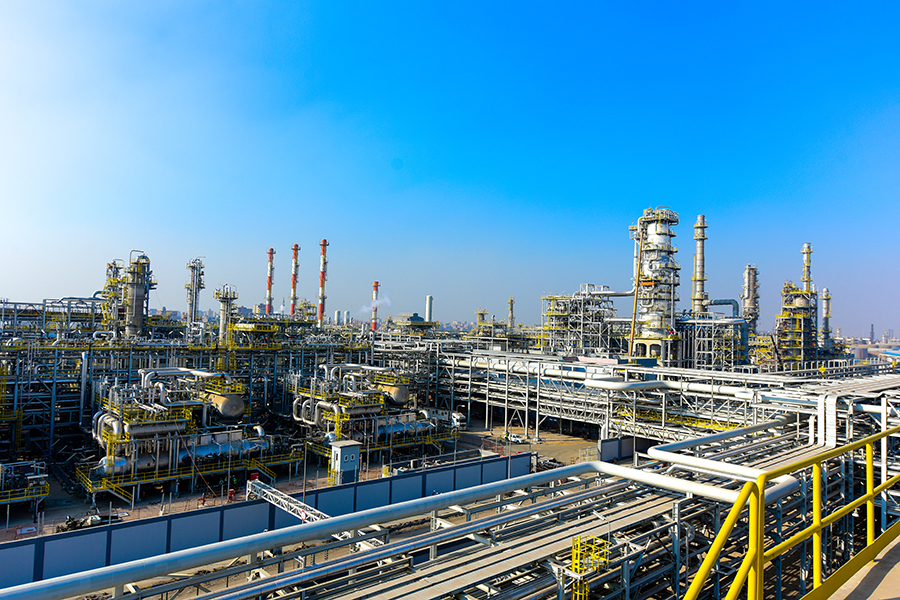
Reforming executive regulations isn’t enough

1

WHAT WE’RE TRACKING TODAY

Egypt’s economy grew 5.1% in FY 2025/26, beating the IMF’s forecast

Good morning, folks. Today we’re minding the gap between what’s planned on paper and what’s actually working in practice with three stories across regulation, debt, and rails.

The Companies Law story is the most strategically significant read. Egypt is rewriting the executive regulations of its main corporate statute and pushing a Senate amendment bill through committee simultaneously. The reforms will clear some important bottlenecks, but lawyers and former regulators tell us they aren’t enough to keep Egyptian deals from moving offshore.

Nawy Now has closed a second EGP 633 mn raise — 43% above the first issuance — by selling seasoned mortgage receivables off its balance sheet. The structure is simple: Nawy writes the mortgage, warehouses it, sells the portfolio to the fund, and frees up the balance sheet to lend again.

And on the railways: The World Bank has flagged “high” fiduciary risk on its USD 440 mn railway safety loan five years into a project that has disbursed less than half its funds and hasn’t moved its lead safety metric off the 2020 baseline. We’ve got a read on why progress has been slow.

***

ARE YOU MORE OF A LISTENER? Morning Drive is a 10-minute summary of today’s issue crafted for you to enjoy with your morning coffee, while getting the kids ready for school, or driving through the morning rush. And if you like it, tell your friends to tell their friends. They can find us on Apple, Spotify, or wherever they get their podcasts.

***


The EnterpriseAM Egypt Forum is back — and we’re devoting the full day to the singular set of questions on everyone’s mind: What does AI actually mean for your company, your people, your economy, your own job — and your kids’ future?

Every session on stage answers one question: “So, what do I actually do about it?”

Join us on 5 October in Cairo. Seats are limited and attendance is by invitation only.

Request your invitation here.


Growth sticks the landing

The country’s economy grew 5.1% in FY 2025/26, accelerating from 4.4% a year earlier, according to a Planning Ministry statement. Growth came in at 4.7% in the 4Q, easing from the 5.0% we saw in 3Q, but the full-year outturn still comfortably beat the IMF’s latest 4.6% forecast, though marginally below EBRD’s updated 5.3% projection in its June 2026 Regional Economic Prospects report.

Industry did much of the heavy lifting. Non-oil manufacturing grew 9% over the FY and was the single biggest contributor to growth, while industry, trade, and communications together accounted for 48% of the year’s total growth. Suez Canal activity continued its rebound, growing 33.8% in 4Q and 23.3% over the year, while communications expanded 24.3% in 4Q. Extractive industries also returned to positive growth in 4Q for the first time since 2Q FY 2022/23 as oil and gas activity improved.

MEANWHILE- The private-sector picture is starting to look less gloomy. The headline S&P Global Egypt PMI (pdf) jumped to 49.6 in August from 46.8 in July, its highest reading in seven months and just shy of the 50.0 threshold separating m-o-m expansion from contraction. New orders fell at their softest pace since February, the output downturn eased, and employment rose for the first time since October 2025 at the second-fastest pace in the survey’s 15+ year history. Business confidence also climbed to its highest since June 2022.

But 49.6 is still contraction territory — and cost pressures are reappearing. Purchasing activity fell for a fifth straight month and at its sharpest pace in nearly three years, with around 29% of firms cutting purchases as material shortages and cashflow constraints persisted. Input costs and selling prices also rose more quickly for the first time in three months, partly on higher oil, material, and transport costs. The takeaway is that the private sector is much closer to stabilization, but it is not across the line yet.

Two bets, one China

China’s Linglong Group signed an MoU with the Industry Ministry for a USD 2 bn integrated tire complex in Borg El Arab, according to a Cabinet statement. The complex will produce tires for passenger cars, buses, and heavy equipment, plus conveyor belts. It will also fold in upstream feeder industries — carbon black and steel cord — to build a complete local value chain. Exports will target Europe and the US alongside the domestic market. Linglong first floated the project in April, pitching a private freezone facility with around 90% of output then earmarked for the US and GCC.

IN CONTEXT- The project is the largest in a wave of Chinese tire investment: Sailun broke ground on a USD 1 bn Sokhna plant in 2025, China National Tire & Rubber is expanding with a USD 550 mn Alexandria facility targeting 2028 operations, and Zenith Steel is investing USD 300 mn in a steel-cord and bead-wire plant in Teda to supply the cluster. Egypt imports 8 mn tires yearly worth around USD 1.25 bn across all categories — with no domestic passenger-car production despite an estimated 500k-unit annual demand in that segment alone.

MEANWHILE- A separate China-Egypt agricultural push is heading to the New Valley. A Chinese delegation will visit soon to explore investment opportunities there, Asharq reports, citing Egyptian-Chinese Businessmen Association CEO Omar Wang. The two sides are studying two wheat varieties and two corn varieties suited to Egyptian soil, with a pilot planting across 1k feddans before scaling. This builds on a consortium of Chinese companies developing a 1 mn feddan integrated farming zone in the New Valley — modeled on the Teda trade zone — announced in November 2024, centered on strategic crops, medicinal and aromatic plants, and export fruit greenhouses aimed at Europe.

The no-sale club

The last piece of the government’s blocking stake in Alexandria Container and Cargo Handling (ALCN) is now formally off the table. The General Authority for Alexandria Port, which holds 7.63% of the EGX-listed port operator, told ALCN that it has no intention of selling any of its shares to AD Ports subsidiary Black Caspian Logistics, according to an EGX filing (pdf). The company disclosed the letter alongside a restatement of the Holding Company for Maritime and Land Transport’s refusal, putting the full 43.9% state bloc on the record.

What’s left is a tender against a sliver of free float. With ADQ’s side at 51.33% and the state at 43.9%, ALCN’s free float is roughly 4.8% — and Black Caspian’s offer tenders for up to 4.3% of the company. Full acceptance would leave the port operator with almost no tradable stock — the EGX requires a minimum 10% free float to remain listed — a question the FRA will have to answer before the offer clears. At EGP 27.47 per share, the offer sits about 17% below the stock’s current trading price of EGP 33.20, giving free float shareholders little incentive to tender.

REFRESHER- The Holding Company confirmed in June it wouldn’t sell, bearing out our exclusive that the Transport Ministry — which sits above two of ALCN’s shareholders: the Alexandria Port Authority and the Holding Company for Maritime and Land Transport — would reject the sweetened bid.

Why this matters: ALCN’s two terminals, spanning roughly 1.6 km of quay across the Alexandria and El Dekheila ports — a complex that handles about 60% of Egypt’s foreign trade — and wired into the national rail network, carry a combined capacity of 1.5 mn TEUs. That’s only about three-quarters of the 2 mn TEU of container capacity the two ports are designed to handle. ALCN is also a cash cow, with revenue of EGP 8.37 bn in FY 2024/25 and an adjusted EBITDA margin of 64%. Its income has grown 228% since 2022.

One rulebook to rule them all

The Financial Regulatory Authority (FRA) has issued a new comprehensive rulebook for consumer-finance companies, according to a statement from the regulator. The guide (pdf) consolidates the requirements governing the sector into a single reference, covering everything from incorporation, licensing, and governance to lending practices, financial solvency, customer protection, debt collection, and cybersecurity.

The practical rules go well beyond licensing. Lenders must clearly disclose repayment schedules, costs, fees, and financing risks; assess borrowers’ creditworthiness; and cannot take blank-signed documents or trust receipts as collateral. The framework also incorporates Basel III-style capital, leverage, liquidity, and stress-testing requirements, while making IT governance, cybersecurity controls, and regular penetration testing part of the conditions for maintaining a license.

Much of this framework was already in the books. The FRA had published an earlier consumer-finance rulebook in 2021 (pdf), while the sector has since picked up additional layers covering everything from tighter credit and customer-protection controls to mandatory death and permanent-disability ins. and a regulated debt-collector registry. The new guide brings those newer requirements into one updated compliance reference.

Watch your Hormuz payments

Egyptian companies could face US sanctions over certain transactions linked to passage through the Strait of Hormuz, the Cairo Chamber of Commerce warned in a letter seen by EnterpriseAM. The warning follows the US’ Office of Foreign Assets Control’s designation of Iran’s newly created Persian Gulf Strait Authority. The US Embassy in Cairo flagged risks from seeking guarantees of safe passage or paying transit fees — directly or indirectly — to the Iranian government or the Islamic Revolutionary Guard Corps. Prime Minister Mostafa Madbouly has directed the relevant authorities to be briefed on the developments.

The Chamber is urging affected companies to review the warning and take steps to limit their sanctions exposure. The issue is particularly relevant for importers and exporters reliant on Hormuz, where payments, marine ins., and shipping arrangements can all intersect with the new passage regime.


PSA-

WEATHER- A warm and humid Sunday ahead in Cairo today, with a high of 35°C and a low of 24°C, according to our favorite weather app.

It’ll be a little cooler in Alexandria, with a high of 32°C and a low of 24°C.

The big story abroad

The battle for control of the Strait of Hormuz continues to escalate, with US forces striking three Iranian crude oil tankers — permanently disabling two — after Iran targeted two US Navy warships, according to a statement by US Central Command. No US personnel were harmed, it said. The exchange of fire follows renewed US military strikes against Iranian targets after a month of relative quiet in the six-month conflict.

What is Tehran saying? The Islamic Revolutionary Guard Corps reportedly stated that it targeted three oil tankers taking "unauthorized routes" through the Strait of Hormuz, along with three US-affiliated vessels in other areas. Iranian news media reported that four US missiles struck a tanker near Kharg anchorage without casualties, and the crew was evacuated.

US jobs swell in August: The US Labor Department announced that the US economy created 162k jobs last month, comfortably beating expectations and signaling a rebound from the early-summer slowdown in employment growth. The unemployment rate held steady at a historically low 4.1%, signaling a healthy labor market.

Anthropic to list before midterm elections: Anthropic plans to begin promoting its IPO no earlier than mid-October, targeting a stock market debut shortly before the US midterm elections in November, unnamed sources tell Reuters. The AI startup was expected to publish its IPO prospectus as early as next week, but sources now say that key filing is delayed until late September.

Is RAMageddon upon us? The AI investment boom is driving up the cost of memory chips and other components, triggering a price hike for phones, laptops and gaming consoles by as much as 20%, and reversing the decades-long trend of cheaper and more powerful electronics. Meanwhile, the cost of dynamic random-access memory has risen fivefold in 2026, as chipmakers stop or slow down production of lower-end chips.

A strategic partnership shaping the next chapter of the Red Sea

Somabay and MARAKEZ come together in a landmark partnership, marking MARAKEZ’s first entry into Egypt’s Red Sea market and a significant step forward in the continued evolution of Somabay.

2

REGULATION WATCH

Egypt is fixing how deals get executed, but what pushes investors offshore runs deeper than the reforms on the table

The government is trying to make corporate transactions easier to execute, and it’s coming at the problem from two directions at once. The Investment Ministry is rewriting the executive regulations of Companies Law 159/1981 — the rulebook officials actually apply — to clear bottlenecks around capital increases, valuations, M&A, and convertible-equity financing. In parallel, a Senate-backed amendment bill has cleared committee, in what is arguably the biggest rewrite of the law since 1981.

But lawyers and former regulators who work these deals tell us there’s a catch: even together, the two efforts stop short of what actually sends Egyptian companies offshore. New regulations can smooth how a transaction moves through the system; the amendment bill retools pieces of the machinery; but neither introduces the share classes or the convertible instruments that a VC or PE deal is built on. For those, the fix sits deeper than anything currently on the table.

The two moving tracks interlock. Investment Minister Mohamed Farid says the executive-regulation overhaul will touch capital increases, general assemblies, valuations, and financing, along with M&A and convertible equity. The Senate bill, submitted by MP and former investment minister Sahar Nasr, sets the frame. It hands much of the detail — from the treasury-share program to a new appraiser registry to disclosure templates — straight back to those executive regulations. A more ambitious rethink runs underneath both: a new ground-up Companies Law that the General Authority for Investment and Free Zones (GAFI) began drafting in early 2025.

The rulebook underneath the law

The regulations matter because they are what a civil servant reaches for when the law meets a real transaction. “You find an amended provision in the law — the provision itself may be good, essentially similar to what exists in other countries — but the executive regulations remain outdated in some cases,” Islam Saeed, founding partner of Alphalex Legal and Tax, tells EnterpriseAM. “Civil servants are by default guided by the level closest to them, and that’s the regulations and circulars, not the law.”

The mismatch is not hypothetical. Farid’s own example: the law lowered the minimum nominal value of a share to EGP 0.10 while the regulations kept the old EGP 5 floor — so a company incorporates under one number, then has to call an extraordinary general assembly to split its shares down to the other. Gaps like this can persist for decades, he said, bouncing files needlessly between GAFI and the Financial Regulatory Authority (FRA) while the statute has already moved on.

And procedures, once added, tend to stay. Hossam Heiba, the former GAFI chief who is now Orbis Capital & Investment’s Managing Director, says administrative requirements are usually introduced for a good reason — protecting minorities, the state, or a specific activity — but calcify into obstacles when applied across the board. “What may be appropriate for one company or project can become an obstacle when applied to all projects,” he tells us. “You only see that after implementation.”

Valuation as a deal-breaker

Nowhere does that bite harder than in valuations, which capital increases, changes of legal form, and M&A can all trigger through GAFI’s economic-performance function. Heiba argues that role should be procedural, not technical: “Why should I intervene, as an administrative body, in the valuation itself? All I should look at is the procedure through which it was approved.” Ambiguity, in his read, pushes officials to protect themselves by asking for more. “There were gray areas in the law, so they were more cautious — and that held up the process unnecessarily.”

On that specific point, the Senate bill moves in his direction. It would take valuation of in-kind capital contributions out of a GAFI committee and hand it to appraisers licensed by the FRA, leaving the committee to verify rather than value, and shorten the review to 30 days from 60 — close to the procedural role Heiba says the state should play.

What it doesn’t fix is the constraint Saeed flags underneath: recognition. “If the assets being valued by GAFI for a corporate valuation — for example, for a merger, demerger or conversion into equity — include unregistered real estate, it won’t be recognized under current practice,” he says. With much of Egypt’s property stock unregistered, that turns strategic fast for real-estate-rich companies: “It becomes a major problem for companies trying to move from a family business to an institutionalized one, or looking to go public.”

M&A doesn’t answer to one rulebook

Fixing the regulations only gets a deal so far, because a deal rarely lives under one statute. “Look at a legislative triangle — the Companies Law, the Capital Markets Law and the Income Tax Law,” Saeed says. “The three overlap inside the same transaction, especially when there’s a merger or capital increase.” The valuation behind an acquisition or merger can carry its own tax bill. Egypt scrapped capital-gains tax on trades in EGX-listed securities, Saeed says, but it can still apply to sales of unlisted shares and corporate restructurings, including mergers and demergers. If a restructuring values a company above book value, the difference can create a tax liability for the target company; that charge may instead be deferred where assets and liabilities continue to be carried at book value for tax purposes, subject to conditions including a three-year lockup on the post-transaction shareholding structure.

It’s the same math that helps drive companies offshore: Our earlier reporting on why Egyptian startups incorporate abroad found investors using foreign structures partly to avoid Egypt’s 22.5% capital-gains tax on exits. “One law may make the transaction difficult, another may create unaffordable implications that stop it, or force it to be done in a form that isn’t attractive to investors, all while safeguarding the state’s rights," Saeed says.

His fix is bigger than any one regulation. “We need a ministerial committee to take a strategic view of these business laws and carry out a comprehensive legislative overhaul in one go that keeps pace with the global culture and ‘DNA’ of M&A and group restructuring,” Saeed says. Some coordination is already underway. Heiba says GAFI and the FRA had begun aligning on capital increases, M&A, and valuations during his tenure, and he expects it to matter more soon: “The next stage will have mergers and acquisitions. We need procedures and laws that let that happen faster and more simply than today.”

What better plumbing can’t fix

Then comes the constraint no regulation touches: what an investor is allowed to own. “We don’t have in Egypt today a flexible share-class regime in the way you would typically see in a VC or PE market. All we have are ordinary and preferred shares — and even preferred shares carry major limitations that greatly reduce their use,” Saeed says. “This is one of the things that hinders startups and private-equity models.” Share classes — which can give different investors different economic and voting rights — are part of the basic architecture of VC and PE transactions, while Egypt’s framework remains, in Saeed’s repeated word, “conventional”: outdated not just against New York or London, but against the region.

The gap has a track record, and a cost. Regulators were already working in 2022 to make founder-control clauses, drag- and tag-along rights, preferred shares, and convertible notes workable onshore. A year later, our look at why Egyptian startups incorporate abroad found exactly these instruments among the reasons founders preferred foreign holding structures. The ministry now says its June package will make convertible notes and shareholder agreements easier to use and change how startups are valued in capital increases, but Saeed is blunt about the ceiling: “The regulations operate inside the framework of the law.” And the Senate bill, for all its reach, doesn’t add share classes either.

The bigger rewrite

That is what makes the replacement law the real event. The draft Heiba worked on at GAFI focused on the structural questions neither the regulations nor the current bill reach: a single incorporation authority instead of the several that register companies today; a push toward the one-person company to retire obsolete forms; governance updated to match the FRA’s; and an end-to-end digital platform for the whole company lifecycle. It also looked at letting shareholders write agreed rights straight into a company’s charter. “I have shareholders who’ve agreed things among themselves — what stops me from putting those provisions into the articles of incorporation?” Heiba says. He is careful to add that he doesn’t know what the ministry’s current draft contains, and Saeed notes neither has seen the full amendments, “only news.”

Why it matters: Between the executive-regulation overhaul and the Nasr bill, the near-term reforms could reshape how companies recapitalize, take on investors, merge, and restructure well before any ground-up law arrives — and the valuation shift alone removes a real chokepoint. But the reforms that would keep the next generation of startups and PE deals onshore sit deeper than either.

What’s next: Saeed’s own metaphor sizes the moment. “It’s as if the law is a gearbox that moves the market,” he says. “Right now I’m not changing the gears, I’m changing the oil and the lubrication so it runs faster and smoother.” Watch three things: whether the Nasr bill clears the full Senate and House and how much of it lands in the executive regulations; when the ministry issues its own amendments and whether the draft is published; and whether any version finally puts share classes and convertible instruments into the law itself.

This publication is proudly sponsored by

3

DEBT WATCH

Nawy Now offloaded another EGP 633 mn of mortgages to a fund, freeing up balance-sheet capacity

Nawy’s mortgage arm Nawy Now has picked up another EGP 633 mn from institutional investors after Synergy Capital’s asset-management firm, Misr for Financial Investments (MFIC), closed the second issuance of its Shariah-compliant, Ijarah-based fixed-income fund, the two said in a statement (pdf). The book came in 43% above the first issuance and takes the program to some EGP 1.08 bn against a five-year, EGP 5 bn target — a little over a fifth of the ceiling, by our math. The cash isn’t funding new mortgages. “We’re essentially selling receivables off our balance sheet — the fund buys our mortgage portfolio, which lets us offload it and free up balance sheet capacity,” Nawy Group CFO Amr Malek tells EnterpriseAM.

How it works: Nawy Now writes the mortgage, warehouses it on bank facilities, then sells batches of seasoned loans to the fund at net present value, booking a slim margin between the rate it lends at and the rate it funds at, Malek tells us. “We don’t have recourse to the fund. There are protections in place for investors — a reserve account and a default ins. policy — which together help mitigate risk for whoever’s holding this portfolio,” he says. And the loss sequence is spelled out: “In practice, if a customer defaults, the reserve account absorbs it first, and the ins. policy covers the fund for any shortfall beyond that,” he adds.

The fund doesn’t get the whole book, either. “We’re deliberate about which portfolio goes into the fund — that’s a joint call with the asset manager, because both investor protection and Nawy’s standing depend on it,” Malek says.

The first issuance — EGP 443 mn, which closed early and oversubscribed in October 2025 — has distributed some EGP 118 mn to certificate holders across three payment cycles with no missed payments, MFIC and Nawy Now say. It returned 6.63% in 1Q 2026 and 6.25% in 2Q — a cumulative 12.9% in the first half — according to FRA data cited in the statement. Qualified individual investors took 22% of the book alongside cornerstone institutions including Al Baraka Bank, Allianz Life Egypt, and Misr Ins. Holding.

Why a fund and not a bond: “Securitization is really a volume game, not a value game — rating agencies apply the same transaction-count and concentration thresholds whether it’s consumer finance or mortgages,” Malek tells us. “A fund structure doesn’t need that same volume; it’s built around value, which made it the more practical route for us.”

What’s next: Quarterly distributions on the second issuance begin this month, MFIC and Nawy Now say, with further issuances to follow as Nawy Now’s origination book grows. Malek won’t put a clock on them: “We time issuances around three or four internal metrics we track — there’s no fixed schedule or target. When the numbers and timing line up, we go.” The program also plans to “reach Gulf and other international markets through licensed placement partners.”

Nawy Now writes mortgages with tenors of up to seven years — against a five-year fund — and its parent has raised some USD 52 mn in equity since 2019 from investors including Partech, e& Capital, Shorooq Partners, and Endeavor Catalyst.

ADVISORS- MFIC acted as asset manager, with Synergy Capital as financial advisor, promoter, and placement lead. Mubasher for Securities and Bond Trading handled subscription and redemption, Aliedean Weshahi and Partners (ALC) was legal counsel, Catalyst Partners was fund administrator, and Crowe Hegazy provided audit and tax advisory.

The funding market is moving fast. Non-bank mortgage companies extended some EGP 19.96 bn in financing over the first five months of 2026, up 20.4% y-o-y, but refinancing volumes rose 167.3% to EGP 2.43 bn over the same period, according to the FRA’s monthly report — a sign that originators are increasingly recycling portfolios rather than sitting on them.

4

DEVELOPMENT WATCH

Five years into RISE, safety metric frozen as World Bank ratchets up fiduciary risk on Egypt’s railway loan

The World Bank has flagged “high” fiduciary risk on its USD 440 mn loan to modernize railway safety along the Alexandria-Cairo-Nag Hammadi corridor — and more than five years in, the project’s lead safety metric hasn’t moved, according to the bank’s implementation status and results report (pdf). The loan — known as RISE, for Railway Improvement and Safety for Egypt — is run by Egyptian National Railways (ENR) under the Transport Ministry. Fiduciary is the only risk category the Bank has escalated since approval: everything else, from macroeconomic to technical to stakeholder risk, sits where it did in March 2021.

SOUND SMART- Fiduciary risk is the Bank’s assessment of whether borrowed money is properly tracked, controlled, and spent as intended — covering financial management, procurement, and accounting. Its risk ladder runs: Low, Moderate, Substantial, High. The Bank’s own guidance (pdf) defines a “high” rating to mean the fiduciary environment is “weak,” internal controls are “unable to prevent or detect irregularities,” project funds are “routinely diverted,” and procurement contracts “routinely exceed their original value and schedule.”

Asked directly what drove the fiduciary downgrade, the World Bank told us it’s about financial management control specifically — not the project’s overall performance — and that the Bank and ENR have “agreed on corrective measures to strengthen controls and oversight,” with future ratings depending on how those measures are implemented. The Bank did not specify what specific lapse triggered the shift, or exactly when it occurred. The Bank’s documents show the downgrade was first proposed in July 2024 (pdf) and formally entered the books as the approved rating by December 2024 (pdf). The latest report, from August 2026, reaffirms it. What drove the change between those dates, the Bank hasn’t said.

The rest of the Bank’s scorecard is steady. The Bank still rates both the project’s progress toward its objective and its overall implementation “moderately satisfactory,” keeps overall risk at “substantial,” and opens its status note by calling the project “progressing with recent signs of modest improvement.”

The warning sign is the money: More than five years into a project meant to close by 2027, ENR has disbursed just USD 200.82 mn — 47.68%, under half — of the loan whose value has since been revised down from USD 440 to USD 421.2 mn. While the Bank did not specifically clarify whether it is confident the remaining USD 220 mn can realistically be absorbed and spent effectively before closing, it said disbursement is “closely linked to verified progress” under major works contracts, and pointed to “substantial progress” on other fronts.

Why the corridor needed fixing

RISE covers roughly 760 km of ENR’s approximately 5k km national network, running through 11 governorates from Alexandria to Nag Hammadi in Upper Egypt — a line the World Bank says carries over one mn passengers each weekday. The project is not looking to build a new railway, but rather aims to modernize the signaling and safety systems on the existing one.

RISE is a direct continuation of the Egyptian National Railways Restructuring Project (ENRRP), which modernized signaling specifically along the Alexandria-Cairo and Beni Suef-Nag Hammadi corridors before closing in December 2020; work left unfinished at closure was “transferred to RISE to ensure continuity and completion of Egypt’s broader railway modernization program,” the Bank said. The report attributed the delays to lengthy procurement processes, disruption of the 2011 uprising, and the fact that ENR’s safety procedures and operating manuals dated back to 1903 (pdf). RISE picks up where that left off, rolling over the unfinished signaling work and adding the one segment ENRRP never touched: Cairo-Giza-Beni Suef, a 125-km stretch requiring signaling modernization from scratch.

On what’s specifically driving delays in the Cairo-Giza-Beni Suef segment, the Bank said no single factor alone explains the implementation timeline, but listed five contributing factors, including “sourcing of materials, design reviews, site handover requirements, scheduling of technical works, and contract-management processes.”

The USD 440 mn loan itself doesn’t cover the full cost of the work — it’s the World Bank’s share of a larger USD 680 mn project, topped up by counterpart financing from the Finance Ministry to ENR. The Bank approved the loan back in March 2021, alongside a USD 241.1 mn ENR contribution. That total breaks down into three components: USD 602 mn for signaling modernization, replacing manual, decades-old signaling with automatic block systems, electronic interlocking, and level-crossing protection; USD 54 mn for building ENR’s internal safety-management and asset-tracking capacity, including staff training; and USD 24 mn for institutional reform, chiefly a push to shift ENR from unconditional government subsidies to performance-based funding tied to actual service delivery.

Where the numbers stand today: The report’s own disbursement chart projects a sharp acceleration to near-full disbursement by the end of FY 2026/27 — a trajectory that would require spending the remaining c. USD 220 mn in 13 months, against a prior pace that delivered about USD 55 mn in the preceding twelve. The report attributes at least part of the drag to the Cairo-Beni Suef segment specifically, describing it as “significantly behind the original schedule” and the corridor’s main outstanding work — the one segment RISE, not ENRRP, was responsible for building from the ground up.

What the numbers show

The indicators that haven’t moved: RISE’s lead outcome measure — fatalities and weighted serious injuries per bn passenger-km, an EU-standard composite safety metric — is reported unchanged from its 2020 baseline of 0.56, against a March 2027 target of 0.44.

User satisfaction with the ENR services has not moved off its 60% baseline, against a target of 80% by project close. This indicator tracks passenger ratings on punctuality, air conditioning, cleanliness, ticket availability, customer service and staff attitude, and overall trip quality on a five-point scale, with only those rating four or five counted as satisfied. It also tracks the passenger perception on quality improvements at stations. However, there is a structural lag to this measurement as user surveys are performed annually and will be repeated at mid-term and project close, meaning that it does not capture m-o-m changes.

Climate-resilient signaling coverage on the new Cairo-Giza-Beni Suef segment sits at zero of a 125 km target, pedestrian barrier crossings are at zero of 10, and the shift to performance-based ENR funding — the project’s core institutional reform — remains unimplemented, with a USD 29 mn performance-based payment marked “Not Due.”

What’s going well: Train punctuality already hit its 90% target early, up from a 75% baseline. The project’s push to recruit more women into ENR’s engineering roles has outperformed its own goal — 306 female graduates recruited as of December 2025, against a 240 target. Signaling tower commissioning is roughly on pace at 51 of 70 towers.

What the government says

Track renewal is underway on roughly 107 km of line in parallel with the safety work, and that signaling upgrades sit within a broader package of 21 projects aimed at lifting network efficiency and safety, a government official separately tells us. New projects will introduce European Train Control System (ETCS) automatic control, meant to raise safety standards and reduce reliance on human intervention, he says. Signaling and track-renewal work are proceeding in parallel to maximize returns on the investment and improve train punctuality, capacity, and safety for passengers and staff alike, he adds.

5

A MESSAGE FROM AUC ONSI SAWIRIS SCHOOL OF BUSINESS EXECUTIVE EDUCATION

Hospitals have the data. Few have the informatics to use it

AUC’s Applied Health Informatics program teaches healthcare professionals to combine informatics, safety and quality improvement, and product management. Participants will learn to identify clinical problems, design and test solutions, and build executive-ready dashboards to lead informatics initiatives within their institutions. The 6-week program runs live online, with the next cohort beginning 10 October 2026. Applications close on 20 September 2026. Apply here.

6

EGYPT IN THE NEWS

Foreign press sees Xi’s Cairo stop through the US-China rivalry

The foreign media is putting Chinese President Xi Jinping’s Cairo stop squarely inside the US-China technology rivalry, with Bloomberg casting Egypt as an increasingly important arena in the competition. The outlet points in particular to Huawei’s plans to build AI data centers for the government — which have raised alarm in Washington — alongside Beijing’s growing infrastructure footprint and persistent trade surplus with Egypt. Xi’s first visit to Egypt since 2016, in Bloomberg’s telling, lands as Cairo tries to deepen ties with Beijing without upsetting its longstanding relationship with Washington.

Other foreign media zoom out from the tech contest, with Reuters reading the visit as part of Beijing’s bid for a wider economic and diplomatic role in the Middle East, as Egypt pursues what President Abdel Fattah El Sisi has called a policy of “strategic balance” between the major powers. Meanwhile, the Financial Times places Cairo within Xi’s unusually busy month of foreign travel ahead of a planned summit with US President Donald Trump, as Beijing pitches itself to developing countries and US partners as a reliable trade, investment, and technology partner.

The geopolitical framing is broader than the concrete business takeaways from the visit so far, as the two countries have signed five headline agreements and 20+ cooperation documents, alongside a third-phase expansion of the China-Egypt Teda zone and broader commitments on technology, data centers, semiconductors, and local-currency settlement. But no specific Huawei data-center or chip agreement emerged — at least not yet — leaving the US-China tech contest as the international press’s bigger story around the visit rather than one of its concrete deliverables.

7

Also on our Radar

CI Capital Asset Management plans to launch Egypt’s first equity hedge fund

CI Capital Asset Management plans to launch an equity-focused hedge fund targeting EGP 250 mn in assets-under-management within its first year, Asharq reports, citing Managing Director Amr Abol Enein. The fund is slated to come alive before year-end, with the firm anticipating growing appetite from retail and institutional investors for new investment products.

REMEMBER- The Financial Regulatory Authority only opened the door to hedge funds last month. The new framework gives hedge funds access to a broader toolkit than traditional mutual funds, including derivatives, margin trading, and — once the mechanism is fully operational — short selling.

ACE exits Bosta

Avanz Capital Egypt (ACE) sold Manara’s stake in last mile logistics player Bosta to Lorax Capital Partners for an undisclosed sum, the Al Borsa reports. The asset management and private equity firm booked a 4.1x return on invested capital and a 92% IRR over a roughly two-year hold. It went in denominated in EGP and came out in USD, converting the investment into hard currency for Manara’s investors, which include National Bank of Egypt, Banque Misr, Banque du Caire, and Misr Ins. Holding. The exit comes less than a year after Manara’s investment period closed in June 2025.

ICYMI- ACE is in the process of being acquired by advisory group Exits Mena, which will rebrand it Exits Manara. The company most recently bought a secondary LP stake in Algebra Ventures’ second fund last September.

That makes ACE the third Bosta shareholder to sell down since May. Beltone Venture Capital and UAE-based Citadel International Holdings exited their joint stake at a 75% IRR in May, and Saudi’s Khwarizmi Ventures partially exited last month at a net multiple of around 3x. Neither named a buyer. Bosta is working toward a USD 170 mn EGX IPO, which would be the exchange’s first tech-logistics listing.

Buonasera, banking

Italian banking group Intesa Sanpaolo intends to keep investing and expanding in Egypt, Asharq reports, citing Paola Papanicolaou, chief of the group’s International Banks Division. The group operated for over 20 years in the country through AlexBank, which currently serves roughly 2 mn customers through about 4k employees, with expansion plans centered on digital services, including new apps and platforms, alongside more sophisticated credit, trade finance, and wealth management products for corporates and entrepreneurs.

AlexBank signed two new agreements on the sidelines of the Italy-Egypt Business Forum in Cairo. The first was with the General Authority for Investment and Free Zones to support Italian companies looking to invest in Egypt. The second, with Italy’s state development bank Cassa Depositi e Prestiti (CDP), is a EUR 21 mn EU-backed guarantee that unlocks a EUR 30 mn lending facility for small farmers and agribusiness projects in Egypt, with the CDP and EU covering up to 70% of any defaults on those loans, according to a press release. The agreement falls under CDP’s TERRA agribusiness program and ties into Italy’s Mattei Plan for Africa and the EU’s Global Gateway strategy.

Where this fits: Italy is angling for a bigger slice of Egypt’s investment pie, and it’s chasing four sectors specifically. GAFI CEO Mohamed Awad told the Asharq separately Egypt is targeting fresh Italian investment in food processing, textiles, green hydrogen, and clean energy — sectors surfaced through direct matchmaking between Egyptian and Italian businesspeople at the same forum. Some 1.4k companies with Italian investor participation currently operate in Egypt, with Italy ranking as the country’s fourth-largest foreign investor at roughly USD 24 bn through the end of FY 2024/25.

Chart a new sea route

Egypt and Oman are working to launch a direct shipping line between Oman’s Duqm and Salalah ports and Egyptian ports, aiming to establish manufacturing value chains, shipbuilding, and maritime tourism, as well as open both countries’ access to African and Asian markets, according to a press release.

IN CONTEXT- Salalah is Oman’s main container transshipment hub near Yemen, while Duqm and Sohar are the sultanate’s flagship deep-water ports, built as gateways to South Asia and East Africa. On our side, Ain Sokhna at the Suez Canal’s southern mouth anchors the country’s zone-based manufacturing push. Investment across the zones overseen by Oman’s Public Authority for Special Economic Zones and Free Zones reached OMR 22.4 bn by the end of 2025 — a 6.8% increase y-o-y — after securing over OMR 1.4 bn in new investments across 325 agreements, with approximately 97% of those added investments concentrated in the industrial sector.

8

PLANET FINANCE

USD 2.1 tn in capex from GCC is going to self-reliance + resilience -BlackRock

BlackRock sees the GCC deploying USD 2.1 tn in capex through 2030 — ranging between USD 1.6-2.5 tn — with a growing share staying home, according to the BlackRock Investment Institute. It’s also set to be a period of re-underwriting as countries reassess priorities in light of performance during war disruption. More than 80% of that capital is directed toward diversifying away from upstream oil and gas into energy infrastructure, industry, digital assets, and social investment — driven primarily by the goal of building resilience and self-reliance.

Existing projects are being reassessed and resequenced as countries weigh how infrastructure performed during the war’s disruption to regional shipping routes, from the Strait of Hormuz to the Red Sea.

REMEMBER- The GCC is already working on developing workarounds to hedge against future disruption that could once again cut it off from catching any upside from higher oil prices. Saudi Arabia is eyeing up expanding its East-West pipeline capacity to the Red Sea, and the UAE is also pushing ahead with plans to increase capacity in its own east-facing infrastructure.

Two segments are set to see up to two-thirds of total capex. Energy, resources, and industry is the largest single bucket at USD 735 bn — covering gas, downstream industries, and mining, including Saudi Arabia’s Jafurah gas program and the UAE’s Ruwais industrial base. Strategic redundancy follows at USD 660 bn, marking the pipeline segment most reshaped by the conflict — spanning export routes, ports, and power and water projects, illustrated by Saudi Arabia’s East-West corridor and Oman’s open-ocean ports.

The remaining three categories round out the shift. Digital infrastructure (USD 323 bn) goes beyond AI itself to the power, grids, and cooling needed to run it. Selective urban growth (USD 212 bn) is increasingly tied to fixed-deadline events like Expo 2030 Riyadh rather than open-ended expansion. Human and environmental resilience (USD 140 bn) covers healthcare, food, water, and waste systems.

More of that money will be staying in the region, BlackRock Investment Institute’s Ben Powell told Bloomberg (watch, runtime: 6:01). The GCC will remain an exporter of capital, he said, but a growing share will go toward building domestic economic resilience. The war has acted as “an accelerant” to diversification plans already underway, he added. Not every GCC market gets there the same way. The resilience strategy in the UAE is likely to see it turn to alternative logistical routing to support investment and trade, as well as to sectors like digital infrastructure, banking, and utilities to generate returns. Saudi, meanwhile, has the deepest pipeline in the GCC — and the highest execution and financing risk to go with it, so BlackRock flags sovereign-backed, well-funded projects as the ones best placed to deliver. Oman’s open-ocean access points present promise for the Sultanate, while Qatar, Kuwait, and Bahrain face a narrower window, with selectivity around corridor dependence, debt issuance, and fiscal repair mattering more there than scale.

EGX30

56,270

+1.1% (YTD: +34.5%)

USD (CBE)

Buy 50.88

Sell 51.02

USD (CIB)

Buy 50.83

Sell 50.93

Interest rates (CBE)

19.00% deposit

20.00% lending

Tadawul

11,033

+0.2% (YTD: +5.2%)

ADX

9,977

+0.5% (YTD: -0.2%)

DFM

5,885

+0.7% (YTD: -2.7%)

S&P 500

7,719

-0.4% (YTD: -12.8%)

FTSE 100

10,831

+0.0% (YTD: +9.1%)

Euro Stoxx 50

6,393

+0.2% (YTD: +10.3%)

Brent crude

USD 91.48

+0.2%

Natural gas (Nymex)

USD 2.98

+2.1%

Gold

USD 4,477

+1.4%

BTC

USD 79,930

+0.4% (YTD: -8.8%)

S&P Egypt Sovereign Bond Index

1,111.53

+0.1% (YTD: +11.9%)

S&P MENA Bond & Sukuk

150.68

-0.11% (YTD: -0.8%)

VIX (Volatility Index)

14.53

+1.5% (YTD: -2.8%)

THE CLOSING BELL-

The EGX30 rose 1.1% at Thursday’s close on turnover of EGP 14.3 bn (25.5% above the 90-day average). Local investors were the sole net buyers. The index is up 34.5% YTD.

In the green: Raya Holding (+4.9%), Emaar Misr (+4.2%), and Palm Hills Developments (+3.1%).

In the red: Egypt Aluminum (-1.8%), Abu Qir Fertilizers (-1.7%), and Edita (-1.4%).


SEPTEMBER

8-10 September (Tuesday-Thursday) El Alamein International Airshow, El Alamein International Airport.

10-12 September (Thursday-Saturday): Egyptian Entrepreneurship Sector Diagnostics Report Summit, El Gouna.

15 September (Tuesday): IMF to hold its eighth review of Egypt’s USD 8 bn EFF arrangement.

24 September (Thursday): Monetary Policy Committee’s sixth meeting of 2026.

27-29 September (Sunday-Tuesday): Global Conference on Population, Health, and Human Development.

28-29 September (Monday-Tuesday): Egypt Mining Forum, St. Regis Hotel New Capital.

30 September - October 3 (Wednesday-Saturday): Cityscape, Egypt International Exhibition Center, Cairo.

OCTOBER

5 October (Monday): The EnterpriseAM Egypt Forum.

6 October (Tuesday): Armed Forces Day.

10-11 October (Saturday-Sunday): Egypt Women’s Health Summit (EWHS), Cairo Marriott Hotel.

26-28 October (Monday-Wednesday): IEX Egypt, Egypt International Exhibition Center, Cairo.

29 October (Thursday): Monetary Policy Committee’s seventh meeting of 2026.

NOVEMBER

6-8 November (Friday-Sunday) : Global Entrepreneurship Festival, JW Marriott Hotel, New Cairo.

8-11 November (Sunday-Wednesday): Cairo ICT Forum.

DECEMBER

7-10 December (Monday-Thursday): Food Africa, Egypt International Exhibition Center, Cairo.

17 December (Thursday): Monetary Policy Committee’s eighth meeting of 2026.

EVENTS WITH NO SET DATE

2H 2026: Operations at Deli Glass Co’s new USD 70 mn glassware factory kick off.

2026: The Egyptian-American Economic Forum.

4Q 2026: Banque du Caire IPO.

2027

20 January-7 February: Egypt to host the African Games.

1-3 February (Monday-Wednesday): Agri Expo, Cairo International Convention Center.

April 2027: Tenth of Ramadan dry port and logistics hub to begin operations.

EVENTS WITH NO SET DATE

2027: Egypt to host EBRD’s annual meetings.

2027: Egypt-EU Summit 2027.

End of 2027: Trial operations at the Dabaa nuclear power plant expected to take place.

September 2028: First unit of the Dabaa nuclear power plant begins operations.

Now Playing
Now Playing
00:00
00:00