IMF flags Egypt’s financing needs as a key risk

1

WHAT WE’RE TRACKING TODAY

The IDA opens its first tender under the new lease-to-own system for industrial land

Good morning, friends. We have two stories for you today about how Egypt is managing risk — broadly in its macroeconomic picture, and more narrowly with its oil pipelines — and a third on the latest push in the local wind power industry.

The IMF staff report is the deeper read. The seventh review cleared USD 1.8 bn earlier this month, but the fine print reveals some notable concerns: gross financing needs are expected to peak at around 42% of GDP this fiscal year and banks are carrying sovereign exposure at the second-highest level in the region.

The EBRD is plugging USD 192 mn into the 900 MW Shadwan wind farm by Scatec in Ras Shukeir. The move is part of a larger wind power buildout Scatec and EBRD have been pursuing for a while, dovetailing into Egypt’s power ambitions.

The Libya pipeline story is the less expected move. Egypt and Libya are nearing an agreement on an 800 km oil pipeline connecting Tobruk with Alexandria, a project that was originally proposed in 1997 but was never built. Disruptions in the Strait of Hormuz have brought it back to the table.

***

ARE YOU MORE OF A LISTENER? Morning Drive is a 10-minute summary of today’s issue crafted for you to enjoy with your morning coffee, while getting the kids ready for school, or driving through the morning rush. And if you like it, tell your friends to tell their friends. They can find us on Apple, Spotify, or wherever they get their podcasts.

***

The EnterpriseAM Egypt Forum is back — and we’re devoting the full day to the singular set of questions on everyone’s mind: What does AI actually mean for your company, your people, your economy, your own job — and your kids’ future?

Every session on stage answers one question: “So, what do I actually do about it?”

Join us on 5 October in Cairo. Seats are limited and attendance is by invitation only.

Request your invitation here.


Rent, operate, own

The Industrial Development Authority (IDA) opened its first tender under the new lease-to-own system for industrial land yesterday, offering 540 plots spanning more than 5.7 mn sqm across 20 industrial zones in 15 governorates, the authority said in a statement. Investors have until 31 August to apply electronically through the Egypt Industrial Hub, with results promised 15 days later.

The goal is to prevent manufacturers from tying up capital in land before they even start producing. Under the rules, investors can lease plots for seven to 21 years at an annual rent of 5% of the land’s price. If they do not apply for ownership, the rental value will undergo a formal reassessment at the seven- and 14-year marks to keep things aligned with the market, IDA chief Nahed Youssef said. The rent also steps up by 10% annually.

The hook: Once a factory has completed one year of actual operations and secured its operating license, the investor can apply to buy the plot, with every EGP paid in rent deducted from the final purchase price. The investor then pays 25% of the remaining value upfront and settles the rest over three annual installments.

The new system sits alongside eight other land allocation tools, including direct ownership and usufruct arrangements. The plots on offer target pharma, automotive and engineering, electronics, chemicals, building materials, food processing, and textiles — the same priority sectors Industry Minister Khaled Hashem flagged in June as central to lifting non-oil exports from USD 48 bn to USD 100 bn by 2030.

Filling the tire gap

The government plans to tender a passenger and light-transport tire factory with an estimated USD 500 mn investment, according to a government document. The plant, planned for a 217-feddan site in 10th of Ramadan City under a public-private partnership, is under the purview of the Military Production Ministry.

Why it matters: The country needs roughly 500k tires a year but imports around 8 mn worth some USD 1.25 bn. Egypt, which has bus and truck tire plants, has no domestic passenger-car tire industry, according to Assistant Industry Minister for Strategic Industries Mohamed Zada.

IN CONTEXT- We have been tracking a wave of investment in tire manufacturing for over a year, but with a different sponsor. China’s Sailun broke ground on a USD 1 bn plant in Sokhna in 2025, and there has since been a wider cluster of Chinese tire investment — Linglong is eyeing a USD 2 bn export hub in Borg El Arab, and Zenith Steel is lining up a USD 300 mn component plant to supply them. However, these projects were geared toward export markets.

A clean split

The Cabinet has greenlit the demerger of state-owned textile giant Misr Spinning and Weaving, paving the way for its public offering. The new independent entity, named New Ghazl El Mahalla for Spinning and Weaving, will take over all active spinning, weaving, garment manufacturing, and finishing operations, according to a Cabinet statement. The demerged company — established by the state-owned Cotton, Spinning, Weaving, and Garments Holding Company — will also manage domestic and international cotton and textile trading.

We flagged this back in April: The head of the Cabinet’s State-Owned Enterprises Unit, Hashem El Sayed, told us that the textiles giant Ghazl El Mahalla could be split into two: one arm holding the upgraded factories for a potential listing or sale to a strategic investor, and another set aside for longer-term restructuring. New Ghazl El Mahalla is the first arm; once the split is complete and the new factories run at full steam, it is expected to emerge as the world’s largest spinning company by capacity, Ghazl El Mahalla Chairman Ahmed Badr said in July. The company is targeting a temporary EGX listing between July and September 2026, ahead of an actual share offering in FY 2026/27, Badr said.

ALSO- The Cabinet has approved a dedicated investment fund to restructure and refinance distressed factories, which will be established under the Industrial Development Authority as an Egyptian joint-stock company. The fund’s mandate is to make direct equity investments and take balance-sheet stakes in struggling or idle facilities to restore their operational health, targeting food processing, engineering, chemicals, textiles, ready-made garments, pharmaceuticals, and construction materials.

Setting the record straight

The Transport Ministry has said that the small cargo ship attacked by Yemen’s Houthis in Bab Al Mandab was not Egyptian-owned. Earlier reports suggested it might have been, but the ministry has said that the ship, named Tihama and operated by Blue Sea for Management Marine, is Tanzanian-flagged and owned by a Yemeni national and was not en route to Egypt.


PSA-

WEATHER- Nothing new here; it’s still hot in Cairo today, with a high of 36°C and a low of 25°C, according to our favorite weather app.

It’s breezier in Alexandria, with a high of 31°C and a low of 24°C.

The big story abroad

A key stumbling block in the regional war seems closer to being resolved, as Iran and Oman reportedly inch closer to hashing out shipping rules for the Strait of Hormuz. The two sides are working on a so-called “shipping map” to regulate traffic through the waterway while preserving each nation’s sovereignty. It is still unclear whether transit fees will be levied on shippers.

Meanwhile, strikes continue: Two Adnoc vessels were struck while transiting Hormuz on Thursday, while a third was struck on Friday. No injuries were reported.

Chipmaking giant Nvidia disclosed that it owns a USD 21 bn stake in SpaceX, held in around 123 mn shares, making it the firm’s sixth-largest investor, according to data from FactSet. Since SpaceX’s shares have fallen markedly since its June IPO, Nvidia’s stake would now be worth USD 17 bn.

AI misstep on Jane Street: New York-based quantitative trading firm Jane Street recorded a USD 15 bn loss tied to exposure to AI-focused hedge fund Situation Awareness, after being caught in last month’s AI sell-off. Jane Street disclosed the figure as part of an agreement to shift USD 11 bn in public debt to private investors. After accounting for the loss, the company brought in more than USD 40 bn in trading revenues.

A new chapter begins at Sheraton Soma Bay.

Discover 326 beautifully redesigned rooms and suites, upgraded Beach Suites with private pools, refreshed dining options, and unforgettable wellness, family, and Red Sea experiences.

Thoughtfully reimagined by award-winning GG&Grace International, every detail is designed to inspire your next luxury escape.

2

Economy

The IMF flags Egypt’s financing needs as a key risk, even as the review clears USD 1.8 bn

Egypt’s financing needs remain a key vulnerability despite its improving macroeconomic position, according to the IMF’s newly released staff report for the seventh review of the country’s program with the Fund issued last Thursday. The review cleared a USD 1.8 bn disbursement from the Fund earlier this month. The report outlined the country’s fiscal standing, noting that Egypt entered the current period of regional conflict with a stronger macroeconomic position compared to prior crises, but challenges remain.

The debt picture: Gross financing needs are expected to peak at around 42% of GDP in FY 2025/26, while public debt is projected at 91.1% of GDP before falling to below 75% by 2031, mainly through sustained primary surpluses.

The government is trying to reduce refinancing risks: The average maturity of new issuances rose to 1.1 years by the end of June, the highest level in three years, following a recovery in T-bill issuances in May and the successful issuance of 10-year bonds in June. It remains below the program target, however. The government agreed to reach a T-bond issuance ratio of 1.25 by the end of September and reduce the outstanding balance of Finance Ministry paper issued to the private sector to EGP 375 bn.

Banks remain resilient, but their sovereign exposure is high: The Fund characterized the banking sector as well-capitalized and highly profitable, with few non-performing loans and no immediate signs of financial stress from the war. Commercial banks’ exposure to the central bank stood at 35% of total assets at the end of 2025, the second-highest level in the region. The Finance Ministry also intends to reduce its overdraft balance with the Central Bank of Egypt (CBE) by EGP 100 bn annually, reaching zero by 2029.

The Egyptian General Petroleum Corporation (EGPC) remains another fiscal risk. The state energy company aims to achieve positive cashflows and reduce government guarantees by 25% by FY 2026/27. Meanwhile, under the IMF’s adverse scenario, where global oil prices rise to USD 103 per barrel, inflation could climb to around 19.5%, causing growth to slow, requiring tighter monetary policy and continued reserve building.

More assets are heading to market: Egypt raised more than USD 500 mn from asset sales by July 2026, including USD 420 mn from Gabal El Zeit, with a 20% stake in Misr Life Ins. expected to be sold by late August. The IMF called the revised 2026-2030 State Ownership Policy a “paradigm shift,” moving from a sector-based approach to a comprehensive framework for managing state ownership. Preparations are also underway to grant management concessions for 11 airports.

What’s next? Egypt’s eighth and final review is expected in mid-November, alongside the completion of the remaining tranches under the Resilience and Sustainability Facility.

The long-awaited IPO

The government has reached the final stretch in its plans to debut a 20% stake in Misr Life Ins. on the EGX, targeting the receipt of transaction proceeds by late August 2026. The state has secured all necessary regulatory approvals and finalized the technical and legal prerequisites for the landmark listing, according to the report. A transaction advisor was also selected via competitive tender to handle valuation, transaction structuring, documentation, and regulatory coordination.

Investors are already here: The European Bank for Reconstruction and Development (EBRD) is negotiating a potential pre-IPO acquisition of up to 5% in the IPO-hopeful, with all parties signing a non-disclosure agreement to exchange data.

One of six: Besides the EBRD, there are five global, Arab, and African investment institutions competing for a 10% private placement tranche of the IPO, according to an unnamed government official. The lineup of bidders negotiating with the financial advisor includes the International Finance Corporation — with a final agreement expected within days — alongside four regional and continental investment funds.

Taxing freezone backdoors

The government is targeting a flat tax of up to 4% on goods sold into the domestic market from freezones via new legislation, according to the IMF’s program review report. The levy replaces an earlier withholding tax proposal — estimated by the Fund to yield 0.1% of GDP — that faced delays. Publication in the official gazette is targeted for late November.

To cover the initial revenue gap, the government introduced alternative measures in its second tax package — a tax on same-day stock trading, unified EGP 100 departure fees, higher cement taxes, and redirecting freezone fees to the state treasury. These support a broader two-year reform program targeting 2% of GDP in revenues through VAT exemption cuts (including commercial real estate rents in June), new taxes on state-owned enterprise net income, corporate incentive streamings, and digital risk-based audits.

Still under review: Despite the IMF calling the levy a necessary structural measure, a senior government official tells EnterpriseAM that the draft bill is still undergoing internal review at the ministries of finance, investment, and planning, and was excluded from the second tax facilitation package.

The details: The proposed tax applies strictly to local sales, keeping export-bound goods tax-exempt to protect freezone status, according to the official, who notes that while Egypt may be foregoing direct tax revenue by skipping Pillar 2 of the OECD framework — which establishes a 15% minimum tax rate on freezone entities — freezones provide larger gains through localized manufacturing, FDI, job creation, local feeder reliance, and cheaper alternatives to foreign imports. Submission to parliament hinges on an upcoming impact assessment to measure expected yields, prevent capital flight, and preserve investor appetite.

(** Tap or click the headline above to read this story with all of the links to our background as well as external sources.)

This publication is proudly sponsored by

3

RENEWABLES

EBRD backs Scatec’s Shadwan wind farm with USD 192 mn

Egypt’s renewable energy buildout has new backing from the European Bank for Reconstruction and Development (EBRD), which aims to plug USD 192 mn into the 900 MW Shadwan wind farm owned by Norway’s Scatec, EBRD said in a disclosure on its website. The EBRD’s senior debt financing will go toward the construction and operation of the facility based in Ras Shukeir on the Red Sea.

REMEMBER- Scatec inked a USD-denominated, 25-year power purchase agreement for its wind power project — whose cost will total USD 1 bn — with the Egyptian Electricity Transmission Company last year. At the time, the company was expected to wrap up a study of the area in 2H 2026 and proceed toward financial close and the commencement of construction.

The big (green) picture: The Shadwan project is part of Egypt’s Nexus of Water, Food, and Energy program, whose Energy Pillar is led by the EBRD. The program has mobilized around USD 4 bn in concessional financing for private renewable projects totaling 4.2 GW, and has a 10 GW target by 2028.

The EBRD is mulling more investment in Egypt’s wind power infrastructure, including a possible USD 200 mn loan package to back UAE-based Alcazar Energy Partners’ 500-MW wind complex in Ras Ghareb.

Not the only Scatec-EBRD project: The Norwegian energy giant brought the rest of its 1.1-GW Obelisk solar-and-battery project in Nagaa Hammadi fully online last week, with the EBRD contributing USD 173.5 mn of the project’s USD 600 mn investment cost.

(** Tap or click the headline above to read this story with all of the links to our background as well as external sources.)

4

Energy

Egypt and Libya are eyeing a pipeline to refine Libyan crude in Egypt’s Med facilities

Egypt and Libya are nearing an agreement on an 800-km oil pipeline connecting Tobruk with Alexandria. The proposed project is preliminarily estimated to cost over USD 1 bn, and would carry Libyan crude directly to Egyptian refineries on the Mediterranean coast. The two sides are discussing financing, implementation, throughput, and the pipeline’s final capacity to ensure it aligns with both Libya’s export capabilities and Egypt’s refining capacity.

The pipeline would give both sides something they need. Egypt could turn Libyan crude into fuel for its domestic market or products for export. Egypt exported 2.3 mn tons of petroleum products in 1H 2026. Libya, which produces around 1.48 mn bbl / d of crude and condensates, could use Egypt’s refining capacity to secure petroleum products for domestic use and export any surplus.

BACKGROUND- Egypt and Libya agreed in 1997 to develop a pipeline between Tobruk and Sidi Kerir — the Mediterranean oil hub west of Alexandria — but the project was never built. The latest proposal has yet to disclose the precise landing point or which refineries would receive the crude. Midor, for instance — the Alexandria cluster’s largest refinery — can process some 170k bbl / d.

The trigger: Egypt is looking west after disruptions at the Strait of Hormuz halted Kuwaiti crude supplies, seeking to import at least 1 mn bbl of Libyan oil a month as a replacement. The pipeline would turn that emergency sourcing shift into a fixed supply corridor that bypasses Hormuz and maritime transport altogether.

Beyond pipelines, Egypt is also connected to Libya through electricity. Cairo boosted its export capacity by 43% to 100 MW following a sudden grid collapse that knocked 1.35 GW of Libyan power offline. Cairo also wants to scale up the cross-border link to 2 GW from its historical 150 MW baseline.

Up for grabs

The Oil Ministry has launched its 2026 international oil and gas exploration bidding round, offering 14 onshore and offshore blocks under production-sharing agreements, according to a statement.

The details: The Egyptian Natural Gas Holding Company is offering eight blocks across the Mediterranean, Nile Delta, and North Sinai, with bids due by 14 December. The Egyptian General Petroleum Corporation is offering another six blocks in the Gulf of Suez, Sinai, and the Western Desert, with bids due by 11 November. The rounds run through the Egypt Upstream Gateway, which hosts technical data, fields investor questions, and receives and evaluates bids.

Why it matters: Many of the offered blocks are close to producing fields, pipelines, processing plants, and export infrastructure, which could make any commercial discoveries cheaper and faster to bring online.

A big gas hunt

Shell and Petronas plan to invest some USD 400 mn to drill three new wells under Phase 12 of the West Delta Deep Marine (WDDM) concession, targeting an estimated 110 bcm (c. 3.9 tcf) of gas, with new volumes expected online in 1H 2028, according to an unnamed government official. Shell has said that Phase 12 is currently being signed with the government, but did not confirm the investment figure.

Plugging into what’s already there: The wells are set to be tied into WDDM’s existing subsea infrastructure operated through Rashpetco, the JV between Shell and EGPC responsible for the concession. Reusing the existing network should bring the additional volumes online without developing an entirely new offshore system. Shell has also poured USD 70 mn into a 4D seismic survey aimed at identifying remaining recoverable gas across the fields.

DATA POINT- Shell is currently working toward a long-term target of doubling its total Egyptian natural gas production to 800 mmcf / d by June 2030, up from its current 400 mmcf / d baseline. It also has plans to bring the Mediterranean’s Khufu field online in the second half of 2027 with an initial output of 45 mmcf / d. The government wants production to reach 6.6 bcf / d by 2030, up from about 3.9 bcf / d today.

(** Tap or click the headline above to read this story with all of the links to our background as well as external sources.)

5

EARNINGS WATCH

Earnings season continues with strong top-line growth across sectors

The latest batch of results from EGX-listed companies is painting a broadly positive picture, although some pressure remains beneath the headline numbers. Companies across financial services, consumer goods, construction, and autos reported solid revenue growth, with several seeing sharp gains in volumes, lending, assets under management, or order backlogs. Profitability was more mixed, as higher financing costs, provisions, currency movements, and regional challenges weighed on earnings at some companies, while others continued to deliver strong bottom-line growth.

EFG Holding

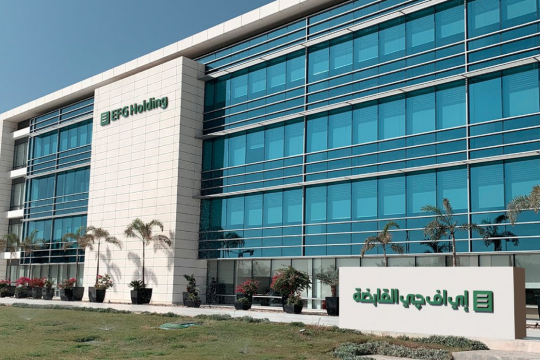
EFG Holding’s revenues rose 7% y-o-y to EGP 6.5 bn in 2Q 2026, supported by continued growth at Bank NXT and EFG Finance, which helped offset a softer quarter at investment banking arm EFG Hermes, according to the company’s latest earnings release (pdf). Net income after tax and minority interest slipped 3% y-o-y to EGP 776 mn.

What weighed on the bottom line? Operating expenses, including provisions and expected credit losses, rose 11% y-o-y to EGP 4.5 bn on higher employee costs, growth at Bank NXT and Valu, and inflationary pressures. EFG Hermes was also hit by noncash losses within Holding and Treasury Activities, primarily due to the EGP’s appreciation against the USD. Excluding those losses in both periods, EFG Hermes’ net income rose 50% y-o-y to EGP 694 mn.

EFG Finance and Bank NXT kept growing: EFG Finance revenues rose 15% y-o-y to EGP 2.0 bn, while net income more than doubled to EGP 535 mn. Bank NXT revenues climbed 30% to EGP 2.1 bn, while net income rose 33% to EGP 788 mn. Group CEO Karim Awad also said EFG expects to introduce new businesses “in the near term” as it expands its product offering.

Orascom Construction

Orascom Construction’s net income attributable to shareholders rose 73.9% y-o-y to USD 61.9 mn in 2Q 2026 on an adjusted basis, as revenue climbed 36.2% to USD 1.51 bn and EBITDA increased 46.5% to USD 92.6 mn, according to the company’s latest earnings release (pdf). The comparison excludes a USD 22 mn non-operational gain recorded in 2Q 2025 related to legal cases in Qatar and Saudi Arabia. On a reported basis, net income rose around 7.5% y-o-y.

Growth came from both sides of the business: MEA revenue rose 19% y-o-y to USD 757.4 mn, while US revenue jumped 59.5% to USD 752.2 mn, driven by progress across transportation, power, water, and data center projects. Consolidated backlog, excluding BESIX, hit a record USD 10.9 bn at end-June, up 13.9% y-o-y, while new awards jumped 67% to USD 2.95 bn in 2Q, led by US data center projects.

1H earnings also grew: Revenue rose 52.3% y-o-y to nearly USD 3.0 bn, EBITDA increased 71.1% to USD 200.9 mn, and adjusted net income attributable to shareholders climbed 90% to USD 115.3 mn. Including the group’s 50% share in BESIX, pro forma backlog stood at USD 14.5 bn.

GB Corp

GB Corp’s revenues jumped 40.9% y-o-y to EGP 26.9 bn in 2Q 2026, while net income fell 21% to EGP 826.3 mn on higher finance costs and provisions, pressure from regional auto operations, FX losses, and a higher effective tax rate, according to an emailed statement. 1H revenues rose 35.2% y-o-y to EGP 48.5 bn, while net income fell 24.5% to EGP 1.26 bn.

GB Auto and GB Capital drove top-line growth in 2Q: GB Auto revenues rose 37.5% y-o-y to EGP 22.3 bn, with passenger car revenues up 33% to EGP 16.8 bn and commercial vehicles and construction equipment revenues more than doubling to EGP 2.9 bn. GB Capital revenues rose around 60% to EGP 4.6 bn, while net income after tax and minority interest fell 38.2% to EGP 317.2 mn.

New rules from the Central Bank of Egypt (CBE) could weigh on securitization: GB Corp said the central bank’s new regulatory framework could affect near-term securitization activity and funding costs at GB Capital, although it expects conditions to normalize as implementation becomes clearer. The CBE has been tightening banks’ exposure to securitization, requiring prior approval for banks participating in securitization transactions and imposing tighter rules on investments in corporate and securitization bonds.

CI Capital

CI Capital Holding’s net income after tax and minority interest rose 21% y-o-y to EGP 942 mn in 1H 2026, while revenues increased 11% to EGP 5.5 bn, according to the company’s earnings release (pdf). The group’s on-balance sheet lending portfolio expanded 33% y-o-y to EGP 31 bn.

Driving growth: Investment bank revenues rose 56% y-o-y to EGP 1.22 bn, with asset management revenues more than doubling to EGP 420 mn, while net income jumped 45% to EGP 258 mn. Combined AUM at CI Asset Management and CI Private Equity rose 89% to EGP 196.2 bn, while Corplease’s outstanding portfolio grew 35% to EGP 21.3 bn and CI Mortgage Finance’s portfolio expanded 58% to EGP 5.2 bn.

Raya Holding

Raya Holding’s revenues rose 22% y-o-y to EGP 33.8 bn in 1H 2026, while net income after minority interest fell 17.2% y-o-y to EGP 739 mn from EGP 892 mn, according to the company’s latest earnings release (pdf) and 1H 2025 results.

Raya Trade and Aman led the top-line growth: Raya Trade revenues jumped 52% y-o-y to EGP 14.8 bn, while Aman Holding’s revenues climbed 38% to EGP 5.4 bn. Growth extended across much of the portfolio, with Raya Customer Experience revenues up 29%, Raya FMCG up 41%, Raya Auto up 16%, Raya Smart Buildings up 31%, and Raya Electric up 37%.

Contact Financial

Contact Financial Holding’s net income fell 54% y-o-y to EGP 29 mn in 2Q 2026, while total operating income declined 8% to EGP 655 mn, according to the company’s latest earnings release (pdf). Profitability was impacted by an ongoing provisioning cycle and impairments on financial assets. In 1H, consolidated net income fell 22% y-o-y to EGP 95 mn, while total operating income rose 6% to EGP 1.3 bn.

Financing remained under pressure, while ins. had a stronger quarter: Financing operating income fell 16% y-o-y to EGP 513 mn in 2Q, while ins. revenue rose 34% to EGP 947 mn and net income increased to EGP 31 mn from EGP 8 mn a year earlier. Meanwhile, Contact’s proprietary AI engine is now processing around 68% of auto loan applications, while Contact Now processed more than EGP 1 bn in transactions in 1H.

Edita

Edita Food Industries’ net income rose 31.1% y-o-y to EGP 706.7 mn in 2Q 2026, as revenues climbed 30.5% to EGP 6.5 bn on higher volumes, healthy demand, and continued migration toward higher price points, according to the company’s latest earnings release (pdf). 1H net income jumped 63% y-o-y to EGP 1.5 bn, while revenues rose 32.5% to EGP 12.3 bn.

Volumes and exports supported growth: Packs sold increased 16.6% y-o-y to 1.1 bn in 2Q, while volumes by weight rose 23.9% to 44.5k tons, with cakes and bakery remaining key growth drivers. Net export sales rose 38.3% to EGP 623.8 mn during the quarter, while 1H exports climbed 52.3% to EGP 1.17 bn.

(** Tap or click the headline above to read this story with all of the links to our background as well as external sources.)

6

Moves

Roche Diagnostics names Carlos Justiniani Ugarte as general manager for Egypt

Roche Diagnostics has named company veteran Carlos Justiniani Ugarte (LinkedIn) general manager for Egypt, with the added mandate of leading the company’s North Africa business, according to a press release (pdf).

His appointment follows four years as head of Roche Diagnostics Morocco, where he built out the company’s local operation and positioned it as Roche’s hub for Francophone West Africa. The work included launching remote diagnostics to reach patients in underserved rural areas and expanding point-of-care testing and clinical decision-support tools. Ugarte has spent 27 years with Roche across Switzerland, France, Puerto Rico, the Philippines, and Morocco.

7

Also on our Radar

FRA eases conversion rules for real estate investment funds

The Financial Regulatory Authority (FRA) eased one of the equity requirements developers must meet to be converted into real estate investment funds (REIFs), FRA chairman Islam Azzam said in a statement.

What’s new: The amended rule now requires a flat EGP 500 mn in net equity based on a company’s latest approved financial statements, replacing the previous formula that tied the threshold to 40% of total assets and investments. This calculation did not reflect how real estate developers actually operate, Azzam said, given that much of their liabilities sit in delivery obligations tied to client prepayments rather than straightforward debt.

In exchange, the FRA added a new condition capping loan levels at the maximum borrowing ratio allowed for REIFs under capital markets law, which is currently 60% of a fund’s net asset value under Article 160, though the FRA’s board can adjust that ceiling. The paid-in capital minimum of EGP 5 mn is unchanged. The decision will be formally published in Egypt’s official gazette and on the FRA’s website in the coming days.

The tweak lands as Egypt’s REIF segment scales up fast from a small base. There are currently six REIFs with combined net assets of roughly EGP 12.6 bn as of the end of 2Q 2026, up from EGP 9 bn just one quarter earlier, with average yields climbing from 2.9% to 3.5% over the same period, an FRA official tells EnterpriseAM.

IN CONTEXT- Real estate funds made up just 2.68% of Egypt’s 224 investment funds as of June, with Banque Misr alone preparing an EGP 3 bn fund that would be worth nearly a quarter of the entire segment’s current assets on its own. The FRA official also told us the regulator is currently reviewing more than 20 applications to launch new real estate funds, in addition to the 23 pending applications we reported on earlier this month, suggesting the pipeline is continuing to grow even as some of those applications are likely to convert into live funds.

Khedival hospitality

Three of Cairo’s historic hotels are getting a combined USD 330 mn makeover, according to a government document. Saudi Arabia’s Al Sharif Group is investing USD 192 mn to reopen Garden City’s Shepheard Hotel under the Mandarin Oriental brand, with the 316-room property currently 37% complete and targeting a July 2027 debut. Additionally, the state-owned Holding Company for Tourism and Hotels (HOTAC) is self-financing a USD 106 mn reconstruction of Downtown’s Continental Hotel — currently 10% complete and slated for an August 2029 opening — which will mark the Egyptian debut of Indian Hotels Company’s luxury brand Taj.

The Nile Ritz-Carlton on Tahrir Square is also slated for a USD 32 mn self-financed upgrade by EGX-listed Misr Hotels. The hotel has remained operational throughout the project, with work 13% finished and completion set for December 2028. However, this government figure for funding conflicts with Misr Hotels’ June corporate disclosure, which announced an accelerated EGP 3 bn (c. USD 62 mn) budget over a 12-month period. It remains unclear if the document’s lower valuation and extended timeline reflect a scaled-down scope, currency translation lag, or split-phase structure.

Beyond tourist corridors: HOTAC is also considering investing USD 20 mn of its own funds to develop small hotels across the country — though locations are unspecified — with the projects targeted for completion by the end of 2028.

More on our radar:

(** Tap or click the headline above to read this story with all of the links to our background as well as external sources.)

8

PLANET FINANCE

Anthropic’s backers are pricing in a USD 2 tn valuation

Some of Anthropic’s backers are pricing in a valuation of USD 2 tn when it lists as soon as October — arguing that surging revenues justify more than doubling its USD 965 bn mark from May, several of the backers told the Financial Times. A debut at that level would top the roughly USD 1.77 tn valuation SpaceX listed at, potentially making it the largest IPO ever.

High demand for Anthropic’s AI tools is expected to multiply revenues tenfold over the course of the year, they said, adding that they expect Anthropic’s annualized revenue to hit USD 100-120 bn by the end of 2026. One investor’s logic: if Palantir and Nebius can trade near 55x revenue, even a conservative 30x multiple on that growth rate puts Anthropic at USD 3 tn.

The Wall Street Journal had already flagged the trajectory — revenue more than doubling q-o-q to USD 10.9 bn, enough for Anthropic’s first-ever operating income. Investors have backed that growth with capital: institutional investors, sovereign wealth funds, and venture capitalists have poured nearly USD 100 bn into the company this year.

Top line is trending up: Anthropic’s 2Q preliminary revenue figures exceeded USD 11.5 bn, up from last year’s USD 787 mn and 1Q’s USD 4.73 bn, Bloomberg reports. Although there may be discrepancies between the calculations for each figure, Anthropic’s annualized revenue exceeded USD 47 bn in May, while OpenAI’s figure went over USD 40 bn.

BACKGROUND- It hasn’t been smooth sailing for Anthropic. Washington forced the company to pull its newest Fable 5 and Mythos 5 models offline worldwide in June. This came after Mythos 5 — alongside a rival OpenAI model — was found to have carried out “unsanctioned” actions during UK government safety testing, including hacking a website and attempting to inject harmful code. Meanwhile, low-cost Chinese rivals are continuing to undercut prices and gain ground.

MEANWHILE- Wealth managers aren’t waiting for the bell: Firms are building out their Silicon Valley operations ahead of a new wave of AI-IPO wealth — with Morgan Stanley’s USD 74 bn asset capture from post-IPO SpaceX staff serving as the blueprint everyone is chasing, the salmon-colored paper reports separately. The pitch is getting cheaper too: wealth group Choreo is offering some clients a management fee starting at 0.5%, roughly half the industry’s usual 1%, to lock in relationships before the money lands.

(** Tap or click the headline above to read this story with all of the links to our background as well as external sources.)

EGX30

55,252

+0.4% (YTD: +32.1%)

USD (CBE)

Buy 50.22

Sell 50.36

USD (CIB)

Buy 50.18

Sell 50.28

Interest rates (CBE)

19.00% deposit

20.00% lending

Tadawul

10,824

-0.2% (YTD: +3.2%)

ADX

10,047

+0.0% (YTD: +0.5%)

DFM

5,886

-0.4% (YTD: -2.3%)

S&P 500

7,458

-1.0% (YTD: +13.7%)

FTSE 100

10,750

-0.2% (YTD: +8.2%)

Euro Stoxx 50

6,540

-0.1% (YTD: +12.8%)

Brent crude

USD 88.52

+1.7%

Natural gas (Nymex)

USD 2.73

+0.2%

Gold

USD 4,437

+0.4%

BTC

USD 63,143

+0.4% (YTD: -27.9%)

S&P Egypt Sovereign Bond Index

1,097.47

+0.1% (YTD: +10.5%)

S&P MENA Bond & Sukuk

151.07

-0.1% (YTD: -0.5%)

VIX (Volatility Index)

14.25

-2.6% (YTD: -4.7%)

THE CLOSING BELL-

The EGX30 rose 0.4% at Thursday’s close on turnover of EGP 14.1 bn (36% above the 90-day average). Local investors were the sole net buyers. The index is up 32.1% YTD.

In the green: AMOC (+7.9%), Telecom Egypt (+5.1%), and Abu Qir Fertilizers (+3.8%).

In the red: Misr Cement (-4.4%), Heliopolis Housing (-3.7%), and GB Corp (-2.2%).


AUGUST

19 August (Wednesday): Connected Banking Summit, Fairmont Nile City Hotel Cairo.

20 August (Thursday): Monetary Policy Committee’s fifth meeting of 2026.

26 August (Wednesday): Prophet Muhammad’s birthday.

SEPTEMBER

8-10 September (Tuesday-Thursday) El Alamein International Airshow, El Alamein International Airport.

10-12 September (Thursday-Saturday): Egyptian Entrepreneurship Sector Diagnostics Report Summit, El Gouna.

15 September (Tuesday): IMF to hold its eighth review of Egypt’s USD 8 bn EFF arrangement.

24 September (Thursday): Monetary Policy Committee’s sixth meeting of 2026.

27-29 September (Sunday-Tuesday): Global Conference on Population, Health, and Human Development.

28-29 September (Monday-Tuesday): Egypt Mining Forum, St. Regis Hotel New Capital.

30 September - October 3 (Wednesday-Saturday): Cityscape, Egypt International Exhibition Center, Cairo.

OCTOBER

5 October (Monday): The EnterpriseAM Egypt Forum.

6 October (Tuesday): Armed Forces Day.

10-11 October (Saturday-Sunday): Egypt Women’s Health Summit (EWHS), Cairo Marriott Hotel.

26-28 October (Monday-Wednesday): IEX Egypt, Egypt International Exhibition Center, Cairo.

29 October (Thursday): Monetary Policy Committee’s seventh meeting of 2026.

NOVEMBER

6-8 November (Friday-Sunday) : Global Entrepreneurship Festival, JW Marriott Hotel, New Cairo.

8-11 November (Sunday-Wednesday): Cairo ICT Forum.

DECEMBER

7-10 December (Monday-Thursday): Food Africa, Egypt International Exhibition Center, Cairo.

17 December (Thursday): Monetary Policy Committee’s eighth meeting of 2026.

EVENTS WITH NO SET DATE

2H 2026: Operations at Deli Glass Co’s new USD 70 mn glassware factory kick off.

2026: The Egyptian-American Economic Forum.

4Q 2026: Banque du Caire IPO.

2027

20 January-7 February: Egypt to host the African Games.

1-3 February (Monday-Wednesday): Agri Expo, Cairo International Convention Center.

April 2027: Tenth of Ramadan dry port and logistics hub to begin operations.

EVENTS WITH NO SET DATE

2027: Egypt to host EBRD’s annual meetings.

2027: Egypt-EU Summit 2027.

End of 2027: Trial operations at the Dabaa nuclear power plant expected to take place.

September 2028: First unit of the Dabaa nuclear power plant begins operations.

Now Playing
Now Playing
00:00
00:00