Processed food exports hit new peak

1

WHAT WE’RE TRACKING TODAY

MNT-Halan’s local arm is heading to the EGX

Good morning, friends. Stories in today’s issue circle the same questions: where is Egypt putting its money next, and who gets to decide?

While we watch the birth of Egypt’s largest data center — and what Vodafone Egypt, Elsewedy Electric, and Cassava Technologies are calling the country’s first sovereign AI facility — the question is whether sensitive data will be kept inside the country instead of being routed abroad.

Another win: Processed food exports hit USD 4.47 bn in the first seven months of 2026 — up 10.7% y-o-y, and on pace to beat last year’s record. The trend shows us an interesting shift: what started as a currency hedge has turned into an intentional export strategy, and the next target is China.

And on the debt front, the government is done letting transport projects borrow unchecked. With sector debt nearing USD 14 bn and on track for USD 18 bn, the Cabinet’s Public Debt Committee now has to sign off on any new external loan.

***

ARE YOU MORE OF A LISTENER? Morning Drive is a 10-minute summary of today’s issue crafted for you to enjoy with your morning coffee, while getting the kids ready for school, or driving through the morning rush. And if you like it, tell your friends to tell their friends. They can find us on Apple, Spotify, or wherever they get their podcasts.

***


Why Rep. Neveen El Tahri is optimistic: Foreign investors see a lot of potential in Egypt. Their optimism, however, is not necessarily shared by many inside Egypt. So where does the gap lie?

On this episode of Making It, Rep. Neveen El Tahri, joins Patrick to make the case for optimism.

She dives into policy, privatization, the many opportunities ahead of Egypt, and her personal belief that changes on the policy level will eventually trickle down.

Listen to the episode on: Apple Podcasts | Spotify | Anghami | YouTube

Sign up to our newsletter to get Making It in your inbox.


The EnterpriseAM Egypt Forum is back — and we’re devoting the full day to the singular set of questions on everyone’s mind: What does AI actually mean for your company, your people, your economy, your own job — and your kids’ future?

Every session on stage answers one question: “So, what do I actually do about it?”

Join us on 5 October in Cairo. Seats are limited and attendance is by invitation only.

Request your invitation here.


Halan seeks a ticker

The local arm of fintech unicorn MNT-Halan has taken its first formal step toward a listing on the EGX. MNT Tech Holding for Financial Investments has filed to list its shares on the exchange’s main market, according to an EGX statement. The application covers issued capital of EGP 160 mn, divided into 1.6 bn shares at a nominal value of EGP 0.10 each. It will be published for five business days before going to the exchange’s listing committee, with supporting documents still being completed.

The fintech unicorn reportedly tapped Citigroup and our friends at EFG Hermes to manage the potential transaction, pitching investors on a valuation of up to USD 1 bn for its domestic operations. That listing would apply to its Egyptian business only; its growing footprint in the region remains privately held.

Why it matters: If the filing carries through to an offering, it would be one of the EGX’s most significant listings in years — and a test of whether a homegrown fintech can pull foreign investors back to a market that has struggled to attract them.

REMEMBER- MNT-Halan reached a USD 1.4 bn valuation in June on the first close of a strategic investment round led by Al Ahly Capital, the investment arm of the National Bank of Egypt — the first time a commercial bank has become an equity partner in the company. This builds on the company’s 2023 unicorn milestone, driven by a USD 200 mn injection from UAE-based Chimera. MNT-Halan says it has disbursed more than USD 15.5 bn in financing since launch and serves over 8 mn customers, with a regional footprint that now spans Pakistan (via Advans), Turkey (via Tam Finans), and the UAE (via Halan Advance).

Sovereign AI, sealed

Vodafone Egypt’s business arm is teaming up with Elsewedy Electric and Cassava Technologies to build what they say will be our largest data center, Vodafone Egypt CEO and Managing Director Mohamed Abdallah said during a press conference attended by EnterpriseAM yesterday. The project will target 20 MW of capacity within its first three years before scaling up to 192 MW. The joint venture expects to draw some USD 200 mn for the facility’s first phase, with total investment reaching USD 1 bn once full capacity is reached. Vodafone Egypt business sector VP Mahmoud El Khateeb said construction should take 12-18 months (watch, runtime: 03:33), but the location of the data center wasn’t disclosed.

ALSO- Vodafone and Cassava separately agreed to develop what they call Egypt’s first sovereign AI data center, running on Nvidia hardware. The facility would allow local institutions handling sensitive data — like government bodies or banks — to process and store their AI workloads domestically rather than route them abroad, strengthening information security and data control, Abdallah said. El Khateeb put the AI data center’s cost at more than USD 100 mn, with completion expected within six months.

REMEMBER- This is the payoff of a plan Cassava first laid out to EnterpriseAM back in April, when the pan-African group’s Sherif Shaltout told us it was targeting Egypt for its AI factory buildout via “greenfield development, acquisitions, or both.”

Slots locked in

Air Cairo signed an agreement with Airbus to buy 15 A320neo planes at the El Alamein International Airshow, according to a statement. The carrier has agreed to buy a total of 30 aircraft for USD 4.2 bn, with 15 new jets scheduled for delivery at five units annually between 2032 and 2034, CEO Hussein Sherif told Asharq Business. Sherif noted that internal reserves and bank loans will fund the acquisition.

Taking flight in greater numbers: The expanding Egyptian budget airline was expected to finalize an order this week for 15 jets, with options for 15 more to augment its fleet. Air Cairo has over 40 aircraft, including 33 Airbus A320s, six ATRs, and three Embraer jets, according to its website.

A Fitch of confidence

Fitch Ratings expects current account deficit to shrink to 2.7% of GDP in FY 2026/27, down from roughly 3.4% in FY 2025/26, according to a Cabinet statement citing the ratings agency’s latest assessment. Fitch points to a diversified external financing base — including portfolio inflows of roughly USD 20 bn over the past 12 months, USD 15.4 bn in net FDI in 2025, and a banking sector whose net foreign assets have climbed back to USD 11 bn as of June 2026 from deeply negative territory during the 2022-2023 crisis — as evidence that the country’s USD needs are more manageable than the headline deficit number alone suggests.

Net international reserves stood at USD 56.2 bn in July, and remittances hit a record USD 47.3 bn in FY 2025/26, up 29.6% y-o-y — the single biggest support line for the external position. On debt, Fitch sees the public debt-to-GDP ratio falling from around 79% in FY 2025/26 to 72.6% in FY 2026/27, helped by nominal GDP growth outrunning debt accumulation and a stronger EGP reducing the local-currency value of external liabilities. The Cabinet notes that all of Fitch’s projections are contingent on the agency’s baseline scenario, which assumes a de-escalation of US-Iran tensions — if the conflict persists or escalates, the more optimistic debt and deficit path could come under pressure.

IN CONTEXT- In March, Fitch Solutions’ research arm, BMI, had the FY 2025/26 deficit forecast widening to 3.3% at the time, driven by the US-Iran conflict pushing up our energy import bill and delaying tourism and Suez Canal recovery.

PSA-

WEATHER- We are still feeling the heat in Cairo today, with a high of 36°C and a low of 24°C, according to our favorite weather app.

It’s a bit cooler, but still hot, in Alexandria, with a high of 32°C and a low of 24°C.

The big story abroad

The regional conflict is flaring up once again — this time, on two fronts. US forces destroyed five Iranian oil carriers in retaliation for two ballistic missile strikes launched by the Islamic Revolutionary Guard Corps at a US Navy warship over the past two days, US Central Command said. This coincided with strikes by Iran-backed Houthi militants against Saudi oil facilities, marking a further escalation in the Middle East conflict.

In the AI world: Qualcomm announced a long-term partnership with Amazon, which could purchase up to USD 60 bn in Qualcomm’s AI data center chips to boost the Semiconductor player’s presence in AI infrastructure, a relatively new field for the chip giant. The agreement grants Amazon USD 4 bn in warrants that vest with product purchases, allowing it to buy shares at USD 161.26 each.

Speaking of which: AI coding startup Cognition AI — which builds autonomous agents that plan and deploy software with minimal human input — raised USD 2 bn in a Series E funding round led by new investors Andreessen Horowitz and Accel. The round brings the firm’s valuation to USD 48 bn, nearly doubling its USD 26 bn valuation in May, when it raised USD 1 bn.

*** It’s Hardhat day — your weekly briefing of all things infrastructure in Egypt: EnterpriseAM’s industry vertical focuses each Wednesday on infrastructure, covering everything from energy, water, transportation, and urban development, as well as social infrastructure such as health and education.

In today’s issue: We look into why our data center pipeline keeps growing even as actual MW capacity barely moves, and whether that gap can close before the Gulf’s head start becomes permanent.

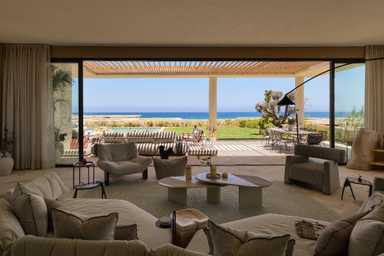
A strategic partnership shaping the next chapter of the Red Sea

Somabay and MARAKEZ come together in a landmark partnership, marking MARAKEZ’s first entry into Egypt’s Red Sea market and a significant step forward in the continued evolution of Somabay.

2

Trade

Processed-food exports are running at a record pace in 2026 — even as Black Sea wheat reliance deepens

Our processed-food exports hit a record USD 6.8 bn in 2025, up 12% y-o-y and now accounting for 14% of the country’s total non-oil exports, according to the Food Export Council (FEC) — and 2026 is running ahead of it.

The momentum held into 2026. The sector posted its strongest-ever seven-month performance from January to July — USD 4.473 bn, up 10.7% from USD 4.040 bn a year earlier — with 2Q alone hitting USD 2.054 bn, or 46% of the seven-month total, as 114 markets recorded growth over the whole period, according to the FEC. The sector sits at the center of the state’s push toward a USD 145 bn total export target by 2030.

Why the economics work: Egyptian processed food travels well on price for reasons that compound, Egyptian Swiss general manager Ahmed ElSebaie tells EnterpriseAM, and frames the biggest reason as currency: producers earn in hard currency against a soft-EGP cost base. Freight helps too — shipping lines discount empty China-bound return containers, ElSebaie says, so Egyptian goods ride cheaply on the lanes back to Asia. Preferential access does some of the rest, with COMESA opening dutyfree entry into East Africa. The same currency logic that first pushed manufacturers to export — as a hedge against local FX shortages, critical for an industry that imports most of its wheat — is now what makes them competitive abroad.

Egyptian Swiss is the sector in miniature: The Egyptian Swiss Group already moves enough volume to carry national weight: it accounted for 15% of Egypt’s flour exports and 10% of its pasta exports by volume in 1H 2026, according to the company. Five years ago it sold 70% of its output at home; today it exports roughly 80% to over 50 markets across four continents. “Anyone who exports maintains the flexibility of hard-currency income, which is critical for us since we import wheat,” ElSebaie tells us.

China is the next open door. The group expects to sign its first Chinese contract before year-end, targeting dry pasta and wheat flour. It has been clearing the runway since 2024: GACC/CIFER facility registration, Chinese-language labeling, NFSA sign-off, and an in-house Chinese-speaking trade desk. While ElSebaie positions the strategy around China’s status as a pasta importer long served by Italy and Turkey, official global trade database records show a more complex market reality. China is actually a massive net exporter under the broad HS 1902 pasta classification — shipping out over USD 1.4 bn worth of products dominated by generic “Other Pasta” classifications, against USD 590 mn in imports in 2025. The targeted niche, however, refers to the specific global dried pasta market, which is heavily dominated by Italy and Turkey in production and supply.

As ElSebaie sees it, the zero-tariff frameworks for African markets provide a clear opening for a price-competitive entrant. Egyptian Swiss argues its integrated structure can undercut established incumbents by milling its own flour, running low-overhead integrated plants, and shipping cheaply on those discounted China lanes.

Black Sea wheat stays the anchor — and the exposure. Russia and Ukraine remain the primary supply on price, quality, and proximity, together accounting for roughly 84% of Egypt’s wheat imports in the first eight months of 2026 — Russia 58.6% and Ukraine 25.1% — according to data shared by private grain trader Hisham Soliman. Argentine, Brazilian, Kazakh, and Romanian grain, tested during the early-war shock, stayed a fallback. Egypt pulled in 8.7 mn tonnes over January–August, up about 28% y-o-y, on Soliman’s tally.

That concentration is the catch. The same Black Sea disruption reshaping regional trade flows also sits upstream of every Egyptian food factory: wheat arrivals fell about 41% y-o-y in August 2026 to 0.65 mn tonnes, on the trader’s numbers — a reminder that the hard-currency hedge holds only as long as the wheat keeps landing. The nearer test is commercial: whether that first China contract signs before year-end, and at what volume.

This publication is proudly sponsored by

3

DEBT WATCH

Gov’t halts external borrowing for transport projects unless debt committee approves

The government is moving to halt new external borrowing for transport projects unless the Cabinet’s Public Debt Committee signs off first. The step is meant to curb the sector’s mounting financing obligations and ease the public-debt burden, a government official tells EnterpriseAM.

The trajectory is the reason. Transport-ministry project loans are nearing USD 14 bn, up from USD 12.5 bn a year earlier and on track for USD 18 bn, based on the ministry’s own estimates, the official says. The ministry had been negotiating loans and credit facilities with financiers on its own, letting the sector’s obligations pile up, according to the official.

REMEMBER- Transport was at the center of the debt the state is now cleaning up. As we reported in April, the Finance Ministry is taking equity in indebted state bodies to retire the debt these bodies owe to the ministry — and two transport agencies were among the biggest recipients. The first is the National Authority for Tunnels — which is behind the Cairo monorail and high-speed rail — whose capital injection jumped more than 1,300% to about EGP 19.3 bn. The second is Egyptian National Railways (ENR) — which is engaged in an extensive modernization of several railway lines — whose capital injection jumped more than 950% to roughly EGP 10.5 bn. That cleanup followed the IMF flagging Egypt’s publicly backed debt as a “high risk of sovereign stress,” with sovereign-guaranteed debt at EGP 5.4 tn as of June 2025 — a figure the government has promised to shrink as it targets a debt-to-GDP ratio of 78% by June 2027.

Why it matters: New financing will now be tied to public-debt priorities and to whether a project can generate the revenue to service its own debt, the source says — a shift from ministry-level dealmaking to central control. Transport leaned heavily on borrowing, with EGP 317 bn in local and foreign financing in the just-ended FY 2025/26 budget. The ministry is now turning to local funding, more private-sector partnerships, and long-term sustainable finance instead.

What’s next: The government has begun a full review of transport projects in the investment plan, halting those that haven’t started and reprioritizing by execution rate, feasibility, and available funding. The priority now is finishing the big projects already underway rather than launching new ones that depend on external debt.

GO DEEPER- For a live case of the execution problem, see our recent story on ENR’s c. USD 421 mn World Bank railway-safety loan (RISE): five years in, just under half the money has been disbursed, the lead safety metric hasn’t moved off its 2020 baseline, and the Bank has raised fiduciary risk to “high.”

4

A MESSAGE FROM AUC ONSI SAWIRIS SCHOOL OF BUSINESS EXECUTIVE EDUCATION

Six Sigma meets supply chain strategy

Supply chain leaders have to connect strategy, cost, and execution. The Supply Chain Management Professional Certificate prepares participants to align supply chain strategy with business goals, design lean or agile networks, and plan end-to-end project execution. Beyond network design, participants learn the financial mechanics behind supply chain decisions and apply Six Sigma methodology to identify and address weak points. Accredited by the International Supply Chain Education Alliance (ISCEA), the certificate allows graduates to sit the Certified Supply Chain Manager (CSCM) exam for a reduced fee. Over five months, the blended program runs live online and on campus, with the next cohort beginning on 13 October 2026.

Applications close on 20 September 2026. Apply here.

5

Also on our Radar

Local firms are ahead of the global average on digital trade readiness, Standard Chartered finds

Egyptian businesses expect digitalization to lower costs by at least 10% in processing trade documentation and data, along with identifying overseas partners. Some 96% of these businesses anticipate similar savings on payments and settlements, according to Standard Chartered’s Future of Trade report (pdf) and press release (pdf). Egypt is ahead of the global average on two fronts: 58% of businesses report mature real-time cash visibility (vs. 26% globally), 52% report mature automated payments and collections (vs. 37% globally), and 96% say digital tools support a fast response to supply-chain disruptions, the third-highest share worldwide.

Looking ahead: Egyptian firms plan to target their investment capital over the next three to five years toward digital supply-chain finance platforms and real-time cash visibility tools, putting Egypt third globally in planned supply-chain finance investment. Meanwhile, half of these firms are looking to invest in automated payments as well as directing the same amount to cybersecurity and risk management.

Why it matters: Digital trade maturity here at home, as shown in the report, signals that the corporate sector is deepening its digital infrastructure ahead of a broader global shift. The report estimates that faster trade digitalization could unlock USD 2.8 tn in additional global trade by 2031.

The bloc keeps shrinking

Saudi investor Nawaf bin Dayel has raised his stake in EGX-listed Electro Cable Egypt (ECE) to roughly 5.24% from 3.44%, according to a bourse disclosure (pdf), having bought some 59.6 mn shares at EGP 2.04 apiece in an EGP 121.58 mn trade. This comes as Sumou Consultancy sold 209.75 mn shares — good for 6.33% of ECE — for EGP 427.89 mn at the same EGP 2.04 price, cutting its stake to 14% from 20.33%, a separate filing (pdf) shows.

The controlling bloc may be on its way out: Sumou is part of the Pioneers-linked group that has controlled ECE since Pioneers Holding’s three-way split in 2021 and rebranded as Aspire, and which also counts Gadwa Industrial Development (25.3%), Al Hosn Consultancy, and Nomow Consultancy. Sunday’s sale takes the bloc to 51.72% from 58.05%, down from 69.37% as recently as July (pdf) — some 17.7 percentage points off the group’s combined stake in nine weeks, by our math, with Al Hosn taking the biggest cut (pdf) in August (19.86% to 11.56% before buying part of it back).

One more trade this size puts the group under 50%. Meanwhile, Bin Dayel is buying at both levels of the structure: he cut his Gadwa stake to below 5% in August, before turning up in the subsidiary three weeks later.

More on our radar

  • Act Financial inked an EGP 105 mn Sharia-compliant ijara real estate financing agreement with FRA-licensed Cairo Leasing Corporation. (EGX disclosure, pdf)
  • Cairo-based fintech infrastructure firm banknbox built and deployed the full technology stack for Maldives Premier Bank (MPB) — the country’s first digital-led commercial bank. (Al Mal)
  • The Financial Regulatory Authority signed a cooperation protocol with Startup Egypt to build and develop a digital platform that maps local fintech startups, angel investors, VC funds, and other fintech players. (Hapi)
6

PLANET FINANCE

The hedge fund industry's biggest players added USD 224 bn in 20 months

The nine largest hedge funds have added a combined USD 224 bn in assets since early last year — and Millennium Management is closing in fastest on a threshold almost no one in the industry has crossed, Bloomberg writes in its latest Big Take. It now manages USD 97 bn and is set to lock in USD 22 bn in fresh commitments on 1 October, enough to push assets toward USD 130 bn within a few years if its usual double-digit returns hold. AQR has already cleared USD 140 bn; DE Shaw added USD 40 bn in 19 months to reach USD 90 bn; and a half-dozen more firms have topped USD 75 bn — the most ever to do so at once.

The money coming in is changing: Wealthy individuals — not only pensions and endowments — are funding the growth; they already make up 30-40% of Millennium's assets.

Why it matters: Industry-wide hedge fund assets hit USD 5.6 tn at midyear, up 25% since the end of 2024 — but growth is concentrating, not spreading. Multistrategy funds tend to hold similar positions and can be forced to unwind them at the same time, Ivy Invest Co-Founder Wendy Li told Bloomberg — a risk that's harder to see coming at a diversified multistrat than at a plain-vanilla equity fund.

Size needs to be managed, though: Bridgewater — the first hedge fund to cross USD 100 bn, peaking near USD 150 bn in 2021 — underperformed peers in 2022 and 2023. New CEO Nir Bar Dea then deliberately shrank the flagship Pure Alpha fund toward an internal target of USD 50-60 bn rather than chasing scale. Performance recovered — Pure Alpha returned 11.3% in 2024, ahead of the industry, and kept gaining through 2025 and into this year — and firm-wide assets have since climbed back to roughly USD 102 bn.

The Gulf is riding that wave: DIFC now has 100 registered hedge fund managers, with hedge fund AUM there over USD 700 bn. ADGM's own AUM grew 54% y-o-y in the first half of 2026, and Man Group and Capital Group both opened ADGM offices this year. Remember: Millennium reaffirmed its Dubai office in March, even amid regional tensions.

MARKETS THIS MORNING-

Asian markets are up in early trading. South Korea’s Kospi is up 1.3%, while chip-related stocks are driving gains in Japan’s Nikkei, which rose 0.5%. US equities are down across the board as investors assess ongoing developments in the US-Iran conflict.

EGX30

56,174

-0.8% (YTD: +34.3%)

USD (CBE)

Buy 50.98

Sell 51.12

USD (CIB)

Buy 50.97

Sell 51.07

Interest rates (CBE)

19.00% deposit

20.00% lending

Tadawul

11,036

+0.1% (YTD: +5.2%)

ADX

10,021

+0.5% (YTD: +0.3%)

DFM

5,947

+0.3% (YTD: -1.7%)

S&P 500

7,674

-0.6% (YTD: +12.1%)

FTSE 100

10,812

-0.1% (YTD: +8.9%)

Euro Stoxx 50

6,413

+0.1% (YTD: +0.1%)

Brent crude

USD 99.48

+1.6%

Natural gas (Nymex)

USD 2.90

-0.5%

Gold

USD 4,392

-1.1%

BTC

USD 78,511

-0.9% (YTD: -10.4%)

S&P Egypt Sovereign Bond Index

1,113

+0.2% (YTD: +12.1%)

S&P MENA Bond & Sukuk

150.71

+0.0% (YTD: -0.8%)

VIX (Volatility Index)

15.72

+2.8% (YTD: +5.2%)

THE CLOSING BELL-

The EGX30 fell 0.8% at yesterday’s close on turnover of EGP 13.4 bn (15.8% above the 90-day average). Local investors were the sole net buyers. The index is up 34.3% YTD.

In the green: AMOC (+5.2%), Qalaa Holdings (+3.4%), and Abu Qir Fertilizers (+2.2%).

In the red: Cleopatra Hospital Company (-2.8%), Eastern Company (-2.1%), and Ibnsina Pharma (-2.0%).

7

HARDHAT

Our data center boom is waiting on a switch

In the data center race, a MW that has been announced and a MW that is operational are not the same thing. The pitch to investors rests on the gap between them. Saudi Arabia and the UAE have announced more than USD 110 bn in sovereign-backed AI campuses, per Significa Capital, while the government wagers on cable geography and cheap entry instead. Capital is already responding, but the process of turning it into working capacity is lagging.

The state is stepping back as a financier. The government has cut its own direct investment in digital infrastructure to EGP 13 bn in FY2025/26, down from EGP 85 bn the previous year, while targeting EGP 115.4 bn from the private sector in FY 2026/27.

But the state isn’t stepping back from coordination: Communications and Information Technology Minister Raafat Hindi personally attended the 8 September signing of Vodafone Egypt Business’s Africa Data Centers Egypt joint venture, according to a Cabinet statement, and the ministry says it’s drafting a national data center strategy to define the country’s capacity needs and streamline future investment. The government also plans to spend around USD 860 mn a year through 2030 to stimulate domestic AI and computing demand.

Capital is already moving. Risk pricing appears to favor the Egyptian market for investors looking for an early, cheaper entry point than the Gulf’s already-elevated valuations, according to a recent Significa Capital report (pdf). Egypt’s 14 data centers, with a combined operational capacity of just 60 MW, represent roughly 5.5% of the region’s total facility count. But transaction activity is accelerating fast.

Four plans, one pattern: First, a USD 2.1 bn joint venture between Gulf Data Hub and Elsewedy Data Centers will build up to 192 MW of capacity. Second, UAE-based Khazna’s planned USD 250 mn Maadi facility — still under development — is part of a broader Egypt-UAE agreement to build up to 1 GW in phases. Third, Hassan Allam’s digital infrastructure arm has already committed USD 400 mn to phase one of a new data center.

The fourth transaction is the biggest yet. Africa Data Centers Egypt, a Vodafone-Elsewedy-Cassava Technologies venture, is targeting up to 200 MW, alongside a separate partnership to launch the country’s first sovereign AI data center using Nvidia infrastructure.

The region’s own numbers show how much value is still up for grabs. When e& sold its 40% stake in Khazna’s UAE parent platform to G42 for USD 2.2 bn last year, the transaction implied a USD 5.5 bn valuation for a business that had grown from just 28 MW of capacity in 2020 to nearly 650 MW today.

The fundamentals look promising on paper. Egypt sits at the crossroads of Africa, Asia, and Europe, has strong subsea cable connectivity, and ample available land, Significa Capital notes.

But the gap between announced and operational shows up in the fine print. Africa Data Centers Egypt, for instance, has an actual near-term commitment of just 20 MW within the first three years, with the rest of the 192 MW plan contingent on a longer build-out.

Infrastructure is the main obstacle: AI is placing unprecedented pressure on power grids and water resources, and its share of data center power consumption is expected to jump from 25% to 60% within the next three to five years, according to a Capgemini Research Institute survey (pdf) of more than 600 utility executives.

Sixty-seven percent of power sector officials globally report a “phantom demand” crisis for data center power requests, and around 19% of these requests never convert into actual consumption. That gap scrambles grid investment planning, making it harder for utilities to size real capacity against announced pipelines.

Data-center investment in emerging markets tends to concentrate in locations that combine reliable electricity, strong fiber backbone networks, available land and permitting pathways, access to finance, and predictable regulation, according to a World Bank/IFC report (pdf).

That diagnosis lines up with what’s happening on the ground. Mohamed Khalil, former CEO of Benya Cables, tells EnterpriseAM the real obstacle facing AI data centers is the power grid. “Without stable electricity supply and reliable clean energy contracts, financing large data centers becomes extremely difficult,” he says.

The specific risk profile here makes this more than theoretical. The country already faces an annual water deficit estimated at 7 bn cubic meters and a history of grid stability challenges. Cooling and continuous power represent a serious risk here, one that threatens to turn “announced” capacity into capacity that never comes online.

Decentralization and green power are the industry’s answer. “Despite the consumption pressure, smart systems can forecast solar and wind output, manage grids in real time, and cut losses,” Hazem Shatila, chief AI and data officer at Elsewedy Electric Group, tells EnterpriseAM.

Elsewedy is positioning itself around that shift. Wael Hamdy, senior vice president at Elsewedy Electric, tells EnterpriseAM that the company is preparing to roll out efficient power-management solutions “by expanding smart grid systems and deploying high-efficiency technology.”

Globally, the grid is no longer the default option. Thirty-nine percent of operators intend to adopt self-generation and behind-the-meter solutions within the next two years to cut reliance on state grids. In Egypt, that shift is taking shape through a consortium of Swicorp, Incom Egypt, and Record Digital Asset Ventures, which is building a green data center running on 200 MW of renewable energy. Like the rest of the country’s pipeline, this capacity has yet to become real.

What’s next: Watch whether Khazna’s Maadi project and Africa Data Centers Egypt actually convert their announced capacity into built capacity. Egypt’s Tier 2 pitch moves from thesis to proof only when MW on paper start showing up on the grid.


SEPTEMBER

8-10 September (Tuesday-Thursday) El Alamein International Airshow, El Alamein International Airport.

10-12 September (Thursday-Saturday): Egyptian Entrepreneurship Sector Diagnostics Report Summit, El Gouna.

15 September (Tuesday): IMF to hold its eighth review of Egypt’s USD 8 bn EFF arrangement.

24 September (Thursday): Monetary Policy Committee’s sixth meeting of 2026.

27-29 September (Sunday-Tuesday): Global Conference on Population, Health, and Human Development.

28-29 September (Monday-Tuesday): Egypt Mining Forum, St. Regis Hotel New Capital.

30 September - October 3 (Wednesday-Saturday): Cityscape, Egypt International Exhibition Center, Cairo.

OCTOBER

5 October (Monday): The EnterpriseAM Egypt Forum.

6 October (Tuesday): Armed Forces Day.

10-11 October (Saturday-Sunday): Egypt Women’s Health Summit (EWHS), Cairo Marriott Hotel.

26-28 October (Monday-Wednesday): IEX Egypt, Egypt International Exhibition Center, Cairo.

29 October (Thursday): Monetary Policy Committee’s seventh meeting of 2026.

NOVEMBER

6-8 November (Friday-Sunday) : Global Entrepreneurship Festival, JW Marriott Hotel, New Cairo.

8-11 November (Sunday-Wednesday): Cairo ICT Forum.

DECEMBER

7-10 December (Monday-Thursday): Food Africa, Egypt International Exhibition Center, Cairo.

17 December (Thursday): Monetary Policy Committee’s eighth meeting of 2026.

EVENTS WITH NO SET DATE

2H 2026: Operations at Deli Glass Co’s new USD 70 mn glassware factory kick off.

2026: The Egyptian-American Economic Forum.

4Q 2026: Banque du Caire IPO.

2027

20 January-7 February: Egypt to host the African Games.

1-3 February (Monday-Wednesday): Agri Expo, Cairo International Convention Center.

April 2027: Tenth of Ramadan dry port and logistics hub to begin operations.

EVENTS WITH NO SET DATE

2027: Egypt to host EBRD’s annual meetings.

2027: Egypt-EU Summit 2027.

End of 2027: Trial operations at the Dabaa nuclear power plant expected to take place.

September 2028: First unit of the Dabaa nuclear power plant begins operations.

Now Playing
Now Playing
00:00
00:00