Our investment funds crossed EGP 0.5 tn before the small caps cracked

1

WHAT WE’RE TRACKING TODAY

Banque du Caire’s retail book closed 27x covered, days before trading

Good morning, friends, and happy almost-weekend. We’ve all been wondering lately: where does the money go from here? Today’s issue gives you some ideas: our funds are past EGP 500 bn, AI is creeping into lending decisions, and the Central Bank of Egypt answers on rates later today.

BUT FIRST- Don’t forget to turn your clocks back an hour before you go to sleep tonight, as daylight saving time ends at midnight, meaning 12am on Friday becomes 11pm on Thursday. Daylight saving time is a headache for some, but whatever your opinion, we can all enjoy that one extra hour of sleep tomorrow.

And keep half an eye on your banking apps overnight, as some local banks pause internet banking, e-wallets, mobile apps, and ATMs around midnight to upgrade their systems before the change.

Starting with funds, the industry crossed EGP 500 bn in 3Q, and individuals now hold just under 80% of the certificates. The index funds riding the EGX70 and EGX100 returned 13% for the quarter, then watched the EGX70 give back 11% in a single session on Sunday. Azimut Egypt’s Ahmed Abou El Saad tells us why he reads that as a problem in how those indices are built.

MEANWHILE- We are set to import about 15 mn barrels of crude this quarter, 8% more than a year earlier, and pay for it on supplier credit. The shipments, sourced from Saudi Arabia, Libya, and Greece, will cost USD 1.4-1.5 bn, with EGPC paying through short- and medium-term credit.

AI now has a role in finance: From April 2027, consumer finance companies will have to check an I-Score credit score before approving financing, under a new FRA rule. That score runs on the kind of alternative data that AI lending models use, and we’re seeing a growing pattern: fintechs are increasingly letting software make calls. Banks are moving more slowly, though, held back partly by the central bank’s rules that keep customer data off cloud AI services, according to two bank CEOs we talked to.

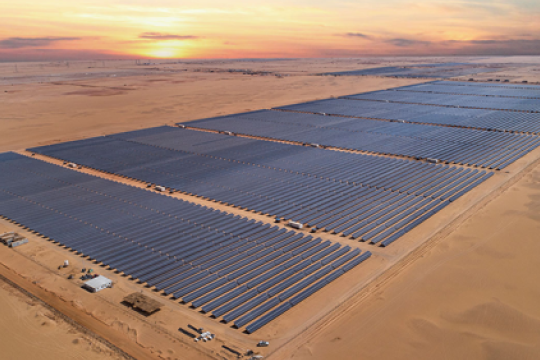
Over in energy, two of our biggest solar-and-battery projects are at very different stages. Nefer Minya has closed its USD 566 mn in debt and is in full construction, while Scatec’s Dandara, which will supply EgyptAlum’s smelter, has only signed preliminary financing terms.

***

It’s mail time! Who writes EnterpriseAM’s subject lines? Why are our podcasts audio only? How do we preserve the craft of writing while integrating AI policies across the newsroom?

These are some of the questions readers and listeners have sent us over the years, so on an upcoming episode of Making It, Patrick and the team will answer them along with anything else you’re curious about: whether it’s about the business, our coverage, how the newsroom is run, or why we do things the way we do.

Have a question for us? Record it as a voice memo (30-45 seconds), tell us your name at the top, and send it to [email protected] by Saturday, 7 November. We’ll also take written questions, but since we’re an audio show, we’d love to play yours in your own voice.

***

27x and done

Banque du Caire’s (BdC) retail book closed 27x oversubscribed yesterday, with the IPO set to execute today. Retail investors had ordered some 9.29 bn shares by the close, against the 343.1 mn shares in the upsized public tranche, Al Arabiya reports, citing a bourse statement. That’s roughly EGP 49.2 bn (c. USD 921 mn) chasing EGP 1.8 bn (c. USD 34 mn) of stock at the EGP 5.30 final price, by our math, using the circular’s EGP 53.46 rate against the USD. The book is allocated pro rata and without discretion, so applicants get about 3.7% of what they asked for.

BdC has also cleared the last approval standing between it and the EGX: The lender told the bourse in a letter (pdf) that it had received the Cabinet’s notification approving the sale of a 30-45% stake. The shares are expected to start trading on Monday, 2 November.

Retail buyers hold a cushion the institutions do not: Under the circular, retail investors can lodge sell orders at the EGP 5.30 offer price during the 30 days after trading starts, and CI Capital (the stabilization manager, 92.95% owned by Banque Misr) matches them from a fund holding the retail tranche’s EGP 1.8 bn of proceeds. The buyback is settled at the end of the period, and the balance returns to the seller.

REMEMBER- Banque Misr upsized the offering to 45% from 30%, with the International Finance Corporation and the European Bank for Reconstruction and Development signing on to buy in. The two development lenders joined the transaction after BdC had already lined up cornerstone investments from four foreign funds for an aggregate of up to USD 256 mn at the offer price: UK hedge fund Helikon, London-based Redwheel, Africa-focused Sustainable Capital, and the UAE’s Waha Investments.

Now, it’s listing

Alamal Alsharif for Plastics filed to list its shares on the EGX’s main market, the first formal step toward a debut for a company 54.5% owned by state banks. The exchange said it received the request on Tuesday and is reviewing the company’s listing documents before sending them to the listing committee. The notice covers issued capital of EGP 796.3 mn — divided into 7.96 mn shares at a par value of EGP 100 — and will be published for five working days through 2 November.

The filing comes as a year-end deadline approaches: Alamal Alsharif was among the names under consideration when the government moved in March to finalize a timeline to IPO or sell stakes in at least 20 state-owned companies, part of a push for USD 3-4 bn in inflows before year-end and a broader plan to raise USD 6 bn to support reserves. This is among the requirements of the IMF program, which concludes in December.

It joins a queue the state is racing to clear: The number of companies temporarily listed under the offerings program has risen to 29, with a 30th being selected, Asharq Business reports, citing Hashem El Sayed, assistant prime minister and CEO of the Cabinet’s state-owned companies unit. Four are meant to start trading before year-end: Banque du Caire within days, Misr Life Ins. in late November or early December, and El Nasr Glass and Spring & Transport Needs Manufacturing (Yayat) in December.

BACKGROUND- The state was looking to sell 30% of Alamal Alsharif to a single strategic investor by 1Q 2024 at a c. EGP 7 bn valuation that put the stake at some EGP 2.1 bn. By April 2024, it was preparing to exit in full, selling its entire holding to a strategic investor paying in USD, with EFG Hermes and Al Ahly Pharos tapped to manage the sale. However, neither transaction went through. The state holds its stake through the National Investment Bank (34.26%), the National Bank of Egypt (13.56%), United Bank (6.10%), and Suez Canal Bank (0.59%), with individual shareholders holding the rest.

License to wind

The Cabinet approved golden licenses for two 900 MW wind projects at its weekly meeting yesterday, clearing 1.8 GW combined. Shadwan, Scatec’s project company, will build at Ras Shokeir on the Red Sea with completion set for 31 March 2028. Shokeir Wind Energy — Engie (35%), Aeolus-Toyota Tsusho (40%), and Orascom Construction (25%) — will build its farm in the Gulf of Suez, with completion set for 1 November 2028. Both will sell power to the Egyptian Electricity Transmission Company (EETC).

IN CONTEXT- Both projects had already signed their power purchase agreements: Shadwan with a 25-year USD-denominated PPA in 2025, and Shokeir with a 25-year build-own-operate PPA with EETC in March 2026. Engie said the first 300 MW would come online in December 2027 and the full 900 MW by mid-2028. The golden license is the single approval covering establishment and operation, following earlier grants to Scatec’s Obelisk solar plant and Amea Power’s Benban project. Shadwan’s cost is put at about USD 1 bn, with the European Bank for Reconstruction and Development earmarking USD 192 mn in August; Shokeir is the consortium’s third Egyptian wind farm, taking its local portfolio to about 1.8 GW.

Happening today

The Central Bank of Egypt’s Monetary Policy Committee meets later today, and most of the analysts we spoke to earlier this week expect it to leave the overnight deposit rate at 19%. Fuel prices are frozen through December, which they think keeps inflation contained for now, and the real-rate cushion is still around 5.1 percentage points over September’s 13.9% urban headline inflation.

Only one analyst expects a hike: Maged Fahmy, the former Industrial Development Bank chairman, argues a hike would keep foreign money in. The rest think a hike costs more than it buys: Al Ahly Pharos’ Hany Genena calls it “a luxury Egypt cannot afford.” What keeps the question open at all is the EGP: it is past EGP 56 against the greenback, foreign and regional investors sold USD 1.13 bn of local debt in three sessions last week, and Deutsche Bank says the currency is the main risk to its own hold call. Nobody we spoke to expects a cut this year; the next hike — if it comes — is a December question.

PSA-

WEATHER- Cairo is seeing slightly cooler temperatures today, with a high of 28°C and a low of 18°C, a single degree down at both ends from yesterday, according to our favorite weather app.

It’s a touch cooler on the coast in Alexandria too, with a high of 27°C and a low of 18°C.

And over the weekend, expect to see colder weather in the capital, with a high of 26°C on Friday and as low as 18°C for our friends on the Mediterranean.

The big story abroad

Families, companies, and governments across Europe are under growing strain as gas prices climb back above EUR 100 a megawatt-hour for the first time since 2022. The anger over living costs is spilling into unrest in several parts of the continent. Gas prices are now more than three times what they were before the Iran war. The latest jump comes from higher demand for heating, unusually small gas reserves across Europe, and concern that a wider conflict could squeeze global supplies even more. The impact is also reaching beyond gas, as rising oil, diesel, and electricity costs push up energy inflation across Europe.

China is scrambling to prop up its stock market as its AI stocks struggle. China’s CSI 300 blue-chip index has fallen about 20% from its June peak, and the slide has spread to Hong Kong. Weak consumer demand, a long property slump, and shrinking government spending are behind the drop. Beijing has sent state-backed funds to buy shares, but analysts say a lasting rebound needs stronger demand at home. Investors are watching this week’s Communist Party plenum for signs of bigger stimulus.

Oracle says it will start generating more funds than it uses in the second half of fiscal 2028, as it tries to ease concerns about the cost of its AI expansion. Much of Oracle’s growth depends on ChatGPT maker OpenAI, and building data centers for that deal has led the company to take on large amounts of debt and issue new shares. Oracle has capped any new fundraising at USD 20 bn through fiscal 2030.

The Red Sea Is Calling. Dive Into the Challenge.

Aquaman returns to Somabay with six open-water races for seasoned swimmers and first-time competitors alike. With distances from 500 m to 10 km, there’s a challenge for every swimmer.

Swimmers from more than 60 countries. One extraordinary stretch of the Red Sea.

2

Investment Watch

Egypt’s funds crossed EGP 500 bn in 3Q on retail money and a stalling core

Our investment fund industry crossed EGP 500 bn in 3Q 2026. The Financial Regulatory Authority (FRA) published the milestone on Sunday, the same day the EGX70 lost 11.07% of its value in a single session. Net asset value (NAV) rose 7.16% q-o-q to EGP 504.71 bn from EGP 470.97 bn, and assets under management climbed 7.27% to EGP 512.84 bn, the regulator’s 3Q report (pdf) shows, with eight new funds taking the total to 232. None of that growth was new money entering the money market funds that hold 60% of the industry’s assets: they took in less than their own compounding, which means net outflows.

The buying is almost entirely retail, and it shows up in certificates rather than in liquidity. The number of outstanding fund certificates jumped 19.21% to 52.50 bn, with individuals holding 41.90 bn of them, up from 32.90 bn at the end of June, taking their share to 79.8% from 74.7%. Institutions went the other way, holding 10.16 bn certificates against 10.72 bn three months earlier, so their share went down to 19.4% from 24.3%. Fund sponsors held the remaining 0.8%, or 441.7 mn certificates. One caveat: certificate counts and fund assets are different measures — holding 79.8% of the units is not the same as owning 79.8% of the EGP 500 bn.

On assets, the industry’s core remained mostly unchanged. Money market funds, roughly 60% of the total, grew 2.1% to EGP 303.12 bn from EGP 296.90 bn at the end of June. A base that size compounds by about EGP 12-13 bn a quarter with no new certificates sold, Azimut Egypt Managing Director Ahmed Abou El Saad tells EnterpriseAM, and the category grew by about EGP 6 bn. “That implies there were actually net outflows from those funds,” he tells us, a drawdown he reads as corporates pulling liquidity they had parked to rotate into T-bills or cover working capital. It's nothing structural, he says, just standard redemptions.

From there, the money went looking for yield. Conventional equity funds held EGP 36.01 bn at the end of September and Islamic equity funds EGP 22.82 bn. That’s EGP 58.83 bn between them, close to the EGP 59 bn Abou El Saad puts the two categories at. Index funds grew fastest, up 82.6% to EGP 13.14 bn, with precious metals funds up 26.6% to EGP 11.92 bn. Foreign-currency funds took in nearly EGP 8 bn, lifting their assets 31% to the equivalent of EGP 34.60 bn and their share of the industry to 6.9% from 5.6% — against EGP 470.10 bn for EGP-denominated funds.

Returns cooled with the EGX rally, though not everywhere: Equity funds returned an average 5.55%, down from 17.66% in 2Q, while thematic funds slid to 5.68% from 18.78%, and sector funds, which topped the table in 2Q at 18.82%, delivered 12.23%. Islamic equity funds returned 8% against 16.37%, precious metals funds gained 8.23%, and private equity funds led the quarter at 15.24%, while index funds delivered 13.03% — all ahead of the EGX30, which gained just 2.79% during the quarter. After an uninterrupted rally, a profit-taking cycle was inevitable, Abou El Saad says, and it started in September.

The trackers

The index funds that returned 13.03% owe it to the broader gauges, with the EGX70 climbing 20.14% and the EGX100 adding 17.19% in 3Q, while the benchmark went nowhere, and Abou El Saad calls that a systemic problem. Both indices are equal-weighted, so CIB carries the same allocation as the hundredth name on the list. “When massive inflows arrive, capital is forced blindly into these lower-tier stocks, inflating their valuations without justification,” he says, arguing that many constituents are uninvestable on earnings and that retail bought them precisely because they had already run. The test came in October: the EGX70 lost 11.07% in a single session on Sunday, 25 October, and the EGX100 8.88% — and even after Tuesday’s 7% rebound, both were still 12.34% and 10.65% below their 3Q closes at the end of yesterday’s session, against 5.04% for the EGX30.

IN CONTEXT- The bulk of retail money entering funds is not chasing the equity market at all. Between 85% and 90% of it goes into money market or fixed income products, Menthum CEO Himanshu Shrimali told us last month, with a knowledge gap and five years of a one-directional EGX keeping households out of equity products. Retail investors accounted for 72.7% of gross trading in listed stocks in 1H 2026, a pattern EFG Hermes’ Mohamed Abu Basha calls more characteristic of a frontier market than an emerging one.

What’s next: Growth momentum should hold into 4Q, Abou El Saad says, helped by new launches and new asset classes, with the industry still underpenetrated against GDP and bank deposits by global standards. More funds are coming: the FRA and the EGX are working on amendments to Article 29 of the Capital Market Law to let limited liability companies and simple limited partnerships get licensed to set up funds, the bourse is pushing to widen tax-exempt fund categories to 38, and the FRA’s first hedge fund rulebook took effect in September.

One caution on the numbers: The FRA reclassified funds with the Egyptian Investment Management Association in 2Q, taking its end-March count from 187 funds to 209 and restating NAV at about EGP 411 bn, so comparisons with quarters before that point are not like-for-like. What none of that changes is the shape of what has already been sold: the industry’s EGP 500 bn still sits mostly in money market funds.

This publication is proudly sponsored by

3

Energy

Egypt to import 15 mn barrels of crude on supplier credit in 4Q

The Oil Ministry plans to import about 15 mn barrels of crude in 4Q 2026, 8% more than a year earlier, and pay for it through supplier credit, Al Arabiya Business reports, citing an unnamed government official. The shipments will cost USD 1.4-1.5 bn as regional tensions keep oil prices high, which works out to roughly USD 93-100 a barrel, by our math.

The shipments are back-loaded. Deliveries are planned at 6 mn barrels in October and 4.5 mn in each of November and December, the official said. They will be sourced from Saudi Arabia, Libya, Greece, and other markets, with state oil company EGPC paying through short- and medium-term credit facilities, they added.

Refining more at home is how the government plans to cut its fuel import bill. Local refineries cover 70-80% of fuel demand, and imported products make up the rest, the official said. Refinery utilization rose to more than 80% from 66%, Oil Minister Karim Badawi said in September. The ministry wants to cut petroleum product imports, excluding gas and crude, to USD 3.6 bn this year from USD 6.2 bn in FY 2025/26 while putting the refinery upgrade bill at USD 4.5 bn. A government official told us at the time the overall refining and petrochemicals target is USD 5.2 bn.

The shift from fuel to crude imports already shows in the trade data. Crude imports rose by USD 1.9 bn in FY 2025/26, while oil product imports fell by USD 1.2 bn. Natural gas drove most of the rise in the oil import bill, up USD 4.7 bn, and the oil trade deficit widened 31.5% to USD 18.3 bn. Domestic crude is recovering slowly: output is at about 527k bbl / d of crude and condensate, against roughly 449k bbl / d without the measures led by paying foreign partners' dues, and the ministry targets 750k bbl / d by 2030, Badawi said at Egypt Forum last week.

The other half of the balance

US producer Apache plans to connect five new wells in its Western Desert concessions in 1Q 2027 at a total investment of around USD 30 mn, adding about 70 mmcf / d, which is equal to 12.7% of its current Egyptian output of 550 mmcf / d, Asharq Business reports, citing an unnamed government official. A well at the Tarek field adds 12 mmcf / d in late January, wells at Abu Gharadig, Tarek, and Salam add 35 mmcf / d in February, and Tarek and Salam add another 23 mmcf / d in March.

The additions are small against the decline they are meant to offset. The same official puts natural depletion at about 120 mmcf / d a month, so the five wells cover a little more than half of one month’s losses, against average demand of 6.2 bcf / d that peaks near 7.5 bcf / d in summer. The ministry is separately targeting nearly 330 mmcf / d of new supply by year-end, most of it from Zohr and West Mina. But these wells are a near-term patch. The biggest new gas volume on Egypt’s horizon comes from Cyprus.

The long-dated gas

Eni signed the main engineering, procurement, construction, and drilling contracts for its Cronos field offshore Cyprus on Monday, moving the project into execution with first gas targeted for 1H 2028 and a plateau of up to 500 mmcf / d, it said in a statement. The contracts were expected to total USD 1.3-1.8 bn, The Wall Street Journal reported ahead of the signing, citing people familiar with the matter.

The gas will travel by subsea pipeline to Zohr’s processing facilities, then through a 40-km onshore line to Damietta for liquefaction and re-export to Europe. But that gas is not destined for the country’s grid: Cairo is renting out idle processing and liquefaction capacity, taking a transit role rather than adding molecules to the local market.

We looked at what it would take to revive the upstream sector in our Signature Series in September.

4

Finance

Can AI promise Egypt’s lenders more borrowers and fewer bad loans?

Regulators are starting to ease the path for more machine decision-making in lending. From April 2027, consumer finance companies will have to consult a score from the country’s only licensed private credit bureau (I-Score) before approving financing, under a new rule from the Financial Regulatory Authority. The score rests on behavioral analysis of alternative data, the kind of input that feeds directly into AI-backed risk prediction and automated lending decisions.

On the plus side: AI models are making it easier to assess the creditworthiness of small businesses and individual borrowers, especially newcomers to the financial system and lower-income people without bank accounts. These people often have little or no conventional credit history, but an AI model can use non-conventional data to make a decision. For people wanting personal loans, that can mean combing through their phones to look at how they pay their phone and utility bills, Ahmed Abaza LinkedIn, co-founder and CEO of Synapse Analytics, tells EnterpriseAM.

Hand-reviewing each loan eats the margin: Making a decision on every personal or small-business loan by hand takes so much staff time that it can wipe out much of what the lender earns on the facility, a World Bank Group SME note (pdf) has found. Letting software make those decisions can cut that cost significantly, McKinsey says, making those segments, as well as microfinance, more attractive to banks and non-bank lenders alike.

Why it matters: Fewer than half of Egyptian adults have a bank or mobile-money account, according to the World Bank (pdf), which makes it hard to judge their creditworthiness on traditional data alone.

The promise

Advocates say there is an open-and-shut case for turning lending decisions over to AI agents, arguing they are smarter, faster, and more capable than humans. Think of it as hiring “the best risk agent you can ever hire, that never sleeps, never eats, never takes time off,” and who’s always “exploring how to accept more customers with less risk,” Synapse’s Abaza tells EnterpriseAM.

The results prove it, Abaza says. Synapse, whose software is used by more than 50 institutions, says its clients are approving up to five times more customers with 40% fewer bad loans compared with before they signed up with Synapse. Abaza says his clients are not lowering the bar; they’re just getting through far more applications. Banks that once approved around 10k people a month may end up approving 10k a day, he adds.

Fintechs are already deploying: MNT-Halan uses its in-house tool, Apollo, to tell staff which overdue loans to chase each month, as we’ve previously reported. It will roll the tool out across “many departments” within three months, CEO Mounir Nakhla said at our Egypt Forum, weeks before the company’s Egyptian unit debuted on the EGX. Another fintech, Klivvr, expects to soon let AI agents make underwriting decisions without any human approval, as we reported last week.

More are joining: Tanmeyah, EFG Finance’s microfinance arm, is rolling out its own credit-scoring model through I-Score’s Decision-as-a-Service platform, built on Synapse Analytics’ Konan engine and using bureau data to size up micro- and small-business borrowers. In September, Raya Holdings spun up Raya Nexus, an AI shop with EGP 250 mn in issued capital that sells credit decisioning, collections, and customer management tools to banks and fintechs.

A less rosy version

On the other hand, AI is trained on existing data with existing biases. If women, informal workers, and young people barely show up among a lender’s past borrowers, a model can end up excluding them. So while AI may be able to dramatically increase efficiency, it can simultaneously remove the human elements of any business transaction. It’s a trade-off that’s especially troubling when it comes to personal, home, and business loans, which can be life-changing for many borrowers.

Executives want a human in the loop. “I use [AI] to increase human efficiency, not to replace people. A human must guide it and assess the output, because AI can often be inaccurate,” Hossam Heiba, managing director of Orbis Capital and former head of the General Authority for Investment and Freezones (Gafi), tells EnterpriseAM.

There’s also anxiety about moving too fast toward AI, especially at more traditional banks. Executives there worry about giving power to AI without ensuring that its decisions are properly vetted and that there’s a human taking responsibility. “If you have poor governance and no accountability, it simply leads to making bad decisions faster,” HSBC Egypt CEO Todd Wilcox LinkedIn said at our Egypt Forum last week.

Corporate loans are a harder sell: Some banks already use AI to help judge whether a company can handle a loan, Bassem Fayek LinkedIn, managing director and partner at Boston Consulting Group (BCG), tells EnterpriseAM. But handing the final call to a machine is tough when a bank’s reputation is on the line. “I answer to the depositors and the shareholders. But the buck stops with me and my team,” Wilcox said at the forum. “It’d be difficult to defend to depositors that the bank failed because of our AI model and [its] judgment.”

Most banks are keeping AI away from their core infrastructure, for now. They’re using it with customers, “but not in core banking operations yet due to high confidentiality and data protection rules,” Heiba says.

Egyptian banks aren’t spending much on AI, either. Only “a couple” of Egypt’s 30-plus banks are well ahead of the curve, BCG’s Fayek says. The nation’s two biggest state banks trail the region too: on the Evident AI Index of 25 banks across the Middle East and Africa, Banque Misr ranked 19th, and the National Bank of Egypt came last.

Messy data is another drag: AI is only as good as the data it is fed, and most companies’ data is a mess, Hazem Gebili, chief AI and digital officer at Orange Egypt, tells us. Records sit scattered in old systems across a company, much of it inaccessible to AI, and just plugging AI into the way things already work would be “the biggest failure,” he says. “You need to reimagine the journey.”

The wall is computing power: Central bank rules effectively prevent Egyptian lenders from sending customer data to cloud-based AI services like ChatGPT, Claude, or Gemini, two bank CEOs confirmed to EnterpriseAM. Non-bank lenders have told us they feel similarly constrained. The result is that those experimenting with AI today are running smaller, open-source models on their own servers instead, Abaza notes. That means buying GPUs, the super-expensive advanced computer chips that run most AI. “In Egypt, sometimes it’s very hard to get GPUs,” he says.

5

Energy

Egypt’s two biggest solar-storage projects move at very different speeds: Dandara signs terms, Nefer Minya starts building

Two of the country’s biggest solar-and-battery projects moved forward this week at very different stages. Contractors at Nefer Minya have started full construction, while Dandara (whose power purchase agreement was signed in March 2025 is still signing preliminary financing terms.

Norway’s Scatec and three development banks signed preliminary financing terms for Dandara on Monday. The banks are the European Investment Bank (EIB), the European Bank for Reconstruction and Development (EBRD), and the African Development Bank (AfDB), according to a Cabinet statement. The document sets out how the project will be funded, but it’s not a loan agreement. Each lender still has to finish due diligence and credit approvals before the money is committed.

The terms cover 1 GW of solar and 200 MWh of batteries at Nagaa Hammadi in Qena at a total cost of about USD 650 mn. The project will be built in two 500 MW phases — each with 100 MWh of storage — and should cover about a third of EgyptAlum’s power needs. That matters for the smelter because the EU’s carbon border tariff took effect in January, and EgyptAlum sends 60% of its output to Europe. Scatec’s new Egypt platform, which the EBRD is backing with up to USD 221 mn, expects to hold about 60% of the first phase.

The same signing ceremony yielded two more agreements: a grid connection pact between the Egyptian Electricity Transmission Company (EETC), EgyptAlum parent Metallurgical Industries Holding, and Dandara Solar, alongside an undisclosed equity investment by the National Bank of Egypt.

Money and cranes

Full construction is underway in West Minya, after the owners signed the notice to proceed (pdf) for EPC on 1.2 GWp of solar and 600 MWh of storage. A joint venture of Hassan Allam Construction and Sterling & Wilson is building it, after early works began in June, and commercial operation is due in September 2027. The plant should produce enough power for about 1.4 mn homes and avoid 1.59 mn tons of CO2 a year.

The money behind it closed last week: The project signed its PPA in November 2025, and the EBRD, alongside a group of development lenders, arranged a USD 566 mn debt package, of which it leads USD 265 mn: USD 160 mn of its own, a USD 75 mn B-loan from Bank of Jordan, and up to USD 30 mn in concessional finance. The rest comes from DEG, FMO, and Proparco, against a 25-year agreement to sell power to the EETC.

Both projects lean on the EBRD and 25-year PPAs, but they sell into different places. Dandara powers an exporter that sells into Europe. Nefer Minya sells to the grid and uses its battery to move midday output into the evening peak. Neither battery is big enough to run the plant overnight: 200 MWh against 1 GW at Dandara and 600 MWh against 1.2 GWp at Nefer Minya. What separates them now is timing. Dandara has been collecting preliminary commitments since October 2025; Nefer Minya has its money and its cranes.

6

Also on our Radar

Sudan scraps import ban on 44 goods, zeroes duties on eight food staples

Egyptian food manufacturers can now expand deeper into Sudan’s food markets, as Sudan has lifted import bans and scrapped customs tariffs and taxes on select food commodities and industrial production inputs, according to a circular (pdf) from the Egyptian Commercial Service. Duties and taxes are gone from staple foods including flour, lentils, rice, and beans, and an import ban was lifted on 44 of the 46 foods Sudan had banned earlier this year, from processed goods to consumer goods.

Why it matters: Sudan is undoing a ban it imposed six months ago. Its April decision blocked 46 imports it designated “luxury” to defend its currency. Egypt is already Sudan’s largest supplier, with exports of USD 867 mn in 1H 2026, but USD 512 mn of that was petroleum products, according to Food Industries Export Council figures cited by Shorouk News.

A clean bill

Export finance and export inspection will run on one track: The Export Development Bank (EBank) signed an MoU with the General Organization for Export and Import Control (GOEIC) to link the bank’s finance and advisory work for exporters to the authority’s testing, certification, and conformity system — the checks exporters need to pass before goods can leave Egypt, according to a statement (pdf) from the bank. EBank pitched it as facilitating the exporter’s journey and as a route into African markets under the African Continental Freetrade Area. No financing volume, product, or timeline was announced.

IN CONTEXT- The cooperation builds on a compliance layer GOEIC already controls: a February decree requires exporters to file carbon emissions reports with the authority before it grants prior approval to export, feeding a national emissions database aimed at keeping Egyptian goods within the EU’s CBAM regime.

Dose of capital

The Cabinet approved capital increases for two Holdipharma subsidiaries, the Cabinet said in a statement. Memphis Pharma and Chemical Industries will raise its issued and paid-in capital to EGP 700 mn from EGP 227.5 mn — part in banknotes and part by capitalizing credit balances owed to the parent to fund its share of the increase. Nile for Medicine and Chemical Industry will double its capital to EGP 1 bn from EGP 500 mn in banknotes. Both decisions came through the cabinet’s state-owned companies unit.

REFRESHER- Both stocks ran hard in the pharma rally in August: Nile rose 156% and Memphis gained 63% between early July and 11 August, part of a broader move across the sector that also lifted industry giants GSK and Rameda.

7

PLANET FINANCE

Fed holds rates ahead of midterms and plans a new meeting schedule

The US Federal Reserve left its benchmark rate unchanged at 3.75-4% after September’s hike and keeping clear of potential political backlash a week before the US midterms. The pause matched the roughly 90% probability markets had assigned it, according to Reuters, and keeps the focus on the quarter-point increase investors have all but priced in for December. Only two members of the Fed’s Open Market Committee voted to raise rates by 25 bps, according to the Fed’s post-meeting press release.

AND- The Fed is planning to change the schedule of its FOMC meetings to allow for more big-picture planning, Fed Chair Kevin Warsh said in a press conference. “We believe eight meetings per year is the right number for the FOMC,” Warsh said. “But in 2027, one meeting will focus exclusively on broad monetary policy strategy, with neither a vote on the federal funds rate nor a policy statement anticipated. The rest will be regular FOMC policy-setting meetings. And I expect that in 2028, we’ll have two meetings dedicated to discussions of strategy, and six for setting policy.”

For now, the strategy for the Fed continues to be price stability, even as inflation continues to run hot. “Economic activity is expanding at a strong pace. While uncertainty remains — owing, in part, to geopolitical developments — domestic spending has been resilient. Productivity growth is strong, and capital investment robust. Job gains have kept pace with the workforce, and the unemployment rate has changed little,” Warsh said.

The case for a pause was laid out in advance: A run of officials spent the weeks before the meeting cooling expectations for an immediate move: Vice Chair Philip Jefferson and New York Fed President John Williams said the central bank had time to assess the economy, and Governor Christopher Waller said the Fed need not tighten at consecutive meetings, Bloomberg reports. Warsh kept his own leaning to himself, telling the IMF meetings in Bangkok he would not prejudge the decision, part of what he calls a “new chapter” in which the Fed stops signaling its next move.

They were leaning against an inflation backdrop that keeps getting harder to ignore. US consumer prices rose in September at their fastest pace in five months, core came in above forecast, and producer prices climbed at their quickest rate in more than four years. The Fed’s preferred PCE gauge is stuck at 3% or above, with the September reading due today.

What worries officials most is where the pressure is coming from. They increasingly trace the pressure to demand they can control — healthy consumer spending and a surge in AI investment — on top of the energy shock from the US strikes on Iran and the lingering drag from tariffs. Brent is also back near USD 114 a barrel, up about 20% since the start of September, and diesel sits close to record highs.

With the pressure broadening, investors have largely stopped asking whether the Fed will hike again and are instead asking how many more times. TS Lombard’s Dario Perkins argues the Fed “will need to keep hiking until its target is in sight,” and could be forced into a run of moves “if the AI bubble doesn’t burst.” Monetary Policy Analytics now sees three more quarter-point hikes in the coming meetings, matching market expectations for quarterly increases through June 2027; the Fed’s own September projections penciled in just one more this year.

For Warsh, the near-term challenge is presentational. His task, MPA’s Derek Tang said, is to frame an October skip without sounding dovish, “against a wide backdrop of an FOMC still set on proving its mettle.”

Several officials see conditions as too loose to bring inflation down, which on its own would argue for tighter policy. Goldman Sachs’s conditions index is close to where it began the year despite September’s hike; a Deutsche Bank survey found 42% of investors calling conditions “moderately accommodative” against just 15% restrictive; and Piper Sandler reckons an effective 3.9% funds rate is still cushioning the economy from 5% bond yields as banks ease lending standards, Reuters reports.

Policymakers are not reading it the same way. “Most of what I’m hearing in my district is that they’re going full steam ahead,” Cleveland Fed ​President Beth Hammack told Bloomberg. Former New York Fed chief William Dudley said Warsh “seems to think financial conditions are important,” but that the view is “not really ingrained” at the institution; Evercore ISI called Warsh’s focus on conditions without a defined framework “a vulnerability.”

MARKETS THIS MORNING-

Asian markets were mixed earlier today. South Korea’s Kospi was fluctuating between -0.1% and 0.4%, while Japan’s Nikkei was up roughly 1%. US equities saw broad overnight gains.

EGX30

49,281

-1.6% (YTD: +17.8%)

USD (CBE)

Buy 56.06

Sell 56.20

USD (CIB)

Buy 56.07

Sell 56.17

Interest rates (CBE)

19.00% deposit

20.00% lending

Tadawul

10,023

+0.4% (YTD: -4.5%)

ADX

9,590

-1.6% (YTD: -4.0%)

DFM

5,845

-0.3% (YTD: -3.3%)

S&P 500

7,744

+0.3% (YTD: +13.1%)

FTSE 100

10,695

+0.1% (YTD: +7.7%)

Euro Stoxx 50

6,168

+0.1% (YTD: +6.4%)

Brent crude

USD 114.40

+0.5%

Natural gas (Nymex)

USD 3.03

+0.9%

Gold

USD 4,052

-0.6%

BTC

USD 81,415

+0.6% (YTD: -7.1%)

S&P Egypt Sovereign Bond Index

1,142

-0.1% (YTD: +15.0%)

S&P MENA Bond & Sukuk

148.19

0.0% (YTD: -2.4%)

VIX (Volatility Index)

16.91

-3.5% (YTD: +13.1%)

THE CLOSING BELL-

The EGX30 fell 1.6% at yesterday’s close on turnover of EGP 6.6 bn (40.8% below the 90-day average). Local investors were the sole net buyers. The index is up 17.8% YTD.

In the green: AMOC (+2.3%), Mopco (+1.8%), and E-finance (+0.5%).

In the red: Telecom Egypt (-3.4%), Palm Hills Developments (-3.0%), and Valmore Holding- EGP (-3.0%).

8

My Morning Routine

Tactful AI’s Mohamed Elmasry on how a smart home idea became a customer experience business

Mohamed Elmasry, co-founder and CEO of Tactful AI: Each week, My Morning Routine looks at how a successful member of the community starts their day — and then throws in a couple of random business questions just for fun. Speaking to us this week is Mohamed Elmasry LinkedIn, co-founder and CEO of Tactful AI.

Edited excerpts from our conversation:

It was Luxor that drew me to science. I grew up in a middle-class family in Upper Egypt, far from tech or entrepreneurship. I wanted to understand how a civilization built something so perfect and so beautiful, so I became an engineer. I’ve spent more than 23 years since then in deep tech, from AI and semiconductors to electronics and telecoms. My mission is to build world-class teams and products out of Egypt for the rest of the world, because we built wonders thousands of years ago and I believe we can do it again.

I do everything no one else wants to do. People assume being a founder means choosing your work, but it’s the opposite. I make sure everyone knows where we’re headed, clear whatever stands in our way, and help each person find where they can contribute most. Most of my time goes to meetings, and the rest goes to problems nobody has tackled yet: I break the ice, make progress, then hand it off.

We started out building something else entirely. As an electronics and communications engineer, I wanted to make smart home technology anyone could use, no technical degree required. Along the way, we realized the problem we were solving cut across every industry: what sets any consumer-facing company apart is the experience it offers. Uber is essentially a taxi company with a better experience layer. Tactful gives businesses the technology and know-how to serve their customers well across every channel.

AI is the biggest trend in customer experience right now, without question. Nearly 10 years into this business, we’ve watched waves like blockchain and fintech push the industry in different directions, but AI is different: it’s everywhere, and everyone is under pressure to adopt it. What few people understand is that technology changes the way people think and behave. Companies are forcing AI in without considering that, and that’s exactly the problem we help them solve.

I’m usually up between 6-8am, depending on the night before. Before the school run every morning, I clear any critical emails left over from the previous day. I read a lot, and EnterpriseAM is part of my regular reading, both for the tech coverage and for the stories of entrepreneurs facing the same challenges I do.

From around 9:30am, it’s back-to-back meetings. I’m based in Cambridge, two hours behind our team in Egypt, so they’re already working by the time I start. My first job is making sure they have what they need from me. Until late afternoon, I’m unblocking customers and teammates, and my own work waits until the end of the day.

Plenty of coffee and a quiet home office in the loft help me stay focused. I also split my month rather than my day. I spend half at home on strategy and long-term planning and the other half on the ground with the team, customers, and partners.

My team’s success is how I measure my own. I’d love to see some of them go on to start their own companies, and many are already better at this than I am. Products change, but people last. As for Tactful, most of our clients are in Egypt and the region, and we’re taking something more efficient and affordable to Europe, the Middle East, and Africa. In a few years, I want us recognized as an international brand built in Egypt.

Work-life balance is very hard to find when you run a company. Our clients trust us with mns of customer interactions a month, many with real money at stake, so some nights we’re up until morning keeping everything stable. I take it day by day, and if I need an early night or a movie, I take it. But I feel responsible to everyone who believes in me, from investors to customers and employees, and that stays with me even on a walk. That’s the game.

To switch off after work, I build things. I’ve spent years managing people rather than building things myself, but AI has made it easy to get back into it, so one of my three screens is for hobby projects. I also watch action, drama, and some horror, which pull my mind completely away from work, and I play with my kids, especially the little one.

I keep returning to Ben Horowitz’s The Hard Thing About Hard Things. It reminds me that even the most successful founders have been through the same struggles. Team Topologies is a more specialized read but excellent on how team structure shapes outcomes. For podcasts, I watch The Diary of a CEO, and we’re launching our own, called 100 Signals, in November.

“God has opened a door of blessings for you, but you have a responsibility to share what you were given.” My late grandfather, who raised me, told me this when I started earning good money abroad, and it’s the best advice I’ve ever received. I’ve lived by it ever since, whether it’s sharing knowledge, helping someone out, or giving money, and it gives me peace of mind. He was a simple man but a wise one, and those words changed my life.


OCTOBER

29 October (Thursday): Monetary Policy Committee’s seventh meeting of 2026.

29 October (Thursday): Customs goes fully paperless on Nafeza registration; advance-ruling service opens.

NOVEMBER

5-7 November (Thursday-Saturday): ICA Annual Conference 2026, Cairo.

6-8 November (Friday-Sunday): Global Entrepreneurship Festival, JW Marriott Hotel, New Cairo.

7-10 November (Sunday-Wednesday): Cairo ICT Forum, Egypt International Exhibition Center, New Cairo.

10 November (Tuesday): Cityscape Egypt Forum, Cairo.

14 November (Saturday): Rolling mills’ Administrative Court challenge.

16-17 November (Monday-Tuesday): World Economic Forum’s (WEF) first dedicated business meeting in Egypt + MENA, New Capital.

DECEMBER

7-10 December (Monday-Thursday): Food Africa, Egypt International Exhibition Center, Cairo.

11-12 December (Friday-Saturday): ISER International Conference, Cairo.

17 December (Thursday): Monetary Policy Committee’s eighth meeting of 2026.

17-20 December (Thursday-Sunday): MacTech Egypt, Egypt International Exhibition Center, Cairo.

EVENTS WITH NO SET DATE

2H 2026: Operations at Deli Glass Co’s new USD 70 mn glassware factory kick off.

2026: The Egyptian-American Economic Forum.

Early November 2026: Banque du Caire shares expected to begin trading on the EGX.

2027

20 January-7 February: Egypt to host the African Games.

1-3 February (Monday-Wednesday): Agri Expo, Cairo International Convention Center.

April 2027: Tenth of Ramadan dry port and logistics hub to begin operations.

29 September - 2 October (Wednesday-Saturday): Cityscape Egypt Exhibition, Cairo.

EVENTS WITH NO SET DATE

2027: Egypt to host EBRD’s annual meetings.

2027: Egypt-EU Summit 2027.

End of 2027: Trial operations at the Dabaa nuclear power plant expected to take place.

September 2028: First unit of the Dabaa nuclear power plant begins operations.

Now Playing
Now Playing
00:00
00:00