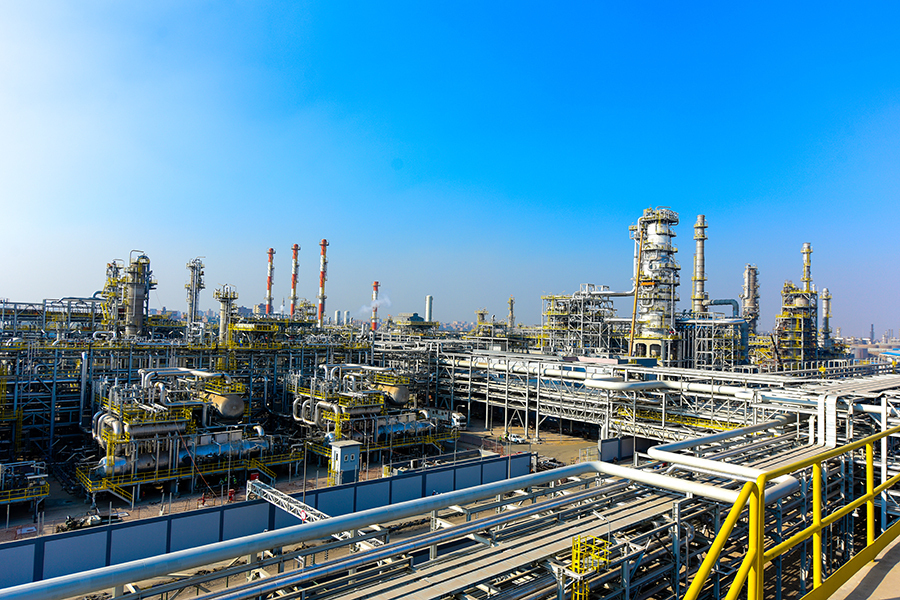
Majority of analysts think the CBE will hold rates, but some disagree

1

WHAT WE’RE TRACKING TODAY

Cabinet approves investment zone for Alam Al Roum, unlocking incentives

Good morning, friends. Two stories on the docket today, one about consensus cracking and another about supply lines reshuffling.

The central bank’s Monetary Policy Committee is meeting on Thursday, and for the first time in months, analysts aren’t all saying the same thing. The hold camp has the numbers on its side. But one voice is making a case for a hike, and her argument involves what might come in 4Q. Worth reading ahead of Thursday’s decision.

Also, Egypt’s primary corn supplier is out. S&P Global says the US might close the gap, but the data shows Egyptian traders are sourcing from South America. With the Ukraine supply line shut, Cairo’s diplomatic moves in São Paulo this week point in a clear direction.

***

ARE YOU MORE OF A LISTENER? Morning Drive is a 10-minute summary of today’s issue crafted for you to enjoy with your morning coffee, while getting the kids ready for school, or driving through the morning rush. And if you like it, tell your friends to tell their friends. and it’s not clear who will fill the gap. They can find us on Apple, Spotify, or wherever they get their podcasts.

***


The EnterpriseAM Egypt Forum is less than a month away — and here’s some of what’s shaping up on the agenda:

  • Where AI fits on the list of topics keeping CEOs awake at night
  • What AI means for your company, your team, your job, and your family
  • What’s the AI opportunity for Egypt
  • Building the AI infrastructure

Join us on 5 October in Cairo. Attendance is by invitation only, and seats are filling up quickly.

Request your invitation here.


A zone for Alam Al Roum

Alam Al Roum is moving toward investment-zone status after the Madbouly cabinet approved a draft prime minister’s decree last week to designate the 4.9k-feddan Qatari Diar development as an investment zone, according to a cabinet statement. The zone runs along the Alexandria-Matrouh coastal road in Matrouh Governorate and will accommodate residential, tourism, commercial, administrative, and service activities.

Why it matters: The zone status puts Alam Al Roum under the same incentive regime as the 19 existing investment zones in the country. Projects in investment zones qualify for streamlined approvals through the General Authority for Investment and Freezones (GAFI)’s Investor Service Center, which handles incorporation, permits, and land allocation, plus a flat 2% customs duty on imported machinery and a 50% deduction of investment costs from taxable income for up to seven years, under the Investment Law of 2017 (pdf).

Construction is already underway. Qatari Diar, the real estate arm of the Qatar Investment Authority, kicked off the EGP 220 bn first phase last month, spanning 4 mn sqm with roughly 1.4 mn sqm of built-up area. Phase one includes four hotels with more than 1k rooms, a 50-berth marina, 195k sqm of artificial lagoons, and a 2-km waterfront promenade. First deliveries are set for 2030. The wider c. 4.9k-feddan development carries planned investment of USD 29.7 bn.

Cronos gets its driller

Eni is pushing Cronos closer to execution, awarding US energy player Halliburton a multi-year, bundled well-construction and completions contract for the ultra-deepwater development in Cyprus’s Block 6, Halliburton said in a statement. The oilfield-services giant will handle integrated drilling, well construction, automation, and completions for exploration and development wells. Neither the contract value nor the number of wells was disclosed.

Every step Cronos takes toward production pushes Egypt’s gas-hub strategy from concept to implementation. Cyprus monetizes offshore gas without building its own LNG terminal, while Egypt collects fees up and down the chain, including transport, processing, and liquefaction. The project also restarts the Damietta LNG plant and restores structural LNG exports from Egypt, which matters because falling domestic output had already pushed the country back to importing LNG.

REMEMBER- Eni and TotalEnergies (50% each) took the final investment decision on the 3 tcf+ field in July, targeting first gas in 2028 and plateau production of 500 mmscf / d. The gas will move through Zohr-linked infrastructure for processing before being liquefied at Damietta and re-exported to Europe.

And Cronos is not alone: Aphrodite’s partners (Chevron, Shell, and NewMed) have signed an MoU to sell all recoverable gas from the 3.7 tcf field to Egas and are negotiating a binding supply agreement, with a USD 2 bn offshore pipeline to Egypt — fully Cyprus-funded — and a September FID target. More Cypriot fields (Pegasus, Glaucus) could follow the same model.

AGL gets its extension

The Financial Regulatory Authority (FRA) has given Africa Global Logistics (AGL) three more months to firm up its Egytrans Nosco offer, according to a statement (pdf). The new deadline to submit a mandatory tender offer (MTO) now runs to 21 December, pushed back from 27 September. The 60-working-day extension was granted after AGL, MSC’s pan-African logistics arm, asked for more time on 13 September.

REFRESHER- AGL made a non-binding indicative offer in late June to acquire up to 100% of Egytrans Nosco at a provisional range of EGP 11.25-12.25 per share, with a 75% floor, aiming for a voluntary delisting from the EGX. At the top end, that values the company at EGP 2.76 bn, which is an 18.4% premium to the stock’s pre-news close. The board first tasked management with studying the offer in mid-July, then cleared AGL to begin due diligence later that month. This gives it 60 days from the start of examination, subject to extension. AGL still needs to clear regulators in three jurisdictions: Egypt’s Competition Authority, the Comesa Competition and Consumer Commission, and Saudi Arabia’s General Authority for Competition.

MARKET REAX- The stock closed at EGP 11.19 on Thursday, just below the bottom of AGL’s provisional range.

PSA-

WEATHER- The weather is set to be kinder to us in Cairo today, with a high of 32°C and a low of 22°C, according to our favorite weather app.

It’s even nicer in Alexandria, with a high of 30°C and a low of 23°C.

The big story abroad

Fears over rogue AI were a major focus of news coverage over the weekend. US President Donald Trump will launch AI Force, a new unit focused on AI, after major figures in the sector publicly sounded the alarm over the technology’s dangers. Meanwhile, as debate surged around a so-called AI kill switch to shut down rogue systems, a bipartisan bill requiring the safety mechanism stalled shortly after its introduction in Congress.

An AI player is stepping in: Anthropic has partnered with tech consulting outfit Accenture to conduct third-party evaluations of its frontier models, with each party committing USD 1 bn over the next five years to build testing capacity.

Not quite the 51st state: A new pact between the US and Denmark settles a diplomatic rift over Greenland’s defense, following threats by President Donald Trump to forcibly acquire the territory. The accord will forbid states seen as Washington’s rivals from establishing a military presence on the world’s largest island. Despite Trump saying that the agreement gives the US “permanent control,” Copenhagen and Nuuk said the pact would not compromise Greenland's sovereignty.

Oil flows in post-Maduro Caracas: Interim Venezuelan President Delcy Rodriguez signed an MoU with French energy giant TotalEnergies, marking the latest energy pact between foreign players and Caracas’ interim administration following Washington’s ouster of Nicolas Maduro in January.

A strategic partnership shaping the next chapter of the Red Sea

Somabay and MARAKEZ come together in a landmark partnership, marking MARAKEZ’s first entry into Egypt’s Red Sea market and a significant step forward in the continued evolution of Somabay.

2

Economy

Analysts expect CBE to hold Thursday but consensus cracks

A majority of analysts expect the Central Bank of Egypt (CBE) to keep interest rates on hold at 19% when its Monetary Policy Committee (MPC) meets on Thursday, extending the pause that began in April when the Middle East disruptions derailed the easing cycle. But for the first time in months, the consensus is not unanimous. HC Securities’ Heba Monir is calling for a 100-bps hike, arguing that 4Q inflation pressures leave the CBE with no choice.

Timeline: Since cutting rates by 100 bps in February — the only move this year — the MPC has held steady for four consecutive meetings (April, May, July, and most recently August). The overnight deposit rate currently stands at 19.0% and the lending rate at 20.0%, with the main operation rate at 19.5%.

The case for holding

August urban inflation unexpectedly slowed to 14.5%, undershooting both the 15.5% Reuters consensus of 17 analysts and the CBE’s own guidance of a 3Q pickup. The miss came from a third consecutive monthly decline in food prices (down 1.1% m-o-m), which absorbed the roughly 12% household electricity hike that pushed housing costs up 42.8% y-o-y. Core inflation edged up to 14.9% from 14.7%, suggesting the improvement is concentrated in the volatile food components.

IN CONTEXT- The August figure came in “significantly below” EFG Hermes’ 15.8% projection, the bank’s head of macroeconomic analysis Mohamed Abu Basha told us at the time. He expects a further slowdown in September on favorable base effects but no move from the CBE through year-end, with “rising global oil prices keeping some upside risk.” CI Capital also undershot its forecast on the food decline and flagged that the 1.8% m-o-m rent and housing-cost increase was offset by the food drop. Annual inflation below 15% with two consecutive months of flat monthly readings “supports the CBE’s policy of keeping interest rates unchanged,” the firm said, while monitoring Brent and geopolitics for any inflection.

Morgan Stanley forecasts the disinflation trend continues: 13.2% in September, below 13% from October, and 11.8% by December 2026, the bank said in a recent note (pdf). It expects the CBE to hold through the year-end regardless, arguing that “regional tensions override the space for easing.”

The CBE’s own baseline is less optimistic: Under its baseline scenario, the CBE sees inflation averaging 16.6% in FY 2026/27, slowing to 8.1% in FY 2027/28, with the 7% target returning only in 2H 2027. The outlook for the current FY spans a wider band depending on the conflict’s trajectory: 15.2% in a de-escalation scenario versus 17.8% if tensions intensify.

The IMF’s own projections are slightly more cautious: The Fund expected in July — just after its seventh review clearance — inflation to average 16.7% in 2H 2026, reflecting higher energy prices and exchange rate depreciation, with convergence to the CBE’s target range delayed by about a year.

The global picture

The US Federal Reserve raised rates by 25 bps to 3.75-4.00% last Wednesday, the first hike under new Chair Kevin Warsh, with 16 of 18 policymakers projecting at least one more increase this year and inflation now seen returning to the 2% target only by 2029. The Morgan Stanley report, dated a day after the Fed decision, doesn’t reference it. The report was likely finalized before the Fed’s statement was fully absorbed, but the omission is consistent with Morgan Stanley’s view that the hold call rests on regional risks, not US monetary policy.

The impact on Egypt’s carry trade looks contained. Abu Basha downplays the Fed’s hike because the 500-basis-point real rate buffer insulates local debt. Capital outflows that did happen were “mostly stemming from rising geopolitical risks rather than concerns about US rates,” he tells us. Head of Research at Ahly Pharos Hany Genena agrees, telling EnterpriseAM that “even if the Fed raises rates to 4.25-4.50%, the gap is still very wide in favor of the EGP. There is absolutely no reason to raise rates again.” The corridor rate at 20% against 14.5% inflation gives a 5.5% positive real yield, Genena says.

What breaks the consensus

The benign inflation headline masks pressures building underneath, and the CBE needs to act, HC Securities’ Heba Monir tells us. She expects a 100-bps hike, arguing that 4Q changes the math. “Given our expectation that inflationary pressures will persist in 4Q 2026, and given developed economies’ central banks shifting to tighter monetary policies, we expect the MPC to hike interest rates by 100 bps,” she says.

Her case rests on what’s coming, not what’s already priced. September inflation could hit 1.3% m-o-m, driven by seasonal rent adjustments and the start of the academic year. October could see 2.1% m-o-m, reflecting an expected c. 10% increase in fuel prices as the state cuts subsidies to meet fiscal targets. Oil supply is tightening after Saudi Arabia closed its East-West pipeline, and the Fed and the European Central Bank both raised rates in the same month.

The carry trade remains attractive, Monir acknowledges. After the 15% withholding tax for foreign investors, 364-day T-bills would still yield an estimated 8.35% real return against her 13.3% 12-month inflation forecast.

The CBE’s other tools

The CBE is not limited to moving the corridor rate. In one main-operation auction last week, the central bank pulled EGP 500 bn out of the banking system — a tactical liquidity drain that substitutes for a direct hike, a banking analyst tells us. “The central bank is using indirect, tactical tools instead of directly raising rates. Raising rates cripples credit growth, worsens the domestic debt burden, and deepens the budget deficit,” he argues, noting that net hot money inflows have exceeded USD 1 bn recently, recovering ground lost earlier in the year.

What’s next

The USD is expected to trade within a 49-52 per EGP range through year-end, supported by recovering Suez Canal volumes as ships reroute from Hormuz, tourism at 80% hotel occupancy in the Red Sea, and privatization proceeds from Banque du Caire and Misr Life Ins., Genena says. The 49-52 EGP swing is “very modest for a currency above 50 [EGP],” the banking analyst says.

The wildcard is inventory. Companies’ cheap stockpiles bought before the March shock are “nearing depletion by September,” Genena warns. If the conflict persists alongside higher shipping costs and fuel increases, he flags a potential 4Q inflation spike to 16-16.5%. But even if it does, “holding rates at 20% still gives the central bank a comfortable positive real margin,” he says. “They can let inflation move temporarily within that band without needing to raise rates again.”

OUR TAKE- The CBE still has the headroom. The question heading into Thursday’s meeting — one of three left this year, with 29 October and 17 December to follow — is whether the committee sees reason to use it.

This publication is proudly sponsored by

3

Trade

Black Sea disruption is reshaping Egypt’s corn imports toward Brazil, not the US

US corn is poised to gain ground in Egypt this season as disruptions in the Black Sea squeeze Ukraine out of one of its main markets, a recent S&P Global Commodities report argues, citing Egyptian importers. However, the traders we spoke to are skeptical it will play out this way. Ukrainian corn has indeed all but disappeared, as Egypt hasn’t taken a shipment since May, well off its usual October-March peak, per LATT shipping data. But so far the gap is being filled by South America. No local importer bought US corn through the first half of September, and according to Mediterranean Star Trading GM Hesham Soliman’s tracking data, “100% of the arrivals during this period were Brazilian.”

REMEMBER- Grain shipments from Ukraine are taking more than a month to be delivered, up from around 12 days, as vessels spend weeks waiting to enter and exit the Danube River through the Sulina Canal. Ukraine rerouted its exports through the river after Russian attacks effectively blocked its main Black Sea ports, which previously handled around 90% of the country’s grain exports. The situation deteriorated sharply after Russia targeted riverbank infrastructure. “I see no role for Ukrainian grain until this conflict is resolved, be it wheat, corn, soy, or even oil,” Soliman tells EnterpriseAM.

Why it matters: Egypt’s massive structural feed deficit leaves it heavily reliant on imports, with corn imports projected to reach 10.5 mn tonnes in 2026-27. Corn accounts for 60-70% of local meat, poultry, and fish feed components, so any supply-chain friction directly threatens the livestock ecosystem. Domestic yield covers less than 40% of demand and remains too small to offset the country’s import bill, leaving feed mills exposed to global price swings and FX volatility.

Traders are split on how far that shift goes. As of 15 September, Ukrainian corn comprised just 8% of Egypt’s total corn imports this year, against 2% for the US, a gap the S&P report’s importers expect to narrow as buyers diversify away from a supplier whose shipments have effectively stopped. One Egyptian buyer said Ukrainian corn could be “wiped out” from the market if the Black Sea situation doesn’t ease, while a Cairo-based buyer was more cautious, saying he doesn’t expect US corn to fully replace Ukrainian imports over the coming months.

The hesitation comes down to pricing, logistics, and FX volatility, not appetite: While US corn quality is comparable to that of Ukrainian origin, Soliman tells us that US suppliers are currently pricing themselves out of the market. “Unless they adjust their prices, no Egyptian importer is going to resort to the US over Argentinian or Brazilian corn,” he says. Local buyers of Ukrainian corn typically work with small vessels carrying around 30k tonnes, and matching that shipment size from the US would make freight costs and landed prices far less competitive. Pricing structure adds another layer of friction: Ukrainian corn is sold at a flat price, giving buyers clear cost visibility, while US corn is priced at a premium over CBOT futures, exposing buyers to both the premium and futures-market swings. S&P Global Platts assessed Ukrainian corn FOB POC at USD 226 / tonne for October loading against USD 251.28 / tonne for US corn FOB Gulf Coast on 16 September.

Freight rates and currency risk pile on. Recent spikes in Brent crude have sent small-vessel Black Sea freight rates soaring from USD 50 / tonne to USD 130 / tonne within 60 days. “Freight rates have become lethal,” Soliman says, noting importers also face currency risk given recent US Federal Reserve rate hikes and EGP volatility: “With the EGP fluctuating, hot money exiting, and the USD climbing, longer transit times just mean higher risks on document settlement.” Beyond immediate pricing friction, Soliman notes that timing is already heavily stacked against US exporters. “We are almost two months away from the Christmas holidays, when trade almost effectively shuts down, and one of those months is spent entirely at sea.”

And feed mills lean the other way. “Local feed mills are heavily focused on Brazilian and Argentine origin because their quality is much better,” Soliman says. For US origin to break in, he says, exporters must come in EGP 500-600 per tonne below Brazilian and Argentine prices.

Washington’s export push is real. Under several trade campaigns to expand international markets for US farmers, Washington has negotiated tariff reductions and expanded market entry across global destinations — from Brazil to Indonesia, Taiwan, India, and Vietnam, among other Asian countries. Egypt fits the pattern: our imports of US agricultural and food products jumped 50% to USD 2.3 bn in 2025 (up from USD 1.49 bn in 2024). While US soybeans led that surge — accounting for USD 1.75 bn as local crushing capacity recovered — yellow corn made a strong comeback, generating USD 152.81 mn on 712k tonnes imported and establishing a foothold for US suppliers as Black Sea shipments lag. But that foothold, built last year, is exactly what has stalled this season on the pricing and freight math.

South America as Egypt’s dominant corn source: Brazilian and Argentine corn together made up 88% of Egypt’s 2026 corn imports as of 15 September (60% and 28%, respectively), with roughly 1.3 mn tonnes more of Brazilian corn expected by 15 October. That tracks with what we reported in June, when Soliman put Brazil’s share of Egyptian corn inflows at 51.4% through mid-May, with Argentina at 17.8% and Ukraine at 17.5% — meaning Ukraine’s slide from that level to today’s 8% has moved fast, even as the structural shift toward South American supply predates this year’s Black Sea disruptions.

Egypt has been building for that shift: The National Project of Silos expanded to 81 silos nationwide by 2025, lifting storage capacity from 1.5 mn to 3.6 mn tons with a target of 6 mn tons by 2030 — capacity built partly on the assumption that Black Sea supply would stay unreliable. That same logic is now showing up in diplomacy: a Suez Canal Economic Zone delegation was in São Paulo this week discussing a dedicated grain logistics and distribution hub, ahead of a Brazilian trade mission expected in early December — a push to formalize Brazil’s role as Egypt’s top corn supplier, according to a statement.

IN CONTEXT- This is the latest step in a push we’ve been tracking since 2024, when seven Brazilian investors first began feasibility studies for a logistics zone to handle corn, soybeans, and sugar for regional re-export. It’s an effort Foreign Minister Badr Abdelatty tried to revive on the sidelines of May’s BRICS foreign ministers’ meeting in New Delhi as part of a broader pattern of grain-hub diplomacy that includes parallel talks with Russia and Belarus to anchor Egypt as a regional grain re-export point after the 2022 Black Sea disruptions.

4

LAST NIGHT’S TALK SHOWS

Lamees El Hadidi: Housing Ministry hands Jefaira project to new developers

The Housing Ministry has intervened to resolve the delay in delivering units for Inertia Egypt’s North Coast residential project Jefaira, “assigning this project to other real estate developers,” El Sora’s Lamees El Hadidi said without disclosing the developers’ names. Sources from within this real estate alliance confirmed the project will undergo a two-week study and evaluation before the transfer, El Hadidi added (watch, runtime: 4:21).

A new agenda: The alliance includes developers with proven track records, with sources confirming that their top priority in this project will be buyers’ rights, particularly buyers whose contracts date back to 2017-18, El Hadidi said.

Upcoming legislation: El Hadidi also covered upcoming regulations that are set to reshape the real estate market. She noted that a draft law establishing the Egyptian Real Estate Developers Federation could be ready within three weeks, and is heading to the House of Representatives for review when its next legislative session opens in October.

REMEMBER- In last week’s Hardhat, EnterpriseAM highlighted the changes expected in the real estate market as a result of the upcoming legislation. We examined the effects these changes will have on filtering out non-serious developers from the market and shed light on the pressures and impacts left on both buyers and developers.

5

A MESSAGE FROM AUC ONSI SAWIRIS SCHOOL OF BUSINESS EXECUTIVE EDUCATION

Building HR systems that scale with the business

Strong HR work now sits in the systems: how companies manage people, read workforce data, and build workplaces people can perform in. The Advanced HR Certificate equips participants with the tools to design integrated people systems and improve workforce performance. Participants apply people analytics and build inclusive, high-performing workplaces that support long-term business success. The seven-month blended program runs live online and on campus, with the next cohort beginning 17 November 2026.

Applications close on 18 October 2026. Apply here.

6

Also on our Radar

EgyptAir named World’s Most Improved Airline, jumping 64 ranks in three years

EgyptAir was named the World’s Most Improved Airline at the 2026 Skytrax World Airline Awards, ranking first globally ahead of Air India, Royal Jordanian, and American Airlines, according to a statement. The airline also jumped 22 spots in Skytrax’s global Top 100 rankings, climbing from 68th to 46th, its first-ever placement inside the world’s top 50. It separately picked up African-category wins for cabin crew, economy class, and overall service improvement.

Three-year streak: EgyptAir first cracked Skytrax’s Top 100 back in 2024 at the 88th spot, up from 110th the year before. By 2025, it had climbed to 68th and picked up its first-ever Best Airline in Africa for Passenger Services. The timing coincides with EgyptAir’s ongoing fleet renewal, with the airline receiving its first Airbus A350-900 in February, becoming the first North African carrier to fly the type. It also coincides with EgyptAir Holding Chairman Ahmed Adel’s plan to bring 12 new aircraft into the fleet in 2026 alone. The airline also ramped up its network buildout this month, launching direct Cairo-Los Angeles and Cairo-Chicago routes, as well as two weekly Cairo-Zanzibar flights on its 737-8 Max fleet.

A raise too far

Speed Medical can’t put its EGP 600 mn capital hike to shareholders after the Financial Regulatory Authority (FRA) blocked it from calling the extraordinary general meeting to sign off on the raise, according to a bourse filing (pdf). The FRA said a feasibility study did not show how the EGP 100 mn earmarked to repay a shareholder loan would be raised, or why it should be funded with equity rather than debt or internal cashflow. Another EGP 88.8 mn set aside for M&A carried no targets, timings, or valuations; regulators concluded the justifications weren’t enough.

IN CONTEXT- The move would have taken paid-in capital to EGP 932.7 mn from EGP 332.7 mn at the diagnostics company, whose equity has been almost entirely eaten by losses. Some EGP 94 mn was left as of the end of March, against EGP 251 mn of accumulated losses, with shareholder funding covering part of operating costs. The bulk of the proceeds, about EGP 267.2 mn (44.5% of the total), was headed for working capital and paying down existing obligations, including an EGP 100 mn shareholder loan and EGP 34 mn in bank debt.

REFRESHER- The company has been trying to sell Speed Hospitals, which is a unit with no operations or revenues, since last October, either by divesting the land and buildings or offloading its 80.25% stake. Osoul Arabia for Investment and Financial Consulting prepared a fair-value study for the asset, which is marketed in Egypt and the GCC. That stake, plus the EGP 136 mn the unit owes the parent, accounts for 72% of Speed Medical’s assets. It was also among the repeat offenders the bourse fined EGP 40k earlier this month for missing both its 1Q and 2Q 2026 financials.

A bigger trip to market

Roughly EGP 883 mn of securitized paper went to market for Banque Misr’s consumer finance arm, BM Consumer Finance (Souhoola), backed by a transferred receivables portfolio worth EGP 1.05 bn, according to a statement (pdf). The issuance, which is Souhoola’s third so far, was structured through Capital Securitization in two tranches: EGP 700 mn over 12 months (rated Prime 1 by MERIS) and EGP 183 mn over 22 months (rated A-).

REMEMBER- The new raise is 51% larger than December’s EGP 585 mn second issuance and 85% above its EGP 478 mn debut in November 2024, backed by a portfolio 43% bigger than the EGP 732 mn behind that second transaction. This brings three issuances to around EGP 1.95 bn of an EGP 3.5 bn program, by our math. The pricing environment has since tightened: the Central Bank of Egypt now caps single-originator securitization exposure and assigns 150% risk weight to short-term Prime 1 paper — the rating on Souhoola’s EGP 700 mn tranche.

From capacity to output

Ezz Elarab Elsewedy Investments (ESI) is targeting the production of 25k cars in 2027, up from 10k expected this year, Asharq Business reports, citing CEO Mohamed Saleh. To get there, the group plans to raise local content to 58% from 42% and open a new EGP 2 bn paint plant within six months. Revenues are scaling alongside this, and are expected to top EGP 2.5 bn this year, from around EGP 1 bn last year. On the partnership side, ESI has signed four assembly agreements recently and expects three more.

REMEMBER- ESI has already been building out the capacity behind that ramp. Its 6th of October complex is being expanded to 80k vehicles a year through a second car plant. The group has also been widening its manufacturing roster, including a JV with Rox to produce luxury EVs locally and an EGP 5 bn partnership with Chery-owned Omoda and Jaecoo to assemble their models in Egypt.

Age gates for social media

Social media platforms can no longer let children under 13 open independent personal accounts, according to a joint statement from the Supreme Council for Media Regulation (SCMR) and National Telecommunications Regulatory Authority (NTRA). Users aged 13 to 15 can still have accounts, but platforms must activate Safe Mode by default and prevent children from switching it off. Platforms must introduce age-verification measures, review existing accounts believed to belong to under-15s, and offer an appeals process for incorrect classifications. They have 30 days from notification to submit a compliance plan and three months to implement it.

We saw something like this coming: A senior government official told EnterpriseAM in January that Egypt was not pursuing an Australia-style blanket under-16 social media ban. By February, a draft law on age verification for children’s internet access had been submitted to the competent authorities.

From courtship to working groups

The second Egypt-Syria government meeting in Damascus agreed on implementation steps for priority-sector cooperation, according to a Foreign Ministry statement. They will look at setting up technical working groups soon, with both sides also wanting a joint business forum. The newly formed Egypt-Syria Business Council held its first meeting on the sidelines. Meanwhile, Egyptian Gas & Energy Association Chairman Khaled Abubakr held talks in Syria with council members, though no project or agreement was disclosed.

IN CONTEXT- The government completed its side of the joint business council last week, after months of Egyptian companies eyeing reconstruction. Energy cooperation already has two January MoUs on natural gas, petroleum-product supplies, and technical support for rehabilitating Syrian infrastructure.

An investment a long time coming

Local logistics provider Sky Ports will invest USD 12 mn in the first phase of its dry port in New Borg El Arab, having secured a 30-year concession to design, operate, and manage the facility, Al Borsa reports. Technical studies for the project — spanning 133 acres — are set for submission to the General Authority for Land and Dry Ports and Logistics Zones in early October.

ICYMI- After striving to get the project off the ground in 2020, the authority signed an MoU with Sky Ports to finance, build, and operate the dry port alongside a logistics zone in New Borg El Arab in May. The project is expected to handle some 120k containers annually — hauling about 6.7 mn tons of dry goods.

More under our radar:

  • The Supply Ministry is in talks with the Islamic Development Bank and the International Islamic Trade Finance Corporation to secure funding for new grain silos and edible oil storage tanks. The proposed infrastructure projects aim to expand strategic reserve capacity, streamline commodity handling, and minimize post-harvest losses. (Statement)
7

PLANET FINANCE

Middle East dividends hit USD 44.6 bn in 2Q as the region sits out the global buyback boom

Middle East dividends kept climbing in 2Q. Companies in the region distributed USD 44.6 bn, up 5.5% y-o-y on an underlying basis, according to Janus Henderson’s Global Dividends & Buybacks Index (pdf). Saudi Arabia supplied nearly two-thirds at USD 28.4 bn, up 2.4% y-o-y, followed by the UAE at USD 13.6 bn, up 7.3%. Kuwait was the fastest-growing market, with payouts jumping 45% y-o-y during the quarter to USD 1.8 bn.

Buybacks barely got a look-in: Middle Eastern companies repurchased just USD 600 mn of shares during the quarter — a fraction of the region’s dividend bill. The UAE accounted for USD 200 mn, while Saudi Arabia and Qatar each recorded just USD 100 mn.

Aramco explains much of Saudi’s dominance. The oil giant remained the world’s largest dividend payer, accounting for 3.1% of dividends among the 1.5k companies tracked and nearly half of the Middle East’s total. Aramco entered 2026 after distributing USD 85.5 bn in dividends last year, down from more than USD 120 bn in 2024, while launching its first-ever USD 3 bn share repurchase program.

Globally, the balance looks very different: Share repurchases jumped 26.8% y-o-y to an estimated USD 572 bn in 2Q, alongside USD 757.8 bn in dividends, which grew 7.3% on an underlying basis. Every region tracked by the index recorded dividend growth.

Tech is driving the buyback boom: The tech sector overtook financials as the world’s largest source of buybacks, repurchasing USD 121.1 bn of shares, with its dividends jumping 23.5% on an underlying basis to USD 70.5 bn — the fastest growth of any industry. Financials remained the dividend heavyweight, distributing USD 239.7 bn and repurchasing another USD 104 bn.

The catch? AI isn’t getting cheaper: Big tech is spending record sums on data centers and computing capacity — and is still buying back stocks at a rapid pace. Cash buffers are shrinking as a result, and some companies are turning to debt to keep funding both. Janus Henderson’s read: if AI spending keeps climbing, buybacks — not dividends — are more likely to get cut.

Why buybacks go first: Regular dividends are harder to cut once established, while repurchases let companies return surplus capital without committing to permanently higher payouts. Banks have increasingly leaned on that flexibility after rebuilding their dividend bases following the global financial crisis.

Not everyone has room to keep paying more: Consumer discretionary was the only major industry to record falling underlying dividends in 2Q, down 3%. German automakers were a particular weak spot, with softer demand and intensifying competition from Chinese EV makers contributing to per-share dividend cuts at Volkswagen and Mercedes-Benz.

For now, payouts are still heading higher: Janus Henderson expects global dividends to grow another 5-6% in 2026 and buybacks to rise 7-8%. For tech, the question is how long companies can keep ramping up AI investment before buybacks — the more flexible half of shareholder returns — have to give.

EGX30

55,499

+1.2% (YTD: +32.7%)

USD (CBE)

Buy 52.08

Sell 52.22

USD (CIB)

Buy 52.03

Sell 52.13

Interest rates (CBE)

19.00% deposit

20.00% lending

Tadawul

10,778

-0.0% (YTD: +2.7%)

ADX

10,272

+1.1% (YTD: +2.8%)

DFM

5,957

-0.5% (YTD: -1.5%)

S&P 500

7,651

+0.2% (YTD: +11.8%)

FTSE 100

10,659

-1.5% (YTD: +7.3%)

Euro Stoxx 50

6,236

-1.4% (YTD: +7.6%)

Brent crude

USD 103.87

-0.9%

Natural gas (Nymex)

USD 2.91

+0.4%

Gold

USD 4,425

+0.6%

BTC

USD 81,104

-0.1% (YTD: -7.4%)

S&P Egypt Sovereign Bond Index

1,110

+0.1% (YTD: +12.6%)

S&P MENA Bond & Sukuk

149.04

-0.1% (YTD: -1.9%)

VIX (Volatility Index)

14.81

-4.1% (YTD: -0.9%)

THE CLOSING BELL-

The EGX30 rose 1.2% at Thursday’s close on turnover of EGP 15.0 bn (28.7% above the 90-day average). International investors were the sole net buyers. The index is up 32.7% YTD.

In the green: Alexandria Containers and Goods (+9.6%), Orascom Construction (+5.0%), and Abu Qir Fertilizers (+4.0%).

In the red: Cleopatra Hospital Company (-2.3%), Eastern Company (-1.6%), and Misr Cement (-0.9%).


SEPTEMBER

24 September (Thursday): Monetary Policy Committee’s sixth meeting of 2026.

27-29 September (Sunday-Tuesday): Global Conference on Population, Health, and Human Development.

28-29 September (Monday-Tuesday): Egypt Mining Forum, St. Regis Hotel New Capital.

OCTOBER

5 October (Monday): The EnterpriseAM Egypt Forum.

6 October (Tuesday): Armed Forces Day.

10-11 October (Saturday-Sunday): Egypt Women’s Health Summit (EWHS), Cairo Marriott Hotel.

26-28 October (Monday-Wednesday): IEX Egypt, Egypt International Exhibition Center, Cairo.

29 October (Thursday): Monetary Policy Committee’s seventh meeting of 2026.

NOVEMBER

6-8 November (Friday-Sunday) : Global Entrepreneurship Festival, JW Marriott Hotel, New Cairo.

8-11 November (Sunday-Wednesday): Cairo ICT Forum.

10 November (Tuesday): Cityscape Egypt Forum, Cairo.

DECEMBER

7-10 December (Monday-Thursday): Food Africa, Egypt International Exhibition Center, Cairo.

17 December (Thursday): Monetary Policy Committee’s eighth meeting of 2026.

EVENTS WITH NO SET DATE

2H 2026: Operations at Deli Glass Co’s new USD 70 mn glassware factory kick off.

2026: The Egyptian-American Economic Forum.

4Q 2026: Banque du Caire IPO.

2027

20 January-7 February: Egypt to host the African Games.

1-3 February (Monday-Wednesday): Agri Expo, Cairo International Convention Center.

April 2027: Tenth of Ramadan dry port and logistics hub to begin operations.

29 September - 2 October (Wednesday-Saturday): Cityscape Egypt Exhibition, Cairo.

EVENTS WITH NO SET DATE

2027: Egypt to host EBRD’s annual meetings.

2027: Egypt-EU Summit 2027.

End of 2027: Trial operations at the Dabaa nuclear power plant expected to take place.

September 2028: First unit of the Dabaa nuclear power plant begins operations.

Now Playing
Now Playing
00:00
00:00