House committee rewrites Mostakbal Misr bill

1

WHAT WE’RE TRACKING TODAY

Maersk is returning its MECL service to the Suez Canal

Good morning, friends. It’s a morning fit for regulators, with our three top stories connected by a common thread.

The House has rewritten the Mostakbal Misr bill, dialing back several provisions in the first draft. The joint committee narrowed the authority’s tax relief, tied its jurisdiction to land it owns, capped its fee increases, and restored the state auditor’s oversight. However, it leaves in place its core restructuring as a standalone body reporting to the president. We unpack all the rewrites below.

The Monetary Policy Committee held rates for a third straight meeting on Thursday, and the number that made the call easy is worth pausing on: monthly inflation went negative, and annual eased to 14.3%. The CBE framed the hold as a response to “better-than-expected macroeconomic developments.”

And finally: Private ins. funds have grown into an EGP 201 bn pool of long-term domestic capital, up 20% y-o-y and half a year before the FRA’s 2026 target of EGP 150 bn. We have more below on the bigger question: will the money begin behaving differently?

***

ARE YOU MORE OF A LISTENER?Morning Drive is a 10-minute summary of today’s issue crafted for you to enjoy with your morning coffee, while getting the kids ready for school, or driving through the morning rush. And if you like it, tell your friends to tell their friends. They can find us on Apple, Spotify, or wherever they get their podcasts.

***

The EnterpriseAM Egypt Forum is back — and this year, we’re giving the full day to the one question on every business leader's mind: What does AI actually mean for your company, your people, and your own job?

Leaders in New York, London, Abu Dhabi, and Singapore are asking the same things, and nobody has built a playbook that works yet. We're all figuring it out in real time — and for Egypt, the stakes are unusually high.

Egypt could leapfrog a generation on the back of this technology — or watch AI hollow out the industries and jobs we can't afford to lose. The leaders who get literate early will be the ones who get to decide which road we take.

Every session on stage answers one question: “So, what do I actually do about it?”

Join us on 5 October in Cairo. Seats are limited and attendance is by invitation only.

Request your invitation here.


Welcome back, Maersk

Danish shipping firm Maersk is bringing back Suez Canal transits on its India-Middle East-US East Coast service (MECL), it said in a statement. Maersk’s return is an early signal of recovery for our Suez Canal revenues, which rose 23% y-o-y to USD 4.8 bn in FY 2025/26 after dropping sharply during the prolonged Red Sea crisis and subsequent Hormuz disruptions.

The need for speed: The MECL will now sail via the Red Sea instead of around Africa’s Cape of Good Hope, which it had used since the Houthi attacks began in late 2023. Maersk described the Suez and Red Sea route as the fastest and most efficient way to connect India, the Middle East, and the US East Coast, saying the shift will improve westbound transit times by roughly seven days and eastbound by up to 14 days. The carrier is also adding a new eastbound port of call in Jeddah starting in August.

REFRESHER- Last week, Maersk and Germany’s Hapag-Lloyd announced their jointly run AE15 service — connecting Asia, the Mediterranean, and Europe — would make the same switch. Maersk restored the same route in January following successful trial voyages, only to revert to the Cape of Good Hope route in March when the US-Iran conflict escalated and the Strait of Hormuz bottleneck intensified.

An ultra-sound investment

Elezaby Medical’s Tatweer Medical Industries is teaming up with China’sMindray to pump USD 100 mn in investments into its ultrasound and X-ray manufacturing facility in Badr City over the next three years — up from just over USD 12 mn in current investments, Al Arabiya reports, citing CEO Taha Abdelnasser. The plant’s investment cost will hit USD 16 mn by year-end before crossing the USD 100 mn mark by year three, expanding its production lines from two products to 10.

Why it matters: The facility currently has an annual capacity of 2k ultrasound and 1.5k X-ray units. Egypt needs roughly 5k ultrasound units a year, so the plant alone could cover close to half of domestic demand. Tatweer will leverage Mindray’s established distribution network to export medical hardware across Africa.

Hassan Allam eyes the exchanges

Our friends at Hassan Allam Holding are considering taking some of their real estate and infrastructure subsidiaries public on the EGX, Gulf exchanges, or on both, Chairman and CEO Hassan Allam was quoted as saying on the sidelines of BMG Economic Forum at the London Stock Exchange. The parent conglomerate will stay private.

Why it matters: Listing foreign-facing subsidiaries in Gulf markets would give Hassan Allam access to funding while keeping the parent conglomerate private. The group is executing a USD 10.5 bn project backlog, split evenly between Egypt and markets including Saudi Arabia, the UAE, Libya, and Oman. Saudi is the group’s largest foreign market with over USD 2 bn in active contracts, followed by the UAE, Libya, and Oman. Hassan Allam’s real estate development arm, Grova, launched the SAR 3.3 bn Noor Khuzam project in Riyadh alongside local partners.

REFRESHER- We have been tracking Hassan Allam’s capital market moves since last year, when the group filed to list a special purpose acquisition company (SPAC) on the EGX. The SPAC was rebranded to Grova Venture Capital and had its issued capital raised to EGP 100 mn to fund future acquisitions. When market chatter suggested the blank-check vehicle was a backdoor listing for Hassan Allam Construction, the company denied those rumors.

PSA-

WEATHER- The temperature readings are tricky in Cairo today, with a high of 36°C and a “feels like” of 38°C, according to our favorite weather app.

We’ve got that nice sea breeze going in Alexandria, with a high of 30°C and a “feels like” of 33°C.

Data point

USD 43.1 bn — that’s how much Egyptians abroad sent home in the first 11 months of FY 2025/26 (July-May), a 31.2% y-o-y rise from USD 32.8 bn a year earlier, according to central bank data. Remittances held their double-digit growth streak through May, bringing in USD 3.9 bn, up 14.7% y-o-y from USD 3.4 bn in May 2025.

The big story abroad

Regional tensions are escalating. Iran said it closed the Strait of Hormuz after firing a warning shot yesterday at a Cyprus-flagged container ship it said took an “unapproved route.” Iran’s navy said the waterway will remain closed “until further notice” or “until the end of US interference in the region,” and vowed to respond to any retaliation with a “forceful response.”

The US military responded by launching its third round of strikes against Iran in a week, US Central Command (Centcom) said. The fresh round of strikes — targeting Iranian air and surface-surveillance radars, missile and drone storage facilities — aims to weaken Iran’s ability to attack commercial vessels, Centcom said.

Meanwhile, in the AI world: Apple has filed a lawsuit accusing OpenAI and two of its former employees of stealing hardware designs, claiming that the ChatGPT developer’s top brass enabled this behavior. The lawsuit names two former Apple employees who have joined OpenAI, alleging improper transfer of sensitive information. The iPhone maker claims that over 400 of its former employees have joined the AI company.

Speaking of AI, not everyone can ride the wave: Analysis by the Financial Times has found that while 28 companies that pivoted to AI saw their combined market cap initially surge by USD 8.7 bn, more than half of those valuation gains have since evaporated. Findings suggest a trend of struggling companies using buzzy AI name changes to target retail investors and secure short-term market gains — the SEC calls this “AI washing.”

A memory drought may be coming: South Korean semiconductor giant SK Hynix’s CEO Kwak Noh-jung has sounded the alarm over an incoming memory supply shortage in 2027, set to be the worst ever in history. The company is forecasting that customer demand will continue to outstrip supply capacity even after 2030. Kwak’s comments echo similar sentiments from Nvidia and UBS.

An imminent change of ownership at Vodafone is making waves. French b’naire Xavier Niel is set to increase his ownership of Vodafone Group to become its largest shareholder after UAE telecom group e& agreed to sell him its entire 16.2% stake for about USD 6 bn. Some analysts say that Niel will exert influence over Vodafone’s strategy, catalyzing the firm's cost-cutting and freecash flow growth.

Some places become part of your story.

This summer, slow down, reconnect, and create moments that linger long after the season ends. From sunrise by the sea to unforgettable experiences, every stay at Somabay is designed to become a memory worth keeping.

2

REGULATION WATCH

Dialled back

House committee amends Mostakbal Misr bill: A joint parliamentary committee has amended a government bill for the Mostakbal Misr Authority for Sustainable Development, narrowing its tax relief, limiting its jurisdiction to land it owns, capping its fee increases, and restoring the state auditor's oversight, according to the committee report reviewed by EnterpriseAM.

Mostakbal Misr disputes the coverage: The authority issued a statement rejecting media readings of its status, mandate, and oversight arrangements as inaccurate, saying the parliamentary process was transparent and the final text balances its development mandate with governance and rule-of-law requirements. It urged media and researchers to verify against official sources, and said it has a right under the law to act against the deliberate spread of false information.

REMEMBER- The initial government-drafted bill would have turned Mostakbal Misr from a Defence Ministry-backed land reclamation project into a standalone economic body reporting directly to the president, with broad financial autonomy, wide tax exemptions, and exceptional treatment under the law. The committee has revised several of those provisions and reinstated standard regulatory, fiscal, and audit rules.

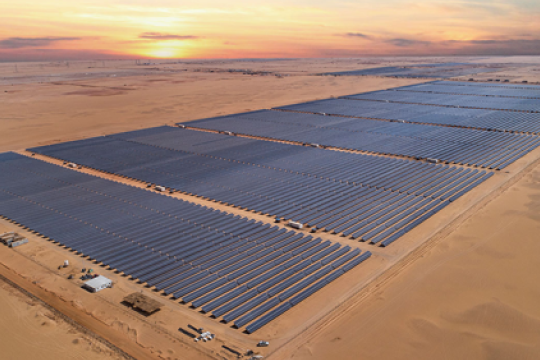
The portfolio it manages: The authority oversees a 4.5 mn-feddan reclamation project, a 500k-ton silo complex, some 1.5k retail outlets, livestock farms with a targeted annual output of around 180k head, the Sphinx crop-trading center (20 mn tons of trading and storage capacity), 12 poultry slaughterhouses, solar projects totaling 2.32k MW, and 26 applied agri-tech schools.

What changed?

On tax: The committee removed the draft provision under which the Treasury would have covered the authority’s taxes and fees, and struck an open-ended clause that would have let its zones claim exemptions requiring a special legislative provision. The zones still carry the tax and customs treatment of a freezone. Separately, the authority — rather than the Treasury — would cover its own social ins. contributions as an employer, with a four-year, no-interest window to settle legacy dues owed to the National Authority for Social Ins.

On litigation: In place of the draft’s broad bar on lawsuits, the revised text limits challenges to the authority’s contracts and related decisions to the parties to those contracts, while preserving litigation rights for holders of personal or in-kind property rights. The committee said the change was meant to avoid conflict with Article 97 of the constitution.

On land: The committee narrowed the authority's real-estate reach to land whose ownership has transferred to it, rather than plots it manages under usufruct contracts or memoranda of understanding. Subsidiaries would remain subject to the sector laws governing their sector of activity, and — reversing the draft, which had exempted them — to the state-ownership law (Law 170/2025).

On audits: The committee deleted the clause limiting the Central Auditing Organization to issuing annual performance reports, restoring the CAO’s standard oversight of the authority. The committee also routed several decisions through the House — decrees creating a sustainable-development zone, or attaching an existing area to the authority, would go to the House for approval at its first general session, and the authority’s annual report would go to the House alongside the president and prime minister.

What’s next: The joint committee presents its final report to the House general assembly for discussion on Monday. Once the law takes effect, the authority would have a one-year window to bring its administrative and operational status into line, which the president could extend by up to three years in total.

This publication is proudly sponsored by

3

Economy

The calm before the base effect

The Central Bank of Egypt’s (CBE) Monetary Policy Committee (MPC) held its key policy rates for a third straight meeting on Thursday, keeping the overnight deposit rate at 19.00%, the overnight lending rate at 20.00%, and the main operation rate at 19.50%, according to the CBE’s statement (pdf).

The number that made the call easy: Monthly headline inflation didn’t just slow — it went negative, falling 0.4% m-o-m in urban Egypt in June, according to Capmas data. Annual headline eased for a third consecutive month to 14.3% y-o-y, down from 14.6% in May and 14.9% in April. That came in below the Reuters median forecast of 15.1%. The CBE framed the decision as reflecting “better-than-expected macroeconomic developments” since May. Core inflation told a subtler story, ticking up to 14.3% y-o-y on what the bank called “an unfavorable base effect” even as monthly core decelerated to 0.3%.

Cheaper food did the work. Food and non-alcoholic beverages fell 3.2% m-o-m in urban areas, led by a 12.1% m-o-m drop in vegetables and a 14.0% m-o-m fall in poultry. Eggs were down 10.3% m-o-m and 18.0% y-o-y. HC Securities’ Heba Monir tells EnterpriseAM the pullback was driven mainly by lower vegetable and poultry prices, with meat down 5.2% m-o-m and dairy down 2% — a decline that ran deeper than she had penciled in.

REMEMBER– Eleven analysts unanimously predicted the bank would stick to a wait-and-see stance to keep inflation expectations anchored as the market weighs the risk of further subsidy cuts and higher-for-longer global rates in our monthly EnterpriseAM poll.

The base-effect warning. Several analysts flagged the same risk going into the meeting — the disinflation is about to hit a wall. “Despite our estimates of relatively contained monthly pressures in June and July, we believe annual headline inflation could accelerate to 16-17% in the coming two months on the back of unfavorable base effects,” Beltone Financial’s Ahmed Hafez told us ahead of the decision. He warned that another fuel or electricity hike could push inflation toward 18% and “trigger a policy response” — potentially a 100-bps hike in 3Q 2026. Economic analyst Ehab Saied expects the disinflation trend to reverse by August, making it “difficult for the CBE to resume monetary easing.”

The rate math still works. Thndr’s Esraa Ahmed reads the June numbers as more stable than the deceleration suggests, with the main disinflation drivers “not necessarily sustainable.” But she argues real rates near 5% leave the CBE comfortable — contained enough to hold demand-side pressure down while keeping treasuries attractive — which is what makes standing pat defensible rather than merely cautious.

Not everyone framed the risk as inflationary. Ahly Pharos’ Hany Genena argued ahead of the decision that the real dynamic is a demand-supply standoff turning disinflationary — with oil down from near USD 80 to just over USD 60 a barrel, “the pressures that were inflationary two months ago have now clearly turned into deflationary pressures.” Producers who bought expensive inventory in April and May are now stuck facing sharp price drops, he told us, while consumers are holding off purchases in anticipation of further declines. Rather than cut the corridor, Genena expected the CBE to trim the reserve requirement ratio by 2-4 percentage points to ease bank liquidity.

On growth, the CBE’s nowcast points to “a mild deceleration” in 2Q 2026 GDP, “reflecting the adverse impact of the regional conflict on economic activity,” after a moderation to 5.0% in 1Q. The bank still sees FY 2025/26 growth averaging around 5.0%, with output converging to potential by 1H 2027 — a path it says should keep “demand-driven inflationary pressures… limited in the short term.”

What’s next: The CBE expects headline inflation to accelerate through 3Q 2026, “albeit at a more moderate pace than projected at the May 2026 MPC meeting,” before easing back to single digits and hitting its 7% (±2 percentage points) target in 2H 2027. It named “the resurgence of conflict” as the main risk to that path, and reiterated that the MPC “will not hesitate to tighten policy further” if the trajectory shifts.

4

Investment Watch

Deposits no more?

Egypt’s private ins. funds have grown into a bigger pool of long-term domestic capital than regulators set out to build — and the open question is whether that money is starting to move differently. Their investments topped EGP 201 bn by end-2025, up 20% from EGP 168 bn a year earlier and already past the Financial Regulatory Authority’s (FRA) 2022-2026 target (pdf) of EGP 150 bn — almost half a year before the strategy’s deadline. The bigger shift is not the size of the pool — it is whether employee-benefit money that long skewed toward bank deposits and fixed income is now moving into professionally managed, more diversified products.

For scale: Egypt’s six government ins. funds serve 30 mn members but hold just EGP 2.1 bn in investments — against 5 mn members and EGP 201 bn in the private pool, a reminder that the professionally managed long-term capital sits almost entirely on the private side.

These are not speculative funds chasing short-term gains. The sector’s 671 funds serve around 5 mn members with long-term obligations, according to the FRA. The pool has grown even as it consolidated, investments nearly doubling from an EGP 102 bn base in 2021, even though the number of active funds has fallen from 694. Diversification is not a market-development add-on, macro analyst Rania Yacoub tells EnterpriseAM — the funds aim to achieve “a higher return for pension-fund beneficiaries… [as well as] diversification and avoiding concentration in a single asset.”

New money is still coming in fast. New investments by private ins. funds reached EGP 9.87 bn in 1Q 2026 (pdf), up 51.6% y-o-y from EGP 6.51 bn a year earlier. That is a flow figure, not the size of the existing base — but the pace matters in a sector whose starting point was even more conservative than today’s fixed-income-heavy allocation suggests. “In the past, all the money was placed in banks — particularly state-owned banks — as deposits, nothing more,” Alpha Financial Investment Management Managing Director Mohamed Hassan tells EnterpriseAM.

The FRA’s January 2025 amendments did more than widen the menu — they letdefined-benefit private ins. funds put up to 10% of assets in metals-linked EGX instruments or funds, 5-20% in open-ended funds, and up to 5% in VC and PE funds, while capping uninvested money at 5% and tightening reporting. Asset managers say the bigger push was behavioral — funds above EGP 100 mn must now be run by a licensed investment manager or external asset-management firm. That puts these pools “under professional management,” Azimut Egypt Managing Director Ahmed Abou El Saad tells us — rather than in the hands of elected board members who may lack the know-how to run them.

The intent was written into the strategy. In its 2022-2026 plan, the FRA said it would revise the investment policies of ins. companies and private ins. funds to steer them into non-bank instruments — pointing to OECD data that institutional investors drive more than 80% of trading in developed markets, against the sliver of Egyptian institutions’ assets that reaches the EGX. The allocation shift, in other words, is policy the regulator set out to engineer.

The mandate constraint is real, and we’ve seen it bite elsewhere. When the EGX launched EGX30 index futures in March, pension funds and ins. companies — the natural users of such instruments — largely couldn’t touch them, as their investment policies in many cases don’t yet permit leveraged positions. The same policy rigidity the FRA is now unwinding for private ins. funds is what has kept institutional money on the sidelines of the market’s newest products.

The shift is still uneven. The FRA’s 1Q data still shows investments in familiar instruments — NBE certificates, bank deposits, investment-fund certificates, T-bills, and gov’t bonds — and the “investment-fund certificates” line does not reveal how much is going into money-market, equity, metals, or other funds. The picture is hard to read from the manager side too, Hassan says, as managers often see only part of a portfolio. Some funds have already moved into equities or equity funds — others have barely started.

What is moving is mostly the safer end of the new menu. Yacoub says private ins. funds are showing interest in open-ended equity funds, index-style and low-volatility products, metals funds, and shariah-compliant funds. But the bulk of portfolios still sits in treasury instruments and conservative funds, Hassan tells us — partly because some funds hold old gov't bonds they cannot sell without booking losses.

That is starting to change product design. Asset managers are building wrappers that give cautious long-term money equity exposure without asking every fund to accept the same risk profile. Azimut has built shariah-compliant and low-volatility versions of its equity products so each institution can find a fit, Abou El Saad says. Its Maashy AZ fund is one example — he told EnterpriseAM last year that Azimut would raise the fund’s capital to EGP 300 mn to take advantage of the new rules.

EGX read-through is real, but gradual: Abou El Saad says private ins. funds are already becoming equity buyers as their annual inflows grow, while Yacoub is more cautious, saying institutions remain far from retaking the market from retail investors, who still account for the bulk of trading activity.

The constraint is as much fiduciary as regulatory. Many boards stay cautious because members can be held personally liable for investment losses, Hassan tells us, while Yacoub says stronger governance and direct lines to the regulator have made managers more comfortable making allocation calls. The reform’s durability turns on that balance — moving employee-benefit money beyond deposits and fixed income without leaving boards feeling they are carrying unmanaged risk.

The direction of travel is set: The FRA has built the menu, managers are building products around it, and boards are being pushed toward allocation decisions they long resisted — the regulator ran a World Bank-backed workshop in May on fund governance, risk management, conflicts of interest, and board capacity. What to watch is disclosure — until the FRA’s quarterly data breaks out that “investment-fund certificates” line, the allocation change the strategy set in motion can’t be measured cleanly.

5

Also on our Radar

A custom fit

Karnak Garments is building a USD 15 mn garment factory in Sadat City’s CPC Industrial Complex, expected to start operations in May 2027, according to a statement. The facility will use at least 50% local materials to produce garments exclusively for export to the US and the European Union.

Why it matters: Private freezones — including the one housing this facility — are a powerful incentive for exporters, as they bring the customs border directly to the factory gate. This removes port delays and slashes shipping costs. The project also supports the country’s goal to reach USD 12 bn in annual textile and garment exports by 2031, Egyptian Cotton Association Chairman Wael Olama previously told us. Textile companies — including Turkish and Chinese firms — are increasingly moving to Egypt to avoid rising costs and supply chain delays in Asia and Turkey.

Norwegian green investment eyes Egypt

A wave of Norwegian investment is on its way. Wastewater treatment player Cambi and recycling company Tomra have held talks with Egyptian entities to launch sustainable environmental projects, Norway’s ambassador to Egypt Erik Husem told Al Arabiya. Desalination outfit Flocean is also studying its entry into the local market.

The big picture: Norwegian companies view Egypt as a strategic gateway to Africa and the region, Husem added. Incoming investments focused on renewable energy, industry, maritime services, and sustainable infrastructure.

Zamalek SC to launch independent football company

Zamalek SC’s board has greenlit the launch of an independent company to manage the finances and operations of its football activities, it said in a statement. It aims to financially and administratively separate football management from the club, complying with state and Sports Ministry regulations. The board will convene a general assembly to discuss the articles of incorporation for the football company, whose board will be functionally independent.

6

PLANET FINANCE

Contraction ahead for MENA

The IMF marginally trimmed its 2026 global growth forecast to 3.0%, down from 3.1% in April, in its latest economic outlook report (pdf) — but MENA saw a much sharper downgrade. The region is now expected to contract by 0.5% this year, a 1.6-percentage-point downward revision and the single largest cut of any grouping in the entire report. 2027 projections tell the opposite story on both counts: global growth rebounds to 3.4%, and MENA sees the most aggressive growth of all at 7.3%.

That’s despite Egypt and Saudi Arabia’s expected growth this year. Egypt is seen growing 4.6%, an upward revision of 0.4 percentage points from April’s forecast. Meanwhile, Saudi Arabia is seen growing 1.7% for 2026 — though that’s still a sharp 1.4-percentage-point cut from April — on the back of more diversified export routes than Iraq, Kuwait, and Qatar.

Behind the downgrade: Iraq, Kuwait, and Qatar — the producers most exposed to the war’s disruption of energy output, transport, and the Strait of Hormuz — are projected to contract sharply this year, before seeing “double-digit expansions” in 2027 once exports normalize.

The IMF frames 2026 as two opposing forces — a negative supply shock from the Middle East war and a positive demand shock from the global AI and technology investment cycle. Globally, the two are roughly offsetting each other, which is why the world number only slipped a tenth of a point. But the offset isn’t evenly distributed. Economies plugged into AI-related trade and manufacturing are seeing upgrades even when they’re energy importers. On the other hand, economies directly exposed to the war and not plugged into that tech cycle are seeing some of the sharpest cuts in the entire report.

The oil math behind the downgrade got more expensive, not cheaper. The Fund’s reference forecast assumes crude averages USD 89.27 a barrel in 2026 — 9% above the roughly USD 82 it assumed in April — before easing to USD 78.70 in 2027. The whole forecast rests on the Strait of Hormuz beginning to reopen this month and returning to pre-war conditions by March 2027. The IMF itself frames the risks around that timeline as more balanced than in April, but still tilted to the downside.

BACKGROUND- We flagged the fragility behind this exact picture a day before the IMF’s numbers landed. Oxford Economics had the global second-half acceleration at 3.1% annualized, contingent entirely on the US-Iran truce holding, and put the odds of that truce surviving at 50-50.

EGX30

52,312

+0.5% (YTD: +25.1%)

USD (CBE)

Buy 49.63

Sell 49.77

USD (CIB)

Buy 49.60

Sell 49.70

Interest rates (CBE)

19.00% deposit

20.00% lending

Tadawul

10,808

-0.4% (YTD: +3.0%)

ADX

9,936

+0.6% (YTD: -0.6%)

DFM

6,043

+0.9% (YTD: -0.1%)

S&P 500

7,575

+0.4% (YTD: +10.7%)

FTSE 100

10,497

+0.2% (YTD: +5.7%)

Euro Stoxx 50

6,270

-0.2% (YTD: +8.2%)

Brent crude

USD 76.01

-0.4%

Natural gas (Nymex)

USD 2.94

-2.4%

Gold

USD 4,114

-0.7%

BTC

USD 64,302

+0.3% (YTD: -26.6%)

S&P Egypt Sovereign Bond Index

1,079

+0.1% (YTD: +8.6%)

S&P MENA Bond & Sukuk

151.73

+0.1% (YTD: -0.1%)

VIX (Volatility Index)

15.03

-5.1% (YTD: +0.5%)

THE CLOSING BELL-

The EGX30 rose 0.5% at Thursday’s close on turnover of EGP 9.5 bn (7.2% above the 90-day average). Regional investors were the sole net sellers. The index is up 25.1% YTD.

In the green: Heliopolis Housing (+7.3%), Emaar Misr (+2.8%), and Raya Holding (+2.6%).

In the red: AMOC (-2.2%), Abu Qir Fertilizers (-1.8%), and TMG Holding (-0.7%).


JULY

23 July (Thursday): Revolution Day (TBC).

AUGUST

19 August (Wednesday): Connected Banking Summit, Fairmont Nile City Hotel.

20 August (Thursday): Monetary Policy Committee’s fifth meeting of 2026.

26 August (Wednesday): Prophet Muhammad’s birthday.

SEPTEMBER

8-10 September (Tuesday-Thursday) El Alamein International Airshow, El Alamein International Airport.

10-12 September (Thursday-Saturday): Egyptian Entrepreneurship Sector Diagnostics Report Summit, El Gouna.

15 September (Tuesday): IMF to hold its eighth review of Egypt’s USD 8 bn EFF arrangement.

24 September (Thursday): Monetary Policy Committee’s sixth meeting of 2026.

27-29 September (Sunday-Tuesday): Global Conference on Population, Health, and Human Development.

OCTOBER

6 October (Tuesday): Armed Forces Day.

10-11 October (Saturday-Sunday): Egypt Women’s Health Summit (EWHS), Cairo Marriott Hotel.

26-28 October (Monday-Wednesday): IEX Egypt, Egypt International Exhibition Center, Cairo.

29 October (Thursday): Monetary Policy Committee’s seventh meeting of 2026.

NOVEMBER

6-8 November (Friday-Sunday) : Global Entrepreneurship Festival, JW Marriott Hotel, New Cairo

DECEMBER

7-10 December (Monday-Thursday): Food Africa, Egypt International Exhibition Center, Cairo.

17 December (Thursday): Monetary Policy Committee’s eighth meeting of 2026.

EVENTS WITH NO SET DATE

July 2026: British Prime Minister set to visit Egypt.

2H 2026: Operations at Deli Glass Co’s new USD 70 mn glassware factory kick off.

2026: The Egyptian-American Economic Forum.

4Q 2026: Banque du Caire IPO.

2027

16-18 January (Saturday-Monday): Agri Expo, Cairo International Convention Center.

20 January-7 February: Egypt to host the African Games.

April 2027: Tenth of Ramadan dry port and logistics hub to begin operations.

EVENTS WITH NO SET DATE

2027: Egypt to host EBRD’s annual meetings.

2027: Egypt-EU Summit 2027.

End of 2027: Trial operations at the Dabaa nuclear power plant expected to take place.

September 2028: First unit of the Dabaa nuclear power plant begins operations.

Now Playing
Now Playing
00:00
00:00