Gov’t deepens gas cuts to fertilizer, methanol plants to 33% as LNG costs surge

1

WHAT WE’RE TRACKING TODAY

Orascom Construction’s board approves the share issue for its OCI merger, with new shares set to list on 24 November

Good morning, friends. Today we are witnessing what a weaker EGP costs and who eats it. The government is rationing gas to some of its best export earners to contain an LNG bill, while drugmakers are testing a brand-new pricing formula for the relief the EGP’s slide wiped out.

Energy leads the issue. The government has deepened its rationing of industrial gas, taking curtailments on fertilizer and methanol plants to 33% and reportedly notifying Ezz Steel of a 30% cut, as surging LNG import costs force it to trim the fuel it can afford. It’s a squeeze on some of the state’s strongest export earners, and only Mopco has confirmed the higher level so far. We talked to El Marakby Steel’s Hassan El Marakby about why steel and fertilizer don’t take the same hit — and what it means for the mills.

Imported costs are a headache in pharma too, where the EGP’s October slide is putting the new drug pricing formula to its first test. Any price increase has to go through that formula alone, backed by documents proving higher costs, the Drug Authority and Ali Ouf, head of the pharma division at the Federation of Egyptian Chambers of Commerce, tell us. Don’t expect a change at the pharmacy soon, though. The conditions for a price change weren’t met, and even if they were, new prices wouldn’t reach the shelves before late 2Q 2027, Ouf tells us.

***

We want to hear from you: Ever wondered how EnterpriseAM makes money, how the newsroom runs over the course of the day, from Egypt to Saudi to the UAE, or why, in the age of reels and zippy TikTok virals, we’re still betting on long-form journalism?

In an upcoming episode of Making It, Patrick and the team will answer some of these questions, along with anything else you’re curious about.

Record your question as a voice memo (30-45 seconds), tell us your name at the top, and send it to [email protected] by Thursday, 12 November. We’ll also take written questions, but since we’re an audio show, we’d love to play yours in your own voice.

***

The final stretch is Dutch

Orascom Construction’s board approved the capital increase needed to deliver its merger with Dutch-listed OCI Global on Thursday, 5 November. The EGX-listed company is issuing 97.2 mn new shares to OCI, lifting its issued capital to USD 207.4 mn, up from USD 110.2 mn, according to a bourse disclosure (pdf). That written resolution was the last scheduled approval step on Orascom’s side, coming after shareholder approval of the swap in January and OCI shareholders’ sign-off on 30 October. Once it’s done, the deal will fold the two Nassef Sawiris-backed firms into a single Abu Dhabi-based infrastructure and investment platform.

What’s next: The new shares are due to list on the EGX and the ADX on 24 November. Nassef Sawiris’ family investment firm, NNS Holding, has a EUR 4.10-a-share offer open to OCI shareholders who’d rather exit than take Orascom stock. That window closes on 17 November unless extended, with the distribution ex-date set for 27 November under OCI’s updated timetable. OCI trades for the final time on Euronext Amsterdam on 26 November and delists the next day. Its shareholders should receive Orascom stock on or around 8 December, after which OCI is liquidated. Orascom expects the transaction to complete next month, ahead of a 30 December long-stop date.

Still outstanding: Dutch investment firm Value8’s petition asking the Dutch Enterprise Chamber to investigate OCI is still before the court. It didn’t stop the 30 October vote it sought to block, and the Chamber has yet to rule.

REFRESHER- The Chamber barred OCI from voting on the merger in January over Nassef Sawiris’ role on both sides. Sawiris moved to break the deadlock with a take-private bid in June, and court-appointed directors consented in July to convene the EGM. That’s why the NNS tender matters: under the approved resolution, the combination only goes ahead once NNS makes its offer, declares it unconditional, and settles it.

Turning a corner

Digitize resumed trading on the EGX yesterday with two potential investors lined up. The company’s board accepted, in principle, non-binding letters of intent from Jeddah-based Pulse Horizons Holding and Egypt’s J-Technology for Business Solutions, both of which want to join the company’s restructuring and take part in a planned capital increase, according to board minutes (pdf). The bourse lifted the suspension and advised investors to exercise caution, per a separate statement.

Both letters are dated 28 October, and they’re nearly identical. Each says the investor wants to join Digitize’s reform and restructuring plan, is ready to take part in the capital increase within FRA and EGX rules, and wants to discuss investment and expansion plans. Both also flag an interest in telecom infrastructure. The board accepted the offers unanimously in a decision by circulation on 3 November, stressing that the company hasn’t taken on any financial obligation so far, and authorized Chairman and acting CEO Yousry Atlm to continue the talks.

Signatories from both firms grabbed seats on a board the company overhauled in the same breath: six members out, five in. Fahd Al Zaidan signed Pulse’s letter, joined as an independent non-executive member, and will also chair a new investment committee tasked with drawing up the 2027 investment plan and finding the funding for it. On the J-Technology side, CEO and founding partner Samer Elkholy joined as a non-independent executive member, taking on the role of executive director for business development.

The company is also working through the governance problems regulators have flagged. Digitize will call an EGM by 15 December to move its registered office to 114 Joseph Tito Street in Nasr City, the building that houses J-Technology’s head office. The same meeting will address observations from the FRA and the EGX. The move answers one of the FRA’s findings last year, when the regulator found no company office at Digitize’s registered address in Sheikh Zayed. The board has also resolved to pay all outstanding dues and fines to the EGX and the FRA immediately.

None of that fixes the financial statements, which are still the main problem. RSM Egypt (Magdy Hashish & Co) told Digitize in a 10 May letter that it wouldn’t continue as auditor, and the board says it is still working to appoint a replacement for FY 2025 and FY 2026. That leaves no one to sign off on the statements the EGX ordered it to file.

The minutes also show what the new board is digging out of: client receivables of EGP 140.96 mn as of 30 September 2025, with less than EGP 4 mn collected — a squeeze the board itself blames for the missed filings. It voted to sue defaulting clients at home and take a foreign supplier to arbitration.

ICYMI- The EGX invoked Article 53 on 3 November, giving Digitize two weeks to file its FY 2025, 1Q 2026, and 2Q 2026 statements or face delisting, and suspended the stock from the following session. That came a year after the FRA sanctioned the company in November 2025 and warned investors to approach the stock with caution over 11 examination findings. Insiders sold an estimated 5.46 mn shares across eight months of falling prices, and the regulator has refused to clear the disclosure for an EGM to raise capital to EGP 210 mn from EGP 108 mn. The shares are down about 63% YTD.

A smaller slice of cement

Misr Beni Suef Cement filed to cancel 2.46 mn of its treasury shares, cutting its issued and paid-in capital to EGP 525.7 mn from EGP 550.2 mn, according to an EGX disclosure. The EGP 24.6 mn reduction reflects the shares’ EGP 10 par value. The filing also includes an amendment to the company’s business purpose, and the bourse is still reviewing the documents before they go to its listing committee for approval.

The timing comes down to the one-year clock on treasury shares, as the law requires companies to resell or cancel them within a year of purchase. Misr Beni Suef bought this block for about EGP 418 mn in November 2025, and it’s choosing to cancel the shares instead of returning them to the market. The buying hasn’t slowed in the meantime, with the board approving a fresh program in August to repurchase up to 2.75 mn shares, or 5% of the company’s capital, of which 493.4k had been bought as of 3 November.

The successive buybacks may be part of a broader strategy among cement producers to tighten their freefloats. Some companies in the sector are deliberately reducing the number of shares available for other investors to accumulate, making it harder for a major shareholder to build a large enough stake to secure a board seat, Al Ahly Pharos Head of Research Hany Genena told EnterpriseAM this week. “They don’t want any major shareholder to fish in the market for their shares,” he said, describing a shift of companies “heading toward private rather than public.” That said, there are limits to how far they can go: listing rules stop buybacks from pushing freefloat below the 5% minimum required to remain listed, and a full exit from the EGX would require a delisting and an FRA-approved tender offer.


PSA-

WEATHER- It’s another mild, low-key autumn day in Cairo today, with a high of 24°C, and a low of 16°C, according to our favorite weather app.

It’s a degree warmer in Alexandria, with a high of 24°C and a low of 17°C.

The big story abroad

Nvidia is investigating its own boss. The company said in a brief statement yesterday that it will look into whether CEO Jensen Huang “has been the target of a foreign intelligence effort.” Huang was reportedly in a romantic relationship with Alice Huang, an executive at Megaspeed and an alleged Chinese spy. Megaspeed is a Singapore-based Nvidia customer that has come under US scrutiny over alleged smuggling of Nvidia chips into China. Nvidia is caught between Washington and Beijing — the Trump administration has licensed it to sell a limited range of chips to China, but Beijing has blocked their import.

Singapore has overtaken Ireland as Apple’s largest tax shelter, the Financial Times reports. The tech giant used Singapore’s tax incentive regime to cut USD 2.7 bn from its tax bill this year after attributing up to USD 50 bn in earnings to its Asian hub, according to disclosures filed with its annual report under new US reporting rules. That beats the USD 2.6 bn reduction it secured through Ireland, home to its European headquarters.

Anthropic is pushing further into the energy sector. The AI lab secured commitments for 1.7 GW of heavy-duty gas-fired generators for data centers in September, paying USD 3.4 bn to Texas-based equipment supplier OnePWR Solutions, the Financial Times reports. The order includes the engineering and construction expertise needed to get the generators up and running. It marks the biggest known one-off acquisition of power-generation equipment by an AI lab, as developers increasingly go straight to suppliers to secure hard-to-find power gear.

*** It’s Blackboard day: We have our weekly look at the business of education in Egypt, from pre-K through the highest reaches of higher ed.

In today’s issue: We look into the money behind Egypt’s Japanese-built school coding course, which reached nearly 800k students in its first year and is now showing up in Sprix’s sales.

Decades of trust, a new chapter of growth.

ROBINSON and Somabay extend their longstanding partnership, announcing a second club resort with approximately 250 rooms, planned to open in 2029, alongside a major refurbishment of the existing ROBINSON SOMA BAY.

2

Energy

Gov’t deepens industrial gas rationing, raising curtailments on fertilizer and methanol plants to 33% and notifying Ezz Steel of a 30% cut

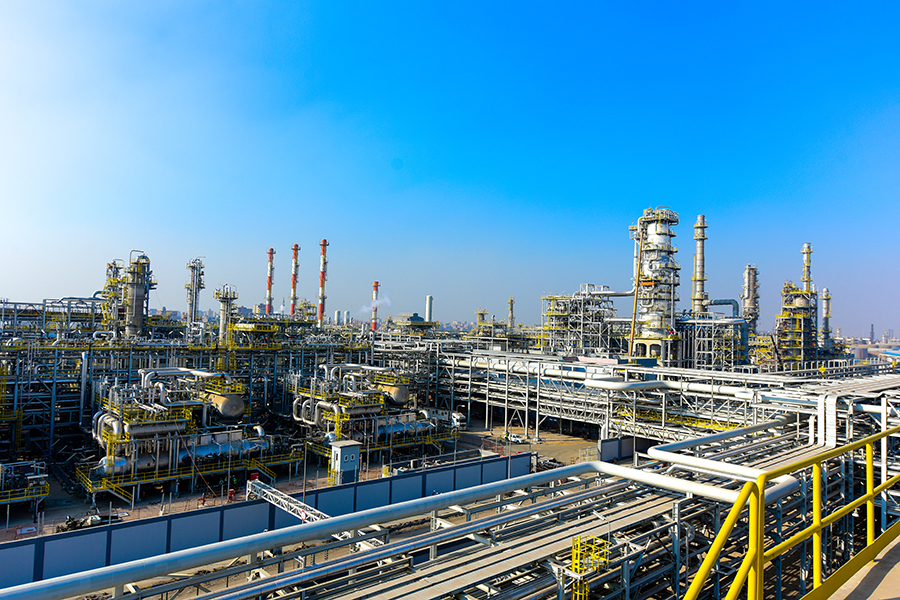
The government is deepening its rationing of industrial gas, raising curtailments for fertilizer and methanol plants to 33% as surging global LNG import costs force it to trim the fuel it can afford. Mopco is the only producer so far to confirm the higher level in a bourse filing (pdf) yesterday. Abu Qir Fertilizers and Egyptian Chemical Industries (Kima) have confirmed only the 20% imposed on 1 November, which Kima set out in its latest EGX disclosure (pdf). Abu Qir has flagged contingency plans to manage inventory and reschedule maintenance, but none of the three has put a figure on the loss.

The supply crunch has also spilled over into metals: The government has notified Ezz Steel, the country’s largest steelmaker, of a 30% gas supply cut from yesterday, equal to about 30 mmcf / d, Asharq Business reports, citing government officials. The cut has no end date.

The import bill is the reason for the squeeze: The government’s move to trim industrial supply follows a jump in global spot prices. The Asian LNG benchmark (JKM) climbed roughly 36% m-o-m to reach more than USD 34 per mn British thermal units (Btu) at the end of October, up from about USD 25 at the end of September. With a single spot LNG cargo now costing close to USD 120 mn, according to one government official, the government has deferred five of the 15 cargoes contracted for November.

Savings on LNG come at a cost to exports: The plants being throttled are among the state’s strongest export earners, and they’re being cut just as their prices peak. Granular urea is fetching about USD 535 a ton FOB for November contracts, up roughly 17% from September. Fertilizer exports earned USD 2.53 bn in the first nine months of 2026, part of a USD 9.54 bn chemical and fertilizer export book that was up 34% on the year. With Egypt able to make about 6.5 mn tons of urea a year and consuming 2.9 mn tons at home, that leaves roughly 3.6 mn tons to sell abroad.

“The state is facing a difficult decision: either import LNG at this high cost and pass it on to the industrial sector, or reduce imports and cut supplies to factories while calculating the least damage,” Hassan El Marakby, chairman and CEO of El Marakby Steel and vice-chairman of the Federation of Egyptian Industries’ metallurgical industries chamber, tells EnterpriseAM.

Still, he says the cuts haven’t spread across the whole steel industry: Formal curtailment notices have stayed concentrated on petrochemicals and fertilizers, which he calls the heaviest industrial gas users. By his account, nothing formal has reached the mills — including Ezz Steel, where he has no confirmation of the reported 30% cut — and he expects the cuts to widen if the energy crisis worsens.

Who’s next in line comes down to gas intensity: Fertilizer plants are the industrial sector’s heaviest users by far at 207.7 bn standard cubic feet (bscf) in FY 2024/25, or about 39% of the gas Egyptian industry consumed, against 82.4 bscf and roughly 15% for iron and steel, according to data from the Egyptian Natural Gas Holding Company (pdf) cited by Egypt Oil & Gas. Petrochemicals come next, since they also use gas as a feedstock. Industry takes about a quarter of the national gas supply; power generation takes the rest.

Why steel has more room

The two cuts don’t bite the same way, and El Marakby’s case is that steel comes off lighter. Gas is an irreplaceable feedstock for fertilizer and petrochemical producers — ammonia and urea cannot be made without it — so a physical cut forces plant run-rates down at once, throttling export sales even though fertilizer’s own export prices would have absorbed the higher gas bill. Domestic steelmakers, on the other hand, use gas primarily as a reducing agent in Direct Reduced Iron (DRI) units rather than as an essential chemical raw material, allowing mills more room to adjust upstream operations.

Operational flexibility also insulates the steel industry: Fully integrated mills run DRI units so a gas cut hits DRI output first, and electric arc furnaces can then take up the slack by rebalancing their charge toward scrap. “A clear distinction must be made between the two types of plants,” El Marakby explains. The impact is concentrated on fully integrated producers — Ezz Steel, Suez Steel, and Beshay Steel — which account for the bulk of gas use in the metals sector. Semi-integrated mills run on scrap-fed electric arc furnaces, use minimal gas, and are largely insulated.

But that flexibility has limits: El Marakby dismisses the notion that steel mills are sitting on excess inventory that could help absorb fuel cuts painlessly. “Current factory production is already calculated and adjusted to meet existing domestic demand and export orders without any significant surplus,” he explains. “Any reduction below this current level will have a definite negative impact on mills.” Mills can still protect finished rebar and coil volumes by importing more scrap metal, merchant DRI, or hot briquetted iron, he says, but that puts fresh financial pressure on them, driving up their demand for foreign currency to fund the shipments.

DATA POINT- Ezz Steel produced roughly 6.4 mn tons of crude steel in 2024, holding an annual design capacity of around 7 mn tons across long products (4.7 mn tons) and flat steel (2.3 mn tons).

We’ve been here before: The government has repeatedly turned to rationing natural gas supplies to heavy industry during previous energy pinches, most recently during the energy crunch of summer 2024, when gas supply disruptions forced fertilizer and petrochemical producers to halt production and triggered nationwide curbs.

This publication is proudly sponsored by

3

PHARMA

New drug pricing formula faces its first test as drugmakers reportedly push for 20% hike

The new dynamic drug pricing formula is facing its first test after the EGP’s October slide. Drugmakers are pushing for price increases of 20% to offset the weaker EGP and pricier raw materials, Al Borsa reports. But any repricing will go through the new formula alone and must be backed by documents proving higher costs, the Egyptian Drug Authority (EDA) and the pharma division of the Federation of Egyptian Chambers of Commerce tell EnterpriseAM.

The regulator, for its part, says it hasn’t seen any such push: The EDA hasn’t received any exceptional requests for 20% increases tied to higher costs or the exchange rate, EDA spokesperson Yassin Ragaey tells EnterpriseAM, adding that companies file pricing and review requests throughout the year as a matter of routine. “The new formula works as a strict governance tool and makes pricing a predictable process. We won’t open the door to price moves outside this framework,” Ragaey says.

The industry’s own representatives agree: Any company that wants to raise its prices has to submit invoices and accurate financial documents, Ali Ouf, head of the pharma division at the federation, tells EnterpriseAM. Claims for increases without formal proof won’t be considered, he adds.

REMEMBER- That framework is the EDA’s new pricing system, which took effect on 24 September. Its formula gives exchange rate moves a 60% weighting, against 30% for urban inflation and 10% for changes in the Central Bank of Egypt’s (CBE) overnight deposit rate. The formula is recalculated every six months, or sooner in exceptional circumstances. An increase is only on the table if the formula produces a change of at least 10% that holds for at least 45 days, and even then the product’s registration holder has to request it. The same thresholds apply to price cuts, which the EDA can initiate itself.

This is where the current push runs into trouble. The EDA hasn’t published the base it measures that 10% change against, but Ouf put the practical line at around EGP 55 to the USD when the framework launched, telling us in September that currently traded medicines wouldn’t see increases as long as the USD stayed below that level. The greenback crossed EGP 55 in late October and passed EGP 56 on 26 October, before easing to about EGP 53.9 by 5 November, according to the CBE’s average market rate. That means it never held above the line for the 45 days the formula requires, Ouf says.

And CI Capital’s math suggests the bar may not have been cleared even at the peak. CI measures from EGP 51, the rate at the last repricing, and assumes inflation of around 15%. On that basis, the formula implies an increase of about 9.8% at EGP 55.5 and about 10% at EGP 56, according to research notes seen by EnterpriseAM. FX carries only 60% of the weighting, so even a near-10% move in the exchange rate adds only about six points to the result. CI says that’s roughly half the 20% companies say they need to cover pricier imported active ingredients and packaging.

CI draws its practical line close to Ouf’s, seeing room for selective, product-level increases at around EGP 55, while a recovery to EGP 50-51 would likely rule out any increase. By our math, CI’s assumptions put the implied increase closer to 8% at the 5 November rate.

So what happens to products that are already losing money? The EDA won’t let companies simply stop making them, Ouf says, since the authority can cancel a product’s registration and withdraw its license entirely if production stops. Instead, some companies may register their products as dietary supplements with the National Food Safety Authority, he adds, which would let them price freely according to their costs, outside the mandatory pricing system.

Whatever route companies take, consumers won’t see new prices anytime soon. There’s no shortage right now, and stocks will last at least six months, Ouf says. Even if the USD rose today, the 45-day condition was met, and new prices were approved, packs with the new prices wouldn’t reach pharmacies before late 2Q or 2H 2027, he adds. CI Capital’s estimates support that timeline: it expects approval to take two to three months, and new prices to need another six to nine months to fully reach the market as existing inventory runs down. CI says that inventory typically covers 9-12 months of demand, so it doesn’t expect the delay to hurt margins much.

4

LAST NIGHT’S TALK SHOWS

Egypt draws 16.2 mn tourists, targets 20 mn by year-end

Egypt attracted roughly 16.2 mn tourists as of the end of last month, and aims to raise this figure to 20 mn by the end of the year and 22 mn by the end of next year, Tourism and Antiquities Minister Sherif Fathy said in a phone-in interview with Amr Adib on El Hekaya (watch, runtime: 6:19). He did not disclose tourism revenues for the same period.

Egypt is “no longer a cheap destination,” Fathy said, noting that tourist spending is already rising. His ministry is working on two parallel tracks to increase both tourist numbers and spending, he said, adding that Egypt “has not yet reached the stage of being content with tourist numbers and shifting toward maximizing tourism revenues.”

Strong potential: Fathy also believes that the country possesses the tourism assets that qualify it to welcome 60-70 mn tourists annually. However, he points to the need to expand hotel room capacity and the sector's broader infrastructure, including airport passenger capacity, to keep pace with these numbers.

Ambitious targets: The government aims to attract around 30 mn tourists annually by 2030, achieve 300 mn tourist nights per year, and generate revenues of USD 36-40 bn annually, according to a previous statement by Fathy. To achieve these targets, the government plans to add around 240k-250k rooms to the current hotel capacity.

Tourism remains a vital source of foreign currency for Egypt, with sector revenues reaching USD 18.4 bn in FY 2025/26 — a 10.3% increase year-on-year, according to data released by the Central Bank of Egypt last month.

5

Also on our Radar

SCZone brings in Telecom Egypt to end network downtime for factories and terminals across its ports and zones

The Suez Canal Economic Zone (SCZone) tapped Telecom Egypt to upgrade telecom networks and digital management systems across its ports and industrial zones, according to a statement. The agreement aims to eliminate service downtime for tenant factories and port terminals, including flagship facilities in East Port Said and Sokhna, while deploying smart systems and data analytics for logistics and facility management.

IN CONTEXT- SCZone is also digitizing its ports, signing a contract worth over EGP 1 bn with Nafeza Egypt for Logistics Services for a digital truck yard at Sokhna port that will run on Nafeza’s digital platforms and handle up to 1.1k trucks a day at full operation.

Riding the retail wave

HC Brokerage is partnering with digital investment platform Bokra to launch a shariah-compliant digital investment product tailored for mobile-first retail investors, Al Mal reports, citing HC Managing Director Hassan Shoukry. The partnership aims to channel informal household savings into the formal economy by tapping Bokra’s 45k subscribers, many of whom have never traded on the EGX. The push comes as individual investors take a growing share of local trading volumes.

IN CONTEXT- HC is pushing into an already crowded digital wealth management space. Retail traders can already tap EFG Hermes One and Thndr apps to trade EGX-listed equities and mutual funds, while fintech player Telda expanded into in-app EGX trading in March. Bokra was close to closing a USD 8 mn funding round in September to fund local and African expansion, after a USD 4.6 mn pre-seed round in April 2024.

All about cloud

Raya Holding signed three MoUs at Cairo ICT 2026 yesterday. The agreements include a cloud partnership with EgyHosting, startup support with AGX Consultant Studio via the Cyber Plus program and the Raya Cloud Stars initiative, and a pre-sales tie-up with Nutanix across Raya Integration and Raya Data Center, the company said in a bourse disclosure (pdf).

IN CONTEXT- The MoUs land mid-rebuild at Raya IT, the group’s systems-integration arm. Marwa Abbas took over as CEO in July after 30 years at IBM, the group launched Raya Nexus — an AI company with EGP 250 mn in issued capital — in September, and its board has conditionally approved up to USD 60 mn to buy a data center outright.

Tidying up

GSK Egypt is folding a dormant subsidiary into the parent: The Financial Regulatory Authority (FRA) cleared GlaxoSmithKline Egypt (GSK) on Thursday, 5 November to call a shareholder vote on absorbing Amoun Pharma Industries — an inactive company (pdf) it already owns 99.64% of — according to an EGX filing (pdf). The new shares, worth c. EGP 830k, go to Amoun’s minority holders and nudge issued capital to c. EGP 836 mn, up from EGP 835.1 mn. Another c. EGP 986 mn goes into reserves: the merged equity minus the new capital.

Priced off a three-year-old balance sheet: GSK’s board approved it in August based on both companies’ position at 31 December 2023, putting GSK’s net equity at EGP 1.82 bn against EGP 830k for the minority stake in Amoun. GSK told the bourse (pdf) that this is a restructuring of its own investments rather than a capital increase in substance.

Nesma Airlines is now flyplus

Nesma Airlines rebranded as flyplus and plans to expand its fleet to 23 aircraft by 2027, according to a press release seen by EnterpriseAM. Operating an existing fleet of 13 Airbus A320 and A321 aircraft, the carrier logged over 2 mn passengers across its charter and scheduled routes so far this year. The expansion strategy involves adding 10 narrowbody Airbus jets, scaling its network beyond 38 scheduled routes, and introducing a tiered cabin layout featuring business and premium economy classes plus ancillary add-ons.

A new owner for Bo Island

Tahya Misr Holding for Investment and Development (the Tahya Misr Development Fund) is taking over Maxim Real Estate Investment’s Bo Island project in Sidi Abdel Rahman on the North Coast, according to a Housing Ministry statement. The board of the New Urban Communities Authority approved Maxim’s transfer of the project’s two land plots to the holding company, pending the required regulatory procedures. The holding company now takes on responsibility for the project and for completing its regulatory and administrative paperwork.

Protecting buyers is the priority, the ministry says, though its statement doesn’t spell out what the handover means for their contracts or the construction timeline. Instead, it asks buyers to ignore rumors and wait for updates through official channels.

Sokhna’s tire track begins

Chinese tiremaker Sailun Group rolled out its first passenger car tire from its USD 804 mn manufacturing plant in the Suez Canal Economic Zone (SCZone), according to a statement from the latter. The milestone marks the start of trial operations across the 400k-sqm facility located within the developer Teda-Egypt’s zone in Sokhna. The plant is projected to create over 3k direct jobs and is scheduled to enter full-scale commercial operations in early 2027.

REMEMBER- The group first broke ground on its automotive tire plant in the Teda industrial zone last year. The first phase was originally slated to come online in 2026. SCZone chairman Mustafa Sheikhon told parliament on 3 November that phase one targets 18 mn tires, part of a zone plan to reach 42 mn.

Startup diplomacy

Egypt and India will set up a joint forum for their startups. The two sides are arranging a visit by delegations of more than 150 Indian companies, and the Indian ambassador wants fintechs and digital payment providers — including the National Payments Corporation of India (NPCI) — to participate, according to a Planning Ministry statement. The forum is billed as a permanent platform linking founders in both countries.

IN CONTEXT- Planning Minister Ahmed Rostom framed the forum as part of a government push, run through the Ministerial Group for Entrepreneurship, to produce new USD 1-bn-plus companies. The push sits with the Startup Charter the government unveiled in February, which targets USD 5 bn in VC funding and five unicorns by 2031. India’s ambassador put his country’s startup base at more than 240k and Indian investment in Egypt at about USD 5 bn across 55 factories.

6

PLANET FINANCE

Africa’s corporate debt market is just 0.3% of the world’s, with Egypt’s share more than halved since 2010

Africa’s corporate debt market is too thin for the economy it serves, according to the OECD’s Africa Capital Markets Report 2026. Outstanding market-based corporate debt across all 54 countries came to USD 211 bn at the end of 2025. That’s just 0.3% of the global total for a continent that accounts for 2.7% of world GDP. Syndicated loans make up 81% of that stock, and bonds only USD 35 bn.

Egypt’s slice of that market has more than halved since 2010. That year, Egyptian-headquartered companies held 30% of Africa’s corporate debt, only slightly below South Africa’s share. By 2025, Egypt’s share had fallen by more than half. The OECD attributes the drop largely to a contraction in Egypt’s own corporate debt stock, rather than to strong growth elsewhere on the continent. South Africa has been the region’s largest market for the past 15 years and now holds 30% of the total at USD 63 bn. Six countries — Egypt, Mauritius, Morocco, Mozambique, Nigeria, and South Africa — account for 80%.

Issuance is just as thin. No more than 20 corporate bonds were sold across the continent in 2025, and 17 of them were issued by financial companies. The bond market has shrunk 44% in real terms since its 2015 peak, mostly because of lower activity in South Africa. Syndicated loans signed in 2025 averaged about five years in maturity, against 7.5 years in other emerging markets. Median issue sizes for both bonds and loans still exceed those in emerging markets more broadly, which the OECD reads as a sign that large companies are the main users of the market and smaller firms still depend on bank lending.

Currency risk makes things harder. Only 17% of corporate debt issued in 2025 was in local currency, so a company that borrows in USD or EUR also takes on the risk of its own currency weakening. Egypt’s local-currency debt has a separate problem: FX rationing and sharp devaluations have repeatedly disrupted foreign investors’ ability to convert back into the greenback. As a result, they typically cap their EGP allocations at a fraction of what they put into African peers with the same nominal yield.

IN CONTEXT- Egypt’s own corporate bond market is young and short-dated. Valu closed its maiden conventional corporate bond in August, raising EGP 1 bn across two tranches: a 13-month fixed tranche at 20.75% and a 36-month tranche priced at 1% above the Central Bank of Egypt’s average corridor rate. The regulator is still writing the rulebook. The Financial Regulatory Authority’s (FRA) tighter private-bond rules, issued in August, set a firm 30-working-day subscription deadline that issuers can extend only with FRA approval.

The equity side of the same report reads better. African market capitalization rose 49% in 2025, nearly two-and-a-half times the 20% pace across emerging markets, and African exchanges beat the MSCI Emerging Markets Index over 2021-2026. Over the longer stretch since 2015, the corporate bond market has kept shrinking.

The OECD’s fixes put most of the work on policymakers. The report finds that the main barriers to bond market development are macroeconomic and institutional and that technical fixes such as better market infrastructure only pay off once those foundations are in place. Regulatory quality, rule of law, exchange-rate stability, and pension fund development are among the strongest correlates of market depth. A credible sovereign benchmark yield curve is the next building block, because it gives corporate bonds a local-currency reference to price against.

Excessive public borrowing can crowd out corporate credit, the report warns. Egypt’s borrowing is both heavy and short-dated. The state raised about EGP 4.3 tn at home in the first four months of FY 2026/27, almost all of it to refinance existing debt, and bills made up 85% of accepted domestic issuance last quarter.

Why it matters: Aid is shrinking. Official development assistance from OECD donors to sub-Saharan Africa fell by more than a quarter in a single year, yet the savings that could replace it are already on the continent. Pension and ins. assets exceed USD 1 tn, although the OECD finds that too little of that money goes into productive domestic investment. Corporate bond markets are how that money could reach African companies, Egypt’s included. By our read, what stands in the way is currency risk, along with a domestic investor base that is already busy financing the state.

MARKETS THIS MORNING-

Asian markets opened in the green earlier today. Japan’s Nikkei was up 2.4% and South Korea’s Kospi was up around 0.6% on the back of Friday’s US rally, though broader gains were limited amid concerns over a probe into Nvidia’s CEO. The MSCI Asia Pacific Index climbed 0.7%.

EGX30

50,812

-0.7% (YTD: +21.5%)

USD (CBE)

Buy 54.17

Sell 54.31

USD (CIB)

Buy 54.17

Sell 54.27

Interest rates (CBE)

20.00% deposit

21.00% lending

Tadawul

10,018

-0.8% (YTD: -4.5%)

ADX

9,393

-1.3% (YTD: -6.0%)

DFM

6,026

-0.3% (YTD: -0.4%)

S&P 500

7,377

+0.3% (YTD: +7.8%)

FTSE 100

10,674

-1.0% (YTD: +7.5%)

Euro Stoxx 50

6,170

-1.0% (YTD: +6.5%)

Brent crude

USD 98.32

0.0%

Natural gas (Nymex)

USD 3.00

+1.7%

Gold

USD 4,075

-0.9%

BTC

USD 74,697

-1.4% (YTD: -14.8%)

S&P Egypt Sovereign Bond Index

1,146

+0.1% (YTD: +15.4%)

S&P MENA Bond & Sukuk

149.69

-0.1% (YTD: -1.5%)

VIX (Volatility Index)

25.6

-9.0% (YTD: +71.5%)

THE CLOSING BELL-

The EGX30 fell 0.7% at yesterday’s close on turnover of EGP 8.3 bn (24.9% below the 90-day average). International investors were the sole net sellers. The index is up 21.5% YTD.

In the green: Edita (+3.7%), GB Corp (+1.9%), and Cleopatra Hospital Company (+1.6%).

In the red: Mopco (-5.9%), Abu Qir Fertilizers (-5.8%), and Alexandria Containers and Goods (-2.5%).

7

BLACKBOARD

Egypt’s 800k-student coding platform costs the country only hosting fees

Nearly 800k first-year secondary students joined Egypt’s Japanese-built school coding platform in 2025/26, and the country pays only to host it, Hany Helal, secretary-general of the Egyptian-Japanese Education Partnership, tells EnterpriseAM. Without putting an exact price on the ministry’s hosting fees, Helal calls them very limited, adding that the content came at no cost because Egyptian and Japanese specialists adapted it into Arabic together. Sprix, the Tokyo-listed company behind the platform, now names its Egypt project among the drivers of its sales growth.

A year earlier, Egypt barely registered on Sprix’s books. In the nine months to June 2025, overseas businesses (including Tofas, its international academic skills test) contributed almost nothing to the company’s Other segment, which booked JPY 2.89 bn in sales, Sprix said in its 3Q FY 2025 presentation (pdf). Its 3Q FY 2026 presentation (pdf) named “the growth of the Egypt Tofas project” among the drivers of a 12.6% rise in the segment’s sales to JPY 3.26 bn.

Helal says Egypt’s scale brings Sprix large earnings. Egypt is now the platform’s largest user worldwide, “making it easier to market the project elsewhere,” he tells us. Sprix invested in translating and developing the platform, and Egypt has arrangements to take a share of the revenue from the Arabic version once it launches in other Arab markets, Helal explains.

Signing up is optional, and the partnership had initially expected 200k-300k students to join, Helal says. The first-year secondary cohort numbered about 830k, and around 600k of them passed the term-one exam, Education Minister Mohamed Abdel Latif told parliament in May, Maspero reported.

Sprix supplies the course under a comprehensive contract it signed with the ministry in Cairo in September 2025. Sprix said the contract commits to providing Arabic and English textbooks, training teachers, putting students on its Qureo platform to learn JavaScript, and assessing their progress through the Tofas exam. Neither the ministry nor Sprix has made the contract’s value public.

Students who pass Tofas earn a certificate accredited by the ministry, Hiroshima University, and Sprix, under the three-way MoU Abdel Latif signed in Japan in October 2025, according to a ministry statement. An earlier MoU from August 2025 covers a math version of Tofas, which Sprix agreed to run regularly for primary and secondary students nationwide on a paid basis, the company said in a statement. In its 2025 full-year presentation (pdf), Sprix said it would work with the ministry to “advance monetization initiatives for Tofas.”

Qureo runs on self-study, built around graded modules and tests that check what students have understood, Helal says. Algorithmics Egypt, the local franchise of coding school Algorithmics Global, reviewed the course content and has observed that “some theoretical concepts benefit from additional guidance when students move to digital and practical activities,” CEO Ahmed Eid Said tells us. Said welcomes Tofas but says a certificate carries more weight when students can show hands-on skills to back it up. Rolling the course out nationwide also brings challenges, he adds, particularly “the need for qualified instructors and adequate technical infrastructure.” Helal sees internet problems as temporary, saying they haven’t held students back.

Two schools are paying for a coding pilot on top of the ministry’s course. Saint Vincent de Paul College and Madinaty Integrated Language School launched the secondary pilot with Algorithmics in 2026/27, Said says. About 100 students there take project-based lessons in Python, web development, and AI to complement the official curriculum while studying the ministry’s course on Qureo at home, he adds. The pilot is Algorithmics’ first move into secondary schools after five years working mainly with primary schools, and Said credits the ministry’s course with raising interest among the company’s six partner schools.

For now, the two schools cover the pilot’s out-of-pocket expenses while Algorithmics works out what to charge, Said says. The company supplies the instructors and digital coding labs, and “we are keeping implementation costs as low as practicable,” he adds. Algorithmics won’t disclose the financial terms of its school agreements and hopes to build a longer-term partnership with the schools if the pilot succeeds.

The course is expanding to technical schools in 2026/27, with Azhar institutes next. The ministry said on 26 August that it had decided to take the course to both technical schools and applied technology schools. It said the course’s first year led to 85 students securing training placements at international companies, with 10 more set to travel to Japan for training programs. On 4 September, Abdel Latif said the course would teach Python alongside JavaScript from 12 September. The Cabinet has approved opening the platform to students at Azhar institutes, and the move will come soon, Helal says.

What’s next: Sprix is scheduled to report its FY 2026 results on 13 November, according to Japanese market data site Kabutan. Egypt and Japan are moving to a strategic dialogue on education, with the education and higher education ministers set to take part in meetings in Tokyo in January, Helal says.


NOVEMBER

7-10 November (Sunday-Wednesday): Cairo ICT Forum, Egypt International Exhibition Center, New Cairo.

9-20 November (Monday-Friday): COP31 — UN climate conference, Antalya, Türkiye.

10 November (Tuesday): Cityscape Egypt Forum, Cairo.

12-15 November (Thursday-Sunday): Stone Africa Expo, Cairo International Convention Center, Nasr City, Cairo.

14 November (Saturday): Rolling mills’ Administrative Court challenge.

14-15 November (Saturday-Sunday): Destination Africa, Egypt International Exhibition Center, Cairo.

15 November (Sunday): Air Cairo resumes direct Cairo–Damascus flights.

16-17 November (Monday-Tuesday): World Economic Forum’s (WEF) first dedicated business meeting in Egypt + MENA, New Capital.

26-29 November (Thursday-Sunday): Cairo WoodShow, Cairo International Conference Center, Cairo.

28-30 November (Saturday-Monday): Egypt-Africa engineering industries and innovation forum (EGITEC), Egypt International Exhibition Center, Cairo.

DECEMBER

7-10 December (Monday-Thursday): Food Africa, Egypt International Exhibition Center, Cairo.

7-10 December (Monday-Thursday): interpack MEA, Egypt International Exhibition Center, Cairo.

11-12 December (Friday-Saturday): ISER International Conference, Cairo.

15 December (Tuesday): Egypt’s 48-month IMF extended fund facility expires.

17 December (Thursday): Monetary Policy Committee’s eighth meeting of 2026.

17-19 December (Thursday-Saturday): EVs Electrify Egypt, Egypt International Exhibition Center, Cairo.

17-20 December (Thursday-Sunday): MacTech Egypt, Egypt International Exhibition Center, Cairo.

17-20 December (Thursday-Sunday): Airtech Cairo, Egypt International Exhibition Center, Cairo.

17-20 December (Thursday-Sunday): Handling Expo, Egypt International Exhibition Center, Cairo.

EVENTS WITH NO SET DATE

Mid-November: Egypt–Saudi Arabia’s 3 GW electricity interconnection officially launches.

November: The IMF’s eighth and final review of Egypt’s EFF programme is expected, unlocking around USD 2.3 bn.

2H 2026: Operations at Deli Glass Co’s new USD 70 mn glassware factory kick off.

2026: The Egyptian-American Economic Forum.

2027

20 January-7 February: Egypt to host the African Games.

1-3 February (Monday-Wednesday): Agri Expo, Cairo International Convention Center.

April 2027: Tenth of Ramadan dry port and logistics hub to begin operations.

29 September - 2 October (Wednesday-Saturday): Cityscape Egypt Exhibition, Cairo.

EVENTS WITH NO SET DATE

2027: Egypt to host EBRD’s annual meetings.

2027: Egypt-EU Summit 2027.

End of 2027: Trial operations at the Dabaa nuclear power plant expected to take place.

September 2028: First unit of the Dabaa nuclear power plant begins operations.

Now Playing
Now Playing
00:00
00:00