Banque du Caire’s IPO grows to 45% as the EBRD and IFC sign on

1

WHAT WE’RE TRACKING TODAY

Egypt opens first phase of Ismailia Vaccines and Biotechnology City tomorrow

Good morning, friends. Tomorrow’s pricing of the state’s biggest share sale in years will tell us a lot about how foreign money now sees Egypt.

Our big story today: we saw this one coming. Back in April, we made the case for selling as much as 49% of Banque du Caire (BdC), the maximum the current rules allow. Earlier this month, a government official told us the banks running the offering had recommended going bigger after the roadshows, with the prospectus already leaving the door open to 45%. That’s now happening: Banque Misr is selling 45% of BdC instead of 30%, with the shares set to price at EGP 5.30 each, the top of the range, when the final price comes out tomorrow. What makes it more than a size story is who’s coming in: the EBRD and IFC have each signed on for up to 15.74% of the enlarged private placement, roughly 30% of the offering between them and triple what they were reportedly eyeing in August. The private books reportedly closed about 6x covered. Even so, two brokerages still think the stock is cheap, with fair values of EGP 6.55 and EGP 7.8 against the offer price.

At Dekheila, three partners have signed up to study a 273k sqm re-export and light-manufacturing hub in the port’s hinterland. By our read, freezone status will decide whether the study turns into a project.

MEANWHILE- The EBRD is taking 40% of a new Scatec platform that holds four of its local renewables projects, with the option to expand across the Southern and Eastern Mediterranean.

***

WISH THIS MORNING’S ISSUE was a podcast? We’ve got you. Tap or click here to listen to Morning Drive, a 10-minute version of today’s issue crafted for you to enjoy with your morning coffee, while getting the kids ready for school, or while stomping around the house wondering where the [redacted] you left your [redacted] reading glasses.

***

A vaccine hub for Africa

Egypt’s vaccine city officially opens its first phase tomorrow. The inauguration of the Vaccines and Biotechnology City in Ismailia will take place on Monday, 26 October. The government expects it to draw some USD 150 mn in local and foreign investment, a senior government official tells EnterpriseAM. Health Minister Khaled Abdel Ghaffar has previously said the city should attract EGP 12 bn (c. USD 218 mn) by 2030. Parts of it are already up and running: the ministry said in April that construction on the first phase was complete and that several facilities, including the central filling building, had already started operating.

What it will make: The city should cover 20% of local demand for human and veterinary vaccines, with a large share of its output earmarked for export to more than 60 countries, the official says. It’s set to produce 140 mn human doses and 5.5 bn veterinary doses a year by 2030, rising to 690 mn and 11 bn by 2040, according to Health Ministry estimates. The 115k sqm site has 32 buildings, including three human vaccine plants and three veterinary ones, alongside R&D labs, storage, and filling and packaging facilities. Its first products will include basic human vaccines such as flu and polio shots. The project also includes an academy to train vaccine-manufacturing staff, and technology transfer through partnerships with global firms.

Why it matters: The city is central to the government’s plan to localize 50% of vaccine production by 2030, 75% by 2035, and reach full self-sufficiency by 2040. If the city covers only a fifth of local demand, by our reading, other producers will have to supply most of the rest of that 2030 goal.

Pharma investment is set to pick up in the coming years, from local players with foreign partners and from foreign firms that want a foothold in Egypt as a gateway to Africa, Ali Ouf, head of the pharma division at the Federation of Egyptian Chambers of Commerce, tells EnterpriseAM. He says the city will serve the African markets covered by the eight recognition agreements Egypt has signed for its medicines, and could be used to research and make vaccines if new outbreaks emerge. Ouf credits the Egyptian Drug Authority’s new pricing rules with giving global firms a clearer basis for feasibility studies. He expects a USD 100 mn investment in a plant for pharma excipients to be announced in 1Q 2027. The government is also looking to localize biologics, cancer drugs, raw materials, blood products, and insulin, some of which cost patients EGP 100-200k, he says.

Crops on a plane

EgyptAir Cargo will fly fresh Egyptian fruit, vegetables, and other exports to the UK daily from 1 November, when its Cairo-Cardiff Airbus A330 freighter is scheduled to take off, according to the latest schedule filing. The airline announced the route at September’s El Alamein airshow and plans to run it through 27 March, but getting it off the ground has taken some shuffling: the start date has moved twice since the first schedule filing, from 30 October to 25 October, and then to 1 November. What was not disclosed: tonnage targets, the forwarders and retailers who signed up, and whether the service continues past 27 March.

Why it matters: The UK bought GBP 197 mn worth of Egyptian fruit and GBP 114 mn worth of vegetables in 2024. Sea freight from Alexandria or Damietta takes eight to 13 days to reach Britain, long enough for soft fruit to lose shelf life, which is why high-value perishables move by air. Fresh and processed farm exports hit a record USD 11.5 bn in 2025, accounting for roughly 24% of national outbound shipments.


PSA-

WEATHER- Cairo is in for a properly warm autumn Sunday, with a cool, misty start burning off by mid-morning, a high of 30°C, and a low of 20°C, according to our favorite weather app.

It’s a touch gentler in Alexandria, with a high of 27°C and a low of 19°C.

The big story abroad

Polar LNG under Russian influence? After resigning in September, former Polar LNG CEO Joel Riddle accused US-sanctioned Russian company Novatek of secretly funding the firm. Polar LNG is a USD 25 bn US gas export venture reportedly linked to an investor with connections to the Trump family. The company is repurposing a gas terminal in Alaska partially built by Novatek. Polar LNG saw mass resignations among its leadership, including Riddle, due to concerns about sanctions risk.

Musk, Kyiv split on Starlink usage: Ukraine announced that both the Starlink satellite network and its defense-oriented version, Starshield, are back at full capacity following a disruption that strained relations with Washington. SpaceX CEO Elon Musk said Ukraine breached Starlink's terms of service by deploying the network to conduct offensive drone attacks, and that the workaround that allowed this was shut down last week.

Unrest rages across Europe: Protests have continued across several European countries, including France, Albania, Italy, Spain, and Portugal, despite tightened security and large police deployments. The protests have been attributed to social and economic grievances, including over pensions, housing, education, and corruption.

The Red Sea Is Calling. Dive Into the Challenge.

Aquaman returns to Somabay with six open-water races for seasoned swimmers and first-time competitors alike. With distances from 500 m to 10 km, there’s a challenge for every swimmer.

Swimmers from more than 60 countries. One extraordinary stretch of the Red Sea.

2

The Big Story Today

EBRD, IFC sign on to Banque du Caire’s upsized IPO

Banque du Caire’s (BdC) IPO has grown by almost half and is set to price at the top of its range, with two of the world’s biggest development lenders signing on to buy in. Banque Misr will now sell 6.86 bn BdC shares, or 45% of the bank, up from the 30% it started with, after the Financial Regulatory Authority (FRA) approved the upsizing on Thursday, BdC said in a statement (pdf). The shares will sell at EGP 5.30, the top of the EGP 4.82-5.30 range, a senior government official tells EnterpriseAM, ahead of the official announcement due tomorrow. That makes the sale worth EGP 36.4 bn (c. USD 680 mn), up from the EGP 22.05-24.25 bn the original 30% was set to raise, by our math.

The extra 2.29 bn shares are split the same way as the original offering, 95:5 between institutions and retail. That grows the private placement by 2.17 bn shares to 6.52 bn, or 42.75% of BdC, and the public offering by 114.4 mn shares to 343.1 mn, or 2.25%. Banque Misr will keep 55% of the bank, which the offer price values at EGP 80.8 bn (c. USD 1.5 bn), by our math. All USD figures are at the EGP 53.46/USD rate used in the offering circular.

The International Finance Corporation (IFC) and the European Bank for Reconstruction and Development (EBRD) have each agreed with BdC and Banque Misr to take up to 15.74% of the enlarged private placement, according to the statement and a supplementary disclosure (pdf) published on the EGX alongside the regulator’s letter. That puts each of them in for as many as 1.03 bn shares, worth up to EGP 5.4 bn (c. USD 102 mn) at the offer price, by our math. Combined, that comes to c. 30% of the offering, triple the combined 10% the two were reportedly eyeing in August, and some 13.5% of the bank.

The final allocations depend on the bookbuilding, and the agreements carry no voting arrangements with Banque Misr. Neither lender was among the four cornerstones named in the offering circular: Helikon, Redwheel, Sustainable Capital, and Waha Investments. Together, the six could take nearly three-quarters of the private placement, by our math.

Banque Misr changed the allocations in response to demand on both books, the official says. The private placement sold out within hours of opening last Monday and was covered some 6x by the time it closed on Friday, rising to 19x excluding the institutions that had committed in advance, sources told Asharq Bloomberg. At the offer price, 6x the enlarged tranche would mean orders worth c. EGP 207 bn (c. USD 3.9 bn), by our math. The official also tells us the offering drew investors buying into Egypt for the first time, and credits the pre-IPO roadshows and a valuation updated just before the books opened.

Retail is oversubscribed, too, with the public offering drawing orders for 454 mn shares as of Thursday’s close, the official says. That’s nearly double the 228.75 mn shares originally on offer and 1.3x the enlarged retail tranche, by our math.

REMEMBER- The prospectus allowed the sale to grow to 45% depending on demand, and a government official told us earlier this month that the banks running the offering had recommended going bigger after the roadshows drew interest from investors around the world.

ICYMI- BdC is set to be the EGX’s largest IPO in USD terms in at least five years, and the state’s first since United Bank in late 2024. The offering is fully secondary, so all the proceeds go to Banque Misr. It comes as the government pushes to wrap up its IMF program before it expires on 15 December, with close to USD 1 bn still to raise toward its USD 1.5 bn divestment target.

Room to run, even at the top

BdC is coming to market below what two brokerages think it’s worth, even at the top of the range. Arab African International Securities’ research unit puts fair value at EGP 7.8 a share, some 47% above the EGP 5.30 offer price, and rates the stock a buy, according to a note reported by Al Borsa. Ostoul puts fair value at EGP 6.55, about 24% above the top of the range, in an initiation note (pdf) on Thursday. Its bull case is EGP 7.44, while its bear case of EGP 5.05 is about 5% below what investors are paying.

How much upside there is depends on BdC’s second half. The bank booked consolidated net income of EGP 8.9 bn in 1H 2026, up 21.8% y-o-y, while its standalone net income rose 15% to EGP 8.6 bn, according to its results release (pdf). That followed EGP 16.1 bn for all of 2025. Ostoul’s full-year forecast of some EGP 20 bn implies about EGP 11.1 bn in the second half, 25% more than the first, by our math. Arab African’s forecast of EGP 18.08 bn needs only slightly more than BdC made in the first half. Arab African sees net income climbing to EGP 39.2 bn by 2031 as the loan book grows from EGP 313.8 bn this year to EGP 1.095 tn.

Both brokerages expect margins to shrink from here. Ostoul forecasts BdC’s net interest margin will peak at 8.05% this year and slide to 6.28% by 2030 as interest rates come down, taking the return on average equity from 30.65% to 26.69%. It reads that as returns settling at more sustainable levels, and sees no fundamental weakness in the business model. It also flags credit risk as the bank pushes further into SME and microfinance lending. Arab African’s list of risks includes a faster-than-expected margin squeeze, weaker asset quality as lending grows, concentrated credit exposures, missed efficiency targets, and extra share supply once post-IPO lock-ups end.

That last risk looks limited for now. Banque Misr can’t sell more shares for a year after the offering closes without the bookrunners’ consent, and EGX rules lock up 51% of BdC for at least two years after trading starts, according to the offering circular (pdf). Once the first year is up, Banque Misr will be free to sell only c. 4% of the bank. The cornerstones have also agreed to lock-ups, though the circular doesn’t say for how long.

At the offer price, BdC is valued roughly in line with listed peers on earnings and at a discount on book. Arab African’s multiples of 3.9x 2027 earnings and 0.9x forward book at the midpoint work out to c. 4.1x and 0.9x at EGP 5.30, by our math, against averages of 4.2x and 1.1x for listed Egyptian banks. Ostoul, which ran its numbers at the top of the range, has BdC at 4.6x trailing earnings, a slight premium to the 4.2x average across the 10 listed banks it uses as peers, and at 1.2x book, a discount to their 1.3x. BdC trails those peers on returns and efficiency, with a 29.4% return on equity against a 35.2% average and a cost-to-income ratio of 34.6% against 24.6%, according to the note.

Shareholders will get a slice of earnings. BdC is targeting a payout of 20-30% to shareholders while keeping its capital adequacy ratio at 18-22%, according to the circular. It paid Banque Misr EGP 10 bn in dividends last year after paying none in 2023 or 2024. Employees also get a cut under the bank’s articles of association: 19% of 2025 net income, or EGP 3.1 bn, a share BdC projects at 14-16% for 2026-2028.

WHAT’S NEXT- BdC is due to confirm the final price tomorrow, in line with the timetable in the offering circular (pdf). The offering’s advisors and Banque Misr will now screen orders in the private placement and decide each investor’s allocation, the government official says. BdC has said it will disclose how many shares each anchor gets alongside the results. Under the circular, the retail book stays open until Wednesday, 28 October, and institutional investors are expected to receive their shares on or about 2 November, the day trading is expected to start under the ticker BQDC. For 30 days after trading starts, retail buyers can sell their shares back at the offer price if the stock trades below it, under a stabilization mechanism run by CI Capital and funded by the retail tranche’s proceeds, the circular adds.

ADVISORS- CI Capital is lead global coordinator and joint bookrunner on the offering. Our friends at EFG Hermes are joint global coordinator and joint bookrunner. Baker McKenzie is advising BdC and its parent on US and English law, while Helmy, Hamza & Partners, a Baker McKenzie member firm, is counsel on matters of Egyptian law. Enterprise Advisory is investor relations advisor.

This publication is proudly sponsored by

3

Logistics

Three partners sign MoU to study 273k sqm Dekheila logistics hub

A 273k sqm plot in Dekheila Port’s western hinterland could become a hub for storage, re-export, and light manufacturing, which is the kind of value-added work that turns a container in transit into a repackaged export. The Alexandria Port Authority (APA), Hassan Allam Utilities (HAU), and Al Tarek Capital Real Estate Asset Management signed an agreement to study setting up, developing, and operating the hub, according to separate statements (here and here, pdf).

No commitment yet: The MoU merely covers a study, and HAU and Al Tarek still need a final agreement and regulatory approvals before they can build and run the hub, HAU says. Transport Minister Kamel El Wazir directed the parties to hold meetings so they can sign a terms-and-conditions agreement and start work. Neither statement puts a figure on the investment or a date for construction.

The land is not yet inside the port’s customs boundary. HAU’s statement describes the plot as “intended to be incorporated into the port’s customs zone,” and says the re-export and transit work is subject to approvals for freezone status or a similar framework. Read together, that points to two steps: bring the hinterland under the port’s customs jurisdiction, then secure a duty-suspension regime for the activities. The statement doesn’t spell that out, and it leaves open whether the whole plot or part of it gets the status.

Freezone status is the familiar route at Dekheila. The Customs Law’s executive regulations define freezones as areas within the customs territory that are treated as outside it for customs purposes, so goods can be stored, processed, and re-exported duty-free, with duty paid only on what enters the local market. The model is already operational at the same port: the cabinet approved an 840k sqm private freezone for the El Dekheila Container Terminal Company at Berth 100 in July 2024, and Venus Freezone runs a grain storage facility of more than 103k sqm at the port.

The demand case is easier to make, since container traffic through Alexandria and Dekheila rose 14% to 2.59 mn TEUs in FY 2025/26, and transit containers jumped 74% to 553.4k TEUs. More boxes are coming once the new terminal at Berth 100 starts operating, with capacity of up to 1.5 mn TEUs a year under a BOT contract with an alliance of Hutchison, COSCO, CMA CGM, and MSC. By our read, the port is adding capacity to move containers faster than it is adding space to open, relabel, and re-export them, and that’s the gap the hub is meant to fill.

APA already lists a 273-feddan logistics zone for value-added industries at Dekheila, with reclamation 62.7% complete through its first 153-feddan phase. At about 1.15 mn sqm, that zone is roughly four times the MoU plot by our math, and neither statement says whether the 273k sqm sits inside it.

IN CONTEXT- HAU brings a logistics track record. HAU Logistics, its platform with AP Moller Capital, launched in 2023 targeting c. USD 200 mn of investment in logistics, air freight, and warehousing. It runs the 270k sqm YANMU East Logistics Park in East Cairo in a joint venture with Agility. “Transport and logistics are central to our investment strategy,” Amr Allam, co-CEO of Hassan Allam Holding and chairman of HAU, said, adding that the Dekheila hub brings port connectivity and value-added logistics together. Al Tarek, whose Chairman Mohamed Tarek signed for the company, hasn’t disclosed its role or its split with HAU.

What’s next: Watch for the terms-and-conditions agreement, the customs and freezone approvals, and the land terms.

4

DEVELOPMENT WATCH

EBRD takes 40% of Scatec’s new Egypt renewables platform

EBRD backs Scatec’s new Egypt renewables platform: The European Bank for Reconstruction and Development (EBRD) has committed up to USD 221 mn to a new platform that will hold stakes in Norwegian developer Scatec’s solar, wind, and battery storage projects in Egypt, according to statements from Scatec and the EBRD (pdf). Under a share purchase agreement, Scatec will own 60% of the platform and the EBRD 40%, Scatec says. The vehicle, Egypt Renewables Holdings B.V., can also finance projects across the Southern and Eastern Mediterranean region, the EBRD says.

How it splits: The EBRD describes the full USD 221 mn (EUR 191 mn) as an equity investment. Scatec says roughly USD 170 mn of it is equity and the rest takes the form of project-level guarantees.

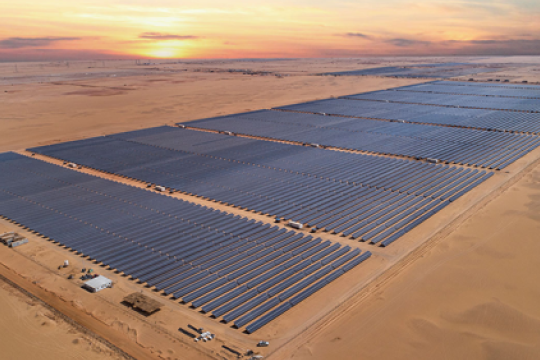
What it holds: The platform is expected to hold 40% of the 1.1 GW Obelisk solar and storage plant and 51% of the 900 MW Shadwan wind farm, Scatec says, plus about 60% each of phase 1 of the Egypt Aluminium (Dandara) project and Energy Valley, a 1.95 GW solar plant with 3.9 GWh of battery storage. Other minority co-investors will hold stakes in the projects alongside the platform.

What it adds: The portfolio is set to bring an additional 2.7 GW of solar, 900 MW of wind, and 4.2 GWh of storage to Egypt’s grid, according to the EBRD. Energy Valley alone accounts for most of the new solar capacity and almost all of the storage, by our math.

The EBRD is already a lender to two of the four projects. It lent USD 173.5 mn toward Obelisk’s USD 600 mn cost, and said in August it plans to provide up to USD 192 mn in senior debt for Shadwan. That’s roughly 27% of the wind farm’s USD 716 mn capex, by our math. The projects fall under the energy pillar of Egypt’s Nexus of Water, Food, and Energy (NWFE) program.

As for where things stand, Obelisk reached full commercial operations in August, and Scatec started building Shadwan at the start of the month. By year-end, it expects construction on Energy Valley to begin and financial close to take place on both projects. It has signed mandate letters with a consortium of development finance institutions for their long-term financing, while the Arab Energy Fund is providing USD 150 mn in equity bridge loans across the two.

5

Also on our Radar

Deloitte adds USD 40 mn to its Cairo innovation hub, completing a USD 110 mn plan

Deloitte putting another USD 40 mn into Cairo tech hub: Deloitte Innovation Hub plans to invest USD 40 mn more in Egypt over the next 12-18 months. Along with USD 70 mn the company has already invested, this completes Deloitte’s plan to put USD 110 mn into the hub, Chief Operating Officer Ahmed Salem said in a statement (pdf).

The Cairo hub is part of Deloitte’s Europe, Middle East, and Africa network, which exports AI and data, cloud, and cybersecurity services to Deloitte clients in 30 countries, mainly in food and beverage, tech, and automotive, and also works for the firm’s other innovation hubs. Salem said the team uses Google’s Cloud AI Experience Center in Cairo to build AI applications for clients on Gemini and Vertex AI.

The hub has outgrown its launch plan. Deloitte opened it in October 2024 with a three-year USD 30 mn commitment and a brief to serve clients in Europe and the Middle East. Last November, it added a three-year, USD 80 mn plan. Spending the remaining USD 40 mn within 12-18 months would complete that plan up to a year ahead of schedule, by our math.

Why it matters: The government is counting on export-focused hubs to grow the country’s digital services exports. Outsourcing brought in USD 5.2 bn in FY 2025/26, around 70% of the USD 7.4 bn in total digital exports. ITIDA chief Ahmed El Zaher told us last month he expects that to grow more than 23% to USD 6.4 bn this fiscal year, and to reach USD 8 bn or more by the end of FY 2027/28. Deloitte was among 39 global digital services firms reported last year to be planning to make Egypt their main base of operations.

WEF comes to Cairo

The New Capital will host the World Economic Forum’s (WEF) first dedicated business meeting in Egypt + MENA on 16-17 November, after Foreign Minister Badr Abdelatty and WEF CEO Alois Zwinggi signed the hosting agreement on Thursday, according to a ministry statement. Around 80 leaders from global companies, international economic institutions, and the private sector are expected in the New Capital to discuss investment-led growth, competitiveness, and a shift toward a model leaning harder on the private sector, exports, and productivity.

IN CONTEXT- The meeting follows President Abdel Fattah El Sisi’s Davos pitch in January for private-sector-led growth, where he flagged a business summit in Egypt this year. Neither side has announced a target investment value or committed to signing deals in November; the WEF’s own framing describes the Cairo gathering as peer-to-peer dialogue on Egypt’s outlook, the next phase of reform, and emerging opportunities, and comes weeks after the Egypt Forum 2026 in the New Capital.

Fawry factors in

Fawry Consumer Finance has received preliminary Financial Regulatory Authority (FRA) approval to add factoring to its activities, its parent Fawry for Banking Technology and Electronic Payments said in a statement (pdf) on Thursday. The subsidiary plans to offer invoice financing to MSMEs off an MSME loan book that exceeds EGP 3.5 bn, leaning on Fawry’s merchant base. Fawry must still amend its articles of association, adjust the subsidiary’s name to reflect the added activity, and file the documents for an operating license, per the FRA. No timeline, pricing, or volume targets were given.

SOUND SMART- Factoring is when a business sells its unpaid invoices (its receivables) to a third party (a factor) at a discount, taking cash now instead of waiting out the credit terms. A factor typically advances up to 80% of the invoice value upfront, then collects from the customer and keeps a fee: a percentage of the receivables that climbs with how long they have been outstanding and how risky the payer is. The main distinction from a loan is whose creditworthiness is being underwritten — the factor is betting on the buyer paying, not the seller — which is why factoring reaches businesses banks won’t lend to. (Check out our explainer on the mechanics.)

IN CONTEXT- Factoring is scaling fast off a small base: discounted receivables climbed to EGP 132.2 bn in 2025, up 77.8% from EGP 74.5 bn a year earlier. Total factored receivables surpassed EGP 40 bn in 1Q 2026 (up from EGP 29.4 bn in 1Q 2025), with the active client base up 28% to 958 companies. SME-focused fintech firm Oliv took the first digital factoring license in December 2024, and FRA digitized the sector this year, launching an e-Finance invoice-checking platform in February to block duplicate financing.

Seeding the startup plan

The government has launched an executive plan to support entrepreneurship and startups, targeting 5k startups and USD 5 bn in venture capital, Planning and Economic Development Minister Ahmed Rostom said on day five of Egypt Forum 2026, according to a ministry statement. The plan also carries a unified financing initiative to mobilize USD 1 bn over five years. Both figures restate February’s Startup Charter, which set the same USD 5 bn for 2031 alongside a five-unicorn goal; no deadline was given for the VC target this time.

What’s new is the delivery mechanism: Founders’ proposals for moving companies out of regulatory sandboxes and into permanent licenses will go to the Ministerial Group for Entrepreneurship, in coordination with the central bank, per the statement.

On financing, the ministry and the National Investment Bank — and its investment arm NI Capital — are preparing a joint fund structure with development partners to back companies at different growth stages, with no launch date set. That sits alongside the charter’s USD 1 bn initiative, which already includes a fund of funds managed by the Micro, Small, and Medium Enterprises Development Agency.

6

PLANET FINANCE

IMF sees GCC’s non-oil economy shrinking 0.8% this year as war spreads beyond oil

The GCC’s non-oil economy is set to contract 0.8% this year before growing 4.5% in 2027, according to the IMF’s Regional Economic Outlook report for the Middle East and Central Asia (pdf). The bloc as a whole is forecast to shrink 4.8% this year before rebounding 9.1% in 2027, a 6.8-percentage-point cut from the 2% growth the IMF expected in April.

Next year’s rebound won’t make up for lost ground. Jihad Azour, director of the IMF’s Middle East and Central Asia Department, said last week that Gulf output would still be below its pre-war trajectory in 2030, citing lasting damage to some sectors, disrupted infrastructure, and the extra spending needed to build resilience.

The Gulf’s financial cushions are getting thinner. The GCC’s combined fiscal deficit is set to widen to 2.3% of GDP this year from 0.8% in 2025, and its current account surplus to narrow to 1.3% of GDP from 5%. Subsidies, price controls, and currency pegs have limited how much of the jump in commodity prices reaches consumers, but at a fiscal cost. Meanwhile, GCC inflation is projected to rise to 2.7%.

The squeeze varies by country. The World Economic Outlook last week projected that the UAE’s current account surplus will shrink to 4.8% of GDP this year from 13.3% in 2025, while Qatar’s surplus is expected to narrow to 7.1% from 16.4%. Meanwhile, Kuwait’s surplus is expected to narrow to 18.3% from 22.7%, and Bahrain’s surplus is forecast to shrink to 3.6% from 5.0%. Saudi Arabia’s deficit is projected to widen to 3.5% from 2.6%. Oman is the exception, with the report expecting it to swing from a 1.1% deficit to a 5.0% surplus, in line with it being the only GCC economy still growing.

REMEMBER- Last week’s World Economic Outlook put the Gulf’s biggest economies on track to shrink this year, assuming the Strait of Hormuz begins reopening in March. Saudi Arabia is forecast to contract 3.3% this year before growing 7.9% in 2027, while the UAE is expected to shrink 3.9% before expanding 7.7%. Qatar, Kuwait, and Bahrain face double-digit contractions of 15.6%, 16.7%, and 11.3%, followed by rebounds of 18.8%, 17.1%, and 13.9%. Oman is the GCC exception, growing 4.1% this year. Outside the Gulf, Egypt is forecast to grow 5.1% this year and 4.7% in 2027.

EGX30

51,052

-3.4% (YTD: +22.1%)

USD (CBE)

Buy 55.24

Sell 55.38

USD (CIB)

Buy 55.25

Sell 55.35

Interest rates (CBE)

19.00% deposit

20.00% lending

Tadawul

9,696

-2.3% (YTD: -7.6%)

ADX

9,588

-1.2% (YTD: -4.1%)

DFM

5,734

-1.4%(YTD: -5.5%)

S&P 500

7,624

-0.5% (YTD: +11.4%)

FTSE 100

10,690

-0.3% (YTD: +7.6%)

Euro Stoxx 50

6,068

-0.3% (YTD: +4.7%)

Brent crude

USD 116.72

+3.1%

Natural gas (Nymex)

USD 2.64

-5.6%

Gold

USD 4,008

-1.3%

BTC

USD 80,570

-0.7% (YTD: -8.0%)

S&P Egypt Sovereign Bond Index

1,141

+0.1% (YTD: +14.9%)

S&P MENA Bond & Sukuk

148.11

0.0% (YTD: -2.5%)

VIX (Volatility Index)

19.45

+2.2% (YTD: +30.1%)

THE CLOSING BELL-

The EGX30 fell 3.4% at Thursday’s close on turnover of EGP 8.2 bn (27.4% below the 90-day average). Local investors were the sole net buyers. The index is up 22.1% YTD.

In the green: Eastern Company (+1.6%) and Qalaa Holdings (+1.0%).

In the red: E-finance (-12.1%), GB Corp (-6.8%), and Sidpec (-5.3%).


OCTOBER

26-28 October (Monday-Wednesday): IEX Egypt, Egypt International Exhibition Center, Cairo.

29 October (Thursday): Monetary Policy Committee’s seventh meeting of 2026.

29 October (Thursday): Customs goes fully paperless on Nafeza registration; advance-ruling service opens.

NOVEMBER

5-7 November (Thursday-Saturday): ICA Annual Conference 2026, Cairo.

6-8 November (Friday-Sunday): Global Entrepreneurship Festival, JW Marriott Hotel, New Cairo.

7-10 November (Sunday-Wednesday): Cairo ICT Forum, Egypt International Exhibition Center, New Cairo.

10 November (Tuesday): Cityscape Egypt Forum, Cairo.

14 November (Saturday): Rolling mills’ Administrative Court challenge.

16-17 November (Monday-Tuesday): World Economic Forum’s (WEF) first dedicated business meeting in Egypt + MENA, New Capital.

DECEMBER

7-10 December (Monday-Thursday): Food Africa, Egypt International Exhibition Center, Cairo.

11-12 December (Friday-Saturday): ISER International Conference, Cairo.

17 December (Thursday): Monetary Policy Committee’s eighth meeting of 2026.

17-20 December (Thursday-Sunday): MacTech Egypt, Egypt International Exhibition Center, Cairo.

EVENTS WITH NO SET DATE

2H 2026: Operations at Deli Glass Co’s new USD 70 mn glassware factory kick off.

2026: The Egyptian-American Economic Forum.

4Q 2026: Banque du Caire IPO.

2027

20 January-7 February: Egypt to host the African Games.

1-3 February (Monday-Wednesday): Agri Expo, Cairo International Convention Center.

April 2027: Tenth of Ramadan dry port and logistics hub to begin operations.

29 September - 2 October (Wednesday-Saturday): Cityscape Egypt Exhibition, Cairo.

EVENTS WITH NO SET DATE

2027: Egypt to host EBRD’s annual meetings.

2027: Egypt-EU Summit 2027.

End of 2027: Trial operations at the Dabaa nuclear power plant expected to take place.

September 2028: First unit of the Dabaa nuclear power plant begins operations.

Now Playing
Now Playing
00:00
00:00