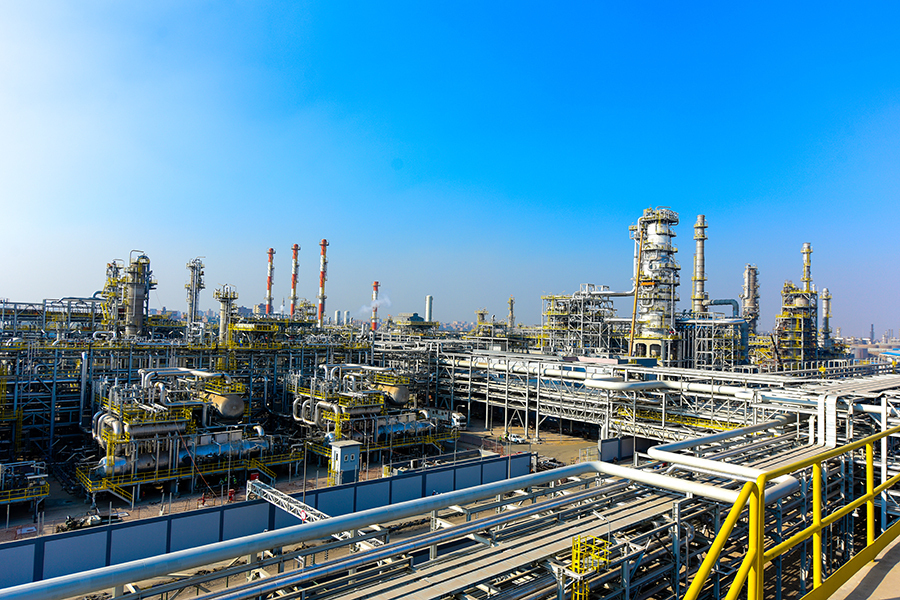
AGL bids to fully acquire Egytrans Nosco

1

WHAT WE’RE TRACKING TODAY

The 0.25% healthcare levy is now tax-deductible

Good morning, everyone. A French logistics giant wants to take an Egyptian company private, the state wants to place its business districts in their own preferential legal system, and USD 500 mn in Samurai bonds is on the way.

The story to watch is AGL's move on Egytrans Nosco. The French logistics group has made a non-binding offer to buy up to 100% of the EGX-listed company and delist it. The price, by our math, could value Egytrans Nosco north of EGP 2.7 bn, but there’s a long road of approvals between here and a handshake.

On the regulatory front: A draft law now before the House Economic Affairs Committee would give Egypt’s financial and business districts their own regulators, licensing, and incentives. The New Capital looks like the test case, with New Alamein potentially next.

And in debt markets: Egypt issued USD 500 mn in Samurai bonds, backed by an AfDB guarantee that’s grown substantially since it was first floated.

** A QUICK PROGRAMMING NOTE- EnterpriseAM is taking a publication holiday tomorrow in observance of the 30 June Revolution and will be back in your inboxes at the usual time Sunday morning.

***

ARE YOU MORE OF A LISTENER?Morning Drive is a 10-minute summary of today’s issue crafted for you to enjoy with your morning coffee, while getting the kids ready for school, or driving through the morning rush. And if you like it, tell your friends to tell their friends. They can find us on Apple, Spotify, or wherever they get their podcasts.

***

Footing the bill

The House gave final approval to amendments to how the Universal Health Ins. system’s solidarity contribution gets collected and channeled, according to a statement. Proceeds from the 0.25% healthcare levy will now be treated as tax revenue. The Egyptian Tax Authority will audit and collect the payments from covered companies and individuals for the state treasury, which must then automatically transfer the full amount to the Universal Health Ins. Authority.

Why it matters: The levy provides roughly 60% of the Universal Health Ins. system’s funding. To prevent a funding shortfall ahead of the system’s phase two rollout in Minya next FY, the Finance Ministry fought to keep it tied to top-line revenue and scrapped plans to shift it to net income. Instead, the government opted for a compromise to help ease corporate liquidity pressures: the levy remains tied to the top-line revenue, but companies can now claim it as a tax-deductible expense.

PSA-

WEATHER- It’s another warm day in Cairo, with a high of 37°C and a low of 24°C, according to our favorite weather app.

It’s warm but nicer in Alexandria, with a high of 31°C and a low of 23°C.

And over the long weekend, expect to see similar temperatures in the capital (a high of 36°C) and for our friends on the Mediterranean (a high of 31°C).

The big story abroad

How yesterday’s talks between the US and Iran unfolded: US negotiators Jared Kushner and Steve Witkoff held “positive” talks with regional leaders in Qatar, indicating that technical talks are proceeding. This followed reports that Tehran’s representatives would refuse to meet the envoys, with Iranian officials saying the terms of the ceasefire must be sorted out before tackling the issue of the Islamic Republic’s nuclear program.

International dailies are zeroing in on US President Donald Trump’s annual financial disclosure, which reveals at least USD 1.4 bn in earnings from crypto and crypto-related ventures. The report highlighted almost USD 600 mn made from sales by World Liberty Financial, a crypto firm co-founded by Trump, his sons, and Witkoff.

Wall Street just finished its best quarter since 2020, as optimism over a long-lasting peace agreement for the US-Iran conflict bolsters investor confidence. The S&P 500 closed up by 0.8% at around 7.5k, while the Dow Jones rose 0.3% at 52k.

Chip stocks also had a good quarter — they closed out their best quarter ever, jumping 88% during the three-month period. We have more in this morning’s Planet Finance, below.

Meanwhile, in the AI world: Anthropic launched Claude Science, an AI research workbench which integrates tools and computer resources geared towards scientists and researchers. It can render artifacts like 3D protein structures, genome tracks, and chemical structures.

*** It’s Hardhat day — your weekly briefing of all things infrastructure in Egypt: EnterpriseAM’s industry vertical focuses each Wednesday on infrastructure, covering everything from energy, water, transportation, and urban development, as well as social infrastructure such as health and education.

In today’s issue: We unpack the death of the blanket sovereign guarantee as the Finance Ministry shifts climate and operating risks onto the private sector.

From Europe to Egypt: MINDSET for Sports Development brings the world’s leading youth water polo brands to Somabay this December 2026.

Featuring Habawaba, TOMO, and the new Aquatica U15 tournament, the events will welcome 1.5k participants, positioning Egypt as a premier destination for youth aquatic sports and sports tourism.

2

M&A WATCH

Dropping anchor

French logistics group Africa Global Logistics (AGL) submitted an indicative non-binding offer to acquire up to 100% of EGX-listed Egytrans Nosco — with a floor of 75%, according to a bourse disclosure (pdf). At a provisional range of EGP 11.25-12.25 per share, the high end of the offer would value the company at EGP 2.76 bn, by our math. The plan includes taking Egytrans Nosco off the EGX, with AGL pledging to keep key execs on for at least four years after the mandatory tender offer (MTO).

Here’s what the transaction hinges on: AGL needs Egytrans Nosco’s shareholders to sign off on the move before it can file for approval from the Financial Regulatory Authority (FRA) to launch an MTO. The company will also run a full due diligence sweep on Egytrans Nosco and will need to clear regulators in three jurisdictions — Egypt’s Competition Authority, the Comesa Competition and Consumer Commission, and Saudi Arabia’s General Authority for Competition.

Who sits at the cap table: Nosco-related parties hold 29.8% of the company, the National Investment Bank holds 18.3%, the Leheta family holds 8.7%, and the remaining 43.2% sits in freefloat. This means AGL’s 75% minimum execution threshold can’t be hit through freefloat tenders alone — it needs more than one of the three concentrated blocks to come along.

The premium: The upper end of the price range represents an 18.4% premium to Egytrans Nosco’s Monday close of EGP 10.35, its last price before AGL’s intentions were made public.

AGL is prepared to pay in foreign currency: AGL says it already has the liquidity on hand to fund the transaction, with a proof-of-funds letter ready to be submitted to the FRA as required. The company also reserved the option to settle the offer in USD or EUR rather than EGP, subject to approvals from the FRA and the Central Bank of Egypt.

Market Reax- Egytrans Nosco’s shares closed up 3.38% at 10.70 apiece yesterday on the news.

What’s up for grabs

About Egytrans Nosco: The integrated transport and project logistics operator was created last year through a reverse merger — the first of its kind on the EGX — between listed Egytrans (70.2% of shares) and Nosco (29.8%). The company’s core business — logistics services — has been growing roughly 50% per year, with the combined entity now managing some 72k sqm of storage capacity, CEO Abir Leheta told us back in December.

A strong 1Q on paper, but mind the distortion: Egytrans Nosco’s 1Q bottom line grew roughly 21.2x y-o-y to EGP 70.4 mn, while its operating revenue climbed 30.75% to EGP 369.1 mn, according to its latest consolidated results (pdf). The jump was driven by a swing in its financing income, which outgrew the entire operating business. However, Leheta recently told us that the results will be distorted by the merger process — there are projects sitting under Nosco’s books which are not yet reflected in Egytrans’ standalone performance pre-consolidation.

The corporate umbrella: Egytrans Nosco operates through a set of affiliates like Nosco, Egytrans Logistics Solutions, Egytrans Warehousing Solutions, Egytrans Depot Solutions, Wilhelmsen Port Services, Nafith Egypt, and Egytrans Arabia — some of which it inherited through the merger.

REMEMBER- The company entered Saudi Arabia in 2023 through a joint logistics venture with Links Investments and spent the past year digitalizing port logistics through two major truck-management concessions — a Nafith International partnership worth EGP 1 bn-plus at Ain Sokhna and an earlier EGP 250 mn project at West Port Said. These moves positioned the company squarely on the trucking bottleneck that absorbs over 90% of Egypt’s internal freight movement.

This publication is proudly sponsored by

3

REGULATION WATCH

A tale of two registries

The government is moving to carve out its financial and business districts from the domestic regulatory framework. A new draft law — called the Central Financial and Business Zones Bill — currently before the House Economic Affairs Committee aims to turn these zones into independent, outward-facing regional service hubs, according to a parliamentary source and a draft document seen by EnterpriseAM. If passed, these districts would operate under their own regulators, licensing frameworks, and incentive packages.

REMEMBER- The cabinet gave a preliminary nod to this regulatory framework last year, aiming to secure more foreign capital by creating a fast-track licensing authority. The government has been studying legislation and incentives since 2024 to draw foreign investors to the New Capital’s central business district (CBD), with the model to be potentially replicated in New Alamein. The Finance Ministry has also been weighing tax and customs breaks for CBD investors, though no details were disclosed at the time.

Two lanes: The bill sets up a two-lane system for corporate tenants:

  • Limited registration: For companies using Egypt as a base to manage operations abroad, including banking and non-bank financial services. This lane grants them deep tax and customs breaks, unhindered capital movement, and freedom from domestic restrictions under Common Law;
  • Open registration: For companies serving the local market, keeping them tied to standard domestic law.

The firewall: Limited-registration companies don’t have unlimited access to the domestic market. To sell in Egypt, they must route their operations through specific sector laws, an external entity, or an open-registration affiliate. Any service crossing this threshold is legally treated as an import and regulated accordingly.

The referee and the builder

The legislation separates regulation from development. A newly created economic authority — the General Authority for Central Financial and Business Districts — would act as the sole regulator and handle all licensing, permits, and oversight. Its board would be chaired by the investment minister and include representatives from the Central Bank of Egypt (CBE), the Financial Regulatory Authority (FRA), the Justice Ministry, and outside experts.

Development sits in a separate lane. The district’s developer would build the project, help shape internal operating policy, and handle pre-licensing steps — including preliminary approvals and accreditation certificates — before the authority’s final sign-off. The developer would also help monitor projects, though final oversight stays with the authority. New districts would be created by cabinet decree, with each required to sit at least 100 km from the nearest existing district and carry at least USD 5 bn in total investment to establish and fully develop.

Zero is the pitch

A quarter-century tax holiday: Limited-registration projects would pay 0% on commercial earnings and capital gains for 25 years, 0% built-property tax for 15 years, 0% on real-estate income for seven years, and 0% dividend tax for five years — each extendable by cabinet for matching periods. Their employees would pay 0% salary tax for 25 years, while the companies pay a 10% fee on total wage costs over the same period to fund the special tax-governance system. VAT would be zero-rated on services to other limited-registration projects or exported abroad, on goods and services supplied to these projects from inside or outside Egypt, and on the sale, lease, or use of units inside the district.

No tax creep: Projects operating under the limited registration system would benefit from the ownership guarantees stipulated in the Investment Law. These projects would face no stamp tax, state resource-development fees, solidarity contributions, or other tax unless the draft law stipulates. However, the carve-outs are still there — returns on T-bills and bonds would remain subject to existing income-tax rules, payments to non-residents would stay subject to withholding tax, and multinational entities caught by global minimum-tax rules would be treated under the relevant laws and Egypt's international agreements.

The incentive clock starts from the district’s operation date — or from each phase’s launch if it opens in phases — with a draft placing a 10-year outer limit from the first phase for projects to begin benefiting from the breaks.

Zero customs: Imported machinery and tools to set up, operate, or expand the projects would clear at 0% customs (excluding passenger cars), as would infrastructure equipment for the district.

Money movement

Capital mobility and foreign loans: The government would commit to letting all transfers of funds and movable assets tied to limited-registration projects move freely in and out of Egypt, subject to applicable law. These companies could deal in FX under CBE rules, and owed taxes could be collected in foreign currency subject to CBE approval. Interest on loans these projects secure from abroad would be taxed at 0% if the tenor is at least three years, and the projects would fold into the ownership protections already granted under the Investment Act.

Financial oversight stays with the sector regulators: The CBE sets the rules for banking activity by limited-registration projects and the FRA handles NBFIs. The new authority would issue implementing decisions only after the relevant regulator’s approval. The developer carries a compliance burden — including reviewing the documents behind accreditation certificates and approvals, avoiding conflicts of interest, protecting client data, and following the authority’s outsourcing rules. Disputes could be settled by arbitration, conciliation, or mediation, and the cabinet could approve an arbitration center inside the district.

OUR TAKE– This reads like an attempt to build something similar to a Dubai International Financial Center (DIFC) or an Abu Dhabi Global Market (ADGM) on Egyptian soil — a ringfenced common-law zone with a 25-year taxfree pitch, potentially aimed at the regional-HQ and financial-services money that currently tends to park in the Gulf. The proposed tax package looks enticing enough to draw attention — but the question is whether the whole setup can offer the thing those hubs are usually said to sell best: predictability.

WHAT'S NEXT– The bill still has to clear the Economic Affairs Committee and a full House vote before it becomes law. Once it passes these steps, the framework only takes effect once the cabinet issues the executive regulations and decrees the first district.

4

DEBT WATCH

Cairo taps Tokyo bond market

The government has issued USD 500 mn (JPY 80 bn) in sustainability Samurai bonds in Japan, backed by a partial credit guarantee from the African Development Bank (AfDB), according to a statement (pdf) from Japan Credit Rating Agency (JCR), which rated the transaction. The bonds were placed privately on Monday in two tranches — roughly USD 350 mn over five years and USD 150 mn over 10 years — to a small number of qualified institutional investors.

The guarantee: AfDB’s USD 620 mn guarantee was raised from the roughly USD 400 mn first floated last year, a government official tells EnterpriseAM. The guarantee exceeds the bond size, as it backs 100% of the principal on both tranches, plus coupon payments from year four onward on the 10-year bond and from month 18 onward on the five-year. Any interest accruing before those dates is not covered.

The yield: Egypt sold the five-year tranche at a 2.87% yield and the 10-year at 3.5%, our source says. Proceeds are earmarked for sustainable expenditures under Egypt’s Sovereign Sustainable Financing Framework. JCR assigned the five-year tranche AA+ and the 10-year tranche AA. Both are scheduled to step up to AAA once their respective coupon-guarantee periods begin — reflecting AfDB's own AAA rating, affirmed by JCR in January.

What comes next: The issuance closes out Egypt’s international placements for FY 2025/26 at USD 4 bn, following USD 3.5 bn raised earlier in the year. The Finance Ministry has more social bonds and international sukuk in the works in FY 2026/27, with total planned issuances of USD 3-4 bn under its expanded USD 40 bn medium-term international bond program.

5

Startup watch

Mingling connections

Local AI-driven professional networking platform Brainsmingle secured a USD 400k seed investment from BasharSoft Group — the company behind recruitment platform Wuzzuf — according to a press release (pdf).

About Brainsmingle: The platform aims to consolidate a fragmented networking market across software platforms like Zoom, Calendly, and LinkedIn. Serving as a unified hub for experts, universities, and organizations, it has built a footprint spanning more than 90 countries, the release showed.

IN CONTEXT- This investment fits BasharSoft’s broader goal of regional tech consolidation, following its Saudi Arabia launch last year. Already operating job platforms Wuzzuf and Forasna with a combined user base of over 9 mn, the firm is building an end-to-end talent and network infrastructure.

REMEMBER- The transaction marks BasharSoft’s first capital deployment since its acquisitionof consultancy firm iCareer last year. The company is also preparing for a potential IPO within the next two to three years.

6

Moves

New lead for IBM NEA

IBM has appointed Tamer El Kholy (LinkedIn) as general manager for North East Africa, succeeding Marwa Abbas (LinkedIn), according to a company statement. El Kholy will lead IBM’s regional strategy and operations, focusing on AI and hybrid cloud technologies. He brings more than 28 years of tech experience, having occupied senior roles at Microsoft and Dell EMC. Most recently, El Kholy was IBM’s cross technology sales leader.

Tags:

7

LAST NIGHT’S TALK SHOWS

No electricity price hikes for households this summer

No blackouts or electricity price hikes are planned for households this summer, Electricity Ministry spokesperson Mansour Abdel Ghani told El Hekaya’s Amr Adib (watch, runtime: 2:52). His statement puts to rest rumors of a hike in electricity prices slated to take effect today. This comes days after the announcement of a 20% price hike for electricity used by energy-intensive commercial activities — like coffee shops and malls — during extended operating hours. The measure serves as an alternative to forced early closures, Abdel Ghani said.

One IMF review remains: The International Monetary Fund’s eighth and final review under our USD 8 bn Extended Fund Facility will start in November and potentially unlock another USD 1.5 bn disbursement, IMF Arab States and Maldives Executive Director and former Finance Minister Mohamed Maait told El Sora’s Lamees El Hadidi (watch, runtime: 1:51). This will coincide with the Fund’s review of our Resilience and Sustainability Facility, which may unlock another USD 136-272 mn. Maait’s statements confirm what EnterpriseAM reported earlier this summer about the timeline of the reviews.

REMEMBER- Egyptian authorities just signed the staff-level agreement on our seventh review with the IMF — unlocking a USD 1.6 bn disbursement pending the board’s green light. According to Maait, we can expect the fresh funds to land over the coming four to six weeks.

8

PLANET FINANCE

Chip stocks see their best quarter ever

Chip stocks are closing out their best quarter ever, but not without some volatility on the way out. The Philadelphia Semiconductor Index climbed 88% in 2Q, its strongest three months on record. That puts the index up 101.1% for the year — a pace that would make 2026 its best since the dot-com year of 1999, dwarfing the Nasdaq 100's 25% quarterly gain and the S&P 500's 14%, Bloomberg reports.

Memory chips, not Nvidia, drove the rally. SanDisk is up 764% this year. Micron has gained 301%, pushing its market cap past USD 1 tn. Nvidia — still the world’s most valuable company — is up just 4.5%, the weakest stock in the index despite trading at 18 times forward earnings, its cheapest multiple since 2018.

But the cracks are starting to show: The index shed 7.9% last week — its worst weekly drop since April 2025 — before swinging from down 3.2% to up 3.8% in a single session on Monday. Volatility, measured by the Cboe Semiconductor ETF Volatility Index, has jumped 83% this year, which would be its biggest annual rise on record, and is sitting near levels last seen during last year’s tariff shock.

Again, it all boils down to speculation that the AI boom — and investments from hyperscalers — is not sustainable. The main doubt that analysts and investors have is whether hyperscalers keep growing their investment beyond this year. So far, Microsoft, Amazon, Alphabet, and Meta are holding the line — it’s hardware makers further down the chain, squeezed by rising prices, and a reportedly wavering OpenAI IPO that are giving the bears evidence of the contrary.

What’s next: Analysts have raised 2027 earnings growth forecasts for the sector to 49%, up from 35% in April — well ahead of the S&P 500’s projected 17%. But with new AI capability papers landing weekly and a retail-heavy investor base still finding its footing in the sector, analysts expect the hyper-volatile market to persist for a while.

MARKETS THIS MORNING-

Asia-Pacific markets are mixed in early trading this morning, with Japan’s Nikkei and the Shanghai Composite in the green while South Korea’s Kospi and the Hang Seng are down. Investors are closely monitoring the latest developments in the talks between the US and Iran and where the JPY will settle against the USD after it slipped to its weakest level in decades.

EGX30

50,488

+1.3% (YTD: +20.7%)

USD (CBE)

Buy 49.16

Sell 49.30

USD (CIB)

Buy 49.14

Sell 49.24

Interest rates (CBE)

19.00% deposit

20.00% lending

Tadawul

10,800

+0.1% (YTD: +3.0%)

ADX

9,804

-0.4% (YTD: -1.9%)

DFM

5,956

-0.6% (YTD: -1.5%)

S&P 500

7,499

+0.8% (YTD: +9.6%)

FTSE 100

10,497

+0.1% (YTD: +5.7%)

Euro Stoxx 50

6,328

+1.6% (YTD: +9.2%)

Brent crude

USD 72.95

-1.3%

Natural gas (Nymex)

USD 3.25

-0.7%

Gold

USD 4,020

-0.4%

BTC

USD 58,604

-2.7% (YTD: -33.1%)

S&P Egypt Sovereign Bond Index

1,070

+0.1% (YTD: +7.7%)

S&P MENA Bond & Sukuk

152.64

0.0% (YTD: +0.5%)

VIX (Volatility Index)

16.45

-6.8% (YTD: +10.0%)

THE CLOSING BELL-

The EGX30 rose 1.3% at yesterday’s close on turnover of EGP 7.8 bn (10.2% below the 90-day average). Local investors were the sole net buyers. The index is up 20.7% YTD.

In the green: ADIB (+6.9%), Raya Holding (+5.2%), and Egypt Aluminum (+4.3%).

In the red: Beltone Holding (-1.0%) and Palm Hills Developments (-0.3%).

No Posts found, please check the shortcode attributes values


JULY

2 July (Thursday): Day off in observance of June 30 Revolution.

9 July (Thursday): Monetary Policy Committee’s fourth meeting of 2026.

23 July (Thursday): Revolution Day (TBC).

AUGUST

19 August (Wednesday): Connected Banking Summit, Fairmont Nile City Hotel.

20 August (Thursday): Monetary Policy Committee’s fifth meeting of 2026.

26 August (Wednesday): Prophet Muhammad’s birthday.

SEPTEMBER

8-10 September (Tuesday-Thursday) El Alamein International Airshow, El Alamein International Airport.

10-12 September (Thursday-Saturday): Egyptian Entrepreneurship Sector Diagnostics Report Summit, El Gouna.

15 September (Tuesday): IMF to hold its eighth review of Egypt’s USD 8 bn EFF arrangement.

24 September (Thursday): Monetary Policy Committee’s sixth meeting of 2026.

27-29 September (Sunday-Tuesday): Global Conference on Population, Health, and Human Development.

OCTOBER

6 October (Tuesday): Armed Forces Day.

10-11 October (Saturday-Sunday): Egypt Women's Health Summit (EWHS), Cairo Marriott Hotel.

26-28 October (Monday-Wednesday): IEX Egypt, Egypt International Exhibition Center, Cairo.

29 October (Thursday): Monetary Policy Committee’s seventh meeting of 2026.

NOVEMBER

6-8 November (Friday-Sunday) : Global Entrepreneurship Festival, JW Marriott Hotel, New Cairo

DECEMBER

7-10 December (Monday-Thursday): Food Africa, Egypt International Exhibition Center, Cairo.

17 December (Thursday): Monetary Policy Committee’s eighth meeting of 2026.

EVENTS WITH NO SET DATE

July 2026: British Prime Minister Keir Starmer set to visit Egypt.

2H 2026: Operations at Deli Glass Co’s new USD 70 mn glassware factory kick off.

2026: The Egyptian-American Economic Forum.

4Q 2026: Banque du Caire IPO.

2027

16-18 January (Saturday-Monday): Agri Expo, Cairo International Convention Center.

20 January-7 February: Egypt to host the African Games.

April 2027: Tenth of Ramadan dry port and logistics hub to begin operations.

EVENTS WITH NO SET DATE

2027: Egypt to host EBRD’s annual meetings.

2027: Egypt-EU Summit 2027.

End of 2027: Trial operations at the Dabaa nuclear power plant expected to take place.

September 2028: First unit of the Dabaa nuclear power plant begins operations.

Now Playing
Now Playing
00:00
00:00