A new sovereign powerhouse is rising

1

WHAT WE’RE TRACKING TODAY

CIB hikes Premium CD to 18%

Good morning, friends. Although many of us are still mourning our loss and exit from the World Cup, it can’t be denied that the Pharaohs put up a good fight against Argentina last night, and we’re proud of how far they took us. Onto the news of the day, there are three stories to unpack about our economy’s underlying structure — one on who controls it, and two on where it’s tightening.

The Mostakbal Misr story deserves your full attention. A draft law heading to parliament today would transfer the agency from Ministry of Defence oversight to direct presidential authority — and equip it with expanded financial autonomy, two new funds, and a minister-equivalent head.

On the real estate front: Cairo’s Grade A office market is tightening — rents are up 20% y-o-y, with landlords holding the pricing power as supply squeezes.

And a note on the broader economy: The country’s non-oil private sector hit a 3.5-year low, with June’s PMI reading coming in at 46.0 — the lowest since January 2023 and a sixth straight month below the growth threshold. S&P Global is projecting annual growth to slow to 3.8% in 2Q, down from 5% a year ago.

***

ARE YOU MORE OF A LISTENER?Morning Drive is a 10-minute summary of today’s issue crafted for you to enjoy with your morning coffee, while getting the kids ready for school, or driving through the morning rush. And if you like it, tell your friends to tell their friends. They can find us on Apple, Spotify, or wherever they get their podcasts.

***

Liquidity soak-up continues

CIB has raised the rate on its three-year fixed “Premium” certificate by 50 bps to 18% annual return, according to the bank’s website. The CD pays monthly and starts at an EGP 50k minimum (rising in EGP 1k increments).

The move keeps the nation’s largest private-sector lender in step with the state giants — the National Bank of Egypt (NBE) and Banque Misr (BM) — which raised their own three-year fixed CDs by 50 bps last month. NBE’s Platinum and BM’s Al Qimma now pay 17.75% annually (disbursed monthly), up from 17.25%, with a new quarterly payout option yielding 17.85%. Both also rolled out a variable-rate savings certificate, currently at 19.25% — pegged to the CBE’s overnight deposit rate plus 25 bps.

Eyes on the central bank: The two lenders pulled a similar move in April, hiking CD rates by asharper 125 bps to soak up liquidity as regional war made investors wary. The CBE’s monetary policy committee is meeting Thursday to review rates. Financial analyst Hany Abou El Fotouh has previously said that banks raising rates independently of the central bank keeps savers in the EGP and provides stability without forcing policymakers to hike corridor rates and add to the government’s debt burden.

MEANWHILE- Like the banks, The Citizen Bond, which is meant to widen the retail investor base for government paper — the first two issuances raised EGP 5.7 bn and EGP 2 bn — is chasing the same household liquidity as the banks, which already hold government bonds worth around 34% of their assets as of September 2025.

No permit, no guests

Owners of furnished rental units who want to rent to tourists have one year to license them with the Tourism Ministry, Tourism Minister Sherif Fathy said at a press conference.

The terms: The permit requirement — which was issued last year — pushes owners to regularize. The PM has approved a full waiver of the fees required to convert a unit from residential to short-term rental use — conditional on meeting hotel building codes. Licensed units must also clear the ministry’s security, safety, and hygiene standards.

REMEMBER- Egypt is targeting 30 mn tourists by 2030 and needs about 250k more rooms to get there, but building new hotels takes a long time. These furnished, Airbnb-style rentals are an attractive alternative, and bringing these informal rentals under ministry oversight expands the licensed room stock and gives the government the visibility and standards it currently lacks.

DATA POINT- Egypt welcomed around 9 mn tourists in 1H 2026, up 4% y-o-y despite regional turbulence. That is well below the 1Q pace, when arrivals jumped 43.5% y-o-y to 5.6 mn and revenue hit USD 5.1 bn.

A second rater

The Financial Regulatory Authority (FRA) licensed a second credit-rating company and two new futures brokers, among 10 entities the regulator has cleared for practicing non-banking financial activities yesterday, according to a statement. International Company for Credit Rating Solutions becomes the country’s second licensed credit-rating firm and the first approved under the FRA’s 2025 licensing criteria, while Sigma Securities and Aspire Securities & Bonds bring the number of licensed futures brokers to eight.

IN CONTEXT- Egypt has long been a one-agency market with Meris Ratings, and the FRA has been trying to bring in a second player to deepen the local debt and securitization pipeline. The new credit rating agency comes from a joint venture formed in 2024 between Beltone Capital and Italy’s CRIF Ratings — the FRA selected the duo after they scored highest on the assessment criteria out of the other applying consortia.

Adding Sigma and Aspire widens the broker base for a product still looking for users. EGX30 futures have struggled to gain traction since launching in March, while the EGX has already tried to make the market more legible by rolling out single-stock futures on CIB and TMG. More licensed brokers will not create demand on their own, but they widen the access points as the FRA and EGX try to move derivatives from infrastructure to actual flow.

Culture minister steps down

Prime Minister Mostafa Madbouly accepted Gihane Zaki’s resignation from her post as culture minister, following her conviction in an intellectual property case, according to a cabinet statement. Madbouly has appointed Higher Education Minister Abdelaziz Konsowa as acting culture minister until a new candidate is selected.

PSA-

WEATHER- Looking like a classic summer day in Cairo today, with a high of 35°C and a low of 23°C, according to our favorite weather app.

It’s breathable in Alexandria, with a high of 31°C and a low of 23°C.

The big story abroad

The US-Iran conflict has reignited, as the US military launched a series of retaliatory strikes against Iran, putting at risk the interim agreement inked between the two sides last month. The US Central Command said the attacks came in response to Iranian attacks on commercial vessels crossing the Strait of Hormuz earlier this week. The US strikes were reportedly launched against military targets.

Washington also revoked a waiver that allowed Tehran to sell oil openly on global markets. The 60-day exemption was issued last month, allowing the Islamic Republic to conduct such transactions in USD — even to US importers.

Iran has not claimed responsibility for the attacks on vessels in the strait, but reiterated itsauthority over parts of the waterway in a document submitted to the International Maritime Organization — the United Nations’ shipping agency.

We’ll be closely watching the Iranian response and how these developments impact oil prices — which dipped below USD 80 / bbl after the agreement and now sit around the USD 75 mark.

Meanwhile, in the world of AI: E-commerce behemoth Amazon plans to bankroll its AI investments by raising USD 25 bn in USD-denominated bond sales. This dovetails into a recent trend of tech players resorting to debt markets to build AI infrastructure, as seen by the likes of Alphabet, Microsoft, and Meta.

The latest offering from Meta’s AI overhaul is here — an image-generation model. MuseSpark Image can be used to generate images from scratch or edit existing images. It can also be used to power new editing features on Instagram.

And on Wall Street: Private equity firms are now saddled with a nine-year backlog of unsold companies — some 13.5k in the US alone — as potential buyers hesitate to buy software-heavy portfolios amid fears AI will disrupt tech-based business models, analysis by PwC finds. For reference, buyout firms typically aim to hold investments for around three to five years.

PLUS- Nato allies went on a USD 50 bn defense agreement spree during the summit in Ankara, signalling an attempt by Europe to meet demands from US President Donald Trump.


*** It’s Hardhat day — your weekly briefing of all things infrastructure in Egypt: EnterpriseAM’s industry vertical focuses each Wednesday on infrastructure, covering everything from energy, water, transportation, and urban development, as well as social infrastructure such as health and education.

In today’s issue: We take a look at how Egypt’s mobile operators are deploying bn-EGP capital investments and new spectrum allocations to close persistent network performance gaps.

From Europe to Egypt: MINDSET for Sports Development brings the world’s leading youth water polo brands to Somabay this December 2026.

Featuring Habawaba, TOMO, and the new Aquatica U15 tournament, the events will welcome 1.5k participants, positioning Egypt as a premier destination for youth aquatic sports and sports tourism.

2

REGULATION WATCH

Sovereign power

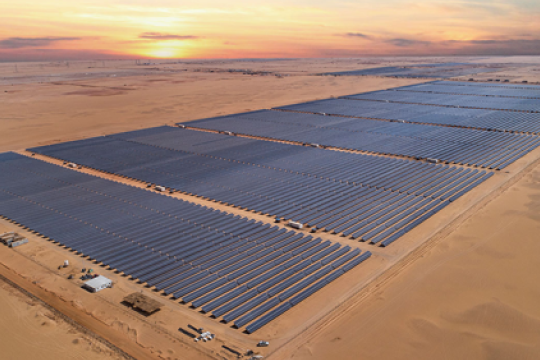
The Mostakbal Misr land reclamation and sustainable development initiative is being transferred from the Defence Ministry to direct presidential authority under a draft law heading to the House of Representatives today. The reorganization, according to the draft law seen by EnterpriseAM, would restructure the agency as a “special nature” body reporting directly to the president and equip it with expanded financial autonomy, exemptions from standard state administrative frameworks, and two new multi-purpose funds. The head of the agency will hold a rank equivalent to minister.

The agency will operate outside standard state administrative frameworks. It will be exempt from government wage caps, the Civil Service Act, and public procurement rules. The Treasury will also cover all of the taxes, including VAT and stamp tax, on its behalf. While the agency is exempt from transferring earnings to the state Treasury, the president can still order yearly transfers. The president has the power to direct 10-20% of net proceeds from the sustainable development zones and 7-10% of the sovereign fund’s annual allocated returns to the state Treasury. He can also authorize a one-off annual lump sum drawn from the service fund’s net surplus balance — with that lump sum itself allowed to grow by up to 10% year over year.

A shield: Courts will be barred from hearing any lawsuits that try to block its contracts or asset sales, provided they are made for “national purposes.”

Its mandate is broader than food security. Under Article 81 of the draft law, the agency operates across economic sectors including agriculture, animal wealth, poultry, fisheries, extractive industries, manufacturing, logistics, tourism, construction, water, and energy. Its core objectives include contributing to national food, water, and energy security, and growing the state’s overall economic power. To pursue this mandate, the authority can manage a global portfolio, invest in programs, and acquire companies both at home and abroad.

Mostakbal Misr will fold in all its current lands as specialized development zones. The Authority will continue to manage its existing assets, vehicles, and contracts until they are completed. Within the zones, it can raise fees annually by up to 5%, indexed to inflation — or cut them by the rate of real GDP growth or 2%, whichever is greater. Separately, it caps at EGP 500k what it can charge accreditation offices — third-party firms it licenses to inspect and certify projects within the zones — for their own licensing and renewal fees.

The draft law creates two specialized funds to manage the agency’s wealth. The first, Ahramat El Nile, is a special-nature sovereign fund designed to grow investments for future generations. Its manager will hold the rank of deputy minister. The fund can launch its own sub-funds and companies, partner with local and foreign funds, and — significantly — acquire other state-owned sovereign, economic, or investment funds. The second, Da’em, is a special-nature service fund designed to help state agencies fund social service and development projects across education, research, health, culture, infrastructure, and housing.

Why it matters: This law provides the regulatory architecture for Mostakbal Misr’s evolution from a land-reclamation project into a wider state economic platform. The transfer out of Ministry of Defence oversight and into direct presidential authority formalizes the operational expansion Mostakbal Misr has already undergone. The agency has become a powerhouse in strategic crop reserves and storage. It has also taken over the buying role from the General Authority for Supply Commodities (GASC), placing it at the center of Egypt’s wheat-import machinery. The reorganization consolidates that expansion into a formal institutional structure with expanded financial powers and the ability to acquire other state-owned funds.

What’s next: A joint House committee representing nearly every major legislative sector — from defense to health — will now debate the draft. Once the law takes effect, the agency has one year to legalize its status. The president has the authority to extend this grace period for a total of up to three years.

This publication is proudly sponsored by

3

Real estate

Space jam

Cairo’s office market continued to tighten in 2Q 2026, with average rents rising 20% y-o-y in EGP terms as a shortage of Grade A space handed landlords greater pricing power, according to the latest report (pdf) from property consultancy Knight Frank. Market-wide average asking rents stood at USD 325 per sqm annually — a modest 2% rise in USD terms, but a far sharper gain in local currency on the back of the weaker EGP.

Demand tilts toward premium: Companies continue to prioritize modern developments despite higher costs, leaving Grade A buildings at an 18.4% pricing premium over older Grade B stock (USD 335.60 vs USD 283.50 per sqm annually). Grade A business parks command even more — USD 348 per sqm in New Cairo and USD 354 in West Cairo. New Cairo remains the focal point, hosting 44 of the city’s 77 active office developments, while tenants increasingly weigh parking availability and move-in-ready space when choosing premises.

Flex goes permanent: Serviced and flexible office space is shifting from a temporary swing solution to a permanent, headquarters-grade option for major international occupiers, Knight Frank says. Recent commitments show the scale of the move: Swiss-based IWG’s Spaces brand took around 16k sqm at The Ark Business Park, while two other operators each secured roughly 7k sqm — at Eastmain by Mobco and UBL by Tameer.

Longer payment plans: Developers are adjusting to weaker purchasing power with progressively longer installments — from 4.6 years for units delivering in 2026 to 9.7 years for 2030 completions. Meanwhile, more landlords are cutting tenants’ upfront fit-out costs, handing over partially finished (CAT-A white box) offices or spreading customization expenses over the lease to attract multinational occupiers.

On the sales side: Prices vary widely by district. Downtown Cairo is the most accessible entry point at an average EGP 67k per sqm, while New Cairo and El Sheikh Zayed are at mid-market levels of EGP 182-184k. New Zayed is the most expensive citywide, at more than EGP 206k per sqm, while 6th of October shows the widest spread — EGP 70k to 325k per sqm — reflecting variation in product quality rather than genuine pricing power.

IN CONTEXT- While the consultancy’s report captures the top-line market data, we reported last year on the deeper structural reality driving the Grade A supply squeeze. Developers spent years chopping office projects into small units for quick retail liquidity, creating a void for multinational corporates that actually need more floor space under one roof — including those chasing a share of the country’s growing business process outsourcing market. The market needs roughly 9.5 mn sqm of office space annually, against a supply of just 2.5-3.2 mn sqm, Bonyan CEO Tarek Abdel Rahman told us last year. The market is also bracing for the impending 14% VAT on leased admin spaces, which threatens to eat into the sector’s 8-10% rental yields and could cool future investment demand.

4

Economy

A chain reaction

Egypt’s non-oil private sector saw its deepest contraction in over three years in June due to decreased demand following disruptions in regional supply chains. Yet companies have continued to build inventory despite falling sales. The headline S&P Global PMI reading fell to 46.0 in June from 47.1 in May — its lowest since January 2023 and a sixth straight month below the 50.0 growth threshold per the latest survey (pdf). Business activity has now contracted for five consecutive months.

Why it matters: The slump suggests the wider economy is cooling. Based on historical PMI-GDP relationships, S&P Global projects annual growth to slow to 3.8% in 2Q 2026, down from 5% in the same period last year.

Sales fell at the sharpest rate since November 2022. Nearly 27% of firms reported weaker sales against 11% reporting an improvement, with businesses blaming client liquidity constraints, raw material shortages, slower supply chains, and rising prices. Even so, firms kept building inventories as a hedge against further disruption and anticipated price rises.

The primary pressures: Input-cost and output-price inflation cooled sharply from May’s near-record highs but stayed elevated, with firms citing continued upward pressure on fuel and materials from the conflict. Wage pressures persisted: staff costs rose at the second-quickest pace since January 2018, behind only May. Job losses eased, with cuts coming through natural attrition rather than active layoffs.

We’re in a transition, not a slump: “The June reading represents a transitional phase rather than an indicator of economic deterioration,” AASTMT economics professor Shaimaa Wagieh tells EnterpriseAM. “If inflation rates continue to fall and the central bank begins a gradual cycle of monetary loosening, the PMI is likely to witness a gradual improvement during the second half of the year, reflecting a greater return of productive and investment activity,” Wagieh says.

What’s next: Businesses expect lower regional tensions and state support to lift demand in the coming months. The August PMI read will show whether the ceasefire translates into a demand recovery — or whether the sector’s six-month contraction streak extends into a seventh.

5

A MESSAGE FROM VISA

Children are shopping and gaming online. Payment safety needs to keep up

Digital commerce is now part of everyday life for Egypt’s next generation. Visa’s Stay Secure 2026 study found that 35% of parents in Egypt have children who can access mobile payment apps or digital wallets. For these families, children’s online activity now moves easily between gaming, shopping, and the payment prompts built into the apps they already use.

That access creates a new safety challenge. When children shop, game, or tap through payment prompts online, they can encounter offers, links, and in-game purchases before they fully understand the risks behind them.

The study shows how visible that concern has become. In Egypt, 91% of consumers report that children in their lives struggle to recognize deceptive online activity, while 61% have seen a child fall victim while gaming or shopping online.

For banks, merchants, payment providers, and platforms, protection has to appear before the payment decision. That means clearer prompts, safer payment flows, recognizable checkout cues, and alerts when something looks suspicious.

As more young users enter digital commerce, payment safety has to be built into the design of the payment experience. A safer payment journey gives parents clearer reassurance, stronger control, and more confidence at the point of purchase.

6

Companies

The soft POS unlock

Egypt’s soft POS rollout is landing in a broader Visa regional shift toward mobile-first infrastructure. The Central Bank of Egypt (CBE) approved the full rollout of soft POS in February and lifted the EGP 600 cap that had hobbled its two-year pilot, “paving the way for a truly mobile-first economy,” Visa’s Egypt Country Manager Malak El Baba told EnterpriseAM at the time.

Cashless transactions in Egypt were already up 45% y-o-y through year-end 2025, per the CBE, but cash still runs 60-70% of transactions here — well above the 50% average across the broader CEMEA region Visa serves.

Visa is treating Egypt as the operational test of its mobile-first push. At the Visa Payments Forum in Paris last week, the company’s leadership presented a roadmap that positions phone-as-POS technology as the fix for the roughly 90 mn small businesses across the 85-country CEMEA region that still don’t accept Visa. “Visa Accept,” the product that turns a phone into a POS device, spares merchants the bank visit and the multi-week wait for machines, CEMEA Regional President Tareq Muhmood told the forum.

Cash has fallen from roughly 70% of transactions before the pandemic to about 50% today across CEMEA, Muhmood said, with Visa-accepting locations growing from 11 mn to 21 mn in three years. Visa has also recently carved out an Egypt-Libya-Sudan subregion — a structural signal that the company sees Egypt as one of the sharpest growth opportunities in its regional footprint.

Localization is the operational strategy. Walter Lironi, the head of Visa’s value-added services for CEMEA, told us the only real competitor Visa has in the market is cash. “Everything else is ’a partner.’ Visa’s acceptance platform now clears Meeza, Egypt’s national scheme, alongside Visa; the toolkit is modular — maybe in Egypt you select functionality one, two, three, in the UAE... four, five, six,” and even Instapay, the instant account-to-account network sometimes cast as a threat, is treated as coexistence because Visa now sells services across rails it does not own.

The nine revolutions

Then there’s the harder question of what payments will look like a few years out. Visa’s leadership described a payments landscape being reshaped by roughly nine technology revolutions running simultaneously — including generative AI, agentic commerce, stablecoins, and blockchain. Group President Oliver Jenkyn opened the forum with a note of warning: “If you aren’t a little bit confused, you aren’t paying attention.” He counted the revolutions running at once and observed that any one of them would define a generation. “We’ve got like nine of them happening at the exact same time.”

Jenkyn reintroduced Visa as a company organized around three business drivers: consumer payments (the card-tap C2B business, where there are still tns of USD of cash and checks left to convert), commercial money movement solutions (targeting the far larger flows between every other counterparty, including person-to-person, business-to-business, and government-to-consumer), and value-added services (customizable, AI-enabled tech solutions Visa offers clients making build-versus-buy decisions on stalled modernization projects). Visa has been increasingly focused on the third driver, particularly in emerging markets.

Agentic commerce, stalled

The headline act is agentic commerce — but we’re not quite there yet. Rajat Taneja, Visa’s technology president, framed the shift as commerce moving “from humans in the loop to intelligence in the loop and the job of the network shifting from securing the payment to securing intent because someone else is representing you.” Agentic commerce, in Jenkyn’s walkthrough, means handing a shopping agent three things: a tokenized payment credential, a data token of your purchase history and preferences, and a set of controls (which merchants and what limits). The agent then shops on your behalf.

Adoption has been slow. Visa Intelligent Commerce was unveiled a year ago, but a recent Visa study of 6k consumers across 17 countries showed that while 84% of consumers use agentic tools as part of their shopping, that’s mainly for research or discovery, not for purchasing. “Agentic commerce is stalled a bit right now because the web was built for humans. It has colors and pictures and fonts and pop-ups built to entice humans to buy. Bots don’t want any of that. So the error rate is very high if an agent tries to buy on the human web,” Jenkyn said. The industry is addressing new protocols, standards, and APIs, but there’s a second obstacle beyond the technical: humans need to get comfortable with agents shopping on their behalf, and that will take a minute.

Blockchain and stablecoins

Blockchain and stablecoins are still in the early stages of development, Jenkyn said. “By taking cryptocurrency and backing it with fiat currency, you’re translating what was historically a speculative asset class and converting it into something that has the potential to be part of the core infrastructure of the global payments and money movement ecosystem.” He sees Visa playing a role in bridging the gap between the crypto/stablecoin world and the fiat currency world — particularly in emerging markets with volatile currencies.

What does this mean for the region?

The roadmap above assumes a digital-first consumer, which describes a small portion of the 85-country region Visa calls CEMEA. When asked if an agentic, stablecoin future risks widening the gap between developed economies and markets in the Middle East and Africa, Taneja said he doesn’t see it that way. “I think the technologies can scale very rapidly and reach people cheaply on their phones.”

The room for growth is significant — and it’s in Egypt, where the mobile-first infrastructure is only just becoming legal. The CBE soft POS approval that opened this piece is the regulatory unlock, with Visa Accept as the operational fix, and the Egypt-Libya-Sudan subregion carve-out serving as the structural play. What comes after that — agentic commerce, stablecoin-linked cards, blockchain-based cross-border flows — depends on whether the phone-first foundation being built now scales fast enough to catch the next revolution.

Is Visa still a card company five years out, or an invisible infrastructure? “The evolution from a physical card to a credential, to a token will continue. We’re a company that provides the foundation of trust,” Taneja said. “It’s difficult to predict what things will look like a year from now, much less five years from now, but one thing you can predict with some level of confidence is what will be constant. In order for any of the things that we’re talking about today to happen, the constant will be a foundation of trust. If you have that foundation, everything else will fall into place.”

7

Also on our Radar

One foot out, one foot in

The European Bank for Reconstruction and Development (EBRD) is extending a USD 15 mn (c. EGP 795 mn) senior loan to GlobalCorp for Financial Services to back local micro, small, and medium-sized enterprises (MSMEs), according to the lender’s project disclosure. Issued under the bank’s Financial Intermediaries Framework, the facility aims to strengthen GlobalCorp’s balance sheet and fund the expansion of its MSME leasing and factoring book, with a specific focus on clients outside Cairo.

Why this matters: This fresh credit line lands just weeks after we reported that GlobalCorp’s anchor shareholders are lining up to exit the company entirely. Amethis, SPE Capital, and the EBRD — which together bought a 90% stake in GlobalCorp for EGP 914 mn in 2022 — are now shopping a sale that could value the company at USD 200 mn (EGP 10.7 bn) and see up to 100% of shares change hands. It’s notable that the EBRD is preparing to exit its 21.9% equity position while injecting fresh, long-term debt into the very same company.

IN CONTEXT- The facility is the latest entry in the EBRD’s sustained campaign to plug the country’s SME financing gap. In January, it signed an EGP 1.3 bn green financing agreement with Ibnsina Pharma to fund an EDGE-certified logistics warehouse — just a year after fully exiting its equity position in the company. In March, the bank extended a USD 50 mn SME-focused package. Last month, it directed an EGP 600 mn loan to fintech platform Valu to finance household purchases of solar power and EV-related products.

More desert wheat

UAE agribusiness firm Al Dahra’s Egypt arm supplied 45k tons of wheat to the government this season for EGP 750 mn, up 12.5% by volume and 28.6% by value y-o-y, Al Arabiya reports. The company sold its entire wheat output to the state in EGP, with this season’s price rising to around EGP 16.66k per ton from EGP 14.6k last year.

IN CONTEXT- The government is aiming to buy 5 mn tons of local wheat this season after raising the procurement price to as much as EGP 2.5k per ardeb, while recent data put domestic collections at more than 4.6 mn tons by mid-June. Al Dahra told EnterpriseAM in 2024 it planned to invest USD 230 mn to expand its land portfolio in Egypt and fund reclamation, with strategic crops — including wheat — at the heart of its local plan. This aligns with recent reports that Al Dahra reclaimed 1k new feddans within its 37k-feddan Toshka footprint and is currently negotiating with the Egyptian government to acquire even more land in the region.

8

PLANET FINANCE

Conditional recovery

The global economy is set to pick up speed in the second half of 2026 — but only if the US-Iran truce holds. Global GDP is expected to expand by 3.1% annualized in 2H, with the acceleration concentrated in developing economies, according to an Oxford Economics report seen by EnterpriseAM. The mechanism is straightforward — lower oil prices lift real disposable income and consumption. The condition to see it realized is less clear.

A coin flip peace

Oxford Economics puts the odds of a durable US-Iran agreement at 50-50. The conflict initially drove oil prices higher, lifted inflation, and weighed on growth. The ceasefire reversed that — sending prices lower and reopening the strait to shipping. But the truce is fragile. Renewed military strikes at the end of June mean the breakdown scenario is very much alive, and a return to hostilities would push inflationary pressure back up fast.

The supply chain exposure

Western AI investment has a strait-shaped vulnerability. US AI spending relies on components from Northeast Asia and ASEAN — regions exposed to disruptions in energy shipments through Hormuz. Critical components also depend on specialized manufacturers in South Korea and Germany, leaving the supply chain exposed to unexpected shocks.

China benefited from the disruptions, but that won’t last. Chinese exports benefited from the supply chain disruptions caused by the war, helping offset weakness in traditional export sectors and restrictions on refined petroleum products exports. But over the medium term, a stronger RMB, rising trade barriers, higher factory prices, and weaker global demand could leave China sitting on growing overcapacity.

The tariff calendar

New US tariffs are coming in July. The Trump administration will introduce new Section 301 tariffs to replace Section 122, which expires on 24 July. The replacement is expected to be marginally higher, targeting USD 25-30 bn in monthly revenue to help fund the One Big Beautiful Bill Act. The revised USMCA agreement, meanwhile, is no longer expected to lower tariffs, with current rates to stay in place indefinitely.

AND- Brussels and Beijing are heading for a collision. The European Commission expanded its trade-defense investigations against China to more than 50, with duties already imposed on electric vehicles, solar supply chains, and glass fiber. New economic security tools are also planned by September, raising the risk of Chinese retaliation.

What changes if the truce holds

Central banks get room to ease. Lower oil prices would reduce inflation pressures, giving central banks less reason to keep raising interest rates. The ECB’s case for additional hikes disappears — the Fed, the Bank of England, and the Bank of Japan are all expected to take a less aggressive path than the current one. A renewed escalation, though, pushes everyone back toward tightening.

Several elections could reshape the picture heading into 2027. US midterm elections are expected to produce a divided government even if Democrats win both chambers, limiting prospects for additional fiscal stimulus while raising the odds of a debt ceiling standoff. Meanwhile, Israel’s parliamentary elections could influence ceasefire negotiations with Iran. German state elections may also test coalition stability and complicate the ECB’s outlook.

The biggest upside risk to the global outlook is stronger-than-expected AI investment and productivity gains, particularly in the US and Asia. Sizable spending on data centers, utilities, and major projects such as Australia’s 2032 Olympics could deliver a bigger growth boost than current forecasts assume.

MARKETS THIS MORNING-

Asia-Pacific markets are mixed in early trading this morning. South Korea’s Kospi is down 0.5% after Samsung’s 2Q preliminary earnings triggered a selloff that pushed the tech giant down 4.4%. Japan’s Nikkei is also down, while the Shanghai Composite and Hang Seng are looking at moderate gains.

EGX30

53,006

+1.0% (YTD: +26.7%)

USD (CBE)

Buy 48.75

Sell 48.88

USD (CIB)

Buy 48.70

Sell 48.8

Interest rates (CBE)

19.00% deposit

20.00% lending

Tadawul

10,852

+0.4% (YTD: +3.5%)

ADX

9,941

+0.2% (YTD: -0.5%)

DFM

6,094

+0.1% (YTD: +0.8%)

S&P 500

7,504

-0.5% (YTD: +9.6%)

FTSE 100

10,666

+0.1% (YTD: +7.4%)

Euro Stoxx 50

6,320

-1.2% (YTD: +9.0%)

Brent crude

USD 74.24

+2.8%

Natural gas (Nymex)

USD 3.28

+0.5%

Gold

USD 4,110

-1.1%

BTC

USD 63,543

-1.1% (YTD: -27.5%)

S&P Egypt Sovereign Bond Index

1,076

0.0% (YTD: +8.4%)

S&P MENA Bond & Sukuk

151.95

-0.2% (YTD: 0.0%)

VIX (Volatility Index)

16.13

+3.6% (YTD: +7.9%)

THE CLOSING BELL-

The EGX30 rose 1.0% at yesterday’s close on turnover of EGP 12.5 bn (43.8% above the 90-day average). International investors were the sole net buyers. The index is up 26.7% YTD.

In the green: Juhayna (+4.4%), Orascom Development (+2.6%), and Misr Cement (+2.1%).

In the red: Valmore Holding -EGP (-2.9%), Raya Holding (-2.8%), and Emaar Misr (-2.0%).

9

HARDHAT

After the spectrum handover

Our telecom sector is entering an important operating phase this July. Egypt’s four mobile operators will begin receiving new spectrum allocations this month under the largest strategic agreement in the sector’s history, worth some USD 3.5 bn. The agreement hands companies an additional 410 MHz, roughly doubling the total frequencies made available to mobile operators since the service launched in Egypt three decades ago. Capital discipline is what the sector’s bn-EGP capex plans are about to be judged against.

The spectrum handover coincides with a wave of bn-EGP investment commitments from operators. Vodafone Egypt plans to invest more than EGP 20 bn in FY 2026/27 to upgrade its networks, 5G, data centers, and AI capabilities. The capex push extends to the other private operators. e& Egypt CEO Ahmed Yehia previously said the company’s up to EGP 20 bn investment to upgrade infrastructure, expand coverage, and launch 5G services this year as part of its strategy. Orange Egypt is targeting a 50% y-o-y jump in infrastructure spending to EGP 15 bn, backed by a recently secured USD 80 mn syndicated loan split evenly between Banque Misr and the EBRD to fund its 5G rollout.

Where the gap shows up. The NTRA’s 2H 2025complaints report showed that users escalated 139.4k complaints against service providers, with mobile services taking the largest share at 46%, or 64.1k complaints, followed by fixed internet at 32%, or 45.1k complaints (by their math).

The gap shows up in network performance, too. The NTRA’s 4Q 2025 mobile network quality report showed continued violations and weak voice and data service in several areas, with clear differences across the four operators. We, Telecom Egypt’s mobile arm, saw the sharpest deterioration, with the number of areas suffering from poor voice quality rising to 16 from 11, while average data download speeds slipped to 83 Mbps from 85 Mbps. e& Egypt also saw areas affected by poor voice quality rise to 11 from nine, while its average download speed was steady at 57 Mbps.

Two operators showed improvement in the 4Q 2025 report: poor-voice-quality areas fell to seven from eight at Orange Egypt and to five from six at Vodafone, where average download speeds also rose to 51 Mbps from 49.

The improvement isn’t accidental, because the spending behind it isn’t a standalone tech upgrade. Vodafone’s EGP 20 bn budget for the current fiscal year funds a local plan to modernize network sites, add capacity, support 4G networks, and expand fiber-optic lines, a company source tells EnterpriseAM. “Any technology we launch has one primary goal: improving the customer experience in a tangible way every day,” our source tells us. “5G and AI services aren’t separate. They’re part of a comprehensive upgrade of the network’s infrastructure and all its components, ensuring the continuity of high-quality services and maintaining the best possible customer experience.”

User complaints double as a diagnostic tool, the Vodafone source says. The numbers point to a system that’s actually catching problems, not just logging them. Vodafone’s response rate exceeds 97%, with an average response time of 0.15 days.

The new spectrum has already landed, and Vodafone is already weaving it into the network, the source tells us. The frequencies help with efficiency and capacity — but they’re not a fix on their own, and the payoff will show up gradually. Vodafone is directing its investments and technical resources to “higher-density areas or areas showing indicators that require faster intervention,” in continuous coordination with the NTRA.

Government pullback, private burden. The FY 2025/26 budget cut public ICT investment to just EGP 13 bn, down from EGP 85 bn the previous year. That pullback leaves private operators carrying the network-upgrade burden almost alone, at a difficult point in the macro cycle.

Both the EGP and USD are a burden. The spectrum agreement comes with a currency problem. Operators paid a USD 500 mn upfront installment in 1Q this year and are preparing a second USD 300 mn installment in 1Q next year, with the remaining USD 2.7 bn due in annual USD-denominated installments through 2030. Local ARPU is still low, which means generating enough hard currency to cover those obligations is an ongoing strain for companies whose revenue comes in EGP, a former telecom company official tells EnterpriseAM.

Vodafone says the payment schedule was built for exactly this strain. It was structured over an extended period to let operators “manage their financial obligations efficiently without affecting their investment and operational plans in the market,” our Vodafone source tells us. The payments are part of Vodafone’s long-term financial planning, the official adds, and won’t touch the EGP 20 bn local investment plan.

AI is the tiebreaker between capacity used and capacity wasted. Some 62% of regional executives expect industrial AI to reshape infrastructure operations within three years, per Siemens’ 2026 Middle East Infrastructure Transition Monitor, and 61% already call it the main driver of infrastructure resilience, catching failures before they cost money. Vodafone is doing the same locally. AI has “become a core part of managing modern networks,” helping predict load, allocate capacity, monitor faults, and respond faster, the company source says.

None of it fixes the sector on its own. GSMA wants longer license terms, an open framework for tower and infrastructure sharing, and lower taxes in place of sector-specific fees. Spectrum was the easy part. Reform is the hard part, and it’s still pending.

What’s next? NTRA’s complaint numbers are the clearest measure of whether this investment is working. Spectrum has landed, financing is structured, and AI is layered in — the pieces are all in place. Operators who turn that into fewer dropped calls will earn the pricing power that reliability buys. The ones who don’t will be having this same conversation a year from now.


JULY

9 July (Thursday): Monetary Policy Committee’s fourth meeting of 2026.

23 July (Thursday): Revolution Day (TBC).

AUGUST

19 August (Wednesday): Connected Banking Summit, Fairmont Nile City Hotel.

20 August (Thursday): Monetary Policy Committee’s fifth meeting of 2026.

26 August (Wednesday): Prophet Muhammad’s birthday.

SEPTEMBER

8-10 September (Tuesday-Thursday) El Alamein International Airshow, El Alamein International Airport.

10-12 September (Thursday-Saturday): Egyptian Entrepreneurship Sector Diagnostics Report Summit, El Gouna.

15 September (Tuesday): IMF to hold its eighth review of Egypt’s USD 8 bn EFF arrangement.

24 September (Thursday): Monetary Policy Committee’s sixth meeting of 2026.

27-29 September (Sunday-Tuesday): Global Conference on Population, Health, and Human Development.

OCTOBER

6 October (Tuesday): Armed Forces Day.

10-11 October (Saturday-Sunday): Egypt Women’s Health Summit (EWHS), Cairo Marriott Hotel.

26-28 October (Monday-Wednesday): IEX Egypt, Egypt International Exhibition Center, Cairo.

29 October (Thursday): Monetary Policy Committee’s seventh meeting of 2026.

NOVEMBER

6-8 November (Friday-Sunday) : Global Entrepreneurship Festival, JW Marriott Hotel, New Cairo

DECEMBER

7-10 December (Monday-Thursday): Food Africa, Egypt International Exhibition Center, Cairo.

17 December (Thursday): Monetary Policy Committee’s eighth meeting of 2026.

EVENTS WITH NO SET DATE

July 2026: British Prime Minister Keir Starmer set to visit Egypt.

2H 2026: Operations at Deli Glass Co’s new USD 70 mn glassware factory kick off.

2026: The Egyptian-American Economic Forum.

4Q 2026: Banque du Caire IPO.

2027

16-18 January (Saturday-Monday): Agri Expo, Cairo International Convention Center.

20 January-7 February: Egypt to host the African Games.

April 2027: Tenth of Ramadan dry port and logistics hub to begin operations.

EVENTS WITH NO SET DATE

2027: Egypt to host EBRD’s annual meetings.

2027: Egypt-EU Summit 2027.

End of 2027: Trial operations at the Dabaa nuclear power plant expected to take place.

September 2028: First unit of the Dabaa nuclear power plant begins operations.

Now Playing
Now Playing
00:00
00:00