Good morning, friends. It’s almost THURSDAY, and that means Anthropic’s bankers will price the Claude maker’s IPO today ahead of tomorrow’s start of trading on the Nasdaq.
(Newcomers: We prefer to write THURSDAY in all caps as, verily, it is the best day of the week. Work is nearly done and the promise of the weekend is still unsullied by the reality of errands, obligations, and any overtime your board / boss / clients are demanding you carry into your days of rest.)
The Claude maker’s listing, the launch overnight of GPT Sol and Astra 6.2 from OpenAI, and a string of big tech outages in the United States that raise big questions about AI and cybersecurity have all left me champing at the bit to talk about AI this morning. (I mean, really? First Outlook goes down, then all planes are grounded, big US financial institutions get hit, and now the NSA’s classified internal network goes dark?)
Alas, the folks at the Sovereign Fund of Egypt have given me no choice but to write about public policy after they gave Misr Life, the country’s largest life ins. outfit by many measures, the green light to announce its IPO yesterday.
Most of us have spent much of the past decade complaining about timid, inconsistent, and sometimes plainly stupid government decisions about the economy. But Cabinet is on track to get a rather good grade indeed for its 2026 performance: Sure, we have concerns about how it manages our rather nasty pile of debt, but officials have largely done the right thing on those levers they can pull right now to nudge the economy in a better direction.
At the top of the list: Keeping their fingers off the scale by letting the EGP float — and meaningfully ceding ground to the private sector.
Case in point: Privatization. When it comes to asset sales, officials have for decades now done their best impressions of Neo — multidimensional dodging and weaving to avoid hard or risky decisions. If the subsidy program was the third rail of Egyptian politics (touch it and get fried), asset sales were not far behind. And no policymaker wants to be called in for questioning about why they allowed a state asset to sell for anything less than a stunningly good valuation. (They call that “squandering public funds.”)
It had to have hurt to let an institution as solid as Banque du Caire go to market at a modest premium to book. Following that up yesterday with Misr Life? Brilliant. Not long ago, we would have instead been seeing a lot of hand-waving about how this isn’t the right time to sell a crown jewel of the economy because of the US-Iran war. Or because of turbulence in global markets. Whatever. Any excuse in a storm, yeah?
Taking Misr Life to market shows real maturity in policymaking — keep that up, and I just might start wondering if it is time to become truly (not “cautiously”) optimistic about 2027.
Speaking of Misr Life: My team and I are sitting down with CEO Moustafa Elkamash tomorrow morning to interview him for Making It (look for his episode a week from tomorrow, and you’ll get a taste of what’s on his mind in Sunday’s EnterpriseAM Egypt). Hit “reply” if you have a question you’d like us to ask him.
(And if you’re wondering: The 6.2 models of Sol and Astra are so far getting pretty uneven reviews on X.)
IN TODAY’S ISSUE: Misr Ins. Holding is floating 15% of Misr Life Ins. on the EGX in December. If you’re thinking of buying in, the company plans to pay out 70% of net income from FY 2026, employees’ share included. Our Lede has why the state is moving now and what investors are getting.
Over in oil and gas, the Arab Energy Fund has filed its tender offer for 21.3% of Maridive & Oil Services at USD 0.70 a share, about USD 70 mn in all. The offer is priced in USD because Maridive is one of only eight EGX-listed companies whose shares trade in hard currency.
Next up is utilities, where the EBRD is taking 30% of Hassan Allam Utilities’ desalination arm for up to USD 31 mn. The money goes into new capacity for a business that sells water to coastal hotels and factories off the state network.
GPUs for rent
Etisalat Business plans to launch a GPU-as-a-Service (GPUaaS) offering in Egypt, which would allow renting out cloud computing power to local companies and developers under a three-way MoU with investment group M Empire and the Startup Egypt foundation, the Cabinet said in a statement. That matters because training large AI models takes clusters of specialized GPUs, a steep upfront cost for Egyptian startups and enterprises, who often end up renting capacity abroad in hard currency.
Uhm, Enterprise? Isn’t that a … data center? You’d think so, but no. A data center is essentially the building. A developer puts up the structure, cooling, connectivity, security, and power. Someone else typically buys the GPUs and then puts them in its own racks, then rents out the processing power. That could be the data center’s backer, but generally isn’t. A GPUaaS (can we … all agree we don’t want to use that acronym again?) provider is generally someone who already has a data center, then buys the chips (Nvidia cards go for north of USD 30k each) and rents out processing power by the hour or the month.
MEANWHILE- A smaller local player is already renting out GPUs: Egyptian AI compute startup Chipverse has closed an undisclosed pre-seed round from regional angel investors and tech entrepreneurs, Technotime reports. Founded in 2024, the startup rents out bare-metal servers and GPU clusters hosted locally and priced in EGP, and bills itself as the country’s first dedicated AI compute infrastructure platform. It plans to put the money toward doubling its GPU capacity, launching an API layer that lets developers plug directly into its infrastructure, and rolling out creative tools for content creators and production studios, from speech-to-text and AI dubbing to music and video generation.
Why it matters: Pricing in EGP spares local clients the foreign-currency costs of global cloud providers, the company says. Renting a single-GPU server costs EGP 16.5-74k a month, including VAT, depending on the card, according to our calculations based on Chipverse’s website. Keeping data in the country also helps companies comply with Egypt’s data protection law, which requires a permit for each transfer of personal data abroad.
Carbon checks, done at home
Damietta-based Integrated Sustainable Solutions Company (ISSC) has become the first verification body established outside the EU to be accredited under the bloc’s Carbon Border Adjustment Mechanism (CBAM), according to CBAM Guide.
What that means: ISSC will be allowed to verify the emissions data that EU importers now need to report when they buy cement, hydrogen and ammonia, fertilizers, aluminum, and iron and steel from an Egyptian producer.
Why it matters: Exporters previously had to bring in an EU-based verifier for the site visits that CBAM requires, CBAM Guide says. That matters most for fertilizers, since Egypt supplied 44.3% of urea imports into the EU from outside the bloc in 2025, according to Eurostat data cited by CBAM Guide. CBAM puts a carbon cost on EU imports of emissions-intensive goods, with its definitive phase starting in January and the first annual declarations, covering 2026 imports, due by 30 September 2027.
EBRD loans USD 100 mn to National Bank of Egypt
The European Bank for Reconstruction and Development (EBRD) is lending the National Bank of Egypt (NBE) up to USD 100 mn (EUR 87 mn) for microenterprises, according to a statement. Egypt’s largest bank will pass the funds on to eligible microfinance institutions, which will lend them to the smallest businesses, with a focus on women-led firms and those outside major cities. The EBRD has invested almost EUR 17 bn in Egypt across 245 projects since it started operating here in 2012.
BP-Energean talks lose steam
BP’s sale of energy assets to Energean has stalled due to a lack of government backing, Reuters reports, citing four people it says are familiar with the matter. The assets, which would have brought BP around USD 1 bn, include its stakes in the producing offshore West Nile Delta fields, co-owned with Harbour Energy, and its 50% contractor working interest in the Temsah concession in the eastern Mediterranean. Exclusive negotiations between the two sides began in late August.
The stall comes as Energean looks to grow in Egypt, where it already owns and runs the Abu Qir concession and has other development and exploration projects, according to Reuters. BP’s West Nile Delta assets sit next to Energean’s Abu Qir, North El Amriya, and North Idku concessions, and combined they’d give Energean a ~99k boe / d Egypt base alongside Israel’s 113k boe / d. It would have also been a comeback: Energean terminated a USD 945 mn sale of the same Egyptian assets to Carlyle just a year ago after regulatory approvals fell through. However, Egypt is reluctant to see a major investor like BP scale back its presence in the country, one of the four sources told Reuters.
PSA
WEATHER- Cairo is back up a notch today, with a high of 26°C and a low of 16°C, according to our favorite weather app.
It’s an equally mild day in Alexandria, with a high of 26°C and a low of 16°C.
The big story abroad
Jensen Huang wants to return as Nvidia’s CEO, even as the company moves on. The company’s co-founder said in a letter yesterday that he has received an “outpouring of calls” from Nvidia employees, investors, business partners, and customers urging him to return to his former role. Huang said the calls come as the company navigates complex technology, market, competitive, and geopolitical dynamics. Nvidia has named Chief Financial Officer Colette Kress as interim CEO and made board member Harvey Jones chairman, a position the company had not previously had.
China trains local AI models on US rivals to sidestepUS chip curbs, Reuters reports. A review by Reuters of more than 300 documents shows the practice, known as distillation, has moved from academic labs into mainstream industry.
The US National Security Agency faced “network issues” yesterday, the latest in a string of US tech outages. The agency blamed “routine maintenance” and said mission-critical capabilities stayed fully operational, but it gave no details on the cause or scope. This follows a recent nationwide flight shutdown, a global Microsoft outage, and disruptions to US financial services.
*** It’s Hardhat day — your weekly briefing of all things infrastructure in Egypt: EnterpriseAM’s industry vertical focuses each Wednesday on infrastructure, covering everything from energy, water, transportation, and urban development, as well as social infrastructure such as health and education.
In today’s issue: We look at why Egypt’s airports are drawing private operators while its tourist services rank 72nd in the WEF index.
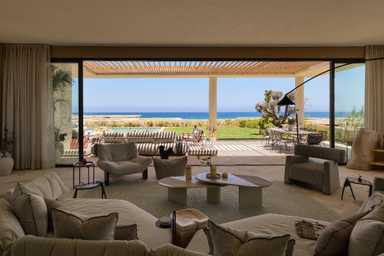
Somabay welcomes Golf & Gourmet 2026 from 21-29 November, bringing together golf enthusiasts from Germany, Austria, and Switzerland for nine days of championship golf and exceptional culinary experiences, featuring renowned chef Otto Koch and his team. A celebration of golf, hospitality and the Red Sea.
State-owned Misr Insurance Holding Company (MIHC) is floating 15% of Misr Life Insurance (MLI) on the EGX next month, according to the company’s intention to float (ITF) (pdf). MIHC, which is wholly owned by the Sovereign Fund of Egypt, is selling 750 mn existing shares in a purely secondary offering, so all proceeds go to MIHC. The sale is smaller than the up to 20% the sovereign fund put on the table in May.
The offering is split into a private placement for qualified investors in Egypt and abroad and a public offering open to local retail investors, both priced through a book-build. Subscription and the start of trading are expected in December, subject to regulatory approvals and market conditions.
Roadshows were underway last month. Misr LIfe and Banque du Caire (BdC) were both on the road in mid-October, a government source told us at the time, as the state pressed the National Social Ins. Authority, Egypt Post, and the Awqaf Authority to raise their equity exposure ahead of its offerings. Interest was building as early as August, when the EBRD was negotiating to buy up to 5% of MLI before the IPO, with five global, Arab, and African investment institutions competing for a 10% private placement tranche of the IPO.
Misr Life would be the third major offering on the EGX since October, after MNT-Halan sold a 20% stake in its Egyptian business and Banque Misr sold 45% of BdC. Premium grocer Gourmet and energy solutions provider Korra Energi made their debuts earlier in the year.
The float has been on the table since 2018, when the state targeted a 1Q 2019 listing, before pushing it to end-2020, then 2022 after Covid, and again to 2H 2023. MLI was temporarily listed on the main market in March, and EFG Hermes was given the exclusive mandate in May. The board approved a 10-for-1 share split in September, taking the register to 5 bn shares from 500 mn, with paid-in capital unchanged at EGP 5 bn.
Why the rush?
Retail and institutional investors alike have appetite, bankers think, staying with the market despite turbulence in regional and global markets. The sale will also make the IMF happy: we’re in the final month of the current program, and the Fund wants Cabinet to book c. USD 1.5 bn in proceeds from asset sales by then. BdC delivered USD 658 mn of that figure earlier this month. And with its debt service burden high, the state will welcome the proceeds from the sale — up to half of the proceeds Banque Misr raised from BdC’s IPO earlier this month went to the Treasury to make life a bit easier for officials managing our debt load, a senior government official told us at the time.
Market conditions have been choppy: The EGX30 is up nearly 24% year-to-date, but shed 4.43% in October, its first back-to-back monthly dip of the year in what one analyst told us at the time was “a confidence correction.” The ADX and Tadawul are both down this year, and global markets have been volatile this fall.
What investors are buying
The IPO would be “the first major listing of an ins. company on the EGX,” Managing Director and CEO Moustafa El Kamash says. “MLI is Egypt’s largest life insurer by assets, equity and earnings, with a nationwide multi-channel distribution platform, the largest investment portfolio in the sector, and a long track record of profitable growth and consistent dividends through different economic cycles,” he adds. The company was founded in 1900.
How it makes money: You can think of Misr Life as having two businesses (three, if you squint). It’s Egypt’s biggest life ins. company with a more than 26% share of the market, where it sells protection, savings, and pension products through its own network and through the National Bank of Egypt. It takes the premiums paid to it by clients and then runs an investment book of more than EGP 100 bn (about 55% of that is in sovereign debt and 45% in equities).
The wildcard: Misr Life also holds a real estate portfolio that’s (very) conservatively valued at c. EGP 17.2 bn. The offering circular offers no breakdown of how much of that is in legacy assets in places such as Downtown Cairo and how much, if any, is undeveloped land.
BY THE NUMBERS- MLI booked net income of EGP 5.2 bn in 1H 2026, almost matching the EGP 5.8 bn it made in all of 2025, on investment income of EGP 8.0 bn. Its ins. contract revenue fell 11.2% y-o-y to EGP 1.9 bn over the same period, even as gross written premiums rose 20.1% to EGP 5.6 bn.
Is this the new Eastern Co? Misr Life is also a big dividend payer: The company aims to pay out 70% of net income from FY 2026, with shareholders on record when the 2026 financials are approved eligible for the payout. It distributed EGP 3.7 bn for 2025, a 64.4% payout ratio.
Where the growth comes from next
The ITF comes on the heels of a regulatory first: MLI became Egypt’s first life insurer to secure a fintech license from the Financial Regulatory Authority (FRA) last week. The license allows the company to handle everything from policy pricing and payments to claims online. It is targeting digital channels to account for around 30% of new business by 2030, according to the ITF.
Bank branches offer another runway. MLI sells through only about half of the National Bank of Egypt’s branch network, a partnership that has generated c. EGP 10.6 bn in premiums so far, according to the ITF. New FRA rules requiring life cover for consumer finance borrowers should add demand in a market where ins. premiums account for just c. 0.6% of GDP.
WHAT’S NEXT- The offering still needs FRA approval of its public subscription notice and registration of the shares, along with EGX sign-off. MIHC’s remaining 85% will be subject to a lock-up.
ADVISORS- Our friends at EFG Hermes are quarterbacking the transaction as sole global coordinator and bookrunner. The good folks at Helmy, Hamza & Partners (Baker McKenzie) are advising the company on Egyptian law and White & Case is advising MLI on US and English law. Zulficar & Partners is advisor to EFG Hermes on Egyptian law, and Milbank is advising EFG Hermes on US and English law. BDO Keys Financial Consulting is the independent financial advisor, with Saleh, Barsoum & Abdel Aziz (Grant Thornton) as auditor.
The Arab Energy Fund has filed its voluntary tender offer for 21.3% of EGX-listed offshore services group Maridive & Oil Services, bidding USD 0.70 a share for 100 mn shares in a transaction worth USD 70 mn, according to a statement (pdf) from the Financial Regulatory Authority, which is still reviewing the offer. Our friends at EFG Hermes are sole advisers to the fund.
That puts the offer price at a 44% premium to Maridive’s six-month average share price of USD 0.48 before the July announcement, and 29% above its three-month average of USD 0.54, EFG Hermes tells us. Both are based on the share price before the July announcement rather than its current trading price.
The target is coming off a strong 1H: Maridive posted a net income of USD 48.61 mn in 1H 2026, against USD 10.89 mn a year earlier, according to an EGX filing. Its Maridive Offshore Projects unit also holds a 15-year, USD 10.2 mn-a-year maintenance contract in Qatar that starts in 1Q 2028 — a long-dated hard-currency revenue stream of the kind a multilateral energy lender would underwrite.
REFRESHER- The Riyadh-based fund said in July it planned a non-binding offer for 20% of Maridive, and the company opened its books in early August for a due diligence window of up to 60 business days. The FRA granted it a 30-business-day extension last month, pushing the filing deadline to early December.
SOUND SMART- Maridive is one of only eight EGX-listed companies whose shares trade in USD, which is why the offer is priced in hard currency.
Market Reax: Maridive’s stock closed down 1.58% yesterday at roughly USD 0.69.
The European Bank for Reconstruction and Development (EBRD) is buying 30% of Hassan Allam Utilities’ (HAU) desalination arm, the company that supplies water to hotels and factories the state does not pipe to. The bank is putting in up to USD 31 mn of equity for the stake in RWD Investments BV, it said in a statement, a little below the USD 32.1 mn its board approved in July. HAU is putting up to USD 61 mn alongside it, which takes the platform’s new equity to USD 92 mn.
That money is going into capacity: RWD plans to add up to 15k cubic meters a day (cbm / d) of desalination every year through 2030 and rebuild older plants so they use less power. From the 96.3k cbm / d it ran at the end of 2025, that pace would come close to doubling the platform by the end of the decade (if you count this year), by our math. A first batch is already moving: the bank lent Ridgewood EGP 350 mn in January 2026 for new small plants and upgrades expected to add 10k-15k cbm / d.
Why it matters: RWD is still a small player nationally, at about 7% of the 1.4 mn cbm / d of desalination capacity the housing ministry counted in October, by our math. And with the state targeting close to 10 mn cbm / d by 2050, there’s plenty of room for it to grow into. HAU is putting up two-thirds of the new equity itself, so what the EBRD’s check mainly brings is a partner whose due diligence other lenders will read and whose presence steadies a bid team in front of a state buyer.
A 27-year-old business
Ridgewood has been around since 1999.Hassan Allam Holding and Abdul Latif Jameel set up a joint venture in 2019 to buy into water assets, the same year the EBRD lent the holding company USD 20 mn to expand into water and wastewater. In 2020, the venture bought the Ridgewood group: 58 plants, with 82.4k cbm / d of capacity. HAU has since bought Almar’s share, so the platform was wholly owned by the group until this transaction; now it’s 70/30.
Day-to-day, the plants run as before. Ridgewood for Water Desalination, the operator inside that platform, runs 79 of them along the coast, in Sinai, Hurghada, Marsa Alam, the North Coast, and Ain Sokhna. It sells to more than 200 hotels, resorts, and factories under build-own-operate and operation-and-maintenance contracts.
What’s next
What changes is the market it can bid into: The Finance Ministry has 16 PPP projects worth USD 3.08 bn in the works — USD 2.68 bn of it in four desalination plants: Suez (USD 1 bn) and Port Said (USD 800 mn), which were cleared for tender in October, and Alamein (USD 170 mn) and Ain Sokhna (USD 710 mn), now in final tendering. EBRD’s disclosure also flags three undisclosed large Category A PPP projects in preparation, to be funded from an uncommitted tranche later.
MEANWHILE- The state’s own plants are going to other operators. In October, the Housing Ministry signed EGP 4.6 bn in operation and maintenance contracts for 11 coastal plants with 485k cbm / d of capacity between them, handing them to San Misr, Proserv, Orascom Construction, a Metito-Orascom consortium, Contrac, and Elsewedy Utilities. RWD is not among them, so for now, its customers are still the ones the network doesn’t reach.
Qalaa Holdings’ net income came in at EGP 2.7 bn in 3Q 2026, up from EGP 81.4 mn ayear earlier, as revenue jumped 72% y-o-y to a record EGP 65.9 bn, the company said in its latest earnings release (pdf). The Egyptian Refining Company (ERC), the USD 4.3 bn Mostorod plant that is Qalaa’s largest asset, brought in EGP 60.7 bn of that revenue and earned EGP 20.8 bn, against EGP 931.7 mn a year earlier. The refinery’s daily gross refining margin more than tripled to USD 6.7 mn as it ran all 92 days without a shutdown.
REMEMBER- Qalaa owns just 13% of ERC, so most of the refinery’s earnings belong to its partners, a gap the company is closing. A December close takes Qalaa’s effective stake to 27.1% as QatarEnergy exits, partly funded by an EGP 3.87 bn capital increase shareholders approved in late October, so quarters like this one will count for more at the group.
Excluding ERC, the cement, quarrying, dairy, and logistics businesses that Qalaa built as Citadel Capital logged 15% revenue growth to EGP 5.2 bn, though income fell at ASCOM and Dina Farms.
Our friends at EFG Hermes closed an EGP 301 mn securitized bond for consumer finance company Klivvr, the lender’s debut in the market, EFG said in a statement. This is the first drawdown of under 4% of the EGP 8 bn program it is issuing under, by our math. The single 13-month tranche is backed by a receivables portfolio and rated A-.
ADVISORS- EFG Hermes for Securitization served as the special-purpose vehicle, while the bank itself was the sole financial advisor, arranger, and underwriter. Arab African International Bank was custodian and placement agent. Marei, Fayez, Dardiry & Partners provided counsel, and KPMG served as auditor.
ALSO-Klivvr’s AI assistant (K.ai) has gone from telling you where your money went to moving it. K.ai, which the fintech launched in May, can now execute transfers to other Klivvr users from a chat prompt, skipping the in-app menus, the company said in a statement (pdf). A banking assistant that acts is unique here at home, as none of the Egyptian banking assistants we checked can start a payment.
Bonds fly west
Baobab, the microfinance arm our friends at Beltone Holdingacquired in February, has issued the equivalent of USD 51.3 mn in sustainability-linked bonds in Côte d’Ivoire and Senegal, according to a statement (pdf). The USD 34.2 mn Ivorian bond is the first sustainability-linked bond issued by a microfinance institution on the West African Economic and Monetary Union’s regional market. The USD 17.1 mn Senegalese bond closed ahead of schedule after reaching its target.
Both bonds run for five years, including a one-year grace period on principal. The proceeds will go to women-led businesses, private education providers serving low- and middle-income communities, and eligible green projects.
The backers: The International Finance Corporation anchored both issues, while the European Bank for Reconstruction and Development was a significant investor in the Ivorian bond and also gave Baobab Côte d’Ivoire technical assistance.
ADVISORS- CGF Bourse was lead arranger and lead manager on both transactions.
Tomato school
The Agriculture Ministry and US food companyKraft Heinzsigned a three-year protocol to train tomato growers to control the leaf miner that reached Egypt in 2008-2009 (for biology enthusiasts out there, it’s Tuta absoluta), according to statements from the ministry and the company (pdf). T. absoluta can cost more than 20% of a crop in volume and quality when control lapses. Climate change is now speeding up its breeding cycle, which pushes up pesticide use and production costs, the ministry says. The program starts in Assiut, Sohag, and Luxor and will expand to nine governorates.
WHY IT MATTERS- Egypt plants some 400k feddans of tomatoes a year, according to the ministry. Kraft Heinz says it now sources 90% of the ingredients for its Egyptian production locally, through more than 2k feddans of contracted farms.
Back on the line
Holcim Egypt(formerly Lafarge Egypt) has restarted the fifth production line at its Ain Sokhna cement plant after seven years idle, backed by an investment of more than EGP 1.3 bn (USD 24.7 mn), according to a press release (pdf). The company says the line adds 1.5 mn tons a year, taking the plant’s total capacity to 9.5 mn tons. That makes it Egypt’s second-largest cement plant by capacity, behind the National Company for Cement’s six-line Beni Suef complex (12 mn tons a year). The Industry Ministry said in September that Egypt’s 19 cement makers hold 75.5 mn tons of annual capacity.
JPMorgan expects companies to sell USD 2.1 tn of investment-grade bonds in the US next year, up from USD 2 tn this year, both records, Bloomberg reports, citing a note by the bank, marking a 5% increase.
SOUND SMART- Supply is the market’s word for new debt sold in a year, and it sets the price of borrowing. When a lot of paper arrives at once, buyers can afford to be picky, so issuers have to pay more to place it. The other half of that equation came this week from the same bank in its 2027 outlook (pdf): investment-grade yields are above 6% for the first time since the financial crisis, with 17 of the 37 central banks JPMorgan tracks now raising rates. A supply forecast is really a forecast of what anyone raising USD must pay, in Cairo and Riyadh as much as in New York. The channel runs through the Treasury market: JPMorgan reads 10-year yields as having peaked when investors began to question 2027 AI capex while expecting a reacceleration to push them higher.
Tech and media’s share comes to USD 612 bn, close to 30% of the total. That’s USD 225 bn from the hyperscalers (the handful of companies that run the giant cloud data centers) and USD 225 bn raised against data centers and the chips that go inside them. Three-quarters of the slice is a wager on one industry keeping its foot down.
Why it matters: Investment-grade buyers are not stock pickers. Most hold an index, weighted by how much debt each borrower has outstanding, and are judged on how closely they track it. As tech’s share of new supply grows, their portfolios drift toward a single capital-spending program without anyone placing a wager. JPMorgan strategist Nathaniel Rosenbaum’s own warning that supply is now “unusually concentrated in sectors funding the AI infrastructure buildout” makes his forecast a hostage to the AI capex cycle — the safest corner of the bond market, tied to its least predictable line item.
AI-related issuance will top USD 300 bn this year, the outlook says. Most of that debt is investment grade, and the hyperscalers cover interest more than 50 times over, against about 9 times for the median investment-grade issuer. The discomfort is structural: roughly USD 165 bn of Nvidia-backed support sits off-balance sheet behind 6.5 GW of planned compute, which hides who owns what.
Two things could stop the record arriving: If the hyperscalers keep selling debt in EUR and JPY rather than USD, the USD number undershoots, so the forecast is a guess about where Big Tech chooses to borrow rather than how much it spends. Fifty of the 51 data-center ballot initiatives in this month’s midterms went in favor of restricting development, JPMorgan notes, which could push 2028 projects back and the borrowing with them. We traced that transmission on 8 November, when the sweep took 5.5% off the Nasdaq.
Not everything points up. Borrowing tied to M&A, after a historic 2026, falls 52% next year. That’s a base effect rather than a collapse in dealmaking, and JPMorgan says a return of animal spirits (the boardroom mood that makes executives do transactions a spreadsheet alone would not justify) could reverse it. TD Securities sees USD 2.4 tn, Bank of America USD 1.9 tn.
IN CONTEXT- The Gulf is running the same trade at home. Its debt capital market (the total owed, not the annual flow) should pass USD 1.25 tn this year, up 13.6% from USD 1.1 tn at end-2025, Fitch said in January. PIF’s Humain has Goldman Sachs advising on a package of at least SAR 20 bn for data centers around Riyadh.
MARKETS THIS MORNING-
Asian markets were mixed earlier today. South Korea’s Kospi was up around 0.5%, while Japan’s Nikkei slipped 0.4%. MSCI’s broadest index of Asia-Pacific shares outside Japan advanced 0.9% after a four-day drop.
EGX30
51,682
-1.0% (YTD: +23.6%)
USD (CBE)
Buy 53.67
Sell 53.80
USD (CIB)
Buy 53.67
Sell 53.77
Interest rates (CBE)
20.00% deposit
21.00% lending
Tadawul
10,253
-0.1% (YTD: -2.3%)
ADX
9,771
+0.9% (YTD: -2.2%)
DFM
6,248
+0.6% (YTD: +3.3%)
S&P 500
7,341
-1.0% (YTD: +7.2%)
FTSE 100
10,690
-1.8% (YTD: +7.6%)
Euro Stoxx 50
6,212
-2.2% (YTD: +7.2%)
Brent crude
USD 93.14
+0.8%
Natural gas (Nymex)
USD 3.20
-0.2%
Gold
USD 3,852
-0.3%
BTC
USD 64,880
+0.4% (YTD: -26.0%)
S&P Egypt Sovereign Bond Index
1,154
+0.2% (YTD: +16.2%)
S&P MENA Bond & Sukuk
148
-0.1% (YTD: -2.5%)
VIX (Volatility Index)
25.46
+11.1% (YTD: +70.3%)
THE CLOSING BELL-
The EGX30 fell 1.0% at yesterday’s close on turnover of EGP 9.3 bn (16.7% below the 90-day average). Local investors were the sole net sellers. The index is up 23.6% YTD.
In the green: Qalaa Holdings (+1.1%), AMOC (+1.1%), and Raya Holding (+1.0%).
In the red: Egypt Aluminum (-5.2%), Misr Cement (-4.2%), and Rameda (-3.7%).
Egypt slipped two places to 63rd of 110 economies, and its infrastructure rankings are uneven, according to the World Economic Forum’s (WEF)Travel & Tourism Development Index 2026 (pdf). Its profile on the index’s data explorer (pdf) ranks Egypt 33rd on air transport infrastructure and 44th on ground and port infrastructure, but 72nd on tourist services. The government is preparing to bring private operators into airports, the best-scoring of the three. For tourist services, the weakest, the Cabinet has a subsidized loan program for new hotel rooms.
But Egypt does rank first in the index on price competitiveness, and the WEF says low prices give a destination an opening if tourism conditions improve as well. That contrast comes as the government targets 30 mn tourists a year by 2030.
Arrivals are climbing: Some 12.7 mn tourists visited Egypt in January-August, up from 12.2 mn a year earlier, according to a Cabinet statement. Egypt drew about 16.2 mn through October, as we reported earlier this month, leaving 3.8 mn to reach Tourism and Antiquities Minister Sherif Fathy’s 20 mn target for 2026, by our math. The government expects tourism to contribute 9.3% of targeted real growth in FY 2026/27, Planning Minister Ahmed Rostom told the House Plan and Budget Committee on 11 May.
Airports are where Egypt scores best on infrastructure. At 4.80 on the pillar, it beats the global average of 4.1, the Middle East and North Africa (MENA) average of 4.62, and North Africa’s 3.83. In March 2025, the government brought in the International Finance Corporation to advise on public-private partnerships for 11 airports, excluding Cairo International Airport, with the state keeping ownership. Hurghada, Egypt’s second-busiest airport, is the pilot. Some 62 consortia obtained prequalification documents, Civil Aviation Minister Sameh El Hefny said in January. And by September, seven of the 10 consortia that applied qualified for the Hurghada tender, the ministry said. El Hefny told the Egypt Forum in late October that the ministry was finalizing request-for-proposal documents for the seven qualified consortia. The ministry is also preparing a draft concession contract for Ras El Hekma airport to send to the House.
And the state’s investment plan is targeting roads and rail, the ground half of the WEF’s ground and port pillar: Transport accounts for 17% of investment in the FY 2026/27 plan, or EGP 640 bn including private-sector spending, a government official told EnterpriseAM in July. The plan raises spending on roads, bridges, and Nile axes by 28% and lifts the treasury’s direct capital contribution to Egyptian National Railways to EGP 10.5 bn from EGP 1 bn. Overall, it carries EGP 3.7 tn in investment, 59% of it private, Rostom told the committee. Globally, the WEF’s average for ground and port infrastructure was flat between 2024 and 2026, which the WEF says shows that funding for roads and railways “has struggled to keep pace with rising tourism demand.” Egypt stands at 3.74 on the pillar, close to the 3.7 average.
Egypt scores 2.09 on tourist services, below the global average of 3.0,the MENA average of 2.92, and North Africa’s 2.62. The WEF builds the score from four indicators: hotel rooms per 100 people, short-term rentals per 10k people, labor productivity in hotels and restaurants, and capital investment per tourism worker. The room count dates to 2024, so rooms added since then may not show yet. Globally, the pillar’s average rose 9.2% between 2024 and 2026, which the WEF credits to more hotel supply, higher productivity, and more investment.
The state’s main lever on hotel supply has been a subsidized loan program. The Cabinet approved up to EGP 50 bn in July 2024 for tourism companies building new rooms, at a declining 12% interest rate. More hotels are under construction: 185 hotels with 46k rooms were being built in 2026, up from 143 hotels with about 34k rooms in 2025, according to W Hospitality Group figures in the same Cabinet statement. Egypt needs more hotel rooms, Fathy said earlier this month.
As for access, hotel operators say the roads and airports are already paying off. Sphinx International Airport, the high-speed rail network, and new roads have ended a “logistical nightmare,” Story Hospitality CEO Victor Abu Ghanem tells us. Tourists can now land in Cairo, travel across the country, and fly home from a different airport, which has boosted hotels’ operating efficiency and supported tourist flows, he adds.
Red Sea resorts still depend on their airports. They remain key for tourists “when choosing a destination as they rely on charter flights, especially in Hurghada and Marsa Alam,” Blend Hotels & Resorts Management Chairman Moody El Shaer tells us. As rooms and arrivals grow, he adds, the destinations themselves need better streets, cleaner public spaces, and better general appearance to stay competitive.


 Egypt Edition
 MENA+ Edition
 UAE Edition
 Saudi Edition
 AI + Innovation (MENA)
 Infrastructure


 Share Issue