Private-sector minimum wage set to increase by 21% on New Year’s Day

1

OPENING NOTE

Egyptian businesses aren’t moving fast enough on AI. Here’s one way for newbies to get started

Good morning, wonderful people, and happy Anthropic IPO week to you all. Bankers are expected to price the Claude maker’s shares on Wednesday, ahead of trading starting on the Nasdaq on Thursday.

With the offering heavily oversubscribed, it looks almost certain the company will claim a valuation at (or north of) USD 1.4 tn — investors feel they can’t not ask for an allocation, even as some question the durability of the lab’s lead over OpenAI and Google.

My robot frenemy Claude isn’t the only reason AI is weighing so heavily on my mind this morning, as it does most days. Between working on our AI + Innovation edition, hosting Making It (our weekly podcast), organizing last month’s EnterpriseAM Egypt Forum, and more casual coffees than I can count, I’ve spent days talking about what AI means to our part of the world.

I’ve met with dozens of people — founders working on the jagged frontier of technological change; Egyptian bankers, who are alternately frustrated that the regulator prevents them from running workloads in the cloud and terrified of what agentic AI means for cybersecurity; members of parliament still concerned about … social media; backers of modern data centers who are kicking the tires on Egypt; and chief AI officers dreaming of agentic swarms.

Folks, we ain’t movin’ fast enough, and the solution starts at your desk. It’s easy to take potshots at regulators like the Central Bank of Egypt for moving too slowly, but think about it: They have three dozen banks to sort out.

We have no such excuse: Yeah, business is complex. But running even an Egyptian multinational is an order of magnitude less complicated than regulating the banking system.

And just as too many legislators are fighting the last war, more C-suite leaders than I care to think of are wasting time with “AI pilots.” What we all need to be doing is taking inventory of the problems (and opportunities) our businesses face, and then asking how AI can help us move forward.

Don’t know where to start? May I suggest you think about how to make better use of AI in your work life? If you’re not sure how to get started, try this:

  • Go get a paid Claude or ChatGPT account — the free version won’t do.
  • Have your comms team send you the latest public version of your company profile.
  • Kick off a fresh conversation with your robot pal, using Opus 5.5 (Claude — a better writer than Fable) or GPT-6 Astra (my personal preference these days).
  • Give it this simple prompt, attach your deck, and start talking:

The prompt:

My name is [your name], and I’m [title] at [business name]. Read the attached company profile, then interview me about our business, the biggest threats and opportunities we face, and how I spend my working day. Ask one question at a time, follow up on vague answers, and understand the problems before suggesting solutions. Then work through where AI could help me personally and the business as we build our 2027 strategy, one opportunity at a time. Challenge my assumptions, don’t force an AI answer onto every problem, and distinguish what’s practical now from what’s speculative. Help me choose a first action and a way to judge whether it works.

Want to let me know how it goes — or ask about something specific? Just hit “reply” to this note. Good luck, wonderful people. –Patrick

Tags:
2

WHAT WE’RE TRACKING TODAY

Raising the wage floor

IN TODAY’S ISSUE: In our Lede story, we’re taking a look at how interest rate hikes and tighter regulation have affected how real estate developers fund construction through long installment plans. Developers now collect less of a unit’s price before they have to deliver it, and mid-tier companies are hit the hardest.

AND: If US-Iran war continues to “simmer” rather than heat up again, Deutsche Bank sees the EGP strengthening only gradually. The bank expects the EGP to strengthen to 48 against the greenback if the two sides find a diplomatic solution — and to weaken beyond 60 if the war escalates.

***

SEND US A VOICE NOTE? Ever wondered how EnterpriseAM makes money, how the newsroom runs over the course of the day, from Egypt to Saudi to the UAE, or why, in the age of reels and zippy TikTok virals, we’re still betting on long-form journalism?

We’re looking for reader questions for an upcoming episode of Making It and would love to hear from you. Send your question as a WhatsApp voice note to +20 100 988 8800 or email it to us by replying to this email.

Shy? We’re happy to take written questions, too.

***

The floor goes up

The private-sector minimum wage will rise 21% to EGP 8.5k a month from 1 January 2027, its first increase since March 2025, after the National Wages Council approved it yesterday, according to a Cabinet statement. The new floor replaces the EGP 7k minimum for the country’s 26.5 mn private-sector workers and puts it above the EGP 8k minimum that government employees have received since July. Council member Alaa El Sakty, head of the Federation of Small and Medium Enterprises Investors, told us in March that the private-sector floor should rise to EGP 8k.

Prime Minister Mostafa Madbouly said the government wants private companies to comply with the minimum, since they employ most of Egypt’s workforce. The government’s 2027-2030 program targets a public-sector minimum of EGP 15k by FY 2029/30, with Madbouly forming a working group of government and private-sector representatives on the council to study wage increases across sectors through 2030.

A seat at Emaar’s table

Our friends at EFG Hermes UAE have been tapped as co-lead manager on Emaar Properties’ cash-offer for the rest of Emaar Development, according to a disclosure (pdf) to the DFM. EFG Hermes joins lead manager Emirates NBD Capital, co-lead manager First Abu Dhabi Bank, and lead receiving bank Emirates NBD on the offer, which pays AED 15 a share for the roughly 20% of Emaar Development that Emaar Properties and its subsidiary Emirates Property Holdings don’t already own. Emaar and its subsidiary Emirates Property Holdings hold 80.16% and need c. 394 mn of the 794 mn shares in public hands to reach 90% plus one, after which it compulsorily acquires the rest and delists the developer.

Oil IPOs take longer

The state’s petroleum IPOs are running behind the 4Q 2026 trading debut that State-Owned Companies Unit head Hashem El Sayed laid out in June, with Enppi, Elab, and Petroleum Marine Services, the first three of 10 petroleum companies the state plans to list, needing six to nine months at best to move from temporary listing to an actual offering, El Sayed tells Al Borsa. That could stretch to 18 months, depending on how quickly each company updates its financial statements, hires advisers through a competitive process and completes fair-value studies and FRA review, which can take longer where real estate or mining assets need valuing.


PSA-

WEATHER- Expect another seasonably warm day in Cairo today, with a high of 27°C and a low of 17°C, according to our favorite weather app. But beware, drivers: dense fog settled in on Greater Cairo and the North Coast, overnight and could last until as late as 10am in places. Drive safe, folks.

In Alexandria: Look for a high of 25°C and an overnight low of 16°C.

The big story abroad

Nvidia is under intense pressure as it searches for a successor to Jensen Huang, who has resigned as CEO. US Treasury Secretary Scott Bessent said the chipmaker needs a “dramatic shakeup” at the top. He suggested it look outside the company for its next leader, following a series of allegations that it helped sell its advanced AI chips to Chinese entities. Bessent questioned Nvidia’s culture, asking whether the company pushed illegal sales to boost its revenue and earnings. He said the board needs to provide answers within 10 days.

MEANWHILE- Huang is talking with allies about trying to stage a comeback as Nvidia’s chief executive, The Financial Times reports.

The US and its allies have agreed to jointly list the AI technologies and supply chains that need stronger safeguards — an effort to counter China. Eight other countries have either agreed to join the San Francisco Declaration on the Secure Foundations of Enduring Prosperity or have already joined it, the Financial Times reported yesterday. Germany, Sweden, the Netherlands, and the European Commission will sign next week, US Under Secretary of State for Economic Affairs Jacob Helberg told the outlet.

Rising cybersecurity risks are increasingly pushing European energy companies to hire defense and security experts to shield their infrastructure from sabotage. Recent incidents include hacks of supermarket freezers and a drone attack on Leipzig airport in August.

*** It’s Blackboard day: We have our weekly look at the business of education in Egypt, from pre-K through the highest reaches of higher ed.

In today’s issue: We look into what education players already pay to run technical schools as the state finalizes incentives.

Somabay welcomes Golf & Gourmet 2026 from 21-29 November, bringing together golf enthusiasts from Germany, Austria, and Switzerland for nine days of championship golf and exceptional culinary experiences, featuring renowned chef Otto Koch and his team.

A celebration of golf, hospitality and the Red Sea.

3

THE LEDE

Developers finding it harder to fund construction through long installment plans

Private real estate developers have acted as lenders to their own buyers for years. Mortgages make up less than 1% of the GDP, according to AmCham Egypt (pdf), partly because lenders can’t finance unregistered units. That rules out most of the market, since more than 90% of properties were not registered at the Real Estate Registry as of 2022, then-justice minister Omar Marwan said at the time (watch, runtime: 06:23). The state is also registering more properties for tax purposes, with 3.5 mn properties voluntarily registered within 120 days, Finance Minister Ahmed Kouchouk said earlier this month.

Developers stepped in by selling homes on installment plans of seven, 10, and sometimes 12 years. Buyers had little reason to look elsewhere, since non-bank mortgage finance companies charged an average 24.9% interest in 2024, up from 13.2% in 2023, over an average term of 11.1 years, according to FRA data cited by AmCham.

That model depends on new sales, since developers use down payments from new launches to finish older projects. Higher interest rates, slower unit sales, and new rules are now making that harder, especially for mid-sized developers. The Central Bank of Egypt raised its overnight deposit and lending rates by 100 bps to 20% and 21% on 29 October, its first hike since March 2024.

Payments lag construction

Developers now collect less of a unit’s price before they have to deliver it. “Historically, developers structured payment schedules so that up to 70% of a unit’s contract value was collected prior to delivery,” HC Securities Analyst Mariam Saadani tells EnterpriseAM. “Today, with extended payment plans, collections often don’t reach 50% by year four,” she adds. Construction costs have risen at the same time, with JLL Egypt head Ayman Sami saying that “the cost inflation that happened post-devaluation often exceeded the original selling price.”

To cover the difference, developers used down payments from new launches to finish older phases. “At certain phases, projects risked running at an accounting loss, requiring developers to make up the difference through new launches,” Sami says. Developers also borrowed from banks to fill the gap. “Selling on 10-12-year payment plans while being contractually committed to deliver within four years makes ongoing bank credit a vital lifeline to bridge the construction deficit,” Egyptian Businessmen’s Association (EBA) Real Estate Committee Chairman Fathallah Fawzy tells EnterpriseAM.

Fewer units sold

New sales are now slowing: Egypt’s top 10 developers booked EGP 670 bn in contracted sales in 1H 2026, up 2.9% y-o-y, while the number of units sold fell 3% to around 39k, according to The Board Consulting (pdf). Prices are also rising modestly, up 2.4% in New Cairo and 2.8% in the 6th of October city in 2Q, according to JLL’s Cairo Real Estate Market Overview (pdf).

Tighter rules

Banks now check whether a project’s income covers its debt payments, how far behind buyers are on their installments, and whether the developer has delivered past projects on time before they release loan tranches. The government is also preparing a law to create a Real Estate Developers Federation that would require escrow accounts and exclude developers who miss handover deadlines. Separate draft rules would require 30% construction completion before developers can sell units off-plan. The industry shakeup was apparent when the organizers of Cityscape Egypt cancelled its sales edition for the first time in 15 years and held only a discussion forum. Developers said they were cutting costs and shifting to digital sales, while sector insiders told EnterpriseAM at the time that many developers stayed away because organizers required verified proof of construction progress before units could be marketed.

Not a credit freeze

Some regional media reported that state-owned banks had frozen new loans to developers, but industry leaders disagree. “Describing it as an ‘interruption of funding’ is inaccurate for a sector employing 5 to 6 mn workers,” Real Estate Development Industry Chamber head Tarek Shoukry tells EnterpriseAM. “What is happening is the enforcement of regulatory auditing and due diligence frameworks, not a credit shutdown.”

Large developers are still borrowing, with six major listed developers securing EGP 52.2 bn in bank facilities between March 2025 and August 2026, Savills Egypt Head Catsby Langer-Paget tells us. The largest players are also raising money against future installments through securitization and other structured debt, he adds. Mortgage finance companies can now buy part of developers’ installment portfolios too, under FRA Decree 306 of 2024, according to AmCham. Sami says the biggest developers can manage, and Langer-Paget agrees. “Developers holding deep land banks and strong balance sheets can navigate this, but it requires continuous balance-sheet management.”

WHAT’S NEXT- Developers are unlikely to abandon long installment plans, which leaves the question of how they will fund the gap between when installments come in and when construction bills fall due. As banks grow more cautious and draft rules move to tie buyers’ payments to construction progress through escrow accounts, turning future installments into money upfront through securitization and other financing tools will matter more. That gives the largest developers room to adjust. Pressure on liquidity and solvency could push some mid-sized and smaller developers to restructure their projects or seek partnerships and mergers, especially as regulators tighten checks on completion rates before new phases can launch.

This publication is proudly sponsored by

4

EGP Watch

Deutsche Bank Research sees EGP at 48-60 depending on the Iran war, expects CBE to hold rates into next year

Deutsche Bank Research expects the EGP to strengthen to 48 against the USD if the US and Iran reach a sustainable diplomatic agreement to end their war, and to weaken beyond 60 if the war escalates, the bank tells EnterpriseAM. The Central Bank of Egypt (CBE) quoted the EGP at 53.39 to the USD on Thursday, 12 November (pdf), roughly midway between the two. The bank gave the range in answers to our questions on its 5 November note, seen by EnterpriseAM, which called the EGP the “bellwether currency for Middle East tensions.”

In a middle case where no lasting resolution is found but the war “simmers rather than heats up again,” the bank sees the EGP strengthening only gradually. “Assuming oil prices continue to gradually decline, USD/EGP could grind lower but might struggle to break through 50,” Deutsche Bank Research tells us. An agreement would give the EGP room to “rally back to pre-war levels, possibly as low again as 48,” the bank says, compared with the 46.83 it traded at on 15 February (pdf), a couple of weeks before the war broke out.

The bank now expects the CBE to hold rates. Its note had inflation accelerating to around 16% early next year and warned that rising inflation “could quickly test the CBE again.” October’s inflation then slowed to 12.7% headline and 13.1% core, both below expectations, though Deutsche Bank still sees inflation rising toward 15-16% over the coming months. “Our baseline for now is therefore for the CBE to remain on hold into next year rather than deliver another near-term hike,” the bank says, citing the 100 bp hike on 29 October and the lower starting point for inflation as buffers. Another hike is now “a risk rather than our baseline,” it adds.

Deutsche Bank Research expects the current-account deficit to approach USD 30 bn, or close to 7% of GDP, by the end of calendar 2026. The deficit came in at USD 22.5 bn in FY 2025/26, or 5.1% of GDP on the bank’s reading, against the IMF’s forecast of 4.4% for that fiscal year. By our math, that puts the outturn 0.7 points wider than the Fund expected.

Imports explain most of the widening, according to the bank. LNG imports were up around 60% y-o-y in August, gold imports reached USD 3.6 bn over three months, and imports excluding energy and gold grew 13.3% y-o-y on a three-month average. “The key uncertainty is how persistent these import pressures prove to be,” the bank tells us. It points to government measures to ration supply and restrict imports, along with lower energy prices or a normalization in gold demand, as possible offsets.

Egypt has so far been able to finance the gap. Banks’ net foreign assets fell 10% m-o-m in September, according to the bank, with net selling of bills and bonds by foreign investors intensifying in October. Net international reserves stood at USD 57.35 bn at end-September. “We have not heard of significant import delays or firms systemically receiving less FX than they demanded,” the bank says.

We had to ask about the IMF program. The last tranches, about USD 1.5 bn under the EFF and USD 0.8 bn under the RSF, are likely to be approved before year-end, according to the note, while the government has said it will not seek another program and will implement its own National Economic Transformation Program 2027-30 instead.

Markets tend to separate three kinds of program endings, according to the bank: successful graduation, a premature or politically motivated exit, and a program that simply expires with the country’s credibility still under scrutiny. The bank puts Egypt in the third group. Privatization, cutting the state’s footprint in the economy, tax-base and debt-management reform, and governance and transparency all still need to meet targets, it says, adding that it’s unsure whether the government will keep reforming without review-by-review IMF conditionality. “Signs of fiscal slippage, renewed exchange-rate management, stalled divestment, or subsidy reform reversal could lead to the emergence of a persistent post-program premium,” the bank says.

5

EARNINGS WATCH

Edita, Valu, TMG, and Bonyan report 9M earnings

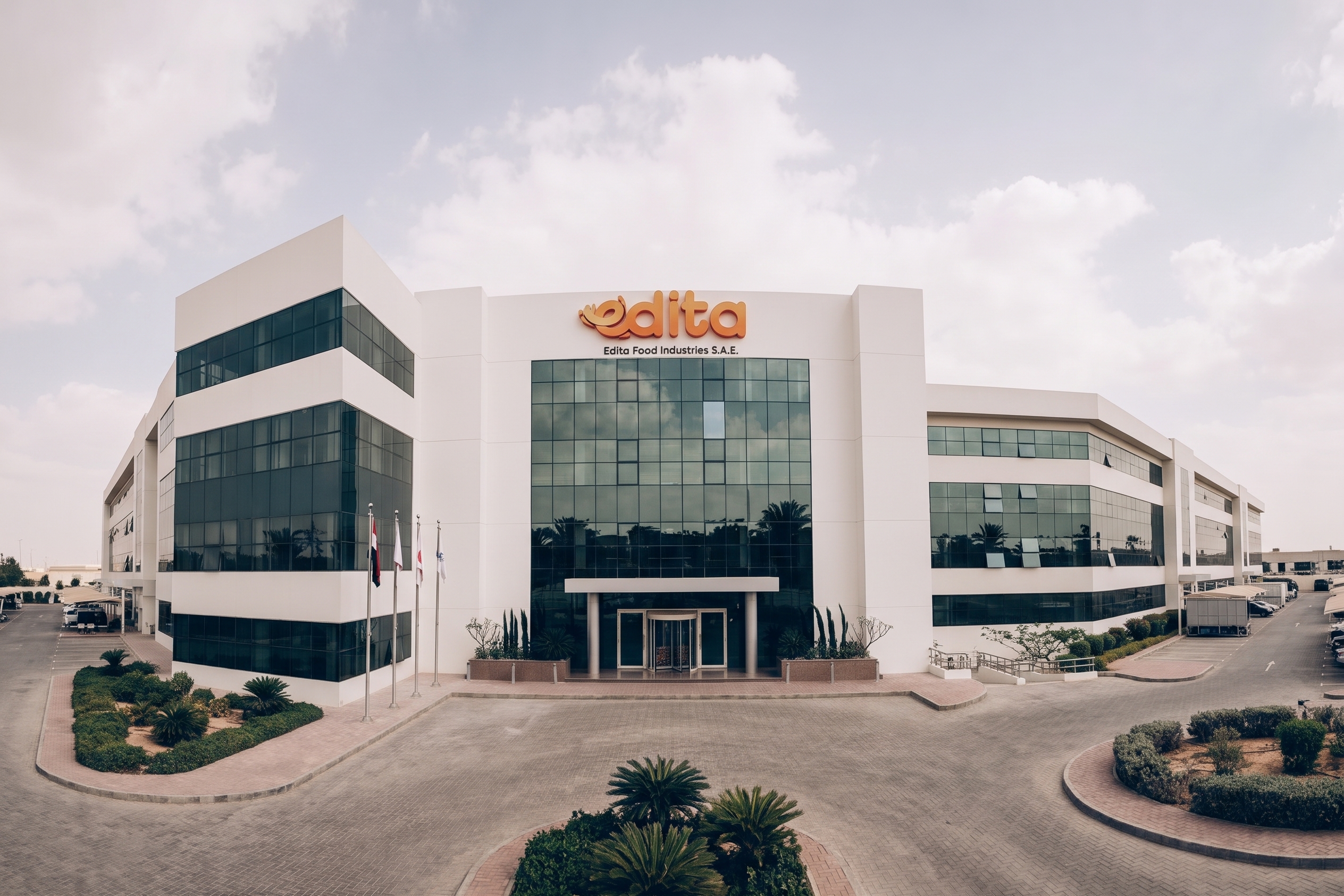
Our friends at Edita saw their net income rose 41.5% y-o-y to EGP 938.1 mn in 3Q 2026, faster than the 32.9% growth in revenue, which reached a record EGP 7.3 bn on 18.5% more packs sold, according to the company’s earnings release (pdf). Costs grew faster than sales, trimming the gross margin to 32.9% from 35.0%, but the net margin still widened to 12.9% from 12.1%.

The 9M perspective: Revenue recorded EGP 19.5 bn in 9M 2026, up 32.6% y-o-y, while net income hit EGP 2.4 bn, up 54.0%, with the net margin at 12.5%, up from 10.7%. Exports grew around 40% y-o-y to EGP 1.84 bn during the nine-month period, making up 9.4% of revenue, though in 3Q, they grew 23.6%, bringing in EGP 673.6 mn. Iraq, where production began in March, booked EGP 144.4 mn during the quarter, doubling its contribution since start-up.

Valu

Valu’s net income rose 35% y-o-y to EGP 731 mn in 9M 2026, while its gross revenue increased 36% to EGP 5.33 bn, according to the company’s latest earnings release (pdf). Net revenue grew faster, up 53% to EGP 3.08 bn on merchant network growth, securitization gains, and interest income, but income grew slower than that, with new products such as El Gameya and the Jordan launch weighing on near-term results.

Growth is coming from existing customers doing more: Gross merchandise value (GMV) rose 43% y-o-y to EGP 24.7 bn and loan issuances increased 48% to EGP 21.5 bn across 8.3 mn transactions, while the activated base grew 14% to 993k — 16.0 transactions per customer. The firm’s principal outstanding portfolio grew 46% to EGP 19.04 bn, with the non-performing loans (NPLs) ratio at 1.20% and a 71% coverage ratio. Jordan, which launched in May, is still small: 126 merchants and 3.06k transactions.

Talaat Moustafa Group

Talaat Moustafa Group’s (TMG) net income grew half as fast as its revenue in 3Q 2026, rising 12% y-o-y to EGP 5.06 bn on a top line up 24.7% to EGP 17.36 bn, according to the developer’s consolidated statements (pdf). Development costs climbed faster than development revenue, 41.5% against 31.5%, and gross margin fell to 27.4% in the quarter from 30.5%.

The nine-month picture is milder but the same shape, with revenue of EGP 47.55 bn, up 24%, and net income of EGP 15.01 bn, up 19%. Gross margin was 30.5% against 32.3% a year earlier. Real estate development carried the quarter with EGP 11.67 bn of revenue, while hospitality added EGP 2.91 bn and activities with periodic yields EGP 2.78 bn.

Bonyan

Bonyan, the commercial landlord that takes three-quarters of its revenue from rent, more than doubled its recurring net income in 9M 2026 to EGP 219 mn, a 129% increase as it reset leases signed years ago to today’s rates, according to the company’s earnings release (pdf). The line excludes unit sales, fair-value gains, and one-off IPO costs. Headline net income fell 30% to EGP 1.27 bn over the nine-month period and 71% to EGP 225.5 mn in 3Q.

The fall is a base effect: 3Q 2025 carried a EGP 951 mn fair-value gain from the Golden Gate delivery against EGP 131 mn this year, and the nine-month comparison runs EGP 2.2 bn against EGP 1.39 bn. Underneath, rent revenue rose 19% to EGP 649 mn over 9M and 22% to EGP 246.6 mn in 3Q, with seven leases renewed at an average 48% above previous rates. The portfolio was valued at EGP 19.0 bn at end-September, up from EGP 17.5 bn at end-2025.

6

Moves

Beltone’s Aboulfadl moves up to chair the EGX 30 ETF as Khorshid steps down

Beltone Holding deputy CEO Mohamed Aboulfadl (LinkedIn) moved up from the board to chair the EGX 30 Index ETF, the listed fund that tracks Egypt’s blue-chip index and that our friends at Beltone Asset Management run, the company said in a bourse filing (pdf). He succeeds Dalia Khorshid (LinkedIn), who resigned as non-executive chair at the fund’s 12 November board meeting and stays group CEO of Beltone Holding, a post she was reappointed to for three more years in September 2025. Khalil El Bawab (LinkedIn), who heads Beltone’s local and regional markets business, took the board seat Aboulfadl vacated.

7

LAST NIGHT’S TALK SHOWS

Government highlights real estate and industrial challenges

The number of stalled real estate projects currently does not exceed a few dozen, though the process of accurately counting them is still underway, Housing Minister Randa El Menshawy said in an interview with El Sora’s Lamees El Hadidi (watch, runtime: 12:24). Current conditions in Egypt’s real estate sector do not constitute a bubble, but rather reflect challenges faced by a limited number of developers, she added. Tahya Misr Holding for Investment and Development (the Tahya Misr Development Fund) is handling the stalled projects by delivering delayed units to beneficiaries and developing unbuilt land plots, she said.

The government plans to pass a law establishing an independent authority under the Housing Minister to monitor developers and review their project timelines and obligations to buyers. The entity’s purpose is to ensure developers do not act as both judge and jury, and the legislation will safeguard buyer and developer rights via a unified contract, El Menshawy said. The draft law is set to go before the House of Representatives within 1-2 months.

ALSO- Industry Minister Khaled Hashem highlighted Egypt’s industrial and investment map earlier this week in an interview with El Hekaya’s Amr Adib, affirming that industrial integration with African and Arab countries is a top priority for the state (watch, runtime: 6:56). Industrial localization plans must be carried out by leveraging the competitive raw material advantages of these partner nations, Hashem said. Egypt also needs to grow its share of intra-African trade — which totaled USD 220 bn in 2025 — the minister noted, pointing out that Cairo’s share across the continent stood at no more than USD 9 bn, or roughly 4%. Boosting industrial integration with these countries will enable Egypt to expand that figure, he said.

8

Also on our Radar

Jotun Egypt plans a EGP 2 bn+ investment to grow capacity and exports next year

Jotun Egypt, a subsidiary of Norwegian paint maker Jotun, plans to invest more than EGP 2 bn (USD 37.4 mn) in 2027 to expand in the local market, increase production capacity, and boost exports, CEO Ibrahim AlShami told EnterpriseAM. The move is part of the group’s wider USD 500 mn global capex program across its roughly 40 factories in the coming year.

The money will go into raw-material warehouses, expanded solar power use, and sustainability projects. The company has a factory in the 10th of Ramadan City with a current production capacity of more than 72 mn liters on a single shift, which can rise to more than 100 mn liters. Cumulative investment in the factory, which opened in 2023, totaled about USD 100 mn.

Localization and export push: Jotun Egypt aims to raise its local content, which already exceeds 50%. It also aims to boost its exports, which have risen from 3-4% to more than 10% of total output, with annual export growth of more than 100%. The company currently exports to several markets, including Libya, Kenya, the US, and Indonesia. It is also expanding local manufacturing and transferring global technology. Among its most notable steps, it has started making SteelMaster products in Egypt for the first time.

Shell’s Mina West comes online

Shell Egypt is now pumping gas from the Mina West field in the Mediterranean, providing an additional source of local supply, Reuters reported yesterday. The company estimates the field, discovered in 2023 in the North El-Amriya concession, could produce 160 mmcf/d. Shell says a connection between the field and the West Delta Deep Marine infrastructure enabled a quicker project delivery. Shell operates Mina West and owns 60% of it, with a subsidiary of Kuwait Foreign Petroleum Exploration Company (KUFPEC) holding the other 40%.

The timing matters: Egypt produced nearly 112.6 bcf of gas in August, down around 10.5% y-o-y and some 48% from the roughly 214.7 bcf it pumped in August 2021, Joint Organisations Data Initiative figures show.

9

PLANET FINANCE

Hedge funds cut AI risk at the fastest pace in a decade, the index still rose.

Global long-short equity hedge funds — stock pickers that wager on prices rising and falling — have cut the size of their books by 10.7% since late June, with the first week of November marking the fastest reduction in more than a decade, Bloomberg reports, citing a note from Morgan Stanley’s prime brokerage desk, which lends to these funds and watches their positions. The figure adds up every position a fund holds, so it falls when a manager closes a trade, buys back a short, or sees the market mark down what it still owns. In the first week of November, all three happened at once.

The trigger was a rout in AI stocks that gathered pace after the US midterms. Fears that an incoming Democratic Congress would slow the data center buildout knocked 5.5% off the Nasdaq on 5 November and wiped USD 2.5 tn off the Nasdaq 100. The index has recovered since, but the AI trade has not. The S&P 500 gained 2.5% last week, its best week since August, while Nvidia lost almost USD 600 bn of market value, according to the Associated Press, and Jensen Huang resigned as CEO.

Every region but China lost money, and Asia lost the most. The average Asia-based fund fell 1.5% in the first week of November, against a drop of more than 5% in the MSCI Asia-Pacific Index. That cut Asian funds’ YTD gains to about 2.6%, against roughly 6% for US peers.

Tech took the heaviest cuts, especially in Taiwan and South Korea, where funds sold shares they owned and opened new short positions in others. Fundamental stock pickers, those that pick stocks by studying companies, did most of the selling. The multi-strategy, macro, and quant funds (which spread money across markets and models) spent the week closing their bearish wagers.

SOUND SMART- Leverage is what turns a fall into a sale. A fund that borrows to hold shares has less of its own money behind each position, so a 5% drop costs it far more than 5% of its capital, and it cuts the book to stay inside the limits its lenders and its own risk teams set. Gross leverage among Asia equity long-short funds, which counts every position, fell three points in a week to 124%, one point above the 123% low it hit when US President Donald Trump’s tariff announcements shook markets in April 2025. Net leverage among US long-short funds, which counts longs and shorts against each other, fell five points in a single session to 42%.

However, across Goldman Sachs’s whole prime book, total leverage was still 314.2% on 6 November, in the 85th percentile of the past year, Bloomberg reports separately. The borrowing has been cut, but it has not gone.

Then there’s China: Hong Kong and China, which Morgan Stanley counts as one market, were the only places where funds bought more than they sold in the first week of November. Support from state-led funds pushed managers to buy back the mainland-listed shares they had shorted, the bank said, and the squeeze hit consumer names, local chipmakers, and state-owned companies. China stock-picking was the only strategy that made money on average, up 1.1%, which takes it to 6.7% for the year. Buying by the state funds known as the national team has climbed to a record high, Bloomberg reported last week.

Why this matters for us: The same selloff is marking down Gulf sovereign balance sheets, but those funds are not in the position the hedge funds are in. The listed AI holdings of sovereign wealth funds are worth USD 30.5 bn less than at the end of June, Semafor reports, citing consultancy GlobalSWF. Mubadala, among the funds with the largest disclosed exposure, may be worth USD 17.5 bn less than it was in June, mostly on a more than 50% slide in chipmaker GlobalFoundries, while Saudi Arabia’s Public Investment Fund is estimated to have lost USD 5.64 bn on its AI holdings, largely on SpaceX.

Those losses are on paper, and nobody can make them sell. A sovereign fund bought with cash, so a fall in the price costs it nothing it has to pay today, and it can wait for the price to come back. But a fund running 124% gross leverage cannot. That’s the difference between a loss you have to take and a loss you can carry. “We would not expect strategic investors to retreat wholesale from AI,” GlobalSWF head of research Daniel Brett told Semafor, adding that lower valuations “could create [openings] for long-term funds to increase exposure selectively, although this does not imply an imminent rebound.”

OUR TAKE- China’s outperformance looks more like a wager on policy than on incomes: funds bought back shares where state money was holding the price up. The bigger signal is the borrowing. Because the borrowed money had already gone, a week that cost Nvidia its CEO still ended with the S&P 500 up 2.5%, by our read. The AI trade’s next two tests are Nvidia’s results on 17 November and Anthropic’s expected listing on 19 November.

MARKETS THIS MORNING-

Asian markets dropped earlier today. Japan's Nikkei fell 1.4% and South Korea’s Kospi slipped roughly 2.6%. MSCI’s broadest index of Asia-Pacific ​shares outside Japan eased 0.1%.

EGX30

52,187

+0.3% (YTD: +24.8%)

USD (CBE)

Buy 53.72

Sell 53.86

USD (CIB)

Buy 53.75

Sell 53.85

Interest rates (CBE)

20.00% deposit

21.00% lending

Tadawul

10,258

-0.7% (YTD: -2.2%)

ADX

9,667

-0.6% (YTD: -3.3%)

DFM

6,198

-0.6% (YTD: -2.5%)

S&P 500

7,562

-0.4% (YTD: +10.5%)

FTSE 100

10,903

+0.4% (YTD: +9.8%)

Euro Stoxx 50

6,387

-0.2% (YTD: +10.2%)

Brent crude

USD 95.47

-0.4%

Natural gas (Nymex)

USD 3.17

-1.9%

Gold

USD 3,884

-0.1%

BTC

USD 65,165

+2.6% (YTD: -25.6%)

S&P Egypt Sovereign Bond Index

1,151

+0.1% (YTD: +15.9%)

S&P MENA Bond & Sukuk

148.34

-0.4% (YTD: -2.3%)

VIX (Volatility Index)

19.30

+3.2% (YTD: +29.1%)

THE CLOSING BELL-

The EGX30 rose 0.3% at yesterday’s close on turnover of EGP 9.3 bn (17.2% below the 90-day average). Local investors were the sole net sellers. The index is up 24.8% YTD.

In the green: Misr Cement (+6.2%), AMOC (+4.8%), and Mopco (+3.7%).

In the red: Raya Holding (-2.3%), Eastern Company (-2.1%), and Edita (-1.8%).

10

BLACKBOARD

Gov’t prepping incentives to bring more companies into applied technology schools

Egypt is working on incentives to get private companies to manage technical schools. Education Minister Mohamed Abdel Latif said the package is underway with the Finance Ministry, but he gave no details or timeline, according to the Cabinet’s statement on its 9 November meeting. The incentives fall under a national program to develop 600 technical schools with the private sector, the statement adds.

Operators haven’t seen the details yet, including Telecom Egypt’s WE, which sponsors technical schools across 27 governorates. “Nothing has been disclosed from either the education or finance ministries yet,” Ahmed Hussein, the operator’s CSR manager overseeing all branches, tells us.

The partnership pacts that the Education Ministry has published cover training terms only. Under a protocol that the ministry signed on 5 October with RATP Dev Mobility Cairo (RATP Dev’s Egypt unit) and the French Development Agency, a new school in Badr City will train technicians to operate and maintain transport systems, according to a Cabinet statement. Classes start in the 2026/27 school year, with graduates receiving a technological baccalaureate and an experience certificate from the company or body running their practical training. The statement doesn’t say who builds, finances, or runs the school.

The missing details matter because operators already carry high costs. Partners spend an estimated EGP 35-50k per student a year on top of what the state pays, according to a 2025 review (pdf) by the European Training Foundation (ETF). Applied technology schools are technical secondary schools that pair classes with company training. Under protocols that run six to 10 years, the Education Ministry provides the premises, equipment, basic utilities, and teachers, while partners cover running costs, bonuses for ministry teachers, facility upgrades, and international accreditation. The ETF calls its cost figures estimates and recommends a full cost analysis to establish what running a school really takes.

Only WE charges students fees, the ETF found, collecting EGP 6k a year in installments under an exceptional approval from the prime minister. That covers around 10% of the cost per student, according to the report. Many other operators would like to charge fees too, the ETF says, even though fees alone wouldn’t cover their costs. The constitution ensures free public education through the end of secondary school, however, which makes charging fees politically contentious.

A tax incentive meant to encourage this kind of spending hasn’t reached them either. The 2017 Investment Law offers tax relief to companies that spend up to 10% of their net income on technical and vocational training, yet none of the school partners benefit from it, the ETF found. Partners find the clause unclear and say it pays off only for very large investments, according to the report. The Education Ministry has tried several times to amend it, with the Finance Ministry rejecting every attempt.

Partners have kept signing up regardless, with Elsewedy Electric Foundation agreeing in July to back eight Egyptian-German schools and the Sawiris Foundation for Social Development agreeing to back 10, as we’ve reported. That was months before Finance Minister Ahmed Kouchouk presented proposed incentives at a 6 October meeting chaired by Prime Minister Mostafa Madbouly, where Abdel Latif also cited seven schools with Ezz Steel and 15 with B-Well Pharm, according to a Cabinet statement. No ministry statement says whether any partner has received state support. The Finance Ministry, RATP Dev, Elsewedy Electric Foundation, Ezz Steel, and B-Well Pharm didn’t respond to our requests for comment.

The ETF flags a bigger risk: whether those partners stay, and whether the network can find new ones as it grows. Partners remain committed for now but have concerns about the model’s long-term sustainability, the report says, and their motivation could change if their interests or circumstances do. Replacing them could prove difficult, since small and medium-sized firms make up a large share of the economy, with most lacking the resources or willingness to sponsor schools at the scale currently expected, according to the ETF.

The schools are also small, with the average applied technology school enrolling about 180 students at the time of the review, against more than 700 in a conventional technical school. That means each school and its partner serve roughly a quarter as many students, by our math. Funding needs and how much training partners can offer will depend on whether the ministry converts larger existing schools or builds new ones, the report adds.


NOVEMBER

9-20 November (Monday-Friday): COP31 — UN climate conference, Antalya, Türkiye.

16-17 November (Monday-Tuesday): World Economic Forum’s (WEF) first dedicated business meeting in Egypt + MENA, New Capital.

26-29 November (Thursday-Sunday): Cairo WoodShow, Cairo International Conference Center, Cairo.

28-30 November (Saturday-Monday): Egypt-Africa engineering industries and innovation forum (EGITEC), Egypt International Exhibition Center, Cairo.

DECEMBER

7-10 December (Monday-Thursday): Food Africa, Egypt International Exhibition Center, Cairo.

7-10 December (Monday-Thursday): interpack MEA, Egypt International Exhibition Center, Cairo.

11-12 December (Friday-Saturday): ISER International Conference, Cairo.

15 December (Tuesday): Egypt’s 48-month IMF extended fund facility expires.

17 December (Thursday): Monetary Policy Committee’s eighth meeting of 2026.

17-19 December (Thursday-Saturday): EVs Electrify Egypt, Egypt International Exhibition Center, Cairo.

17-20 December (Thursday-Sunday): MacTech Egypt, Egypt International Exhibition Center, Cairo.

17-20 December (Thursday-Sunday): Airtech Cairo, Egypt International Exhibition Center, Cairo.

17-20 December (Thursday-Sunday): Handling Expo, Egypt International Exhibition Center, Cairo.

2026 EVENTS WITH NO SET DATE

Mid-November: Egypt–Saudi Arabia’s 3 GW electricity interconnection officially launches.

November: The IMF’s eighth and final review of Egypt’s EFF programme is expected, unlocking around USD 2.3 bn.

2H 2026: Operations at Deli Glass Co’s new USD 70 mn glassware factory kick off.

2026: The Egyptian-American Economic Forum.

JANUARY 2027

1 January (Friday): Private-sector minimum wage rises to EGP 8.5k.

9-12 January (Saturday-Tuesday): Afro Plast, Egypt International Exhibition Center, Cairo.

13-14 January (Wednesday-Thursday): Denimsandjeans Egypt, InterContinental Citystars, Cairo.

18-22 January (Monday-Friday): World Economic Forum Annual Meeting, Davos.

20 January-7 February: Egypt to host the African Games.

FEBRUARY

1-3 February (Monday-Wednesday): Agri Expo, Cairo International Convention Center.

MARCH

30 March-1 April (Tuesday-Thursday): EGYPES — Egypt Energy Show, Egypt International Exhibition Center, Cairo.

APRIL

12-18 April (Monday-Sunday): IMF and World Bank Spring Meetings, Washington, DC.

April 2027: Tenth of Ramadan dry port and logistics hub to begin operations.

MAY

6-8 May (Thursday-Saturday): Glass + Aluminum and WinDoorEx Middle East, Egypt International Exhibition Center, Cairo.

JUNE

8-9 June (Tuesday-Wednesday): AI Everything MEA Egypt, Egypt International Exhibition Center, Cairo.

10-12 June (Thursday-Saturday): The Design Show Egypt, Cairo International Conference Center, Cairo.

14-16 June (Monday-Wednesday): Big 5 Construct Egypt, Egypt International Exhibition Center, Cairo.

SEPTEMBER

29 September - 2 October (Wednesday-Saturday): Cityscape Egypt Exhibition, Cairo.

2027 EVENTS WITH NO SET DATE

2027: Egypt to host EBRD’s annual meetings.

2027: Egypt-EU Summit 2027.

End of 2027: Trial operations at the Dabaa nuclear power plant expected to take place.

January 2028: First 300 MW of the Shokeir wind farm enters commissioning.

September 2028: First unit of the Dabaa nuclear power plant begins operations.

Now Playing
Now Playing
00:00
00:00