Egyptian urea holds above USD 535 as plants face a 20% gas cut

1

WHAT WE’RE TRACKING TODAY

The government is weighing a large EgyptAlum stake sale on the EGX before year-end

Good morning, friends, and happy hump day. You will see the word “gas” a lot below: less of it for the plants that make our urea, more of it at the LNG terminal.

But first, back to the state’s offerings program: EgyptAlum is back on the list, a senior government official tells us — a large stake to be sold on the EGX before year-end, size pending a fair-value study. You will read the story here first.

Leading our news well: Our granular urea is fetching about USD 535 a ton FOB in November contracts, up roughly 17% since September, Khaled Abu Al Makarem, head of the Chemicals and Fertilizers Export Council, tells us. That’s happening just as the state starts rationing the gas that plants run on, with KIMA reporting a 20% cut from 1 November. Our trade story has what the sell side expects next.

Why isn’t the fund boom lifting the EGX — a question we answer in our explainer below. The industry is worth EGP 504.7 bn, and EGP 393.3 bn of it is government debt; equity funds reached EGP 74.8 bn by September, up from EGP 59.8 bn, but the products drawing the cash are built for savers, and T-bills pay better than the risk of stocks.

Our LNG goes to Europe again, soon. Idku is due to ship its first LNG cargo to Europe in months by the end of November, while imports drop to about 10 cargoes this month, with each now topping USD 100 mn.

***

It’s mail time! Who writes EnterpriseAM’s subject lines? Why are our podcasts audio only? How do we preserve the craft of writing while integrating AI policies across the newsroom?

These are some of the questions readers and listeners have sent us over the years, so on an upcoming episode of Making It, Patrick and the team will answer them along with anything else you’re curious about: whether it’s about the business, our coverage, how the newsroom is run, or why we do things the way we do.

Have a question for us? Record it as a voice memo (30-45 seconds), tell us your name at the top, and send it to [email protected] by Saturday, 7 November. We’ll also take written questions, but since we’re an audio show, we’d love to play yours in your own voice.

***


AI in the Gulf is about more than data centers and chips; it’s changing how people work, how schools teach, and how companies run.

EnterpriseAM AI + Innovation reports on all of it with the same sourcing and skepticism EnterpriseAM brings to every story.

Sign up here to get it every Tuesday and Thursday.

Back on the block

EXCLUSIVE- Gov’t weighs EgyptAlum follow-on offering before year-end: EGX-listed Egypt Aluminum is back on the state offerings program, with the government looking to sell what a senior official describes to EnterpriseAM as a large stake in the country’s largest aluminum manufacturer on the EGX before the end of this year. The size of the stake has not yet been determined and is pending a fair value study.

Who sits at the cap table: The state already owns almost all of EgyptAlum. Metallurgical Industries Holding (MIH) holds 89.84% of the company, Al Nasr Mining another 2.2%, and state social ins. funds a further 5.02%, according to the company’s latest shareholder disclosure (pdf). The filing puts the free float at 7.96% of EgyptAlum’s 412.5 mn shares, but that includes the social ins. funds’ holdings. Excluding those stakes, the actual public float is closer to 2.9%, by our calculations.

The government had previously been in no rush to sell. As recently as July, a senior government official told us that the state wanted to see EgyptAlum’s valuation rise threefold to fourfold before deciding whether to sell a stake or transfer the company to the Sovereign Fund of Egypt (SFE). A transfer would have let the state keep its exposure to any further increase in the company’s value. EgyptAlum was among several profitable state-owned companies the government had been looking to move to the fund to attract strategic investors.

So why the change of plans? Stronger earnings, a rally in EgyptAlum’s shares, and growing foreign investor appetite for the metals sector have made a sale more attractive, the official says. The company’s investment plans with foreign partners also helped strengthen its investment case, including with German firms and the USD 3 bn alumina refinery with Aluminium Bahrain (Alba) that international lenders were competing to finance in May.

There’s also the government’s year-end divestment target to consider. The state is targeting USD 1.5 bn in proceeds from its offerings program before year-end under its IMF commitments, with the 45% sale of Banque du Caire already bringing in USD 658 mn. The bank made its EGX debut on Monday. Meanwhile, five of the 29 companies under MIH are expected to complete qualification for offering in the near future, the official says.

Buoyed by the hike

The country’s biggest banks lifted the returns on their floating-rate certificates of deposit (CDs) after the central bank raised rates 100 bps last week. The National Bank of Egypt (NBE) put its three-year platinum floating certificate at 20.50% paid monthly, Banque Misr (pdf) at 20.25% (the corridor plus 0.25%), and Commercial International Bank (CIB) at 20.50% on its monthly-payout certificate and 20.25% on the daily one.

That’s because floating CDs move with the Central Bank of Egypt’s (CBE) rate decisions, unlike fixed-rate certificates. Each is priced as a margin over the overnight deposit rate, so the same 100 bps passed through all of them at once without each bank having to decide on it. CIB’s monthly CD went to 20.50% from 19.50%, and its daily CD to 20.25% from 19.25%; the floors (17.50% and 17.25% at CIB, and 17.50% on Banque Misr’s three-year) are what protect savers if the CBE reverses course. What to watch next is whether the fixed-rate coupons follow.

A vote away from done

Orascom Construction’s board is due to approve the capital increase behind its merger with OCI tomorrow, according to an EGX disclosure (pdf). The hike would lift its issued capital to USD 207.4 mn from USD 110.2 mn through 97.2 mn new shares allotted to the Dutch-listed company. Those shares are due to list on the EGX and the ADX on 24 November, according to Orascom’s timetable.

OCI will trade for the final time on Euronext Amsterdam on 26 November and delist the next day, with its shareholders receiving their Orascom stock on or around 8 December. Orascom expects the whole transaction to wrap up next month. On OCI’s side, NNS’s voluntary offer closes on 17 November, and the distribution ex-date is set for 27 November, according to OCI’s updated timetable.

REFRESHER- Orascom shareholders approved the swap in January, days after a Dutch court barred OCI from voting on its own side over Nassef Sawiris’ role on both. Sawiris moved to break the deadlock with a take-private bid in June, and OCI’s shareholders signed off on 30 October.

Name on the blank check

OG Capital For Investments (SPAC) is targeting up to USD 500 mn of acquisitions in hospitality, automotive manufacturing and distribution, building materials, and healthcare, according to a Financial Regulatory Authority-approved information memorandum (pdf). To clear the listing rules’ EGP 100 mn capital floor, it opened a EGP 90 mn private placement yesterday that runs through Tuesday, 10 November. EFG Hermes is serving as promoter, underwriter, and order-taker, with First Abu Dhabi Bank Egypt as receiving bank. The memo sets out four routes — banknotes, credit balances, a merger, or a share swap — and warns that a swap can materially dilute existing holders’ stakes.

We know who owns it: Ibrahim Gomaa Salem Hassan, the Sinai businessman known as Ibrahim El Organi, holds just shy of 90% of OG Capital. His son Essam El Din is the company’s chief executive and managing director with roughly 10%, and another Organi company executive, Nora Bahgat Sadek Daabes, sits on its executive board. The backers had not been disclosed since the temporary EGX listing in May.

IN CONTEXT- The clock matters more than liquidity. OG Capital listed temporarily on 19 May, giving it until around 19 August to clear the EGP 100 mn floor and until around 19 November to put an acquisition to a shareholder vote. That’s nine days after this placement closes, with no target named. It isn’t alone in running behind: Hassan Allam’s Grova opened a EGP 90 mn placement as well this week, 15 months after listing. Only Catalyst Partners Middle East has closed anything, with two acquisitions worth EGP 2.8 bn.


PSA-

WEATHER- Cairo is still holding on to hot autumn afternoons, with a high of 30°C and a low of 19°C.

It’s a shade softer in Alexandria too, with a high of 27°C and a low of 18°C.

The big story abroad

Americans are voting to decide who controls Congress in the 2026 midterms. To take both chambers from Republicans, Democrats need to flip four Senate seats and three House seats. Polls have closed in more than half the country, including most states with competitive Senate races. The newswire expects results to come in between 6pm and 1am Eastern Standard Time.

Nvidia tightens the screws on Chinese cloud customers: Nvidia has told its data center partners they must sell at least 51% of their cloud services to non-Chinese companies, the Financial Times reports, citing five unnamed sources. The move further limits China’s access to advanced US chips as the AI race between the two countries heats up. There were no such limits before. Nvidia’s sales and regional teams passed on the rules verbally instead of putting them in writing, and the rules apply to clients worldwide, not just in Asia, though only to new contracts.

Hackers hit European supermarket fridges again: Supermarkets in eight European countries are rushing to upgrade their systems after hackers cranked up fridge and freezer temperatures on Monday, forcing stores to throw out large amounts of food. The attack mirrored one that hit dozens of French supermarkets three weeks ago. The EU’s cybersecurity agency called for closer cooperation and faster information-sharing across the bloc.

*** It’s Hardhat day — your weekly briefing of all things infrastructure in Egypt: EnterpriseAM’s industry vertical focuses each Wednesday on infrastructure, covering everything from energy, water, transportation, and urban development, as well as social infrastructure such as health and education.

In today’s issue: We look into what makes Egypt’s infrastructure bankable when the IFC has no Egypt figure, and where the PPP law stops short on currency

Somabay is heading to WTM London!

We look forward to connecting with global travel partners, strengthening relationships, and exploring new opportunities for our Red Sea destination.

Let’s connect in London and shape what’s next for Somabay.

2

Trade

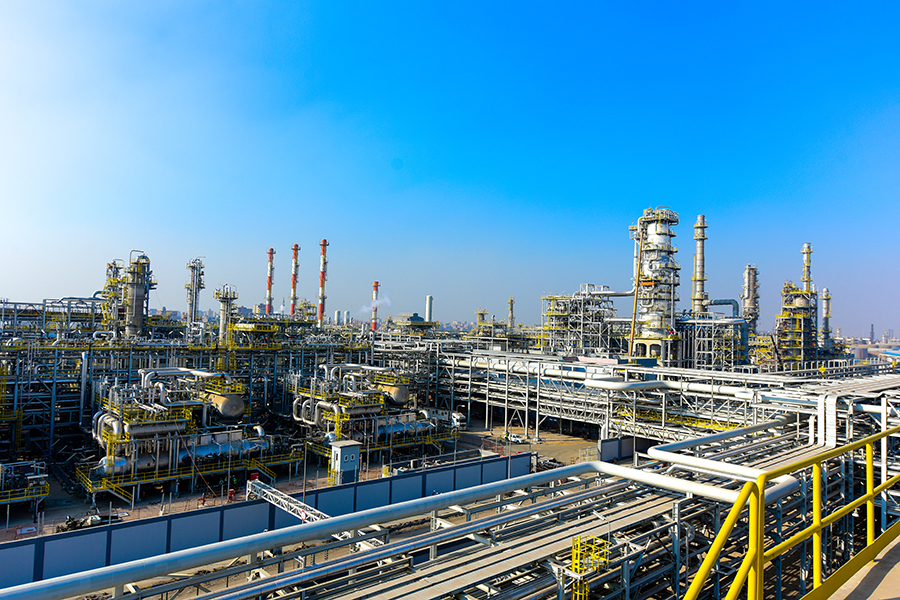
Egyptian granular urea at USD 535 as gas supplies to fertilizer plants cut 20%

Egyptian granular urea is fetching about USD 535 a ton FOB in November contracts, up roughly 17% from about USD 457 in September, Khaled Abu Al Makarem, head of the Chemicals and Fertilizers Export Council, tells EnterpriseAM. That makes Egypt the priciest origin of comparable regions, ahead of China, the rest of the Middle East, Nigeria, and Algeria.

This price rally comes just as the government starts rationing the gas the plants run on: Kima told the EGX (pdf) that its supplies were cut by 20% from noon on Sunday 1 November, and that it has implemented the cut, with its urea plant still running normally. Meanwhile, Mopco told the EGX (pdf) that operations continue uninterrupted and that it’s adjusting production rates to the gas actually available, without saying whether the 20% cut applies to its plants.

DATA POINT- Egypt can make about 6.5 mn tons of urea a year and uses roughly 2.9 mn tons at home, per the petroleum minister, which leaves some 3.6 mn tons a year for export, by our math. The wider sector is exporting more too: chemical and fertilizer exports reached USD 9.54 bn in the first nine months of 2026, up 34%, with fertilizers contributing USD 2.53 bn of that.

Prices are up, but volumes are set to fall: Nitrogen plants use gas as both feedstock and fuel, so a 20% allocation cut hits volumes and utilization rates directly. And the gas those plants still get costs more: it’s now priced off global levels through the dynamic pricing mechanism, with the effective cost of gas for some producers crossing USD 9 / mmBtu by late April, as we reported at the time. Higher urea prices cover part of that squeeze. Producers are still meeting local demand and export commitments, Abu Al Makarem tells us, adding that the size of the hit depends on how long the cut lasts and on each plant’s operating rates.

Egypt is the priciest origin on the market right now: Egyptian granular urea trades above Chinese material (about USD 430 a ton), other Middle East origins (about USD 450), Nigeria (about USD 475), and Algeria (about USD 520), according to CommodityScope data. And India isn’t the buyer pushing prices up. Its 1.7 mn ton tender did bring out offers, but at as low as USD 352 a ton CFR in October, well below Egyptian levels, and India took only about 410k tons of what it sought. India’s tie to Egypt is volume, not price: Egypt shipped 609k tons to the subcontinent from April to June, three times its total shipments for the entire previous Indian fiscal year. That leaves European and American demand as the driver rather than the Indian tender, by our read.

Still, the sell-side expects the gas cut to bite: CI Capital told clients this week in a research note seen by EnterpriseAM that the lower allocations will hit Abu Qir, Mopco, and Valmore Holding (through its subsidiary Alexfert) in 4Q 2026 and potentially through 2027, weighing on production volumes and capacity utilization.

BUT- Prices are high enough to cover the volumes lost to a 20% allocation cut, so producers’ profits need not fall, an industry source tells EnterpriseAM, with companies now working through what a longer gas shortfall would do to their numbers.

IN CONTEXT- The gas cut comes in a year that had already handed nitrogen producers three headwinds: the gas floor rising to USD 8.5 / mmBtu in April; a nitrogen fertilizer export duty introduced at USD 90 a ton in May, switched to 10% of export value in late June and repealed on 1 August; and a 39% slide in urea export prices from the April peak, to about USD 550 a ton.

What’s next: The government is expected to restore the allocations, both to keep urea exports and the USD inflows they bring running, and to avoid pushing fertiliser costs into farm-gate prices and food inflation, a government official tells EnterpriseAM.

This publication is proudly sponsored by

3

Investment Watch

EGX is still waiting for its share of the fund boom

Why the fund boom is still a government debt story: Money market funds added roughly 4x as much in assets as equity funds in 1Q 2026 (EGP 55.2 bn against EGP 12.8 bn), by our math. That lead narrowed to about 1.6x in 2Q against the equity and Islamic equity lines (EGP 24.8 bn against EGP 15.3 bn) and reversed in 3Q. Still, the funds, which invest primarily in T-bills, short-term deposits, and certificates of deposit (CDs), held some EGP 303.1 bn by the end of September, or 60% of an industry that crossed half a tn to hit EGP 504.71 bn, according to Financial Regulatory Authority (FRA) data (here, pdf, here, pdf, and here (pdf)).

For all the growth in the investment fund industry, the government remains one of its biggest beneficiaries, by our read. That’s because money market, fixed-income, mixed, and FX funds held EGP 393.3 bn of the EGP 504.7 bn industry at the end of September, while the EGX is still waiting for that boom to translate into a deeper pool of equity investors.

And the rate cycle hasn’t done much to change the picture. Money market fund returns eased to 4.29% in 2Q from 4.76% in 1Q, before recovering to 4.95% in 3Q. Our read is that the dip reflects the pass-through of lower rates into the short-term instruments they hold. None of that has stopped money market funds from dominating the industry, and last week’s 100 bps hike from the central bank, which took the overnight deposit rate to 20%, has only made government paper more attractive.

Percentages tell a slightly different story: Money market funds park short-term money in T-bills, deposits, and CDs that mature within 13 months, while equity funds hold listed shares for longer. Equity fund assets grew 36.1% in 2Q, compared with 9.1% for money market funds, but the latter still added roughly EGP 24.8 bn in assets against some EGP 8.6 bn for equity funds, by our math. The gap comes down to arithmetic, by our read: money market funds ended June with a base 9.2x larger (EGP 296.9 bn against EGP 32.2 bn), so a far smaller percentage gain still adds more EGPs. Asset changes also include investment returns, not just fresh subscriptions. The FRA reclassified funds with the Egyptian Investment Management Association in 2Q, according to its July release, restating its end-March count from 187 funds to 209 and NAV at about EGP 411 bn, so comparisons with earlier quarters aren’t like-for-like.

Why T-bills dominate

A lot of it comes down to how money market funds are allowed to invest under the executive regulations governing mutual funds. Their holdings cannot have maturities beyond 13 months, or 396 days, and their weighted average duration cannot exceed 150 days, Khalil El Bawab, CEO for local and regional markets at Beltone Holding, tells EnterpriseAM. T-bills, which run around five months in maturity, are the natural destination. Deposits, meanwhile, are capped at 10% of a fund’s portfolio, leaving the bulk of the allocation for T-bills and bonds, he said.

There’s also the question of liquidity: Money market funds take subscriptions and redemptions daily, so managers need instruments they can trade quickly without taking on much price risk, El Bawab says. At Beltone, for example, the subscription cut-off is noon, leaving a roughly two-hour window to buy T-bills with incoming money or sell holdings to meet withdrawals, adds El Bawab, who also chairs the Egyptian Investment Management Association. The result, by our read, is a savings product rather than an investment one: liquidity and capital preservation first, with government paper doing most of the heavy lifting.

Savers aren’t trading the rate

“It doesn’t slow,” El Bawab says of money market fund subscriptions during an easing cycle, and he doesn’t think rate moves drive them in either direction. “Even if there is an interest rate cut, that doesn’t make it less attractive, and a rate hike doesn’t make it more attractive.” Investors aren’t necessarily weighing money market funds against equities, he argues, because the two serve different purposes. “At the end of the day, the money market fund is a savings vehicle or a [liquidity] management vehicle. It’s not a 100% investment vehicle.”

Why data from 3Q complicates that: Money market fund assets rose EGP 6.2 bn last quarter, but the category returned 4.95%, enough on its own to add some EGP 14.7 bn. That implies a net outflow of roughly EGP 8.5 bn over the three months, by our math. Other categories grew over the same period: index funds nearly doubled to EGP 13.14 bn, Islamic equity funds grew 27%, and precious metals funds added EGP 2.5 bn.

That said, a long enough stretch of low rates could still move more money into equities, El Bawab says, a case that last week’s hike pushes further out. He has no precedent to point to, since Egypt hasn’t run a sustained low-rate cycle in more than a decade, and never with a fund industry this large. The last time borrowing costs were this low, investors had fewer products to choose from, digital onboarding was far less common, and online trading hadn’t opened up the market to the same extent.

Equities are making headway

Equity funds are taking a bigger slice of the market, and the pace picked up sharply in 3Q: index funds grew 83% over the quarter against 2.1% for EGP money market funds, even if government debt still accounts for most fund assets. El Bawab points to the changing mix of the industry: in 2020, roughly EGP 95 of every EGP 100 invested in funds went into money market and fixed-income products, compared with about EGP 80 today — the FRA put it at EGP 78 at the end of September. “That’s a success,” he said.

The growth in EGP is just as striking: Equity funds, including conventional and shariah-compliant, ETFs, and thematic strategies, have grown from around EGP 2.6 bn in 2020 to roughly EGP 74 bn as of August, according to his figures. His pool is the one the FRA counts as equity-type funds — EGP 74.8 bn at the end of September, against EGP 36.0 bn on the FRA’s narrower “equity funds” line. Still, he expects money market and fixed-income products to retain the lion’s share of assets, reflecting what he describes as Egypt’s long-standing preference for saving over investing.

Both things are true at once, by our read. Equity funds hold a larger share than they did five years ago, and because the pool itself has grown so much, money market and fixed-income funds can keep growing in EGPs even as their share slips.

SOUND SMART- Egypt’s fund industry remains small by international standards, with assets under management equivalent to some 2% of GDP even after tripling in size, El Bawab estimates. The comparable figure is roughly 63% globally, around 120% in the US, 70-80% in Europe, and 20-25% across emerging markets. Matching the emerging-market average would mean an industry roughly 10x today’s size, by his math.

The institutional money question

Beyond retail savings, there’s another potential source of demand for Egyptian equities. Some ins. funds are already required to invest a portion of their assets in the stock market. FRA Decision No. 269 of 2024 requires defined-benefit private ins. funds to allocate 5-20% of their assets to open-ended funds investing in EGX-listed shares, Hatem Badr, partner and head of banking, finance, and M&A at Ibrachy & Dermarkar, tells EnterpriseAM. They can also invest up to 15% directly in listed shares, provided their combined equity exposure stays within 25%.

Government ins. funds with portfolios exceeding EGP 100 mn face the same 5-20% requirement, according to Badr, while ins. companies have minimum equity fund allocations of their own. But the rules also leave considerable room for fixed income: defined-benefit funds are allowed to invest 15-70% in bonds, T-bills, and government-guaranteed securities, and up to 40% in fixed-income and money market funds, he adds.

And with government paper still offering attractive yields, there’s little reason for trustees to take on more equity risk than they need to, by our read. Government securities combine high nominal returns with liquidity, relatively straightforward valuations, and limited short-term volatility, all of which carry weight for institutions managing beneficiaries’ money. As Badr puts it, where government securities already pay well, “the expected additional return from equities must justify the additional volatility.”

OUR TAKE- The local fund industry is getting bigger and more diversified, but that growth isn’t yet translating into a comparable increase in demand for listed equities. Money market funds remain the industry’s dominant product for good reason: they offer investors liquidity and relatively low risk while giving managers a natural reason to keep much of their portfolios in government paper, particularly when T-bills are paying attractive yields. A return to easing could eventually push more money toward the EGX, but not on its own: the products drawing most of the money are built to serve savers, not investors seeking equity exposure.

That’s where mandated money comes in: The rules are already feeding the industry — Azimut’s Ahmed Abou El Saad told us in June that the biggest driver of equity fund growth was the FRA requiring private ins. funds and ins. companies to hold minimum allocations in equity funds. But the pool itself is still overwhelmingly in debt. Private ins. funds held EGP 210.9 bn in investments at the end of last year, of which EGP 88.27 bn sat in government-guaranteed securities and EGP 88.05 bn in deposits and savings certificates, against EGP 4.46 bn in EGX-listed shares, according to the FRA’s annual report on the sector.

What’s next: Private ins. funds have until 31 December to meet their minimum equity allocations, after the FRA extended the deadline back in August.

4

Energy

Egypt is set to export its first LNG cargo in months from Idku while lining up 10 import cargoes for November

Egypt plans to send an LNG cargo to Europe this month, even as imports cover nearly half its gas use: The Idku plant should ship its first cargo to Europe in months by the end of November, Al Arabiya reports, citing an unnamed government official. That’s later than the October restart we flagged in late September.

Exports only go out when winter demand dips: The Oil Ministry resumed feeding gas to Idku in recent days after agreeing export volumes and marketing plans with Egas, the official said. How much gas ships depends on what’s left after domestic demand is covered. Last winter, that worked out to one to two cargoes a month from the plant between October and March. Letting partners export when local demand dips helps them collect their dues and encourages them to invest in exploration, the official added.

And most of the revenue goes to Idku’s foreign shareholders: Shell or TotalEnergies is expected to buy the cargo through its trading arm, and a standard 150k cbm cargo could be worth more than USD 60 mn depending on export prices, the official said. That revenue then gets split among Idku’s shareholders according to their stakes.

On the import side, the government has asked its foreign suppliers to deliver about 10 LNG cargoes in November, down from 12 in October, and deferred five of the 15 it had contracted into 2027, Asharq Business reports, citing an unnamed government official. That’s because a single cargo now tops USD 100 mn, double September’s level, which puts November’s LNG import allocation at about USD 1 bn.

Even as it buys fewer cargoes, it’s refreshing the fleet that turns them into gas: The Norwegian regasification vessel Hoegh Gandria is due at Ain Sokhna in early December on a 10-year lease worth about USD 600 mn, replacing Hoegh Galleon when its charter ends in February, and can regasify up to 1 bcf / d, Asharq Business reports, citing an unnamed government official. Egypt pays about USD 18.5 mn a month to charter four regasification vessels, according to the official, and the three at Ain Sokhna plus a unit in Jordan’s Aqaba provide around 2.75 bcf / d.

Then there’s Damietta, where the FSRU is still out of action after July’s drone strike: Energos Winter was pumping 450 mmcf / d into the grid when it was hit by a drone at Damietta in late July. After the government weighed fixing it locally or in Turkey, the vessel went to Spain for repairs, according to Asharq, with no confirmed date for its return.

The longer-term fix is pumping more gas at home: The government aims to bring gas production back to previous levels in 2027, the official told Al Arabiya, and has set an FY 2027/28 production target of about 5.1 bcf / d, according to Asharq. To get there, it has offered foreign producers incentives, including exporting part of their new output and higher prices for newly produced gas, and finished paying off USD 6.1 bn in arrears in June, clearing the backlog to zero.

5

Also on our Radar

CBE lets banks hire outside agents to sign up customers beyond their branch networks

The Central Bank of Egypt (CBE) approved a regulatory framework allowing banks to contract third-party agents to deliver selected services outside their branch networks, aiming to cut branch expansion costs and reach excluded groups and MSMEs, according to a CBE circular (pdf). The contracted agents are limited to a closed list of tasks, including customer identification and e-KYC verification, completing and forwarding loan and account applications, delivering unactivated bank cards, and providing channels for financial literacy campaigns and bank-printed marketing. Meanwhile, they are prohibited from using the word “bank” in their branding.

Who can be a third-party agent? Banks can contract CBE-licensed banking institutions, non-bank financial institutions licensed by the Financial Regulatory Authority, government bodies, Egyptian diplomatic missions abroad, and any other entity with a commercial register and tax card that clears the bank’s due diligence. Each contract needs written CBE approval and runs for up to three years, and the bank remains fully responsible for its agents.

Why it matters: The move comes as Egypt seeks to boost financial inclusion among adults to 80% by FY 2029/30, up from the 76.3% rate recorded in the last fiscal year. Egypt’s financial inclusion rate stood at 79% at the end of June.

A new server line in Sokhna?

MTS Integrated Solutions is in talks with the government to build a USD 100 mn data center manufacturing plant for China’s Inspur, most likely in Ain Sokhna, Chairman Hesham Kandeel told Al Arabiya. MTS will act as Inspur’s local partner, handling engineering, regulatory coordination, and technology transfer for what would be Inspur’s first facility of this scale outside China and the US. Kandeel said the plant will focus on manufacturing hardware for sovereign and state-owned data centers to keep national data domestic, without sharing a timeline or naming the authority responsible for approving the plant.

More China-linked projects on the agenda: MTS aims to expand its cooperation with Chinese partners into digital transformation projects at the Health Ministry and infrastructure works with Mostakbal Misr, with Chinese lenders potentially financing around 60% of project costs, Kandeel said. He also teased an upcoming USD 6 bn data center project, without naming partners or a location, alongside an AI platform under development with China’s UCloud.

REMEMBER- Inspur would be the latest Chinese tech group pursuing a role in Egypt’s government computing infrastructure, after Huawei bid on a government tender in August to supply over 1.4k of its newest Ascend chips to an AI training cloud. It fits into Egypt’s broader plan to host sensitive government data locally, with officials aiming to finalize a national data center strategy by the end of 2026.

Gaining traction

Another Chinese tire maker is heading to Ain Sokhna: Chinese tire manufacturer Jiangsu General Science Technology plans to invest up to USD 295 mn in a plant in Sokhna Industrial Zone, according to a Shanghai Stock Exchange filing (pdf). The plant will produce 6 mn semi-steel passenger car tires and 800k all-steel truck and bus tires a year. Slated for completion over 36 months, the plant will be financed through a mix of the company’s own funds and bank loans and will supply North America, Europe, the Middle East, and Africa. Chinese and Egyptian regulatory approvals are still pending.

The breakdown: The project will run through a new Egyptian subsidiary, provisionally named General Rubber (Egypt), with USD 80 mn in provisional capital. The parent will hold 99.5% and a wholly owned subsidiary 0.5%.

IN CONTEXT- Jiangsu General is at least the sixth Chinese tiremaker to commit to Egypt since August 2025 and the fourth at Sokhna, after Sailun’s USD 1 bn Sokhna plant, Chaoyang Longmarch’s USD 190 mn factory, and ZC Rubber’s USD 500 mn letter of intent. Two others are planning plants in Alexandria governorate: Aeolus Tyre filed for a CNY 2.68 bn truck-tire plant in May, and Linglong is weighing a USD 2 bn Borg El Arab complex. Zenith Steel is also investing USD 300 mn in a Sokhna plant for the steel cord and bead wire used by tire plants.

More under our radar:

  • The Local Development and Environment Ministry has stopped accepting paper applications and launched IDEIA, a nationwide 11-step platform for submitting studies, tracking applications, and paying fees electronically to streamline investor procedures. (Cabinet statement)
  • Tawasoa Factoring signed a EGP 30 mn loan agreement with the Micro, Small, and Medium Enterprises Development Agency to finance new and existing SMEs nationwide through factoring. The 18-month loan, counted from the first tranche, will be repaid from collections on Tawasoa’s factoring contracts with clients. (EGX disclosure, pdf)

A lifeline for distressed factories

Gov’t wants investors to take over distressed factories. The Industry Ministry is in talks with investors to acquire some 30 distressed factories as part of a push to restart idle capacity and attract new industrial investment, Industry Minister Khaled Hashem told the House Industry Committee. The ministry is assessing 51 factories for restructuring.

There’s a sweetener for buyers: Investors who acquire the plants can tap working capital financing at a reduced rate once the acquisitions close to help restart production faster. The ministry is matching owners looking to exit with potential buyers and offering technical and commercial support. Around 90 distressed factories have registered on the government’s unified digital platform for manufacturers.

Why it matters: Reviving plants that already have equipment and infrastructure brings unused capacity back online, increases local supply, and protects jobs while avoiding the cost of building new factories from scratch.

ICYMI- The Central Bank of Egypt and the Industry Ministry launched the EGP 1 bn Distressed Factories Restructuring Fund last month to target industrial firms with viable operations that have hit financial or operational trouble. Assistant to the Industry Minister Emad Abdel Hamid told us last December that the fund would take equity and work alongside management rather than lending.

6

PLANET FINANCE

Regional war expected to wipe 150 bn cbm off LNG supply through 2030, keeping the market tight into 2027

The regional war is expected to wipe 150 bn cbm off global LNG supply between 2026 and 2030, equivalent to 15% of the new liquefaction capacity expected to come online over that period, the International Energy Agency (IEA) said on Tuesday in its Global Gas Security Review (pdf). Most of the losses will come in 2026 and 2027, delaying the wave of new supply that was expected to ease a tight global gas market. Global LNG supply is on track to fall 3%, or nearly 20 bn cbm, this year — its biggest annual decline on record.

That’s a reversal from where the agency started the year. In January, the IEA expected a sharp rise in LNG supply to ease market fundamentals in 2026. Falling demand is what has kept the market from going short, because consumption is set to fall faster than supply this year, by our read. Global gas consumption is expected to fall around 1.5% this year, marking its third annual decline since 2020, according to the IEA. Demand in Asia Pacific is forecast to drop 1.5% as higher LNG prices push power producers toward coal, while Europe is expected to see a 3% decline as industrial consumers cut back. In the Middle East, damage to production and processing facilities is expected to drive a 10% drop in consumption. Higher prices have also priced some buyers out of the spot market altogether. Pakistan, for example, twice rejected a September LNG cargo priced at nearly USD 27 / mmBtu.

And reopening the Strait of Hormuz won’t bring Gulf LNG supply back to pre-war levels overnight. Missile strikes in March damaged two production trains at Qatar’s Ras Laffan facility, taking 12.8 mn tons of annual capacity offline, or roughly 17% of the country’s total. QatarEnergy’s latest assessment, cited by the IEA, is that it could take three years to restore operations — a cumulative loss of more than 50 bn cbm of LNG supply. The first train of its North Field East expansion is now expected to come online in the first half of 2027, a delay from its previous end-2026 target. Meanwhile, the four LNG liquefaction projects that reached final investment decisions since March, all in North America, won’t start production until 2030 at the earliest.

Europe could be competing for significantly more LNG next summer. EU gas storage stood at 75% at the end of October, below the bloc’s 80% minimum fill target, itself a derogation from the regulation’s 90% and its lowest level since 2013, according to the IEA. The agency estimates the EU would need to inject 57-83 bn cbm next summer to bring storage back to average levels by November 2027, compared with a five-year average of 50 bn cbm. The market is already reflecting that pressure, with May 2027 contracts trading above those for November 2027 and the spread recently hitting a record high, Bloomberg reports. That reverses the usual seasonal pricing pattern, where summer gas trades at a markdown to winter.

Egypt, meanwhile, is becoming increasingly exposed to the LNG market. The country’s LNG imports rose 70% y-o-y, or 6.5 bn cbm, in January-October, with net imports exceeding domestic gas production for the first time in July. Tenders signed before the war helped Egypt avoid the worst of the summer price increases, but that protection was expected to fade toward year-end, Kpler’s JP Lacouture told EnterpriseAM in September.

The higher prices are now starting to bite. The government has asked suppliers to defer five of the 15 LNG cargoes scheduled for November after the cost per shipment rose above USD 100 mn, roughly twice what it was in September, Asharq Business reports, citing an unnamed government official. Gas allocations to fertilizer and methanol plants have also been cut by 20% since Monday, 2 November, according to Asharq. Egypt had already budgeted for a 26% increase in its gas import bill to USD 10.7 bn this fiscal year.

OUR TAKE- The LNG supply glut expected this year is looking increasingly unlikely, with the market now facing tighter conditions well into 2027. More supply was supposed to give importers some breathing room on prices, particularly those able to hold off on purchases. But with the IEA now expecting a longer supply shortfall and Europe likely to need more LNG to refill storage next summer, waiting carries considerably more risk. Some buyers are already responding by cutting consumption, whether through switching to coal in Asia or reducing industrial gas allocations in Egypt. Deferring cargoes, however, leaves the demand in place and shifts the purchase to a later date, when competition for supply could be just as intense. For import-dependent countries such as Egypt, securing contracted volumes ahead of next summer could offer more protection than relying on the spot market once European buyers return.

MARKETS THIS MORNING-

Seoul falls on AI jitters: South Korea’s Kospi opened -2.5% yesterday and kept falling through the session to close -3.6% down, dragged down by tech stocks as investors remain worried that AI spending is growing too fast. Japanese markets, including the Nikkei 225, were closed yesterday for the Culture Day national holiday.

EGX30

49,256

+1.8% (YTD: +17.8%)

USD (CBE)

Buy 55.28

Sell 55.42

USD (CIB)

Buy 55.25

Sell 55.35

Interest rates (CBE)

20.00% deposit

21.00% lending

Tadawul

9,876

-0.1% (YTD: -5.9%)

ADX

9,463

-0.3% (YTD: -5.3%)

DFM

5,811

+0.1% (YTD: -3.5%)

S&P 500

7,569

+0.4% (YTD: +10.6%)

FTSE 100

10,638

-1.1% (YTD: +7.1%)

Euro Stoxx 50

6,145

-0.5% (YTD: +6.0%)

Brent crude

USD 103.60

-1.1%

Natural gas (Nymex)

USD 2.90

0.0%

Gold

USD 3,938

-0.1%

BTC

USD 77,601

+1.1% (YTD: -11.5%)

S&P Egypt Sovereign Bond Index

1,145

+0.3% (YTD: +15.3%)

S&P MENA Bond & Sukuk

149.06

+0.1% (YTD: -1.9%)

VIX (Volatility Index)

20.83

-1.5% (YTD: +39.3%)

THE CLOSING BELL-

The EGX30 rose 1.8% at yesterday’s close on turnover of EGP 7.5 bn (32.6% below the 90-day average). International investors were the sole net buyers. The index is up 17.8% YTD.

In the green: Orascom Development (+6.8%), Palm Hills Developments (+6.8%), and Eastern Company (+6.1%).

In the red: Abu Qir Fertilizers (-3.6%), Mopco (-3.0%), and Valmore Holding -EGP (-2.5%).

7

HARDHAT

EGP hedging is limited and expensive, so Hassan Allam writes currency protection into its infrastructure contracts

The International Finance Corporation (IFC) infrastructure stakes in emerging markets beat the S&P 500 over six decades — but the IFC publishes no Egypt figure, and its stakes in the Middle East and North Africa trailed the index. A rising USD is one drag on recent returns, the IFC finds. That’s the risk Hassan Allam builds its protection against into contracts, since financial hedging of the EGP is limited and expensive. Contract structure is the group’s “primary hedge,” Dalia Wahba, CEO of Hassan Allam Investment Managers, tells EnterpriseAM. Egypt’s public-private partnership (PPP) law covers pricing and risk sharing in such contracts but says nothing on currency.

The IFC’s 2025 study (pdf) scores the portfolio at 1.17 on the public market equivalent (PME), a measure of returns against the S&P 500. Anything above 1 means outperformance. The figure covers 266 core infrastructure stakes in power, transport, information, and utilities started between 1961 and March 2020, with unsold stakes valued as of June 2023. Only 40.6% of projects beat the index individually, and stakes started between 2010-2020 scored 0.68.

Why no Egypt figure? “We deliberately chose not to report country-specific results,” Paolo Mauro, director of development impact measurement at IFC, World Bank and a co-author of the note, says. In a sample that small, most individual countries, especially in the Middle East and Africa, would have fewer than a handful of projects. Country results would “risk reflecting specific projects with their own idiosyncrasies,” he tells us. He points readers to income-group and regional averages instead.

Egypt’s proxies: Lower-middle-income countries, Egypt’s World Bank income group, posted a PME of 1.65 overall but just 0.78 for 2010-2020 stakes. The Middle East and North Africa scored 0.88 overall and bucked the portfolio-wide drop, rising from 0.48 for 1996-2009 stakes to 0.96 for 2010-2020 stakes.

Currency played a smaller role in the portfolio-wide drop. The note traces the drop mainly to the S&P 500’s outsized returns and weaker growth in developing economies and, to a lesser extent, to the USD’s real appreciation.

For Hassan Allam, currency risk starts with how it gets paid. It depends on the sector, the offtake, and the revenue currency. USD-linked revenue is paid in EGP, so it stays exposed to foreign currency availability and convertibility risk, Wahba says. Those assets matter: “In 2025, around 50% of the group’s earnings came from utilities and infrastructure assets we own and operate,” she tells us.

The group wants every protection at once: a creditworthy take-or-pay or availability-based offtake, secured land rights, currency convertibility and repatriation, and USD-linked or indexed tariffs where costs or financing are in foreign currency. “If any one of these is missing, it usually needs to be offset by stronger terms elsewhere or a higher return,” Wahba tells us.

Beyond the contract, the group’s main protection is assets with long-term demand. The group can absorb short-term distortions from sharp devaluations “provided revenues self-correct over time,” as airport operations and logistics “generally do.” Where revenues don’t self-correct, partial or full indexation is essential, she says.

Whether a project needs the state behind it depends on the sector. Water and wastewater treatment and desalination still require government support to be bankable, Wahba says, and so does power, “since Egypt remains largely a single-buyer market.” In ports, airports, and storage and handling, private investors typically take market risk.

Development finance institutions bring long-tenor foreign currency financing, which commercial lenders haven’t offered in Egypt for some time, plus partial risk mitigation, Wahba says. Their presence reassures other lenders and co-investors and strengthens the group’s position with government counterparties but doesn’t necessarily lower funding costs. “The benefit lies in tenor, currency, and availability rather than price,” she tells us.

Partnerships are on the state’s agenda: President Abdel Fattah El Sisi highlighted private partnerships at the Egypt Forum on 20 October. Their rules sit in Law 67 of 2010 (pdf), and its 2021 amendments (pdf) require contracts to set price adjustment rules and to allocate change-in-law, force majeure, and site handover obligations. Under Article 7, the contracting authority, meaning the government body that signs the contract, can change an operating project’s prices in the public interest. It can do so only within contract limits, with approval from the Supreme Committee for Partnership Affairs, and without affecting either side’s compensation rights. Neither text addresses foreign currency or convertibility.

Optional state backing: Under Article 38, the contracting authority may sign direct agreements with lenders that can include a Finance Ministry commitment to cover its payments. These agreements can also let lenders step in if the project company seriously breaches its obligations, with approval from the minister or agency head in charge.

The law also reaches the exit: Hassan Allam typically sells down stakes to long-term investors after five to seven years, once assets are “de-risked,” Wahba says. Article 36 requires the project company’s articles of association to bar any share trading before construction ends, as well as majority-stake trading after it, without prior written approval from the minister or agency head in charge.

The 2021 amendment covers part of what Wahba wants. The Finance Ministry’s PPP Central Unit now confirms the state has allocated a project’s land before the Supreme Committee reviews it, and public tenders are the standard route. Wahba wants more timely, predictable tendering and land on commercial usufruct terms. On currency, she wants “timely payment by state off-takers, or a clear framework for FX convertibility for projects with long-term foreign currency-linked operating costs.”


NOVEMBER

5-7 November (Thursday-Saturday): ICA Annual Conference, Cairo.

6-8 November (Friday-Sunday): Global Entrepreneurship Festival, JW Marriott Hotel, New Cairo.

7-10 November (Sunday-Wednesday): Cairo ICT Forum, Egypt International Exhibition Center, New Cairo.

10 November (Tuesday): Cityscape Egypt Forum, Cairo.

14 November (Saturday): Rolling mills’ Administrative Court challenge.

16-17 November (Monday-Tuesday): World Economic Forum’s (WEF) first dedicated business meeting in Egypt + MENA, New Capital.

DECEMBER

7-10 December (Monday-Thursday): Food Africa, Egypt International Exhibition Center, Cairo.

11-12 December (Friday-Saturday): ISER International Conference, Cairo.

17 December (Thursday): Monetary Policy Committee’s eighth meeting of 2026.

17-20 December (Thursday-Sunday): MacTech Egypt, Egypt International Exhibition Center, Cairo.

EVENTS WITH NO SET DATE

2H 2026: Operations at Deli Glass Co’s new USD 70 mn glassware factory kick off.

2026: The Egyptian-American Economic Forum.

2027

20 January-7 February: Egypt to host the African Games.

1-3 February (Monday-Wednesday): Agri Expo, Cairo International Convention Center.

April 2027: Tenth of Ramadan dry port and logistics hub to begin operations.

29 September - 2 October (Wednesday-Saturday): Cityscape Egypt Exhibition, Cairo.

EVENTS WITH NO SET DATE

2027: Egypt to host EBRD’s annual meetings.

2027: Egypt-EU Summit 2027.

End of 2027: Trial operations at the Dabaa nuclear power plant expected to take place.

September 2028: First unit of the Dabaa nuclear power plant begins operations.

Now Playing
Now Playing
00:00
00:00