Scaling up refining to lower the import bill

1

WHAT WE’RE TRACKING TODAY

BdC is getting a fresh price tag after recent results, with offering timeline pointing to November-December

Good morning, friends. Today’s issue is all about how the country is ramping up its industrial capacity, with two stories following the same thread — one about cutting what we import, the other about making more at home.

Up first, the Oil Ministry increased its investment target for refining and petrochemicals to USD 5.2 bn and added two new projects to shrink the diesel and butane import bill. Next up: bringing in private capital. There has been some early interest, but nothing locked in yet.

Over in Sokhna, nine new factories opened yesterday — medical equipment, building materials, textiles, chemicals, LED lighting. That pushes the SCZone’s operational total to 212, up roughly 30-35% from four years ago. The USD 84.5 mn batch is the second nine-plant opening this year, and there are 176 more plants under construction.

***

ARE YOU MORE OF A LISTENER? Morning Drive is a 10-minute summary of today’s issue crafted for you to enjoy with your morning coffee, while getting the kids ready for school, or driving through the morning rush. And if you like it, tell your friends to tell their friends. They can find us on Apple, Spotify, or wherever they get their podcasts.

***


Why Rep. Neveen El Tahri is optimistic: Foreign investors see a lot of potential in Egypt. Their optimism, however, is not necessarily shared by many inside Egypt. So where does the gap lie?

On this episode of Making It, Rep. Neveen El Tahri, joins Patrick to make the case for optimism.

She dives into policy, privatization, the many opportunities ahead of Egypt, and her personal belief that changes on the policy level will eventually trickle down.

Listen to the episode on: Apple Podcasts | Spotify | Anghami | YouTube

Sign up to our newsletter to get Making It in your inbox.


Price tag refreshed

Banque Du Caire (BdC) is getting a fresh price tag before it hits the road, and is now eyeing a November-December listing window, a government official tells EnterpriseAM. The state-owned bank’s offering advisors have decided to re-value it after recent results came in strong enough to move the number. The study will go to the State-Owned Companies Unit within days for committee review, with the new valuation only becoming final once it signs off, the official says.

By the numbers: Baker Tilly has reportedly lifted BdC’s fair value by roughly 2%, to between EGP 80 bn and EGP 80.5 bn, up from around EGP 78 bn in the 2025 financials, Asharq Business reports, citing an unnamed government official. The revised study runs off the bank’s 1H balance sheet, which showed consolidated net income up some 22% y-o-y to EGP 8.94 bn, and deposits above EGP 443 bn. The state is still looking to sell 30-40% and raise more than EGP 30 bn.

Then comes the sales pitch: The roadshow kicks off this month and runs through October, with the offer date to be set afterward. As things stand, the timeline points to a November-December window, depending on where the market is trading by then, the official tells us. That extends the target beyond the November completion date the unit’s CEO Hashem El Sayed gave us three weeks ago, making this the latest in a run of slips for an IPO that was originally meant to trade in 2Q.

REFRESHER- BdC first hit the auction block in 2007, and has been through multiple attempted IPOs since 2019, with the state signaling a year-end offering for months. The European Bank for Reconstruction and Development (EBRD) and the International Finance Corporation (IFC) are reportedly circling a combined 10% stake in the state-owned lender’s upcoming float.

ADVISORS- EFG Hermes and CI Capital are bookrunning, with Baker McKenzie on regulatory and Baker Tilly on financials.

ALSO- Misr Life Ins. is still tracking the same end-September deadline for its own fair value study, the official tells us, with the offering timeline to be set only once that’s done. That’s the same timeline we reported last month, so no fresh slip here, though the study still needs FRA sign-off before the government can fix the structure, including how much of the company actually gets sold.

Abydos 2 starts testing

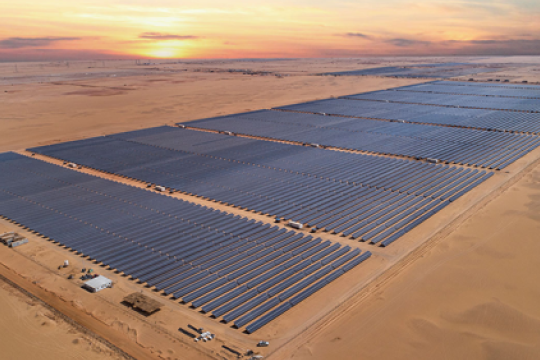
Amea Power has started trial operations at its Abydos 2 solar project in Aswan’s Benban area, paving the way for full commercial operation and grid connection in September 2026, Asharq reports, citing an unnamed source. The trial phase comes about three months after the originally targeted June 2026 commercial operation date.

What to expect from the project: The facility pairs 1 GW of solar PV capacity with a 600 MWh battery energy storage system, making it Africa’s largest single-site renewable energy project once operational. It is expected to deliver more than 3k GWh annually, enough to power over 500k homes while reducing carbon emissions by nearly 1.6 mn tons per year.

The project operates under a 25-year PPA with the Egyptian Electricity Transmission Company, and electricity will be sold at a tariff of USD 0.028/kWh, well below Egypt’s average generation cost of USD 0.072/kWh, according to the Dutch Development Bank (FMO), one of the project financiers. Once online, Abydos 2 will raise the country’s total renewable capacity to 11.5 GW and boost Amea Power’s Egypt portfolio to over 2.5 GW of wind and solar, plus 2.4 GWh of storage.


PSA-

WEATHER- It’s getting a little hotter again in Cairo today, a high of 37°C and a low of 24°C, according to our favorite weather app.

It’s still more comfortable in Alexandria, with a high of 31°C and a low of 23°C.

The big story abroad

Geopolitics takes top billing today. The far-right Alternative for Germany (AfD) party has vaulted into first place in Saxony-Anhalt’s regional elections, marking a notable setback for the country’s established parties. Although the AfD secured 44% of the vote in this historic victory, it fell short of the absolute majority required to become the first far-right party to govern a German state since the 1930s.

Ins. cycle ending? An influx of capital into property and casualty ins. is driving down premiums, forcing the ins. industry to brace for a downturn. Meanwhile, high prices combined with low natural disaster losses have pushed payouts to their lowest point since 2006, driving record income for insurers. Industry executives warn of an imminent market downturn as insurers and reinsurers gather in Monaco to begin annual price negotiations for 2027.

China’s next state-level capital injection: Beijing is shoring up capital across its financial system by enacting a USD 54 bn capital injection into public banks and insurers, with the country’s largest life insurer — China Life Ins. — snapping up USD 5.2 bn. The move coincides with persistently low interest rates that squeeze profitability across the ins. sector, leaving many small and mid-size carriers with weakening solvency ratios.

*** It’s Blackboard day: We have our weekly look at the business of education in Egypt, from pre-K through the highest reaches of higher ed.

In today’s issue: We unpack how Egypt’s first-ever sales mission for higher education exceeded expectations and why Nigeria was selected for the pilot run.

A strategic partnership shaping the next chapter of the Red Sea

Somabay and MARAKEZ come together in a landmark partnership, marking MARAKEZ’s first entry into Egypt’s Red Sea market and a significant step forward in the continued evolution of Somabay.

2

Energy

Egypt expands refining to cut the fuel-import bill, and courts private capital for new diesel plants

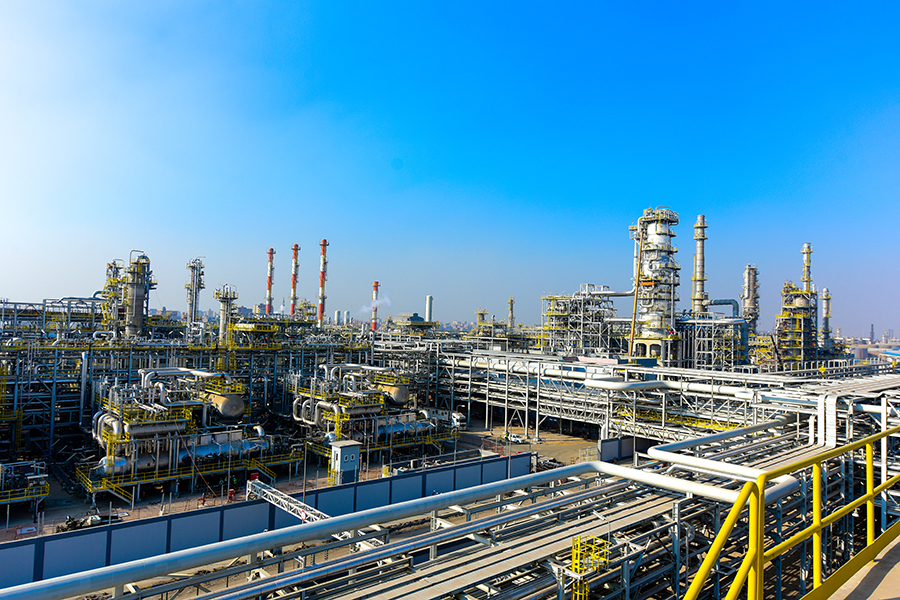
The Oil Ministry is expanding its push into refining and petrochemicals, and raising the bill it’s willing to spend to get there. The ministry has lifted its investment target for refining and petrochemical projects to around USD 5.2 bn from about USD 4 bn. It has also added two new projects to the plan, aiming to cut what the country spends importing diesel and butane, a government source tells EnterpriseAM. The plan pairs revamps and debottlenecking at existing refineries with new units for diesel and higher-value products, the source says.

The target is the import bill. The ministry wants to cut petroleum-product imports — excluding gas and crude — to USD 3.6 bn this year from USD 6.2 bn in FY 2025/26, according to a government document EnterpriseAM has seen.

DATA POINT- Diesel production rose some 15% y-o-y to 793k tons in June, outpacing a 6.6% increase in consumption to 1.18 mn tons, according to Capmas data (pdf). Production of crude oil, condensates, and butane rose to 2.3 mn tons from 2.1 mn tons. Butane imports fell 15% to 142k tons as domestic production jumped 42% to 152k tons and consumption declined 8% to 264k tons. Overall consumption of other petroleum products fell 7.6% to 2.83 mn tons in June, compared to 3.1 mn in the same month last year.

The government is targeting USD 4.5 bn to upgrade refineries and develop new projects to support self-sufficiency in fuel, Oil Minister Karim Badawi said, adding that refinery utilization has risen from 66% to over 80%.

The work runs across the state’s refining arms. Cairo Oil Refining will carry out replacement-and-upgrade work at its Mostorod and Tanta refineries; Suez Oil Processing Company (SOPC) is building a new coking and diesel complex; Nasr Petroleum Company (NPC) is running development projects; and Petroleum Pipelines Co. is upgrading crude-transport lines and parts of the national network, the source tells us.

Assiut is the flagship project. ANOPC’s diesel and high-value-products complex in Assiut — one of the two new additions — is due to start trial operation in 4Q, with capacity of some 2.5 mn tons a year of diesel plus 100k tons of butagas and 300k tons of coke, the source says. Its cost has risen to around USD 3.1 bn, from USD 2.8 bn, on currency moves.

Now the money question. To fund the new refining capacity, the government wants private investors in. It’s looking to raise some USD 2.1 bn for plants that would convert fuel oil into diesel, gasoline, naphtha, and other products, Asharq Business reports, citing an unnamed government official. The Egyptian General Petroleum Corporation (EGPC) plans to set up a separate investment company with private investors to build them and has fielded preliminary approaches from Arab and international companies — though none have firmed up into a serious offer, per the news outlet. The two complexes would sit at SOPC and NPC, each processing 1.75 mn tons of fuel oil a year (3.5 mn combined), with the Suez plant estimated at USD 1.1 bn and Nasr at USD 1 bn, Asharq reports.

IN CONTEXT- SOPC processed nearly 1.4 mn tons of crude in FY 2025/26 against a 3 mn-ton design capacity, while NPC processed some 1.5 mn tons. That gap is part of why the government is increasing investments in FY 2026/27 to upgrade refineries and develop new projects to support fuel self-sufficiency, Oil Minister Karim Badawi said.

Why it matters: Upgrading refineries, transport network, and storage facilities would help the country produce higher-value products, narrow the gap between domestic production and consumption, and strengthen its role in regional petroleum trade, Badawi said, pointing to the new Fujairah-Alamein Oil and Gas Company and Sumed’s expanding operations between the Red Sea and the Mediterranean as part of that push.

Beyond downstream: The ministry also plans to finish the Line 4 expansion at Gasco’s Western Desert Gas Complex and expects a large number of new oil and gas fields to be added to the production map in 3Q and 4Q, alongside a five-year plan to double crude and condensate output, the source tells us.

The upstream ambition already has a marker. State-owned GPC made 12 oil discoveries in FY 2025/26 — its highest annual rate on record — and is preparing its first horizontal well in the Western Desert while testing a well after its first hydraulic-fracturing operation, Chairman Mohamed Abdel Meguid told the company’s general assembly.

Taqa expands fuel storage sites

Taqa Arabia’s board approved an EGP 1.4 bn petroleum products storage depot investment in Greater Cairo through its Taqa Petroleum subsidiary, according to a bourse filing (pdf). The new facility adds to Taqa’s existing storage sites across Suez and Alexandria and is meant to secure gasoline and diesel supply for Taqa’s own filling stations as well as other retailers.

REMEMBER- This move comes after Taqa Arabia acquired 10% of 172 military-affiliated Wataniya fuel stations in June. The transaction parked the assets inside a new IPO-bound vehicle called Quick Fuel for Petroleum Products Trading and Distribution, which Taqa now manages and operates.

ALSO- Taqa’s first Jordan contract — a 14-km pipeline connecting Al Rawda industrial city to the Kingdom’s gas network, inked late last month — is worth USD 14.8 mn, according to an EGX disclosure (pdf) responding to a bourse inquiry. The amount forms part of a USD 70 mn Abu Dhabi Fund for Development program, which also awarded USD 22.7 mn to a Petrojet-led consortium. In addition to its local footprint, Taqa Arabia operates in Saudi Arabia, Qatar, Tanzania, Mozambique, and Pakistan.

This publication is proudly sponsored by

3

Manufacturing

Nine new factories go live in Sokhna as SCZone manufacturing base hits 212 plants

The Suez Canal Economic Zone (SCZone) added nine new industrial projects in Sokhna yesterday — the second nine-plant opening package this year. The zone is deepening its manufacturing base across medical equipment, building materials, textiles, chemicals, mining, engineering, artificial turf, and LED lighting. The new batch, with a USD 84.5 mn investment ticket, brings the number of operational factories in the SCZone to 212, according to Prime Minister Mostafa Madbouly — up from around 30-35% of that figure four years ago, with another 176 plants under construction.

The lineup includes:

  • TechnoVision (USD 16 mn): Two medical manufacturing units — a USD 10 mn plant for equipping ambulance vehicles, mobile clinics, and blood banks (50 units/month) under German WAS supervision, and a USD 6 mn Sino-Egyptian JV with Runyes, assembling dental chairs and equipment (100 units/month).
  • Designy Doors (USD 12 mn for Phase 1): Wooden and WPC doors, wall cladding, and flooring accessories; targeting 120k wooden doors and 168k WPC doors annually. The total targeted investment ticket sits at USD 20 mn.
  • BeiXin TaiShan Egypt (USD 10 mn): A 20k sqm facility producing eco-friendly gypsum boards and PVC ceiling tiles with a capacity of 20 mn sqm per year.
  • Na Trans for Fertilizers & Chemical Industries (USD 10 mn): A phosphate fertilizer plant producing 100k tonnes annually, with planned expansions worth USD 45 mn to raise capacity to 375k tonnes.
  • Lijialong Brush (USD 10 mn): A 36.5k sqm factory producing industrial brushes, weatherstripping, and door and window sealing accessories with an annual capacity of 100 mn meters.
  • Siraj Lighting’s FLARE (USD 7.5 mn): New production lines for LED lighting units under the Siraj group, bringing total facility investment to USD 11 mn with an annual capacity of 600k fixtures, 1 mn electronic boards, and 2.5k tonnes of aluminum injection.
  • F-TEX International (USD 10 mn): A 55k sqm plant in the TEDA zone producing woven polyester yarn with a capacity of 65.5k tonnes/year.
  • White Stone Egypt for Mining (USD 5 mn): A calcium carbonate processing facility producing 120k tonnes annually for the plastics, paint, and construction sectors.
  • Vivaturf Artificial Grass (USD 4 mn): An 8k sqm plant in the TEDA zone producing 3 mn sqm of synthetic turf annually for sports and landscaping.

IN CONTEXT- The September opening follows a USD 182.5 mn nine-project package inaugurated in Sokhna in April, and continues a sustained build-out that saw the SCZone contract 117 projects worth USD 7.26 bn in FY 2025/26. The zone reported record revenues of EGP 15.9 bn for the fiscal year, up 37% y-o-y.

Recent milestones include the third-phase TEDA expansion agreed upon during Chinese President Xi Jinping’s Cairo visit; the USD 117 mn Jasan garment complex in Qantara West; a Chinese tire cluster in Sokhna spanning Sailun (USD 1 bn), ZC Rubber (USD 500 mn), and Chaoyang Longmarch (USD 190 mn); and the USD 1 bn chemical complex greenlit by the Ministerial Group for Industrial Development.

Also from SCZone

Ten local and foreign investors are eyeing over USD 100 mn in industrial projects at Ain Sokhna, Oriental Industrial Projects (OIP) Managing Director Sameh Attia told Al Borsa. The Oriental Weavers subsidiary, which runs a 10 mn sqm industrial city in Sokhna’s industrial zone, took requests last month for fully serviced 500-700 sqm plots, mostly for food and petrochemicals, going for per-sqm equivalents of EGP 2-4k.

Demand is growing at the zone: Both of OIP’s first two SME-focused complexes on the site — 18 industrial units each, 600-750 sqm apiece — are now fully allocated, Attia said. The company is also working with the Suez Canal Economic Zone (SCZone) authority to court Indian and Gulf investors looking to use Egypt as a base for exports into Africa, he previously told the news outlet.

REMEMBER- Sokhna’s industrial zone has piled up commitments over the past two years, including Orascom Industrial Parks’ EGP 13 bn, 3.3 sq km complex; China’s Xin Feng USD 1.7 bn integrated complex; a combined USD 210 mn from Xinxing Ductile Iron Pipes and Turkey’s Hayat; China’s Sailun Group’s USD 1 bn tire plant commitment in August 2025; and several smaller projects — from PVC windows to medical gloves — that went live in October.

4

A MESSAGE FROM VISA

From Cairo to Karachi, women-led businesses are leaving a digital trail. Capital should follow it.

Before a founder walks into a funding meeting, her business has already been making its case all day. She may have closed a sale on Instagram, taken another over the counter, replied to customers on WhatsApp, sent an invoice, and accepted payments in more than one way before lunch. None of that feels remarkable when it is part of the daily grind. It becomes remarkable when the funding system fails to read it.

That is the thread running through Visa’s latest research on women-led businesses across Egypt, Jordan, Morocco, and Pakistan. In Egypt, 66% of women-led businesses now sell both online and offline, while 72% use a mix of cash and cashless payments. Jordan and Morocco show an even stronger hybrid pattern. Each card payment, online order, repeat customer, and invoice adds another data point on how the business actually trades.

The operating picture is getting more digital and more sophisticated. AI is already showing up in the places where founders deal with customers, payments, and decisions. Among women entrepreneurs in Egypt, 56% use chatbots or virtual assistants and 55% use data analytics. Morocco shows what that can deliver: among women-led businesses already using AI, 82% report a positive impact on customer service and 79% on data analysis and decision-making.

The funding picture is still catching up to the business reality. In Egypt, 63% of women entrepreneurs use personal savings to fund their businesses, while 43% rely on friends and family — a pattern that appears across the markets Visa studied. The early risk often sits with the founder and her immediate network, even as the business produces daily proof of sales, demand, and consistency. Bias adds another layer: 58% of women entrepreneurs in Egypt report facing gender bias, rising to 70% in Jordan and 79% in Pakistan.

A pitch deck can explain the plan; payments data can show the business at work. For banks, investors, platforms, and corporate buyers, digital payment records can add a clearer view of sales, repeat customers, payment flows, and operating rhythm. Used well, that record can help match growing businesses with the right funding, partners, and procurement channels.

She’s Next is built for exactly that space. Women founders across these markets are asking for advisory support, payments training, visibility, funding access, and stronger networks. And as we close the fourth chapter of the She’s Next initiative in Egypt, our finalists carried a regional story with them: women-led businesses are already doing much of the digital work that markets say they want to see.

The evidence is already there. Visa built She’s Next so that funding, partnerships, and procurement can move with it.

Leila Serhan, senior vice president and group country manager for North Africa, Levant, and Pakistan, Visa

5

Moves

GM Egypt names Rohan Fernandes as chair, managing director

Rohan Fernandes (LinkedIn) is now chair and managing director of General Motors (GM) Egypt and Africa, according to a press release (pdf). GM first flagged the handover in May, with the announcement of former chair and MD Sharon Nishi’s retirement on 31 August after four decades with the automaker.

Fernandes joined GM in 2016 and most recently ran the automaker’s commercial operations across Africa and the Middle East. Under Nishi, GM Egypt grew its commercial-vehicle market share, restarted local passenger-car production with the Chevrolet Optra, and brought Cadillac back to the country through distributor Mansour Automotive, per the May release. The new chair’s stated priorities are to hold Chevrolet’s market lead, build on Cadillac’s early momentum, bring in new vehicles, and increase local manufacturing. That push aligns with Egypt’s stated ambition — cited by industry sources in late 2024 — to reach USD 1.5 bn in yearly exports of locally assembled vehicles.

6

A MESSAGE FROM AUC ONSI SAWIRIS SCHOOL OF BUSINESS EXECUTIVE EDUCATION

From managing operations to leading operational excellence

AUC’s Operations Management Professional Certificate teaches participants to optimize operations through data-driven decision-making, lean methodologies, operational planning, inventory optimization, and emerging technologies. Participants will also develop the ability to lead continuous improvement and digital transformation initiatives that drive efficiency, enhance customer value, and support business growth. The 5-month blended program runs live online and on campus, with the next cohort beginning 14 October 2026. Applications close on 20 September 2026. Apply here.

7

Also on our Radar

VLens, EFG Holding to pilot remote e-passport identity verification for foreign investors

EFG Holding has received an initial nod from the Financial Regulatory Authority (FRA) to test an NFC e-passport verification tool inside the FRA’s regulatory sandbox, according to a press release. In partnership with digital solutions provider VLens, the tool will allow foreign investors to verify their identity remotely through their NFC-enabled e-passport rather than in-person paperwork. It will roll out through EFG Hermes One, the group’s digital trading platform.

IN CONTEXT- This is the second NFC e-passport verification project to receive preliminary approval for the FRA Sandbox, and it remains in the pre-testing queue — not yet live. Lumin Soft, which joined the FRA Sandbox last March, obtained approval for the live testing of the same concept (NFC e-passport identity verification) last month. The FRA Sandbox, launched one year ago under then-chairman Mohamed Farid, has received over 50 project applications, granted preliminary approval to nine, and moved only two into live testing.

Smart lighting, made local

EV Industries is preparing to launch the first phase of its smart lighting controllers and drivers factory by the end of this month, with total investments of USD 15 mn, founder and CEO Tarek Abdelfattah tells EnterpriseAM. The first phase costs USD 4.5-5 mn and can produce 1 mn units per shift annually. The plant is the sixth global production facility for Chinese manufacturer Inventronics and will supply the Middle East and Africa.

IN CONTEXT- Egypt can manufacture about 75-80% of LED lamp components locally, but precision electronic components are still almost entirely imported from China. This factory brings controller and driver production in-house, replacing imports that drain foreign currency. EV Industries has partnered with the National Company for Telecommunication Services (NCTS) to host the smart city lighting system’s data locally, securing critical infrastructure. The plant is expected to draw on trade agreements between Egypt and several trade blocs to export to Europe and Africa duty-free.

Why it matters: Electricity tariff hikes have become the main driver for energy efficiency, with payback periods on smart systems down to 18-36 months. Switching from 250 W sodium lamps to 100 W LED floodlights cuts consumption by 40-60% through real-time dimming technology.

What’s next: The second phase is set to start operation between 4Q 2027 and 1Q 2028, with investments of up to USD 10 mn. The total production capacity of the plant, across its two phases, will be no less than 3 mn units. The alliance will roll out a proof of concept across 300k to 500k control units, starting in Shorouk, New Cairo, and Al Wahat Road in 6th of October City. The first actual MW savings are expected to register on the national electricity grid by 1Q 2027, Abdelfattah says.

  • Logic Management Consulting says it’s preparing three companies for EGX listings next year as part of a five-company IPO pipeline that also includes two companies eyeing Saudi Arabia’s Tadawul, although they did not specify any names. (Al Borsa)
  • Valu Jordan launched its first business phase in the Kingdom, opening three branches and launching merchant partnerships across retail, e-commerce, education, and electronics. (Press release, pdf)
8

PLANET FINANCE

EM debt fares well amid US Treasury selloff

Emerging-market bonds are shrugging off a selloff that's sent developed-market yields to multi-year highs. The US 30-year Treasury has climbed to its highest level since 2007, yet EM issuers have kept coming to market and buyers have kept showing up, Bloomberg reports. Where investors once demanded a steep premium for EM risk, several things are narrowing that gap.

“EMs are the new DMs,” Gavekal Research’s Udith Sikand says, pointing out failings on the latter’s part to keep a lid on inflation in recent years.

Two forces are doing the work: EM policymakers have gotten the basics right — inflation targeting, fiscal discipline, reserve buffers. And Washington's own fiscal picture is eroding the comparison: a shakier outlook for benchmark Treasuries makes EM paper look relatively less risky than it used to. A Treasury buyback program is meant to ease Washington's own ballooning debt-servicing bill, but hasn't fully calmed the market.

Persistently high energy prices on the back of the Hormuz disruption have kept inflation and yields high, particularly in developed markets, with September’s inflation reading from the Fed expected to register over a percentage point higher than targets. Other developed markets are also reluctant to make the unpopular move of reducing budget deficits that ballooned during the pandemic, Standard Bank’s Steven Barrow said.

The proof: EM local-currency bonds are up 3.5% this year against a 1.7% decline for developed-market equivalents. Pakistan’s recent junk bond sale raised a record USD 3 bn, seeing orders of nearly USD 6 bn following a ratings upgrade. The paper’s risk premium tightened by roughly 25 bps amid a tightening spread in response to rising Treasury yields. JPMorgan Chase’s gauge of EM bond premiums over the US also held steady. Plus: Uruguay central bank chief Guillermo Tolosa points to rising appetite for local-currency debt over USD paper — a shift already visible in Africa's local-currency debt boom.

Closer to home, the story is messier — and more exposed than “resilient.” Long-dated Gulf sovereign bonds have fallen to multi-month lows since the war escalated, as regional risk stacks on top of the global Treasury selloff. A Saudi 30-year bond has dropped 8.5% in price, pushing its yield to a 16-month high of 6.2%; comparable Qatari and Omani 30-year paper are down 10.3% and 6.9%, with Qatar hit hardest as Iran's near-closure of the Strait of Hormuz has gutted Gulf seaborne gas exports, AGBI reported recently. Credit spreads over Treasuries have held up better than those price moves suggest — but Mashreq Capital's Amol Shitole argues that's not reassurance: spreads should be 25-50 bps wider than they are, he says, given the risk still on the table. Saudi paper carries an extra burden of its own: heavy issuance from the government, Aramco, and PIF has created a supply-driven repricing on its long-dated bonds specifically, on top of the war and the Treasury selloff.

What’s next: The Fed's 16 September rate decision will move Treasury yields broadly. For Gulf bondholders specifically, Franklin Templeton's Mohieddine Kronfol says events in the Strait of Hormuz — and each government's own funding calendar — will matter just as much.

MARKETS THIS MORNING-

Asian markets mostly rose earlier today, with South Korea’s Kospi gaining around 2.8% and Japan’s Nikkei rising around 2%, even as attention returned to escalating regional tensions following reciprocal military strikes between the US and Iran.

EGX30

56,676

+0.7% (YTD: +35.5%)

USD (CBE)

Buy 50.81

Sell 50.95

USD (CIB)

Buy 50.77

Sell 50.87

Interest rates (CBE)

19.00% deposit

20.00% lending

Tadawul

11,069

+0.3% (YTD: +5.5%)

ADX

9,977

+0.5% (YTD: -0.2%)

DFM

5,885

+0.7% (YTD: -2.7%)

S&P 500

7,719

-0.4% (YTD: -12.8%)

FTSE 100

10,831

+0.0% (YTD: +9.1%)

Euro Stoxx 50

6,393

+0.2% (YTD: +10.3%)

Brent crude

USD 96.77

+0.5%

Natural gas (Nymex)

USD 2.95

-0.9%

Gold

USD 4,467

-0.2%

BTC

USD 79,648

-0.2% (YTD: -9.1%)

S&P Egypt Sovereign Bond Index

1,112

+0.1% (YTD: +11.9%)

S&P MENA Bond & Sukuk

150.68

-0.1% (YTD: -0.8%)

VIX (Volatility Index)

14.53

+1.5% (YTD: -2.8%)

THE CLOSING BELL-

The EGX30 rose 0.7% at yesterday’s close on turnover of EGP 15.1 bn (32.4% above the 90-day average). Local investors were the sole net buyers. The index is up 35.5% YTD.

In the green: Orascom Construction (+2.9%), Emaar Misr (+2.9%), and Fawry (+2.4%).

In the red: Abu Qir Fertilizers (-4.7%), Misr Cement (-1.7%), and Valmore Holding -EGP (-1.4%).

9

BLACKBOARD

Egypt ran its first-ever sales mission for higher education across Nigeria, and exceeded its target enrollment

Nearly 200 Nigerian students signed up for Egyptian universities in a single week last month, a number the EECA chairman says exceeded targets. The Egypt Expo & Convention Authority (EECA) took representatives from 10 universities through Lagos, Abuja, and Kano in August, marking the state’s first attempt “to sell higher education the way it sells cement or textiles,” EECA Chairman Alaa El Bially tells EnterpriseAM. The universities were targeting 30 enrollments, and now they have confirmed 175, with 15-20 more in the pipeline.

On the ground, this looked more like a sales push than a diplomatic trip. Students received information about admission requirements and tuition fees on the spot, had direct access to university representatives and education advisers, and received preliminary screening of their qualifications while still in Nigeria (watch, runtime: 7:12). The delegation spanned three funding models — public, national, and private universities — each keeping whatever revenue it brought in directly.

The mechanics: The mission ran under the Study in Egypt banner, organized by the EECA in coordination with the Higher Education Ministry’s Supreme Council of Universities, the Central Administration for Foreign Students Affairs, and Egypt’s commercial representation office in Lagos. It fell under the joint auspices of Investment and Foreign Trade Minister Mohamed Farid and Higher Education Minister Abdel Aziz Konsowa, running from 24 to 30 August.

The financing: “The Export Development Fund paid for all of it, including venue hire, shipping of promotional material, and the delegation’s internal travel across the three cities, at 100% of cost,” El Bially tells us.

Ten universities took part: Cairo, Alexandria, Ain Shams, Al Azhar, Luxor, Galala, Al Salam, Banha National University, October University for Modern Sciences and Arts (MSA), and Helwan University — which participated across two tracks with its public arm and its private arm, called Capital University.

Al Azhar accounted for 100 of the 175 confirmed enrollments on its own, with Cairo University taking most of the rest. Demand ran heaviest toward medicine, dentistry, pharmacy, and engineering, then Islamic studies and law. Postgraduate applications clustered around law, education, business administration, and economics.

!SubHed! Why services, and why now?

The push came from the trade side of the government. El Bially tells us Investment and Foreign Trade Minister Farid pushed for the authority’s promotional machinery — until now focused exclusively on goods missions — to be used for services, and for the ministries to work a foreign market jointly rather than separately. Education is the pilot for a longer list including IT, data centers, outsourcing, and medical tourism, El Bially said.

The rationale is an FX one: The government wants to bring more African students to Egyptian universities while opening new markets for Egyptian education services, Farid said in a statement. More foreign students mean more service exports and, in turn, more foreign currency coming in.

!SubHed! Why Nigeria in particular?

Egypt picked a market it has been losing: Roughly 150k Nigerian students leave the country to study abroad every year, El Bially tells us, with “most heading to the US and Europe, and a smaller slice going to Turkey, Malaysia, and Indonesia, despite those destinations costing more than Egypt.” Egyptian enrollment from Nigeria had been sliding, making it the first test rather than a market Egypt would have to build from scratch.

The pitch: The Egyptian market could eventually absorb 2k-3k Nigerian students a year, according to El Bially. His pitch rests on competitive pricing relative to teaching quality and breadth of specializations, with Egypt’s cultural and historical draw folded into what he calls educational tourism.

What’s holding it back: Scholarships and visas were the top things students asked about, and neither sits with the EECA. Both fall to universities and other agencies. El Bially’s own read on the constraint is narrower than a single mission: the challenge is sustained promotion and staying in the market, not a one-off trip, he explains.

!SubHed! The bigger book

Egypt currently hosts some 138k international students from more than 120 nationalities, with another 60k at Al Azhar, putting the total near 200k, according to figures cited in the original reporting. The state wants that number to grow by 150% within five years, a target that emerged from a prime ministerial-level meeting convened to discuss the issue, ministry spokesman Adel Abdel Ghaffar said in televised remarks late last month.

The participating universities have split into three groups: Al Azhar, the public universities — led by Cairo, Alexandria, and Ain Shams — and the private and national universities. Each is drawing up a list of five to 10 priority countries based on where its own strengths and specializations sell. The three groups will meet on 28 October to merge the lists into a single target-market map, which will serve as the basis for next year’s mission schedule.

El Bially expects the next mission to take place once the current admission season closes in March or May, with the destination decided based on the October meeting. Separately, the Investment and Foreign Trade Ministry is weighing a dedicated export council for services, El Bially tells us, with education as one of several sectors it could cover.

What’s next: The universities aren’t waiting for Cairo to send them again. Several delegates who traveled to Lagos have already told the authority they’re going back to Nigeria on their own, and if the three market-mapping groups land on the same short list this October, education could be the first of El Bially’s five sectors — IT, data centers, outsourcing, and medical tourism — to get the same treatment.


SEPTEMBER

8-10 September (Tuesday-Thursday) El Alamein International Airshow, El Alamein International Airport.

10-12 September (Thursday-Saturday): Egyptian Entrepreneurship Sector Diagnostics Report Summit, El Gouna.

15 September (Tuesday): IMF to hold its eighth review of Egypt’s USD 8 bn EFF arrangement.

24 September (Thursday): Monetary Policy Committee’s sixth meeting of 2026.

27-29 September (Sunday-Tuesday): Global Conference on Population, Health, and Human Development.

28-29 September (Monday-Tuesday): Egypt Mining Forum, St. Regis Hotel New Capital.

30 September - October 3 (Wednesday-Saturday): Cityscape, Egypt International Exhibition Center, Cairo.

OCTOBER

5 October (Monday): The EnterpriseAM Egypt Forum.

6 October (Tuesday): Armed Forces Day.

10-11 October (Saturday-Sunday): Egypt Women’s Health Summit (EWHS), Cairo Marriott Hotel.

26-28 October (Monday-Wednesday): IEX Egypt, Egypt International Exhibition Center, Cairo.

29 October (Thursday): Monetary Policy Committee’s seventh meeting of 2026.

NOVEMBER

6-8 November (Friday-Sunday) : Global Entrepreneurship Festival, JW Marriott Hotel, New Cairo.

8-11 November (Sunday-Wednesday): Cairo ICT Forum.

DECEMBER

7-10 December (Monday-Thursday): Food Africa, Egypt International Exhibition Center, Cairo.

17 December (Thursday): Monetary Policy Committee’s eighth meeting of 2026.

EVENTS WITH NO SET DATE

2H 2026: Operations at Deli Glass Co’s new USD 70 mn glassware factory kick off.

2026: The Egyptian-American Economic Forum.

4Q 2026: Banque du Caire IPO.

2027

20 January-7 February: Egypt to host the African Games.

1-3 February (Monday-Wednesday): Agri Expo, Cairo International Convention Center.

April 2027: Tenth of Ramadan dry port and logistics hub to begin operations.

EVENTS WITH NO SET DATE

2027: Egypt to host EBRD’s annual meetings.

2027: Egypt-EU Summit 2027.

End of 2027: Trial operations at the Dabaa nuclear power plant expected to take place.

September 2028: First unit of the Dabaa nuclear power plant begins operations.

Now Playing
Now Playing
00:00
00:00