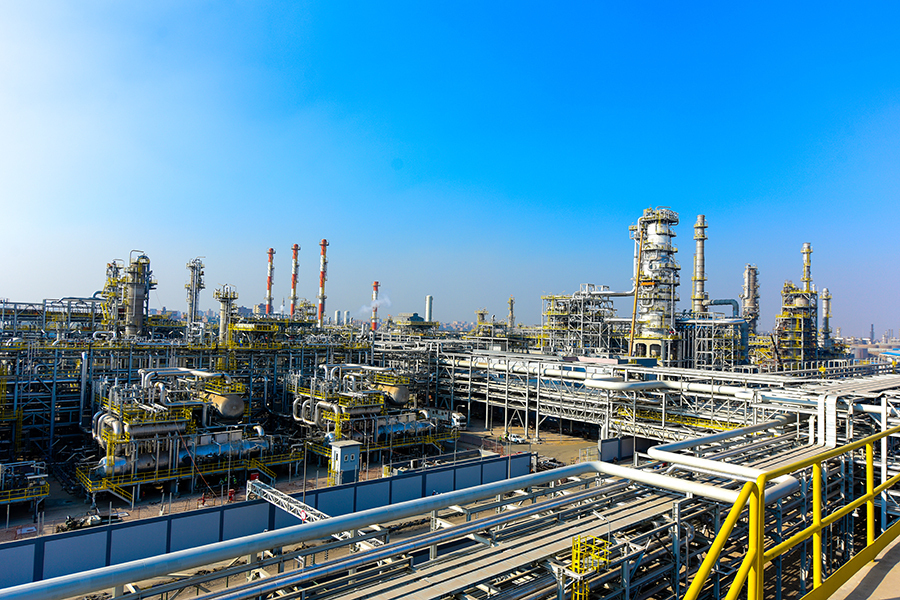
Egypt eyes at least two more El Dabaa reactors

1

WHAT WE’RE TRACKING TODAY

Hassan Abdalla reappointed as acting CBE governor for fifth consecutive year

Good morning, friends. Today’s issue is about the next phase of the country’s growth story — and the practical constraints that will determine how quickly it arrives.

Leading today’s issue: The government will open talks with Russia’s Rosatom on adding at least two reactors to El Dabaa, potentially taking the plant well beyond its planned 4.8 GW capacity. There are no investment decision, price tag, or timetable yet, but it is a clear signal that the government is thinking beyond the project’s current 2030 completion target.

We also have fresh signs of where the local auto market is — and isn’t — finding momentum. June headline growth was driven almost entirely by buses, while passenger-car sales were essentially flat, and dealers raised fresh alarms about shipping pressure out of Asia.

AND- Egyptian contractors are getting ready to test the waters in Syria’s reconstruction push, beginning with two major investment gatherings in the coming weeks. The commercial prospect is vast, but moving from interest to contracts will depend on security clearances and whether the financial system can actually let capital move.

***

ARE YOU MORE OF A LISTENER? Morning Drive is a 10-minute summary of today’s issue crafted for you to enjoy with your morning coffee, while getting the kids ready for school, or driving through the morning rush. And if you like it, tell your friends to tell their friends. They can find us on Apple, Spotify, or wherever they get their podcasts.

***

Making It is back: Six days a week, we help top executives make sense of the Arab world’s companies and economies — and every Thursday, our editor-in-chief, Patrick, talks shop with the people who run them.

Making It is an hour where the CEOs, founders, investors, and policymakers shaping our region show their work and talk about what’s next.

New episodes drop every Thursday.

Listen to the trailer on: Apple Podcasts | Spotify | Anghami | YouTube

Sign up to our newsletter to get Making It in your inbox.


The EnterpriseAM Egypt Forum is back — and we’re devoting the full day to the singular set of questions on everyone’s mind: What does AI actually mean for your company, your people, your economy, your own job — and your kids’ future?

Every session on stage answers one question: “So, what do I actually do about it?”

Join us on 5 October in Cairo. Seats are limited and attendance is by invitation only.

Request your invitation here.


CBE governor stays on

Hassan Abdalla will lead the Central Bank of Egypt (CBE) for a fifth consecutive one-year mandate. President Abdel Fattah El Sisi issued a presidential decree renewing Abdalla’s assignment as acting CBE governor for one year, effective from 18 August 2026 to 17 August 2027, according to the Federation of Egyptian Banks. Abdalla first took office on 18 August 2022, one day after Tarek Amer resigned, more than a year before the scheduled end of his second term. His assignment has been renewed annually since.

The mandate covers what is arguably the most difficult phase of Abdalla’s tenure. The country’s IMF program expires on 15 December 2026. Around USD 18.3 bn in GCC official deposits at the CBE are assured to remain in place until the program ends, subject to an exception for conversion into equity purchases. The renewal also comes two days before the Monetary Policy Committee’s scheduled 20 August meeting, with July’s roughly 12% household electricity tariff increase yet to show up in the inflation data.

Old plan, new push

The regulatory framework for the New Capital’s financial district could move closer to passage in the coming parliamentary session, a parliamentary source tells EnterpriseAM. The government is expected to submit the Central Financial and Business Zones Bill to the House of Representatives at its next session.

Why it matters: The proposed bill would give the New Capital’s financial and business district the institutional and incentive framework it has lacked, including a limited-registration track for firms using Egypt as a base for operations abroad. That track is intended to cover banking and non-bank financial services, alongside other qualifying activities, while a separate open-registration route would serve domestic-market businesses.

ACUD’s IPO remains on the table: A senior government official tells us that Administrative Capital for Urban Development (ACUD) is continuing preparations for a limited EGX offering, with a decision expected by the end of 2026 or in 2027. The company originally targeted a 5-10% EGX sale in 2Q 2024, before its expected debut was deferred to 2025. In January 2025, Chairman Khaled Abbas said ACUD was studying a 1-5% offering as it reassessed its valuation. Assistant Prime Minister Hashem El Sayed narrowed it further, saying in April that the government was planning to take up to 1% of ACUD to market.

The operating model is also under review: The Housing Ministry is studying a proposal involving the Cairo International Financial Center (CIFC) to participate in managing and promoting the New Capital’s financial and business district, according to a statement. A government source says officials want an investment-management model capable of drawing major global companies.

Not a new conversation: In July 2024, an international consortium submitted a proposal to manage CIFC, a planned financial center area in the New Capital, and Prime Minister Mostafa Madbouly requested a detailed proposal. The latest ministry review therefore signals renewed movement on the management question, though no final operator or decision date has been publicly announced.

Back to the pricing table

Medical-supply prices are back under review after the Unified Procurement Authority (UPA) agreed to examine requested adjustments for certain products, according to a statement from the Cairo Chamber of Commerce’s Medical Supplies Division seen by EnterpriseAM. This comes after suppliers expressed concerns over higher raw-material, shipping, transport, wage, and FX costs. The review is intended to help manufacturers and traders continue supplying public providers.

Have prices changed? Not yet. The UPA just opened the door to a review. However, it proposed splitting suppliers into two cohorts that would each deliver once every two months and cap the period between issuing a purchase order and completing delivery at 35 days. Division members proposed alternatives, including issuing orders by groups of governorates or centralizing deliveries through health directorates, instead of requiring separate deliveries to every hospital and medical center across the country.

REMEMBER- The repricing push was still awaiting action earlier this month, when division head Mohamed Ismail Abdo told us that arrears owed to medical-supply firms had fallen to EGP 7 bn as of April, from around EGP 50 bn last year. The UPA was making two payment batches each month to clear the balance without accumulating fresh arrears. That followed the government’s EGP 14 bn first payment to medical-supply companies. Separately, UPA head Hisham Stait had pledged last year to pay pharma companies within 90 days of delivery.

MTO is a go

Al Baraka Bank Egypt’s mandatory tender offer (MTO) for AT Lease (FKA Al Tawfeek Leasing) will take effect during today’s stock market session, Al Borsa reports. The offer period will last 20 days starting today until 16 September. Al Baraka seeks up to 90% of AT Lease, with a floor of 51%, all through a share swap with nocash option.

The latest: Al Baraka had until yesterday to publish the MTO, after getting the Financial Regulatory Authority’s sign-off on the offer. The acquisition will see Al Baraka issue up to 63.2 mn new shares to AT Lease shareholders.


Happening tomorrow

#1- It’s almost interest-rate decision time again: The Central Bank of Egypt’s Monetary Policy Committee will hold its fifth meeting of the year tomorrow, after keeping rates unchanged for three straight meetings at 19.00% on deposits and 20.00% on lending, following a 100-bps cut in February. July’s data support a cautious stance: annual urban inflation rose to 14.9% from 14.3% in June, while monthly core inflation was flat. A roughly 12% electricity-tariff increase introduced in late July has yet to be fully reflected in inflation data, with its main impact expected in August’s reading.

#2- Tomorrow is the last day for companies to pull the tender documents for the Industrial Development Authority’s eight new billet-production licenses, which would add a combined 2.8 mn tons of annual capacity. Technical and financial bids are due by noon on 9 September. The tender opened last week, with four 500k-ton licenses and four 200k-ton licenses up for grabs.

PSA-

#1- A long weekend is coming our way: Public and private sector workers will get Thursday, 27 August off as a paid holiday in observance of the Prophet Muhammad’s birthday, according to a cabinet statement. The holiday has been moved from Tuesday, 25 August. We’ll be on the lookout for the Central Bank and the bourse to follow suit.

#2- WEATHER- Weather is a little bit kinder to us in Cairo today, with a high of 34°C and a low of 24°C, according to our favorite weather app.

It’s a couple of degrees cooler in Alexandria, with a high of 32°C and a low of 24°C.

The big story abroad

In the absence of a major development in the regional war, the global press has set its sights on a number of stories. Here are the most notable headlines.

A bond yield problem: Sovereign borrowing rates are surging across the globe, with yields on 30-year US Treasuries reaching their highest levels since 2007 this week — rates in France, Germany, the UK, and Japan have also risen dramatically in recent days. A confluence of factors — largely Washington’s Iran offensive and tariff campaign — is pushing debt in developed countries to unsustainable levels.

Ottawa in the tariff target: Canada is bracing for a salvo of US tariffs on USD 20 bn worth of exports, while US President Donald Trump is reportedly mulling a last-minute agreement to avert the duties. After rounds of talks, the White House called on Canada to scrap its retaliatory auto tariffs and provincial liquor bans, while Ottawa angled to lower duties on automobiles. The tariffs are due to come into effect at midnight Eastern Daylight Time.

And in the AI world: Anthropic’s pre-IPO revolving credit facility is set to rise above its roughly USD 10 bn target, as Wall Street banks line up to lend massive sums to signal confidence and clinch a slice of one of the largest tech IPOs in history. The terms are still under negotiation, and the company could choose to cap or reduce the credit line.

*** It’s Hardhat day — your weekly briefing of all things infrastructure in Egypt: EnterpriseAM’s industry vertical focuses each Wednesday on infrastructure, covering everything from energy, water, transportation, and urban development, as well as social infrastructure such as health and education.

In today’s issue: We dive into how Egypt’s new financing mechanisms are reshaping access to housing, and why private developers still aren’t building for the buyers left behind.

Somabay Golf ranked among the world’s most spectacular golf-course settings

Somabay Golf is proud to be ranked #98 in Golf World’s Top 100 X Factor Courses, placing it among the world’s top golf courses and recognizing its extraordinary setting and unforgettable golfing experience.

Set between dramatic desert landscapes and the crystal-clear waters of the Red Sea, this recognition reflects the unique beauty, character, and world-class appeal that continue to position Somabay Golf on the global golf map.

**Click here to discover Somabay Golf.**

2

Energy

Gov’t to open talks with Rosatom on adding new El Dabaa reactors

The government is looking into adding at least two reactors to El Dabaa nuclear power plant, with expansion potentially reaching four additional units, Electricity Minister Mahmoud Esmat said in a televised call (watch, runtime: 2:59). The government will discuss the proposed expansion with Russian state-owned Rosatom over the first two proposed units, but no final investment decision, cost, or timeline have been announced.

“We are ready to expand our cooperation and offer Egypt some of the most reliable and safe solutions in global nuclear energy, which will help strengthen the country’s role as a regional center for peaceful nuclear energy,” Rosatom tells EnterpriseAM, adding, “It’s important to emphasize that we are not simply building a nuclear power plant; we are also facilitating the development of a modern national nuclear industry in our partner country.”

What that could mean: The four VVER-1200 reactors now being built will each provide 1.2 GW, giving the plant a combined capacity of 4.8 GW. Adding two reactors of the same size could bring capacity to 7.2 GW, while a four-reactor expansion would take it to 9.6 GW — though the technology and capacity of any additional units have not been confirmed.

The existing project: Rosatom is building four units under a project estimated to cost USD 28.75 bn, with Russia providing a reported USD 25 bn loan covering 85% of the cost and Egypt financing the remainder. The first unit is expected to come online by the end of 2028, while the whole facility is expected to be completed by 2030.

The fuel math: Esmat said the initial 4.8 GW plant could save around 8 bcm of natural gas, reducing the fuel Egypt burns to generate electricity — equivalent to some 19% of Egypt’s 2025 gas output (42 bcm).

Caveats?

The expansion comes under a cloud: Days after the Electricity Minister’s announcement, Politico reported allegations of construction defects, safety culture breaches, and project-management failures at El Dabaa, citing documents supplied by an intelligence official. These include what Politico described as a confidential June letter, purportedly sent by Egypt’s Nuclear Power Plants Authority (NPPA) to Rosatom, and four internal Rosatom documents. We did not independently review or verify the documents.

Rosatom and the NPPA pushed back on the report. Rosatom told Politico that it upholds the highest levels of nuclear safety and has done so throughout the construction of El Dabaa — citing its quality-management system and oversight involving Egyptian and Russian authorities, as well as engagement with the International Atomic Energy Agency. Meanwhile, the NPPA said in a statement that Politico had presented an “inaccurate and unbalanced” picture by taking technical observations out of their engineering and regulatory context and drawing them into a broader narrative — adding that “no construction stage is approved or accepted until the required corrective measures have been completed and the relevant hydraulic and structural tests have been successfully conducted.”

Where construction stands: The reactor pressure vessel — the steel structure that contains the nuclear core — was installed at Unit 2 in July, following the same milestone at Unit 1 in November 2025.

This publication is proudly sponsored by

3

Automotive

Egypt’s auto market grew in June, but dealers warn of shipping pressure ahead

Egypt’s auto market grew 3.3% m-o-m in June, but passenger cars barely moved — buses did the heavy lifting, according to AMIC’s June report (pdf). Passenger cars — still 71% of volume — edged up just 0.7% m-o-m to 12.4k units, while trucks slipped 0.5% to 3.1k. Total sales are up 6.4% y-o-y, buses have more than doubled (+105.7%), and trucks are up 10.6% — even as passenger cars posted a 2.3% y-o-y decline, a dip AMIC’s report doesn’t explain.

That decline isn’t a red flag, according to two market trade voices. “There’s no such thing as a ‘peak’ for buyers,” Auto Traders Association President Osama Abu El Magd tells EnterpriseAM, adding that a 2% swing is small precisely because the market’s overall base is small. He also flagged a real gap in AMIC’s data: it excludes several major brands in Egypt — including all German cars. “If you look at actual traffic authority licensing figures, they’re very close, and a 1-3% change represents differences of no more than a few hundred cars a month — an insignificant change.”

How buses performed

Tourism categories stood out: Tourism Micro buses jumped from 120 to 296 units m-o-m (+147%), Tourism Maxi rose from 44 to 73 (+66%), and a category absent from May’s data — Transport Maxi-City — appeared with 30 units in June.

Passenger cars were broadly flat on the surface, but the underlying mix kept shifting.

The 1.5-1.6L engine band grew to 52% of PC volume from 48% in May of this year and 45% in May 2025. SUVs over 2.0L fell 42% m-o-m (353 to 205 units) — a move that may reflect the segment’s small base rather than a sustained demand shift.

EV sales, meanwhile, plateaued — at least according to AMIC: 352 units in May, while June stayed almost still at 351, even as the y-o-y comparison reads as explosive — up 3,410% from June 2025’s mere 10 units. That near-flat monthly reading comes as automakers and dealers continue to describe an EV market gathering momentum, though AMIC’s member-submitted figures do not provide a brand-by-brand breakdown. Mansour Automotive Group CEO Ankush Arora told us in February that IM Motors — a 100%-electric brand Mansour had just launched — was selling 50-60 units a month at the premium end alone, with BYD freshly soft-launched. Abou Ghaly Motors VP Tamer Kotb made a similar call, predicting range-extended EVs could hit 50-60% of new car sales in 2026.

The EV tariff idea dealers don’t want

Abu El Magd rejects a proposed 5% customs duty on imported electric vehicles as a tool to protect local assembly. “It won’t create a real competitive advantage for local manufacturing, and will only increase financial burdens on the end consumer and disrupt market movement,” Abu El Magd argues. “Protection comes from reducing production costs for the factory itself, not taxing the competition.” He adds that EV sales remain small, the market is still exploring the segment, and decisions require deliberation, study, and consultation. “What’s needed is identifying the bottlenecks in the production cycle and supporting them directly, instead of burdening the consumer with additional costs.”

Alaa El Sabaa, the auto division’s deputy head, put it more bluntly: “Adding EGP 100k to an imported car priced at EGP 2 mn won’t entice the local factory to expand — the factory itself is unhappy and unconvinced by this rate.”

On why dealers still favor imports over local assembly, Abu El Magd pointed to capital speed. “Importers cycle capital in about 3 months, versus 5 for local assembly,” compounded by a fragmented market, he says, adding that “200k cars split across 50-60 brands” leaves any single model’s production run too small to achieve economies of scale. Both he and El Sabaa independently raised Morocco as the model to follow: 700k cars against just 50k in domestic consumption. To get there, “the sacrifice has to start with the government — real incentives on energy costs, taxes, land, and procedures to cut production costs. A foreign investor is looking to reduce risk and turn a [gain], and won’t do the state any favors at its own investment’s expense,” Abu El Magd says.

How the localization effort is shaping up

Localization still has some distance to cover in passenger cars. Derived from the change in AMIC’s May and June YTD origin data, June passenger-car sales comprised about 5.6k locally assembled (CKD) vehicles and 6.8k fully built import (CBU) vehicles. That left CBU ahead by roughly 1.3k cars in June and ahead YTD. Commercial vehicles showed a much more localized sales mix: derived June figures put trucks at about 90% CKD and buses at roughly 74% CKD, compared with about 45% CKD for passenger cars. That suggests local assembly is more established in commercial vehicles, though the mix does not by itself measure domestic value added or manufacturing capacity.

REMEMBER- Al Mansour Automotive broke ground on a USD 150 mn MG manufacturing plant in 6th of October City in November 2025, with production expected to start in 3Q 2026. The plant is designed for a first-phase annual capacity of 50k vehicles. It would initially produce the MG5 sedan, with four-wheel-drive vehicles and EV production planned for later. If it ramps up as planned, the facility could materially increase CKD passenger-car output, although the effect on the CBU-CKD split will depend on its production mix, utilization, and domestic sales allocation.

Red Sea trouble is already squeezing supply

Both Abu El Magd and El Sabaa said pressure on shipping from East Asia could be the larger near-term risk for the auto market heading into 4Q 2026. “There’s severe pressure on all shipments coming from China, India, Japan, Korea, and Taiwan, as shipping routes rely on combined cargo heading to both Egypt and the Gulf,” Abu El Magd says. He notes that carriers are responding by charging steep transit premiums, waiting to consolidate additional cargo, or avoiding the Red Sea route and sailing around the Cape of Good Hope — a diversion that can, in some cases, double transit times. “A ship’s cycle that used to do four trips a year now does two — that doubles shipping, financing, and ins. costs and creates a real shortage.”

El Sabaa described the sector as “barely getting by” as a result, with both calling for government support targeted at supply-chain bottlenecks and feeder industries rather than single-factory fixes.

(** Tap or click the headline above to read this story with all of the links to our background as well as external sources.)

4

Construction

Egyptian contractors are lining up for Syria’s reconstruction, starting with two September investment conferences

Egyptian companies are lining up for Syria’s reconstruction, and the first test comes within weeks. Trade bodies and chamber sources tell us they expect a strong Egyptian showing at the country's two biggest business events of the year — the Damascus International Fair (DIF63), opening later this month, and the Syria Reconstruction Conference on 13-16 September.

Interest spans iron and steel, textiles, woodworking, metallurgy, food, and export firms, the Egyptian Federation of Industries tells us, and heavyweights Hassan Allam and Naguib Sawiris were both in Damascus this summer, meeting Syrian President Ahmed Al Sharaa.

Why it matters: Syria is shaping up as the next big outbound market for Egyptian contractors — the way Iraq has over the past two years. Exactly one Egyptian company made it to last year's Reconstruction Conference; a strong turnout this September would mark Cairo catching up to the Gulf and diaspora capital that moved first.

The shift follows a warming at the government level. Cairo and Damascus signed two MoUs in January, exchanged their first trade delegations in 15 years, and are weeks from restoring direct flights, with a joint business council in the works. That political cover is the signal Egyptian firms were waiting for.

The opening is real — Syria’s reconstruction bill runs to an estimated USD 216 bn — but two walls remain. Egyptian firms still need security clearances to attend, which sources say are being finalized, and, like every investor eyeing Syria, they face a financial system where capital still can’t move in and out cleanly.

What now: DIF63 and the September conference are the near-term test of whether Egypt’s push becomes a real delegation. Syria’s FATF grey-list review in October is the milestone that would start to ease the banking constraints.

GO DEEPER- We ran the full regional picture — where Gulf, Qatari, and diaspora capital moved first, and what's keeping investors on the sidelines across Syria, Lebanon, and Libya — in EnterpriseAM MENA+.

(** Tap or click the headline above to read this story with all of the links to our background as well as external sources.)

5

EARNINGS WATCH

Palm Hills posts stronger 2Q as 1H income remains down

Palm Hills Developments’ (PHD) net income after tax and minority interest rose 17% y-o-y to EGP 1.06 bn in 2Q 2026, as revenue jumped 42% to EGP 10.18 bn, according to the developer’s latest earnings release (pdf). Gross income increased 24% to EGP 3.62 bn, although the gross margin narrowed to 35.5% from 40.5% a year earlier.

The stronger quarter narrowed the 1H earnings decline. Net income after tax and minority interest fell 7% y-o-y to EGP 2.26 bn in 1H 2026, while revenue rose 25.4% to EGP 19.53 bn. Gross income inched up 3.9% to EGP 6.93 bn, with the gross margin contracting to 35.5% from 42.8%. PHD attributed the margin compression to a greater contribution from lower-margin projects and units, alongside higher construction and development costs.

(** Tap or click the headline above to read this story with all of the links to our background as well as external sources.)

6

Also on our Radar

Taqa Arabia unit inks binding deal for Tanzania’s first small-scale LNG plant

Taqa Arabia’s LNG arm Rosetta Energy Solutions signed a binding gas sale agreement to develop Tanzania’s first small-scale liquefied natural gas (LNG) plant with the Tanzania Petroleum Development Corporation and pan‑African investor Africa50, according to a bourse filing (pdf).

IN CONTEXT- It’s a commercial upgrade from the heads of terms the same three parties signed back in May 2024 (pdf). Rather than supplying a single industrial customer (Elsewedy Industrial City), the East Africa LNG project now aims to liquefy domestic gas for industrial, residential, and transport customers across Tanzania who sit outside the existing pipeline network, with commercial operations targeted to begin in 2027. The move follows a broader regional LNG push by the company, which inked similar framework agreements with Equatorial Guinea in 2022 and Mauritania in 2023.

A Manara makeover

Advisory group Exits Mena and the local management of private equity firm Avanz Capital Egypt (Ace) are buying out the latter. The group has agreed to acquire 100% of Ace, an FRA-regulated private equity and asset manager, in a “multi-seven-figure” transaction that has already secured initial FRA approval, according to a joint statement (pdf). The identity of the seller and other deal terms were not disclosed.

PLUS- Ace is getting a new name: Ace will rebrand as Exits Manara, with CEO and Managing Director Haytham Wagih and the existing investment team remaining in place. The business will continue managing Manara 1 — described by the parties as its existing SME-focused fund-of-funds vehicle — and plans to launch Manara 2 for Export Investments, targeting mid-sized exporters. Ace most recently bought a secondary LP stake in Algebra Ventures’ second fund last September, as we reported at the time.

Playing catch-up

Al Ahly Momkn is studying the launch of a digital bank, Al Mal reports, citing CEO Ahmed Farouk Ghazi. However, the company has not disclosed a launch date. It is also targeting EGP 300 bn in transaction value by the end of 2026.

IN CONTEXT- Al Ahly Momkn is backed by two state-owned financial players: E-finance and the National Bank of Egypt (NBE). The former acquired 25% of the company in 2024, with the latter holding the remaining 75% at the time. Al Ahly Momkn’s study comes as earlier entrants advance: Banque Misr’s Onebank received final CBE approval in August 2025 and was expected to begin public services in 2026. Meanwhile, CIB said it planned to invest EGP 300 mn in a new digital arm over three years, with a full rollout anticipated later in 2026.

More on our radar:

  • Egypt has extended Apache Corporation’s exploration concession for five years, covering around 3.4 mn acres of exploration territory. (Alarabiya)
  • AT Lease has appointed FACT Financial Advisors to prepare a fair-value study for its shares, as required by the FRA, following Al Baraka Bank Egypt’s proposed share-swap mandatory tender offer for up to 90% of the company. (Statement, pdf)

(** Tap or click the headline above to read this story with all of the links to our background as well as external sources.)

7

PLANET FINANCE

The 30-year Treasury hit 5.31%, the highest level since 2007

The 30-year US Treasury closed Monday at 5.31%, the highest level since June 2007. Every long-dated USD borrowing in our coverage area — Saudi sukuk, Adnoc infrastructure paper, Egyptian eurobonds, Kuwaiti sovereign issuance, and GCC utility refinancing — just repriced against a materially harder curve.

The move happened despite softer US data: July retail sales fell 0.6%, the jobs report was weak, and inflation numbers were benign. Under a normal cycle, that combination pushes long yields down, but it didn’t. Ameriprise Chief Market Strategist Anthony Saglimbene told CNBC that investors are “increasingly evaluating Treasury securities through the lens of longer-term fiscal sustainability and less through the lens of inflation, monetary policy, and growth, at least for the longer end of the Treasury curve.”

Why does this matter? Read carefully. That means bond investors have stopped pricing US long-term debt against what the Fed will do, and they’re now pricing it against whether the US government can service the debt it already carries. That is a categorical shift, and the transmission to our coverage area is close to one-for-one under the USD peg.

The three drivers, according to Bloomberg and Axios: The CBO raised its US annual deficit forecast to USD 2.1 tn last week, USD 200 bn more than February’s estimate. AI capex is competing directly with sovereigns for global fixed-income capital, with tech giants issuing enormous corporate bond volumes to fund data centers. And markets are still recalibrating around Warsh’s “reform-oriented” framework, which has yet to disclose what it actually means for policy.

The move is global. Canadian 30-year yields hit their highest level since 2010 on Monday, German long yields are at 2011 levels, and the landscape looks like a sovereign debt sustainability repricing move — not a US-specific event.

For GCC sovereign issuers: Vision 2030 megaproject financing, Adnoc infrastructure paper, and QIA/PIF-adjacent sovereign vehicles all price from a harder curve today than they did last quarter. GCC central banks cannot cut regional rates to compensate — the USD peg means monetary policy is inherited from the Fed.

For EM importers in our region: Egypt’s eurobond window was already shut on Fed-transition uncertainty. The fiscal-sustainability driver hitting the Treasury curve now means even an eventual Fed cut cycle is insufficient to reopen it at clean pricing. Pakistan, Turkey, and Sri Lanka face the same constraint. The African local-currency debt trade covered earlier this week looks structurally sharper by the day.

For Gulf SWFs and regional corporates: PIF, Mubadala, Adia, and QIA carry material long-duration Treasury exposure — paper losses on existing books, better forward yields on new deployments. The “fiscal sustainability” narrative is exactly the risk their diversification pivots are hedged against; PIF’s Q1 pivot to four US positions and cut in international allocations from 30% to 20% look increasingly prescient. For regional corporates — Saudi PIF-portfolio companies, UAE utilities, Egyptian state banks, regional telecoms — any long-dated bond, sukuk, or infrastructure financing planned for the next twelve months prices from the same harder curve.

What to watch this week: Today’s FOMC minutes will show how the four July dissenters framed their case for hikes and what Warsh signaled internally about the framework he plans to build. Friday’s Jackson Hole speech — Warsh’s first as chair — is the single most important central-bank communication event of 2026. A hawkish tone reinforces Monday’s fiscal sustainability repricing. A dovish tone introduces cross-currents that could partially reverse it. Either way, the long end of the Treasury curve moves.

(** Tap or click the headline above to read this story with all of the links to our background as well as external sources.)

MARKETS THIS MORNING-

Asian markets saw notable losses this morning. South Korea’s Kospi dropped 4.2%, while Japan’s Nikkei followed with a 2% loss. This mirrored overnight losses on Wall Street, which coincided with a broad selloff in global bonds, pushing long-term yields to multi-year highs.

EGX30

55,277

-0.3% (YTD: +32.2%)

USD (CBE)

Buy 50.58

Sell 50.45

USD (CIB)

Buy 50.45

Sell 50.55

Interest rates (CBE)

19.00% deposit

20.00% lending

Tadawul

10,912

+0.0% (YTD: +4.0%)

ADX

10,098

+0.2% (YTD: +2.9%)

DFM

5,858

+0.0% (YTD: -3.1%)

S&P 500

7,692

-0.7% (YTD: +12.4%)

FTSE 100

10,728

+0.1% (YTD: +8.0%)

Euro Stoxx 50

6,468

-1.0% (YTD: +11.6%)

Brent crude

USD 91.02

+0.2%

Natural gas (Nymex)

USD 2.79

+0.5%

Gold

USD 4,385

-0.8%

BTC

USD 64,632

+0.3% (YTD: -26.1%)

S&P Egypt Sovereign Bond Index

1,099.36

+0.2% (YTD: +10.7%)

S&P MENA Bond & Sukuk

150.91

-0.1% (YTD: -0.65%)

VIX (Volatility Index)

15.84

+4.3% (YTD: +6.0%)

THE CLOSING BELL-

The EGX30 fell 0.3% at yesterday’s close on turnover of EGP 14.4 bn (36.1% above the 90-day average). Local investors were the sole net buyers. The index is up 32.2% YTD.

In the green: Qalaa Holdings (3.2%), Telecom Egypt (2.6%), and Orascom Investment Holding (2.3%).

In the red: Misr Cement (-7.7%), Rameda (-4.2%), and Orascom Development (-3.3%).

8

HARDHAT

Egypt’s real estate market splits as state pushes alternative tenure models

Egypt’s housing market is splitting into two tracks. State-backed rental and rent-to-own programs are opening alternatives for buyers priced out of ownership, while private developers stay locked into an off-plan, ownership-only sales model that these new mechanisms barely touch.

The push comes as affordability keeps eroding. In response, the Financial Regulatory Authority (FRA) has opened syndicated financing to help lenders serve priced-out, high-value buyers, while the Housing Ministry and the New Urban Communities Authority (NUCA) are rolling out rental and rent-to-own units for middle- and low-income Egyptians. What matters now is whether these financing fixes can reach buyers before developer sales slide further.

There’s a real affordability gap hitting the market. Catesby Langer-Paget, head of the Egypt office at Savills, tells EnterpriseAM that nearly 50% of respondents with individual monthly incomes of up to EGP 200k said in Savills’ 2026 consumer survey that their purchasing budgets top out at EGP 10 mn. With their preference for three-bedroom units, their options are limited among major developers.

That gap widens further among younger buyers. The 25-34 age bracket tends to target property types and price points that exceed what their current income levels can support. The mismatch isn’t confined to residential real estate. The office segment shows a similar divide: even buyers earning above EGP 300k a month have spending appetites that fall short of Grade A office prices, which, Langer-Paget says, is evidence of a broader disconnect between buyer budgets and market prices.

The numbers speak for themselves. These purchasing pressures, combined with buyers increasingly viewing property as a dual-purpose asset, both personal and a long-term investment, help explain why the number of new mortgage finance customers fell by more than 21% y-o-y in Q1 2026, even as the value of financing granted rose by more than 17.5% over the same period last year. Ibrahim El Missiri, CEO of Abu Soma Development Company, previously told EnterpriseAM that units have gotten pricier and the pool of customers who can afford them has gotten smaller.

New mechanisms on the ground

Rent and rent-to-own: Housing Minister Randa El Menshawy announced the rollout of 15k residential units under a rental scheme through the Social Housing Fund, with rent capped at 25% of an applicant’s income and the remainder subsidized. The units target Egyptians up to age 35. Leases run three years, renewable once, with the option to convert to ownership after a minimum of one year. Separately, the cabinet approved a 5k-unit rollout by NUCA, structured as rent-to-own from the outset, under terms set independently by the authority. Together, the two programs put 25k units on the market through parallel tenure models, including rental with an ownership option and rent-to-own from day one, rather than the single mechanism the market has relied on until now.

Market reaction

Companies back the shift. Mohamed El Kahky, chairman of the Egyptian Mortgage Federation, tells EnterpriseAM that syndicated financing lets more than one company finance a single property, spreading the risk and expanding what participating lenders can collectively fund. “This opens the door to financing units and projects that were previously out of reach for any single lender,” he says. Alaa Fikry, chairman of Beta Egypt, tells EnterpriseAM that the market is preparing for the emergence of an institutional rental model. He points to developers already sitting on unsold, ready-for-delivery units as a likely entry point. Either a real estate investment fund buys those units from the developer in a single transaction, or the developer sets up its own fund to operate them directly. No transaction of this kind has closed yet.

Ownership still holds. For Tarek Abdel Rahman, Bonyan for Development and Trade CEO, ownership remains the better option. Abdel Rahman tells EnterpriseAM, “The ten-year installment plans have narrowed the gap between rent and the monthly installment,” questioning why buyers would put that spending toward rent rather than an asset they’ll eventually own.

These mechanisms won’t move the needle for developers. Other industry leaders believe they’ll have no tangible impact on private-sector sales for structural reasons. Fathallah Fawzy, chairman of the real estate development committee at the Egyptian Businessmen’s Association, casts doubt on the real-world impact of syndicated financing, telling EnterpriseAM that market sales rely on off-plan sales. “No developer has ready-to-deliver units; this system will only benefit the resale market,” he says.

The yield case doesn’t work: Moataz Shaarawy, CEO and deputy chairman of Uptown 6 October Group, tells EnterpriseAM that the real estate funds need a viable return, and residential rental yields in Egypt, capped at 3-5%, don’t clear that bar the way commercial or hospitality assets do at 6-9%, limiting the appeal of buying residential units to rent out.

Rent-to-own targets a different customer: Fawzy downplays the impact of the Housing Ministry’s rollouts on private-sector developers, telling EnterpriseAM that the customer waiting for a rental unit through government rollouts isn’t the customer targeted by private-sector developers, who cater to the country’s top 10% by income. Shaarawy adds that this model works for the state because it holds unutilized built inventory, “while developers don’t build to hold onto units.”

The real cost: “The cost of money is the real pricing crisis,” Shaarawy tells EnterpriseAM, explaining that selling a unit on a 10-year installment plan can double its price due to interest costs and hedging risk. Meanwhile, Mohamed Abdel Gawad, chairman of Vantage Developments, tells EnterpriseAM that project pricing is complicated by volatile construction input costs. “A ton of rebar can sometimes exceed EGP 40k, up from about EGP 10k before 2020,” he says, attributing the jump to successive increases in energy and fuel prices, as well as transportation and logistics costs. He’s calling for an AI-based real estate index to assess the market fairly.

Honoring delivery deadlines is the real fix. Fawzy believes the real catalyst for sales is companies honoring delivery deadlines to dispel buyer concerns. Fikry warns that product diversification alone won’t attract foreign direct investment; it needs to be paired with a flexible investment environment that ensures freecurrency transfers and exchange-rate stability.

The trade-off: A rental payment and a 10-year mortgage installment now draw down roughly the same amount each month. So the real choice isn’t rent versus own; it’s liquidity today versus an asset tomorrow. And developers are counting on buyers still choosing the asset.

What’s next? Both the syndicated financing and the rental rollout plans are on track for the next two months. The question is whether they reach buyers priced out of the market or end up serving the resale and investor segments that already have financing options. Developers are still selling exclusively off-plan, and residential yields still fall short of what institutional capital needs. When the next real estate story out of Egypt breaks, will it be institutional rent actually launching, or another prediction of it?

(** Tap or click the headline above to read this story with all of the links to our background as well as external sources.)


AUGUST

19 August (Wednesday): Connected Banking Summit, Fairmont Nile City Hotel Cairo.

20 August (Thursday): Monetary Policy Committee’s fifth meeting of 2026.

26 August (Wednesday): Prophet Muhammad’s birthday.

31 August (Monday): Deadline to apply online for the Industrial Development Authority’s 540 lease-to-own industrial plots via the Egypt Industrial Hub

SEPTEMBER

8-10 September (Tuesday-Thursday) El Alamein International Airshow, El Alamein International Airport.

10-12 September (Thursday-Saturday): Egyptian Entrepreneurship Sector Diagnostics Report Summit, El Gouna.

15 September (Tuesday): IMF to hold its eighth review of Egypt’s USD 8 bn EFF arrangement.

24 September (Thursday): Monetary Policy Committee’s sixth meeting of 2026.

27-29 September (Sunday-Tuesday): Global Conference on Population, Health, and Human Development.

28-29 September (Monday-Tuesday): Egypt Mining Forum, St. Regis Hotel New Capital.

30 September - October 3 (Wednesday-Saturday): Cityscape, Egypt International Exhibition Center, Cairo.

OCTOBER

5 October (Monday): The EnterpriseAM Egypt Forum.

6 October (Tuesday): Armed Forces Day.

10-11 October (Saturday-Sunday): Egypt Women’s Health Summit (EWHS), Cairo Marriott Hotel.

26-28 October (Monday-Wednesday): IEX Egypt, Egypt International Exhibition Center, Cairo.

29 October (Thursday): Monetary Policy Committee’s seventh meeting of 2026.

NOVEMBER

6-8 November (Friday-Sunday) : Global Entrepreneurship Festival, JW Marriott Hotel, New Cairo.

8-11 November (Sunday-Wednesday): Cairo ICT Forum.

DECEMBER

7-10 December (Monday-Thursday): Food Africa, Egypt International Exhibition Center, Cairo.

17 December (Thursday): Monetary Policy Committee’s eighth meeting of 2026.

EVENTS WITH NO SET DATE

2H 2026: Operations at Deli Glass Co’s new USD 70 mn glassware factory kick off.

2026: The Egyptian-American Economic Forum.

4Q 2026: Banque du Caire IPO.

2027

20 January-7 February: Egypt to host the African Games.

1-3 February (Monday-Wednesday): Agri Expo, Cairo International Convention Center.

April 2027: Tenth of Ramadan dry port and logistics hub to begin operations.

EVENTS WITH NO SET DATE

2027: Egypt to host EBRD’s annual meetings.

2027: Egypt-EU Summit 2027.

End of 2027: Trial operations at the Dabaa nuclear power plant expected to take place.

September 2028: First unit of the Dabaa nuclear power plant begins operations.

Now Playing
Now Playing
00:00
00:00