Delayed factories get breathing room

1

WHAT WE’RE TRACKING TODAY

Global consortium pitches USD 5 bn medical cities for New Capital and New Alamein

Good morning, everyone. We have three stories today about how the government is pushing assets — factories, properties, and natural resources — toward more productive use.

The industrial grace-period story is a key read. Delayed factories are getting up to 18 additional months to complete construction, with penalty waivers tied to how far along they are. The flip side: investors who have already exhausted earlier extensions without delivering are getting a final three-month window before the IDA reclaims the land.

The North Coast property sweep is the opening move to something bigger. Field committees are currently identifying unregistered chalets and villas along the coast, with East and West Cairo, the Red Sea, and the New Administrative Capital to follow. Property owners who voluntarily register before the end of September get exemptions and incentives under the amended law, but after that, the carrot goes away.

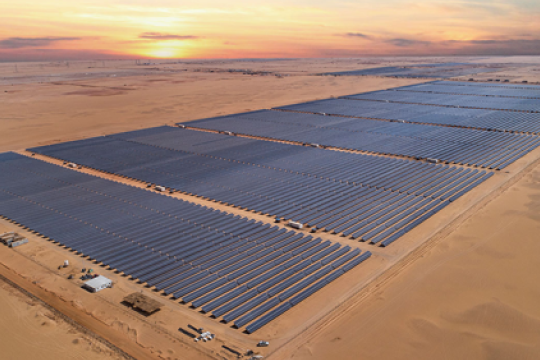
And in renewables: The government is weighing a USD 1 bn integrated quartz-to-panel solar plant in Zafarana. No investor or timeline has been announced yet, but the logic is sound: local manufacturing will help offset the cost of USD-denominated import components.

***

ARE YOU MORE OF A LISTENER? Morning Drive is a 10-minute summary of today’s issue crafted for you to enjoy with your morning coffee, while getting the kids ready for school, or driving through the morning rush. And if you like it, tell your friends to tell their friends. They can find us on Apple, Spotify, or wherever they get their podcasts.

***

The EnterpriseAM Egypt Forum is back — and we’re devoting the full day to the singular set of questions on everyone’s mind: What does AI actually mean for your company, your people, your economy, your own job — and your kids’ future?

Every session on stage answers one question: "So, what do I actually do about it?"

Join us on 5 October in Cairo. Seats are limited and attendance is by invitation only.

Request your invitation here.

New cities, new medical cities

A global private-sector consortium is planning to invest more than USD 5 bn to build two integrated medical cities in the New Capital and New Alamein, according to a cabinet statement. The New Capital project would see around USD 2.8 bn in investment, while the New Alamein development would draw another USD 2.5 bn. The government and consortium are still working toward final technical, financial, and regulatory terms.

Why it matters: The two medical cities will include medical research, education, and training facilities and are intended to capture medical tourism demand, with the New Alamein project featuring integrated hotels serving patients and their families. The consortium projects that the New Capital hospital alone will attract over 3 mn medical tourists during its first three years of operation.

Citizens have a share: The government would receive an unspecified share of the beds for the universal health ins. system, according to the statement.

REMEMBER- The New Capital medical city has been in the works under a different proposed structure. The government was seeking USD 1 bn from Chinese banks last year to finance a 230-feddan development set to be built by China State Construction Engineering Corporation. It is unclear whether the new consortium proposal replaces or expands that earlier plan.

Beyond the showroom

Ezz Elarab Elsewedy Investments (ESI) signed a EGP 5 bn partnership with Chery-owned auto brands Omoda and Jaecoo to assemble their models locally. The investment will go toward establishing and developing the facilities through the group’s automotive manufacturing arm.

The partnership is targeting higher local-content levels and a domestic supplier base, alongside technology transfer and future exports. The companies did not disclose which models will be produced, the planned capacity, the location of the facilities, or when production will begin.

IN CONTEXT- Omoda and Jaecoo were already eyeing an Egypt entry in late 2024 before appointing ESI as their local agent. The new project also comes on the heels of ESI’s USD 100 mn auto manufacturing expansion plan announced in February 2025, though it is unclear whether the EGP 5 bn investment falls within that existing envelope.

One company, one number

Banks have until December 2026 to complete profiles for all corporate borrowers in the Central Bank of Egypt’s (CBE) corporate national database, according to a CBE circular (pdf) issued on Tuesday. Lenders have until the end of June 2027 to compile basic profiles for their non-borrowing corporate depositors, with all corporate files subject to mandatory monthly updates.

The unified commercial registry number will serve as the primary key to link corporate data across the financial system. Banks will use verified registry data to complete companies’ core information and later add the number to I-Score and the CBE’s credit-registration system once the necessary infrastructure is ready. The CBE expects the database to give it a more accurate picture of corporate financial inclusion and support policies aimed at bringing more businesses into the financial system.

IN CONTEXT- The CBE is tightening data reporting across the wider credit market. Banks were barred earlier this year from granting or renewing credit to non-bank lenders unless they were coded with the central bank and reporting customer information to both the CBE and I-Score.

Data point

USD 56.29 bn — that’s where our net foreign reserves stood at the end of July, rising USD 1.22 bn from June to a fresh record, according to the latest central bank data. The increase was smaller than the USD 1.94 bn jump recorded in June, when reserves first crossed the IMF’s USD 55 bn threshold, but it still sets a new record high.

PSA-

WEATHER- It’s another sunny day in Cairo, with a high of 36°C and a low of 25°C, according to our favorite weather app.

It’s a few degrees cooler in Alexandria, with a high of 32°C and a low of 23°C.

The big story abroad

The latest from the regional war is dominating headlines this morning. Iran has reached an agreement with Oman on a proposal that would give the Islamic Republic control over ships passing through the Strait of Hormuz. While the US has yet to confirm or comment on the news, the development is in line with US President Donald Trump’s recent remarks regarding an imminent agreement to reopen the strait.

IN CONTEXT- The US has repeatedly reiterated that it would not agree to any agreement giving Iran control over Hormuz.

This does not mean the war is over: Iran has reportedly threatened to attack Gulf energy infrastructure if the US launches fresh attacks on its territory.

And over on Wall Street: A wave of cyberattacks targeted major Wall Street financial services firms and ‌money managers, including Point72 Asset Management, Millennium Management, Two Sigma Investments, and Citadel. The voice phishing attacks mark the latest in a series of cybersecurity breaches targeting Wall Street, which have intensified thanks to AI tools.

AI leadership shakeup: Google DeepMind CEO Demis Hassabis has stepped down from his post, one of several people in leadership positions who are leaving the company. The shakeup comes amid growing investor and industry concerns that Google is failing to keep pace with its rivals in the AI sphere.

Somabay continues its commitment to international sport by hosting the Egypt International Teen Championship from 25–27 September 2026.

Registration is now open for the US Kids Golf International Teen Series event, which will welcome leading junior golfers aged 13–18 from Egypt and overseas to compete at the award-winning Somabay Golf Course.

2

Industry

Delayed factories are getting up to an 18-month construction grace period to start operating

Manufacturers running behind schedule on projects with active building permits will get up to 18 additional months to complete construction and secure operational licenses under a new Industry Ministry relief package, according to an executive decision seen by EnterpriseAM. The length of the extension and the corresponding relief from late-payment penalties will depend on a project’s physical completion rate, giving developers with real progress breathing room to finalize their factories without penalizing the state treasury.

The new framework divides projects into three tiers:

  • Tier 1 (At least 75% complete): Receives up to six additional months to finish construction, secure an operating license, and obtain industrial registration, accompanied by a 100% waiver of late-payment penalties;
  • Tier 2 (50% to 75% complete): Receives up to 12 additional months, with late-payment penalties waived for the first six months only;
  • Tier 3 (Less than 50% complete): Receives up to 18 additional months, with late-payment penalties waived for the first six months only.

BUT- Standard administrative fees remain due in all three tiers, and the ministry is keeping a short leash on persistent defaulters.

One last chance: Projects that have already exhausted extensions under earlier decisions but still failed to complete construction will receive a final, non-negotiable three-month grace window. If an investor fails to finalize the project by the end of this period, the Industrial Development Authority (IDA) will immediately cancel the allocation and reclaim the land.

No paper-flipping: Investors are barred from selling, assigning, or leasing allocated industrial land prior to commencing actual operations. Any future disposal of a plot requires the developer to have paid the full land price, settled all outstanding dues, secured both an operating license and industrial registration, and initiated active factory production. However, the new rules will permit developers to switch from one industrial activity to another within industrial zones and industrial-developer areas, subject to an IDA-approved feasibility study demonstrating the new activity’s suitability for the plot’s location.

IN CONTEXT- The ministry has been pairing greater flexibility for manufacturers with a tougher stance on inactive and speculative land-holdings. The IDA tightened its crackdown on industrial land hoarding last year, including reclaiming plots from investors that failed to demonstrate progress. The state has also repeatedly eased the cost of accessing land — from installment terms and construction grace periods introduced in 2023 to the lease-to-own system launched earlier this week — which lets manufacturers preserve capital for construction, equipment, and operations.

OUR TAKE- The package targets one of the biggest constraints facing manufacturers: industrial land that has been allocated but has yet to reach operation. Longer implementation periods, lower penalties, and the option to change activity could help viable projects reach production, while the final three-month deadline and restrictions on disposing of unfinished plots keep pressure on investors sitting on land without operating. Getting more allocated plots into production will be essential to the government’s plan to raise the industrial sector’s contribution to GDP to 20% by 2030.

This publication is proudly sponsored by

3

Tax

FinMin widens property tax net with North Coast resort inventory

RTA targets unrecorded North Coast properties: The Finance Ministry has deployed field committees to sweep chalets, villas, and other properties across North Coast resorts to identify units missing from the Real Estate Tax Authority (RTA) records, government officials tell EnterpriseAM.

This is just phase one: The authority plans to complete the North Coast inventory before expanding the sweep to gated communities in East and West Cairo, the Red Sea, and the New Capital, as part of a phased rollout covering 10 target areas nationwide.

Hand over your records: Under recent amendments to the property-tax framework, the government cornered tourist villages, resorts, and residential compounds into handing over their internal data, which the RTA will use to identify unit owners and usufruct holders, the officials say. The data will then be electronically linked to the authority’s records as the ministry builds a unified national property database.

A carrot to avoid the stick: Property owners who voluntarily register their units before the end of September can benefit from the exemptions and incentives granted under the amended law, including relief of up to 70% for compliant taxpayers, according to the officials. The ministry expects the incentives to accelerate the inventory process.

IN CONTEXT- The broader relief package includes a 25% reduction for voluntarily registered residential properties (10% for commercial), caps on late-payment penalties, and the option to settle active disputes by paying 70% of the amount due. To grease the wheels, the ministry rolled out its first real estate tax mobile app in June to allow multi-property owners to submit a single return.

The bottom line: The government is done leaving money on the table in the country’s most expensive real estate markets. The Finance Ministry is targeting EGP 17.3 bn in property-tax receipts this fiscal year, alongside collecting arrears on already registered units. It is also eyeing another EGP 29 bn in collections over the following two years. The strategy represents a key lever to push the state’s overall tax revenues in the FY 2026/27 budget to EGP 3.5 tn.

4

RENEWABLES

The government is weighing a USD 1 bn integrated quartz-to-panel solar plant in Zafarana

The government is weighing a fully integrated USD 1 bn solar panel plant in Zafarana that would run the entire value chain, from domestic quartz ore to finished panels. Sitting on 917 feddans, the plant would be structured as a public-private partnership aimed at localizing renewable-component manufacturing. No investor or timeline has been disclosed.

Not the first: The Zafarana plant joins a similar project already underway in New Alamein. This site, run by Alamein for Silicon Products, lined up a USD 140 mn bank loan earlier this year to turn local silica sand into the high-purity silicon needed for solar cells.

Why it matters: Bringing solar manufacturing to Zafarana, the country’s wind-energy capital, signals a major shift toward hybrid power generation. More importantly, local production addresses the biggest bottleneck for domestic developers: roughly 70% of solar project costs are currently denominated in USD due to imported panels and cells.

IN CONTEXT- There is a Chinese-led solar FDI wave concentrated in the Suez Canal Economic Zone (SCZone). In January, China’s Elite Solar inaugurated its USD 116 mn solar component factories in Sokhna. Meanwhile, Atum Solar broke ground on a USD 220 mn complex last December to produce an annual 2 GW each of solar cells and modules, plus 1 GWh of battery storage systems. They are joined by Sunrev Solar, which is building a USD 200 mn integrated solar component complex. Chinese glassmaker Kibing Group is also planning a USD 685 mn solar panel glass factory in Sokhna to localize the heavy glass sheets that make up most of a panel’s weight.

On exports: The state-backed Arab Organization for Industrialization (AOI) is establishing a USD 200-300 mn factory with Sweden’s Sunshine Pro to export 1 GW of panels to Europe annually. AOI is also working on a separate USD 100 mn solar factory with Omani investors to feed Gulf markets.

5

Kudos

Somabay partners with Chevening to send Aswan scholar to UK

Our friends at Somabay partnered with the UK’s Chevening Scholarships Program to fully fund a master’s degree for Noha Soliman from Aswan, they said in a statement (pdf). Soliman is heading to the University of Bristol this September to study Social Innovation and Entrepreneurship, with Somabay covering her tuition, flights, and living costs.

What they said: “We believe that supporting education and empowering young people are among the most meaningful investments we can make in the future of our communities,” Somabay Group CEO Ibrahim El Missiri stated.

ALSO- GEMS International School Somabay, which was developed alongside Egypt Education Platform, is set to open its doors to its first class of students in September.

6

Also on our Radar

AngloGold Ashanti plans to resume exploration at Nugrus and Najd blocks after March suspension

AngloGold Ashanti expects to resume exploration at its Nugrus and Najd blocks in 3Q 2026, after work was suspended following an undisclosed incident in March, according to the miner’s 1H 2026 exploration report (pdf). Elsewhere in its Egypt portfolio, AngloGold completed desktop and technical field reviews across four Eastern Desert targets and continued assessing the Little Sukari project.

IN CONTEXT- AngloGold took control of Sukari through its USD 2.5 bn acquisition of Centamin in 2024. The government is now trying to turn its solitary commercial-scale gold mine into a broader Eastern Desert mining industry, with the new open-sector licensing system already drawing interest from Capital Limited, which is seeking nine gold blocks.

FRA’s last extension

The Financial Regulatory Authority (FRA) has given ins.-sector players one final year to comply with the Unified Ins. Act, extending the deadline to 11 July 2027, according to an FRA statement. The extension applies to companies, entities, establishments, and professionals governed by the law but does not cover separate activity-specific compliance deadlines set under other FRA decisions.

Why it matters: The extension gives insurers and ins.-related service providers more time to meet the new law’s capital, licensing, governance, and operational requirements while signaling that the grace period is reaching its endpoint. The FRA said the decision is the last extension allowed under the law, which capped the total adjustment period at three years from its entry into force in July 2024.

More on our radar:

  • Dice Sport and Casual Wear scrapped plans to set up a ready-made garments manufacturer with two Italian companies. The company approved the joint venture in February. (EGX disclosure, pdf).
  • El Nasr Civil Works was awarded an estimated EGP 462.8 mn contract by Madinet Masr to carry out water, irrigation, sewage, electricity, and road infrastructure works at the Origami–Sarai project over 14 months. (EGX disclosure, pdf).
7

PLANET FINANCE

Morgan Stanley-led bank consortium prepares USD 15 bn bond sale to dump pre-built AI construction risk

A Morgan Stanley-led bank consortium is looking to get USD 15 bn of AI construction debt off its books by tapping the bond market, in the latest sign that Wall Street lenders are getting squeamish about holding AI infrastructure risk, the Financial Times reports. The debt is tied to a 2k-acre Google-backed data centre under construction in Hubbard, Texas, and leased to Anthropic.

A growing trend: Bulge-bracket banks have reportedly spent months looking for buyers on more than USD 50 bn of debt tied to separate data center projects leased to Oracle. Offloading exposure caps how much AI risk any one bank carries and frees up room to keep lending into the next play.

How the debt is structured tells you where the risk sits: Developer Nexus Data Centers built this specific loan around a delay-draw feature — meaning money gets released in stages as construction hits certain agreed-upon milestones, rather than all at once — and part of the package may get refinanced through leveraged loans instead of bonds, per the FT.

Google’s guarantee doesn’t cover the building phase, and that’s the whole crux of it: The backstop only applies once the facility is finished, so bondholders are effectively underwriting construction itself, delays, cost overruns, and the works. That’s why the debt is expected to price at speculative grade despite Google’s name being on the project. The campus’ dedicated on-site gas plant, which is built to dodge Texas grid delays, adds a second layer of risk to the same debt package.

If you’re wondering whether Gulf money is circling this one… Nothing so far suggests the region’s state-backed investors are in this specific sale, but they already have a dedicated vehicle for underwriting exactly the kind of AI infrastructure debt Wall Street is looking to offload here. Whether that firepower stretches to a transaction shaped like this one (construction-stage, speculative-grade, single-tenant) is an open question.

IN CONTEXT- UAE sovereign investor MGX’s AI Infrastructure Partnership with BlackRock, GIP, Microsoft, and Nvidia was structured from the outset to deploy USD 30 bn of equity, and as much as USD 100 bn in total investment value, including debt. MGX has also raised more than USD 50 bn from sovereign and institutional investors and plans to deploy up to USD 10 bn a year, closing one of the largest data center buyouts on record alongside BlackRock late last month — the USD 40 bn Aligned Data Centers acquisition.

MARKETS THIS MORNING-

Losses across tech firms pushed Asia-Pacific markets down this morning. South Korea’s Kospi led the drop — falling 4.6% — while Japan’s Nikkei and Hong Kong’s Hang Seng also suffered losses. Bucking the trend, the Shanghai Composite moved higher.

EGX30

54,660

+0.3% (YTD: +30.7%)

USD (CBE)

Buy 49.75

Sell 49.89

USD (CIB)

Buy 49.72

Sell 49.82

Interest rates (CBE)

19.00% deposit

20.00% lending

Tadawul

10,888

+0.3% (YTD: +3.8%)

ADX

10,111

+0.1% (YTD: +1.2%)

DFM

6,008

+0.4% (YTD: -0.7%)

S&P 500

7,724

-0.2% (YTD: +12.8%)

FTSE 100

10,888

+0.1% (YTD: +9.6%)

Euro Stoxx 50

6,477

-0.2% (YTD: +11.7%)

Brent crude

USD 80.10

+0.8%

Natural gas (Nymex)

USD 2.67

-0.6%

Gold

USD 4,349

+1.0%

BTC

USD 64,609

+0.5% (YTD: -26.3%)

S&P Egypt Sovereign Bond Index

1,091

+0.1% (YTD: +9.8%)

S&P MENA Bond & Sukuk

150.91

+0.2% (YTD: -0.7%)

VIX (Volatility Index)

15.81

-4.2% (YTD: +5.8%)

THE CLOSING BELL-

The EGX30 rose 0.3% at yesterday’s close on turnover of EGP 12.9 bn (32.9% above the 90-day average). Local investors were the sole net buyers. The index is up 30.7% YTD.

In the green: Oriental Weavers (+9.1%), Emaar Misr (+5.3%), and Orascom Investment Holding (+4.0%).

In the red: E-finance (-2.4%), Kima (-2.3%), and Ibnsina Pharma (-2.0%).

8

My Morning Routine

My Morning Routine: Tamer Khedr, managing director of Minor Hotels Egypt

Tamer Khedr, managing director, Minor Hotels Egypt: Each week, My Morning Routine looks at how a successful member of the community starts their day — and then throws in a couple of random business questions just for fun. Speaking to us this week is Tamer Khedr (LinkedIn), managing director of Minor Hotels.

Edited excerpts from our conversation:

Hospitality has been a lifelong passion of mine, and today I lead Minor Hotels’ growth strategy in Egypt. I studied hotel management before continuing my education at Johnson & Wales University and took my career international from there, working with leading global hospitality companies across the US, France, Oman, Hong Kong, Dubai, and Egypt. That exposure shaped my perspective on the industry.

One belief has stayed with me through every stop: great hospitality is measured by the memories, relationships, and emotions we create, not just financial performance. Hotels are living businesses rather than simply bricks and mortar, and success comes from creating something meaningful for guests, investors, and employees alike, not just financial returns. That’s the lens I bring to Minor Hotels Egypt, where I’m focused on shaping the future of hospitality in one of the world’s most exciting destinations while celebrating the country’s culture and heritage.

While my background is firmly rooted in hospitality, I’ve always approached every prospect with an entrepreneurial mindset, and that shows up daily. My day-to-day role involves finding the right investment and development prospects in Egypt, building long-term relationships with investors and developers, and pairing each destination with the right hotel brand. It’s a constant balance between commercial thinking and hospitality instinct.

Hospitality should never feel generic. That conviction is what drew me to Minor Hotels in the first place. Founded by entrepreneur William Heinecke, Minor Hotels has grown from a single startup into one of the world’s leading hospitality companies, with more than 600 hotels across over 70 countries. Every hotel is designed to embrace the local identity to provide authentic experiences while creating sustainable long-term value. Luxury today is about personalized service, local culture, wellness, and sustainability woven into every stay. I believe the future belongs to hospitality brands that build genuine emotional connections with guests, not just impressive amenities.

My mornings start early, with a little quiet time before the day begins. I usually catch up on international news to stay informed about global tourism trends and market developments before connecting with investors or heading out for project and site visits. I also try to dedicate time each morning to learning something new, because continuous learning is essential in such a fast-moving industry.

No two days are ever quite the same, which is one of the things I enjoy most about hospitality. One day I might be meeting investors and development partners, the next reviewing brand strategies or visiting projects across Egypt. The variety keeps every day interesting and brings constant avenues to create something new.

The one constant every day is a simple question: how can we make this better? Whether it’s improving the guest journey, strengthening partnerships, developing our teams, or refining a hotel concept, excellence comes through continuous improvement, and small enhancements made consistently often have the biggest long-term impact. Structured planning, disciplined execution, and technology all help me stay organized, but I also make a conscious effort to protect time for strategic thinking rather than simply reacting to the day.

I aim to establish Minor Hotels as one of Egypt’s leading hospitality companies by expanding thoughtfully across the country. Egypt offers an incredible diversity of destinations, and I’m focused on matching each one with the right brand while creating long-term value for owners, guests, and local communities.

There is no universal formula for work-life balance. Your priorities naturally evolve throughout different stages of life, so I try to stay fully present wherever I am, whether that’s at work or with my family. For me, it’s less about dividing time equally and more about finding fulfillment from both professional achievement and personal relationships.

My business philosophy is simple: hospitality is about creating emotional connections that people want to travel for, remember, and then return to. When you achieve that, commercial success naturally follows. One book that’s shaped my thinking along these lines is Winning Hospitality by Giovanni Angelini, which offers valuable insights into building service-driven organizations.

Hire the right people, invest in their development, put guests at the center of every decision, and never stop looking for ways to improve — these are the principles I carry with me every day. I learned them from Arbind Shrestha, my former area general manager at Shangri-La. I still measure my own decisions against these standards.


AUGUST

19 August (Wednesday): Connected Banking Summit, Fairmont Nile City Hotel Cairo.

20 August (Thursday): Monetary Policy Committee’s fifth meeting of 2026.

26 August (Wednesday): Prophet Muhammad’s birthday.

SEPTEMBER

8-10 September (Tuesday-Thursday) El Alamein International Airshow, El Alamein International Airport.

10-12 September (Thursday-Saturday): Egyptian Entrepreneurship Sector Diagnostics Report Summit, El Gouna.

15 September (Tuesday): IMF to hold its eighth review of Egypt’s USD 8 bn EFF arrangement.

24 September (Thursday): Monetary Policy Committee’s sixth meeting of 2026.

27-29 September (Sunday-Tuesday): Global Conference on Population, Health, and Human Development.

28-29 September (Monday-Tuesday): Egypt Mining Forum, St. Regis Hotel New Capital.

30 September - October 3 (Wednesday-Saturday): Cityscape, Egypt International Exhibition Center, Cairo.

OCTOBER

5 October (Monday): The EnterpriseAM Egypt Forum.

6 October (Tuesday): Armed Forces Day.

10-11 October (Saturday-Sunday): Egypt Women’s Health Summit (EWHS), Cairo Marriott Hotel.

26-28 October (Monday-Wednesday): IEX Egypt, Egypt International Exhibition Center, Cairo.

29 October (Thursday): Monetary Policy Committee’s seventh meeting of 2026.

NOVEMBER

6-8 November (Friday-Sunday) : Global Entrepreneurship Festival, JW Marriott Hotel, New Cairo.

8-11 November (Sunday-Wednesday): Cairo ICT Forum.

DECEMBER

7-10 December (Monday-Thursday): Food Africa, Egypt International Exhibition Center, Cairo.

17 December (Thursday): Monetary Policy Committee’s eighth meeting of 2026.

EVENTS WITH NO SET DATE

Mid-August: IMF Board expected to decide on the seventh review of the loan program.

2H 2026: Operations at Deli Glass Co’s new USD 70 mn glassware factory kick off.

2026: The Egyptian-American Economic Forum.

4Q 2026: Banque du Caire IPO.

2027

20 January-7 February: Egypt to host the African Games.

1-3 February (Monday-Wednesday): Agri Expo, Cairo International Convention Center.

April 2027: Tenth of Ramadan dry port and logistics hub to begin operations.

EVENTS WITH NO SET DATE

2027: Egypt to host EBRD’s annual meetings.

2027: Egypt-EU Summit 2027.

End of 2027: Trial operations at the Dabaa nuclear power plant expected to take place.

September 2028: First unit of the Dabaa nuclear power plant begins operations.

Now Playing
Now Playing
00:00
00:00