EGX boss on short-selling, IPO pipeline, S&P review

1

WHAT WE’RE TRACKING TODAY

Valu’s first conventional corporate bond is split between fixed and variable rate tranches

Good morning, folks. We have a dense morning today, featuring four stories that are each about moving a different section of the economy forward, some faster than expected.

The EGX interview is the one to read first. We sat down with EGX Executive Chairman Omar Radwan, who told us that short-selling is closer to live than the official timeline suggests. Up to six state IPOs could complete within the next year, and the EGX has made its case to S&P DJI. Radwan’s read on all three is more optimistic than the market consensus — worth weighing carefully.

On tax: The new Income Tax Act has been shelved as the Finance Ministry pivots to a third facilitation package instead, with a fourth enforcement-focused package to follow. The carrot approach is working — tax collections went up 27.5% in the last FY — so the government is doubling down before reaching for the stick.

In steel: Eight billet licenses go to tender this August, adding 2.8 mn tons of annual capacity. Some downstream manufacturers say supply is already too tight, but others disagree.

And in energy — a USD 128 mn, six-pipeline infrastructure package should come online by early 2027. The biggest piece is the pipeline connecting Midor to Al Hamra, which closes the country’s Mediterranean refining loop.

***

ARE YOU MORE OF A LISTENER? Morning Drive is a 10-minute summary of today’s issue crafted for you to enjoy with your morning coffee, while getting the kids ready for school, or driving through the morning rush. And if you like it, tell your friends to tell their friends. They can find us on Apple, Spotify, or wherever they get their podcasts.

***

The EnterpriseAM Egypt Forum is back —— and we’re devoting the full day to the singular set of questions on everyone’s mind: What does AI actually mean for your company, your people, your economy, your own job — and your kids’ future?

Every session on stage answers one question: “So, what do I actually do about it?”

Join us on 5 October in Cairo. Seats are limited and attendance is by invitation only.

Request your invitation here.

Wagering on cuts

Valu is taking its maiden conventional corporate bond to market, moving ahead with an EGP 1 bn private placement structured to capitalize on an anticipated central bank easing cycle, according to the company’s EGX disclosure (pdf). This is the first issuance of a broader conventional debt program for the company, per the filing.

The breakdown: The issuance is split into two tranches — EGP 460 mn in 13-month notes at a fixed annual yield of 20.75% and a larger EGP 540 mn, 36-month tranche at a variable rate tied to the CBE’s average corridor rate plus a 1% margin.

Expected rate cuts factored in: The floating tranche accounts for 54% of the issuance and would currently carry a yield of around 20.5%, based on the Central Bank of Egypt’s 19% deposit and 20% lending rates. That leaves slightly more than half of Valu’s new funding positioned to become cheaper if the central bank resumes monetary easing rather than locking the full issuance in at current rates.

We knew this was coming: CEO Walid Hassouna told us last November that the company was preparing to tap the conventional corporate bond market to diversify its funding stack away from pure securitization, bilateral facilities, and discounting. While Hassouna initially targeted an EGP 2-3 bn transaction in 1Q 2026, the EGX disclosure suggests this EGP 1 bn placement is step one of that larger program.

Repricing push

Medical supply companies are pushing the Egyptian Authority for Unified Procurement (UPA) to reprice contracts after the latest EGP slide pushed their costs above agreed rates. The firms are set to meet the authority to discuss repricing supplies within the current fiscal year’s budget, Chamber of Commerce’s Medical Supplies Division head Mohamed Ismail Abdo tells EnterpriseAM. The UPA had previously promised to review prices but has yet to act, he adds.

The good news is that old dues to the firms have come down sharply. Arrears fell to EGP 7 bn as of April, down from a peak of around EGP 50 bn last year, Abdo says. The UPA is now making two supplier-payment batches each month as it works to clear what remains without letting new dues accumulate.

IN CONTEXT- Abdo told us a year ago that medical-supplies firms had been calling on the government to help settle their UPA dues, shortly after government sources told us the Finance Ministry was mulling a three-year repayment plan. The government later disbursed EGP 14 bn as a first tranche to medical supply companies after raising the UPA’s budget. The UPA had also cleared a similar bottleneck with drugmakers, settling 90% of pharma arrears by last May.

Data point

EGP 15.9 bn — that’s the Suez Canal Economic Zone’s (SCZone) annual revenue for FY 2025/26, its highest on record, according to a cabinet statement. The top line came in 37% above the previous year’s EGP 11.6 bn and 51% ahead of the EGP 10.5 bn budget target. USD-denominated revenues reached USD 246 mn, accounting for 76% of the total.

REMEMBER- SCZone Chairman Walid Gamal El Din telegraphed this milestone back in April, when he predicted total revenues would surpass the EGP 15 bn mark by the end of the fiscal year.

PSA-

WEATHER- And we are back to mid-thirties summer heat in Cairo today, with a high of 35°C and a low of 25°C, according to our favorite weather app.

It’s also more tolerable in Alexandria, with a high of 32°C and a low of 24°C.

The big story abroad

Conflicting accounts over the US-Iran war are taking the lead today, as US President Donald Trump claims that talks with Tehran are underway and that the Strait of Hormuz would imminently reopen. Iranian Foreign Ministry spokesperson Esmaeil Baghaei denied ongoing talks with Washington, stating instead that Tehran is discussing shipping administration in the contested waterway with Oman.

As the regional conflict continues to strain oil supply, Trump has chastised ExxonMobil and Chevron for reaping gigantic windfalls over rising oil prices. The energy giants have earned as much as USD 318 mn per day in 2Q, a more than threefold y-o-y jump. Trump urged the companies to “give some of that back to the public” and trim prices at the pump.

Apple issued a new challenge to the UK government’s attempt to gain backdoor access to encrypted user data, a push the government defends as essential for protecting the public from terrorism and serious crime. The government’s prior demand called for access to data from UK and US customers, which triggered a diplomatic brawl between London and Washington last year.

JPMorgan Chase will plug USD 750 bn into US housing through 2035 as part of its American Dream Initiative, which aims to construct or preserve 1 mn affordable housing units and help 500k customers acquire homes.

Visa is acquiring Israeli fraud detection startup BioCatch for USD 2.4 bn, continuing the payment player’s expansion into cybersecurity amid a flood of AI-powered scams. Under the agreement, Visa will acquire the startup's behavioral biometrics platform, which analyzes user interaction data to detect scammers and bots.


*** It’s Going Green day — your weekly briefing of all things green in Egypt: EnterpriseAM’s green economy vertical focuses each Tuesday on the business of renewable energy and sustainable practices in Egypt, everything from solar and wind energy through to water, waste management, sustainable building practices and how you can make your business greener, whatever the sector.

In today’s issue: Egypt has three biofuel projects producing sustainable aviation fuel, but informal collection networks are stifling growth

Somabay continues its commitment to international sport by hosting the Egypt International Teen Championship from 25–27 September 2026.

Registration is now open for the US Kids Golf International Teen Series event, which will welcome leading junior golfers aged 13–18 from Egypt and overseas to compete at the award-winning Somabay Golf Course.

2

Spotlight

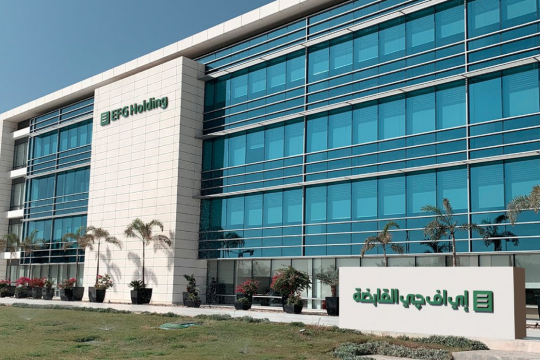
EGX executive chairman on short-selling, IPO pipeline, S&P review

We sat down with EGX boss Omar Radwan for a wide-ranging conversation about where the exchange stands, from the S&P Dow Jones Indices (S&P DJI) review to short-selling’s final countdown and a state IPO pipeline he says is closer to delivering than the headlines suggest. Radwan tells us the final system test for short-selling is underway, puts a number on the state listings pipeline for the first time — up to six of the 20 temporarily listed companies could complete full IPOs within the next year — and lays out the EGX’s case to S&P DJI ahead of a decision expected within months.

The S&P DJI consultation closed Friday, and Radwan says the EGX’s formal reply leaned heavily on the macro turnaround. Repatriation delays have eased, net foreign assets and reserves are at highs, and the EGX itself hit a record EGP 15.6 bn in daily trading volume — a figure Radwan cited as proof the market is headed for an upgrade, not a downgrade. He said the case went beyond the paperwork too — he personally spoke with representatives from 17 of the index’s member institutions in the run-up to the deadline.

REFRESHER- S&P DJI’s consultation on demoting Egypt from Emerging to Frontier status opened in June, with a deadline that slipped to 31 July from 17 July. If approved, the change wouldn’t take effect until the September 2027 index reconstitution — moving Egypt out of the same basket as Saudi Arabia, the UAE, and India and into Frontier alongside Morocco, Pakistan, and Vietnam. The stakes are more about optics than fund flows: Egypt is just 0.12% of S&P DJI’s Emerging BMI today but would jump to roughly 3.4% of the smaller Frontier BMI — nearly 29x its current weight.

On short-selling, the news is more immediate than the “before the end of August” timeline previously suggested. Radwan says the final system test — a regulatory requirement before it goes live — is happening “as we speak,” adding that “knowing what we know today, I think this is going to happen very soon.”

REMEMBER- The FRA first floated short-selling in 2019, licensing nine brokerages — including EFG Hermes, CI Capital, and Shuaa Securities — and promising trial runs, but the rollout never materialized.

Edited excerpts from our conversation:

Enterprise: How do you think S&P DJI will react to Egypt’s formal reply?

Omar Radwan: If you believe the TV surveys done on this — Al Arabiya, for one — 100% of the stakeholders surveyed said they don’t expect a downgrade. Beyond the survey responses, we’ve been talking to them directly. I spoke to 17 different members of that index myself, and the feedback was positive. But we have to wait and see. It’ll be announced within a couple of months. But actual implementation would be September 2027.

E: Short-selling was first promised some seven years ago; what’s mechanically different this time?

OR: We believe one of the main deterrents was the lack of incentives for asset owners to lend their shares. The mechanism here isn’t naked shorting — it’s lending or borrowing with the intent to sell. The new setup gives lenders real incentives, including a return on the shares they lend, managed through the central depository. Borrowers have full visibility into different lenders, including their terms, their rates over the reference rate, and how many shares they are offering, allowing them to pick whichever option best suits their needs. And the borrower can close the position anytime, paying interest only for the time they actually borrowed. It creates real, healthy competition, and a decent return for the lender.

E: EGX70 futures and options are supposed to be next in the derivatives rollout. Is there a date, or does it depend on single-stock picking up volumes first?

OR: Derivatives are different because we need to educate the market, including both the brokerages and the investors. Brokerage firms need to update their systems and client contracts, and that’s slowly happening. On the investor side, we are building financial literacy — how to use derivatives, the risks, and how to hedge properly. Mutual funds will be able to request a license for short-selling and derivatives through a simple process submitted to the FRA, which has said it will facilitate and encourage this. Eventually, it opens to corporate and retail investors too once they pass a questionnaire showing they understand the risks.

ICYMI- Our derivatives market is already live and growing, though trading volumes have been slow to build. Futures on the benchmark EGX30 index launched in March, followed by contracts on CIB and TMG in June, with more single-stock futures, EGX70 futures, and options set to follow.

E: Why doesn’t the EGX publish cumulative derivatives volume, and when will that change?

OR: We need the market to pick up a bit first. We publish as much as we can, but this market requires significant infrastructure to be put in place first, which is our current focus.

E: Of the 20 state-owned companies with temporary listings, how many do you expect to complete full IPOs in the next 12 months?

OR: Based on what we are told, it’s about five or six. But that decision belongs to the owners and the investment banks, not the exchange. We play our role by educating these temporarily listed companies on listing requirements, transitioning from single-entity government ownership to multi-entity and retail ownership, and establishing investor relations teams. We work through this process alongside lawyers, investment banks, and holding companies.

Meanwhile, the EGX is open for business for large corporate listings from both the private and public sectors. We met with the Finance and Investment Ministers today regarding new regulations: companies with over EGP 15 bn in market capitalization qualify for a 15% tax discount for three years, extendable, to help us compete for mega-listings and rebalance the index.

E: What’s the status on the GDR program and cross-listing more broadly?

OR: Egypt deserves a much more vibrant GDR program than the current one. We are acting as a mediator between the London Stock Exchange and local listed companies to highlight the benefits of GDR programs, and the LSE is very interested. We are also working with the Arab Federation of Capital Markets and African exchanges to facilitate stock cross-listing. Cross-listed companies become sort of ambassadors for Egyptian equities. We are looking at remote brokers too, letting brokerage entities operate from outside Egypt.

E: It was recently mentioned that names like Mopco, PMS, and Elab will trade in USD once on the EGX, and that they are considering a Saudi dual listing. Why Saudi specifically?

OR: As for Saudi Arabia, the petroleum sector there is particularly relevant. The Saudis are very interested, and we have been in talks with them. It may see the light of day very soon. Our list of interested partner exchanges is growing daily. Modern trading app integration and Egypt’s move toward full digital onboarding — including electronic onboarding for foreign investors with biometric passports — are major paradigm shifts. Investors globally will be able to onboard and sign binding contracts without leaving their offices.

E: You’ve floated the EGX itself becoming a joint-stock company. What would that actually change, and would the EGX list itself?

OR: Most exchanges internationally operate as corporate entities — it is the global norm, and it makes it easier for foreign stakeholders to interact with us the way they are used to interacting with others. A privately managed structure gives you the agility and simpler governance you need to move fast on new technology. There are details to work through, but the decision will be made carefully, and we will do whatever serves the market best.

IN CONTEXT- Saudi’s Tadawul took this path a few years back. The exchange converted into a joint-stock company and listed its own shares in a 2021 IPO, still trading today under the ticker TADAWULG. Abu Dhabi’s ADX also converted to a public joint-stock company structure in 2020, though its shares aren’t publicly listed.

E: You’ve got derivatives, short-selling, and the S&P consultation all in motion right now. Does a one-year term give you enough runway to actually see all of that through?

OR: It means I need to work very quickly.

SOUND SMART- Exchange chairman terms vary widely by market, but they typically surpass one year. For instance, Tadawul’s Mazen Al Romaihas was appointed to a four-year term; his predecessor, Sarah Al Suhaimi, held the chair for nearly a decade. Meanwhile, at the London Stock Exchange, board tenure averages just over five years.

E: A year from now, what is the one thing you would want to point to and say: that is what changed while I was here?

OR: My predecessors did a wonderful job opening doors, among them derivatives, short-selling, market-making, the digital-onboarding framework under Fintech Law No. 5 of 2020. Those started before me. What I want to own is pushing AI into real use here, not just talking about it. That is the legacy I am concentrating on. I envision AI being used in every part of the business: surveillance, disclosures, investor relations, day-to-day document handling. AI touches every industry, and we are no exception.

This publication is proudly sponsored by

3

Tax

Egypt shelves its new Income Tax Act in favor of a third tax-facilitation package

The Finance Ministry has shelved plans for a new Income Tax Act, opting instead for a third package of targeted tax facilitations, two government officials tell EnterpriseAM. The Finance Ministry has begun preparing the package as the second round of tax facilitations enters its initial implementation phase.

Why now: “We had finished drafting the entire [Income Tax] bill, but rapid changes in the business environment alongside regional tensions did not give the tax community a chance to properly discuss it. We pivoted from that concept toward introducing new draft laws and targeted articles that will create a breakthrough in the investment and tax sectors,” one official says, adding that the idea of the Income Tax bill is “dead.”

The third package will be the last centered on facilitation and incentives, according to one of the officials. It will seek to settle outstanding taxpayer positions, resolve the remaining contentious issues left after the first two packages, and correct tax distortions affecting different productive sectors. Bringing informal businesses into the tax system will be the tax authorities’ main priority, sources said.

The stick comes after the carrot: “The fourth package will include penalties for tax non-compliance through deterrent mechanisms to ensure the state secures its dues, but only after we have closed all loopholes and supported all sectors toward growth through tax incentives,” according to one of the officials.

DATA POINT- The carrot approach seems to be working, already lifting tax revenues by around 1 percentage point of GDP last fiscal year, according to preliminary data cited by the officials. Tax collections rose 27.5% y-o-y to EGP 2.5 tn during the first 11 months of the last fiscal year, equivalent to 11.7% of GDP, the officials say, citing the Finance Ministry’s latest performance report. The sources attributed part of that increase to stronger compliance and the resolution of disputes under the first facilitation package.

REFRESHER- The first facilitation package established a simplified turnover-based regime for businesses with annual revenues of up to EGP 20 mn, offered a zero-penalty window for filing missing returns, accelerated dispute settlement, and introduced incentives aimed at bringing informal businesses into the formal economy. The second package has focused more heavily on corporate liquidity and administrative distortions. Its measures include ending arbitrary estimated assessments for future periods, accelerating VAT refunds for compliant taxpayers, allowing companies to recover income-tax credit balances incash, cross-settling taxpayer receivables and liabilities across state entities, and separating transfer-pricing reviews from ordinary commercial tax audits.

The ministry is also moving to digitize tax payments more broadly. The Egyptian Tax Authority is in the final stages of testing a new mobile app that allows individuals to calculate and electronically pay the 2.5% tax on property disposals, the officials say. The launch builds on the ministry’s broader rollout of end-to-end digital property-tax services as it looks to make registration, filing, exemptions, and payment available without taxpayers having to visit tax offices.

4

Industry

Government to auction eight billet licenses this August with 2.8 mn tons of new capacity

The government will auction eight billet-production licenses this August, with a combined annual capacity of 2.8 mn tons, a government official tells EnterpriseAM. The Industrial Development Authority (IDA) is finalizing the tender documents before inviting technical and financial bids. The move aims to deepen local steel production, which rose 10.8% y-o-y to 2.89 mn tons in 1Q 2026, according to World Steel Association data.

REMEMBER- Eight steel companies had applied for licenses before the government froze the licensing process last year to launch a trade-remedy review, which ended with a 13% anti-dumping duty on imported hot- and cold-rolled steel. In February, the government outlined plans to auction eight licenses across different production tiers.

Local steelmaker Ashry Steel Group has earmarked EGP 12 bn to compete for a 1 mn ton-a-year license, mostly poised for exports, Chairman Ayman El Ashry tells EnterpriseAM. El Ashry says that the licensing decision has taken too long and the imminent tender should bring some relief to the market amid what he describes as a widening gap between available supply and rising demand.

Downstream manufacturers feel the squeeze. The shortage is also feeding through to manufacturers of machinery, appliances, and other products that use rolled steel as a key input, Federation of Egyptian Industries’ Engineering Industries Chamber head Mohamed El Mohandes tells us. Local billet prices rose after import duties restricted access to the foreign alternative, creating a problem for downstream manufacturers, El Mohandes notes. The chamber requested a reassessment of the anti-dumping duty, and the government promised to review the duties every three months.

The solution: Launching the new licenses — and moving quickly through the allocation process — should increase supply, revive the market, and help contain the prices of appliances and other manufactured goods that rely on rolled steel, El Mohandes adds.

Heavyweights disagree: The market’s largest player, Ezz Steel, told us last April that there is no shortage and Egypt actually suffers from a supply glut. They argued the country’s total 13.3 mn-ton capacity is more than enough to absorb the roughly 9 mn tons of domestic demand annually, without the need to offer more billet licenses.

What’s next: The final tender documents will set out how the 2.8 mn tons are divided between the eight licenses, the technical and financial requirements for bidders, and the timetable for bringing the new plants online. Companies are expected to begin submitting offers after the planned August launch.

5

Energy

Egypt accelerates USD 128 mn downstream grid expansion targeting early 2027

Egypt is accelerating a USD 128 mn, six-pipeline infrastructure package spanning 317 km to transport crude oil and petroleum products between domestic production zones, refineries, and export terminals across the country, according to an unnamed government official. The full network is slated to come online by early 2027.

The missing link on the Mediterranean: The biggest piece of the package is the USD 52 mn, 135-km pipeline connecting the Midor refinery in Alexandria to the Al Hamra petroleum port in El Alamein, due in November. As we noted back in May, this line is the missing link on the Mediterranean coast. It closes a two-way loop that allows Egypt to import crude, refine it domestically at Midor, and pump the higher-value finished products back to Al Hamra for re-export.

The rest of the pipelines include:

  • A USD 21 mn, 52 km pipeline from Khorshid (east of Alexandria) to Damanhur launching this month;
  • Phase one of the Tebbin-Assiut line, spanning 75 km and launching by year-end at a cost of USD 13 mn;
  • A USD 31 mn, 16-km line serving the Assiut Oil Refining Company, coming online in December;
  • Two smaller mazut lines around Cairo: a USD 6 mn, 20-km line from Mostorod to west Shubra, due in early 2027, and a USD 4.2 mn, 19-km route realignment between Mostorod and Tebbin.

The big picture: Egypt’s petroleum exports are surging. In 1H 2026 alone, the country exported 2.3 mn tons of petroleum products, generating USD 2.3 bn in revenue, matching its entire export volume for 2025 in just six months. The government expects to ship out an even higher 2.5 mn tons in the second half of the year.

Refineries are busier than ever: This boom is happening because local refineries are now operating at 80% capacity, up from 60% previously, driven by an increase in crude supply and domestic crude production hitting a two-year high. This pipeline expansion goes hand-in-hand with a broader USD 4.5 bn state program to upgrade our existing refineries, boost local fuel production, and shrink the country’s import bill.

In other energy news

Shell and the Egyptian Natural Gas Holding Company (Egas) are aiming to bring the deepwater Khufu gas field online in 2H 2027 with an initial output of 45 mmcf / d, according to an unnamed government official.

About the field: The field, located in the Mediterranean’s North East El Amriya concession, will bypass a lengthy development cycle by directly connecting to existing production facilities in West Burullus by the end of 2027. Rashid Petroleum (Rashpetco) is executing the development on behalf of the partners. Shell operates the concession with a 60% interest, while Kuwait Foreign Petroleum Exploration Company (KUFPEC) holds the remaining 40%.

The downgrade: Khufu’s reserves are now estimated at less than 500 bcf. This is much lower than the initial estimates announced in May 2024, when Khufu and its sister field West Mina were believed to hold a combined 2 tcf of reserves. Meanwhile, preliminary estimates for West Mina have come in at a meager 245 bcf, meaning the two fields hold less than 750 bcf.

West Mina is still the heavy hitter: Shell expects to bring West Mina online by the end of 2026, adding around 160 mmcf / d to the country’s output.

6

Also on our Radar

Banque Misr’s EGP 3 bn real estate fund would be equivalent to nearly one-quarter of the segment’s current net asset value

Banque Misr is preparing a EGP 3 bn fund to acquire leased offices in Fifth Settlement. The bank is targeting a launch before year-end, pending approval from the Financial Regulatory Authority, and will partner with an unnamed developer to invest in completed, occupied administrative buildings that can generate recurring rental distributions.

The thesis: The fund will be buying into a market where Bonyan estimates Egypt will face a 4.5 mn sqm shortfall in grade-A office space by 2028. Much of the existing supply is divided into smaller units. That’s a problem for multinational tenants, who are increasingly seeking large, contiguous spaces under one roof and prefer leasing over owning.

IN CONTEXT- Real estate funds accounted for 2.68% of the market’s 224 investment funds at the end of June — equivalent to six vehicles — with combined net assets of EGP 12.62 bn, according to the FRA’s latest quarterly fund report (pdf). At its target size, Banque Misr’s vehicle would be equivalent to nearly one-quarter of the segment’s current net asset value. The regulator said in May that it was reviewing 23 additional real estate-fund applications.

A hospital wager

Saudi German Hospitals Group plans to invest more than EGP 150 mn in Alexandria this year, Saudi German Hospital Alexandria manager Mohamed Lallo tells EnterpriseAM. The investment will go toward launching 35 specialized clinics in the city. The group will also begin operating its first hospital in Morocco this year and is planning another in Pakistan, though Lallo did not disclose the investment size or timeline for either project.

The group’s planned Giza hospital remains on hold. The project carries an estimated investment cost of USD 100 mn, but the decision to begin investment and construction has not yet been taken, Lallo said.

A fertility tourism partnership: Saudi German is targeting 25-30% of Gulf demand for fertility and IVF services in Egypt through a new partnership with Alexandria-based IVF center Conceive, according to Lallo.

REMEMBER- Saudi German’s local expansion has been years in the making. The group said in 2019 it planned to invest EGP 40-50 bn over 15 years, before outlining plans for a 300-bed medical complex in 6 October City alongside its Alexandria expansion. The government is also preparing to offer 62 healthcare projects to the private sector, including facilities that could support medical tourism.

Keeping Libya lit

Egypt has raised its electricity export capacity to Libya by 43% to 100 MW. The increase is meant to support Libya’s grid after a widespread collapse last month. The two sides have also agreed to reduce interest on late-payment penalties tied to some USD 90 mn in overdue Libyan electricity dues to Egypt.

IN CONTEXT- Egypt began feeding power into Libya in July after a sudden grid collapse knocked around 1.35 GW from the system. The two countries have been discussing expanding their electricity interconnection to 2 GW from around 150 MW, making the latest increase a near-term support measure rather than the larger strategic upgrade.

7

PLANET FINANCE

S&P warns US manufacturing expansion masks deepening supply, confidence slump

US manufacturing held its ground in July, but S&P Global says that’s the wrong way to read it. The latest S&P Global US Manufacturing PMI (pdf) came in at 53.9, unchanged from June, and still comfortably in expansion territory, yet the index provider calls it a picture that “masks softer production and sales growth.” Business confidence in the outlook fell to its lowest level since October 2025, marking a nine-month low.

The internals explain the gap between the headline and the mood. Production rose at its weakest pace since March, new order growth eased for a third straight month, and firms increasingly drew down existing stock rather than placing fresh orders. Finished-goods inventories saw their steepest drawdown since September 2023. Chris Williamson, S&P’s chief business economist, called it plainly: “beneath the survey we see some warning signs about the future growth trajectory.”

The war is the thread running through nearly every weak spot in the data. S&P says vendor delivery times deteriorated at the second-sharpest rate in four years “as the Middle East conflict continued to cause delivery delays and contribute to material shortages.” Its earlier flash report, published July 24, was more specific still, tying the disruption directly to “shipping disruption around the Strait of Hormuz.” Input costs eased only slightly, remaining above the survey’s historical average, driven by what the release attributes to high energy prices and tariffs together.

Employment tells the same cautionary tale. Factory staffing rose “only marginally” in July, with anecdotal evidence in the survey suggesting most open positions had simply been filled rather than new roles created, even as backlogs of work crept higher, marking a sign of capacity strain without the hiring to match it.

Why it matters to our part of the world

The US is the world’s largest oil consumer, and weaker US manufacturing means weaker US demand for the fuel that runs it. OPEC cut its 2026 global oil demand growth forecast to 1 mn barrels a day from 1.2 mn in its July report, even as the group approved a fifth consecutive monthly output increase and actual production remains below pre-war levels, pointing to a market absorbing more supply just as demand growth cools.

A softening US demand signal lands on Gulf producers at the worst possible moment. They’re already absorbing record war-risk ins. costs, and now the market they’re counting on to buy their oil back is showing the same confidence problem their own war is causing everyone else.

MARKETS THIS MORNING-

Asian markets are trading lower this morning, failing to echo the rally seen on Wall Street just hours earlier. South Korea’s Kospi is down 1.4%, with Japan’s Nikkei trailing behind. The Hang Seng and Shanghai Composite are also in the red. The drop comes despite US stocks ending Monday higher after US President Donald Trump signaled the resumption of talks to end the regional war.

EGX30

54,094

-0.4% (YTD: +29.3%)

USD (CBE)

Buy 50.17

Sell 50.30

USD (CIB)

Buy 50.10

Sell 50.20

Interest rates (CBE)

19.00% deposit

20.00% lending

Tadawul

10,824

+1.1% (YTD: +3.2%)

ADX

9,941

+0.3% (YTD: -0.5%)

DFM

5,878

+1.4% (YTD: -2.8%)

S&P 500

7,601

+1.5% (YTD: +11.0%)

FTSE 100

10,858

-0.1% (YTD: +9.3%)

Euro Stoxx 50

6,427

+1.1% (YTD: +10.9%)

Brent crude

USD 83.77

-4.7%

Natural gas (Nymex)

USD 2.77

-0.4%

Gold

USD 4,108

+0.4%

BTC

USD 63,650

+0.1% (YTD: -27.4%)

S&P Egypt Sovereign Bond Index

1,087

+0.1% (YTD: +9.5%)

S&P MENA Bond & Sukuk

149.83

0.0% (YTD: -1.4%)

VIX (Volatility Index)

15.86

-0.8% (YTD: +6.1%)

THE CLOSING BELL-

The EGX30 fell 0.4% at yesterday’s close on turnover of EGP 15.7 bn (63.9% above the 90-day average). Regional investors were the sole net sellers. The index is up 29.3% YTD.

In the green: Ibnsina Pharma (+20.0%), Rameda (+12.7%), and GB Corp (+4.5%).

In the red: Telecom Egypt (-5.1%), AMOC (-5.0%), and Abu Qir Fertilizers (-3.2%).

8

Going Green

Egypt has three biofuel plants coming online, but no formal supply chain to feed them

Egypt produces 100 mn tons of waste every year, and three biofuel projects are using portions of it to produce sustainable aviation fuel (SAF), which is expensive, but global aviation mandates are pushing airlines to use it regardless. One project is making biogas through agricultural waste, and two are making biofuel from used cooking oil. The path is forming toward a more integrated waste-to-energy production framework, but it remains limited by the fact that waste materials are collected informally by individuals, rather than businesses.

SOUND SMART- SAF is a specific type of biofuel made from renewable sources, such as used cooking oil, agricultural residue, or animal fats, rather than crude oil. Biogas is a subset of biofuel made from organic waste breaking down in a space with no oxygen. SAF can be blended with or substituted for conventional jet fuel without modifying aircraft and is currently one of the industry’s few near-term paths to cutting emissions.

Egypt has enough agricultural waste to produce biogas, but transportation is difficult. Since moving this waste is expensive, most processing units are placed where the material is produced rather than at centralized plants. The Environment Ministry’s Bioenergy for Sustainable Development Foundation runs a rural development program operating roughly 2k small-scale biogas units across local governorates, which process materials like tree-pruning residue, rice straw, sugarcane waste, and agro-processing byproducts, a ministry official tells us.

Biogas production from agricultural waste is scaling up: The program was expanded in 2024, adding medium-scale units in Beni Suef, Beheira, Assiut, and Alexandria with a combined 162k cbm of annual biogas capacity, according to government data reviewed by EnterpriseAM. A household-scale rollout is following the same path: the foundation has completed 22 units in villages under rural development programs with the Orman Association, with 50 more planned in Aswan.

Agricultural waste has other uses, so energy gets the leftovers. A large share of agricultural waste goes toward compost and animal feed production, including 50k tons of biofertilizer a year from the same foundation, which cuts feed-import needs and reliance on chemical fertilizer. The foundation’s biogas output reached 2.2 mn cbm in 2024, equivalent to roughly 86k butane cylinders. That’s a small fraction of the 35-40 mn tons of agricultural waste Egypt generates each year, which means biogas production has room to grow.

Used cooking oil is being used to produce biofuel. The Egyptian Sustainable Aviation Fuel Company (ESAF) and Honeywell UOP are building a plant in Alexandria that “will produce 120k tons of sustainable aviation fuel a year from used cooking oil,” Bio-Rotterdam Cleantech CEO and Powergreen Biofuel Operation Manager Ibrahim Farouk tells EnterpriseAM. The project, launched in 2024 by ESAF’s parent, the Egyptian Petrochemicals Holding Company (ECHEM), has moved into an advanced development stage, with financing now in progress, per an Oil Ministry statement. The investment now stands at USD 570 mn, up from an original USD 530 mn estimate, with startup targeted for 2029 and expected CO2 savings of 400k tons a year, according to the statement.

Another cooking oil project: Qatar’s Green Sky Capital secured USD 200 mn in financing for its SAFFly Egypt facility in Ain Sokhna, backed by Qatar’s Al Mana Holding and Saudi Vision Invest, with Shell locked in to buy the plant’s entire output starting late 2027. The facility’s 200k-ton annual capacity spans SAF, renewable diesel, and industrial bio-products. We also reported last February that Al Mana Holding is investing USD 15.6 mn in a second biodiesel plant in 10th of Ramadan City, designed to process 100 tons of used cooking oil a day. At that time, the Environment Ministry said Egypt consumes around 2.8 mn tons of edible oil a year, generating roughly 2.6 mn tons of used cooking oil.

As investment in these projects increases, suppliers are doubling down. Used cooking oil (UCO) collection has risen 10% recently as prices firmed up, with some governorate suppliers doubling their volumes, Farouk tells us. “A liter now costs around EGP 50 to collect and sells for EGP 70,” he says — up from the numbers he told us in November 2025, when a liter was bought for EGP 35 and sold for EGP 48. Continued subsidies keep domestic biodiesel prices high, so most production is exported, with local use limited to customers tied to export contracts or environmental certification requirements. The Suez Canal Authority has also begun sourcing biodiesel locally from several of the country’s seven existing UCO-to-biodiesel plants, he adds.

Egypt has doubled its UCO target. “We want to raise collected cooking oil to 1 mn tons a year, out of the 2.5 mn tons Egyptians use annually,” the Environment Ministry official says. That’s double the target of 500k tons of UCO by 2030 that we reported in November 2025.

The government is calling for more investors. Beyond the three projects now underway, the government wants to attract large-scale Gulf-led investment on the model of the Alexandria and Ain Sokhna plants, aiming to build an integrated industry out of the broader waste-to-energy efforts already underway in governorates like Kafr El Sheikh and the Suez Canal cities, the official says.

OUR TAKE- The biogas units sit right next to their necessary materials, but the two biofuel plants rely on informal UCO collection carried out by individuals, not companies. Investment is flowing toward refineries, but not toward the trucks and networks that bring the material in, leaving supply an under-financed and unformalized section of the framework. Until that changes, the two aviation fuel plants, which have a combined 320k tons of annual capacity, will have to keep drawing on the same fragmented system they are supposed to outgrow.


AUGUST

19 August (Wednesday): Connected Banking Summit, Fairmont Nile City Hotel Cairo.

20 August (Thursday): Monetary Policy Committee’s fifth meeting of 2026.

26 August (Wednesday): Prophet Muhammad’s birthday.

SEPTEMBER

8-10 September (Tuesday-Thursday) El Alamein International Airshow, El Alamein International Airport.

10-12 September (Thursday-Saturday): Egyptian Entrepreneurship Sector Diagnostics Report Summit, El Gouna.

15 September (Tuesday): IMF to hold its eighth review of Egypt’s USD 8 bn EFF arrangement.

24 September (Thursday): Monetary Policy Committee’s sixth meeting of 2026.

27-29 September (Sunday-Tuesday): Global Conference on Population, Health, and Human Development.

28-29 September (Monday-Tuesday): Egypt Mining Forum, St. Regis Hotel New Capital.

30 September - October 3 (Wednesday-Saturday): Cityscape, Egypt International Exhibition Center, Cairo.

OCTOBER

5 October (Monday): The EnterpriseAM Egypt Forum.

6 October (Tuesday): Armed Forces Day.

10-11 October (Saturday-Sunday): Egypt Women’s Health Summit (EWHS), Cairo Marriott Hotel.

26-28 October (Monday-Wednesday): IEX Egypt, Egypt International Exhibition Center, Cairo.

29 October (Thursday): Monetary Policy Committee’s seventh meeting of 2026.

NOVEMBER

6-8 November (Friday-Sunday) : Global Entrepreneurship Festival, JW Marriott Hotel, New Cairo.

8-11 November (Sunday-Wednesday): Cairo ICT Forum.

DECEMBER

7-10 December (Monday-Thursday): Food Africa, Egypt International Exhibition Center, Cairo.

17 December (Thursday): Monetary Policy Committee’s eighth meeting of 2026.

EVENTS WITH NO SET DATE

Mid-August: IMF Board expected to decide on the seventh review of the loan program.

2H 2026: Operations at Deli Glass Co’s new USD 70 mn glassware factory kick off.

2026: The Egyptian-American Economic Forum.

4Q 2026: Banque du Caire IPO.

2027

20 January-7 February: Egypt to host the African Games.

1-3 February (Monday-Wednesday): Agri Expo, Cairo International Convention Center.

April 2027: Tenth of Ramadan dry port and logistics hub to begin operations.

EVENTS WITH NO SET DATE

2027: Egypt to host EBRD’s annual meetings.

2027: Egypt-EU Summit 2027.

End of 2027: Trial operations at the Dabaa nuclear power plant expected to take place.

September 2028: First unit of the Dabaa nuclear power plant begins operations.

Now Playing
Now Playing
00:00
00:00