Egypt Edition
  MENA+ Edition
  UAE Edition
  Saudi Edition
  Logistics (MENA)


 Share Issue







Good morning, everyone. We have a big macro story and a quieter industry read for you today that both, in their own way, are about where the government and the consumer are putting their money.
The headline is the IMF. The Executive Board signed off on the seventh review on Thursday, unlocking a USD 1.8 bn disbursement that should hit state coffers tomorrow. The broad outlook is stable, but inflation is running hotter than projected, structural reforms are moving slower than preferred, and the government still needs another USD 1.5 bn in divestments before the program wraps in December.
Meanwhile, a debate over gold is heating up. Three years of record gold prices have pulled consumers away from jewelry and toward bullion, coins, and gold funds — a trend the Federation of Egyptian Industries wants to reverse.
BUT FIRST- The fire that took the Energos Winter regasification unit out of service at Damietta Port on Wednesday was the result of a drone strike, the cabinet said in a statement on Thursday, confirming claims circulating in the international press. Preliminary investigations verified the cause of the attack, though no group has claimed responsibility.
The details: The strike directly hit the regasification vessel, while the adjacent storage vessel was disconnected and remains “100% intact,” Prime Minister Mostafa Madbouly said during his weekly presser (watch, runtime: 1:07:50). Port operations remain unaffected, with 15 ships entering and exiting the harbor normally on the day of the incident, Madbouly added.
The energy fallout: The Energos Winter, which had been pumping 450 mcf / d into the national grid before the incident, is temporarily out of service and is expected to head to Turkey for damage assessment and repairs, a government official was cited as saying. Separately, the government diverted one of four LNG shipments originally scheduled for Damietta this month to Jordan’s Aqaba port. We will draw around 100 mcf / d via the pipeline from Jordan for the next 35 days to compensate for the shortfall, a government official was cited as saying.
More mazut on the way: The government is also hiking its mazut imports by 80% to 28k tons this month to keep power plants running through the summer.
And in diplomacy: Egyptian, US, Qatari, and Turkish mediators will soon meet in Cairo to finalize the framework for a ceasefire in Gaza, according to sources with knowledge of the matter. Under the framework, the National Committee for the Administration of Gaza will enter the territory and international forces will be deployed in Gaza ahead of recovery efforts and reconstruction projects. Hamas and the Palestinian side are already on board, having told the mediators that they approve of the roadmap for implementing the second phase of the ceasefire, the source said.
***
ARE YOU MORE OF A LISTENER? Morning Drive is a 10-minute summary of today’s issue crafted for you to enjoy with your morning coffee, while getting the kids ready for school, or driving through the morning rush. And if you like it, tell your friends to tell their friends. They can find us on Apple, Spotify, or wherever they get their podcasts.
***

The EnterpriseAM Egypt Forum is back — and this year, we’re giving the full day to the one question on every business leader’s mind: What does AI actually mean for your company, your people, and your own job?
Leaders in New York, London, Abu Dhabi, and Singapore are asking the same things, and nobody has built a playbook that works yet. We’re all figuring it out in real time — and for Egypt, the stakes are unusually high.
Egypt could leapfrog a generation on the back of this technology — or watch AI hollow out the industries and jobs we can’t afford to lose. The leaders who get literate early will be the ones who get to decide which road we take.
Every session on stage answers one question: “So, what do I actually do about it?”
Join us on 5 October in Cairo. Seats are limited and attendance is by invitation only.
Request your invitation here.
Pricier summer
The Electricity Ministry hiked household electricity tariffs by an average of 12%, though the lowest consumption bracket will remain unchanged, it said in a statement on Friday. The new structure keeps most residential users well below full cost recovery as the government tries to narrow the power sector’s funding gap without removing support from the lowest-consuming households.
The new price tags per kWh for households:
- 0-50 kWh: EGP 0.68 (unchanged);
- 51-100 kWh: EGP 0.87, up from EGP 0.78;
- 101-200 kWh: EGP 1.06, up from EGP 0.95;
- 201-350 kWh: EGP 1.74, up from EGP 1.55;
- 351-650 kWh: EGP 2.18, up from EGP 1.95;
- 651 kWh–1 MWh: EGP 2.35, up from EGP 2.10;
- Above 1 MWh: EGP 2.89, up from EGP 2.58.
The bottom line: Across all residential tiers, the government will continue to absorb around EGP 100 bn annually in the gap between volatile fuel-pegged production costs and retail tariffs.
REMEMBER- The increase ends the household tariff freeze extended earlier this year and follows the ministry’s assurance last month that household prices would remain unchanged through the summer. The FY 2026/27 budget set aside EGP 104.2 bn for electricity subsidies, up 39% from the previous FY.
Paying in assets
The government is looking at some 4.2k state-owned properties, land plots, and company stakes to help state bodies clear debts owed to one another, instead of paying in direct funds, five government officials tell EnterpriseAM. The Tax Authority alone aims to clear around EGP 700 bn in unpaid taxes owed by other government agencies through asset swaps, alongside scheduled direct payments, one official says.
The plan includes restructuring six holding companies, covering cotton, food, and the chemicals sector, by settling their debts with assets. The same mechanism will be used to clear unpaid debts for local governorates, municipalities, and the electricity and petroleum sectors, with a comprehensive asset-transfer plan to be finalized by the end of the year, our sources say.
IN CONTEXT- The government wants to bring budget-sector debt down to 78% of GDP in the upcoming FY 2026/27 budget, with a long-term goal of hitting 70% by 2030. A draft financial statement from April indicates that the Finance Ministry plans to more than double the value of total capital injections into indebted state-owned enterprises and agencies for FY 2026/27, raising the value to 125.3 bn from EGP 58.6 bn.
What’s next: Once the debts are cleared and the properties are priced, government entities will be responsible for reinvesting these assets, either directly or through the Sovereign Fund of Egypt. The sovereign fund will then manage them or bring in private-sector partners.
EGX stamp tax goes live
A stamp tax on EGX transactions went live on Wednesday following the publication of the legislative amendments in the Official Gazette. Some firms that were unaware the changes had taken effect are manually recalculating the tax on trades executed since then and will remit the amounts to the Tax Authority this week, a senior government official tells EnterpriseAM. The official expects the levy to generate EGP 3 bn in its first year.
The mechanics: The Tax Authority and EGX will establish a recurring collection mechanism through Misr for Central Clearing, Depository, and Registry (MCDR). The tax is set at 0.5 per mille on each side of a listed-securities transaction, falling to 0.25 per mille for same-day trades, while licensed market makers are exempt.
REMEMBER- The switch closes the implementation gap left after the government dropped the long-delayed capital gains tax in favor of a simpler transaction levy. The collection mechanism had been under discussion with MCDR before the package secured final House approval in June.
Goodbye, fertilizer duty
The Investment Ministry has reportedly scrapped the 10% export duty on nitrogen fertilizers over the weekend, following a 39% drop in export prices to around USD 550 per ton from nearly USD 900 in April and a sharp slowdown in shipments over the past two months.
IN CONTEXT- The levy was introduced as a USD 90-per-ton fee in May, before being replaced by a charge equivalent to 10% of the shipment’s export value at the end of June. Its removal cuts the cost of exporting by around USD 55 per ton at current prices. Despite the more recent slowdown, nitrogen-fertilizer exports still rose 39.7% y-o-y to USD 1.4 bn in 1H 2026 following the earlier price surge, according to the report.
ALSO- The recent strike on the Energos Winter regasification vessel docking at Damietta’s port will not disrupt natural gas flows to fertilizer factories, Chemicals and Fertilizers Export Council Chairman Khaled Abu Al Makarem told Al Arabiya. While domestic gas pricing has remained static recently, he signaled that we could see adjustments to the pricing structure as early as next week.
Zafarana winds are picking up
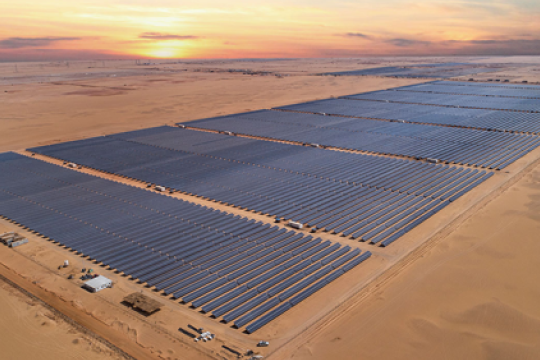
Alcazar Energy’s Zafarana wind project has moved to the execution phase with a 407 MW power purchase agreement (PPA), after the Cabinet signed off on the PPA and the necessary land-usufruct agreements for the UAE-based developer, according to a Cabinet statement. The project will be developed under a build-own-operate (BOO) model, with the Egyptian Electricity Transmission Company (EETC) buying the power and the New and Renewable Energy Authority (NREA) providing the land.
The numbers: The Cabinet did not disclose an investment ticket or construction timeline for the project. It’s unclear whether the announced 407 MW capacity is the target for the project or the first phase of many. Alcazar currently lists its Zafarana development at 500 MW. Meanwhile, its November 2024 MoU with EETC and NREA covered a broader 2 GW onshore wind project. The company later announced plans for a wider USD 2.5 bn, 3.1 GW wind and solar complex at the same site.
PSA-
WEATHER- Take shelter from the extremely hot weather in Cairo today, with a high of 40°C and a low of 27°C, according to our favorite weather app.
It’s more tolerable in Alexandria, with a high of 33°C and a low of 24°C.
The big story abroad
No single story is dominating international headlines this morning — among those receiving top billing:
#1- Most of the 60k North African migrants who illegally crossed into Spain’s Ceuta have made their way back to Morocco, citing severe hunger, lack of shelter, and hostility from local authorities and residents that made remaining unbearable.
#2- FIFA President Gianni Infantino’s future with the football governing body could be in trouble after he pulled the plug on a plan to create a commercial entity to take over the World Cup and sell a stake to investors. The proposal was met with heavy criticism from fans, lawmakers, and other football governing bodies and accusations of selling out.
#3- The aftermath of the selloff: Following a severe collapse in South Korea’s stock market, the benchmark Kospi index fell around 40% from its June peak due to a semiconductor selloff and volatile single-stock leveraged ETFs, South Korean retail investors are directing their anger at President Lee Jae-myung and financial regulators. Many investors are vowing to exit the market after incurring massive losses.