First-ever climate fiscal risk statement assesses trillions in state assets

1

WHAT WE’RE TRACKING TODAY

Egypt’s single-stock futures market trading value remains thin a month after launch

Good morning, ladies and gents. Ahead of the long weekend, two of today’s top stories share a theme: the state putting hard numbers and rules to risks that were previously implicit.

We have an exclusive look at Egypt’s first-ever climate fiscal risk statement, which quantifies the tns in state assets exposed to climate and transition risk. Another exclusive story this morning reveals how a court fight over the FR’’s new debt-collector registry has swung in the regulator’s favor, sending firms rushing to register.

ALSO– Misr Capital tripled its money exiting Nile Scan, and CIB posted a 29% jump in quarterly net income on its strongest-ever local-currency deposit haul.

** A QUICK PROGRAMMING NOTE- EnterpriseAM is taking a publication holiday tomorrow in observance of the July 23 Revolution and will be back in your inboxes at the usual time Sunday morning.

***

ARE YOU MORE OF A LISTENER? Morning Drive is a 10-minute summary of today’s issue crafted for you to enjoy with your morning coffee, while getting the kids ready for school, or driving through the morning rush. And if you like it, tell your friends to tell their friends. They can find us on Apple, Spotify, or wherever they get their podcasts.

***

One-month checkup

Yesterday marked a month since single-stock futures on CIB and TMG started trading, and here’s where things stand. The session saw 108 lots change hands across eight trades, worth a combined EGP 1.37 mn, according to market data. CIB’s three- and six-month contracts each gained roughly 3%, while TMG’s two lost ground, down 1.6% and 1.5% respectively. There’s no way to benchmark yesterday’s activity against the rest of the month because the EGX doesn’t yet publish cumulative data for derivatives.

ICYMI- CIB and TMG futures hit the trading floor on 21 June, a little over three months after the EGX rolled out its first-ever derivatives products in March, with trading volumes still thin. Taswyaat CEO Khaled Amer — whose firm clears and settles all futures transactions — previously told EnterpriseAM that volumes would pick up once investors get more familiar with the product.

Only around five brokerages currently hold the FRA license required to trade derivatives, Sameh Gharib, a capital markets expert at Tycoon Securities, tells EnterpriseAM — “a very small percentage of the total companies operating in the market as a whole,” he adds.

Not enough time to judge: “A single month is too short to judge the matter, evaluate the launch, measure its viability for adoption and growth, its speed, or even its benefits. It could take years before we can conduct a proper, sound evaluation,” Gharib says.

Where it goes from here: Lifting trading volumes will require getting more brokerages licensed to introduce the tool to foreign investors who already use it in their home markets, Gharib tells us. It will also require educating local retail investors who aren’t yet familiar with derivatives, expanding the underlying stock base beyond CIB and TMG, and publishing contract and volume data regularly.

Locking in LNG

Egypt is negotiating with Shell, TotalEnergies, BP, and Hartree Partners to secure 15 to 18 LNG cargoes per month for at least three years, Reuters reports, citing three unnamed sources. The transactions could cost Egypt between USD 8 -11 bn per year, with prices set at roughly USD 1.5 above the European gas price benchmark, according to calculations by the newswire. The agreements are yet to be finalized.

A trend continues: Egypt is increasingly dependent on gas imports, as domestic production plummeted by nearly 37% between 2023 and 2026, forcing a sharp shift toward expensive LNG imports to meet rising demand. By the same token, Egypt’s natural gas imports surged 36% y-o-y in 1Q 2026.

Why it matters: Attempts to secure medium-term LNG supply reflect a strategy to minimize reliance on unpredictable spot market purchases during ongoing instability — maintained by conflict in Iran and Ukraine, S&P Global Energy’s head of Atlantic LNG Aly Blakeway told the newswire. This is also being coupled with expanding pipeline gas efforts.

ALCN taps team for logistics zone

ALCN moves toward logistics zone financing: EGX-listed Alexandria Container and Cargo Handling Company (ALCN) has tasked a technical committee with preparing a comprehensive financing study for its planned logistics zone near Alexandria Port — which would primarily handle container storage and repair services, sources told Al Mal. The committee will also lead negotiations, secure the necessary regulatory approvals, and weigh whether to bring strategic investors into the project.

The board previously granted in-principle approval for the logistics zone, following a preliminary concept and feasibility study. ALCN said last month that implementation remained subject to completing the project’s technical, financial, and regulatory studies, with its location, capacity, cost, and delivery timeline still undisclosed. The company was also weighing whether to develop the zone directly, through a special purpose vehicle, or alongside investors.

BACKGROUND- ALCN operates two terminals with a combined capacity of 1.5 mn TEUs across the Alexandria and El Dekheila ports, which handle about 60% of Egypt’s foreign trade. Together, its two terminals span approximately 1.6 km of quay length and connect directly to Egypt’s national rail network. In FY 2024/25, ALCN posted an EGP 8.37 bn top line, with an adjusted EBITDA margin of 64%.

Ownership structure: Abu Dhabi sovereign wealth fund ADQ holds an indirect 51.33% majority in ALCN through Alpha Oryx (32%) and AD Ports subsidiary Black Caspian Logistics (19.33%). A move to consolidate that holding under AD Ports — and potentially raise it to as much as 90% — ran into the Egyptian government’s refusal to sell its combined 43.9%, held through the Holding Company for Maritime and Land Transport (36.3%, after it upped its stake in April) and the Alexandria Port Authority (7.6%), while the remaining roughly 4.76% are freefloating on the EGX.

PSA-

WEATHER- It’s another hot day in Cairo, with a high of 39°C and a low of 26°C, according to our favorite weather app.

It’s a few degrees cooler in Alexandria, with a high of 34°C and a low of 24°C.

The big story abroad

No single story is dominating the front pages this morning, though a few updates are making headlines.

Israel has pulled back its forces from southern Lebanon as a US-brokered truce takes effect. The truce is premised on Beirut exerting military authority over Iran-backed Hezbollah forces. This coincides with Lebanese President Joseph Aoun’s sit-down with US President Donald Trump yesterday, the first summit between the two nations' heads of state in roughly 20 years.

SpaceX is gearing up to unlock as much as USD 116 bn in stocks, as insider trading restrictions lift on 6 August, marking one of the largest share unlocks in history. The window allows early backers and private market buyers to exit with substantial returns, while potentially creating liquidity for short sellers to capitalize on bearish momentum.

LSE open 24/7? The London Stock Exchange revealed a plan to launch a separate venue offering overnight trading in 1H 2027, which will initially be open to funds tracking the UK and US markets. The move is being billed as a way to wrest attention from 24-hour crypto platforms.


*** It’s Hardhat day — your weekly briefing of all things infrastructure in Egypt: EnterpriseAM’s industry vertical focuses each Wednesday on infrastructure, covering everything from energy, water, transportation, and urban development, as well as social infrastructure such as health and education.

In today’s issue: We examine how the boom in real estate price gains is masking a serious cash crunch for developers.

Some places become part of your story.

This summer, slow down, reconnect, and create moments that linger long after the season ends. From sunrise by the sea to unforgettable experiences, every stay at Somabay is designed to become a memory worth keeping.

2

The Big Story Today

Egypt’s first climate fiscal risk statement puts a number on tns in state assets under review

EXCLUSIVE- Egypt has, for the first time, put a number on how climate change could hit the state’s balance sheet — and the largest single exposure is the oil sector’s stack of government guarantees. The country’s first-ever Fiscal Risk Statement on Climate Change for FY 2026-27, obtained by EnterpriseAM, is the government’s first systematic attempt to quantify how both physical climate shocks and the global shift to a low-carbon economy could hit public finances — from the electricity grid to its biggest Public-Private Partnership (PPP)-backed infrastructure projects.

Why it matters: The statement turns climate risk from an environmental talking point into a fiscal line item. It sits inside Egypt's IMF-backed reform program — the Fund singled out the state’s guarantee stock as a fiscal risk in its 29 June statement — and it sets the template for how the government will budget for climate exposure as it shifts to program-based budgeting by FY 2027/2028.

One caveat: The government screened the four sectors with the largest balance sheets, not the most exposed ones. This choice shapes the findings — and it is why agriculture, arguably the sector most exposed to a warming Egypt, ends up with no exposure figure at all.

SOUND SMART- Climate fiscal risk comes in two forms. Direct risk is physical: a flood damages a power station. Transition risk is economic: global demand for oil falls as the world decarbonizes. The new statement tracks both — assets that can break and assets that can lose their value.

IN CONTEXT- The fiscal risk statement is part of a broader push, backed by the International Monetary Fund (IMF), to fold climate risk into Egypt’s public finances. Egypt is running a USD 1.3 bn IMF Resilience and Sustainability Facility (RSF) arrangement tied to its wider Extended Fund Facility (EFF) program. The government cleared its first RSF review in February, unlocking USD 273 mn. A second RSF review reached staff-level agreement in late June for an additional USD 136 mn, still pending IMF Executive Board approval. This fiscal risk statement fits into that same institutional effort to embed climate considerations into Egypt’s public finances.

Four sectors get a report card

The statement runs formal climate risk assessments on state assets across four priority sectors — energy (oil and power), transport (including aviation), water and sanitation, and agriculture. The report is explicit that this isn’t a ranking or an exhaustive list.

Power and oil carry the heaviest exposure. Egyptian Electricity Holding Company holds EGP 700 bn in fixed assets, out of EGP 1.118 tn total, and these networks need better resilience against heat stress and flash floods. The Egyptian General Petroleum Corporation (EGPC) holds EGP 108.7 bn in fixed assets — 0.6% of GDP — but carries EGP 3.134 tn in government guarantees, nearly 29 times its own asset base and 18% of GDP. Climate damage to production facilities or refineries would hit the state budget directly. EGPC also carries transition risk: falling global demand for fossil fuels as economies decarbonize could erode its own asset value.

Water and renewables face a different kind of pressure. The Holding Company for Water and Wastewater holds EGP 134.14 bn in fixed assets out of EGP 264.66 bn total, with scarcity and seawater intrusion pushing treatment costs higher. The New and Renewable Energy Authority, by contrast, holds a smaller EGP 50.8 bn in assets, EGP 35.2 bn of them fixed — a much lighter footprint, but one central to the state’s decarbonization push.

Transport, aviation, and urban development: The New Urban Communities Authority manages EGP 2.185 tn in total assets, but just EGP 27.1 bn is fixed — most sits in land holdings, not built infrastructure. The Alexandria Port Authority faces roughly EGP 830 mn in weather-related revenue risk (0.006% of GDP), while EgyptAir’s exposure to sandstorms and fog puts EGP 6 bn in revenue (0.043% of GDP) and EGP 2.2 bn in costs (0.016%) at risk. Both are rated low.

Agriculture is the most exposed sector the statement leaves unquantified. It surfaces twice in the macro risk narrative — grouped with water and the coastal delta among the areas most exposed to climate impacts, then flagged alongside construction and tourism for the productivity losses heat drives. The assessment is direct about the mechanism: longer heat waves, more dry days, and rising water stress accompany a warming path of 0.6-1.0°C by 2050 and as much as 1.9°C by 2070, tightening the squeeze on farming. Yet, unlike power, oil, water, and urban development, agriculture carries no fixed-asset valuation, no exposure figure, and no line in the list of climate-screened projects.

National projects get first test

The fiscal risk statement also included a climate stress test on EGP 27 bn worth of national projects. The Planning and Economic Development Ministry ran six strategic infrastructure projects through Egypt’s first comprehensive climate resilience assessment, using the World Bank’s ThinkHazard tool, an open-access platform that assesses natural hazard exposure for infrastructure projects.

All six came back rated low-to-moderate, driven mainly by exposure to sea-level rise, heat, and storms: the East Matrouh (Rumeila 4) desalination plant, the 300 km Matrouh-Siwa dual carriageway, the first phase of the El Fashn Nile Bridge, the 135 km Wadi El Natrun-Alamein highway, the first phase of the Greater Cairo BRT system, and the Suez-Sokhna road. The ministry is now studying ins. coverage for its largest, most exposed assets, especially those near the coast.

Risks for the PPP portfolio

Private capital is exposed too. Egypt’s PPP portfolio includes 108 projects: 73 signed, 22 under procurement, and 13 in the pipeline. Of the signed projects, 45 span energy, water, and transport, with a combined investment of roughly USD 3 bn. Energy alone accounts for 40 signed agreements worth USD 2.11 bn, plus six more under procurement worth USD 49 mn, and two pipeline projects worth USD 40 mn.

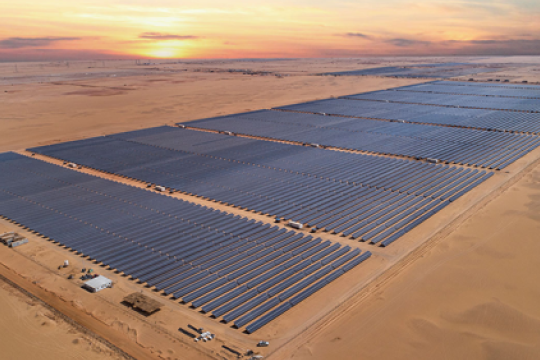
Benban Solar Park carries the portfolio’s only medium rating, exposed to prolonged cloud cover cutting output. Everything else rates low: the 6th of October Dry Port, officially flagged in the government’s fiscal risk register for dust-storm disruption, with USD 220 mn in exposed asset value and USD 100k in annual revenue at risk. The New Alamein desalination plant, a USD 400 mn investment, is exposed to rising seawater pollution from shifting currents, and a planned Elsewedy Electric project on the North Coast, with EGP 210 mn, is exposed to sea-level rise.

13 Build-Own-Operate renewable projects (seven wind, six solar) carry longer-term exposure through their power purchase agreements. Overall, the statement rates PPP climate risk as low and manageable.

Budgeting for risk

Climate risk is becoming structural to how Egypt budgets. The government plans to fully shift to program- and performance-based budgeting by FY 2027/28 under its Unified Public Finance Law, folding climate considerations directly into spending decisions.

Egypt’s already raised money on these terms, starting with the Middle East’s first USD 750 mn sovereign green bond in 2020 (matured September 2025), followed by the CNY 3.5 bn Panda bonds in 2023 (worth USD 478.7 mn and maturing October 2026). Proceeds funded clean transport, water management, and waste management projects.

REMEMBER- The 2020 green bond didn’t kick off the pipeline the market expected — cumulative green and sustainability-linked issuance stalled at just USD 1.45 bn. The Panda bond and Egypt’s broader return to international placements mark the first real follow-through since. Separate reporting indicates that green public investments — which target mitigation and adaptation — climbed to 55% of total spending in FY 2025/26, with a target of 60% by FY 2026/27.

The climate risk bill will come slowly. The statement expects climate change’s macro impact on public finances to stay limited over the medium term. Under its most severe scenario, the fiscal adjustment needed to keep debt sustainable rises from 0.21% of GDP in 2050 to 0.55% by 2076.

Climate targets reaffirmed: Egypt’s updated Nationally Determined Contributions (NDCs) for 2030, cutting against business-as-usual levels: 37% from electricity, 65% from oil and gas, and 7% from transport, alongside raising renewables to 42% of total electricity generation.

A real shift? Egypt is likely facing its climate exposure head-on — not just storms and floods, but also the slower risk of a world moving off fossil fuels. Putting a number on both makes change enforceable, not just an aspiration: ins., budgeting, private discipline, all included.

This publication is proudly sponsored by

3

REGULATION WATCH

A legal opinion favoring the FRA has debt collectors moving to register before a ruling lands

EXCLUSIVE- State legal advisers break the debt-collectors logjam: A legal challenge that stalled a new debt-collectors registry for months appears to be going the Financial Regulatory Authority’s (FRA) way — and collection firms are now rushing to register before the courts settle the matter.

The FRA launched a new registry for debt collectors on 21 January, but about 71 collection companies challenged the rules before the Administrative Court, arguing the rules fell outside the FRA’s jurisdiction, an NBFI-sector source tells EnterpriseAM. That fight is why only two firms — International Postal Services (Egyserv) and Egyptian International — had signed up since the registry launched, with the others choosing to wait.

Then the tide turned: The State Commissioners Authority — a State Council body that advises the Administrative Court — recommended it uphold the rules, reasoning that “the tie between financing providers and collectors is ‘a form of agency,’ so the FRA’s controls necessarily extend to anyone acting on the principal’s behalf,” according to the reports, which EnterpriseAM has reviewed. The opinion is a recommendation, not a ruling — the court has yet to decide — but it set off a scramble to regularize, a FRA source tells us. Thirty firms have now applied, the regulator said on Monday.

Deadline, with hours to spare: With the original cutoff falling today and most of the market still unregistered, the FRA pushed its compliance deadline back six months to 22 January, per a statement. After that, NBFIs can’t work with collectors not on the registry. Agencies moved once it became clear that a ruling for the regulator could bar unregistered players from collecting on behalf of NBFIs, the industry insider says.

What the challengers argued: The suits — Case 45677/80, led by Osoul for Collection & Information Services, and Case 45143/80, brought by Zain for Collection and Banking Services — contended that the FRA’s remit under the 2009 non-bank markets law covers financing activity itself, not the collection firms that are ordinary commercial companies, so the registry overstepped. It also alleged that the EGP 10 mn paid-in capital and EGP 20 mn equity floors were set high enough to push smaller firms out and entrench larger ones — an unequal-prospect claim.

The commissioners rejected the jurisdiction argument, pointing to Article 14 of the microfinance law, as amended in 2022, which bars anyone from collecting on financing without first registering with the FRA. They also rejected the competition argument, saying that “a minimum capital requirement is not, in itself, intended to restrict competition or exclude a category of market participants,” but is a regulatory safeguard designed to ensure seriousness, financial solvency, and the capacity to carry out the activity in full.

Why the FRA wants collectors on the books: The authority defended the registry in court, partly on consumer-protection grounds, submitting two folders of client complaints about how some collection firms treat the people they pursue for payment, according to the case record, which EnterpriseAM has reviewed. The complaints underpin the rules that make NBFIs monitor grievances against the collectors they hire and see that corrective action follows — the same principal-agent logic the state legal advisers cited, since the collector acts on the financing provider’s behalf, the industry source says.

An M&A wave could follow: The EGP 10 mn paid-in capital and EGP 20 mn equity floors could push smaller collection agencies to merge into players big enough to clear the bar. The thresholds are meant to reduce fragmentation and drive consolidation, the industry source says.

REMEMBER- The FRA introduced the registry in January under former chair and current Investment Minister Mohamed Farid, giving collection firms time to comply; the first registrations are only now coming through under his successor, Islam Azzam. The rules require firms to meet the capital and equity floors, secure prior FRA approval for their client contracts, and limit their business to collection without extending financing. They also ringfence collected funds — barring agencies from depositing recoveries into their own accounts and requiring payments to run through approved noncash channels or checks made out directly to the creditor.

4

M&A WATCH

Misr Capital tripled its money exiting Nile Scan through an LP swap with Elevate

Misr Capital triples its money on Nile Scan exit: Private equity firm Elevate Capital has inked a definitive agreement that will see Misr Capital — the investment arm of state-owned Banque Misr — exit Nile Scan and Labs for just under EGP 1 bn, in what Elevate Group CEO Tarek Moharram describes to EnterpriseAM as an LP swap. “Misr Capital offloaded its investment to a new set of investors raised and managed by Elevate,” Moharram says.

Three years and 3x later: The transaction, pending regulatory approvals, implies a roughly 3.2x allcash return on the EGP 312 mn Misr Capital paid for its 70% stake back in 2023, by our math. Elevate never owned Nile Scan outright; it controlled the company only by managing Misr Capital’s investment in it, Moharram tells us.

SOUND SMART- An LP swap is when one investor exits and another steps into the exact same position, without the underlying business changing hands. The fund manager — Elevate, in this case — stays the same; only the investor changes. Misr Capital cashes out, a new group of investors buys in, and Nile Scan itself isn’t sold.

REFRESHER- Elevate first floated a full buyout of Nile Scan in March 2023, before Elevate Healthcare — a JV between Elevate and Misr Capital — acquired 70% of the clinical radiology and lab services provider in June of the same year. Nile Scan was founded in 1995 by the late Hazem Moharram, Tarek Moharram’s father, and currently operates more than 20 centers serving over 150k patients.

The vehicle that owns Nile Scan hasn’t changed. A mix of local and foreign high-net-worth individuals invested in Elevate Healthcare to fund the swap, alongside members of the Moharram family, the CEO tells us. Post-transaction, Elevate Healthcare will still hold 70% of Nile Scan, with the family holding the remaining 30%.

What’s next: Elevate plans to break into new markets and build out its wider healthcare portfolio by lining up fresh capital beyond this transaction, Moharram tells us, with indicative offers on the table from local and international equity and debt investors looking to back the expansion. For Misr Capital, Moharram characterizes the exit as simply a matter of monetizing its investment.

ALSO- An EGX listing is in the cards: Nile Scan is eyeing an IPO in the next two to three years, depending on market conditions, Moharram tells us, though the timeline and size of the float remain under wraps.

Banque Misr sheds some wool

Banque Misr exits Goldentex Wool: State-owned commercial lender Banque Misr has offloaded its entire 9.3% stake in EGX-listed textile manufacturer Golden Textiles (Goldentex Wool) in a two-stage exit for a total consideration of EGP 135.5 mn, by our math, according to two separate bourse disclosures (here, pdf and here, pdf).

ADVISORS- CI Capital’s brokerage arm, Commercial International Brokerage (CIBC Securities), executed the transaction.

5

EARNINGS WATCH

CIB’s net income rose 29% y-o-y in 2Q 2026 and posted its strongest-ever quarterly local-currency deposit haul

CIB reported a 29% y-o-y increase in consolidated net income to EGP 21.5 bn in 2Q 2026, as revenues climbed 23% to EGP 34.4 bn, according to an earnings release (pdf). The performance was driven by a 20% increase in net interest income to EGP 31.1 bn, alongside a 71% rise in non-interest income to EGP 3.2 bn.

The strong quarter lifted first-half net income 18% y-o-y to EGP 39.3 bn, while net interest income increased 18% to EGP 60.8 bn and total revenues rose 20% to EGP 65.6 bn. Net interest margin came in at 8.61% during the period, down 35 bps y-o-y as lower interest rates weighed on margins, though the decline was largely cushioned by the bank’s high share of low-cost current account and savings account (CASA) deposits.

Local-currency deposits grew by a record EGP 141 bn in the quarter — the bank’s strongest-ever quarterly haul — with three-quarters of that coming from CASA. Local-currency loans, including securitization transactions, grew by EGP 45 bn (9%), with corporate lending the main driver of loan growth overall. First-half net fee and commission income climbed 40% y-o-y to EGP 5.8 bn.

New-to-bank customers rose 35% y-o-y to 227k in 1H 2026, which CIB attributes to continued investment in digital banking and new product launches. Management said it remains focused on balance sheet resilience, operational efficiency, and what it called sustainable growth “while staying mindful of the associated economic cost of capital.”

6

Also on our Radar

Egypt now has three different outsourcing export targets on the table at once

Egypt is racing to build its next outsourcing strategy before the current one expires. ITIDA, together with UNDP Egypt, is calling for proposals to develop a new plan extending to 2030 as the current 2022-2026 strategy nears its end — with bids due last Sunday. The new strategy will push Egypt toward higher-value outsourcing work — AI, data analytics, engineering R&D, and chip design — and targets tripling outsourcing exports between 2027 and 2030 at a compound annual growth rate close to 30%, building on this fiscal year’s target of USD 6 bn.

Separately, Communications Minister Raafat Hindi put a USD 8 bn outsourcing export target on the table for 2028, up from USD 5.2 bn last year, during a meeting with AmCham Egypt’s Digital Transformation Committee this week, the ministry said in a statement.

IN CONTEXT- The sector has grown from roughly 90 companies running 100 delivery centers in 2022 to more than 240 offshoring companies and more than 270 centers by end-2025, and now makes up close to two-thirds of Egypt’s overall digital export target. When last year’s figure was announced in February, the ministry also announced an official target of USD 12 bn and 630k jobs by 2029 — a figure that sits above both Hindi’s USD 8 bn target, but below the new strategy’s USD 16 bn target.

Egypt is not alone in chasing this market: Morocco is targeting USD 4 bn in digital exports and 270k new jobs by 2030, and Jordan is aiming to double its roughly 25k-strong tech workforce by 2033 — both competing for the same nearshoring demand from Europe and the Gulf.

Spend, redeem, invest

Our friends at EFG Hermes and Bank NXT are linking credit-card spending directly to EFG Hermes ONE investment wallets after securing the required approval from the Central Bank of Egypt, according to a company statement (pdf). The Visa co-branded card will give eligible ONE clients cashback on purchases, with rewards credited to their wallets for use on the platform, including reinvestment into their portfolios. The companies bill it as Egypt’s first co-branded credit card between a bank and a brokerage firm.

Issuance, eligibility, and credit limits will depend in part on each client’s investment portfolio and assessment criteria. The card will also offer installment plans of up to 60 months. The statement did not disclose the cashback rate, fees, or minimum portfolio requirement. The app added five mutual funds earlier this year, and the new product gives EFG Holding a way to cross-sell Bank NXT’s retail banking services to its investment clients.

7

PLANET FINANCE

China’s quant funds post their worst week in more than two years on AI-stock reversal

China’s quantitative hedge funds just had their worst week in more than two years as a sharp reversal in AI-linked stocks turned the industry’s most crowded trade against it. The 73 funds built to beat the small-cap CSI 1000 fell an average 14% in the week ended 17 July, Bloomberg reports.

Marquee names took the brunt: A CSI 1000 fund run by DeepSeek founder Liang Wenfeng’s High-Flyer, which oversees more than USD 10 bn, dropped 15.7%. Beijing’s HanTak lost an estimated 16.1%, while BlackWing’s stock strategy shed 19.39%, its steepest fall since launch.

That’s a violent turn for strategies sold as safe. Some of these managers returned north of 50% last year, drawing a rush of affluent investors during China’s property slump and equity malaise. Even before the drawdown, Chinese quants’ average excess return had thinned to 3.5% in 1H — down more than 10 percentage points y-o-y — as the AI rally made diversified books hard to beat.

The damage was crowding: Momentum and beta factors had pushed both traditional and machine-learning models into the same AI-linked small-caps. When overseas chip shares sold off and spillover weakness hit China, fresh inflows dried up and managers rushed for the same exits, with deleveraging deepening the slide, E Tiger’s investment director Li Minghong told Bloomberg. Volatility ran about 50% above last year, and factors that normally offset one another fell together.

Why it matters: This is an early, real-money stress test of the AI-bubble worry markets have been circling and a reminder that “market-neutral” holds only until everyone owns the same book.

What’s next: State-backed buying drove a Tuesday rebound, and the CSRC is signaling tighter scrutiny of quant and AI-linked trading. The near-term risk to watch is earnings from AI companies, where a miss could trigger a broader correction, according to private fund manager Lingjun Investment.

MARKETS THIS MORNING-

Asian markets opened higher this morning, echoing the rebound on Wall Street. South Korea’s Kospi led regional gains with a 6% gain, while Japan’s Nikkei traded up 2% as investors appeared to shrug off concerns over escalating regional war.

EGX30

53,990

+1.6% (YTD: +29.1%)

USD (CBE)

Buy 50.96

Sell 51.10

USD (CIB)

Buy 50.97

Sell 51.07

Interest rates (CBE)

19.00% deposit

20.00% lending

Tadawul

10,699

-0.4% (YTD: +2.0%)

ADX

9,785

+0.4% (YTD: -2.1%)

DFM

5,812

+0.3% (YTD: -3.9%)

S&P 500

7,509

+0.9% (YTD: +9.7%)

FTSE 100

10,586

+0.6% (YTD: +6.6%)

Euro Stoxx 50

6,286

+0.9% (YTD: +8.4%)

Brent crude

USD 91.46

+0.5%

Natural gas (Nymex)

USD 2.89

+0.8%

Gold

USD 4,098

+0.5%

BTC

USD 66,408

+1.6% (YTD: -24.2%)

S&P Egypt Sovereign Bond Index

1,082

+0.1% (YTD: +8.9%)

S&P MENA Bond & Sukuk

150.91

-0.1% (YTD: -0.7%)

VIX (Volatility Index)

17.05

-8.6% (YTD: +14.1%)

THE CLOSING BELL-

The EGX30 rose 1.6% at yesterday’s close on turnover of EGP 13.2 bn (44.3% above the 90-day average). International investors were the sole net buyers. The index is up 29.1% YTD.

In the green: ADIB (+5.1%), E-finance (+4.3%), and Telecom Egypt (+3.8%).

In the red: Raya Holding (-3.3%), Valmore Holding -EGP (-1.5%), and Misr Cement (-1.0%).

8

HARDHAT

Real estate price gains are masking a liquidity crunch for developers

Egypt’s real estate market looks like a historic boom at first glance, but a deeper look reveals a more concerning trend. New launches are constant, and contract prices have posted nominal increases of 10-20% over the past 12 months. But the cost of buying USD has risen around 60% since early 2023, while the EGP has lost 37.5% of its purchasing power over the same period. Strip out that currency shock and imported construction inflation, and the nominal gains look like a real contraction in asset value.

Contract values across Egypt’s contractor market also understate the real costs, Shams El Din Youssef, board member of the Egyptian Federation for Construction and Building Contractors (EFCBC), previously told EnterpriseAM. Once variable cost items and price differentials are added, the value can effectively double, he says.

Construction inflation is a direct consequence of currency volatility. At least 40-50% of project spending goes to supplies and equipment, EFCBC head Mohamed Sami Saad previously told us. The sector’s reliance on imported inputs means external shocks, from FX swings to regional supply-chain disruptions, hit projects directly rather than filtering through gradually over months.

CAPMAS May 2026 price bulletin (pdf) shows how hard that cost pressure is flowing through. Prices of ordinary Portland cement in 50 kg bags rose 26.22% y-o-y to EGP 214.40 per bag, while solid cement bricks were up 24.03%, sand was up 37.44%, and gravel was up 23.33%. Rebar prices held near historically high levels, averaging about EGP 41.3k per ton, up 5.06% y-o-y.

The real estate market is being forced to reprice its inputs as a result of construction inflation and the EGP’s cumulative loss of more than 50% of its value, Economics Professor Medhat Nafei tells us. North Coast property prices may have posted nominal increases of 10-20%, but the market is repricing to absorb the shock of USD-linked inputs, Nafei says. The problem lies as much in the erosion of pricing power as it does in the loss of a fair-value benchmark.

A hedge with a catch

Not every segment is losing that trust. The North Coast has become a hub for defensive capital, the clearest holdout of safe-haven demand in a market investors are otherwise repricing hard. The North Coast alone accounted for around 37.5% of total Egyptian real estate sales in 2024 and 2025, generating more than EGP 1.2 tn in sales out of a total market of EGP 3.2 tn, Ahmed Sabbour, chairman and MD of Al Ahly Sabbour Developments, tells EnterpriseAM. The area now has more than 70 projects spanning 35k feddans, and nearly 245k units, a construction wave that shows the buying decision has become an investment call first, and a hedge against inflation.

But developers have absorbed the erosion in real purchasing power by stretching payment plans over many years to lock in those headline sales. That shift turns announced record sales into deferred paper receivables rather than immediate liquidity, pushing developers into the role of financing institutions carrying credit risk for years. Talaat Moustafa Group’s deferred checks for sold-but-undelivered units reached EGP 180.4 bn in 1Q 2026; Sodic disclosed EGP 77.6 bn in deferred checks and installments for undelivered units, not recognized on its balance sheet; and Palm Hills’ backlog of undelivered units hit a record EGP 263 bn, up from EGP 190 bn a year earlier.

Reported earnings don’t tell the whole story. Most developers recognize revenue only on delivery, meaning today’s results reflect sales made three to four years ago, not current demand, Ahly Pharos head of research Hany Genena previously told EnterpriseAM. Investors want liquidity, not paper gains, he told us. The market rewards those with predictable cashflow timing, not just those with size, Randa Hamed, Okaz MD and board member, tells us.

The trade-off underneath all of it: Headline sales buy market share today, and operating liquidity buys the ability to keep building tomorrow. Not every developer can afford both.

Who has the capital to build?

Heavy reliance on long-dated receivables is separating developers who can generate real cashflow to fund construction from those exposed to liquidity gaps. Talaat Moustafa Group’s net operating cashflow jumped to EGP 10.8 bn in 1Q 2026, backed by a debt-to-equity ratio of just 8.6%, with EGP 14.8 bn in loans against EGP 170.6 bn in equity. Palm Hills generated positive operating cashflow of EGP 1.76 bn, against EGP 20.4 bn in shareholder equity. Sodic swung from a positive EGP 617.5 mn in 1Q 2025 to a deficit of EGP 297.1 mn in 1Q 2026, on equity of 16.2 bn.

That discipline determines who survives. Sodic avoided the trend toward very long payment plans, sticking to eight-year plans across 90% of its projects, Ayman Amer, Sodic general manager, tells us. It also avoids reactive pricing by pausing sales temporarily to recalibrate prices without hurting margins or execution quality, as it did during parts of 2023 and 2024.

Absolute hedging against inflation is impossible, Ahmed Shalaby, Tatweer Misr CEO, tells us. That pushed the company to adopt an EGP 20 bn securitization program over four to five years to secure execution liquidity. Ahly Sabbour is managing the pressure differently, linking payment plans to construction schedules and pushing ready-to-deliver units to reduce the risks created by long delivery timelines.

Dodging the receivables trap

There’s another way to survive the reset besides off-plan sales and long-dated receivables. A handful of institutional players are wagering on recurring income instead. Tarek Abdel Rahman, Bonyan CEO, runs an “own-to-lease” model that avoids construction risk altogether: the company acquires ready, income-generating commercial and administrative assets in East and West Cairo and leases them to major local and multinational tenants. The model gives Bonyan stable cashflows and immediate returns, away from building-material volatility, he tells EnterpriseAM. Its EGX listing gives investors a more flexible way to gain liquidity from real estate exposure, he says.

Acquiring and rehabilitating existing assets, rather than building new ones, is the strategy behind Misr Abu Dhabi for Real Estate Investments (MAD), which is leaning into asset management over traditional development. CEO Maged Salah El Din tells us the company, backed by Banque Misr, holds assets with a current fair value of EGP 4 bn and is targeting EGP 10 bn in assets under management. Its portfolio includes converting the Rod El Farag warehouses into an integrated medical complex and developing hospitality assets in Ras Sudr, Nuweiba, and Ain Sokhna. “I am an asset manager,” Salah El Din says. “We stand with the operating partner, as usual, in gain and loss.” Once operations are complete, the company is weighing an EGX IPO or converting into an income-generating real estate investment fund.

What’s next? Operating cashflow will decide who keeps building. Developers generating real funds can keep going without leaning on their buyers’ checks; the ones without that cushion are stuck waiting on receivables to clear before they can pour the next foundation.


JULY

23 July (Thursday): Revolution Day.

28-30 July (Tuesday-Thursday): EduGate, Egypt International Exhibition Center, Cairo.

AUGUST

19 August (Wednesday): Connected Banking Summit, Fairmont Nile City Hotel Cairo.

20 August (Thursday): Monetary Policy Committee’s fifth meeting of 2026.

26 August (Wednesday): Prophet Muhammad’s birthday.

SEPTEMBER

8-10 September (Tuesday-Thursday) El Alamein International Airshow, El Alamein International Airport.

10-12 September (Thursday-Saturday): Egyptian Entrepreneurship Sector Diagnostics Report Summit, El Gouna.

15 September (Tuesday): IMF to hold its eighth review of Egypt’s USD 8 bn EFF arrangement.

24 September (Thursday): Monetary Policy Committee’s sixth meeting of 2026.

27-29 September (Sunday-Tuesday): Global Conference on Population, Health, and Human Development.

28-29 September (Monday-Tuesday): Egypt Mining Forum, St. Regis Hotel New Capital.

30 September - October 3 (Wednesday-Saturday): Cityscape, Egypt International Exhibition Center, Cairo.

OCTOBER

5 October (Monday): The EnterpriseAM Egypt Forum.

6 October (Tuesday): Armed Forces Day.

10-11 October (Saturday-Sunday): Egypt Women’s Health Summit (EWHS), Cairo Marriott Hotel.

26-28 October (Monday-Wednesday): IEX Egypt, Egypt International Exhibition Center, Cairo.

29 October (Thursday): Monetary Policy Committee’s seventh meeting of 2026.

NOVEMBER

6-8 November (Friday-Sunday) : Global Entrepreneurship Festival, JW Marriott Hotel, New Cairo.

8-11 November (Sunday-Wednesday): Cairo ICT Forum.

DECEMBER

7-10 December (Monday-Thursday): Food Africa, Egypt International Exhibition Center, Cairo.

17 December (Thursday): Monetary Policy Committee’s eighth meeting of 2026.

EVENTS WITH NO SET DATE

Mid-August: IMF Board expected to decide on the seventh review of the loan program.

2H 2026: Operations at Deli Glass Co’s new USD 70 mn glassware factory kick off.

2026: The Egyptian-American Economic Forum.

4Q 2026: Banque du Caire IPO.

2027

20 January-7 February: Egypt to host the African Games.

1-3 February (Monday-Wednesday): Agri Expo, Cairo International Convention Center.

April 2027: Tenth of Ramadan dry port and logistics hub to begin operations.

EVENTS WITH NO SET DATE

2027: Egypt to host EBRD’s annual meetings.

2027: Egypt-EU Summit 2027.

End of 2027: Trial operations at the Dabaa nuclear power plant expected to take place.

September 2028: First unit of the Dabaa nuclear power plant begins operations.

Now Playing
Now Playing
00:00
00:00