Petrojet-Enppi approved to bid on USD 6 bn project pipeline in Oman

1

WHAT WE’RE TRACKING TODAY

Egypt sends power to Libya following widespread blackout

Good morning, friends. Today’s top stories tell one story in two directions: Egyptian companies are going abroad in force while regulators rewire the market at home to pull more of them onto the EGX.

Heading abroad: A Petrojet-Enppi consortium won a six-year route into Petroleum Development Oman’s USD 6 bn+ pipeline, while President El Sisi’s Tanzania visit yielded new shipping, port, and farm-reclamation proposals, as well as seven Egyptian investors signing up for plots in Elsewedy’s industrial city there.

Tidying up at home: FRA carved out an auditor-rotation exception to smoothen companies’ path to listing and set up a joint tax committee with the EGX and Tax Authority. Both clear friction to bring more names to market.

***

ARE YOU MORE OF A LISTENER? Morning Drive is a 10-minute summary of today’s issue crafted for you to enjoy with your morning coffee, while getting the kids ready for school, or driving through the morning rush. And if you like it, tell your friends to tell their friends. They can find us on Apple, Spotify, or wherever they get their podcasts.

***

Egypt powers up Libya

Egypt began feeding power into Libya’s grid through a cross-border interconnection after a sudden collapse that blacked out most of our western neighbor, according to a statement from the Libyan Electricity Ministry.

What triggered it: A sudden outage on the 400 kV line linking the two coastal cities Misrata and Khoms power stations sent some 350 MW — which is supposed to flow toward the western grid — into reverse. Generation units dropped offline in quick succession, stripping around 1.35 GW from the system and collapsing grid frequency entirely.

Enter Egypt: Libyan Electricity and Renewable Energy Minister Awad El Badri agreed with Egyptian officials to draw enough power to recharge the country’s main stations and bring its own generating units back online through the interconnection.

IN CONTEXT- Egypt and Libya resumed talks in January on a major expansion of the link — which was originally built in 1998 — aiming to lift it from about 150 MW to 2 GW.

Going with the rate

Emirates NBD Egypt is joining the three-year variable-rate CD push, rolling out a certificate yielding 19%, as lenders steer savers towards the floating rate products, according to a statement from the bank seen by EnterpriseAM. The statement didn’t specify the variable rate’s benchmark or spread, though these certificates are typically pegged to the CBE’s overnight deposit rate, currently at 19.00%. The bank is also offering a three-year fixed CD at 17.5% with monthly payouts or 15.5% paid annually. Subscriptions start at EGP 500k and rise in EGP 10k increments, with flexibility in redeeming the certificate after six months.

The rate-cut hedge: Banks are increasingly steering customers toward three-year variable-rate CDs that can reprice through an anticipated easing cycle rather than locking in today’s elevated funding costs. Competition stays sharp on fixed-rate products too: CIB raised its three-year Premium CD to 18% earlier this month, above the 17.75% offered by the state-owned National Bank of Egypt and Banque Misr.

PSA-

WEATHER- It’s another hot day in Cairo, with the capital looking at a high of 38°C and a low of 26°C, according to our favorite weather app.

It’s not as hot in Alexandria, which is in for a high of 33°C and a low of 24°C.

The big story abroad

International dailies are calmer than usual today, with the latest updates in the regional war leading the news cycle.

The US military launched another round of airstrikes against Iranian targets yesterday, marking its ninth consecutive night of strikes, the US Central Command said. The latest salvo follows the deaths of three US servicemembers this week in Jordan and Iraq.

Taiwan’s semiconductor giant TSMC is pouring another USD 100 bn into expanding its Arizona facilities, citing surging, multi-year demand for AI hardware. A major supplier of chipmaker Nvidia, TSMC reported record 2Q results last week and has not ruled out the possibility of issuing new bonds should market conditions prove favorable, its CFO Wendell Huang said.

Spain brought home its second-ever World Cup trophy after triumphing 1-0 over Argentina. The New Jersey showdown proved a stalemate until substitute Ferran ​Torres secured the winning goal in extra time.

Meanwhile at the box office, Christopher Nolan’s The Odyssey brought in USD 264 mn globally in its opening weekend — the director’s highest-grossing debut so far. The film — the first ever to be shot entirely on Imax cameras — flaunts an all-star cast and garnered widespread critical acclaim.


*** It’s Blackboard day: We have our weekly look at the business of education in Egypt, from pre-K through the highest reaches of higher ed.

In today’s issue: Year two of Egypt's private-school fee crackdown looks like year one — the ministry sets a ceiling, and the schools set the prices before it lands.

Some places become part of your story.

This summer, slow down, reconnect, and create moments that linger long after the season ends. From sunrise by the sea to unforgettable experiences, every stay at Somabay is designed to become a memory worth keeping.

2

Investment Watch

Petrojet and Enppi are set to grab a slice of Petroleum Development Oman’s USD 6 bn project pipeline

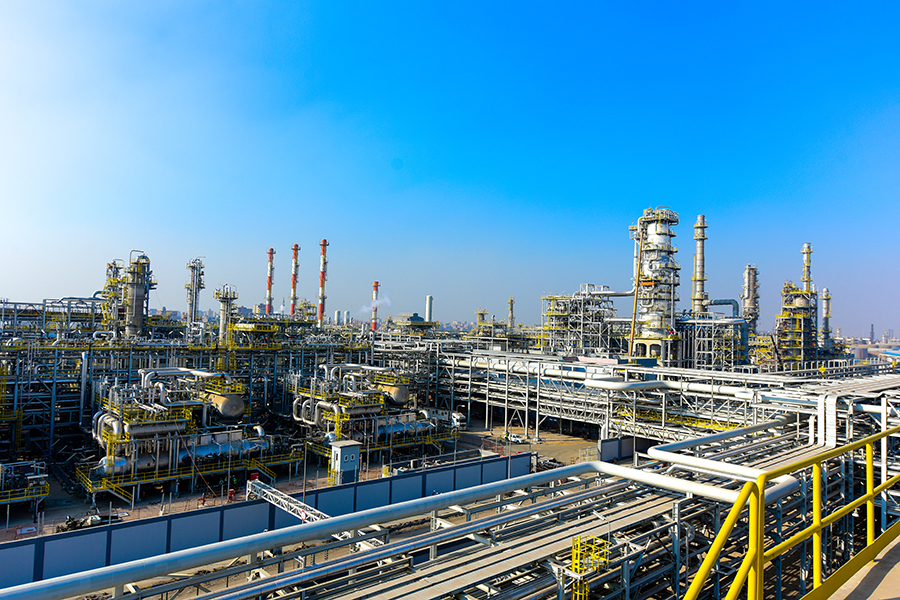
Petrojet and Enppi have secured a six-year route into Petroleum Development Oman’s (PDO) USD 6 bn+ project pipeline. The Egyptian consortium was selected as one of four international contractors and alliances eligible to compete for engineering, procurement, and construction work under a long-term framework with PDO, according to a statement from the Oil Ministry.

Not a USD 6 bn contract: The figure refers to the total portfolio of projects PDO will put out to competitive tender during the framework period, not work already awarded to the consortium. The ministry did not disclose a guaranteed minimum or when the first tenders will be launched.

The local-content leg: Petrojet and Enppi will transfer technical know-how, help train Omani engineers, and bring local contractors and suppliers into project delivery in line with Oman’s in-country value requirements.

The bigger picture: Enppi entered Oman in May with a USD 355 mn turnkey contract to expand PDO’s Birba gas facilities. It is also building four natural gas liquids storage tanks for Aramco in Saudi Arabia. Petrojet is leading a USD 1.1 bn oilfield development in Algeria and has a USD 160 mn infrastructure contract at Saudi Arabia’s King Saud Air Base. The two companies are also jointly executing a USD 1.24 bn gas preconditioning project for Adnoc in the UAE.

Why it matters: The framework pushes the companies’ regional expansion beyond one-off contracts by giving them repeat access to hard-currency tenders from a major Gulf producer. The move reflects the broader push by local Egyptian companies to look abroad for new markets and foreign-currency revenues — the country’s net outward FDI rose 30.3% y-o-y to USD 508 mn in 2024 — but the value of this agreement will depend on how much of PDO’s pipeline Petrojet and Enppi manage to convert into awarded work.

This publication is proudly sponsored by

3

REGULATION WATCH

The FRA carved out an auditor-rotation exception to smooth companies' path to listing

Auditors get an IPO exception: An auditor who has worked with a company for at least five years by the time it lists can now keep auditing its books for up to two more fiscal years after the offering, as per amendments (pdf) from the Financial Regulatory Authority (FRA). The existing cap was set in Decision 244/2023 (pdf) — which replaced the earlier Decision 3/2021 (pdf) — and limits an auditor’s tenure with one client to six consecutive years, after which they must sit out three fiscal years before any reappointment. The amendment, published last week, carves out the post-listing exception without touching the cap itself.

Why it matters: By keeping the auditor who knows a company best through its listing, the FRA removes a friction point for firms weighing a float. The change reads as one small piece of a broader push to bring more companies to the market through both private IPOs and the state privatization program, Kamel Saleh, managing partner at Grant Thornton Egypt, tells EnterpriseAM.

The net effect reaches further than the headline suggests: Although the amendment only names auditors with five years on the clock, it effectively sets a two-year floor for every listed company with its incumbent auditor after listing by closing the gap for firms nearing the six-year cap. “In effect, an auditor will always be able to continue for at least two years after any listing, irrespective of the number of years served before it,” Saleh says.

SOUND SMART- Regulators cap how long a firm can audit the same company on the premise that a long relationship dulls independence. The FRA hasn’t moved that line — it has added a single exception for companies in the middle of going public.

Why now: The rule was introduced roughly six years ago, so 2026 is the first year many mandatory rotations are due, which revealed the conflict with the IPO timing, Saleh says. “As soon as the FRA was made aware of the matter by corporates and the profession, this decision was made,” he says.

The problem it fixes: The cap “created difficulties for newly listed companies whose auditor had already served a term approaching six years by the time of the listing,” Saleh tells us. “The auditor who knew the company best either could not opine on the financials during the IPO, or had to be replaced immediately afterwards.” Changing auditors right after an IPO “is never advisable — it can send the wrong signal to the market, suggesting there may be other reasons behind the change,” he adds, and it burdens both the company and the incoming auditor exactly when continuity matters most.

Saleh tied the move to the FRA’s broader push to bring more companies to market through private IPOs and the state privatization program, calling it a pragmatic step that “ensures post-IPO continuity and minimizes disruption to the company’s operations and reporting following a listing.”

Also on the regulation front

Capital-market taxes are getting a coordination desk: The FRA has formed a joint committee with the EGX and the Tax Authority to recommend appropriate tax treatment for capital-market activity, according to a statement from the regulator.

The mandate: Chaired by FRA senior adviser Reda Abdel Moaty and drawing members from all three bodies, the committee will recommend treatment for securities and investment funds, draft joint tax-accounting guides, classify fund types, update earlier tax instructions, track the electronic link between the Tax Authority and the EGX, and set mechanisms for collecting and remitting taxes on securities sales and fund activity.

The committee arrives as a new EGX stamp tax took effect this month and as wider tax reforms revisit unlisted securities and other capital-market activity. The legislative direction may be set, and now the committee’s job is to close the implementation gaps between the regulator, exchange, and tax authority.

4

Logistics

Egypt eyes logistics links with Tanzania as investors sign in Elsewedy’s zone

Egypt is eyeing a set of logistics links with Tanzania, including a Safaga-Dar es Salaam shipping route and a Cairo-Dar es Salaam multimodal corridor, President Abdel Fattah El Sisi said during a visit to the East African country, according to an Ittihadiya statement. Egypt is also ready to help expand the Port of Dar es Salaam as part of a wider regional plan linking Tanzania to its landlocked neighbors. The two governments signed two MoUs spanning transport, electricity, and renewable energy, though no timeline or investment figures were attached to the broader proposals.

Beyond the ports: The two sides also discussed a land-reclamation project in Tanzania to grow staple and strategic crops for both countries, with room to add exports later. Cairo wants Egyptian firms to build on their work on the USD 2.9 bn, 2.1 GW Julius Nyerere hydropower project — built by Arab Contractors and Elsewedy Electric — by securing further infrastructure contracts in the country.

Why it matters: A Safaga-Dar es Salaam line would extend the trade network Egypt has been building across the Red Sea and East Africa, which already includes a maritime pact with Eritrea, a foothold at Djibouti's Doraleh port, and transit waivers covering six East African countries, Tanzania among them. Plugging into Dar es Salaam would open Egyptian access to Tanzania’s links to landlocked markets, including Zambia, the DRC, Rwanda, Burundi, and Uganda — a combined market of more than 250 mn people.

GO DEEPER- We took a closer look at Egypt’s bid to turn its Red Sea ports into redistribution hubs for East African trade in our recent deep dive.

ALSO- Seven Egyptian investors took up plots at Elsewedy Industrial City in Tanzania, according to a statement. The investors signed MoUs to build pharma, engineering, and food-production plants on the sidelines of the Egyptian-Tanzanian Business and Investment Forum. The 2.6 mn sqm Egyptian-run industrial zone was unveiled by Elsewedy Industrial Development in November 2023, with a USD 400 mn investment target across roughly 200 factories. The statement didn't name the investors or disclose the size of their commitments.

IN CONTEXT- The tie-ups are one piece of a wider Africa push. Elsewedy Electric Tanzania Managing Director Ibrahim Qamar said the company’s transformers and cables plant there supplies South Africa, Kenya, the DRC, Rwanda, and Burundi — markets once served directly out of Egypt. Separately, Elsewedy has committed USD 2.5 bn to Algeria in 2025 and is lining up Nigeria, Angola, and Ghana as the first export markets for its USD 500 mn ROX EV joint venture.

5

Also on our Radar

Solar and wind projects in the Gulf of Suez are getting a new EGP 20 bn link to the national grid

The Gulf of Suez is reportedly getting a new EGP 20 bn route into the national grid. An Egyptian-Emirati consortium led by Intelligent Globe Construction Egypt will build a 500 kV transmission line linking solar and wind projects in the Gulf of Suez to the Hawamdeya substation in South Giza. Construction is expected to take 30 months.

Why it matters: Egypt’s renewables buildout is increasingly a grid-capacity story, as new solar and wind capacity is only useful if the grid can carry it. The EU recently committed EUR 690 mn to new high-voltage lines and substations, designed to bring 22 GW of new renewable capacity onto the grid by 2030, including power from the Gulf of Suez and the Red Sea.

Direct line to Nvidia

Nvidia’s Inception startup program now has a formal Egyptian on-ramp. RiseUp, A15, and BitRoot are positioning themselves as the local access channel to the global program, which offers compute credits, technical support, and market-entry guidance to startups at no fee and with no equity taken, according to a press release (pdf).

The program itself isn’t new — the local access is. Inception is open to any startup that applies online, but the Egyptian channel through RiseUp, A15, and BitRoot gives local founders an in-person introduction to Nvidia’s regional staff and investors that a self-service application wouldn’t. More sessions are planned to expand founders’ access to Nvidia resources and networking connections. Venture-building initiative BitRoot — a joint effort from RiseUp and A15 — aims to help corporate professionals and early-stage founders turn ideas into startups, backed by capital and coaching rather than a fixed program.

6

PLANET FINANCE

MENA economy to shrink in 2026 before 6.5% rebound -BMI

BMI has pushed MENA recovery into 2027, projecting the region’s economy will contract in 2026 before rebounding next year. The Fitch Solutions research house said in a webinar attended by EnterpriseAM that it now sees regional GDP contracting 0.7% this year, then rebounding 6.5% in 2027, with almost all of that recovery resting on oil exports, which in turn depend on the reopening of the Strait of Hormuz.

The downgrade tracks a stickier Hormuz and a shift into what BMI calls “messy negotiations.” Washington has reimposed its naval blockade on Iranian ports, and Tehran has moved to shut the strait, through which roughly a fifth of the world’s seaborne oil and LNG normally passes. BMI has put its full-year oil forecast under review and lifted its working range for Brent to USD 80-95 a barrel in 2H 2026, up from the USD 70-80 it had penciled in under its “constructive” scenario. A sustained break above USD 90 would start to embed supply-shortage fears, BMI analysts said.

Even a diplomatic breakthrough buys months, not weeks. BMI expects a one-month test period, followed by at least six to 12 weeks of sustained calm, before tanker traffic returns to levels shippers consider commercially normal. Meanwhile, broader cargo vessels are expected to lag further behind.

What to watch: Oil market sentiment above all and the shape of any Hormuz charge. BMI expects Iran to push for fees on vessels using the strait but rates the chance of a permanent transit toll being widely accepted as low. More plausible is a services-fee structure tied to navigation, traffic management, and environmental protection — the Malacca Strait model — with Oman steering the GCC that way. One wrinkle they flagged is a US security-services fee on ships it escorts could end up normalizing Iran’s own demand for a fee.

The breakdown

The divide comes down to one thing: whether a country can get its exports out through an alternative to Hormuz, with the biggest pain concentrated in economies most dependent on the waterway.

In the contraction zone: Iraq’s economy is expected to shrink 8.5% as collapsing oil exports open a USD 30 bn fiscal gap, Qatar is expected to contract 7.2% as LNG exports remain stranded, and Kuwait is projected to fall by 8.1% as both oil and non-oil activity weaken. Bahrain is in the most vulnerable position, with BMI forecasting the deficit to widen to 8.5% of GDP and debt to exceed 150% as sectors accounting for about 85% of output come under pressure.

Countries with alternative export routes are projected to fare better. Saudi Arabia’s GDP is expected to grow around 1% in 2026 before accelerating to 6.8% in 2027, supported by its Red Sea export corridor and public investment — though disruption to that route from Yemen remains a key risk. Oman is expected to lead the GCC with 3.1% growth thanks to exports through Mina Al Fahl, which bypasses Hormuz, before moderating to 1.7% next year. Further afield, Egypt’s growth is tipped to hover near 5% as portfolio inflows recover, while Morocco is projected to stay above 4% on stronger agriculture and auto exports.

The UAE falls somewhere in between. While it has rerouted some crude exports through Fujairah, weakness in the non-oil economy is projected to leave growth broadly flat this year, which would mark its weakest performance since the pandemic. However, growth is expected to rebound by 11% in 2027 as oil output and trade recover. Like most of BMI’s 2027 forecasts, this recovery assumes Hormuz reopens, since a prolonged disruption would require another revision.

MARKETS THIS MORNING-

Asia-Pacific markets fell sharply in early trading this morning as escalating regional tensions pushed Brent crude prices up and cautious investors sat tight awaiting the upcoming wave of tech earnings. Japan’s Nikkei led regional losses, falling over 4%, and South Korea’s Kospi dropped 3.1%. Wall Street is set to open the first trading day of the week in the red, with major US index futures trading down.

EGX30

52,560

-0.7% (YTD: +25.7%)

USD (CBE)

Buy 51.06

Sell 51.20

USD (CIB)

Buy 51.05

Sell 51.15

Interest rates (CBE)

19.00% deposit

20.00% lending

Tadawul

10,717

0.0% (YTD: +2.2%)

ADX

9,782

0.0% (YTD: -1.6%)

DFM

5,814

-1.4% (YTD: -3.9%)

S&P 500

7,458

-1.0% (YTD: +8.9%)

FTSE 100

10,600

+0.3% (YTD: +6.7%)

Euro Stoxx 50

6,231

-0.8% (YTD: +7.5%)

Brent crude

USD 88.10

+4.6%

Natural gas (Nymex)

USD 2.91

+1.9%

Gold

USD 4,019

+0.7%

BTC

USD 64,376

-0.6% (YTD: -26.6%)

S&P Egypt Sovereign Bond Index

1,081

+0.1% (YTD: +8.9%)

S&P MENA Bond & Sukuk

151.44

+0.1% (YTD: -0.3%)

VIX (Volatility Index)

18.77

+12.2% (YTD: +25.6%)

THE CLOSING BELL-

The EGX30 fell 0.7% at yesterday’s close on turnover of EGP 10.6 bn (17.2% above the 90-day average). Local investors were the sole net buyers. The index is up 25.7% YTD.

In the green: Beltone Holding (+2.9%), Valmore Holding-EGP (+2.7%), and Egypt Aluminum (+2.7%).

In the red: Raya Holding (-2.5%), Edita (-2.0%), and Juhayna (-1.9%).

7

BLACKBOARD

Egypt’s tuition season is the real measure of the ministry’s fee crackdown

Egypt’s private and international schools are running the same play as last year: locking in fees before the ministry sets the ceiling. The Education Ministry has yet to issue the official fee-increase bands for AY 2026-27, though a government official tells EnterpriseAM that a decision is expected by the end of the month. Many private and international schools have already notified parents of 30-40% increases in fees, school administrators tell EnterpriseAM, citing higher operating costs. That tension sits at the center of the ministry’s wider effort to regulate the sector while keeping it attractive to investment.

REFRESHER- The ministry tightened oversight on private and international school fees last September, holding the line on the existing cap structure for a third consecutive year and dispatching committees to check that fees matched service quality.

Schools say the official increases are not enough. Private schools in particular are under significant financial pressure and need an exceptional increase, Private School Owners Association Chairman Badawy Allam tells EnterpriseAM. Without it, schools typically raise other fees to cover the academic year’s costs, he says. The ministry is expected to set the ceiling for private-school increases at 10-35%, but complying with the minimum wage requires more, something private schools have already requested in meetings with the minister, Allam says.

The ministry is stepping in: Education Minister Mohamed Abdel Latif met with the Foundation of International Schools in Egypt (FISE) earlier this month to discuss the sector’s challenges, including tuition fees, founder and CEO of education management firm Eduhive Karim Mostafa tells EnterpriseAM. The minister said annual tuition increases at international schools will range between 7% and 15%, with a binding decision expected soon, Mostafa says. International schools will also be required to publish their tuition fees on their websites.

The meeting covered a broader regulatory package for international schools, Mostafa says, including:

  • A new ministerial decision on tuition fees to take effect next academic year;
  • Barring homeschooling;
  • Moving preschools to Education Ministry licensing, instead of the Social Solidarity Ministry;
  • More emphasis on Arabic and religious studies starting next academic year and corresponding field visits to schools by the ministry;
  • Increased focus on Egyptian national occasions and holidays, with less emphasis on celebrations such as Halloween and Thanksgiving;
  • Advising international schools to join FISE.

International schools agreed to the ministry’s proposals ahead of the next academic year, Mostafa tells us.

Schools are pushing for a broader fee reset. The current setup doesn’t reflect operating costs, particularly for schools charging fees far below other private and international schools, Allam tells us. The association wants the ministry to allow those schools to gradually reprice over four years, bringing fees to a more fair level while supporting better educational quality. The association has formally submitted the request and is awaiting approval, Allam says, adding that a separate proposal to bring private schools into the simplified tax regime, paying a flat tax instead of facing multiple tax burdens has also been put forward.

Al Omran Language Schools Chairman Saber Omran expects the ministry’s tuition-cap brackets for AY 2026/27 to remain roughly in line with current levels — which is precisely why schools are accelerating the rollout of American or international divisions, he tells EnterpriseAM. While the cap regime governs national-curriculum tuition, schools after top-line growth are launching international sections to capture higher margins, alongside adjustments to fees for textbooks, extracurricular activities, and bus transportation. Omran frames the American-section expansion as a “mechanism” — the direct response to ministry-mandated annual increases that don't keep pace with operating costs.

The sector is facing a real squeeze from fee caps and minimum-wage requirements, Allam tells us. International schools are also working to replace foreign teachers with fluent Egyptian teachers to contain costs. Even so, the number of new schools added each year is falling, making stronger incentives and investment support necessary to encourage growth, Allam says.

The private-school supply is expanding slowly. The number of private schools grew by just 496 since 2021, totaling 8,806 across all pre-university stages in AY 2025/26, the same government official tells EnterpriseAM. Public schools grew to 18.7k from 16.8k over the same five-year period.

One solution is to give private operators the right to manage and oversee some public schools, Allam tells us. Under Allam’s proposal, education investors would receive the per-student cost already borne by the state budget in exchange for management and oversight, letting the government step back from operating public schools without changing what parents pay. The annual cost of a student in public schools runs around EGP 20k, compared with EGP 15-25k in private education, depending on the model, Allam says. Redirecting that state spending through private operators could improve quality without adding to household costs.

The Education Ministry already piloted this model in December, handing 33 official international schools over to private operator Emerald Education under a similar arrangement. Those schools remain bound by the standard 7% fee-hike cap. Roughly 40 more national schools are currently under review for private management, with a broader public-private partnership program for 24 schools set to launch as well.

Our take: Tuition season is open, but whether caps are enforced remains to be seen. We’ve flagged this mismatch before: K-12 remains structurally undersupplied, and investors are still circling the sector despite the fee ceiling. But macro pressures and financing costs mean the cap-versus-cost gap isn’t closing on its own. Until inspections and penalties are as real as the caps themselves, schools will keep setting fees first and asking permission later.


JULY

23 July (Thursday): Revolution Day.

28-30 July (Tuesday-Thursday): EduGate, Egypt International Exhibition Center, Cairo.

AUGUST

19 August (Wednesday): Connected Banking Summit, Fairmont Nile City Hotel Cairo.

20 August (Thursday): Monetary Policy Committee’s fifth meeting of 2026.

26 August (Wednesday): Prophet Muhammad’s birthday.

SEPTEMBER

8-10 September (Tuesday-Thursday) El Alamein International Airshow, El Alamein International Airport.

10-12 September (Thursday-Saturday): Egyptian Entrepreneurship Sector Diagnostics Report Summit, El Gouna.

15 September (Tuesday): IMF to hold its eighth review of Egypt’s USD 8 bn EFF arrangement.

24 September (Thursday): Monetary Policy Committee’s sixth meeting of 2026.

27-29 September (Sunday-Tuesday): Global Conference on Population, Health, and Human Development.

28-29 September (Monday-Tuesday): Egypt Mining Forum, St. Regis Hotel New Capital.

30 September - October 3 (Wednesday-Saturday): Cityscape, Egypt International Exhibition Center, Cairo.

OCTOBER

5 October (Monday): The EnterpriseAM Egypt Forum.

6 October (Tuesday): Armed Forces Day.

10-11 October (Saturday-Sunday): Egypt Women’s Health Summit (EWHS), Cairo Marriott Hotel.

26-28 October (Monday-Wednesday): IEX Egypt, Egypt International Exhibition Center, Cairo.

29 October (Thursday): Monetary Policy Committee’s seventh meeting of 2026.

NOVEMBER

6-8 November (Friday-Sunday) : Global Entrepreneurship Festival, JW Marriott Hotel, New Cairo.

8-11 November (Sunday-Wednesday): Cairo ICT Forum.

DECEMBER

7-10 December (Monday-Thursday): Food Africa, Egypt International Exhibition Center, Cairo.

17 December (Thursday): Monetary Policy Committee’s eighth meeting of 2026.

EVENTS WITH NO SET DATE

Mid-August: IMF Board expected to decide on the seventh review of the loan program.

2H 2026: Operations at Deli Glass Co’s new USD 70 mn glassware factory kick off.

2026: The Egyptian-American Economic Forum.

4Q 2026: Banque du Caire IPO.

2027

20 January-7 February: Egypt to host the African Games.

1-3 February (Monday-Wednesday): Agri Expo, Cairo International Convention Center.

April 2027: Tenth of Ramadan dry port and logistics hub to begin operations.

EVENTS WITH NO SET DATE

2027: Egypt to host EBRD’s annual meetings.

2027: Egypt-EU Summit 2027.

End of 2027: Trial operations at the Dabaa nuclear power plant expected to take place.

September 2028: First unit of the Dabaa nuclear power plant begins operations.

Now Playing
Now Playing
00:00
00:00