Good morning, ladies and gents, and happy weekend. It’s been a busy week in the press, and we have the full rundown and recap below. And as Margaret Atwood once wrote, “we’ve been sent good weather.”
In The Long View, we make the case for walking meetings: sedentary day jobs may be slowly eating away at our health, and taking the conversation outside could help with that and with your best ideas. From the bookstore, we read Elif Shafak’s In One Brief Moment All Eternity, a roughly 600-page reimagining of Gustave Flaubert’s life told through the women who shaped him and his most famous character, Emma Bovary.
In Hot & Fresh, we visit Massive, a restaurant, café, and bakery inside Nasr City’s Al Masa Hotel, with greenery, good coffee, and an Italian menu in a rare calm corner of the district. We also review Ahmed Helmy’s Hadoota and tune into the podcast Talk Easy with Sam Fragoso, and more.
Let’s dive in…
Become a morning regular
What’s moving Egypt’s economy, in your inbox every weekday. Free, in English or Arabic.
If there’s one thing about Cairo, it’s that you’ll never run out of things to do over the weekend. It’s a sunny couple of days in C-Town, and you might want to head out. Here’s where to go and what to do.
☀️ THE WEATHER THIS WEEKEND-
Cairo should stay warm and dry today and tomorrow, with highs of 29°C and lows of 19°C on both days, according to our favorite weather app. Friday will be mostly cloudy with a clear night. Saturday brings hazy sunshine, with clouds building overnight. No rain is expected either day.
HAPPENING THIS WEEKEND-
Private Label Egypt (PLE), which bills itself as Egypt’s first exhibition dedicated to private-label and contract manufacturing, is back for its second edition at Cairo International Convention Center (Hall 4), running until tomorrow. The three-day event brings founders, retailers, importers, and brands from across the region face to face with 150-plus Egyptian manufacturers, organizers say, up from 60-plus at February’s first edition, helping turn product ideas into market-ready brands.
Expect meetings with decision-makers from export-ready factories, matchmaking that connects your idea with the right manufacturer, and 40-plus talks and workshops on product development, formulation, compliance, packaging, and export readiness. Doors open at 10am and close at 8pm daily, and admission is at no cost. Manufacturers can book a booth, while brands and founders can register as visitors through PLE’s website.
Ready for a weekend of big ideas? UTH Festival returns this year at the Grand Egyptian Museum today and tomorrow, with Trevor Noah headlining the youth festival as its closing speaker. This year’s theme, “Work in Progress,” spans a full agenda of six tracks with a packed program of talks, workshops, track experiences, international and Egyptian speakers, and a short film competition. Early-bird tickets are selling out fast; get yours now on TicketsMarché.
Cairo Design Weekis back, with Downtown festivities kicking off today at the Egyptian Museum in Tahrir and running until Saturday, 28 November. The program will unfold across three of the city’s districts: Downtown, Zamalek, and Heliopolis under the theme “All About–إحنا” to explore what makes Egypt’s contemporary creativity part of a shared culture. The Downtown Cairo District opens today, blending contemporary design into historic landmarks at places like Café Riche Building, Tamara Haus, and Kodak Court while introducing TheMENAEdit, a regional design initiative showcasing limited-edition objects and installations at the Tahrir Museum.
The Heliopolis Design District opens tomorrow, bringing together craftsmanship, emerging talent, and technological innovation across Ghurnata Community Space, Showland at Merryland Park, and other locations. The district also introduces YADD, a community initiative celebrating handmade practices, and mobility initiative inMotion. The Zamalek Design District opens on Sunday, 22 November and spotlights art, fashion, and cultural storytelling at landmark locations like Aisha Fahmy Palace, the Islamic Ceramics Museum, Maison 22, and the Faculty of Fine Arts.
Recurring initiatives throughout the program include CDW Stage, Makerspace, and Fashion Design District, continuing to showcase Cairo’s evolving design scene. Beyond the districts, the program features nine curated guided Design Walks with routes across each district, running until Saturday, 28 November. All-access tickets are available through TicketsMarché, with separate bookings available for Design Walks.
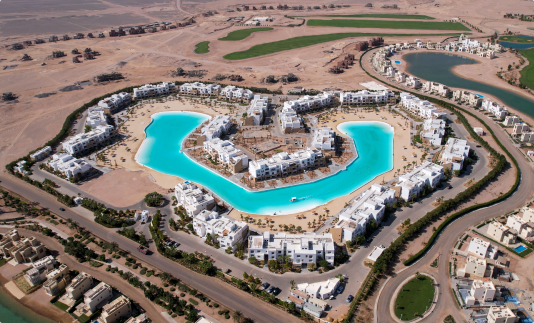
Down for a run by the Red Sea? The annual El Gouna Half Marathon by The Trifactory returns tomorrow, kicking off at Abu Tig Marina. Runners can choose from four race distances: 5K, 10K, 21K, and a 1K kids’ race. The route takes participants through some of the city’s best-known spots, including Downtown El Gouna, the Golf Course, and Kite Center Road. The 21K is already sold out, but registration for the remaining races is still open through The Trifactory’s website.
Hisham Abbas takes the stage at CJC 610 tonight forMa Yatloboho El Mostame3oun. Expect his beloved hits, catchy choruses, and a healthy dose of nostalgia. Doors open at 8pm, with the show kicking off at 10pm. Tickets are available through TicketsMarché.
Why would a storied engineering firm go after a Scottish energy giant? On this episode of Making It, Nader Aboushadi, group chief treasurer of Sidara (formerly Dar Al-Handasah), unpacks “one of the most consequential take-privates of a British firm in a long time.”
Massar Egbari are heading to Cairo Jazz Club 610 in Sheikh Zayed on Wednesday, 25 November for a night of rock, pop, and unmistakably Egyptian melodies. Expect an evening full of the band’s signature wit and plenty of crowd-favorite songs. The show kicks off at 8pm — tickets are available through this link.
Palestinian-American stand-up comedian Sammy Obeid is heading to Egypt on Saturday, 28 November for a show at New Cairo’s Teatro 90 as part of his The Wit Supremacy Tour. Known for his sharp punchlines, Obeid brings a special solo comedy hour that explores language, identity, and cultural nuances. The show kicks off at 8pm, with tickets available through TicketsMarché.
Egyptian actor and comedian Taha Desouky is bringing hisstand-up special“Let’s Make It Personal” to the Sayed Darwish Theater at the Alexandria Opera House on Saturday, 28 November, following a world tour that has taken him across continents. Now, he’s bringing the laughs back home. The show starts at 8 pm — get your tickets through Tazkarti.
Sedentary day jobs might slowly be eating away at our health, but what if there were a simple way to offset some of the damage? Enter walking meetings. You may have heard of the “walk and talk” concept, but perhaps never took it seriously enough or worried your colleagues wouldn’t be on board. There is a strong argument to be made for getting out for some fresh air and taking your meetings on foot — the tried and tested method can help relieve workplace tension, shake up your idea bank, and make your workday a little more enjoyable.
Great thinkers have long made a case for taking your thinking outdoors. Aristotle was said to teach his students while walking, and Friedrich Nietzsche famously took hours-long walks for both physical and philosophical reasons. Yet in modern offices, we spend much of the day already seated at desks and in front of computers, so when a meeting doesn’t necessitate intense face-to-face negotiations, note-taking, or whiteboard presentations, some conversations can benefit more from a change of scenery.
The benefits
If you’re not in the habit of “walking and talking,” you might think it’s not the most convenient for real, productive conversations. Your brain begs to differ, however. According to a 2015 survey by HBR of 150 working US adults, 5.25% are more likely to report more creativity at their jobs when they participated in walking meetings. From a neurochemical standpoint, our brains are actually more relaxed during walking due to the release of certain beneficial chemicals, especially during daylight hours. Executive function overall sees an improvement, and creativity sparks will more easily find their way to you.
Walking on its own has been proven to set off creative thinking, boosting it by up to 60%, according to a Stanford University study. Walking also increases blood flow in the brain, which helps creative ideas be expressed more fluently, according to research by the American Psychological Association. Sedentary work life isn’t exactly recommended either. A 2016 study cited by the American Heart Association linked sedentary behavior to an increased risk of cardiovascular disease and diabetes, as well as higher mortality rates.
The World Health Organization likewiserecommendslimiting sedentary time, emphasising that “any amount of physical activity is better than none” — and a walking meeting is one easy way to put that advice into practice.
It’s not just about getting your mental gears turning; it’s also about giving them room to breathe. When workplaces start to feel overstimulating and your mind starts to feel over-cluttered, going outdoors and hitting the pavement gives us a chance to unplug from the technology we’ve become so tethered to, get a little fresh air, and blow off steam.
Intellect aside, walking meetings are great for overall employee engagement. The same HBR survey shows that workers who participate in walking meetings are 8.5% more likely to report high levels of engagement, encouraging more honest interaction. As you can imagine, walking side-by-side with your boss or a higher-up naturally eases some pre-existing tension.
Studies prove that walking meetings help break down hierarchical barriers between seniors and juniors or between co-workers, as things become less intimidating and conversations flow more naturally. Furthermore, the effects are akin to business bonding trips, according to HBR, describing walking meetings as “micro versions” of the bonding that can take place during corporate travel.
Knowing when to walk and talk
All that being said, not every meeting is fit to take on foot. Ideally, walking meetings are for when colleagues need to bounce ideas off each other, explore possible solutions, or generate new ideas. While walking meetings have plenty of benefits, sit-down boardroom-style meetings still have their place. So, when you need to discuss the latest sales figures, pin down an important company move, or engage in any kind of high-stakes talks, you can leave those to the boardroom.
Let’s tackle the logistics of a walk and talk. To get the most out of a walking meeting, keep the number of people on your side from one to three. Intuitively, walking meetings work best with smaller groups or one-on-one catch-ups. For most people, frequent meetings usually involve smaller teams anyway — if not, this is your chance to narrow it down so everyone can have a say.
Don’t surprise your colleagues or clients with the idea. Make sure you give them a heads-up so they come prepared; i.e arriving in comfortable clothes and shoes. Also, check the weather and plan accordingly. Try not to make a mandate — offer seated or call-in alternatives to those who prefer it.
The itinerary: Before you start inviting people, test out routes yourself beforehand. Check for noise levels, safety, accessibility for inclusivity purposes, pacing, and the overall smoothness of the route — this is particularly crucial in Cairo. Plan around the topics being discussed: if a sensitive topic is being tackled, choose an extra quiet spot, or just keep the discussion indoors. A 15- to 30-minute walk is ideal so the meeting doesn’t stretch on for too long and people start to lose focus or feel tired.
A great tip is to choose a loop that ends where you started. Also, try adding an “extracurricular destination” to your route, like a historical building or a fun spot, as a point of interest to drive more incentive to go on a walk, especially for first-timers. Finally, make sure the meeting is efficient, achieves what you set out to do, and doesn’t require unneeded purchases or detours.
Don’t limit yourself to the outdoors. In cases of bad weather, for example — or in the case of Cairo, lack of walkable routes — suggest walking meetings that take place through corridors, covered walkways, or indoor tracks inside your office space or nearby buildings. If walking meetings are really your priority — and you’re the company boss with members who encourage the idea — consider investing in bar-like desks, a couple of treadmills, bicycles, or stair steppers to place throughout your office space, particularly conference rooms.
After you finish a walking meeting, keep a record of decisions and important points right after with a quick voice note or a few lines in your notes app. Follow up with your co-workers after and alert them to any changes that took place as a result of the meeting, especially if you’re looking to make walking meetings a habit and want them to see them as valuable and not just a one-off, change-of-scenery thing.
Egypt’s week was about putting capital to work. The sovereign fund’s insurer is floating 15% of Misr Life, Engie closed financing on a 900 MW wind farm, and two AI compute plays took shape, with the private-sector minimum wage set to rise 21% to EGP 8.5k. Abroad, the news was Washington’s pressure on Nvidia, a run of US tech outages, and strain on Gulf shipping lanes. Let’s dive in.
CAPITAL MARKETS-
State-owned Misr Ins. Holding Company (MIHC) isfloating 15% of Misr Life Ins.on the EGX next month, according to the company’s intention to float. MIHC, which is wholly owned by the Sovereign Fund of Egypt, is selling 750 mn existing shares in a purely secondary offering, so all proceeds go to MIHC. The sale is smaller than the up to 20% the sovereign fund put on the table in May.
ECONOMY-
The private-sector minimum wagewill rise 21% to EGP 8.5k a month from 1 January 2027, its first increase since March 2025, following the National Wages Council's approval yesterday. The new floor replaces the EGP 7k minimum for the country’s 26.5 mn private-sector workers and puts it above the EGP 8k minimum that government employees have received since July.
MEANWHILE- Deutsche Bank Researchexpects the EGP to strengthen to 48 against the USDif the US and Iran reach a sustainable diplomatic agreement to end their war, and to weaken beyond 60 if the war escalates. The Central Bank of Egypt quoted the EGP at 53.39 to the USD on Thursday, 12 November, roughly midway between the two. The bank gave the range in answers to our questions on its 5 November note, which called the EGP the “bellwether currency for Middle East tensions.”
AND- Our IMF program is heading into its last payout. The Fund and the governmentreached a staff-level agreementon the eighth and final review of our 48-month Extended Fund Facility (EFF) and the third review of the Resilience and Sustainability Facility (RSF). If the IMF’s Executive Board signs off, we’ll receive about USD 1.5 bn under the EFF and up to about USD 800 mn under the RSF, bringing total disbursements under the two arrangements to about USD 9.6 bn.
AI-
Alexandria may soon be home to a green AI data center builtpurely to export compute. Income Egypt for Infrastructure & Investment and Sustainable Infra Capital (SIC), a Dubai-based platform backed by Saudi and South Korean capital, are developing Project Atlas, a campus in New Borg El Arab whose 180-MW first phase targets European AI demand. Phase 1 would cost around USD 2.15 bn.
The consortium is targeting financial close by end-2027, with a first phase ready for service in 4Q 2028. The sponsors unveiled the project late last month at Cushman & Wakefield’s London headquarters, where the firm, which is also advising on Atlas, released a white paper on Mediterranean data centers that uses Atlas as its Egypt case study.
AND- Etisalat Business plansto launch a GPU-as-a-Service(GPUaaS) offering in Egypt, which would allow renting out cloud computing power to local companies and developers under a three-way MoU with investment group M Empire and the Startup Egypt foundation. That matters because training large AI models takes clusters of specialized GPUs, a steep upfront cost for Egyptian startups and enterprises, who often end up renting capacity abroad in hard currency.
REGULATION-
The Financial Regulatory Authority iskeeping the door shuton new consumer finance and microfinance lenders for another year, extending its freeze on new license applications through the traditional route to 11 October 2027. The ban also covers NGOs seeking to run microfinance programs. A separate, renewable freeze on fintech-based consumer finance licenses remains in place until 25 February 2027.
M&A-
The Arab Energy Fund has filed itsvoluntary tender offerfor 21.3% of EGX-listed offshore services group Maridive & Oil Services, bidding USD 0.70 a share for 100 mn shares in a transaction worth USD 70 mn. Our friends at EFG Hermes are sole advisers to the fund.
HOSPITALITY-
Brassbell Hospitality Group (BHG) and Misr Abu Dhabi for Real Estate Investment (MAD)signed an MoU to develop a USD 55 mn, 200-key hotel directly opposite the Grand Egyptian Museum’s (GEM) main entrance in Giza. The hotel is targeting a 1Q 2029 opening and should bring in USD 13-15 mn a year in revenue once it matures.
MAJOR HEADLINES THIS WEEK-
This week’s headlines were dominated by an unprecedented Trump-Xi-Putin summit, Washington’s pressure on Nvidia, and a run of tech failures across the US. Here’s the rundown.
US President Donald Trump, Chinese President Xi Jinping, and Russian President Vladimir Putinmet in Shenzhenin the first trilateral summit of its kind. The 90-minute talks ended with a joint declaration that “nuclear war cannot be won and must never be fought” and a pledge to increase production of refined petroleum products. The leaders also discussed the authority of the International Criminal Court, global energy supplies, the war in Ukraine, UN reform, and nuclear proliferation.
With Jensen Huang out, Treasury Secretary Scott Bessent said Nvidia needs a“dramatic shakeup”at the top, urged it to look outside the company for its next CEO, and gave the board 10 days to answer questions about whether its culture pushed illegal chip sales to China. Reuters reports the board is not considering bringing Huang back, despite a petition calling for his return that has collected more than 180k signatures. Huang wants the job back anyway, as the co-founder said in a letter that an “outpouring of calls” from employees, investors, partners, and customers urged him to return.
Nvidia named CFO Colette Kress interim CEO and made board member Harvey Jones its first chairman. Kress led her first earnings call, presenting positive results and raising Nvidia’s sales forecast, then told staff that raises and equity awards will come in December rather than spring.
Washington is also moving on the chips themselves: The New York Times reports that sellers will need a license to supply overseas data centers that rent computing power to firms in China, Russia, and Iran, closing a loophole that let Chinese companies rent chips they cannot buy.
MEANWHILE- US infrastructure kept stumbling. Microsoft apologized for a global outage that cut businesses, schools, and governments off from Outlook and Teams, blaming a network capacity upgrade rather than a cyberattack. A communications failure then grounded almost every departing US flight for nearly five hours, the longest nationwide shutdown since 9/11, and 4.5k flights were canceled the next day.
By Tuesday, JPMorgan reported slower-than-usual transactions, with customers at Bank of America, Wells Fargo, and Zelle reporting problems too. The National Security Agency reported “network issues” of its own, blaming “routine maintenance” and saying mission-critical capabilities stayed fully operational, without giving details on cause or scope.
CLOSER TO HOME- Bahrainintercepted six Iranian dronesaimed at a US base, prompting its first public threat alert since September, as US-Iran talks remain stalled. In Yemen, Saudi-backed forces pulled back from territory overlooking the Bab Al Mandab Strait to defend Aden, leaving the Red Sea route under greater Houthi pressure.
Ahmed Helmy makes a long-awaited on-screen comeback as a leading man withHadoota. A comedy, as you’d expect from Helmy, the movie also comes with a surprisingly strong psychological streak. The veteran actor takes on a more emotionally driven story about confronting past enemies and childhood traumas, one that had us shedding a tear or two by the end, rather than laughing as we’d come to expect. The movie has been met with overwhelmingly positive reviews, and we’re here to say they’re well deserved.
The plot: Helmy plays Hadoota, a leather-clad gangster in his 40s with a tough exterior, heavy beard, and, as viewers will come to discover, plenty of emotional baggage. During one of his illicit missions, he accidentally stumbles upon the office of hypnosis therapist and healer Dr. Hoda (Amina Khalil), who mistakes him for one of her clients and gives him a memory-altering pill. While heading back to one of his missions, he suffers a memory lapse and forgets where he’s hidden a kidnapped witness. Desperate to recover the missing information, he returns to Dr. Hoda’s office, demanding that she restore his memory. What follows, however, is a much deeper trip into his past than the one-hour recall he initially asks for.
First impressions: The movie gets off to a strong, if slightly overwhelming, start with a dramatic monologue by Hadoota accompanied by fast-paced editing and music. The first half largely maintains this tone, a choice we felt was intent on creating tension for its own sake. Guest appearances from Khaled El Sawi, Maged El Masry, and Mohamed Mamdouh, among others, also add to the movie’s initial hype.
What we enjoyed: Hadoota takes viewers through a series of pivotal childhood moments, from school struggles and parental relationships to the challenges of building self-confidence. We see Hadoota at two different stages of his life: as a young boy and as a teenager, both versions played exceptionally well by their respective young actors, who handle the more emotionally charged scenes with impressive skill. The flashbacks weave into the present-day storyline to create some genuinely moving exchanges between young and older Hadoota as he attempts to confront and heal from deep-seated childhood wounds.
The young cast, shown in the school scenes, is a standout in its own right, bringing plenty of comedic charm and delivering some of the film’s funniest moments. Helmy’s signature comedic spirit and light-hearted jokes, however, disappointingly don’t land quite as well.
The verdict: Helmy really steps outside his usual comfort zone with Hadoota to deliver a stirring, heartfelt, and memorable story. Its message is a universal one that can move you even if you don’t have any particular childhood wounds to revisit — just the experience of being human and having had to make peace with your past self at some point.
WHERE TO WATCH- You can catch Hadoota at VOX Cinemas in City Center Almaza, Mall of Egypt, and Alexandria; City Stars Cinema; Scene Cinemas in Cairo Festival City and District 5; Renaissance Cinemas in Madinaty, Alexandria, and other locations; and Premiere Cinemas in P90 and Cima Arkan. Watch the trailer on YouTube (watch, runtime: 01:47).
The question of who gets to tell certain stories is one as old as literature itself. In British-Turkish novelist and literary juggernaut Elif Shafak’s latest undertaking, In One Brief Moment All Eternity, that question is put to the test once again as she takes creative liberties to imagine the lives, loves, and losses of iconic French novelist Gustave Flaubert, author of the divisive Madame Bovary.
The plot: The novel, roughly 600 pages, fictionalizes Flaubert, reimagining his personal history, struggles, and upbringing, told through myriad female narrators who shaped him, and would come to shape his most popular character: Emma Bovary. The novel begins with the day Flaubert decided to kill Emma, and thus introduces its first narrator (and its purpose). Emma is given a voice, rebellious against how Flaubert shaped her and how helpless she was in the face of his fateful pen, posing the question: what if someone were to force Flaubert himself into a fate written not by his own hands? And so Shafak heeds the call.
Spanning France, Egypt, Lebanon, and more, the novel then traces this Flaubert’s fictionalized life through narrators far and wide — a street beggar, a young lover, a mother, a daughter, a tutor, an Egyptian belly dancer, and more throughout the world. Through these distinct POV chapters, we follow as Flaubert grows up amidst political unrest, determined to pursue his dream of writing, showcasing the importance of both literature and female voices in literature throughout the centuries.
What we loved: Shafak is a master of the pen; there is certainly no doubt there. When picking up In One Brief Moment All Eternity, we were unsure what to expect; the synopsis pointed to a narrative undertaking so unlike Shafak’s usual path — at least what we were used to in novels such as Honor, 10 Minutes and 38 Seconds, and There Are Rivers in the Sky. Yet, as usual, Shafak surpassed every expectation; the prose is brilliantly descriptive and emotive without turning purple; the structure is varied but never confusing; and the chapters taking place in Egypt are some of the most beautiful we’ve read as of late. Flaubert’s character is incredibly fleshed out, nuanced, and at times, very relatable.
The verdict: This is a novel to read unhurried; its 600 pages need conscious engagement and invite introspection. For writers in particular, this is a masterclass in narrative and storytelling; for readers, it’s probably the best book you’ll read in 2026. Even if you’re unfamiliar with Gustave Flaubert or Madame Bovary, Shafak provides more than enough context and backstory, ensuring each reader gets the best experience possible from cover to cover.
WHERE TO GET IT- The e-book is available on Amazon. Expect the paperback at Diwan soon.
Sometimes all you’re craving is a nice breakfast, a good cup of joe, or some time among the greenery. More often than not, you have to trade one for the others, especially if you live in a part of Cairo where trees are scarce. Today’s destination is an exception on many fronts. There, you’ll find great coffee, a filling breakfast, delicious desserts, and plenty of greenery to feast your eyes on, and it manages all of that in none other than Nasr City.
Located inside the Al Masa Hotel,Massiveis a restaurant, cafe, and bakery, and it succeeds on all three fronts. Surrounded by rows of palm trees and hills of greenery, it carves out a rare space of calm within the bustling and often-maligned district of Nasr City. It’s quiet, and you’ll feel miles away from Cairo. With both indoor and outdoor seating (though we’d opt for outdoor), Massive is both vast and cozy, with an Italian menu that will see you through the entire day should you choose to stay that long.
What to expect: If you’re going for breakfast, as we did, you won’t be spoiled for choice, but what’s on offer leaves an impression. The menu includes Al Tartufo (creamy scrambled eggs with mushroom and truffle), Sausage Ai Funghi (a sausage and mushroom omelette), and Salmone Affumicato (salmon benedict). We ordered the Al Tartufo and the Sausage Ai Funghi. Both were served in around 20 minutes with a side of potatoes and garden salad. While both delivered, the scrambled eggs were a little too creamy for our taste, and the omelette came out ahead.
For our caffeine fix, we went with a flat white, and it didn’t disappoint: hot, strong, and not bitter. For dessert, we headed inside and took our sweet time picking, eventually settling on a lemon meringue pie and a tiramisu. Both were succulent and comfortably above average, but it was the lemon meringue pie that stood out, with a taste that was sweet (and not too sour), a perfect consistency, a great crunch on the crust, and a creaminess that had us back two days later, only to find it sold out. We weren’t surprised.
AND- If you’re going later in the day, you’ll find plenty of Italian delicacies on the menu, including pizzas, Italian soups, salads, aperitivi, pastas, chicken dishes, and steaks.
The verdict: Massive is a breakfast worth crossing town for: a great omelette, a better flat white, and a lemon meringue pie that sells out. Sit outside, and don’t skip dessert.
WHERE TO FIND IT- Massive is located inside Al Masa Hotel in Nasr City. You can also order through Talabat.
A good interview works like a good dinner party: ask the right questions, and nobody reaches for their coat. Sam Fragoso has been throwing that party on Talk Easy with Sam Fragoso since 2016. Every week, the writer, director, and radio host sits down for long, intimate conversations with actors, filmmakers, activists, politicians, and the occasional comedian, and he rarely settles for the greatest-hits version of anyone’s career. The show is made in partnership with Higher Ground Media, and popular figures from all walks of life like Viola Davis, Michelle Obama, Ryan Coogler, and Rupi Kaur have all been guests.
What to expect: The episode catalog runs past 500 episodes, so you won’t run dry anytime soon. Guests get room to talk about their work and the personal histories behind it. Episodes usually run 1 to 1.5 hours, and a new one drops every Sunday. Fragoso shows up prepared and curious, making his guests comfortable enough to get real and personal.
Onan episodethat stuck with us, Fragoso sits down with the late writer and activist Gloria Steinem in a conversation recorded in 2019 and re-released after her death earlier this year. Steinem looks back on the life that helped build the women’s liberation movement. She covers the abortion she had at 22, her formative years in India, and her work with Dorothy Pitman Hughes and Flo Kennedy. She also gets into the sexism she witnessed as a woman in journalism, the backlash outspoken women face, and her complicated feelings about her mother.
What we liked: Fragoso clearly did his homework. He pulls from Steinem’s books, past interviews, and public appearances, and he catches details most interviewers would sail right past. He lets her wander when the story calls for it and reins things in before they drift. Steinem, for her part, is candid and funny, and her vulnerable moments make even the heavy stretches easy to sit with.
The verdict: If you like meeting the person behind the public profile, Talk Easy belongs in your podcast queue. Fragoso does his research but keeps things relaxed, so his conversations have real substance and never sound scripted.


 Egypt Edition
 MENA+ Edition
 UAE Edition
 Saudi Edition
 AI + Innovation (MENA)
 Infrastructure


 Share Issue