Get EnterpriseAM daily

Available in your choice of English or Arabic

Remittances surge, deficit drops

1

WHAT WE’RE TRACKING TODAY

FinMin to settle EGP 308 bn in CBE overdrafts

Good morning, friends. We’ve got a packed issue for you — and despite some doom and gloom from the IMF, we’re (very cautiously) optimistic this morning.

What gives? For starters, the EGP continues to move in ways that make sense, responding to inflows and outflows of FX. We’ve talked a lot since the outbreak of hostilities about the importance of the policy maturity that the Madbouly government has shown in the past couple of years, and this is the number-one sign that it’s real.


From the Dept. of Tooting Our Own Horn: We’re publishing later this morning the first issue of EnterpriseAM MENA+ — our new regional flagship covering trends and the flows of capital, people, and ideas across the MENA region.

What’s with the “+” in MENA+? We think one of the most powerful stories in the region is the *export* of ideas and capital not just to neighboring regions (Asia, the Stans) but to international financial centers. MENA countries are jockey for position in the new global economy now taking shape, and we’re going to shape that conversation.

MENA+ covers AI and tech — and geopolitics, the war for talent, which BSD is on top (and who’s gunning for them), the changing energy economy, new corridors to India and China, and much, much more.

Want your own copy? You can subscribe here — or just hit “reply” to this email and ask to be added to the list and we’ll take care of it for you.

EntepriseAM MENA+ is available without charge thanks to the generous support of our friends at Mashreq, the most ambitious financial institution we know in our region. We’re publishing Monday, Wednesday, and Friday at 12 noon UAE / 11am KSA / 10am Egypt.


We’ve also got some interesting company news: EBRD — one of Egypt’s most reliable investors in good times and bad — is backing our friends at Hassan Allam Utilities on their cutting edge solar-plus-battery-storage facility in Benban. And Ezz Steel looks like it’s making a power move into Algeria.

Today is also the first day of the wheat harvest, and it’s a critical one: Officials are hoping good yields and fast payments to farmers will let them build stocks as international prices rise thanks to the war in the Gulf. It’s a smart move, but the challenge could pale in comparison to the one we think may be in the cards. The longer the war in the Gulf lasts, the longer the global fertilizers market is really messed up, the more likely it is we’ll face significant food shortages around the world starting late this year. Planting seasons are horribly inconvenient realities…

We also have news for you this morning of how we started the crisis with strong buffers — and why the IMF just trimmed our growth forecast.

^^ All of that and more, below.

Watch this space

EGP WATCH — The EGP strengthened against the greenback yesterday, buoyed by USD 1.3 bn in carry-trade inflows, a senior government official told us yesterday. One USD was going for 52.47 at state-owned lenders NBE and Banque Misr and for USD 52.55 at private-sector giant CIB.

Keep an eye on that USD 1.3 bn figure — it’s the biggest one-day inflow since late February, just before the outbreak of war in the Gulf. The interbank market was healthy yesterday, with some USD 475 mn in FX changing hands, we’re told.


INVESTMENT— Cairo will play host to the next Egypt-US Economic Forum in June 2026, the Foreign Ministry said after Foreign Minister Badr Abdelatty met in Washington, DC, with US Secretary of State Marco Rubio. The pair also discussed the security situations in Palestine, Lebanon, Sudan, the Horn of Africa, as well as water security. The statement gave no additional color on the business summit.


INVESTMENT — It looks like Chuck E. Cheese is a rodent with ambition. Saudi Arabia’s Safari Group will invest up to EGP 2 bn to launch seven Chuck-branded entertainment centers here over the next four years, according to remarks attributed to company CEO Ali Saleh Al Sagri. Safari Group’s hospitality unit, Unique Hospitality Company, and Egypt’s PMaestro will handle management and operations.


STATE SPENDING — The Madbouly government wants you to know that it’s not backing away from its pledge to enforce tighter financial discipline, with a senior official telling us the Finance Ministry will settle some EGP 308 bn in direct borrowing and overdrafts from the Central Bank of Egypt (CBE) by the end of the current fiscal year.

Why it matters: The move closes the tap on the government’s direct borrowing from the CBE — a long-standing practice now curtailed under our reform program with the IMF to anchor inflation and push the state to borrow from the market. “By settling this account, the government’s total loans from the CBE will be fully settled,” our source tells us, signalling further shift toward fiscal discipline.

Where’s the money going to come from going forward? Officials have been woking up a more diversified financing mix that includes commercial borrowing, bonds and other debt instruments, and better asset management.


Sims-for-kids to boost parental oversight by late June: The Madbouly administration is looking to roll out sim cards specifically for children before 30 June 2026, according to a statement. The effort will include secure internet packages that feature parental controls and age-appropriate social media restrictions, as well as collaborating with telecom operators to provide content filtering and parental controls via home routers.

Stricter regulations on online life may also be in the cards. The administration is mulling efforts to curb electronic betting, currency counterfeiting, and digital addiction among young people.

Data point

USD 1.3 bn — that’s how much foreign energy firms are pouring into exploration across the country this year, Oil Minister Karim Badawi told the cabinet last week (watch, runtime: 11:15).

WEATHER- We’re in for a hot day in Cairo today, with a high of 33°C and a low of 20°C, according to our favorite weather app. Expect the mercury to rise tomorrow (a high of 35°C) before cooling on Friday (30°C).

It’s nice and breezy in Alexandria, with a high of 25°C and a low of 16°C.

The big story abroad

Washington’s naval blockade on Iran is still in effect and bilateral talks “could be happening over next two days,” US President Donald Trump said overnight. A major sticking point will be Iran’s nuclear ambitions. Washington reportedly proposed a 20-year “suspension” of all nuclear activity — not just a permanent ban of nuclear enrichment. Iran is holding out for a five-year suspension of work on anything nuclear.

The US blockade of Hormuz has tankers stopping or turning around, the FT notes.

Pressure on Tehran is mounting, with Washington deciding not to renew a 30-day waiver of sanctions — set to lapse this Sunday — on Iranian oil at sea, Reuters reports. The waiver has allowed roughly 140 mn barrels of oil to reach global markets.

Lebanon and Israel held their first direct diplomatic talks in decades on Tuesday in Washington, which the US State Department called a “historic milestone.” Iran-aligned Hezbollah was not represented at the sit-down and has long opposed direct talks with Tel Aviv.

MEANWHILE- US banks are breaking earnings records as 1Q financials come out. Investment banks capitalized on a volatile first quarter marked by US intervention in Venezuela and the war on Iran. JPMorgan Chase delivered its highest-ever topline figure, while Citi turned in its best quarterly revenue in a decade.

*** It’s Hardhat day — your weekly briefing of all things infrastructure in Egypt: EnterpriseAM’s industry vertical focuses each Wednesday on infrastructure, covering everything from energy, water, transportation, and urban development, as well as social infrastructure such as health and education.

In today’s issue: We unpack Pan-African tech group Cassava Technologies’ AI infrastructure play in a candid sit-down with Sherif Shaltout, Executive Manager of Liquid C2 MENA.

This Easter, nothing ends early. It simply unfolds.

From sunlit days to evenings that carry on, Somabay becomes a place where every moment finds its rhythm.

2

The Big Story Today

Go west, young man

Steel giant Ezz Steel could be lining up to build a USD 780 mn direct reduced iron facility in Algeria, according to a statement from the Algerian Investment Promotion Agency and reports from the Arabic-language press. The facility could produce as much as 2.5 mn tons of DRI each year with an annual sales value of USD 835 mn at current market prices. Ezz Steel declined to comment on a timeline or investment ticket for the project when we asked yesterday.

Why Algeria? The US effectively froze Egyptian steel out of North America’s largest market earlier this year by slapping a 29.51% countervailing duty on Egyptian rebar on top of the existing 50% rate on steel imports. A separate anti-dumping investigation into Egyptian steel production expected in May could add another 20-30% duty, leaving Egyptian producers bracing for a 100% tax wall. For several industry heavyweights, a shift to regional reconstruction projects in Libya or qualifying for EU green exports was the answer after losing one of the biggest hard currency corridors.

Uh, Enterprise? What’s DRI? Okay, we’re going to get a little bit wonky here. It’s iron ore that's been converted into a high-purity metallic form using natural gas instead of a traditional blast furnace. DRI is a key feedstock for electric arc furnace steelmaking — the route Ezz Steel already uses — and produces cleaner steel with a lower carbon footprint than steel made in a blast-furnace.

Okay, then why Algeria? Algeria is sitting on cheap, abundant natural gas (the single biggest input cost for DRI production) — and producing there could give it easier access to the EU and low-cost feedstock. It might also give it another entry-point to the US market down the road, all while preserving its ability to sell into neighboring Libya.

Look at Ezz’s move toward Algeria as a three-pronged move to de-risk and diversify its supply chain, Confluence Consultants ’ Head of Research Amandeep Ahuja tells us. “If we have learnt anything from the effective closure of the Strait of Hormuz, it is the necessity of supply chain diversification,” she adds.

The company’s entry into Algeria may not mitigate high tariff risks from the US, as both countries face heavy duties, but “it may reshuffle it if government subsidies change,” Ahuja says.

Energy and logistics

Setting up shop in Algeria also hedges against energy constraints here at home and ensures access to EU markets. Ezz Steel’s proposal focuses on natural gas-reliant DRI production, which is “likely to be replaced by green hydrogen in the future,” Ahuja tells us, adding that the transition is essential for green steel production, easy EU market access, and countering any future EU carbon tax mechanism.

The move would also sidestep any critical logistic bottlenecks. By establishing a production hub in Algeria, Ezz Steel would open a door to the country’s shipping routes to Europe, bypassing geopolitical disturbances in shipping routes on the Red Sea.

3

Commodities

The Great Game of Wheat

The national wheat harvest kicks off today, and it’s one of the most critical harvests in years as the Madbouly government looks to build a homegrown hedge against the prospect of a global food-price shock fuelled by fallout from the US-Israel-Iran war in the Gulf.

Officials are hoping to buy some 5 mn tons of local wheat by mid-August — up from purchases of less than 3.9 mn tons last season, according to a statement. To sweeten the pot, the state is offering a record EGP 2.5k per ardeb at the high end for 23.5-grade wheat — up from last year’s average prices of EGP 2.3k — with a commitment pay farmers within 48 hours of any contract closing.

Where we stand: The US Department of Agriculture — still the global expert on these matters — expects us to have a good harvest, projecting we’re going to grow about 9.8 mn tons of wheat this year, up 6.5% from last year. But we’ll still face a 12.5 mn ton import gap even with some 3.7 mn feddans under cultivation (up 600k from last year).

The war-risk math isn’t the big thing right now: The cost of imports is rising, sure: The Black Sea wheat index sees wheat futures up about 2.3% since the conflict broke out in late February, and its highest level since June 2025. Logistics and ins. costs are also driving up imported grain prices.

But the bigger shock could be still yet to come. How so? This year’s harvest is safe — it was planted before the war in the Gulf. The risk is to the next one, everywhere in the world.

The near-total shutdown of Hormuz has choked off roughly 40-45% of the world’s seaborne fertilizer trade. Nitrogen prices have nearly doubled, and the UN Food and Agriculture Organization is warning that if disruption persists through the Northern Hemisphere planting season (the spring wheat planting season is now, winter wheat is planted September through November), wheat yields could decline worldwide. That could see us trying to bridge a 12.5mn-ton supply gap when the rest of the world is scrambling for a much scarcer commodity.

4

DEBT WATCH

HAU Energy’s Benban plant gets EBRD backing

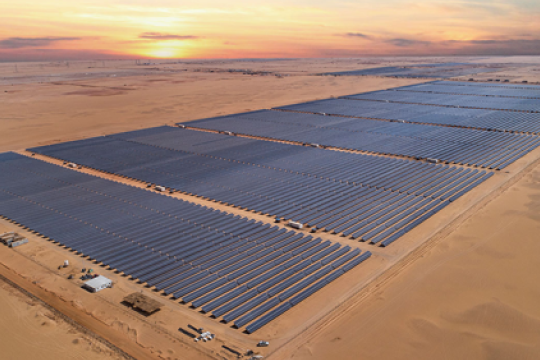
The European Bank for Reconstruction and Development (EBRD) is extending a USD 65 mn bridge loan to Hassan Allam Utilities subsidiary HAU Energy, according to a statement. The financing will cover the construction of Nefer Benban — a 200 MW solar facility and a 120 MW battery energy storage system (BESS) near Aswan — which is expected to come online in the second half of this year.

IN CONTEXT- The Nefer Benbanfacility is part of a larger 1.2 GW solar power and 720 MWh battery complex. Infinity Power and Hassan Allam Utilities Energy Platform signed agreements with the Electricity Ministry and the Egyptian Electricity Transmission Company last November for the wider project.

The loan is just one piece of EBRD’s USD 1.4-1.5 bn investment ticket for Egypt this year, with at least 40% of it — roughly USD 600 mn — funneled towards green projects, EBRD’s Hashem Abd El Hakim, EBRD’s deputy head of Egypt for financial institutions, told us last month. “We are trying to do capital market transactions like bonds and SLLs, like last year, to attract more international investors to enter Egypt across those sectors,” he added.

The BESS is the critical component here. Energy storage on a utility-scale is a new theme in Egypt’s green economy: It gives solar producers the ability to store energy generated during the day and release it into the grid during peak hours or overnight. And with the regional energy equation thrown into question by the war in the Gulf, projects like Benban will be important in helping Egypt “enhance resilience to external shocks” by diversifying our energy mix, EBRD’s Director of Sustainable Infrastructure for the region, Aida Sitdikova. said in the statement.

Work on Nefer Benban is already underway: HAU awarded the engineering, procurement, and construction (EPC) contract last month to Hassan Allam Construction. The contractor rapidly mobilized, signingdownstream agreements with GameChange Solar for its Genius Tracker system and with China’s Sineng Electric to supply 249 MW of central inverters.

5

Economy

We went into the Gulf crisis with strong buffers. Here’s how it happened.

Egypt entered the Gulf crisis with the strongest external buffers in years, CBE balance of payments data through December 2025 shows (pdf). The current account deficit narrowed 13.6% to USD 9.5 bn in the first half of the state’s fiscal year thanks to surging remittances and the boom in tourism. The Suez Canal was handling more ships carrying more cargo — and foreign investors were piling back into Egyptian assets.

Why does it matter? In large part, the first-half BoP numbers are an exercise in history — the CBE’s own footnote makes clear that this covers “the period prior to the outbreak of the war in the region.” But they’re key to understanding why the Madbouly government had room to absorb the shock when it came. (The government’s fiscal year runs July through June, meaning the BoP report covers the period through 31 December 2025.)

Remittances were the headline: Transfers from Egyptians working abroad jumped 29.6% y-o-y to USD 22.1 bn, providing the single largest boost to the current account. Tourism revenues climbed 17.3% to USD 10.2 bn and Suez Canal receipts rose 19% to USD 2.2 bn.

The investor confidence story is just as important. Portfolio investment swung from a net outflow of USD 3.2 bn in the year-earlier period to a net inflow of USD 5.0 bn — a reversal that signals how far sentiment toward Egypt had shifted before the regional conflict upended emerging-market risk appetite. FDI hit USD 9.3 bn, driven by Qatari Diar’s USD 3.5 bn Alam El-Roum deal in 4Q 2025 alongside greenfield investment and reinvested earnings.

So why did the overall BOP deficit widen? The headline number — a USD 2.1 bn deficit, up from USD 502.6 mn — looks alarming in isolation, but most of the swing came from Egyptian banks building USD 9.7 bn in foreign assets abroad. The CBE frames this alongside a drop in new external borrowing as evidence of “reduced reliance on external borrowing” — essentially, the banking system was accumulating reserves rather than drawing down foreign credit lines.

The big thing to remember: The weak spots are structural, not cyclical. The oil trade deficit widened to USD 8.9 bn from USD 6.7 bn as Egypt imported more natural gas and crude. Sure, lots of that is for re-export (the natural gas piece in particular), but it is what it is. Meanwhile, the non-oil trade gap grew by USD 2 bn to USD 22.8 bn, with imports of cars, corn, soybeans, and electronics outpacing export growth in gold, appliances, and garments. Investment income payments — the cost of servicing foreign capital — edged up 7.7% to USD 9.9 bn. None of these are new vulnerabilities, but they underscore how reliant the improvement was on transfer and service income rather than trade competitiveness.

The bottom line: Strong policy moves last year saw Cabinet build strong buffers through to the start of the war — and holding the line since (especially keeping their fingers off the scale with the EGP) has burnished our credibility with the international community. The key now is holding the course — and hoping for a speedy resolution to the war in the Gulf.

6

Moves

Sirio Capital taps new MENA head + FEB names new SME committee boss

Dutch investment firm Sirio Capital Partners appointed Karim Samra as partner for the MENA region, the compan y said in a statement (pdf). Samra, the founder of accelerator Changelabs and a veteran of the Hult Prize, will lead the firm’s expansion into the GCC.

Why this matters: As a European backer of fund managers in emerging markets, Sirio is hiring a specialist in impact and startup incubation and establishing permanent boots on the ground rather than flying in for a deal flow.

Check out our previous coverage of Samra on his pivot from Wall Street to impact investing.


The Federation of Egyptian Banks (FEB) tapped QNB Egypt’s Ahmed Fouad as the new chair of the federation’s SME committee, FEB said in a statement. Fouad is not new to the federation, having been a member of the technical secretariat of the committee for over four years. Fouad is now tasked with bridging the gap between private-sector lending practices and the state’s push to bring more small businesses into the formal economy.

As head of SME banking and micro finance at QNB Egypt, Fouad is expected to focus on streamlining risk management and business growth. He is credited with being among the first banking leaders to meet the Central Bank of Egypt SME financing targets.

This publication is proudly sponsored by

7

Also on our Radar

Food and other light industries can move inside city limits

Industry Ministry is opening residential areas to more industrial activities

The Industry Ministry is allowing 65 light industrial activities to legally operate within the city limits, with a new decree expanding the list of permitted urban industries from just 17, allowing more food processing and light manufacturing industries to operate from standalone buildings within urban areas.

Why it matters: These industries are within city limits anyway, but what’s new here is removing the red tape and luring them into the formal economy. By allowing low-impact businesses to legally operate within city limits, the massive capex required to relocate to remote industrial zones is gone. We will all breathe a bit easier knowing these businesses are operating under government oversight and adhering to strict health and quality standards, rather than remaining in the shade.

Egypt to boost crude storage on Red Sea in pitch to AD Ports

Egypt is working to expand its crude storage leasing on the Red Sea with a pitch to AD Ports, Asharq Business reports, citing a government official. Talks are underway to rent out warehouses for crude oil and refined products, with both sides aiming to close before the end of 2Q.

Leaning into the “hub” thesis: We have around 29 mn barrels of spare storage across our main ports, a figure that puts Egypt squarely in play for traders looking for optionality and strategic location. The country has 19 commercial ports, 14 under development, and nearly 79 petroleum storage facilities built or upgraded in recent years, according to Asharq.

We’ve already offered 10 crude and petroleum storage facilities for lease on the Red Sea, aiming to attract oil deliveries from Saudi Arabia, Kuwait, Iraq, and Qatar, while doubling storage capacity at its Sumed- and Ras Badran-associated facilities, a senior government official previously told us.

Enppi, SES partner on concentrated solar power

The petroleum-sector engineering arm Enppi is adding solar power to its technical toolbox, signing an MoU with local smart solutions firm Sustainable Energy Solutions (SES) to collaborate on concentrated solar power (CSP) and photovoltaics (PV), it said in a statement.

Why it matters: Enppi is leveraging its oil and gas DNA to tap straight into the high-barrier-to-entry technology CSP. Because CSP uses vast mirror arrays to focus light into a high-heat thermal source, generating the high-pressure steam and complex fluid dynamics that are Enppi’s core expertise. By targeting this tech, the firm is positioning itself to provide stable power for the kind of heavy-duty industrial and off-grid oil projects.


8

PLANET FINANCE

The IMF just cut our growth forecast to 4.2% for this year

The International Monetary Fund (IMF) has downgraded Egypt’s GDP forecast to 4.2% in 2026, a 0.5 percentage points decrease from its January projection, according to its latest World Economic Outlook: the Shadow of Warpdf.

The fund has revised down its overall global growth forecast to 3.1% for 2026 from the 3.4% projected in January. Without the war, the IMF says global growth would have actually been revised upward due to strong technology investment and resilient productivity resulting from AI adoption.

Global inflation forecast has also been raised by 0.7% to 4.4% in 2026, citing a double-tap of higher energy and food prices. Consequently, the likelihood of maintaining elevated interest rates for an extended duration remains more persistent than indicated by the October 2025 projections.

The IMF’s “adverse scenario” sees the global economy slashed by 0.8 percentage points off global growth in 2026, dragging it down to 2.5%, while sending headline inflation to 5.4%. This scenario envisions the global economy choked by a sudden 80% spike in oil prices and a 160% surge in Asian and European gas prices.

The real danger lies in the IMF’s “severe scenario.” This scenario outlines a roadmap to a global recession, which will see a persistent 100% surge in oil prices in 2Q of 2026 and a 200% spike in gas prices would choke global growth down to just 2.0% — this was seen only during the 2008 global financial crisis and the 2020 pandemic. The impact is structurally deeper and more persistent, with inflation rising to 6.1% by 2027, forcing the Fed to hike rates by 100 bps.

The real pain is in the credit markets: In the IMF’s darker scenarios, emerging markets (excluding China) face a violent repricing of risk. Sovereign spreads are projected to widen by up to 100 bps, while corporate premiums could jump by as much as 200 bps. This effectively freezes the capital flows MENA firms rely on for survival. Unlike previous crises, central banks won’t have the luxury of cutting rates to support growth, and instead, they will be forced into “mandatory tightening” to anchor inflation expectations, leaving the private sector to navigate a high-cost, low-liquidity environment alone.

MEANWHILE– The MENA region faces the most significant downgrade of 2.8 percentage points to 1.1% growth rate in 2026, from a previous forecast of 3.9%, highlighting a hardening regional divide amid war.

MARKETS THIS MORNING-

Asian markets felt the signs of diplomatic engagement by regional and global powers. Japan’s Nikkei rose around 0.6%, South Korea’s Kospi gained 2.8%, and MSCI’s broad gauge of Asia-Pacific shares — excluding Japan — reached its highest level in six weeks. US futures are broadly trading flat.

EGX30

49,979

+1.8% (YTD: +19.5%)

USD (CBE)

Buy 52.44

Sell 52.57

USD (CIB)

Buy 52.45

Sell 52.55

Interest rates (CBE)

19.00% deposit

21.00% lending

Tadawul

11,486

+0.5% (YTD: +9.5%)

ADX

9,840

+0.6% (YTD: +9.4%)

DFM

5,720

+0.9% (YTD: -5.3%)

S&P 500

6,886

+1.0% (YTD: +0.6%)

FTSE 100

10,609

+0.3% (YTD: +6.8%)

Euro Stoxx 50

5,985

+1.4% (YTD: +3.3%)

Brent crude

USD 94.61

-0.2%

Natural gas (Nymex)

USD 2.60

-0.1%

Gold

USD 4,871

+0.4%

BTC

USD 74,370

-0.4% (YTD: -15.2%)

S&P Egypt Sovereign Bond Index

1,033

+0.2% (YTD: +23.3%)

S&P MENA Bond & Sukuk

151

-0.03% (YTD: +7.3%)

VIX (Volatility Index)

18.36

-4.0% (YTD: +22.8%)

THE CLOSING BELL-

The EGX30 rose 1.8% yesterday on turnover of EGP 9.1 bn (35.3% above the 90-day average). Regional investors were the sole net buyers. The index is up 19.5% YTD.

In the green: Egypt Aluminum(+6.6%), Misr Cement (+6.6%), and Raya Holding (+6.3%).

In the red: Arabian Dement (-5.3%), Valmore Holding (-1.5%), and Ibnsina Pharma (-0.8%).

9

HARDHAT

Cassava Technologies eyes Egypt as priority in regional data centers expansion

Pan-African tech group Cassava Technologies is ramping up its push into AI infrastructure, with plans to roll out “AI Factories” across key African markets and expand into Egypt, which it sees as a future hub for both investment and talent. The company is preparing to launch its first AI Factory in South Africa, while laying the groundwork for a potential entry into Egypt’s data center space through greenfield development, acquisitions, or both.

We spoke with Sherif Shaltout (LinkedIn), executive manager of Liquid C2 MENA, a Cassava Technologies company, about the group’s structure, investment pipeline, and how it is navigating energy constraints, regulation, and rising demand for AI infrastructure across the continent. Edited excerpts from our conversation:

EnterpriseAM: How is Cassava Technologies structured to support its massive infrastructure rollout?

Sherif Shaltout: Cassava Technologies is a pan-African technology group headquartered in London, with operations across around 17–18 countries. Liquid Intelligent Technologies is our connectivity arm, operating the largest private fiber network in Africa, spanning more than 110k km. “That’s the backbone of the group.”

We also run Liquid C2, which focuses on cloud and cybersecurity. This division was our entry point into the MENA region over the past three years. Additionally, Africa Data Centres operates seven data centers across South Africa, Nigeria, Kenya, and Rwanda, with expansion plans including Egypt. We also operate Sasai Fintech, focused on digital payments. Most recently, we launched Cassava AI to focus on AI infrastructure — including AI Factories — and software solutions built on the Nvidia stack.

EnterpriseAM: You mentioned AI Factories. What exactly does that mean?

SS: An AI Factory is essentially a data center environment built entirely around graphics processing units (GPUs). We are launching our first AI Factory in Cape Town this April, equipped with over 2k Nvidia GPUs. We call it a factory because it takes raw data and produces intelligence, enabling clients to build models and extract value. It sits at the top of our integrated stack, layering GPUs directly over our connectivity, data centers, and cloud and cybersecurity services.

EnterpriseAM: Does Cassava build these data centers from the ground up, or do you focus strictly on the technology solutions?

SS: We build and own our data centers. The facilities we operate are either built from the ground up or acquired and upgraded by us. “We act very much like a real estate developer,” defining specifications and working with contractors to execute. While we are open to acquisitions, partnerships, or managing third-party infrastructure, our current assets are developed entirely in-house.

EnterpriseAM: How about power? How do you manage energy requirements?

SS: Data centers are measured by their power capacity. We design the requirements and work closely with partners to deliver the infrastructure, with a commitment to running all our data centers on 100% renewable energy by 2030.

EnterpriseAM: What are your expansion and investment priorities?

SS:GPU infrastructure in Africa will be concentrated in five key markets: South Africa, Nigeria, Kenya, Morocco, and Egypt. South Africa is our immediate focus, with our first AI Factory launching in April, while we are expanding our existing capacity in Kenya.

EnterpriseAM: Where does Egypt fit into your broader strategy?

SS: Egypt is a priority market. We are exploring building a new data center, acquiring an existing facility, or a combination of both, with concrete plans to be announced in 2026. We see Egypt as our next major growth market after South Africa. At the group level, we expect our AI-related investments to exceed USD 700 mn across the continent in partnership with Nvidia.

Egypt is strategic on two fronts: As a market, we see it as the second-largest economy in Africa and should become a major revenue contributor within two to three years. As a capability hub, we are building Egypt as a regional center of excellence for cybersecurity, cloud, and AI talent.

EnterpriseAM: How is the group navigating data sovereignty requirements?

SS:The conversation has evolved from basic data sovereignty to digital sovereignty — not just where data sits, but who controls the infrastructure. We address this by building physical data centers in key markets, deploying mini clouds in smaller markets, and utilizing solutions like Azure Local and Google Distributed Cloud for secure, in-country deployment that can operate entirely independent from global networks.

EnterpriseAM: What are the biggest bottlenecks to scaling data centers in Africa?

SS: Three main challenges: energy, financing, and regulation. GPUs consume four to five times more power than traditional workloads. Furthermore, advanced data centers require significant capital, and regulatory constraints — particularly around GPU access and export controls — can slow deployment, with Africa often not prioritized.

EnterpriseAM: Do the opportunities outweigh these challenges?

SS: Absolutely. These are the exact same challenges we cleared when building Africa’s fiber infrastructure. There is a strong belief that Africa cannot afford to miss the AI wave. This is both a commercial opportunity and a long-term commitment to ensuring the continent is part of the global AI ecosystem.

EnterpriseAM: What does actual demand for AI infrastructure look like on the ground today?

SS: Demand in Africa is led by governments, financial services, and telecom operators, given their large datasets and clear use cases. We are also seeing a surge in interest from startups, particularly in markets like Kenya. In Egypt, the market is slightly earlier in its maturity cycle, so we expect demand to be driven primarily by large institutions in the near term.


Your top infrastructure stories for the week:

  • The Transport Ministry is offering 1.9k feddans in Sinai for new logistics zones to create alternative overland trade routes amid regional maritime disruptions. Operating alongside new rail infrastructure, these zones will support the Arab Trade Line by linking the GCC, Iraq, and Jordan directly to Egypt's Mediterranean ports.
  • The Egyptian Customs Authority rolled out a fully automated export system at Ain Sokhna port to fast-track shipments. The digital platform aims to slash clearance times to 48 hours and instantly disburse export subsidies, supporting the state’s USD 145 bn export target.

2026

APRIL

25 April (Saturday): Sinai Liberation Day.

MAY

1 May (Friday): Labor Day.

21 May (Thursday): Monetary Policy Committee’s third meeting of 2026.

27-29 May (Wednesday-Friday): Eid El Adha (TBC).

JUNE

15 June (Monday): Seventh review of the IMF’s Extended Fund Facility

30 June (Tuesday): National holiday in observance of the June 30 Revolution (TBC).

JULY

9 July (Thursday): Monetary Policy Committee’s fourth meeting of 2026.

23 July (Thursday): National holiday in observance of Revolution Day (TBC).

AUGUST

20 August (Thursday): Monetary Policy Committee’s fifth meeting of 2026.

26 August (Wednesday): National holiday in observance of Prophet Muhammad’s birthday (TBC).

SEPTEMBER

15 September (Tuesday): IMF to hold its eighth review of Egypt’s USD 8 bn EFF arrangement.

24 September (Thursday): Monetary Policy Committee’s sixth meeting of 2026.

27-29 September (Sunday-Tuesday): Global Conference on Population, Health, and Human Development.

OCTOBER

6 October (Tuesday): Armed Forces Day.

29 October (Thursday): Monetary Policy Committee’s seventh meeting of 2026.

DECEMBER

17 December (Thursday): Monetary Policy Committee’s eighth meeting of 2026.

EVENTS WITH NO SET DATE

Early 2026: Passenger operations on the New Administrative Capital-Nasr City monorail scheduled to begin.

1Q 2026: Trial operations for the Ain Sokhna-Sixth of October section of Egypt’s first high-speed rail line scheduled to begin.

May 2026: End of extension for developers on 15% interest rates for land installment payments.

July 2026: British Prime Minister Keir Starmer set to visit Egypt.

2H 2026: Operations at Deli Glass Co’s new USD 70 mn glassware factory kick off.

2026: The Egyptian-American Economic Forum.

2027

20 January-7 February: Egypt to host the African Games.

April 2027: Tenth of Ramadan dry port and logistics hub to begin operations.

EVENTS WITH NO SET DATE

2027: Egypt to host EBRD’s annual meetings.

2027: Egypt-EU Summit 2027.

End of 2027: Trial operations at the Dabaa nuclear power plant expected to take place.

September 2028: First unit of the Dabaa nuclear power plant begins operations.

Now Playing
Now Playing
00:00
00:00