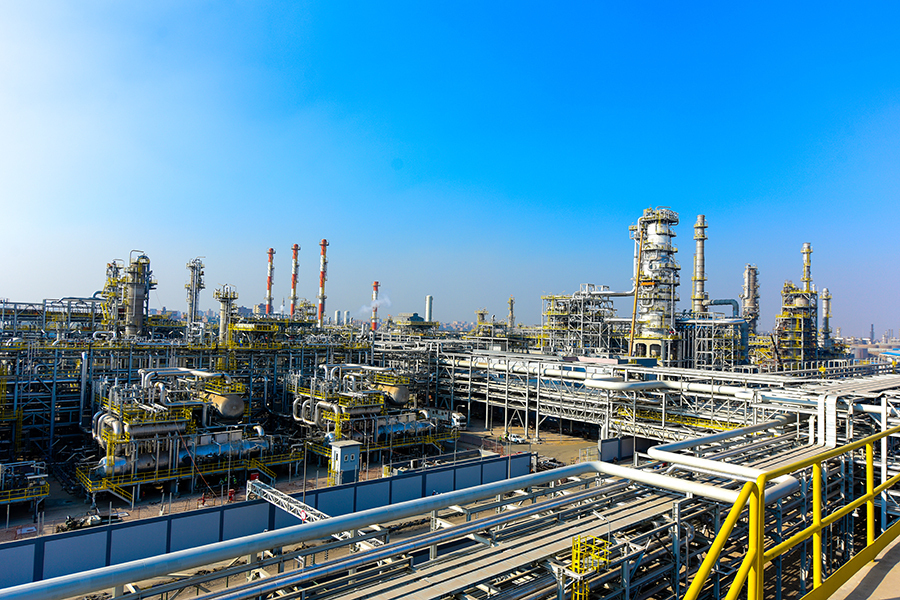
Records are being broken on both wheat procurement and imports

1

WHAT WE’RE TRACKING TODAY

Our first World Cup win

The Pharaohs made history this morning, winning their first ever World Cup match. Egypt secured a 3-1 victory against New Zealand in their second 2026 World Cup game. After New Zealand secured an early lead in the first half, Egypt turned things around in the second half, with goals from Mostafa Ziko, Mohamed Salah, and Trezeguet. The Pharaohs — the current leaders of Group G — will face Iran on Saturday at 6am.

Missed the match? Check out The Athletic’s live coverage here.

IN TODAY’S ISSUE- Egypt is on track to break two wheat records in the same season — local procurement is past last year’s full-season total with two months to run, and imports are up 65% to 7.1 mn tons in January-May. We spoke to economists, traders, and policymakers to unpack the apparent contradiction.

We grab a coffee with British International Investment CEO Leslie Maasdorp and North Africa head Sherine Shohdy to learn how the DFI is rewriting its Egypt playbook. Find out what GBP 15 bn over five years looks like when Egypt is one of the largest single-country exposures, and whether our capital markets are ready for what comes next.

AND- Majid Al Futtaim is anchoring Mada City with a USD 3.1+ bn partnership with Midar that climbs past USD 4 bn once the retail component is in. More on these stories and more in our news well below.

***

ARE YOU MORE OF A LISTENER?Morning Drive is a 10-minute summary of today’s issue crafted for you to enjoy with your morning coffee, while getting the kids ready for school, or driving through the morning rush. And if you like it, tell your friends to tell their friends. They can find us on Apple, Spotify, or wherever they get their podcasts.

***

The brownfield play

The fracking push is delivering — Badr El Din’s latest Western Desert find is proof. The Oil Ministry’s expanded use of hydraulic fracturing and horizontal drilling across the upstream sector is putting new barrels and cubic feet into production. Badr El Din Petroleum ran 40 hydraulic fracking operations in the current fiscal year, adding more than 10k bbl / d of oil and over 15 mmcf / d of gas to the national grid.

The latest result? A new gas discovery in the Western Desert. The Badr-15 well is expected to produce around 15 mmcf / d and 500 bbl / d of condensates and to add some 15 bcf to reserves by month-end, according to a statement.

MEANWHILE- Five companies are competing for three mature oil fields in the North Shadwan area of the Gulf of Suez, the Arabic Press reports, citing a government official. The bidders include Saudi drilling contractor Ades, UAE-based Dragon Oil, homegrown Cheiron Petroleum, and two other firms, with the selected firm set to secure all three blocks. The concessions — located in one of Egypt’s oldest oil-producing regions — were offered earlier this year under a dedicated brownfield licensing round by the South Valley Egyptian Petroleum Holding Company, with awards expected in 3Q.

Why it matters: Egypt is looking at mature fields and enhanced recovery techniques as sources of incremental production growth as it tries to reverse declining hydrocarbon output. Two of the North Shadwan blocks are already producing but require additional drilling capital to boost output, while the third is believed to hold undeveloped resources that could be expanded through new exploration.

IN CONTEXT- The discovery occurs as the government targets USD 6.2 bn in investments in the oil and gas sector in FY 2026/27, while aiming to increase oil and condensate production to some 626k bbl / d by the end of the fiscal year, up from the current rates of roughly 560k bbl / d.

Gas price reshuffle?

The government is reportedly preparing to revisit natural gas pricing for energy-intensive industries. Officials are expected to meet manufacturers next month to discuss potential tariff reductions, particularly for fertilizer producers, Al Arabiya reports, citing a source it says has knowledge of the matter. Any pricing revisions will likely take effect during 3Q. The review comes after a cabinet decision in early May to raise gas prices for most industrial users, which aimed to drop the fuel subsidy bill from EGP 75 bn to EGP 16.5 bn.

A return to the structural plan: The government is now studying linking industrial gas prices to either production costs or global benchmarks to support exporters as fertilizer and petrochem markets cool. This marks a return to the flexible pricing formula the government originally prepared before opting for the fixed hike in May to secure immediate fiscal relief.

Three catalysts have shifted the calculus since May: a preliminary US-Iran peace agreement that triggered a 5% drop in global gas prices, a stronger EGP, and cooling export prices for gas-intensive products. Urea, for example, has fallen to USD 600 per ton from a peak of USD 880.

Factories continue to rely heavily on imported LNG. Egypt currently allocates around fiveLNG cargoes per month to industrial consumers — costing some USD 300-350 mn — to insulate the sector from power cuts. More than 65% of those volumes are directed to fertilizers, petrochems, and steel producers to support operations and export commitments.

Not for sale

It’s official. The Holding Company for Maritime and Land Transport confirmed in an EGX filing(pdf) that it has no intention of selling any of itsshares in EGX-listed Alexandria Container and Cargo Handling. The move rejects AD Ports’ bid to acquire up to 90% of the company via its subsidiary Black Caspian Logistics, which had launched the mandatory tender offer to consolidate Abu Dhabi wealth fund’s (ADQ) existing 51.33% indirect majority stake. The Transport Ministry-affiliated company’s disclosure confirms our exclusive reporting last week that the government would reject the sweetened EGP 27.47-per-share offer, choosing to sit tight on its 42.9% blocking stake.

Morning must-read

The East Med gas race is no longer just about who has the most gas — it’s about who controls the infrastructure. In our MENA+ deep dive, we look at how Egypt and Turkey are building two competing hub models: Egypt through legacy LNG plants, a growing fleet of FSRUs, and the Arab Gas Pipeline; Turkey through pipelines, massive underground storage, and supply optionality. The read-through for Cairo: Egypt’s paid-for liquefaction infrastructure gives it a structural advantage, but its ability to turn that edge into regional leverage depends on fixing our domestic gas deficit first.

PSA-

WEATHER- It’s familiarly warm in Cairo today, with a high of 34°C and a low of 23°C, according to our favorite weather app.

It’s much nicer in Alexandria, with a high of 29°C and a low of 21°C.

The big story abroad

Ongoing US-Iran peace talks in Switzerland have made “encouraging progress,” establishing a 60-day roadmap for a final agreement, mediators said. The parties agreed to set up a communication line for safe shipping through the Strait of Hormuz and a “de-confliction cell” with Lebanon to help maintain the halt in military operations.

Talks had looked incredibly fragile just hours earlier. US President Donald Trump threw a wrench into the negotiations, threatening to restart strikes and demanding Tehran stop Hezbollah from “causing trouble.” The Iranian delegation reportedly paused negotiations in response to Trump’s threats.

SpaceX flunks ESG metrics: Elon Musk’s SpaceX received the lowest possible environmental, social, and governance (ESG) rating from index provider MSCI, scoring a triple C. The report found that the company is “lagging its industry based on its high exposure and failure to manage significant ESG risks,” and is indirectly involved in one or more serious controversies.

Wars are changing the way VCs look at defence startups: Defence technology startups are attracting USD bns as investors flock to the sector amid drone-heavy wars in Ukraine and the Gulf. Sector companies have raised USD 12.3 bn from VC funds so far this year, already eclipsing last year’s full-year total of USD 10 bn.

It’s shaping up to be a boom year for the box office, with estimates now expecting US theaters to rake in some USD 4.5 bn this year, the highest figure since the Covid-19 pandemic six years ago, thanks to a string of blockbusters, the latest of which is Disney’s Toy Story 5.


*** It’s Blackboard day: We have our weekly look at the business of education in Egypt, from pre-K through the highest reaches of higher ed.

In today’s issue: We look at how the country’s international branch campuses are moving past FX pressures and whether the sector can successfully recruit beyond its Egyptian student base.

2

Commodities

Record on record

Egypt is on track to break two records in the same wheat season — local procurement and imports. The government has already collected more than 4.6 mn tons of domestic wheat since mid April, surpassing last year’s full-season total of 3.9 mn tons, with roughly two months remaining before the procurement window ends in mid-August, according to a recent National Food Safety Authority (NFSA) daily bulletin seen by EnterpriseAM.

The 5-mn-ton target that many market participants viewed as ambitious at the start of the season is now looking conservative. Yet, Egypt also imported 7.1 mn tons of wheat in January-May 2026, up 65% from 4.3 mn tons in the same period last year — a record for those five months. The average monthly import rate jumped from 869k tons to 1.43 mn tons, while 48% of the imports in the first five months were purchased by the government.

The combination appears contradictory. Why would a country buy unprecedented volumes of local wheat while simultaneously accelerating imports? The explanation is simple: the government was anxious. “What we are really observing is a confluence of precautionary and structural drivers,” agricultural economist Shaza Omar tells EnterpriseAM. “With wheat prices surging, the EGP under pressure, and logistics risks mounting after the outbreak of regional conflict, millers and public buyers moved quickly to secure supplies. That was classic crisis-driven pre-positioning, not routine supply chain management,” she explains.

The price premium and response

Part of the procurement story lies in pricing: In August last year, the government set procurement prices at EGP 2.25k-2.35k per ardeb. By April, as geopolitical pressure mounted, Supply Minister Sherif Farouk issued a decision raising prices to EGP 2.4k-2.5k per ardeb — roughly USD 313-327 per ton. That’s about USD 50 per ton more than prevailing international prices at the time, which were sitting at USD 275 per ton, including cost and freight.

Farmers responded, and the throughput numbers show it. Harvested area reached a record 3.7 mn feddans, up from 3.1 mn feddans last season. Egypt expanded its cultivated area in previous years without generating a comparable jump in deliveries. “Last year reclaimed land existed too; the difference is the price,” Mediterranean Star Trading General Manager Hesham Soliman tells EnterpriseAM.

The premium was wide enough to shut everyone else out. “The price the government offered this year to the Egyptian farmer didn’t exist in the international market,” Soliman notes. “The farmer could sell to the government for around EGP 16.5k per ton while imported wheat was trading around EGP 14k,” he adds, noting that neither the private sector nor livestock consumption competed for those volumes this year.

Cost vs food security

The state effectively paid a premium to secure domestic supplies, Soliman argues. In his view, imported wheat was available at materially lower prices than local procurement, creating a gap that pulled volumes away from private buyers into government silos. “The private sector completely took its hand off local wheat this year,” he says. Soliman estimates that the premium paid for local wheat added about EGP 15 bn to the state’s wheat bill this season.

Farid Wasel reads the same data differently. “The state used to suffer every year that it didn’t collect more than 3.5 mn tons,” the secretary-general of Egypt’s General Syndicate of Farmers and Agricultural Producers and deputy chair of the House Agriculture, Irrigation and Food Security Committee tells EnterpriseAM. “There is an incentive that encourages the farmer to cooperate with the state,” Wasel says. On this reading, the premium isn’t a cost — it’s the mechanism that made the procurement record possible.

A third reading splits the difference. Comparing farmgate wheat prices with imported wheat prices overlooks the cost of moving grain into Egypt during a period of elevated geopolitical risk, Nader Noor El Din, professor at Cairo University’s agriculture faculty and former advisor to the supply minister, tells us. “It is still less expensive than imported wheat once you account for shipping and logistics,” Noor El Din explains. Maritime freight rates rose following regional tensions, while higher domestic fuel costs increased transport expenses inside Egypt. “The state was compensating the farmer for rising costs and for the increase in shipping expenses that imported wheat faces,” he notes.

The import surge: caution, not consumption

The imports tell the second half of the same story: Governments across the region accelerated purchases amid fears of shipping disruptions and wider regional escalation. “We are seeing precautionary buying,” Soliman says, noting that Saudi Arabia, Jordan, and Tunisia all increased purchases, pointing to concerns over delays in Black Sea harvests and uncertainty surrounding regional trade flows.

Much of the import volume reflects decisions made before the harvest picture was clear. Egypt’s annual wheat requirements remain around 20-22 mn tons, meaning imports inevitably continue until the procurement season concludes and authorities have a clearer picture of domestic availability. Both Soliman and Noor El Din put Egypt’s strategic reserves at around four to five months — and both are skeptical of reports suggesting nine. Storage infrastructure limits how much further stocks can stretch, they say.

What remains unclear is whether the current import program is for immediate consumption or to rebuild strategic stocks. The answer will become clearer this year when authorities decide whether strong local procurement translates into lower import requirements or larger inventories. Daily deliveries fell from 21.6k tons on 10 June to 5.2k tons five days later, consistent with Soliman’s view that most farmers have already harvested and marketed their wheat. If that trend holds, reaching the unprecedented target of 5 mn tons now looks more likely than exceeding it.

The self-sufficiency ceiling

The harvest may be large, but it doesn’t change Egypt’s wheat equation. Wheat output this season is projected at 9.8 mn tons — the second-largest harvest in Egypt's modern history — on the back of the record harvested area. Total national consumption, however, stands at about 20.6 mn tons per year, with the remainder used by the private sector for food production.

Projected yields fell to 2.74 tons per feddan from 2.91 last season, Omar notes — a 5.6% decline that is expected when rapid area expansion draws in marginal land with lower productivity profiles.

The government’s self-sufficiency case for the subsidized bread program — which needs 8.6 mntons in FY 2026/27 according to draft budget figureswould require yields of roughly 3.60 tons per feddan, a 30% improvement from current levels, Omar adds. That is achievable over a decade with sustained investment in irrigation infrastructure, certified seeds, extension services, and reclaimed land management, he says.

There’s an added complication for next season. Urea prices in Egypt rose 28% in early March 2026, Omar notes, a cost spike that threatens the input economics that make high-yield wheat cultivation viable for smallholders. If fertilizer costs stay elevated through the next planting season, both area and yield gains could disappoint.

The signal

Over the past four years, Egypt has been hit by the Russia-Ukraine war, foreign-currency shortages, supply-chain disruptions, regional conflicts, and repeated bouts of food-price inflation. Against that backdrop, the government appears to have made a conscious decision to prioritize security of supply over minimizing procurement costs. Record imports and local procurement are not contradictory outcomes — they are two versions of the same policy: paying today to reduce the risk of running short tomorrow.

The bottom line

Today’s wheat market is still largely shaped by state intervention — from procurement prices to bread-subsidy imports. A cash-support system — soon-to-be rolled out — would gradually shift more responsibility to private sector importers, potentially reducing the state’s role as the dominant buyer in the market. Whether that transition lowers costs on the government without weakening food security will be one of the important questions facing policymakers over the near future.

This publication is proudly sponsored by

3

Coffee With

Coffee With Leslie Maasdorp on de-risking Egypt and pushing into manufacturing

British International Investment (BII) is rewriting its Egypt playbook as part of a broader restructuring of development finance. The UK’s development finance institution (DFI) is moving away from the donor-recipient model and toward a market-making approach: taking construction risk, regulatory uncertainty, and PPA exposure off the table on early-stage infrastructure, then pricing projects so pension funds and sovereign wealth funds can follow. The institution has a portfolio valued at USD 850 mn in 64 Egyptian companies and is now deploying GBP 15 bn globally over five years, with Egypt being one of its largest single-country exposures.

BII’s CEO Leslie Maasdorp came up through post-Apartheid South Africa’s economic reconstruction, spent 15 years across Goldman Sachs, Barclays Capital, and Bank of America Merrill Lynch, and served as CFO of the New Development Bank in Shanghai before taking the BII top job in late 2024.

We sat down with Maasdorp and the institution’s North Africa regional director Sherine Shohdy to talk about where the Egyptian market fits into BII’s new five-year strategy, why the institution is shifting from writing checks to building markets, and whether our capital markets are ready for what comes next.

EnterpriseAM: Where does BII’s Egypt portfolio stand today, and what’s the deployment target over the next five years?

Leslie Maasdorp: The portfolio is now roughly USD 850 mn, up from USD 708 mn in 2023, spread across 64 companies that collectively employ over 130k people. Egypt is our largest single-country exposure in Africa, and that is not an accident. Under our new 2026-2031 strategy, we will deploy GBP 15 bn globally — GBP 8 bn of our own capital and another GBP 7 bn from private and commercial institutions. The African continent makes up roughly 60% of that, and Egypt gets a meaningful share.

EnterpriseAM: What is your honest read of where Egypt sits in BII’s priority hierarchy right now?

LM: High, genuinely high, not diplomatically high. The size of the economy and its growth potential are the starting point. But let’s be direct: some of what is weighing on Egypt right now has nothing to do with Egypt. Suez Canal disruption, the energy price shock, fertilizer shortages pushing food inflation — these are external variables, and they are compressing the trajectory.

What we are investing against is the direction of travel, not the current turbulence. Foreign exchange liberalization, fiscal consolidation, and the IMF program — these are difficult decisions that do not pay off overnight. The IMF’s February read was cautiously optimistic, and we share that read. The intent to level the playing field for the private sector is real, and this is what matters to us.

EnterpriseAM: Your Egypt portfolio is heavily weighted toward renewable energy. Why is that?

LM:Energy is first among equals within our infrastructure mandate globally, not just here. I visited the Gulf of Suez wind farm this morning. It is a 1.1 GW project, the largest wind farm on the continent. Egypt’s ambition to hit 42% renewables in its energy mix by 2030 is bold — they may not get there on schedule, but the direction is right, and we want to be part of building it.

That said, renewable energy has a structural limitation that matters enormously in a country with Egypt’s demographic profile: it creates jobs during the construction phase, and almost none once it’s operational. A project the size of the Suez wind farm employs around 1.5k people during the build and closer to 100-150 once it is running. For an economy adding this many young people to the labor market every year, that math does not work on its own. So we are deliberately pushing into more job-intensive sectors.

Sherine Shohdy: Our Egypt portfolio is actually more balanced than the renewables headlines suggest. It is nearly a 50-50 split between debt and equity. Infrastructure and climate account for around 45% of total exposure, with renewable energy specifically at roughly 30%. Financial services and sustainable industries (manufacturing, decarbonization, the broader greening of the economy) make up the rest.

Manufacturing is where we are leaning hardest. It creates employment at scale, helps localize supply chains, and builds the export capacity that diversifies Egypt’s FX revenue base. The logic is not just about headcount — it is about how manufacturing plugs into the broader economic architecture the government is trying to construct.

EnterpriseAM: Who are you working alongside to deploy capital here?

LM:One of the central wagers in our new strategy is moving away from standalone transactions toward investment platforms that aggregate capital. On the DFI side, International Finance Corporation (IFC) and the European Bank for Reconstruction and Development (EBRD) each deploy roughly USD 1 bn a year in Egypt. We are now working far more intentionally in partnership with both: we’re pooling origination, sharing due diligence, and going to market jointly. You cannot mobilize pension funds and sovereign wealth funds into a market like Egypt if every DFI is running its own separate process. We have to do this together.

SS: On the ground, our financial services portfolio tells you who we work with. We have investments with Commercial International Bank (CIB) and Banque du Caire, we completed a sustainability bond with the Arab African International Bank (AAIB) last year, and we have backed a number of non-banking financial institutions on the microfinance side, including Tanmeyah, alongside EBRD and other private equity funds. On infrastructure, our platform investment with DP World, a USD 1.7 bn commitment to develop ports across the continent, with Sokhna as the cornerstone asset, is one of the larger structures we have built here.

EnterpriseAM: Are you finding more commercial co-investors willing to come in now post-stabilization?

SS: Look at the track record. Egypt has not had a quiet year in over a decade. Think of the pandemic, the FX crisis, geopolitical shocks, and inflation. In every one of those periods, investors who were already here stayed. That is not sentiment — that is a signal about the underlying conviction in this market. Our role has always been counter-cyclical: we come in when conditions are hard, absorb risk, and create the conditions for commercial capital to follow. When investors see DFIs continuing to deploy through the cycle, it changes their calculus. We have been here since 2002. That continuity is itself a form of market-making.

EnterpriseAM: How do you get commercial partners into markets like Egypt without the concessional subsidy that made them accessible in the first place?

LM: The structural reset in development finance, what I call the shift away from the old donor-recipient model, is precisely about this dynamic. We are not trying to drag pension funds into markets that sit outside their fiduciary mandates. What we are doing is using our capital to take the early-stage risk off the table (construction risk, regulatory uncertainty, power purchase agreement exposure) so that by the time a project like the Suez wind farm is generating predictable cashflows, a commercial investor can come in on terms that work for them.

We built Ayana in India from scratch in 2017 with USD 100 mn, brought in partners as the business matured, and exited last year for USD 2.3 bn. That capital gets recycled into the next de-risking cycle. Private investors do not need to care about development impact — they need a return. Our job is to engineer the point at which that return becomes available.

EnterpriseAM: You’ve backed local VC funds like Algebra Ventures and Endure Capital. How do you think about exits when the EGX pipeline for tech and growth firms is thin?

LM: Supporting VC and private equity funds is not just a financial play for us. It’s more of a market-building play. These funds grow companies that eventually, in theory, transition to public markets or attract strategic buyers. The fund managers I met here a few days ago are genuinely sophisticated. The ecosystem is being built. Whether the public markets infrastructure catches up quickly enough is a separate, harder question.

SS: The EGX is not the only exit route, and frankly, for the stage of companies we are backing, it probably should not be the primary one right now. Strategic sales to buyers who can scale the business further often produce better outcomes than a public listing. Our patient capital model means we are not forced sellers, so we can hold through a period when market timing does not cooperate and wait for the right window. What we are focused on is building companies that are genuinely valuable, because a strong company always creates its own exit options.

EnterpriseAM: Leslie, you come from a capital markets background. DFIs are often criticized for being too slow. What have you changed at BII since taking over?

LM:This is an industry-wide reckoning. The IFC, the EBRD, and the African Development Bank are all asking the same question. For us, it is three things: pulling bottlenecks out of the investment approval chain, moving toward standardized structures that institutional capital can interface with — rather than bespoke transaction-by-transaction documentation — and building mutual reliance frameworks with other DFIs so we stop duplicating due diligence on the same transactions. We are already running that model with the EBRD in Ukraine. Early days, but the direction is set.

4

Real estate

Eastward expansion

Majid Al Futtaim (MAF) is anchoring East Cairo’s Mada City with a USD 3.1 bn+ (c. EGP 155 bn) mixed-use project under a strategic partnership inked with Midar, according to a cabinet statement. The Egyptian-Emirati private-sector partnership will build an integrated urban development across 553 feddans inside the New Cairo development under a revenue-sharing model. Midar’s future returns from the agreement are expected to exceed EGP 40 bn.

The details: The first phase will cover 200 feddans over the first four years of implementation, followed by a 300-feddan second phase. Another c. 60 feddans are earmarked for a shopping and entertainment destination, allocated gradually based on development progress and occupancy rates in the surrounding residential communities. Once that component is factored in, the project’s total development value could exceed USD 4 bn.

REFRESHER- We reported last year that MAF was planning a residential and hotel project in East Cairo in partnership with Midar, with the agreement expected to be signed in 3Q 2025. While the timeline was delayed and the final 553-feddan footprint came in leaner than the 1k feddans originally rumored, the sealed agreement gives the megaproject a firm structure and a hefty price tag.

The agreement gives Midar another major partner inside Mada, after our friends atSODIC signed on last year for a EGP 110 bn wellness-focused project on a 500-feddan plot under a revenue-sharing model. That was Midar’s second major Mada partnership last year, following Emaar Misr’s EGP 100 bn New Mivida agreement with Midar in New Cairo. We also reported last year that Saudi real estate investor Sumou Holding was in preliminary talks to acquire Midar in a potential transaction reportedly worth USD 3.5 bn.

5

Startup watch

Digital dollarization is here

MENA-focused fintech Sovra raised over USD 2 mn in pre-seed funding to build a digital USD (USDC) wallet, according to a press release (pdf). Pharsalus Capital led the round, joined by regional angel investors including Ramp founder Karim Atiyeh, Lean Technologies founder Hisham Al Falih, 21Shares founder Hany Rashwan, and Orascom Development Holding AG Chairman Naguib Samih Sawiris.

A bank account without the bank: Instead of relying on traditional banks, Sovra uses USDC — the regulated stablecoin issued by Circle, the NYSE-listed, SEC-regulated, Deloitte-audited company. The platform is built so that users hold their own private security keys, meaning funds remain accessible without interference from the platform or intermediaries. Users can transfer funds instantly, earn interest, and spend their balances using an attached Visa or Mastercard.

A lifeboat for fragile economies: Inspired by Lebanon’s 2019 financial crisis, which saw bank deposits and accounts frozen, the platform aims to be available across 180 countries from day one, founder and CEO Ahmad Wehbi tells EnterpriseAM. “Our focus is the parts of MENA where local currencies are unstable, local systems are fragile, and most people are unbanked or underbanked,” he explains. Sovra is targeting a 3Q launch and plans to eventually integrate AED-denominated stablecoins as it grows into new markets, he adds.

BUT- While this business model gives consumers a much-needed lifeline, it’s also keeping emerging market central bankers up at night. Global watchdogs from the IMF and the Bank for International Settlements have recently sounded the alarm over this exact type of digital dollarization, warning that the widespread use of stablecoins allows citizens to bypass local banking systems entirely and strips governments of their ability to control their own monetary policy.

6

EGYPT IN THE NEWS

Flight to safety

Egypt’s tourism sector caught the attention of the foreign press for its resilience. Bloomberg reported that the country is on course for a record 20 mn tourist arrivals this year despite flight disruptions and climbing travel costs tied to the Iran war, citing Tourism Minister Sherif Fathy and referring to a trend we flagged earlier this month.

Fathy said Egypt’s competitive advantage extends beyond the diversity of its offerings, speaking at an AmCham event. The most recent official data — released by the cabinet — puts arrivals at 6.1 mn in the first four months of 2026, a 7% y-o-y increase, with 1Q revenues reaching USD 5.1 bn. While pre-war forecasts were higher, hitting 20 mn will still comfortably eclipse the 18.8 mn arrivals recorded in 2025.

IN CONTEXT- This influx coincides with the recent opening of the USD 1 bn Grand Egyptian Museum, ongoing restorations in Downtown Cairo, and the rapid buildout of the North Coast as a luxury destination. While authorities expect a soft summer patch on soaring jet fuel costs, Fathy anticipates a swift winter recovery if the recent US-IranMoU holds. If the momentum continues, the country remains on track to hit its ultimate macro target of drawing in 30 mn annual visitors by 2030.

7

Also on our Radar

Empowering Upper Egypt

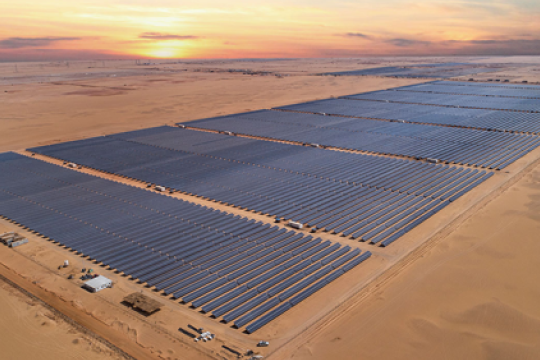
Infinity Power is moving Nefer Minya closer to execution, formally acknowledging a 1Q letter of award with Chinese PV firm Aiko Energy for the supply of PV modules to the 1.2 GWp project, according to a company statement(pdf). The project — which is being co-developed with Hassan Allam Utilities Energy — is expected to generate enough clean energy to power around 1.4 mn homes and avoid roughly 1.6 mn tons of CO2 emissions annually.

Meanwhile, in South Africa: The company also locked in conditional engineering, procurement, and construction (EPC) agreements for two South African solar projects. Infinity tapped Sterling and Wilson for the 285.6 MWp Highveld project and selected PowerChina Guizhou Engineering as the preferred contractor for the 488 MWp Ngwedi cluster.

REMEMBER- Infinity Power and Hassan Allam Utilities signed complementary agreements inNovember 2025 for two solar plants with a combined 1.2 GW of capacity and 720 MWh of battery storage. The first asset to come online will be a 200 MW plant in Benban with 120 MWh of storage, due in 3Q 2026. This will be followed by a larger 1 GW plant in Minya featuring 600 MWh of storage, due in 3Q 2027. Infinity Power also broke ground on its 200 MW Ras Ghareb wind farm back in December 2025.

Getting SWIFT with it

Egyptian banks adopted the ISO 20022 international standard for SWIFT financial messaging in interbank transfers starting yesterday, the Central Bank of Egypt (CBE) said in a statement. The move follows upgrades to Egypt’s Real-Time Gross Settlement (RTGS) system to bring it into compliance with the international standard.

Why it matters: ISO 20022 allows richer, more structured data to travel with each payment — speeding up real-time interbank settlement, reducing manual intervention in cross-border transactions, and strengthening automated AML and counter-terrorism financing screening.

In other banking news: The CBE has barred banks from financing certain equity-related actions, namely funding the capital of newly established companies, capital increases, cashbased dividend distributions, and employee bonus shares, according to a circular (pdf) by the central bank. The move could be seen as a means of ensuring that bank credit is used to back a customer’s business and operating activities in line with banking standards.

Sun-baked savings

Titan Egypt signed a 25-year power purchase agreement (PPA) with SolarizEgypt to build an 11.45 MW solar plant for its Beni Suef Cement subsidiary, according to a press release. SolarizEgypt will finance, build, own, and operate the plant, while Beni Suef Cement will buy the output — letting Titan add renewable capacity without the upfront capital outlay. The plant is expected to cover a significant portion of the site’s electricity needs.

IN CONTEXT- The PPA extends a cost-and-carbon push the sector has leaned on heavily this past year. Energy accounts for up to 60% of cement production costs per ton, and the shift toward alternative fuels has driven both the sector’s 2025 recovery and its 2026 export push — including a EUR 5.4-per-ton pricing edge on lower-carbon exports to Europe under CBAM, as we reported in March. Titan has earmarked EGP 3 bn for its green transition, including halting clinker exports entirely in favor of lower-emission finished cement.

8

PLANET FINANCE

Private equity’s exit door remains jammed

Private equity firms are increasingly borrowing against portfolio companies to pay themselves as traditional exits remain difficult. More than USD 3.5 bn of leveraged loans and junk bonds have been launched over the past four weeks to fund sponsor dividends, accounting for roughly half of all dividend recapitalization activity this year, Bloomberg reports.

The resurgence of dividend recaps reflects a broader challenge facing the industry: According to Bain’s latest Global Private Equity Report (pdf), a growing number of portfolio companies are now “essentially trapped” as higher interest rates and stubborn valuation gaps make it harder for buyout firms to sell assets at acceptable prices. Many firms are also holding investments well beyond the traditional three-to-five-year timeline.

This is creating pressure to return money to limited partners some other way: Managers are facing a growing backlog of aging assets, while limited partners are placing greater scrutiny on firms’ ability to generate distributions, Bain says.

The exit market is showing signs of recovery, but not enough to clear the bottleneck: Global buyout-backed exit value jumped 47% y-o-y to USD 717 bn in 2025, making it the second-best year on record, according to Bain. Yet the number of exits fell 2% to 1.6k transactions, suggesting the rebound was driven largely by a handful of blockbuster transactions rather than a broad recovery across the market.

As a result, firms are increasingly turning to alternative liquidity tools: Bain says returning capital to investors is now the top reason sponsors launch continuation vehicles, while secondary sales and dividend recapitalizations are also becoming more common.

Those alternatives remain relatively small: Continuation vehicles still account for less than 10% of global exit value, according to Bain. But their growing use underscores a reality facing much of the industry — selling assets remains harder than buying them.

MARKETS THIS MORNING-

Asia-Pacific markets are trading up this morning, led by South Korea’s Kospi and Japan’s Nikkei. Over on Wall Street, equities are set to open lower with US futures down this morning, as news of US President Donald Trump’s threats of renewed attacks against Iran makes the rounds.

EGX30

52,679

+0.1% (YTD: +25.9%)

USD (CBE)

Buy 49.80

Sell 49.94

USD (CIB)

Buy 49.80

Sell 49.90

Interest rates (CBE)

19.00% deposit

20.00% lending

Tadawul

11,077

-0.4% (YTD: +5.6%)

ADX

10,017

-1.0% (YTD: +0.2%)

DFM

6,164

-1.7% (YTD: +1.9%)

S&P 500

7,501

+1.1% (YTD: +9.6%)

FTSE 100

10,363

-0.4% (YTD: +4.4%)

Euro Stoxx 50

6,293

-0.5% (YTD: +8.6%)

Brent crude

USD 80.57

+0.9%

Natural gas (Nymex)

USD 3.20

-1.1%

Gold

USD 4,173

-1.7%

BTC

USD 63,802

-0.4% (YTD: -27.2%)

S&P Egypt Sovereign Bond Index

1,064

+0.1% (YTD: +7.2%)

S&P MENA Bond & Sukuk

152.44

-0.1% (YTD: +0.4%)

VIX (Volatility Index)

16.78

+2.3% (YTD: +12.2%)

THE CLOSING BELL-

The EGX30 rose 0.1% at yesterday’s close on turnover of EGP 9.6 bn (11% above the 90-day average). International investors were the sole net buyers. The index is up 25.9% YTD.

In the green: Valmore Holding -EGP (+5.7%), Beltone Holding (+3.7%), and Orascom Development (+3.4%).

In the red: Emaar Misr (-2.3%), Palm Hills Developments (-2.0%), and Orascom Investment Holding (-1.5%).

9

BLACKBOARD

Branch campus arithmetic

Egypt now hosts nine international university branches and has 11 more awaiting land approvals, on the way to achieving a government target of 20 by 2030. After two years of FX-driven margin pressure, branch directors tell us the worst is now behind them — and the next test is whether the model can recruit beyond its Egyptian student base.
Beyond the FX crunch: Despite the pressure from higher construction capex that EnterpriseAM flagged a couple of years ago, FX-related operating stress is starting to ease. Ashraf Abdel Basset, academic director of the University of Hertfordshire in Egypt, tells EnterpriseAM the currency crisis is now in the past and that conditions have stabilized after the government’s recent intervention to resolve the FX crunch.

The buffer is local: Most professors and students are Egyptian, Abdel Basset said, limiting universities’ day-to-day exposure to FX volatility and helping shield them from the worst of the economic pressure.

Keeping more tuition USD at home: Beyond the operational pressures, the model also acts as an FX buffer at the macro level. The presence of these branch campuses in Egypt has reduced the USD burden by keeping thousands of students in Egypt who would otherwise have gone abroad to study.

IN CONTEXT- That logic lines up with what a government source told EnterpriseAM four years ago: Egypt was spending some EGP 20 bn a year on students studying abroad, adding pressure on the exchange rate and prompting the government to lure in international branch campuses to lower that bill.

UK universities still dominate: The biggest wager in the sector is coming from the UK. Egypt’s rise to the fourth spot from the fifth globally as a host market for UK transnational education reflects strong national ambition and the quality of the partnerships being built, Mark Howard, director of the British Council in Egypt, tells EnterpriseAM. “We are focused on strengthening quality, widening access, and ensuring this education delivers tangible outcomes for students, institutions, and the wider economy,” Howard says.

Where things currently stand: UK universities now provide more than 50% of transnational education programs in Egypt through international branch campuses and other innovative education models. More than 32k students are currently enrolled in UK transnational education programs in Egypt, making the country the fourth-largest host market globally for this type of education.

A regulatory unlock: On the academic and professional side, foreign branch campuses have cleared one of their biggest local marketing hurdles. Abdel Basset said graduates of faculties like engineering and pharmacy had previously faced difficulties registering with Egyptian professional syndicates. That issue “has recently been resolved, and the syndicates have begun registering graduates of foreign branch campuses normally,” he said — strengthening the case for these programs.

The compass is turning east — and toward blended disciplines. The University of Hertfordshire is gearing up to add new programs next year in business and fintech to keep pace with developments at its UK parent campus, Abdel Basset said. At the government level, the focus is also shifting toward Asia. The Higher Education Ministry is currently studying offers from “major Chinese, Korean, and Japanese universities” to make room for technology and vocational specializations linked to both the local and international labor markets, ministry sources tell us.

The next step is breaking out of the local market: The bigger challenge now is diversifying the student mix. For now, the sector still relies heavily on Egyptian students.

“Attracting students at the regional level remains a challenge,” Abdel Basset said. The university is currently sending marketing delegations to international education fairs — its team has just returned from Tanzania, with plans to head to the Gulf once regional tensions ease, as part of a broader push to support the university’s financial sustainability.

The competition is still local — and tough. To attract international students, foreign branch campuses have to compete with Egypt’s established public universities. Cairo University and Alexandria University remain among the country’s strongest magnets for inbound students, Higher Education Ministry sources tell us.

Simultaneously, Egypt is moving from simply importing universities to exporting them. The University of Sharjah is planning to open a branch in Egypt, while Cairo and Alexandria Universities now have branches in the UAE starting from the current academic year to bring in hard currency, both government sources and university directors tell us. The shift underscores how higher education has become a strategic tool in the region’s economic competition.

There’s still much to do: More work is needed to turn Egypt into a regional education hub through regulatory and marketing steps aligned with the state’s vision, our sources at the Higher Education Ministry tell us. The next phase will also lean on partnerships between Egyptian technological and national universities and foreign universities as a new and successful model of academic integration, the sources say.

More expansions lined up: Cairo University and Alexandria University have plans to open branches in Saudi Arabia, Qatar, and Malaysia, government sources tell us. Cairo University also has plans to open a branch in Greece, in addition to Gulf and Asian countries, a source adds.


JUNE

23-25 June (Tuesday-Thursday): The Big 5 Construct Egypt, Egypt International Exhibition Center, Cairo.

23-25 June (Tuesday-Thursday): Watrex Expo, Egypt International Exhibition Center, Cairo.

30 June (Tuesday): June 30 Revolution.

JULY

9 July (Thursday): Monetary Policy Committee’s fourth meeting of 2026.

23 July (Thursday): Revolution Day (TBC).

AUGUST

19 August (Wednesday): Connected Banking Summit, Fairmont Nile City Hotel

20 August (Thursday): Monetary Policy Committee’s fifth meeting of 2026.

26 August (Wednesday): Prophet Muhammad’s birthday.

SEPTEMBER

8-10 September (Tuesday-Thursday) El Alamein International Airshow, El Alamein International Airport

10-12 September (Thursday-Saturday): Egyptian Entrepreneurship Sector Diagnostics Report Summit, El Gouna.

15 September (Tuesday): IMF to hold its eighth review of Egypt’s USD 8 bn EFF arrangement.

24 September (Thursday): Monetary Policy Committee’s sixth meeting of 2026.

27-29 September (Sunday-Tuesday): Global Conference on Population, Health, and Human Development.

OCTOBER

6 October (Tuesday): Armed Forces Day.

10-11 October (Saturday-Sunday): Egypt Women's Health Summit (EWHS), Cairo Marriott Hotel

26-28 October (Monday-Wednesday): IEX Egypt, Egypt International Exhibition Center, Cairo.

29 October (Thursday): Monetary Policy Committee’s seventh meeting of 2026.

DECEMBER

7-10 December (Monday-Thursday): Food Africa, Egypt International Exhibition Center, Cairo.

17 December (Thursday): Monetary Policy Committee’s eighth meeting of 2026.

EVENTS WITH NO SET DATE

1Q 2026: Trial operations for the Ain Sokhna-Sixth of October section of Egypt’s first high-speed rail line scheduled to begin.

May 2026: End of extension for developers on 15% interest rates for land installment payments.

July 2026: British Prime Minister Keir Starmer set to visit Egypt.

2H 2026: Operations at Deli Glass Co’s new USD 70 mn glassware factory kick off.

2026: The Egyptian-American Economic Forum.

4Q 2026: Banque du Caire IPO

2027

16-18 January (Saturday-Monday): Agri Expo, Cairo International Convention Center.

20 January-7 February: Egypt to host the African Games.

April 2027: Tenth of Ramadan dry port and logistics hub to begin operations.

EVENTS WITH NO SET DATE

2027: Egypt to host EBRD’s annual meetings.

2027: Egypt-EU Summit 2027.

End of 2027: Trial operations at the Dabaa nuclear power plant expected to take place.

September 2028: First unit of the Dabaa nuclear power plant begins operations.

Now Playing
Now Playing
00:00
00:00