Pan-African link with InstaPay aims to make cross-border trade easier

1

WHAT WE’RE TRACKING TODAY

NBE gets preliminary nod from CBUAE to acquire Banque Misr’s UAE branches

Good morning, ladies and gents. Three stories we’re unpacking today: InstaPay is getting a Pan-African link, the IMF said Egypt’s economy held up under pressure, and MSMEs are getting a fresh line of credit.

The new InstaPay link will let Egyptian traders settle with African counterparts in local currencies rather than relying on USD. Will it break dependence on the greenback? Probably not, but it’ll cut costs and save time and make it easier for SMEs to handle cross-border trade.

We’ve received a positive report card from the IMF, despite continued war-related disruptions. A flexible exchange rate, swift policy responses, and comfy FX reserves helped absorb the shock, but the coast isn’t completely clear. Some key vulnerabilities remain, which we dig into below.

Last but not least, our friends at EFG Holding are getting their first direct loan from the EBRD aimed at MSMEs outside of major cities. EBRD has been lending to EFG’s subsidiaries for years, but this is the first line coming to the holding company itself.

***

ARE YOU MORE OF A LISTENER? Morning Drive is a 10-minute summary of today’s issue crafted for you to enjoy with your morning coffee, while getting the kids ready for school, or driving through the morning rush. And if you like it, tell your friends to tell their friends. They can find us on Apple, Spotify, or wherever they get their podcasts.

***


Cairo Food Week’s Hoda El-Sherif on stories, flavors, and community: Is Egyptian food having a moment? And more importantly, is our cuisine finally claiming its seat at the global table?

Hoda El-Sherif says, “It’s coming.”

Hoda is the co-founder and CEO of Flavor Republic, and the force behind Cairo Food Week, kicking off its fourth edition on 24 September.

Listen to the episode on: Apple Podcasts | Spotify | Anghami | YouTube

Sign up to our newsletter to get Making It in your inbox.


Delighted to welcome Hesham Mahran, CEO and managing director of Orange Egypt, as a guest speaker at the 2026 EnterpriseAM Egypt Forum — the AI edition.

Appointed in August 2025, Mahran brings more than 27 years of experience across telecommunications, ICT, and digital transformation. As a long-standing Orange Egypt leader, he previously served as Chief Business Officer, driving the company’s expansion into cloud, cybersecurity, IoT, and enterprise connectivity. Under his leadership, Orange Egypt has become a key partner in Egypt’s digital transformation agenda, including “Ask Mariam,” Egypt’s first AI-powered airport assistant at Cairo International Airport. He has also been closely tied to national infrastructure projects and smart city development, including the New Administrative Capital Data Center.

Join us on 5 October in Cairo. Attendance is by invitation only, and we're close to full capacity.

Request your invitation here.


Better handled at home

The National Bank of Egypt (NBE) secured preliminary approval from the Central Bank of the UAE (CBUAE) to acquire Banque Misr’s branches in the Emirates, the two state-owned lenders said in a joint statement (pdf). The banks called it a preliminary agreement to integrate their overseas banking presence into a single operation under UAE rules.

IN CONTEXT- Those are the same branches the US Treasury Department’s Financial Crimes Enforcement Network (FinCEN) proposed on 28 August to cut off from correspondent banking access to American institutions, though the decision is not yet finalized and a 30-day public comment window is still open. The US regulator alleges the branches moved some USD 1.8 bn between January 2024 and June 2026 for 103 companies it links to Iranian shadow-banking networks. The proposed measure targets only the UAE branches. Banque Misr’s Egypt business and other overseas operations are not affected, the Central Bank of Egypt said at the time. The CBUAE launched its own investigation of the branches, looking at the same period covered by the US allegations.

Why it matters: The statement makes no reference to the US measure, though the transfer looks like a way out of it. Moving the branches to NBE offers a regulatory route to dealing with the FinCEN proposal and is “possibly the only one available right now,” banking analyst Hany Abou El Fotouh tells EnterpriseAM. He says it’s hard to see the move happening without prior coordination between the two central banks. “Customer rights and obligations would move with the branches to NBE, leaving it responsible for compliance going forward,” he adds.

“A purely political solution” is how Motaz El Dreny, founding partner of Dreny & Co., describes the acquisition. Without it, Banque Misr would have exited the UAE entirely, leaving no Egyptian banking presence there. He says the acquisition was likely proposed by the UAE side itself and that NBE was chosen “because it is the only bank capable of the acquisition, based on the unity of ownership” — both are fully state-owned.

The US Federal Reserve was likely briefed on the solutions under consideration, El Dreny says, to “confirm whether this solution achieves its purpose, which is lifting the sanctions.” He stops short of declaring the sanctions will be dropped but says “logic and reason indicate this step would not have been taken unless it was among the proposed solutions that would effectively lead to lifting the sanctions.” The speed of the CBUAE’s preliminary approval signals the urgency of presenting this to the Fed for final clearance, he argues.

Whether the move makes sense for NBE is another question. The banks have put no price, timeline, or branch count on the transaction, and Abou El Fotouh says the regulatory costs of taking on an operation under scrutiny could outweigh the return. With both lenders wholly state-owned, he sees it as moving assets from one state pocket to another, with the earnings landing in the state budget either way.

More to go around

Misr Life Ins. could have 5 bn shares on its register by the time it floats, up from 500 mn today. Last Thursday, the company’s board approved a 10-for-1 split that cuts nominal value to EGP 1 from 10 while leaving issued capital untouched at EGP 5 bn, according to a bourse filing (pdf) dated 21 September. That puts issued capital at half the EGP 10 bn authorized ceiling set by Financial Regulatory Authority (FRA) Resolution No. 363 in February. The board also authorized the chairman to issue the call for an extraordinary general assembly within a week of the disclosure hitting the EGX screen.

What this could mean: The disclosure does not mention retail or the stake on offer, but expanding the share count before pricing leaves room for a broader retail offering in a market where individual investors drive the bulk of daily turnover.

ICYMI- Misr Life Ins. has been temporarily listed on the EGX since March but is not yet trading. EFG Hermes was tapped in May to manage the sale of up to 20% of the company. A fair value study was due by end-September, with FRA sign-off the next step before the government sets the final stake and timetable.

ATMs, meet the tax man

The Finance Ministry settled with the Federation of Egyptian Banks how bank ATMs are treated under the property tax, ending years of disputes with several banks, a government official and a banking source at the federation tell EnterpriseAM. The Tax Authority found banks were applying the Real Estate Tax Law inconsistently to their machines.

Bank premises were never the argument — they are taxable. The dispute was over the ATMs, and whether machines scattered across the country count as fixed assets the bank owns. The agreement lands on treating an ATM as movable real estate property, making it taxable as such. The new instructions aim to prevent repeat disputes and eliminate tax rulings that could be vulnerable to regulatory challenge, the sources say.

Three cases now decide liability, under instructions EnterpriseAM has seen:

  • Machines inside bank buildings are exempt to avoid double taxation, since the building is already taxed;
  • Machines placed in a building or property for a fee are taxable whether or not tax is due on the property itself or its shopfronts;
  • Standalone machines are taxed as independent assets.

The clock explains the timing: Banks have until 30 September to register and claim the tax discount under the facilitations package, which runs to a 10% deduction on non-residential property for filing on time. Law 3 of 2026, which amends the 2008 law, took effect on 3 April and also gave taxpayers six months to pay outstanding property tax and qualify for a waiver of late-payment charges, and allows settlement of disputes before appeal committees or the courts at any stage by paying 70% of the disputed amount. Tax owed on buildings the RTA never inventoried or recorded is wiped for every period before 3 April, provided the owner files within a year of that date.

What’s next: A large number of requests have gone in to push the registration deadline to the end of the year, the government source tells us. The same exercise is coming for telecom towers and oil fields — survey, register, update the data, and collect — with the same facilitations and a freeze on property tax disputes, our sources say. The ministry wants around EGP 18 bn in property tax this fiscal year, up from EGP 3.2 bn in FY 2025/26.

IN CONTEXT- The Finance Ministry has been on a property tax expansion drive all year, deploying field committees to inventory North Coast resorts. The ministry’s November 2025 inventory plan already flagged cell towers, electricity stations, and wastewater facilities for inclusion.

LNG to close out 2026

The Oil Ministry aims to secure roughly 35 LNG deliveries for 4Q 2026 via a flexible import plan, Al Borsa reports, citing unnamed sources. The import mechanism adjusts contracted volumes based on local output and demand to address sudden energy fluctuations. While the sources did not specify where the cargoes would come from, they said that Egypt has recently prioritized US gas imports to leverage flexible delivery schedules and favorable payment terms that ease foreign currency pressure.

A trend of great import: Plummeting domestic gas production — down roughly 37% from 2023 to 2026 — forced Egypt to rely on more expensive LNG imports, driving a 36% y-o-y import surge in 1Q 2026. Securing medium-term LNG supplies helps Egypt reduce reliance on the spot market amid instability from the conflicts in Iran and Ukraine.

PSA-

WEATHER- It’s another kind of summer day in Cairo today, with a high of 32°C and a low of 23°C, according to our favorite weather app.

It’s the same temperature in Alexandria, with a high of 32°C and a low of 22°C.

The big story abroad

The UN General Assembly meeting in New York has unsurprisingly dominated headlines. A key development was a three-hour meeting between US officials and Iranian envoys, which US President Donald Trump characterized as productive. This was the first direct US-Iran meeting since June, reviving hopes of a diplomatic resolution, despite threats by Trump to “annihilate” the Islamic Republic.

AI war spawns modestly priced models: Leading AI labs Anthropic and OpenAI launched more affordable AI models yesterday, responding to rising pressure from budget-friendly, open-weight rivals. OpenAI introduced the GPT-6 Sol and GPT-6 Luna — models with a 50% API price cut compared to GPT-5.6 — while Anthropic launched Claude Opus 5.5, offering a more token-efficient model that costs roughly 40% less to run than Opus 5.

New startup lands in AI space: San Francisco-based data startup Snorkel AI has secured USD 350 mn in new funding at a USD 3.5 bn valuation, driven by surging demand from frontier AI labs for complex training data and simulation environments. Snorkel's new agentic data platform pairs human experts with thousands of AI agents to automate dataset creation and quality control for frontier labs.

*** It’s Hardhat day — your weekly briefing of all things infrastructure in Egypt: EnterpriseAM’s industry vertical focuses each Wednesday on infrastructure, covering everything from energy, water, transportation, and urban development, as well as social infrastructure such as health and education.

In today’s issue: We unpack whether the rate of real estate buyers reselling contracts should raise concerns, and why the FRA is reminding buyers to read their contracts

A strategic partnership shaping the next chapter of the Red Sea

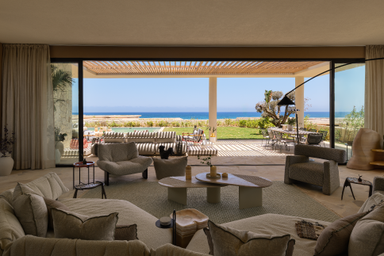
Somabay and MARAKEZ come together in a landmark partnership, marking MARAKEZ’s first entry into Egypt’s Red Sea market and a significant step forward in the continued evolution of Somabay.

2

The Big Story Today

InstaPay to connect with pan-African payment system as six Egyptian banks apply for integration

The ​​African Export-Import Bank (AfreximBank) is planning to connect its Pan-African Payment and Settlement System (PAPSS) to Egypt’s InstaPay app, and six local banks have already applied to the Central Bank of Egypt (CBE) for final integration approval, PAPSS CEO Mike Ogbalu said on the sidelines of a conference in Cairo earlier this month. The link-up would let Egyptian traders settle with African counterparts in local currencies rather than relying on USD, cutting the cost and time it currently takes to route a payment through a correspondent bank. The launch timeline and names of the banks that applied were not disclosed.

What is PAPSS? Launched in 2022, the PAPSS platform facilitates cross-border payments under the African Continental Freetrade Area (AfCFTA). AfreximBank provides settlement guarantees and overdraft facilities to settlement agents. The goal is to cut the cost and time of cross-border payments, reduce liquidity requirements for commercial banks, and strengthen central bank oversight. The system now runs across nearly 30 African nations, covering over 200 commercial banks, fintechs, and payment service providers, and connects to 16 domestic payment switches. The CBE agreed to join in November 2024.

How it works: Today, an Egyptian importer paying a counterparty in, say, Kenya typically routes the payment through a correspondent bank using the USD as an intermediary — a chain that adds cost, delay, and USD demand at every step, senior economist and macro analyst Islam Magdy explains to EnterpriseAM. PAPSS replaces that with a more direct flow. “The payer can initiate the transaction in their domestic currency while the beneficiary receives the equivalent value in their local currency, subject to the participating institutions and applicable FX arrangements,” digital economy expert Mai Hegazi tells us.

Egypt’s Africa trade architecture: Egypt signed the AfCFTA back in 2018, and the treaty entered into force in May 2019. Actual trading started in October 2022 with the AfCFTA Guided Trade Initiative. Egypt is also a member of the Common Market for Eastern and Southern Africa (Comesa) and has ratified the Tripartite Freetrade Area — the agreement linking Comesa, the East African Community, and the Southern African Development Community — which came into force in July 2024. The country became a member of Brics in 2024.

What’s in it for Egypt?

Egypt runs a trade surplus of around USD 3.2 bn with PAPSS member countries — a sharp contrast to the deficits it runs with its top trade partners, including China (c. USD 18 bn), the US (c. USD 10 bn), the GCC (c. USD 3.1 bn), and Europe (c. USD 700 mn), according to trademap data compiled by Magdy and shared with us. At a moment when Egypt needs every foreign currency inflow it can get, removing friction from one of the few trading relationships already tilted in its favor “has a strategic value that exceeds its current absolute size,” he says.

Overall, Egypt accounted for 4.35% of intra-African trade in 2025, reaching around USD 9.59 bn — about 46% growth from its 2022 total of USD 6.57 bn, according to AfreximBank’s African Trade Report 2026 (pdf). Its main export markets on the continent were Algeria, Libya, Morocco, Sudan, and Tunisia, while its import sources were the Democratic Republic of Congo, Kenya, Nigeria, and South Africa. The country’s top exports to the continent were cement and construction materials, plastics, and milled products. Its main imports were copper, fuel and mineral oils, and agricultural commodities, the report shows.

The scale caveat: Our trade with PAPSS member countries is around USD 3.9 bn in exports — under 8% of Egypt’s total exports, Magdy notes. Algeria, Morocco, and Tunisia account for over two-thirds of that sum, and these North African countries already have functional settlement channels. That makes the near-term window narrower than the Sub-Saharan growth story PAPSS is usually framed around, he says.

SMEs stand to benefit most: “For SMEs, this could be particularly meaningful because they typically have less access to sophisticated correspondent banking and multi-currency infrastructure than multinational corporations,” Hegazi says. Also, Egyptian importers could gain from cheaper, more predictable payments to African suppliers, Magdy argues.

Will it break our dependence on the greenback? The short answer is no. PAPSS reduces the need for USD as an intermediary, but “it does not eliminate the USD’s role in global trade, reserves, international pricing, or financial markets,” Hegazi explains. It also doesn’t affect the country’s FX balance, since “the real impact is on transaction costs and settlement speed, not on the FX balance,” Magdy adds.

Both ends need building

InstaPay was built as a domestic instant payments rail, and “it does not currently support cross-border transactions directly, so a cross-border gateway layer needs to be built,” Magdy says. PAPSS itself is still maturing as well: it changed its settlement model after relying on central banks for funding caused delays, and now it lets commercial banks handle payments directly under central bank supervision, he explains.

Looking ahead

Connecting PAPSS to all Egyptian banks is a near-term priority, Ogbalu said, adding that Egypt’s share of PAPSS cross-border volume could reach 60-70% within five years. Beyond InstaPay, PAPSS is developing an integration with Meeza cards to enable their use across African nations. But Magdy notes that “Meeza cards don’t work for international purchases or with cards issued outside Egypt, which limits card-based integration options and pushes the model toward account-to-account transfers instead.”

Egypt is not a marginal participant: As one of the largest economies in the PAPSS network, how the InstaPay integration works “could influence how the system is calibrated for other large economies joining later,” Magdy says. The commercial prospect goes beyond transactions to the banking layer around them: trade finance, FX, liquidity management, supply-chain finance, and cross-border collections, Hegazi says.

For now, though: “PAPSS addresses payment friction — it does not address commercial risk, credit risk, or country risk. An exporter still needs confidence they will get paid, and an importer still needs access to trade finance,” Magdy concludes.

This publication is proudly sponsored by

3

Economy

Egypt’s economy absorbed Iran war shock better than expected, but vulnerabilities remain -IMF

Egypt’s economy absorbed the Iran war better than almost anyone could have expected seven months ago, supported by a flexible exchange rate, swift policy responses, and comfortable international reserves. But persistent vulnerabilities, including high gross financing needs, heavy short-term debt, and a large state footprint, continue to pose medium-term risks, according to the IMF’s latest Egypt assessment.

What worked

The FX flexibility buffer worked: Unlike previous external shocks where fixed exchange rates drained foreign currency, a market-driven rate allowed the country to navigate capital flight during regional volatility earlier this year. “We haven’t seen a drop in net international reserves — if anything, it’s been increasing since the start of the year,” CI Capital economist Sara Saada tells us.

The reason, Saada says, is structural. Fixed-income trades settle directly in the interbank market, not through the Central Bank of Egypt (CBE), meaning the exchange rate’s flexibility absorbs the outflow rather than forcing the CBE to sell down reserves to defend the EGP, she explains.

Non-resident holdings of local currency T-bills also fell from USD 39.1 bn in February to USD 22.2 bn in early April as portfolio capital exited, accompanied by a 14-17% EGP depreciation, the IMF noted. As market conditions normalized, portfolio flows returned near pre-crisis levels, and sovereign spreads narrowed below pre-war levels.

Disinflation outpaces Fund baselines: The Fund’s assessment points to a cautious disinflation outlook — noting that “the path back to the inflation target was pushed back by a year.” But domestic numbers show faster cooling on the ground. Urban annual inflation slowed to 14.5% in August, beating the 15.5% market consensus, as a 1.1% m-o-m drop in food prices helped absorb electricity tariff adjustments.

Capital market access returned: Egypt’s sovereign risk premium fell to its lowest since 2014. The government issued its first USD 1 bn Social Eurobond in May, followed by a USD 500 mn Samurai bond in June. The Finance Ministry is weighing a return to global debt markets between October and December under an approved plan targeting USD 3 bn in new international issuances.

The vulnerabilities that remain

But the underlying vulnerabilities haven’t gone away. “Remittances have recovered sharply — rivaling total non-oil exports — but these inflows, along with tourism, remain highly sensitive to external shocks and geopolitical tensions,” economist Iten El Margoushy tells EnterpriseAM. Post-program stability depends on building a more production-based footing through FDI, export growth, and localizing raw material inputs, she says. “If incentives are put in place to produce raw materials locally rather than importing them, it will take significant pressure off both the balance of payments and monetary policy.”

On the sovereign-bank nexus: The IMF flagged public financing needs of roughly 40% of GDP near-term and banks’ heavy exposure to government debt as risks that crowd out private lending. El Margoushy says that exposure persists simply because the yield is hard to beat: “Even after taxes, Treasury yields offer returns near 20%, which keeps bank exposure to local debt high as long as state financing needs remain active.”

On lengthening debt maturities: Extending debt tenors remains a primary target, but market conditions dictate the pace. “The Finance Ministry wants to increase the average maturity of debt to lower rollover risk,” Saada says, but with heightened global volatility, investors naturally tilt toward shorter-term paper over longer commitments. Meanwhile, timing is everything when tapping international markets: funding should ideally be secured ahead of major repayments, El Margoushy says, cautioning that a lower USD interest rate does not automatically mean cheaper financing once exchange-rate risk is factored in.

On privatization: Economists we spoke to attribute the delay to geopolitical conditions rather than policy inertia. “Evaluating reform progress or privatization timelines under current conditions is difficult because regional geopolitical uncertainty has naturally suppressed investor appetite,” Saada tells us. Policy implementation remains on track despite external interruptions, she notes. Saada frames the gap between achievement and target as a function of the starting point. Debt reduction “is taking longer than other reforms that are already bearing fruit” because Egypt came from a “very high” debt-to-GDP level, with annual rollover and deficit adding to the pile, she says.

IN CONTEXT- The government raised roughly USD 5.9 bn of a USD 12.2 bn privatization goal set for March 2022 to July 2025, prompting officials to reset the bar at USD 10.3 bn by the end of FY 2026/27. Two transactions are due before the IMF program wraps up. Banque du Caire’s long-delayed IPO is now slated for November with a 30-40% stake on offer. The European Bank for Reconstruction and Development and the International Finance Corporation are reportedly circling a combined 10% tranche. The government plans to offer up to 20% of Misr Life Ins. as well.

On debt itself: Public debt fell from a peak of around 90% of GDP to 82.5%, with the Economist Intelligence Unit projecting it to hover around 83% by end-2026. El Margoushy stresses that while near-term containment is a welcome step, achieving lasting fiscal health requires pushing it into the 70% range over the next three years.

4

DEBT WATCH

EBRD lends USD 40 mn to EFG Holding in first direct facility for MSMEs

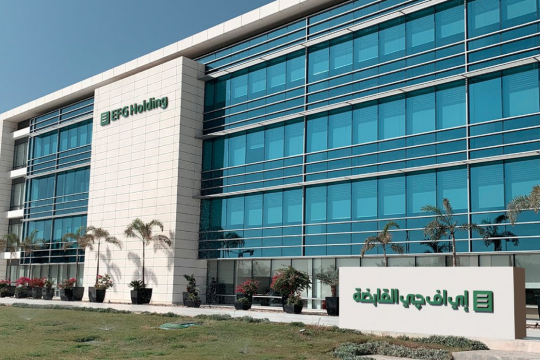
The European Bank for Reconstruction and Development (EBRD) is lending our friends at EFG Holding USD 40 mn to expand financing for MSMEs — its first direct facility to the parent company, according to an EBRD statement. The funds will flow through subsidiaries of its NBFI platform, EFG Finance, and target businesses in rural areas outside major cities, where it’s hardest to access finance.

REMEMBER- EBRD has been lending into EFG’s network for years, just not to the holding company itself. The bank has previously extended facilities to EFG subsidiaries Bank NXT, Tanmeyah, and Valu, including a EGP 600 mn loan in June to Valu to finance household purchases of solar power and EV-related products.

This is the latest in a run of EBRD facilities targeting Egypt’s MSME financing gap. In July, the bank extended a USD 15 mn (c. EGP 795 mn) senior loan to GlobalCorp to back local MSMEs, with a stated focus on clients outside Cairo. In March, it extended a USD 50 mn SME-focused package to NBK Egypt, including a USD 20 mn Youth in Business line aimed at under-35 entrepreneurs, women-led businesses, and underserved rural areas. EBRD just co-led Cairo-born fintech Paymob’s USD 35 mn pre-Series C round with Mubadala, with the funds earmarked for regional expansion and adding new products aimed at SME merchants and agentic commerce. The bank has invested close to EUR 15.4 bn across 234 projects in Egypt since it began operating here in 2012, according to the statement.

It’s been a good week for our friends: EFG Hermes picked up fresh honors this week, keeping its corporate access crown at the Extel Emerging EMEA survey for the second year running.

5

A MESSAGE FROM AUC ONSI SAWIRIS SCHOOL OF BUSINESS EXECUTIVE EDUCATION

AI in healthcare, minus the technical fog

Healthcare teams need to understand AI before they can use it responsibly. The AI in Healthcare program helps healthcare professionals understand, evaluate, and responsibly implement AI, with no technical background required. Participants learn prompt engineering and AI readiness assessment, work hands-on with tools including ChatGPT, and complete a capstone project designing an AI-based solution to a real healthcare challenge. The five-week program runs live online, with the next cohort beginning 21 October 2026.

Applications close on 26 September 2026. Apply here.

6

Also on our Radar

Egypt wants Austria to set up logistics zone in SCZone as an export base into Arab and African markets

Egypt proposed setting up a dedicated Austrian logistics zone within the Suez Canal Economic Zone (SCZone) — which would allow Austrian exporters to move goods into Arab and African markets, according to a cabinet statement. Prime Minister Mostafa Madbouly raised the idea with Austrian Chancellor Christian Stocker during a meeting on the sidelines of the UN General Assembly in New York. The proposal remains at an early stage — no investment value or timeline was disclosed.

IN CONTEXT- The country is building out a roster of country-specific zones inside the SCZone. The SCZone last year awarded AD Ports a 50-year agreement to develop the 20 sq km Kezad East Port Said industrial and logistics zone. Egypt and Turkey also discussed establishing a Turkish industrial zone in the Suez Canal area last month, while China already has a long-established manufacturing foothold through Teda-Egypt in Sokhna and is continuing to expand its industrial presence there. Russia is also moving ahead with its own industrial zone in the SCZone.

Trade, in numbers: Austria exported EUR 3.6 bn worth of goods to MENA in 2025, with the UAE, Saudi Arabia, and Israel being its three biggest export destinations in the region. Austrian exports to Egypt reached EUR 132.1 mn in 1H 2026, while imports from Egypt rose 21.8% y-o-y to EUR 80.6 mn, according to the Austrian Economic Chamber data (pdf).

Plugging in Marakez

Orange Egypt is plugging into four flagship developments belonging to our friends at Marakez — Ramla on the North Coast, District 5 in New Cairo, and Aeon Towers and Mall of Arabia in Sixth of October — under a new partnership that will see the telco design, deploy, and operate digital infrastructure across the four sites, according to a joint statement. Financial terms and a rollout timeline were not disclosed.

IN CONTEXT- Connectivity is becoming part of the real estate product itself. This is the third developer-telco tie-up we have tracked this year, after Madinet Masr’s agreement with Telecom Egypt and Talaat Moustafa Group’s cloud work with Huawei for Noor City. Orange Egypt CEO Hesham Mahran told EnterpriseAM in June that real estate developers have become some of the tech sector’s biggest B2B customers. Developers are increasingly bringing telecom players into projects earlier to set up digital infrastructure alongside the physical buildout.

Opening more doors

Madinet Masr is bringing Doors Real Estate to market, officially introducing the subsidiary more than two years after establishing it, according to a company statement (pdf). Doors combines real estate brokerage with consultancy services covering product structuring, pricing, positioning, marketing, and sales, and has generated EGP 122 bn in cumulative sales since its April 2024 establishment. The subsidiary is also moving beyond Egypt, opening a Saudi branch this year.

IN CONTEXT- Madinet Masr is building businesses around more of the property lifecycle than development alone. The company has been expanding its services ecosystem through Doors, post-handover finishing arm, Finishing Solutions, and fractional real estate investment platform Safe — giving it exposure to brokerage, finishing services, and property investment alongside its core development business.

Beyond bricks and mortar

The Financial Regulatory Authority (FRA) issued the country’s first standards for machinery, equipment, and infrastructure under board decision 191/2026, completing a national valuation framework that covers both real estate and real assets, the regulator said in a statement. The rules bear on financial leasing, asset-backed and project finance, restructurings, acquisitions, and asset revaluations. They take effect the day after publication in the Official Gazette, still pending.

The standards bring three valuation approaches under one framework: market comparisons, income generated by the asset or by a complementary group of assets, and replacement or substitution cost. They also set out the factors valuers weigh — an asset’s condition, remaining useful life, decommissioning costs, technology, production capacity, and maintenance needs — and an annex sets out how equipment should be inspected and documented.

ICYMI- The FRA rewrote Egypt’s real estate valuation standards earlier this month, adding ESG factors and a reporting template. Both sets align with the 2025 International Valuation Standards — the global benchmark for asset and property valuations.

Buying the pop

El Sewedy Cement lifted its stake in Qalaa Holdings to 3.1% from roughly 2.75% after buying 15 mn shares at an average of EGP 6.59 apiece for a total of EGP 98.9 mn, according to an EGX disclosure (pdf). EFG Hermes Brokerage handled the trades, the last of them on 14 September. This was a day after Qalaa said it would more than double its stake in subsidiary Egyptian Refining Company to 27.1% from 13% in a transaction that will see QatarEnergy exit the refinery. Qalaa is funding the acquisition and other corporate purposes with an EGP 3.87 bn equity raise that offers existing shareholders 773.5 mn new shares at EGP 5 apiece.

7

PLANET FINANCE

Iran war energy shock puts Africa’s rate-cut cycle on ice — somewhat

The Iran war’s energy shock is putting Africa’s rate-cut cycle on ice, but Nigeria just broke ranks. The Central Bank of Nigeria cut its benchmark rate by 350 bps to 23% yesterday, the biggest cut in its history, when analysts had expected a third straight hold at 26.5%. Morocco’s Bank Al-Maghrib held at 2.25%, as expected. The two were the first of 11 African central banks due to decide over two weeks. Going in, a Bloomberg roundup of economists’ forecasts had seven holding, three hiking, and only Zambia cutting. Surging energy costs, food price risks, and tighter US monetary policy are making it harder to ease, even where inflation has started to retreat.

Nigeria’s cut comes on the back of slowing inflation. Headline inflation dipped to 15.39% in August from 15.43% in July, its third straight monthly decline. That still leaves the benchmark rate well above inflation, even after the cut.

Egypt is expected to stay put. EY Africa Chief Economist Angelika Goliger sees the Central Bank of Egypt (CBE) holding its overnight deposit rate at 19% through the rest of 2026, with cuts more likely next year, given still-high inflation and the country’s exposure to regional and energy shocks.

But the consensus is showing cracks: A majority of analysts surveyed by EnterpriseAM expect the CBE to hold rates at Thursday’s meeting, but HC Securities’ Heba Monir thinks a 100-bp hike is in order given anticipated 4Q inflation pressures. August urban inflation unexpectedly eased to 14.5%, supported by falling food prices, even as core inflation edged up to 14.9%. The CBE has held for four consecutive meetings since February’s 100-bp cut.

Morocco’s hold looks set to last. Inflation averaged just 0.3% over the first eight months of the year. Oxford Economics’ François Conradie expects Bank Al-Maghrib to keep its rate at 2.25% for its next three meetings as fuel price increases feed through and the disinflationary benefit of a good harvest fades.

Elsewhere, the policy divide is widening: Ghana, Mozambique, Kenya, and Tanzania are expected to stand pat. South Africa and its ZAR-pegged neighbors Eswatini and Lesotho may each raise rates by 25 bps, which would take South Africa’s benchmark to 7.25%. Zambia is still expected to cut, with easing inflation creating room.

The oil price math is getting harder to ignore: Brent broke through USD 100 a barrel earlier this month, compared with an average of around USD 85 when most African central banks last met, Bloomberg reports. The conflict has restricted oil, diesel, and fertilizer supplies, while a potentially severe El Niño threatens harvests. Food accounts for as much as half of consumer price baskets in some African economies, leaving policymakers exposed to both energy and agricultural shocks.

And the Federal Reserve is adding another layer of pressure: September’s US rate increase — its first since 2023 — raises the risk of capital outflows, currency weakness, and imported inflation for African economies. That gives central banks an incentive to maintain sizable spreads between policy rates and inflation rather than cutting at every available opening. “Instead high nominal rates have become a buffer,” Equity Group Holdings Chief Economic Adviser Charlie Robertson told the business news service.

BACKGROUND- Governments are absorbing some of the shock themselves: The number of countries introducing fuel subsidies more than doubled in the four months to the start of September, from 16 to 38, while 94 governments now offer some form of consumer energy support, up from 56, according to a Financial Times analysis of International Energy Agency data. That’s helping keep a lid on inflation in places like Morocco, where transport subsidies and frozen butane and electricity prices have cushioned the oil spike, albeit at a growing cost to public finances as borrowing costs rise.

MARKETS THIS MORNING-

Asian markets gained earlier today, with Japan’s Nikkei rising 1.4% and South Korea’s Kospi gaining around 1%. Wall Street was mixed upon closing, with Nasdaq notching a record high boosted by AI-related stocks.

EGX30

54,931

-0.1% (YTD: +31.3%)

USD (CBE)

Buy 51.53

Sell 51.67

USD (CIB)

Buy 51.52

Sell 51.62

Interest rates (CBE)

19.00% deposit

20.00% lending

Tadawul

10,681

+0.0% (YTD: +1.8%)

ADX

10,232

+1.3% (YTD: +2.4%)

DFM

5,997

+0.6% (YTD: -0.8%)

S&P 500

7,765

+0.0% (YTD: +13.4%)

FTSE 100

10,708

-0.3% (YTD: +7.8%)

Euro Stoxx 50

6,324.72

+0.1% (YTD: +9.1%)

Brent crude

USD 99.25

-1.1%

Natural gas (Nymex)

USD 3.04

+2.4%

Gold

USD 4,401

+0.6%

BTC

USD 86,111

-0.6% (YTD: -1.7%)

S&P Egypt Sovereign Bond Index

1,119

+0.1% (YTD: +12.7%)

S&P MENA Bond & Sukuk

149.31

+0.2% (YTD: -1.7%)

VIX (Volatility Index)

14.21

-4.4% (YTD: -5.0%)

THE CLOSING BELL-

The EGX30 fell 0.1% at yesterday’s close on turnover of EGP 9.7 bn (17.3% below the 90-day average). Local investors were the sole net buyers. The index is up 31.3% YTD.

In the green: Telecom Egypt (+2.4%), Heliopolis Housing (+2.1%), and Palm Hills Developments (+1.8%).

In the red: AMOC (-1.8%), Beltone Holding (-1.7%), and EFG Holding (-1.3%).

7

Real estate buyers are reselling their contracts — and analysts disagree on why

Real estate buyers are reselling the contracts for their units, and some analysts are more concerned than others. Separately, the Financial Regulatory Authority (FRA) is reminding those same buyers to read the fine print on their contracts, as they may not realize that developers have the right to assign those contracts to mortgage financiers — a move that could impact their credit score.

REMEMBER- Last week, we explored how a Developers Union law, escrow rules, and a classification push are being built to clear out developers that can’t deliver. Now we’re unpacking the buyer’s side.

How reselling works: Buyers purchase contracts that are paid off in installments, which means they don’t own the unit until they finish paying. If they want out of the contract before that point, they’ve got two options: cancel it (and bear a hefty fee) or resell it to someone else (and the developer takes a cut).

Some are worried about how many buyers are reselling. “We’ve logged more than 9.8k unit assignment filings, with an estimated value of EGP 72.2 bn — EGP 53.6 bn at contract value. Most of it is concentrated in the first two years after purchase, which tells you buyers are struggling to keep up with installments,” Mahmoud Ammar, founder and CEO of real estate platform Aqar Exit, tells us.

But others aren’t as concerned. “Those numbers are still limited next to total market sales volume,” says Mohamed Albostany, president of the New Cairo and New Capital Developers Association, highlighting that the resale demand often reflects buyers rotating into other assets to upgrade their investment. “It isn’t always a sign of payment default,” he says.

And don’t worry about a real estate bubble, said Hesham Talaat Moustafa, Talaat Moustafa Group chairman, during an interview with MBC Masr. He pointed to structural demand from population growth, high cash-collection rates among major developers, and a sector that contributes roughly 22% of GDP (watch, runtime: 25:38).

Read the fine print

The FRA wants people to read their contracts. As part of its regulatory and supervisory mandate over non-bank financial activities, consumer protection, and complaint investigation, the FRA said it identified numerous instances of real estate clients failing to pay sufficient attention to key contract terms, and it urged buyers to review contracts carefully, especially the “assignment of rights” clause.

Shortly after issuing that reminder, the FRA had to issue a clarification, stating that media coverage has been inaccurate. The FRA hasn’t issued any new decisions or directives, and assignment-of-rights clauses remain fully permitted under the Civil Code.

Most current developer contracts let the developer assign the full contract, or the financial rights arising from it, to a mortgage finance company. Mortgage finance companies — as licensed credit providers — must report clients’ outstanding debt balances monthly to the I-Score credit bureau, in line with FRA and Central Bank of Egypt directives. This makes a buyer’s installment obligations visible to every credit provider tracking that debtor, which can affect their bank creditworthiness.

Both the developer and the financing company are obligated to notify the buyer of the assignment and the revised mechanism for paying remaining installments, the FRA said. Under Article 305 of the Civil Code, an assignment isn’t effective against the debtor or third parties unless the debtor accepts it or is formally notified, with that acceptance bearing a certified date.


SEPTEMBER

24 September (Thursday): Monetary Policy Committee’s sixth meeting of 2026.

27-29 September (Sunday-Tuesday): Global Conference on Population, Health, and Human Development.

28-29 September (Monday-Tuesday): Egypt Mining Forum, St. Regis Hotel New Capital.

OCTOBER

5 October (Monday): The EnterpriseAM Egypt Forum.

6 October (Tuesday): Armed Forces Day.

10-11 October (Saturday-Sunday): Egypt Women’s Health Summit (EWHS), Cairo Marriott Hotel.

26-28 October (Monday-Wednesday): IEX Egypt, Egypt International Exhibition Center, Cairo.

29 October (Thursday): Monetary Policy Committee’s seventh meeting of 2026.

NOVEMBER

6-8 November (Friday-Sunday) : Global Entrepreneurship Festival, JW Marriott Hotel, New Cairo.

8-11 November (Sunday-Wednesday): Cairo ICT Forum.

10 November (Tuesday): Cityscape Egypt Forum, Cairo.

DECEMBER

7-10 December (Monday-Thursday): Food Africa, Egypt International Exhibition Center, Cairo.

17 December (Thursday): Monetary Policy Committee’s eighth meeting of 2026.

EVENTS WITH NO SET DATE

2H 2026: Operations at Deli Glass Co’s new USD 70 mn glassware factory kick off.

2026: The Egyptian-American Economic Forum.

4Q 2026: Banque du Caire IPO.

2027

20 January-7 February: Egypt to host the African Games.

1-3 February (Monday-Wednesday): Agri Expo, Cairo International Convention Center.

April 2027: Tenth of Ramadan dry port and logistics hub to begin operations.

29 September - 2 October (Wednesday-Saturday): Cityscape Egypt Exhibition, Cairo.

EVENTS WITH NO SET DATE

2027: Egypt to host EBRD’s annual meetings.

2027: Egypt-EU Summit 2027.

End of 2027: Trial operations at the Dabaa nuclear power plant expected to take place.

September 2028: First unit of the Dabaa nuclear power plant begins operations.

Now Playing
Now Playing
00:00
00:00