** #2 Competition watchdog says Ousta’s collapse pushed it to act on Uber, Careem merger: The shutdown of Egyptian ride-hailing app Ousta signaled that the Egyptian Competition Authority (ECA) needed to keep an eye on the fast-growing industry, ECA head Emir Nabil said at a press conference on Monday, according to AMAY. “There is a trend in the ride-hailing apps sector away from competition, as evidenced by the collapse of Ousta,” said Nabil. He also noted that both Careem and Ousta had filed antitrust complaints against Uber, claiming the global industry leader was trying to force a price war. The merger of Careem and Uber, which is could be worth as much as USD 2.5 bn, has the potential to hurt mns of users as well as the drivers who work for these companies, he added.
Nabil said both companies acknowledged that merger talks were happening, but claimed the ECA acted when neither Uber nor Careem disclosed details on the transaction talks (shocking that they may want to negotiate a transaction behind closed doors, we know…). The ECA had recently issued a warning to Uber and Careem that they could face fines of EGP 500 mn each unless they formally seek an ECA exemption from the Antitrust Act.
ECA trying to calm market on its push to regulate M&A: “The ECA does not want to stand in the way of M&As, but it must take steps if the risks of an M&A to the market are too high,” said Nabil. We’re taking that as a bid to calm fears that the ECA was using the Uber, Careem merger as a lever to gain more control over mergers and acquisitions. The ECA has been trying for the past two years to amend the Antitrust Act to give it sign-off powers on all M&A worth more than EGP 100 mn.
In other ECA news, the authority is planning to look into the spike in potato prices, which has been driving the country hysterical of late. A working team has been formed to study pricing in the market. Nabil also noted that the ECA was cooperating with the UN on a new antitrust legal and policy research center in Cairo, which will launch on 19 November, according to Youm7.
Speaking of spuds: Potato prices were still getting air time last night. Nabil, as well as cabinet spokesperson Nader Saad and Consumer Protection Agency head Reda Abdel Moaty phoned into various talk shows last night to discuss the issue (watch here, runtime: 12: 39, here, runtime: 7:44, here, runtime: 2:24, and here, runtime: 2:15). Amr Adib also took note on El Hekaya (watch, runtime: 2:17).
Related
** #2 2017 wasn’t a great year for foreign investment in Egypt, but real estate, hospitality and construction were winners (at least on a project-count basis), according to a 2017 EY Africa report on FDI (pdf) released yesterday. The report, which looks at FDI on a volume-of-projects basis as opposed to in USD terms, says Egypt’s attractiveness to offshore investors slipped to sixth place among its African peers as new projects fell to 56 in 2017 from 79 in 2016. The telecoms, consumer products and mineral resources sectors all saw fewer new projects kick off in 2017. Our market share of FDI-backed projects in North Africa fell 30% y-o-y, it says. Using CBE data, we see net FDI fell to USD 7.7 bn in the state’s 2017-18 fiscal year from USD 7.9 bn in previous fiscal year.
Egypt was a regional hotspot for real estate: EY notes that Egypt, along with Ethiopia, was the most sought after destination for projects in real estate, hospitality and construction sectors. FDI in those sectors more than doubled to 105 projects in 2017 from 45. The report notes that sentiment in Egypt was still high on the back of the ongoing recovery in tourism and the Madbouly government’s economic reform program.
Keep it all in context: We may be turning a corner in 2018, according to an UNCTAD report out earlier this month. Egypt was the most attractive destination for FDI in Africa in the first half of this calendar year, with the total inflows up 24% compared to 1H2017, according to the UN body. This came despite a 3% decline in inflows to Africa in 1H2018.
But if interest rates don’t go down, you can forget about a significant pickup in foreign or domestic investment.
Continent-wide, EY says FDI was concentrated in ‘next generation’ sectors such as manufacturing, infrastructure and power generation. Morocco was the star of the EY report, with a 19% y-o-y increase in project volume last year. South Africa, Kenya, Nigeria and Ethiopia rounded out the top five, which together accounted for 40% of the continent’s FDI projects. Inbound FDI was led by US investors last year, followed by Western Europe, namely the UK, France and Germany.
Related
** #4 EXCLUSIVE- The Madbouly government has started work on the FY2019-20 budget, with various government departments tallying up their budgets and projection, a senior government official told us yesterday. The government is targeting GDP growth of 6% in its next fiscal year, up from 5.5% this fiscal year. The Finance Ministry apparently expects the budget deficit will fall to 8% of GDP in FY2019-20, despite the spike in oil prices.
Egypt will eliminate fuel subsidies next fiscal year as per the IMF-sanctioned economic reforms, which will drastically reduce the deficit, noted the source. Tax revenues are projected to go up 15% next year, from a projected 14.6% growth rate this year. The government hopes to reduce Egypt’s public debt to 88% of GDP, largely through its debt control strategy.
It is early days yet, but the Finance Ministry is budgeting for oil at USD 80/bbl in its next budget, the official said. The ministry reportedly believes oil in the neighborhood of USD 80/bbl could be the new norm and will provide a realistic threshold when calculating fuel subsidies cost, the source noted. Egypt has already overshot its budgeted expenditures on fuel in 1Q2018-19 by around EGP 1 bn thanks to higher than projected oil prices, according to Finance Minister Mohamed Maait. The government had expected oil prices to average USD 67/bbl this year. Other government sources had told us that the spike in oil prices could see the budget deficit rise to 8.6% of GDP in FY2018-19, from an initially projected 8.4% of GDP.
Related
** #5 Egypt’s non-oil exports rose 11% y-o-y in 9M2018 to USD 18.5 bn, up from USD 16.6 bn in the same period last year, data from the General Organization for Export and Import Control (GOEIC) showed. Imports have gone up 14% y-o-y in the same period, reaching USD 49.1 bn from USD 43.2 the previous year.
Related
** #6 Global economic volatility could force countries to adopt “inward-looking,” consumer-driven growth models, says Farid: Global economic volatility could lead to policy changes and new growth models being adopted around the world, EGX Chairman Mohamed Farid told Zawyaon the sidelines of the annual conference of the Federation of Euro-Asian Stock Exchanges (FEAS) in Abu Dhabi. Farid said the world might be forced to divert its focus from exports and adopt more “inward-looking, consumption growth models.” The chairman stressed the importance of strengthening venture capital and private equity firms to fund entrepreneurs and startups.
Related
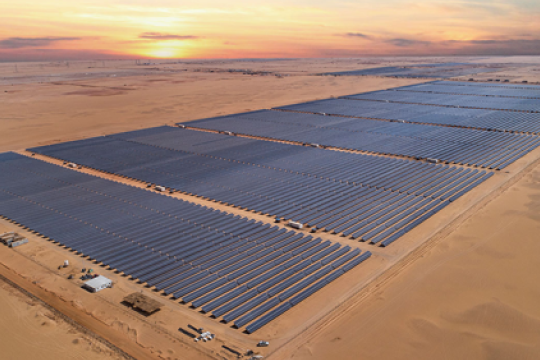
INVESTMENT WATCH- Enara wants to invest USD 200 mn to sell solar power direct to consumers: Enara Capital is lining up capital for a USD USD 200 mn pipeline of solar power projects with a combined generation capacity of 200 MW, CEO Sherif El Gabaly said. The company is in talks with the government to sell the power from these plants directly to consumers under an independent power producer (IPP) framework. El Gabaly had said back in February that the company was looking to invest USD 300 mn over the course of the next five years in power plants with a combined production capacity of 300 MW.
Related
INVESTMENT WATCH- Military Production Ministry in talks with Chinese investors on USD 1 bn solar panel plant: The Military Production Ministry is in talks with an unnamed Chinese company to partner on a USD 1 bn solar panel factory in Aswan, ministry officials tell Al Mal. The ministry plans to hold a 51% stake in the project, the source noted. The plant would cater to the demand of the domestic market and later target export sales, the newspaper says. The ministry had been in talks with China’s Golden Concord Group on a USD 2 bn solar panel manufacturing plant, with the two signing an MoUfor the project in May. Talks are since believed to have broken down.
Related
LEGISLATION WATCH- House mulls legislation that could make it easier to clear Egypt’s arbitration backlog: The House of Representatives’ Legislative Committee is reviewing a law that could help fast-track the resolution of investor disputes that center on state-owned companies where the Administrative Court has tried to reverse privatizations ales. The law would allow the Prime Minister to refer these cases to the Investment Ministry’s investors disputes resolution committees to negotiate settlements. The law would also shield the Public Enterprises Minister from the legal ramifications of not enforcing the Administrative Court’s ruling, committee member Medhat Sherif tells Al Mal.
Background: The state sold shares in seven companies, including Nile Cotton Ginning and Omar Effendi, only to have the Administrative Court issue a ruling in 2011 invalidating the share sales. The decision drew Egypt into legal entanglements and international arbitration cases that are still ongoing. The law is meant to settle the cases with these seven companies, Public Enterprises Minister Hisham Tawfik said. We’ve been seeing reports as recently as this month that Nile Cotton and Ginning’s foreign investors were about to proceed with arbitration suits.
Related
Wheat rises after Egypt’s rare purchase of US cargo: Chicago futures wheat rose on Monday after Egypt’s General Authority for Supply Commodities (GASC) bought US wheat for the first time since May 2017, Reuters reports. Wheat contract on the Chicago Board of Trade gained 1.5% on Monday. GASC purchased 470k tonnes of wheat in aninternational tender on Friday for delivery between 11-20 November, including 60,000 from US suppliers.
Related
***
WE’RE HIRING: We’re looking for smart, talented, and seasoned journalists and editors to join our team at Enterprise, which produces the newsletter you’re reading right now. We’re looking for people who can work on this product and help us launch exciting new stuff. Applicants should have serious English-language writing chops, a strong interest — and preferably some professional experience — in business journalism, and solid analytical skills. The ideal candidate for us is a native-level-writer of English with the ability to read and understand Arabic. We offer the chance to work in a unique and casual work environment that promises to be intellectually challenging and rewarding. If you’re interested, please submit your CV along with 2-3 writing samples and a solid cover letter telling us a bit about who you are and why you’re a good fit for our team. Please direct your applications to [email protected].
***
Related


 Egypt Edition
  MENA+ Edition
  UAE Edition
  Saudi Edition
  AI + Innovation (MENA)
  Logistics (MENA)


 Share Issue