Gas gateway ambitions grow

1

WHAT WE’RE TRACKING TODAY

Shell’s Velox-1X well confirmed presence of crude in the Western Mediterranean

Good morning, folks. We have three stories with three different scales, but each one is really about Egypt as a platform for someone else’s capital.

First, the headline number: up to USD 20 bn. Two Tamar partners have signed a non-binding MoU that would be Tamar’s third long-term gas supply agreement with Egypt, layered over the field’s existing contracts. The volume matters, but what’s behind it matters more — every contract routed through our terminals reinforces the gateway play Egypt has been building for years. Read the full breakdown, including why the USD 20 bn figure needs unpacking, below.

Acumen’s climate-agri fund is picking Egypt. ARAF has closed USD 90 mn in fresh capital and named Om el Donia as one of three new target markets outside its East and West Africa base. We sat down with fund head Tamer El-Raghy to find out more about plans to move Egyptian agriculture up the value chain, from raw crops to processed and branded.

And a fintech-adjacent raise worth watching. Cairo-based e-commerce ops startup Fincart closed an oversubscribed USD 2.8 mn seed round co-led by Launch Africa and Antler Menap. The second raise, and the first with regional co-leads at that scale, sends a small signal about where the seed pool is looking right now.

***

ARE YOU MORE OF A LISTENER? Morning Drive is a 10-minute summary of today’s issue crafted for you to enjoy with your morning coffee, while getting the kids ready for school, or driving through the morning rush. And if you like it, tell your friends to tell their friends. They can find us on Apple, Spotify, or wherever they get their podcasts.

***

Destination Sahel is back for a second edition — and this year, it's not just about the beach.

Gulf sovereign wealth funds are pouring billions into the North Coast, Gulf buyers keep showing up despite regional headwinds, and a new 400km master plan could reshape the whole coastline before summer’s out.

Over this season's series, stay tuned to see who's really buying Sahel, where the money's coming from, and what could still go wrong.

Plus, the hotels, restaurants, and openings worth checking out this summer.

Coming straight to your inbox — Wednesday, July 29.


Crude confirmed

Egypt’s frontier west just yielded its first signs of crude: Shell’s offshore Velox-1X exploration well, situated in the North Cleopatra block of the Western Mediterranean, confirmed an active petroleum system and the presence of crude oil, putting Egypt in reach of a potential first oil discovery in the basin, according to an Oil Ministry statement. Shell operates the well alongside Chevron and state-owned entities Egas and Tharwa Petroleum. Meanwhile, QatarEnergy is finalizing procedures to join the partnership.

It’s the deepest water in which any Mediterranean well has been drilled, according to the statement. Velox-1X sits about 90 km offshore in 2.8 km of water and reaches a total sub-seabed depth of roughly 6.5 km. The well came in 10 days ahead of schedule and under budget, drilled by the Stena IceMAX.

Why it matters: The Western Mediterranean covers roughly 40% of the Mediterranean’s area but has seen just four exploration wells, against more than 1k in the east, so a commercial find would be the basin’s first. Shell, Chevron, ExxonMobil, TotalEnergies, and BP are already exploring there, and a result would strengthen Egypt’s appeal for upstream investment.

What’s next: Shell is analyzing the crude sample and technical data before deciding its next move, which could be to run more exploration wells. The ministry hasn’t put a timeline on the evaluation, so there’s no firm date to watch yet.

New timeline for Misr Life Ins.

State-owned ins. giant Misr Life Ins. is set to wrap up its IPO before the end of this year, Investment Minister Mohamed Farid said yesterday. The revised timeline pushes the float beyond the June-July window he flagged last month. Negotiations with investors over the sale are underway, and valuation details are still being finalized, Farid said, speaking at the launch of the FRA’s new initiative to prepare temporarily-listed state-owned companies to go public.

The progress so far: Misr Ins. Holding Company (MIHC) approved the sale of a 20% stake in its subsidiary Misr Life Ins. late last month, with the Sovereign Fund of Egypt — which owns 100% of MIHC — tapping EFG Hermes as the sole global coordinator and bookrunner for the IPO. A fair value study was due in June, and a government source tells EnterpriseAM it has been finalized.

The clock is ticking: The ins. giant, which has been temporarily listed on the EGX since March, will need to hit the trading floor by September, given temporary listings expire after six months. Misr Life Ins. can still complete its IPO later in the year, but only if the FRA signs off on an extension.

IN CONTEXT- The new program, run through the Egyptian Institute of Financial Studies and the Egyptian Directors Center, consists of seven training modules. It targets 20 state-backed companies already temporarily listed, in addition to roughly 30 others being prepared across sectors such as petroleum, mining, pharma, tourism, contracting, education, and manufacturing.

A quarter late, still coming

Capital Med’s IPO is running a quarter behind schedule: Egyptians for Healthcare Services (EHCS) is preparing to list Capital Med on the EGX this quarter in an offering worth roughly EGP 2.2 bn, CIRA CEO Mohamed El Kalla said in a press release (pdf) — a listing we’d previously clocked for 2Q. CIRA holds a 28% stake in the project. The offering has already drawn considerable investor interest, El Kalla said.

Proceeds will fund an expansion of the hospital’s bed capacity to 875 from 220, El Kalla said, as Capital Med moves through the first phase of a long-term plan for a 4k-bed smart medical city in Badr.

ICYMI- Capital Med was said to be tracking a 25% float, which would have valued the preprofit venture at roughly EGP 8 bn, by our math. The listing leans on Article 7 of the Capital Market Law, which lets greenfield projects list without two years of audited earnings, provided they can show a path to profitability within three years. EHCS closed Egypt’s first sustainability-linked musharaka sukuk last year, raising EGP 2.4 bn from a syndicate of lenders.

ALSO- CIRA is tapping banking partners for its next project. The company is working with the National Bank of Egypt and QNB to arrange financing for a new education city in Damietta that will host a foreign university branch, El Kalla said in the release. No ticket size was disclosed.

Short-selling, take two

Short-selling and market-making may go live before the end of next month. The Financial Regulatory Authority (FRA) is moving to roll out short-selling and a formal market-making framework alongside the continued expansion of the EGX’s derivatives market, according to a statement. The regulator’s board is expected to approve changes to the short-selling rulebook next week, putting the mechanism on track to go live before the end of August.

The new tools are meant to solve two sides of the same liquidity problem. Short-selling gives investors a way to gain from falling prices instead of just sitting out down markets, and market-making ensures a counterparty exists on the other side of a trade even when volumes are thin. FRA Chairman Islam Azzam told EnterpriseAM earlier this year that the tools are central to boosting liquidity on the exchange, which we know is a prerequisite to bringing foreign investors back.

REFRESHER- Our derivatives market is already live and growing, though trading volumes have been slow to build. Futures on the benchmark EGX30 index launched in March, followed by contracts on CIB and TMG in June, with more single-stock futures, EGX70 futures, and options set to follow. The FRA first floated short-selling in 2019, licensing nine brokerages — including EFG Hermes, CI Capital, and Shuaa Securities — and promising trial runs, but the rollout never materialized.

PSA-

#1- Companies and establishments with foreign shareholders must file quarterly FDI data with Gafi within 45 days of each quarter’s close, according to a statement from the Investment Ministry. The requirement covers all foreign-shareholder companies regardless of incorporation authority — except upstream exploration companies under production-sharing agreements with government entities. Companies that miss the FDI form face an EGP 50k fine under Article 91 of the Investment Law, according to Gafi’s service page. Companies must also file annual financial statements with Gafi once approved by the general assembly.

#2- WEATHER- It’s another hot day in Cairo, with the capital looking at a high of 35°C and a low of 24°C, according to our favorite weather app.

It’s a little cooler in Alexandria, with a high of 30°C and a low of 23°C.

The big story abroad

Last night marked the second consecutive day of quiet following a nearly two-week Campaign of US strikes on Iran. US President Donald Trump reportedly halted the assault to rekindle diplomatic talks, with advisors citing the shortage of viable targets and a growing strain on Washington’s arsenal. Negotiations reportedly involve efforts from Oman and Qatar.

Iran’s response? Tehran will also hold fire as long as the US does not renew its assault, a senior Iranian official told Reuters, reiterating that the Islamic Republic's policy remains “attack for attack.”

Houston, we have a rival: Europe’s The Exploration Company is seeking at least USD 300 mn in funding — a round that could push its value to USD 2 bn — to build reusable space capsules capable of challenging Elon Musk’s SpaceX. Among the suitors is the European Commission-backed Scaleup Europe Fund. Talks remain ongoing and no final decisions have been made.

Private equity’s brewing showdown: Bain Capital and Carlyle are the final bidders vying to acquire wealth management and advisory firm Wealth Enhancement, whose owners are targeting a valuation of around USD 7 bn. As a leading PE-backed registered investment adviser, Wealth Enhancement is riding a wave of industry consolidation as it competes with banks to manage portfolios of wealthy clients.

Chinese memory chipmaker CXMT’s shares jumped 472% on their Shanghai debut this morning, following the company’s IPO — the second-largest in China’s history — that raised CNY 66.6 bn. The company is the world’s fourth-largest maker of dynamic random-access memory, possibly serving as China’s ticket to reducing its reliance on foreign suppliers.


*** It’s Blackboard day: We have our weekly look at the business of education in Egypt, from pre-K through the highest reaches of higher ed.

In today’s issue: American curriculum schools have lost the fee margin they used to collect on credential authentication as the Ministry pulls SAT and diploma certification into an EGP-denominated, Ministry-run chain.

Some places become part of your story.

This summer, slow down, reconnect, and create moments that linger long after the season ends. From sunrise by the sea to unforgettable experiences, every stay at Somabay is designed to become a memory worth keeping.

2

Energy

Two Tamar partners sign non-binding MoU for up to USD 20 bn to send Egypt more gas from 2031

Two partners in Israel’s Tamar gas field signed a non-binding MoU with an unnamed Egyptian buyer for a potential USD 20 bn contract — which would mark the offshore field’s third long-term supply agreement with Egypt, according to an Israeli stock exchange filing from Israeli producer Isramco and reporting by Middle East Economic Survey (MEES). Isramco and Abu Dhabi state-owned Mubadala Energy signed the MoU to supply up to 80 bcm of gas from Tamar between 2031 and 2038, extending automatically through 2043 if Tamar’s production lease is renewed.

The USD 20 bn figure needs unpacking — it isn’t stated outright. Isramco’s filing puts its own take at USD 5.75 bn, the revenue its 28.75% stake would earn if Tamar sells the full 80 bcm. Grossed up across the consortium, that implies roughly USD 20 bn — but only if every Tamar partner signs on. The filing says the full volume would be supplied only if all partners join, so both the contracted volumes and the total value could fall proportionately if some opt out.

Two in, four undecided: The MoU has so far been signed by Isramco and Mubadala Energy (11%), which together hold 39.75% of Tamar. The remaining partners — operator Chevron (25%), Tamar Petroleum (16.75%), Union Energy (14.5%), and Dor Gas (4%) — have not publicly confirmed they will join. MEES reports the buyer is not Blue Ocean Energy, suggesting Tamar’s partners have lined up a different Egyptian counterparty.

Priced off Brent, with a floor: Pricing would track Brent crude, carry a price floor, and keep take-or-pay provisions broadly in line with Tamar’s earlier export agreements with Egypt. The agreement implies an average realized price of some USD 7 per mn British thermal units (Btu) over its life, MEES said, based on Isramco’s revenue estimates — slightly below the USD 7.60/mn Btu Egypt paid on average in 2025 for gas from Tamar and the neighboring Leviathan field.

This would become Tamar’s third long-term supply agreement with Egypt: It follows a 25.3 bcm contract signed with Dolphinus in 2018 (which was assigned to state-backed Blue Ocean Energy and amended in 2019), covering deliveries from the 2H 2020, and a further 43 bcm agreement signed in 2024 tied to Tamar’s production expansion and new export infrastructure, including the Nitzana pipeline and expanded Arab Gas Pipeline route via Jordan.

Rather than replacing the existing contracts, the proposed agreement would gradually layer on top of them, MEES reported. Deliveries would start with relatively modest annual volumes in 2031 while the earlier agreements run, then ramp up as those contracts approach expiry.

BACKGROUND- The proposed Tamar agreement comes almost a year after Egypt and the Leviathan consortium amended their existing gas export agreement to secure an additional 130 bcm of gas through 2040 in a USD 35 bn agreement. Earlier this year, Leviathan partners and NewMed Energy said all conditions precedent for that agreement have been satisfied, clearing the way for Chevron and its partners to move ahead with a USD 2.4 bn expansion that will nearly double the field’s production capacity to 21 bcm a year by 2029, and gradually increase exports to reach some 2.1 bcf/d.

Cairo’s gateway play

This is about more than extra supply. Every long-term Israeli gas contract routed through Egypt reinforces Cairo’s push to position itself as the Eastern Mediterranean’s gas gateway. Rather than build its own liquefaction — which would cost up to USD 10 bn — Israel keeps monetizing much of its export surplus through Egypt’s LNG plants at Idku and Damietta, lifting utilization of infrastructure even as Egyptian output lags.

The proposed agreement would also let the buyer market gas outside Egypt, unlike the existing Blue Ocean contracts, MEES reports — so any surplus could be redirected through Egypt’s two LNG terminals for re-export, with Tamar’s partners sharing the gains. Government sources previously maintained that imported Israeli gas can be re-exported after entering the domestic system, but rising local demand meant those volumes were consumed at home instead.

A transit hub: Beyond LNG exports, Egypt has sought to use its pipeline network to supply neighboring markets through the Arab Gas Pipeline. Previous gas export agreements to Lebanon and Syria have fueled speculation that some of those volumes could ultimately include Israeli gas once commingled with Egypt’s grid.

Local market flexibility: Imported gas can be sent where it earns most — consumed at home to ease shortages, liquefied for export when margins are good, or fed to energy-intensive industry. That last use matters more as fertilizer investment grows (as seen with Indorama and others). Egypt produces roughly 12 mn tons of fertilizer annually, over 4% of global output, and it’s one of the country’s key export industries. Securing reliable feedstock has become an industrial priority as much as an energy one.

REMEMBER- Israeli imports carry risk: Fields are prone to sudden shutdowns when regional tensions escalate, halting exports several times this year and cutting supply to energy-intensive industries.

OUR TAKE- The bigger picture is one of optionality. LNG imports, long-term pipeline imports, and infrastructure — like liquefaction facilities and regasification vessels — widen Egypt’s ability to choose where imported gas ends up, a flexibility that is increasingly becoming one of Egypt’s biggest competitive advantages. A decade ago, the ambition was to be a major producer around Zohr. Today it’s about controlling infrastructure and trade flows.

What’s next: The MoU is non-binding and remains subject to regulatory sign-off — including an export permit from the Energy Ministry — plus board and tax approvals and the remaining partners’ participation. MEES expects a decision to be deferred until after Israel’s October parliamentary elections. With the Knesset dissolved and a caretaker government in office, the MoU will most likely be left for the next administration. It is set to expire after about two months absent a binding agreement, though the parties could extend it — the outcome MEES sees as most likely.

This publication is proudly sponsored by

3

Coffee With

Coffee With Tamer El Raghy on bringing climate-smart agriculture to Egypt

Acumen’s climate-focused agriculture fund is coming to Egypt for the first time. The Acumen Resilient Agriculture Fund (ARAF) — the impact fund known for backing fast-growing African agribusinesses building smallholder farmers’ climate resilience — has secured USD 90 mn in fresh committed capital. The top-up brings total fund size to roughly USD 148 mn and marks its first expansion beyond East and West Africa into North Africa. Egypt is one of three new target markets, and ARAF’s pitch here is specific: help move the country’s agriculture from exporting raw crops toward processed, branded goods.

The raise is backed by returning anchors and a fresh set of DFIs. The Green Climate Fund (GCF), FMO and Proparco all topped up existing commitments, joined by new investors Swedfund, BIO and FASA, alongside an undisclosed family office that also backed the first round.

Tamer El Raghy (LinkedIn) has led ARAF from day one. The Cairo University-trained engineer holds a PhD in materials engineering from Drexel, an MBA from NYU Stern, and nine patents from an earlier career as an academic and startup founder. He built his career at Cargill across grain, oilseeds, and animal feed in Africa and the Middle East, before heading agriculture and food private equity in Africa at a Zurich-based fund. He joined Acumen in November 2018 to launch ARAF and has run it out of Nairobi ever since.

We sat down with El Raghy to talk about why climate resilience, not just capital, is what turns African smallholders into lasting agribusinesses, the Kenyan farmer whose solar-powered irrigation pump changed the trajectory of her farm, and his vision for pushing Egypt up the value chain from raw crops to branded, processed goods.

Edited excerpts from our conversation:

EnterpriseAM: Your career took you through venture, consulting, and years at Cargill before you landed in impact investing. What actually pulled you into agrifood?

Tamer El Raghy: It happened almost by accident. I was an engineer, a professor for four years, then left academia to commercialize some patents, which is how I ended up in an MBA, then M&A consulting. Then Cargill called, needing someone to run strategy and investments in Africa. I had no ag experience and no Africa experience, but Cargill is an amazing school. Traveling the continent, I saw how a smallholder’s life changes when they work with the right company. That stuck with me because these are the people growing our food, yet they are the most exposed to climate change despite contributing almost nothing to it. When Acumen approached me about building a fund focused on farmers’ climate resilience, I said yes immediately.

An impact fund is still seeking risk-adjusted economic returns, like any fund. The difference is that it also carries an impact thesis it has to report against. ARAF hires a third party every year, funded through a grant from the Green Climate Fund, to measure how its portfolio companies are affecting smallholder farmers’ climate resilience.

EnterpriseAM: Before this round, ARAF had USD 58 mn committed. What’s actually changing with this expansion, and who’s backing it?

TE: The real shift is geographic. Before this round, we had USD 58 mn committed in 2021, focused entirely on East Africa and Anglophone West Africa — Nigeria and Ghana. This additional USD 90 mn lets us keep investing there while expanding into North Africa for the first time. We’re not just deploying more capital in the same markets — we’re testing whether the model travels somewhere we’ve never operated.

We have returning investors — GCF, Proparco, and FMO — all of whom topped up their existing commitments, plus new investors Swedfund, BIO, and FASA, and a family office that was also in our first round. On the numbers that are already public, GCF’s commitment includes USD 30 mn in equity, Proparco is in for USD 12 mn, FMO for USD 12.5 mn, and Swedfund for USD 12 mn.

EnterpriseAM: Why is Egypt only entering the picture now?

TE: We started narrow on purpose, focusing on East Africa and Anglophone West Africa, to prove the model before raising a bigger fund. Once we decided to double the fund’s size, GCF asked us to name focus countries, and Egypt and Morocco were an obvious choice for North Africa. For Francophone West Africa, we needed a beachhead, and the Ivory Coast’s agriculture sector is large, structured, and comparable in scale to Egypt’s.

Not many people realize how big Egypt’s agriculture sector is, or how much of it is still built around smallholder farmers. We think there’s a long way to go from exporting raw materials to exporting processed goods, and that’s the role we’d like to play. When we explained North Africa’s potential to our investors, all of them got excited about its scale. As it stands, we’ll be the first ag-and-food-focused fund in North Africa.

EnterpriseAM: Is there a moment that crystallized why this work matters to you?

TE: There’s one Kenyan farmer in particular who comes to mind. After working domestic jobs in Nairobi for years, she inherited land and returned home to plant corn. She struggled because corn doesn’t pay well and, without irrigation, a bad rain season can wipe out a harvest. She got a call about a solar-powered irrigation pump from SunCulture, an ARAF portfolio company. She ignored it at first, thinking it was a scam, but eventually decided to visit the store. She couldn’t afford the down payment, so her son, working as a barista in Dubai, sent her the money. She told us she didn’t know how to write a business plan, so she drew her farm instead — corn to eat, along with coffee, hibiscus, and fish. Then, she redrew it every single year to track her progress. Three years later, her farm looked exactly like her drawing, and her mud hut is now a brick house.

That story is part of why the fund’s own impact data shows more than 80% of farmers working with ARAF’s portfolio companies reporting a rise in income.

EnterpriseAM: What does that raw-to-processed shift actually look like in practice?

TE: Take a company like Beyond Good in our current portfolio. It sources cocoa from smallholders in Madagascar and Uganda and turns it into a fully branded, organic chocolate bar sold entirely in the US. That’s the model: not just growing and shipping the raw material, but capturing the value that comes from turning it into something branded and exported as a finished product. That’s exactly the kind of company we’d love to replicate in Egypt. With this fund, we can wear two hats: venture and private equity, so we’re looking at both early-stage startups and established businesses that could follow that path.

But none of that happens unless you first fix what’s holding farmers back. Egyptian farmers face the same four pain points as farmers anywhere across the continent. First, access to finance, because banks see smallholders as risk rather than customers. Second, access to the right inputs. Third, access to markets, since most rely on aggregators rather than selling directly. And fourth, access to agronomy support — the kind of guidance a US commercial farmer gets from a paid app and satellite data, but a farmer with one or two acres simply doesn’t.

EnterpriseAM: There’s a perception that agriculture and food is a hard sector to make money in. Does that track with what you’ve seen?

TE: It’s not true, and I think it’s part of why the sector has a reputation problem. People make money in agriculture and food all the time — in Egypt, across Africa, and globally. What’s true is that it isn’t an easy sector for the faint-hearted. If you invest in a company making t-shirts, a bad month is a bad month. If you invest in a company that buys from farmers and there’s a heat wave, yield drops and that ripples straight through the business. The gap between a resilient farmer and a non-resilient one can be the difference between a good season and losing everything.

EnterpriseAM: You run a technical assistance facility alongside the equity fund. Where does the grant money go?

TE: It’s a grant facility, funded by GCF and other partners, that we manage as a pass-through, separate from the equity fund. It does three things. First, it pays for the third-party impact measurement I mentioned. Second, it funds farmer training on climate-smart practices, including seminars and access to subject-matter experts. Third, and this is the one our portfolio companies love most, it funds business development support. If a founder needs an ERP system that costs USD 40k but would rather spend that money hiring salespeople, we might cover 75% of it. If a company expanding from Egypt into Morocco needs a go-to-market strategist, we pay for the consultant. And if a promising mid-level manager needs an executive coach, we bring in one of the best, not a “half-cooked” one.

EnterpriseAM: Given the water-scarcity and heat-stress outlook for Egyptian agriculture, are climate risk products, like crop ins., for instance, something you’re actively pursuing?

TE: Egypt’s climate risk is fairly concentrated around temperature rather than rainfall or wind, which actually makes a heat-stress ins. product more tractable to design. We already backed a parametric weather-insurance company, IBISA, in our first fund, and we’ll keep looking at crop ins. We’d love to be part of building that, whether it’s a company already operating in Egypt or one looking to expand there.

EnterpriseAM: What does success look like for ARAF’s Egypt bet three years from now?

TE: Three things: that we’re backing good companies with real, measurable impact on smallholder farmers; that ARAF becomes known as the go-to agrifood fund in the region; and that we prove — just as we did in East and West Africa — that the best local talent is already here and we don’t need to import it. Every member of our team is local. We like to say we’re an African fund, managed by Africans, out of Africa.

4

Startup watch

Fincart closes USD 2.8 mn seed round

Fincart closed an oversubscribed USD 2.8 mn seed funding round, co-led by pan-African VC fund Launch Africa and Antler Menap, according to a press release (pdf). The Cairo-based e-commerce operations startup will use the fresh capital to develop its AI platform, grow its team, break into new regional markets, and lock in more partnerships, co-founder and CEO Mostafa Masry tells EnterpriseAM.

Also in the round: Yango Ventures, Five35 Ventures, Bluestream Capital, Hi2 Global, Kalahari Venture Labs, and other investors focused on the region.

Fincart is a platform for e-commerce merchants, helping them manage shipping, access short-term cash advances against their sales, and drive customer engagement. The AI-powered platform bundles integration with over 40 couriers in what the company calls the largest integrated network in Africa. It was co-founded in 2023 by Masry and COO Nihal Ali.

REFRESHER- This is Fincart’s second raise, after the company closed an undisclosed pre-seed round in January 2025 led by Plus VC, with participation from Plug and Play, Orbit Startups and Jedar Capital. Proceeds went toward scaling its technology platform and courier network across the region.

What we don’t know: The company did not disclose the valuation at which the round was raised, or how the proceeds will be split across the four uses.

Built from their own headaches: Ali and Masry started the company after firsthand run-ins with poor last-mile delivery and delayed COD reconciliation. Merchants are typically “juggling five or six disconnected tools just to run their business, shipping, payments, customer engagement, none of which talk to each other,” Ali said in the release.

Not a lender, by design: Fincart’s cash-advance product doesn’t run through its own balance sheet, Masry tells us. “We generally work with partners in fintechs that provide this cash advance or settlement. We are the data layer that sits in between the lenders and the merchants,” he says. “In that way, we are not a financing entity ourselves,” he adds.

By the numbers: Fincart says it has onboarded more than 450 merchants and enterprise clients, with nearly 40% of new clients coming through referrals. It has enabled close to EGP 1 bn in product gross merchandise value through its shipping and cash-reconciliation workflows.

What’s next: Fincart already offers shipping to more than 100 destinations, with a Gulf-heavy footprint reflecting regional demand, Masry tells us. The 2027 push is about building presence in new markets, rather than just shipping reach. “We aim to target merchants from outside of Egypt and across the region generally,” he says.

5

LAST NIGHT’S TALK SHOWS

Last Night’s Talk Shows on the QR-code e-visa system

Next month’s rollout of the QR-code e-visa system was in the limelight last night, with the specifics of obtaining the visa outlined by Head of the Federation of Tourism Chambers Hossam El Shaer in a phone interview with El Sora’s Lamees El Hadidi (watch, runtime: 4:20). Visitors can obtain the visa online or at an airport by paying via credit card through scanning a QR code in a bid to reduce queues and congestion at local airports.

The visa fee currently stands at USD 36, but El Shaer hopes it will be reverted to its previous rate of USD 15, since competing tourism hotspots like Turkey, Morocco, Tunisia, and Dubai grant tourist visas without charge, giving them an edge. He also added that the new visa system will first launch at Cairo International Airport before gradually being rolled out across other airports.

REMEMBER- Airport staff are currently being trained to run the system, which is expected to strip out one of the first points of friction for visitors as Egypt chases its target of 30 mn tourists a year by 2030.

6

Also on our Radar

Egypt secured immediate Philippine market access for five agricultural exports

Five Egyptian agricultural exports are getting immediate access to the Philippine market under an agreement signed between the two sides, according to a Foreign Ministry statement. Grapes, onions, garlic, tomatoes, and carrots are covered by the agreement, which was signed on the sidelines of the tenth round of Egypt-Philippines political consultations. Work is also underway to complete market-access procedures for Egyptian potato exports.

The signing sat inside a wider business push: Foreign Minister Badr Abdelatty also attended a meeting where the Federation of Egyptian Chambers of Commerce signed an MoU with the Philippine Chamber of Commerce and Industry to enhance business cooperation frameworks. In a separate meeting with the Philippines’ trade and industry minister, Abdelatty pitched stronger trade and investment ties, with both sides discussing ways to raise bilateral trade and investment flows.

Abdelatty also pushed for a stronger institutional relationship with the Association of Southeast Asian Nations (ASEAN), telling Bloomberg that Egypt wants deeper economic, trade, and investment ties with Southeast Asia. He also met the FMs of Vietnam, Indonesia, Singapore, and Laos, where Egypt said it wants to upgrade its relationship with the bloc to “sectoral dialogue partner” status.

The same trip doubled as a broader economic-diplomacy round: Abdelatty told US Secretary of State Marco Rubio that Egypt wants to hold the second Joint Economic Commission and host the second Egypt-US Economic Forum in Cairo. He also discussed new investment openings with the Dutch FM in ports, infrastructure, digitization, AI, green hydrogen, migration, and water management. Meanwhile, talks with Brazil’s FM focused on leveraging Brazil as a gateway to wider Latin America and Mercosur-facing cooperation.

Schools and solar

EFG Hermes plans to invest over USD 150 mn in Saudi Arabia’s private education sector over the next two years, according to reports citing Group co-CEO Karim Moussa. The bank’s USD 300 mn Saudi Education Fund has deployed USD 125 mn across six Saudi schools. Moussa said the group will expand its Hayah International Academy brand in the Kingdom this year, is weighing two more school acquisitions, and plans to enter the nursery business within two years, citing strong ongoing demand for private education.

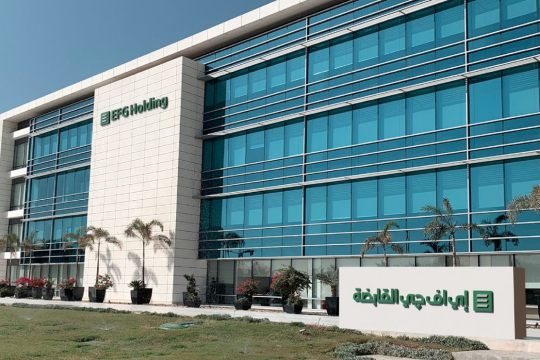
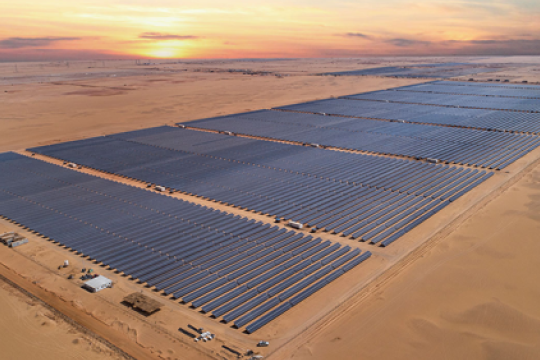
Separately, Ignis — a unit of EFG Holding’s renewable energy platform, Vortex Energy — is expanding into Poland, Romania, and Bulgaria within the next few years, with a focus on supplying power to data centers, an EFG Hermes spokesperson tells us. Moussa, who also runs Vortex, expects a surge in renewables demand over the coming 10 years, fueled by data center expansion. He pointed to BloombergNEF forecasts showing solar becoming the top global electricity source by 2032 — followed by wind in 2034 — as annual clean energy investment hits USD 3.1 tn by 2030. Vortex has put roughly EUR 300 mn into Ignis since acquiring it in 2021.

The two moves sit together under a fast-growing platform: EFG Holding’s total assets under management have reached USD 6.5 bn across its education, energy, and direct investment arms.

Abu Qir’s next expansion

Mostakbal Misr is looking into setting up a 1 mn sqm logistics zone inside Abu Qir Port for dry bulk handling and storage, Al Mal reports, citing sources it says are familiar with the matter. The proposed zone would handle strategic commodities, including grains and corn, supporting the authority’s food-security and supply-chain plans.

The study comes as Abu Qir scales up: The port has started initial operations at its new container terminal, operated by Hutchison Ports. Hutchison signed a USD 730 mn agreement with the Egyptian Navy in 2020 to build and operate the Abu Qir container terminal, with capacity of up to 2 mn TEUs and a 60-hectare yard once complete.

More under our radar:

  • A Quantum leap into Egypt’s oil sector: US energy investment firm Quantum Capital Group is eyeing long-term oil, gas, and refining investments in Egypt, encouraged by newly introduced incentives and a broader wave of foreign capital returning as the government cleared over USD 5.5 bn in overdue payments. (Statement)
  • Al Ahly Sabbour banks on Summer: Al Ahly Sabbour lined up a EGP 4.4 bn, six-year syndicated loan with CIB and Suez Canal Bank to fund its 434-feddan Summer project in Ras El Hekma. (Statement, pdf)
  • Elsewedy Electric is targeting a new Fayoum plant: The cabinet is moving ahead with contracting procedures with Elsewedy Electric to build a plant producing electrical wiring harnesses and components on 22.6 feddans in Fayoum. No investment value, capacity, or timeline was disclosed. (Statement)
7

PLANET FINANCE

DeepSeek halts its USD 74 bn round weeks after a record raise

DeepSeek reportedly paused the second fundraising round that would have valued it at roughly USD 74 bn, telling prospective backers over the weekend they won’t be signing the agreements they expected in the coming days, Bloomberg reported Saturday. The company says talks may resume.

The timing is the tell. DeepSeek didn’t need the money in a hurry: it closed its first outside round only in June, raising USD 7 bn at about USD 50 bn in one of China's largest-ever startup financings, backed by Tencent, battery maker CATL, and a state-run national AI fund. The follow-on, targeting a pre-money valuation of at least CNY 480 bn, opened weeks later at a step-up aggressive even by US megaround standards, then stalled almost as fast.

The trigger, Bloomberg’s sources say, was founder Liang Wenfeng’s frustration over leaked online accounts of his remarks to first-round investors. In a transcript neither DeepSeek nor Bloomberg has authenticated, Liang reportedly argued that China’s real gap with the US in AI is computing power, not talent, and dwelt on the sector’s dependence on Nvidia chips.

The pause is a wobble, not a wall. DeepSeek is preparing an IPO on Shanghai's STAR Market, possibly this year, giving it a route to capital that runs through neither private backers nor another leaked-transcript risk.

What to watch: Whether DeepSeek revives the raise, presses ahead with the listing, or lets both ride while it builds out compute. It was chasing the follow-on to fund data centers and chips as its push into AI agents lifts demand, so the money still has somewhere to go.

MARKETS THIS MORNING-

Asia-Pacific markets traded lower this morning, signaling a volatile week ahead as investors await key interest rate decisions from the Federal Reserve, Bank of Japan, and Bank of England. A wave of big tech earnings is also on deck, with investors watching closely for clear returns on massive AI infrastructure spending.

EGX30

53,418

-1.0% (YTD: +27.7%)

USD (CBE)

Buy 51.24

Sell 51.38

USD (CIB)

Buy 51.22

Sell 51.32

Interest rates (CBE)

19.00% deposit

20.00% lending

Tadawul

10,767

-0.3% (YTD: +2.6%)

ADX

9,828

-0.1% (YTD: -1.7%)

DFM

5,787

-0.2% (YTD: -4.3%)

S&P 500

7,412

+0.1% (YTD: +8.3%)

FTSE 100

10,736

+0.9% (YTD: +8.1%)

Euro Stoxx 50

6,281

+1.1% (YTD: +8.4%)

Brent crude

USD 91.06

-5.9%

Natural gas (Nymex)

USD 2.81

-2.1%

Gold

USD 4,149

+0.5%

BTC

USD 65,473

+1.7% (YTD: -25.3%)

S&P Egypt Sovereign Bond Index

1,084

+0.1% (YTD: +9.1%)

S&P MENA Bond & Sukuk

150.20

+0.2% (YTD: -1.1%)

VIX (Volatility Index)

18.58

-0.6% (YTD: +24.3%)

THE CLOSING BELL-

The EGX30 fell 1.0% at yesterday’s close on turnover of EGP 9.6 bn (3.2% above the 90-day average). International investors were the sole net buyers. The index is up 27.7% YTD.

In the green: Rameda (+2.6%), Juhayna (+1.5%), and Orascom Investment Holding (+1.4%).

In the red: Valmore Holding -EGP (-2.6%), Raya Holding (-2.2%), and Fawry (-2.0%).

8

BLACKBOARD

SAT and diploma authentication move to EGP fees under Education Ministry control

Egypt is closing another USD pricing channel. Students living in Egypt will now have to authenticate international diplomas and transcripts through locally licensed offices instead of paying overseas institutions directly in USD, a senior government official tells EnterpriseAM.

Why it matters: This is the latest step in a wider Education Ministry push to tighten oversight of private and international schools, and follows its April move to bring foreign-certificate accreditation under state control and replace USD-denominated fees with flat EGP tiers.

REMEMBER- We reported back in April that the ministry barred international accreditation bodies from dealing directly with schools or parents and replaced USD-denominated fees — which had climbed as high as USD 800-1.1k — with flat EGP tiers, part of the same push to bring foreign-certificate accreditation under state control.

How authentication now works: Students at accredited international schools in Egypt will first get documents verified and authenticated by Amideast Egypt, before submitting them to the Education Ministry for authentication and then the Foreign Ministry for final legalization — with all fees now collected in EGP rather than USD. International organizations are limited to verifying academic documents — authentication and legalization remain state functions. Egyptian students studying abroad are exempt from the new track — they’ll continue authenticating credentials directly through institutions in their country of study.

Amideast Egypt confirmed to EnterpriseAM that authentication services are now available through its offices in Cairo and Alexandria. The nonprofit verifies and authenticates the documents, but the College Board remains the body that issues and owns SAT scores and certificates. The service costs EGP 5.2k per document, after which students still need to complete authentication with the Education Ministry and legalization with the Foreign Ministry.

The Cognia precedent: The ministry canceled Cognia’s accreditation of American GPA certificates last March, taking over that certification entirely for a flat EGP 6k paid directly to the ministry — a step aimed at easing the currency burden on families and formalizing fee collection.

The SAT context: The move follows the return of the SAT to Egypt after a four-year hiatus, with 1,797 students sitting the first official administration and a 100% attendance rate, according to the ministry. Egypt has no official count of total American Diploma enrollment, but our sources put the sector at 200-220 schools serving roughly 40k-50k students.

Amideast’s role wasn’t cut — it was repriced. The SAT itself is administered by the College Board and its local representative, Amideast. Following discussions with the ministry, the nonprofit retained the right to certify the exams, our source tells us. What changed is the currency: certification fees are now collected in EGP rather than USD. An additional Ministry of Education certification step has been added on top of that at a nominal fee of roughly EGP 100 per document.

Schools will lose USD-denominated income. USD 500-800 was collected from students for credential authentication, of which roughly USD 250 went to the accrediting organization — leaving schools with a margin that functioned as additional revenue, Al Omran Language Schools Chairman Saber Omran tells us. That income stream disappears under the new system, though the shift is ultimately fairer to parents and could be offset by stronger demand for international education in a more transparent, better-regulated market, he says.

Some parents are seeing faster turnarounds already. Almost twenty parents of American Diploma students surveyed by EnterpriseAM say the new process has cut wait times for authenticated documents significantly, letting students complete Egyptian university applications faster. Paying fees in EGP instead of USD has also eased pressure to source foreign currency, they say.

OUR TAKE- The mechanism is a repriced authentication chain — foreign credentialing bodies keep market access, priced in EGP, with a Ministry certification layer added on top. International accreditation was one of the last pockets still running on USD terms set by schools and intermediaries, not the state. Centralizing authentication through Amideast and the ministry shuts that down, and schools absorb the near-term cost as SAT demand climbs again. The next credentialing pathways worth watching are the ones the ministry hasn’t touched yet. IB, IGCSE, and French Baccalaureate diplomas still route through their own overseas authentication chains, largely in hard currency. If April’s accreditation overhaul and this authentication shift are the template, the same pattern applied to those systems is the natural next step.


JULY

28-30 July (Tuesday-Thursday): EduGate, Egypt International Exhibition Center, Cairo.

AUGUST

19 August (Wednesday): Connected Banking Summit, Fairmont Nile City Hotel Cairo.

20 August (Thursday): Monetary Policy Committee’s fifth meeting of 2026.

26 August (Wednesday): Prophet Muhammad’s birthday.

SEPTEMBER

8-10 September (Tuesday-Thursday) El Alamein International Airshow, El Alamein International Airport.

10-12 September (Thursday-Saturday): Egyptian Entrepreneurship Sector Diagnostics Report Summit, El Gouna.

15 September (Tuesday): IMF to hold its eighth review of Egypt’s USD 8 bn EFF arrangement.

24 September (Thursday): Monetary Policy Committee’s sixth meeting of 2026.

27-29 September (Sunday-Tuesday): Global Conference on Population, Health, and Human Development.

28-29 September (Monday-Tuesday): Egypt Mining Forum, St. Regis Hotel New Capital.

30 September - October 3 (Wednesday-Saturday): Cityscape, Egypt International Exhibition Center, Cairo.

OCTOBER

5 October (Monday): The EnterpriseAM Egypt Forum.

6 October (Tuesday): Armed Forces Day.

10-11 October (Saturday-Sunday): Egypt Women’s Health Summit (EWHS), Cairo Marriott Hotel.

26-28 October (Monday-Wednesday): IEX Egypt, Egypt International Exhibition Center, Cairo.

29 October (Thursday): Monetary Policy Committee’s seventh meeting of 2026.

NOVEMBER

6-8 November (Friday-Sunday) : Global Entrepreneurship Festival, JW Marriott Hotel, New Cairo.

8-11 November (Sunday-Wednesday): Cairo ICT Forum.

DECEMBER

7-10 December (Monday-Thursday): Food Africa, Egypt International Exhibition Center, Cairo.

17 December (Thursday): Monetary Policy Committee’s eighth meeting of 2026.

EVENTS WITH NO SET DATE

Mid-August: IMF Board expected to decide on the seventh review of the loan program.

2H 2026: Operations at Deli Glass Co’s new USD 70 mn glassware factory kick off.

2026: The Egyptian-American Economic Forum.

4Q 2026: Banque du Caire IPO.

2027

20 January-7 February: Egypt to host the African Games.

1-3 February (Monday-Wednesday): Agri Expo, Cairo International Convention Center.

April 2027: Tenth of Ramadan dry port and logistics hub to begin operations.

EVENTS WITH NO SET DATE

2027: Egypt to host EBRD’s annual meetings.

2027: Egypt-EU Summit 2027.

End of 2027: Trial operations at the Dabaa nuclear power plant expected to take place.

September 2028: First unit of the Dabaa nuclear power plant begins operations.

Now Playing
Now Playing
00:00
00:00